All posts by Guy O'Donnell

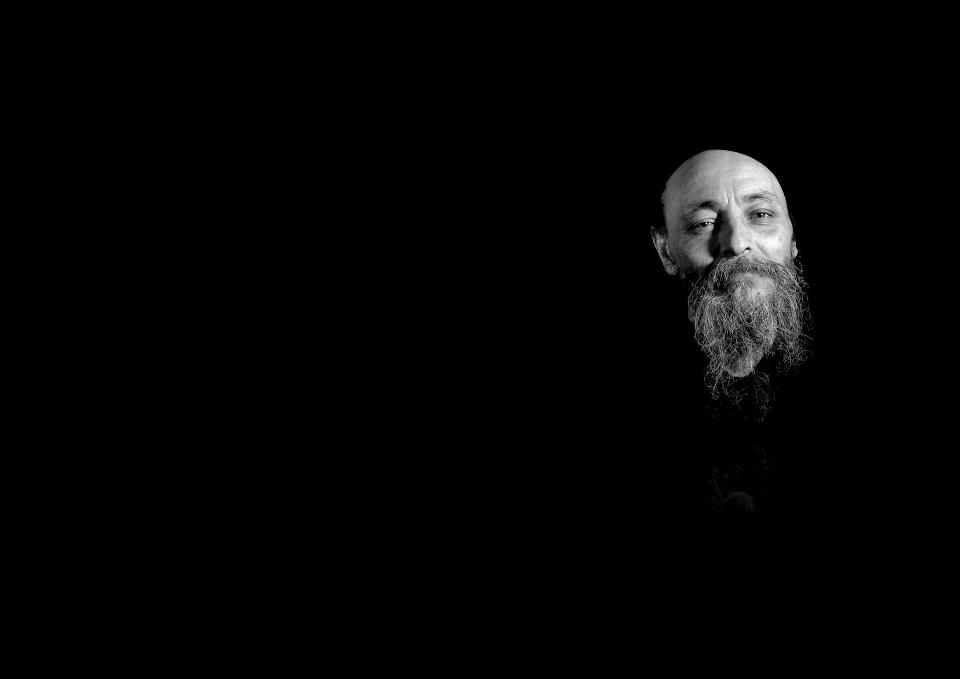
Hi I am Guy the project coordinator for Get The Chance. I am a trained secondary teacher of Art and Design and have taught at all Key Stages in England and Wales. I am also an experienced theatre designer and have designed for many of the theatre companies in Wales.

Review Macbeth WNO by Barbara Michaels

macbeth9-less350kb

All photographic credits Patrick Redmond

 out of 5 stars (4 / 5)

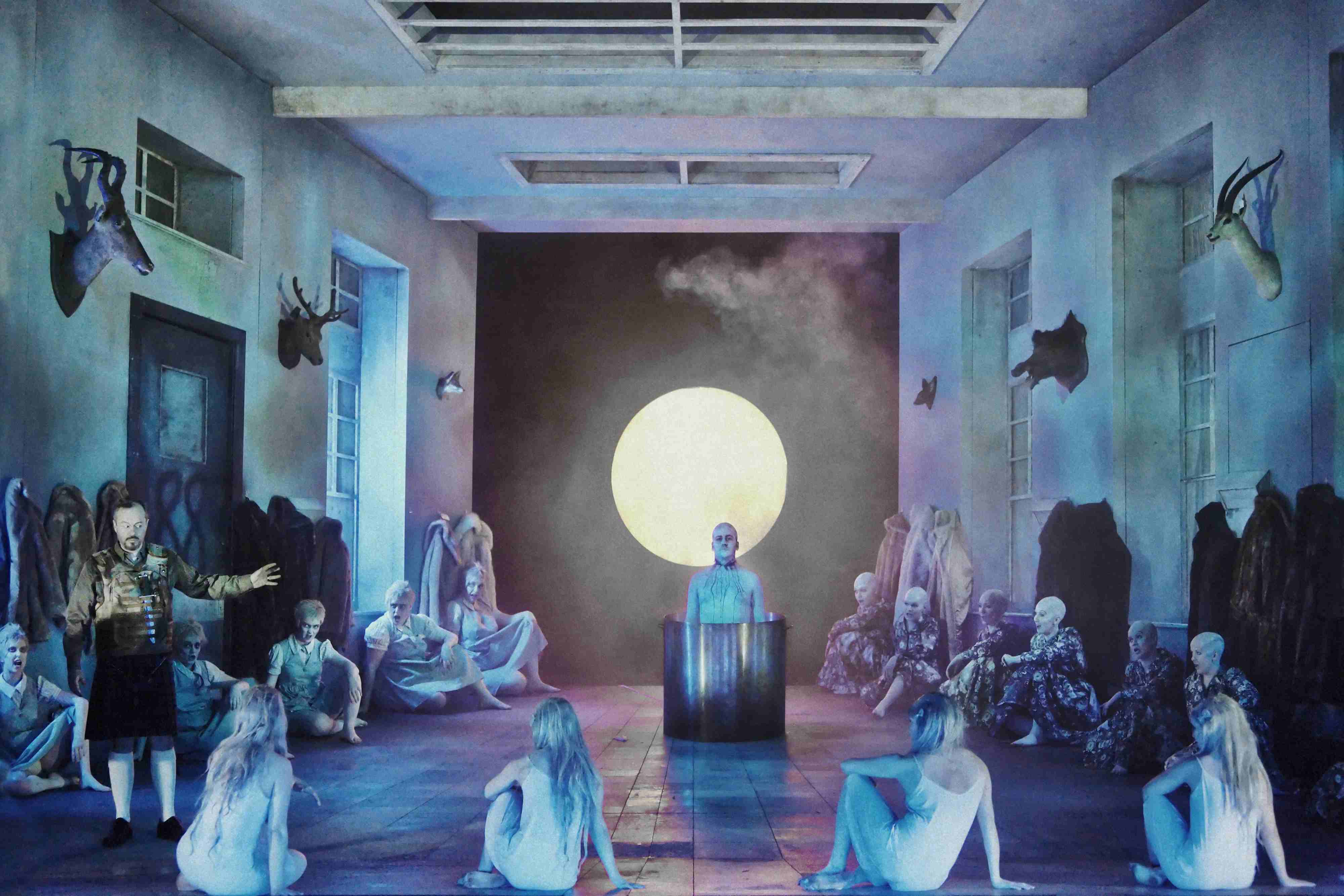
Reviled by many as one of Shakespeare’s more unpleasant plays, and referred to by thespians as ‘The Scottish Play’ because of its reputation for bringing bad luck to performances, Macbeth was described by Verdi himself as ‘One of mankind’s greatest creations.’ Oliver Mears’ gripping modern day production for Welsh National Opera, in conjunction with Northern Ireland Opera, holds its own, opening up a huge range of interpretations on account of its deep psychological reference.

macbeth-1

For those unfamiliar with the play on which it is based, Macbeth is a soldier whose wife’s aspirations of greatness are his downfall, leading to his ultimate death. Returning with his friend Banquo after a successful battle, he meets a coven of witches who predict that he will become firstly Thane of Cawdor and then King of Scotland, but that it will be Banquo’s children that subsequently inherit. On arriving home, Macbeth tells his wife who informs him that Duncan, the present King of Scotland, will be visiting and staying the night. Duncan duly arrives and announces that he is bestowing on Macbeth the title of Thane of Scotland. Not content with that honour, Lady M. sees this as the perfect opportunity to kill him and thus make the second part of the witches’ prophecy come true. She easily persuades Macbeth to murder his monarch while he is asleep, but the killing doesn’t stop there.

macbeth-20

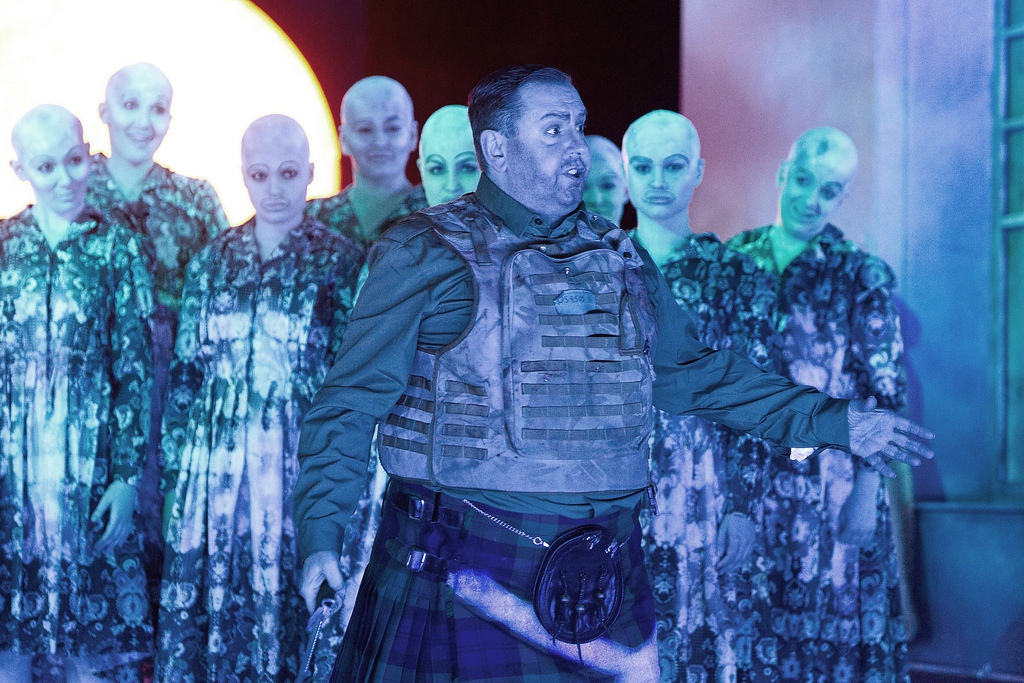
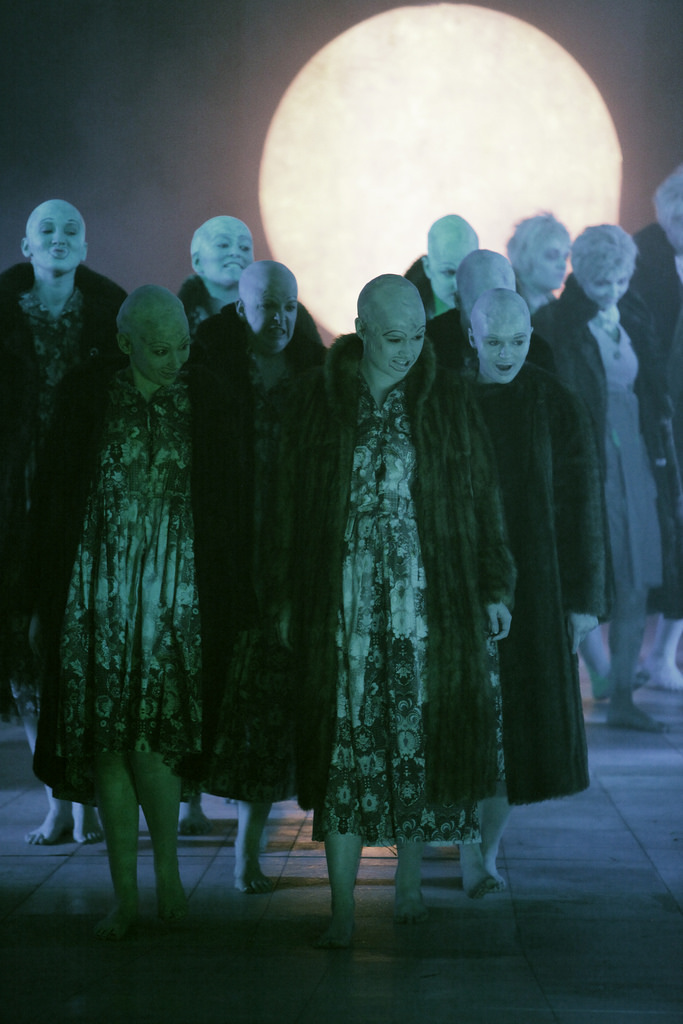
A balletic opening with the witches grotesquely portrayed as shaven-headed mannequins, and grey-haired humpbacks gets the action started before Spanish baritone Luis Cansino appears in battledress as Macbeth. The appearance of Lady Macbeth in Scene 2 leads into the first murder, followed by the duet which Verdi himself described as being of major importance. The justly renowned chorus of the WNO are increased in number with extra singers in order to cope with different guises which include not only the witches’ coven, but ghostly apparitions, and others, including in the final act refugees from the havoc caused by Macbeth’s widespread killings of those he sees as threats to his rule.

macbeth-6

Sung by American soprano Mary Elizabeth Williams, this Lady M is a ballsy, modern woman, sexy even at her desk and displaying her thighs with calculated intent. This is a power-crazy female who will stop at nothing to get what she wants. Williams has the demanding role to a T, fully in control from start to finish; not until the final act do we see the cracks in the surface which reveal the deep underlying psychological problems as lady Macbeth sleepwalks, rubbing her hands to rid them of the bloodstains no longer there and singing broken phrases opening up into great arches of song. Musically, Williams is superb, with a soaring soprano that takes the breath away, both in breath-taking solo arias and duets with Macbeth.

macbeth21-less350kb

Set and costume designer Annemarie Woods has created a minimalist Scottish castle and a wood that moves, plus costumes with swinging kilts. There are, however, two provisos – Duncan’s costume of bright blue jacket, knee-length white socks topped off with a gilt crown is a tad pantomimic, while the dark kilts and gilets worn by the chorus in the final act are reminiscent of school uniform.

Runs: September 15, 17 and 24th; October 12th; November 2, 9 and 23rd.
Macbeth Welsh National Opera at Wales Millennium Centre
Opera in four Acts based on the play by William Shakespeare
Music: Guiseppe Verdi
Libretto: Francesco Maria Piave
Director: Oliver Mears
Reviewer: Barbara Michaels


“I am a member of Get the Chance because ….”

Get the Chance supports critics from a variety of ages and backgrounds. In the article below some of our members give a personal response as to why they are part of our team. 

JS47465302JPG

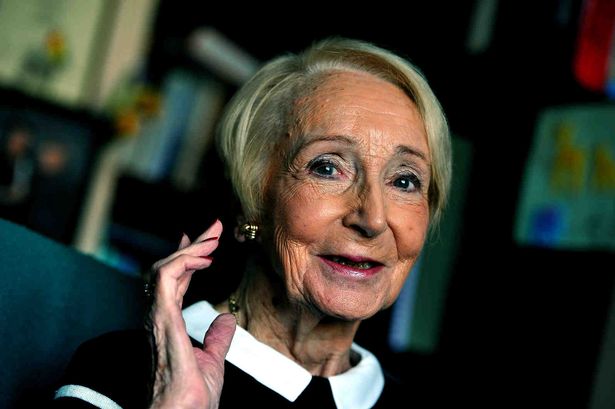
I am a member of Get the Chance because it gives me the opportunity to review exciting productions and to have my reviews read by a wide audience. Another plus is that as a mature writer it is great to meet up with young critics with a fresh approach and style.”

Barbara Michaels Third Act Critic

IMG_1308[1]

“I am a member of Get The Chance because it gives me a platform where I can speak my mind . It allows me to give my opinion and being able to do so enables me to explore the media, the news and whatever preferred genre or medium of entertainment I want. When it was introduced to me I was into writing and that has helped shape what dreams and ideals I have while also keeping my writing skills at a solid, good level. I am fortunate to be a part of Get The Chance because it has given me opportunities that I would not have had otherwise.

Amina Elmi Young Critic

photo

GTC is a progressive and pro-active platform. It’s a community where culture critics can express themselves liberally and creatively. Time Credits remuneration is a real bonus. The opportunity to participate is wide open. Access is the magic word! If you are interested then you will Get The Chance here!

Leslie Herman Jones Third Act Critic

IMG_0722

I am a member of Get The Chance because I am a life-long lover of theatre as an art form and I am keen to see more people involved in and responding to live performance. Coming from Tonyrefail near the Rhondda, I have fond memories of Christmas pantomimes, school plays and as a Welsh school pupil, Eisteddfodau. But I was in my twenties before I started watching theatre independently. I am constantly learning about theatre and all of the components that go in to it. The scheme draws in people from all backgrounds and experience levels and gives them a platform to share their experiences of the live performance in a very real and authentic way. We respond as members of the community, as a young person or as older people, with no pre-existing affiliations or expectations. As a community critic, I feel it my job to look beyond the show’s hype and the ‘creative vision’ behind the script or the journey of the actor and act as a bridge between the sometimes intimidating or stereotypically elitist or stuffy world of theatre and people with no or very limited experience of the theatre. I write openly and honestly about what I see and I love every minute of my involvement with Get The Chance.

Gemma Treharne Foose Community Critic Wales

image1

I am a member of Get the Chance because it grants me access to a supportive network of like-minded individuals – people who are passionate about the arts; who contribute towards an open-dialogue about its creation and existence. It’s an inspiring organisation to be a part of.

Lauren Ellis Stretch Young Critic

IMG_0477

I am a member of Get the Chance because it has given me an unbelievable amount of opportunities and allowed me to meet amazing people. From allowing me to appear on a local radio station to securing a job at the Wales Millennium Centre.”

James Briggs Young Critic 

image1

“I am a member of get the chance because I feel like I should have an opinion when it comes to the arts and theatre as it is something that I have been passionate about from a very young age. I have been performing since I was little and have always loved being able to express myself through art. Through critiquing I can give my opinions on theatre and art from a passionate young persons perspective.”

Eve Limbrick Young Critic

image1

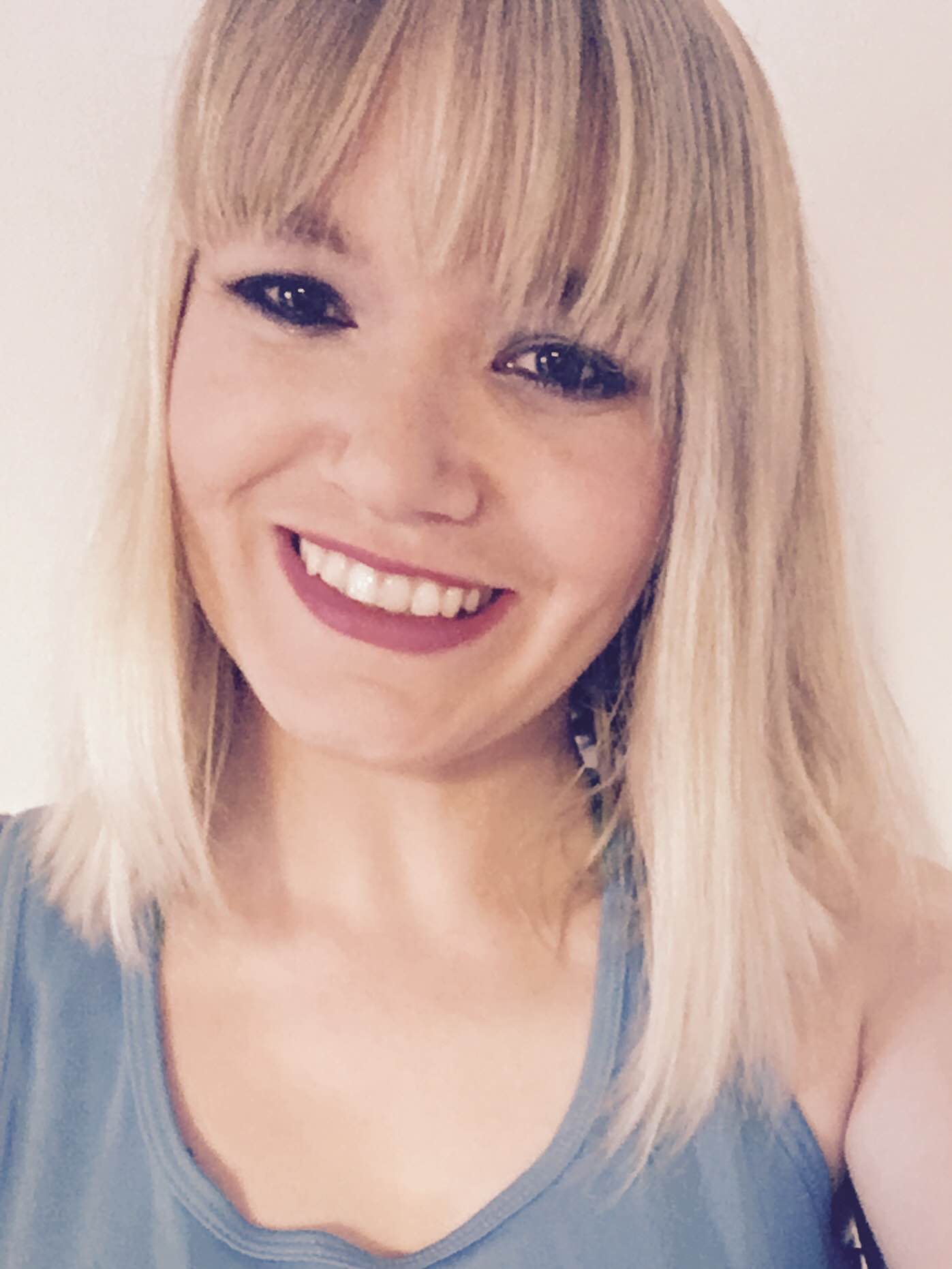
I am a member of get the chance because it allows me to meet new industry creatives like myself and to see a wide range of great shows and performances.

Kaitlin Wray Young Critic 

image1

I am a member of Get The Chance because I strive to be a writer and truly love writing from the bottom of my heart. Being a member has allowed me to explore my opinions on different pieces of entertainment and push my writing skills. Through publishing reviews my abilities have grown, and I am wholeheartedly grateful for having the opportunity for this to happen. Publishing reviews and receiving responses is thrilling and something I enjoy. Get The Change provides this and so much more, and I feel lucky to be included and involved.

Sian Thomas Young Critic

selfie

I am a member of Get the Chance because I want to write, I want to write well enough to share my own experiences of art, theatre, dance & opera with others & widen their audiences, encourage attendance & sometimes, maybe, help us see things differently.

Being a Third Act Critic has opened doors for me – I see work I would never have seen otherwise; I get to draw dancers, talk to directors & actors, meet other critics & writers, I even enjoy the odd free drink!

I enjoy the interaction on Twitter & Facebook, relish any compliments & learn from criticisms.

I also enjoy telling other people what I do & try to get more people involved in this remarkable chance to see things & to review them.

Having just received my Spice Time Credits, I am also looking forward hugely to a few new experiences, armed with sketchbook & pen.

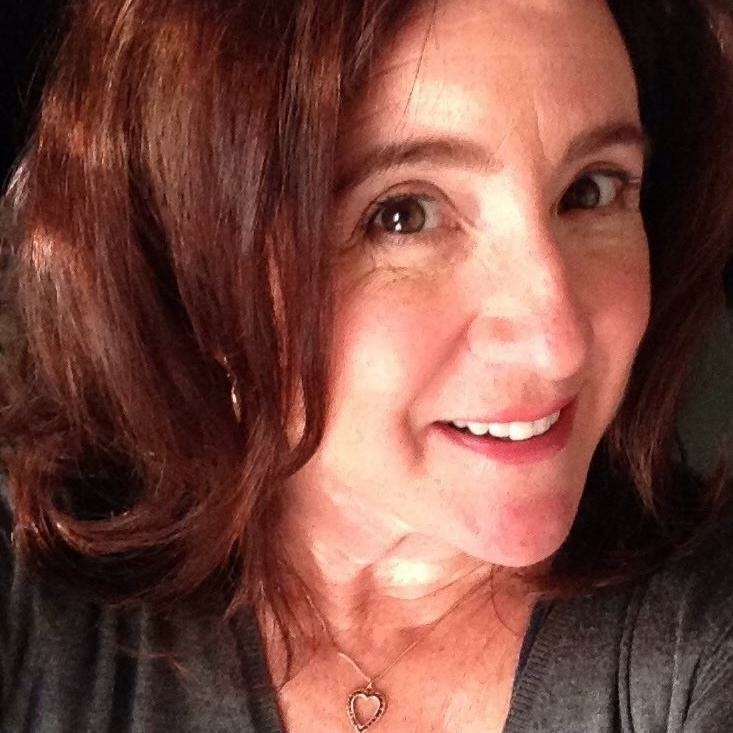
Helen Joy Third Act Critic

DSC_0046_3

I’m a member of Get the Chance because of the invaluable opportunities and skills it provides me.”

Shannon Newman Price Young Critic

Screenshot_2016-08-28-19-11-35

I am a member of Get the Chance because it is a close knit community that allows you to voice your opinions and meet new people along the way, as well as offering you with amazing opportunities.
Caitlin Finn Young Critic

image

I am a member of Get the Chance because it opens up access to the arts and everyone’s voice is valued

Corinne Cox Young Critic

12821605_821513864620249_3590324645293495296_n

I am a member of Get The Chance because I wanted to push myself. I knew I could do it, so I did!

Amelia Seren Young Critic

IMG_20160805_215334

I am a member of Get the Chance because theatre and the arts is what I eat, live and breath. To be able to connect with fellow performers, practitioners, critics and journalists is a wonderful chance to learn, be inspired and to network.
Hannah Goslin Young Critic

Get Involved

For further information or to take part contact project coordinator Guy O’Donnell: odonnell.guy@gmail.com
 

An Interview with playwright Kelly Jones

57847a_203f68c76783455280d400cddc40f85b.jpg_srz_325_455_85_22_0.50_1.20_0.00_jpg_srz

Playwright Kelly Jones

Get the Chance values the role playwrights living and working in Wales bring to the cultural life of our nation. Here is our second interview in this series with  playwright Kelly Jones.

Hi Kelly great to meet you, can you give our readers some background information on yourself please?

I’m Kelly, a playwright and occasional performer based in Cardiff. Originally a Dagenham girl, I’ve lived in Wales since 2007. I moved here to study the final year of my degree at Swansea Met and never went back. My course was mainly performance based but after graduating I realised this wasn’t something I wanted to do, so I began writing. I took part in various writing initiatives to hone my craft and develop my voice and I got asked to write for a few shorts nights.

In 2013 I decided to leave my full time job in a betting shop to go full time freelance. It was the scariest and most exciting thing I have ever done. I’d been offered a place on NTW’s summer camp, however, my work said I couldn’t have the time off to go so I quit – It was a real now or never moment.

Since then I have won the Wales Drama Award with a play of mine called TAMMY, got an agent and have been offered commissions from various theatres. Oh and I also got married, which was very exciting! So that’s me.

So what got you interested in writing then Kelly?

When I was at university we did a unit called ‘ Writing for performance’ – I hated it. But after graduating I started writing parts for myself to show work at scratch nights and I caught the writing bug! It developed from there

I suppose the main reason I wanted to write was because I never felt there were parts for me; that said what I wanted to say about the world that I lived in at that time.

In my work I like to write life and put real people that I know at the heart of the action. Growing up in Dagenham I was led to believe that a career in theatre wasn’t meant for a girl like me by both peers and teachers. Fortunately I grew up in a very supportive family full of natural born storytellers and as a result I love to tell stories, of course I was meant for theatre! I like to challenge the idea of who theatre is for and often find myself using my upbringing in London and rooting in Wales as start points for my work.

You were part of the Sherman Theatres Young Writers Programme, how did this work?

Yeah, so not long after I moved to Cardiff I got involved with the Sherman’s Company 5 drama group, ran by Jason Camilleri and Llinos Mai. We did a performance piece of monologues we’d written about things that had happened to us. I wrote a comedy piece about when I came out as gay to my family. Llinos  really liked it and put me in touch with Sian Summers who used to be the literary manager at the Sherman and she invited me to be on the program. The program was so great! I learnt a hell of a lot and just being surrounded by other writers was motivating and inspiring. Alan Harris was a great teacher!

I think it’s incredibly important for writers to meet other writers; being a writer can be a lonely job and sometimes it just helps to have someone else to chat to.

As a playwright a lot of your work is funded through grants and the like have you ever approach the Arts Council of Wales or similar organisations for funding or support?

I have a good relationship with Arts Council Wales and have been very fortunate to receive funding from them. They’re approachable and friendly as an organisation and are always happy to help if you have questions.

I’ve found getting venues to produce your work is difficult in Wales and if you don’t self-produce sometimes unfortunately your work won’t get on.

As funding is limited I always try and seek it from other sources or contribute my own funds so that the amount I’m asking for is less. Sometimes this isn’t always possible but it’s important to get to know what else is out there.

p02jpz9m

Kate Rowland (BBC Writersroom), Kelly Jones, Faith Penhale (BBC Wales Drama), John McGrath (Ex Artistic Director National Theatre Wales)

You were the winner of the Wales Drama Award 2014 that’s a brilliant achievement!, can you please tell us more about this award.

I still can’t quite believe it to be honest! It’s been nearly two years and it has opened so many doors for me. The award is a biannual prize given to a writer in Wales, supported by NTW/BBC Wales and BBC Writersroom. I submitted the first time it was launched in 2012 but didn’t get anywhere and to be honest the play was awful. I wrote what I thought the judges wanted which is not a good idea.

Before I submitted in 2014 I attended the session about the award hosted by the Sherman and it was during that session that I had the idea for my play, TAMMY. I submitted a real rough and ready first draft and never expected to get passed the first round. When the email came through to say I’d be shortlisted to the final 4 I laughed then cried then phoned my mum.

The next stage was an interview with the judges at Roath Lock, where we had to pitch two ideas- it was scary! I pitched a play and a TV series; the play is now a seed commission with NTW and the series in development with BBC Wales. I really enjoyed the interview process. Post winning; Lucy Gannon was appointment my TV mentor and Sherman Co produced a reading of my winning script TAMMY with NTW. There have been so many great things to come off the back of the award and I am excited for the next winner to start their journey.

 As a playwright award-winning playwrights Tim Price and most recently Katherine Chandler have mentored you. Why is this mentoring process important for playwrights? Do you think this support is something that should be funded for playwrights in Wales?

I think it is so important to have a mentor no matter what stage you are at. Mentors are a support and resources. Whether you want to talk something through with them or get them to read something of yours, that’s what they’re there for. Both Tim and Kath were great for me at different stages of my career.

In terms of funding it’d be great if their was funding for peer-to-peer mentoring.

I often get asked to read writers work and am more than happy to do it. However I’m not able to always give it the time it needs. I think funding could help free up some time to devote to it. A nurturing mentor program for writers would be great to help develop the next generation of talent.

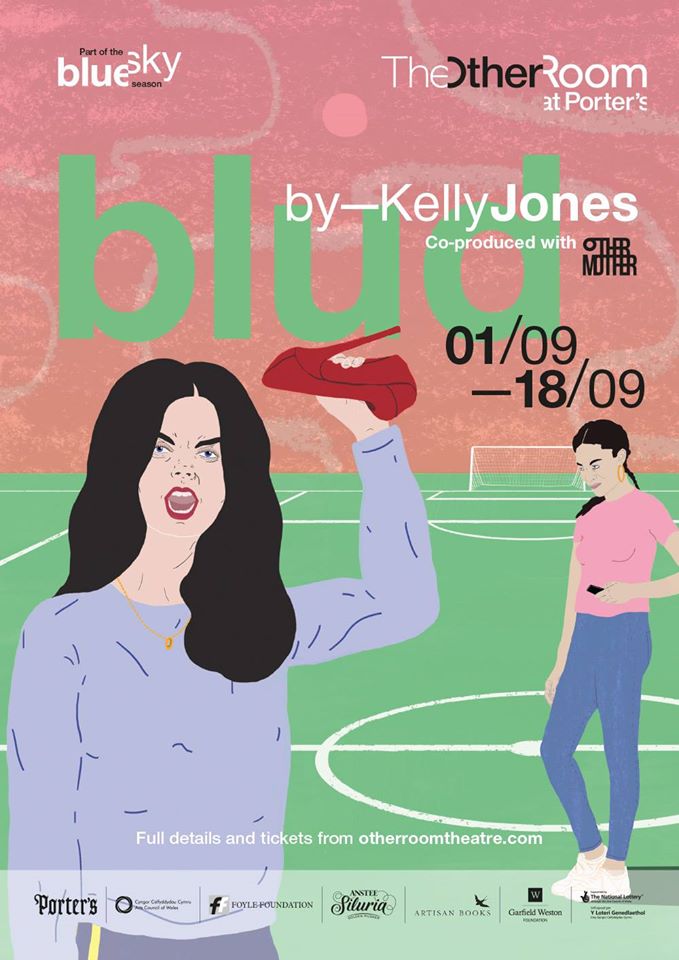
blud

 Your play Blud was performed at the Other Room, it was set in the world of female football, which isn’t often seen on stage. Is presenting diverse views of the world important to you?

For me BLUD felt like a play about where I grew up. The women in my family are more into the football that the men and girls like Rita are ones I used to go to school with when I was a teenager.

I’d say it’s important to me that the world I know is represented on stage and with authenticity. I get very annoyed when I see something that plays to all the ‘poverty porn’ stereotypes. Especially when they’re written by someone who grew up in Chelsea who ain’t got a clue about growing up in a council house. I feel similarly about LGBT characters. A lot of my community work is with LGBT organisations and gay representation is very important in my work. I write and volunteer for LGBT organisations is to combat this. Authentic representation is very important and I would never attempt to write something I didn’t fully understand or have a personal relationship to.

 In your personal opinion what sort of support networks are there for playwrights in Wales, can more be done?

I think the biggest support network for writers in Wales is other writers. I think more could be done; I’m not quite sure what but maybe a writer led discussion would help to tackle this.

ppp_main 

To bring us up to date this autumn your play Snout will form part of A Play A Pie and a Pint and be performed at the Sherman Theatre/ ÒRAN MÓR. The synopsis of the play sounds intriguing! I wonder if you can tell us more?

Yes. The inspiration came from an article I read about fashion designers who we’re tattooing pigs and posthumously using their tattooed skin to make handbags, that sell for thousands of pounds. I began reading of farmers who were also doing this but using the pigs as blank canvases to advertise local businesses and help local economy. I found this fascinating and began writing. I was particularly shocked at this heightened level of exploitation to satisfy the demand for a handbag made from a tattooed animal. Animals are voiceless and as one of the most intelligent animals, pigs don’t have a say in this. It made me think of parallels to slavery, exploitation of some communities and modern day sexism.

So, the play is set in the back of a van on its way to the slaughterhouse. It shows the last hour in pigs Viv, Coco and Lacey’s life as they make plans to escape the chop. I wanted to question whether they have the right to escape when they were breed to be slaughtered and whether it’s right to kill animals for fashion that changes so often. I certainly wouldn’t want to end up as a jacket for Kim Kardashian.

Aesthetically, I wanted to play on the whole ‘Pie’ part of the evening and have the play feel like they audience are watching their dinner before it becomes their dinner- if that makes sense? The van is quite claustrophobic in a bit of lobster tank way and I want the audience to really feel for them whilst being surrounded by the smell of pork pies. It’s been amazing working with Oran Mor, Sherman and director Kenny Miller, it’s really allowed me to be bold in the choices I’ve made and write something really exciting. The first draft I submitted was quite different and Kenny really encouraged me to be braver and his support has been invaluable. I can’t wait for you all to see it

http://www.shermantheatre.co.uk/performance/theatre/a-play-a-pie-and-a-pint-november-16/

Thanks for your time Kelly!


Review Chitty Chitty Bang Bang, WMC by Barbara Michaels

Chitty2016-main
 
 out of 5 stars (4 / 5)

Full of fun and fantasy, Chitty Chitty Bang Bang needs no introduction, rating as it does high among the icons of musical theatre. Full credit must be accorded to this production by West Yorkshire Playhouse both for the high standard of its performers and for coping with what must be incredibly difficult logistics in staging Chitty on tour, involving as it does the transporting of some large and unwieldy objects. I will say no more on this subject for fear of giving the game away to audiences who are seeing the musical for the first time.

Based on the 1968 film adapted for the stage by Jeremy Sams, despite differences between making a film and staging a musical, and the moving forward of the era in which it is set, under the direction of James Brining this Chitty has an aura of timelessness about it which spans the generations. Pure nonsense, but totally believable. At its heart is the boy meets girl romance of lonely widower Caractacus Potts, an inventor of strange machines who is struggling to bring up two young children on his own, and the delectable Truly Scrumptious. Add to the melée an aged and slightly doolally grandfather, a wicked Baron and Baroness, a spine-chilling Childcatcher and a magic car and the result is as sweet as a dolly mixture.

Lee Mead is a mop-headed Caractacus, seemingly bewildered by life but full of spunk and determination. The lyrics by the Sherman brothers are well-known, and Mead is great in the foot-tapping fun numbers such as Chitty Chitty Bang Bang which gives its name to the title, bringing an unexpected lump to the throat with Hushabye Mountain, which has the added poignancy of the vision of his late wife appearing to him as he sings.

Andy Hockley’s Grandpa, bushy-bearded and bandy-legged, is a delight, the Welsh actor being accorded a special round of applause on opening night in Cardiff. Hockley manages well the balancing act of adhering to the original character created by writer Roald Dahl, based on a story by James Bond Creator Ian Fleming, yet adding his own twist.

Carrie Hope Fletcher’s Truly Scrumptious eschews the frill and flounces of the film and opts instead for more modern attire such as jodhpur like trousers which have the added advantage of showing off her shapely form. You can’t fail to be charmed by this Truly. Hope Fletcher brings a warmth to the role which reveals an understanding of the importance of family life which is one of the underlying themes. Her singing is impeccable; outstanding in her solo Lovely Lonely Man reinstated in Act II after being eliminated from earlier productions of the stage show, melodic and perfectly balanced in the songs she sings with Caractacus and the Potts children.

That accomplished actress Claire Sweeney makes a comical and high-kicking Baroness Bomburst opposite Shaun Williamson’s perfectly petulant Baron.  More comic talent in that pair of would-be villains Boris and Goran, played respectively by Sam Harrison and Scott Paige. Matt Gillett’s Childcatcher is sinister and suitably spine shivering, while Bill Coggins gives a movingly compassionate performance as the concerned Toymaker.

It’s not only the wonderful music and lyrics that make this show what it is, but the choreography. Stephen Mear’s choreography is a star in its own right throughout, whether it be the foot tapping intricacies of Me Ol’ Bamboo in the fairground scene or the exotic rhythms of the Bombie Samba in which Sweeney’s take is a master piece of send-up on its own. Skilful video effects and animation work in tandem with an atmospheric yet simple staging which changes or revolves seamlessly. As for the music – under the baton of musical director and keyboard player Andrew Hilton it well deserves the applause it receives.

So what of Chitty herself? Let’s not spoil the surprise. Let’s just say you won’t be disappointed.

Runs until 21st August 2016

Chitty Chitty Bang Bang, Wales Millennium Centre
Writer: Ian Fleming
Music & Lyrics: Richard M.Sherman and Robert B.Sherman
Director: James Brining
Reviewer: Barbara Michaels

Preview Two & One More, What Might Have Been Theatre, RWCMD/Venue 13 by Barbara Michaels

Square-Design-Final

En-route for the Edinburgh Festival 2016 – Exciting New Production from the Royal Welsh College of Music & Drama

.Fasten your safety belt and prepared to be gripped by high drama in Tom Hampson’s exciting debut play Two and One More, which opens on August 21st at Venue 13 at the Edinburgh Fringe and runs until August 27th.   Members of What Might Have Been Theatre are producing and performing in the play at the venue, which is run by the college and has been providing a platform for performers and audiences to explore, create and experience some remarkable drama over the past twenty years.

Viewed at the RWCMD’s Bute Theatre during the run-up to the Fringe, Hampson’s play is set in London during the Blitz. A boy breaks into a London house and is discovered by the man living there alone. Or is he alone? What lies in the room next door? With young sector James Robert Rutherford as the young burglar, this play is guaranteed to have you on the edge of your seat.

The high standard of the productions staged at Venue 13 has seen audiences returning year after year – a critic writing in The Stage described it thus: “If there was an award for the best run Fringe venue, then this would be it.”

http://www.venue13.com/production/two-and-one-more/
 

An interview with Theatre Designer Bethany Seddon

Our project coordinator recently spoke to Theatre Designer Bethany Seddon on her training at the Royal Welsh College of Music and Drama, Youth Theatre at the Sherman Theatre , recent production designs for Cardiff Open Air Theatre Festival and career to date.

13615483_10153616814662116_6783511564477248816_n

Bethany (centre) working on the recent Cardiff Open Air Theatre Festival

Hi Bethany, You have currently designed a range of productions for Everyman Cardiff Summer Festival You must be busy! Is it possible to give our readers some background information on yourself?

Of course! Well I was born in Newport, South Wales, and as a child and well into my teenage years I was fascinated with theatre and, in particular, acting! I took part in as many productions as possible with school, at the age of 13 I joined the Dolman Youth Theatre and at 16 joined the Sherman Youth Theatre, and both groups offered invaluable experience both on and off stage. As I was approaching the end of my A levels I had a huge crisis of confidence and decided acting wasn’t actually for me… so what was I to do? I took a year and did an art foundation which I loved but by the end of the course, scared of narrowing my options too much, I moved onto a Fine Art degree, which, unfortunately just wasn’t for me. By Christmas I knew I wasn’t enjoying Fine Art at all and I happened to be acting and designing a show with the company Inky Quill. I was so excited by the possibilities of design and part of me had always wanted to design for stage so this seemed like such a logical step for me to take. I did a quick google search, found out Royal Welsh College of Music and Drama did a Theatre Design course and applied straight away. A few weeks later I attended an open day and fell in love a little more, and few weeks later again and I had an interview and luckily, they accepted me onto the course. Three very hard years later, a little caffeinated and sleep deprived I was sent out into the world and, thankfully, I haven’t stopped working since. The course taught me such a wide range of skills that I work between designing for stage, to working in TV and film, and pick up bits of work in assisting and using skills for jobs in technical drawings, construction, painting, prop making and teaching/ creating workshops.


http://www.rwcmd.ac.uk/departments/theatre_design.aspx
You have worked for a variety of companies in the UK and especially Wales, what are the employment opportunities like for a designer based in Wales?

Between theatre and TV and film work, South Wales is a great place to be based. You have some wonderful companies that range in size and statue that are always looking for new designers to work with. Cardiff is bustling with a whole host of theatres and companies who are always creating new work and writing, which really is very exciting, both for work and just to go and immerse yourself in the creative world. The neighbouring cities around Cardiff are also bustling with creativity, so it doesn’t take much to find yourself working in Swansea, or Bridgend, or Bristol. The arts network is really incredibly small, but people are always on the lookout for a designer, or assistant so honestly it’s just being able to say yes to possibilities… without being taken advantage of, of course.

You frequently support workshop activity with members of the public, do you think this type of activity is important and why?

I believe it is incredibly important work, especially when you believe in what the company is creating. Working with Sherman Five at the Sherman Theatre, Cardiff and Mess up the Mess have both shown me how an individual can develop in such a short amount of time through workshop activities, and I have witnessed massive developments in individuals self confidence.

http://messupthemess.co.uk/big-democracy-project/

The workshops are all about allowing creative expression, however simple to start and encouraging a participant to let go of their inhabitations. From long term projects to one off days like creating monsters at the Wales Millennium Centre , it’s such a joy to see people from various backgrounds and age groups connect with a task through their creativity.

Are their any individuals or organisations that helped support you in developing your skills and knowledge?

hood6

Mr Phillip Mackenzie

Sherman Youth Theatre and the youth theatre director at the time Phillip Mackenzie were brilliant at helping me understand theatre wasn’t all about the text behind a proscenium arch. At the age of 16 I was allowed to explore different styles of theatre which I believe was just invaluable and the group I was working with were all so dedicated and focused on what we were creating, and we had so much fun working on our productions. I honestly look back and think about how lucky I was to be working with that group! I think I might be in a very different place if it wasn’t for the wonderful opportunities to act and travel I had with the Sherman. However my training and work ethic was greatly enhanced by Royal Welsh College of Music and Drama and the head of the BA Hons Design for Performance Mr Sean Crowley. I learnt so much in those 3 years and would not be doing as well as I am without the training and support of the alumni.

q_and_a_theatre_design

Mr Sean Crowley

When you aren’t involved in the arts or culture what do you like to do in your spare time?

Spare time?! After opening 4 shows in 4 weeks, and having very few days off this year I’m afraid I fail a little at answering this question!

I know I used to like to read and go to see theatre, but for me it’s been a while since I have done either! I normally crash when I get home, or continue working away till quite late, and try to see friends and my family when I can. Luckily most of my friends are in the arts so understand our varying schedules often conflict and the ones that aren’t in this little bubble are the most wonderful people to put up with me without getting too annoyed at long periods of silence!

13900226_10154510603630649_5315090540372882204_n

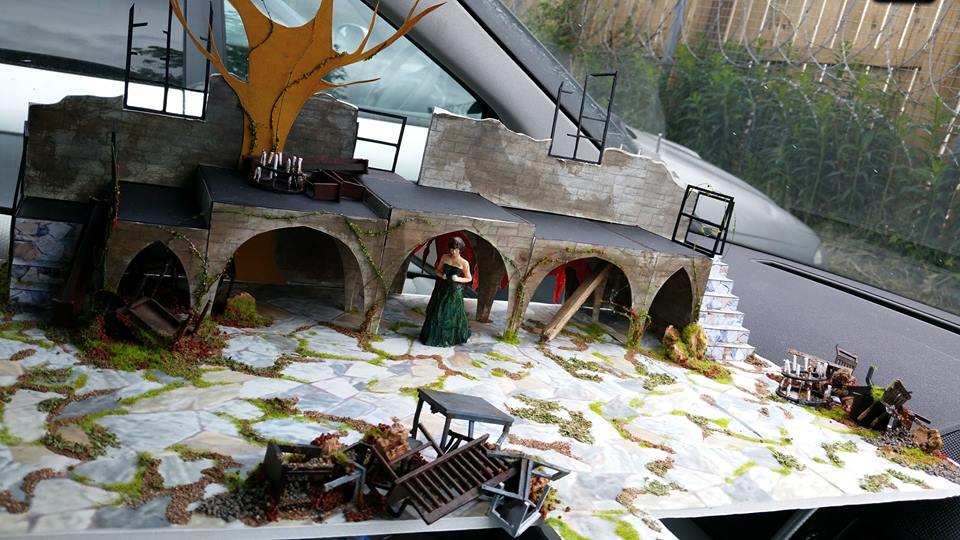
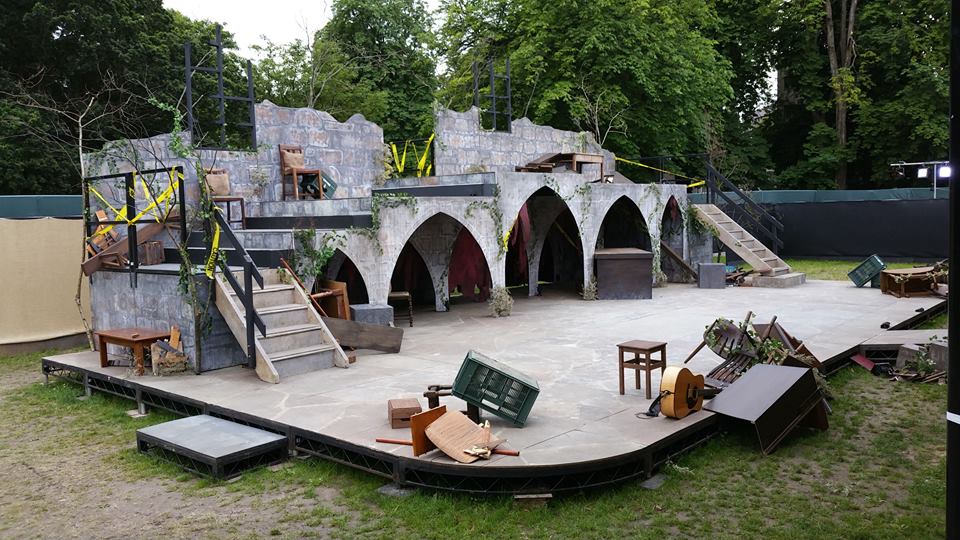
Model Box ‘Into the Woods’ Cardiff Open Air Theatre Festival

13886935_10154510603225649_3845664244800117299_n

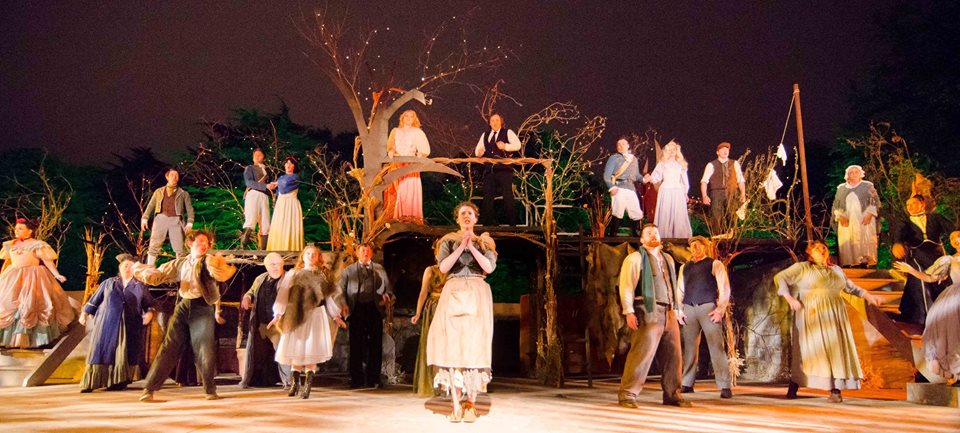
Realised Set  ‘Into the Woods’ Cardiff Open Air Theatre Festival

13912675_10154510605185649_785783707320657605_n

Model Box ‘Peter Pan’ Cardiff Open Air Theatre Festival

13886428_10154510604330649_6631581413370731341_n

Model Box ‘Peter Pan’ Cardiff Open Air Theatre Festival

More examples of Bethany’s work can be found at her website http://bethanyseddon.com

Thanks for that insight into your career Bethany.

Young Critics on the Edge, ASSITEJ 2016

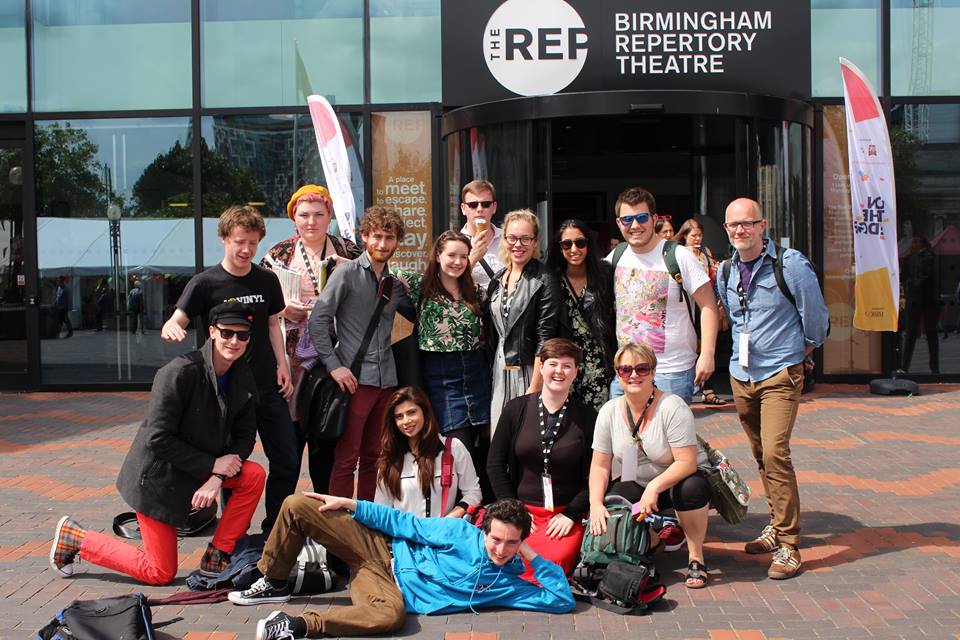
13606473_1222685044420025_8173533722553352229_n

Last week some of our members took part in Young Critics on the Edge. Please find further information on the project below as well as a link to their reviews.

What is Young Critics On The Edge?

Young Critics On The Edge is a 5 day-long programme to develop critical analysis skills in young people aged 18–25 as part of On The Edge The World Festival of Theatre For Young Audiences.

Young Critics On The Edge is a collaboration between Barnstorm Theatre Company, NAYD (National Association for Youth Drama) Ireland and Mess Up The Mess, Young Critic’s Wales in conjunction with the Symposium strand of the ASSITEJ Artistic Gathering for 2016.

ON THE EDGE is presented by TYA-UK and TYA-Ireland. It is the ASSITEJ Artistic Gathering 2016. ON THE EDGE is hosted by Birmingham REP.

Young Critics On The Edge is open to young people aged 18-25 who are interested in watching theatre, discovering how and why theatre is made, and learning how to critically discuss, analyse, and review Theatre For Young Audiences

Over a five-day period they will see some incredible shows, make new friends and learn about the art of theatre criticism. All this happens during On The Edge The World Festival of Theatre For Young Audiences in Birmingham from July 3rd – July 8th 2016.

In a very exciting and innovative programme young people are given an opportunity to see quality productions, develop their critical skills and make their own critical responses under the mentorship of leading International drama facilitators.

Who can take part?

Two participants from Ireland, Wales, Scotland, Northern Ireland and England and a further two participants from the host city of Birmingham will be selected to take part.

Participants will drawn through the partner organisations of Barnstorm Theatre Company (Ireland), Mess Up the Mess (Wales), NAYD (Ireland), Young Critic’s Wales, Youth Theatre Arts Scotland, A Younger Theatre (England), Theatre NI (Northern Ireland) and Birmingham Repertory Theatre.

In order to offer individual advice and guidance on developing each young person’s critical skills, places on the programme are limited to 12 places in total. Those who are interested should apply using the accompanying application form.

What happens during the Young Critics?

The Young Critics will meet in Birmingham from Sunday July 3rd to Friday July 8th. Over five days the Young Critics will attend a number of theatre productions, interact with the city, participate in workshops, live blog and share their views with delegates of ASSITEJ Artistic Gathering for 2016.

https://youngcriticsontheedge.wordpress.com

Review Guys and Dolls, New Theatre Cardiff by Barbara Michaels

 
imagegen.ashx
 out of 5 stars (4 / 5)

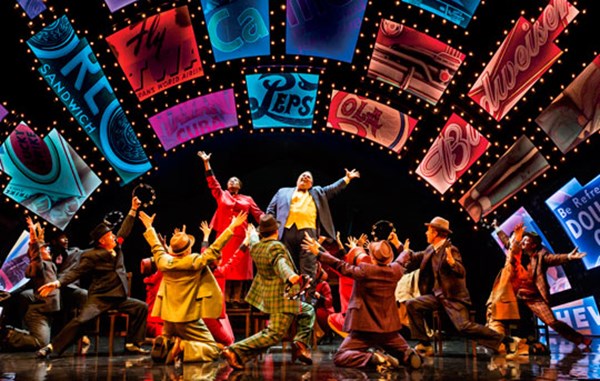
Still popular well over half a century since it opened on Broadway, everything rests on the roll of the dice in Guys and Dolls, the iconic musical set in Manhattan and based on the short stories of Damon Runyon. Gangsters and their molls are at the centre of the action as con man Nathan Detroit struggles to find a venue for his upcoming illegal crap game. High-rolling gambler Sky Masterson offers a solution, but only if Nathan can come up with an attractive enough bet. And he does – in the shape of uptight Evangelist missionary Sarah Brown. The subsequent shenanigans take us from Times Square via the dance clubs of Manhattan to the sewers of New York City.

This latest revival, fresh from the West End stage, proves once again what a great musical this is. This time round it has the plus of being staged with choreography masterminded by the brilliant Carlos Acosta. It is difficult – I might go further and say well-nigh impossible – to find a dancer and choreographer who can equal Acosta for Latin American rhythms that sizzle with white-hot heat. As the action switches to Havana there is just about everything here – rumba, samba, cha-cha – you name it. Ballet – of course. Full marks to the multi-faceted ensemble for coping with it all.

So bristling with talent is this Chichester Festival Theatre production that it is difficult to know where to start with the accolades, but one must begin somewhere so let us be logical and begin with the two male leads whose crap games and on-off romances form the pivot on which the plot revolves. As Sky Masterson, Richard Fleeshman cuts a debonair figure in the role of the gambler willing to take on any bet if the stakes are high enough.  Fleeshman has a great tenor voice, heard to advantage in the number I’ve Never Been in Love Before at the closure of Act I. The target of his bet, with whom he ends up falling in love, is the Bible-bashing Evangelist Sarah Brown, played by Anna O’Byrne who belts out the lyrics with gusto.

That accomplished actor Maxwell Caulfield plays Detroit with a great sense of timing and a wry humour. His evident relish for the role is infectious. Caulfield’s Detroit is a likeable rogue, despite his dragging his feet where marriage is concerned: a fourteen year engagement seems a trifle overlong by any standard! The lucky lady is Miss Adelaide, lead singer and dancer at the Hot Box, the night spot where much of the action takes place. Louise Dearman, as Detroit’s fiancée whose dreams of domestic bliss are taking forever to come true , is superb, notably so in that wonderful number Take Back Your Mink. Dearman has the role down to a T – to the extent of almost stealing the show at times.

Detroit’s and Masterson’s fellow gamblers are all perfectly cast, with Jack Edwards as Nicely-Nicely Johnson and the lugubrious Craig Pinder as Harry the Horse, while Mark Sangster is a nimble-footed Benny. Boys – you were splendid. The live orchestra, under the direction of Andy Massey, provides the accompaniment to the memorable musical numbers which include that well-known Luck Be a Lady and the foot-tapping Sit Down, You’re Rockin’ the Boat.

http://www.newtheatrecardiff.co.uk/what’s-on/guys-dolls/
Runs until Saturday 9th July
Guys and Dolls New Theatre Cardiff
Music and Lyrics: Frank Loesser
Book: Jo Swerling and Abe Burrows
Director: Gordon Greenberg
Choreography: Carlos Acosta and Andrew Wright
Reviewer: Barbara Michaels
 

Interview Adeola Dewis “Art can allow new, creative ways of seeing the everyday to emerge”


207372_10150558342515296_7621089_n

Hi Adeola, You are currently a Visual Artist and Research Fellow at the University of South Wales. Is it possible to give our readers some background information on yourself?

Yes, I am actually coming to the end of my research fellowship. It was an 18 month contract with the University of South Wales and part of a large AHRC (Arts and Humanities Research Council) funded project called ‘Representing Communities.’ I am an artist, researcher,  a mother of 3 boys and a Caribbean woman resident in Wales since 2003. A lot of my work is informed by my day to day experiences.

217083_10150558346030296_8002310_n

You held a President’s Award scholarship for PhD research at Cardiff University, Wales and have received several grants from the Arts Council of Wales to develop and realise collaborative arts projects. Was there a moment in your career when you knew the areas you wanted to focus on?

 by Maria Nunes 02

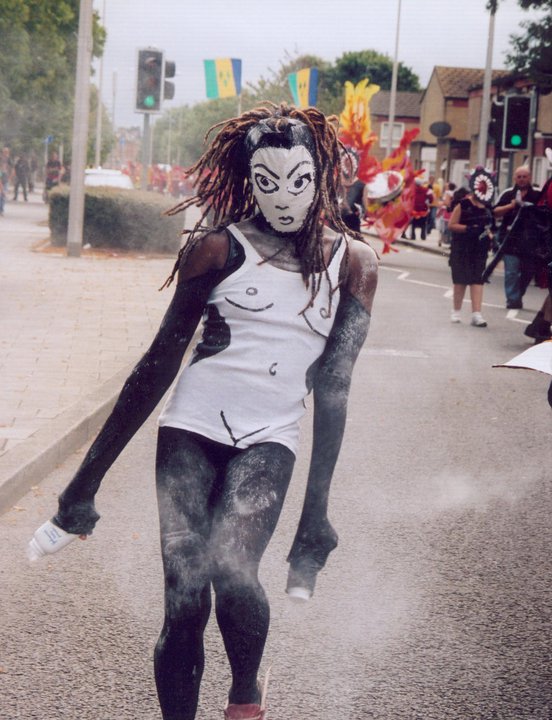
When I was little I wanted to be movie star! (laughs) Drawing has always been part of my life from as far back as I can remember, and dance as well.  I knew I loved art and always wanted to be an artist or arts practitioner. I have very supportive parents and they really fostered my love for culture and always believed in my art, what I could do and the difference art could make to circumstances. It was during my first degree in Trinidad that I actually became convinced that I could be an artist, that I could make art and have exhibitions. My lecturers were also great examples of successful practicing artists. Being Trinidadian, Carnival was always part of my life. It was during my MA at Howard Gardens that I became interested in Carnival performance as a way of engaging the ideas of integrated arts. This Carnival interest has evolved to include ideas around re-presenting self in public spaces and what that means for social issues around notions of belonging and un-belonging, visibility and how we react to social, political, personal situations through temporary transitory performances and rituals.

13522001_10154421603905649_2608251298474307930_n

You mentioned your parents I wonder if there are any individuals or organisations that helped support you in developing your skills and knowledge?

 I have a long list of individuals that have helped in the development of my work but again I think the core always goes back to family – my parents, my sisters, my boys, my husband and so on. When I moved to Wales I felt in some ways as if I had to start again, to prove myself, make new contacts and forge my own little space within this art world. It was a really insecure space to be in to be honest. I joined organisations like W.I.D (Welsh Independent Dace) and C.A.D.M.A.D both of which no longer exist. S.W.I.C.A (South Wales Intercultural Community Arts) helped a lot as well, providing a space to explore and meet other artists with a range of different skills. My first solo exhibition in Cardiff was in g39 when it was on Mill Lane which was funded by the Arts Council of Wales. I feel like an ole timer now! The Butetown History & Arts Centre was also a great support to help me show my work. They too have recently lost their funding. I think the key thing though is about meeting people, travelling, experiencing, talking about your work and interests and being true to what you want to do. As part of this current research I have developed connections with the Butetown Community Centre and individuals working with and in community.

13567136_10154421631600649_1652986525087605783_n

Awareness of Carnival (which you have a great deal of personal experience and knowledge in) as an art form is growing. In your opinion what is needed to help the art form develop?

 That’s a great question. Carnival can be seen as a public participatory celebration of a people. It is moving and fluid and reflects issues within a society through song, dance, costume and so on. Development is a tricky word, because what does that really mean and for whom? In some regards Carnival development needs an injection of cash and government support. But I would argue that a Carnival really belongs to the people and ‘development’ could also be about handing-over and seeing what emerges over time. I am still learning about this Welsh space and I think there are carnivalesque ’emancipatory’ performances that occur in spaces like stadiums and on the streets on rugby match days. Carnival to me, becomes meaningful if the people need it. It’s tricky when it is just another fashionable purely aesthetic street parade.

SNV31470

You are currently focusing on first generation Caribbean migrants associated with Butetown, facilitating ideas of community re-presentation. How did this project develop and what responses have you had to date?

by Carrole Fox

I have absolutely loved being a part of this project! I had the opportunity to work with Elder Caribbean migrants and to be immersed within Butetown learning about their rich history and why the space was so attractive to people travelling from the Caribbean. The project has culminated in several exhibitions including one at the Cardiff Story Museum, one in the Butetown Community Centre that includes a series of photographs of the Butetown Domino Club members by local photographer Simon Campbell.

by John Briggs 02

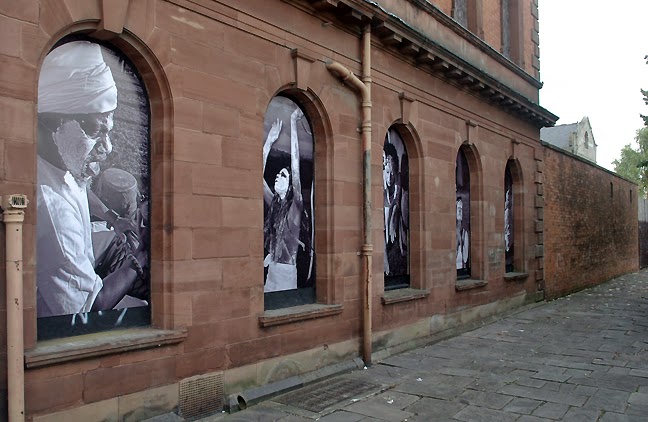
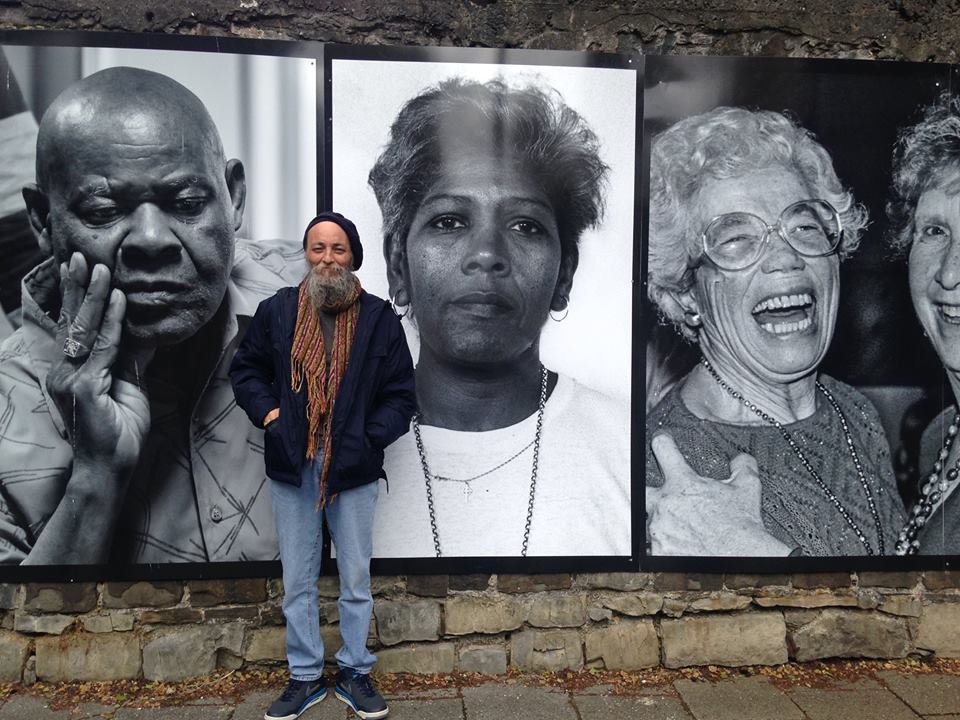
The other end-of-project exhibition is on the Network Rail wall opposite Loudoun Square on Bute Street. It is a series of portraits by different photographers who have made Butetown a focus in their work – Simon Campbell, Keith Murrell, John Briggs and Andrew McNeill. We even managed to get a photo by Bert Hardy.

13507087_10154421643555649_3080952284288185602_n

This Bute Wall exhibition looks at Butetown, the diversity, the elders and ideas of community wellbeing and representation. Generally responses have been positive.

Butetown Elders by Simon Campbell

Do you think that arts and culture in Wales represents the diversity of the citizens and communities you have worked with?

 Well I think if we look closely enough we will see people representing themselves in so many ways. I think representation is crucial and the diverse fabric of Wales has been actively engaged in places like Cardiff Story Museum and Glamorgan Archives. In my experience I am not convinced that the diversity is always reflected in the visual art world but again, it is about where we look, what is made visible and what inevitably becomes less visible. But I feel positive. I think there is good work happening, a lot of talent and room for alternative ways of engaging arts.

You frequently support workshop activity with members of the public, do you think this type of activity is important and why?

 Yes, I think workshops are important. As an artist working with the public opens you up to different people and conversations and experiences which as I mentioned earlier are crucial to art development and relevance. Also, I think one of the aims of art is that it is for everybody. It can challenge, inform, educate and really allow new and creative ways of seeing the everyday to emerge. Workshops are an opportunity to share art with different people and it also allows you to think about ways of making art-making/doing accessible and relevant to a diverse groupings

by John Briggs

What are the opportunities for those interested in carnival in Wales?

Carnival is huge! There is room for everybody. First there is the question of what aspect of Carnival interests you. I know the performance department at the Atrium are starting to actively use carnival as part of their teaching. Any formal art – music, costume and set design, painting, sculpture, dance can lend itself to Carnival. The main ingredient especially with performance is not the qualification but the desire and passion to want to do it. We have the Butetown Carnival on the bank holiday weekend in August. It is a great opportunity to create and explore the potential of a Carnival in Wales. Those interested can contact Keith Murrell founder of BACA (Butetown Arts and Culture Association) at the Butetown Community Centre.

13413535_10154588301796874_6196259796899434927_n

If you were in charge of funding the arts in Wales what would be your priorities?

 My priority will probably be informed by spending time with different artists and communities and seeing how their visions relate to the broader political agenda for the country.

When you aren’t involved in culture or research what do you like to do in your spare time?

 I feel like I am always involved in one kind of culture or another. I love spending time with my boys. I love drawing. I love dancing and laughing and learning. I also enjoy watching world cinema.

Many Thanks for your time Adeola

 Thank you!

“Which is why I am writing this” Creatives and critics on the EU referendum

 Creatives and critics from and based in Wales respond to the vote to leave the EU.
Beth House Founder/Creative Producer
Taking Flight Theatre Company
beth
 
I have been shocked and dismayed by Thursday’s vote in which just over half of the British public expressed their desire to leave the EU. As a theater maker working with marginalised groups, much of the funding of organisations we come into contact with- organisations, which support the most marginalised and disenfranchised among us-, comes from EU pots.
The aim of Taking a Flight is to provide employment opportunities for Deaf, disabled and sensory impaired performers. Whilst I don’t anticipate that the government of the day would reverse laws and Acts which have already been passed to protect the rights of disabled people, I fear that, with the UK’s poor track record for supporting disabled people and protecting funding and support, that the UK will begin to lag behind Europe in this- and many other areas. This will happen.
My immediate response of panic has been much more personal, as I feel already there has been a paradigm shift in the attitude of many people towards “the other”-I have heard in the street, on social media and on the news, Joe Public using the result of this referendum as an excuse to be overtly, unashamedly and publicly racist. It feels as if this referendum has opened the door for the metaphorical tattooing of the bulldog on the forehead and the waving of the Union Jack in the faces of those who remain supporters of membership of the EU- and those perceived as “other”.
Lastly, I am disappointed at the number of people who appear to have voted “leave” in error- who decided to vote against the government – a protest vote which has cost us- and our children- dearly.
I wish I could share the “lets make the best of it” attitude- that the best art is inspired by diversity, but I’m afraid that with so many of my friends of European origin already planning to leave, and so many friends speaking of “winding up” all their EU contracts, with the pound at an 31 year low and the threat of further knocks to the industry I love and make my living- such as if us- at, I cannot bring myself to optimism at this point.

James Doyle-Roberts (Co-Artistic Director, Citrus Arts based in Pontypridd)
james roberts

On the day of the result I was in a cheap hotel room next to London City Airport. The social housing estate next door is soon to be demolished to make way for yet more tiny 1-bedroom flats which claim to be “luxury” (as they always do), and will temporarily house workers rather than families, until they can’t afford to live there anymore.

This is how economic “growth” works, and is why I’m on the side of the social benefits that the EU delivers in our communities in Wales where it invests in apprenticeships, tourism and communities, so they can keep their shared spaces connected to their sense of self. And yes, that includes people who come from abroad who want to contribute to those communities.

At 6 am that morning, I woke up with the referendum result already in my mind. I checked my phone, and my heart sank into an empty-feeling stomach.

I’d already voted to Remain without a moment of doubt; I still respect some friends who have sound ideological reasons to distrust the EU’s current state, but don’t think their global revolution is coming soon and know a better bet on our current future when I see one.

The last thing I saw on TV the night before was the early Sunderland result declared alongside footage of cheering Leave supporters. This clip was different to the usual election results being declared to a band of victorious party-faithful, this was the kind of cheer we’d all seen in earlier weeks of the violence that accompanied the opening games of Euro 2016, it was cheering with anger and a F**k You attitude– the worst kind of victory cry.

I went downstairs to the breakfast room to see a man in his 50’s cheering loudly every time Johnson or Farage appeared on the TV above the heads of an international mix of fellow guests and staff. He’d clearly been having his own all-night Brexit party, surrounded by empty bottles and was enjoying himself by loudly addressing the staff (mostly non-white), in that particular smirking, dismissive, ‘you-know-what-I-mean’ way that the odious Farage has normalised into our political discourse in the past eight years.

I was being paid a small amount of money to attend Greenwich & Docklands International Festival (GDIF) and the networking events around it. Alongside my thoughts asking “what’s the point of going, now we have the repercussions of this terrible result to deal with?” I was also thinking “and so, here it begins . . .”, as I left Bully-Boy to his ugly antics.

The lump in my throat grew each time I thought of the future of my little boy, 19 months old, growing up in a society where facts and expertise become disposable when pitted against volume and vitriol. What kind of society are we allowing our media to shape where honesty and propriety are represented as just “one side of the argument”?

At the GDIF Marketplace event (where artists can meet programmers from around the world to sell our shows), the atmosphere was how I imagine a wedding party to be where the Bride or Groom have bolted, but the guests decide to stay to consume the food & drink anyway because it’s all been paid for. There was no banquet on offer, just opportunities to build relationships with fellow artists around Europe and the wider world, and chances for us to make the best of the funds we could collectively gather between us if we cooperate.

Speakers welled-up & choked as they tried to contextualise why we were all there. Scottish delegates had confidence that they would go their own way, anyway; I felt like apologising for Wales’ strong vote to leave the EU.

There is still hope for a way out of what looks like an ugly future, but without any current leaders with the integrity to step-up & confront the lies, it is up to us to build it together by talking to each other, our neighbours, the people we randomly meet, and not being afraid of Bully-Boy and his gang.

Rachel Tresize Author and Playwright 
Rachel

I’m absolutely devastated by the referendum results, not least here in my own Rhondda Valley where residents have benefited from so much EU funding in the past. I studied on an Erasmus scheme when I was twenty years old. It was such an inspiring experience to meet and study with so many students from all over the world and inimitable in introducing me to the world outside of my own area. As a writer I travel frequently to EU countries and am translated in Danish, Italian, Croatian and soon Slovenian and I would like young Welsh students and authors to have these same opportunities. I’m worried now that these ties will be severed due to financial and travel restrictions.

 Gemma Louise Treharne-Foose  Get the Chance Critic

f93a65fd6e91cb6f2f9e2bd3aa32a3ff
 

I’ve been a lucky recipient of EU-funded programmes over the years. I had a paid for apprenticeship after University to train as a researcher in TV production because I lived in the valleys. I have been happy to take advantage of the programmes and funding available to me because of my postcode and because people think I need a ‘leg up’ or a head start. But these programmes and funding pools are a sticking plaster for the real problems going on in the valleys. Long term unemployment, dreadful infrastructure and crumbling services. I’ve had lots of conversations with others living here that it’s ridiculous that in 2015/2016 we are still relying on charity handouts – whether they are from Westminster, Cardiff Bay or Brussels.

I think the remain campaign never really addressed this malaise and the deeper frustrations and resentment, unfortunately. I fear for how much worse things will be here now. EU-funded projects were the only thing helping people back to work in many areas in RCT as UK-Govt services (like Job centres) have ceased or been closed down. As much as I agree with the reasons to remain, I have struggled to articulate to friends and colleagues from wealthier and more prosperous communities why people here aren’t jumping up and down and doffing their cap because of handouts from the EU. I think there’ll be some harsher realities coming our way, though.

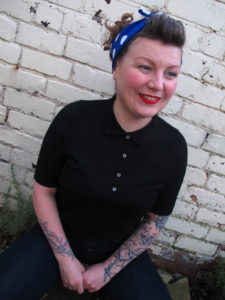
Sophie McKeand  Welsh Poet Young People’s Laureate Wales 2016-2018
Sophie_McKeand_Feb2016_a-003

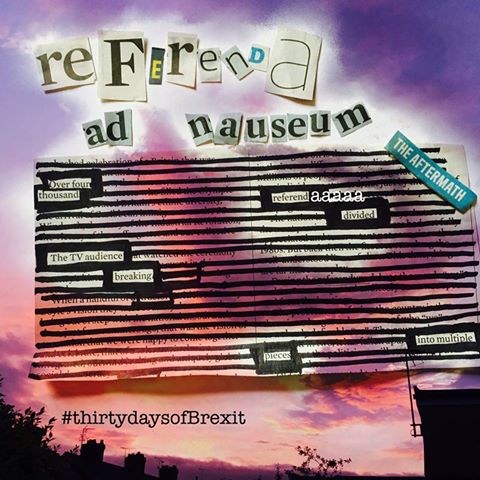
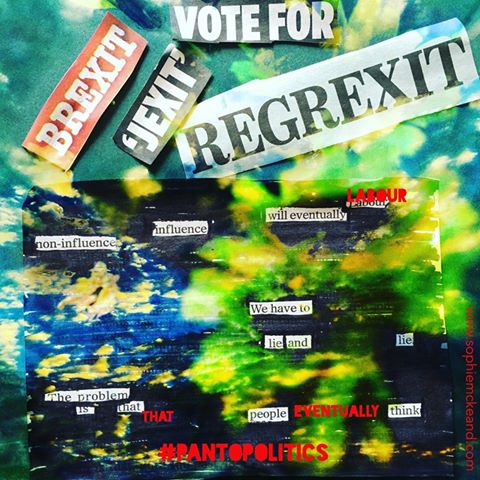
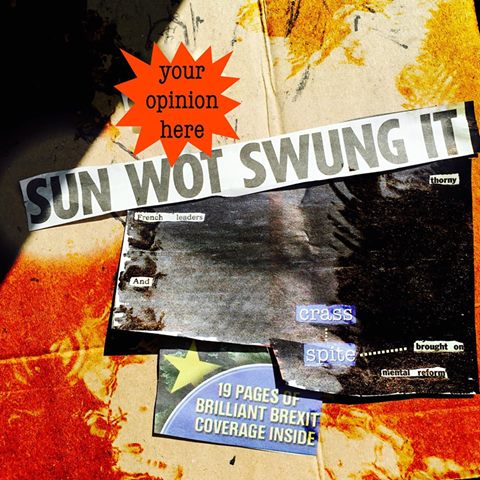
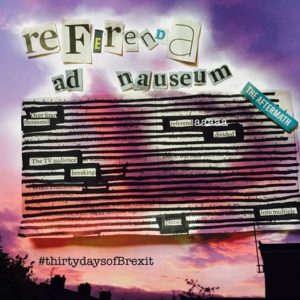
I’ve chosen to respond to the Brexit debacle by creating blackout/cutup poems every day for thirty days using only that day’s papers using the hashtag #thirtydaysofBrexit. These are protest poems in response to the right-wing media bias we’ve all been subjected to.
Sophie FB1

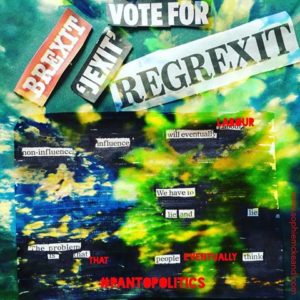
This needs challenging, questioning and changing dramatically. Our media is homogenised and overtly right-wing which is why Jeremy Corbyn is getting such a roasting.
SOPHIE IMAGE 2

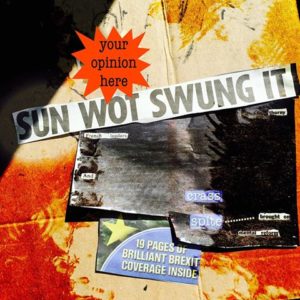
I personally believe he is, hated by the political and media establishment, the underdog the British public will get behind in the future. We’re sick of cock-swinging politics and many like his quiet socialism, his let’s-have-tea-with-your-nan approach. I think he is someone who could reach out to Plaid Cymru, the SNP and Northern Ireland, creating a united group of countries.
sOPHIE FB 3

https://www.instagram.com/sophie_mckeand/

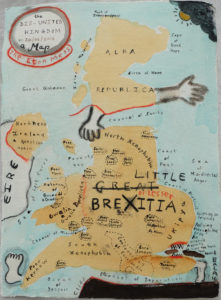
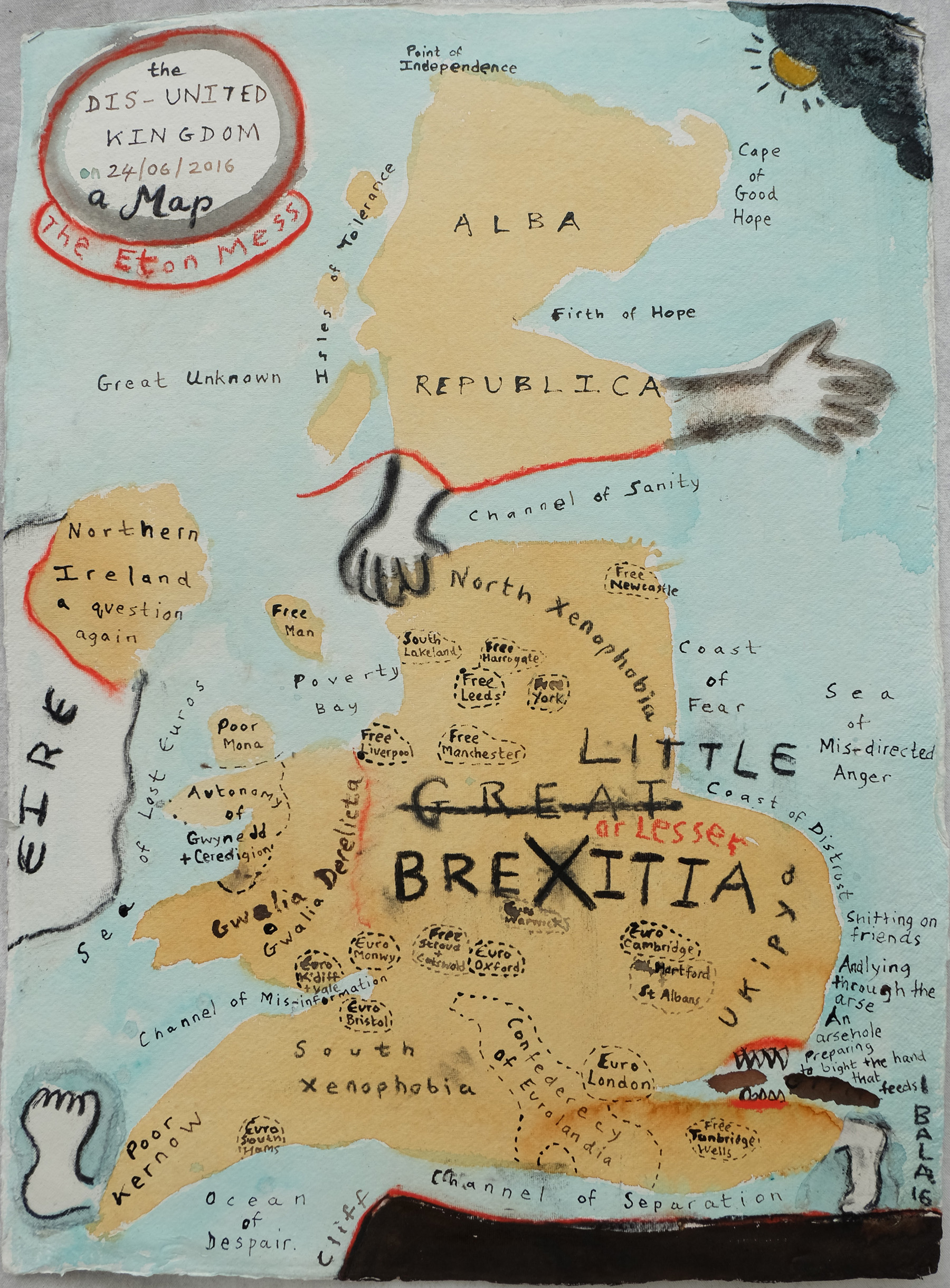
Iwan Bala Visual Artist 
iwan bala
 
'Dis-United Kingdom'

Keith Murrell Community Artist 

216064_10151508187706874_1938320101_n

I should preface my response by saying that I didn’t vote

I’m not registered at the moment because I have no permanent address – I know there is still an option to register but I don’t feel like sharing my personal circumstances with the bureaucracy. Having said that: I’ve never been overly engaged with the ‘democratic process’ and have very little (none) faith in the political party system – I’ve only voted a couple of times in my life and that was about issues rather ideologies … at the previous general election I voted ‘Green’ not because I thought they could win but in order to show support and help them to keep their deposit. Had I been registered this time around I would have voted to remain: this in itself is more of an instinctive reaction to the politics of those who want to leave, rather than any shining virtues of the EU.

I personally have little regard for ‘national identity’, borders, or flags and I tend to think more in terms of community and the planet. In that respect, I’d find it more plausible to think of myself as a citizen of an actual place (i.e. Europe) than being a subject in some archaic theme park called GB, UK or whatever it might say on the vellum.

In practical terms: I think the EU is of great value with regards to the advancement of things such as Human Rights, Employment Law and Environmental issues, etc. On the other hand, I’m not particularly enamoured about the impact of European funding for ‘socially targeted’ projects. Having worked on several such projects with a total value of several £millions I witnessed most of that money being directed towards vested interests more than improving the communities intended… and at worst Euro funding has been used to disrupt, dis-empower and displace communities… Butetown has had more than £1billion of EU money and where is it now?

Outside of Cardiff – the areas of Wales which receive the most EU funding voted to leave and irrespective of the politics behind the individual votes this must be seen as indictment of the public and voluntary sector in the delivering the EU programme.

With regards to the political campaigns the apparent choice was between buffoons and liars (clowns to left, jokers to the right …) I didn’t hear anything convincing from either side but then again I wasn’t paying much attention.

Regardless, I reckon the high turnout was due to the media hyperbole rather than any actual knowledge of or even interest in the EU … it’s quite bizarre to think that people might be more concerned about the goings on in Brussels than their own Town Hall.

In the event, I was a little surprised – and disappointed – with the result: mainly because it demonstrates the prevalence of such retrogressive attitudes – and might encourage / permit more people to think more along these lines. Then again, it seems that there was a generational factor in the voting with the implication that the younger people think differently and in time they will lead the debate – if losing this referendum mobilise young people then that will be a good thing …

But my Facebook timeline was inundated with angry / fearful posts about the future without the EU – and my response was “it’s actually not that bad” …

The media, pundits, etc have great fondness for using terms like ‘historic’, ‘pivotal’ and ‘once in a lifetime’ because it makes their role in the affair all the more important – every major political, sporting or scientific event is presented this way – and the public buys it because it makes their lives seem less mundane – but in reality nobody is interested in history but historians: you couldn’t go into into your local pub or corner shop and hear about the economic impact of the Versaille Treaty – very few people in Wales were preoccupied with Wales’ history in the European Championships until the TV reminded us and if Wales should actually win it will pale into insignificance in little more than a decade

I don’t claim to know anything about macro-economics (which makes me better informed than most) but I do know that the actual economy has very little to do with elections (although I will also say that every penny earned and spent is a vote cast)

I personally don’t have any property, investments or pension to speak of and I have quite a low maintenance lifestyle – so market shifts mean little to me – but for those that have those concerns I would say that ‘there is many a slip between cup and lip’ so there will always be the potential that they could lose out but similarly there’s about as much chance that the pendulum will swing and at some point they may be ahead – and this has been the case from the Bible to Barings Bank

I don’t have a passport and have never travelled outside of Wales & England – so again the whole notion of passports, visas, etc has little impact on me directly – but I don’t know that I would be too bothered about filling in some forms if I wanted to visit somewhere that badly – and perhaps people should travel around Wales a bit more 🙂

Dr Emily Garside
Dr Emily Garside

I am sad, I am angry, I am disappointed. Above all I am frustrated. Frustrated with the politicians who led us to here, with the media who helped further campaigns fought on little or misinformation. And I’m frustrated with those who say because it was a ‘democratic’ vote we must all sit back and quietly accept the decision. I accept that the vote was democratic, I accept people’s right to vote Leave. I don’t have to be happy about it. Thatcher was elected democratically and I’m still angry with that, and the implications of what she did while in office. And much like what Thatcher’s government did to this country, to the poorest areas and to the arts, I fear that the decision to leave Europe will be felt for generations to come. And much like in Thatcher’s reign, Wales is a place where the hits will be felt hardest.

In Wales you really don’t have to look far to see one of those little signs with the European flag that let you know the building that was repaired, the social space rebuilt or the arts centre allowed to continue is still there because of European funding. So much of Wales has been rebuilt in literal and cultural terms by the EU, and that so many areas, so many voters let xenophobic notions and unfounded immigration fears blind them to that scares me.

I fear for our artists and our art. I fear for the millions in lost funding that the arts in all their forms are reliant on. Wales has always been outward facing in it’s art. We invite the world to share our stages for Eisteddfod every year. We hold festivals that people travel to from the world over. And we collaborate, we share, we create. It’s in our very nature as a nation of artists. And it is this loss of collaboration I fear most. When paperwork halts free movement, when isolationism means the hurdles are too great to overcome to collaborate and yes, when we no longer have access to the funding we do now, because we cut ourselves off.

It seems reductive, gauche even to reduce my fears about arts in Wales to funding and travel, but these are the vital tools that give our arts life. In cutting off the vital lifeline of European funding, and building barriers to ease of travel to share what work we can still create, what then? I think of all the work unmade, the opportunities not shared, and it breaks my heart.

The ‘leave’ campaign seems to be fought and now won on a backward looking attitude, a yearning for a country that in fact never was. If we look at Wales before EU funding we were crumbling, our arts were suffering. There are no ‘good old days’ to go back to. What an open Europe has done is open the doors to collaboration, to inspiration and to forward thinking, forward motion. To quote Tony Kushner ‘The world only spins forward’, and yet we seem to have voted to try and stop.

What now? That’s the question isn’t it. When you (democratically) vote in a government you know roughly what’s coming, for better or worse. You know policies, personalities and in four years you have the hope that they’ll be gone. Europe is a leap in the dark. The fear is real because the answer to the question of ‘what now?’ is ‘nobody knows’.

The most anger I feel is towards those who tell us all to ‘just calm down’ as if this was a bad football score (not that I hope to jinx Wales’ chances, football is about the only ray of hope I can see right now, and I don’t even like the sport!).  But maybe there’s hope in that. In the anger. If there’s one thing the arts does well it’s respond to crisis. And that is where I do have hope. I have hope in the voices of the artists, and will of the arts companies to keep fighting. To keep working however we can.

Yvonne Murphy Omidaze Productions
Yvonne Murphy thumb

The referendum result is not binding. It is advisory. Parliament is not bound to commit itself in that same direction. I do not believe the referendum was managed in a fair and democratic way and since the Leave campaign spoke so highly of sovereignty I wish British Parliament to enact it’s sovereign right in overruling the referendum result in the best interests of Britain and ALL its people and its future generations.

And so I have launched a petition. Here is the wording:

Sovereign British Parliament to debate EU referendum result & vote to overrule.

The British Parliament is sovereign and it is accountable to the people through elections at which we choose those whom we want to represent us, NOT through referendums. MPs are our representatives & are there to decide what, in their judgement, is good for us and the country.

Many Leave voters placed a vote of protest against a range of things not connected to the EU, from austerity cuts, to rising inequality in Britain without actually understanding the facts or the full implication of their vote. This is why we elect MPs in our democratic country to make these decisions. e.g capital punishment was thankfully abolished in the 60’s although a clear majority of the population remained in favour of it. The nearly 50% of the population who voted remain need a hearing.

It takes a few days for a petition to parliament to be processed and approved. So while I wait for that to happen I have written this article/blog. The petition circulating and gathering millions of votes asking for a second referendum (which I signed) was started in May by a Leave campaigner worried that we would get a Remain result! I do not particularly want a second referendum. I want parliament to deal with this.  I didn’t want a referendum in the first place. Nor did at least half the country. So why did we have one?

We had a referendum because David Cameron took a high risk strategy with our country’s future to appease the right wing bullies in his party, to silence UKIP and stop the migration of Tory MPs to that party. He took that risk because he did not for one moment think the country would vote out. Even the man who ran against him (Boris) did not for one moment think we should leave (which is why he is now furiously back peddling) he simply wanted to ‘play the game’ and raise his profile so he could go for leadership next time round. The Co-leader of the Leave campaign Iain Duncan-Smith in a interview on Friday called the result ‘startling’ not once but twice and appeared to be thinking on the hoof of the next steps ‘well I think what we need to do is get together a group of cross party MPs…and maybe some people from outside…some Lawyers…to work out how to progress….’ No way? Great plan. And so the people of Britain were used as pawns in the games of these rich privileged elite Eton boys to further their own careers.

What they had not understood is how angry the British people are. The divide between the rich and the poor and inequality has grown out of all proportion. We are one of the richest countries in the world and yet food banks have become the accepted norm in every town in Britain. When I told colleagues this on a recent trip to India they thought I was joking. They stood dumbfounded that such poverty existed in the UK. And it does. There are parents going without food in order that their children can eat. Today. In modern Britain. It is a disgrace.

And this is why people voted. They simply could not see or understand how it could get any worse. Because they were lied to by the Leave campaign. They were told if we left the UK millions of pounds would suddenly appear in the coffers of the NHS. They were told immigration was the cause of all their woes and the door would be shut. And this was the worst part. This emphasis and blame on immigrants which has opened the door to far right facism, racism and hatred on our streets and in our communities.

And worse still it has opened the door across Europe to Far Right Extremism with the National Front in France calling for France to follow suit and leave the very institution that was formed post World War II to ensure Facism never again gripped Europe and the world.

Shame on you Boris, Gove and particularly Farage. Shame on all of you for dividing our country. For peddling fear and hatred and intolerance. For picking at a scab until it bled. And shame on you for your lies.

Those who voted Leave were told we would get our country back. From whom? From our fellow countrymen? From the EU citizens who lived here, raise their families, contribute to our society, pay our taxes? Our country is now falling apart before our very eyes. They were told it would be an end to EU regulations. Like the ones which mean our children no longer swim in filthy polluted seas as I did as a child? Or the ones that ensure that workers have to be paid a fair wage and have decent working conditions? Or the one that gave us the Human Rights Act? Or the ones that say that the poorer more deprived areas in the EU (the very ones that voted Leave) must have the lions share of funding? Because they have. I remember Wales in 1992 when I first came here. It is a different country now and that is mainly due to being cited a ‘poor country within the EU’ and receiving a shed load of EU investment.

People in this country are not struggling because we are in the EU. They are struggling because we do not share equally the wealth we have at our disposal and the EU is a mechanism which actually helps share that wealth not hinders it. Without EU membership we will be MUCH MUCH worse off. Economically, culturally and spiritually. Many people voted Leave because they felt things couldn’t get any worse and then voted for the very thing that will absolutely ensure that it does.

 “For many millions of people, this was not just a vote about Europe. It was a howl of anger at politicians and institutions who they felt they were out of touch and had let them down…The British people deserve the chance not to be stuck with the appalling consequences of a Leave campaign that stoked that anger with the lies of Farage, Johnson and Gove.” Mr Farron Lib Dems A spokesperson for the Liberal Democrats said people would feel “betrayed” with the outcome of Brexit and suggested the result had been won on a false prospectus.

And so in the words of the Independent

“All that remains is for someone to have the guts to stand up and say that Brexit is unachievable in reality without an enormous amount of pain and destruction, that cannot be borne. And David Cameron has put the onus of making that statement on the heads of the people who led the Brexit campaign.”

 Which is why I am starting the petition.

Which is why I am writing this.

Which is why I cannot quite believe that Labour – at a time when they should be stepping up and holding every Tory MP (on both sides of the campaign) to account who have brought this mess upon us are instead too busy have a row about leadership (again!!!) and allowing the Torys to rewrite history and yet another false narrative. Park your differences for a few months, unite and serve your country and not your own self-interests and do your job which is to OPPOSE not self-combust at a time when we need an opposition most.

And for my colleague who said

“My only question is what would happen with MPs who want to Remain who represent Leave areas? They’d never get re-elected…”

I say well that is a risk all MPs should be prepared to take. They are there to work in our best interests and not their own and sometimes that means taking the very difficult and unusual decision to NOT do what those who have elected them ask them to do. Because they are our representatives. They have the facts. They have the education. They have the time to read the policy documents which we do not. That is their job. And they must now debate in parliament if the result of this referendum is actually in our country’s best interest. And if the majority truly believe it is not then they must overrule it and face the consequences. That is leadership. Leadership is not easy. That is why they are paid the salaries they are paid. And now they must ALL step up and look into their souls and decide.

Barbara Michaels 3rd Act Critic 
js47465302jpg

Brexit and the Arts in Wales

Now that the initial furore and panic is over, what is the future for the arts on Wales? As with in other parts of the United Kingdom, we have to wait and see. What is certain, however, is that for a time (and who knows how long that time will last?) everything will be in a state of flux.

Disturbingly, when budgets and funding are up for consideration – some might call it up for grabs – the arts are always in the firing line. In Wales, when the arts scene – and I refer particularly to theatre – is expanding as never before, to cut funding at this stage would be close to criminal. This does not apply only to our capital city, where we are spoilt for choice, but to rural areas – take the prestigious Theatre Clywd, for instance. New talent in both writing and performance are emerging all the time, and being given the chance to explore all manner of genres.

My fervent hope is that our government realise this and will continue to give them support. Many of our young people are dismayed by the result of the referendum. It is up to the powers that be to prove to them, and to all of us, that there is indeed Life After Brexit.

Helen Joy 3rd Act Critic
d6429ed76fa53769c7aa197eac03e5d0
An open conversation on Facebook between people who all know me but who don’t necessarily know each other, held in the week of the EU Referendum result.
Each contributor is represented by a different colour text.
 Time for something slightly different: how do you think the vote to leave the EU will affect Arts and Art funding?

The arts economy is marginal at the best of times. I can’t see this having an exaggerated effect on funding. A great deal of Arts Council funding comes from the lottery rather than government revenues.

Some 2yr + bids being wound up where applying for EU funding. Not arts bids.

It’s the cutting of cultural ties I worry about, the Little Britain mentality and the feeling that we can go it alone. I’ve always liked feeling European.

We are used now to a sense of continental culture, the arts seem to benefit from both being carriers of local identity AND being representative of something wider.

If a cultural tie depends on the blessing of a bureaucrat, or still worse funding from one, what is it worth? The ‘cultural economy’ as a whole is huge; it was revealed a few years ago that this country earns more from computer game design than from agriculture. However, it had never asked for or received a penny of government funding, so nobody noticed.’ Culture’ is what people do of their own volition. Start steering it with subsidy, and it becomes something else. That’s how we get the grotesque spectacle of state-funded ‘satirists’ on the BBC.

Sure, to quote Raymond Williams, ‘culture is ordinary’. However, the BBC isn’t the State, that’s a line peddled by James Murdoch.

It’s no longer disputed that the licence fee is a tax (one I don’t pay); the BBC’s establishmentarian bias on many topics is now beyond satire, not least on the referendum issue. It’s notable that two of the best cultural institutions in London, Shakespeare’s Globe and the Handel Festival, don’t ask for or receive state funding.

Maybe I just like the way the BBC presents the bias. In a world completely reliant on private funding or ‘sponsorship’ we’d have a lot less culture and most of it would have to satisfy the paymasters. I’d rather satisfy the Arts Council’s remit than try to please Monsanto.

Culture always has to satisfy the paymasters. I’d prefer those paymasters to be you, me and the people around us! Would you say that our film industry was more dynamic and creative than America’s? Most of the TV I watch now is American-made.

Wouldn’t argue with your first point about culture and who pays for it but if I had to rely on things I could sell I’d be doing something very different. I don’t have anything sensible to say about film and TV. I could happily live without it.

Have they actually had any, or is this part of the current campaign to whistle up hysteria? I’m currently dealing with people on my local FB page, putting up pictures of people they accuse of racist remarks, without any evidence to back it up.

We need to build new structures we need to encourage philanthropy we need to not be scared of making money

Did you know that artists, writers, musicians here (Ireland) pay NO tax? Legacy from Charlie Haughey.
Who decides whether what they do is ‘art’ ?

No idea, presume Arts Council.

I think it’s older than Haughey’s time ; John Huston moved his family to Ireland back in the 60’s, I believe. So the bureaucrats sit in judgment on the artists, who have to meet their criteria? H’m. Curious how there always seem to be salaried posts for arts bureaucrats, but not for artists. A friend once showed me the telephone extension list at the UK Arts Council: more names than the Menin Gate. You’d get more money to artists by summoning them all to Trafalgar Square on a given day and dropping the annual budget in pound coins out of a helicopter.

So not even arts bureaucrats, but the Revenue Commissioners, are the judge of the artistic merit of your work:

http://www.citizensinformation.ie/…/artists_exemptionArtist’s exemption from income tax. Some income earned by artists, writers, sculptors and painters in Ireland from the sale of their work may be exempt from income tax. How to obtain exemption from income tax if you are an artist and satisfy certain criteria…

No was Haughey who introduced it.

Or just work to a different model – fund public art but let the market decide on everything else, like an accountant or pianist. Arts Council England – radio 4 now – believe arts will solve problems on our streets

Hearing this, a vision comes to me of a fat abbot, standing outside the glorious choir of some great abbey, saying ‘Without us, who would feed gruel to the poor?’

That’s interesting, not such a surprise I suppose. I’d like to know more.