
All posts by Hannah Goslin

[...]

Review: Iron Fantasy, She Goat, Soho Theatre, By Hannah Goslin

 out of 5 stars (3 / 5)

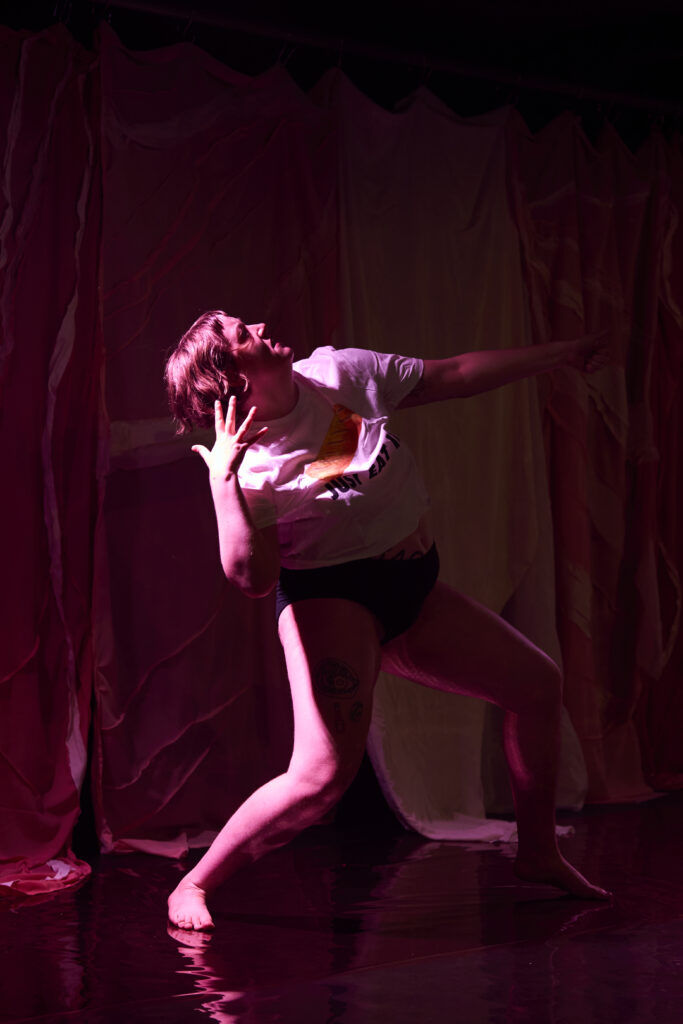
What does it mean to feel strong? A question, not often thought about but an important one none the less. Have we ever thought what it means to feel strong before? She Goat therefore ask this question and investigate it further, turning the results into a musical and comedic filled theatre show.

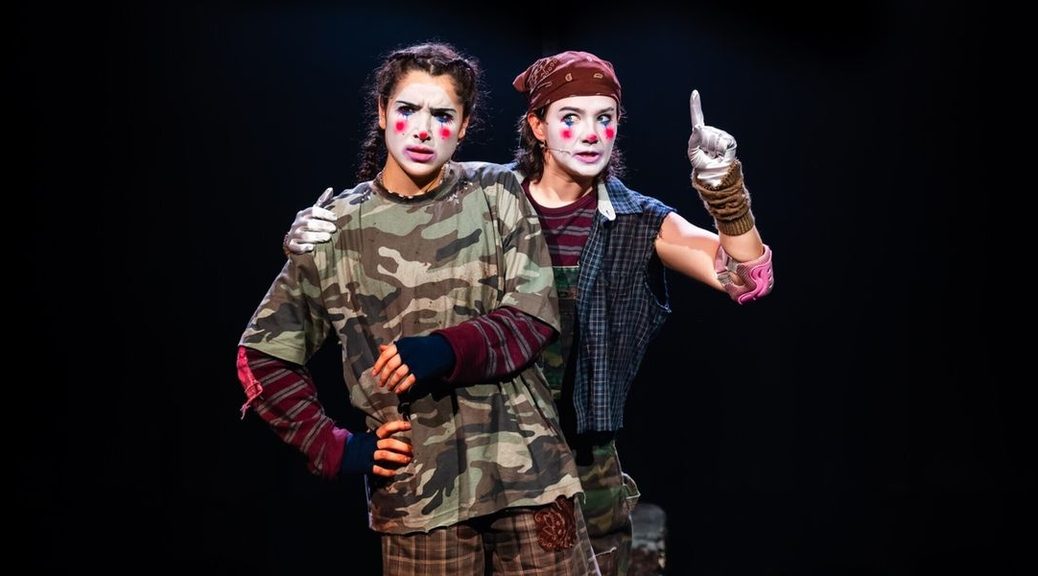
Iron Fantasy is the journey of these two performers to find what it means to feel strong, as a human, as a woman, from the influences of Xena Warrior Princess, Medieval storytelling and culture, and the world of fitness. However, while they body build, drink raw eggs and get new Knight costumes, their journey develops more into questioning them as females, their past and their future – what does it mean to be strong really, in both themselves and as women?

The duo start this quest by peeling themselves out from behind the curtain, with wrist and knee braces, reciting random phrases, some hilarious and some with little sense to them. We find out that these quotes are from children and the youth as they researched for their show. “As strong as eating a bear” or “pulling a car with your teeth” are funny and almost joyous thoughts on what being strong means. They investigate how this changes over age, when life becomes different and the quotes change, from not only the children but themselves as they get older.

Comedic takes on re-enaction of their body building sessions, their love of Xena, are fun to watch and they have a great dynamic between them, bouncing off one another, showing a true friendship and creative partnership. We fall into this comfortable pattern with them, relaxing in our seats and letting the musical interludes and funny scenes wash over us. That is until it gets all too real.

The duo each choose a real life scenario, that does build up, with sneaky interruptions up to this point, until they break through the facade. These aren’t a whack in the face, or massively shocking but they are impactful. A gentle approach is taken to delivering this but it felt a little lost from the high energy up to this point. The important points and stories soon feel a little of an after thought and that feels a real shame.

Overall, Iron Fantasy is a fun and unique debut for She Goat. It is fun, the duo are likeable and have a great concept. I just wanted the final end note to hit more of a punch and not get lost when it was so important.

Review, Guess How Much I Love You?, Royal Court Theatre, By Hannah Goslin

 out of 5 stars (5 / 5)

Forewarning: this review may allude to spoilers and trigger warnings related to pregnancy.

Sometimes, theatre needs to pull back the pomp and circumstance and deliver work that is raw and unfiltered. And this is exactly what the Royal Court Theatre have done with Guess How Much I Love You?

This production shows the relationship between a young married couple, from their 20 week scan and through the unexpected turmoil from the results of this. We watch as their hearts and relationship break and rebuild, through unimaginable circumstances and laid completely bare to us and our own emotions.

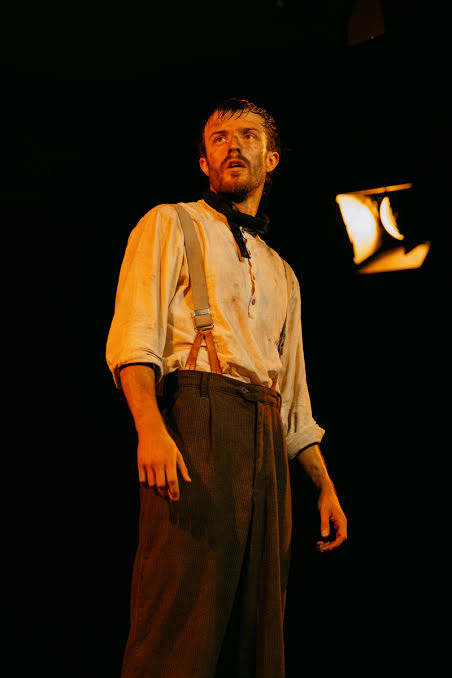
Robert Aramayo, who has just won himself two Baftas, and Rosie Sheehy present an intimate and realistic couple, so much so that it almost feels as if we are peaking in through that fourth wall to something private. They bounce off one another in a natural way and present something ever so real.

The writing itself lends itself, along with their fantastic acting, to build us up, wrap us in their love, which packs the punch so much more when the blows come. It makes us feel their pain as raw and heartbreakingly as they may feel and it does not stop when we think it will… it’s almost like Luke Norris when writing the play thought “are those all the tears you have? I want more!” Norris has not shied away from the real conversations, the moments of anger and hatred as well as deep love, unconditional and the juxtaposition between these moments is again, so raw and truthful. No pretending this is some fairy story or happily ever after… which, there is somewhat of one, but, a very difficult happily ever after.

The set is simple – glimpses into hospital wards, their bedroom, their bathroom, and propped up high above us. We look in but the rooms are small and again, we feel like we are peaking into the privacy of their lives. It makes when we meet their baby all the more close and makes them seem even smaller, unconsciously, and we want to reach out and cuddle him ourselves. Scene changes are abrupt, filling the room in pitch black and ominous instrumentals that are neither jolly nor frighting, but creates an uneasiness; and this is so effective to give us the tiniest of reprieves. We’re then treated with this open, full stage, in the end scene, with the two at the beach, almost like the pressure of their feelings and situation has relented. The writing brings the story back around full circle, but not after we’re beaten and bruised by the former emotional roller coaster.

Guess How Much I Love You? is every bit beautiful, painful and hard hitting. Not a dry eye in the house, you’ll come away in awe of this production and needing a few minutes to collect yourself – all in the best way that fantastic theatre creates.

Review, The Sh*theads, Royal Court Theatre, By Hannah Goslin

 out of 5 stars (3 / 5)

In this Utopian meets historical retelling of our past, The Sh*theads at the Royal Court Theatre does not hold back its mercy on bringing the intensity of love, violence and a willingness to live to the audience.

Looking back on early man, the debut from Jack Nicholls looks at how we began, grew, the nature of survival and the core feelings and emotions of human beings. At a state where the world is changing, we assume, for an ice age, a family fight for their survival, fearing the dangers of the world through story telling and belief without any other influence. When someone outside of their family unit joins, it pushes them to the reveal the lies about their way of life and soon the love becomes hatred and violence.

Our stage is kitted out, just like we would expect from early man – a cave with red painting on the wall of it, depicting hunting of animals by humans, with a small staircase of rock and hole at the top shining in light. The set changes little but when we move from the outside, in, to show the development of the family to the “others” (or, Sh*theads as they are known), this becomes a little more sophisticated; a standing lamp, chandelier made from bones, carpets put out – along with the animal print clothing that borders on modern, there’s a unique modernist yet dystopian feeling to this view of the past.

All the characters are larger than life and, while not a “stereotype”, they do lean into a certain differing character; the father is a eccentric man, ageing and a life long injury, the youngest daughter is bubbly and bouncy, with no filter, like most toddlers and Clare, the oldest daughter, while bordering psychotic, is strangely often the leader and voice of reason. The Sh*theads are also well rounded and different characters – a slightly simpler man, almost excitable as a child and his partner who is inquisitive and in her own right pretty fierce. The different dynamics work well, particularly when all descends into chaos.

My favourite part of this production has to be the puppetry. This is in the guise of the Sh*thead’s baby – evoking similarities to a smaller version of Little Amal, with effective and lifelike movement and voice and later a young doe eating grass. However, our first impression of the whole production is a huge, life-like Elk. Similar to War Horse, puppeteers envelope themselves within the structure and you forget that this is not a real animal. It is beautiful and yet made with a raggety-ness to it that feels homemade yet highly professional. It makes the circumstances it falls into all the more emotional.

The Sh*theads is a great production. It is beautiful aesthetically, with well thought out characters and an interesting story-line. However, while I cannot quite pick out what it was, it felt a little like the shining element to make it an outstanding piece of theatre was missing. Enjoyable none the less and worth watching despite it missing that little piece of the puzzle.

Review, BIGRE / “Fish Bowl”, Compagnie le Fils du Grand Réseau, By Hannah Goslin

 out of 5 stars (4 / 5)

As part of MimeLondon, Companie le Fils du Grand Réseau bring us this hilarious “silent” comedy, Fish Bowl. While part of MimeLondon and, as highlighted by quotation marks over the silent, it is not wholly a silent mime example, it is a whole lot of fun and chaos.

Fish Bowl is about three apartments in the same building, each containing a very different resident. Their tiny living quarters are sliced in half to allow us to see within, for their daily lives spread across all seasons and events. While on a large stage that is the Peacock Theatre, this one set has the sense of its small areas enhanced by the performer’s over-exaggerated movements and clever positioning of the staging interiors. For example, the tiny hallway, in reality, opens across the whole stage, but the performers contort themselves around the boxes and keeping to this small slither to really show how tiny this little world is.

Each character is starkly different, and there is something cartoon-like in the stereotyped universes they inhabit. We have a suited moped man whose flat is all white and clean, helped by his habit of hoovering his shoes as he enters; the hippy type who is full to the brim of items from boxes to furniture, leading to his sleeping area to consist of a hammock which evokes laughter when we first see it; and lastly, a pretty female whose flat is all pink and girly yet full of comfort. Despite these differences, we see the group warm to one another, the men lusting after the woman, friendships begin and fade and rekindle, and these character’s stories go in directions you never would have thought.

The humour is brilliantly done – a lot is reliant on physicality and involves clambering the staging or clever prop trickery, with some of the hilarity coming from age old comedy such as toilet humour or a peak at someone in their pants. Others are a bit darker but no less hilarious and shocks us in the transition.

When I highlighted silent in air quotes, this was to mean that the production isn’t wholly silent. However, this doesn’t diminish from the great physicality and some which is shocking and surprising. Music accompanies parts, there are sound effects and the only vocal sources from the characters are almost “Mr Bean”-like, with exclamatory noises or one words chorused. We understand everything that happens and these sound bites only add to the great action on stage.

Fish Bowl is a highly engaging feat of physical comedy, pulling from ordinary and relatable characters and lives but heightening the action to create a hilarious and fun production.

Review, Garry Starr: Classic Penguins, Francesca Moody Productions in association with MILKE and Underbelly, Ed Fringe, By Hannah Goslin

 out of 5 stars (5 / 5)

As a book lover, and, despite this, very much being influenced by the “book’s cover” Garry Starr was plastered around all things ed fringe and I knew, I would just need to see what this about. What I actually saw, was way beyond anything I ever expected.

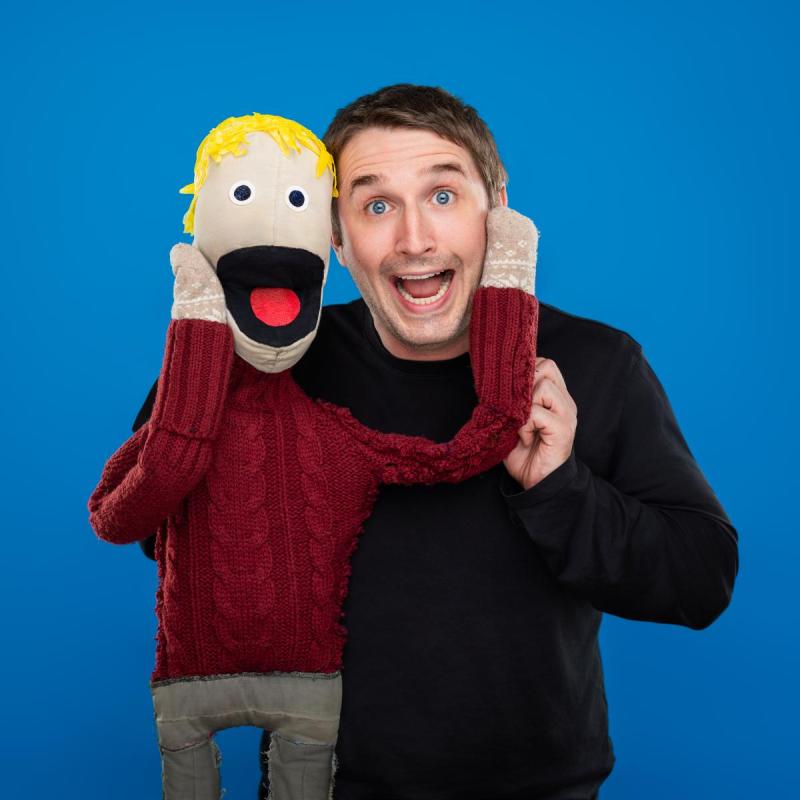
Garry Starr: Classic Penguins is a show that attempts to go through every single penguin book within the time allowed, creating hilarious comedy through quick and basic acting out of the titles, audience engagement and … oh… a whole heap of nakedness. That’s right. As we enter, there’s a aesthetic of a villain’s ice lair, with Starr in a high backed chair and clearly a top hat and tails. But when he swivels around, we see Starr at his full nudeness. The show proceeds in this fashion, with much lewd comedy sought from this, some…ahem… intimate puppetry and zero boundaries in physicality. At some point, you get used to this and suddenly Starr will pull out something out of his hat (metaphorically) that takes us back to the rude comedy basics. I will say, that the nakedness doesn’t really add anything to the performance – there’s no real rhyme or reason, but you can’t be mad because it’s totally absurd and ridiculous and entire chaos. It’s such a mad production, that you actually do not stop laughing, whether specifically prompted or just because you cannot believe what is happening.

The actual “recreation” of the books are very clever. Very to the point and as described, there are bits that are heightened to either gross us out or make us shocked, and others that actually are physically impressive. To ourselves, we start to guess what’s next. Most of the time, the acting begins before we are told the true title and, any book lover, begins to try to get ahead of Starr and what he is recreating.

Starr himself is having a whale of a time – with no qualms of his state of dress or interactions with us, he is laughing and enjoying every moment as much as us. As with any audience interaction, there are curve balls and he relishes this and uses it very much to his advantage to pull more and more laughs from us. In pockets of the production, we actually feel as if we are just Starr’s friends, being as silly and ridiculous as he is, despite being within a large, sold out venue.

Garry Starr: Classic Penguins is an absolutely nuts and nonsensical production, with ranging high to low levels of comedy and concept. It is mania of the best kind and one of the most bizarre but brilliant productions at fringe.

Review, KINDER, Ryan Stewart, Ed Fringe, By Hannah Goslin

 out of 5 stars (3 / 5)

If you were expecting a drag act, you are * some what* wrong. KINDER, while all the posters would tell you so, seems as if we are embarking on a drag act, we are in fact embarking on something a lot more.

KINDER is a deep and emotional production based on a drag artist at a time when their plans completely change. Instead of their debut on stage as their drag performance, they are in fact booked for a reading hour at the local library with children. What this triggers is a monologued production, with elements of high quality lip syncing performance, reflecting on a personal childhood and the state of children and families going forward.

The storytelling is deep and personal. We feel privileged to be part of something so sensitive and in a clearly vulnerable place. While the story is told, Stewart is slowly changing into a new outfit, looking through newly moved boxes, finding things that trigger a memory or an opinion. We learn a lot about them and how they came to be, while they also talk out loud their personal opinions and wants for the future. We feel close to Stewart, and they do speak to every one of us in that room. There are occasional moments of comedy, in the way that you find in a conversation, but this isn’t really meant to be that production, or so it would seem.

The lip-syncing moments are fierce and very professional – these injections liven and break up the monologue, much in a way that Shakespeare would use a light relief in one of his serious plays. Stewart easily commands the stage and takes up the space, not allowing your eyes to wander elsewhere. So, when we return to the one sided discussion, they suddenly seem a little lost in the space, and the tidying or searching becomes a little monotonous an action.

KINDER is a bit of a mismatch of a production – it has really strong moments, such as the lip syncing parts or the beginning of the artists vulnerability, but this sadly becomes a bit of the same, losing our attention and wanting something a bit more.

Review, 3 Chickens Confront Existence, LookFWD Arts, Ed Fringe, By Hannah Goslin

 out of 5 stars (3 / 5)

As we confront the space, we see three human sized cages in front of us, ready for us to then confront existence with three chickens.

That sentence in itself seems surreal and of course, it means that this production is also surreal. Lights come up and we see three different coloured chickens in front of us in human size, sat in the cages, staring out at us. Over the next hour, these chickens contemplate existence, time, their lives and what’s to come, all while they wait for their randomised fate of the broiler.

Along with the differentiating colours, the personalities of each chicken is different and in some ways giving a sense of the film Chicken Run – we have a hen who is a little wacky, a cockerel who is more matter of fact and another cockerel who is a little more of a higher class. They have been thrown together in unfortunate circumstances, bouncing off one another, creating naturalistic humour in their differences. They do feel like they have been plucked out of the famous film, with similar thoughts, interactions and a desire to escape their fate.

In amongst their interactions, the spotlight is drawn on each of them for a monologue about their life and existence. Their contemplation, while chicken lead, feels philosophical, and does give a feeling of something avant garde and thought provoking. Within these moments and their interactions, there are elements of humour but it is small and subtle, and it’s difficult sometimes to tell if this is meant to be humorous or an attempt at high art. Whatever it is, it is a piece of theatre you’d expect to go to at the fringe, for the eccentricity alone.

3 Chickens Confront Existence is a thought provoking and philosophical and avant garde piece of theatre, well catered for those seeking to discover the unusual at fringe. It however felt a little lost on what it was meant to be, whether serious or a comedy. Either way, it was a well performed and interesting production.

Review, Murder She Didn’t Write, Wildpark Entertainment, Eleanor Lloyd Productions, Fiery Dragons, Degrees of Error, Ed Fringe, By Hannah Goslin

 out of 5 stars (4 / 5)

Everyone loves a good murder mystery. Popularity of this genre has increased with Hollywood films such as Knives Out and The Thursday Murder Club, so it feels fitting that it comes to and is popular at the world of Ed Fringe.

As the title suggests, this production takes all the combos of the quintessential murder mystery, but puts the plot into our hands. Murder mystery meets improv – there are prompts and certain things in place to help, but with the help of the audience, how this actually transpires is completely unplanned. In our scenario, this is the case of the big sausage, set in a p*ss up in a brewery, which already gives us giggles and that typical British humour. There are often little innuendos and suggestions that continue the typical British humour in that wink wink nudge nudge kind of way.

The set itself is resplendent – very well made, featuring on quite a large stage with sold out seats. There’s a great sense of “Cluedo” with the chosen aesthetic and the monochrome colour choices – one character is all in yellow, one in green e.t.c. Our host has a essence of Miss Marple meets Jessica Fletcher, with slightly stereotyped and exaggerated elements in her dress and conduct. She has the power to stop and start and entice certain moments, with a tongue and cheek essence that clearly shows a great relationship and banter culture with her fellow actors by cheekily making things a little harder for them. Moments of corpsing comes from all of them; silly suggestions, recognition of Jessica Marple’s attempts to throw them, the comedy that comes from the minds of their colleagues as they improvise and, in this big space, this lets us warm to them and be part of their group.

Overall, Murder She Didn’t Write is a brilliantly and professionally constructed audience participatory improvisation show. It effortlessly links all the stereotypes of a murder mystery, engaging with us for prompts to continue the comedy and showing a real skill in creating a whodunnit on the spot.

Review, Wild Thing!, Mechanimal, Ed Fringe, By Hannah Goslin

 out of 5 stars (4 / 5)

More than ever, we are concerned about how the world is. It is slowly decaying and the extinction of wildlife continues. In this one man performance, we really take a look at this on a mass scale in a clever piece of performance art.

Tom Bailey is already in full performance mode. With a basic presentation on the wall behind and accompanied by a vocal announcement, there are bizarre names, latin, some are comical, some unusual, some complex, this prompts Bailey to attempt to impersonate the animal. As soon as we are sat, he interacts with us, climbing amongst us, or encroaching on our personal space, in a way animals would. We are also asked to take a card and later think about what the animal may be, how they may hunt and live. This is all very comical and fun, full of energy and changes in movement.

However, once we are lulled into this comfortable state, we are starkly hit with the reality. A almost pre-show, durational performance, Bailey trekked across miles, with a sheet listing the hundreds of thousands of animals extinct, creating photography pieces in these landscapes. In person, this is accompanied by an explosion of bones across the space, which he continues to perform physical theatre amongst, changing the comical dynamic to something blunt and dark. This combination has not only made us comfortable to accept the change, but puts us in a position of realising reality in a in-your-face way. It is clever and ever so moving as well as highly performative.

Wild Thing! sets out to make a serious point about the state of the world and its demise, with the use of clever comedy to soften us until hitting us with the dark reality. It is fantastically performed and curated to be not only a piece of theatre but performance art with a host of supporting media, making very important commentary on the destruction of the environment.

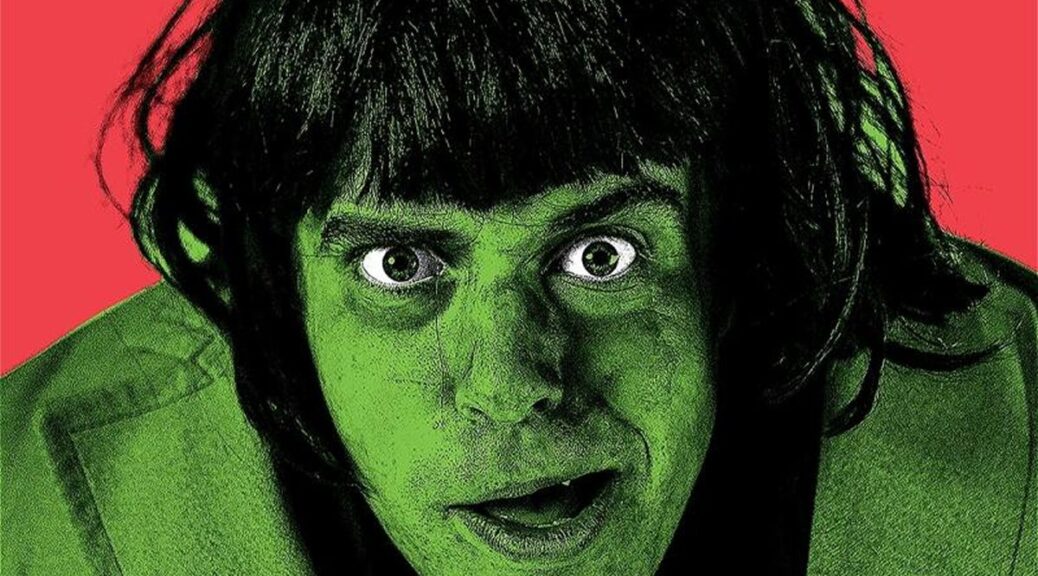
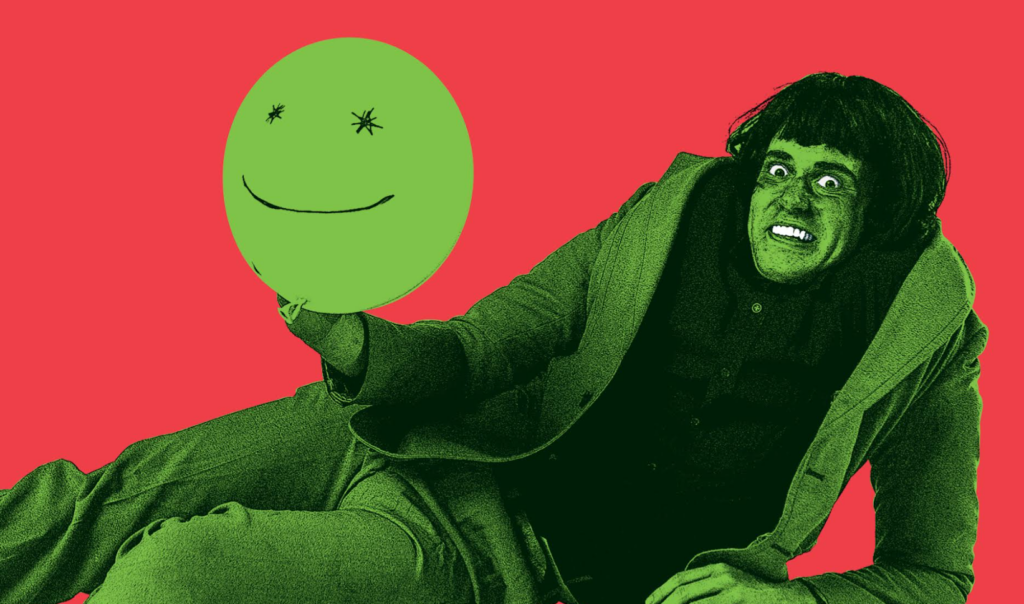
Review, Lil Wenker: Bangtail, Ed Fringe, By Hannah Goslin

 out of 5 stars (4 / 5)

Welcome to the wild, wild west, run by your fearsome and hysterical local cowboy, Bangtail, where no one is safe, no matter where you sit.

Lil Wenker brings the character of Bangtail, the rootingist, tootingist, bad boy around. Unable to be shot, and a riot with the ladies, it all soon crumbles, when his audience-based nemesis manages to injure him. What is his calling now? Why that of accountancy of course! But is either his true calling?

Bangtail can almost be seen as a two parter: we begin being introduced to Bangtail, with his western tropes played on for satire (think spoons instead of boot spurs), where he immediately gets down to business of interaction with us. We are soon barn animals, a select few becoming key characters such as the nemesis or local drunk lady, and his interactions with not only them but us is full of comedy, with smart writing, slapstick and clowning skills. He’s not afraid to prolong the laughter, ignoring the rule of three and pushing the boundaries, leaving us in hysterics.

This continues when changing to the next part, his accountancy era. With clever writing and direction, the comedy and clowning is still there, new and fresh but old ideas are newly presented, almost as a satirical flash back to the past. The audience characters continue but in different guises and so we continue to find hilarity in the basics already set for us. The physical comedy continues, with gusto and high energy and we almost become delirious through giggles. However, the accountancy part felt more into a thought provoking part of the narrative and, while still with moments of comedy, lost a little of the giddiness we felt in the first part.

Bangtail is smart, it is high-level comedy and clowning, with very clever writing and overall concept. Lil Wenker is nothing but a fantastic performer, holding our attention and with instant ability to make us laugh.