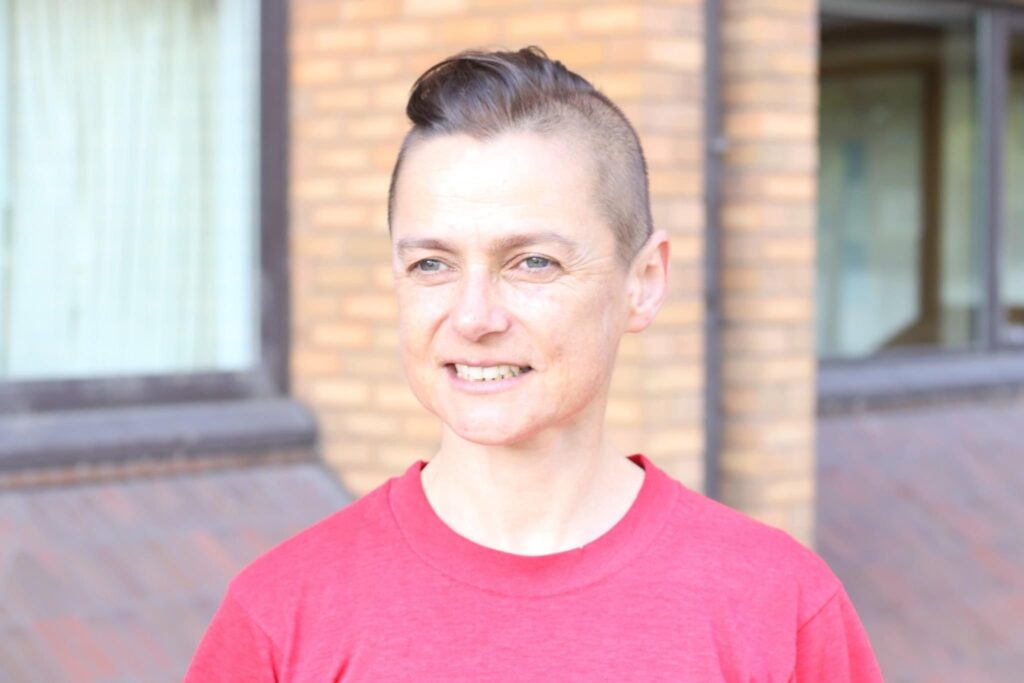
All posts by Becky Johnson

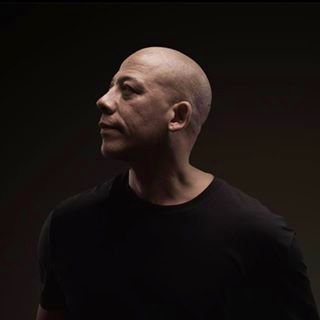
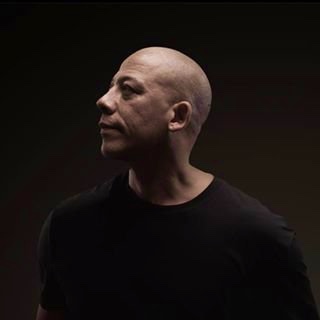
“An Empowering Narrative for what is usually, a very Disempowered History” An Interview with Lawrence Hoo.

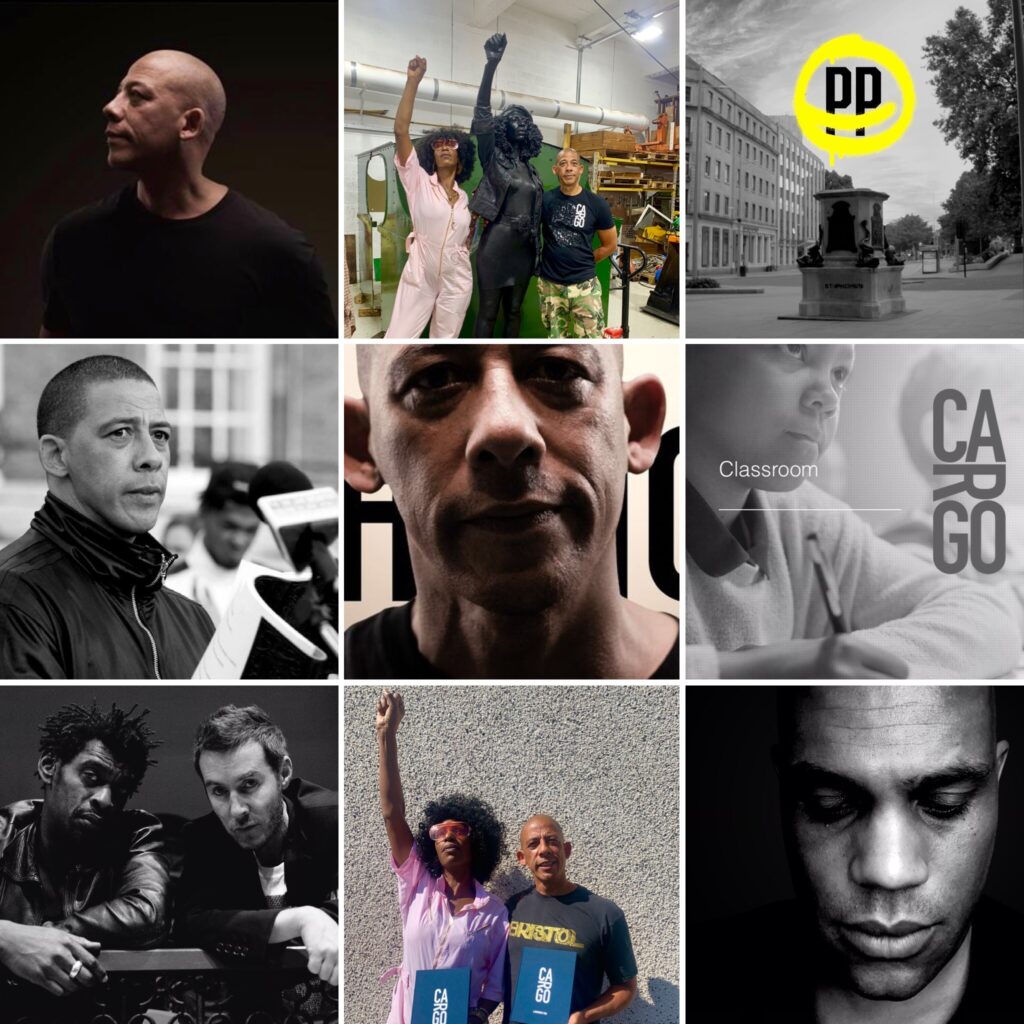
I had the pleasure of interviewing Bristol based poet, Lawrence Hoo. It was a truly enlightening conversation and we discuss all things Race, Class and Education. You can find out more about his latest projects at www.lawrencehoo.com or more about the Cargo project at @cargomovement on Instagram and social media. (Becky Johnson)

Read Part 1 below to see what he had to say:
Hi Lawrence, it’s lovely to meet you, can you give our readers some background information on yourself please?

Hi, my name is Lawrence. I live in Bristol, well I’ve lived in Bristol for almost my whole life, and I’m a poet.

I was born in Birmingham and grew up in mostly marginalised communities in Bristol. I spent a lot of my youth in and out of the care system. I went to 6 secondary schools and after that, I didn’t have any form of education. I was a feral kid on the street from the age of 6 and a runaway. When I was 19, I had cancer and I went through a bad stage of my life after that. I thought that the cancer was going to kill me anyway and I went back to living on the road.  And then at 30, I became a father for the first time. To be honest, it scared the living daylights out of me. But that’s about it vaguely.

I wanted to see if I could make myself a better person and make more of my life. So I went back and re-educated myself and began to teach others how to use computers. I did that for four years and got burned out. So, I started to do my poetry.

My poetry came from a place of rage and from questioning why the authorities were allowing situations to occur in these certain environments rather than in the rest of Britain. All the laws that need to protect people exist but for some reason the action isn’t being taken to enforce them.

 A point of that was when my partner was picking up our young son from nursery in Saint Pauls and she was approached. We then, campaigned against paedophiles being allowed to stay in the hostel which backs onto our nursery. It came out and we succeeded to make Bristol safer.

And that’s why I use poetry as a platform to try and make these changes happen.

I acknowledge that a lot of your previous work and ethos is grown around Bristol and the things that surround you there. I know that similarly to Tiger Bay in Cardiff, Bristol is going through a huge gentrification process. I was wondering on what not only your thoughts are on this but also what impact you have already seen from this?

I think is painful to see the gentrification. It goes back to those laws again., they hold all of these problems in communities.

In Saint Pauls there would be safe houses to protect those from people who have committed crimes as well as hostels for those who have committed crimes. There was drug rehabilitation centres and parole offices, but they were put next to the only place in Bristol, where you could legally sell drugs on the streets. They put the drug users next to the drug dealers, they put the people at risk from sexual crime next to those who have committed sexual crimes and they put prostitution on the streets by schools.

They took all of these issues and put them into an area which was where the African Caribbean communities are, so they often associate these problems with the African Caribbean communities. But, if we take things back to sherlock Holmes times, there were people smoking opium and he would investigate the murders of prostitutes. All these problems came along a long time before we came to Britain.

The children who are growing up in Saint Paul’s, because of the violence, lose their innocence way too young. That’s what I find heart-breaking. The way Saint Paul’s was policed (well actually I say policed but it was more so ‘contained the issues so they didn’t affect the other communities’) means the influence and protection of those other communities, is so different to what happens in Saint Paul’s.

Building prices are going up which is forcing working class people to move out of the areas which they grew up in. With Saint Paul’s it’s the council assets. The things that the working class need the most will be the first things to go. There’s no chance for people to come back into the communities they’re from. And with the services are removed, the communities become very affluent causing the communities to shift and there is nowhere for those that grew up there to live in the area.

So adding onto that, what do you think of the increase of students and the spreading of students away from Gloucester road and into Saint Paul’s? Is this bringing a positive impact, or is it doing the opposite and removing opportunities for those that are from the area?

It was always going to be a natural progression that Saint Paul’s was going to be reclaimed because of where it is located. It’s just an expansion of an affluent area but, at the same time, all it has done is push out the communities that was there before. It just benefits one community and marginalises another. It’s heart-breaking.

I’ve grown up there and lived there. It’s always been my safe spot. Regardless of all of the chaos of the city, if you’re from African Caribbean descent, it’s a safe place. It’s just devastating. Gentrification is devastating. I don’t see any positives from gentrification.

As a homeowner, gentrification has increased the value of my property. But there’s not much of my community left. I feel like a stranger. Some people say yeah but you can make money from it, but I’ve lost my home. I’ve got my house, but the community is my family. That whole family aspect of life is gone. My home is gone.

I don’t think people actually understand what it’s like to lose that familiarity, that security and that family. What it’s like when its gone.

The university of Bristol is such a huge entity in the city, and it needs to do more. I’m working with the university now, but I want to work with it to help collect the wider communities of the city and to support them. Everybody says black lives matter. But working-class people’s lives matter.

The whole city is classist.

Its problem the main issue of the city. There’s the golden circle for a mile around the city which makes a very affluent area. But one thing that’s very rare to hear in this area is a Bristolian accent. A lot of Bristolians are cast out of opportunities here. I believe it’s time for those big institutions to connect and to gather communities to raise their platforms with them. A part of Bristol is accelerating so quickly but it is leaving a huge part of Bristol behind.

So your latest project, the Cargo project, has recently received National lottery funding (congratulations). Why was the Cargo project initiated and how was it developed into the current version in which it sits?

In 2007 I did a collection called HOO stories. Which was a response to the abolition to the trans-Atlantic slave trade. It was an opinionated set of poems that held a non-Eurocentric view. It was holding up a light to the actions of Europeans and gave a positive light to people of African descent, allowing it to be seen from an African-centric view. It pointed out people that had contributed greatly to society but who had pretty much been emitted from history.
Cargo was an extension of this. Looking at what people have been told has been done and then showing what has actually been done as well as looking at what you have actually done yourself. Cargo showed African resilience and African’s generating opportunities.

The beginning of the collection probably looks at the first 400-500 years of the trans-Atlantic slave trade, when people were just classed as cargo. Covering that journey and how they were put in the conditions that made them in slaves as well as the achievements of those of African descent. It starts in Bristol and then goes into the slave trade, the Hacienda revolution, H Samuel Sharp, and the uprisings and then continues with those that fought against and contributed to civilisation. An empowering narrative for what is usually, a very disempowered history.

It was done because I live in Bristol and you cannot get away from Bristol’s history. Every building you look at is made from Bath stone which came from that industry. I live in a city that’s very painful to live in.  

As a young black man, I couldn’t get my head around the fact that men didn’t fight to defend their wives and children. I always thought, my people didn’t fight then but I can fight now. When I realised that they did fight and rebel, that changed for me. I thought that people were so dehumanised that they stopped seeing themselves as human and it breaks my heart. But then, you realise that they did fight and what happened to them, was crimes.

But they saw that evil, and they fought and fought and fought. I wanted my children to not grow up with the same anger that I had and that’s where the collection came from. I want to give the children of Britain the opportunity to not be me.
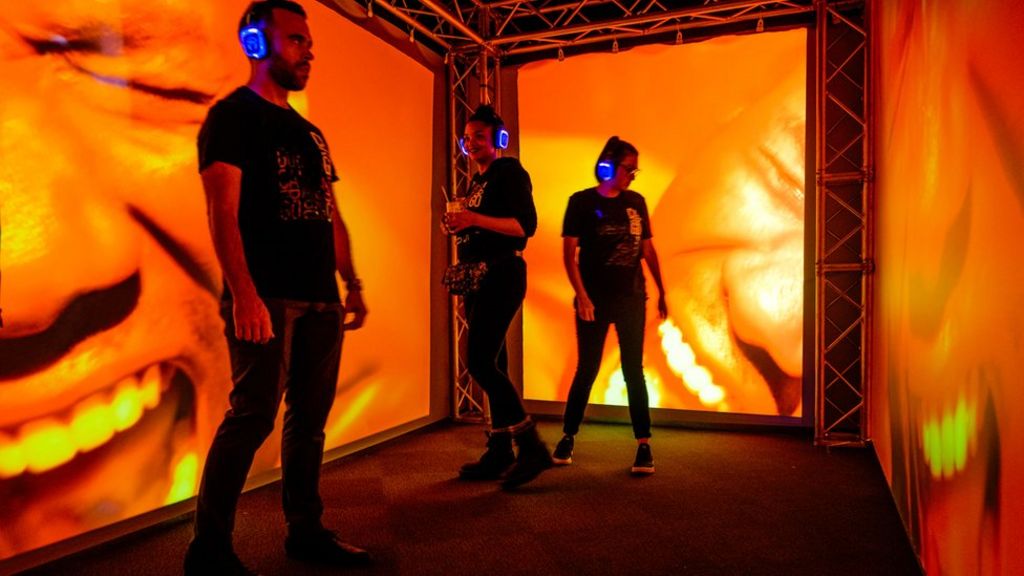
It started off as an installation as four different shipping containers on College Green (Bristol). The idea of using shipping containers removed the permissions needed to display this information e.g. the approval of museums and galleries. We didn’t want to have to prove that our work had value to other institutions. So that although there were permissions needed, it was a lot more flexible than the others.  But because of Covid-19, the idea of putting people in a confined space walking around stopped being possible.

Covid-19 took the installation and we thought, how do we keep this moving forward? How can we make it more digital? We wanted to give people accessibility to information. So we went forwards with the Classroom project. The installation although on hold, is still in process.
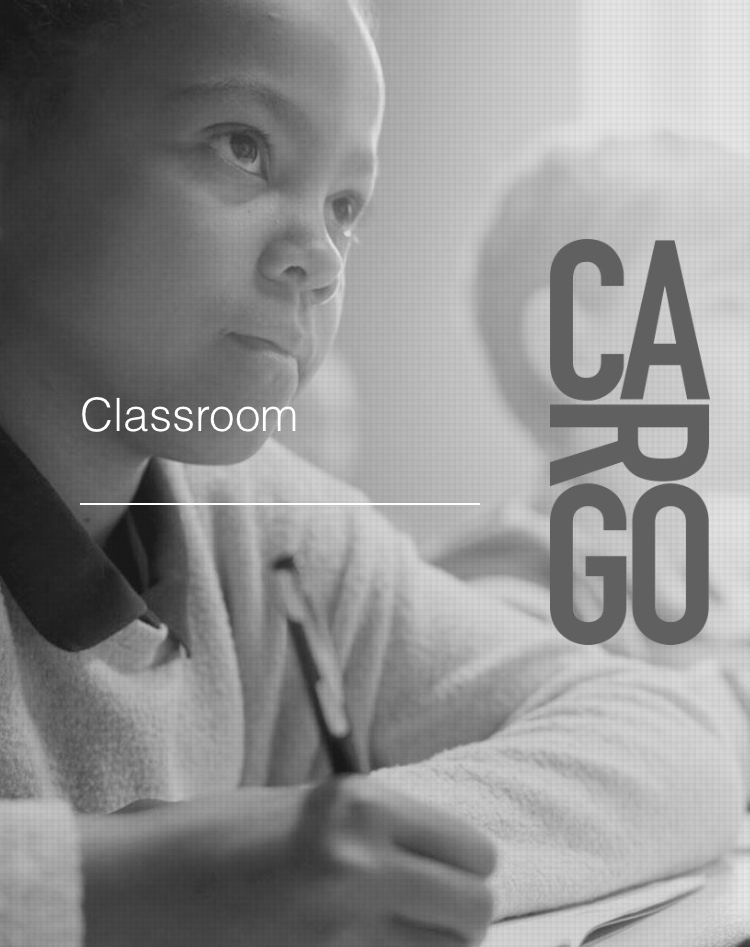
The Cargo Classroom project is so important and it’s brilliant that you’ve been able to kick off something as monumental as this. What do you believe is the next step to get this information into mainstream education?

We produce a product that they feel they can’t not use, that’s the first step. Making something that people want to use and then work towards getting that into the curriculum.

This is the crazy thing, for years, we’ve been pushing and pushing but because of what’s happened in the last 6 months, people have actually come looking for us. That has been a huge change. The most important thing for us to do, is to keep focussed on what we have already been doing and to not get involved in loads of things. This is what we were doing before we got national attention. We need to make sure we deliver what we set out to deliver before we then look at what the other opportunities are.

The funny thing is, I’m so excited for what were doing. The possibilities are insane. This is the right time, we have the right product and we have the willpower to push it.

The attention will soon fall off if people aren’t prepared to put the work in. What is happening currently isn’t new, we had a global black lives matter campaign 4 years ago. And literally, outside of America, in a few weeks, it had gone.

We don’t need huge numbers as long as we keep pushing the right buttons. The group who did the protest a few months ago are still going and are making sure its not going anywhere. This young group, I believe they’re going to keep it going and make some change, for real.
Here in Wales, where Get the Chance is based, there is a campaign calling for Black history to be taught to Welsh pupils in school which has received more than 30,000 signatures within days of it being set up,  educating pupils on subjects like British colonialism and slavery.

Whilst many ministers in government (both in Wales and England) acknowledge the need to shine a light on how colonisation has been glorified, why do you think the latest bill passed through parliament was rejected?

Through fear.

I think a lot of this information has been oppressed for so long that if too much of the information came out too quick, it would undermine the whole of the UK government. The whole industrial revolution was built off the back of Africans.

What is actually owed? People ask are there reparations for the past? The gains are still received today. Companies are still using Africa as a resource. They gave the countries back their independence and to the people they gave back their freedom, but it was only on the surface level that they gave it back. They didn’t give back the land or the wealth that was generated from the land. Africa is not just filled with Africans. There are huge debts to be paid.

How would the English pay off the compensation that is needed? They could give them their natural resources, and then the interest of anything earned off those resources, and then, maybe, Europe would need the aid and Africa doesn’t. The economic balance would collapse.

We need to teach people their worth, their value and what was truly stolen from them. Not only their names, identities and homes were taken but so was the ability to nourish themselves from their ancestral background.

They’re afraid to teach the history because what happened was absolutely appalling and everyone would see that. England played its part right through the trans-Atlantic slave trade to the South African apartheid in the 1990s… The 1990s.

There’s just a lot of fear. With the crimes that were committed, there’s a lot of responsibility. People think Africa contributed a lot less to society than it has because a lot of African history has been emitted. But over time the internet will allow people to get this information, which before would have been through privilege. This will add some truth to history. And European governments will have to be accountable for their actions.
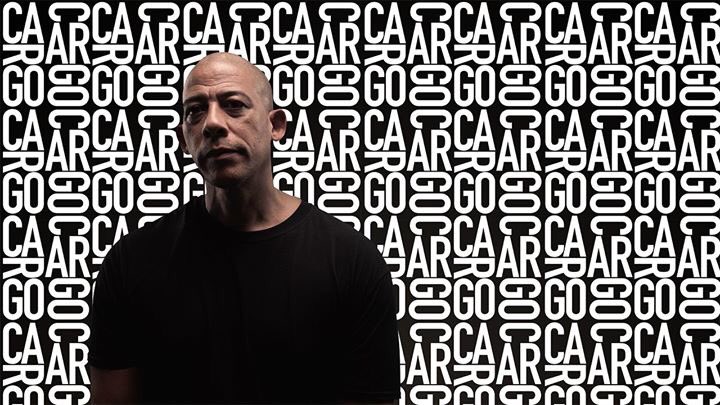
In part two (coming soon) Lawrence discusses Change and what changes we need to see (and make) to make a fairer and more equal future for us all.
The Invisible Ones Are The Influencers For Those Who Are Always Visible. An Interview with Ffion Campbell-Davies

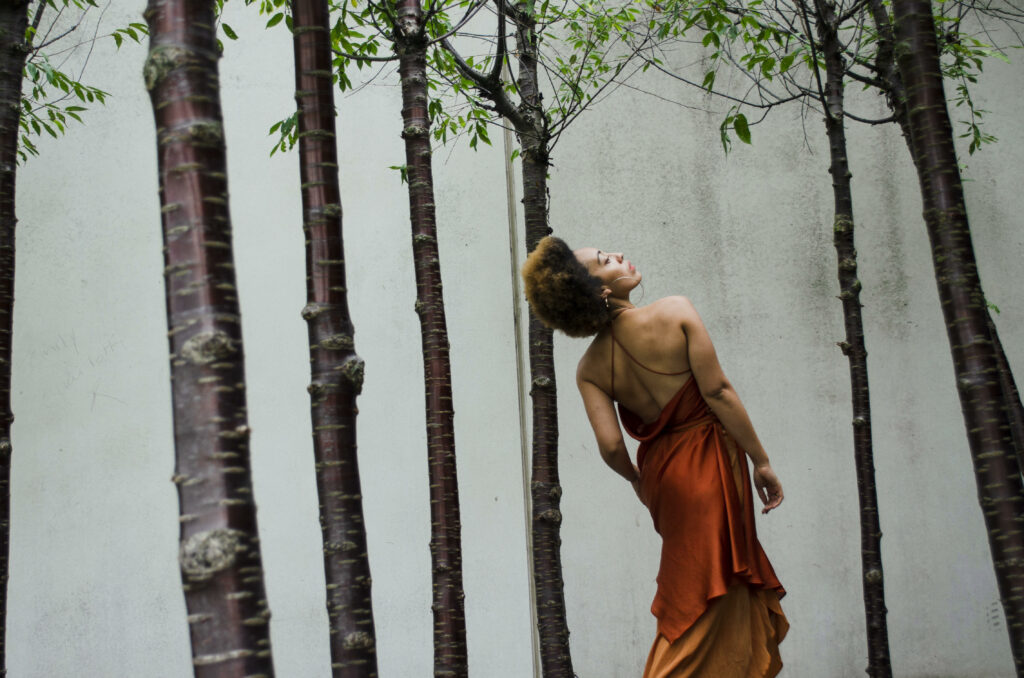
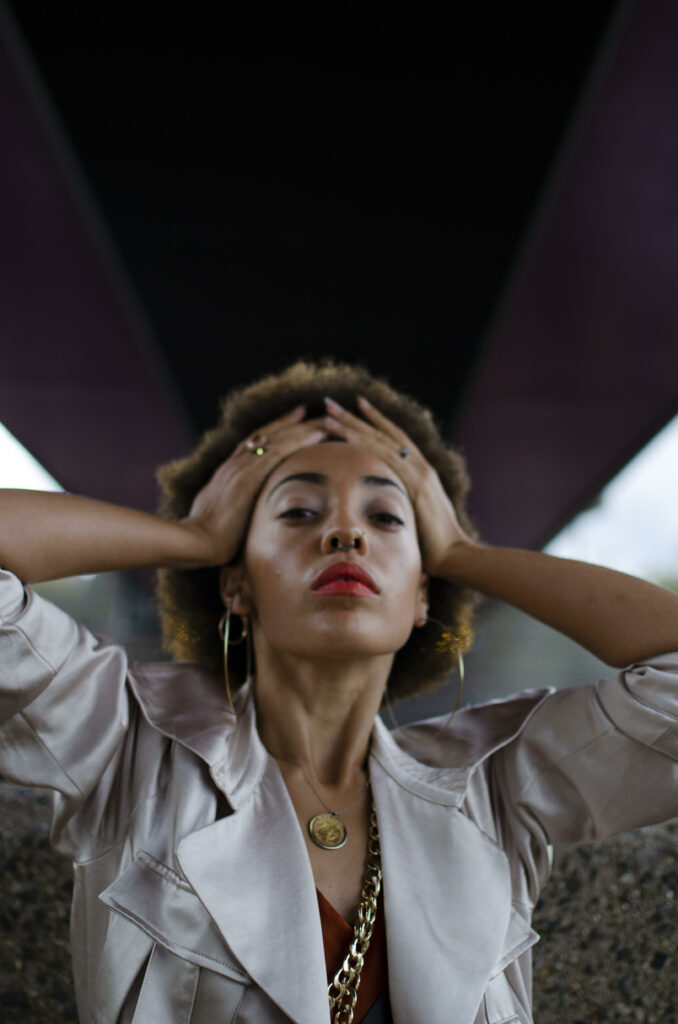
I had the pleasure of interviewing Multi-disciplinary artist Ffion Campbell-Davies recently. In this interview we will be talking all things arts, creativity, Identity and Wales.

Credit Vikki Marie Page

Hi Ffion, it’s lovely to meet you and to get the opportunity to pick your brains. So just to introduce yourself to our readers, please can you give them some background on yourself and how you define yourself as an artist?

I was born and raised in Wales and moved to study at London School Of Contemporary Dance, graduating in 2013. I have since worked in various avenues within the industry as performer, teacher and choreographer. Over the last 5 years I have been developing my own artistic practice and creating my own work as well as collaborating with other artists.


I term myself as a multidisciplinary artist as a few of my disciplines other than dance are at the core of my work. My self produced work cross pollinates with music production, text, voice, expressionism, exhibitionsim, dramaturgical principles and [more recently] visual & digital art.

Credit Celine Fortenbaucher


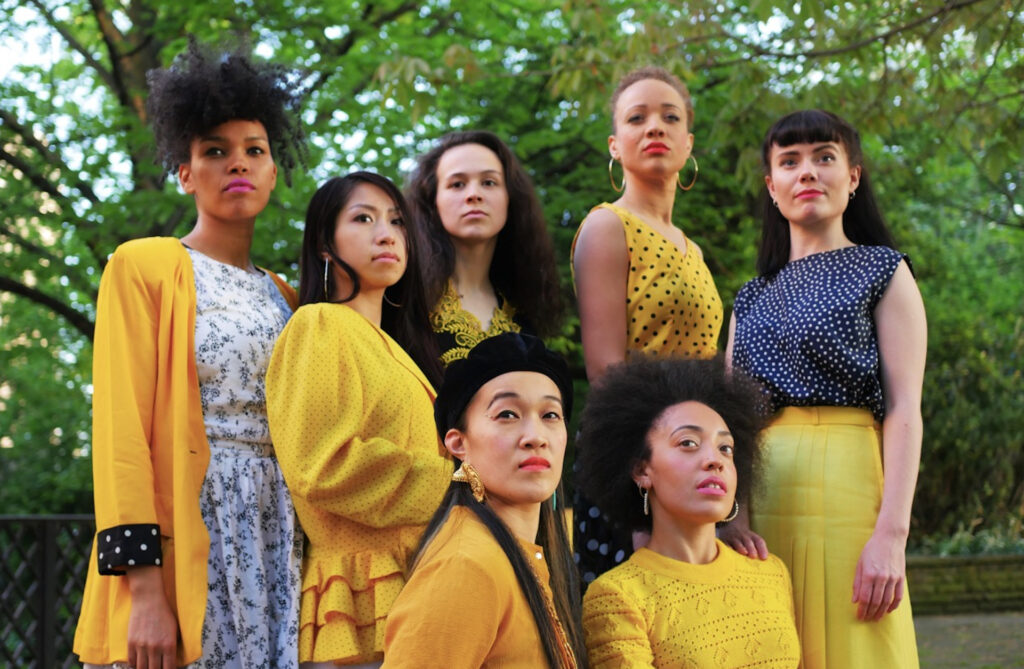
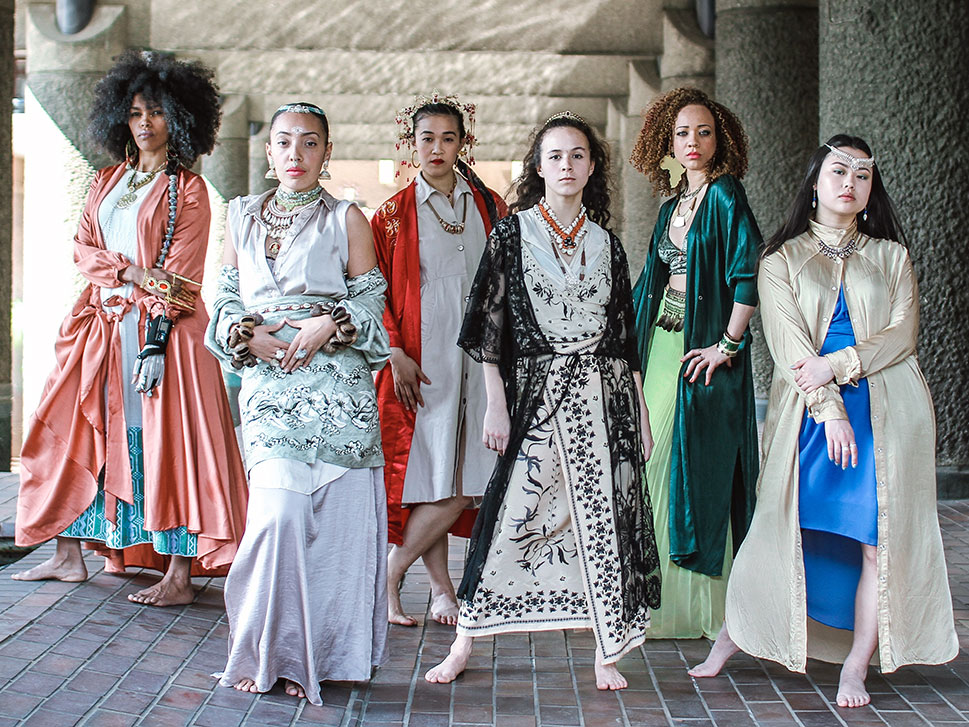
I am a co-founding member of all female company collective House Of Absolute; we are a diverse group of multidisciplinary females creating boundary crossing, politically active theatre, sight specific and digital movement, sound & visual works collectively and independently.


My work explores themes and subjects around psychoanalysis, gender, race and spirituality, working with experimental devices and the influence of ritual to dismantle conditions around definition, power and politics.

So moving to London from Wales to gain better opportunities in the arts seems like a common trend among young people. Why do you think that is and what can we do here in Wales to change that?

I believe Wales has a lot of resources within its artistic demographic, with multiple communities of various levels and spheres of skill and knowledge. I recognise that infrastructures have excluded and disabled social mobility for many communities in being able to exercise and contribute to the collective central culture of arts in Wales.


There are many conditions which are similar in all cities here in the UK, but I believe London has an effective fluency in generating micro economies for artists to exercise and contribute to the collective culture. There seems to generally be more structures in place for diverse sources of funding to support varying different artistic communities, where sub cultures are actually at the core of reinforcing and empowering the collective. Because of this naturally people of any socio economic background have more of an access point to engage in the artistic climate, with more spread for opportunity and information to be easily accessed.

It is difficult for communities/artists outside of the capital culture [in regards to Wales; the traditional welsh cultural agenda] to be part of the solution of development and empowerment when many organisations of funding, or spaces of information and power are gated for exclusive representatives.


I see diversity as a fertiliser for soil, just the same way varying different types of stimuli rapidly develop the neural connectors in our brain, we need constant interaction with varying different human beings of different traditions, sciences, arts and practices to fuel innovation. This is something London taps into very well, in which I believe people from all over the world are drawn to.


Traditions are never lost and I believe Wales has a wonderful opportunity to find synergy with its ancient history and the fertility of its vastly diverse origins to energise and activate all representatives in wales of all different cultural backgrounds to cross pollinate.

As you have mentioned whilst in London, you’ve been a member of the company ‘House of Absolute’ which combines various street styles alongside other styles of movement. How has Hip-Hop culture helped to develop you as a Contemporary artist?

Hip-Hop has been at the axis of my growth and development. It is one of the most iconic symbols for the term ‘contemporary’ quite literally it is with the times. Hip-Hop is not only a ‘style’ but also a culture and even a philosophy with which most people involved would say it is a way of life. Hip-Hop is a mode of resistance, a political instrument for reconstruction. It is one of the most influential cultures on the planet, because of its wealth of knowledge and teachings through trans-generational art, it is legacy.

https://youtu.be/rp9H4CX03fo


It is a cultural library archive of the preservation of people of the diaspora, which houses many different languages of the body, many trans-migrational stories of the intersectionality between races and cultures, and serves as a global home for people of any origin to communicate through mind body and spirit.

Of recent years Hip-Hop ‘theatre’ has emerged as another form of innovation to supplement indoctrinated Eurocentric modalities of black box performative culture. The marriage of visual art, story telling, acting, poetry, immersive engagement, grime music and the genius of Hip-Hop movement language and musicality. This has had a great impact on transforming my perception of using theatre space as ritual, broadcasting cultural and ancestral presence.

Overall my support and mentorship has come from;
Dance communities and peers in the underground Hip-Hop scene,
Artist4Artist an organisation run by artists for artists 
Founding members and representatives of Sadler’s Wells Breaking Convention festival. 

Growing up in Cardiff, do you think there is a significant Hip-Hop scene here and what do you think can be done to help it evolve?

There is definitely a Hip-Hop scene in Cardiff, however maybe lacking a cohesive integration of the multiple layers and dimensions of inclusivity. It is important for artists of all practices, sectors, class and culture to be in dialogue.


For examples different Hip-Hop music and visual artists, writers, poets, event organisers, venues and dancers could have more consistent relations with each other. If there aren’t visible invites and hubs/centres for representation, cultural information remains fragmented, and the overall culture cannot develop infrastructures for impact. Funding is also at the core of this.

Credit Vikki Marie Page

I understand that a lot of your work uses Identity as a concept. When in WHO (2017), you said “#TheSystem and #Society do not provide space for authentic self”, what did you mean by that and do you still find it relevant today?

I do believe society has had a long term relationship with resistance to change, and the notion that homogeny is safe, difference is threat. I recognise the culture of duality that has been at play for a long while, and that at present we may be realising as a collective society in our need for each other, dependence and preservation as a whole, which is the acknowledgement of polarity and the active inclusion for unity.


We still seem to have many protected and guarded infrastructures which dictate our attention towards fundamentalism, with which any organically evolving contemporary innovations outside of societally validated constructs are met with fear, discomfort and rejection, unless it is something recognised and originated within elitist culture.

So to draw from these concepts and bring it into the personal sphere, I believe we as individuals have the capacity to re invent ourselves any way we choose, but at the cost of being questioned and challenged constantly by those who are still existing within societal constructs.


On the one side, anything foreign to those constructs causes great discomfort, essentially the unknown, an anomaly to which we feel out of depth with our relatability. On the other side there is fatigue; being misunderstood, misrepresented, displaced, excluded, silenced, ignored, isolated and questioned. For many that is a lived experience that is still happening today. I think these polarities exist everywhere because it is essentially to do with consciousness and perception.

I feel lots of things have become cataclysmic in our society of recent. People are really fighting for spaces to empower authenticity and difference. Actually pioneering companies and representatives look to bespoke and eclectic minority individuals for inspiration and influence. The invisible ones are the influencers for those who are always visible. For example if we’re talking about fashion and media, it’s everyday people who inspire and influence those making decisions on top about what gets modelled and represented.  

I still believe there are conditions we are pressured to obtain in the broader mainstream culture which restrict us, only validating and respecting things we are a custom too, things we are told and taught have value, anything outside of that does not posess the same power.   Things we do not understand, we do not like or we do not feel comfortable with we disregard. But authenticity, originality and honesty is so powerful, in the overall context of polarity, we as a society now are recognising we need these attributes, and we are seeing willingness for difficult and uncomfortable conversations in the wider culture.

In my perspective for the majority there’s still a lot of shame, fear and taboo around self expression, and this is what makes art so evocative. When many people feel the fear of judgment, they look to artists who do and say all the things most people are terrified to do, there is this sacred unspoken empathic emancipation shared between artist and audience.  

You also spoke about the concept of ‘Mind, Body and Spirit coming together at a meeting point’ in an interview with Catch the Vibes last year. How does this psycho analysis come into the process of your making? Be that your movement or your other creative outlets?

It is particularly through the lens of dramaturgy that I get the opportunity through my work to investigate psychology. I often find that for performative works to have concrete coherence in how the work is experienced, there needs to be psychological integrity, either between the relationship of the performance and audience, or also the chronology of the work, and what the work is doing, what role it serves as an experience.

Quite often I have a focal drive to want to evoke and impact the audience in some kind of interpersonal way. In order to do that safely I really do need to understand the effect on myself of what I’m experiencing. The effect of the process, what psychological journey am I undergoing just to create the work, and then from that process constructing an infrastructure that allows me to guide the viewer into the areas of enquiry that exist in the work.


I work with all layers; the visual, the audible, the sensory, the intellectual, to find different ways of inviting my audience into the non verbal conversation between spectating, listening and actively responding. Regardless of how big or small those social queues are, we all feel it when an audience collectively holds their breath at a certain point, sometimes its the silence that communicates consent, or the twitch or cough coming from the upper left auditorium, we know that particular person just non verbally objected ‘subconsciously’.


If it’s an immersive work, there are other dimensions at play, with proximity being a massive psychological conversation. There is our body language and our power dynamics; whether an audience member sits on the floor cross legged, or stands right behind me, we have varying different capacities of what access points we have to a psychological dialogue. And then I wonder which way can I communicate this performance. Of course eye contact and touch being the most dynamic contributions. 


All of these elements play a vital role in my process, and its why ritual is such a pivotal instrument for creation in my work. Ritual allows the mental/psychological space to be more transient, meaning I can access the collective mental space with the openness and safety of a held experience set by intentions. This naturally propels the willingness of an audience to be vulnerable with me in the conversation, allowing for suppleness and great changes to occur in perception.

Performance work is always a conversation for me, it’s not about interrogating my own psychology to create work, it is about really understanding psychology to execute distinct forms of communication between my work and the audience. To do that effectively I need to understand a great deal of my own psychology. I feel that’s where the freedom to shift perception and rewrite history comes from, the game changers who change the world through art.      

Credit Vikki Marie Page

How has lockdown affected you as an artist? And also what long term effects, do you see Covid-19, having on your artistic practise?

Covid has given me the opportunity to redefine my priorities, values, boundaries and reinforce my principles. I have had to question my purpose beyond the industry, and become aware of areas that I have not developed and the areas which I have neglected in myself.


This time has also allowed me to rediscover a new way of living, a new way of working and a new way of communicating. I have had many moments of exhaustion, overwhelming bewilderment and uncertainty, but none of these feelings are new to me, in fact the last two years have been so groundbreaking’ly challenging that lockdown was like a breeze. The political and economic climate however has had a great impact on my perception of reality and my stability within that. But it’s the sense of community that has become more evident during this time for me, with a beautiful anchoring in the various relationships I have with people that have grown deeper and stronger during this time.  

Following on from that actually, how has lockdown affected you personally? I recognise that we often separate performers from people and that needs to be raised.

Lockdown has allowed me to journey inwards with a great deal of introspection and time to reconstruct myself from the core. These are elements I do practice, however there is never usually time to really uncover the uncomfortable subconscious patterns that need redefining, when I am moving from one project to another with usually no recovery time.

Although challenging, I have been able to sit with myself and confront difficult things and rewrite those narratives.
I have also been able to connect with people I would have never usually connected with prior to Covid, simply because online networking is far more direct and immediate. Fundamentally I have been able to slow down and have moments of stillness and solitude, amongst the chaos.

I’m a big fan of the ‘Reasons to be Cheerful’ podcast and something they do on each episode is ask their guest “If they were in government as an advisor for their specialist field, what would be the first change that they would make?”
So I’d like to ask you, if you were an advisor/ representative for the Arts sector, what would be the first change that you would make?

I would want to change the ‘perceived’ division between economy, finance and the arts. I believe so many fundamental movements within history and society sit on a large library of knowledge in strategy, financial infrastructures, economic preservation, assimilation as well as generational business modes that support successful agendas in all industries.

Often even the simplest areas for accessing training in these fields are seen so far removed from the arts. Educational models are often attuned to industries regarded superior, operating purely from strategic principles within business sectors.

We as artists have major blind spots because of the lack of accessibility to especially tailored training schemes, courses, workshops that provide tools within understanding the financial politics of the arts and its economy. We are unhealthily dependant and unempowered to a degree with previous models such as Arts Council funding applications being the main and only doorway for many. Yet this cannot guarantee long term support and struggles to give artists/companies/organisations stabilised independent agency over their future careers. I’m sure at some point in time we have all witnessed the impact of funding cuts for companies/artists, resulting in the immediate amputation of their capacity. Funding has already been challenging particularly for individuals outside of certain socioeconomic class groups and artists who haven’t had the opportunity to generate credibility with sponsors or funding audiences. Many artists with an excellent capacity are unable to generate work at the rate of their potential. This is debilitating and capping our capacity for genius as an overall industry, only select few names get to exercise their worth. I can’t speak for everyone, but I can say a great deal of artists do not get the opportunity to develop a deeper understanding on modes of financial strategy in relation to the artistic climate.

I’m not saying we all as artists need to study business and finance, because often all of that knowledge is difficult to contextualise in specific relations to the neurodiversity of an artist and the unprecedented lifestyle that an artist might live. But what I am aware of is the benefit of having specialists within business, economy and finance working with artistic representatives to establish an access point hub for freelance artists/organisations and younger generations educated to equip themselves with the knowledge and tools to create financial and economic engagement, allowing agency and fluidity within their artistic career.

We as artists promote ourself like business products, we sell ourselves through business models, but if we are to now look at the future of the arts industry, the greater economy an it’s impact on the rest of the world we need to be equipped with the tools to know how to adapt, preserve and not only survive but thrive as artists. I do feel such aspects should be addressed and mandatory within the training of an artist, not just be trained on how to become an artist.

In order to create powerful art that actually has long lasting impacts on humanity and society in the evolution and rewiring of the human conscious, we need money, and we should be educated about how we can generate that independently.
We see the value in funding science, it shouldn’t be any different for the arts.

So to conclude, Is there anything that you’re currently working on or anything that you’d like to highlight/ share with our readers?

I’ve been refining and redefining the development of my personal practice, which has felt like a monster to tackle as I exist in multiple sphere’s of discipline. Looking at the intersectionality of where a process begins and ends and where meeting points bridge between one discipline to another within the practice. How voice informs the body and vice versa, and also how multiple forms of conditioning/training practices converse/overlap or contradict within the body. What technique do I hold onto and what do I let go of.


In the productivity of what I’m currently working on is a body of work that holds both my music identity and my visual art and movement identity. I’m generating a portfolio which involves self produced songs with the layers and the depth that I would usually engage with in my conceptual theatre work. Looking at how I can make my approach to music production more performative, and have my body as equally a visible voice as my lyrics and my singing. I’m wanting to use the medium of music and song composition to speak on behalf of things I would usually devise and create dance theatre. I want to present narratives both through live art and digital where the boundaries and cultures blur between music gig and dance theatre. I will be supported by Kaunstrum Gallery to create and present an exert in the autumn.


Aside from that I am collaborating with musician Soweto Kinch for a conceptual music video, and composing/producing/researching with Isaac Ouro-Gnao and Tyrone Isaac Stuart for a production called the Oreo Complex.

Thank you ever so much for your time Ffion, it’s truly been a pleasure talking to you.

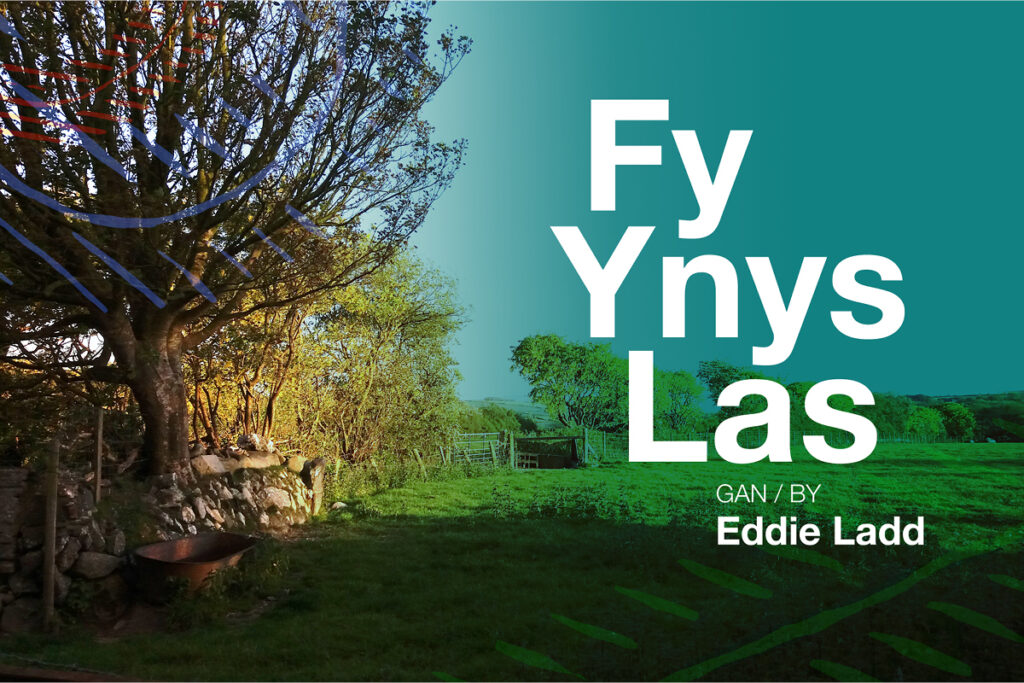
Review Fy Ynys Las, Eddie Ladd, A Theatr Genedlaethol Cymru and National Theatre Wales production in partnership with BBC Cymru Wales and BBC Arts

From one Country Bumpkin to another..

Eddie Ladd provided us with a virtual tour unlike any other. This captioned performance gave the audience an insight into Eddie’s childhood home and where she was residing for lockdown. By using a pre-recorded Zoom session, Eddie shared her screen as she looked back through images of her home, telling whimsical tales and allowing us to experience her nostalgia of her childhood with her.

Eddie sat in one corner of the screen, using the rest to direct us through her process of thoughts. By seeing her reactions to what was occurring on screen, the audience resonated with her and her experience of these events whilst still allowing us to create our own experiences of what was happening. She used layering of images in a stylistic way, much like how we would layer movement to create effect. A box of files also sat on the screen, organised by section into folders of Subheadings. This gave a very organic feel to the performance as was if she was flicking through her memories rather than watching a finished performance. By also using her dialect and country slang, all formalities of the performance were lost and hence it became a sharing, from one person to another.

The performance paralleled with Martin Parr’s exhibition “Martin Parr in Wales”. These snippets of images resonated with a sense of home and a resemblance to growing up on a farm (although mine was a sheep farm in Yorkshire). This is something I have never come across before. Through the familiarity of how ordinary farm life was and the niftiness of adaptations (using a soil filled bucket as a dumbbell), the piece really resonated with me and my lived experiences. It held truth and honesty about a simple life of living in the sticks, and especially highlighted how British farming has changed over the past decades and even more so the economic struggle of British Family farms today.

Not only did this resonate through farming life but also through the isolation of being in Lockdown and how it has affected our livelihoods as artists. The resilience needed to continue and adapt with the change happening all around us (and in Eddie’s case, with a fallen tree full of memories) was eminent as looked through past, present, and future obstacles. With comparative reflections of the events that occurred over time, Eddie used a mixture of light-hearted anecdotes and trivial props to provide a wonderfully human experience. This alongside the pulsating techno, carried us through a vast range of shared experiences whilst also gaining insight into Eddie’s creative process.

This piece was refreshing and an honest reminder of the beauty within simplicity and the importance of shared human experiences. And for that reminder, thank you Eddie, as it’s something we all need. Now more than ever.

Becky Johnson, GTC