All posts by Gareth Ford-Elliott

Writer based in Cardiff. Founder of Eno Theatre.

Rooting Hip-Hop Theatre in Wales

Hip-Hop was created out of struggle in New York during the 1970s as poverty and discrimination hit the African American and Caribbean communities. It has since grown into arguably the largest arts-movement in the world.

Generally, British society knows hip-hop as a music genre which is often put to one side. However, the reality is the fingerprints of hip-hop are everywhere. From music, to fashion, to dance, to graffiti, film and theatre. Spanning the globe from New York, to LA, Tokyo, Cape Town, Seoul, Moscow and London. Hip-hop is everywhere.

In Wales, Avant Cymru are pioneering the Welsh hip-hop theatre movement following in the footsteps of the likes of Jonzi D and ZooNation. Taking stories from where the company is based in Rhondda and around Wales to platform them locally, nationally and internationally.

I’ve seen Avant Cymru’s work for myself at the Cardiff and Edinburgh Fringe Festivals and company director Jamie Berry’s solo dance in People, Power, Perception is still one of my personal favourite pieces of art I’ve seen on the stage. It proved to me that you could tell a compelling story full of emotion using only dance. Which beforehand, despite having seen a variety of different dance-based theatre, I’d never felt for myself.

It’s hard to ignore the sense of impending doom brought on by the COVID-19 epidemic. Work doesn’t stop for Avant Cymru though. Krump workshops with Duwane Taylor are available on their YouTube channel and next month they will be releasing a video where world renowned popper Shawn Ailey will be teaching the foundations for popping.

They will be running workshops through to July, either online or around Wales when safe, including sessions with beatboxing, rapping, graffiti and DJing teachers to introduce learners to all elements of hip-hop outside of dance.

As a disabled-led company, with a variety of health and mental health conditions, Avant Cymru really is open to any and everyone. With the help of the British Council they are travelling to Canada in October for the No Limit Jam to connect with fellow disabled artists and explore opportunities and encourage those with disabilities, mental or physical, to pick up hip-hop.

The passion to do this comes from personal experience:

“For us Hip-Hop has had a positive influence on our lives.” For Jamie, “suffering with depression, breakin’ was the one thing that gave me drive and ambition… The theatre aspect allows me to express these thoughts. We have noticed other Hip-Hop artists, rappers, graffiti writers and dancers do the same. We want to make sure others have hip-hop as a tool to improve their health and well-being.”

For artistic director Rachel Pedley she found a home in Hip-Hop culture. “As a working-class artist, I struggled to afford the lifestyle of ballet dancers and other theatre makers. In Hip-Hop the training and social side was more affordable and the other artists were easier to relate to. It helped build the confidence I needed to go and create and understand my value didn’t come from the cash in my pocket. Working in the Rhondda Valleys, we want to make sure that our young people have the confidence needed to walk into other aspects of life, we believe confidence comes from celebrating our differences and that hip hop even encourages this.”

As well as offering workshops and encouraging people into forms of hip-hop, Avant Cymru also produce their own work. Working with artists from all pillars of hip-hop, from beatboxers, emcees, graffiti artists, dancers and DJs. As well as with artists from outside hip-hop such as theatre writers or musicians from outside hip-hop.

Hip-Hop is often stereotyped as ‘gangster rap’, but it is so much more than that. Avant Cymru aim to change this view as they “would like to share our knowledge with different audiences to show how varied and creative Hip Hop can be and how positive it can be when you get involved.”

Hip-Hop is arguably the largest artistic movement in the world today. But maybe the most misunderstood also. So, if you’re interested, check out an upcoming show from Avant Cymru or another hip-hop company. Or even give it a go yourself.

REVIEW: THE STORY by TESS BERRY-HART at THE OTHER ROOM by Gareth Ford-Elliott

 out of 5 stars (4 / 5)

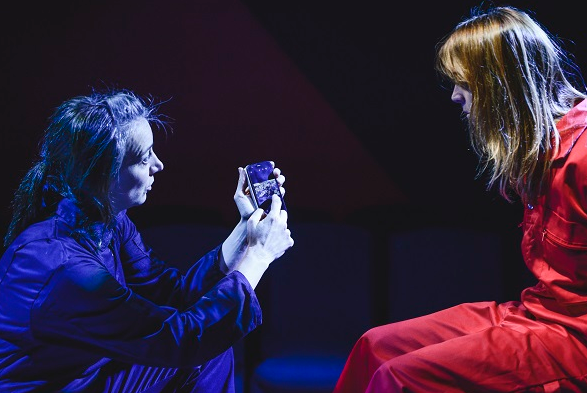
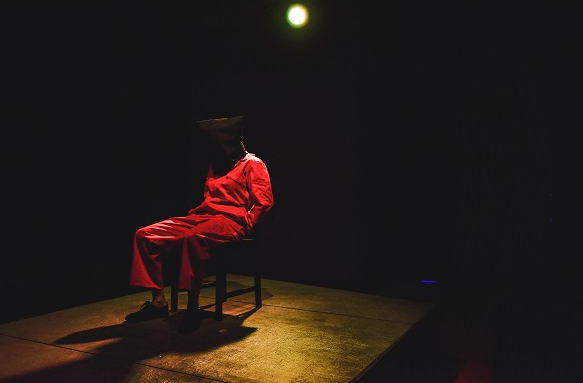
The Story by Tess Berry-Hart centres around X (Siwan Morris), a person “of the people” returning to their homeland after a year volunteering in “occupied territories”, helping refugees. X is being held under suspicious circumstances by V (Hannah McPake) who, under many different guises, interrogates, questions and advises X.

As much as this is a story about criminalising those who help others – it also explores the violence of language, manipulation of tone and deconstructs the ideas of a story and truth in the world of “justice”. It is this that truly stands out in Tess Berry-Hart’s writing.

There is so much to like about Berry-Hart’s writing. It is technically very strong. The language is brilliant, at times beautiful, at other times horrifying. The slow-burning story is amplified by excellent psychology within the characters.

David Mercatali’s direction is strong. Mercatali deals with the slow-moving story well, pacing the play in a manner that constantly makes the audience think and second-guess. The tone also shifts in an interesting and subtle way.

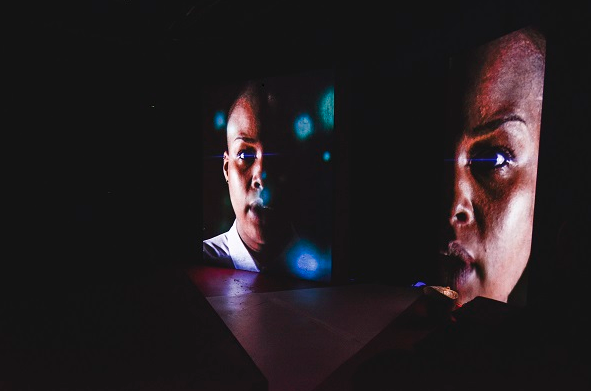
The acting performances are strong all round. Hannah McPake’s subtle diversity in her different “characters” as V is phenomenal, whilst Siwan Morris’ defiance as X is extremely moving. Luciana Trapman as The Storyteller also does a great job delivering powerful vignettes that are projected onto parts of the set.

Set up with promenade staging, Delyth Evans’ design is simple, yet effective. The long, narrow stage gives a real sense of entrapment that enhances the production. Combining with Katy Morison’s lighting which is mostly understated, but flickers and flashes at key moments. Tic Ashfield’s sound design completes the design elements in a very strong way. Somewhat unnecessarily, but effectively, bringing in glitches on voiceovers to distort the messages we’re hearing. This drives the audience’s curiosity to the mention of “the voice”.

This is potentially subjective, but The Story’s main issue is that it’s not challenging enough. There’s not enough emotion and the lack of a real story with a build really takes away from the potential power of this play. It feels quite safe and relies on an echo chamber for an audience. An audience who already think and feel how the play wants you to think and feel about the messages and themes.

It also doesn’t go deep enough into the topics it tackles. Far from a dystopian world – this is the reality of what we are currently living in. The dystopian feel takes away from that realism.

The disappointment comes from the clear potential of the play. It’s on the verge of being something brilliant, just falling short.

The Story offers a lot to reflect on in its content and enjoy in its production but doesn’t reach its potential through failing to truly challenge its audience.

The Story at The Other Room, Cardiff
8th October – 27th October 2019
Written by Tess Berry-Hart
Directed by David Mercatali
Siwan Morris as X
Hannah McPake as V
Luciana Trapman as The Storyteller
Design by Delyth Evans
Sound Design by Tic Ashfield
Lighting Design by Katy Morison
Video Design by Simon Clode
Assistant Director: Samantha Jones
Stage Manager: Rachel Bell
Production Manager: Rhys Williams
Season Fight Director: Kevin McCurdy
Fight Choreographer: Cristian Cardenas
Choreographer: Deborah Light
Production Photography: Kirsten McTernan
Associate Director: Matthew Holmquist
Casting Director: Nicola Reynolds
BSL Interpreter: Julie Doyle
Set Builder: Will Goad

REVIEW: AMERICAN NIGHTMARE BY MATTHEW BULGO AT THE OTHER ROOM BY GARETH FORD-ELLIOTT

 out of 5 stars (3 / 5)

Opening The Other Room’s The Violence Series autumn season is Matthew Bulgo’s American Nightmare. Bulgo’s third play with Cardiff’s pub theatre, this rendition tackles class and the flaws in the reality of the ‘American Dream’.

American Nightmare follows two pairs of very different kinds of people. The elite class, represented by Clara (Ruth Ollman) and Greg (Chris Gordon) plotting a new scheme to control and exploit the working and under classes, which are represented by Daria (Lowri Izzard) and Elwood (Gwydion Rhys).

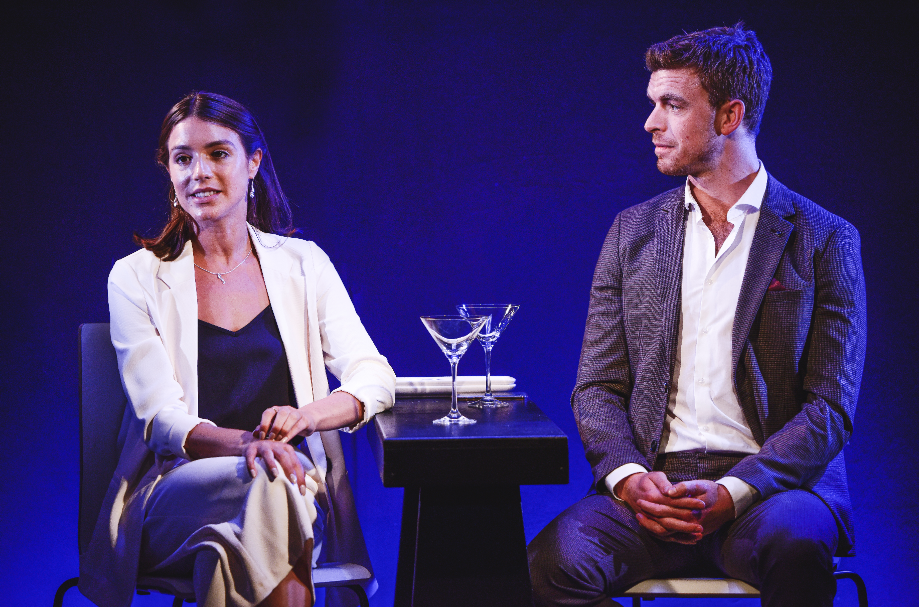
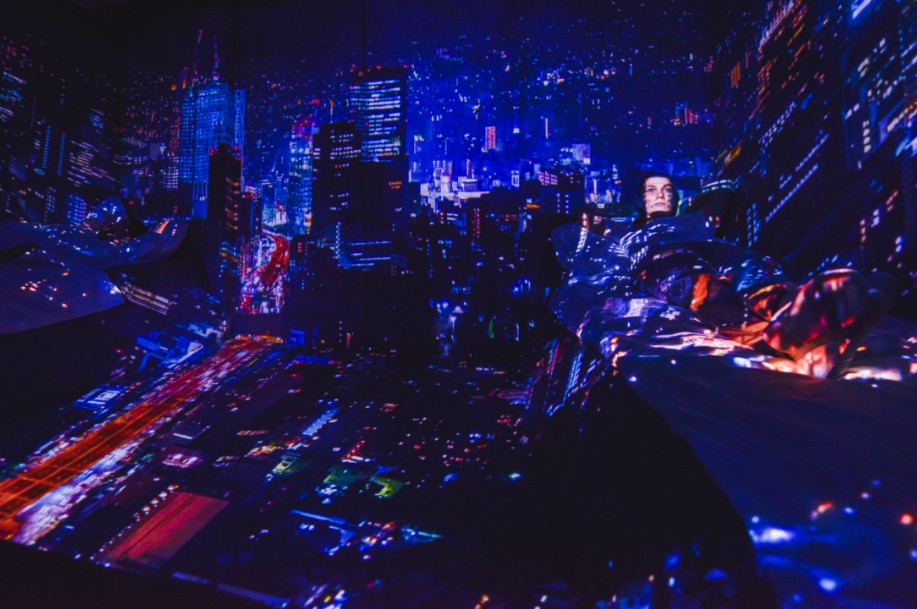
Clara and Greg sit, drinking and dining in a New York skyscraper as Clara entices Greg with an extremely lucrative business proposal that will change the landscape of America both physically and culturally.

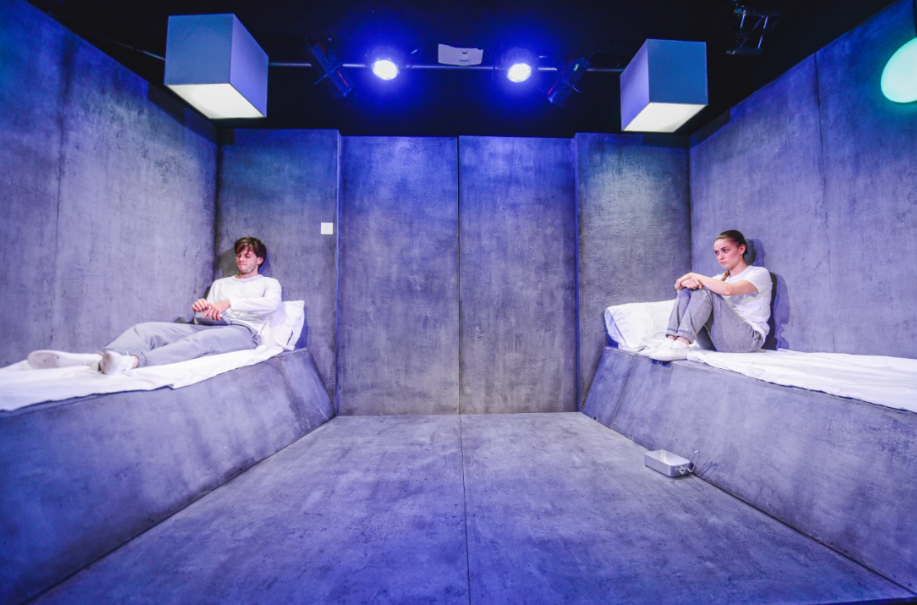
Meanwhile, in a bunker somewhere in America, Daria and Elwood are taking part in a programme that aims to produce a set of obedient, low incentive driven workers under the orders from a character named ‘The Program’.

The writing from Matthew Bulgo is perfectly good for the most part. Clara and Greg are a little too prominent and really it’s mostly unnecessary in the grand scheme of things. The characters exist mainly to provide context rather than any real drama or story within itself. Context that could be more creatively explained and unravelled in a less predictive manner.

The story mainly comes from Daria and Ellwood, this is where we get tension and see in depth, complex characters. Daria’s story arch is brilliant and everything she does makes complete sense in the context of the play. Every move is calculated perfectly from Bulgo.

Ellwood is a well written, realistic character for who you feel both sympathy and frustration. He has his ideas of how the world is and is firm in being resilient in the face of it, but at his heart just wants to get away from it all and live off the land.

The direction from Sara Lloyd is understated. Lloyd expertly controls the manipulation and psychology between the two sets of characters that drives the drama and tension of the play. This is American Nightmare’s real strength and Lloyd makes the most of it.

Lloyd is accompanied by an excellent production team with Delyth Evans’ set in particular standing out. The highlight of which is a pair of sliding doors that part to unveil the elite and close to lock the poor in to the bunker.

Katy Morison’s lighting is simple, yet effective, working in conjuncture with Simon Clode’s videography that transitions the scenes. Tic Ashfield’s sound design doing its bit which blends nicely without invading the rest of the production.

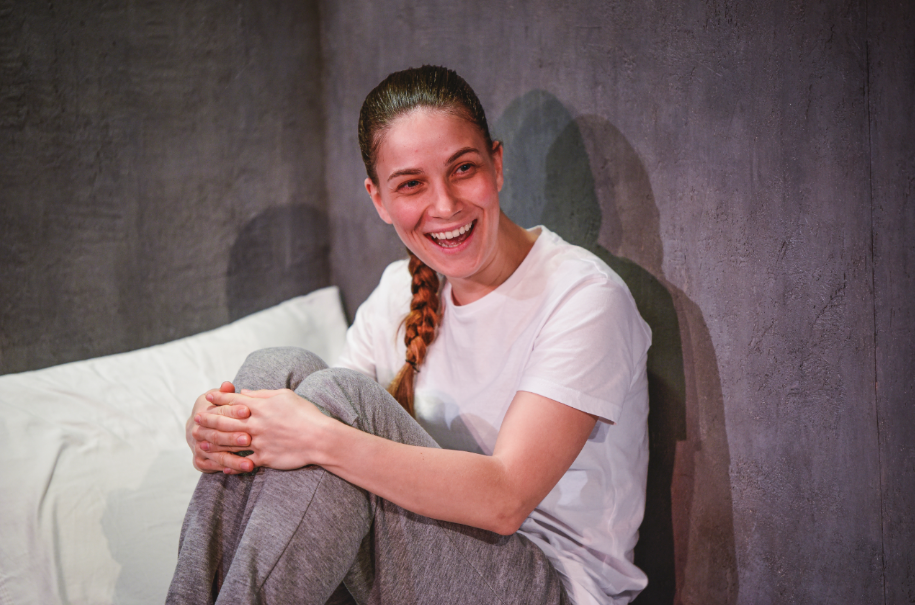
Lowri Izzard is fantastic, perfectly displaying Daria’s journey and ulterior motives subtly throughout the play with the use of body movements and tone.

Gwydion Rhys is completely believable if not only for a poor Southern accent. His facial expressions are great as he transforms into Elwood. His descent is a shining light of the play and Rhys is a huge reason for this.

It’s hard to criticise Ruth Ollman and Chris Gordon but also hard to take too much from their performances. They have good chemistry and do their job well, but their characters don’t have much depth to delve into.

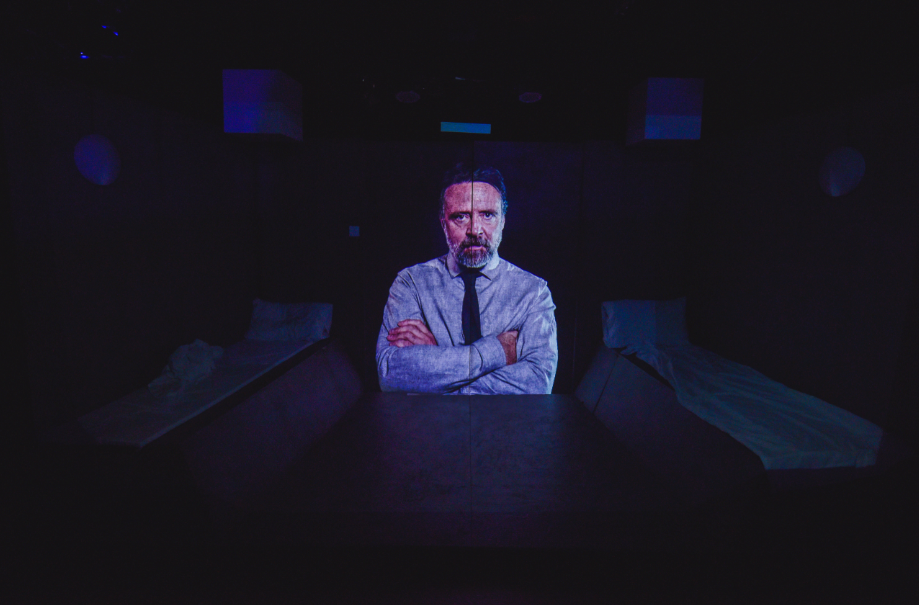
The main downer on the acting is Richard Harrington as ‘The Program’ who appears via video. As an authority figure with no remorse, he feels quite soft and unbelievable in the role.

There is one
issue that should not go unspoken in criticism of the play.

To ignore
race is a complete whitewashing of the issue of class in America. They are intrinsically
linked and whilst a white writer may not feel it appropriate to pass comment
the play is much weaker for overlooking this gaping hole in its content.

This is a
play set in a dystopian America – but what is written in fiction only holds
worth when considered in the context of it relates to real life. It is impossible
to talk about poverty, class and the American Dream in America without speaking
about race if you want to speak with true credibility.

Ignoring
race is potentially problematic considering what is suggested in this play has
literally happened and continues to happen to people of colour in the USA. This
is reality for some, this is what is happening.

The play is
exaggerated reality, yes. But all this play does is exaggerate the realities of
people of colour in America with a white face. If accidental a huge stroke of misfortune.
If intentionally ignoring the race aspect to poverty and class in the USA,
problematic.

The excuse of “that’s not what the play is about” isn’t valid here. The writer simply must tackle it to some extent. This is a whitewashing of the issue it deals with and the play is weaker for it.

Not to take away from what is there which is technically good writing, excellent production and some great acting. The issues with American Nightmare are what is missing in its content rather than its generally strong core.

American Nightmare at The Other Room, Cardiff
10th September – 29th September 2019
Written by Matthew Bulgo
Directed by Sarah Lloyd
Starring:
Lowri Izzard as Daria
Gwydion Rhys as Elwood
Ruth Ollman as Clara
Chris Gordon as Greg
Richard Harrington as The Program
Designer: Delyth Evans
Lighting Designer: Katy Morison
Sound Designer/Composer: Tic Ashfield
Videographer: Simon Clode
Production Manager: Rhys Williams
Stage Manager: Hattie Wheeler
Assistant Director: Duncan Hallis
Casting Director: Nicola Reynolds
Production photography: Kirsten McTernan
Fight Director: Kev McCurdy
Associate Director: Matthew Holmquist
Accent Coach: Emma Stevens-Johnson
BSL Interpreter: Sami Thorpe
Set Builder: Will Goad

YOUNG ARTISTS FESTIVAL at The Other Room by Gareth Ford-Elliott

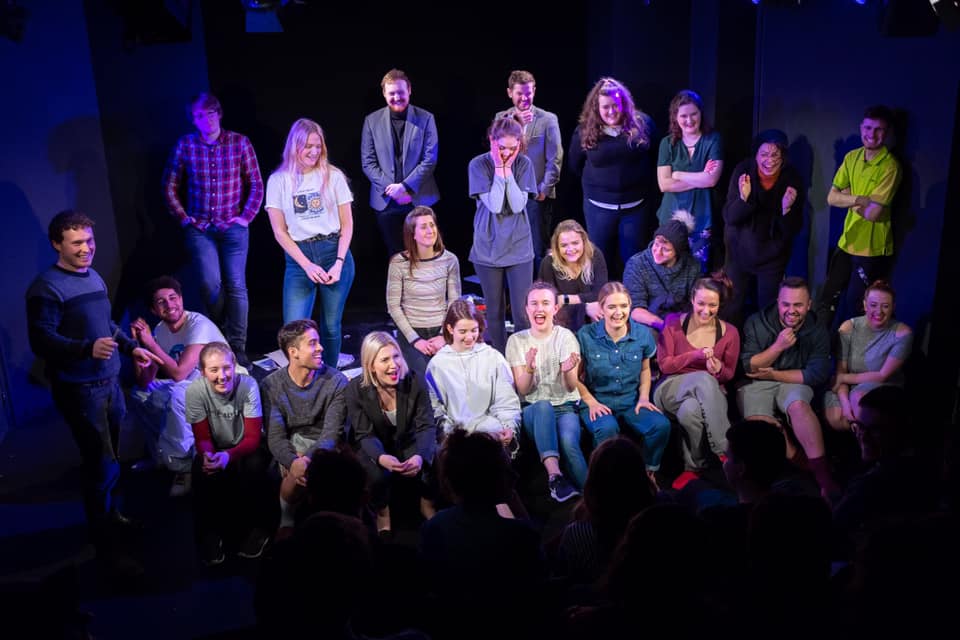
The Young
Artist’s Festival (YAF) is a week-long, annual event run by The Other Room,
Cardiff’s only pub theatre. For the festival, the theatre invites between 35-50
participants from Wales’ emerging creative scene into their doors to gain
invaluable experience working with their peers.

The
initiative is open to actors, writers, directors and stage managers and aims to
provide an opportunity to explore their chosen discipline, encourage
collaboration and artistic risk-taking. The participants are shown the value of
hard work with an intense, but rewarding, week. They’re given the opportunity
to work with new, contemporary work. But the ultimate aim is for participants
to gain confidence, grow and keep creating beyond YAF.

The week
starts with various workshops and talks from The Other Room’s staff and
industry professionals from a broad range of backgrounds. These workshops
include casting, starting and maintaining a company, arts council applications,
marketing, community theatre as well as sessions for skill-sharing and
networking. They also have specific workshops within their respective
disciplines with industry professionals.

The participants are then introduced to their companies, comprised of a group of actors, one director and one writer, and start working towards their end-of-week goals. Actors and directors present a performance of a given commissioned script and a dramatic rehearsed reading of their writer’s script. Writers write that ten-minute play whilst stage managers make it all happen.

Actors

The actors workshop this year was with Keiron Self and had a
specific focus on how an actor interprets text. The actors from YAF tell me
this was vital for the short rehearsal period they had. You don’t have long to
get to know your character, and it’s especially important in shorter pieces
where characters rely more on performance for characterisation.

Once the actors are in the
rehearsal room they have a couple of days to get off book before their first
performance. Something some saw as a somewhat daunting task, having never done
it in such a short space of time before. However, they realise it’s perfectly
possible and that the experience is vital for them moving forward. Especially
when preparing for auditions or working in the fringe environment where time to
learn lines is limited.

The performances at the end of the week come and go, but it’s
really about the experience of the week, of putting yourself out there and on
stage that seems to last beyond the week for the actors.

Directors

The directors had a workshop with Simon Harris, who focused
on doing text work before rehearsals and working with new writing. The
directors tell me this was great experience going in. Often their teaching has
focused on working in the room and once again, the workshop complimented the
direction process for the week.

The directors also have a production meeting with stage
managers where they set out their vision and discuss the possibilities. This is
something few of the directors had done before and again, it’s something that
really helps with their personal growth.

Directors also expressed the experience of being able to work
with a writer and have them in the room. Directing for rehearsed reading is something
that kept coming up also. Directing with a specific focus on displaying the
writing, which is different from directing the commissioned piece. Directing
both during the week is a valuable experience to take away.

The trust and support given to directors to control not one,
but two pieces of theatre, be placed in a room full of actors and deliver their
own vision is something the directors also spoke highly of. The support from
The Other Room’s artistic director Dan Jones and YAF producer Claire Bottomly was
a big part of the director’s experience.

Stage
Managers

As previously mentioned, the directors and stage managers
have a production meeting near the start of the week. For the stage managers
this is something none of them had done in this way before and is extremely
helpful moving into YAF.

The stage managers are very hands-on during the week. With the
support of a professional stage manager, in 2019 being Kristian Rhodes, they
effectively make the shows happen. Bringing the director’s visions to life by
sorting set, sourcing props and arranging lighting and sound. They’re present
in some of the rehearsal process and get to tech a run of the final
performances.

Overall, the experience is positive for the stage managers.
They’re constantly busy and feel like they’re just on the job. But, crucially,
have that support from a senior stage manager and The Other Room staff.

Writers

The writers start their week in a writing workshop with a
professional playwright. This year, and the year I did it in 2017, it was with
Matthew Bulgo. Bulgo is an excellent playwright and I can say from experience, very
good at leading a workshop. He focuses this one on structure and writing for
short-form, which is key for the week moving forward. All writers expressed how
helpful this was on many levels.

Bulgo also returns to offer feedback, which is also offered
by The Other Room’s staff throughout the week.

The writers spend the first half of the festival writing a
ten-minute play. Something that sounds quite scary at first, but from watching
the scripts performed at the end, easily possible to a good standard.

Writers then go into the rehearsal room on the Friday and Saturday
to see their scripts rehearsed. This is a new experience for some, as is what
happens in the afternoon on the Saturday when their scripts are performed in a
dramatic rehearsed reading.

The writers seem to be the most stressed during the week, but as a result the most relieved and happiest at the end when they see their work. It’s an intense but rewarding week and in some cases the writers take their scripts and develop them further.

Speaking to participants from all disciplines, it’s clear
they’re there for similar reasons. To make connections and friends, learn,
explore, grow, reignite a passion, re-motivate, progress ideas, bounce off
others, practice professionalism and a collaborative process in a supportive
environment.

By the end it’s clear the week has been valuable, often in
more ways than they realise. It gives participants a sense of pride if they
need it or helps to ground them if they’re more critical. To realise that not
everything has to be a masterpiece, and anything produced within a week won’t
be perfect. But that it can be done. It shows them that this can be done and
all it takes is a bit of hard work and the knowledge, which YAF provides, to do
it.

When I did the Young Artists Festival in 2017, it didn’t seem
much different. The main difference is it seems more focused on creating an
environment of collaboration. Not that it wasn’t there in 2017. It’s hard to
really progress YAF every year, because it’s always been a really great week
for anyone involved. They’ve always been aware that people are different and
always tried to cater to everyone, making young artists feel comfortable in an
environment that, for many, is fairly alien – the world of professional theatre
making.

REVIEW: CRAVE by Sarah Kane at The Other Room by Gareth Ford-Elliott

 out of 5 stars (5 / 5)

As part of the Professional Pathways Programme at The Other
Room, trainee director, Samantha Jones, and trainee producer, Yasmin Williams,
are presenting their showcase production, Crave
by Sarah Kane.

I met up with them to chat about it before the run started which you can read HERE to find out more about the production process and the Professional Pathways Programme.

The Other Room opened in 2015 with Blasted, Sarah Kane’s first play. Fitting then that Jones and
Williams chose Crave which was a
turning point in Sarah Kane’s career. Both in her artistic style and her
critical reception.

It’s a turning point in their own careers and Sarah Kane has
always felt somewhat connected to The Other Room. A theatre that allows young
artists to take bold steps, as Kane was allowed to do by The Royal Court. That
is exactly what taking on Crave is
for Jones and Williams. A bold statement of, “this is what we can do.”

The writing is obviously excellent, and not really up for
review as such here. But it is worth saying, you won’t see many plays more real
and brilliantly written than this in your life. Almost every line is crucial
and despite running at 45-minutes, there are brilliant plays twice as long with
half the content. It truly is a masterpiece.

That said, the script can’t do the work on its own. If the
artists involved don’t rise to the challenge, the play will fail. Don’t be fooled,
the script is great but not an easy one to direct or act. It won’t carry itself
and is open to interpretation. With no vision, it’s just a bunch of words. Kane
makes those involved work for its brilliance. She wrote Crave for directorial interpretation, to be explored and played
with. This is exactly why Samantha Jones and Yasmin Williams chose it for their
showcase production.

As it is, the artists involved relish and rise to the challenge brilliantly.

Samantha Jones’ direction is sublime. Close attention is paid
to rhythm which highlights the script’s strengths. The tone is handled really
well helping Jones control the pace, which is done beautifully.

The decision to perform in traverse is a great one, not
allowing the actors anywhere to hide. Sometimes Crave is performed quite statically which really doesn’t seem to
work. Jones, however, brings the play to life with excellent physicality,
making the most of the small space. The playis breathing and vibrant in its direction, which compliments Crave perfectly.

All four performances are excellent. Its hard to pinpoint one as a standout as they all work well as an ensemble and stand-out as individuals. As the production is in collaboration with Royal Welsh College of Music and Drama, all four actors are second year acting students and they do their college proud in this production.

Emily John explores her character and it really feels as we
get to know her throughout the play. She feels both strong and vulnerable at
the same time which is really powerful.

Callum Howells brings natural charm and humour to his role. His
character, A, is completely unaware of himself in a beautiful and disturbing
way, depending on the context. Not distracting from the production’s dark tones,
rather offering a break from it. His delivery of ‘that’ monologue is simply magnificent.

Johnna Dias-Watson feels ever-present in the production. Her
care in physicality stands out and you always feel her presence because of it,
and when you don’t, there’s a reason why. Playing a ‘mother’ figure, this works
perfectly.

Benjamin McCann also brings some humour to the production, but his character is much more aware of himself than Howells as A. His delivery towards the end of the play is particularly good. He feels natural and I have to say I personally resonated most with him.

Zoe Brennan and Mimi Donaldson’s set design is lovely. Creating a claustrophobic feeling in the traverse set-up which allows space for the direction and acting to flourish. The lighting from Ryan Joseph Stafford is mystic and minimal, setting the mood well. Joshua Bowles’ sound design creeps through, mostly subtly, yet obvious in moments. None of the design is complicated but compliments the production allowing the play to flourish.

Crave at The
Other Room is an excellent production of Sarah Kane’s masterpiece exploring
what it is to love.

Ultimately, this production is very hard to put into words. I
left the theatre and felt completely different for two days. Even writing now, I
just don’t have the words to justify my feelings. It is a compliment to Kane’s
excellent writing, but the job of Yasmin Williams and Samantha Jones is to make
this play speak as loudly as it can. They have done that extremely well and
deserve the credit for what they achieved with Kane’s work.

Crave by Sarah Kane at The Other Room, Cardiff
30th April – 11th May 2019
Directed by Samantha Jones
Produced by Yasmin Williams
Starring:
C – Emily John
M – Johnna Dias-Watson
B – Benjamin McCann
A – Callum Howells 
Set Designed by Zoe Brennan and Mimi Donaldson
Sound Designed by Joshua Bowles
Lighting Designed by Ryan Joseph Stafford
Stage Managed by Millie McElhinney
Deputy Stage Managed by Emily Behague
Assistant Directed by Nerida Bradley

Preview: CRAVE by Sarah Kane at The Other Room

As their showcase production of the Professional Pathways Programme at The Other Room, Yasmin and Samantha are presenting Crave by Sarah Kane, at The Other Room running between April 30th and May 11th 2019.

I met up with Director Samantha Jones, Producer Yasmin
Williams and Assistant Director Nerida Bradley to chat about Crave, Sarah Kaneand the Professional Pathways Programme.

Why Crave? Why Sarah Kane? Why Now?

Being completely technical, for the Professional Pathways
Programme I think this is exactly what we needed. There are no limitations, no
rules, no guidance and that’s exactly what we needed from a script as a
challenge and a gift.

When next are we going to get the opportunity to stage
whatever we want with no limitations – Sarah Kane, obviously. It’s exactly the
kind of work we’d like to see more of in Cardiff. The way it plays with form, but
also what it says and what it means to people.

The Other Room opened with Sarah Kane and this play was an
artistic turning point for her career. So, it just felt right, being the first
Professional Pathways Programme at The Other Room and a turning point in our
careers, to stage this play.

There are loads of reasons why this play is relevant now, but
really what’s so great about Sarah Kane is that she’s so real she’ll always be
relevant and so will Crave.

What does
Sarah Kane mean to you as artists and people?

As an artist she’s bold and experimental. Her work is full of
anger, but doesn’t fall into the trap of angst or the box people tried to put
her in. She’s angry but it still feels feminine without the work needing to be
about femininity. Just feminine through the way she uses language. Everything
in the text is earned and the artists involved in her plays have to raise their
game to her level.

As a person, she doesn’t make you feel judged, she just makes
you feel and reflect. She can make you feel anything with her words. When I
first read one of her plays, I had to read the others and read them all in one
sitting. She’s just great.

What’s your
aim with this piece?

Is it enough to say truth? Sarah Kane said, “I write the
truth and it kills me,” so it’s important to stay true to that.

But also, Crave is
written in a way that allows us to play and experiment. She was bold and
experimental in writing this play, so we need to be the same in presenting it
too.

It’s about what it means to be a human, the loneliness that
comes with that, what love is, etc. We all have different perspectives and
feelings in regard to this play, as I’m sure you will when you see it. Everyone
will feel different things as the play is so true it relates to everyone individually.
We want the audience to reflect and feel something about the themes, but more
importantly about themselves.

Samantha Jones, director, speaking to actors.

Sam, considering how open the script is to a director’s interpretation, how are you approaching Crave as director?

Crave is a play
that is always moving and changing as you work on it, so it’s more of a
facilitation process, rather than direction and I wouldn’t have it any other
way.

It’s key working with Nerida, not only as one of the best assistants
around, but as someone who loves Sarah Kane and understands the text in a way
that is different, but just as brilliant, to me. The whole team, including Yasmin
and the actors, the same. The moment someone puts their stamp on Sarah Kane is
the moment the it dies. So, everyone in the room has a voice.

Yas, with
the everchanging, undefined nature of the script and production process, how
are you approaching Crave as
producer?

One of the great things about the Professional Pathways
Programme is that this is the first full-show I’ve produced on my own, and I’ve
been trusted to do so. The experience has sort of confirmed my theory that
nobody really knows what a producer is and it’s an everchanging role in
theatre. But given me confidence in knowing that’s okay. There is no set of rules
for a producer as the job changes so much from show-to-show.

Part of what makes producing Crave so great, is that I have to be involved in the creative discussion to do the job. It might be easier to produce if things were more set in stone, but as the piece is constantly moving forward and growing I need to stay on my toes and get involved in the room. It’s very hands on and it needs to be as I have to stay connected, artistically, to the production.

How have
you found the past year at The Other Room as part of their Professional
Pathways Programme?

The
Professional Pathways Programme has been a great way to step into the world of
professional theatre making. Building new relationships, especially with each
other as this year has just made us want to work with each other more in the
future. Opportunities to work with new writing with things like SEEN and Spring
Fringe Script, working with Royal Welsh College of Music and Drama have also
been super beneficial.

Learning how
a theatre building works and runs, beyond the shows, has probably been the
biggest thing to learn. And now getting to work on whatever play we want, being
able to produce it and put it on for a full-run is the perfect way to end the
year. Overall, it’s been an invaluable experience for both of us.

Nerida, as
you’re on arts placement at The Other Room and assistant director on Crave, how have you seen Yas and Sam
grow over the last year?

They were always capable of doing this. But they’ve just had the chance to prove it. They’ve not just done the job but really added to the discussion and put their ideas forward. In particular they’ve absolutely smashed the year in transforming SEEN and working on Spring Fringe Script amongst other things. It’s just so great that they’ve been given the opportunity and platform to show what they can do as well as learn and move forward.

Actors rehearsing the script.

Crave runs at The Other Room in Cardiff between April 30th and May 11th 2019. Presented in collaboration with the Royal Welsh College of Music and Drama and The Other Room’s Professional Pathways Programme. You can read more about the production and the Professional Pathways Programme HERE.

Crave by Sarah Kane at The Other Room, Cardiff
30th April – 11th May 2019
Directed by Samantha Jones
Produced by Yasmin Williams
Starring:
C – Emily John
M – Johnna Watson
B – Benjamin McCann
A – Callum Howells
Assistant Directed by Nerida Bradley
Set Designed by Zoe Brennan and Mimi Donaldson
Sound Designed by Joshua Bowles
Lighting Designed by Ryan Joseph Stafford
Stage Managed by Millie McElhinney
Deputy Stage Managed by Emily Behague

REVIEW: Five Green Bottles at Sherman Theatre by Gareth Ford-Elliott

 out of 5 stars (3 / 5)

Five Green Bottles by Joe Wiltshire-Smith debuted for the first time at the 2018 Cardiff Fringe Festival in the basement of Little Man Coffee Shop. After seeing it then, I remember saying, “this is the sort of work I’d expect at the Sherman.” And less than a year later, here we are.

It’s a strange experience watching this play for the second time. It relies so heavily on its audience not knowing the twists for its strengths, so for that reason I won’t be spoiling anything.

One thing that has changed is the ending, which is just as
frantic, but slightly clearer in a subtle way. This is the major improvement
along with the obvious production value that the Sherman’s excellent studio
space offers.

The direction from Becca Lidstone is particularly interesting as she adapts from a coffee shop basement with a small amount of tech to a world-class theatre space. The step-up in production value is obvious – but the content of what was initially presented isn’t lost.

It does seem darker and more sinister than before. I’m unsure
whether that is because I know what is coming and pick up on the small details
or if it’s an artistic choice, but it works.

One thing that is noticeable is the cutting-down of humour. The first time there were more laughs and that could be down to the intimate space of Little Man’s basement. However, it comes across much more mature as the humour is controlled perfectly by Lidstone and doesn’t dominate as much as before.

Becca does a great job of starting the play at face-value and
allowing the subtext do its work, bubbling under the surface to create a darker
tone.

The transitions are full of dance and music which contrasts nicely to the dark undertones and creates a feeling of the 60’s. At times, though, this feels a little out of place, particularly as the play progresses.

Aly Cruickshank’s performance is excellent. With a name like
his, and the accent he puts on, you would think he’s a Scottish native. His
performance really stands out as he presents himself as likeable but holds a manipulative
presence that makes him so hateable.

Angharad Berrow is also utterly brilliant. Her performance is
less sinister than Cruickshank’s and comes across really naturally. Berrow
handles her character with great detail and performs delicately with moments
presented as normal that are truly horrific in the context of the play.

Tobias Weatherburn’s performance is really understated, cold and transformative from the person he is off stage. In particular, the way he handles Dave’s insecurities and desperation for acceptance from other men is phenomenal.

Olivia Martin’s performance is interesting. Her character, Maureen, is snide and laid back. She mostly holds the same dynamic throughout, but the moment she switches is even more powerful for this.

The set from Ceci Calf is really nice and naturalistic, taking us into the 60’s with simplicity.

Garrin Clarke’s lighting design is great. The single light that shines through the window, as if it were the moon, is particularly lovely and the changing of colours is seamless, creating the perfect atmosphere for the moment.

The sound design from Nick Laws is also strong, the use of
music in the transitions set the scene and there seems to be a slight
distortion in said music as the play progresses which is subtly superb.

The script by Joe Wiltshire-Smith is meticulously plotted and
paced with great dialogue, moments of humour and a subtle, dark undertone.

None of the characters are supposed to be likeable, which is important and a good choice, but they do need redeeming or relatable qualities. Dave stands out and is instantly recognisable with clear insecurities which Aly Cruickshank’s character, ‘Neddy’, exploits. Dave’s shielding of himself provides a brilliant and bubbling conflict with ‘Neddy’.

Unfortunately, the same can’t be said for all of the
characters. This is where we come onto the main issues of the play. The
character of ‘Neddy’ and the purpose of the play.

Neddy’s process and mind are not explored enough, so whilst we see his manipulation of other characters mould slowly and sadistically, his actions by the end are not justified in his own twisted way. This leads to the ending falling somewhat flat and into the second issue.

Why has this piece been written? What does it offer its audience? What does it explore? It doesn’t offer clarity on the history, it doesn’t explore the issue nor the mindset of the characters and isn’t escapism. It’s not a character study and whilst it is well written, directed, acted and designed – after all is said and done there is no takeaway for the audience.

The conversations I had after the play ranged from talking
about the historical facts and questioning the purpose of the play. I’ve seen
technically worse plays that are much more ‘must-see’ because of what they
offer their audience.

Ultimately, this is an incredibly brave story that Joe Wiltshire-Smith has attempted to tackle for his first full-play. For Spilt Milk too. However, there just doesn’t seem to be a focus or point to the piece.

Some will disagree on this and say it doesn’t need a point or
to explore anything. But, that is what separates ‘good’ from ‘great’. A little
more focus and this could be an absolute stellar piece of theatre. As it is,
there’s just something missing.

Five Green Bottles is an enjoyable, brilliantly crafted piece of theatre only let down by a slight lack of purpose.

Five Green
Bottles
at the Sherman Theatre, Cardiff
9th – 13th April 2019
Written by Joe Wiltshire-Smith
Co-writer: Kirsty Phillips
Directed by Becca Lidstone
Starring:
Angharad Berrow
Aly Cruickshank
Olivia Martin
Tobias Weatherburn
Assistant Director: Joe Wiltshire-Smith
Producer: Tobias Weatherburn
Stage Manager: Hadley Taylor
Production Design: Ceci Calf
Sound Designer: Nick Laws
Lighting Designer: Garrin Clarke
Set Assistant: Aleks Carlyon
Technical Assistant: Theodore Hung

REVIEW: BOTTOM at The other Room by Gareth Ford-Elliott

 out of 5 stars (5 / 5)

Bottom is an auto-biographical play about Willy Hudson, a queer man exploring the overriding questions of, what it is to be a “bottom” or a “top”, why does it matter and whether “bottom” in bed means bottom in life?

It’s a coming-of-age story, a queer story, a gay story, a story about insecurity in many forms, about relationships and ultimately, a classic love-story. But really, who needs labels when you’ve got substance? And Bottom has substance in bucket loads.

Willy takes us on his quest for love from the moment he came out to the morning after his first sober date. He’s awaiting a text from his date which triggers him to explore various aspects of his life and why this text, as opposed to the others, is so important.

Before this, Willy has been partying and sleeping around, as a bottom, for his entire sexual maturity, if he’s not been at home masturbating. This is the first time he’s felt a connection and the first time he’s not needed drugs or alcohol. But there are problems, the dinner he cooked was burned, he couldn’t ‘get it up’, he hid in his bathroom and they didn’t have sex.

As the play develops, in its non-linear pattern, we learn about Willy’s sexual history – but what we’re really doing is understanding his quest for love. Willy isn’t looking for sex, but that is what he’s been taught, so that is what he gets.

Willy Hudson immediately establishes a relationship with the audience from the moment he enters wearing only a towel, looking for his clothes which are hidden underneath our chairs.

Hudson’s performance is honest, he feels like himself, it barely comes across as acting. It feels as only Willy could have played this part. Hudson deals with his past emotions critically and delivers a brilliant performance, channeling his inner Sasha Fierce.

Hudson’s honesty and self-reflection leads into his writing too, which is carefully constructed into a brilliant non-linear plot. This allows Hudson to stay true to his story, whilst also telling a theatrically intriguing story. The writing is beautiful, honest, well-structured and funny. There’s no way you’d guess this is Hudson’s debut as a playwright.

Director, Rachel Lemon, admits this was a hard show to direct, in the post-show Q&A. Hard because it’s so truthful to Willy, there were times where the best artistic choice changed Willy’s story somewhat. But, Lemon does a good job of maintaining a strong piece of theatre whilst telling Willy’s truth.

It is chaotic at times, Willy jumping all over the place with his non-linear plot. That chaos however is representative of Willy’s life in the story, so it works brilliantly, and Lemon’s direction ensures this succeeds.

Tic Ashfield’s sound design compliments the play perfectly. I’m no Beyoncé fan (sorry Willy, I prefer Rihanna), but the music choices are brilliant and are exploited at the right times for emotional effect. The inclusion of Beyoncé isn’t a weird gimmick that Hudson throws in as a fan, which was the worry going in. It fits.

You’ll do well to see a more important and relevant play than Bottom in Wales this year. Hudson doesn’t fall into the trap of negativity that surrounds so much LGBTQ+ theatre and media generally. He spoke about the importance of positive LGBTQ+ stories and how it was important to him that this was positive, in the post-show Q&A.

Yet, Hudson doesn’t shy away from tough topics and critiquing aspects gay culture either. He also speaks about fears of backlash that he’s seen other shows get. But says that at the end of the day, “it’s just a story and it is my truth.”

Not only for the LGBTQ+ community though, Bottom should be celebrated by everyone. In a time when the government are forcing a debate about the education of LGBTQ+ relationships, this couldn’t be more relevant or important. You could do a lot worse than take your kids to see this production. It is a play I needed to see at fourteen or fifteen and is equally important now.

It’s an educational piece, but not supposed to be. It doesn’t aim to teach, it’s just a story. This fact is just a reflection of where we’re at as a society.

I have personally never related so much to a piece of theatre. Yet, I’m not LGBTQ+. Hudson tells a human story, where the protagonist happens to be queer. He doesn’t simplify it to labels, he explores the human behind the labels within LGBTQ+ and wider society. This is so powerful and something we need more of.

Bottom it is a heartfelt, honest, funny and thought-provoking exploration of gay relationships in modern Britain. Miss it at your own risk.

Bottom is part of The Other Room’s ‘Spring Fringe’ curated spring season. One of eight shows coming to Cardiff’s only pub theatre over eight weeks. Tickets can be found HERE.

BOTTOM at The Other Room, Cardiff
27th – 30th March 2019
Written, Performed and Produced by Willy Hudson
Directed and Produced by Rachel Lemon
Sound Design: Tic Ashfield
Movement Director: Jess Tucker Boyd
Lighting Design: Lucy Adams
Line Producer: Sofia Stephanou
Dramaturg: Bryony Kimmings
Graphic Design: Jimmy Ginn
Photographer: Joe Magowan
Videographer: Tristan Bell

REVIEW: TURBINES at RWCMD by Gareth Ford-Elliott

 out of 5 stars (1 / 5)

Turbines by Sarah
McDonald Hughes follows six students (aged around 15-16) in a unit-classroom as
they deal with the stabbing of a schoolmate. This leads to Mia stabbing her
teacher in the first scene as the play attempts to explain why this happened,
exploring who these young people are.

The play suffers from the use of stereotypical characters who
possess little depth and writing that feels lazy. As though
students are chucked in a unit and that will justify the stabbing, but it doesn’t.
Even within their backstories, their presence in the unit is not justified.

As it is, the play feels it would be more interesting placed
in a standard classroom as the play currently comes across as a series of events
that are mostly irrelevant or insignificant, particularly given the moral
protection of the unit.

The flow is constantly interrupted, and it moves too fast
without allowing time to explore the characters. There are a few breaks that offer
potential such as Tina’s boyfriend breaking up with her or a flashback to the
start of Mia and Grace’s early friendship. But even these scenes show very
little emotional intrigue.

There is no overriding story, really, besides the two
stabbings. The backstories cover most of the play, but these are stereotypical.
Parents who argue, a young pregnancy, an ill mother, and so on. These
backstories are not unique, offer little significance and just when you’re
expecting something to tie it all together, they look at some turbines, say
they feel calm, and nothing happens.

Moving onto the turbines, the title of the play and the key
piece of symbolism provided. Trying my hardest to drag something out of this, I
would say that the turbines are meant to represent serenity and persistence in a
tough environment. A symbol that allows the students to express. The rotation
of the blades also possibly referring back to the cyclical nature of knife
crime. The symbolism is somewhat tacked in and unclear, with potential it’s
just not reaching.

Turbines explores
multiple possibilities that can happen when the major event, the stabbing, occurs
and explores how that might affect their lives differently. It’s also unclear
which of these is the ending or if the writer wants there to be one specific
ending. Perhaps not an issue for where this piece was imagined to be but given
that it appears to try to question why this stabbing might occur, the lack of a
definitive ending is a problem.

I can see where this play goes wrong in the writing process,
as it has a singular focus at its core and fitting that to a cast of seven is hard.
It centres around Mia and everyone else is basically irrelevant. And if that is
the aim, then why bother with 90% of the rest of the play? There is potential
there for a good play about Mia. But it needs expanding, focusing and lots of
cutting.

I just struggle to see how a play produced in collaboration
with Paines Plough could be quite this underdeveloped. My guess is that the
writer wasn’t afforded the time or support necessary for this piece to succeed.
I don’t think you can pin the play’s failures solely on such a talented and
promising writer.

Emily Ling Williams direction just falls a little flat. There are attempts at characterisation through the acting, some of which work, some don’t. The tone and pace are not handled particularly well, however this is quite hard as the story beats are all over the place. It’s a tough play to direct, but Williams stumbles to raise the bar for the production.

Rocky Hood’s lighting works well, very understated, but is one of few positives from this production. The sound design from Jack Lancelot Stewart is fine. It’s nothing exceptional and sometimes intruding, but decent overall.

Clare Johnson’s set is a little clunky and often gets in the
way, although does a good job of establishing location. The fans, representing
wind turbines, just look tacky and don’t work.

The performances from the cast of seven are all decent. But really, most of the actors don’t have much to play with. There are clearly attempts at characterisation made by the actors with the director. Amesh Edireweera’s mannerisms as Liam, Finnian Garbutt’s boyish immaturity as Reece and Nina Bloomgarden’s grace as Grace all stand out as expansions on the script.

Unfortunately, the school teacher, portrayed by Lilly Tukur,
Jack (Harry Heap) and Tina (Julie Lamberton) are all pretty much unsavable. The
performances are good for the most part, given what they had, but they really
deserve better.

Abbie Hern stands out as Mia. Her character has the most
substance and is the most explored. Hern rises to this and delivers a great
performance which is one of few shining lights in this production.

Turbines examines
young people and their actions in what is an underwhelming production that can’t
be saved by its strong cast.

Turbines performed at The Bute Theatre, Royal Welsh College of Music and Drama
19 – 21 March 2019 in Cardiff
Transferring to The Gate Theatre, London, 2 – 5 April
Written by Sarah McDonald Hughes
Directed by Emily Ling Williams
In Collaboration with Paines Plough
As part of RWCMD’s ‘NEW’ Season
Starring:
Abbie Hern as Mia
Nina Bloomgarden as Grace
Finnian Garbutt as Reece
Amesh Edireweera as Liam
Julie Lamberton as Tina
Harry Heap as Jack
Lilly Tukur as School Teacher
Production Team:
Set & Costume Design: Clare Johnson
Lighting Design: Rocky Hood
Sound Designer: Jack Lancelot Stewart
Assistant Production Manager: Alexandra Drescher-Elphick
Stage Manager: Jessica Forella
Deputy Stage Manager: Cara-Megan Rees

Assistant Stage Manager: Amy Hales
Design Assistant: Rachel Merritt
Technicians: Ella Cunnison, Kitty Dunning, Jamie Holden  and Paul Kaiba
Venue Technician: Evie Oliver
Supervisors: Kristy Bowers, Rob Clarke and Laura Martin

REVIEW: BETWEEN ETERNITY AND TIME at RWCMD by Gareth Ford-Elliott

 out of 5 stars (3 / 5)

Please note this review contains references to sexual violence and discusses the production’s plot in detail.

Between
Eternity and Time
by Jacob Hodgkinson follows a 14-year-old girl, Maya, who is sent
as a drug-runner from Liverpool to Bangor by Dabs. As the play develops, it
becomes increasingly evident that she wasn’t meant for a life in the city, but
instead something freer. Between Eternity
and Time
is about environment, coming of age and finding your place in the
world.

The writing by Jacob Hodgkinson is generally OK. The plot is straight-forward and the dialogue is realistic. There’s rarely a boring moment as the play moves at a good pace, mostly with purpose and with a good amount of humour.

However, characters are very stereotypical, underdeveloped
and in one case, Kitty, completely unnecessary. Other characters have no
redeeming qualities, especially Dabs, the main drug-dealer, who just seems to
be bad with no justification, even to himself. Maya similarly, has no negative
quality. She doesn’t seem vulnerable, as a fourteen-year-old in the drug-scene
would be, despite being taken advantage of, and never does anything wrong. This
makes her feel passive and hard to connect to through no-fault of Kate Jones
who performs well.

There are also a few moments of expositional speech that
really drag, ruining the rhythm of the piece. In particular when Maya explains
her half-brother, Tom’s, personal history and interest in Warhammer to Mush.
This goes on far too long and is too expositional to be interesting. It’s also irrelevant
to the rest of the play. It could be cut and we wouldn’t miss a thing. We
understand exactly who Tom was through William Kirk’s great performance.

A minor issue is that it’s not realistic for a drug-runner to
be forced to put drugs up their bottom to transport on a train from Liverpool
to Bangor. That’s something only really used to smuggle across international borders
through airports. Not really from Liverpool to Bangor. Not impossible that it’d
happen, but it doesn’t help with the suspension of disbelief and seems to exist
solely to make Dabs look evil when he forces Maya to do this.

The play is gritty realism that leans into surrealism at
times as actors don stag masks and speak about Maya’s backstory through metaphor
that compares Maya’s animalistic nature to that of a young fawn. For most of
the play this feels odd, until the end where it finally pays off. The
juxtaposition of the surreal, animalistic and rural nature to the societal,
urban, reality fits what the play attempts to talk about. But perhaps would be
stronger were it explored more in the direction before the end of the play.

Otherwise, the direction from Hannah Noone is strong. From
script to stage, the play improves and Noone certainly contributes to the play’s
strengths whilst balancing out its weaknesses. The scenes are short-and-snappy
for the most part, but are directed well, with close attention paid to pace and
tone, so this isn’t an issue.

Some of the music choices are bordering on offensive. It’s
clear that some working-class, Liverpudlian, drug-dealers listen to rap music.
But we don’t need that shoved in our faces, especially as it’s not personal to
the characters. It feels a little like Noone and sound designer, Charlie Foran,
have thought, “what music is ‘street’ and reflects drug-dealing?” And then
instantly picked the most instantly recognisably ‘black’ music genre, hip-hop,
which is bordering on racist stereotyping. It just doesn’t sit well. It also
does nothing to increase that feeling of ‘Liverpool’, so some local music would
be a better fit.

The music generally feels like a missed opportunity to draw a
real distinction between Liverpool and Bangor and between the urban and the
rural. This is explored at times, but really not enough, which is a shame given
the overriding theme of the play.

The set from Harrison Lee is minimal which works well,
allowing the writing and acting to be the main focus which is the point of RWCMD’s
‘NEW’ season. This, however, means that the lighting is very important. Luckily,
Leonora Nicholson’s lighting design is exceptional and compliments the production
well, enhancing almost every scene.

Despite the stereotypical and often weak characters, all performances are brilliant – for what they were given.

Ed Piercy makes Blowback feel like a victim of circumstance,
which makes him feel like a young-man from Liverpool, caught up in the drug-scene
with no way out. His performance is realistic and makes his character very
relatable.

Grace Quigley gives a strong performance as Nicole, acting
with conviction. Saran Morgan as Kitty was great, even if her character was
basically unnecessary. I felt sorry for her, playing a character who doesn’t
really have any substance or meaning – but she does a good job regardless. Alex
Leak as Dabs is also strong, although his accent seemed to switch at times. William
Kirk’s nervous demeaner is really powerful in a play full of confident
individuals. Ruby Hartley as Crystal is also great, as is Kate Jones as Maya –
both however felt incomplete as characters and that meant the performances are
somewhat over-done.

Aron Cynan’s subtlety and creepy vibe as Mush is the standout.
He’ll have your skin crawling even before he does anything wrong. Something is
just ‘off’ with him from the start and it’s really powerful when he eventually
turns.

Unrelated to the quality of the production, but no less important, is the lack of trigger warnings provided by the Royal Welsh College of Music and Drama. In the programme and website there are no trigger warnings for sexual violence or flashing lights in this production. So, you can imagine my shock when Mush and Maya are involved in a scene of strong sexual content, this urgently needs addressing. The theatre has a responsibility to challenge its audience’s minds, but care for their bodies. This production succeeds at challenging its audience, but due to the lack of trigger warnings, puts its audience at risk.

Between
Eternity and Time
is an intriguing exploration of environment and
finding one’s place in the world that achieves its aims, but not without its
issues.

Between Eternity and Time performed at The Richard Burton Theatre, Royal Welsh College of Music and Drama
19 – 21 March 2019 in Cardiff
Transferring to The Gate Theatre, London, 2 – 5 April
Written by Jacob Hodgkinson
Directed by Hannah Noone
In Collaboration with Sherman Theatre
As part of RWCMD’s ‘NEW’ Season
Starring:
Kate Jones as Maya
William Kirk as Tom
Aron Cynan as Mush
Alex Leak as Dabs
Grace Quigley as Nicole
Ruby Hartley as Crystal
Ed Piercy as Blowback
Saran Morgan as Kitty
Production Team:
Set & Costume Design: Harrison Lee
Lighting Designer: Leonora Nicholson
Sound Designer: Charlie Foran
Assistant Production Manager: Alexandra Drescher-Elphick
Stage Manager: Gemma Smith
Deputy Stage Manager: Melanie Allen
Assistant Stage Manager: Grace Bilsborough
Design Assistants: Cleo Andriola and Bence Baksa
Technicians: Ella Cunnison, Kitty Dunning, Jamie Holden and Paul Kaiba
Venue Technician: Kieran Gough
Supervisors: Kristy Bowers, Rob Clarke and Laura Martin