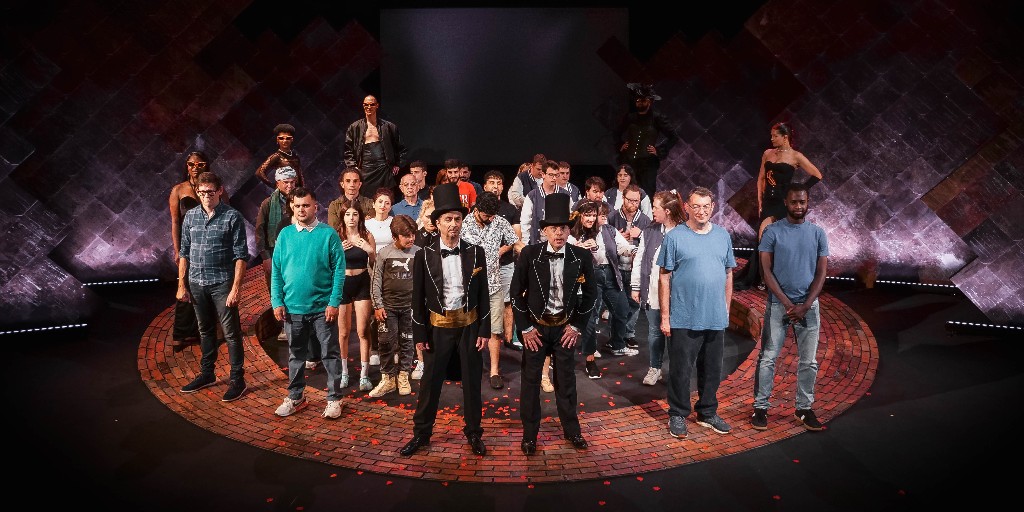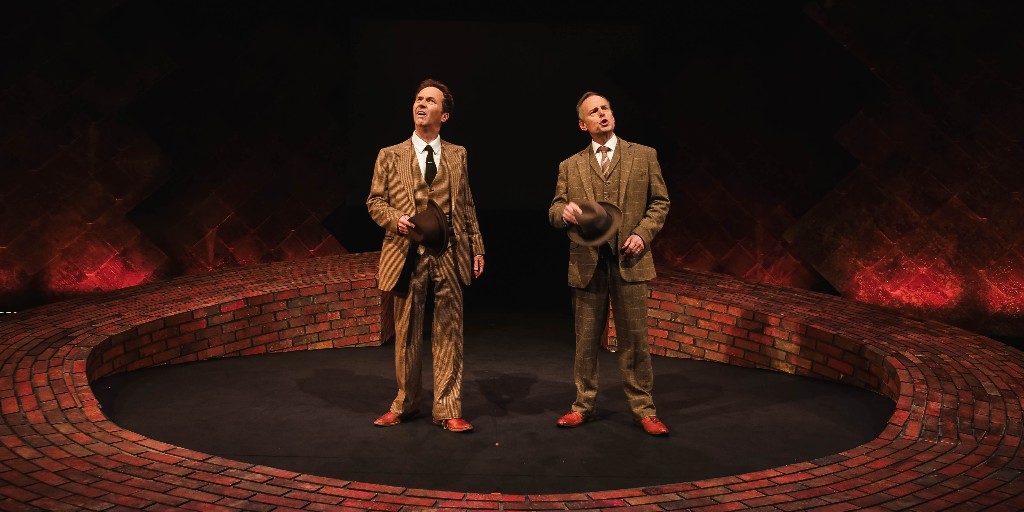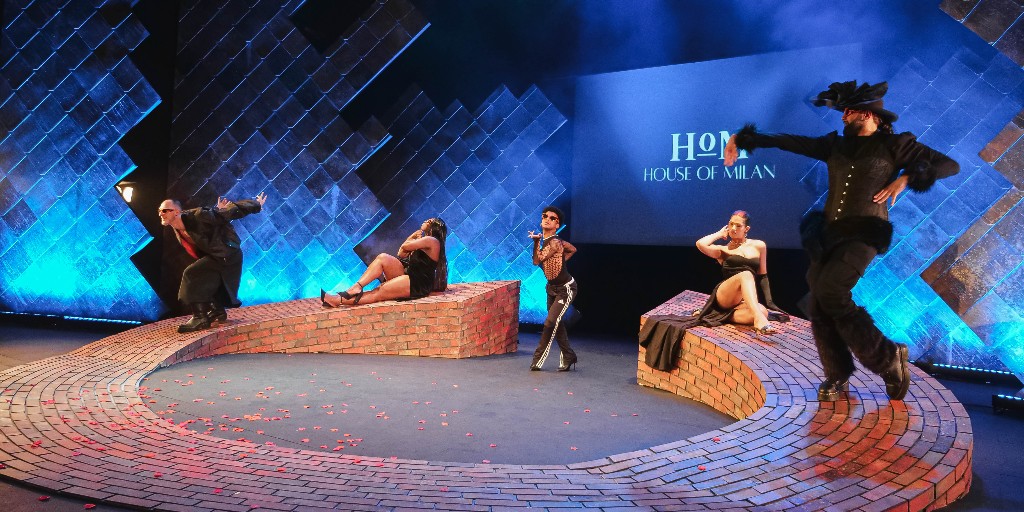
All posts by Barbara Hughes-Moore

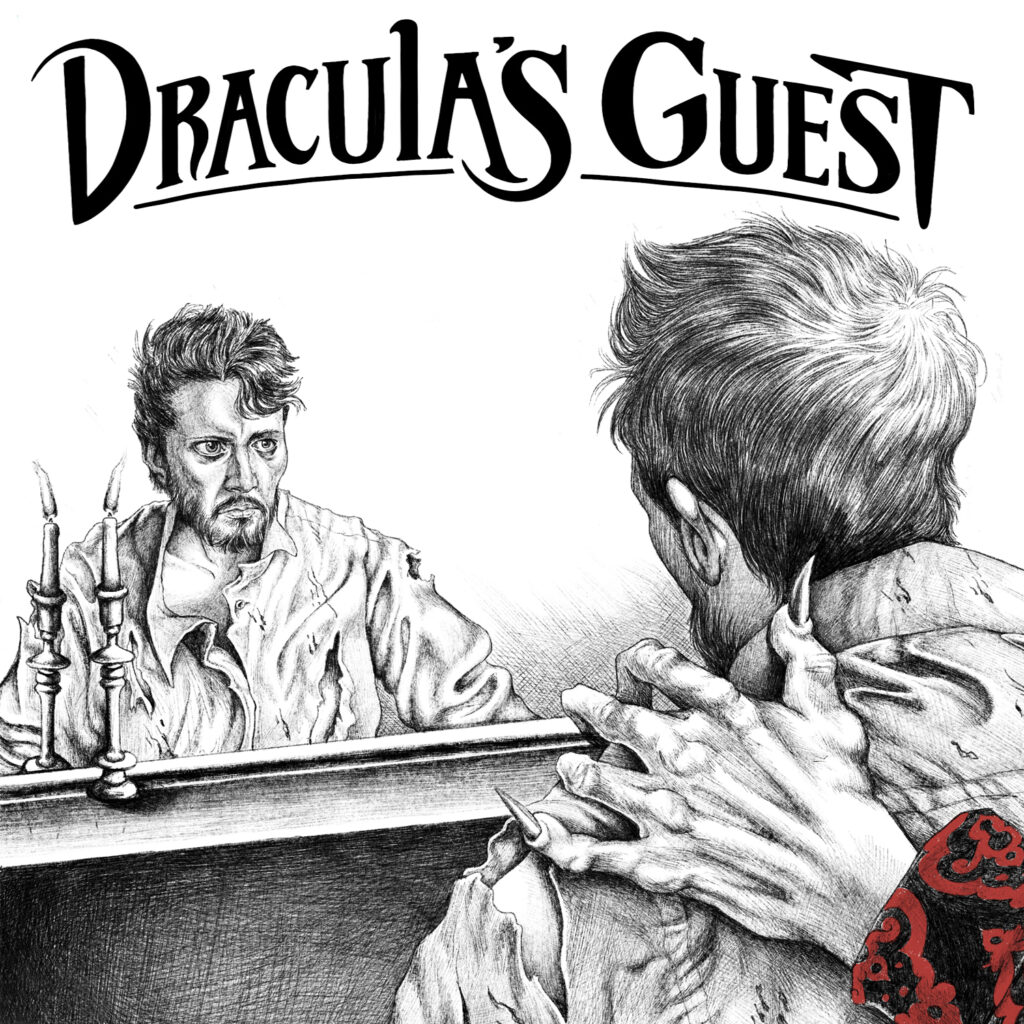
Dracula’s Guest (Brother Wolf) – a review by Barbara Hughes-Moore

A chilling start to spooky season at Newport’s Riverfront Theatre

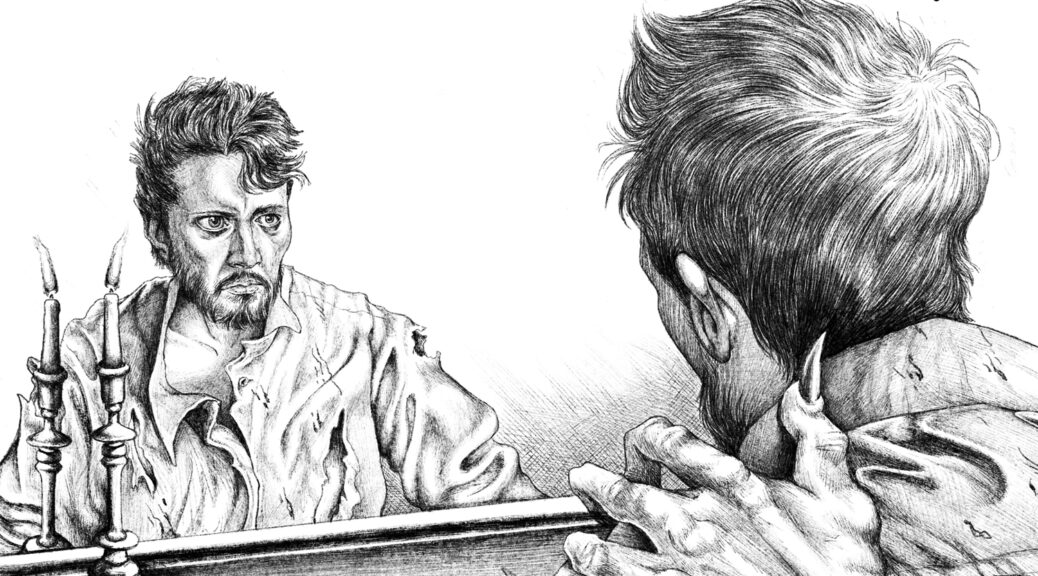
Inspired by Bram Stoker’s genre-defining vampire novel of 1897, Dracula’s Guest shines a light on a relatively minor character in the Dracula canon; one who is often overshadowed by flashier, more bombastic figures like Van Helsing and the Count. That character is R.M. Renfield: Dracula’s bug-eating mortal servant/familiar who, in exchange for the promise of eternal life, assists his diabolical plans to set up a new vampiric feeding ground in England. While the book never reveals Renfield’s backstory, Dracula’s Guest seeks to answer this tantalising ‘what if?’ – with a few terrifying twists and turns along the way.

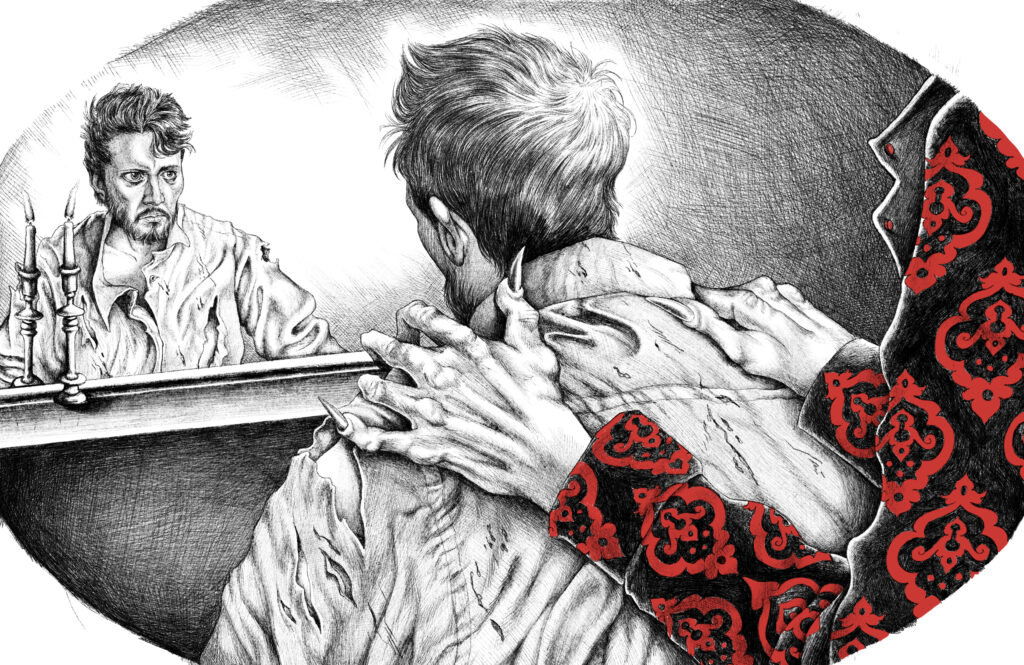
The play is directed, adapted and produced by James Hyland, who also stars as Dracula opposite Ashton Spear as Renfield. ​Premiering in 2021, Dracula’s Guest won the Dracula Society’s Hamilton Deane Award and an Offcomm Commendation at the Off West End Awards, both in 2022. This taut two-hander begins with Renfield alone, trembling at a table set for two. On the menu tonight: a glass of brandy and a rotting pig’s head. The second chair is empty – but it won’t be for long. In sweeps the Count, and the Gothic feast begins.

Over the course of a tense and often gruesome hour, we watch the pair engage in a psychological game of cat and mouse. Hyland’s passion for the source text is clear, and he does well to weave in many key motifs from Stoker’s work while striking a few bold, original notes of his own.
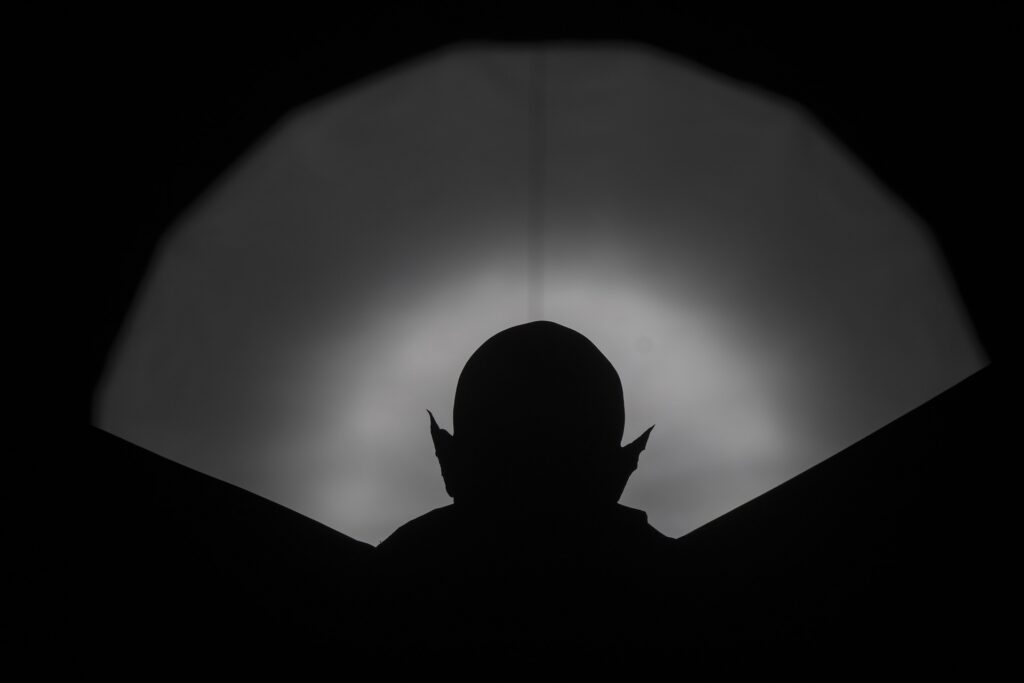
One of these is to hone in on Dracula as a figure of compulsion. His Count is a sadistic manipulator, a toxic narcissist, and a staunch believer in his own myth. He embodies some of the new ‘vampires’ of our own age: manipulative and coercive men in positions of power, who use tools like negging and gaslighting to dominate and control. In the novel, he is an old warlord trapped in a new age, waxing lyrical about his gory glory days. This is a sense that Hyland does well to capture in his performance, giving the impression that Dracula was thirsty for blood long before he acquired the dark gift.

His Count is still very much at war, but it is also a stage that he craves: part shogun, part showman. Hyland’s performance leans into the theatrical bombast of Hammer Horror and even further back in film history, to the Expressionistic silent movies which still influence our cultural image of the vampire today. There’s even something of the feral balletics of Gary Oldman’s Kabuki-inspired performance in Hyland’s unsettling physicality and bursts of animalistic rage. Hyland, who I had the pleasure of interviewing earlier this week, clearly has a feel for the Gothic and would surely have brought that to past productions of Jekyll and Hyde and A Christmas Carol that he has created and starred in under his production company, Brother Wolf.

Spear, in contrast, grounds us in a truly empathetic humanity. In a novel so preoccupied with the often-fine line between sanity and madness, Renfield sits at the intersection between truth and delusion. His and Hyland’s interactions play like a dance (at times literally), with moments of dark comedy intercut with sequences of bug-eating grossness that aren’t for the faint of heart. And the psychosexual undertones within Stoker’s novel are present here, too, with Dracula seeking to persuade his captive to ‘join’ with him in perhaps more ways than one.

The play is all the more unsettling because Renfield is not Dracula’s only Guest: the audience, too, has been invited into his hallowed halls, and may likewise be looking for the exit, especially during some of the grislier bits! A testament, I’m sure, to the skilful sense of tension and unease that has been crafted, both by the two actors onstage along with Chris Warner’s spine-chilling score. It’s a taut and unsettling two-hander that will have you sleeping with the light on long after the lights go down.

Vampires are creatures of the past who also represent our present. Through them we might reflect on our own heritage and histories, what haunts us in our waking lives, and what we refuse to let die. While the script could be tighter in parts, the play builds to a genuinely shocking climax that will have you asking yourself what happens next. Dracula’s Guest may well have the answer, but the question remains: would you invite them in?
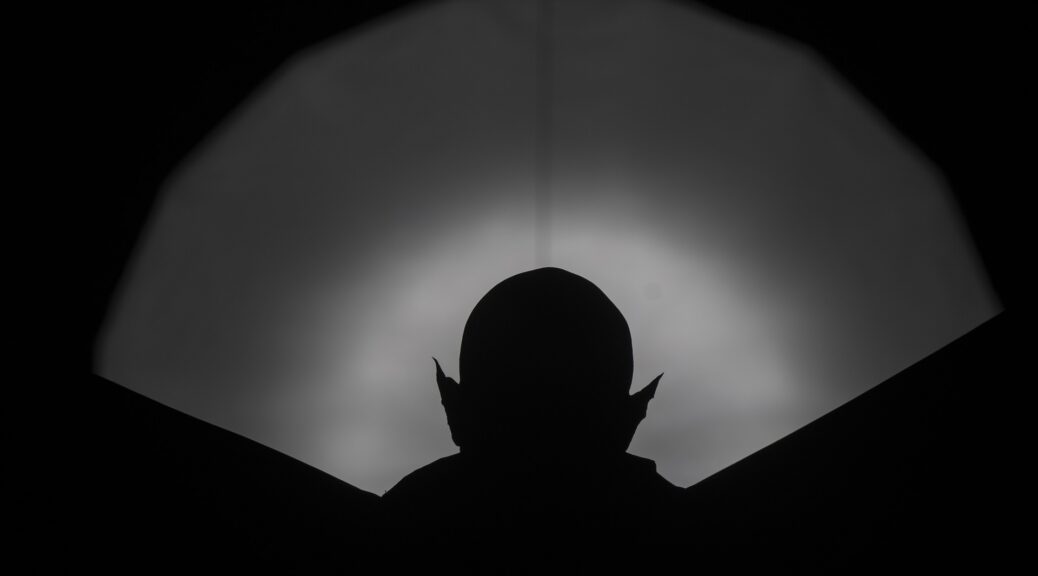
INTERVIEW James Hyland, Dracula’s Guest (Newport Riverfront)

Dracula’s Guest, which performs at Newport’s Riverfront Theatre this Friday (2nd October), promises to be a bold new take on Bram Stoker blood-curdling Count. In the original novel, we meet the character of Renfield in an asylum, eating insects and raving about his ‘Master’ (Dracula), who has promised him eternal life. But in Dracula’s Guest, we get the chance to meet him as the man he once was – indeed, at his fateful first meeting with Dracula himself. Get the Chance’s Barbara Hughes-Moore sat down with James Hyland, who directed, produced, adapted, and stars in the play, to talk about re-envisionioning this most (in)famous of vampires.

Dracula is one of the most adapted characters in literature. What is your favourite version of the character, and why? What impact did it have on your depiction of the Count?
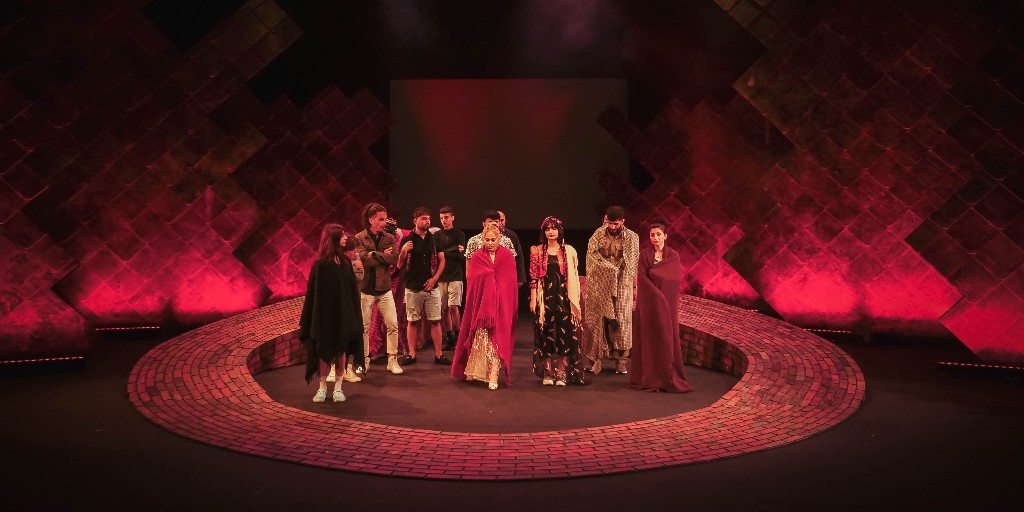
I think one’s first introduction to the Count often has the most impact. For me, it was Christopher Lee’s portrayal in Jimmy Sangster’s film adaptation for Hammer, directed by the legendary Terence Fisher. Christopher Lee, of course, was an incredibly versatile actor; he could play anything, really, and his extraordinary performance as Dracula has certainly stood the test of time. I adore his command of the screen without saying a single word; beautifully economical and sharply focused. There are many other impactful examples, including that of fellow South Londoner Gary Oldman, whose exquisite portrayal in James V. Hart’s adaptation for the screen, directed by the great Francis Ford Coppola, was one of the very first to grapple with Dracula’s lost humanity. Oldman brought incredible gravitas to the role as well as a delicious rawness.


The short story ‘Dracula’s Guest’ is often regarded as a deleted scene from the novel. What aspects of the original did you want to retain for this play?

I used only the title of the short story, as it perfectly encapsulates the themes of my adaptation. While based primarily on Bram Stoker’s novel, my interpretation also draws from his other works.

What other works of Gothic or horror fiction were you influenced by in crafting the play?

I adore anything related to Dracula or vampires, so my love for the Horror genre with regards to those characters has always been an artistic influence–ever since childhood really. To be honest, it wasn’t my plan to create an adaptation as I was hard at work researching a war story at the time, and I felt that Bram Stoker’s novel had already been successfully explored to “the nth degree”. I believed I had nothing new to add to the long list of stage and film adaptations–until a singular question popped into my head during the pandemic which absolutely thrilled me: “What if…?” That question gave rise to a flurry of notes that continued for the better part of a year. The research was an absolute joy because I was taking another deep dive into one of my favourite genres, having previously adapted Strange Case of Dr Jekyll and Mr Hyde for the stage which, incidentally, is also still on tour in the UK.

What is especially compelling about the central relationship between Dracula and Renfield?

I remain particularly interested in what brought Renfield to his degraded status as portrayed in the novel, specifically regarding his prior interactions with Dracula. As this had not been previously explored on stage, giving both characters a voice here presented a unique opportunity to write about unfamiliar aspects of their personalities and experiences.

What role does the audience play: are we innocent spectators, or are we complicit in Dracula’s mind games?

That would be telling. No spoilers here.

The Gothic is a genre which is deeply connected to the senses: to memory, psychology, and feeling. When the curtain falls, what do you want the audience to feel?

I rarely talk about what I want the audience to “feel” prior to seeing the play because theatre often operates in a realm beyond words and as a process of discovery. That’s a conversation I’m more likely to have after an audience has watched the performance as I’m always interested in the uniqueness of each person’s response. There are, of course, a multitude of moments that have been carefully constructed to elicit specific responses from the audience in order to accentuate the various themes of the play and its overall objective as a piece of drama. Above all, though, I wanted to create something that was very human, albeit with dark, fantastical leanings.

Nina Auerbach once wrote that ‘every age embraces the vampire it needs’. Why, in 2026, do we still need Dracula – and how does your version reflect the age we inhabit now?

As with all of my plays, I have sought to create a drama that mirrors the human experience and reflects many aspects of our nature, both good and evil. Thus, I have attempted to make the piece as relevant as possible to our most recent collective experiences, but through the prism of the twisted and the grotesque–as Horror is often the perfect genre for the exploration of the unspoken. What those experiences are, I shall let you discover.

Dracula’s Guest is performed at The Riverfront, Newport, on Friday 2nd October. More information on the show and how to book tickets here.

REVIEW Jac and the Beanstalk, New Theatre by Barbara Hughes-Moore

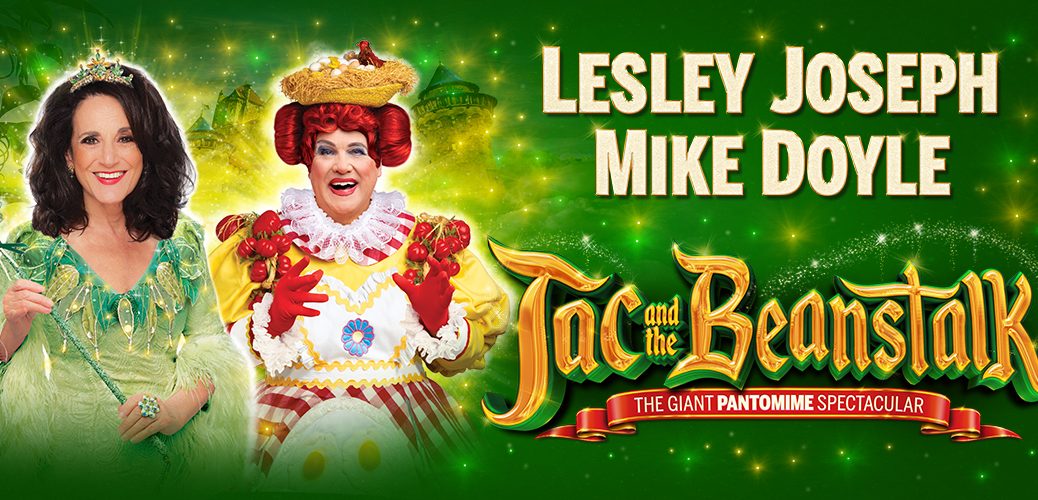
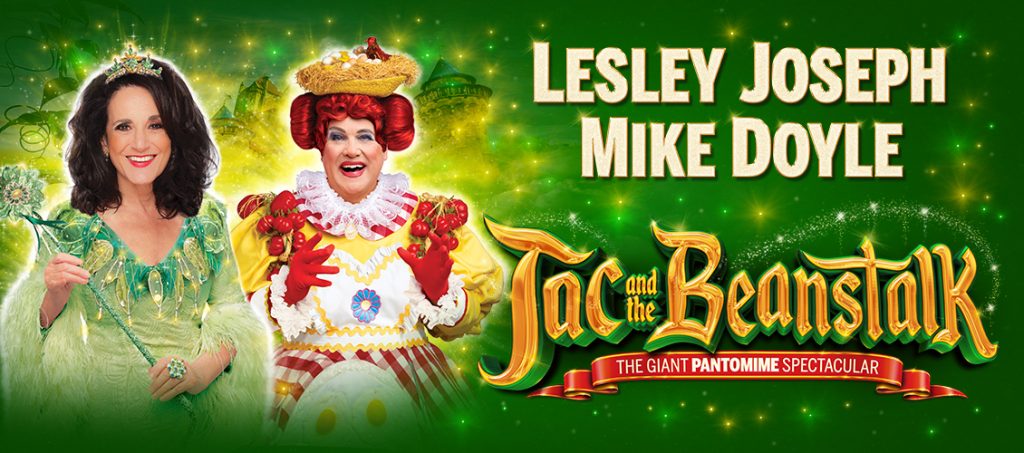
It isn’t a proper Cardiff Christmas without a trip to the New Theatre, now the official home of Wales’ biggest panto. Over the last few years we’ve seen classics like Cinderella, Snow White and Aladdin – and their latest festive offering Jac and the Beanstalk, truly is a giant of a panto!

Jac and the Beanstalk. Image credit: Tim Dickeson

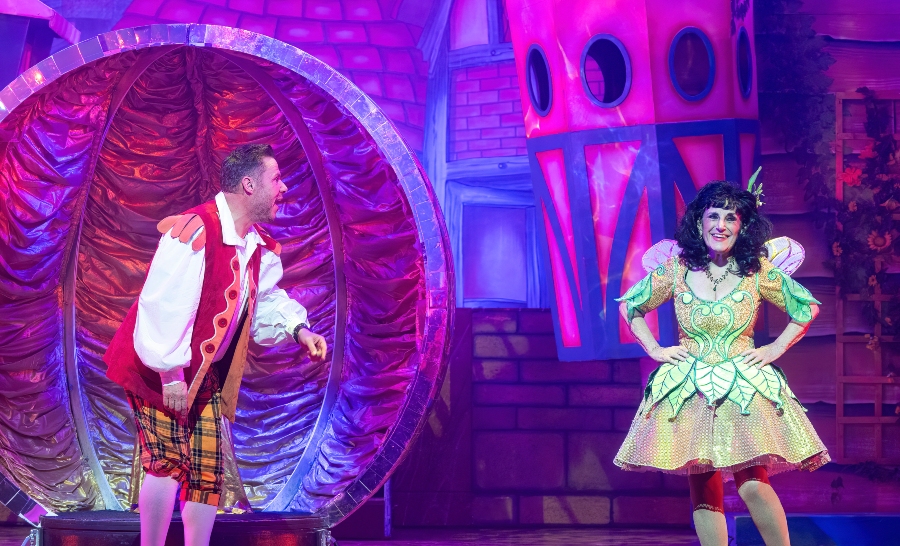
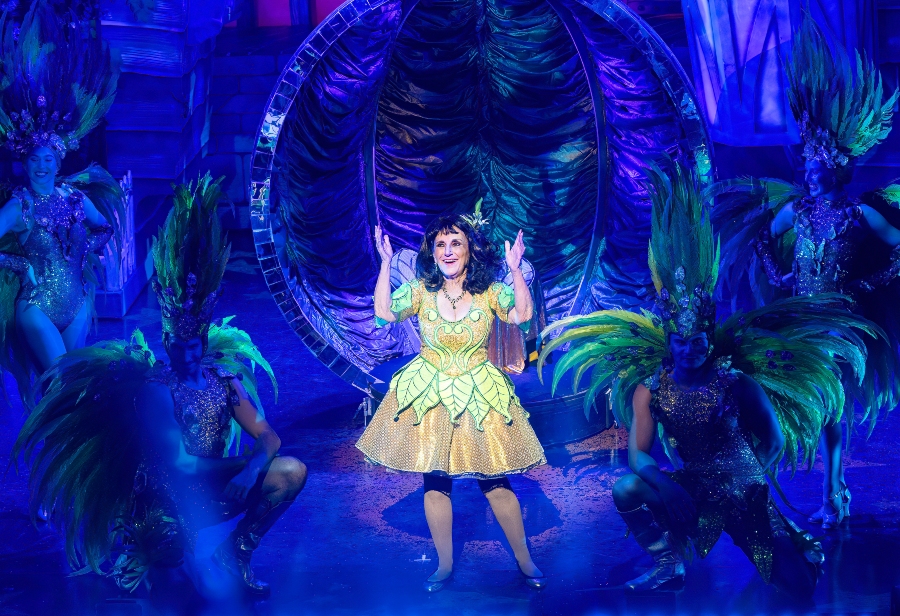
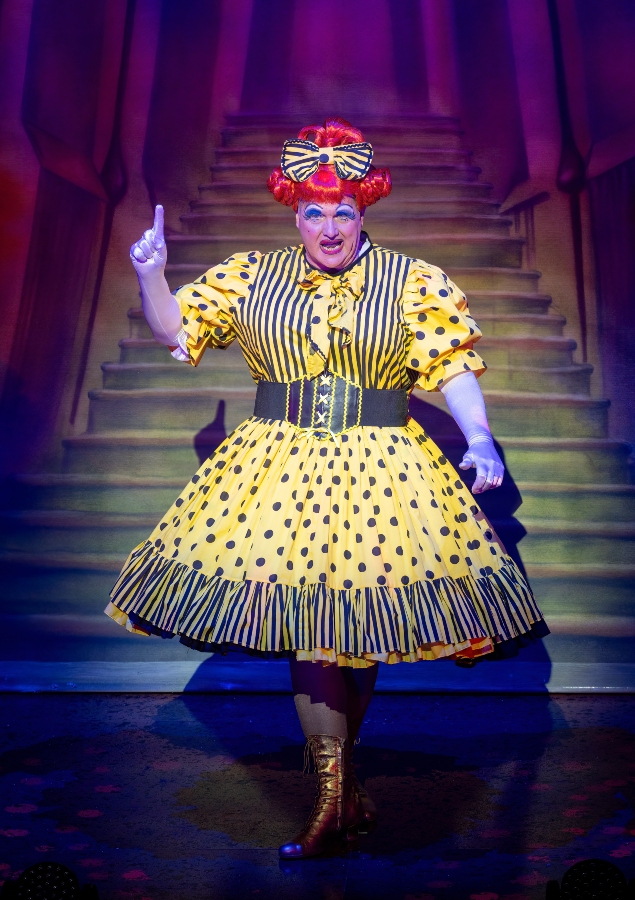
Starring the iconic Lesley Joseph (Birds of a Feather) and Cardiff’s favourite Dame, Mike Doyle, the story follows Jac (Adam Bailey), a poor country boy who dreams of saving his hometown of Cardiff from the evil giants who live above them in a city in the clouds. Accompanied by girlfriend Jill (Denquar Chupak), brother Silly Simon (Aaron James), and mum Dame Trot (Doyle), Jac goes on an epic quest to defeat the giants’ villainous henchman Fleshcreep (Steve Arnott) with a little help from the Spirit of the Beans (Joseph).

Aaron James and Lesley Joseph in Jac and the Beanstalk. Image credit: Tim Dickeson

With an un-beet-able cast, hilarious jokes and eye-boggling visual effects, its no surprise that Jac and the Beanstalk is a wonderful night of festive family entertainment. When I spoke to star Adam Bailey a few months ago, he also promised some great musical numbers – and boy do they deliver!

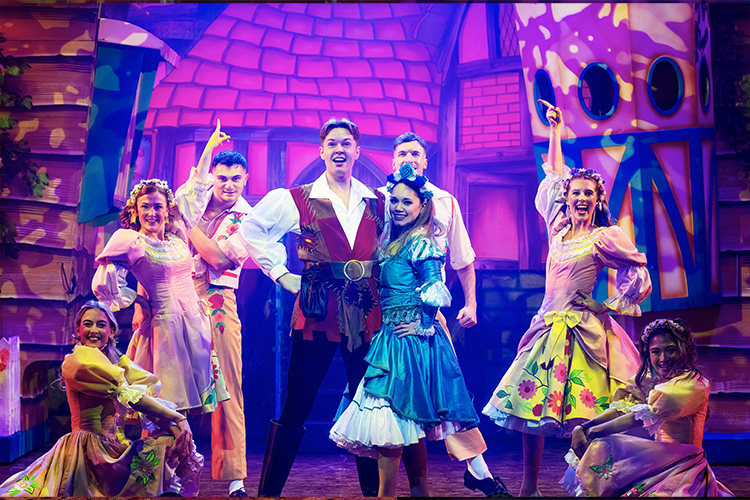
Lesley Joseph and the ensemble cast of Jac and The Beanstalk. Image credit: Tim Dickeson

There’s an adorable song featuring the village’s furry friends, a villainous Disco ditty complete with dancing demons, and a standout sequence to Dua Lipa’s ‘Dance the Night’ from Barbie courtesy of Jac and Jill (though it’s a shame they never went up a hill at any point). And the a-maize-ing ensemble is responsible for the best dancing I’ve seen in a panto: kudos to the super talented James Davies Williams, Phoebe Roberts, Amber Pierson, Marcel Li Ping, Janine Somcio, and Lauren Wadsworth.

Mike Doyle in Jac and The Beanstalk. Image credit: Tim Dickeson

Director and choreographer Nick Winston keeps the story light, bright and breezy while writer Alan McHugh and the fabulous cast yield up a fresh crop of Christmas crackers. And the visual effects team outdoes themselves with a heart-pounding, pulse-racing trip to the giant’s lair – in 3-D! (Glasses are provided but you might want to bring your own brollies…) Suffice to say it’s bean on my mind ever since.

A perfect Christmas gift for all the family, Jac and the Beanstalk truly is entertainment beyond be-leaf!

Jac and the Beanstalk is performing at the New Theatre through to 7 January 2024. You can find more information on the show and book tickets here.

REVIEW Quiz: the Coughing Major Millionaire Scandal, New Theatre Cardiff

It was the cough heard around the world.

In 2001, when British Army Major Charles Ingram won the top prize on Who Wants to Be a Millionaire?, he became the third person ever do so – and the first to be denied the winnings. After a lengthy trial he was found to have procured the money by deception, in conspiracy with his wife Diana and fellow contestant Tecwen Whittock. The prosecution’s case rested on the production company’s claim that Charles, who’d played erratically throughout his time in the hot seat, was guided to the correct answers through a series of coughs from Diana, Tecwen, and an underground ring of Britain’s top quizzers, who’d get a cut of the prize money.

Rory Bremner in Quiz. Image credit: Johan Persson

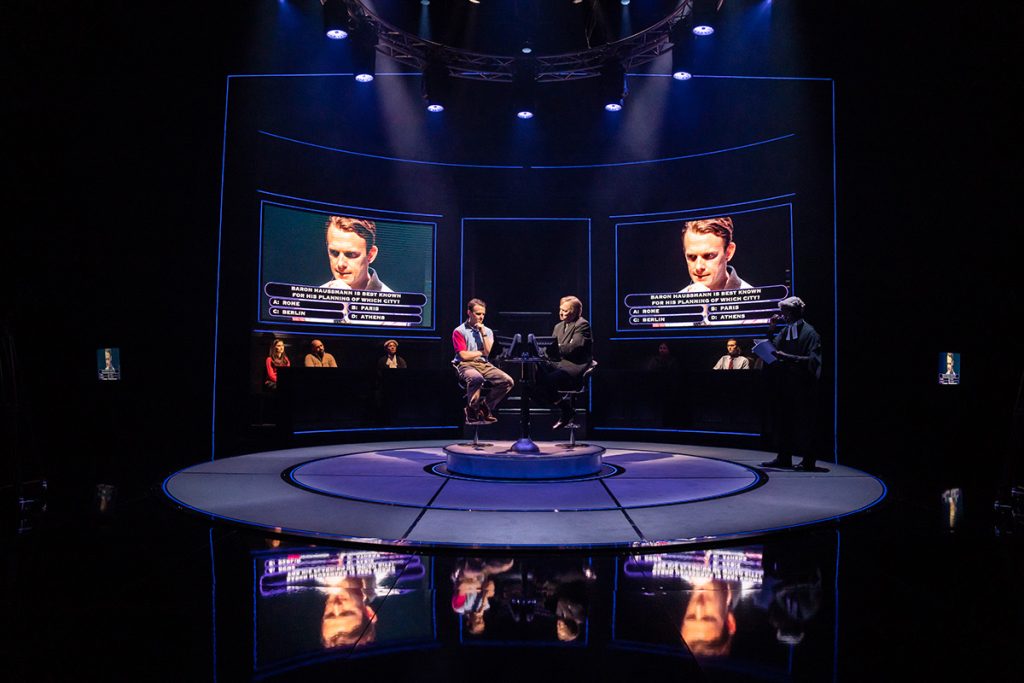
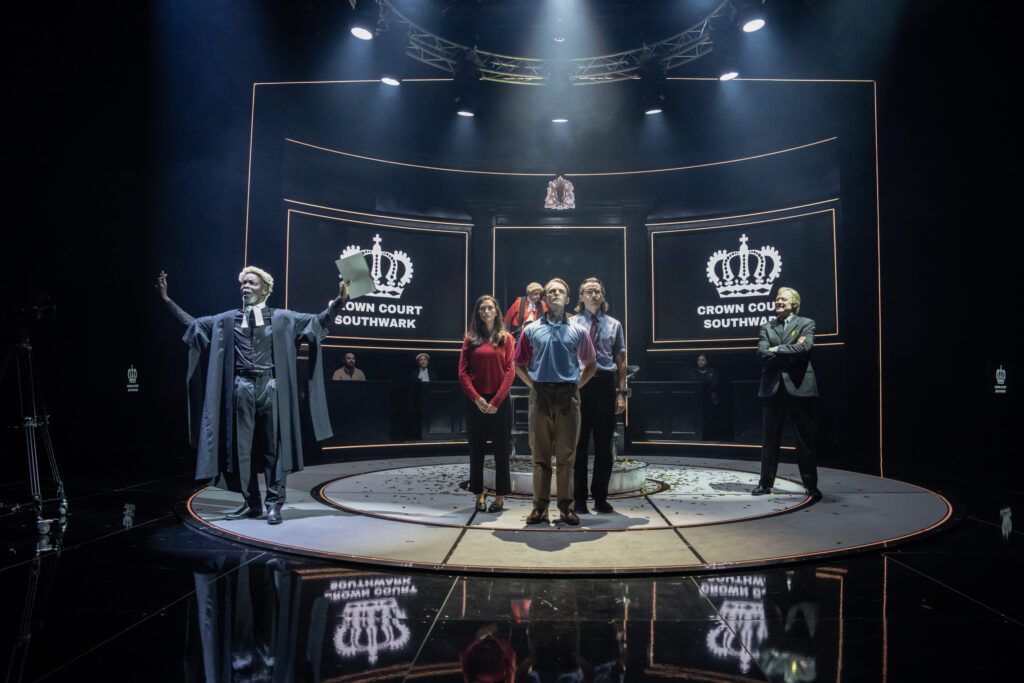
Directed by Daniel Evans and Seán Linnen, and written by James Graham, Quiz takes its audience through the story through the lens of the trial that followed. In Act One, we hear the case for the Prosecution; in Act Two, the case for the Defence – all while using Millionaire’s infamously stress-inducing psychological tactics: the pulsing heartbeat, the gradually dimming lights, and the twisted spectacle of watching someone unravel before your very eyes. No wonder it quickly became the world’s most popular TV quiz show: you quite literally couldn’t look away.

Lewis Reeves and Rory Bremner in Quiz. Image credit: Johan Persson

Comedian and Britain’s top impressionist Rory Bremner stars as Chris Tarrant – and he’s utterly uncanny in the role, capturing every Tarrant-esque tic. His scenes with Lewis Reeves (I May Destroy You, The Midwich Cuckoos) as the unassuming Major Ingram in particular seem lifted exactly from the episode itself. This is in no small part thanks to the spot-on set, designed by Robert Jones and lit by Ryan Day, which brilliantly evokes the original game show and transitions spookily well into an imposing courtroom.

The cast of Quiz. Image credit: Johan Persson

This is far from your typical courtroom drama. It is brimming with energy, poignancy and lots of laughs – not least from Mark Benton (Northern Lights, Shakespeare and Hathaway) as a series of hilarious characters, from the bum bag-toting top dog of ITV to the leather-coated leader of the quizzers’ secret circle. A brilliant ensemble features strong supporting performances from Charley Webb (Emmerdale) as Charles’ quiz-obsessive wife Diana, as well as Danielle Henry, Leo Wringer, Jay Taylor and Stefan Adegbola. And do look out for scene-stealing turns from Sukh Ojla and Marc Antolin.

Sukh Ojla and Mark Benton in Quiz. Image credit: Johan Persson

Nominated for two Olivier Awards including Best New Comedy, the West End smash hit was adapted for TV in 2020, starring Michael Sheen, Matthew Macfadyen and Sian Clifford. But there’s something special about the theatrical production and how it poses the ultimate 50/50 question: Were the Ingrams guilty, or not guilty? You might want to phone a friend, or ask the audience – which Quiz does, by giving them the opportunity to vote, and not just as a contestant’s lifeline. Fresh from a smash-hit run on the West End, Quiz perfectly captures the heart-pumping tension of the world’s most popular TV quiz show. Catch it while you can – and that’s my final answer!

Quiz is performing at the New Theatre Cardiff from 18 – 21 October. More information on the show and how to book tickets can be found here.

Quiz is a fictional imagining based on real events which took place in 2001 following an episode of Who Wants To Be A Millionaire? It is not in any way connected with the makers of the programme or any of the individuals portrayed. The television programme Who Wants To Be A Millionaire? is produced by 2waytraffic.

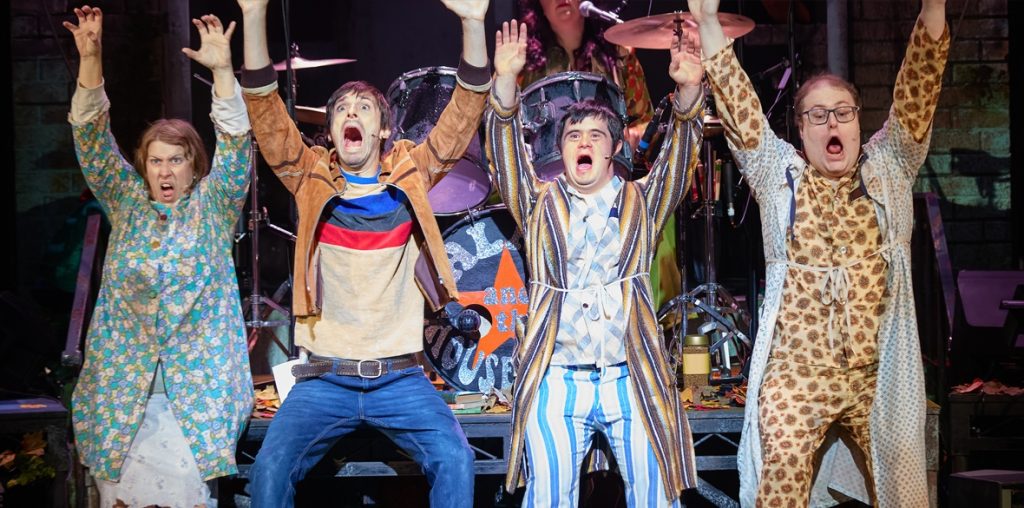
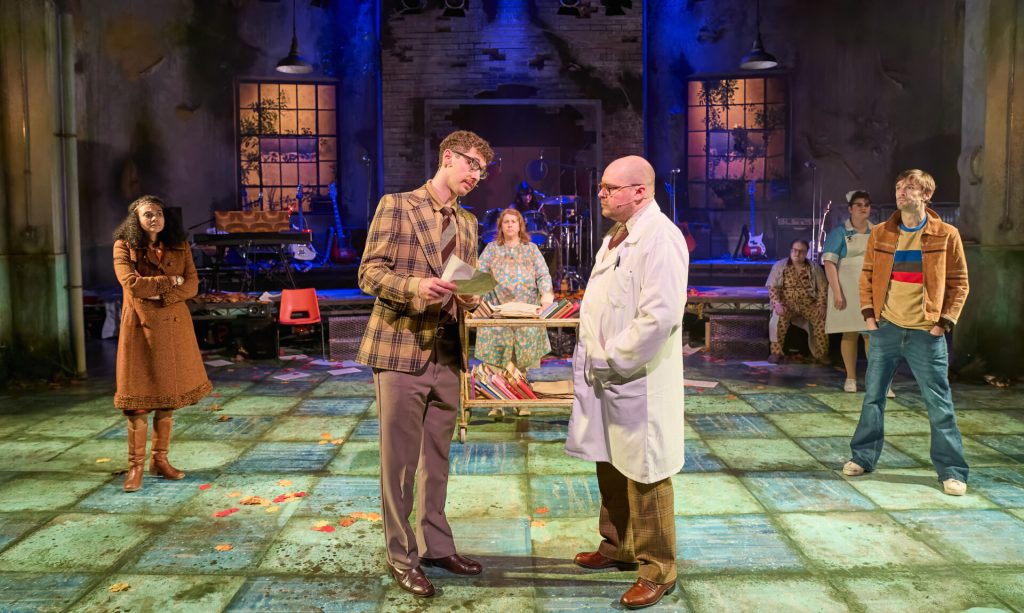
REVIEW Housemates, Sherman Theatre/Hijinx by Barbara Hughes-Moore

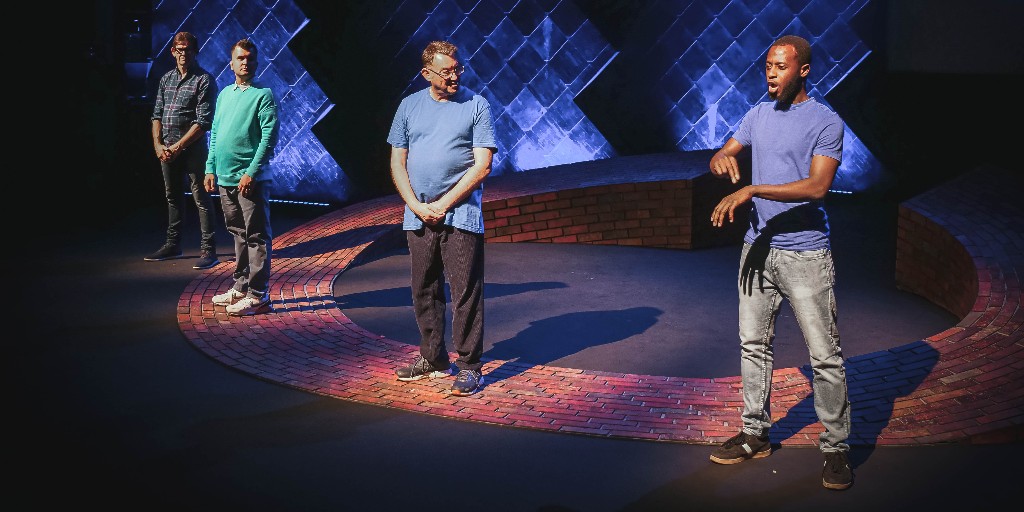
Move over Monica, Chandler, Rachel, Ross, Joey and Phoebe: there’s a new set of Housemates in town, and they’re here to change the world!

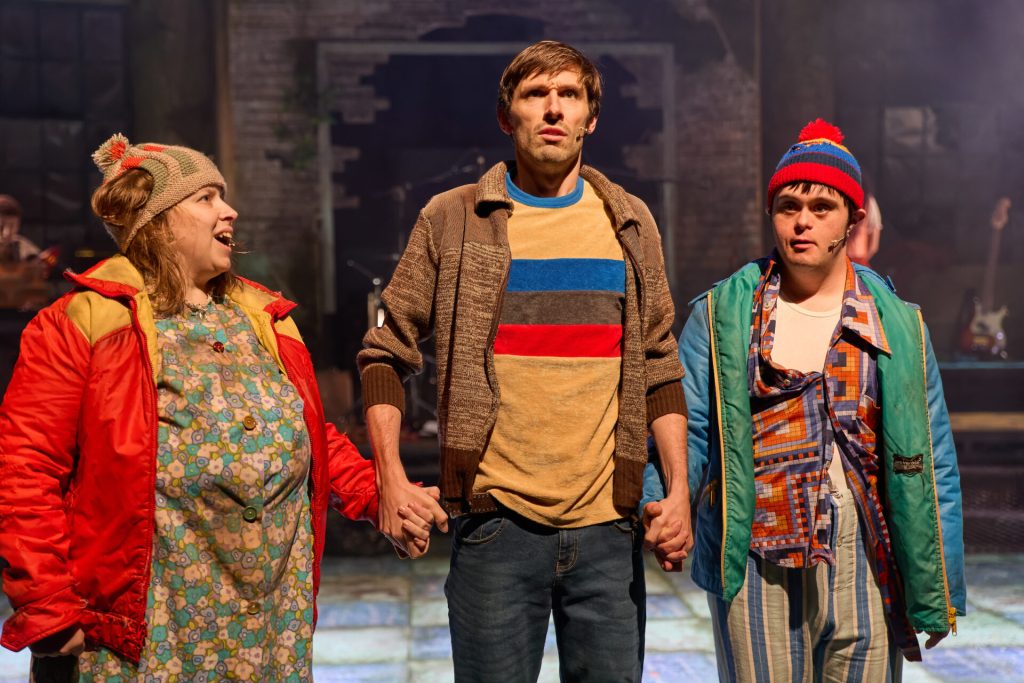
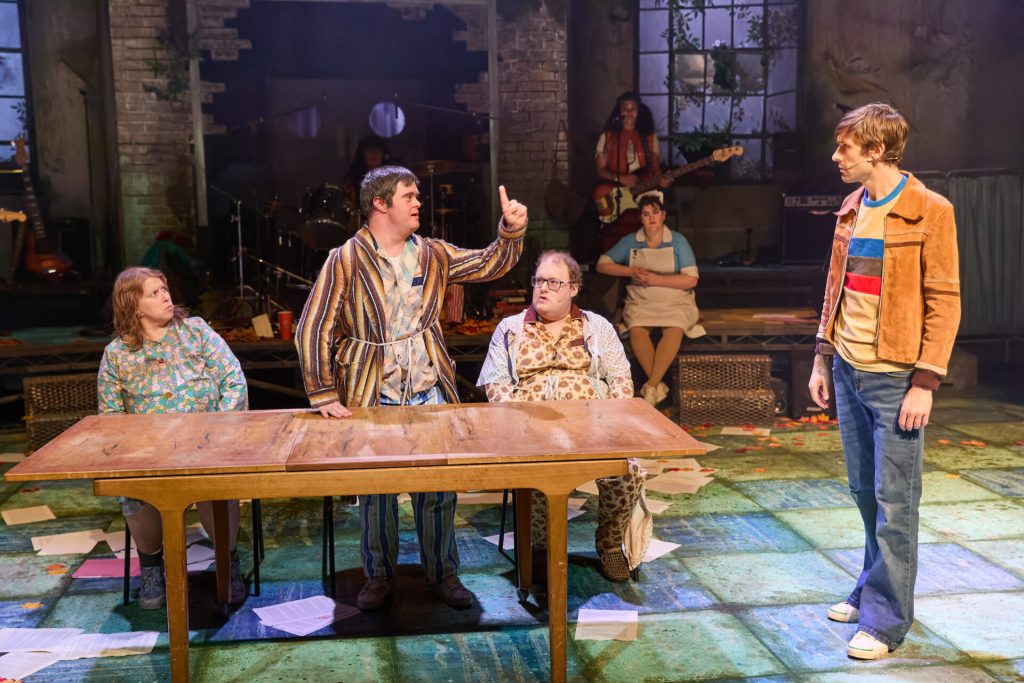
And that’s exactly what they did, when in 1974 a group of residents at the Ely Hospital went to live with Cardiff University students in a small house in Ruthin Gardens. Alan (Gareth John), a young man born with Down’s Syndrome, meets Jim (Peter Mooney), a rebellious student volunteer. The two become friends, and so begins an odyssey that – after two years, countless letters and submissions and hospital board rejections – culminated in the end of institutionalised ‘care’ and the dawn of supported living.

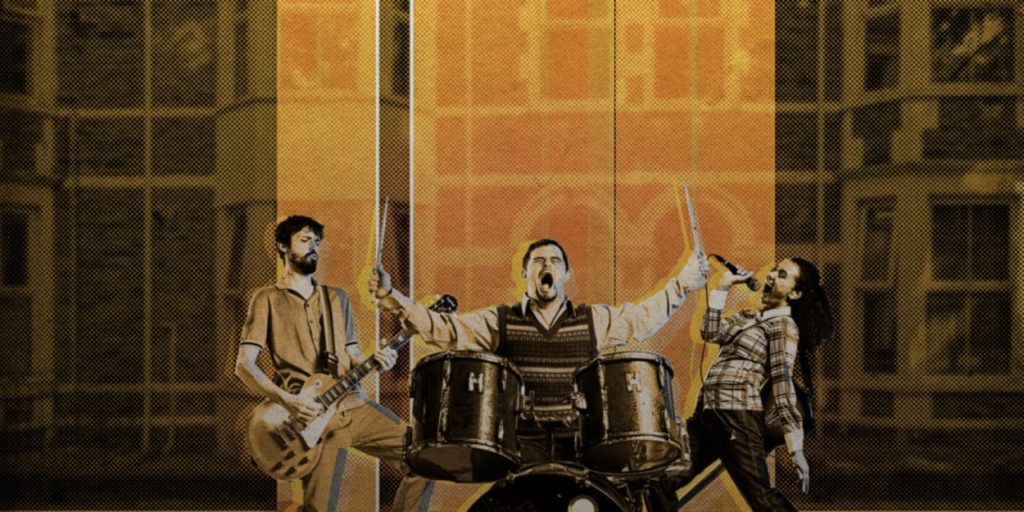
Written by Tim Green and co-directed by Joe Murphy and Ben Pettitt-Wade, Housemates is a fun and affectionate tale that is raucously brought to life by a hugely talented cast of neurodivergent and neurotypical actor-musicians. The show moves through its story like a song, underscored by an excellent sense of rhythm, movement, and momentum. There are brilliant performances by John and Mooney as the central duo, who lead a superb ensemble cast that includes Natasha Cottriall, Lindsay Foster, Matthew Mullins, Caitlin Lavagna, Richard Newnham, James Ifan and Eveangeleis Tudball. They make a (shockingly) little-known piece of Welsh history feel like an instant classic.

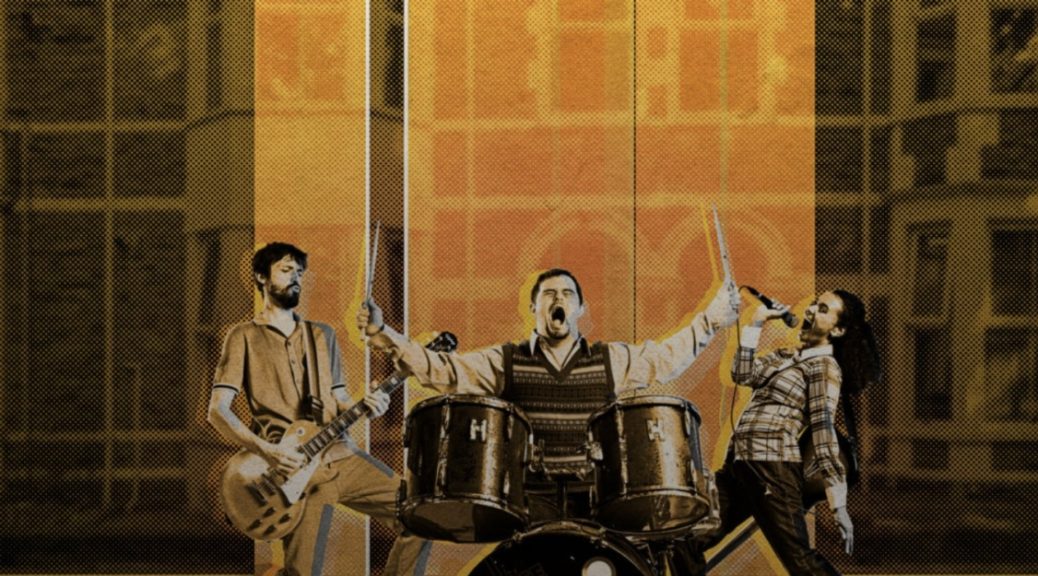
The show begins even before you take your seat, with the cast performing iconic 70s hits that transport you to this era of rockin’ rebellions – and keeps the party going well after the curtain falls. It is simply the most joyous show I can remember seeing in a long time. This vibrant co-production between the Sherman Theatre (the ‘engine room of Welsh theatre’) and Hijinx (one of Europe’s leading inclusive theatre companies) is further proof of the magic of contemporary Welsh theatre: a concert, a comedy, and a clarion call in one.

Housemates is performing at the Sherman Theatre until Saturday 14 October. More information and how to book tickets here. Performances are captioned (in English), audio described and BSL interpreted. Please note that the show contains use of outdated terms for disabled people, ableism, strong language and descriptions of abuse.

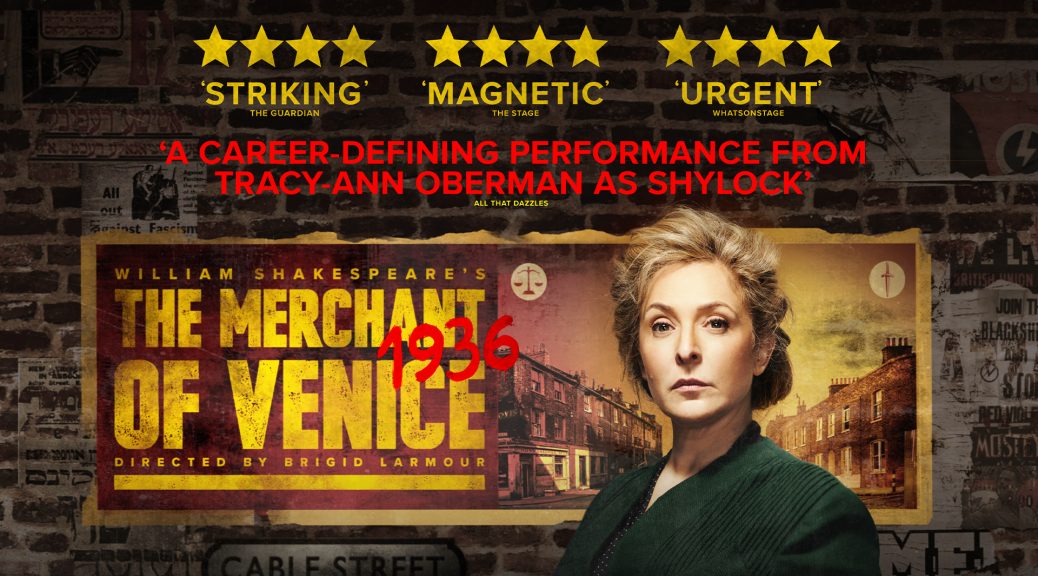
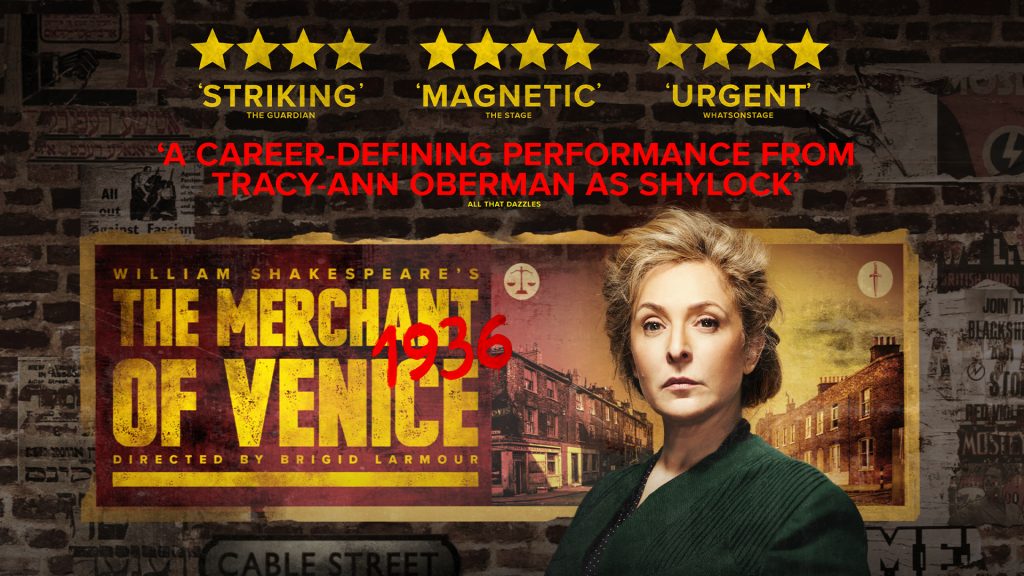
INTERVIEW Tracy-Ann Oberman for The Merchant of Venice 1936

Below is a syndicated interview with Tracy-Ann Oberman for The Merchant of Venice 1936, which is performing at the New Theatre Cardiff from 31 October – 4 November. More information on the show and how to book tickets here.

“The women in my family were as tough as nails.”

Tracy-Ann Oberman is herself no stranger to tough cookies – she’s a formidable actor on stage and screen. But here she is speaking about her great-grandmother and aunts, women with nicknames like Machine-Gun Molly and Sarah Portugal. They came to London from antisemitic eastern Europe at the turn of the last century, and despite all odds managed to build a life and make a living.

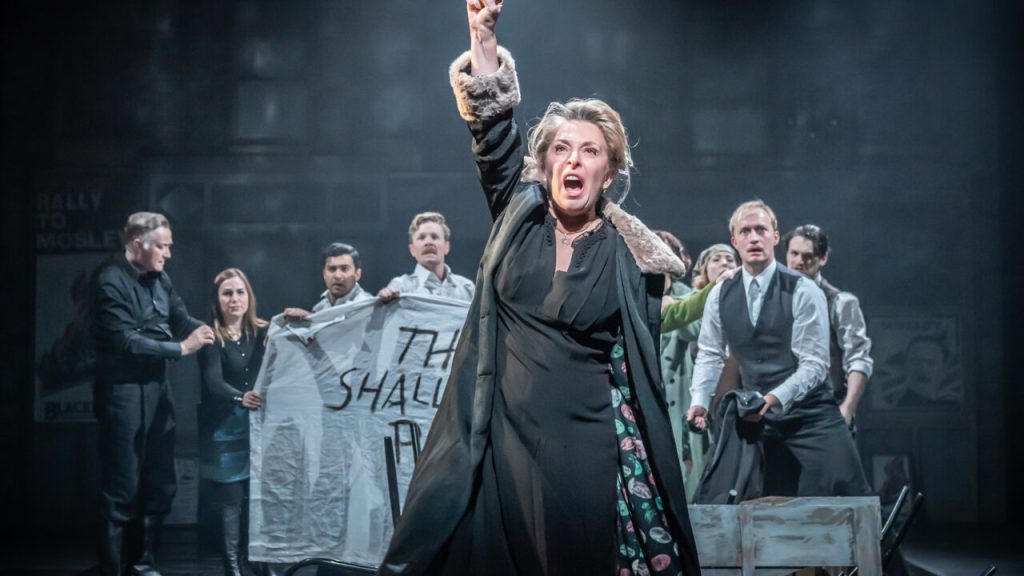
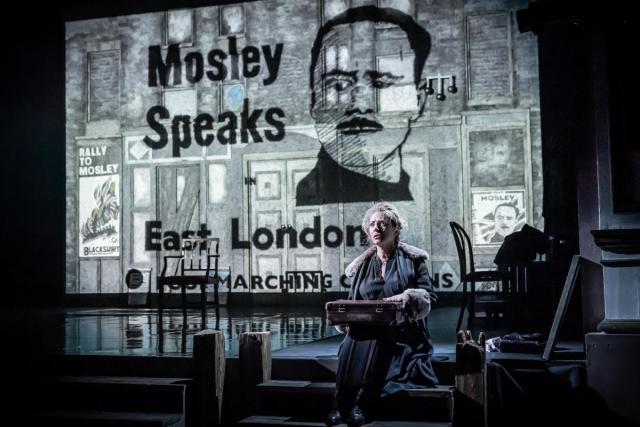
Oberman’s family history helped unlock Shakespeare’s enduringly controversial play, The Merchant of Venice. Her relatives survived the Battle of Cable Street in 1936 – a little-known event in London’s East End, when the Jewish community was targeted by the British Union of Fascists, led by Oswald Mosely. Mosley’s blackshirts marched through the area, only to be confounded when the non-Jewish community stood by their Jewish neighbours.

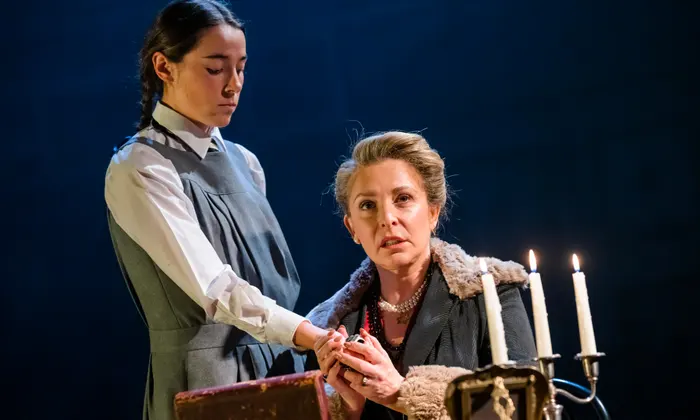
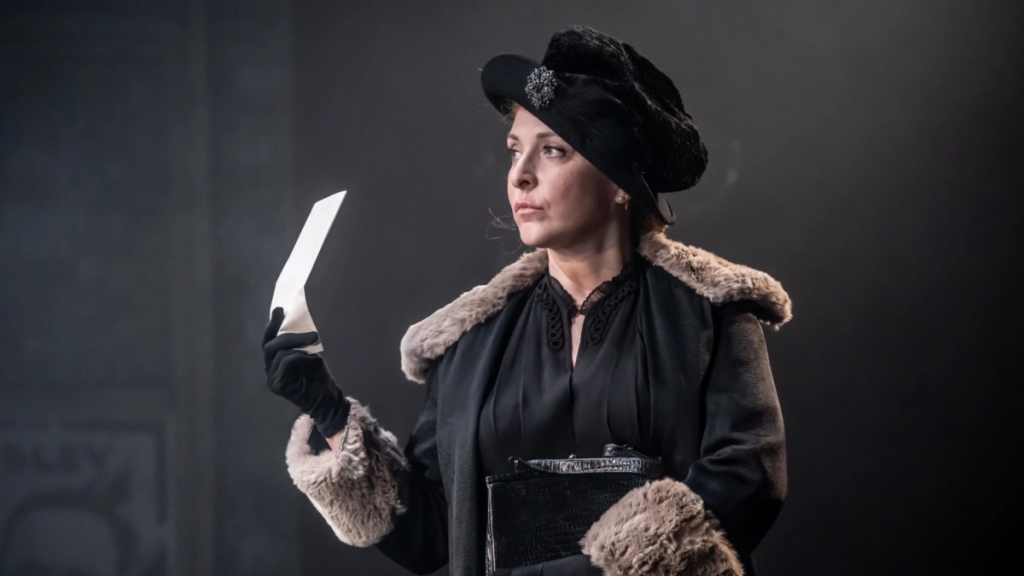
In The Merchant of Venice 1936, Shakespeare’s harsh plot snaps brilliantly into place against this backdrop. Shylock, its anti-hero, is a Jewish moneylender who becomes entangled in the affairs of wealthy non-Jews and suffers terribly for it. In this new version, Oswald Mosely inspires Antonio, the merchant who takes a loan from Shylock and offers a seemingly fanciful penalty for defaulting: a pound of flesh. The heiress Portia becomes “a beautiful glacial Mitford type, awful” – her famous courtroom speech about “the quality of mercy” emerges as an act of hypocrisy rather than humanity. And Shylock changes sex, played by Oberman as a single mother, fiercely committed to her independence and her daughter. “I have one daughter,” she says – “it’s an intense relationship!”

Oberman is an impressively versatile actor – diamond sharp on stage at the RSC and National Theatre, in comedies like Friday Night Dinner and Toast of London, and as Dirty Den’s
nemesis Chrissie Watts in EastEnders. Yet playing Shylock in The Merchant of Venice was never on her radar – growing up, she says, “the play always fascinated and repulsed me.”

Reclaiming the play from a Jewish perspective has proved a transformative experience. It is directed by Brigid Larmour, who recently stepped down as artistic director of Watford Palace Theatre: the pair of them have become, says Oberman, “walking encyclopaedias of this world.” They assembled a strong company of actors – “We call ourselves the Cable Street Collective!” says Oberman. Ray Coulthard’s sneering Antonio and Hannah Morrish’s icy Portia are chilly foils to this ardent Shylock. The result is painfully funny, genuinely upsetting – and unexpectedly moving as the events of the play meld with the heightened drama of the Battle of Cable Street.

Having sold out in Watford and Manchester, the production now embarks on an extended tour. “We’ve had lots of people crying and we get standing ovations,” says Oberman, reflecting on why the show has struck such a chord with spectators. “Whilst they might not have liked my Shylock, they certainly understood why she wants that pound of flesh. She stands in the courtroom with her handbag, with everything stacked against her. A lot of people know that feeling – believing the law is on their side, but discovering it’s only on the side of people that have power.”

This production sat in Oberman’s head for years, as she researched and planned and waited for lockdowns to pass. But now that it has met an audience, what has surprised her? “The thing that surprised me most was the court case,” she considers. “Just how powerful it was to see this woman backed into a corner by all these men, with the palpable hatred and misogyny. It was electric – you could cut the atmosphere in the auditorium with a knife. That was a revelation.”

Playing Shylock as a woman, she insists, isn’t about softening the character – “I didn’t want to make her a victim or change her role in the story” – but, she adds, “maybe I underestimated the impact of a female Shylock. There are a couple of very shocking moments that really upset audiences. In an early scene Antonio comes to borrow money, and Shylock describes him spitting on her and kicking her like a dog – when that behaviour is directed at a woman, it heightens the antisemitism. I think people also see a woman with her rage and anger. She loses her daughter, her money – she loses everything. And when you tell somebody that they’re a monster for long enough, they become that monster.”

The production vividly summons a febrile moment in British history. “My dream is that the battle of Cable Street will be taught as part of the British civil rights movement,” Oberman says. “Mosley had been sending his blackshirts down into Cable Street smashing doors, breaking windows, attacking synagogues and people on the streets, putting up the most horrific leaflets straight out of Hitler’s playbook. But my great grandmother always reminded me that their neighbours – their Irish neighbours, the Afro-Caribbean community, the dockers, the working classes – all stood together. That was a beautiful moment.”

It is clearly immersed in history – but does this also feel like a show about the present? Absolutely, Oberman says. “At a time when we are looking at Britain’s involvement in colonialism and the slave trade, I think we also have to look at Britain’s flirtation with fascism. Oswald Mosley and King Edward VIII, both great friends of Hitler, came close to power – we dodged a bullet. The great message of the play is about the pulling together of all communities – we’re better together, we’re stronger together, especially at times of huge financial and political insecurity. The past shows us what happens when we look inwards: we become very nationalistic and try to pit minorities against each other. We have to be vigilant.”

Oberman doesn’t hide how much this project is personal to her – but it seems she’s not alone. “What has been very moving is how many people want to stay and talk at the end,” she says. That kind of conversations does the play provoke? “A lot of people talk about their own family’s immigrant experience. Young political people want to talk about the Battle of Cable Street, and people who’d never seen a Shakespeare about why they’d found it so accessible. One man came in with about 20 fascist newspapers from the 1930s that he’d found in his father’s loft, which we’ve used as part of our graphics.

There were big conversations: is the play antisemitic? Was Shakespeare? Lots of really interesting conversations.” Part of the impetus behind The Merchant of Venice 1936 was teachers telling Oberman they felt anxious about discussing this contentious play in their classrooms. So the production is accompanied by a prolific strand of education work, alongside the activist group Stand Up to Racism. The team have been into schools and created a pack to support teachers. “We’ve also created an online world which people can look at before or after seeing the play. It’s an incredible resource talking about the play, the 1930s, the history of antisemitism and racism, Oswald Mosley, everything you could want.”

It’s still rare to see a woman standing dead centre in a Shakespeare production – though Oberman tells me, “I can honestly say that when I went into this, it was never with an ego about playing Shylock, it was about wanting to tell the story. I just put my soul into it.” And has it been the experience she hoped? “Every single bit of it has been a complete joy. It’s been more than a piece of theatre – for me, it’s been a mission. And it lived up to all my expectations.”

Interview Credit: David Jays

INTERVIEW Adam Bailey for Jac and the Beanstalk (New Theatre)

The days are getting shorter and the nights are drawing in and that means one thing: the New Theatre’s annual Christmas pantomime is coming, and this year’s is gonna be alriiiiiiiii. Jac and the Beanstalk is the New’s latest festive shindig to sprinkle a little Welsh magic over the Very British artform that is the panto, and Get the Chance’s Barbara Hughes-Moore sat down with the actor bringing the titular adventurer to life: Adam Bailey, fresh from London’s West End who’s starred in the likes of Jersey Boys and The Book of Mormon.

This interview has been edited for clarity.

Thank you for speaking with me today, Adam. Tell us a little bit about Jac and the Beanstalk

What a brilliant panto – I can’t wait to get started. I grew up in Cardiff and it’s going to be a really special thing to be able to come back to the New Theatre.

Could you share some of your memories of the New Theatre?

I’ve been doing shows here since I was a teenager! I did 4 or 5 amateur productions here, so it’s lovely to come back as a professional: it’s a real full circle moment!

And to be playing the titular character, too! Tell me about Jac: what makes him tick?

Well, I’m not sure because we don’t have a script yet! We start rehearsals end of November and that’s when we’ll start to explore all of that. It’s going to be such a fun light show. Panto is a total romp, so I can’t wait!

How did you get involved?

Just like any actor you audition, you sing and you act, and then you get the call.

There are some quite big names on the poster behind you, like Lesley Joseph and Mike Doyle. Have you met either of them yet?

I don’t think I have… although I’m terrible with names and faces!

Well, Mike is a master of disguise, so you could have met him and not known it!

Absolutely!

What are your first memories of panto?

Although it wasn’t a family tradition, I’ve been to panto at the New Theatre as a child. My first proper memories were the first times I did panto when I was in training, during my econd and third year. it’s so much fun, and so important to the fibre of theatre in this country. It’s so many people’s first foray into theatre, so it’s a really wonderful thing.

You’ve performed both in pantomimes like Aladdin, and musical theatre like Jersey Boys in the West End. What are the differences between the two – or is it the same process?

It’s all theatre at the end of the day. It’s essentially your office job! But all the shows you do are slightly different and it’s the people who make it. There is something special about panto and how stylised it is, because there’s nothing else like it. It’s such a British staple and such a unique tradition.

What’s the secret to a good pantomime?

Good people. As long as you’ve got good people, then it’s gonna be brilliant and I’m excited to meet the cast.

Will it get Cardiff audiences on their feet?

Yes! Panto is a party at the end of the day and we want to get everyone up on their feet and feel good. We want to send everyone on their way singing.

How does the show incorporate Welsh references into Jac and the Beanstalk?

The clue is right here in the title: we’ve taken the ‘k’ out of ‘Jack’ for a start!

Will there be room to improv?

With certain characters, yes. Mike Doyle for example has done this over and over and there will be improv… but within reason! This isn’t a seven-hour-long panto: we’ve got to do two a day!

What about the costumes?

They’re nice and bright and colourful! What other shows let you get away with wearing things like this?

Do we have any special effects to look forward to?

I hear there’s a special effect with the giant, but it isn’t common knowledge so I can’t give anything away. You’ll just have to wait and see…

Anything else you can tease about the show?

The pantos here are always brilliant. So come along, enjoy yourself, sing along, have a dance: it’s gonna be great.

Jac and the Beanstalk is performing at the New Theatre Cardiff from 9 December 2023 – 7 January 2024. More information and how to book tickets here.

REVIEW Love, Cardiff: 50 Years of Your Stories @ Sherman Theatre

Reviewed by Barbara Hughes-Moore

The cast of Love, Cardiff. Image credit: Chris Lloyd

The Sherman Theatre’s 50th year kicked off with an impressive triple bill of Ghost Cities, Romeo and Julie, and Imrie – but Love, Cardiff: 50 Years of Your Stories is truly the icing on this most stacked of birthday cakes.

The cast of Love, Cardiff. Image credit: Chris Lloyd

Written by the cast in collaboration with Paul Jenkins, Love, Cardiff is indeed a love letter to the city and the people who call it home. The show is directed by Francesca Pickard, who joined the Sherman this summer as its new Creative Engagement Coordinator, and makes an impressive company debut. The production is a culmination of 15 weeks in which Pickard and producer Mehdi Razi worked with members of five community groups in Cardiff, supporting them in identifying and conveying the stories they wanted to tell.

Richard Emerson and Simon Howells in Love, Cardiff. Image credit: Chris Lloyd

Their stories are framed by a narrative featuring the Theatre’s namesakes: the Sherman brothers, played by actors Richard Emerson and Simon Howells. Harry and Abe Sherman, whose parents were Eastern European Jewish immigrants, were businessmen and philanthropists who helped to transform Cardiff into what it is today. The show’s framing device has the brothers learning about how the Sherman Theatre – which in 2019 became Wales’ first theatre of sanctuary – has continued their philanthropic work by cultivating a safe space for all, told by those who have now taken up the baton.

The cast of Love, Cardiff. Image credit: Chris Lloyd

The cast includes members of Cardiff’s Deaf Community, Cathays Day Provision, Kurdish All Wales Association (KAWA), Waulah Cymru and the Welsh Ballroom Community. Their stories and performances, while at times tinged with tragedy, are authentic, joyous and fun – and resonate with the Sherman’s mission to tell local stories with global resonance.

The cast of Love, Cardiff. Image credit: Chris Lloyd

Vibrant, diverse, and joyful, Love, Cardiff serves as a timely reminder of why, on its golden anniversary, the Sherman Theatre shines brighter than ever.

Love Cardiff: 50 Years of Your Stories is playing at the Sherman Theatre on 17 and 19 August 2023. More information and how to book tickets here.

The cast of Love, Cardiff. Image credit: Chris Lloyd

INTERVIEW AJ Jenks, star of Buddy – The Buddy Holly Story

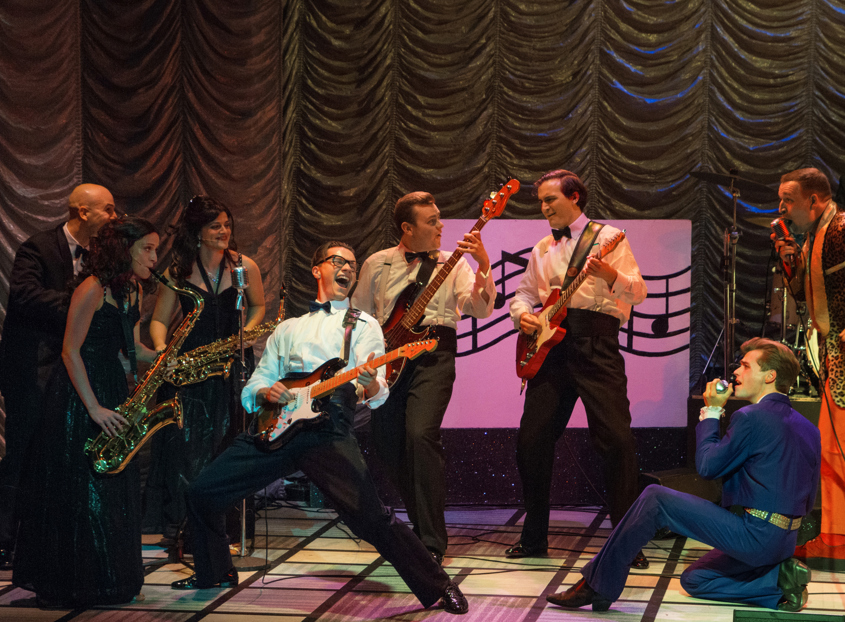
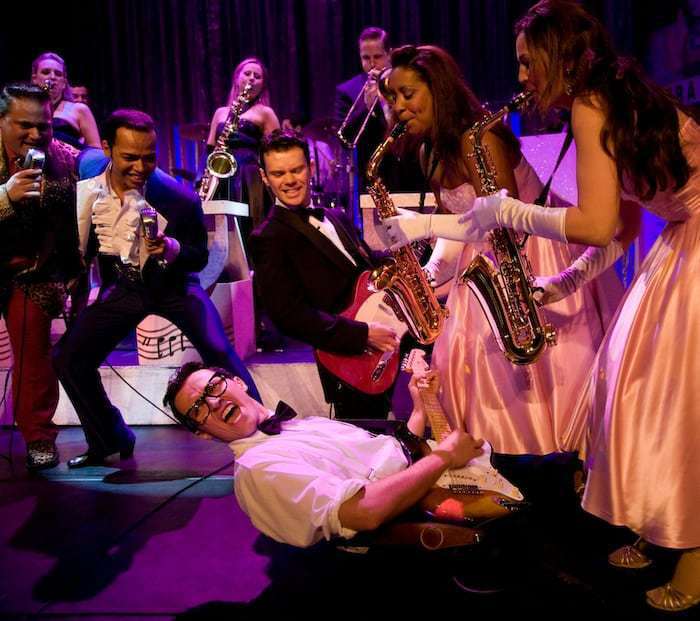
Get the Chance Community Critic Barbara Hughes-Moore speaks with AJ Jenks, one of the stars of the number one national UK touring production of Buddy – The Buddy Holly Story. Birmingham-born AJ trained in actor/musicianship at the Mountview Academy of Theatre Arts and has since gone on to play musical icons like Elvis Presley, Barry Gibb and Mick Jagger before taking on the role of Buddy Holly (which he shares with Chris Weeks).

Buddy is one of just a few iconic musicals including Les Misérables, Phantom of the Opera, Joseph and the Amazing Technicolour Dreamcoat, Miss Saigon, Evita and Cats to reach three decades on stage. It follows the musical icon’s meteoric rise from his rockabilly roots to international fame and his legendary final performance at the Surf Ballroom in Clear Lake, Iowa, before his untimely death at the age of 22. In just 18 months, Buddy revolutionised the face of contemporary music, and would influence everyone from The Beatles to the Rolling Stones.

Featuring a super talented cast of actor-musicians, Buddy includes 20+ of his greatest hits, including the timeless classics That’ll Be The Day, Peggy Sue, Oh Boy, Everyday and Rave On. It also features classics from Buddy’s contemporaries, like the Big Bopper’s Chantilly Lace and Ritchie Valens’ La Bamba, as well as rip-roaring versions of Shout and Johnny B. Goode.

Buddy plays at the New Theatre Cardiff from 14 – 16 September 2023. For more information and to book tickets here.

REVIEW Around the World in 80 Days, New Theatre Cardiff by Barbara Hughes-Moore

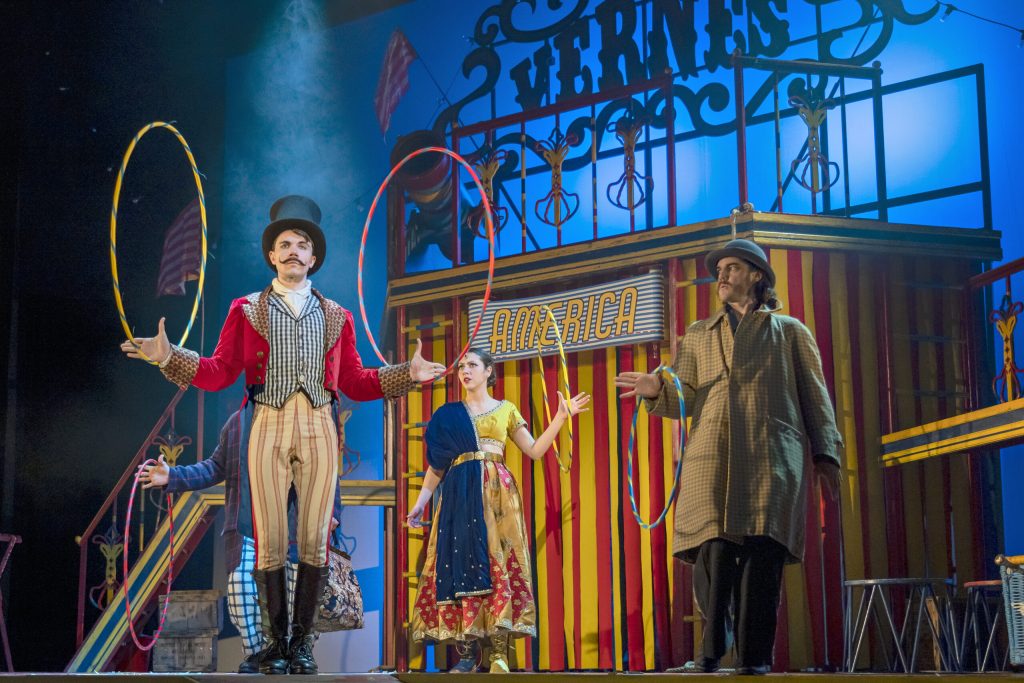
150 years since its publication, Around the World in 80 Days is a story that continues to inspire and entertain us. Jules Verne’s classic tale of Phileas Fogg’s quest to circumnavigate the globe has been adapted multiple times in films, TV series and video games. This new version, adapted and directed by Juliet Forster for Tilted Wig and York Theatre Royal, adds a new spin on the material that brings a sense of energy, anarchy and fun for the whole family!

The cast of Around the World in 80 Days

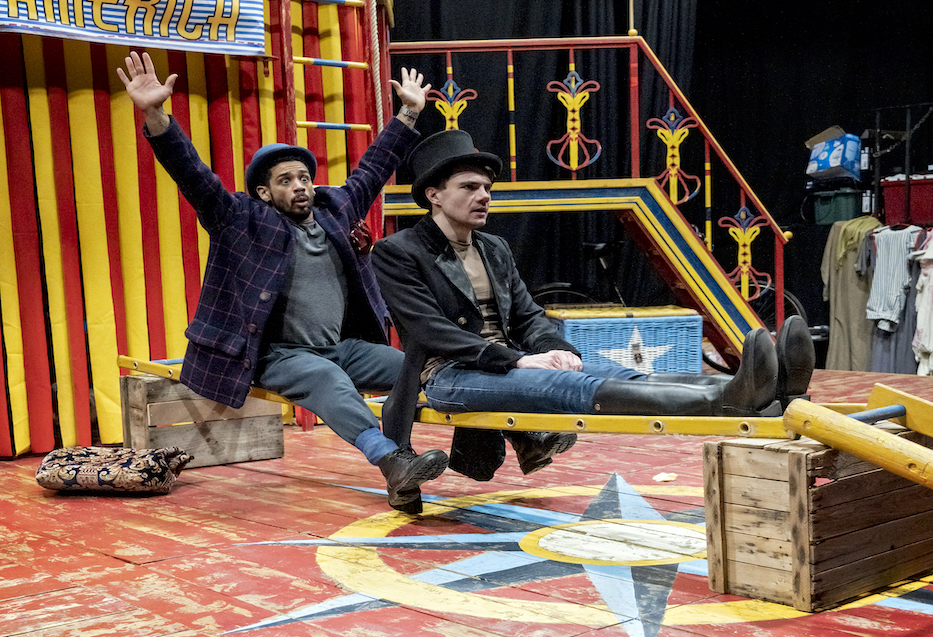
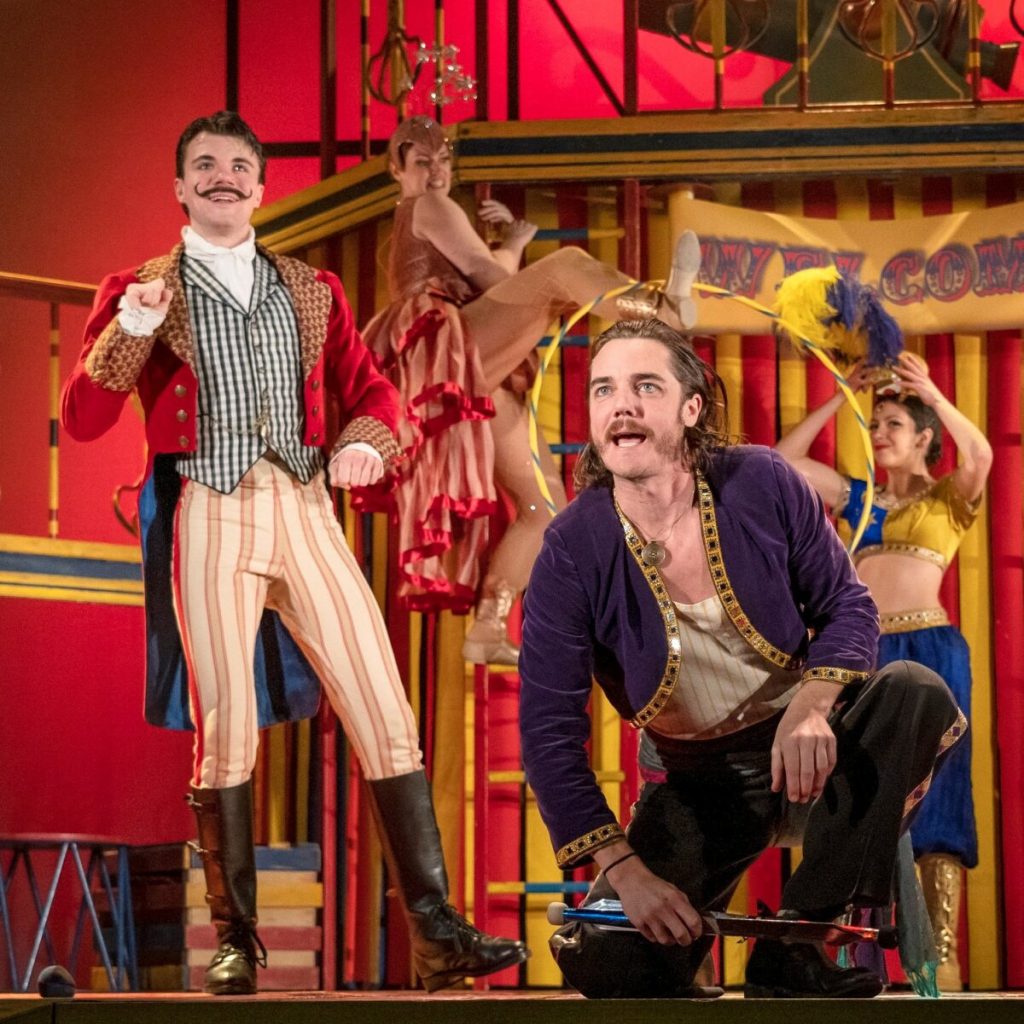
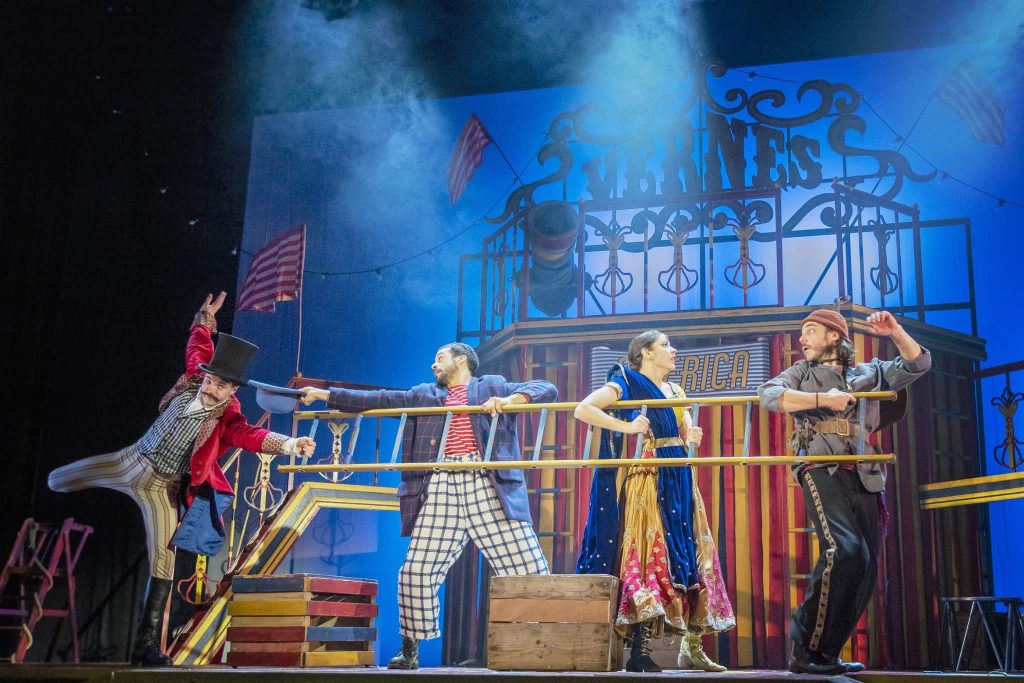
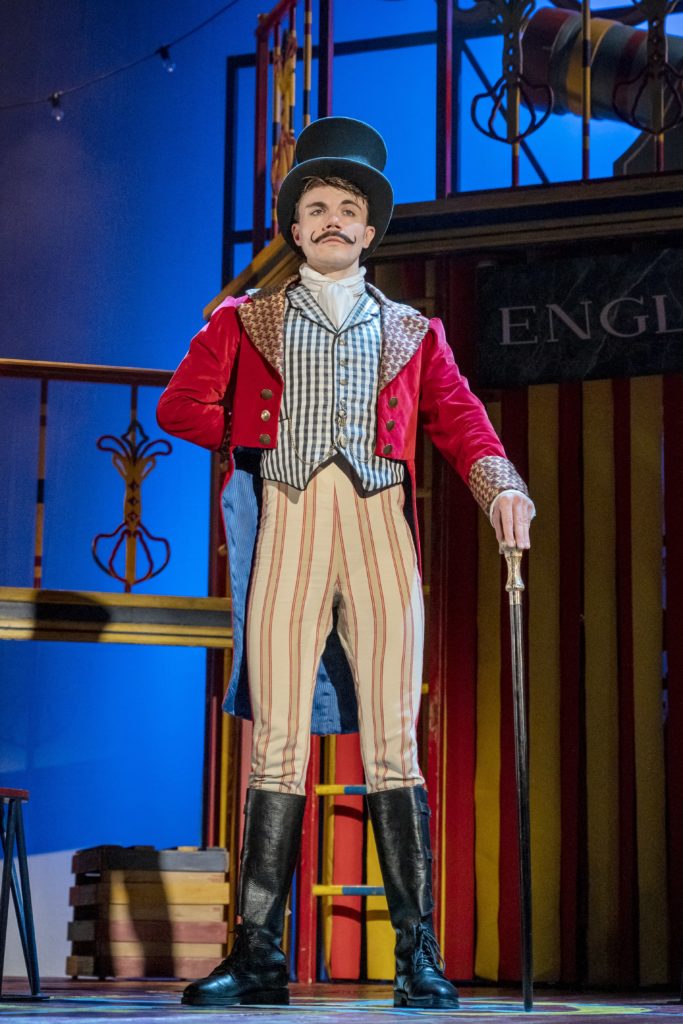
A versatile and talented cast of five play circus performers trying to stage a (rather chaotic!) rendition of Verne’s Victorian-era novel. The quintet of actors, acrobats and puppeteers play multiple roles, such as Alex Phelps who deftly plays both the finicky Phileas Fogg and the beleaguered Ringmaster trying to keep the whole thing together. The antics have shades of Mischief Theatre’s The Play That Went Wrong, making it an ideal introduction to theatre for kids and families.

Genevieve Sabherwal, Eddie Mann and Katriona Brown in Around the World in 80 Days

The cast are on top form, bringing zeal and panache to a well-trodden tale. The show features a number of well-choreographed and excellently performed circus acts, including fight scenes, dance scenes and a standout battle over a see-saw that must have been far easier to perform than the actors made it look. While the first act lacks some pace, there is a zesty creativity to proceedings that keeps things chugging along, with puppets and props used to convey train journeys, elephant rides, and a tipsy tussle between Inspector Fix (Eddie Mann) and Passepartout (a hugely lovable Wilson Benedito).

Wilson Benedito and Alex Phelps in Around the World in 80 Days

Writer Juliet Foster, who also directs, does a great job of navigating the aspects of the story that haven’t aged quite so well, addressing the British colonialist underpinnings of the storyline in which Indian princess Aouda (Genevieve Sabherwal) is ‘rescued’ by Fogg and Passepartout, and shedding light on the real-life story of American journalist Nellie Bly (Katriona Brown) who, inspired by Verne’s story, undertook the same journey and broke Fogg’s (fictional) record by over a week.

Alex Phelps, Katriona Brown, Eddie Mann and Genevieve Sabherwal in Around the World in 80 Days

The circus elements bring a sense of spectacle to the proceedings, with Eddie Mann’s Knife Thrower twirling electric flames in a stunning light show (he also plays a sharpshooting cowboy with an action scene all to himself) while Barton whips a target in half from metres away. More circus antics and acrobats, of which this excellent cast are clearly capable, might have added even more to the story (perhaps even some more onstage musical or dance sequences), though the cast are consistently entertaining and Sara Perks’ stage and costume designs add pizzazz. With a little tweaking, though, it could be exceptional.

Alex Phelps, Wilson Benedito, Genevieve Sabherwal and Eddie Mann in Around the World in 80 Days

Originally staged in school fields and socially-distanced venues in 2021, and inspired by the many months spent locked down in our homes, Tilted Wig’s Around the World in 80 Days is a slice of escapism that will take you on a charming journey across the globe – and all without having to leave the New Theatre!

Around the World in 80 Days is playing at the New Theatre Cardiff from 22 – 25 June, before concluding its tour in July in Doncaster, Oldham and Bromley. More information and how to book tickets here.

Alex Phelps in Around the World in 80 Days