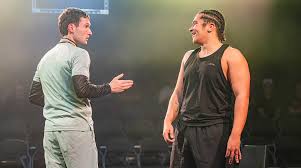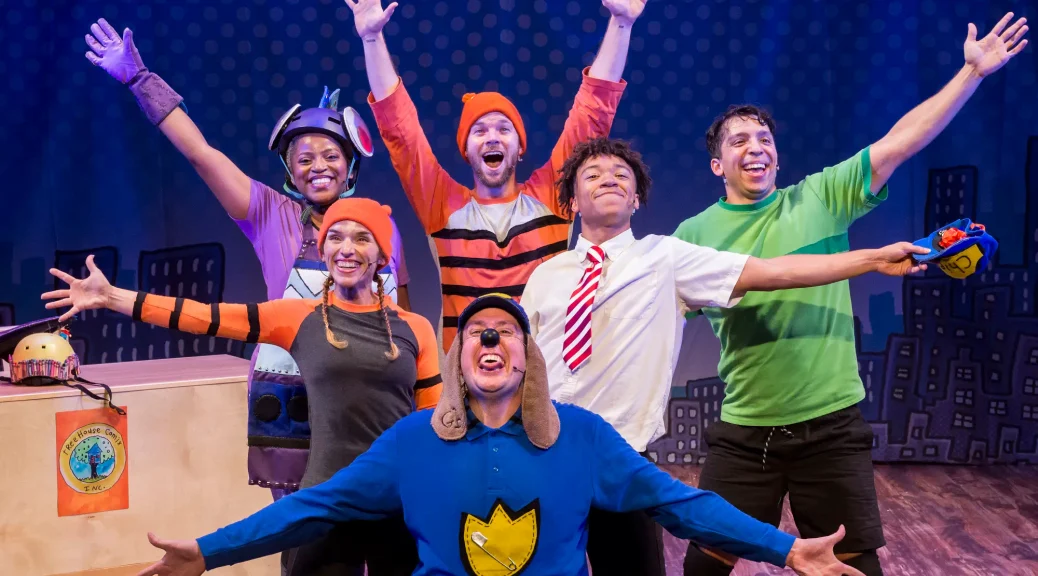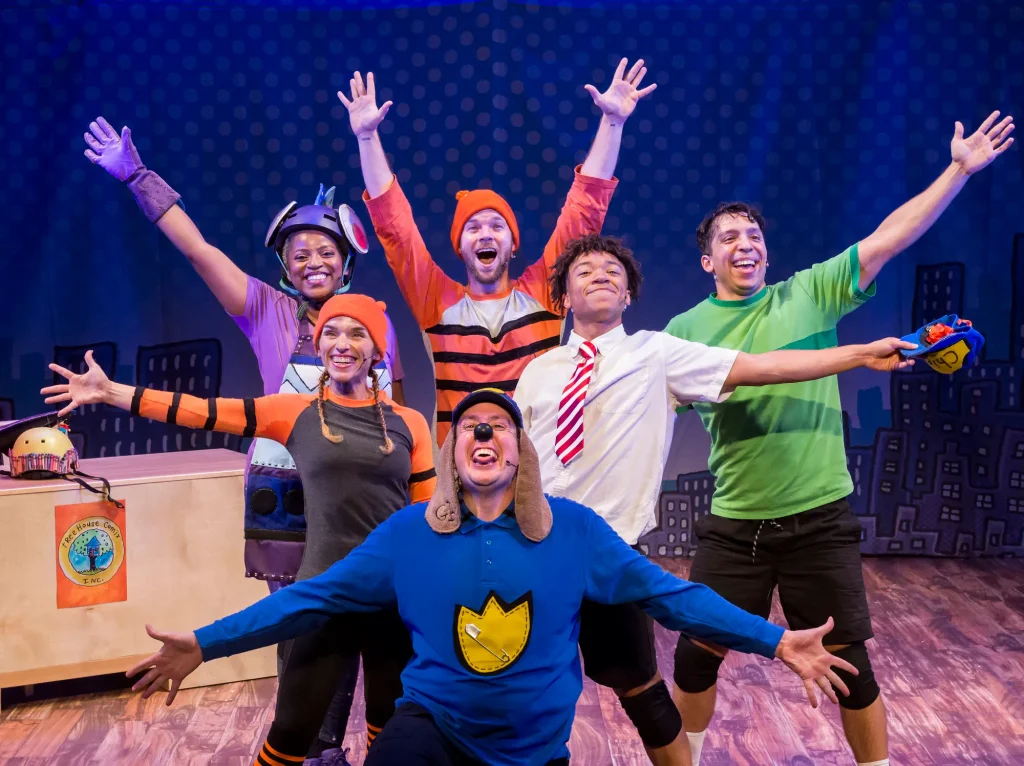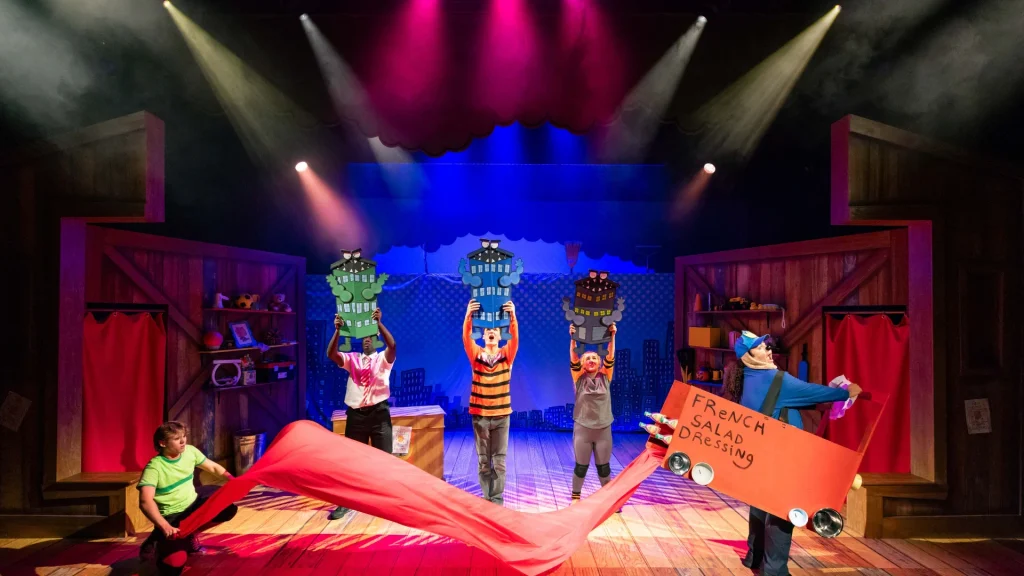

If you’re looking for a high energy, even higher kicking, cast ensemble with costumes with more sparkle than the crown jewels, then grab a ride on Priscilla and get down to the Wales Millennium this week…just try not to get lost in the desert on the way!
With more hits than you can shake a stick at, it’s one floor filling classic after another in this non-stop, explosively colourful production. The hugely talented ensemble truly owns every musical number, with costumes to die for, designed by Vicky Gill. The choreography, by Matt Cole, (along with associate choreographer, Thomas Charles), is outstanding; you just don’t know where to look first! The sheer effort and passion from every single member of the chorus is fantastic and really makes the production pop.
The cast also pours their heart and soul into every moment. Bernadette, portrayed by Adele Anderson, is so quick of wit and positively dripping poison in her venomous comebacks. But she also brings a gentler, softer side later in act two, which shows her aching vulnerability too. Kevin Clifton as Tick/Mitzi is joyous to watch, especially during MacArthur Park which was a particular highlight. His Strictly dance skills really came into play as he pirouetted across the stage. Nick Hayes brings huge vocals to the role of Felicia/Adam. His clashes with Bernadette are hilariously catty and he struts across the stage, every inch the drag star. Special mention must also go to the Divas, sashaying across the scenes, resplendent in silver. The vocal performances from Leah Vassell, Bernadette Bangura and Jessie May were out of this world!
Although the show is clearly a spectacle, there’s also a lot of poignancy and heartfelt moments here. Tick’s epic journey across the desert to meet his estranged 9-year-old son, Benji, is delivered very well. The reunion scenes are softer moments in a show that is often incredibly high octane. Difficult subjects are not avoided, and we are reminded of the struggles beneath the sparkles in scenes such as the graffiti on the bus and when a night out on the town almost ends in tragedy. These fit in well with the otherwise buoyant dance and musical numbers.
Feather boas, glitter, sparkle, a bright pink cake left in the rain. For a night of sheer escapism, high class vocals, and dances to die for, make sure you catch Priscilla’s stop in Cardiff before she rolls out of town for good.
Music has time signatures lending themselves to jigs, waltzes and marches, folk songs and syncopated jazz tunes. Music can be loud and soft and can move between loud and soft. The banality of the disco sound is that the rhythm is unvaried and insistent; the volume is always loud. Tracks meld into each other and become indistinguishable.
So, whilst the idea of providing a story with a musical background is a fine in principle, using a disco backing has its drawbacks. Apart from the repetitiveness, you have to shout to make yourself heard above it, which means less flexibility in your voice. That said, whilst I was getting a bit of a headache myself, I did notice other members of the audience were responding to the tracks positively.
(The fact I dislike disco music didn’t mean I couldn’t appreciate the skilful way the DJ – Onai – worked her turntables. The show depended on her carefully synchronising the sound with the action going on in front of her desk. She also had to act herself from time to time, changing her role from that of a visible technician to that of a member of the cast, becoming part of the small society who gave the main character her identity.)
I also noticed the audience laughing at the wisecracks that came in over the top of the background noise. Personally, I don’t find the use of Very Rude Words funny. I find swearing and the pulling of faces childish rather than witty but stand-up comedy is popular and it seems to require comics to be rude and crude. Katie Payne’s monologue therefore appeals to a different demographic to that often seen at the theatre. If utilising contemporary cultural material, like disco music and stand-up routines, pulls in a new crowd, this is reasonable. I approve of it, even if I don’t like it myself. There were over a hundred people in the audience at Theatr Clwyd on a Tuesday night, many of whom would not have been drawn by Shakespeare, Beckett or even Alan Ayckbourn.
Still, what Katie Payne – the author as well as the performer of ‘My Mixed Up Tape’ – was saying and energetically doing on stage didn’t interest me until her show changed from being a type of ultra physical stand-up routine and turned into a short play. It became more serious. This shift coincided with a specific moment in the story she was telling.
The show starts with Psycho Phoebe thrown out of her cousin’s wedding by a ‘neckless’ bouncer. As she is aggressive, destructive, potty-mouthed and has a huge chip on her shoulder, this seems justified. The only mystery is why she would want to go back inside where she is not welcome. She has quarrelled with the guests and despises most of them. But she does want – or need – to go back in, and the play proper gets under way when she manages to sneak back under the arm of the bouncer.
Now Katie Payne can show us Phoebe encountering and having to deal with – her cousin, her mother and father, her aunt, her ex-boyfriend and her ex-best friend and another, representative female guest. What has basically been a long moan up to that point – another verbose complaint about life – becomes a three-dimensional reality.
Katie Payne herself is a stage dynamo, with the agility and the timing of a trained dancer. She is full of ideas, gestures and postures and I liked those of her jokes that did not depend on obscenities. She is also an excellent mimic. This meant that, in between dancing about furiously and talking to the audience she can talk to herself in different voices and accents, establishing credible conversations with others who are not there. This is clever. It happens convincingly, and she didn’t appear to put a foot wrong for an hour and a quarter, despite the necessary speed of her delivery. Phoebe’s story is not a complex one but reconstructing it in detail whilst sustaining the pace is no mean task.
When the show does become three-dimensional, building the agendas of an imaginary set of characters, it starts to have a lot more impact. Up until the moment when Phoebe gets back in to rejoin the wedding crowd, I was wondering, why bother with this story? Why use this level of theatrical skill and creativity to foreground someone so unpleasant? However, the effort Katie Payne was putting in gradually started to achieve the result she was after. Phoebe became more than just the sum of her parts. We got to see behind her clown mask and find out who she really was behind her posturing.
Returning to hometown Pontypridd after vowing to shake its dust from her shoes was not much fun for Phoebe. She was never going to give a rendition of TheGreen, Green, Grass of Home. For her, Pontypridd is more like Philip Larkin’s provincial town, which he categorised as ‘intensely sad’. But she has to revisit it to remind herself why she left it. She has to formally break up with her best friend and her cousin and absorb some of her mother’s homespun, fridge magnet wisdom. She needs to listen to the tape her aunt once made of her talking in public to remember herself as a little girl. She has to endure the community’s (imagined) scorn at her failure to make much of herself in London.
So, despite my initial reluctance, I began to sympathise with a character like too many young people today who, deprived of ideals and opportunities, have neither the education nor the particular talent necessary to make a go of their lives but who still long for something, for anything more. The fifties had James Dean, the original rebel without a cause, and the sixties had Mick Jagger, who couldn’t get no satisfaction. The twenty twenties, then, have mixed up Phoebes, out on a limb, wanting something that Katie Payne knows cannot just be put into words. The presentation of this unidentifiable but deep longing is what got her performance at Theatr Clwyd a standing ovation.
At Theatr Clwyd, the show was followed by a discussion with Katie Payne and Stef O’Driscoll, its director. A good performance doesn’t need a follow-up but there was an interesting mention of ADHD in it. Although Phoebe’s behaviour is extreme, the condition doesn’t crop up specifically in the play (unless I missed it). Skirting the topic means the short story can focus on someone who has good, everyday reasons to be frustrated. Introducing it would have meant considering Phoebe’s problems from a different perspective and changing its emphasis on the restrictions of small town life.
After seeing Sweet Mambo back in February, I suddenly realised I had to engage with more work of late Pina Bausch. The impact she has had on me is profound, some of the finest work I have seen in London.
Within Kontakthof – Echoes of ’78 lies a conception and direction by Meryl Tankard, in the journey of honouring the original work. Kontakthof first seen at the Opernhaus Wuppertal, 1978 and we see this absorbing, black and white archival footage throughout. You can even hear the sarcastic applause then, as it was created was redefining what dance can be. Bausch and Tankard prove that dance can essential be any form of movement. The village hall set it compelling, the music is heavy on melancholic German cabaret numbers and the costume appears to be nightwear for the ladies and evening attire for the gents. They all thirst their hips, kick march on parade, fail and falter, clap, cry aside energetic passions together and alone.
What is most astounding is the return of these dancers who are from the original run in ’78. What I was not prepared for was the emotional weight of the realisation that a selection of these dancers have passed on. Through this, the doubles we see on screen are met with exact solos for those who remain. I found all this very moving, nearly unbearable. Granted, there are lashings of humour, I often found laughter and smiles abound from myself and this eager audience. How nimble these dancers remain in their 70’s (one or two were in their early 80s).
Welcome introductions faced the end of the first part, as these dancers sat, taking turns to talk briefly. We hear names, nationalities, pathos and the further resilience from all. In the interval I was so stirred, I wondered just how much more I could take of the feeling of it all. I loved just how simple, and flowing the movement was, screen mirrored the stage presence as this dance was always evolving. Naturally, men were in the hunt for the ladies, a mainstay theme in Bausch’s work. One sequence evoked Abramović’s Rhythm 0 as a horde of men manipulated one lone lady, as if a rag doll. Very disturbing.
The second half was much shorter, I imagine the dancers needed a form of rest after a welcome twenty-five minute interval. This might be the best work of dance I have ever seen, I don’t think anything may come close. I’m reeling…..
In what is the strangest thing I’ve see at Wigmore Hall came a delight and a disappointment. Bastard Assignments have been commissioned by Wigmore, Borealis – a festival for experimental music and Spor Festival also.
PIGSPIGSPIGS tells of the plight of a family of farmers, in a story not dissimilar to The League of Gentlemen, Roald Dahl and Monty Python. The father transforms into a pig, the build up to this is the all too familar plight of the farmers losing it all.
The company is made up of Edward Henderson, Caitlin Rowley, Josh Spear and Timothy Cape. Whilst there is good chemistry between them, they were in great need of mics, the long Wigmore setting may not have fared well for the extensive spoken passages. Yet, when they got weird it then became wonderful. Glass bottles, hoses, piping and a set of gardening sheers pressed upon piano keys (which is also a be all for the pig in question) are utilised to good effect. More of this! More ambient noise during the spoken bits as well. Their singing is also fair, the marketing would do well to expand on the folk horror of the whole thing.
I think the script might need some tweaking as well. Musicians don’t always make the best actors, but some of the one liners and physical moments the audience and I enjoyed. I think with much tighter direction and a much smaller venue this could be improved ten fold. Naturally, it would fare well at Edinburgh Fringe. The realisation of a pregnancy lead to an elgonated experimental phase which worked well, just a touch of a lighting change here would have beenp erfect. Said baby becomes the shock of the night, winks to the devastating end of Threads and Rosemary’s Baby. I can still hear that minature toy pig even now…..
Sundays in London are naturally dreary. Yet, you can always reply on Wigmore Hall for three concerts at the end of the week. What would prove most alluring is an evening slot with two musicians who have worked together for three decades.
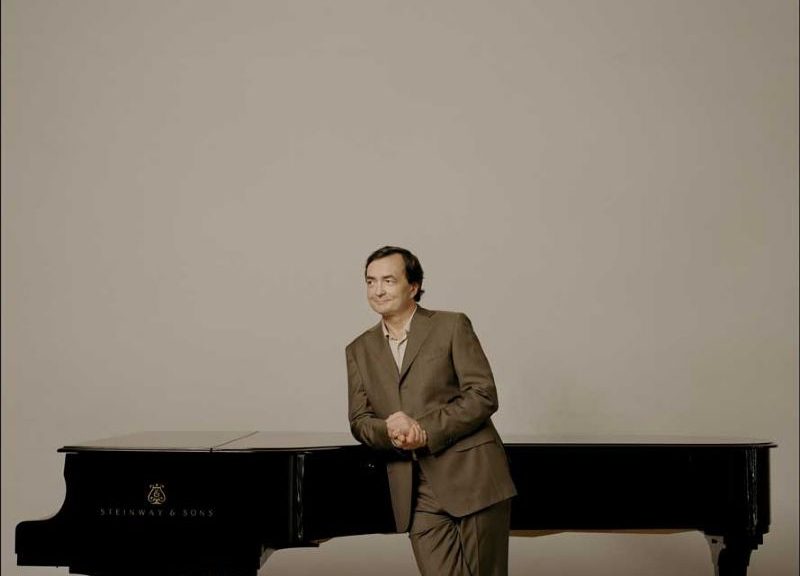
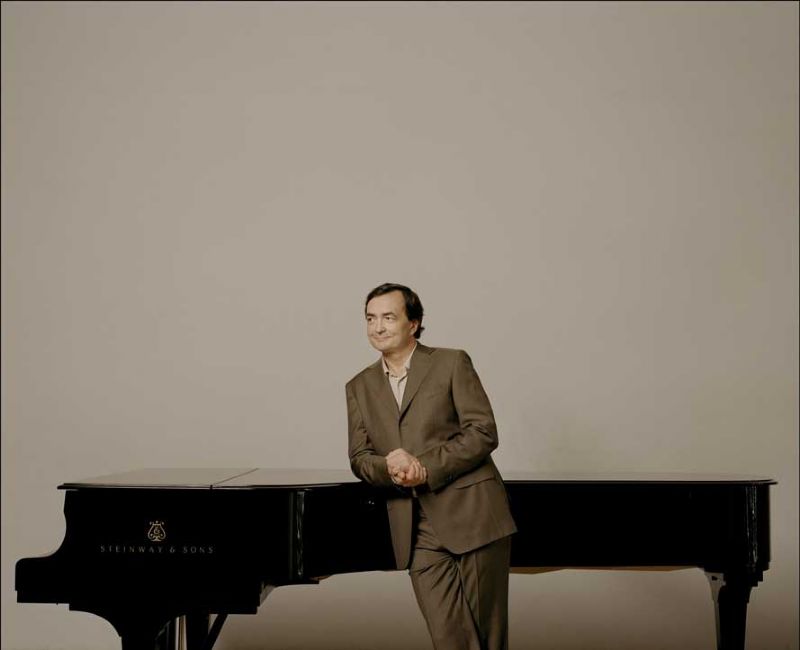
Looking at both Jean-Guihen Queyras & Alexandre Tharaud you would not think this, as they appear quite young in appearance. Their playing matches this, cello and piano has never been so alive. A first half of Poulenc’s Suite françise was the starter and delighted with the slight wisp of irony. Cherry and also at times alarming, the delights never wain. Kurt Weill and his Youkali (arranged by both Queyras and Tharaud), is an attempt at the exotic, for place that is made up. Lyrics would be added later to Youlali, but it was evocative and played with heart by both.
Jean Wiéner and the Sonata for cello and piano is a discovery for me. Aspects of convention mingle with the discordant, in a often sharp, generous piece. Tharaud on piano was alert, with just as many hoops as Queyras faces. We need to hear more! The second half would be mostly straight through a roster of composers spanning three hundred years, at least. Alban Berg’s Vier Stücke was heavy to lead on with, though dynamic, a hypnotism to the ear. Schubert cleansed the pallet thanks to his Adagio from Arpeggione Sonata, musicaly smiling. Britten’s Cello Sonata saw highlights (the first and fifth movments), bouncy, serious and very much shared efforts between both.
Marin Marais was a breif detour to the baroque, the prelude from Suite No. 1 in D mi or (another arrangement by tonight’s players). A delight, which lead to French fare thanks to Debussy’s Cello Sonata prologue and familar Fauré in Sicilienne and Papillon. The Debussy was well met with the Marais, the Fauré is some of the most known, pleasent if a little clichéd. Would Bach have also faired well here? Ending with a handful of the 21 Hungarian Dances from Brahms (more arrangements), the first, seventh and the eternal fifth. All special and the famous fifth got both players over acting for laughs, which was great. Jean Guihen Queyras on cello is special, his destiny is to play it and he does so very well. The grandeur, the ease, the style!
‘Under Milk Wood’ is a challenge. It’s tackled regularly in Wales because there are not many plays that focus forensically on everyday Welsh life and, as far as I know, none written poetically. It is an extraordinary piece of writing, but this makes for a very unconventional play. Dylan Thomas sets the work somewhere that, on the face of it, like so many small towns, has nothing of apparent significance to offer the outside world – bugger all, in fact – but by the sheer pressure of his language transforms it into something remarkable and unforgettable. It’s as if he had followed Keats’ instruction to ‘load every rift with ore’ to the letter.
But that’s the problem. We are not used to modern-day poetic drama. Even if Llareggub (or Llaregyb – the production uses the town’s Welsh name) floats somewhere in its own particular mid-twentieth century time zone, the people of the town and their activities are the stuff of common or garden reality, not of fantasy or historical legend. To hear their everyday conversations and monologues shot through with a welter of idiom, word play jingles, sly metaphors and over-the-top imagery, is quite an experience. You have to listen carefully and take in what is being said to appreciate what is going on.
Poetry enriches the moment. It creates a charged atmosphere, and it builds tension via suggestions and reflections. Poetic drama does not require much in the way of mystery and suspense, but it can deliver within some very tight rules. ‘Under Milk Wood’ conforms to some of the classic restrictions. Its action more or less happens in one place and is described and discussed by two narrators. Everything takes place in the course of twenty-four hours, one Spring day. But you have to really go at Thomas’ text to turn it into a play works for a contemporary theatre audience.
Kate Wasserberg directing and Hayley Grindle designing adopt an approach which changes what Thomas wrote specifically for the radio into what looks like a kind of pop-up adult graphic novel, full of colour, surprise and ingenuity. All the episodes of a soap are compressed here into a reality show. The sweeping narration is delivered by all the members of the cast, meaning a variety of voices and accents take us into the heart of an average small community.
The production is given considerable muscle by performing members of Craidd, a Welsh collective which includes deaf, disabled and neurodivergent artists. Although there are only eleven of them, they create over forty characters. These characters are necessarily only sketched in but they, in turn, evoke the diversity of a whole community. Of course, this suggestive process is helped in this by names like Mrs Willy Nilly, Organ Morgan, Evans the Death, Gossamer Benyon, Nogood Boyo and Sinbad Sailors.
The cast perform the interconnected sketches that build up the circumstances of these characters with energy and wit in an even collaboration, each briefly coming centre stage. No one single performer hogs the limelight because no single story line is given preference. The only exception to this principle are the stand-out singers, whose solos in the second half add another dimension to the atmosphere.
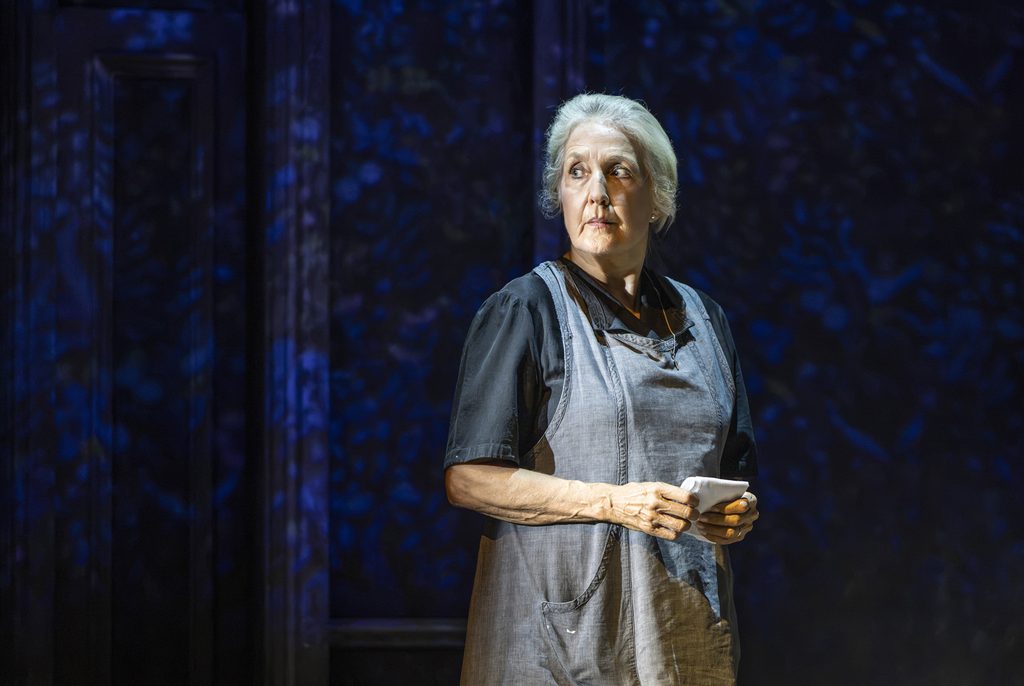
There is no resolution to the various scenarios, no startling denouement to make a point, no deus ex machina. We know Miss Myfanwy Price and Mr Mog Edwards will never consummate their affair. Sinbad dotes on Gossamer Benyon, but she will never gobble him up. For all his plotting, Mr Pugh will never murder Mrs Pugh. Cherry Owen will continue coming home drunk, as his wife loves him drunk or sober and Butcher Benyon will continue tormenting his sensitive wife who believes his little lies. Mrs Ogmore Pritchard, twice widowed, won’t have a gentleman in from Builth Wells, preferring instead to live with the ghosts of her former husbands.
The only conclusion to what goes on in Llareggub (or Llaregyb) is night falling yet again on a kind of melancholy in which Capt Cat’s Rosie Probert is dead – like Polly Garter’s Little Willie Wee, who took her on his knee. In the dusk, the words ‘Thou Shalt Not’ speak from the wall while Lord Cut-Glass, in his kitchen full of time, listens to the voices of his sixty-six clocks, one for each year of his loony age.
Whilst there are frequent references throughout to social issues – ‘There’s a nasty lot live here when you come to think’ – and truisms ‘like Men are brutes on the quiet’ occur regularly, there’s no dramatic argument, no social or political message to get across other than,
We are not wholly bad or good
Who live our lives under Milk Wood
Dylan Thomas intended to paint an animated portrait of a place without ever judging it Theatr Clwyd’s production is faithful to his intentions in its own way. I don’t know how many stars to give it but it’s well worth seeing.
Out of all the discoveries made over the past few years, there are a few that really standout. Youtube and its algorithm is a mysterious thing. Yet, one day it showed me the music video for Canadian singer Begonia (real name Alexa Dirks) for ‘Hotter Than the Sun’. What followed was a riotous few minutes featuring puppets, the patter of keyboard typing, public service cinematography, glowing lights and retro CGI effects. The song was funny and singable, with fluffed up melodies. This was my introduction to Begonia.
https://www.youtube.com/watch?v=QX-PitOavBs
Seeking more I discovered a more recent album: Fantasy Life, related with Canadian label Birthday Cake. There is a candidness to these songs, unafraid to truly open up. What pains me is Begonia does not have a much bigger following. I’d die to hear her sing with Brits darling Raye or the opera inspired Rosalía. We hear her talk about getting high, working on songwriting, the modest quest for acclaim and nostalgic flights that might prove unbearable for some listeners. It is the accessibleness to her voice and of course, the openness that really rings.
https://www.youtube.com/watch?v=4aiW23S_xt4
Whilst ‘Hotter Than the Sun’ is a stand out, several other songs also are noteworthy. ‘Deep Cherry Night Funk’ (the music video also features more puppets) is one for a late night club or as the video would suggest, a long drive to nowhere. Out of my control is much more sombre in tone, with soft piano chords and touching maternal instincts. ‘PLB’ follows with dance like vibes and more curt directness over fallouts and letting go. ‘In My Lifetime Part 2’ starts of in a more garage style leading to words of dissociation. The opener and first part of ‘In My Lifetime’ has brief droplet keys and warm poetry in its wistful yearning. ‘So High’ is an other gateway song, it’s funk is stellar and its easy going aura is a balm. Others are also very listenable and this discovery for me still holds up.
With her European tour now in the UK and Ireland, now is the time to meet Begonia.
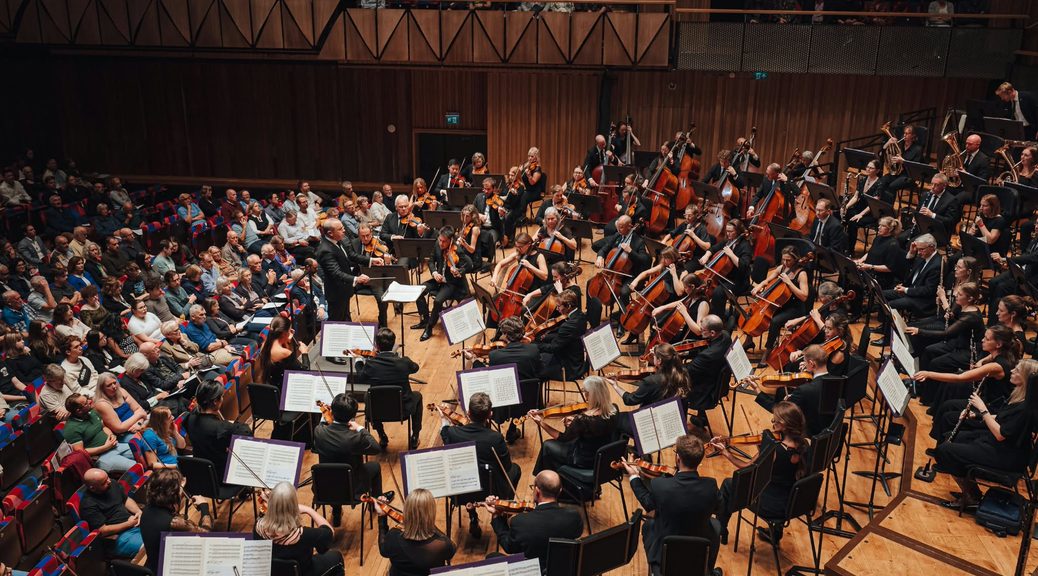
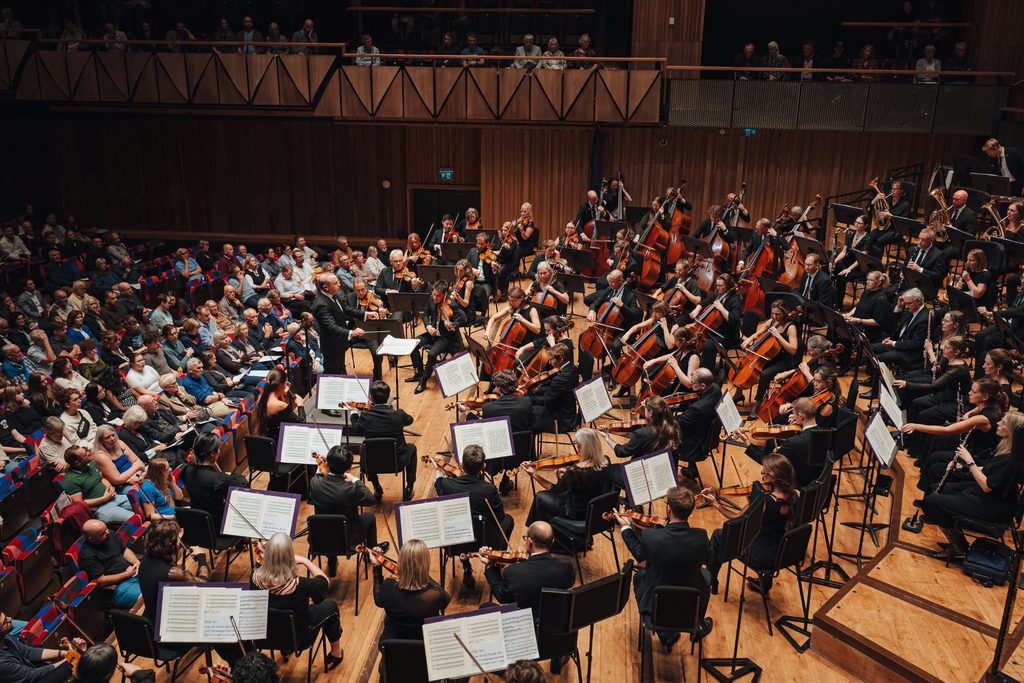
Beethoven and his impact has never gone away. How do artists today still react and honour him? What came next with the London Philharmonic Orchestra was a UK premiere from Tan Dun: Choral Concerto: Nine.
Originally meant to be heard in 2020, we are finally hearing Dun’s inspiration of Beethoven’s 9th Symphony. This melding of ancient Chinese poetry and the German composer comes a work, which on first glance felt uneven, weightless and a little clichéd. We hear quotes from said symphony, the wise words of Lao Zi, Li Bai amongst others, who unite nature with our humanity. All this should perfectly pair with the words of Schiller in the Beethoven. Written for the same forces as the 9th, this technically in not true as there is from Dun’s demands) a fascinating array of percussion: massive drums, stones, tubular bells and more.
Each movement is dubbed ‘Jiu’ in the Chinese, yet each has it’s own translation in order of: ‘Nine’, ‘Wine’ and ‘Time’. The united forces of the London Philharmonic Choir and London Chinese Philharmonic Choir got to whisper, meow, lip smack and mediate on other transient actions. As the piece went on, it built momentum and had the ideal of a fun, focused work. The image alone, of Dun’s hands in a state of prayer, before conducting his own piece may have been the most profound moment.
It is no bold claim that Beethoven’s 9th Symphony, also dubbed the ‘Choral’, is considered the greatest off all symphonies. The punch in the face of its impact never wains, Dun was back to conduct and still spry in his mature years. Elegantly performed, the LPO not afraid to get down and dirty in moments of raw, heavy metal emotion. The four soloists of Elizabeth Watts, Hongni Wu, John Findon and Matthew Rose (replacing Dingle Yandell) sat below the organ console with the chorus. They felt quite far back, more than I would have liked, such is the awkwardness of having soloists pop into an hour long piece in its last third. All sung graciously, Rose as understudy, opened with a towering directness. The Ode to Joy was soaring and touching, even if I most likely heard it better before. Thorough its thoughtful pleasantries, cascading melodies, brooding tones and jubilant send off, I’m proud to say this is one of my all time favourites.
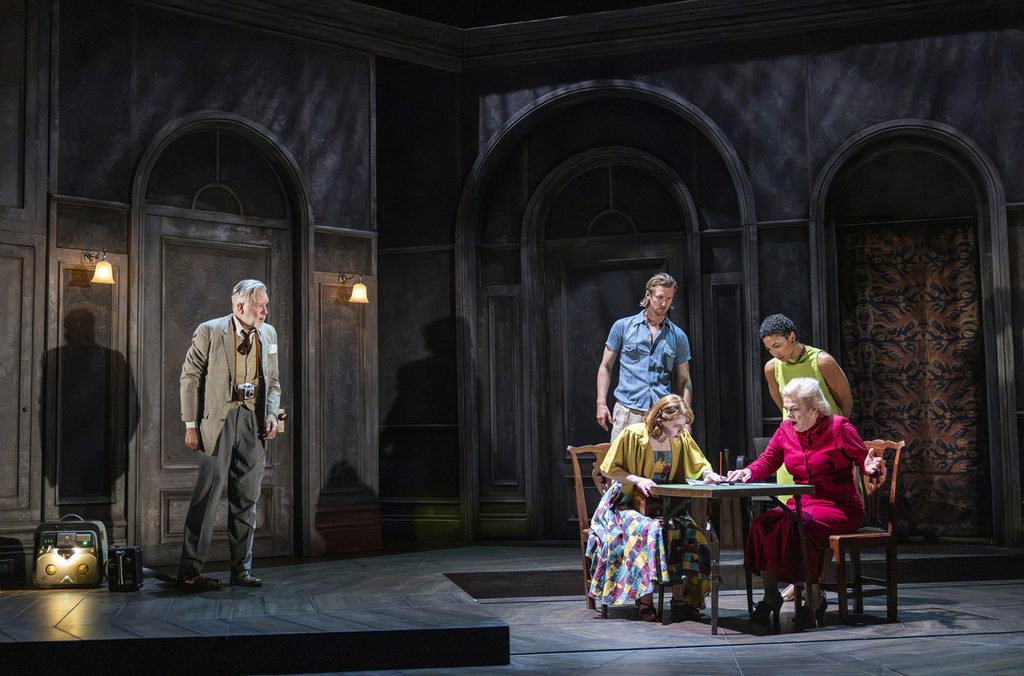
From the very first line of dialogue in Theatr Clwyd’s Under Milk Wood, with its small houses set centre stage as if we, the audience, are giants looking in, it becomes clear that this adaptation of Dylan Thomas’ iconic play is a unique and vibrant celebration of the Welsh poet’s work- the richness of his words, filled with alliteration and rhythm, a testament to the author’s unparalleled mastery of language.
This is a play which resonates both locally and universally, drawing on themes of community, memory, and the intricacies of daily life. Directed with a clear sense of playfulness and passion, the performance takes the audience into the heart of the small town of Llareggub (read it backwards!), where ordinary lives are elevated to the extraordinary through the magic of language and movement, in varied forms.
In many ways, it’s a shame that Theatr Clwyd’s production of Under Milk Wood comes so soon after Welsh National Theatre’s Our Town– both plays pulling back the curtain on seemingly simple towns, offering an almost voyeuristic glimpse into its inhabitants’ lives. (With similar themes- love, life, death…) it’s difficult not to compare the two. That aside, what makes this production so very special is its utter inclusiveness- this performance is an experience- the likes which I have never experienced in the theatre before and for this alone it should be celebrated. The text, presented in both BSL (British Sign Language) and written format, ensures that the performance is accessible to a wider audience. However, as in regular ‘signed’ performances- we aren’t just witness to one interpreter stood aside. Every word is signed by the actors on stage, so it simply becomes part of the story, without us having to turn our heads and miss the action.
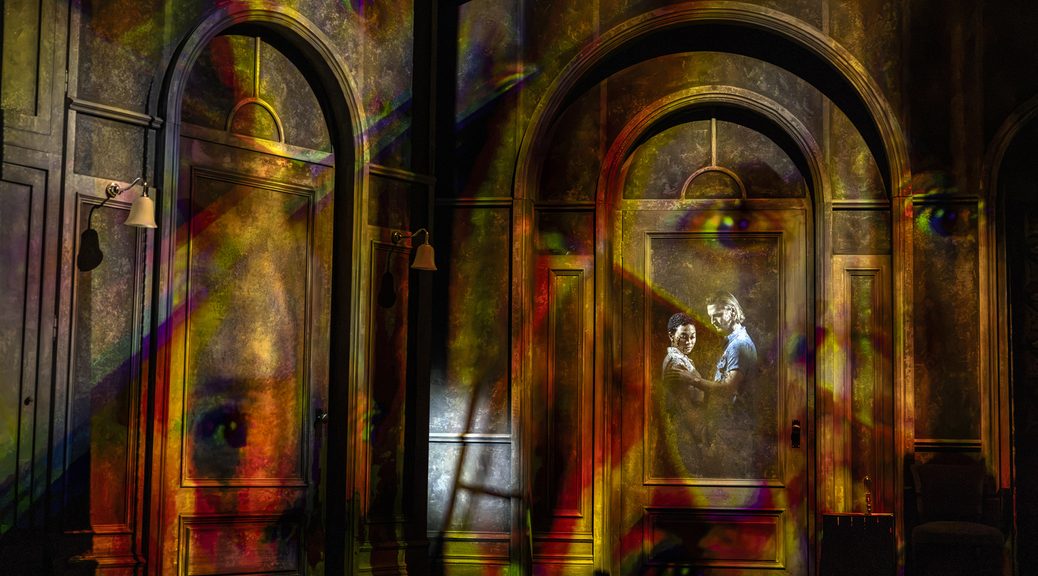
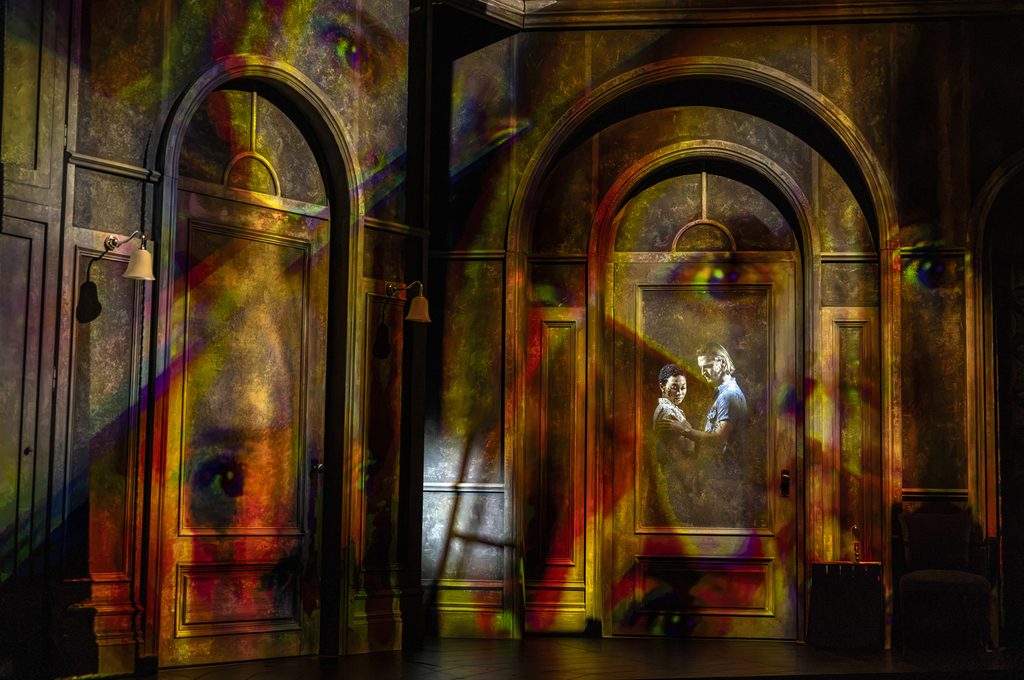
Creativity oozes from this production- not only in its direction from Kate Wasserberg but also in characterisation through the video captions-the use of projected text adds another layer of artistry. The fonts are meticulously chosen, with particular attention paid to the shifting of colours and effects. For example, during one section, the text takes on a crumbling effect as Rosie Probert goes ‘into the darkness’, and during a scene in which a mirror is portrayed, the projected text is also mirrored. Fantastic attention to detail which doesn’t go amiss.
Astute detail is also present in the production’s costume- conveying character and tone. The seaside elements in the wardrobe choices- the hats, bags, jackets- are both character-specific and thematically rich. From the vicar to the baker, the draper to the postman, the wardrobe subtly anchors each character in their respective roles while adding a touch of whimsy and coastal charm! The costumes also play a vital role in the play’s multiple characterisations. The cast tackle these with vigour, embodying a range of town inhabitants from the familiar (the Vicar, the Postman) to the more peculiar (the Drunkard, the Sailor). Each portrayal is a nuanced, often humorous, interpretation that offers glimpses of the town’s vibrant collective personality. It would be impossible to single out individual performers. It’s easy to see why Thomas’ play has remained a classic; its inhabitants feel both familiar and surreal and we can probably all see reflections of ourselves in each one!
The cast’s use of movement and expression enhances the comedic moments beautifully and humour is rife throughout the piece- in the subtle gestures and exaggerated physicalities, which make each character feel larger-than-life. In terms of movement, the production is completely captivating! The transition from clock to cow (and everything in between!) is seamless. The clock making frequent returns, time, of course, being a key theme throughout. Hayley Grindles set design captures this perfectly- the clock, a prominent fixture at the end of Act 1 and beginning of Act 2, is a potent symbol of this thematic progression- time, always ticking, never stopping.
Theatr Clwyd’s production of Under Milk Wood is a sensory feast- an immersive, funny, poignant, and thoroughly human exploration of life in a small Welsh town.
Under Milk Wood completes its run at Theatr Clwyd on Saturday April 4th then goes on to the Torch Theatre, Milford Haven, the Sherman Theatre, Cardiff and finishes at Pontio, Bangor on May 23rd.
Cast:
Adam Bassett- Jack Black, Cherry Owen, Dai Bread, Foxy
Sean Carlsen- Reverend Eli Jenkins, Butcher Beynon, Mr Ogmore, PC Atilla Rees
Jacob Coleman- Organ Morgan, Ocky Milkman, Willy Nilly, Nogood Boyo, Sinbad Sailors
As it says on their website, TRIONGL is a company made up of three founding members, Valmai Jones, Rebecca Knowles and Rebecca Smith-Williams. The members work collaboratively to devise new pieces of theatre that engage with socially relevant themes with joyful scrutiny. The company is Cardiff based and works in both the Welsh and English language as appropriate.
‘Is There Anybody Out There?’ is a devised piece that runs for about an hour and a half. It is performed without an interval. The actors mainly speak in English, frequently addressing the audience directly, but there are a lot of exchanges in Welsh. These exchanges are translated simultaneously into English and are shown on a screen.
The subject of ITAOT is life after death or, more precisely, the spiritualist activity of getting in touch with those who have died by asking them to speak. The subject is treated with respectful irony, as much as ‘joyful scrutiny’, so the tone of the performance is comic. No attempt is made to scare the audience with things that go bump in the night.
The subject matter looks back to a time when it was common enough for audiences to go out to watch mediums ostensibly make contact with the dead. Unfortunately, Angela, our hostess for the evening, is a stand-in who does not believe and who only got involved in the spiritualism business because she was a member of a youth theatre and enjoys acting. To her astonishment, when she tries her hand, she finds herself possessed by the spirit of Debi Kicks, an energetic personal trainer whose class she had attended. She falls to the ground calling out ‘squats!’
It turns out Angela is being haunted by Debi, a restless spirit, unhappy to have passed away suddenly. She fancies a gin and tonic and wants some perfume to counter the smell of putrefaction. The two women are connected by coincidence because after Angela had been persuaded to attend Debi’s exercise class by her policewoman niece, Shona, she too had collapsed afterwards. The only other speaking member of the cast is a bilingual budgie, although there is an extra who assists with non-speaking roles and set changes.
Angela does not enjoy being haunted but starts to think. Maybe dead Debi will be able to put her in touch with Gwen. That way she could carry the stand-in show, talking to Gwen, establishing a real link with the spirit world, instead of having to improvise on the night and risk being exposed as a fraud. Debi, though, has not made contact with anyone apart from a suspicious looking man in a cap who seems to be taking an over-active interest in her. At the same time, Angela is paranoid she may have poisoned Debi by sharing her home made lunch with her. She presses Shona for details of Debi’s death, but Shona is caught up in her wedding plans.
The story is told, or unravelled, by the three women in an ingenious style. They frequently break through the fourth wall to explain what has happened, talking to the audience then switching back to participate in the story. To isolate themselves and re-enter the world of the play, they open and close a curtain. Much of the action behind the curtain takes place in what was Gwen’s caravan, where Angela is now living, but there are other imaginary locations, like the hospital where Angela and Debi are taken after they have collapsed. The set design is basic and realistic.
Interestingly, this is not a farce. The action is always presented at a very steady tempo and the jokes occur, rather than sounding forced. Nothing is emphasised. The acting is so naturalistic it’s invisible: it’s easy to think the cast are appearing as their real selves. The three performers sell themselves to the audience as sympathetic individuals participating in a true story. This approach provides the piece with its originality. It does have the feel of something that has been intensively workshopped, but the theme provides food for thought and the ideas that have been added in are sound. The budgie, of course, is very funny.
Because it moves at its own even pace and avoids relapsing into farce, I don’t think the piece would work in a large venue, but it was well suited to the small auditorium at Twm o’r Nant. It would not appeal greatly to an audience of young people but an older demographic, like those attending in Denbigh, will appreciate its understated approach: spiritualism without melodrama. Possibly the inclusion of more music and a song or two might have strengthened it. The most dynamic moment occurs at the very beginning, with the projection of Debi’s face on the drawn curtain as she exhorts her class to work out. Valmai Jones as Debi demonstrates dance-like skills in her movements. I feel sure other members of the cast have abilities or specific talents that could also have been showcased. A certain amount of showing off is allowed in the theatre and it usually contributes to the occasion.
To end on a positive note – I’d say the company deserves credit for touring their work to venues in towns like Denbigh where communities may be starved of access to contemporary theatre. Venues like Twm o’r Nant, which has an historic connection with an almost forgotten Welsh playwright, need to be kept open and busy. Triongl is touring accessible work which is representative of modern collaborative methods. This can only be a good thing.
Simon Kensdale
Creating opportunities for a diverse range of people to experience and respond to sport, arts, culture and live events. / Lleisiau amrywiol o Gymru yn ymateb i'r celfyddydau a digwyddiadau byw