All posts by Gareth Williams

If my life were to be described on Twitter, my 140 characters would probably include: Amateur Baker, TV Lover, Welsh Learner, Contemplative Christian, One-time Alien Voiceover, Country Music Convert, Anxious Introvert I love the arts and am passionate about the importance of their place within society, whether that be TV, radio, film, literature, the theatre, social media, the list could go on... Here's to the creatives of the world!

Review, Dal y Mellt, Episode One, Vox Pictures for S4C, by Gareth Williams

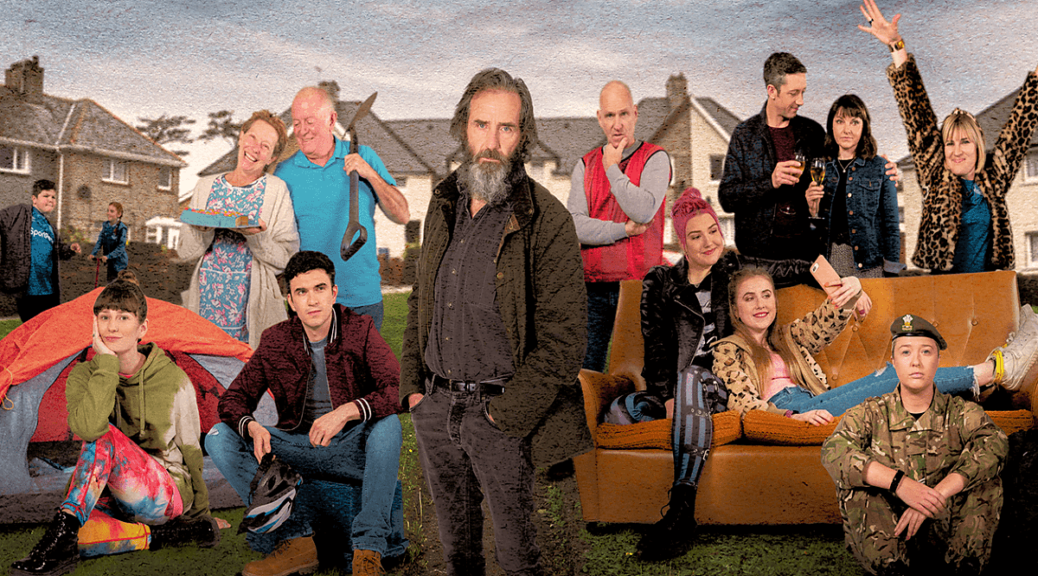
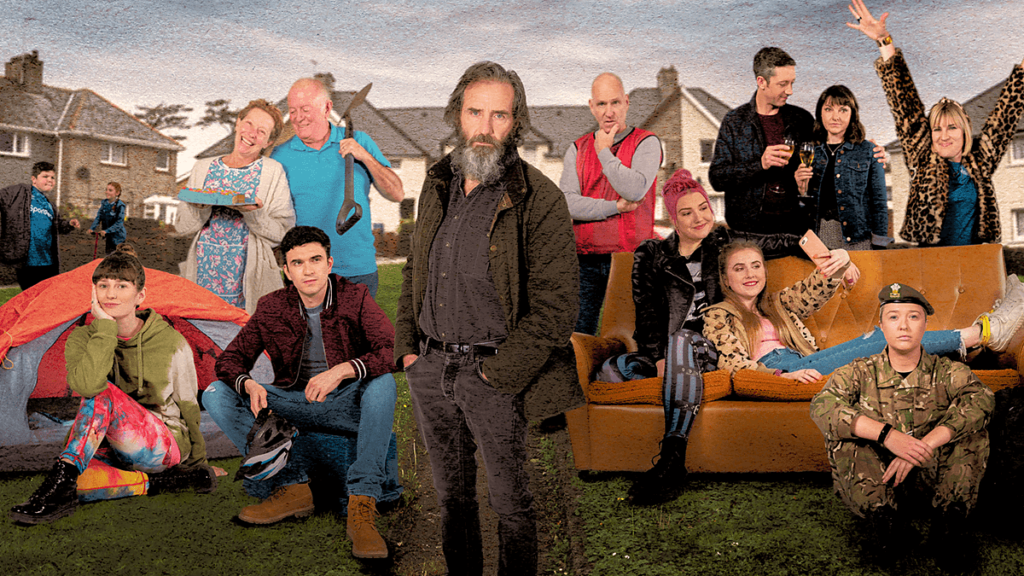
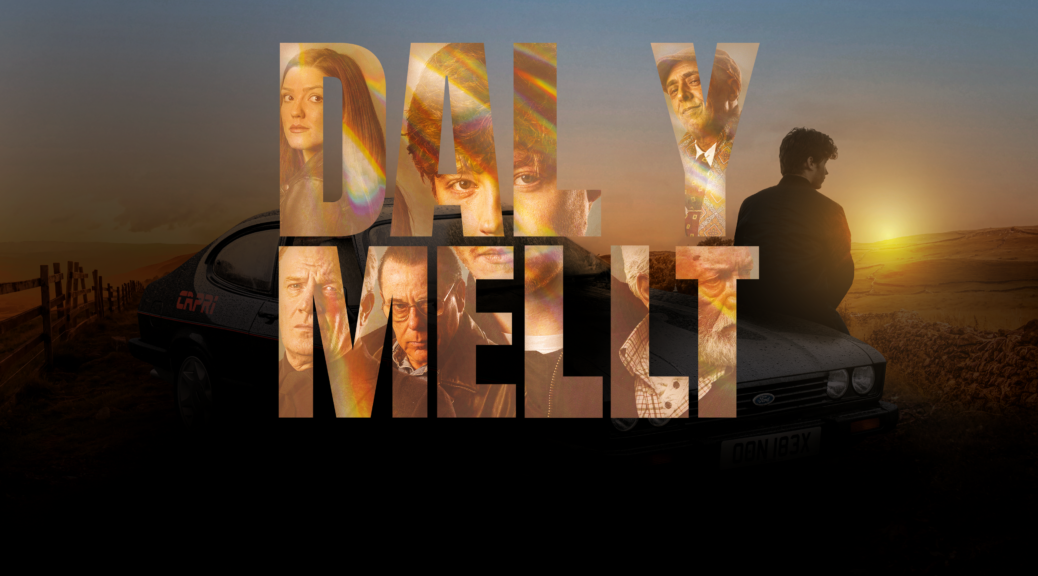
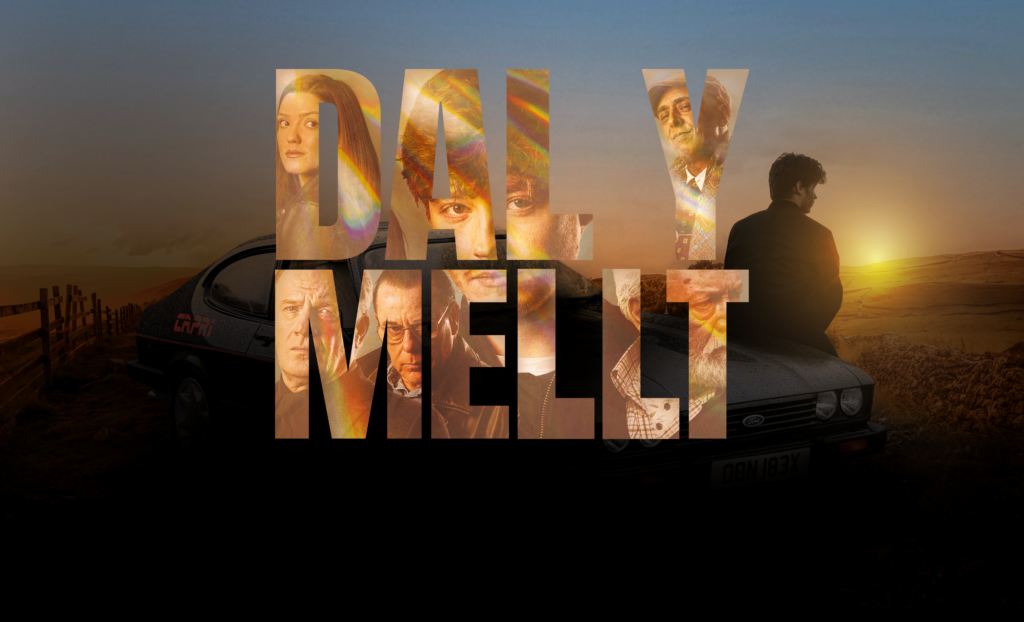
It could be that Dal y Mellt is S4C’s most ambitious drama to date. Episode one certainly promised much from a series that looks set to deliver. Adapted from the hit novel by Iwan ‘Iwcs’ Roberts, the narrative weaves mystery, comedy and crime seamlessly to create a world that is universally recognisable whilst being inherently Welsh.

The first thing to note is its scope. Dal y Mellt spreads across the country, taking in the busy streets of Cardiff and the beautiful vistas of Gwynedd in between visits to London Euston and Chester. Connections to Ireland via the Holyhead-Dublin ferry will come into play as the series progresses, making this a drama of ambitious scale. We are no longer confined to a narrative centred on small town Wales or even a singular region. Instead, Dal y Mellt combines the best of previous Welsh dramas to extend its reach to the whole of Wales and beyond. It does so not as a gimmick but in keeping with a kind of unspoken contemporary tradition of intimate character portrayals (Keeping Faith; Enid a Lucy), expansive landscape shots (Hinterland; Hidden), and a complex narrative web (Yr Amgueddfa; 35 Diwrnod). The cinematography, with its stylistic shots and trained lighting, ensures that it works by adding a touch of quality that underlines its movielike proportions.

Dubbed “a hoot of a heist”, there are already some familiar tropes that appear in episode one, including plans sprawled out on a table, secret meetings in an art gallery, and a car chase involving the police. What feels so fresh about this context however is that they’re given a Welsh spin. Gronw (Dyfan Roberts) holds down his drawings of a ship’s decks with a cup of tea and other items from his traditional farmhouse kitchen. The National Museum of Wales provides the backdrop to a conversation between wayward lad Carbo (Gwïon Morris Jones) and garage-owning gangster Mici Ffin (Mark Lewis Jones). Carbo drives through country lanes and takes a detour through some very muddy fields to get away from the cops. Each incident is tinged with humour which lightens the mood. The result is a series that is not gothic a la Peaky Blinders or violent like The Sopranos but nevertheless takes some of their ingredients and mixes it with a distinctly Welsh flavour. It means that the characters are all believable, reflective of their particular locations; and the story remains grounded even as the plot becomes more elaborate and outlandish.
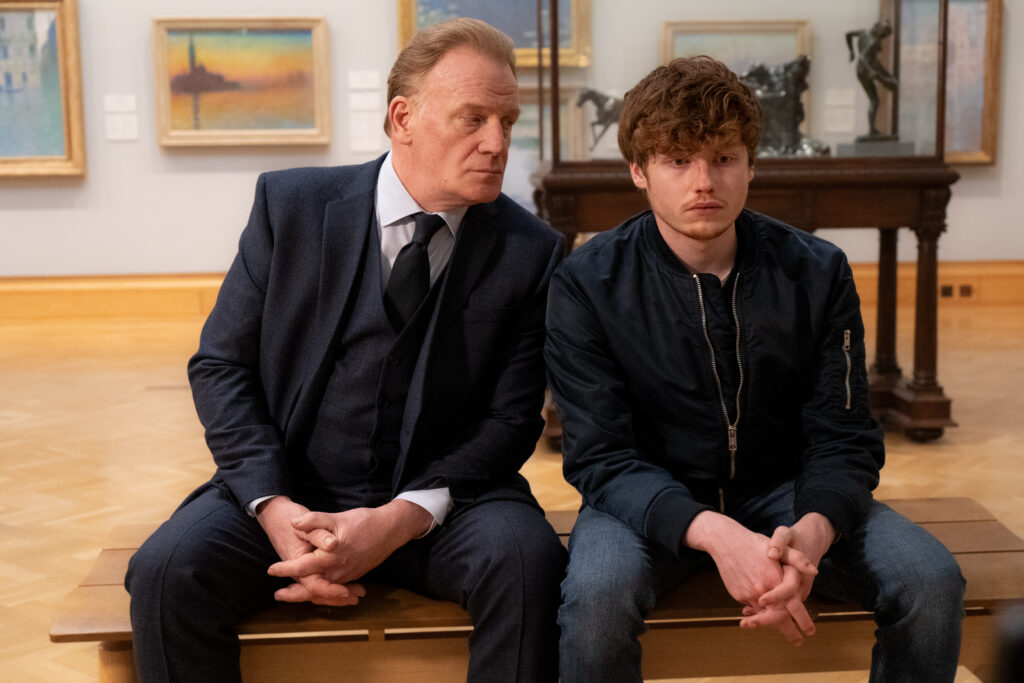
Mici Ffin (Mark Lewis Jones) a Carbo (Gwion Morris Jones)

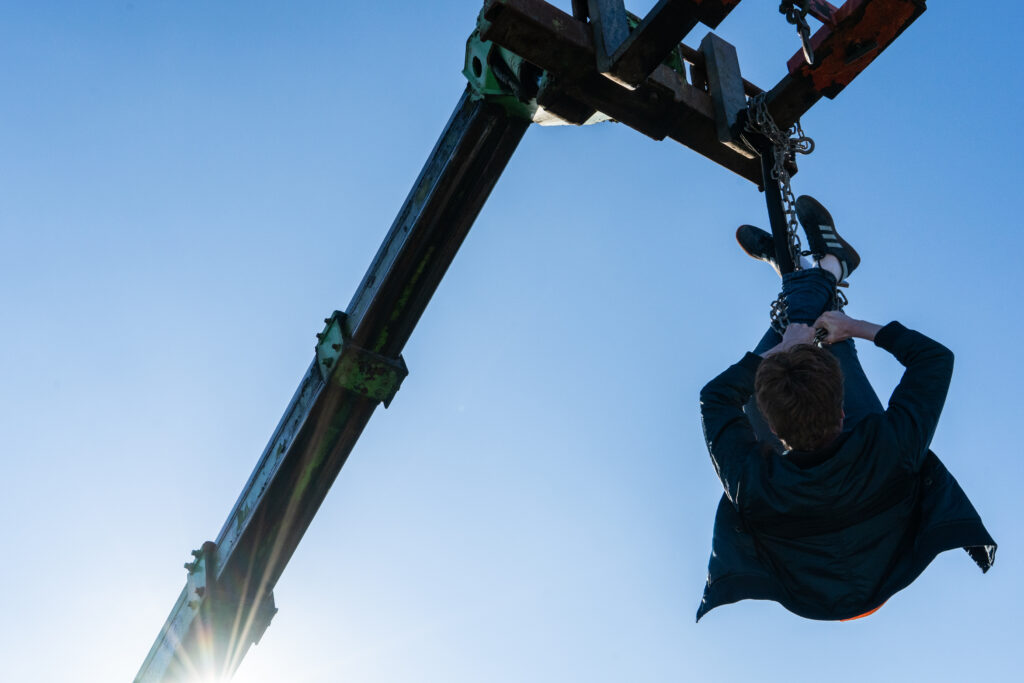
The characters of Mici Ffin and Les are worth particular mention from this first episode, Mark Lewis Jones and Graham Land making for an instantly likeable double act whose straight faces only add to their comedic value. The fluffy seats and dice dangling from the rear-view mirror of their Capri conjure up a Del Boy and Rodney type partnership which also expresses a lovable incompetence reminiscent of Horace and Jasper. Their dealings with happy-go-lucky protagonist Carbo are a delight to witness, the cheekiness of his responses toward them making him an affable rogue. Morris Jones brings a dexterity of emotion to the role to create a character of both confidence and vulnerability. It is a combination that wins admiration from the viewing public, no more so than in the final scenes, as we witness his fear and ingenuity play out whilst dangling from a forklift tractor. It indicates to Mici the importance of this lad in the events to come, events which remain very much a mystery at the episode’s end.
The eclectic soundtrack, with its reggae-inspired beats and operatic moments, reflects an expansive taste across genre, location and emotion. It is a drama of dark and light; witty and gritty; familiar yet full of mystery. Dal y Mellt is not easy to categorise, combining as it does various elements, but it definitely looks set to entertain audiences with a narrative full of adventure and intrigue. If Y Golau saw it go off the boil, this looks to be a series that brings S4C’s dramatic output back to something that represents their best.

The first episode will be broadcast on Sunday 2nd October 2022 on S4C at 9pm. You can then watch the full series on BBC iPlayer or S4C Clic.
Reviewed by
Gareth Williams


Get The Chance is a social enterprise based in South Wales, working to create opportunities for a diverse range of people to experience and respond to sport, arts, culture and live events. To donate to our work, please click here.
Review, Elin Grace, Bee Without Wings EP, by Gareth Williams

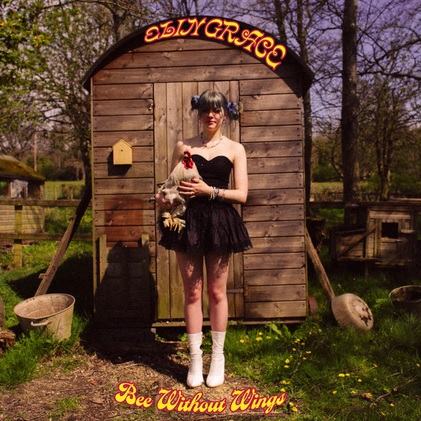
One of the most exciting talents coming through this year’s Forté project is surely 18-year-old Elin Grace. The singer-songwriter from Mid Wales has just released an EP of sheer brilliance. ‘Bee Without Wings’ may only be her debut release but it demonstrates a maturity far beyond her years. Lyrically complex, sonically fascinating, vocally mesmerising, the whole record is absorbing from start to finish. With touches of Kate Bush, Lily Allen, Rona Mac and Amy Wadge, along with her particular inspiration Laura Marling, it is generous with genre while maintaining a consistency of sound. Always serving the narrative, the music becomes an accurate representation of each song: the fragile piano on ‘Little Bit Delicate’, the rhythmic synth of ‘Breathe’, the music box sound underlying ‘Doll’. All touch on mental health in some way, whether it be anxiety, self-esteem or depression. All contrast the expected angst of their subject matter with a poise that is strangely comforting – sometimes soft and light; ironic and even comic – to make this an EP shot through with eccentricity. It is as if Elin Grace is wanting to hold a mirror up to her experience to reveal its peculiarity. She is an artist of genuine depth, unafraid to share moments of personal vulnerability and confident to deconstruct the false values of contemporary society. ‘Bee Without Wings’ is a consummate piece of music-making. Elin Grace has a very bright future ahead of her.

Reviewed by Gareth Williams

Series Review, Y Golau, S4C by Gareth Williams

 out of 5 stars (3 / 5)

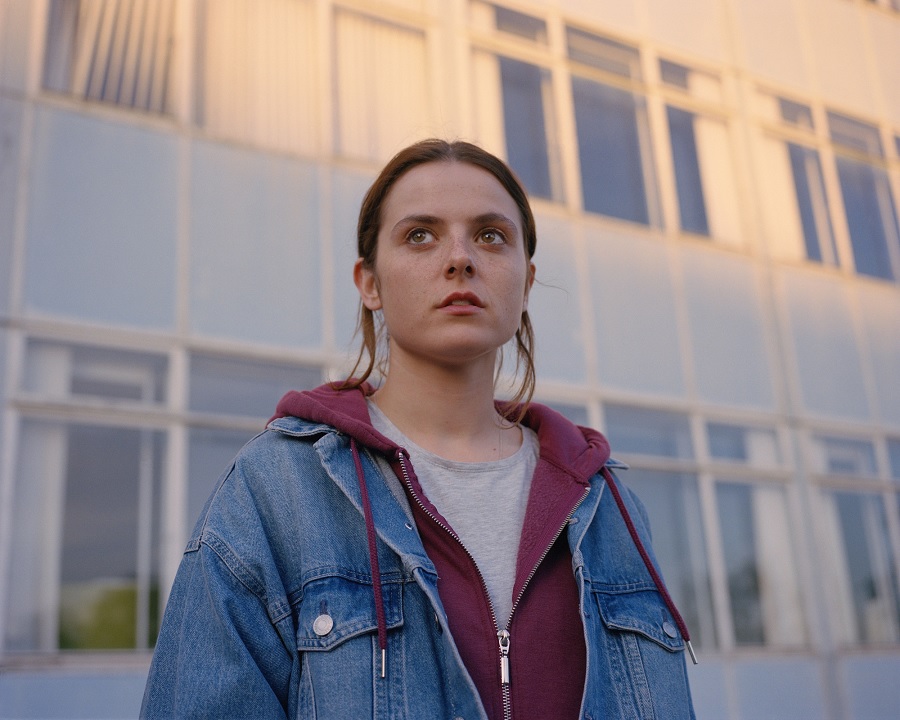
For such a highly-anticipated Welsh drama, Y Golau seemed to run the well-worn tracks of what has become the genre’s favoured train: the psychological thriller. Given its all-star Welsh cast, I expected something much more original and distinctly different from previous Welsh noirs like Hidden and The Pact. As a result, I felt underwhelmed by its decision to present yet another murder mystery, complete with the same familiar tropes as its predecessors. Not that there was anything inherently wrong with the production. It just simply didn’t thrill and engross in quite the way that it might have done had it not been in the guise of similar series that had gone before.

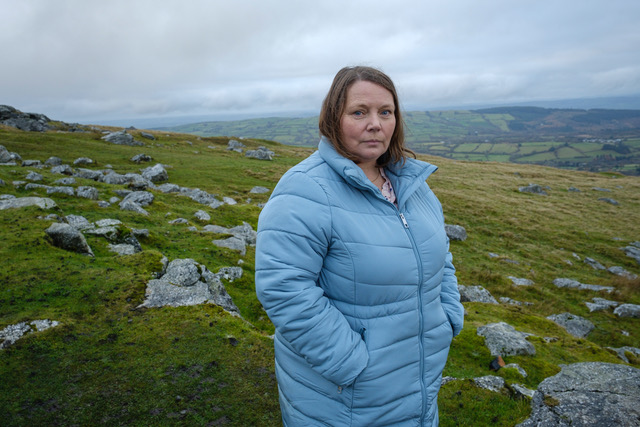
Joanna Scanlan as Sharon (photo by Alistair Heap)

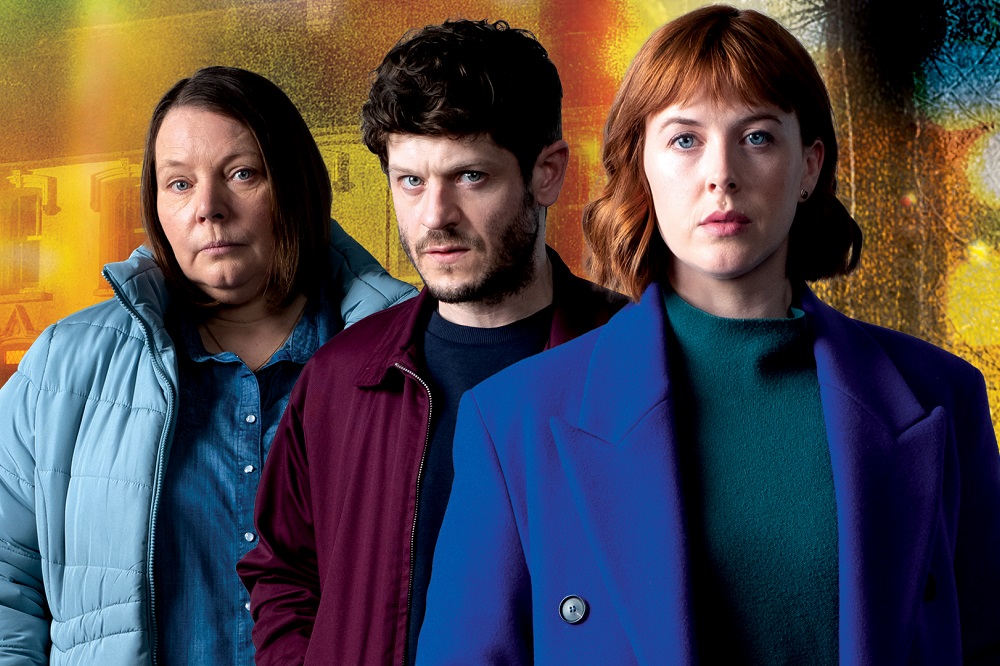
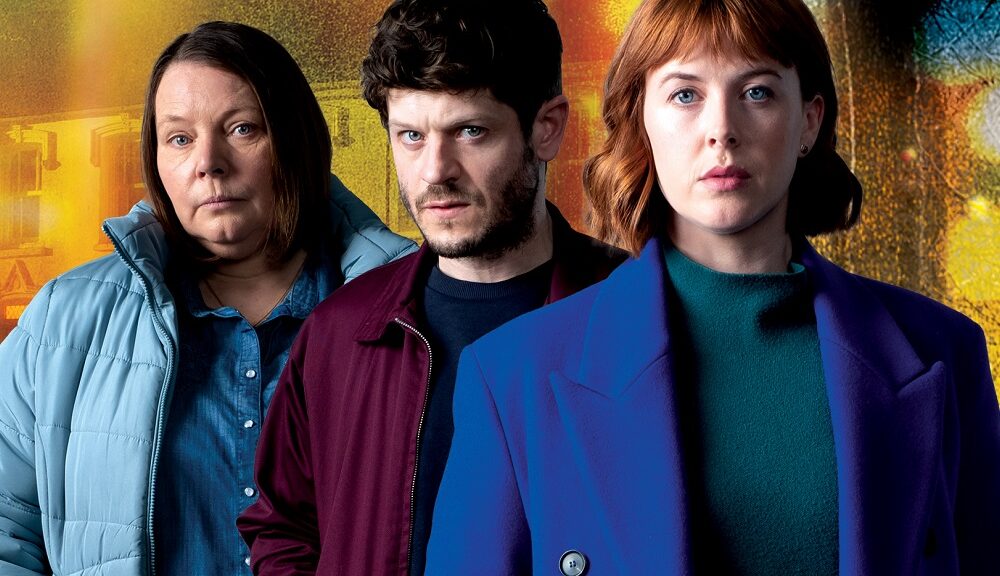
The typically rural setting and small-town cast of characters is one thing; but the desolate landscape, solemn music, and gloomy figures present yet another side to Wales that panders to the bleak and pedantic detail of the crime subgenre. Iwan Rheon plays the haunted convict who is released from prison having served a sentence for the murder of the daughter of Joanna Scanlan’s haunted mother. He returns to the town that is still haunted by the events of 18 years previously, his presence disturbing an uneasy peace which is exacerbated further by the re-appearance of Alexandra Roach’s journalist, who is looking for a story. The three of them give ample performances for what are very rare appearances in a Welsh-language outfit. Yet none command the kind of screen presence that has come to be expected of them. In particular, the animated spark that enlivens Scanlan and Roach’s appearance’ in No Offence is largely absent here. Instead, vacant stares obtrude their presentations such that it becomes difficult to make a significant emotional connection to their characters.

Ifan Huw Dafydd

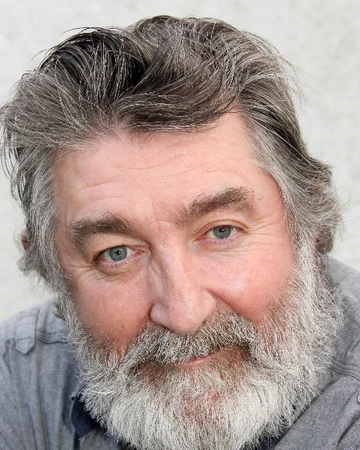
It is Ifan Huw Dafydd that gives the best performance here. He strikes a menacing veneer over his character Huw that is justifiably unsettling. It is no surprise that his growing presence onscreen and involvement in the central narrative coincides with the more compelling and intriguing parts of the drama. If anything, the return of his estranged daughter Shelley (played by Rhian Blythe) is the catalyst for the twists and turns that follow in the final two parts of the series. This is where Y Golau becomes gripping in a way that its shortcomings, up until this point, can be forgiven. It enters a similar phase to that of Yr Amgueddfa, whereby its web of disparate characters start to become interconnected, drawing the various strands of the narrative together to create a big grand finale. But whereas Fflur Dafydd manages to maintain interest in the opening episodes in spite of the expositional setting up of the story, Regina Moriarty’s script doesn’t possess the same hooks with which to retain the audience’s attention. The result is a requirement to persevere in order to be rewarded rather than being kept sufficiently entertained throughout.

In the end, Y Golau aims a bit too high. Issues of abuse and power are dealt with admirably. The final episode ensures the series ends strongly. But I expected more from this drama, not least because of the roster of Welsh stars that appear in its cast. Scanlan, Roach, Rheon, Hannah Daniel, Aneirin Hughes and Sian Reese-Williams, all lend it an air of quality that meant expectations were high. To then find a characteristic S4C offering in the mould of an Ed Talfan production that didn’t quite utilise the talent involved left me slightly dissatisfied. As a result, Y Golau lit up the screen but wasn’t a roaring success.

Click here to watch the series on iPlayer.

Review by
Gareth Williams

Review, Celebrated Virgins, Theatr Clwyd, by Gareth Williams

 out of 5 stars (4 / 5)

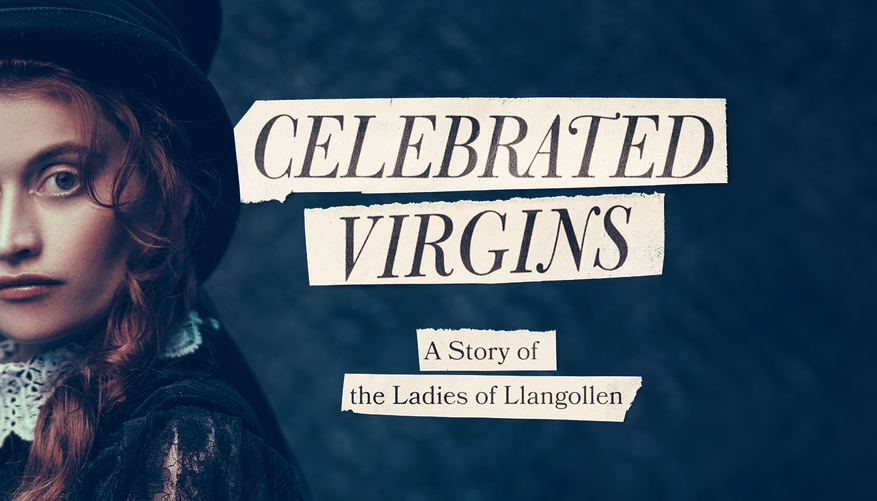
If Katie Elin-Salt was in any doubt then the opening night of Celebrated Virgins was a moment to feel assured. Her excellent play, telling the story of the Ladies of Llangollen, was received by way of rapturous applause at its conclusion. And deservedly so. For this exploration of the relationship between Sarah Ponsonby and Lady Eleanor Butler, for the first time from their points of view, is full of heart, humour and hope.

(C) FfotoNant

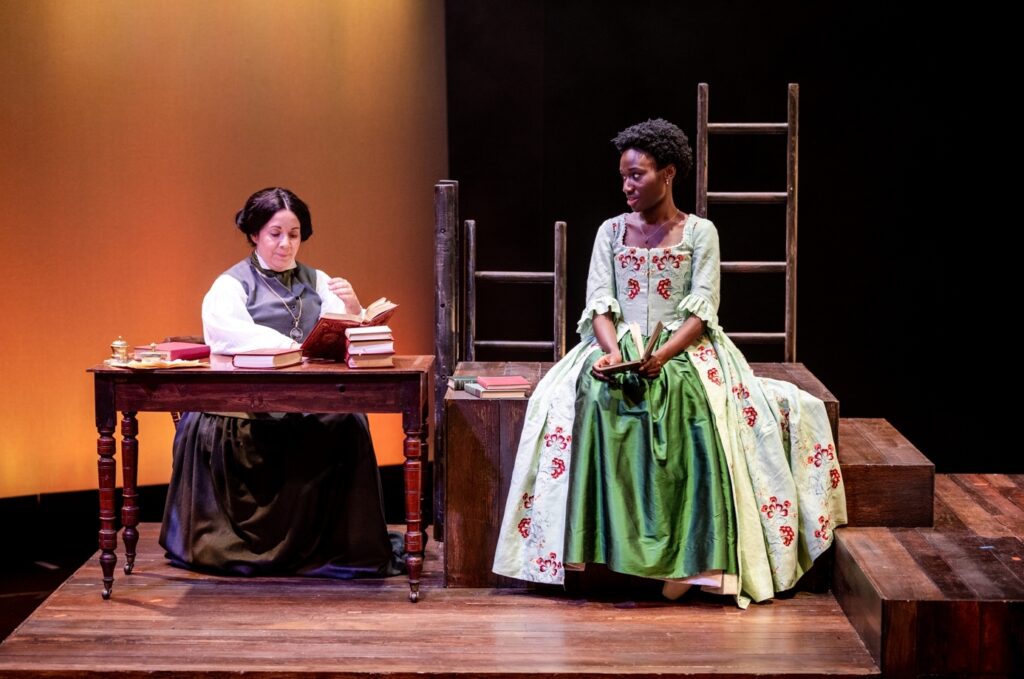
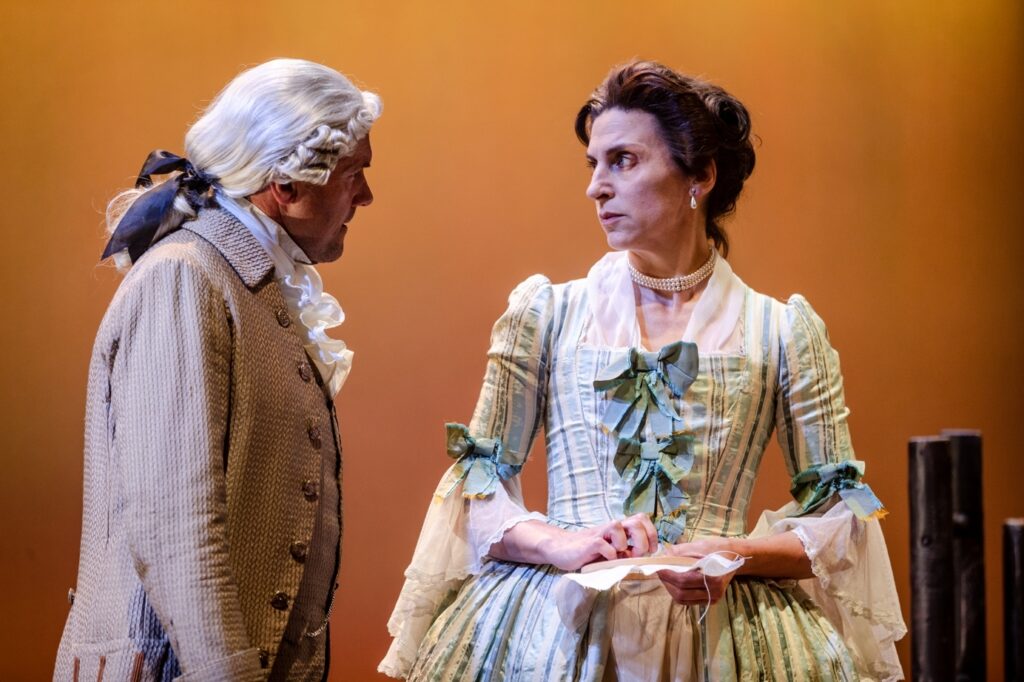
It is to all intents and purposes a costume drama. Yet it is also much more than that. The whole creative team have worked hard to ensure that this is a truly immersive experience. The audience is transported immediately back in time thanks to the glorious attention to detail. From the dark oak wood stage to the corseted costumes, the realism of the props to the flute- and mandolin-infused soundtrack, the representation of the story’s 18th century setting is second to none. But it really comes to life under the direction of Eleri B. Jones, who utilises all of these elements within the intimacy of Theatr Clwyd’s new performance space, The Mix, to create a show that feels both authentic and contemporary. Such is the vibrancy that Jones injects into Elin-Salt’s script that the audience does not simply see the characters on stage; they come to share in their experience. This ensures maximum empathy, which is also a strength of the first-person narrative.

In placing Sarah (Heather Agyepong) front and centre from the beginning, Elin-Salt ensures that this first-person perspective remains the focus throughout. She subtly reveals the ways in which wealth and patriarchy attempt to take over her story through Sarah’s adoptive parents William (Seán Carlsen) and Lady Betty (Emma Pallant). An incident with the former, which rightly comes with a trigger warning, is a particularly visceral moment that is deeply uncomfortable to witness. Yet from or in spite of these moments, the quiet strength of Sarah persists in both determining her own self-defined path as well as forging a relationship with Eleanor (Victoria John). From their first meeting, it is clear that there is a spark between them. Agyepong and John allow the two to bounce off one another with ease, the dialogue zipping between them with a playfulness that captures the gentle blossoming of romance. There is a montage early on that is wonderfully cinematic that contributes enormously to the beautiful development of their love. Both characters have their vices and virtues, and both actors tease these out in ways that strengthen their relationship. For example, the prim and proper façade of Eleanor is broken at times by a vulnerability and fear, brought about by Sarah’s emergent steeliness from behind a more sensitive and considerate guise. They open one another’s eyes and hearts not only to themselves but others. It is lovely to watch, and draws admiration aplenty.

(C) FfotoNant

Emma Pallant is deserving of special mention for her star turn as the Ladies’ housekeeper Mary. Her monologue at the beginning of act two is hilariously unbecoming, gutturally frank, but also delightfully poignant. It’s a real scene stealer which will also strike a particular chord with listeners of The 98% podcast. For Katie Elin-Salt’s sardonic wit and truth-filled personality can’t help but burst through the pages of the script here. They are delivered masterfully by the exuberant Pallant who appears to relish the chance to address the audience with this most excellent of dialogue. It is but one instance in what is a superb whole: a story that Elin-Salt declares “has taken nearly 300 years for it to be put on a stage”. This may be a bewildering fact, but on this evidence, I should think that it was just waiting for the right person to come along to tell it.

Celebrated Virgins runs at Theatr Clwyd until the 4th June. Tickets can be booked by clicking here.

5 Minutes with Katie Elin-Salt, writer of ‘Celebrated Virgins’, Theatr Clwyd

Celebrated Virgins is Theatr Clwyd’s brand new play written by Katie Elin-Salt and directed by Eleri B. Jones. The show is based on the true story of Lady Eleanor Butler and Miss Sarah Ponsonby who were forced to flee Ireland and took up residence in Llangollen. They were true LGBTQ+ icons of their time and this show sees them tell their story, on their own terms for the very first time.

We sat down with Katie, writer of the show, to find out more:

You will be a familiar face to many at Theatr Clwyd as an actor. What’s it like to be back?

When I first came to Clwyd, I was a nervous 21-year-old performing a cameo role in As You Like It, under the direction of Terry Hands. Since then, Theatr Clwyd has always been a home from home for me and I have been privileged to perform here as an actor many times – growing from bit parts to leads in shows such as Educating Rita and Under Milk Wood, I was even lucky enough to be the fairy in the panto two years ago – what an honour! To come back to Mold under this capacity, is just the most incredible feeling. I have always felt so supported by the team and the audience at Theatr Clwyd and I could not be in a safer place to be premiering my first full play. But I honestly feel if I could tell that nervous 21 year old a decade ago that her name would one day be on the front of those programmes – she would never have believed it!

Give us a brief of what Celebrated Virgins is about?

Celebrated Virgins is based on the true story of two remarkable women – Sarah Ponsonby and Eleanor Butler a.k.a ‘The Ladies of Llangollen’. We follow their story from separate childhoods in the upper echelons of 18th century Irish society to meeting each other at school and forming an unbreakable bond. This leads them to decide they would rather leave everything they have known behind than live without each other. We then follow their journey to Plas Newydd, their home for over 50 years in Llangollen and learn through them the bravery and the fear involved in living an authentic life in full view of a community who does not always understand who you truly are. 

What made you want to create this show?            

Well, firstly it is just an amazing epic love story and I remain amazed and bewildered that it has taken nearly 300 years for it to be put on a stage. It really has everything – love, risk, danger, even someone dressing in a suit and jumping out of a window armed with a pistol and a Jack Russell – I mean what more could you want? But also, I think it is incredibly important for today’s society that we see stories like Sarah and Eleanor’s represented on stage. It has taken such a long time for love between two women to be not only accepted but celebrated, and I want to show the next generation of LGBTQ+ that their stories and their history are just as important and worth celebrating as anybody else’s.

It’s such a fascinating story but this will be the first time they are telling it themselves. What can the audience expect?

The audience can expect to see two brilliant women at the front and centre of their own story. We have an amazing cast of professional actors and also added to that the addition of a cast from the local community – who will show us what life was really like for the Ladies as they tried to make their way in society. We have an incredible movement and sound team who will bring this story bang up to date and of course fantastic direction from Eleri B. Jones. I would tell the audience to buy an ice cream and get comfortable as the lights go down as they are in for a truly epic night of theatre – and after the last two years I think that is the least an audience deserves!

What advice would you give to people wanting to get into the industry?

My first bit of advice would be to try out as many facets of your creativity as you possibly can! Like many young people I got into this industry through my local youth theatre, there I found a love of theatre and a friendship and connection I couldn’t find anywhere else. I realised there that I could act but it took me until the age of 30 to realise I might be any good at writing – think of all that wasted time! I am also now training as a music therapist to spread my creativity even further. There are some elements of this job I definitely can’t do (trust me you don’t want to see me trying to move set around a stage), but that is when you find the people who can and let them support and help you. Basically, no matter where you come from or what your story is – find it, own it and let yourself be seen in as many glorious ways as you possibly can!


Celebrated Virgins will be performed at Theatr Clwyd from Friday 20 May – Saturday 4 June. Tickets start at £10 and can be booked here. Please check the website for Trigger Warnings.

Series Review, Stad, S4C, by Gareth Williams

 out of 5 stars (4 / 5)

It is the North West that seems to be in the Welsh TV spotlight recently. The final series of Hidden has begun, Rybish has returned, and a brand-new series called Stad has just completed its run.  Set on a council estate near Caernarfon, it combines the drama and comedy of the aforementioned to create a slightly off-piste narrative similar to Enid a Lucy. This has made it lightly entertaining and surprisingly engrossing; a series that does not make you want to binge from the off but, by the time it reaches its final episode, leaves you desperate for more.

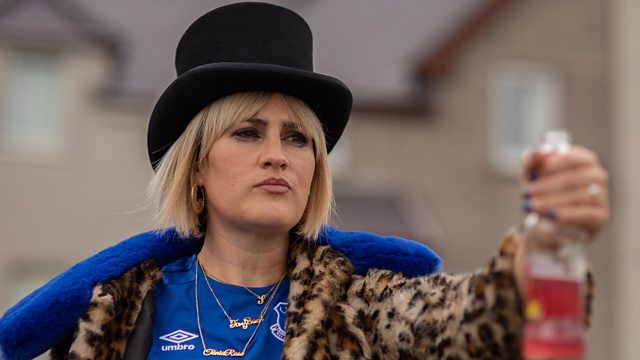
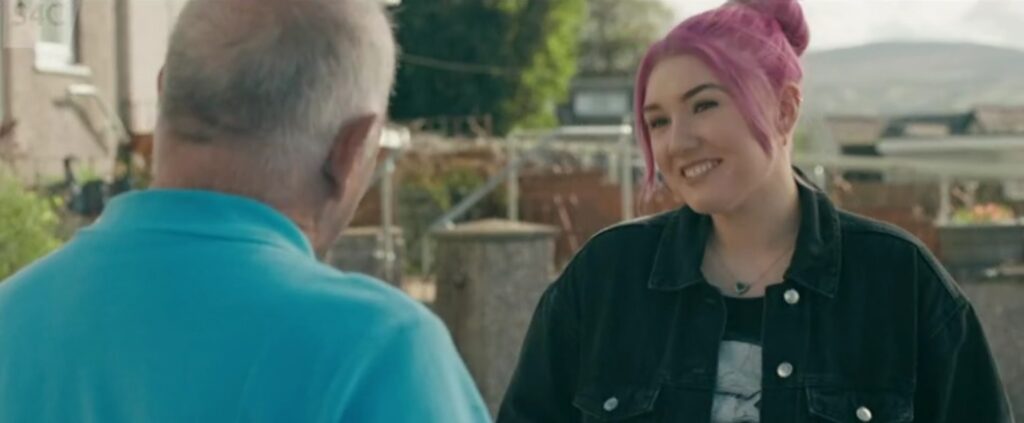
Stad is not strictly original, coming ten years after its highly-popular predecessor Tipyn o Stad ended on S4C. Viewers of that series will recognise the return of a few familiar characters, not least the Gurkha family. However, no prior knowledge is needed to enter this new chapter in the life of Maes Menai, described as “North Wales’ most colourful housing estate”. The opening scene might feel a bit overwhelming and thus confusing for those, like me, entering this world for the first time. But it does not take long to adjust to its tragi-comic genre and realise that the historic connections between some of these characters are no barrier to its accessibility. Instead, one becomes steadily intrigued by the issues, situations and circumstances that arise within the first episode and as the series progresses. Mental health is but one subject which is tackled with a surprising sensitivity, particularly in respect of trauma and loss. Elen Gwynne, for example, gives the most acute performance as Susan whose struggle with bereavement is portrayed onscreen in such a way as to be funny without being derisive.

The writers Manon Wyn Jones, Angharad Elen and Daf Palfrey have pitched the darkness and light of this drama to perfection. There is a bit of a Breaking Bad influence that seems to hang over it in more ways than one. There is the obvious connection to the selling of drugs for financial security, but it is also the hapless nature of the partnership between Ed Lovell (Bryn Fôn) and Dan (Sion Eifion) that strikes chords with the father-son relationship of Walter White and Jesse. The two also find themselves in sometimes absurd situations, like being held hostage by a crossbow-wielding farmer by the name of Iona Kebab (Janet Aethwy). Such wild, crazy scenarios end up contrasting nicely with the far more real-world dilemmas of other characters, like Alaw. Begw Rowlands ensures a real likability towards her character, playing her with a confidence that is tinged with a deeper, hidden vulnerability. It draws much sympathy when she discovers that she is pregnant, and makes her gently blossoming relationship with Kim (Gwenno Fôn) all-the-more sweeter.

Stad can feel a bit pedestrian at times, measured and paced, with no rush to excite or entice viewers into a suspenseful or twisting narrative. It prefers to operate at the most basic level of human drama even as some of its storylines take on a surrealist edge. This means that we get to know the characters themselves in the context of their ordinary lives and is what makes the final part of the series so unexpected and heightens the tension around it. We come to really care as Alaw attacks her dad Keith (Rhodri Meilir), with seemingly-terminal ramifications, and Ed Lovell finds himself trapped in the basement of a burning house. It ratchets up the anticipation before running into the closing credits to devasting effect. Suddenly, it is edge-of-your-seat stuff. A second series is demanded.

Stad becomes a series that gradually wins your heart and then has the power to break it.

Click here to watch the full series.

Reviewed by
Gareth Williams

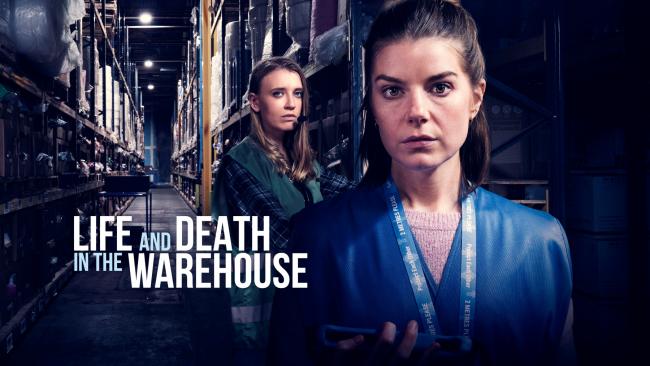
Review, Life and Death in the Warehouse, BBC Cymru Wales, by Gareth Williams

 out of 5 stars (5 / 5)

The first thing to say is that nobody dies. Yet that is hardly a ringing endorsement of the working practices on show in Life and Death in the Warehouse. The BBC Cymru drama lays bare the secret world of online distribution centres. And for anyone used to the quick and easy clicks of internet shopping, this is a must-see to make you think twice before placing your next order with Amazon. It makes for hard-hitting and eye-opening television. This is the worst of consumer capitalism.

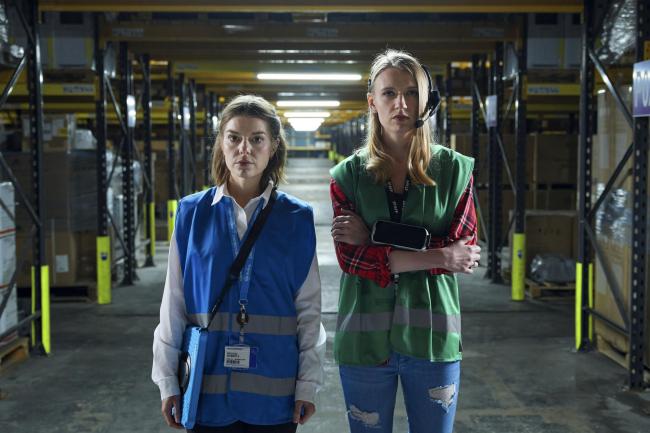
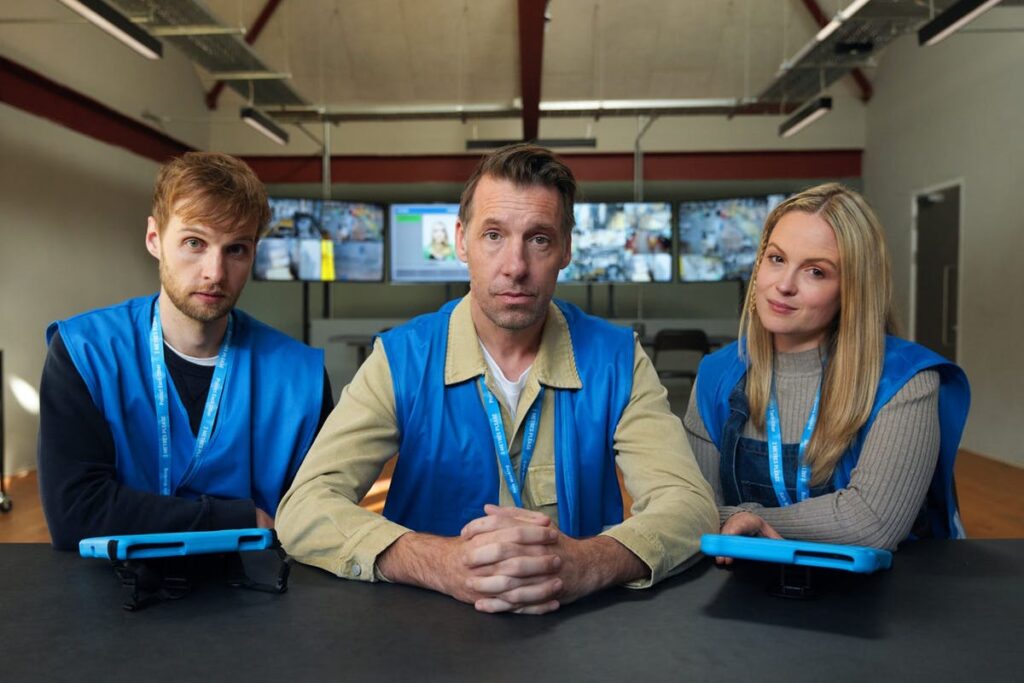
Megan (Aimee-Ffion Edwards) has been accepted on a fast-track graduate scheme at her local centre. Becoming a trainee manager, she is tasked with ensuring that her team of workers keep up to speed with their daily ‘pick rate’. She is required to monitor their movements constantly via CCTV, praising those who exceed the target and calling out the ones who fall behind. Childhood friend Alys (Poppy-Lee Friar) becomes one of the latter when she confines in Megan that she is pregnant. Instead of receiving assistance and the appropriate support however, Alys is subjected to a ‘personal enhancement plan’ that remains fixated on the numbers at the expense of her health and wellbeing. It is hard to believe that companies operating in 21st Century Britain would treat workers in this way. Yet as it declares from the outset, “This film is inspired by hundreds of real stories”. To say it is shocking then is an understatement.

Director Joseph Bullman ensures that there are plenty of close-ups, with the majority of shots trained on the faces of the actors to capture the intensity, pressure and emotional strain that their characters are under. It means that their environment is pushed right up against the screen. There is no getting away from it. We become embroiled in the ideology of this high-performance workplace, not only witnessing its effect on Megan and Alys but being subjected to it in some way ourselves such is the visceral nature of the storytelling. Edwards brings an incredible vulnerability to her role. She is at once very different from her infamous turn as Esme Shelby in Peaky Blinders. Yet in spite of her obvious nerves and eagerness to please, there is something of the steeliness of that character that seeps in as the drama progresses. It becomes a negative force in this instance however, used to block out a compassionate and caring side to Megan in keeping with the ‘customer-fixated’ culture that she finds herself trapped in. Friar, for her part, puts in a noteworthy performance as one who experiences the most extreme impact of that culture. The gradual decline in Alys’s physical ability to undertake the tasks at hand, and the increasing level of stress she finds herself under, is acutely felt, in part due to Friar’s concentrated effort to keep her character’s emotions in check against a backdrop of sustained bombardment under which the exhaustion, tears and pain slowly to show.

In a sense, both of these characters are subject to the injustices of a system that exploits, dehumanises, and almost kills them. The obsession with media PR over and above medical concern for an employee is but one unbelievable instance that breeds anger in the heart of the viewer. To understand this as reality takes some coming-to-terms-with, not least in the face of the preposterous responses of the management team. Yet Craig Parkinson (Danny) and Kimberley Nixon (Donna) play their roles with such deliberate ease that the manipulation and false empathy emanating from their characters’ intentions becomes entirely plausible. It makes one very aware of the insidious nature of language; and how it can creep unsuspectingly into relationships.

Life and Death in the Warehouse brings us the best in factual drama. It shines a daring light onto the unseen but now-necessary world of warehouse workers who are at the coalface of our online purchasing habits. It finds the companies who ‘employ’ them, “Some… you will know, others you won’t have heard of”, seriously wanting. Bullman directs in the same unrelenting way as he did with its predecessor, The Left Behind. Meanwhile, Aimee-Ffion Edwards and Poppy Lee Friar lead a superb majority-Welsh cast in depicting the dark side to our unrelenting consumerism. It should make us pause a moment and take note. It should even make us turn to look for something better. It shows that the rights fought so hard for in the past are in danger of so easily slipping away.

Click here to watch on iPlayer.

Reviewed by
Gareth Williams

Review, Shades of Ham, Rona Mac, by Gareth Williams

 out of 5 stars (4 / 5)

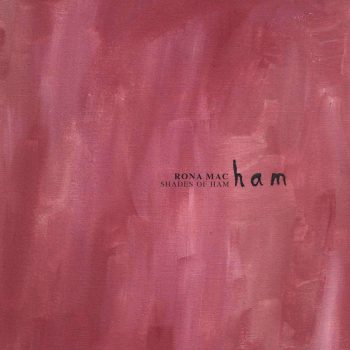
Rona Mac describes the pink cover of her latest EP ‘Shades of Ham’ as a dichotomy. It is a colour, she says, that is both “fierce, bold and strong as well as delicate, floral and soft”. It seems a particularly fitting description for an artist who finds strength in vulnerability. But it also captures something of the sharp contrasts that imbue this record. The Welsh singer-songwriter is perfectly capable of packing a punch one minute and tenderly caressing the next. Not only is she inspired by the Pembrokeshire landscape in which she lives, but the rugged cliffs and sloping green fields seem to represent her music too.

Opening track ‘Something Good’ oozes intimacy. There is something about those ambling guitar loops and sauntering vocals, carried over from her debut album ‘Sheelah’, that transfix, and traverse the line between light and shade that defines her work. Unvarnished truth-telling mixes with splashes of colour that speak of hope, not only on a personal level but a political one too. ‘Polidics’ is a well-versed dig at those in power. The pounding beats as Rona speaks of the privileged “men in jackets sit[ting] importantly… pouring port in front of me” contribute to a deeply-held frustration at the way the country is currently run. Add into the mix a damning critique of consumerism, with its “money wrapped in lights so take it”, and you get a sense of the raw honesty and unbounded personality of this quietly-countercultural artist.

‘Polidics’ does not remain in a state of anger. Rather, it is a song of two halves, the second of which moves on “to where they cannot find me”, amidst “the flowers and the grasses”, from which “we’ll rise, a bunch of honest creatures fill the skies”. Combined with a more free-flowing alt-pop sound, it makes for a track that is ultimately casting toward a better, brighter vision of the world. On a more practical level, it also prepares the way for the softer sound of ‘The Road to Your House’. Here, the usual shimmering soundscape is stilled by the clarity of the acoustic guitar. Suddenly, we are witness to a beautifully-told story through folk music that feels miles away from the frustration of a few minutes ago. Sadness and regret still seep into its reflection but there is also a sprightliness contained within. The guitar solo in the middle echoes such sentiment, and is easy to get lost in. ‘Smoke’ has a similar ruminating quality. It reminds me a lot of Georgia Ruth’s album ‘Mai’: soothing and affecting; complex, even in its simplicity.

*contains strong language

Final track ‘Paper’ has the same two-toned substance as ‘Polidics’. On the one hand a love-letter, on the other a seething criticism, it mixes alt-pop beats with acoustic reflection padded with the sound of waves. Similar to ‘Carageen’ by Jodie Marie, it suggests that Rona Mac’s Pembrokeshire location offers a kind of grounding, a place to which she escapes as well as from where she writes her songs. It certainly seems to have offered her the freedom to not be bound by conventions. ‘Shades of Ham’ continues to showcase this genre-fusing approach. It is a record that is undeniably Rona Mac. May she never compromise on that.

Follow Rona Mac on Instagram/Twitter @RonaMac_Music

Reviewed by
Gareth Williams

Review, In My Skin, Series 2, BBC3, by Gareth Williams

 out of 5 stars (5 / 5)

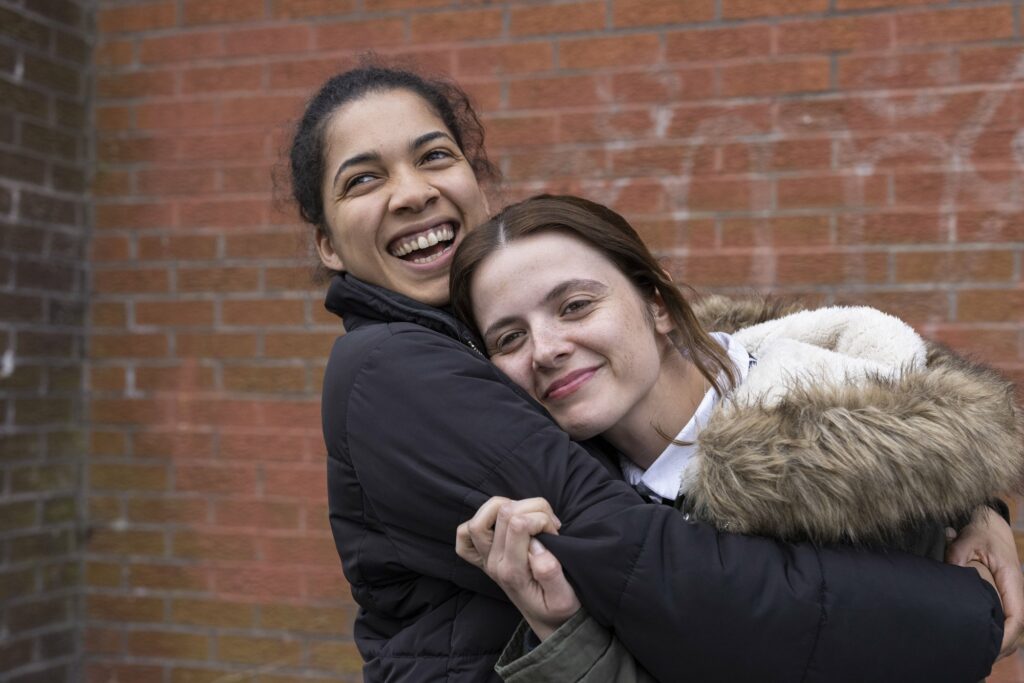
The second series of In My Skin has really got under my skin these past few days. Content simply to watch at first, I’ve found myself itching to write something in response after a final episode in which the emotional pull of this award-winning drama really tugged at the heartstrings. I laughed. I cried. I smiled at the poignancy and hope with which this coming-of-age story signed off. Writer Kayleigh Llewelyn has really captured something special with this semi-autobiographical series. And actor Gabrielle Creevy and crew have brought it beautifully to life.

Kayleigh Llewelyn

From the continued subtlety with which sexuality is explored and presented, to its unashamed yet understated presentation of Welshness, the second series of In My Skin matches the achievements of the first. It does come across as much more arthouse in both pace and aesthetic than its predecessor. Yet this slow burn, highly-polished look only gives it a gravitas that adds to the verisimilitude which made it so relatable and ruinous to begin with. Bethan (Creevy) is still living out a compartmentalised existence, where her efforts to keep family and friends separate are increasingly tested this time around. Her mum Trina (Jo Hartley), in recovery from bipolar, is found to be working at the bingo by best friends Travis (James Wilbraham) and Lydia (Poppy Lee Friar). Her father (Rhod Meilir), still an abusive alcoholic, becomes the subject of taunts by class clown Priest (Aled ap Steffan) after his devastating actions toward his wife’s secret lover are found out. Meanwhile, her blossoming relationship with Cam (Rebekah Murrell) sees the roots of shame surfacing from beneath her steely exterior. All this forces Bethan to face up to who she is and where she comes from.

Rebekah Murrell (Cam) and Gabrielle Creevy (Bethan)
(C) Expectation – Photographer: Huw John

This emergence and gradual acceptance of personal identity is both beautiful and heartrending to watch. The scenes between Bethan and Cam become increasingly delicate as their relationship develops. More artistic shots, close-ups, movements, and softer conversations bring to mind the craftsmanship of Normal People. They help to convey a vulnerability in Bethan that has so far been hidden but that Cam gently draws into the light. Such tender compassion is matched only by Trina, whose fragility may lead to a relapse in the wake of husband Dylan’s actions, but is also a source of strength in her daughter’s time of need. In one of the most grace-filled scenes of dialogue, in the final episode, within the space of a few minutes, I found myself reduced to tears as she responds to Bethan’s brokenness with a touching recollection of love, failure, and hope. Creevy and Hartley are simply sublime in this incredible mother-daughter exchange. Their conversation is painted onto the camera lens with such gentle brushstrokes as to form the most exquisite piece of sacrificial art. It begins a chain of events which, though numerous and rich enough to warrant a further episode, nevertheless see Bethan find her wings and set off via coach for a new life in London town. The look-to-camera right at the end, complete with a modest, appreciative smile, only adds to the positive vitality which imbues these final moments of a series that will be sorely missed but has ended on a high.

Gabrielle Creevy

In My Skin is an extraordinary piece of television. It has made stars of Gabrielle Creevy and Jo Hartley. Kayleigh Llewelyn has brought something magical to the screen. I thought I’d said everything that there was to say about this wonderful drama. Turns out, in light of series two, I needed to say a little bit more.

Click here to watch the full series.

Reviewed by
Gareth Williams

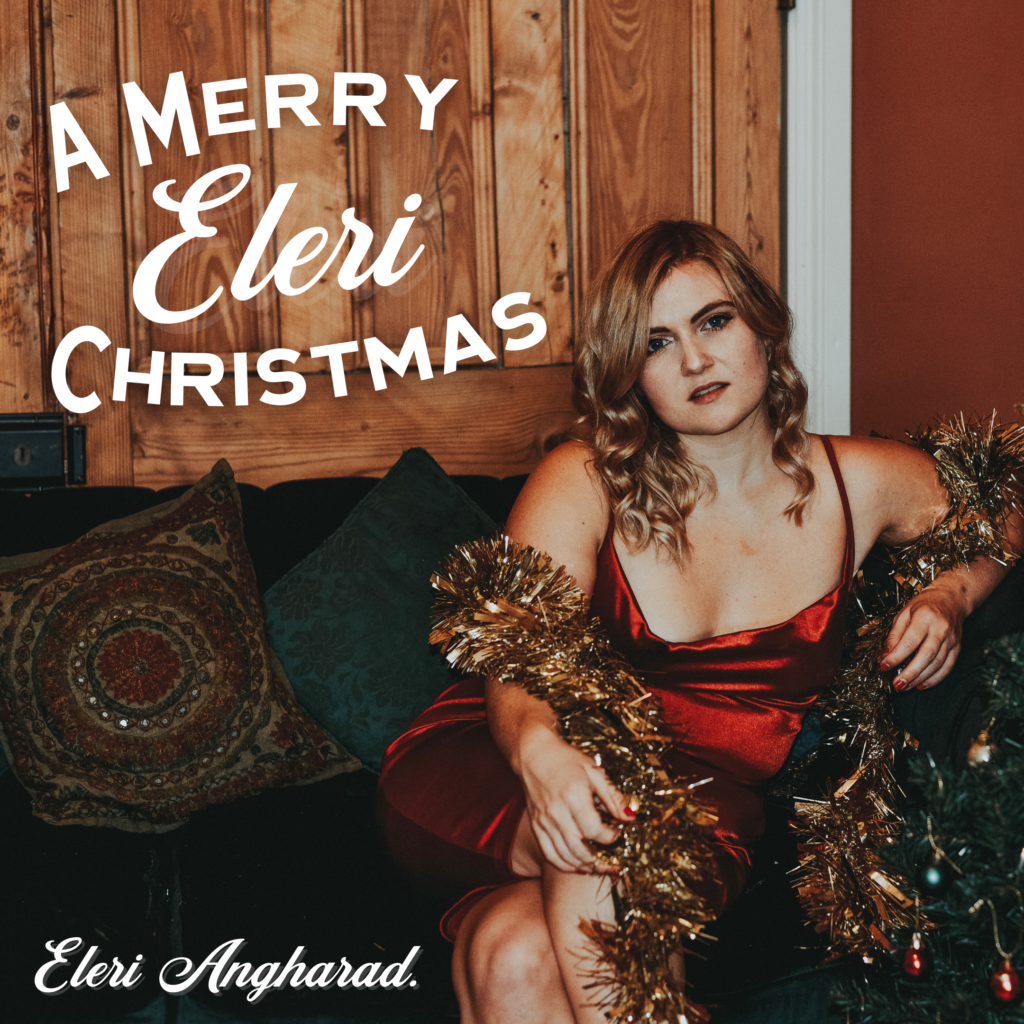
Review, A Merry Eleri Christmas, Eleri Angharad by Gareth Williams

 out of 5 stars (4 / 5)

Welsh singer-songwriter Eleri Angharad is ending a successful 2021 on a suitably festive note. A Merry Eleri Christmas is a pleasant four-track EP that returns to her folk roots whilst retaining an element of that experimental pop that worked so well on her debut EP, Nightclub Floor.

Opening track ‘Homemade Christmas’ certainly evokes the feel of her 2019 album Earthbound, with a ballad-like piano and subtle sleigh bells contributing to a romantic story told with Eleri’s soft and harmonious vocals front and centre. The stripped back nature of her music means that her cover of Justin Bieber’s ‘Mistletoe’ is much slower, less boppier than the original. The effect is a version suitably forged in rural Wales rather urban Tennessee. Not that Celtic folk defines this EP.

‘Santa’s Little Helper’ retains the sultry pop of ‘New Sin’, speaking to an independence that is the opposite of the first track. There is an appropriately bluesy guitar in the bridge that adds to an overall sense of self-empowerment, expressed perfectly in the lyrics “Santa’s little helper I was never gonna be/ or a pretty little angel sitting on your Christmas tree”. The production here is far from that found on final track ‘Santa Baby’. It is surprisingly acoustic, offering none of the seductiveness found in some other versions; instead, returning to the playfulness of Eartha Kitt’s original but with much more innocence infused into the fun.

It ends an EP that is sweetly festive without being too sickly; is easy listening but not saccharine.

Review by
Gareth Williams