
Tag Archives: theatre

Review: Annie Get your Gun, Theatr Clwyd, Mold by Richard Evans

Theatr Moondance, Theatr Clwyd, Mold, Sept 3rd – 6th 2025

 out of 5 stars (3 / 5)

Tiptop Productions

Was this a musical or a concert?

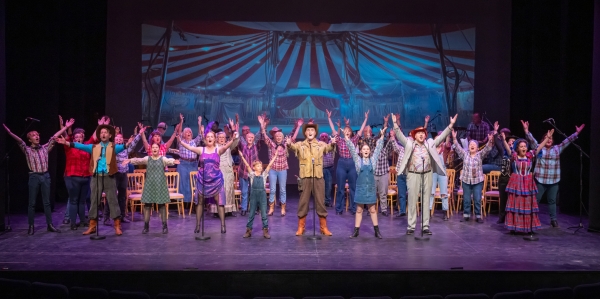
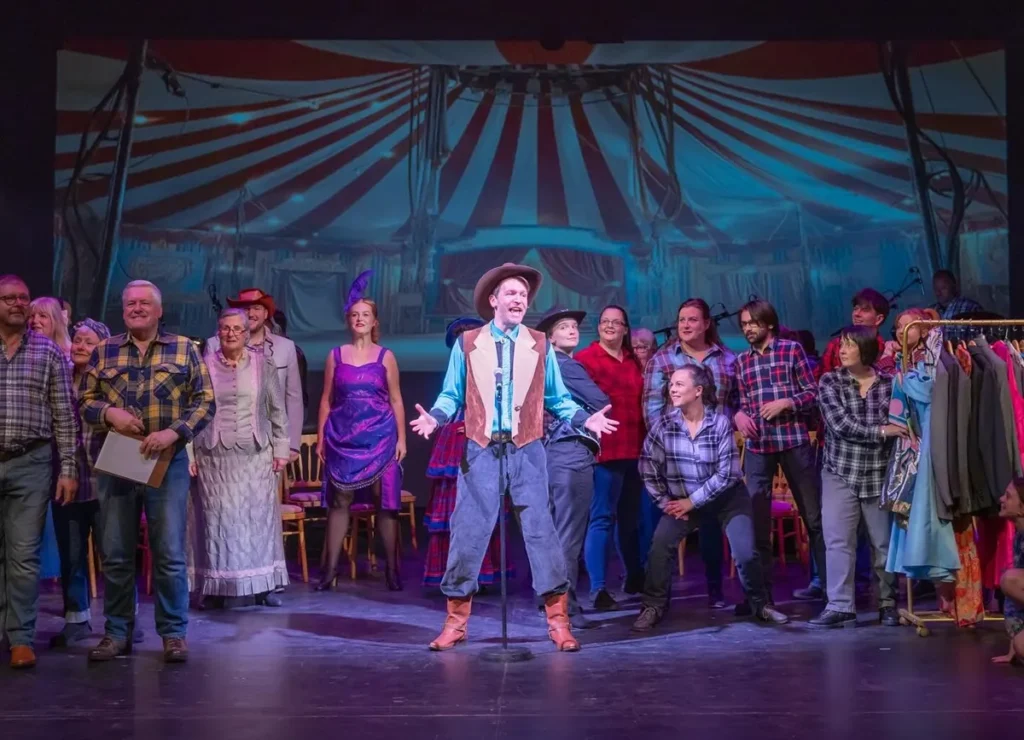
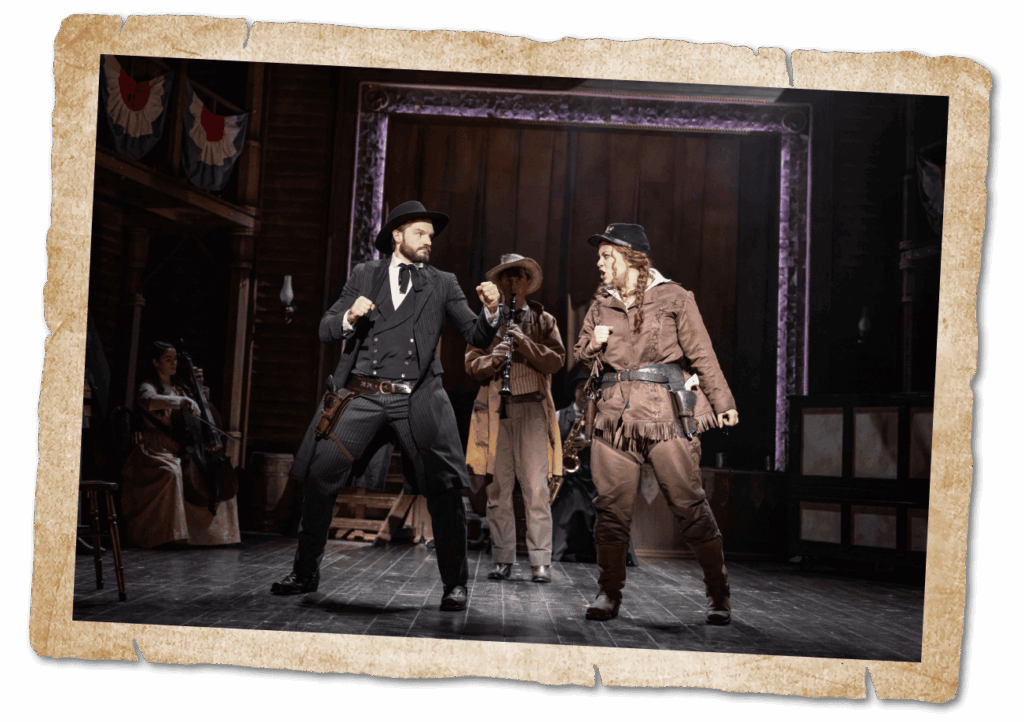
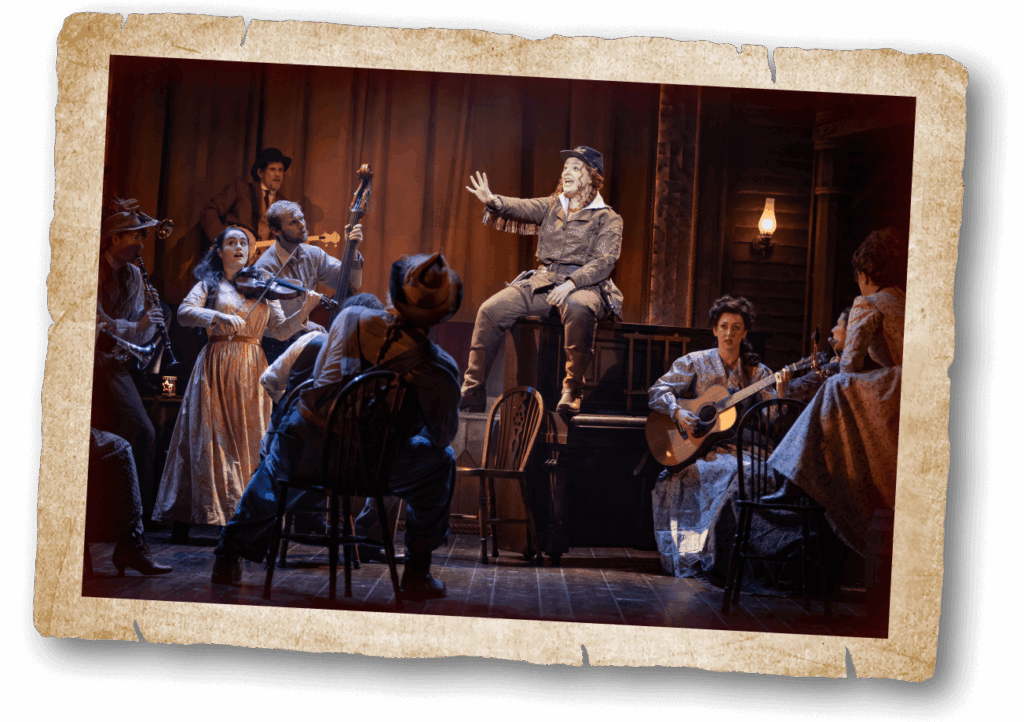
The opening, show stopping number, ‘There’s no business like show business was lively, passionate and well coordinated and indicated that it was the former, a musical.  One would then expect the stage to clear and the acting to start, but instead the ensemble sat down in serried rows and the action took place in front of them, indicating it was more of a concert.  In this way the production was neither one nor the other.  

The story of Annie is loosely based in history.  Annie is a poor girl who traps and shoots animals to feed her siblings.  She is set up to challenge Frank Butler, a sharpshooter in Buffalo Bills Wild West show and wins.  She then joins the troupe and falls in love with Frank but he will not accept Annie’s new found fame and leaves for a rival troupe, run by Pawnee Bill.  Buffalo Bill’s show tours Europe to great acclaim but little financial gain so has to come home and merge with Pawnee, thus bringing the two stars together again.  When Annie loses a shooting match to Frank on purpose, they are reconciled and get married.  

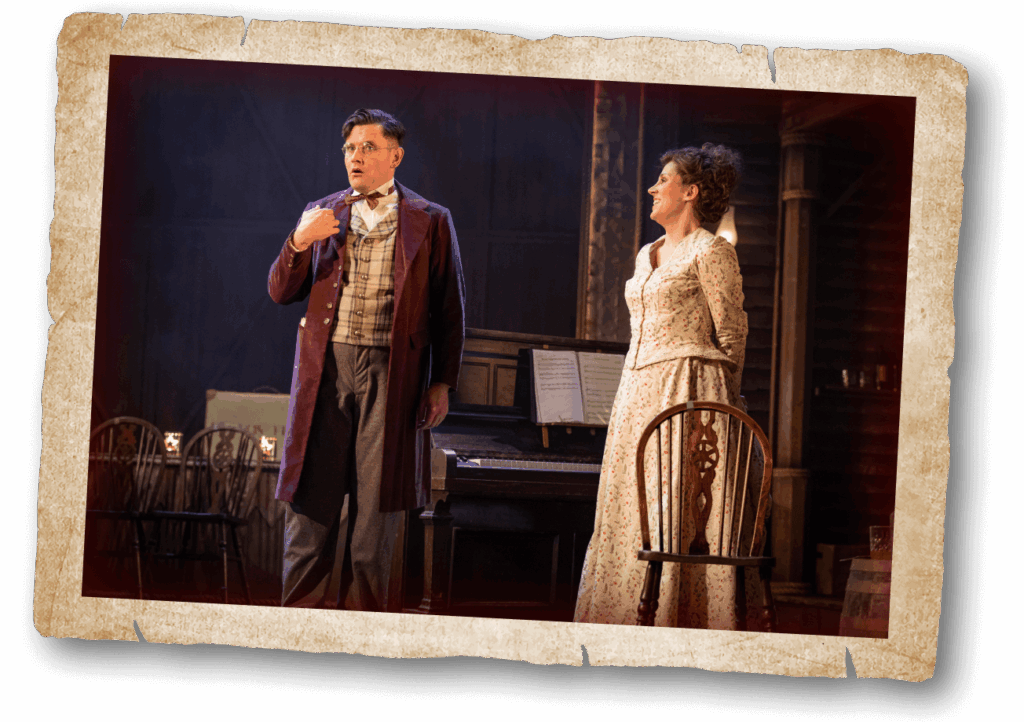
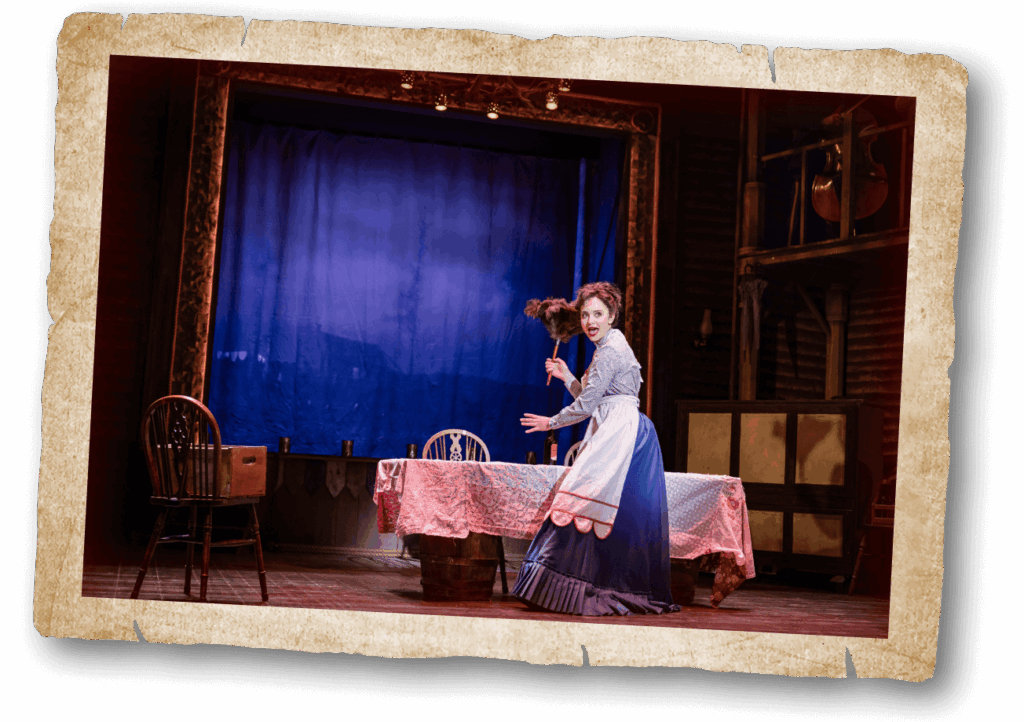
The company are enthusiastic in their endeavours despite being self conscious at times.   Jade Pritchard is well cast as Annie and has a great voice.  She has a good rapport with Gareth Hughes as Frank especially when they are acting as rivals.  Their duet with ‘Anything your can do I can do better’ was memorable.  Annie’s young siblings, Grace Hill as Jessie, Abigail Garner as Nellie and Arlo Lucas as Little Jake were a bundle of energy.  The action though was static at times, limited by the staging where the action took place behind four microphones at the front of the stage.  The production also lacked attention to detail especially in costuming, with some 20th Century shoes on show and the odd suit that seemed straight out of the 1970’s.

The musicals main characters in real life, Annie Oakley and Frank Butler were indeed natural sharpshooters.  Annie came from an impoverished background until she won her shooting contest with Frank.  They married and formed a performing partnership with great success.  Annie, in a long career went on to support women’s rights and to teach self defence lessons.  The Hollywood version is a more saccharine coated, sanitised version where Annie has to lose a second shooting match with Frank in order to win his heart, indicating perhaps that the male ego could not stand the prospect of being less successful than a female.  

The musical raises a question, what does a man look for in a woman?  According to the song, ‘The girl that I marry’ she will be ‘as soft and pink as a nursery’, wearing satin, laces and cologne and having polished her nails.  And that is what Annie had to change to be in order to get her man.  This seems a world away from the real life Annie, and out of kilter with many women today.  However, this should not stop us enjoying what is a feel good show with great Irving Berlin songs and which was enthusiastically and competently performed by the company.   

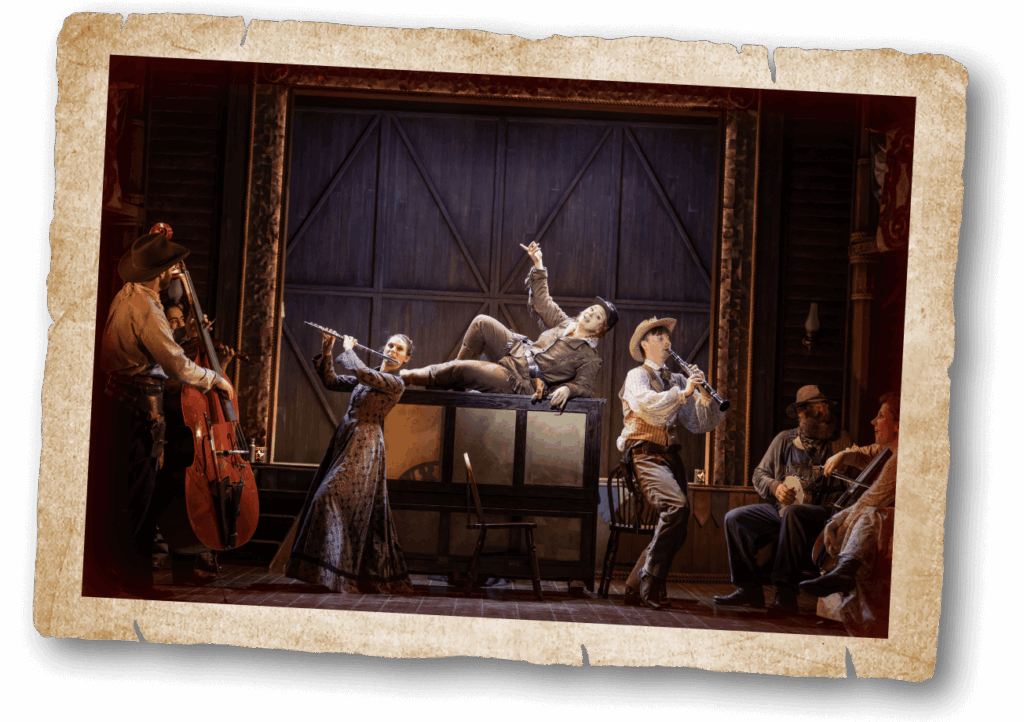
Review: Calamity Jane, Venue Cymru, Llandudno, by Richard Evans

Venue Cymru, Llandudno, 26-30th August 2025 and touring

 out of 5 stars (5 / 5)

Jamie Wilson productions, Kevin McCollum, Gavin Kalin productions, evolution productions, Tilted, Willette & Manny Klausner in association with Grace street creative group and David & Hannah Mirvish. A Watermill Production.

Calamity Jane. They’ve turned the legend of a gun totin’, liquor swillin’ girl masquerading as a man into a love story.  The actual events of Calam’s life are based in fact, but have been exaggerated, not least by the woman herself.  However, we should not let our quest for reliable history get in the way of a rattling good story which is what this musical is.

Calamity Jane breezes into a Deadwood saloon having guarded the stagecoach safely into town.  On the coach is Francis Fryer, an entertainer.  Sadly, he does not possess the attributes desired by a hard living audience that has been starved of female company.  He is a man.  When the saloon owner nearly causes a riot trying to fool the waiting crowd that Francis is actually a woman, Calam goes to Chicago to tempt a music hall star, Adelaid Adams to come to Deadwood. As befits her name, she makes a disastrous mistake and brings back her maid, Katie Brown.  However, Katie turns out to be a roaring success and settles with Calam in her run down shack and brings out the more feminine sides to her hosts character.  The two women then become love rivals for an army lieutenant, Danny, before Calam realises that her love for her long time companion and critic, Wild Bill Hickok is mutual and Katie is free to marry her soldier.

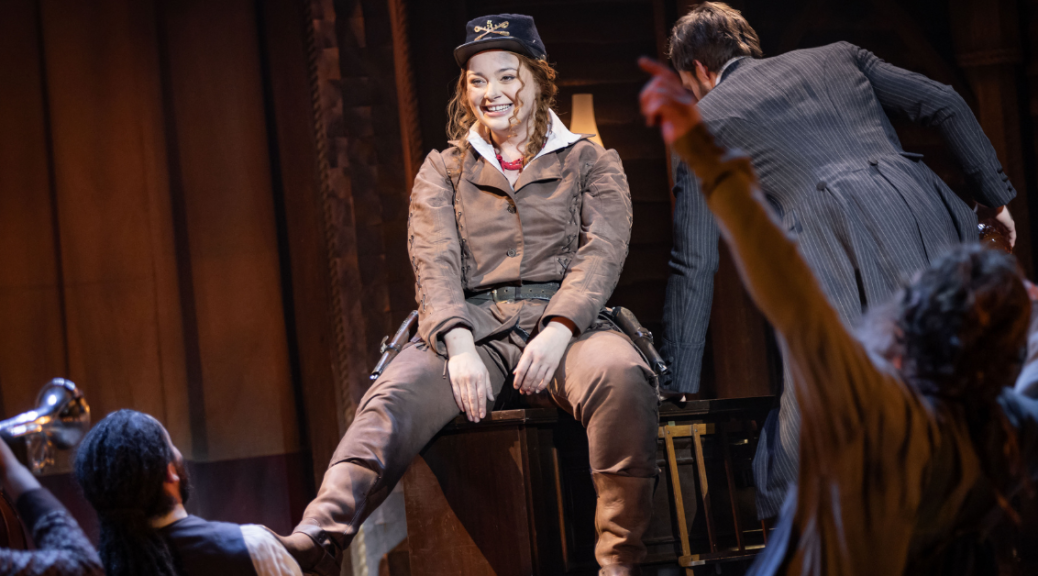
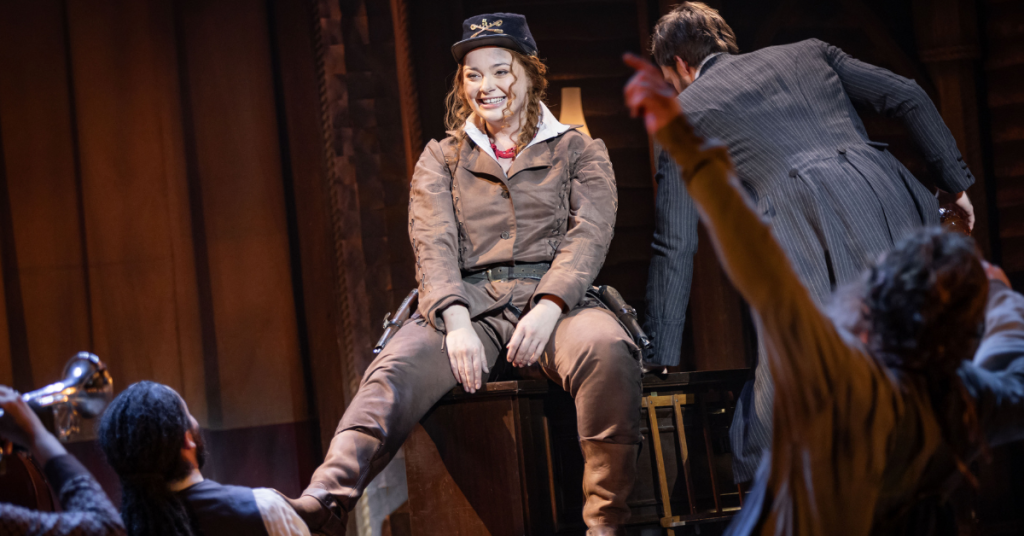
Carrie Hope Fletcher is great as Calamity, commanding the stage with her presence.  She is ably supported by Seren Sandham-Davies as Katie, Samuel Holmes as Francis and an understudy for Bill, Thomas Wolstenholme. The company provided plenty of warmth, energy, optimism and banter as the story unfolds into a quick placed drama.  Scene changes were effected by moving props and this required some imagination, not least in the formation of a stage coach by the cast.  The music gave a hoe down feel to the show and there were plenty of catchy numbers to go along with the iconic ‘whip crack away’ Deadwood stage song making this a feel good show.

There is some depth to this story.  Bill Hickok repeatedly wants Calam to be more like a girl, but she is more comfortable wearing buckskin leathers, carrying a six gun and earning the right to be accepted in this hostile culture on her own merit.  However, most of her compatriots drool over the suggestive temptress that is Adelaid Adams.  Herein is a spectrum of femininity and surely there is a place for all along that line.  A woman should be free to be who she wants to be.  Men need not be threatened by a physically strong, aggressive woman and should not expect a woman’s best qualities to lie in her appearance.  Not a bad lesson to come from a good nights entertainment.  

In one sense the story is a throwback to watching Rawhide or the Virginian on TV for those of us with long memories.  We now know that the entertainment industry has sanitised and romanticised stories of the wild west.  The reality was more raw and brutal than we have been led to expect, not least to the surrounding Native American Indian cultures that were often dispossessed quite violently.  However, this is just a story based on the life of a remarkable individual and if a story is a good one, it is worth telling and by the audience reaction, this musical is certainly that.  A raucous, enthusiastic reception was given to a deserving cast after a sparking show.

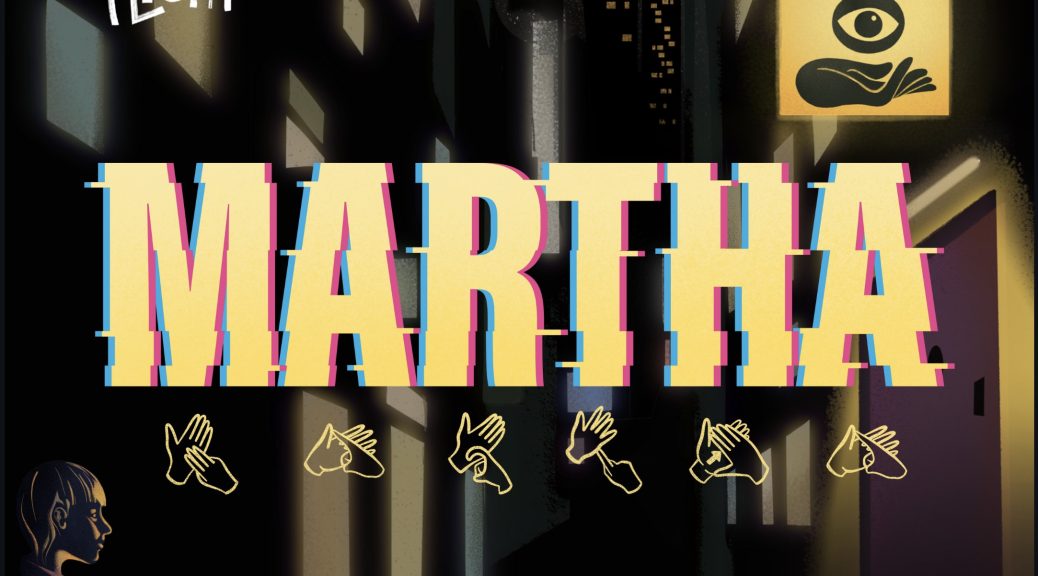
Martha – a review by Eva Marloes

 out of 5 stars (4 / 5)

Sweet, funny, and irreverent, Martha conquers the hearts of the public. Martha is a musical play about the marginalisation and repression of deaf people and the use of the sign language that mixes historical episodes with a future dystopia.

The play starts in a retro-looking cabaret club from an undefined era which echoes Berlin during the Weimer Republic as well as Chicago in the prohibitionist era. It’s a clandestine burlesque club where deaf and British Sign Language (BSL) users perform. It is their work, their refuge, their home. In this, it reminded me of Edouard Molinaro’s beautiful and sensitive La Cage Aux Folle.   

Martha is set in dystopian Britain 2055, where sign language is forbidden and deaf children are put through the ‘programme’, which forces different types of therapy in the hope of getting deaf people to speak. Sarah, played by Cherie Gordon, becomes part of the club ‘family’ by claiming to be a deaf person being pursued by the government. In reality, she is a secret agent whose mission is to identify the club and prosecute the people running it.

Sarah’s story of reconciliation with her deaf identity is interspersed with the burlesque acts of the club’s artists. They recount historical deaf figures, such as Princess Alice of Battenburg who sheltered Jews during WWII and Kitty O’Neil who was the stuntwoman for Wonder Woman and speed record breaker. 

The title Martha comes from Martha’s Vineyard, an island off the shore of Cape Cod in the US, which had a higher than usual deaf population and where the deaf and hearing inhabitants used sign language. Martha’s strong message is that of BSL as language, not just a means of access. 

Although the play begins with meta-theatre, by interacting with the audience and with Sarah as a member of the audience, this is lost as soon as Sarah joins the community. The ensemble does a good job at conveying BSL as language and the deaf community as a home, often a refuge from hearing people’s lack of understanding, from condescension, and from repression. 

For a play that deals with harrowing themes of child abduction, forced therapy, torture and killing, Martha is a little tame. The fun duo Duffy and Eben James are remarkable in their clowning abilities, a la Philippe Gaulier. The fun is not countered sufficiently by tragedy. The elements are there, however, and the public shares in Martha’s call for recognition of the full dignity of sign language and of deaf people.

Martha plays until the 21st of June at the Sherman Theatre, Cardiff (see details), then on the 25th and 26th of June at Pontio, Bangor (see details).

Review: An Inspector Calls, Venue Cymru, Llandudno by Richard Evans

Venue Cymru, Llandudno, May 13th – 17th 2025 and touring

 out of 5 stars (4.5 / 5)

A PW production. Directed by Stephen Daltry. Written by J. B. Priestley

“Send not for whom the bell tolls, it tolls for thee.”  John Donne, Meditations.

J. B. Priestley’s play is now regarded as a 20th Century classic and rightly so.  Especially since Stephen Daltry’s revival in the 1990’s it has become a staple in so many English Literature curriculums up and down the country. Would this production live up to the play’s reputation?   Tonight, it certainly did.

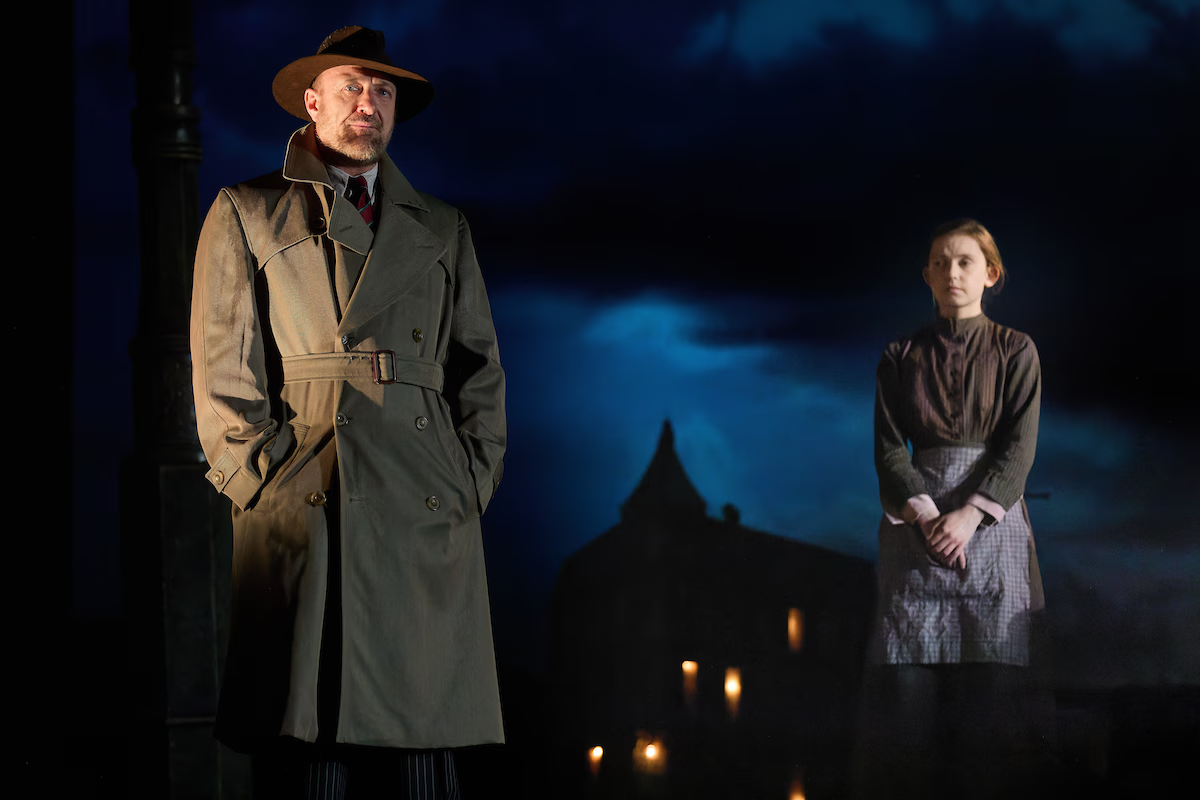
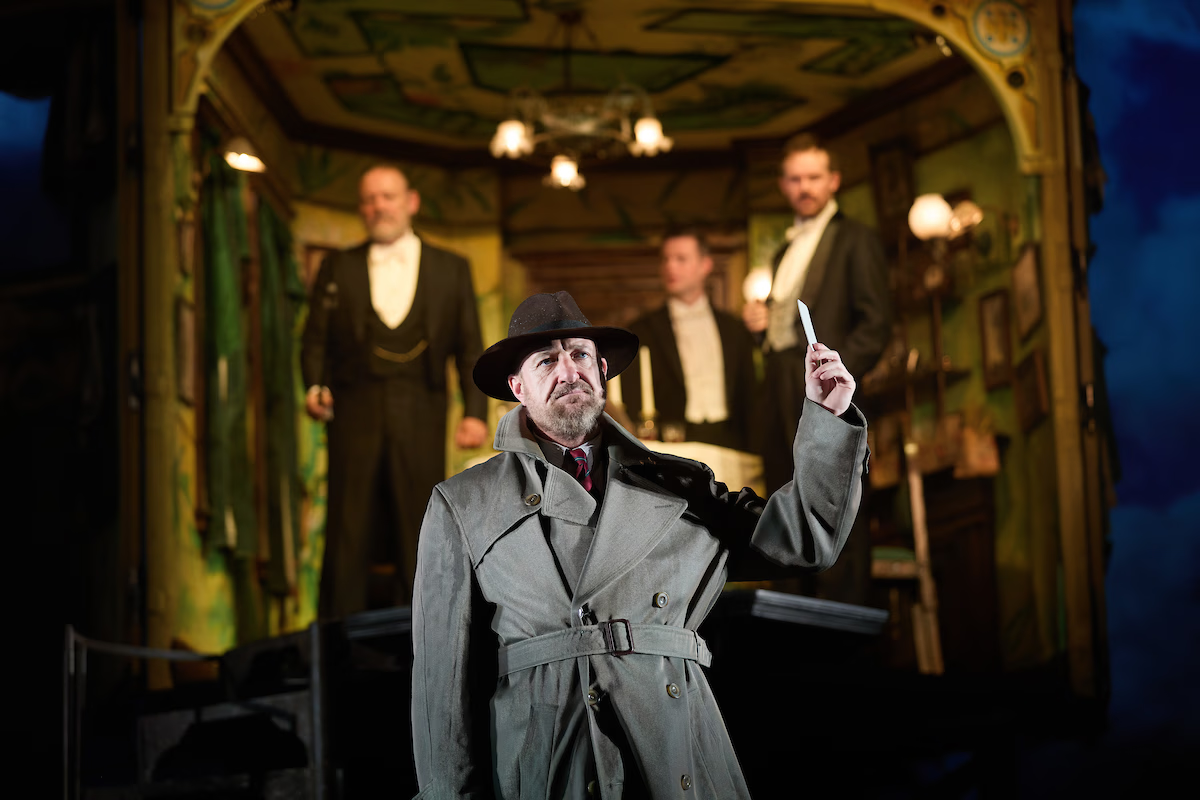
The action focuses on the highly successful Birling family who are celebrating the betrothal of their daughter to the son of a rival business firm.  As this takes place, an inspector knocks at the door and informs them of the death of a woman, Eva Smith, from a painful suicide.  The inspector in turn interrogates every member of the Birling family and the fiancé to uncover their part in Eva’s demise, something that they had been unaware of and felt no responsibility for.  In a dramatic climax, the family understand that this inspector was a mysterious imposter and that there was no suicide so intend to carry on as usual, until they get a phone call informing them of the death of a woman through suicide and that an actual inspector is on his way to investigate. 

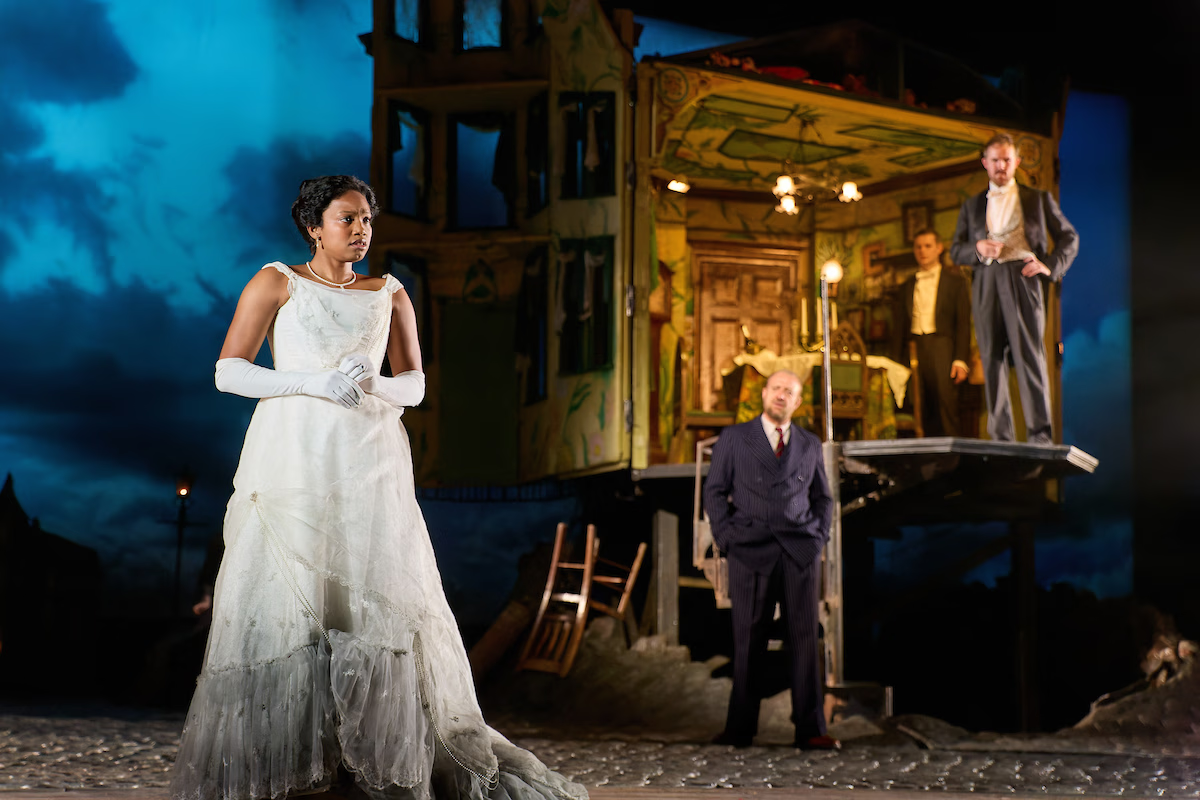
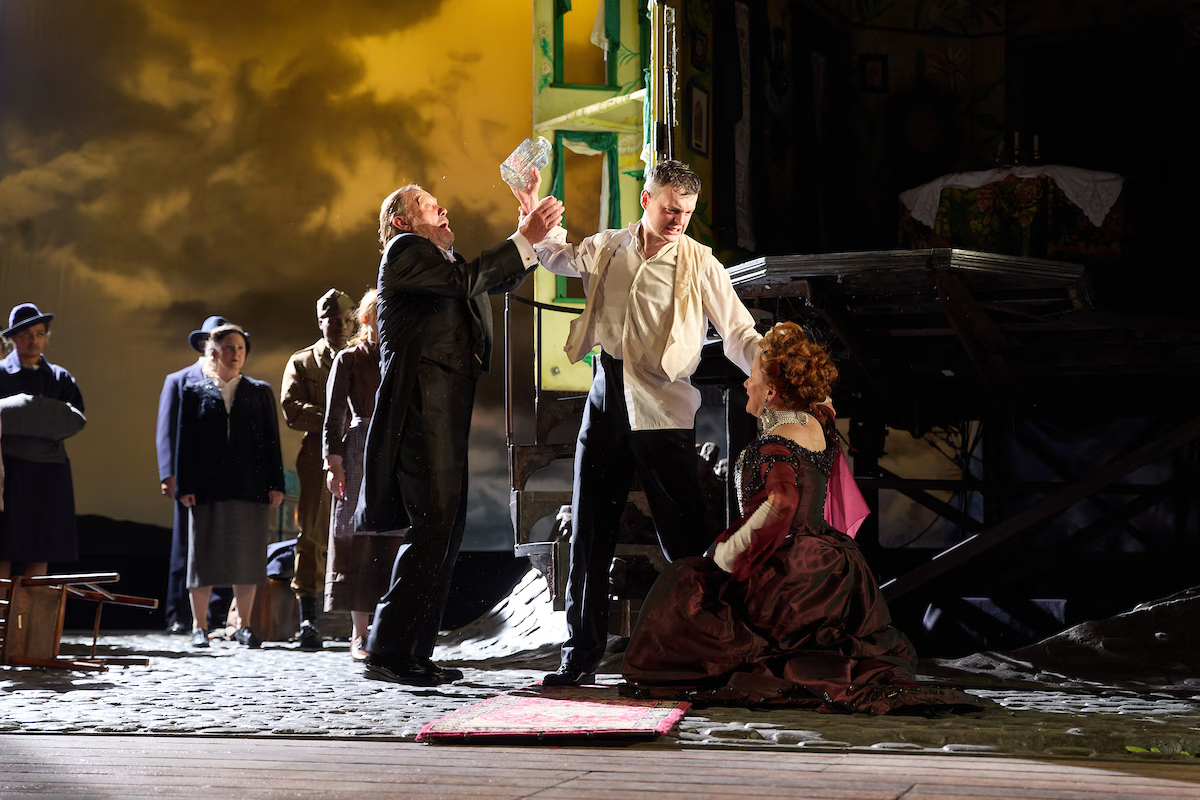
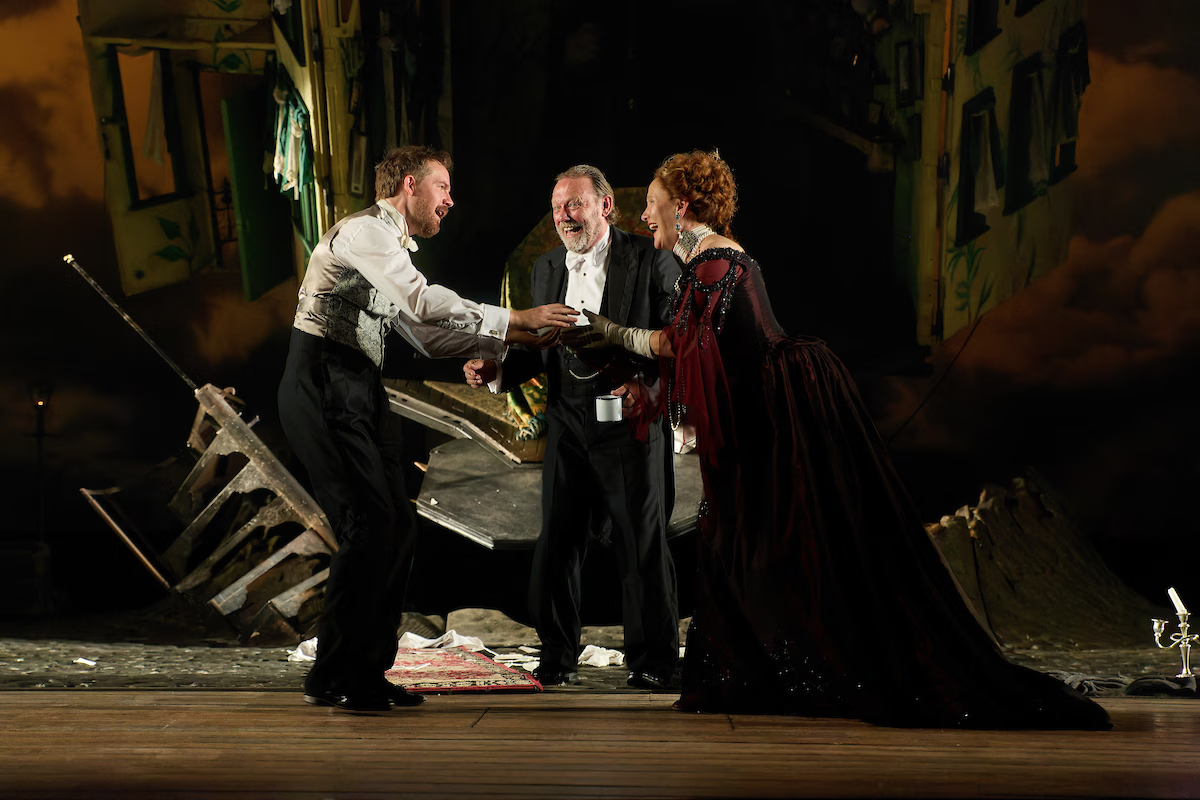
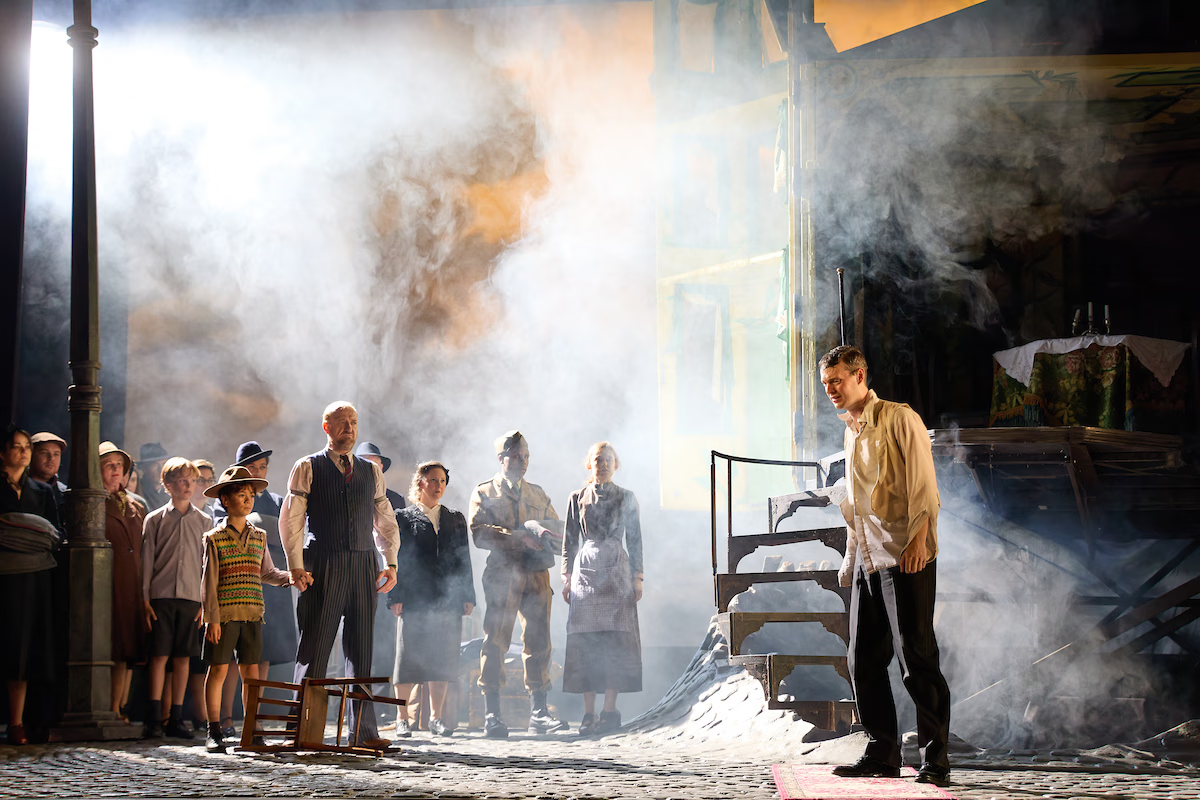
The cast communicated the powerful nature of this play really well.  Tim Treloar was excellent as the inspector and Leona Allen striking as Sheila.  However, in a play with much confrontation there were times when dialogue was lost as people spoke very quickly and the music while adding drama to the action could be too loud.  The set was effective, with the dining room of the family set above the stage.  When the family realises they will be disgraced by their callous treatment of Eva, the room collapses.  There is attention to detail.  When Mrs Birling walks from her house, a carpet is rolled out for her to walk on.  

The play has several layers of meaning, some obvious, others more subtle.  The most striking point is that we belong to a society and have a duty of care to a greater or lesser extent for each other.  A laudable ambition which is undermined by an inherent selfishness that we all seem to possess.  Less apparent is how the play attacks the hypocrisy of Victorian and Edwardian society and its attendant class system.  As the song “All things bright and beautiful” illustrates, ‘the rich man in his castle, the poor man at his gate’, a structure ordained by God.  Priestley’s socialist views reacted strongly against this idea.  

The play is regarded as a drawing room drama, and as such, it has waxed and wained in popularity as presentation fashions have changed in time.  However, the play has an enduring appeal and is a timely reminder of our sense of common humanity.  It is of course a hard hitting call to conscience to be mindful of the less privileged in society and ensure that they can access a decent lifestyle.  It may not be comfortable viewing, but it is compelling theatre with a highly pertinent point to make in our increasingly materialistic society.

Review: Calamity Jane, Wales Millennium Centre by Gemma Treharne-Foose 

 out of 5 stars (3 / 5)

A rootin’-tootin’, boot-scooting good time…

For anyone looking for a way to escape the horrors of the 2025 news cycle, may I recommend instead a little excursion to the prairies and saloon bar of Deadwood City in Goldrush-era USA? 

The 2025 touring production tweaks the 1961 stage play, based on the 1953 Hollywood smash musical movie featuring the iconic Doris Day and gives it a little bit of a “modern” touch. You may have memories watching Calamity during holidays, or maybe on a Sunday with your grandparents…you may not know *how* you know the “Whip-crack-away” song or the tune to “Just Blew in from the Windy City”, but even if you don’t remember the movie exactly, the 2025 musical will draw you in for its spectacle. From its cowboys and hoe-downs, to the the Americana bluegrass musicians and the vocal powerhouse that is Carrie Hope Fletcher, there are plenty of story, song and dance nuggets to keep you satiated. 

We meet Calamity, Wild Bill Hickock and a rag-tag ensemble of Deadwood City saloon-goers at the Watermill Theatre, HQ for the production’s story where Director/Choreographer Nick Winston and Director Nikolai Foster first imagined the world of Calamity in 2014. For this production, the production team have added a few extra songs and lost others synonymous with problematic representation or iconography. 

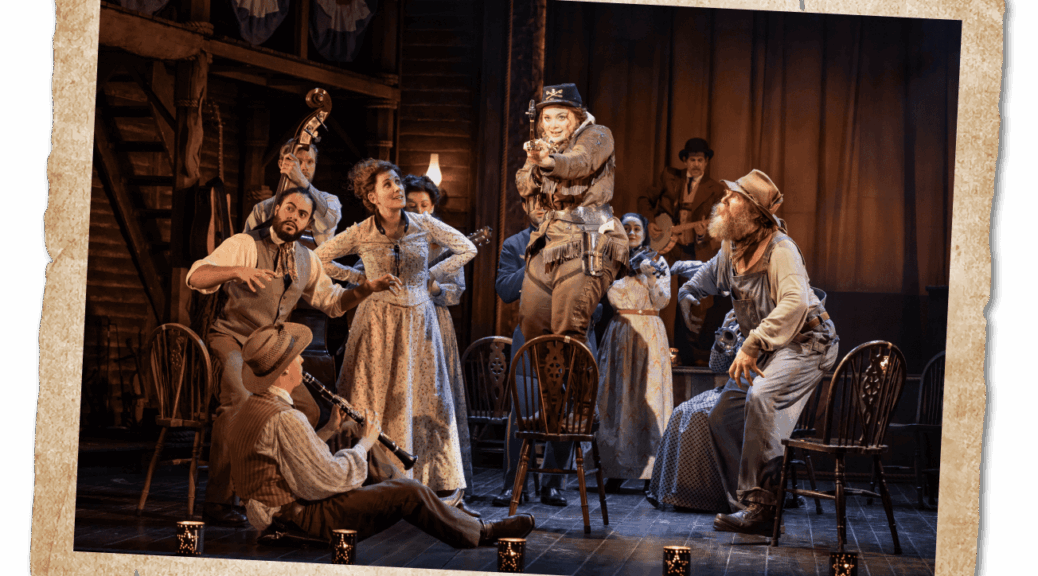
The production does well to navigate some of the awkwardness and “cringe” (to quote my daughter’s favourite phrase) of songs written in an era where men literally imagined the idea, wrote the story, the theme tunes and then staged and directed the show featuring predominantly white men. It’s a bit like watching Little House on the Prairie – it’s almost an absurd parody of the true harshnesses, shocking injustices and brutality of frontier life, but it sure was nice escaping to a fantasy for a few hours. I even enjoyed a song sung by Katie Brown (Seren Sandham-Davies) and Calamity about “A woman’s touch”, where they spruced up the homestead cabin with some tablecloths, patchwork curtains and dried flowers. No trad-wives here though, thankfully – Calamity is whip-smart and there is plenty of sass and energy from Vinny Coyle (playing Wild Bill) and the wonderful Samuel Holmes playing Francis Fryer. Holmes’ comedy chops and comic physicality were a real highlight throughout. 

There were some humorous queer-coded moments which the producers could have leaned into a little more during the scenes where Katie Brown moves in and “runs away” with Calamity Jane. It’s a little “nudge-nudge, wink-wink”, but at least this production has a little more diversity than the man-fest that was the original film. The musicians and ensemble cast mingled about freely providing pace and colour to the script, which at times fell a little flat here and there. Being set in the Wild West with a gaggle of blow-ins, the accents did wander a little “off-piste” at times, but anyone whose watched a production of Guys and Dolls will be familiar with accents oscillating between Noo Yoik and Surrey. It’s all good, clean fun and the cast were great sports and had a great rapport. Huge respect (or should I say Yee-Hawwww!) to Richard Lock for his bow-legged shuffling and toothless gurning as “Rattlesnake” – he really looked the part! 

Centering the entirety of the production in the same Saloon spot may have made sense, but I did find myself wanting to see more more travel, movement and visual interest in the wider set, which could perhaps provide more of a sense of place of the vast rolling plains and prairies where Calamity roamed. Her stagecoach excursions are brought to life by straddling the saloon pianos and chairs, spinning umbrellas, wheels and the two tapping coconut shells for horses hooves. It’s a nostalgic, good time romp through some of Hollywood’s most enduring musical classics and Carrie Hope Fletcher’s voice is truly beautiful. The production finished with an audience rendition of the Black Hills of Dekota, a hoedown reprise and joyous soft-shoe shuffling, spins (and – spoiler alert – there’s a double wedding). Well it was written in 1953 don’t forget…

There’s plenty of life in Calamity Jane and her musical / film iterations – It would be wonderful to see a Hollywood biopic of the real Calamity. Her letters and diary to her and Wild Bill’s daughter Janey in the 1800s were found to contain a true glimpse of her life and character. The songs only tell part of the story. But in the meantime, the stagecoach, Wild Bill and Calam will be in Cardiff til they “Whipcrack Away” on the March 15th. So if you’re fancying a hoe-down and a Sarsparilla, with the gang you’d better saddle up….

Calamity Jane at the WMC – Book here (closes 15th March)

Review: The Rocky Horror Show, Venue Cymru, Llandudno by Richard Evans

Venue Cymru, Llandudno, March 3rd – 8th 2025 and touring

 out of 5 stars (4.5 / 5)

Howard Panter for Trafalgar Theatre Productions, Mallory Factor for Hill Street Productions and Rupert Gavin

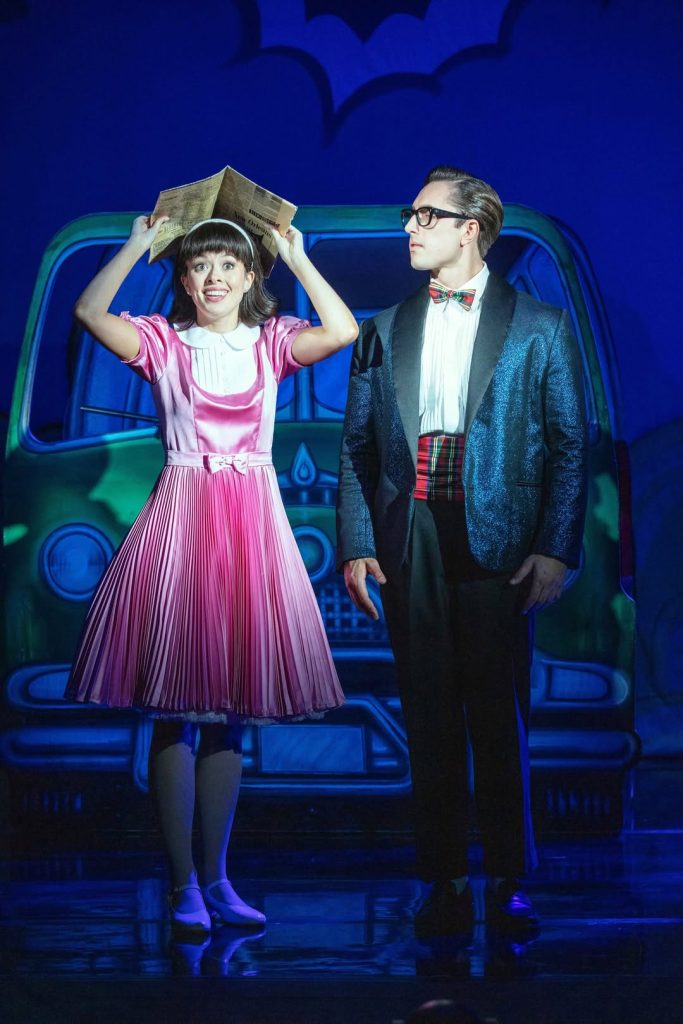
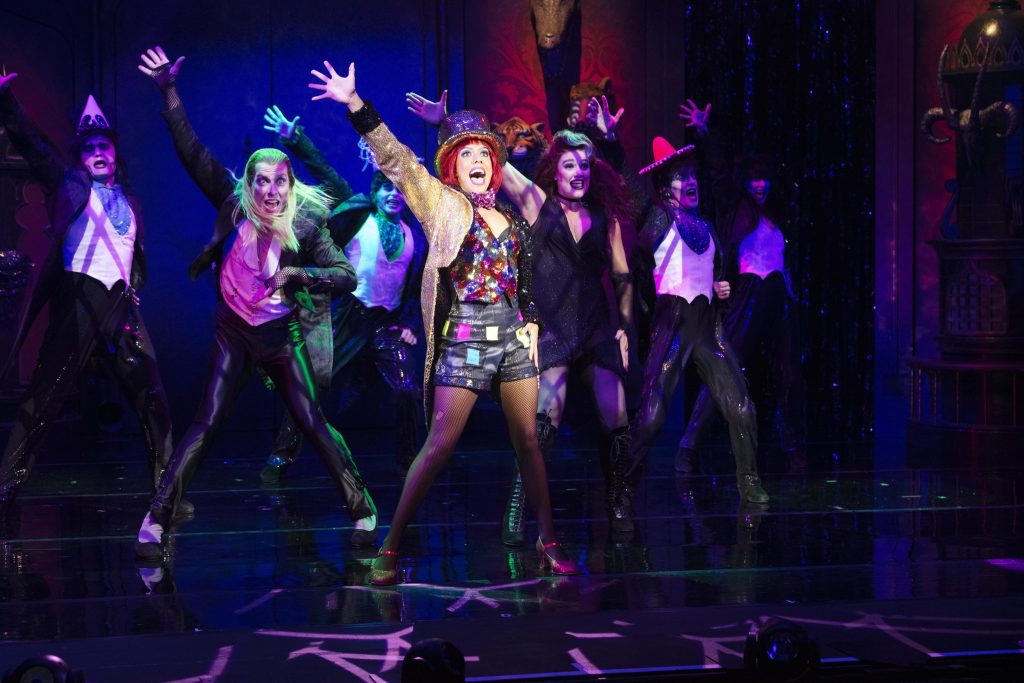
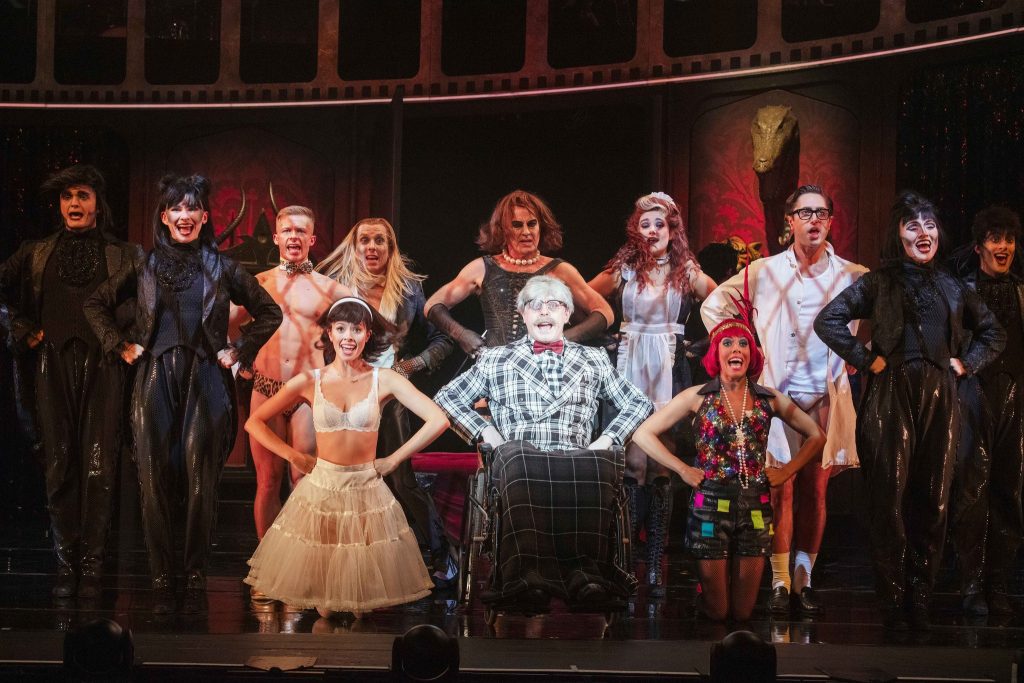
The Rocky Horror Show has come a long way since it debuted upstairs in the Royal Court theatre in a 10.30 showing in an auditorium seating 60 people.  What is it about the show that gives it a lasting appeal?  Certainly there is a prevailing sense of fun throughout and the music is upbeat and energetic with the signature song, Time Warp having a timeless appeal.  However it is the subversive nature of the story that has seen the show gain its cult following. 

The storyline in one sense is a sideline.  It was never meant to be profound, rather it was a spoof on a long line of 1950’s B-movies that had a sci-fi theme.  A sweet couple having just got engaged break down in their car and seek help from Frank n Furters castle in the distance.  There they enter an alternative reality that shakes their perception of normality to the core.  Of course some of the inhabitants are aliens who take revenge on Frank n Furter who is guilty of having a profligate lifestyle and betraying some of his loyal servants. 

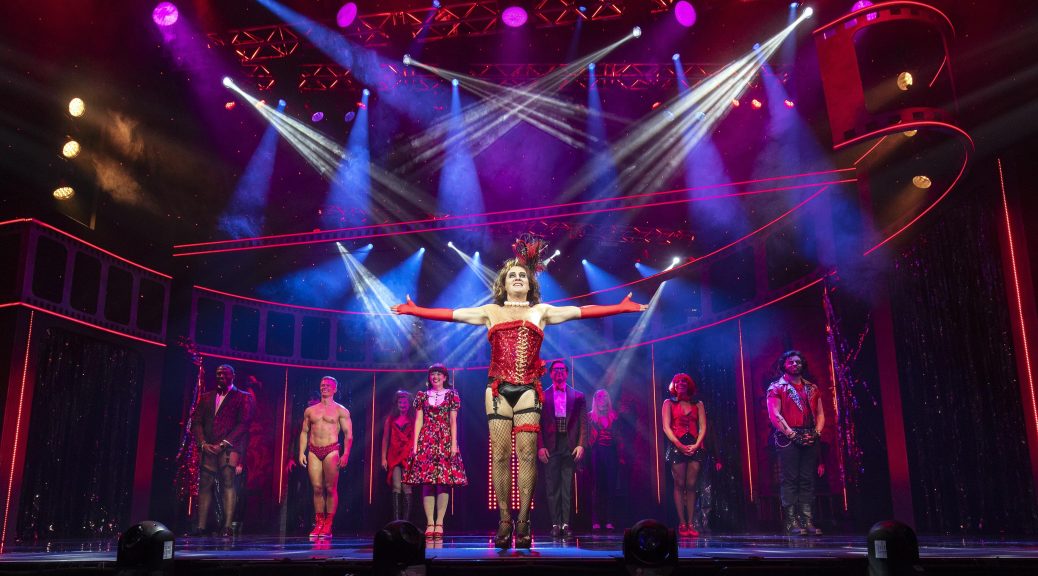
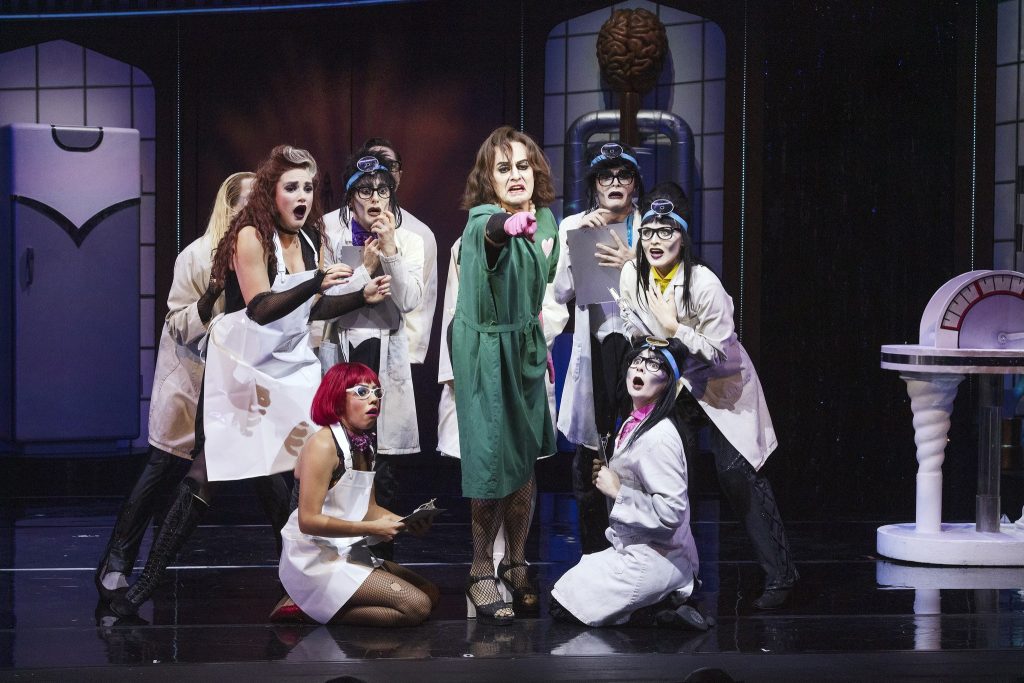
The cast were well drilled, enthusiastic and energetic.  Adam Strong as Frank n Furter was suitably commanding and was ably supported by the sinister Job Greuter as Riff Raff and the ebullient Jayme-Lee Zanoncelli as Columbia.  The choreography was slick and well rehearsed while the set was simple, adaptable and effective.   

The show is narrated by Joe McFadden who was excellent in dealing with the interruptions from the audience.  These have obviously become part of the tradition of the show as they were not only tolerated but expected.  Some of these were funny, sometimes the interruptions were intrusive.  Either way, McFadden handled them well

First produced in 1973, the play picks up on the attitudes that exploded in Britain with the advent of the permissive society.  This was the era of glam rock where people played around with traditional male and female norms and were less afraid of being openly indulgent in their sexual appetites.  To quote, ‘Give yourself over to absolute pleasure’.  Can people really do that without consequence?

Writer Richard O’Brien never expected it to last but shortly after it bombed on Broadway for not being high brow enough, he heard that it was getting cult following on campuses across the USA where students were attending a performance in costume.  A new trend was formed that allowed those of us who were normally constrained by their career driven, family orientated lifestyles could throw off those shackles and go wild for the evening.  

Now that the show is over 50 years old, does it retain its cutting edge?  It is still subversive but has to be slightly more explicit to give that shock factor.  There is also a disconnect.  Having started off with such humble origins, the glitz and glamour of a West End style show seems slightly out of place.  However, that does not detract from what remains a fun filled, light hearted and still slightly shocking show.

Review: HAIRSPRAY 30.7.24 WALES MILLENIUM CENTRE Patrick Downes

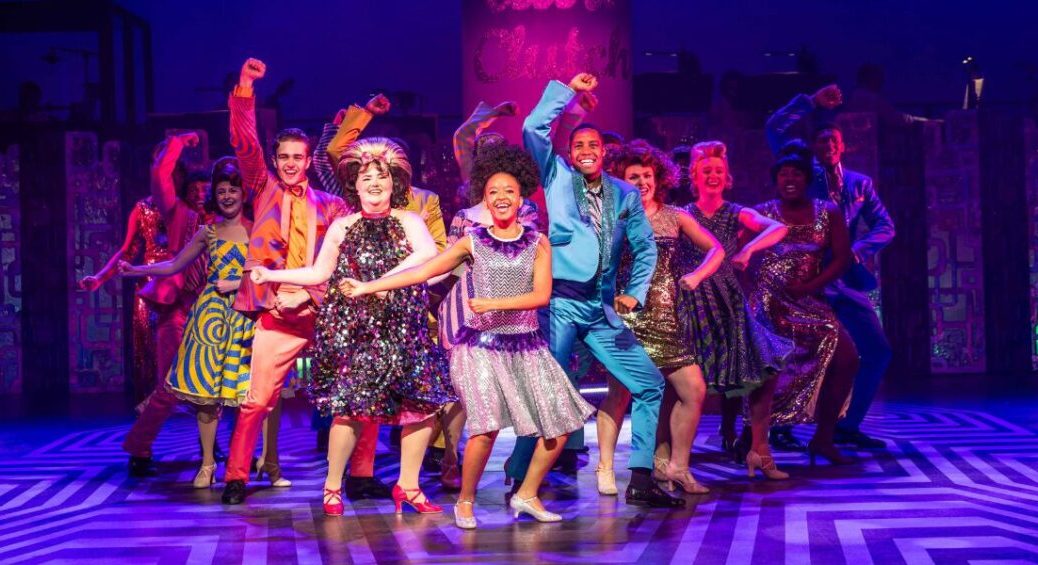
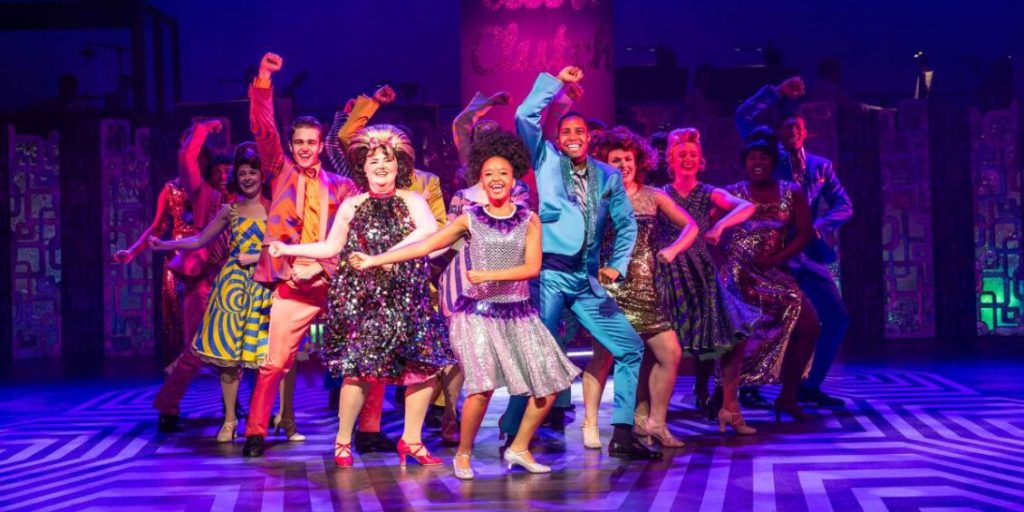
Hairspray at the Wales Millennium Centre in Cardiff was an absolute whirlwind of fun, energy, and infectious joy. This production captured the essence of the 60s with a vibrant, colourful, and over-the-top spectacle that left the audience cheering and dancing in their seats.

From the moment the curtain rises, you’re transported to Baltimore, where the rhythm of the music and the infectious enthusiasm of the cast immediately grab your attention. The iconic songs, including “Good Morning Baltimore,” “Welcome to the 60s,” and the show-stopping finale “You Can’t Stop the Beat,” were delivered with powerhouse vocals and impeccable choreography.

The heart of the show, of course, is Tracy Turnblad, played by Alexandra Emmerson-Kirby in her professional debut. She was just sensational. Her incredible voice made her the perfect embodiment of this beloved character. The supporting cast was equally impressive, with standout performances from Edna Turnblad (Neil Hurst) and Wilbur (Dermot Canavan) certainly stole the show with “(You’re) Timeless to me”.  Michelle Ndegwa also made her professional debut in the show as Motormouth Maybelle having been selected from more than 3,000 people who applied to the open auditions in November last year.  “I know where I’ve been” is such an emotional number and to perform it in the way Michelle did, wow!

The set design was simple but visually stunning, capturing the spirit of the era with colourful projected backdrops and eye-catching costumes. Most touring shows follow the same process – and Hairspray delivered. The choreography was energetic and fun, with the ensemble dancers bringing a high level of skill. The show start seemed a little laboured and it probably wasn’t till the second number things started to gel.

I’ve said that I believe Hairspray has one of the most incredible show finales – even better than Les Misérables – granted no one dies in Hairspray and it would be like comparing a Mini with a Porsche. But it certainly leaves you with a smile on your face and a spring in your step. It’s a feel-good show that’s the perfect antidote to a bad hair day!

Patrick Downes

Requiem, a review by Eva Marloes

 out of 5 stars (4.5 / 5)

Dance choreographer Karol Cysewski has successfully designed an immersive experience through dance and theatre that conveys the unequal healthcare treatment people with learning disabilities receive, which results in thousands of avoidable deaths every year. (My interview with Cysewski is available here.) 

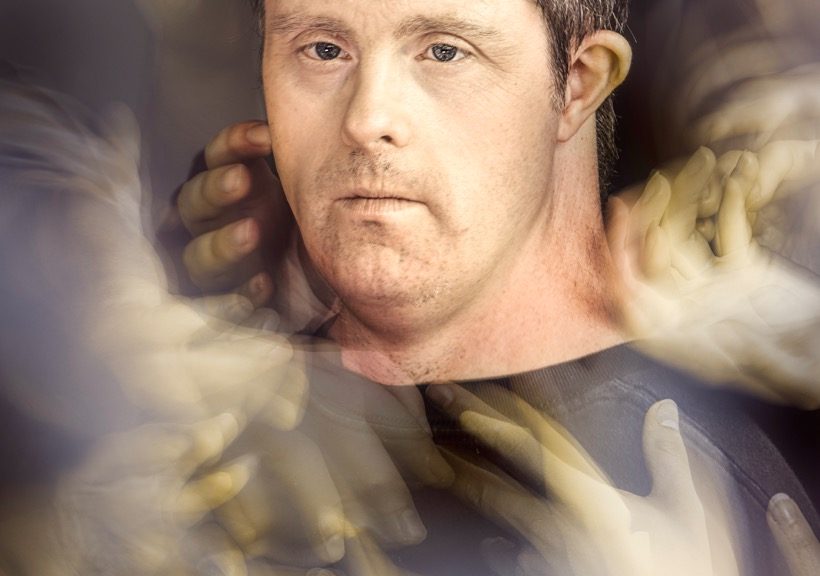
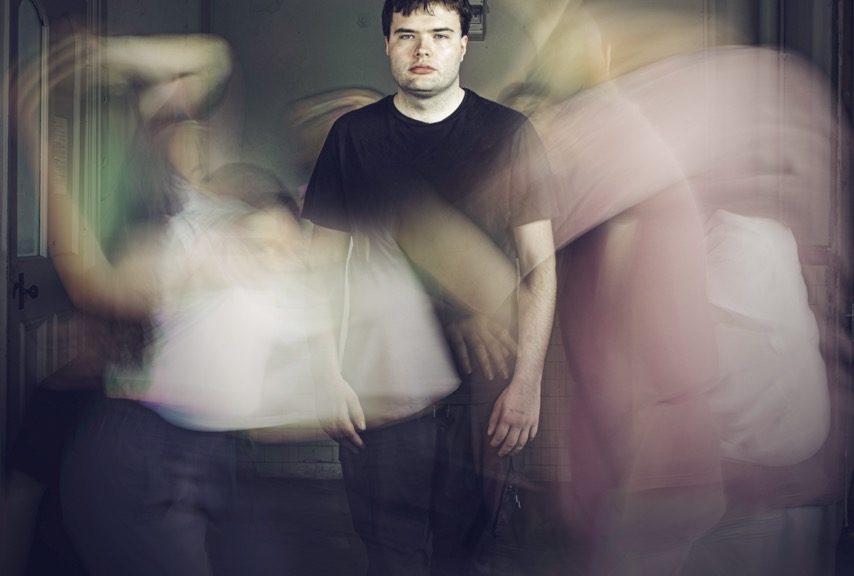
The strength of the show comes from the careful assembling of different elements to create powerful tableaux of patients who are examined, manipulated, neglected. At the centre of the scene and yet unheard. The actors from Hijinx Theatre add veracity to it. Aaron Relf is neurodivergent, Andrew Tadd and Gareth Clark have Down syndrome. Relf conveys a subtle anguish, Tadd has a strong presence on the scene, and Clark plays with the dancers with ease.

The skillful dancing by Gaia Cicolani, Kseniia Fedorovykh, and Harlan Rust employs a range of movements, gentle, precise, then deforming of faces and forms, to frantic and convulsive. The excellent sound design by Sion Orgon plays a key role in creating dark and haunting scenes where dancers and actors come together and apart.

Very powerful are also the set design by Ruby Brown and the lighting design by Sophie Moore immersing us in an uncomfortable mist, where pools of light and hospital curtains play alongside actors, dancers, and sound. The curtains get opened and closed to show us the pain, to cover or cover up the neglect, to signify death.

Yet the show is not perfect, largely due to a didactic and weak text. Most might find this to be a minor flaw, yet I believe it is an element that detracts from the power of the piece and that can be reviewed. The text is too wordy lacking poignancy. Numbers and statistics paint a general picture devoid of the personal concrete experience of a character. Art conveys universal truths through the particular experience of characters.  

Paradoxically, as someone who has worked in the third and public sector, I know how  important it is to ensure the voice of disabled people is included in reports and campaigning material through quotes or interviews. The medical and social context for the show could have been dealt with in the programme or in a prologue. The weak text makes the show more haunting than moving, but well worth watching.

An interview with Karol Cysewski, choreographer of Requiem, by Eva Marloes

Ineluctable part of life, death comes to us all. Yet, many deaths are premature and avoidable. People with learning disability are much more likely to die from an avoidable cause. The signs are missed, people are ignored, neglected, because they cannot speak, they cannot communicate their discomfort, pain, or even just hunger and thirst. They die not because of their disability, but because our healthcare system is not inclusive. 

According to the 2022 Learning Disabilities Mortality Review (LeDeR), 42% of deaths of people with a learning disability were avoidable. Dance choreographer Karol Cysewski tells their story in Requiem, an immersive dance-theatre performance in collaboration with Hijinx Theatre.

I talk to Cysewski in the Seligman Studio at Chapter, set up with hospital beds and curtains. He tells me he wants to engage the audience and make them think about the unequal treatment people with learning disabilities receive. It is often, says Cysewski, the result of “somebody just didn’t think about somebody else. They were too busy and had no imagination.”

A nurse finishing their shift not thinking that the nurse coming in the next shift doesn’t know the specific needs of the patient. “They don’t know how to say ‘I’m thirsty,’ she’s busy and she’s not imaginative enough to imagine that that might happen.” That’s all it takes. Being attentive.

Being attentive is what Cysewski has been doing while teaching at Hijinx Theatre. In his work with people with learning disabilities, he has learned to treat them as people first. 

“Slow down, if you need,” says Cysewski, “and give them achievable tasks. That applies to anyone. Treating people as people first not worrying about their disability. That would apply to anyone.” 

In doing the show, Cysewski has learned about the skills and strengths of each individual actor and what they find more challenging. That might include going to lie on the bed. 

Talking about one particular actor,  Cysewski says, “I’m learning how to give time, how to take time and space for him to learn, because eventually he learns, but he needs more repetition and continuity. I’m learning not to change (what to do), give them different ideas during rehearsals.”

I ask Cysewski what is like for the Hijinx actors to work with professional dancers. he tells me that “working with professional dancers challenges the actors more and it has a better effect.” For instance, they are more comfortable leaning against a professional dancer than another actor. “It makes them look like they’re trained dancers.”

There’s still a long way to go for disabled people to be fully included. Much of the work lies in training healthcare and social care staff in how to communicate effectively with people with learning disabilities.

Requiem uses light, sound, movement, but also smell to stimulate the senses of the audience and invite them to think about how lack of inclusivity leads to avoidable deaths. The message of Requiem is one of compassion. Not in the sense of feeling for sorry for the person, but to acknowledge the dignity of the human being in front of us.

Requiem opens on the 4th of July at Chapter Arts Centre. For tickets, see Chapter.

Review: The Wizard of Oz, Venue Cymru by Richard Evans

Venue Cymru, Llandudno March 5th – 9th 2024, Wales Millennium Centre, Cardiff July 23-28th and touring

 out of 5 stars (4.5 / 5)

Produced by Michael Harrison and Gavin Karin Productions. By arrangement with the Really Useful Group Limited. Adapted by Andrew Lloyd Weber from the 1939 Motion Picture.  Book by L. Frank Baum

Somewhere over the rainbow… in a land that I heard of once in a lullaby

Why has this film and subsequent musical retained its attraction?  In the preface to his book, L. Frank Baum describes the book as a modernised fairy tale in which the wonderment and joy are retained and the heartaches and nightmares are left out.  It is this fantasy and escapism that has proved enduring, for the same reason, Star Wars has retained its appeal. 

The storyline starts with a petulant Dorothy who feels a common teen angst where she feels neglected.  On running away, she is transported to a fantasy land and seen as a hero for accidentally killing the wicked witch of the east.  She then embarks on a journey to Oz, to see the wizard and gain the means to go home.  She encounters various characters and makes firm friends with the brainless scarecrow, heartless tin man and cowardly lion.  In order to earn her passage home and to find respectively a brain, a heart and some courage, the intrepid four are sent on an arduous task, to bring the broomstick to the wizard of the wicked witch of the west.  

This story is well known and ranks among many peoples favourites so it is a challenge to bring it to the stage once again in a fresh way.  This production adds a bit of glitz and glamour to do this, the props are minimalistic, but the music and video backdrop add plenty of pizazz to proceedings. Some of the visuals are stunning, notably the tornado scene which was highly effective, and in general they are used imaginatively to set the scene and augment the action.  

The cast have a couple of celebrity names, Gary Wilmot gives an assured performance as Professor Marvel and the Wizard while The Vivienne, winner of the first series of Ru Paul’s drag race makes a threatening, devious Wicked Witch of the West.  However, the show is carried by Dorothy, played by Aviva Tulley.  She made ‘Somewhere over the rainbow’, the signature song, her own and was a lively presence throughout.  The supporting cast were energetic and committed, making this a fast paced, joyful experience.  

The musical is faithful to the original story and incorporates most of the favourite songs from the 1939 film as well as some more contemporary numbers from its recent revival.  However, the production lacks the simplicity and innocence of the film, replacing it with the loud score and striking visuals.  Does is loose some of its allure in this process?  

There is plenty of enduring meaning here, not least, your heart, brain and courage are latent inside you.  Dorothy learns to appreciate home when she understands what she is missing.  But it is in joyful escapism that this story comes to life.  It is a colourful interlude from the mundane, gritty reality of life.  This may explain its appeal to marginalised groups in our society but there is enough here for anyone to identify with and makes this a warm, feel good experience that is well worth seeing.