Tag Archives: National Tour

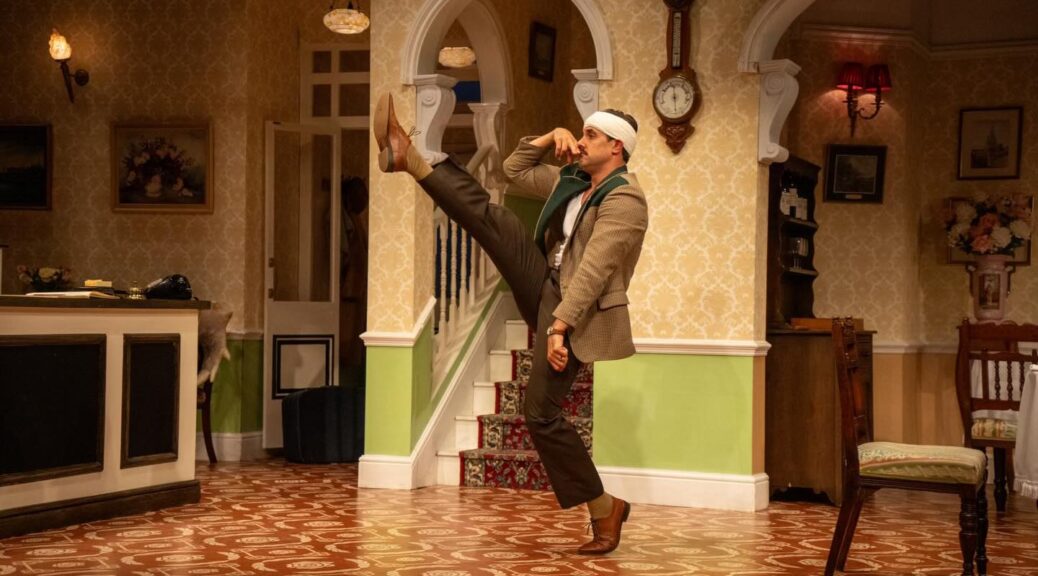
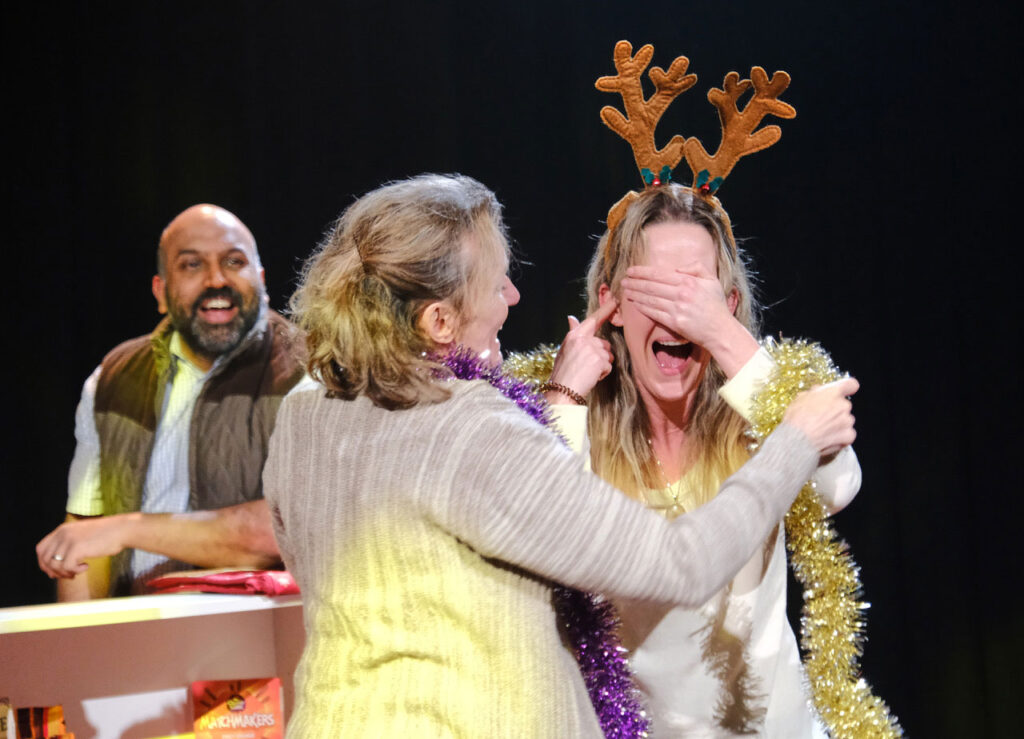
Review: Fawlty Towers the Play, Venue Cymru, Llandudno, by Richard Evans

Fawlty Towers Tour Ltd

Venue Cymru, Llandudno, May 5th-9th, also Cardiff, June 23-27

 out of 5 stars (4 / 5)

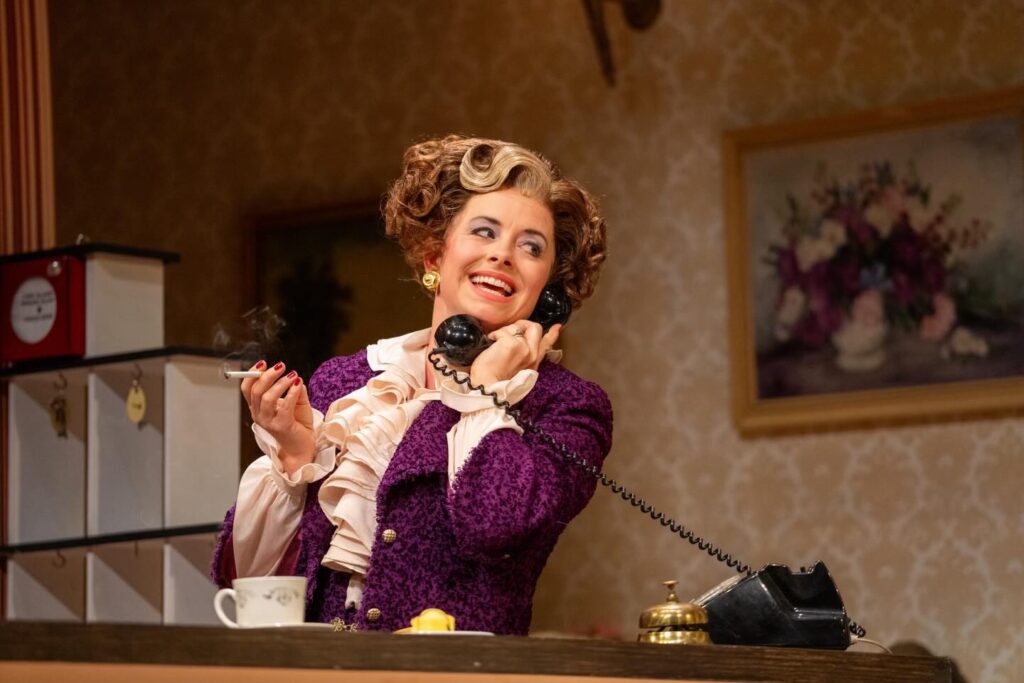
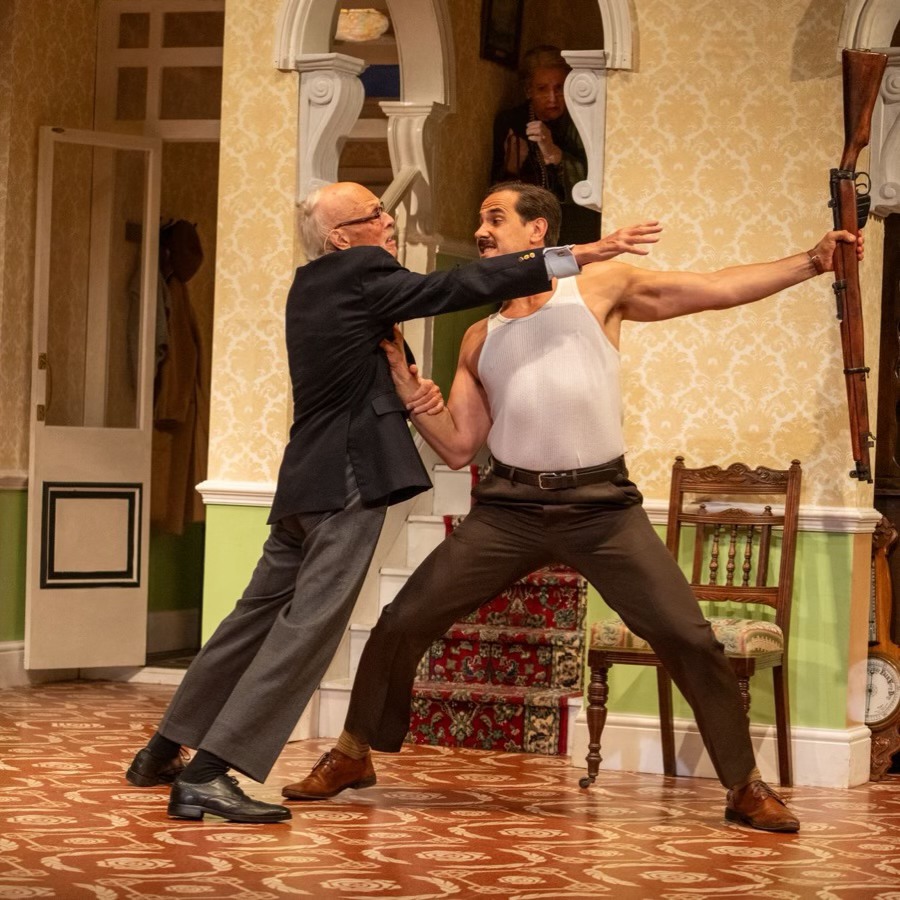
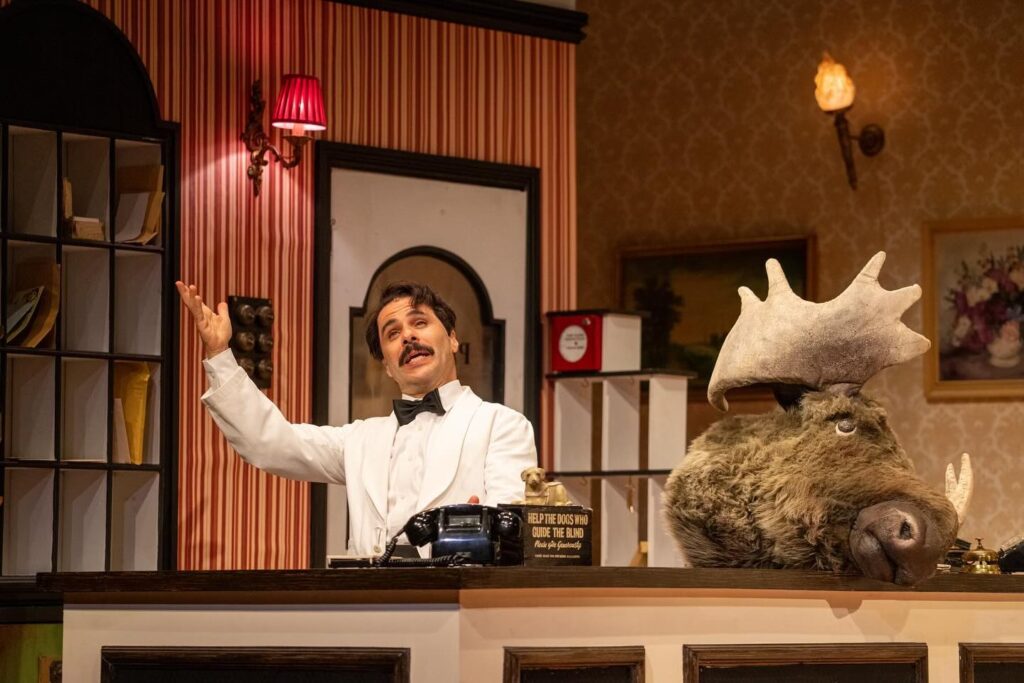
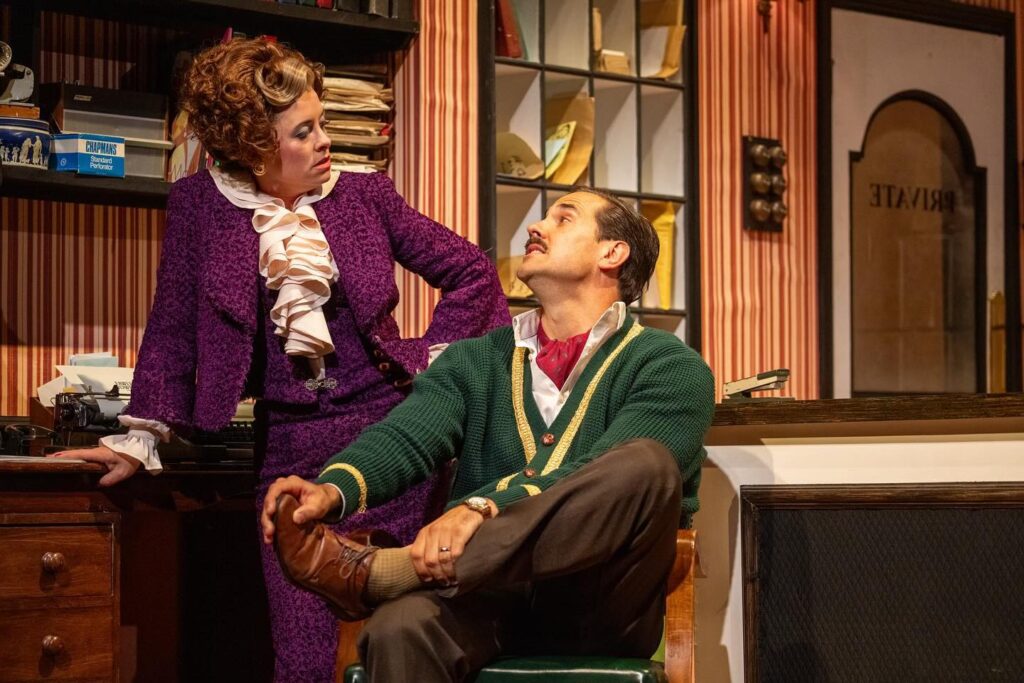
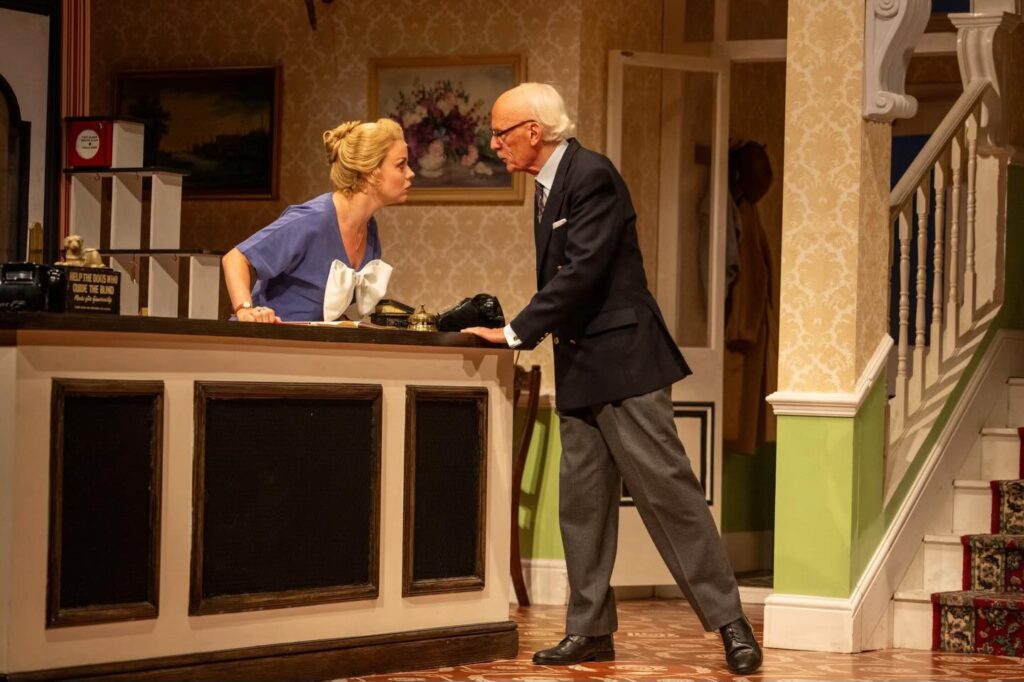
It is said that imitation is the sincerest form of flattery and this is what Fawlty Towers The Play sets out to do.  Take one of the most loved sitcoms from the 1970’s and reproduce it for the stage.  Adapted by John Cleese, star of the original series, and using material written by him and Connie Booth, exerts from several of the original twelve episodes were recreated in a two act play.   

There is no overall theme to the plot which suits the chaotic nature of the management of this hotel, Fawlty Towers or Flowery Twats as it was in the second half.  Rather, different characters and situations arise for Basil Fawlty to exhibit his outlandish behaviour.  The idea for the comedy arose from the fact that Cleese had to stay in a particular hotel in Torquay where the proprietor behaved extremely eccentrically and quite rudely, giving him and Booth plenty of ammunition for the two series.  The show is full of awkward moments, cringeworthy one liners and slapstick humour.  The lovely thing is that you know things are going to go wrong, but that sense of anticipation makes a gag worth the wait.

To mimic the original without the stars from the series entails considerable effort to adopt a highly recognisable persona.  The cast do this well, with Danny Bayne as Basil standing out.  His mannerisms, intonation and actions were a mirror of Cleese in his pomp even though there were times when his words could not be heard.  Likewise Mia Austen as Sybil did an excellent impersonation.  Hemi Yeroham captured the hapless, bumbling Manuel and the audience were often waiting for his well loved phrases.  Paul Nicholas also stood out as the Major, deaf, forgetful yet wonderfully willing and jovial.  

Some of the comedy looks dated now, being over 50 years old.  One wonders if the most iconic, memorable sketch, The Germans, would get past the censors in our more politically correct world today, but that would risk losing some comic genius, an episode that ranks among many peoples favourite of all time in.  It looked strange to see Sybil lighting a cigarette. In 1975, over half the adult population smoked, now that figure is less than 12%.  An advertising ban and no product placement has played its part in that.

Should the play have created new material?  It is definitely a trip down memory lane.  So many of the audience loved seeing these sketches played out and warmed to the cast as they threw out some well known lines.  People have bemoaned the fact that there were only ever 12 episodes created but in this instance, less is more.  Too many sitcoms carry on long past their sell by date.  This, when first produced was one of the finest comedies around, so the temptation to tamper with the stage show and add new material was resisted and in changing the format from TV to live action, opens it up to a new audience.

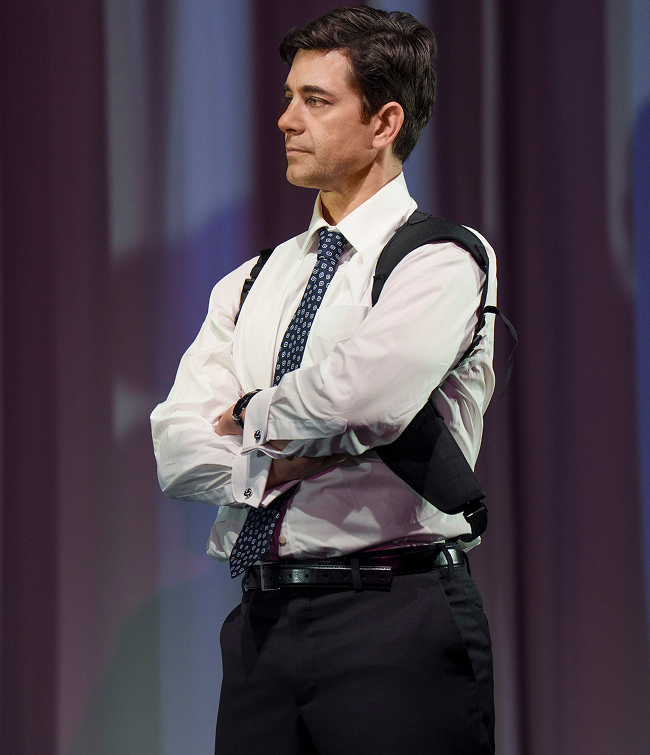
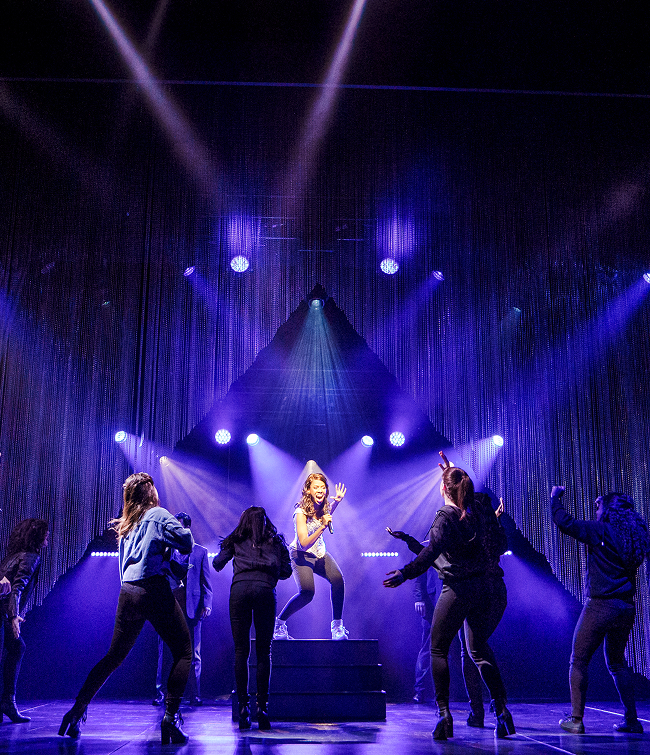
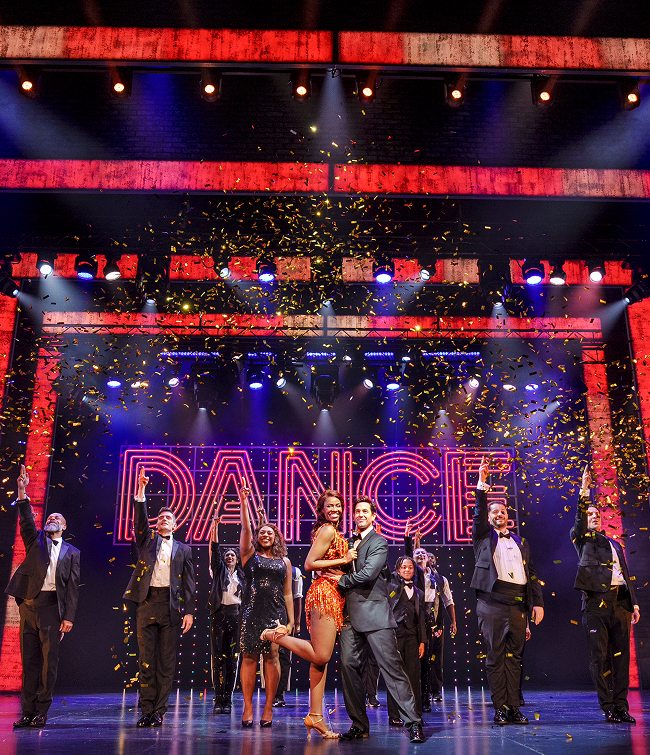
Review: Operation Mincemeat, Storyhouse, Chester by Richard Evans

Avalon production company in association with SpitLip

Storyhouse, Chester, May 4-9, 2026

 out of 5 stars (5 / 5)

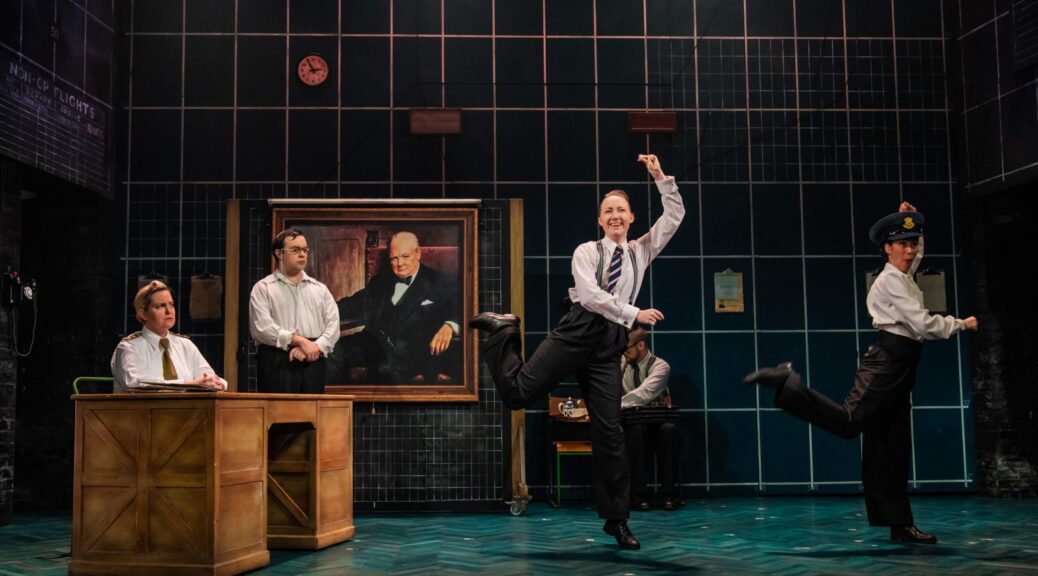
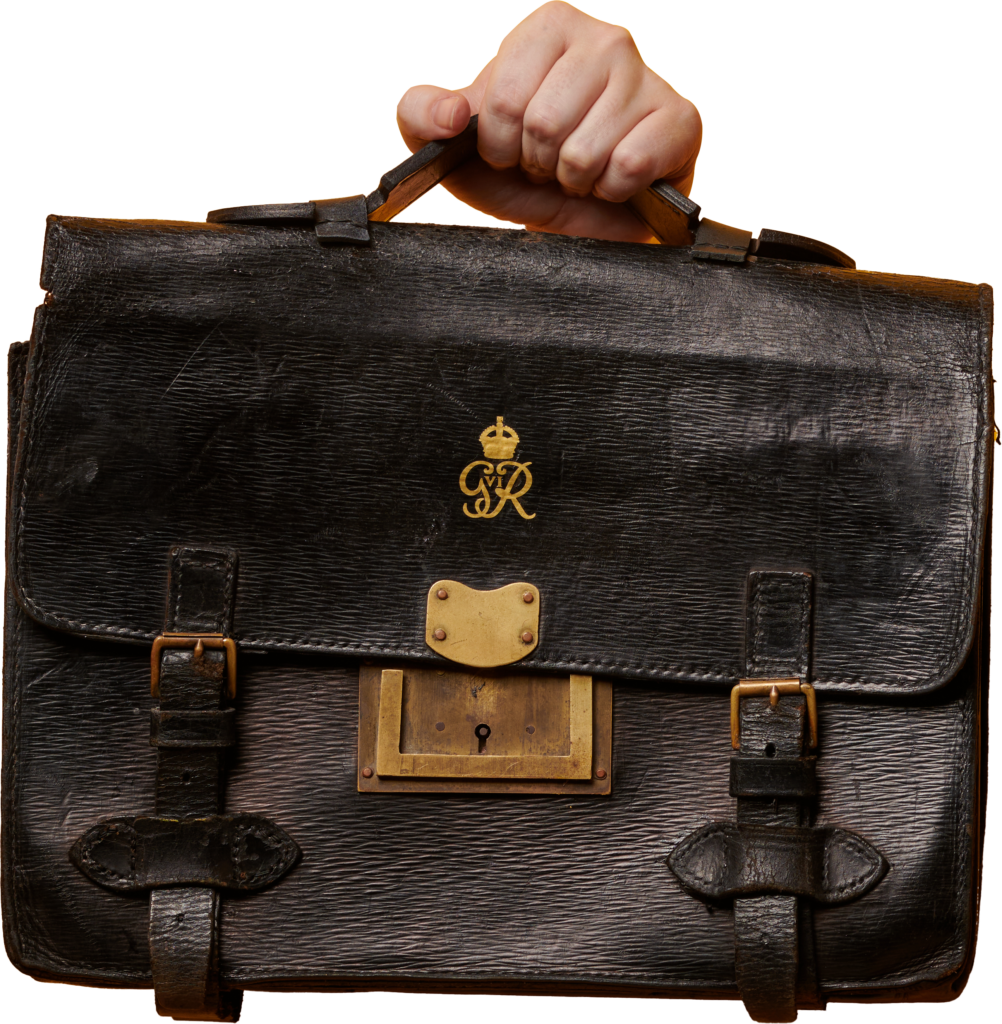
What a story!  The real life events of Operation Mincemeat are nothing short of remarkable, a MI5 plan in 1943 to divert Nazi forces from Sicily to Sardinia to enable an Allied invasion of Sicily to take place with little opposition.  90,000 soldiers were moved on the strength of phoney intelligence found in a briefcase of a downed RAF pilot who was ‘planted’ off the coast of Spain.  However, would this translate to the stage, especially in the form of a musical?  On the strength of the standing ovation, it certainly does.  

The musical follows the events of Operation Mincemeat closely, MI5 agents vie for proposing a plan to fool the Nazi defences, an outlandish plan is accepted and then enacted.  A local coroner alerted MI5 to a homeless man who had recently passed away whose body could be used to construct a false identity.  A considerable backstory was invented for this phantom pilot including love letters and realistic documentation.  The body is let go from a submarine in the Mediterranean and when it is washed up onshore, an autopsy is carried out and arrangements were made for the briefcase to fall into the hands of the Nazis.   

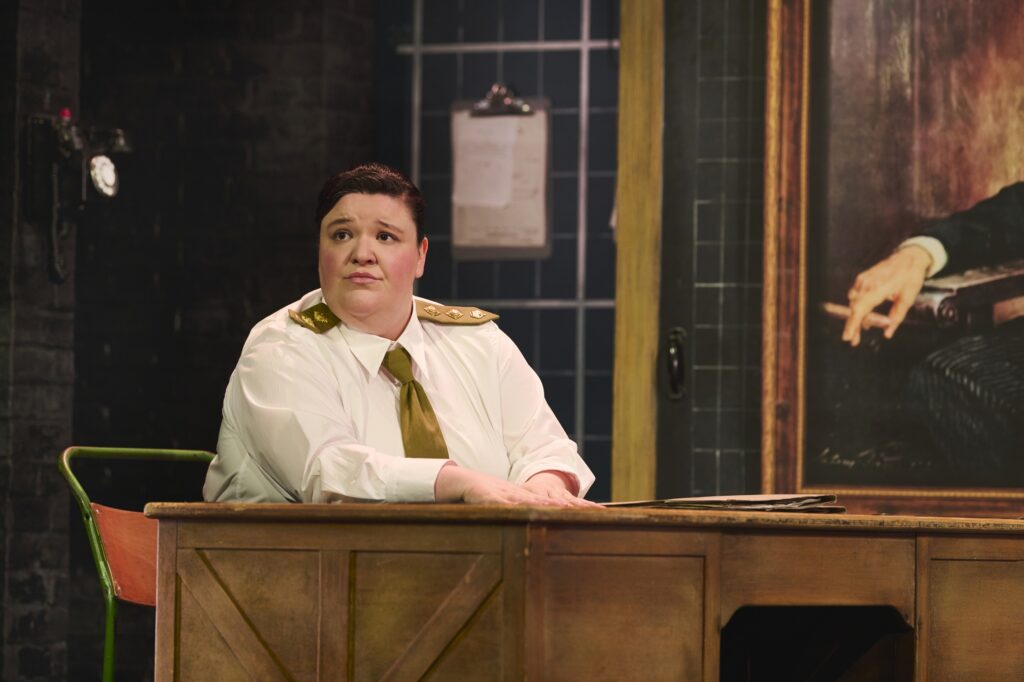
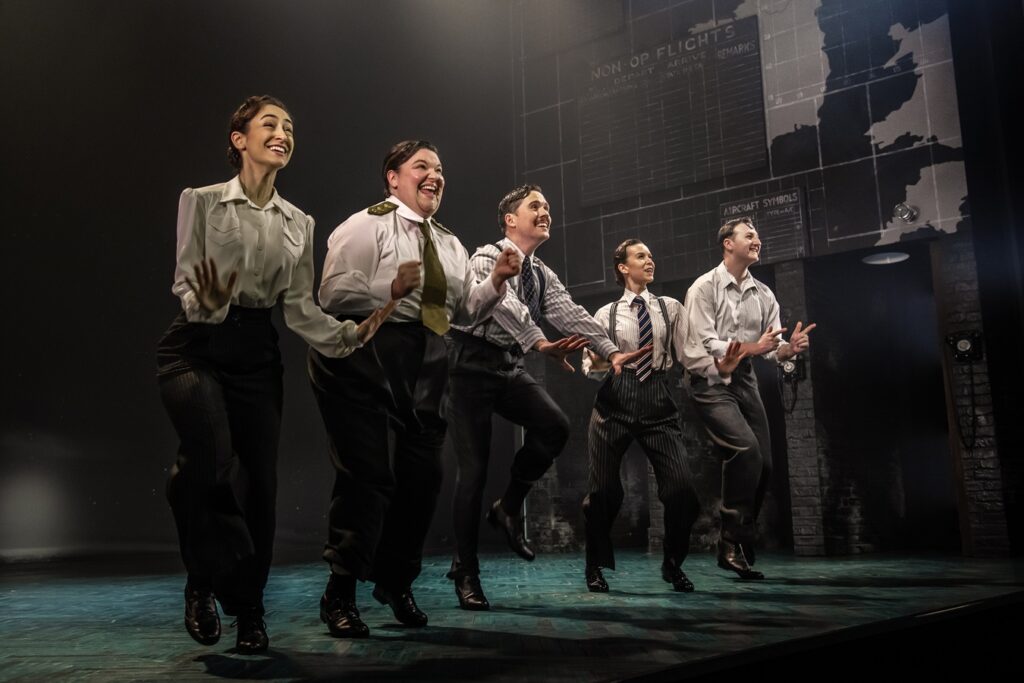
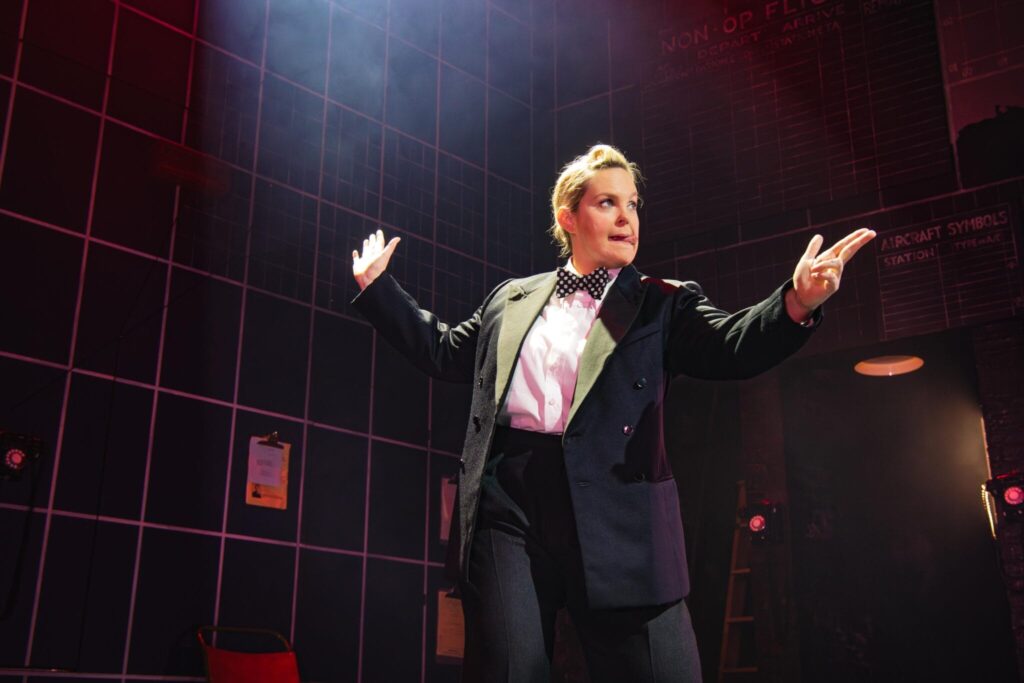
The cast of five all take multiple roles in a fast moving production and work together excellently as a team.  It was hard to pick out a stand out performer but Christian Andrews excelled as Hester Leggatt and others, a soft spoken more elderly secretary.  Georgina Hagen as Ewen Montagu was brash and bullish, full of pluck.  Sean Carey was a wonderfully bumbling Charles Cholmondeley who came up with the outrageous plan yet was too shy to promote it.  Jamie-Rose Monk was forthright as Johnny Bevan, the overseer of the project and Katy Ellis was assured as the put upon Jean Leslie, a talented spy but who was often overlooked because she was a woman. 

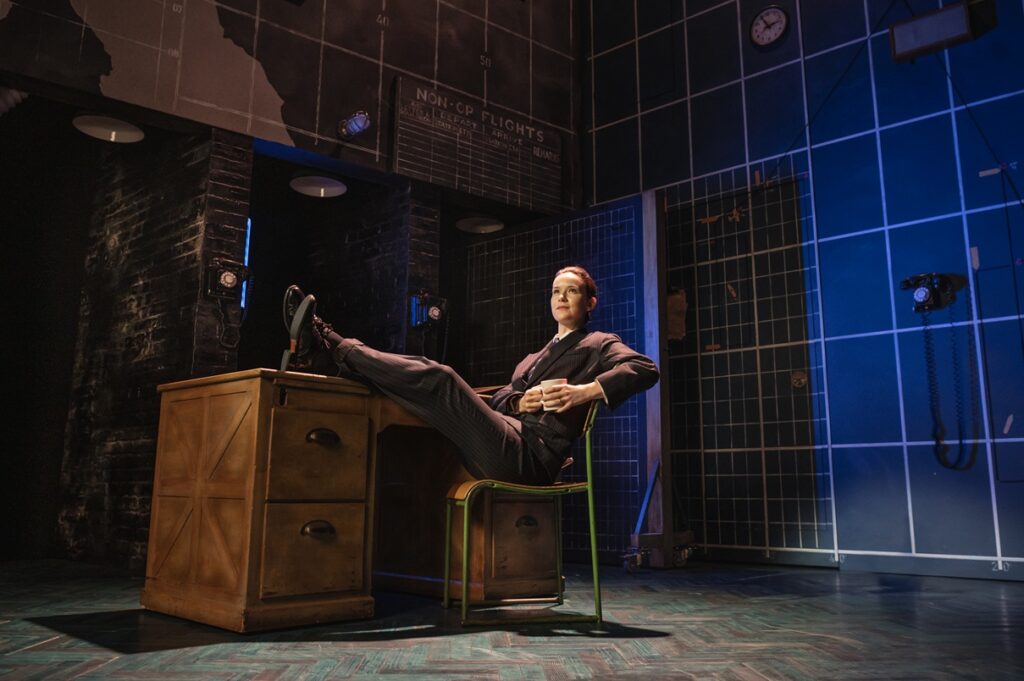
The set was very clever, illustrating an operations room for the most part but then by the use of strategic lighting transformed at one point into a plane.  The choreography was slick and helped hold your attention and while the band was a small four piece unit, gave the feel of a wartime vibe.  

There were issues raised by the production.  The identity of the phoney pilot at times was dismissed as unimportant, a homeless man is a nobody apparently.  However, measures were taken to find his identity and make sure that there was no surviving family who may be looking for him.  Eventually his identity was recognised and the Commonwealth War Graves Commission added his name to go with the false identity of the pilot on the memorial in Spain.  Montagu at one point was suspected of being a Soviet spy, passing documents to his brother who was a communist.  This turned out to be a screenplay, but the prospect kept the plot boiling with intrigue.

It is hard to do justice in describing this musical.  Despite being a complex story, it works wonderfully well and became a dazzling production, picking up on public school attitudes amongst the officers and communicating the story really well.  It deserves to become a must see production for anyone with an interest in theatre, musicals or the history of world war 2.  

Review: 2:22 A Ghost Story, Venue Cymru, Llandudno, by Richard Evans

Runaway Entertainment, written by Danny Robins, directed by Matthew Dunster & Gabriel Vega Weissman

Venue Cymru, Llandudno, April 27 – May 2 and on tour nationwide

 out of 5 stars (3.5 / 5)
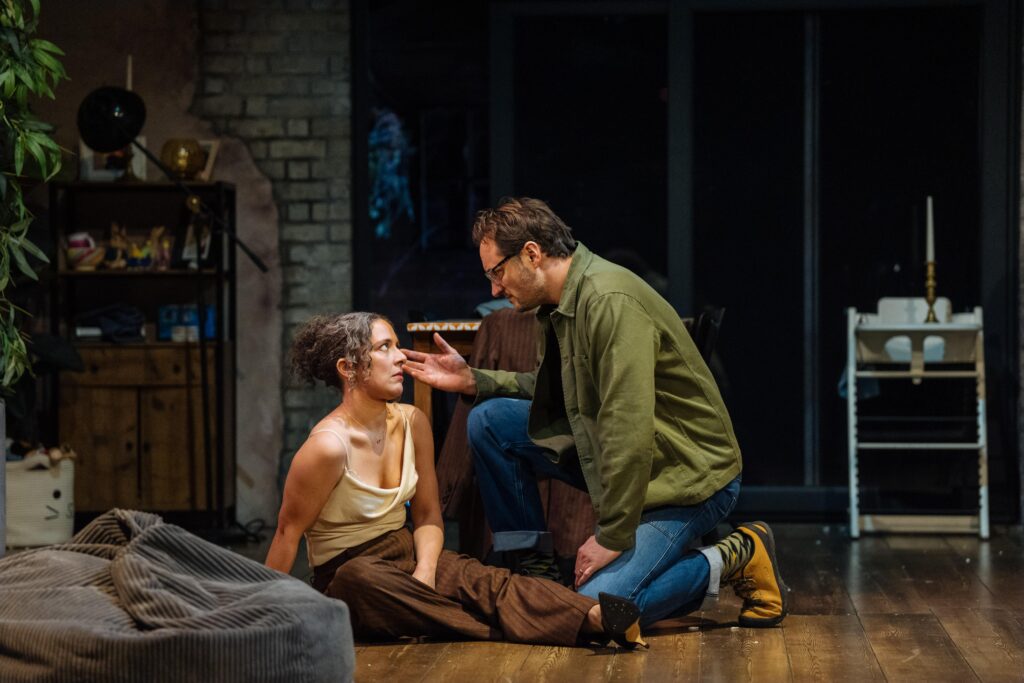
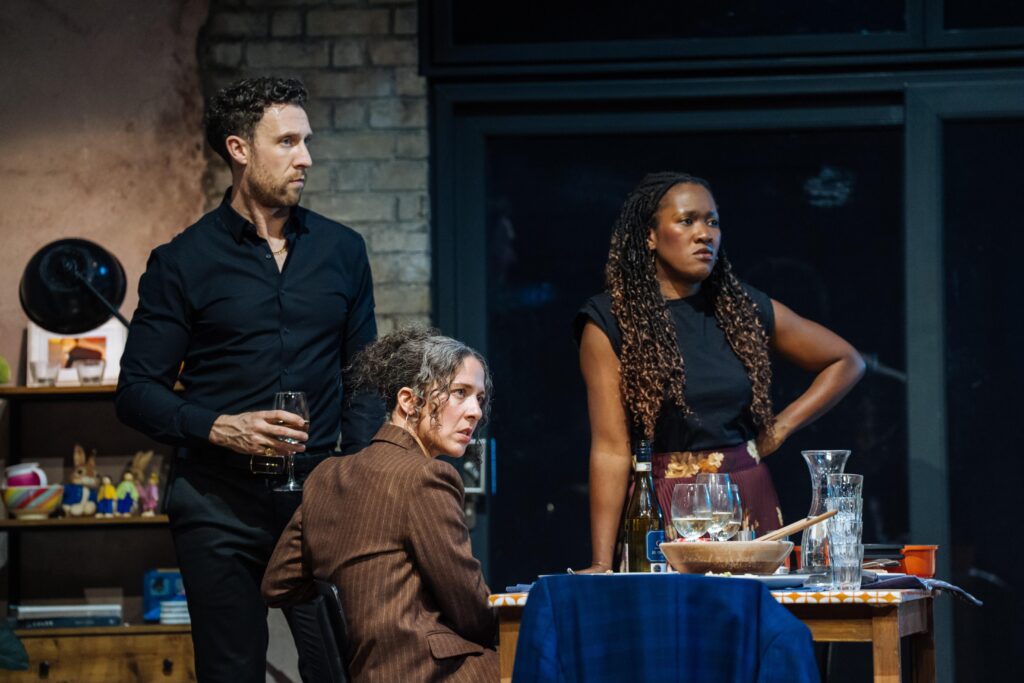
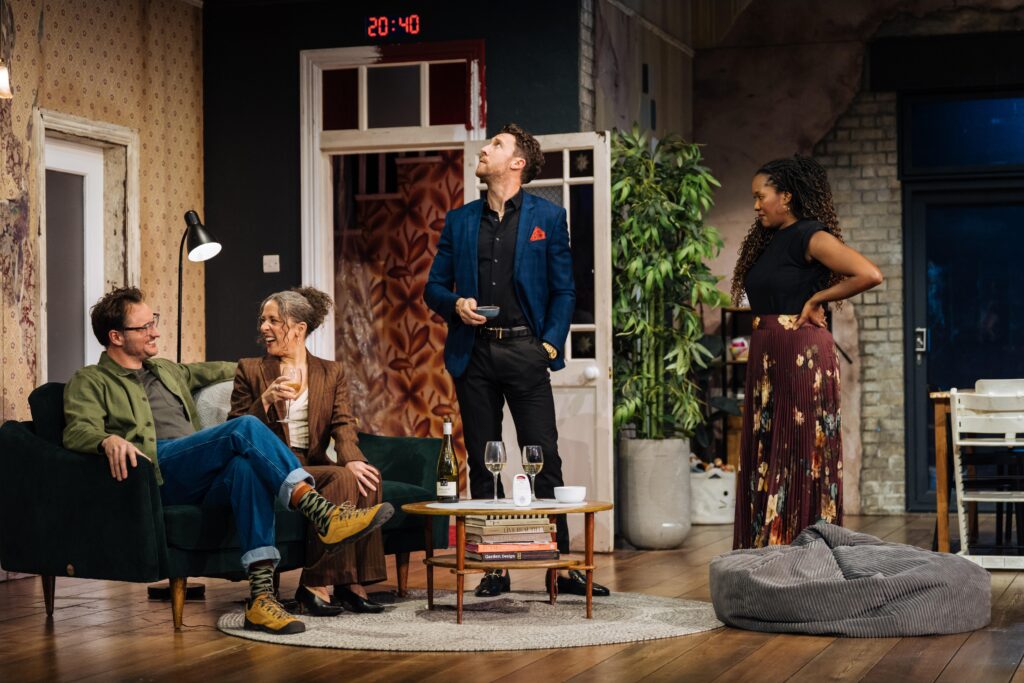
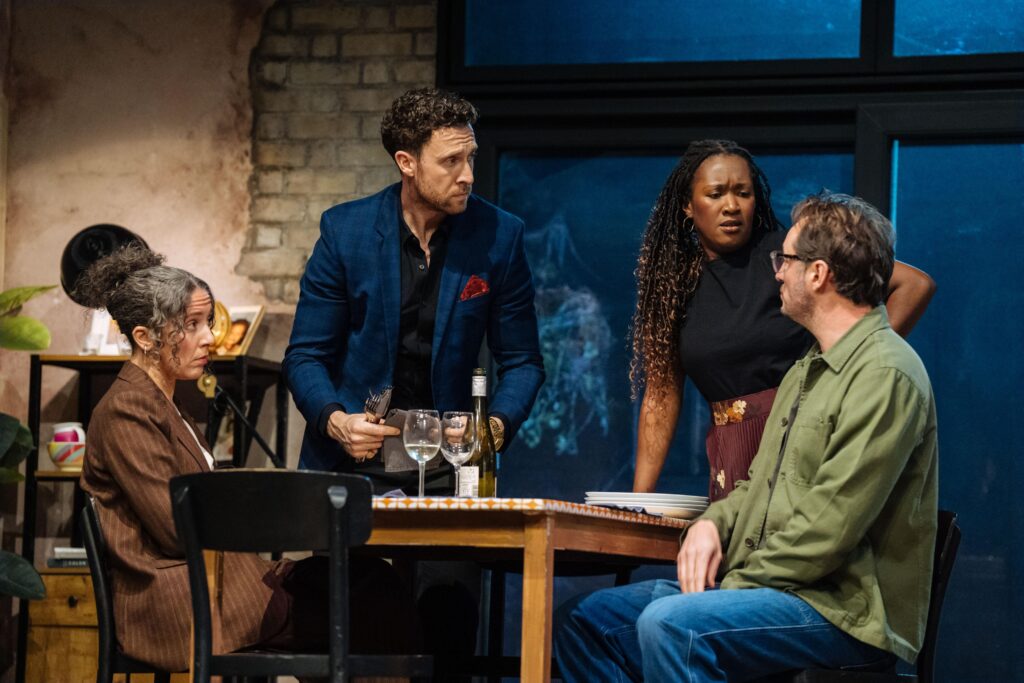
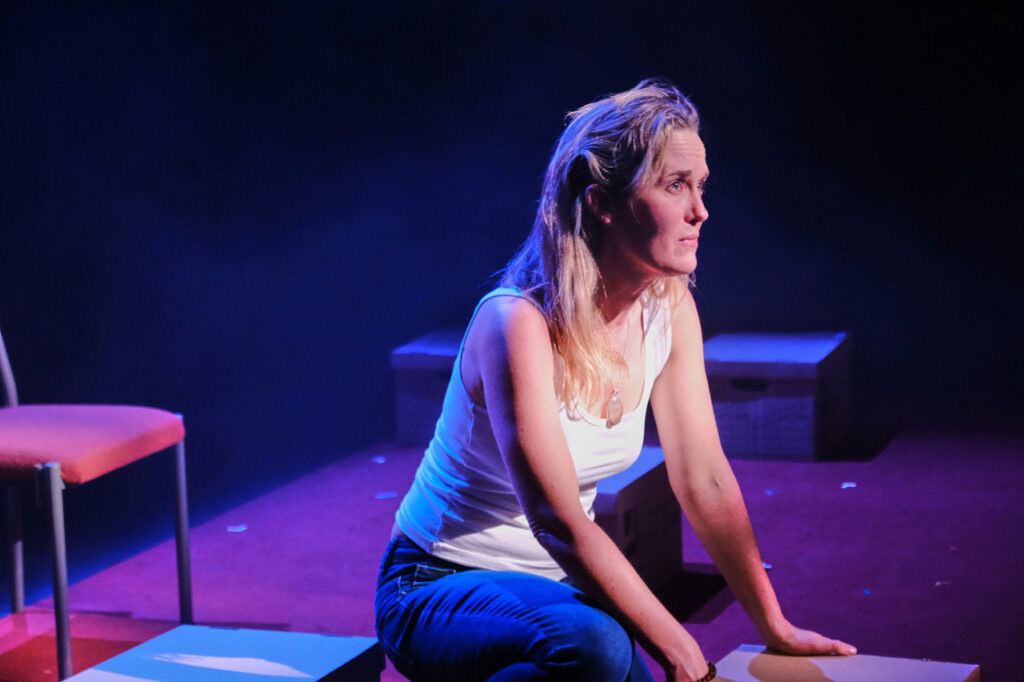
2:22, a ghost story or a debate over whether the supernatural is an actual phenomenon?  The premise behind 2:22 a Ghost Story is rich with potential,  a couple with a new baby move into their intended forever home yet while one partner is away, things start to go bump in the night.  On his return, they invite a good friend and her new boyfriend in for dinner and ask them to investigate the sounds which seem to occur at 2:22 in the morning.  Cue the shrieks, flashing lights and blackout.  

The cast do a great job in telling this story, each character has a well defined persona revealing multiple layers as the play develops.  James Bye plays the arch sceptic, Sam, who seeks a scientific explanation behind every event, natural or supposedly supernatural, Shvorne Marks plays the angst filled mother, Jenny, who has a faith based upbringing making her open to the supernatural. Natialie Casey plays Lauren, the old friend who holds more than a candle to Sam tainted with a sense of frustration as he once laughed at her when she told him about a meaningful, perhaps ghostly experience.  Grant Kilburn plays the new boyfriend Ben who is local, working class and seemingly less sophisticated than the others but who believes in the supernatural.  

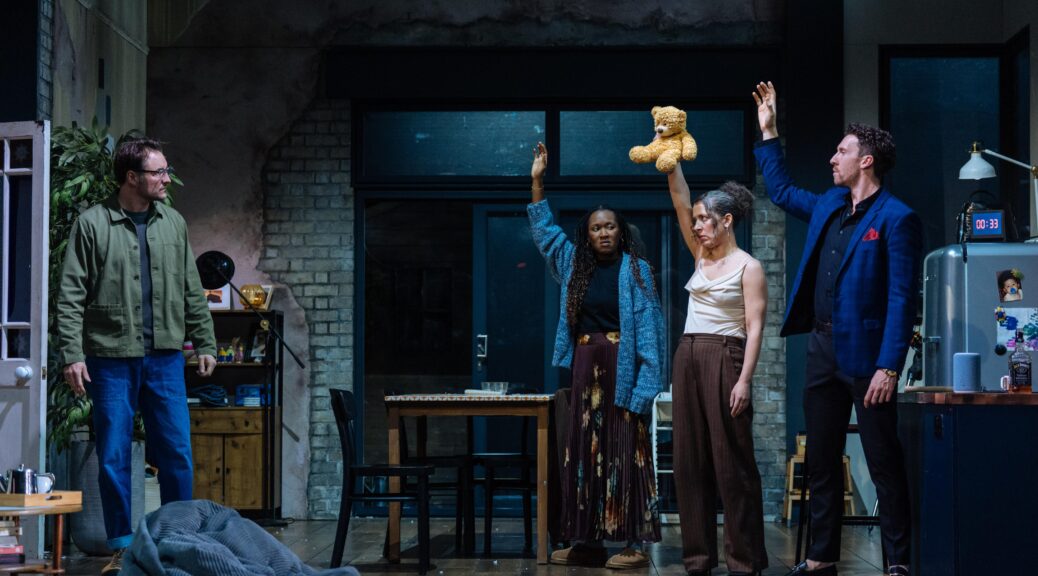
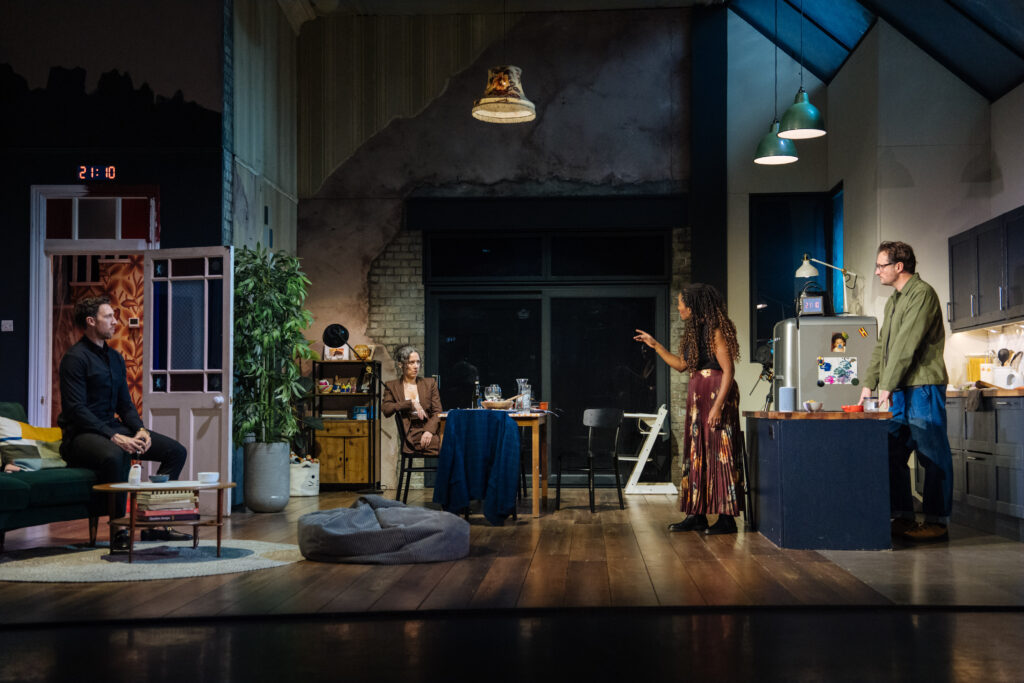
The set is simple, an open plan kitchen/dinging room that is in the process of being redecorated after they have ripped out several walls to make it open plan.  Have they upset the lingering memories of families who have lived there before and who now return to haunt them?  We are led to believe this is the case, or perhaps the strange noise emanate from some urban foxes who are hugely vociferous, often in a sudden way.  

As the play develops and time draws near to 2.22, the fear that there is something out there trying to get to them grows.  The suspense is built when windows are opened unexpectedly, a teddy bear is moved into the bathroom and is found soaked in white spirit with no apparent logical explanation.  Sam interjects and tries to dampen down these feelings arguing for a rational, logical explanation for these strange goings on.  His arguments are powerful even though he is opposed by the other three.  

It seems the presuppositions Sam holds are that this world is thoroughly materialistic, there is no supernatural and that the universe is filled with chance events that people unite in their minds to find meaning and purpose.  While this viewpoint seems normative in the scientific community, there are alternatives.  Some believe that there is a supernatural world with some power behind it who uses chance to allow the universe to develop.  But being intelligent, the chances are loaded towards complexity and purpose.  Both options among others remain possible.   

Of course we are not allowed to tell others the dramatic nature of the ending, but therein lies a problem.  The play asks us to consider that when people talk about a person who is not there, their recollection becomes so real to them that they believe that they were actually present rather than a memory.  This stretches credibility.  The play also uses a lot of dialogue to explore the issues surrounding the supernatural, but then throws in some random screams to change scenes and to keep people jumpy.  This became tiresome.  

While there are problems with the storyline this does not alter the fact that this remains a watchable, engrossing performance that holds the attention of the audience and gives them a few things to think about in their ensuing sleepless nights waiting for that bump in the night.

Review: Glitch, The True Story of the Post Office Scandal, Theatr Clwyd, Mold, by Richard Evans

A Rabble Theatre production, Theatr Weston (Theatr Clwyd)

 out of 5 stars (4.5 / 5)
On tour nationwide until April

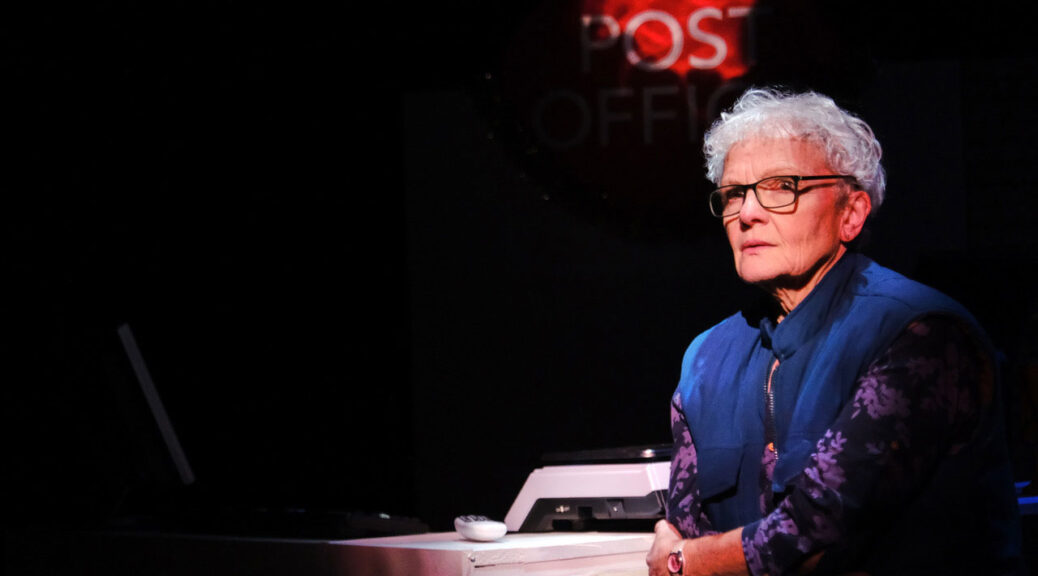
Glitch.  It took a television series to ignite public anger about a scandal that had been brewing for over 20 years.  Those with an eye to the news knew something about what was happening but most remained blindly indifferent to the scale of injustice that was being perpetrated.  This drama relates some personal stories from those whose lives were often ruined by the actions of the Post Office and the computer company, Fujitsu.  It focuses in particular on the story of Pam Stubbs from Barkham, a small village 15 minutes away from the Fujitsu headquarters in Basingstoke. 

Rabble theatre takes stories of national significance and develops drama from them.  They are passionate about supporting women such that when they heard the story of Pam in 2021, they felt compelled to tell her story. As they devised the show, it became apparent that this was a huge scandal, not a one off event.  Glitch was first produced in 2024, before the broadcast of the now famous ITV drama featuring Alan Bates who was knighted recently for investigating this scandal and managing the campaign for justice.  

What happened to over 900 sub-post office masters is quite simple.  A new computer system called Horizon made by Fujitsu to record transactions was installed in sub-post offices.  A selection of these Horizon machines developed a bug which altered the totals of a days takings leaving a short fall of perhaps £200 a day unaccounted for.  Over a period of time, a sub-post office could run up a debt of up to £50,000 by which time, the Post Office auditors would have been called in to inspect what was happening and concluded that the sub-post office master was swindling the system.  The Post Office would then prosecute the shop owner to recoup the money.   

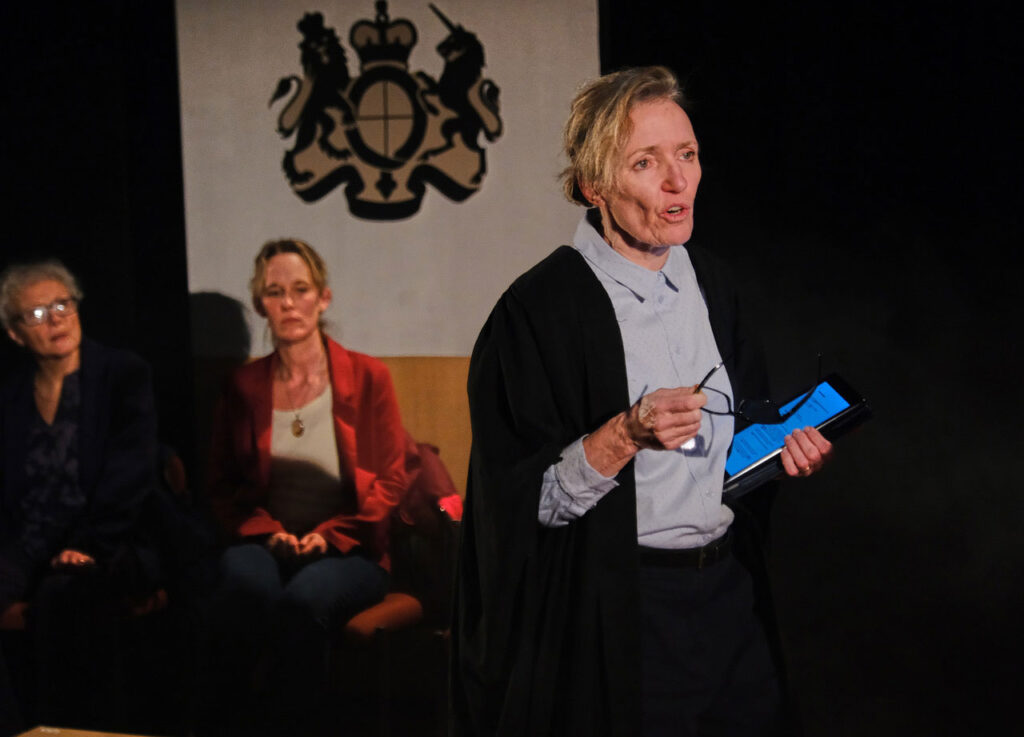
Pam’s particular story is both distressing and admirable.  She kept meticulous written records of every Post Office transaction and could detail every loss that was unjustly incurred within the accounts.  Despite countless attempts to call in help from the Post Office and Fujitsu she was not believed, had her counter closed down and she had to sell her shop.  She became a social pariah in a close knit village, yet despite this when called on to testify in court, stood up and told her story despite intimidating and manipulative tactics from the defence lawyers.  She emerges as a strong minded, fair person who acted with integrity.  

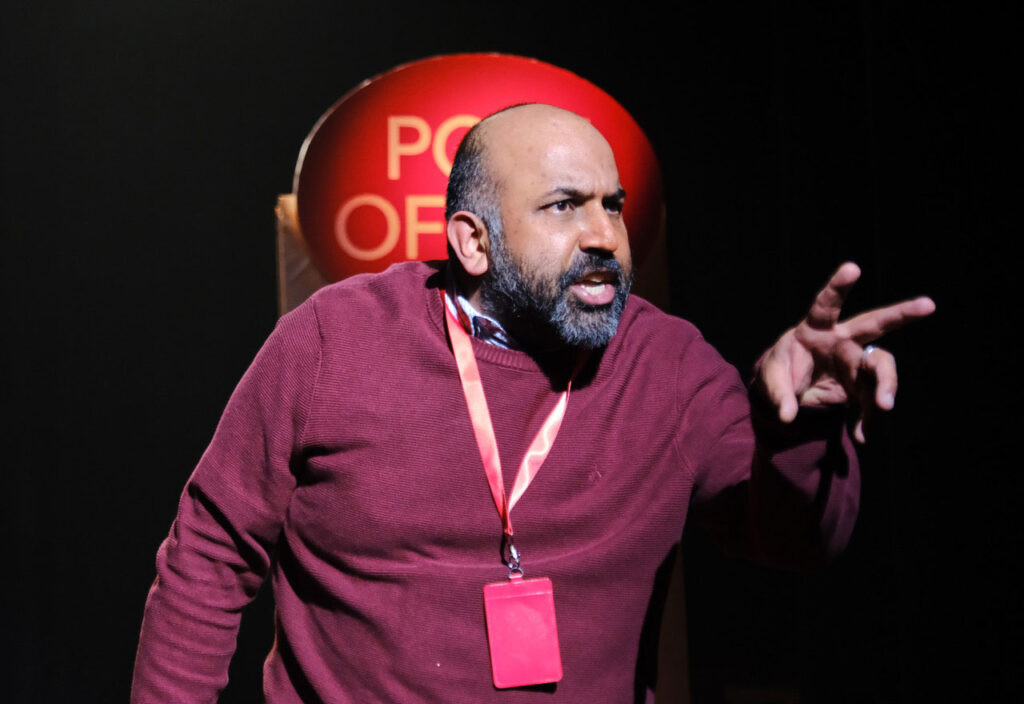
This show needed a strong lead and Joanna Howarth as Pam provides this.  At times friendly and gentle, at others someone you would not mess with.  However this was a team effort with a small cast of four.  Laura Penneycard, Naveed Khan and Sabine Netherclift all played multiple roles and together they portrayed a compelling drama that illustrated the distress caused by the scandal well.  

The play notes that 300 people died before seeing this injustice exposed and their name cleared.  Thirteen of those committed suicide.  Many law abiding citizens were imprisoned or faced bankruptcy because the Post Office believed a computer system from a faceless multinational company rather than honest working people.  This really is a story of the common person fighting against the impersonal cruelty of big business and the desire to put profit before people.  Full marks to Rabble Theatre for being bold enough to tell this story.  It deserves widespread viewing.

Review: Calamity Jane, Venue Cymru, Llandudno, by Richard Evans

Venue Cymru, Llandudno, 26-30th August 2025 and touring

 out of 5 stars (5 / 5)

Jamie Wilson productions, Kevin McCollum, Gavin Kalin productions, evolution productions, Tilted, Willette & Manny Klausner in association with Grace street creative group and David & Hannah Mirvish. A Watermill Production.

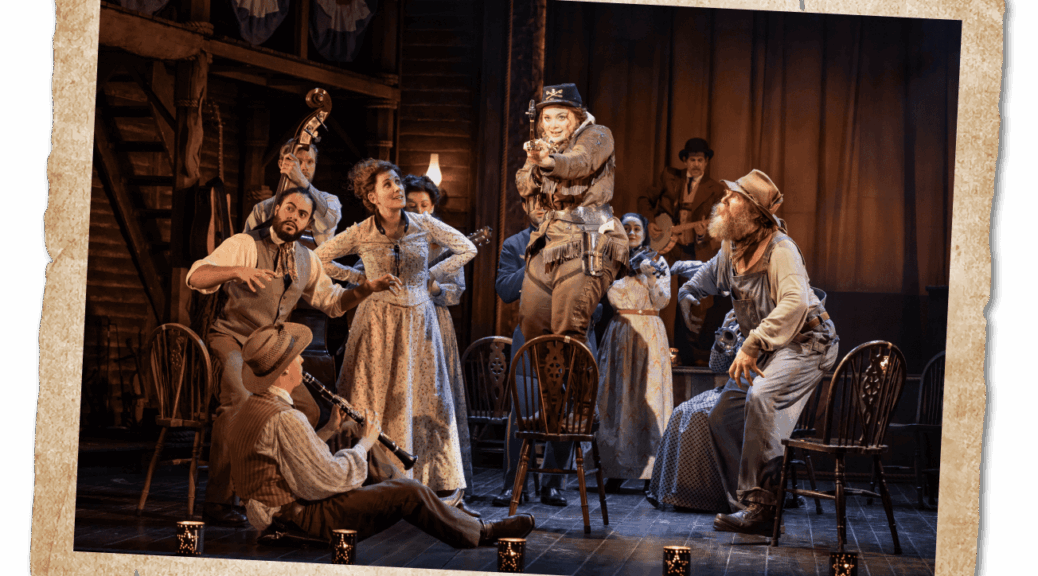
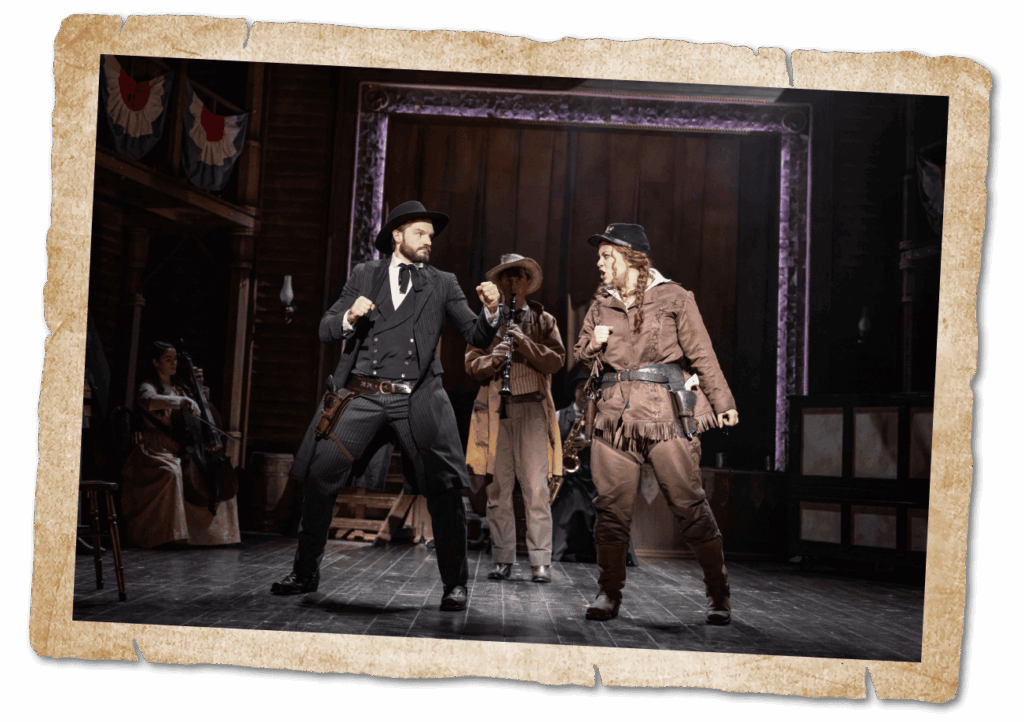
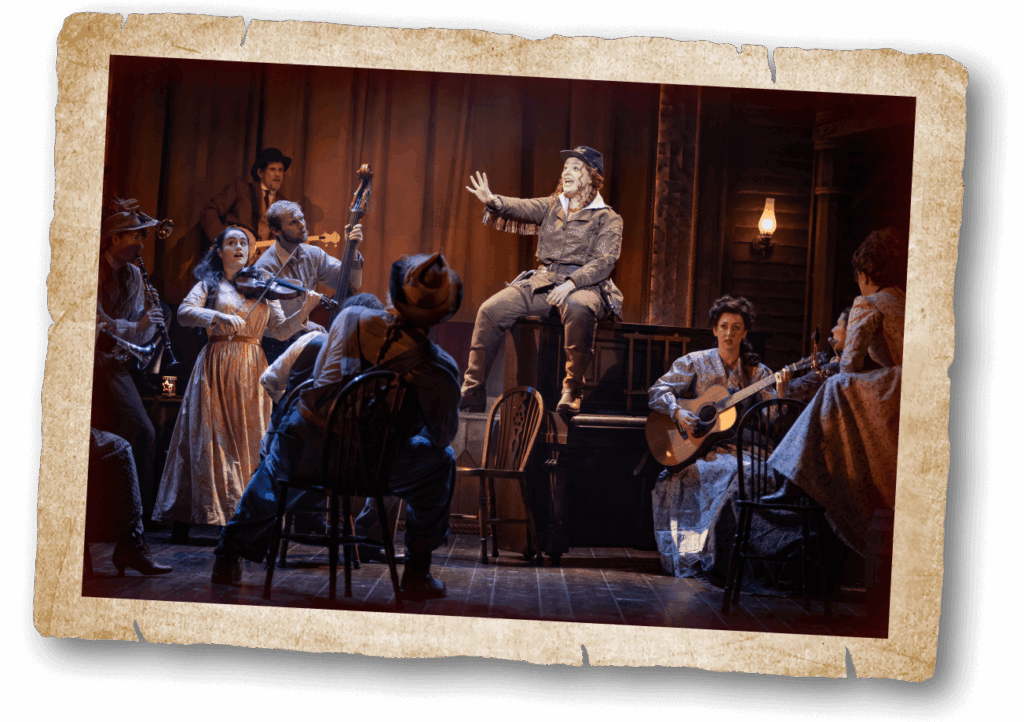
Calamity Jane. They’ve turned the legend of a gun totin’, liquor swillin’ girl masquerading as a man into a love story.  The actual events of Calam’s life are based in fact, but have been exaggerated, not least by the woman herself.  However, we should not let our quest for reliable history get in the way of a rattling good story which is what this musical is.

Calamity Jane breezes into a Deadwood saloon having guarded the stagecoach safely into town.  On the coach is Francis Fryer, an entertainer.  Sadly, he does not possess the attributes desired by a hard living audience that has been starved of female company.  He is a man.  When the saloon owner nearly causes a riot trying to fool the waiting crowd that Francis is actually a woman, Calam goes to Chicago to tempt a music hall star, Adelaid Adams to come to Deadwood. As befits her name, she makes a disastrous mistake and brings back her maid, Katie Brown.  However, Katie turns out to be a roaring success and settles with Calam in her run down shack and brings out the more feminine sides to her hosts character.  The two women then become love rivals for an army lieutenant, Danny, before Calam realises that her love for her long time companion and critic, Wild Bill Hickok is mutual and Katie is free to marry her soldier.

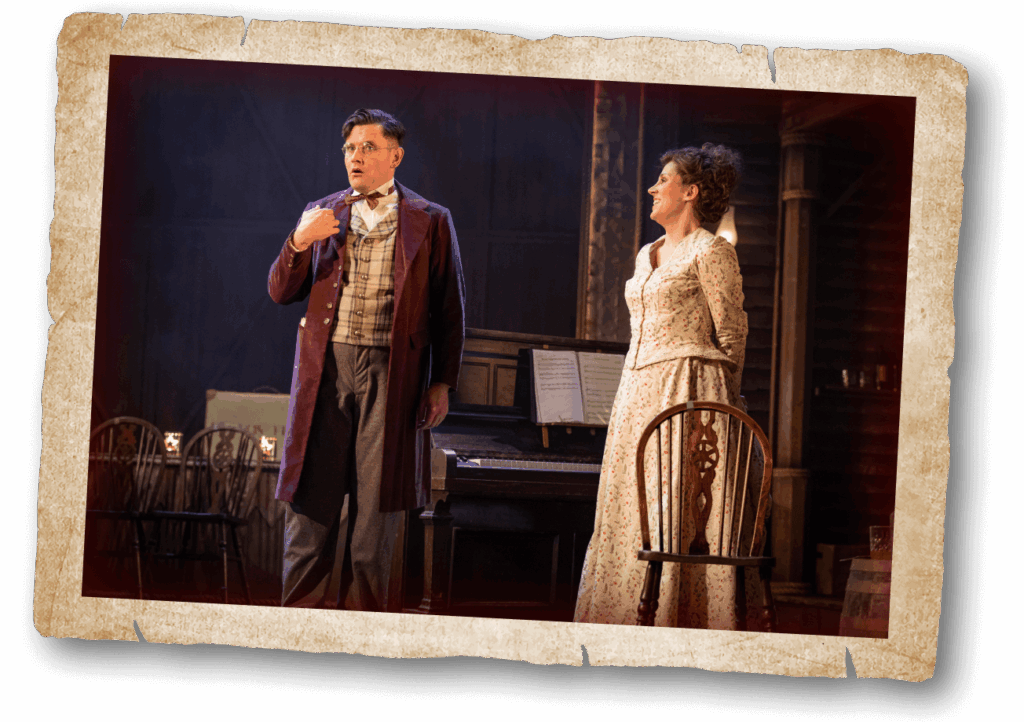
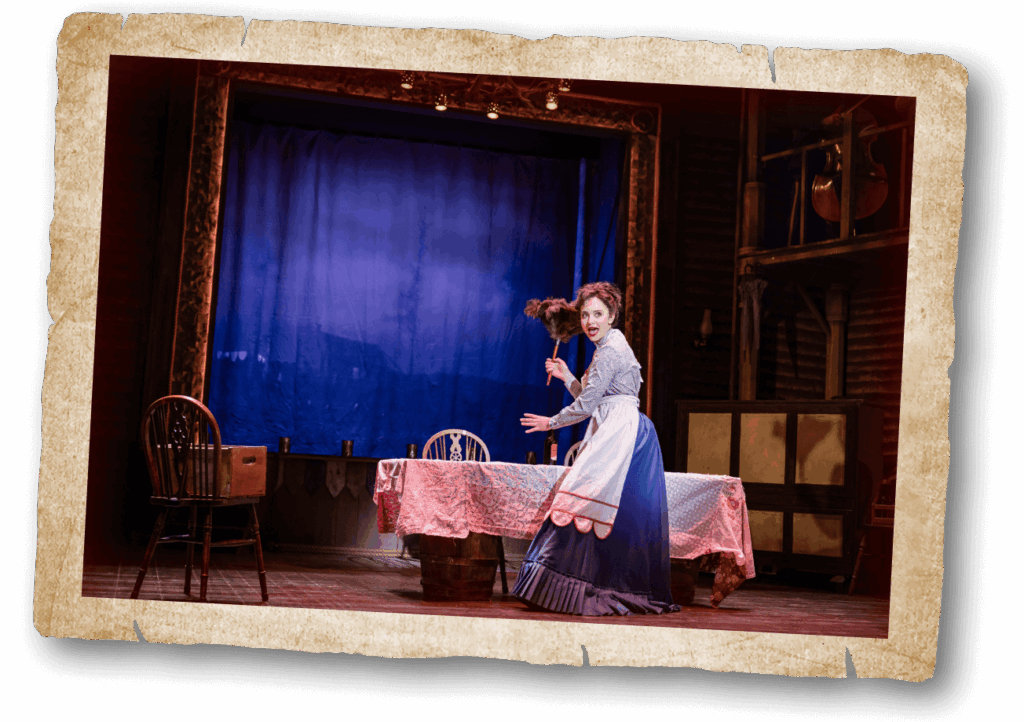
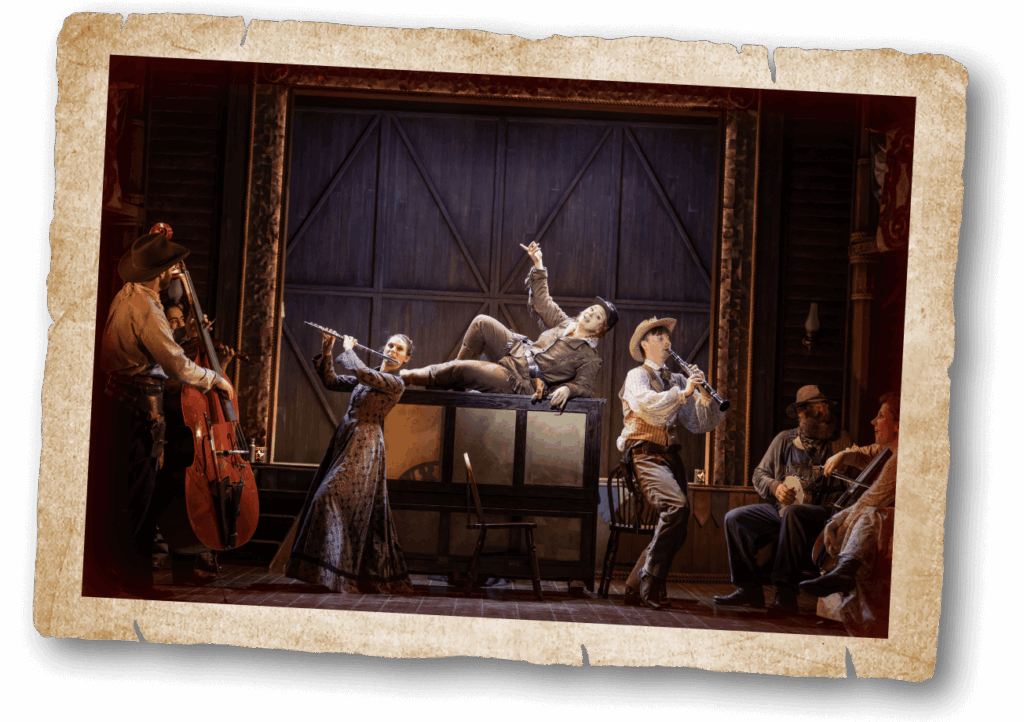
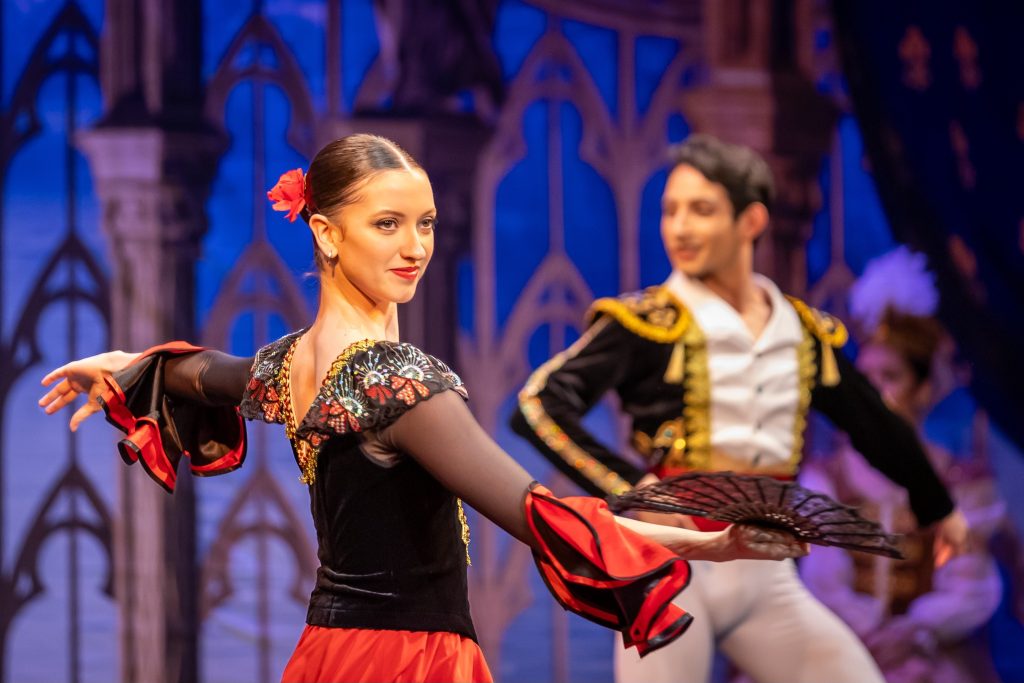
Carrie Hope Fletcher is great as Calamity, commanding the stage with her presence.  She is ably supported by Seren Sandham-Davies as Katie, Samuel Holmes as Francis and an understudy for Bill, Thomas Wolstenholme. The company provided plenty of warmth, energy, optimism and banter as the story unfolds into a quick placed drama.  Scene changes were effected by moving props and this required some imagination, not least in the formation of a stage coach by the cast.  The music gave a hoe down feel to the show and there were plenty of catchy numbers to go along with the iconic ‘whip crack away’ Deadwood stage song making this a feel good show.

There is some depth to this story.  Bill Hickok repeatedly wants Calam to be more like a girl, but she is more comfortable wearing buckskin leathers, carrying a six gun and earning the right to be accepted in this hostile culture on her own merit.  However, most of her compatriots drool over the suggestive temptress that is Adelaid Adams.  Herein is a spectrum of femininity and surely there is a place for all along that line.  A woman should be free to be who she wants to be.  Men need not be threatened by a physically strong, aggressive woman and should not expect a woman’s best qualities to lie in her appearance.  Not a bad lesson to come from a good nights entertainment.  

In one sense the story is a throwback to watching Rawhide or the Virginian on TV for those of us with long memories.  We now know that the entertainment industry has sanitised and romanticised stories of the wild west.  The reality was more raw and brutal than we have been led to expect, not least to the surrounding Native American Indian cultures that were often dispossessed quite violently.  However, this is just a story based on the life of a remarkable individual and if a story is a good one, it is worth telling and by the audience reaction, this musical is certainly that.  A raucous, enthusiastic reception was given to a deserving cast after a sparking show.

Review: An Inspector Calls, Venue Cymru, Llandudno by Richard Evans

Venue Cymru, Llandudno, May 13th – 17th 2025 and touring

 out of 5 stars (4.5 / 5)

A PW production. Directed by Stephen Daltry. Written by J. B. Priestley

“Send not for whom the bell tolls, it tolls for thee.”  John Donne, Meditations.

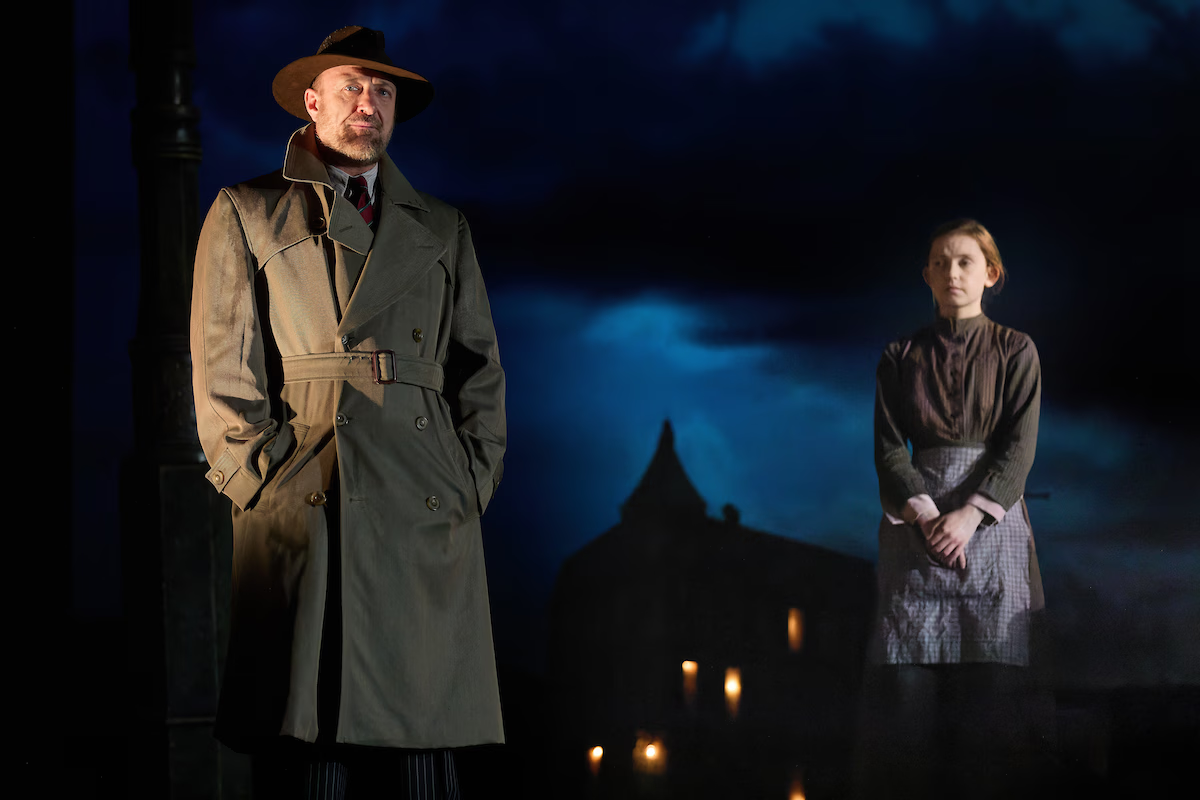
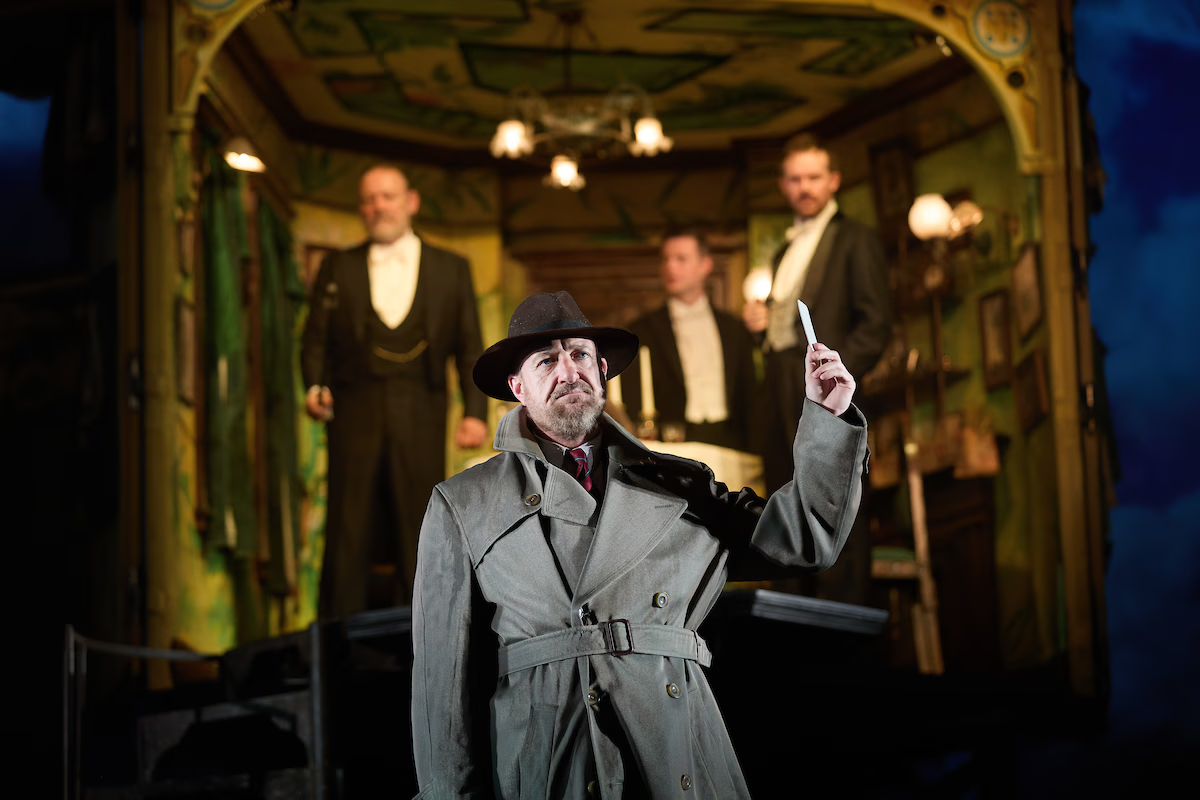
J. B. Priestley’s play is now regarded as a 20th Century classic and rightly so.  Especially since Stephen Daltry’s revival in the 1990’s it has become a staple in so many English Literature curriculums up and down the country. Would this production live up to the play’s reputation?   Tonight, it certainly did.

The action focuses on the highly successful Birling family who are celebrating the betrothal of their daughter to the son of a rival business firm.  As this takes place, an inspector knocks at the door and informs them of the death of a woman, Eva Smith, from a painful suicide.  The inspector in turn interrogates every member of the Birling family and the fiancé to uncover their part in Eva’s demise, something that they had been unaware of and felt no responsibility for.  In a dramatic climax, the family understand that this inspector was a mysterious imposter and that there was no suicide so intend to carry on as usual, until they get a phone call informing them of the death of a woman through suicide and that an actual inspector is on his way to investigate. 

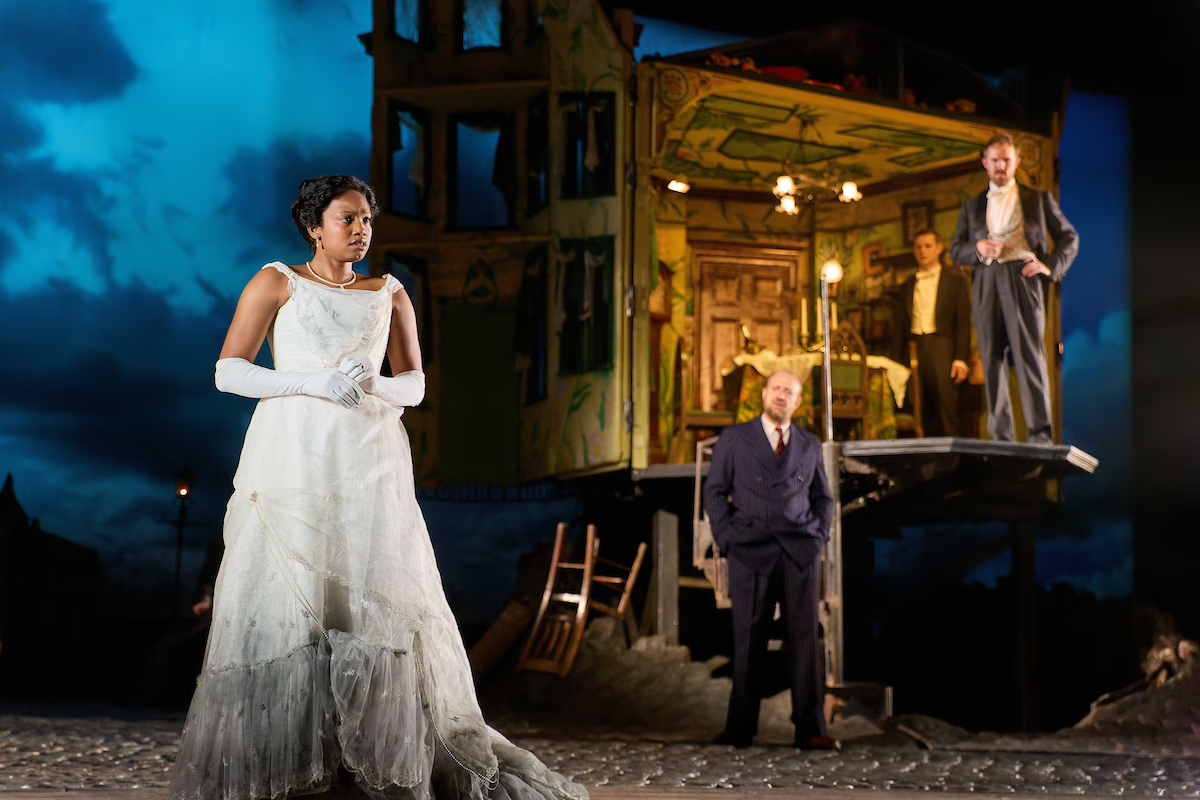
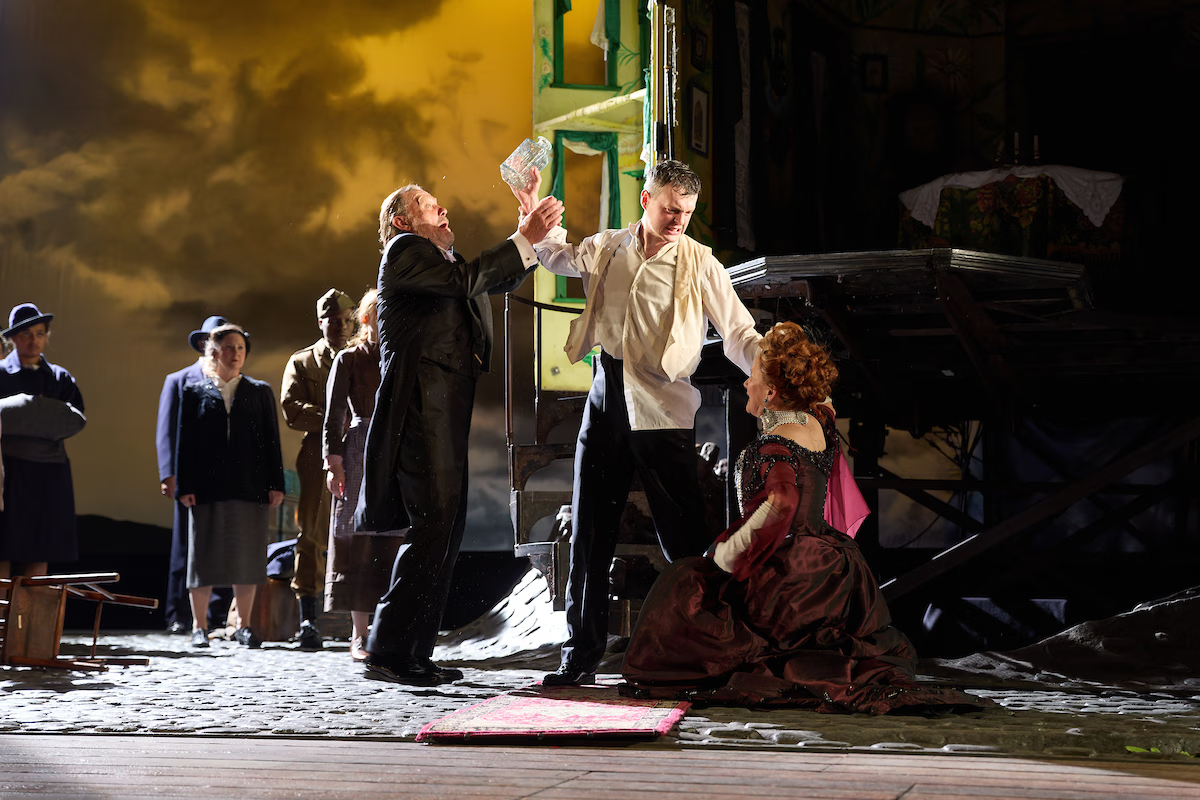
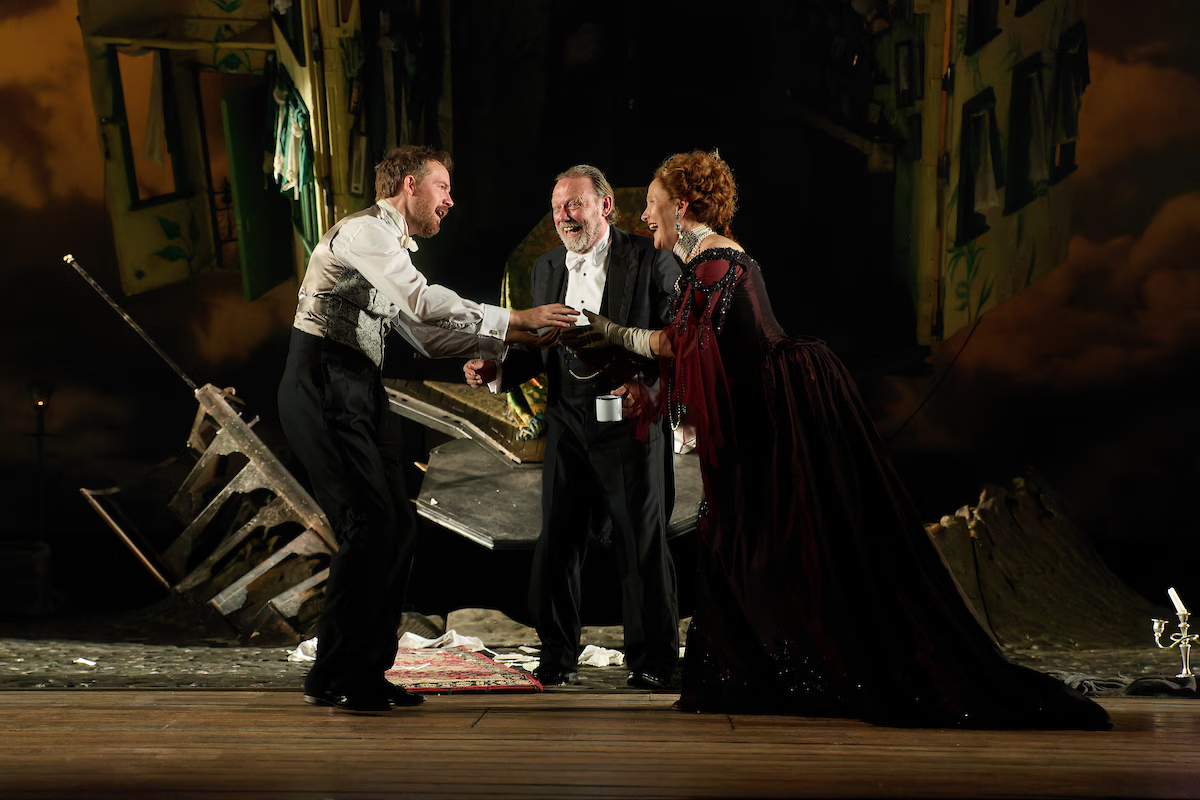
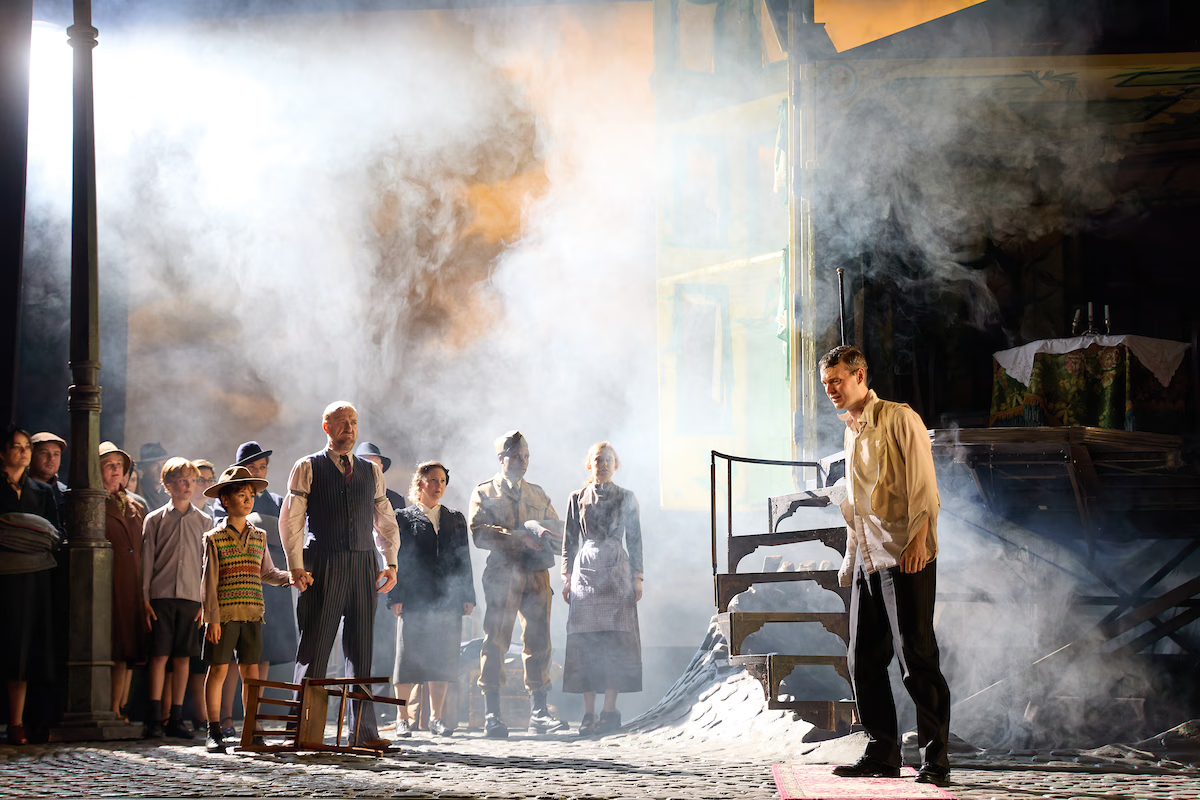
The cast communicated the powerful nature of this play really well.  Tim Treloar was excellent as the inspector and Leona Allen striking as Sheila.  However, in a play with much confrontation there were times when dialogue was lost as people spoke very quickly and the music while adding drama to the action could be too loud.  The set was effective, with the dining room of the family set above the stage.  When the family realises they will be disgraced by their callous treatment of Eva, the room collapses.  There is attention to detail.  When Mrs Birling walks from her house, a carpet is rolled out for her to walk on.  

The play has several layers of meaning, some obvious, others more subtle.  The most striking point is that we belong to a society and have a duty of care to a greater or lesser extent for each other.  A laudable ambition which is undermined by an inherent selfishness that we all seem to possess.  Less apparent is how the play attacks the hypocrisy of Victorian and Edwardian society and its attendant class system.  As the song “All things bright and beautiful” illustrates, ‘the rich man in his castle, the poor man at his gate’, a structure ordained by God.  Priestley’s socialist views reacted strongly against this idea.  

The play is regarded as a drawing room drama, and as such, it has waxed and wained in popularity as presentation fashions have changed in time.  However, the play has an enduring appeal and is a timely reminder of our sense of common humanity.  It is of course a hard hitting call to conscience to be mindful of the less privileged in society and ensure that they can access a decent lifestyle.  It may not be comfortable viewing, but it is compelling theatre with a highly pertinent point to make in our increasingly materialistic society.

Review: The Rocky Horror Show, Venue Cymru, Llandudno by Richard Evans

Venue Cymru, Llandudno, March 3rd – 8th 2025 and touring

 out of 5 stars (4.5 / 5)

Howard Panter for Trafalgar Theatre Productions, Mallory Factor for Hill Street Productions and Rupert Gavin

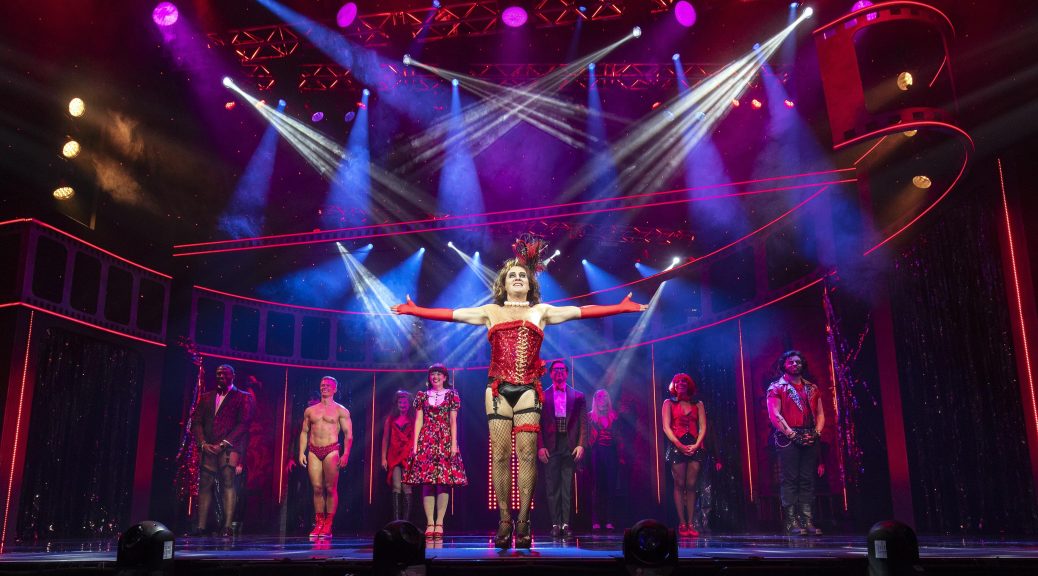
The Rocky Horror Show has come a long way since it debuted upstairs in the Royal Court theatre in a 10.30 showing in an auditorium seating 60 people.  What is it about the show that gives it a lasting appeal?  Certainly there is a prevailing sense of fun throughout and the music is upbeat and energetic with the signature song, Time Warp having a timeless appeal.  However it is the subversive nature of the story that has seen the show gain its cult following. 

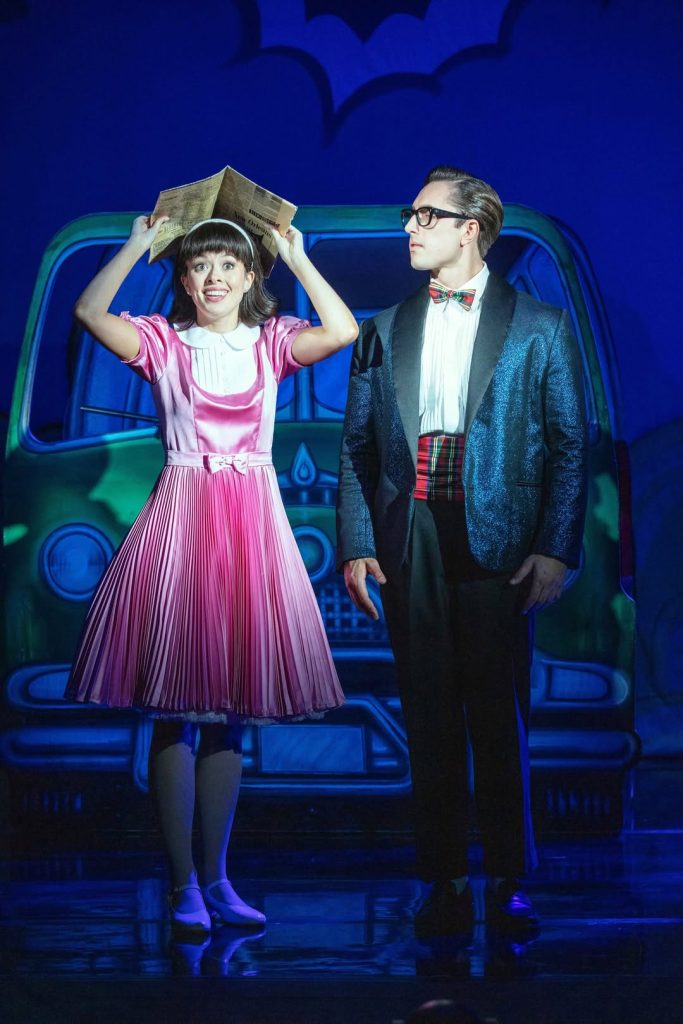
The storyline in one sense is a sideline.  It was never meant to be profound, rather it was a spoof on a long line of 1950’s B-movies that had a sci-fi theme.  A sweet couple having just got engaged break down in their car and seek help from Frank n Furters castle in the distance.  There they enter an alternative reality that shakes their perception of normality to the core.  Of course some of the inhabitants are aliens who take revenge on Frank n Furter who is guilty of having a profligate lifestyle and betraying some of his loyal servants. 

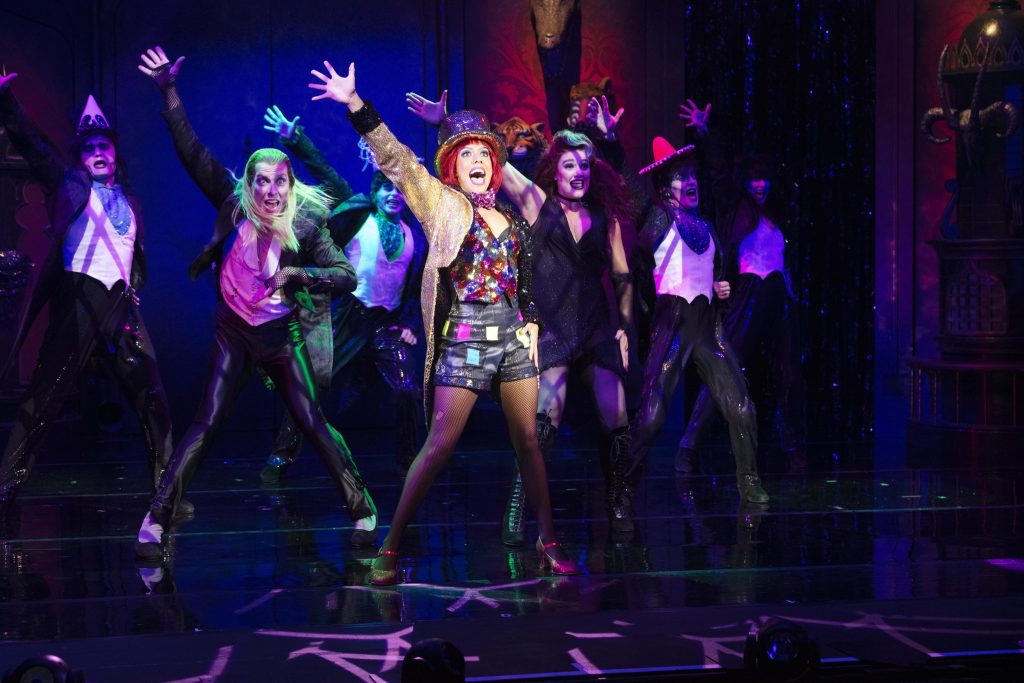
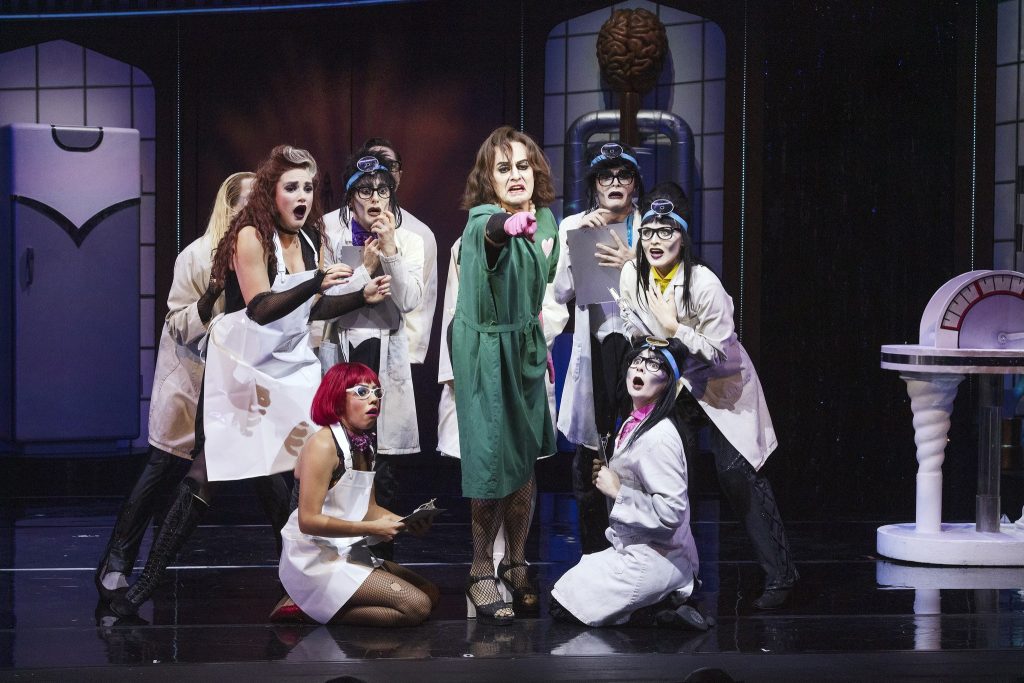
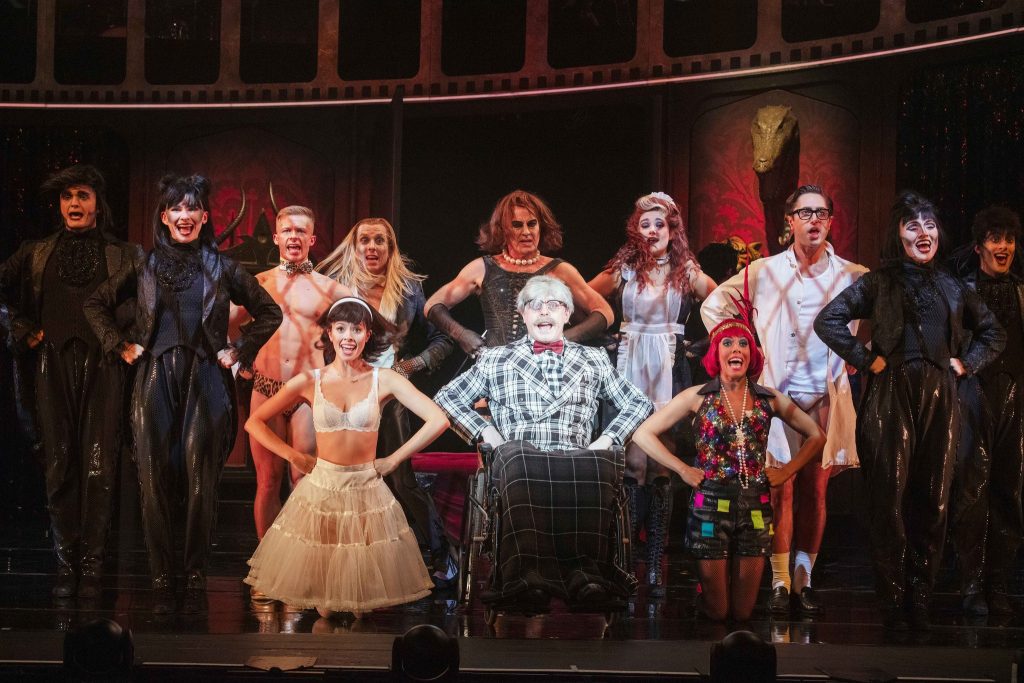
The cast were well drilled, enthusiastic and energetic.  Adam Strong as Frank n Furter was suitably commanding and was ably supported by the sinister Job Greuter as Riff Raff and the ebullient Jayme-Lee Zanoncelli as Columbia.  The choreography was slick and well rehearsed while the set was simple, adaptable and effective.   

The show is narrated by Joe McFadden who was excellent in dealing with the interruptions from the audience.  These have obviously become part of the tradition of the show as they were not only tolerated but expected.  Some of these were funny, sometimes the interruptions were intrusive.  Either way, McFadden handled them well

First produced in 1973, the play picks up on the attitudes that exploded in Britain with the advent of the permissive society.  This was the era of glam rock where people played around with traditional male and female norms and were less afraid of being openly indulgent in their sexual appetites.  To quote, ‘Give yourself over to absolute pleasure’.  Can people really do that without consequence?

Writer Richard O’Brien never expected it to last but shortly after it bombed on Broadway for not being high brow enough, he heard that it was getting cult following on campuses across the USA where students were attending a performance in costume.  A new trend was formed that allowed those of us who were normally constrained by their career driven, family orientated lifestyles could throw off those shackles and go wild for the evening.  

Now that the show is over 50 years old, does it retain its cutting edge?  It is still subversive but has to be slightly more explicit to give that shock factor.  There is also a disconnect.  Having started off with such humble origins, the glitz and glamour of a West End style show seems slightly out of place.  However, that does not detract from what remains a fun filled, light hearted and still slightly shocking show.

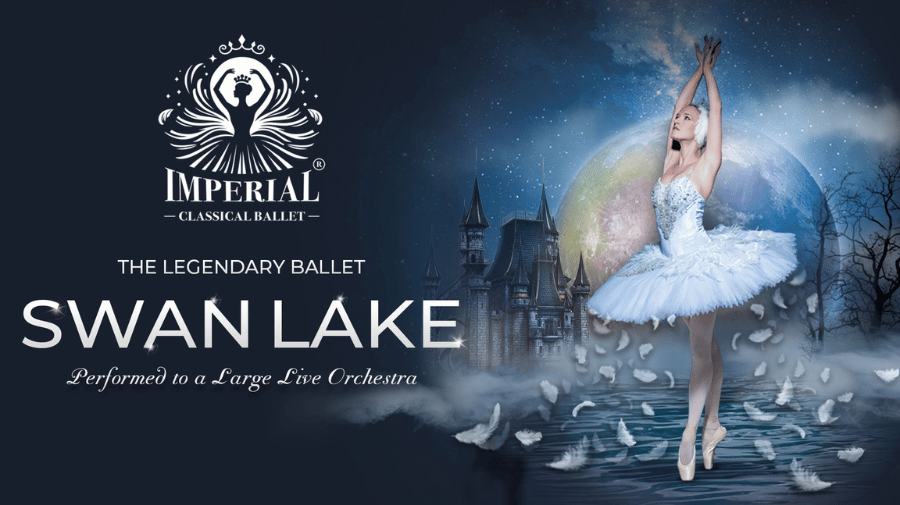
Review: Swan Lake, Imperial Classic Ballet, Venue Cymru, Llandudno by Richard Evans

Venue Cymru, Llandudno, October 18th 2024 and touring

 out of 5 stars (4.5 / 5)

An Imperial Classic Ballet production. Ballet Artistic Director – Katsiaryna Fadzeyeva, Conductor – Nikita Suhik, Concertmaster – Polina Chaika.

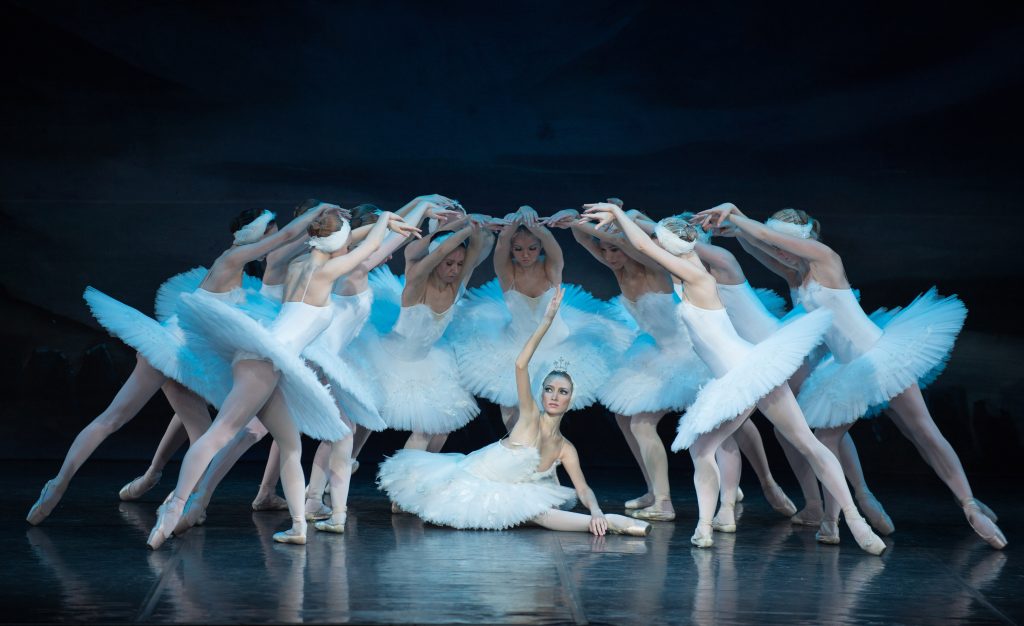
Swan Lake, a timeless story that became the standard for classical ballet and redefined the genre.  Would this production continue to entrance the audience as much as the ballet has since its first presentation?

The libretto is well known and at its heart is a love story.  Prince Siegfried is disappointed at his birthday celebration that no suitable bride is presented to him.  After, while hunting he sees some swans by the lake.  He is entranced by the white swan, Odette who insists that she and the other swans are human and have been put under a spell by the evil magician, Rothbart that can only be broken by everlasting love.  In Act 2, the Prince has to choose his bride and eventually sees Odile, Rothbarts daughter and sees an uncanny resemblance to Odette.  In the heat of celebration he confesses his love for Odile, breaking his vow to Odette who watches on from the window.  Once he realises, the Prince returns to the lake to see the grief stricken swans.  He begs forgiveness of Odette and declares his love.  Rothbart challenges him, but love prevails.  

The ballet tugs at the heartstrings throughout taking you through a range of emotions from joy to grief.  This is enabled by Pyotr Tchaikovsky’s moving score.  He pioneered the use of leitmotifs, snatches of music that are assigned to a character and repeated when they appear on stage.  Musically it is challenging.  On speaking to the first violinist she commented that Tchaikovsky composed on a piano, having five fingers available while the violinist has only got four, the thumb being used as a grip.  The orchestra proved the point that dance and music are natural extensions of each other and portrayed the emotions in the ballet really well.  

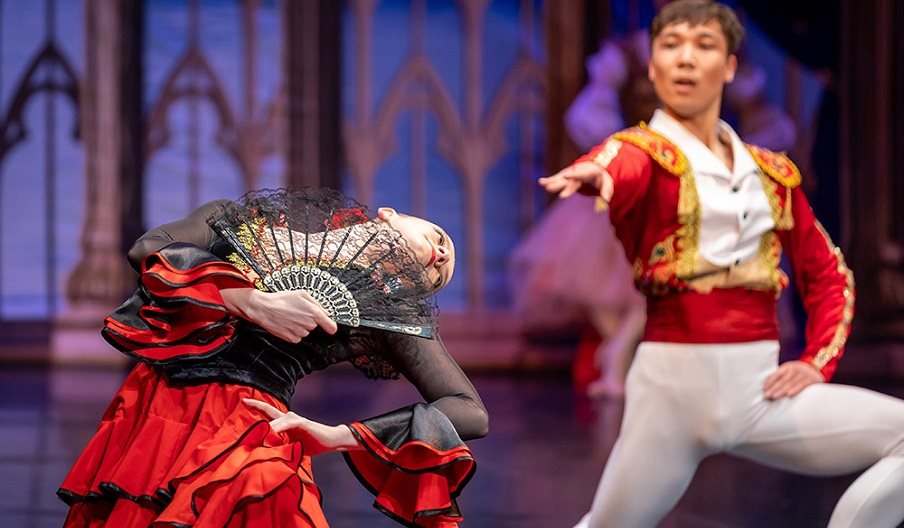
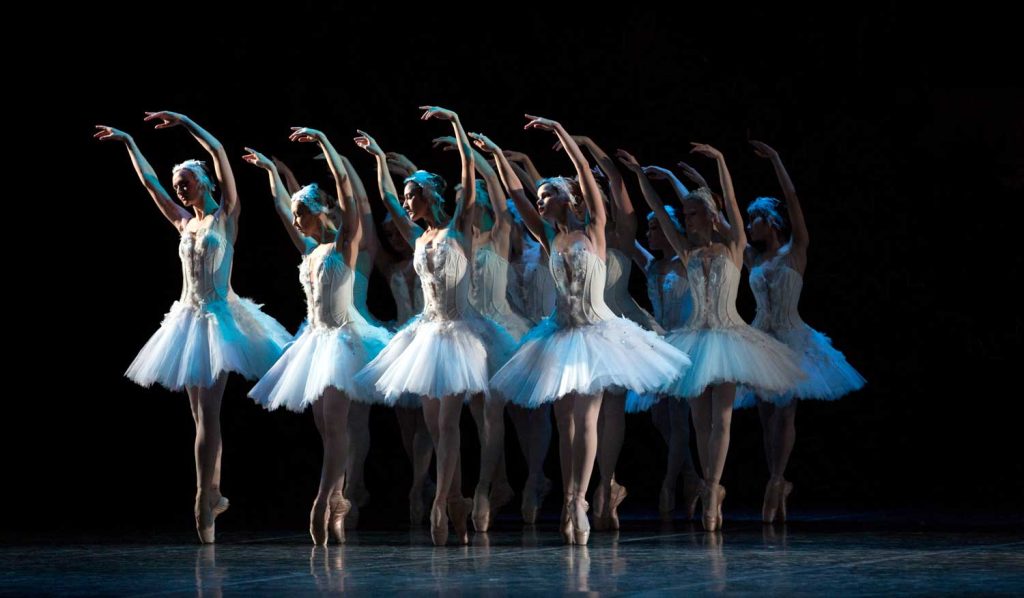
To perform Swan Lake is difficult, comparable to Sleeping Beauty in its complexity, yet the lead roles are compelling for any aspiring dancer.  There were a series of tableaux illustrating the skills of the dancers which provided ample evidence that ballet makes extremely difficult manoeuvres look effortless.  The part of Odile/Odette is particularly challenging both technically and emotionally yet illustrated that the movement of the human body can be beautiful as it combines grace, poise and strength.  This performance did not disappoint, yet again this dance proved to be compelling viewing  

The ballet troupe and orchestra, in the midst of a gruelling schedule for their national tour were enthusiastic and committed tonight, although my impression is that the emphasis in this production is on demonstrating prowess rather than storytelling. However, this did not spoil what was an excellent and thoroughly recommended evenings entertainment.