Throughout the year the inclusive community focused Sherman Theatre in Cardiff, put on a variety of performances and free activities.
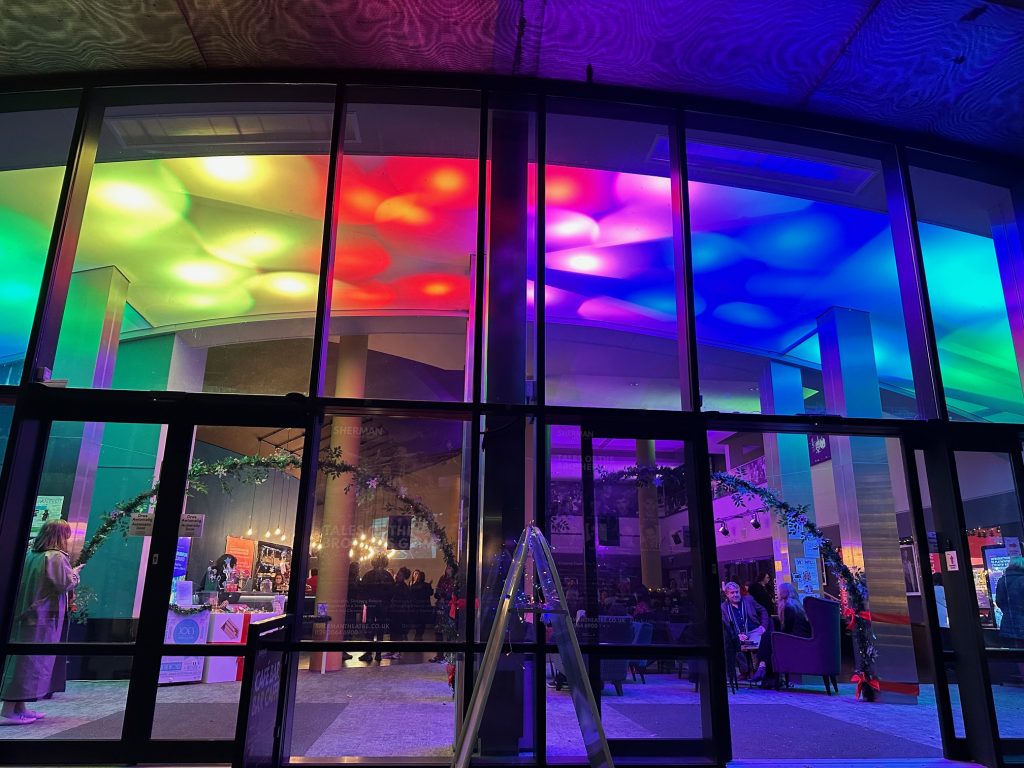
The outside and interior of the Sherman has been revamped in the last couple of years and is elegantly decorated, modern seating and lighting.
Most recently the Sherman Theatre have also reached out into the heart of the local Cardiff communities, bringing the arts to the people.
I went to one of the Tales and Tea sessions at the Beacon Centre in St Mellons, to see A Better Land, by Catherine Dyson. The intimacy and no frills props, added to the enjoyment. Having a chat with the actors afterwards was a great way to share feedback and discuss the storyline.
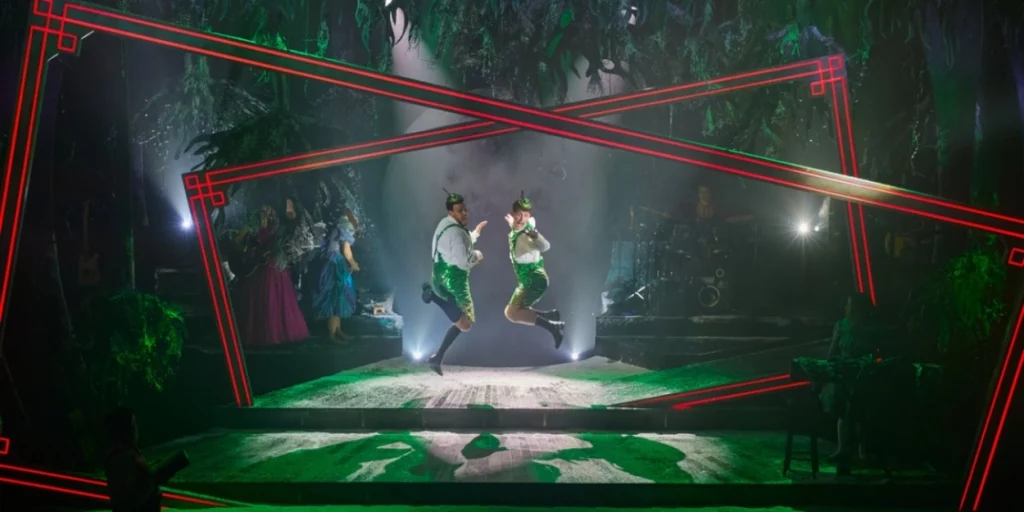
This week, we had a midweek family treat to see Tales of The Brothers Grimm at the Sherman Theatre.
Credit Rhian Gregory
It surpassed my expectations, and personally, it was one of the best shows that the Sherman have put on in the lead up to Christmas, over the past decade.
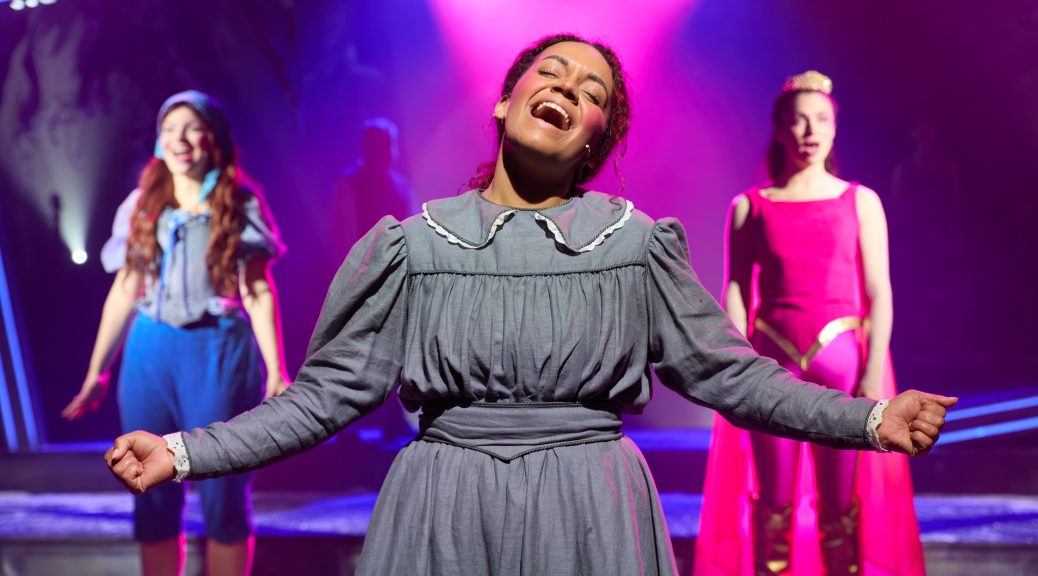
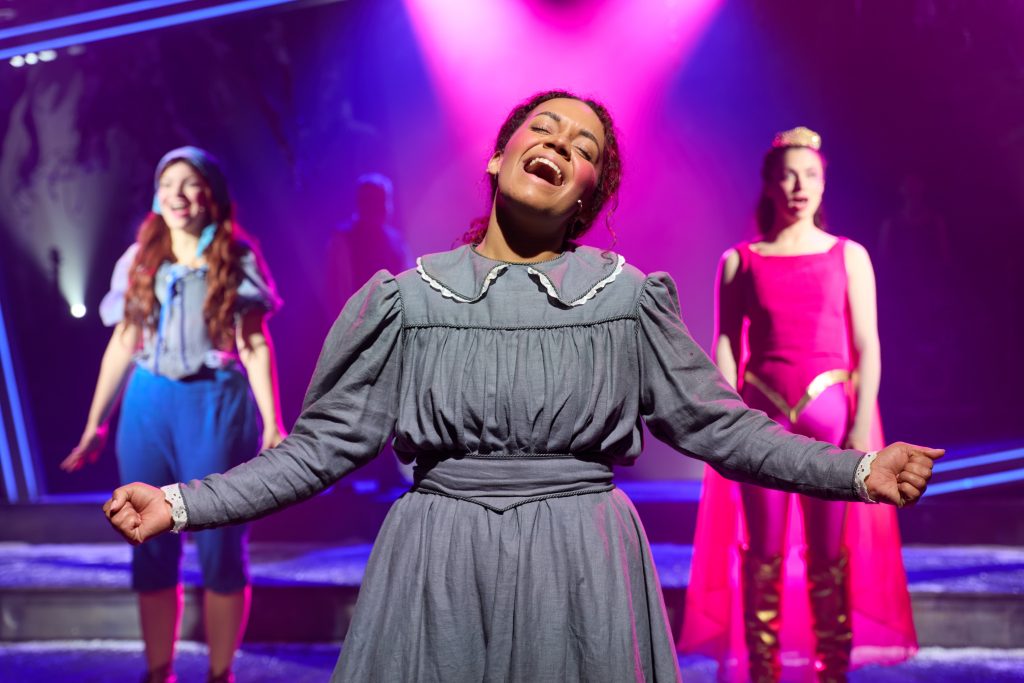
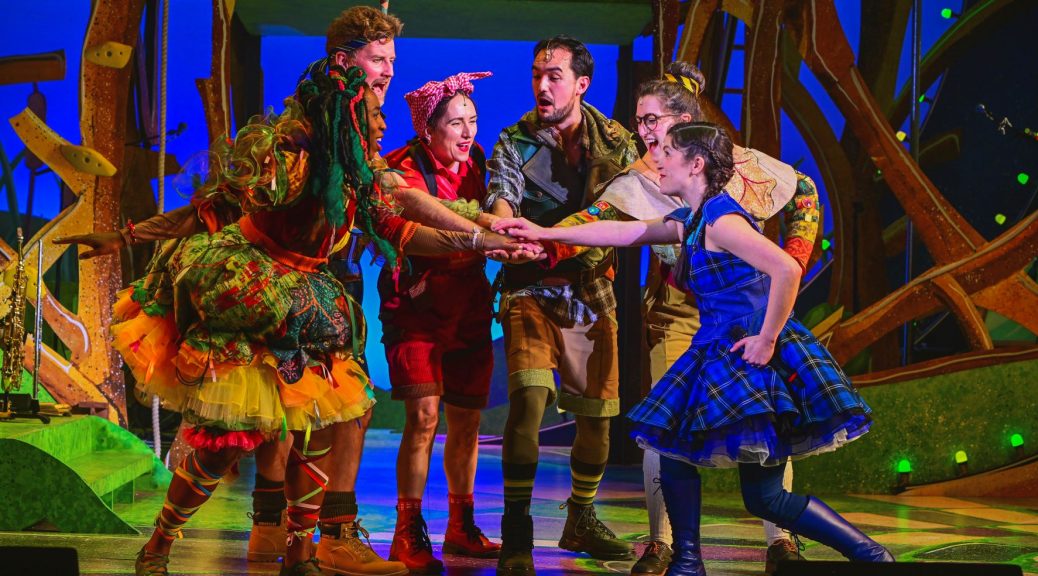
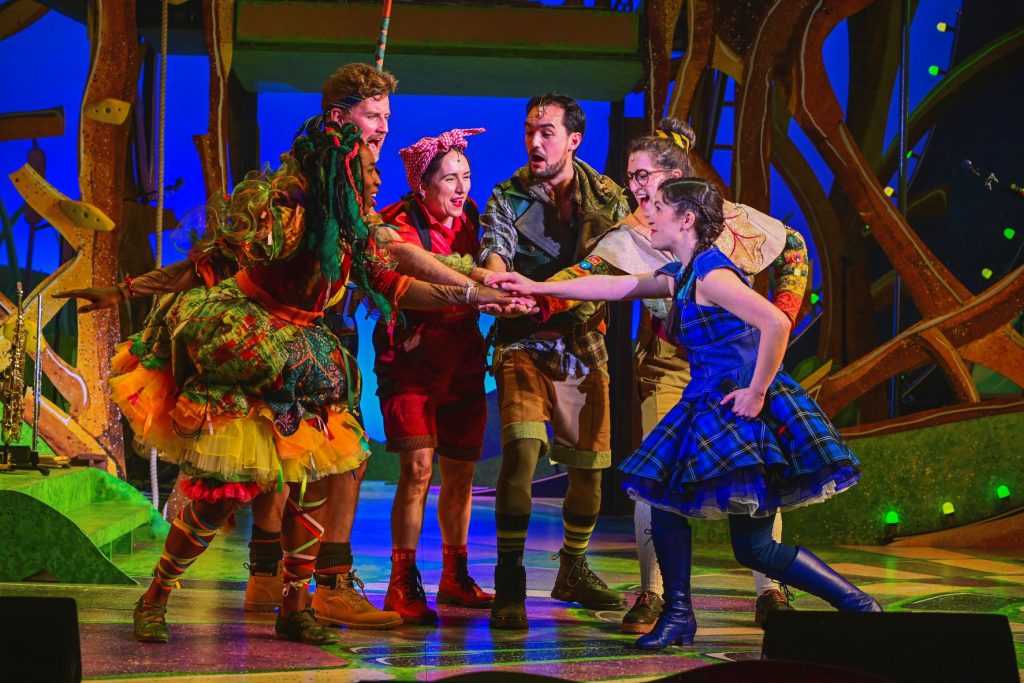
I was blown away by the performers talents. Each and every one of them, played their character so well. Whoever cast the positions, did an excellent job. Notice I said talents. That’s because they all had multiple roles weaved in, acting, singing and playing an instrument.
Credit Mark Douet
What is Tales of the Brothers Grimm about?
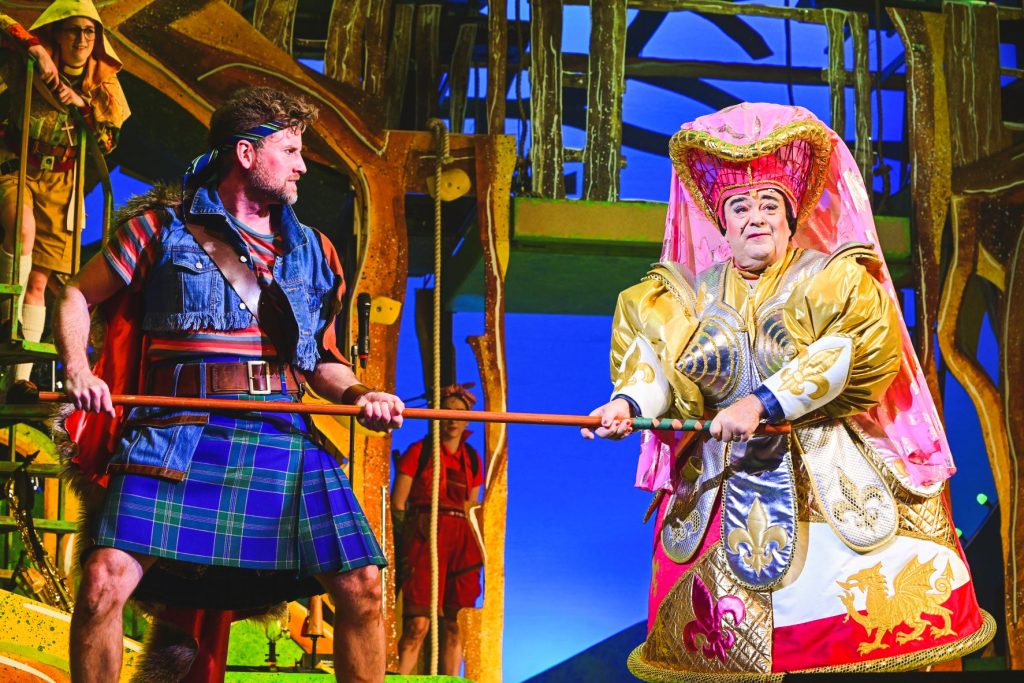
Tales of the Brothers Grimm written by Hannah McPake, reimagines the stories of well known fairy tale characters.
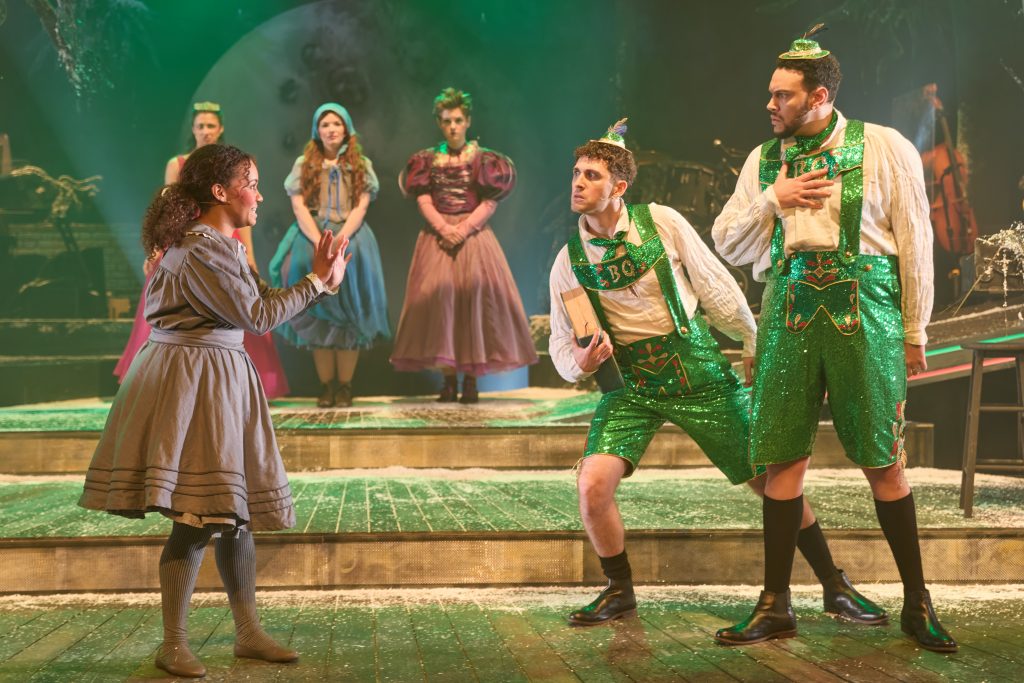
On a journey to find her own story, Stevie, comes across Cinderella, Sleeping beauty and Rapunzel. Disaster happens, the stories aren’t as they are suppose to be. Together with the narrator and Prince Charming they journey to find the Brothers Grimm, who they hope can fix it back to how it was, and even give Stevie her own part in her own story. They believe the big bad wolf and Snow Queen is set out to destroy it all. But with a twist!
The show was very well written and scripted, with humour and fun, and a sincere message.
I liked how they began the show by entering at different positions in the auditorium. I could see the range of emotions the story and songs brought to the audience, including my own children. The warm soft songs, some with sadness and some with positivity, my children clasped my hand and pulled in for a hug, and the upbeat songs with audience interaction making them laugh and clap.
My eldest son asked if there is a soundtrack to purchase as he enjoyed the music so much.
The programme was family orientated with colouring and puzzles for children.
The smoke effects added to the atmosphere, maybe a bit too much at times that you couldn’t see the characters on the stage.
There were a couple of songs I couldn’t hear the words in the song clearly. This is just me being super picky by the way!
Overall, an exceptional performance! A huge well done to the whole cast, backstage, production, ushers, the staff and volunteers that make the theatre come to life.
Credit Mark Douet
I highly recommend a visit to see this show, which is on now until it finishes at the end of December.
As far as I’m concerned, the festive season doesn’t begin until I’ve been to see Theatr Clwyd’s infamous rock ‘n’ roll pantomime. This year it just happened to be one of my favourites tales-the tale of Robin Hood. Although what would this story be without the heroine, Maid Marian? Or MariOn as we say in Wales!
Upon taking our seats we enter the forest. In front of us, giant trees with tall branches on which hang posters declaring ‘We love Robin Hood’. In the centre, what looks like a tangle of circular green branches, on which is hidden the name of our hero; the ‘o’ in Robin cleverly disguised as a target and arrow which light up. We’ve already been transported to where our story begins, in Flint-sh-sh-shire, as the Sheriff believes it’s pronounced, much to the frustration of his subject, Clod!
Once again, the cast enthrall us with their many talents; sword fighting one moment, next playing the drums for a big musical number, then singing a power ballad full pelt before completing a costume change and dashing to the top of the set to play keyboards without the audience even noticing the transition! Just incredible. And the reason, for me, that Theatr Clwyd’s panto is head and shoulders above the rest!
Let’s just hope that this remains the case once director, Tamara Harvey, leaves her post to take on the role of Co-Artistic Director of the RSC next year!
The action kicks off straight away and it’s not long before the water guns are out, and bubbles are filling the auditorium! As ever, the music choices throughout are unique and punchy. The cast always surprises with songs you wouldn’t necessarily expect to hear in a traditional pantomime. This year we have a Beastie Boys classic, Lizzo’s Good as Hell, and a rip-roaring rendition of what has become the Welsh football team’s unofficial anthem ‘Yma o Hyd’, although this may not feel quite as uplifting now that the team are out of the World Cup!
Phylip Harries’ Dame, Lady Myfanwy of Mold, is right on target (sorry!). His comic timing, interaction with the audience and chemistry with his fellow cast members, particularly the ever-amusing Daniel Lloyd who plays Little John, are all superb, and his transformation into Wonder Woman is something to behold! I’m convinced the creative team dare each other, every panto season, to push the boundaries with the lewd jokes! Always tastefully delivered and appropriate enough to bypass any little ones in the crowd, the adults amongst us were in for a treat! One particular line about a casserole almost made me blush!
As always with a Theatr Clwyd panto, the Welsh language is heard plentifully throughout the production with frequent mentions of local places from Flintshire to Rhyl, Mold to Wrexham as well as greetings from each character often delivered in both English and Welsh. It’s so refreshing to hear real Welsh accents, lots of local references as well as Welsh songs and music underpinning the whole piece.
Stand out moments this year include Celia Cruwys-Finnigan as Maid Marion. Celia is a little pocket- rocket and portrays Marion perfectly: shifting from an underrated, pretty Princess to an awe-inspiring female with attitude. And for such a petite person, she has a huge set of lungs! The costumes also provided plenty of ‘wow’ moments, none more so than King Gruff’s final, and only, costume, which, to the untrained eye, made it look as if his subject (aptly named Drakeford!) was carrying him on his shoulders! Brilliantly funny! Also watch out for the lip sync challenge, a scene in itself, and one which has children and adults alike in fits of laughter
Photo Credit: Kirsten McTernan
However, the highlight for me, and others I’m sure, is Ben Locke as the Sheriff. Last year, Ben played Barry Island (the ‘Gaston’ character in Beauty and the Beast) and did such a fabulous job at being the villain that he was surely the obvious choice for the Sheriff. Ben seems to have a knack for playing a fantastically evil, handsome yet extremely camp baddie! Every line he delivers is flawless, his physicality is phenomenal and his comic timing perfect. Every facial expression is thought about and he’s clearly just having a wonderful time with this character!
Theatr Clwyd have done it again and brought to life classic tale in a very un-classic way! ‘Oh no, they haven’t!’ ‘Oh yes, they have!’
Theatr Clwyd, Mold November 30th, 2022-January 12th, 2023 Writer: Chris Patterson Director: Tamara Harvey Assistant Director: Juliette Manon Casting: Kay Magson CDG Set & Costume Designer: Adrian Gee Musical Director: Tayo Akinbode Choreographer: Annie-Lunnette Deakin-Foster Lighting Designer: Johanna Town Sound Designer: Matthew Williams Company Stage Manager: Cassey Driver
Cast includes Joe Butcher, Celia Cruwys-Finnigan, Connor Going, Caitlyn Lavagna, Lynwen Haf Roberts, Luke Thornton, Daniel Lloyd, Phylip Harries, Ben Locke, Alice McKenna, Chioma Uma Running time: 2 hours and 20 minutes (inc. interval) Photo Credit: Kirsten McTernan
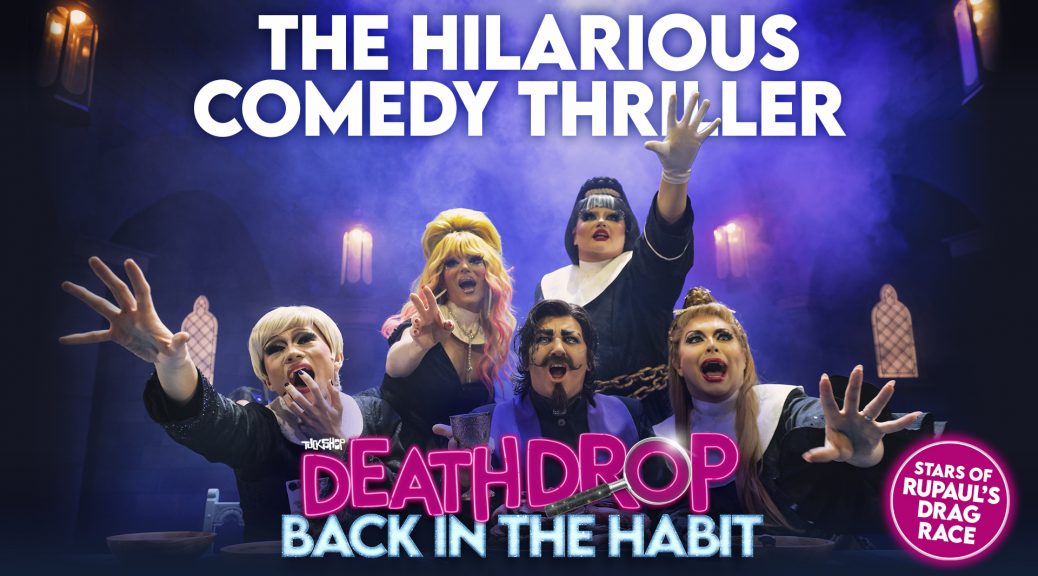
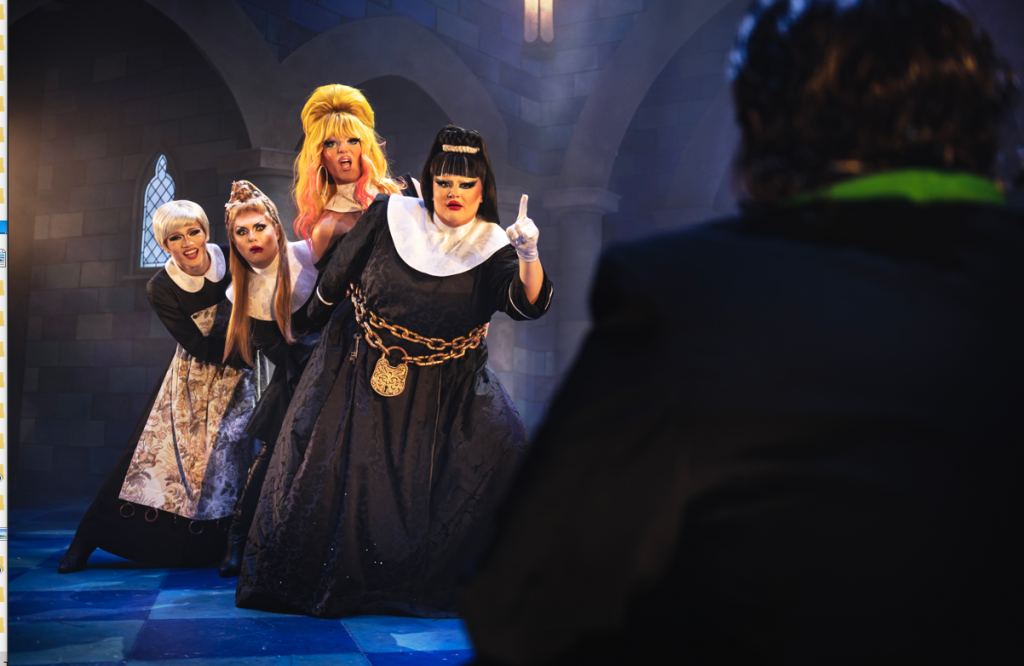
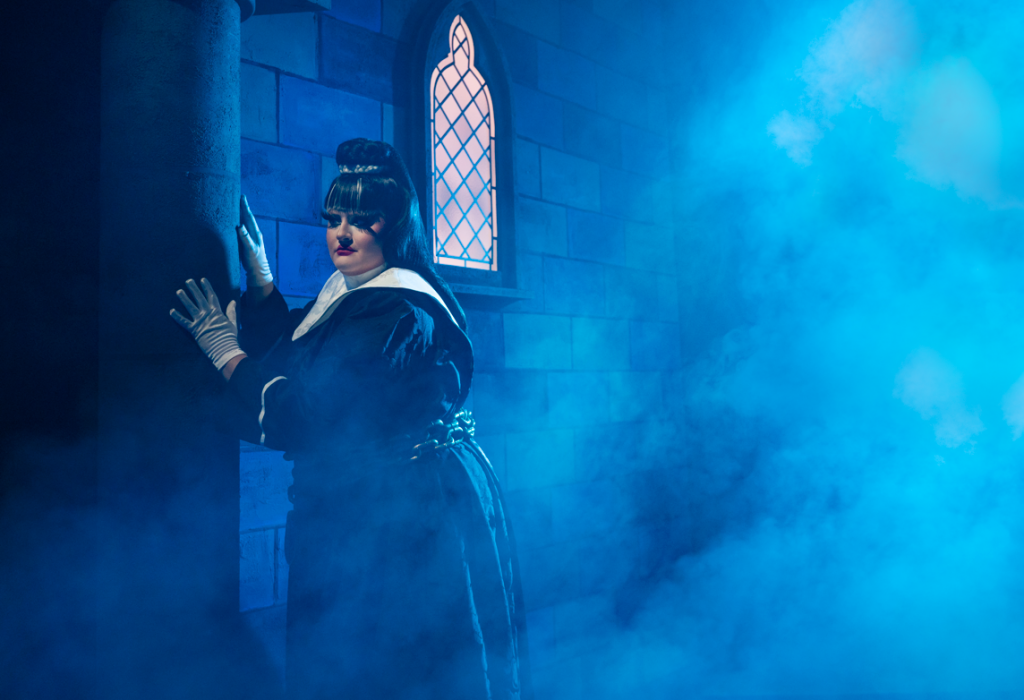
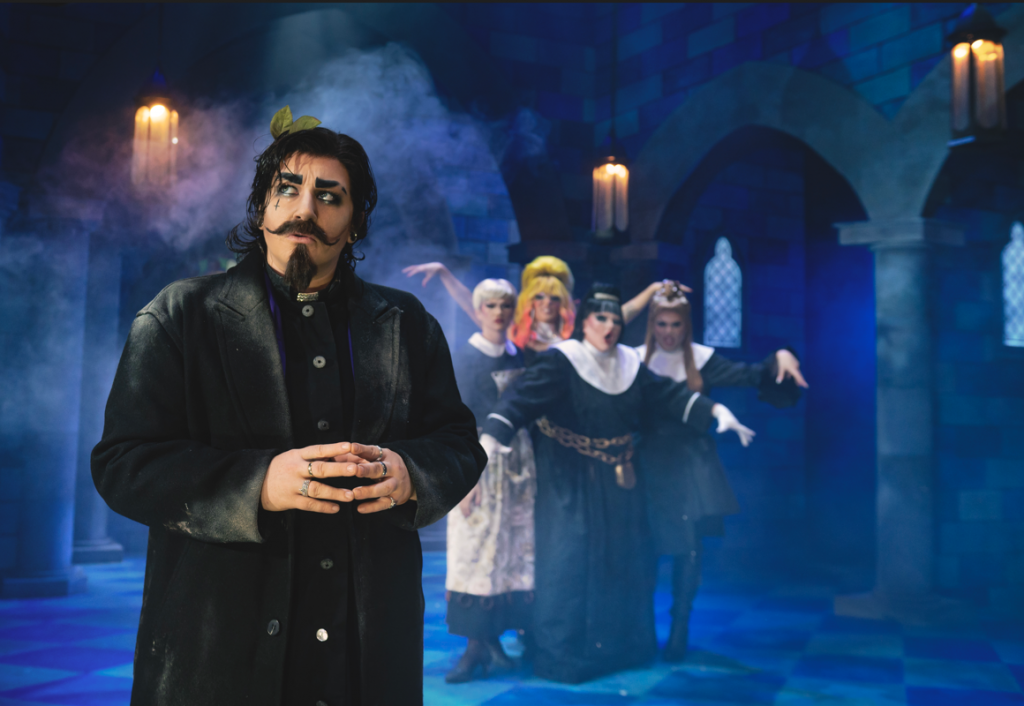
Hallelujah! Following three West End runs and a sold-out UK tour, the original Death Drop took the theatre world by storm by filling the stage with an all-star cast of drag queens and kings. It was easily the filthiest and funniest thing I’d ever seen – and the sequel promised to be even more anarchic, swapping out Dragatha Christie for Dragnus Dei. Produced by TuckShop and Trafalgar Theatre Productions, Death Drop: Back in the Habit centres on a gaggle of glamorous nuns who occupy the remote convent of St Babs. With a gamut of ghostly goings-on, and a potential serial killer slashaying their way through the sisterhood, the Vatican sends Father Alfie Romeo to sleuth out the truth – though he’s no Sis Marple.
River Medway, Cheryl Hole, Willam, Victoria Scone, and LoUis CYfer in Death Drop: Back in the Habit. Image credit: Matt Crockett
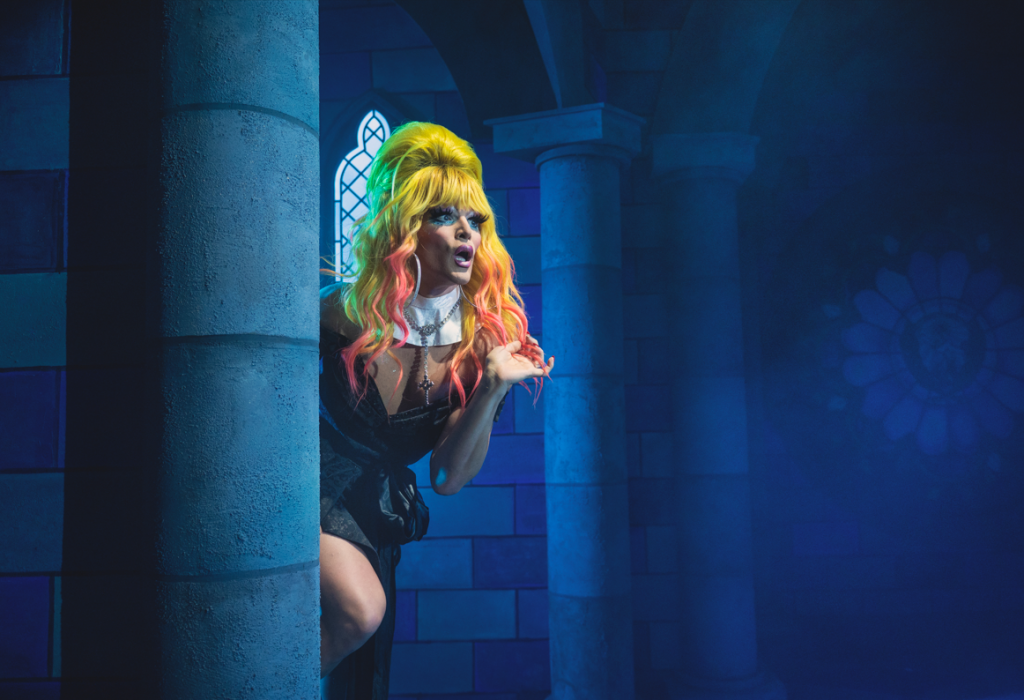
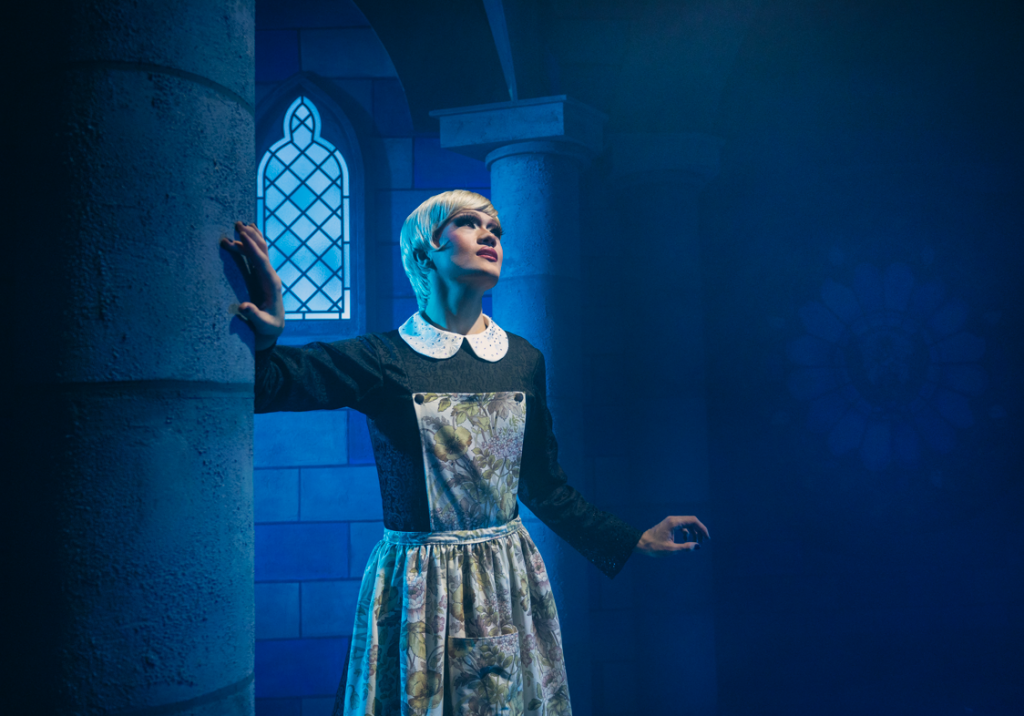
Written by Rob Evans and directed once again by Jesse Jones, Back in the Habit is the newest entry in the self-proclaimed Death Drop Cinematic Universe (DDCU), created by Christopher D Clegg. The sequel is blessed with the presence of drag royalty, including two returning stars: RuPaul’s Drag Race US Superstar Willam (the only contestant to be disqualified!) as Sis Titis, and award-winning Drag King LoUis CYfer as Alfie Romeo. They’re joined by a holy trinity of Drag Race UK stars: River Medway as Sister Maria Julieandrews, Cheryl Hole as Sister Mary Berry, and Cardiff-based Victoria Scone (the first cis woman to compete in the franchise’s history) as Mother Superior. Blessed are they who pun in the name of the lord.
Willam as Sis Titis in Death Drop: Back in the Habit. Image credit: Matt Crockett
The cast are on top form and bring glamour, gags, and gravitas to a script that isn’t quite as tight as the costumes. There’s a lot of camp, comedic potential in Christianity – for further reference, see the Met Gala’s 2018 bash – and its ecclesiastical extravagance is suitably eviscerated here. In true Death Drop fashion, the jinks are high and the brow is low, with no innuendo left unturned. Despite throwing shade at the ‘cheap’ production values, Peter Mackintosh’s set and Rory Beaton’s lighting are extremely effective, especially in the scarier scenes (demonic possession, ghostly apparitions, and a ghoulishly good reprise of Flo and Joan’s ‘Oopsie Whoopsie’).
River Medway as Sister Maria Julieandrews in Death Drop: Back in the Habit. Image credit: Matt Crockett
The characterisations are top-class – but I must make a confession: while the performers are truly doing the Lord’s work, the material they’re given is far from divine. Cheryl Hole’s Sister Mary Berry and Willam’s Sis Titis are brilliantly named and performed, but their comedic potential isn’t mined as much as it could be – Mary Berry isn’t even the resident chef! If we already have Sister Maria Julieandrews, why not have her be joined by other onscreen nuns: can you imagine Willam donning Deborah Kerr’s iconic white wimple from Black Narcissus while Cheryl Hole channels Debbie Reynolds’ guitar-strumming Singing Nun? In recent years we’ve even had Saint Maud, Warrior Nun, and The Conjuring movies – but there’s one obvious omission: to not have a queen take on the role of Whoopi Goldberg’s Sister Mary Clarence here is practically blasphemous, especially as its her film which lends this show its subtitle. Its second-to-none cast, though, is its saving grace.
Local girl Victoria Scone as Mother Superior in Death Drop: Back in the Habit. Image credit: Matt Crockett
While it might not be the answer to all your prayers, Death Drop: Back in the Habit is a Joyful, Joyfulslay ride that features a heavenly host of drag performers that put the ‘original’ in ‘original sin’. Can I get an Amen?
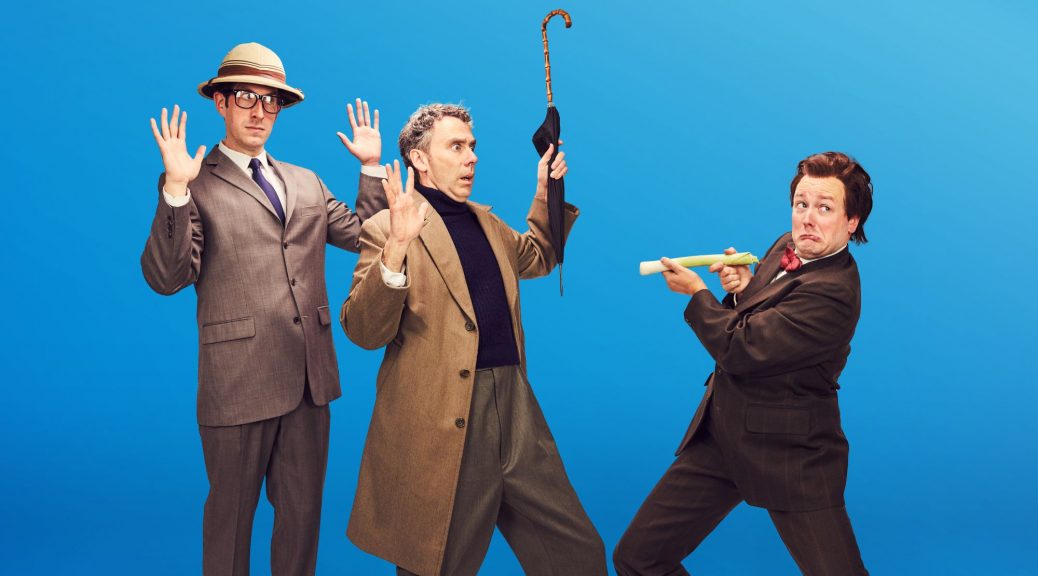
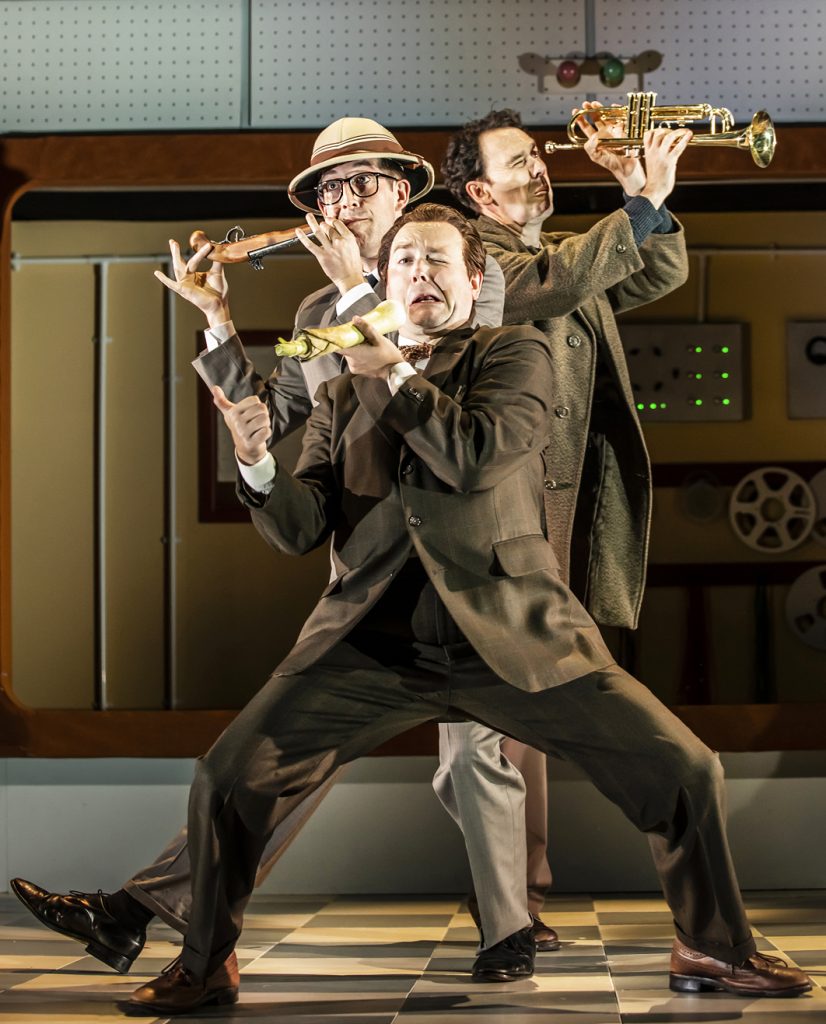
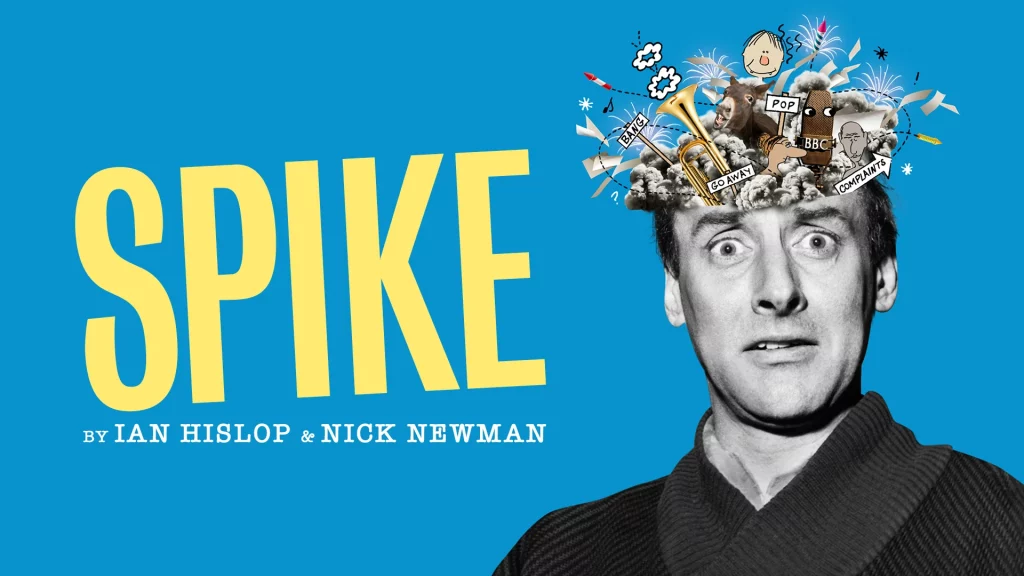
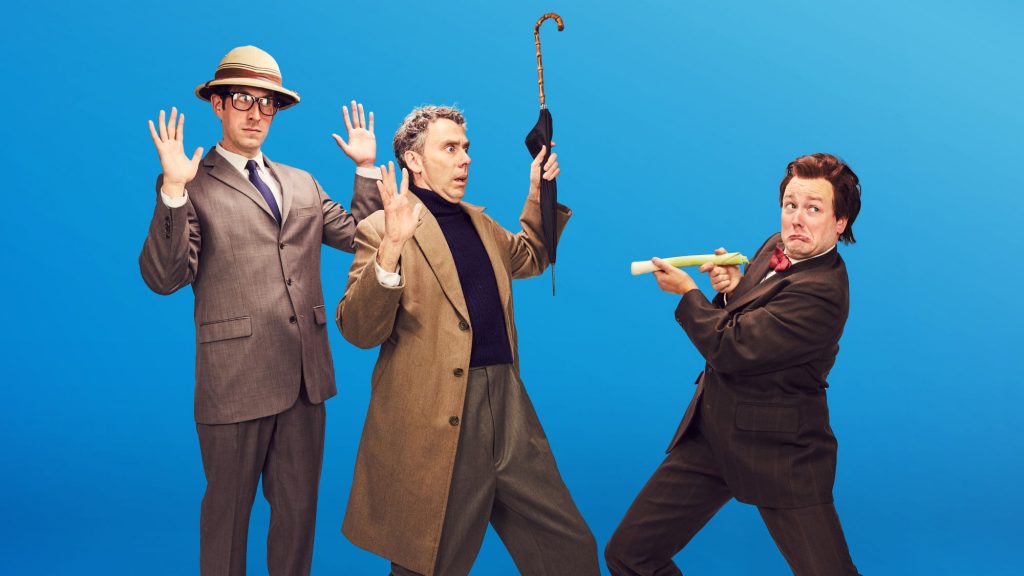
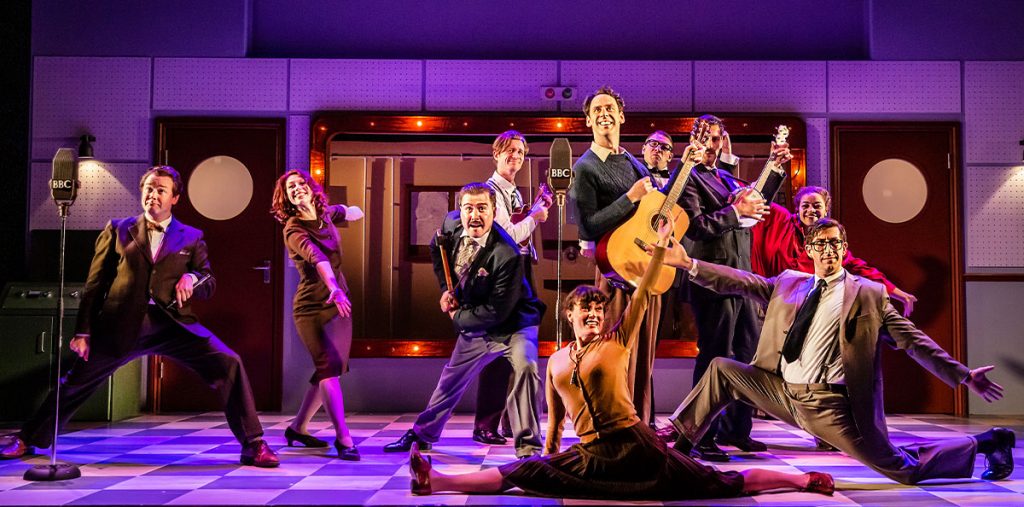
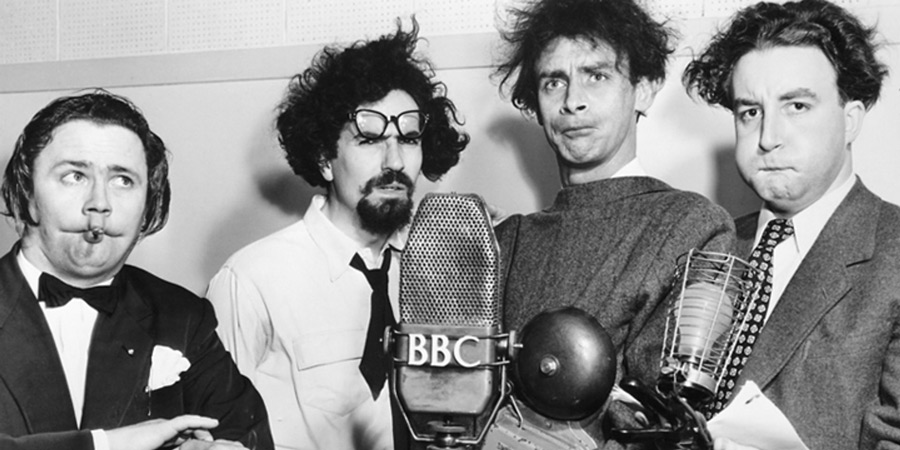
‘I told you I was ill’: this is the epitaph of one Terence ‘Spike’ Milligan, who holds the rare honour of being able to make people laugh long after shuffling off this mortal coil. Milligan was the man behind The Goons, a satirical radio show broadcast by the BBC between 1951 and 1960. As co-creator, chief writer and one third of the titular trio along with Peter Sellers and Harry Secombe, Milligan took postwar Britain by storm and influenced comedic greats from Monty Python to the Muppets. Premiering at the Watermill in January and now ending its successful UK tour at Cardiff’s New Theatre, Ian Hislop and Nick Newman’s SPIKE celebrates the man behind the madness.
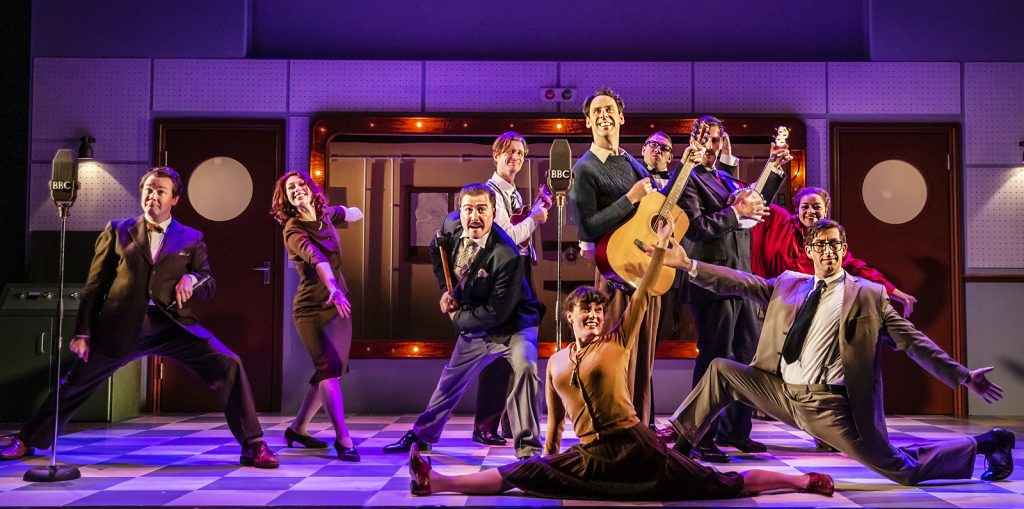
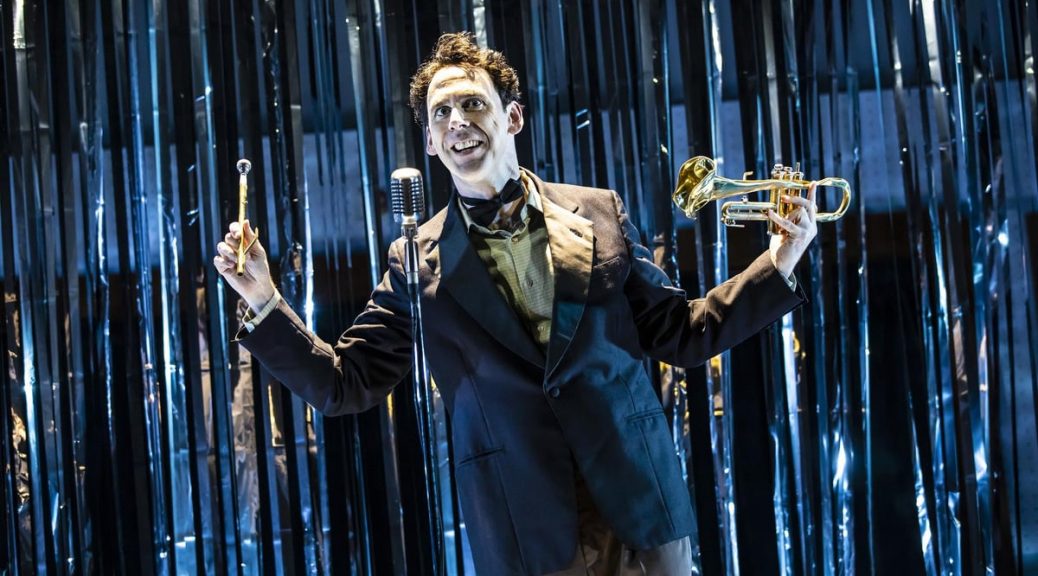
The cast concludes the play with a raucous performance of The Goons’ ‘Whistle Your Cares Away’, which inspired Monty Python’s ‘Always Look on the Bright Side of Life’. All images credited to Pamela Raith.
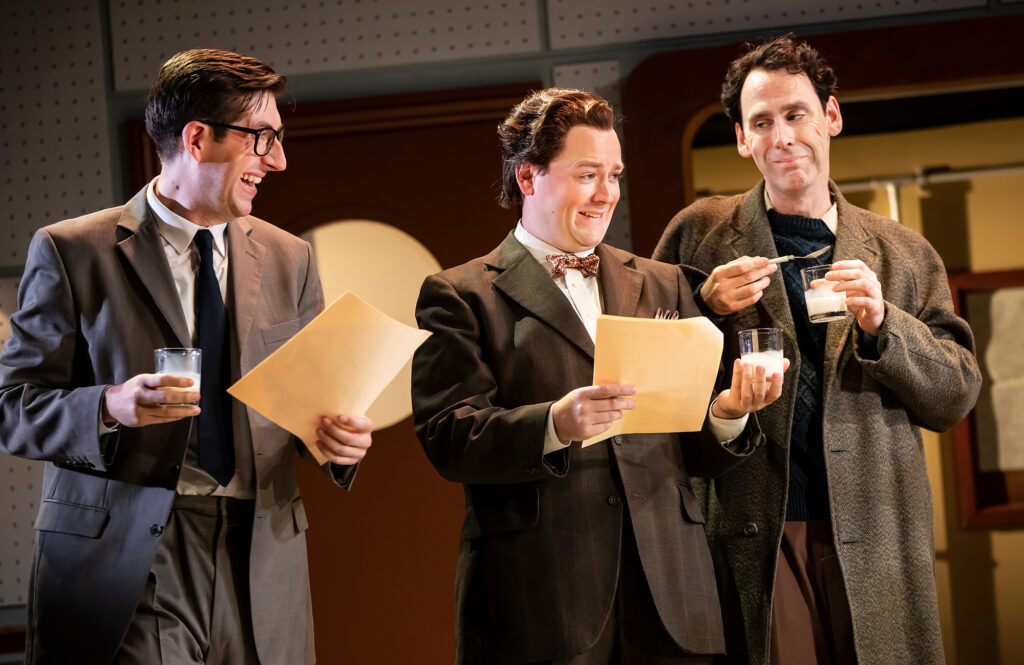
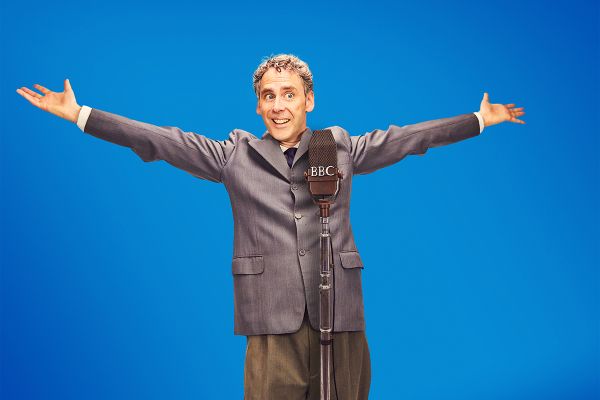
Directed by Watermill AD Paul Hart, SPIKE takes place during the tumultuous making of The Goons, which was just as chaotic and surreal behind the mic as it was in front of it. This trio of working-class lads had a penchant for the surreal and direct line to your funny bone – but, as with anything creative, tempers flared and egos clashed. Robert Wilfort (aka Gavin and Stacey’s Jason – he of the infamous fishing trip) is nothing short of stupendous as Spike, no small feat when considering that the man was a one-off who was always ‘on’. Determined not to play him as a ‘Tears of a Clown’ caricature (for more, check out our interview with Robert here), Wilfort plays Spike as the beleaguered eccentric he was – a loyal friend, a frustrating colleague, and a loving if distant husband. Wilfort captures Spike’s soul in all its anarchic, defiant glory, and has the comic chops to make his iconic quips soar.
The cast’s recreations of classic Goon gags are nothing short of stellar
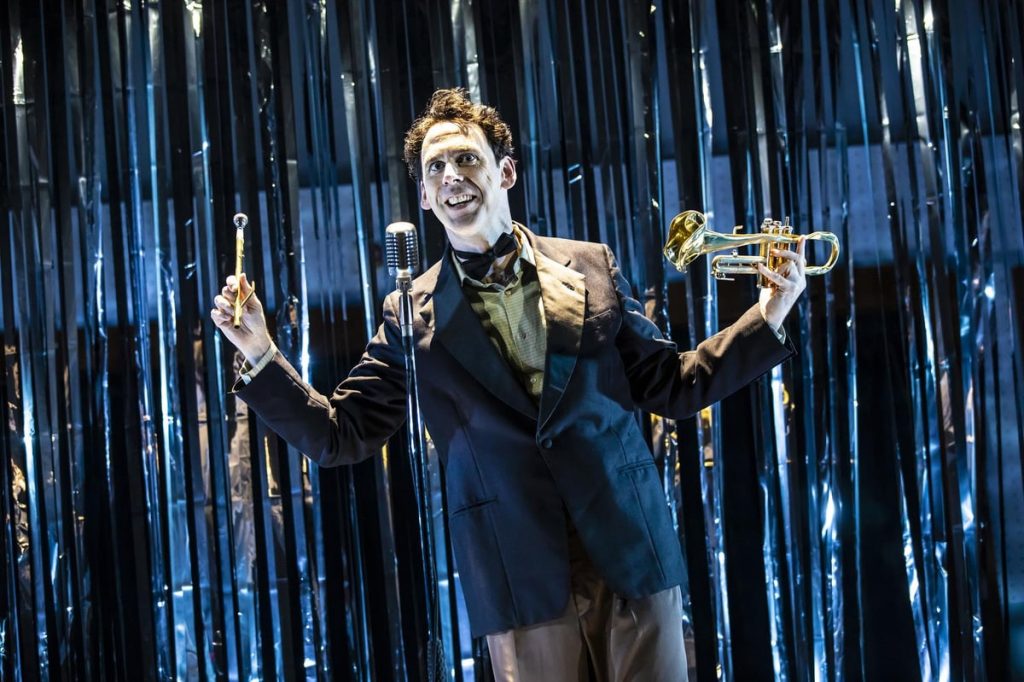
He’s supported by a rabble-rousing, gag-tastic cast who collectively had the audience in stitches. While this is Spike’s show through and through, Mischief Theatre alums Patrick Warner and Jeremy Lloyd as Peter Sellers and Wales’ own Harry Secombe, not to mention Ellie Morris as Spike’s first wife June, all have their time to shine. Warner and Lloyd are uncanny as their comic counterparts – and when they share the stage with Wilfort, they nail the Goons’ very particular magic: they’re just three (extra)ordinary people who enjoy making each other laugh. Robert Mountford does a brilliant job as both a haughty BBC Executive and as one third of a toffee-nosed trio of critics, along with James Mack and Margaret Cabourn-Smith (who also plays enthusiastic sound engineer Janet). It’s no surprise that cast and crew have been nominatedfor multiple Broadway World UK awards.
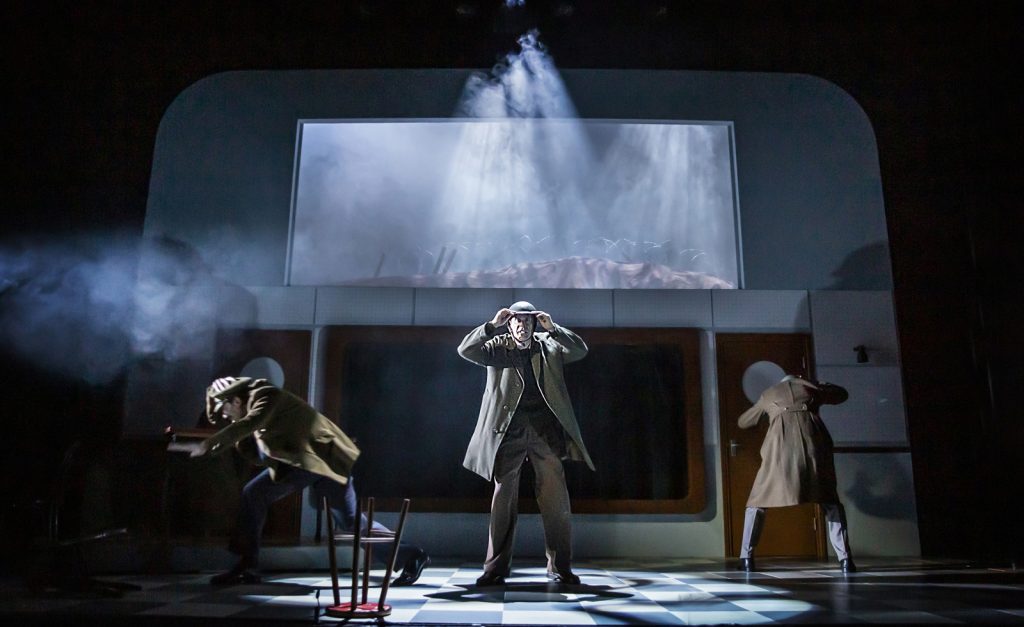
The flashbacks to Spike’s time serving in World War II are effective and affecting – not to mention an inventive recreation of the writing process set to Rimsky-Korsakov’s ‘Flight of the Bumblebee’
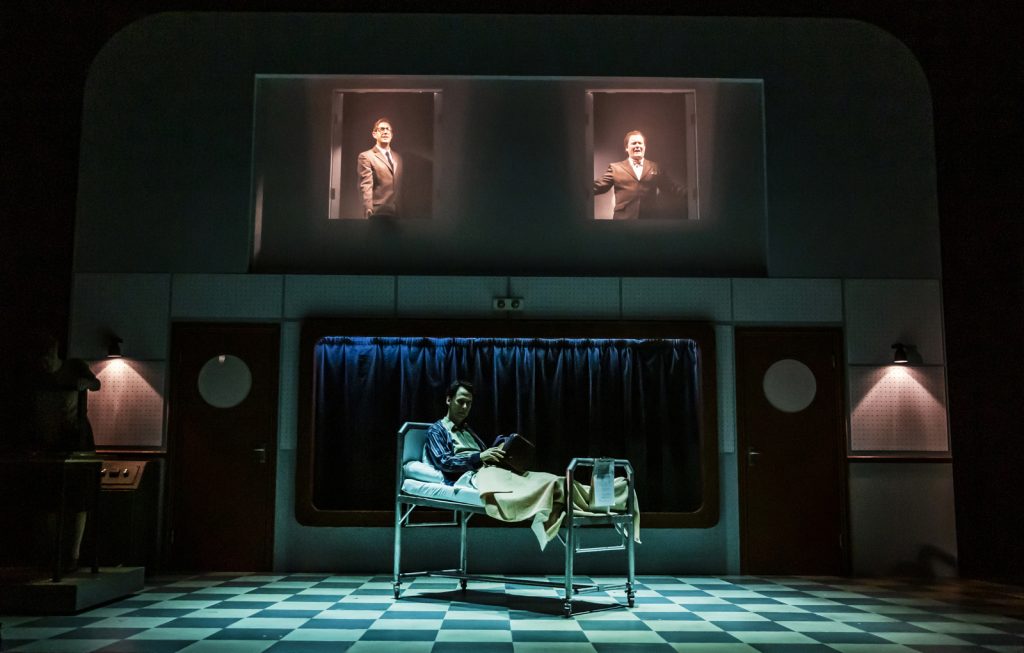
While the show focuses on a relatively narrow portion of Milligan’s life, it covers a lot of ground, from his service in the Royal Artillery during World War II to his struggles with PTSD and bipolar disorder and the breakdown of his first marriage. Most vividly, it captures his infamous battles with the BBC: you see, the war never really left him, and neither did his rebellious attitude to authority. When he discovered that the Officer Class were to have command over him again, this time as the pen-pushing Heads of Department who nixed anything vaguely novel, Spike took up arms anew.
Spike infamously died on his feet during a solo set in Coventry, telling the booing audience: “I hope you all get bombed again.”.
In the excellent post-show talk (of which the New should do more, if possible), co-writer Newman admitted that the play gave him and Hislop (The Wipers Times) the chance to ‘steal all of Spike’s best jokes’. While the play lacks something of a dramatic through-line, the love for Spike is in every second; there’s a reverence about his irreverence that makes it as moving as it is hilarious. Even Spike’s daughter, Jane Milligan, expressed how much she misses her dad’s ‘anarchy’, and his ability to hold power to account – remember that even the reigning monarch did not escape unscathed from Spike’s cutting wit.
SPIKE doesn’t gloss over the hardships Milligan faced, but it portrays both the rough and the smooth with a lightness of touch and a fondness for the man that radiates from the stage
While Peter Sellers went on to great success in movies like The Pink Panther and Dr Strangelove, and Secombe (iconic as Oliver!’s Mr Bumble) went into music, Milligan became a prolific memoirist (Adolf Hitler: My Part in His Downfall), poet, and children’s author – but never reached their flashy heights. His influence, though, is immortal – and SPIKE is, in true Goonish fashion, an eccentric celebration of a man who, even after a lifetime of making the world laugh, was still gone too Goon.
SPIKE concludes its UK tour at the New Theatre Cardiff this week – make sure to catch it between 22 – 26 November before it’s Goon forever! More information on the show and how to book tickets here.
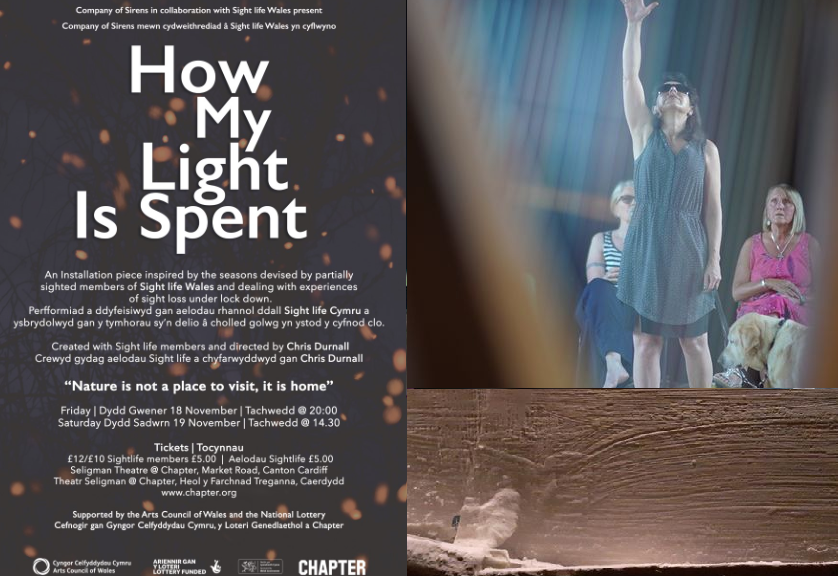
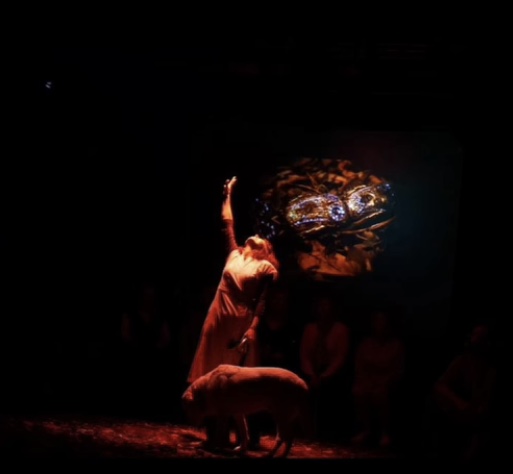
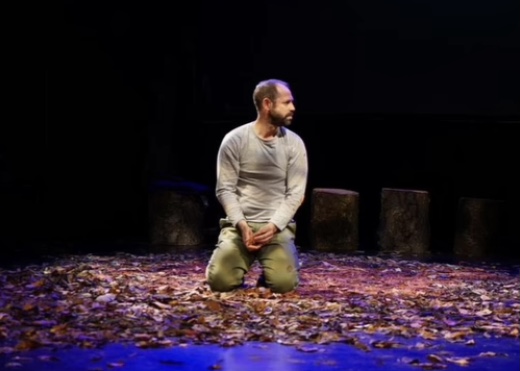
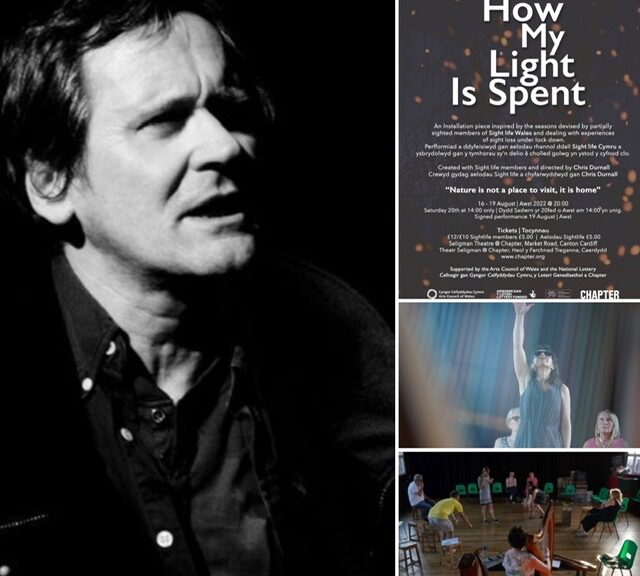
Last year, Company of Sirens and Sight Life Wales collaborated on an innovative installation piece called ‘With Eyes Closed’, in which people with sight loss shared stories from their lives. The theatrical space was transformed into a beach, and the performers would unearth a memento from the sand and from their past. Their second collaboration, ‘How My Light is Spent’, was postponed in August due to covid, and finally premiered this week with two highly in-demand performances at Chapter Arts Centre in Cardiff. It takes inspiration from the sonnet of the same name by John Milton (author of ‘Paradise Lost’) who lost his own sight around the time of its publication.
Lou Lockwood in ‘How My Light is Spent’
The company’s phenomenal debut caught me completely off guard, and it meant that I walked into the ‘sequel’ with high expectations – and it exceeded every one. What the creative team has achieved here is nothing short of profound: a level of emotional authenticity and community that sets a new standard for what theatre can achieve.
Jane McCann in ‘How My Light is Spent’
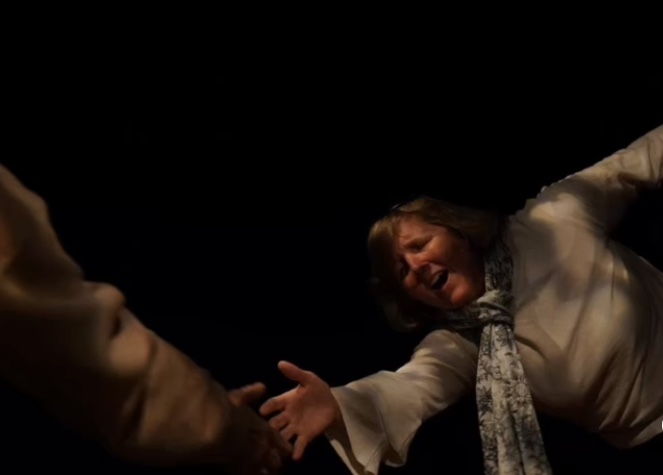
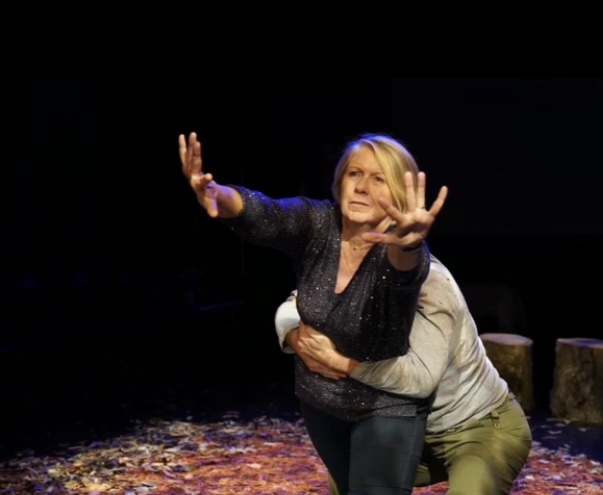
Many of the performers from ‘With Eyes Closed’ return here, and it is a joy to see them grow to new heights both as individual storytellers and as a group – so, first and foremost, kudos to Roz Grimble, Sharon Hale, Emma Juliet Lawton, John Sanders, Lou Lockwood, and Jane McCann. Their reflections here centre on their experiences in lockdown, and of their relationship with their senses and with nature.
John Sanders in ‘How My Light is Spent’
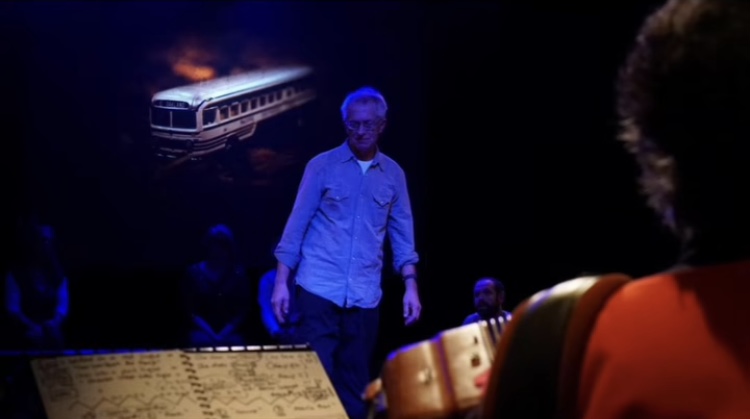
Each performer brings their own distinct light, letting their unique personalities and voices shine (they also do this literally: when each takes centre stage, they are illuminated by a different colour, having worked with lighting designer Dan Young to convey the unique shade of their story). Alastair Sill provides characterful audio description and acts as both guide and emcee, leading them to the stage and lending an attentive ear to their stories. In the forest setting, his performance takes on an otherworldly quality: a sweeter, gentler Puck watching the dreamers’ visions unfold.
Alastair Sill in ‘How My Light is Spent’
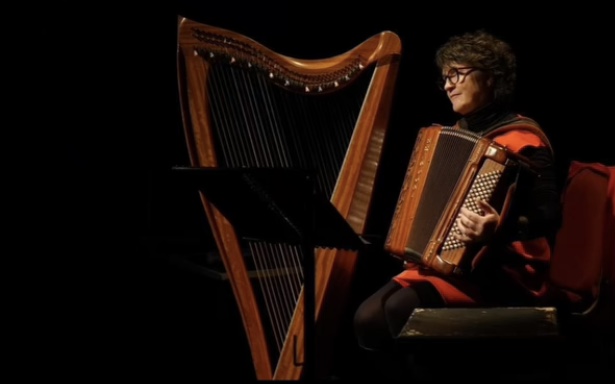
The set, designed by Edwina Williams-Jones, is strewn with autumnal leaves and twigs that crackle underfoot, creating a tactile image of a forest out of time. Sion Berry’s multimedia films, Chris Durnall’s direction and Stacey Blythe’s music are, themselves, sources of light: they guide, encourage and illuminate the performers without turning the attention on themselves. The piece is cleverly bookended by Yazoo’s ‘Only You’ and Johnny Nash’s ‘I Can See Clearly Now’ which resonate with the themes of the piece, and Blythe’s use of both accordion and harp interweave the merry with the melancholic (and there really aren’t enough accordion dance breaks in modern theatre!)
Stacey Blythe in ‘How My Light is Spent’
The piece is a rich, engrossing experience: stories of happiness and hardship alike are told with compassion and without compromise, and always with a light touch and a sense of humour. What the cast does here transcends ‘acting’: this is soul-deep communication, a placing of story in the palm of your hand. The sense of community, too, is moving. You see, the forest can liberate but it can also entrap: only by telling our story, and guiding each other through the darkness, can we be truly free.
Roz McGrimble and Alastair Still in ‘How My Light is Spent’
The first play was themed around water – this one, earth. Perhaps in their third collaboration, Company of Sirens and Sight Life will take to the skies. In many ways, they already have.
‘How My Light is Spent’ performed at Chapter Arts Centre on 18 and 19 November 2022. Company of Sirens will restage ‘Stone the Crows’ in February 2023 (you can check out Get the Chance’s five-star review here) before premiering ‘Rhapsody’, a new play about pioneering Welsh writer Dorothy Edwards, at Chapter in May.
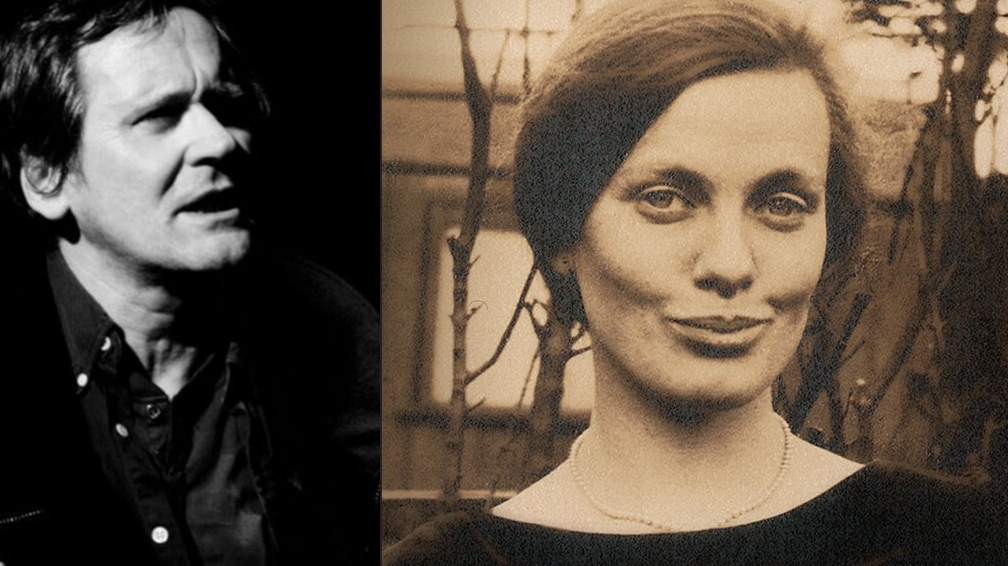
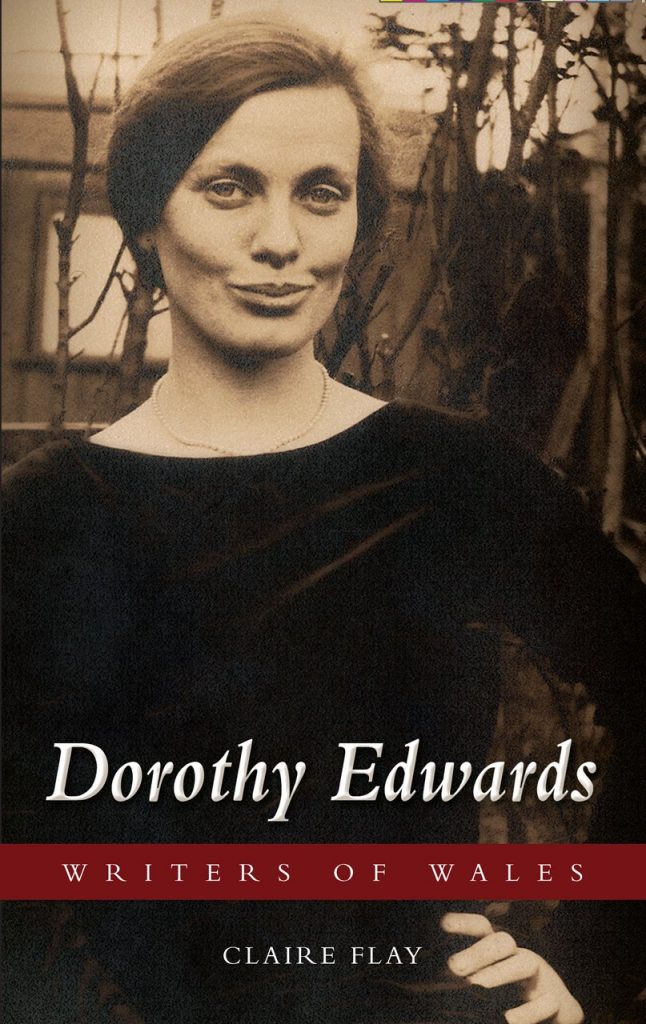
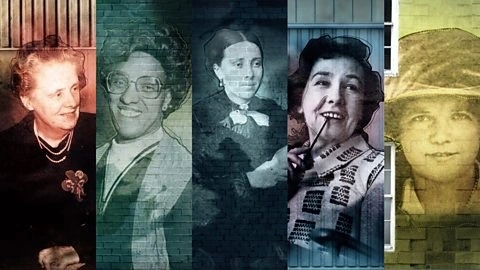
Get the Chance Community Critic Barbara Hughes-Moore speaks with Chris Durnall, Artistic Director of Company of Sirens, and director of the upcoming new play ‘Rhapsody‘ about the life of Dorothy Edwards, one of Wales’ greatest writers. While little-known nowadays, Edwards was a highly influential member of the Bloomsbury Set, a group of radical English writers which also boasted the likes of Virginia Woolf and E. M. Forster. The play is written by Gary Raymond and performed by actors Gwenllian Higginson and Gwydion Rhys, with music by Stacey Blythe (though not a traditional ‘score’ as such – more on that in a bit). ‘Rhapsody’ will premiere at Chapter Arts Centre in May 2023.
This interview has been edited for clarity.
Hi Chris, tell us a little bit about why you wanted to tell the story of Dorothy Edwards.
Dorothy Edwards a writer who has clearly been repressed due to her gender, her Welshness, and her working-class roots. When she was part of the Bloomsbury Group, she was called the ‘Welsh Cinderella’. That wasn’t necessarily she reason she did what she did, but her creative life was different [because of] where she came from. I think she got swamped by the big personalities in the group like Virginia Woolf and David Garnett. So, it’s about bringing her life out and finding a way to tell that story that is contemporary, so that it’s not a piece of history. It happened in the 1920s and ’30s but its themes are relevant for now. For us, it’s about making it current and contemporary, otherwise it becomes a museum piece, and when theatre becomes that, then it loses relevance. There needs to be a reason to make it, and that reason has to be something that’s happening in the world today.
How have you ensured that the creative process retains that immediacy and relevance?
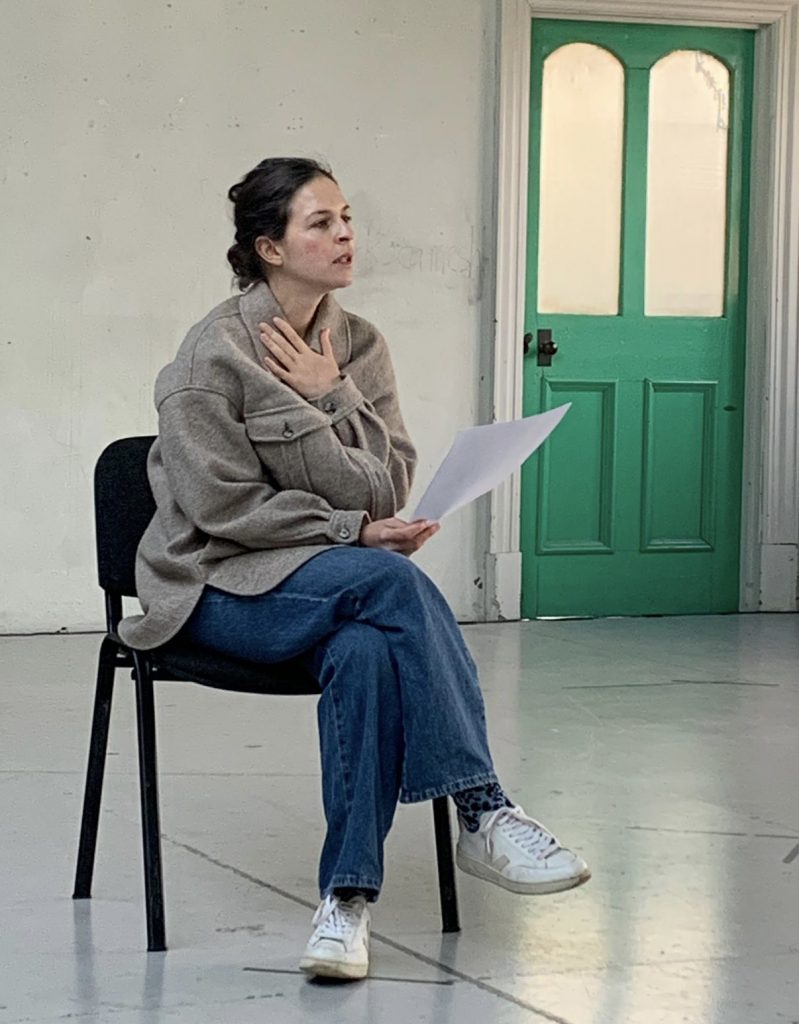
We wanted to begin with Dorothy’s suicide and work backwards. The short pieces seen [in the R&D in November] actually started with Dorothy in Bloomsbury, then it went to her introduction into London society, then we touch on her return to Cardiff and worked with [Ronald Harding, a married Welsh cellist]. Really, it’s working backwards: starting with her suicide and then trying to explain what happened to her. What were the factors that led to her being relatively unknown, and unhappy in her personal and creative life? We try to answer those questions. Her suicide note is very well-known [“I am killing myself because I have never sincerely loved any human being all my life. I have accepted kindness and friendship and even love without gratitude and given nothing in return.”] After that, the rest of the play is exploring what that might have meant.
Does that mean you follow a strict structure – x has to happen at this point, y at the other – or do you keep it quite loose?
It’s very loose, and it shifts focus. The film ‘The Hours’ is quite a similar reference point because of that. We wanted to avoid was a straightforward linear storyline: we wanted to play around with time shifts and theatrical styles. So, first of all you have the sonata form: the three different strands of a sonata, based upon musical notation, [provides the structure for the play]. Then within each of the three acts, you have three very different styles of performance / musical instruments – within those you have three sections as well. So, the sonata form is kept throughout the three sections of the play.
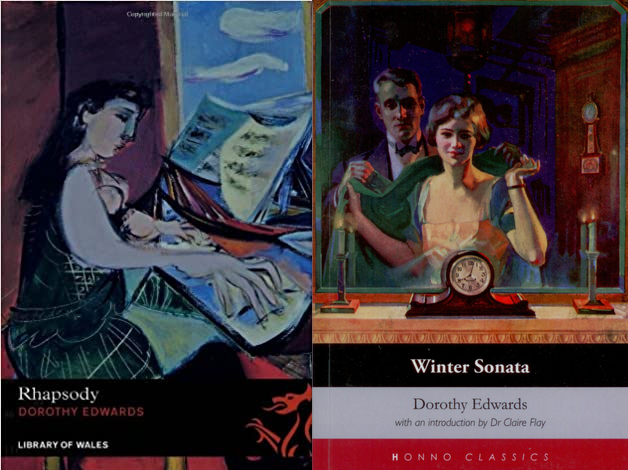
That’s really important for us because she was so musical: her novel was called ‘Winter Sonata’, her short stories called ‘Rhapsody’, and they’re all based on musical form. How then do you capture that musicality within the production and within the text, and how do you make the music not something that is a soundtrack but is an integral part of the production itself?
Gwenllian Higginson as Dorothy / Gwen the actress / herself in Company of Sirens’ ‘Rhapsody’
That’s the creative challenge – and within that, there’s a third layer which might be quite controversial, where the actress steps out of the story. That happened once in the R&D, but I would like that to happen a lot, where the actress steps out and comments on their life, so as to make a connection between the actress, the character of Dorothy, and the part she’s playing. It’s interesting theatrically to do something like this; it might seem confusing at first, but I think in the context of shifting focus / timeframe, that it would work. The device takes it away from a linear narrative. It is about Dorothy Edwards, but it’s also about Gwen, and about the actress playing her: you have three women investing in this role – the catalyst is Dorothy but it’s also a catalyst for their experiences as well.
You mentioned ‘The Hours’ as a touchstone for you – when I was watching the R&D, it reminded me of ‘The French Lieutenant’s Woman’: where actors are playing actors playing characters, which shares the ‘triple layer’ device.
That’s a really interesting observation and something I hadn’t thought of! [Harold] Pinter did the screenplay for that, and I’d like this play to be a lot more fluid so that the three drift in and out constantly. In the first act particularly, Gwen and Dorothy shift all the time, as does the male character [played by Gwydion Rhys]. Once you’ve established a convention, the audience understands and goes with it. The risk you take when doing something different is that the audience might be a bit confused at first!
Do you think that choice brings out different things for the creatives and the audience?
I think we underestimate our audiences a lot of the time, and a lot of the work I see is rather ‘on the nose’. To me, that bypasses the whole point of theatre – which is about audience involvement, the audience thinking and making decisions for themselves based on what is presented to them. If you’re constantly given information without the opportunity to assimilate and interpret it, it’s easy to be entertained but it’s difficult to be moved by it because you haven’t invested enough of yourself in the performance. The audience wants to be part of the experience. For me, it’s about what’s underneath the words: the spaces, the gaps, the moments of reflection where the audience comes in and makes it their own.
Do you feel that theatre enables you to give the audience more of an active role in telling a story?
Definitely – I’ve done theatre all my life, and what I love about theatre is you can do anything with it, it’s so incredibly flexible. You can create anything onstage and the audience will go along with it: what works is when an audience suspends their disbelief. I think that’s true of all theatre, that the audience will invest in what you’re doing and will buy into it – we sometimes underestimate and spoon-feed audiences when they don’t want that. I go to the theatre wanting to be challenged.
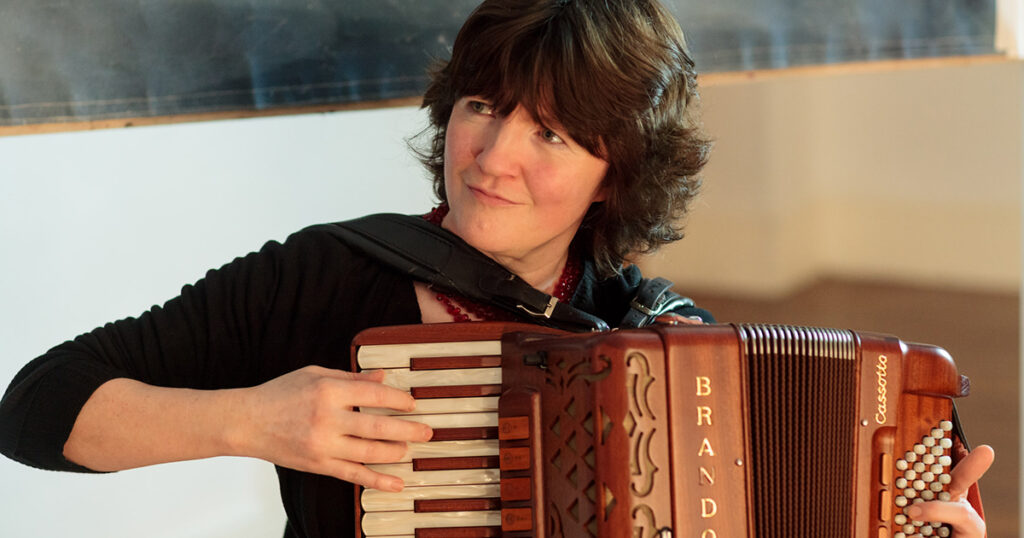
Stacey Blythe
Would the challenge in this production be the musical aspect, i.e. Stacey Blythe’s music, which isn’t just an emotional score but a character in its own right?
This is something I’ve wanted to do for a while. In 2013, I worked with the Sherman Theatre on a production called ‘Matthew’s Passion’. I worked with an autistic actor and a musician, and I wanted the musician to follow the actor around so that everything they did was interpreted musically. It didn’t quite work in that instance and became more of a soundtrack. So, what I wanted was for Stacey to work with Gwenllian – her music is the soul of the actress, they’re in a rhythm together. Stacey has certain chords and codas in mind but is flexible enough to follow the actress and shift as needed, and vice versa – they work together in this beautiful dialogue. I find that fascinating. You’ve also got the script on top of that, and a rhythm to the script that is more evident in the monologues in the first and second act – but there’s a musicality to the script, the performance of the actress supporting the music, and those things come together in an interesting way.
There are a lot of trios going on here: the sonata, the actress, the rhythms.
That’s absolutely intentional. When you start something like this, I really believe that things happen independently of you making them happen. It’s sort of magic, theatre is: it’s based on ritual and performance, and that magic doesn’t go away, so things happen constantly if you allow them to, and if you don’t try to control them.
How do you manage to walk that line as a director, when you have to lead while also allowing for these magical ‘unexpected’ things to happen?
The first thing is, I don’t try to control the proceedings. Casting is very important, finding people who you can trust and support each other. Then I try to create an environment in the rehearsal room where people feel happy and free, where they have fun, and where they feel respected – for me, that’s the main job of the director, because once you’ve created that environment with very talented people, they’ll get on with it. The big problem, and I’ve made it in the past, is where you try to control something. Allow people to try things out, and if it’s not right it will become self-evident. A lot of the time I’m happy to admit when I don’t know what to do, or where to go, with a story – I don’t profess to know exactly what I’m doing. In fact, I very rarely look t the script once I’ve read it and talked about it. Staring at the script isn’t my job: I’m interested in what’s going on out there. The director’s job is to create an environment in which actors can be creative. If you do that, they’ll amaze you – but if you try to control it, you’re in trouble.
It’s evident in the work you’ve done, the creative freedom you give the actors.
In this country we have that tradition where we still think in terms of Noel Coward and Terence Rattigan – don’t get me wrong, they’re great, but we have to move forward. Where’s the innovation otherwise? It’s fixed in time and set in aspect, which is okay if you want a bit of nostalgia. But what I try and do is make theatre when people go to the bar afterwards and say “What do you want to drink?”, but instead that they talk about the play.
What is it about Dorothy’s work that suits this looser, more collaborative way of creation?
I read her novel and her short stories, and I thought there’s something indefinable and great here a. Gary [Raymond] then did something for the Wales Art Review on Dorothy Edwards, I emailed him saying I’d read his work and was interested in what he’d said. He came to see ‘Stone the Crows’, and we got talking afterwards and exploring some of the ideas of musicality and character. There’s something special about her work and I don’t know what it is yet, but that it’s something to do with musicality, and about masculinity – all of her protagonists were men, which is extraordinarily unusual.
I wonder what the impetus for that: is it that great literature is often written by and about men, or was Dorothy making a subversive point by speaking through her male characters?
The form she chose to adopt (i.e., the country house novel) was quite old-fashioned, yet within that traditional structure is something really unusual that I think came from her background, who she was, her upbringing. Her father was a really important figure in her life in terms of her relationships and her political qualities: he was a firebrand Welsh radical that was part of the Labour movement. One of the things we wanted to explore here is the figure of the father: at the moment, it’s introduced in a recurring musical motif from the Chopin sonnet which we translated into Welsh. The father may not be in it, but his presence will be through this tune, and also in the male characters who do feature. If you look at her relationships with older men like David Garnett [a Svengali-type figure who introduced Dorothy to the Bloomsbury Set], there are qualities in them that they perhaps share with Dorothy’s father.
Maybe it was subconsciously a way of linking with people who were successful in the field, who had access to many opportunities she didn’t have growing up.
It was all controlled by Virginia Woolf and co., who were basically literary gods. But they were very exclusive, which might have been a shock to someone as idealistic as Dorothy. Expectations and reality are often very different. I can only relate it to my own experience: when I went to drama college, I expected everybody else there to be as passionate as I was about literature – I love those people, but I was really disappointed that they didn’t feel the same way about theatre as me. I can imagine Dorothy felt the same way about the quest for knowledge.
While Dorothy wasn’t a Welsh speaker herself, the character does speak Welsh in the play. How does Dorothy’s ‘Welshness’ factor into this production?
If you’re going to include the concept of Gwenllian playing ‘Gwen the actress’ playing Dorothy, and two of them are Welsh speakers, then you can’t ignore it – it’s part of who those people are. It was important for us to bring it into how we worked together on the play.
Is that important for this story specifically, or something that theatre in Wales can and does focus on – the layers of language and ‘the self’?
The Welsh language is an important part of who and what we are – and when you’re exploring national identity as we do here, you need to address it. What that does for us here is that it feeds the production, that bilingual element. I’ve been to quite a few Welsh language shows over the years – and while I don’t speak it myself, if it’s done well, then I can follow the narrative.
What about Gwydion’s role – he seems to play combinations of characters, like Dorothy’s fiancée, and David Garnett, and ‘himself’. It’s not called ‘Dorothy and David’ – while it’s Dorothy’s story, it’s interesting to see how his role feeds into hers
You have three strands to him too – he plays the cellist she had a relationship with in Cardiff, who wasn’t her intellectual equal; David Garnett; and the actor Gwydion as well. He also represents the men in her life including her father, but we haven’t at this stage yet explored Gwydion’s role fully within the piece the way we have Dorothy’s.
‘Rhapsody’ premieres in May next year. Has the R&D process in November crystallised certain things for you and the team, and can you see aspects changing already?
We’re getting there! We will have 3 weeks to rehearse and there will be space between the R&D and then, where we can explore what we haven’t thought of yet. When you go back to something you’ve done before, you’re faced with these moments that you missed – time gives you the space to assimilate what works and what doesn’t. I’m so keen to produce work. I just want to get stuff out there all the time. I often feel like I’m treading water sometimes, when all I want to do is make new things.
The Monumental Welsh Women project
What are your plans for where ‘Rhapsody’ goes now, following the R&D?
What we like to do is to perform an extract as part of the Monumental Welsh Women week at the Wales Millennium Centre in March next year, because the event celebrates the lives of Welsh women that have been largely forgotten, then stage it at Chapter, and then look for other ways to perform extracts of it at festivals. I think you can take it to various places, tour it around Wales, Dublin Fringe, Edinburgh, maybe even Germany and the States.
What has surprised you the most, either about Dorothy’s story or the creative process?
The speed with which it developed over two weeks. We now have a script – the conversations I had with Gary and the performers created the script very quickly, and Gwenllian rose to the challenge so quickly. When you set a two-week development period, you expect to come out of it with a few scenes and themes – but as it was, we had the first draft of a script! The way the actors really entered into the whole piece, pleasantly surprised me. They just did it! The second act, which is basically a monologue, just poured out of them. My job is to allow that to happen, not to tell them what to do; to guide them so they do it themselves
What do you want people to take from it, and talk about at the bar?
I would like them to make connections with their own life; that’s the whole point – to see that what they’ve experienced on the stage e.g. I’ve been through that or thought that or felt like that. When you’ve done that, you’ve achieved a lot. I want them to take something of the play home with them. To me, that’s the nature of art: taking something and saying, I understand that. It’s like looking at a painting: even if you’ve never seen it before, there’s something of you in there that you recognise. Whenever I read a book or see a play, I visualise a place within my own life that I can place it in – it’s making a link between the general and the person, and it goes to your heart not your head. You can analyse things in your head, but when it really works is when it goes to your emotions.
Finding something that resonates on your frequency.
It’s indefinable – if you try to analyse it, it kills it. You don’t have to have a reason in art, sometimes there isn’t one: there’s an internal logic but it can’t be defined. You just have feel it.
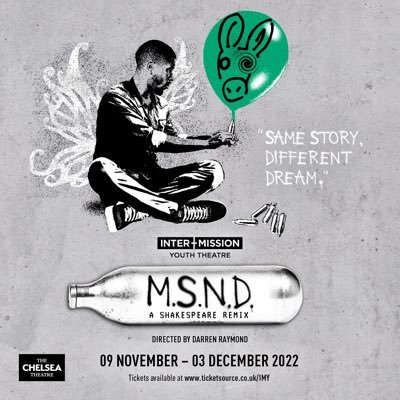
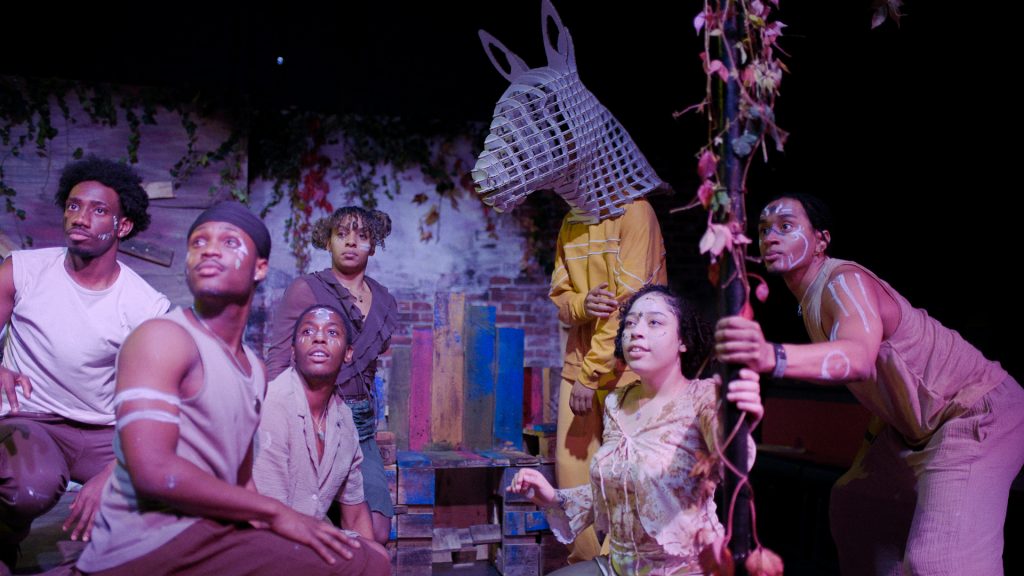
MSND (A Midsummer Night’s Dream) explores subjective narratives & misconceptions perceived by young people, however transparently told from the perspective of young people collaboratively. IYT’s (Intermission Youth Theatre ) Artistic Director Darren Raymond, supported by trustee Mark Rylance presents MSND at the Chelsea Theatre.
MSND is a euphoric feeling psychedelic which transports you mentally to a fantastical world of self discovery and adventure where you lose yourself to re-find yourself. Starting off with Mario, troubled at the end of youth, feeling deeply trapped by his past mentally & emotionally.
MSND – found in balloons, liquid & vaperizers, widening your eyes to skyrocket the test of temptation, bringing you closer to salvation if you succeed. We preview both Gerard and Vincent at the beginning as teenagers getting up to mischief, struggling to relieve their boredom, will drugs help them to escape or worsen their current state?…
Expressively channeling poetic literature, expressed through modern Shakespeare to portray the 21st century’s sense of youth identity, sub-culture, community issues, levels of responsibility & pleasure & true mental growth to pull everyone’s direction towards hope, fulfilment & change for a better future.
This play exhibits the peer-pressure & over-rated influence of drugs experienced by young people whilst remodelling the beauty & power of Shakespeare’s language. This production is ready to be experienced for just over 4 weeks until 3 December. If you haven’t been to an IYT production yet, I urge you to experience it – most definitely a must see!
You can find out more about the production and book tickets here
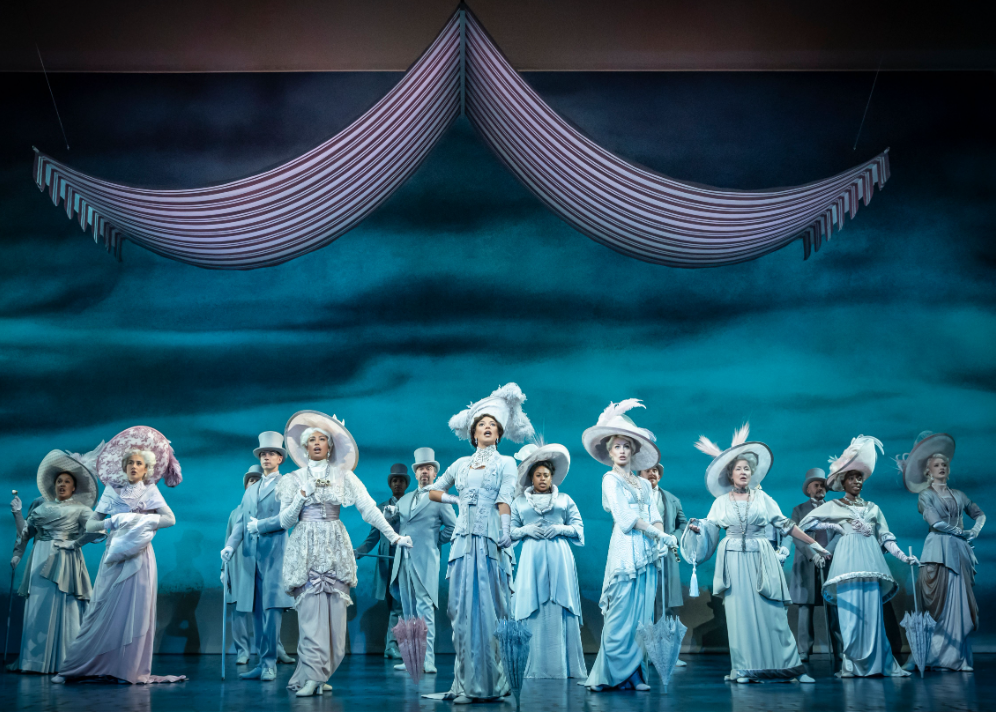
There are few things more magical than a classic Hollywood musical: a lavish spectacle with characters to adore and songs to die for. And there are few more beloved than My Fair Lady, one of the last golden age musicals, in which a snooty phonetics professor vows to transform a Cockney flower girl into an English rose. Based on George Bernard Shaw’s 1913 play Pygmalion, the film starred Audrey Hepburn as Eliza Doolittle and Rex Harrison as Henry Higgins and featured iconic Lerner & Loewe songs like ‘I Could Have Danced All Night’ and ‘Wouldn’t It Be Loverly’. It’s a classic for a reason – and, direct from the West End, the Lincoln Center’s dazzling new revival is here to remind us just how loverly a show this is.
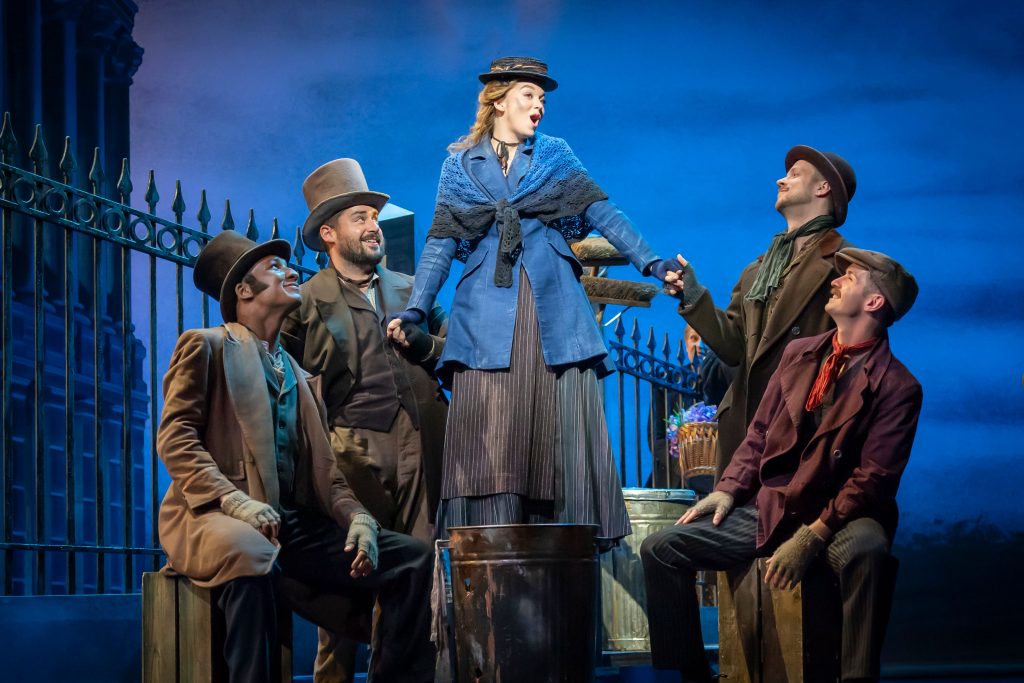
Charlotte Kennedy and the My Fair Lady ensemble (photo credit: Marc Brenner)
Lerner & Lowe also brought us the musical delights of Camelot, Gigi, and Brigadoon (not to mention the vastly underrated Paint Your Wagon) – but it’s easy to see why My Fair Lady is their most beloved work. Directed by Bartlett Sher (helmer of the critically-acclaimed revival of The King and I), this new production – the first major revival in fifteen years – comes with revitalised sets, costumes and musical arrangements. The score has never sounded as magnificent does here under the musical direction of Alex Parker, and you won’t find a finer chorus this side of the Edwardian era.
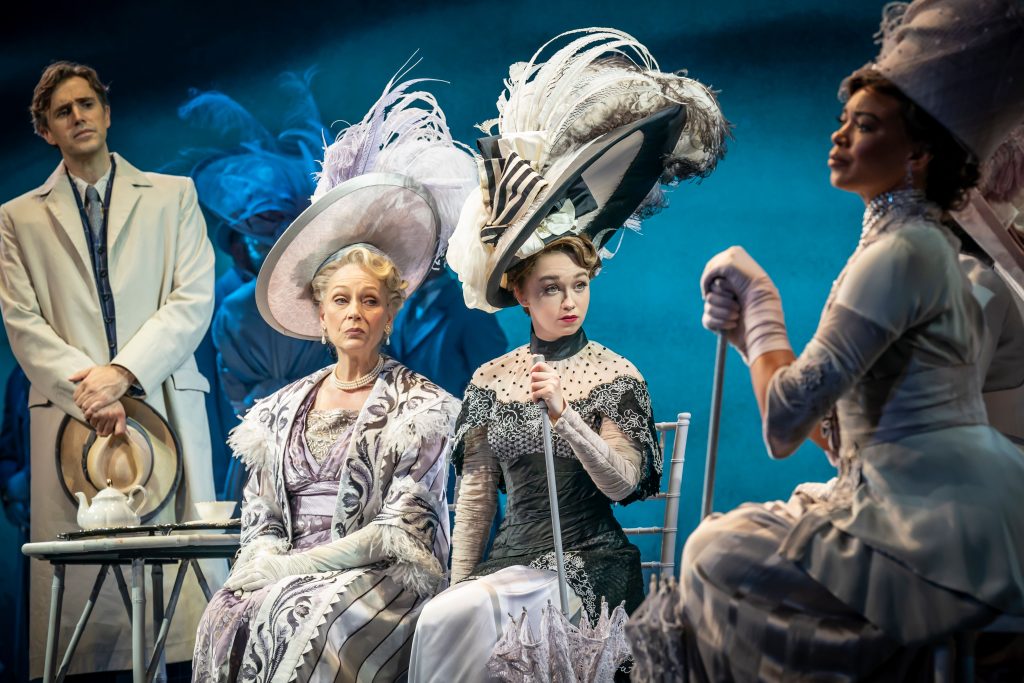
Michael D. Xavier, Heather Jackson and Charlotte Kennedy (photo credit: Marc Brenner)
Having made her professional debut in Les Miserables in the West End, Charlotte Kennedy puts her own instantly-iconic spin on the beloved character of Eliza Doolittle. Her powerful voice and equally powerful performance makes her the beating heart of every scene she’s in – and her hilarious conversation with the aristos in Ascot is truly one for the ages.
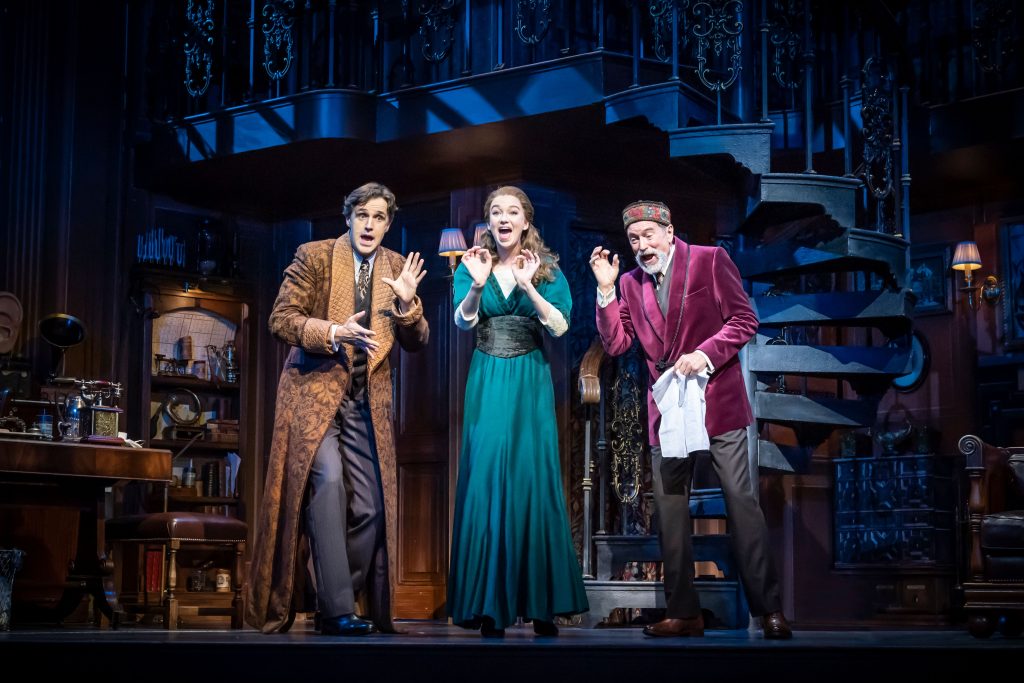
Michael D. Xavier, Charlotte Kennedy and John Middleton in My Fair Lady (photo credit: Marc Brenner)
Two-time Olivier Award nominee Michael D. Xavier (who performed opposite Glenn Close to great acclaim in Broadway’s Sunset Boulevard revival) brings a haughty charm to Henry Higgins, pitched somewhere between David Tennant and Dickie Attenborough. Xavier brings a beautifully self-aware silliness to the totally oblivious Prof, especially in ‘An Ordinary Man’ and ‘I’ve Grown Accustomed to Her Face’. His rapport with Emmerdale’s John Middleton as Colonel Pickering is especially fun to watch – and their ‘Eureka!’ moment with Kennedy during ‘The Rain in Spain’ is a joy.
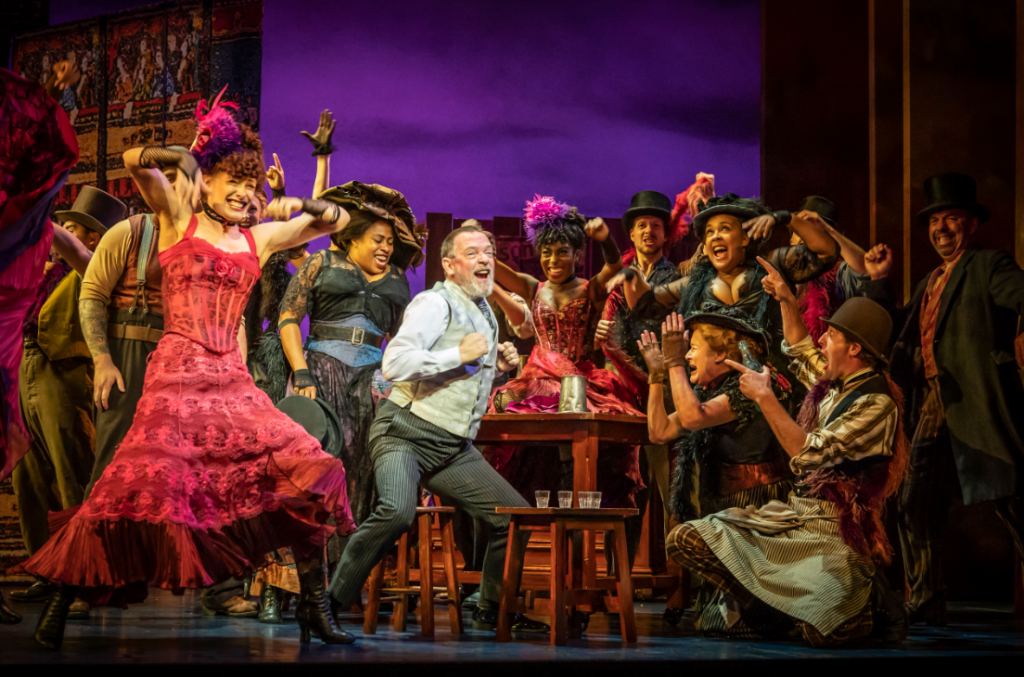
Adam Woodyatt and the My Fair Lady ensemble (photo credit: Marc Brenner)
EastEnders’ Adam Woodyatt is perfectly cast as the lovably roguish Alfred P. Doolittle, a role he was born to play – in his hands, ‘With a Little Bit of Luck’ is delightfully puckish, but it’s the barnstorming ‘Get Me to the Church On Time’, culminating in an exceedingly camp can-can, which really brings the house down. Woodyatt flexed his dramatic chops the last time he performed in Cardiff, to great effect – but it’s brilliant to see him really let loose here.
Lesley Garrett, Michael D. Xavier, Charlotte Kennedy and John Middleton in My Fair Lady (photo credit: Marc Brenner)
Tom Liggins brings a boyish charm to Freddy Eynsford-Hill (and a sublime rendition of ‘On the Street Where You Live’) while Heather Jackson, known to many as the West End’s Madame Giry (The Phantom of the Opera), brings gravitas even in just a few scenes as Mrs Higgins, as does world famous soprano wonderful Lesley Garrett, who – if slightly under-utilised – brings warmth to the role of Mrs Pearce, and lends her beautiful voice to some of the show’s best numbers. And kudos to Tom Pring for stealing scenes as a sardonic butler.
The My Fair Lady ensemble in full swing (photo credit: Marc Brenner)
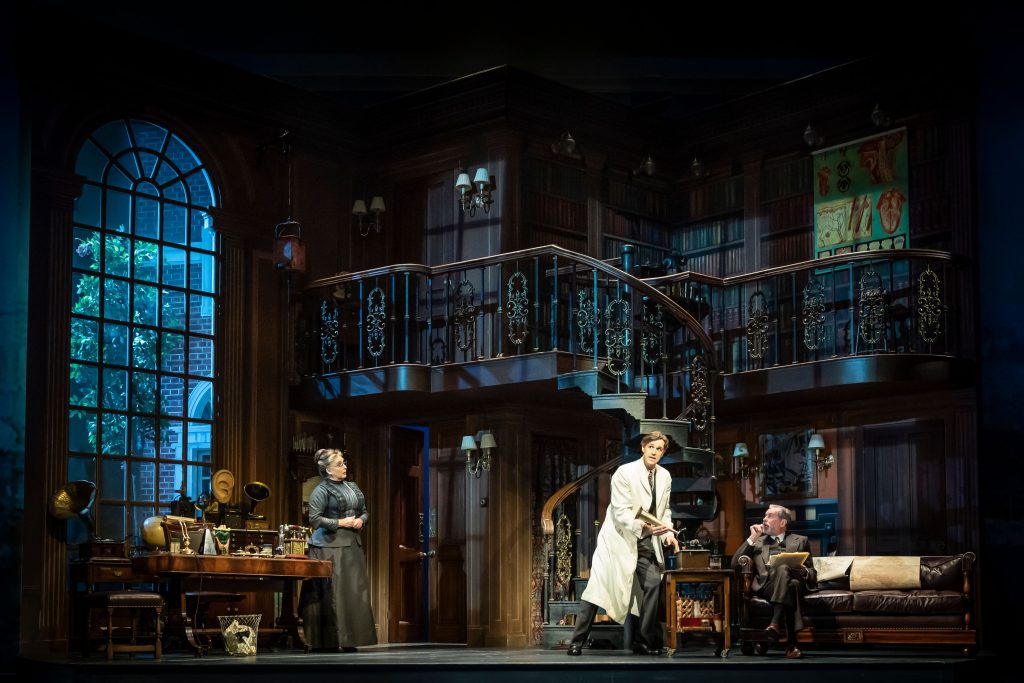
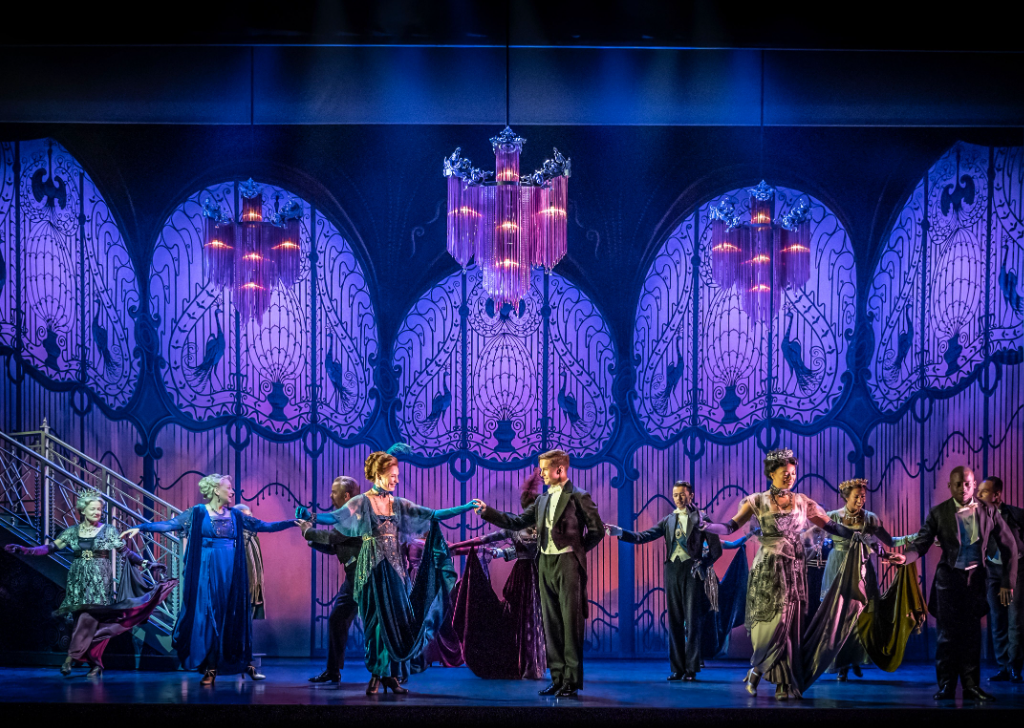
Michael Yeargan’s sets are nothing short of an architectural marvel and make an ingenious use of the Millennium Centre’s impressive stage. Especially extraordinary is the way in which Higgins’ luxurious London townhouse rotates during musical numbers to show off an elegant hall, a stylish study, a chic bathroom and a leafy alcove within which an amorous young couple meet by midnight. The sets transport you from the East End to the Embassy Ball, aided by Catherine Zuber’s exquisite costumes which capture every inch of the scale and grandeur of the classic film.
The My Fair Lady ensemble dressed to the nines for a day at the races (photo credit: Marc Brenner)
While there are a few aspects that might benefit from a modern touch – the decision to keep all of Higgins’ unpleasantness towards Eliza does threaten to undercut the budding romance and has an impact on how you view the ending – the sheer talent on display makes My Fair Lady an unmissable night of sumptuous entertainment. With a little bit of luck, you’ll not only have a bloomin’ loverly time, but you’ll dance all night too!
Touring throughout the UK, My Fair Lady is performing at the Wales Millennium Centre for 3 weeks only from 9 – 26 November. For more information and to book tickets, click here.
Get the Chance Community Critic Barbara Hughes-Moore speaks with actor Robert Wilfort, who plays the title role in SPIKE, a new play by Ian Hislop and Nick Newman which charts the rise of Spike Milligan and The Goons. Milligan was the head writer and one third of The Goons, a working-class British comedy trio which also comprised Peter Sellers and Harry Secombe (and, later, Michael Bentine), who took the nation by storm in the 1950s. Despite frequent run-ins with the BBC, The Goons’ avant-garde silliness inspired countless comedic greats from Monty Python to Mischief Theatre. The UK tour ends its run in Cardiff, playing at the New Theatre from 22 – 26 November (you can find out more about the production and book tickets here). Robert chats about what it’s like to play such a beloved icon of British comedy, and why Spike aficionados and newcomers alike will leave the theatre laughing!
https://www.youtube.com/embed/9xalXA_ni9E
This interview has been edited for clarity.
Thank you for taking the time to speak with me today, Robert!
Thank you for having me.
Tell us a little bit about SPIKE.
The Spike of the title is Spike Milligan, played by me. It’s a new play written by Ian Hislop and Nick Newman written about Spike and The Goons, particularly focusing on the time round about when they were starting to become popular in the 1950s. For those of you who don’t know who Spike Milligan is, he’s a hugely influential comedian, writer, poet, performer who burst onto the scene in the early 1950s with this anarchic radio comedy show called The Goons which was quite unlike anything that came before it. It was hugely popular and hugely influential, so this play is exploring the development of that time and a celebration of his work.
How surreal does the play get? The Goons toyed with that kind of comedy.
They did! They were absolutely mad; they took these huge surreal logical leaps. We’re not too surreal: we try to tell the real story of his life, but we do have some fun surreal moments in the playing of it. Spike breaks the fourth wall and talks to the audience quite a lot, and the staging is quite fast and fluid, and funny, strange things happen; we mix scenes together. There is a nice surreal thread running through the show.
How do you bring that into the creative process: is the comedy quite regimented or do you keep it quite loose?
We keep it fairly loose – if we interact with the audience we do have room to go off a bit, but we do tend to stick to the script! It’s a great script – the play is very fast and snappy so that was the thing we were trying to capture the most, because The Goons have a huge energy to them. Most of their clips are on BBC Sounds. They’re fast, snappy, they don’t let up with the jokes and we try to capture that energy in the play. If you don’t like one joke, there’s always another one along in a minute! I think what Ian and Nick wanted particularly to capture is that, when we see things on tv that talk about comedian’s life it’s often quite dark, tears of a clown – and Spike did have that side to him; he did have that side to him. He got shell shocked in WWII and had serious mental health issues throughout this life which he was always very honest about. We deal with them but we don’t dwell on them: the tone of the show is joyful and silly and happy, because I think that’s what people need at the moment.
Was it important then to bring those two tones together in the show?
That’s been the big challenge: finding when Spike is ‘on’, which he kind of always was. He was always funny and always telling jokes, he just couldn’t help it. But he could also be quite argumentative and difficult to work with and worked himself into a breakdown. He used to write an episode a week, thirty episodes in a series, and he pretty much did it on his own. It was his passion project, so he would just work and work and work. We showed the effect this had on his marriage. For me as a performer it was about finding the moments of being real as opposed to the jokes.
There are a lot of jokes, a lot of Spike’s jokes – Ian and Nick will freely say that they wrote this show because half of it was written already! We do also act out parts of Goons’ shows as well, with the microphones as if we’re recording them. So there’s a lot of original Spike material in there. It was all about finding the pattern, finding a real person in amongst all the jokes and the tomfoolery.
How do you even begin to approach playing a real person who is so eccentric, unique and beloved? What is your way into that?
When I was offered it, I thought ‘what a great part!’ then I started to get slightly worried because he’s one of the funniest people who has ever been – no pressure! I tried not to let that worry me too much. It helped that I was a fan and I knew his work, my dad was a big fan and he grew up listening to it first time around. I felt like I knew the style of the comedy and then I read and watched a lot about him. I knew his performing style but I wanted to try and find footage of him from the time. I think a lot of people have an image of him as a grumpy old man figure, but he was quite young when he started. So it was about trying to capture his energy and essence without trying to do a picture perfect impression. It’s our version of Spike, our story we’re telling. Ad it was really good fun to research – lots of silly videos!
How do you interact with the other cast members playing The Goons, and get that sense of camaraderie?
Luckily, everyone in the company is really lovely and naturally funny themselves, so it hasn’t been that much of a challenge to look like we’re having fun. It’s about getting the speed and the timing right so it feels like it’s flowing. We have some scenes where they are just messing about in the pub, because that’s how it started (and how a lot of great comedy starts: good friends messing around together in a pub!) Jeremy who plays Harry Secombe is fantastic; Paddy Warner who plays Peter Sellers is fantastic too – so it’s not been hard, we just kind of keep throwing things around and see what works. We still try and play around with it, never try to do it exactly the same every night but tweak it a bit and catch the other person off a little bit. It’s about trying to make other people laugh!
Is that one of the joys of touring this kind of show? That you not only play the different interpretations on the stage every night but different audiences react differently?
They do! That’s the fun: that every theatre presents a new challenge, and a different space and size. You have a different experience depending on where you are. We definitely notice that different towns have different feelings to them – I’m sure Cardiff’s going to be the best, though!
All my friends and family are coming to the Cardiff shows – I’m from Porthcawl so I grew up only half an hour down the road.
Have you ever performed in Cardiff before?
I haven’t performed onstage in Cardiff since I was in the National Youth Theatre – I’ve done TV and radio in Cardiff since but never a play, so I’m really looking forward to it. We’re there the last week in November, we finish on the 26th.
Just before Christmas!
Come and do your Christmas shopping on Queen Street and then see our show – it’s a great day out!
The Goons in 1956
Even if people didn’t grow up with The Goons, they will have grown up with those who were influenced by them, like Monty Python, Mischief Theatre and the Horrible Histories crew.
We acknowledge that at the end of the play, actually: just how many people have been influenced by him. The Goons started in 1950, so you had people like John Lennon and Paul McCartney listening to it, Peter Cook and Dudley Moore, as well as all of the Pythons. I don’t think you would have had Monty Python and all of these people without Spike. You can hear the influences in later classic sketches, like ‘Don’t tell him your name, Pike!’, there’s a version of that on The Goons twenty years before Dad’s Army. People would gather round listen to it on the radio. It was like the rock and roll of comedy: the parents didn’t understand it, but they did. I think Ian and Nick thought Spike may have been forgotten – I’ve actually explained who he was to a lot of people my age.
Is that part of the impetus behind the show: to find out more about this person who influenced so much?
Yes! Also, it was an interesting and important time: all the Goons were in the army, and they would go and entertain the troops. The Second World War helped to create this whole generation of working-class actors, writers and performers. I can’t think of the same happening now: three working-class lads having their own sketch show seems like it would be rare now. It was an interesting and important time, and we want to celebrate that. Spike died 20 years ago, a whole generation have grown up not really knowing him, other than maybe doing his poems at school. We have had all ages in the audience! It’s a good night out for anyone whether you know the Goons or not.
Why is theatre suited to telling this story?
You get the instant reaction, the laughter. It could absolutely work as a TV project, it might have originated as that. Because there’s been no theatre for such a long time, and because there’s that communal feeling you can sense as the show goes on. Being in a space with other people all enjoying the same thing, I don’t think anything is quite like that.
What’s your favourite moment that’s happened so far?
We had a couple of drunk ladies in the front row the other week! That’s the joy of live performance – they were really enjoying it, and joining in. we had a strange moment in Brighton where a few kids broke into the theatre and were running around the royal boxes trying not to get caught! That’s all part of the joy: you never know quite what’s going to happen. The best moment for me is just having an audience being happy and entertained.
What makes you laugh like that? Who are your comedy influences?
My favourites are Vic and Bob! They were my heroes, along with people like Chris Morris (The Day Today, Brass Eye) and Steve Coogan. They have a special place in my heart: pure silliness, pure nonsense.
Speaking of Chris Morris, I often quote “Peter, you’ve lost the news!” out of context, totally unprompted. Do you have a favourite Spike Milligan joke that you find yourself dropping into conversation?
His poems always make me laugh: he has one that goes ‘There was a young man called Wyatt, whose voice was incredibly quiet, and then one day, it faded away, [mimes the rest of the line silently]’. It’s always the strange experimental moments in The Goons that make me laugh most: there’s a scene where a spy has been sent to the Secret Rendezvous, and the code is to knock the door six thousand times. It goes on for ages and the knocks get faster, then the door opens and he asks ‘Is this the Tea House of the Orchard Moon’? ‘No, next door’, and then he does it all over again! What the show deals with is how much Spike had to fight the BBC to get stuff like that on, because the bigwigs at the BBC didn’t understand the comedy. The core of the play is Spike’s battle with the BBC to get the show, and its special effects, how he wanted it.
He ended up transforming BBC sound effects. He’d ask for the most ridiculous things like Big Ben falling off Beachy Head, or a Wurlitzer organ travelling through the desert as fast as it can go. He was constantly pushing and challenging, and out of that came the radiophonic workshop and all the amazing things they did on Dr Who. He wasn’t just an influence on comedy but on radio and sfx as well.
What do you think is the secret of comedy: is it that boundary-breaking rebellion against authority that Spike embodied so well?
I think it is that. It can be saying the least expected thing or breaking the boundaries. Spike would find the surreal or the silly in anything: any turn of phrase he could make a pun out of. I think it is having a way that looks at the world that turns it on its head, that makes it come to your point of view. It doesn’t have to be taboo busting, though there is a place for that in comedy.
Spike wasn’t an overnight success: like all the best kind of artists, he spent years out on the comedy circuit and then people slowly came round to his style. I think the world came to Spike as opposed to the other way round; he didn’t emerge fully formed. He was aways funny; his war memoirs are always a great read because they’re very silly.
He has a joke even on his grave – “I told you I was ill!” – there’s not many people who could do that, and make you laugh long after they’re no longer with us.
And there’s not many people who could have got away with saying what he did to Prince Charles!
What do you want audiences to come out of this play, this theatrical comedy experience, to feel when they leave the theatre?
If we send people out there to explore his work who maybe wouldn’t have before, and to go back to The Goons as a lot of people haven’t listened to them. We just want to send people out happy, really. I want people to go out and say “That was the best actor I’ve ever seen in my entire life! Nothing will ever top that!” Send them out happy, and then dip their toes into this amazing world of comedy.
I’m sure they will, Robert – we can’t wait to see SPIKE!
Please come and see us, we’re really looking forward to Cardiff. My mum’s bringing a coachload of her friends to the Wednesday matinee. Fifty pensioners from Porthcawl!
I don’t think you could have a better audience!
The UK tour of SPIKE ends its run in Cardiff, playing at the New Theatre from 22 – 26 November (you can find out more about the production and book tickets here).
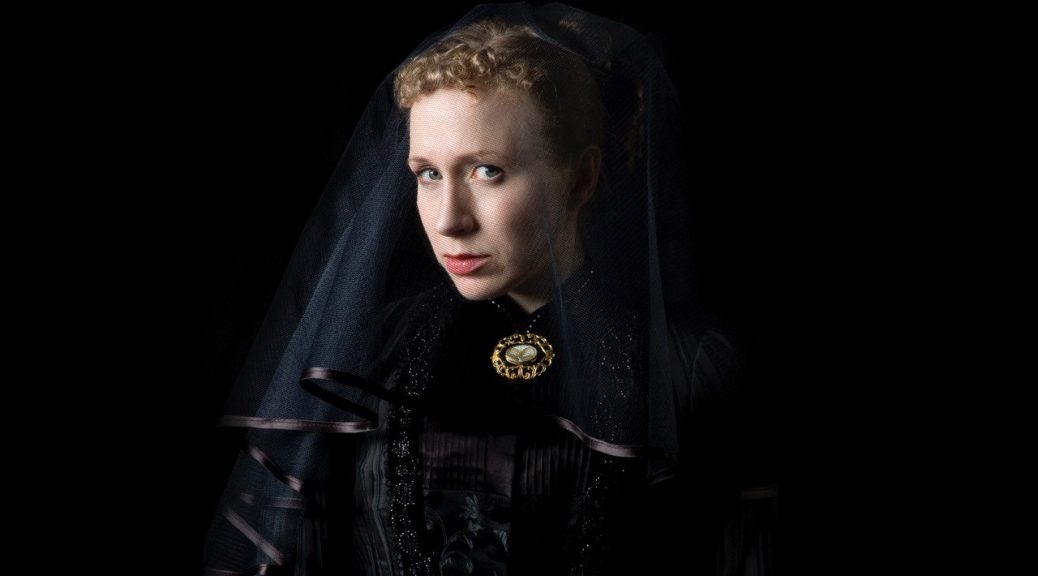
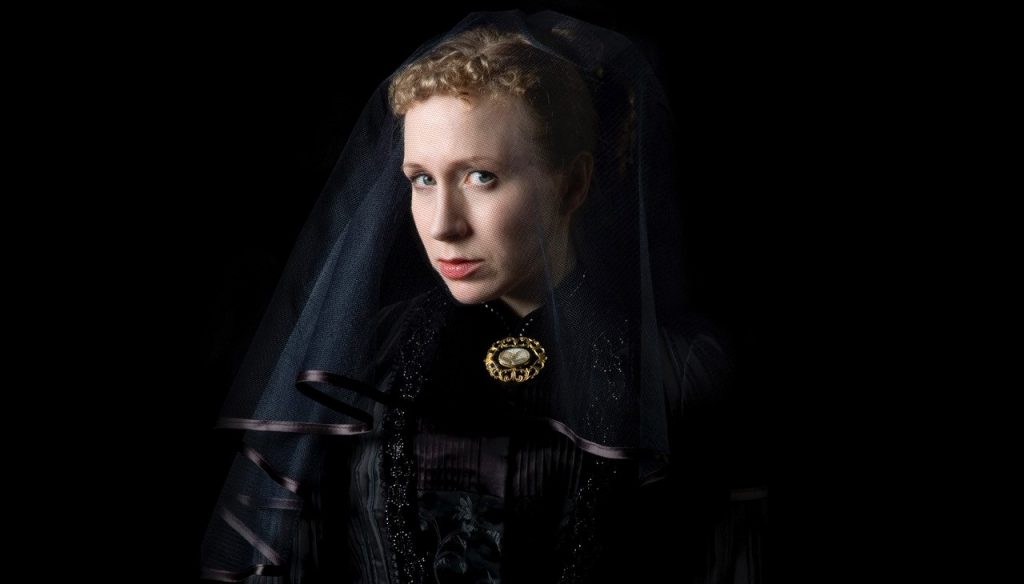
It’s been a mere seven weeks since Dyad Productions has graced Chapter once again. This time it’s for the spooky season, when the clocks go back and a general eeriness lingers in the air. We’ve been truly lost in our screens this Halloween seasons, Dahmer on Netflix’s has both horrified and caused outrage in equal measure. The smash hit, UK made puppet show Don’t Hug Me I’m Scared finally saw it’s Channel 4 premier, disgusting and brilliant for it six episode run. Though Female Gothic tries to go back to the horror of the old school, the OG if you will.
It’s easy to look back at the Victorians as another world, yet their perspective on death still has a clutch on society today. People such as Ask A Mortician on YouTube have tried to look at the Victorian way of handling death and funerals, with a new approach to the deceased. Many of these macabre stories prove their fear of dying and also what lies beyond. Dyad have evoked three similar stories, one that would not feel out of place in The Tales of the Unexpected. They mostly involve the regret of a past love through grief, the quest for knowledge and its downfall alongside the worry of maternal death. All of this is in the Gothic vein so its ghosts, an exotic potion from the south seas and a dark spirit that wouldn’t sound out of place in a manga.
Rebecca Vaughn holds us in the space in what was a rather chilly depth for the evening. Her entire costume is expectedly black and imposing, yet beautiful. Her diction is something I’ve been taken with after hearing her in A Room of One’s Own, the candlelit and soft lamp hue of the theatre had a evocative vibe, perfect for the context. I craved a bit more sound work and music in particular passages of this trio of stories, though the silence was highly effective in other moments. Dyad has proven the legitimacy of intimate theatre shows, with an ever increasing list of one woman pieces, made marvellous thanks to the ardour of Vaughn.
Female Gothic continues on tour, along with Christmas Gothic. Dyad Productions will present a new version of A Christmas Carol next winter.
Creating opportunities for a diverse range of people to experience and respond to sport, arts, culture and live events. / Lleisiau amrywiol o Gymru yn ymateb i'r celfyddydau a digwyddiadau byw

 (5 / 5)





 (3 / 5)