Tag Archives: Review

Review: Pride and Prejudice Theatr Clwyd, Mold, by Richard Evans

By Kate Hamill, adapted from Jane Austin’s novel Theatr Moondance, Theatr Clwyd, October 15 – 25th 2025 and touring

 out of 5 stars (3.5 / 5)

An Octagon Theatre Bolton, Theatre by the Lake, Stephen Joseph Theatre and Hull Truck Theatre production, in association with Theatr Clwyd
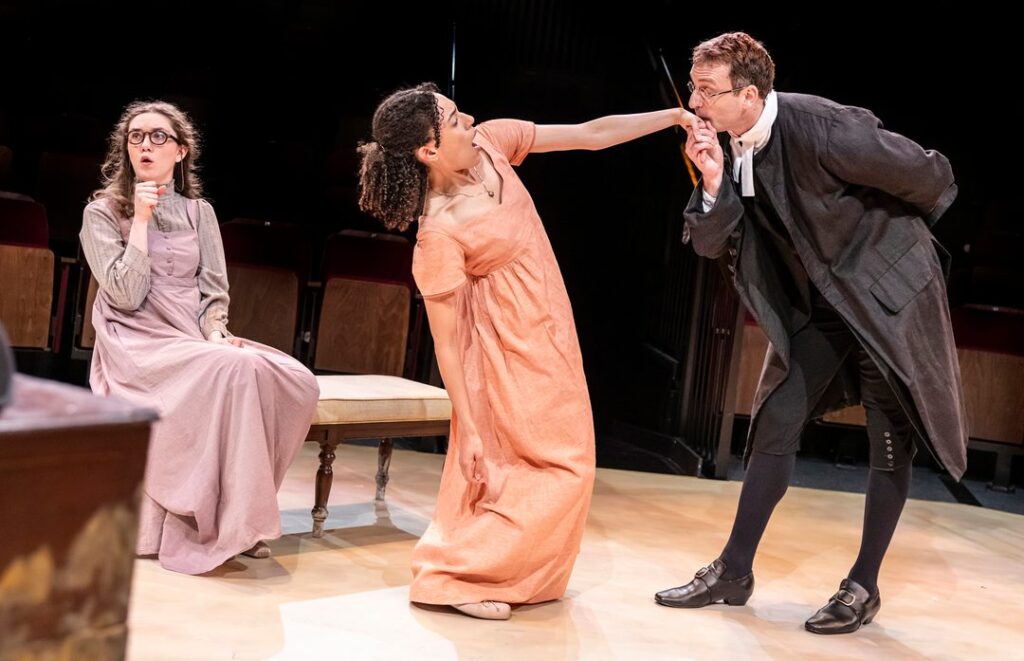
To mark the 250th anniversary of Jane Austens birth, a new Pride and Prejudice play sounds a great idea. We were promised a witty retelling of this classic novel and there was plenty of humour, even farce, but would this do justice to the original or the numerous subsequent films and serialisations?
The story of course is well known.  Four sisters living in a rural location with no dowry need a match yet the older two are on the verge of spinsterhood while the younger two show little sign of maturity.  When Darcy arrives he is disparaging about this provincial, rustic society so when he proposes to one sister, Lizzie despite his better judgement he is surprised to be refused.  He then sets about successfully winning her hand managing to change the determined attitude of his beau. 
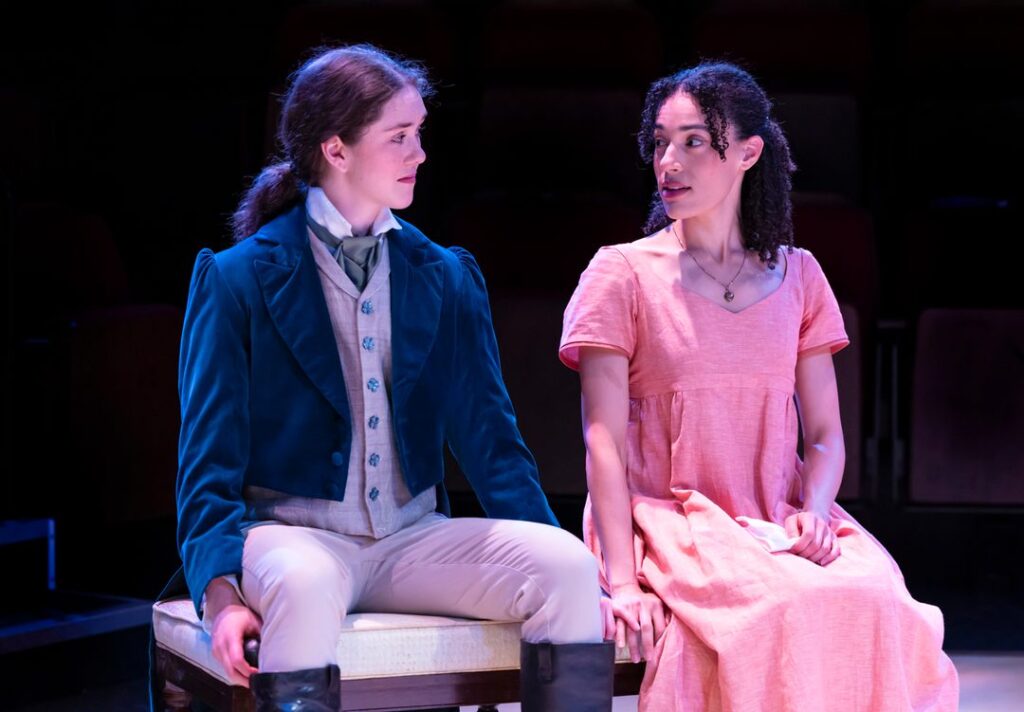
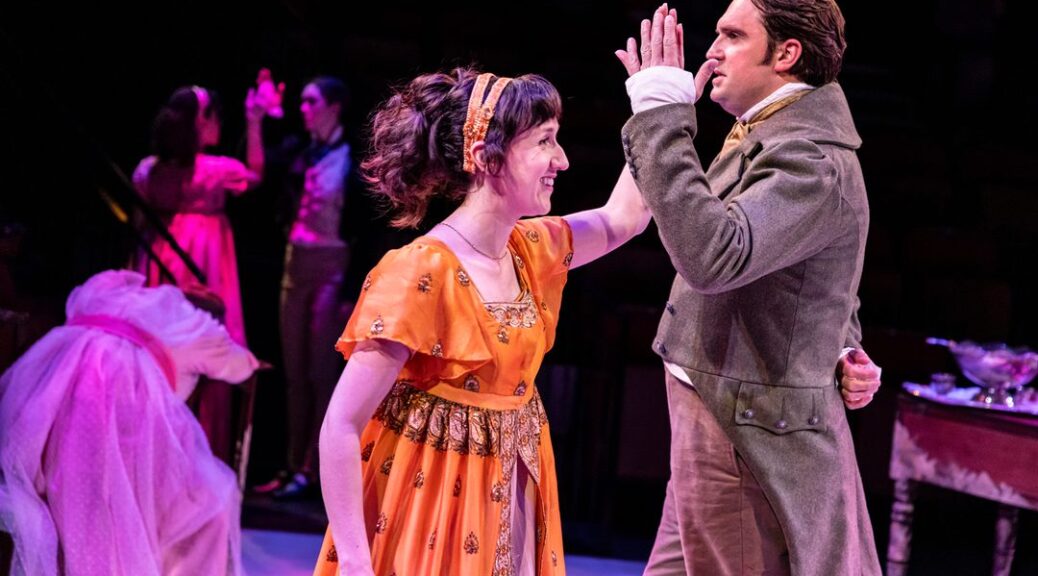
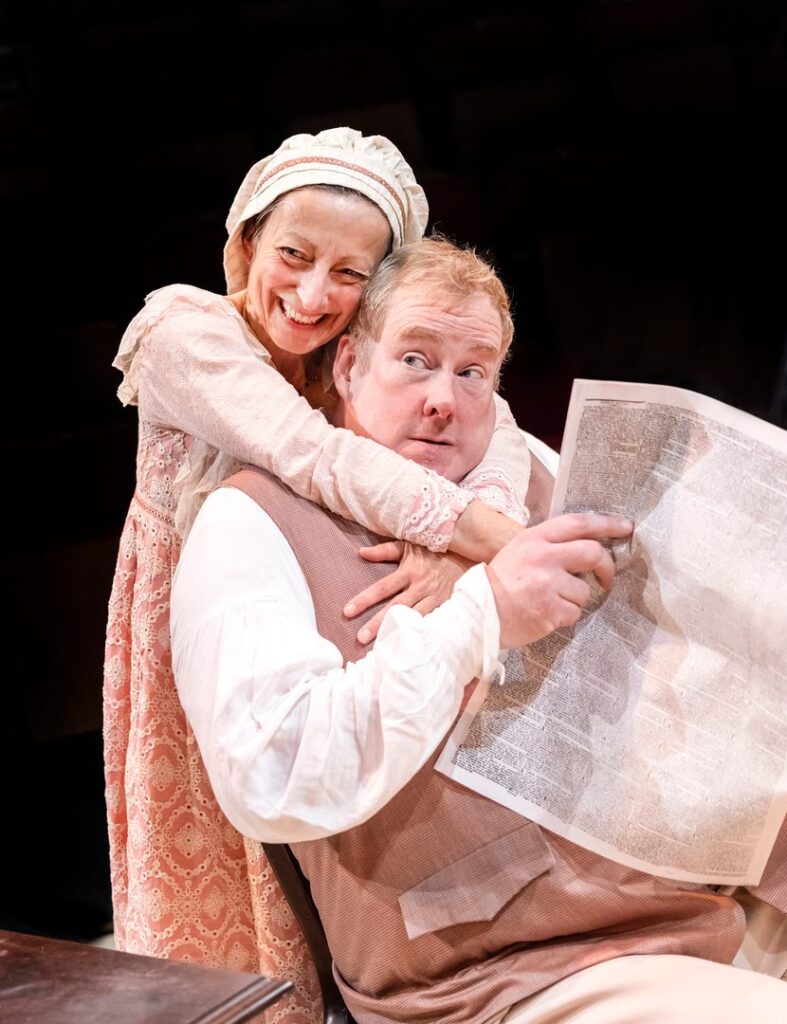
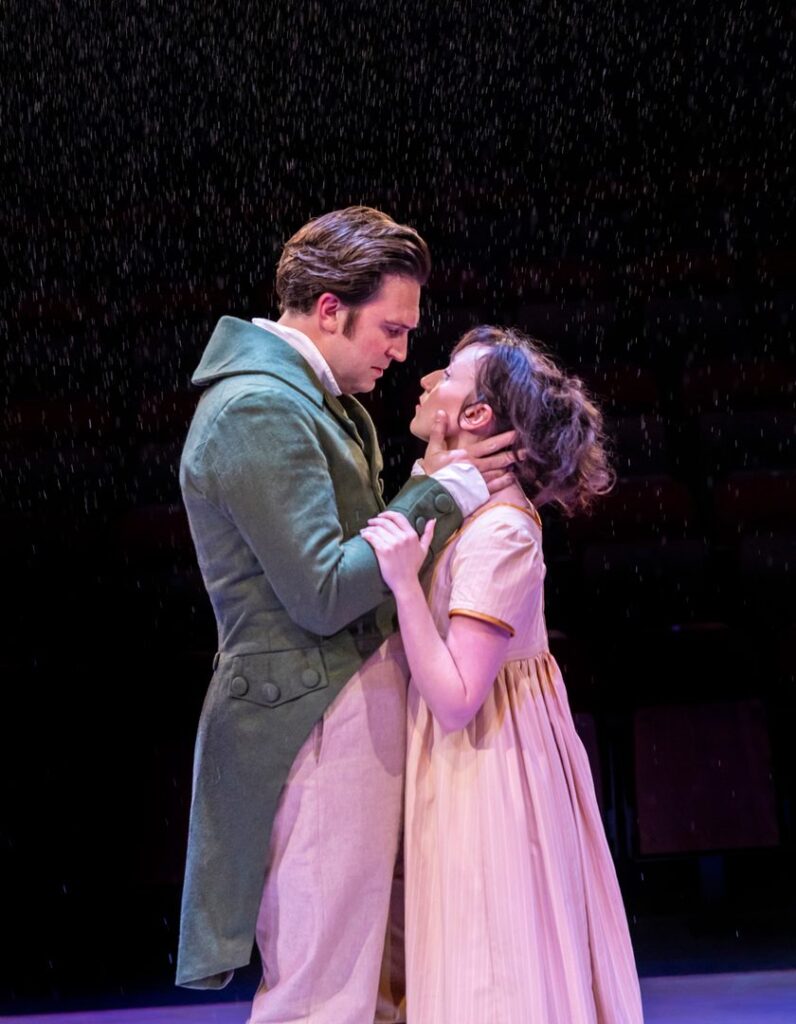
There was much to enjoy about the evening, Rosa Hesmondhalgh as Elizabeth Bennett was forthright, outspoken yet loyal to her family despite the many frustrations they caused her and James Sheldon’s Darcy visibly softened from an arrogant attitude to one demonstrating consideration and compassion beyond expectations.  The scenes where Darcy proposes and where he and Lizzie finally find each other were captivating.  The audience also warmed to the plentiful farcical humour with the figures of Mrs Bennett (Joanna Holden) and Mr Collins (Ben Fensome) in particular appearing almost pantomimesque.
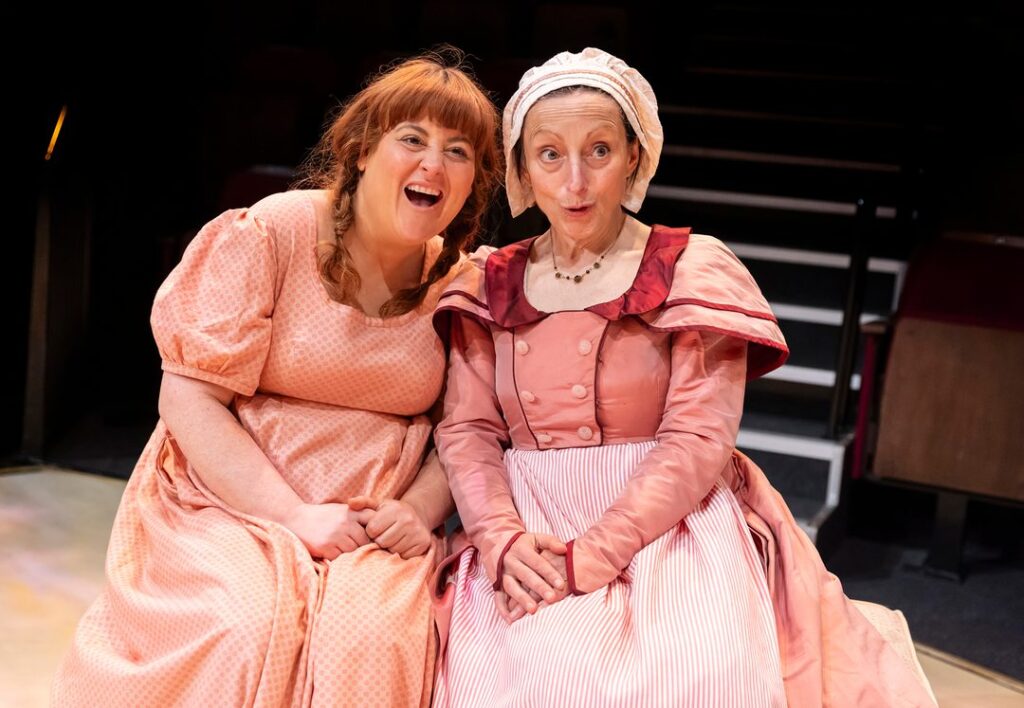
There were some strange decisions concerning casting.  Eve Pereira carved out a lovely put upon role as Mary Bennett but was also asked to play Mr Bingham, despite her smaller physical stature compared to the other male characters.  Jessica Ellis was funny and vivacious as Lydia Bennett yet was less convincing and quite shouty as Lady Catherine de Burgh.
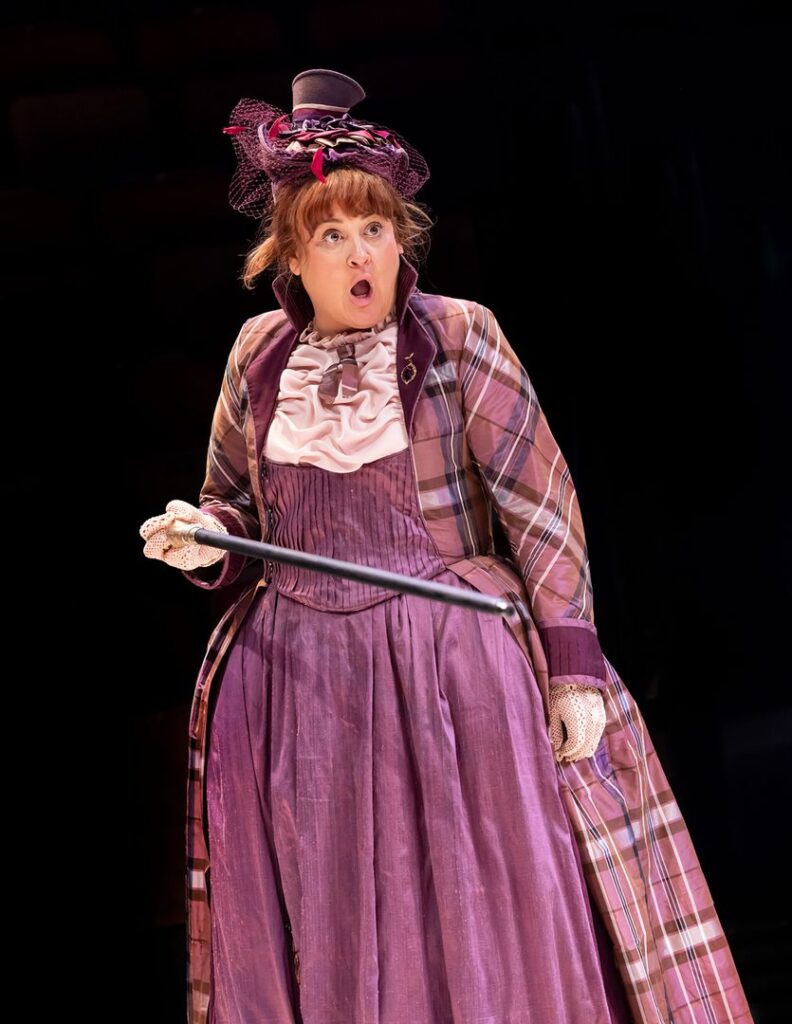
The major difficulty of staging Austen’s masterpiece, Pride and Prejudice, is that it is so well loved and so much part of peoples literary history that some people are bound to be disappointed.  This production fell between two stools.  The costuming indicated that it was set in Regency times but no attempt was made to adapt period mannerisms, language and attitudes.  There is a small genre of novels that are modern Pride and Prejudice retellings such that a contemporary setting for the play is a realistic prospect.  
Austen is well loved for her dry wit and irony but is not known for her slapstick and farce.  As a consequence, there are many who would have preferred a version that retaining the quiet reserved dignity associated with upper class Regency society.  However, for others, they will enjoy this show, funny as it was, after all the storyline of Pride and Prejudice remains compelling.
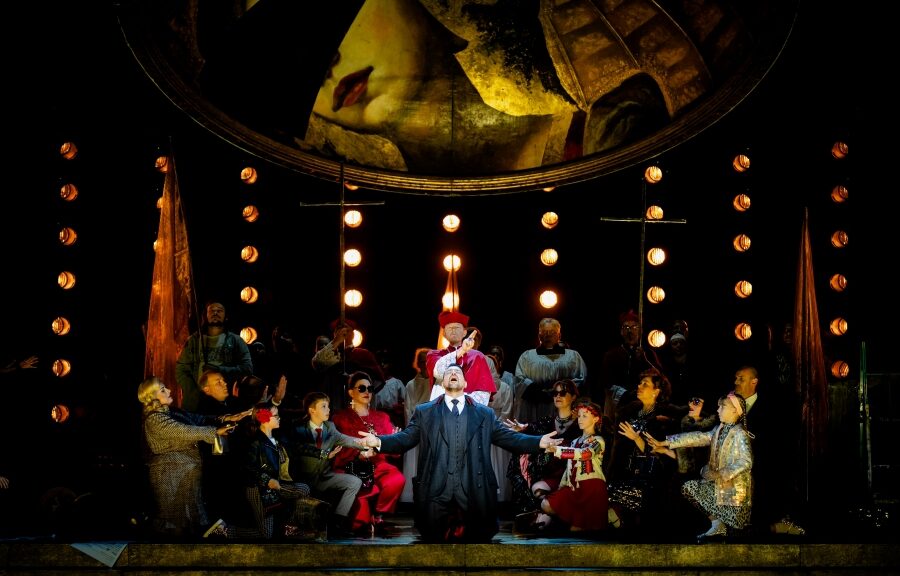

Tosca – reviewed by Eva Marloes

 out of 5 stars (3 / 5)

Politics, sex, torture, love, and of course plenty of death, Tosca is an opera that always delivers. It’s a pacey political thriller where painter Mario Cavaradossi (Andrés Presno) gives refuge to his fugitive friend Cesare Angelotti (James Cleverton), who has escaped prison and is now searched by baddie-in-chief Baron Scarpia (Dario Solari). Add a jealous lover, Floria Tosca (Fiona Harrison-Wolfe), and the drama keeps you at the edge of your seat. Scarpia uses Tosca’s jealously and love for Cavaradossi to find out where Angelotti is hiding, then gets Cavaradossi tortured in front of his beloved Tosca.

Puccini’s orchestration ensures every element is woven together perfectly, every element serves the drama. It’s a compact drama brimming with a whole gamut of emotions. Alas, the Welsh National Opera’s Tosca pleases the public, but does not quite bring out the tension and drama.

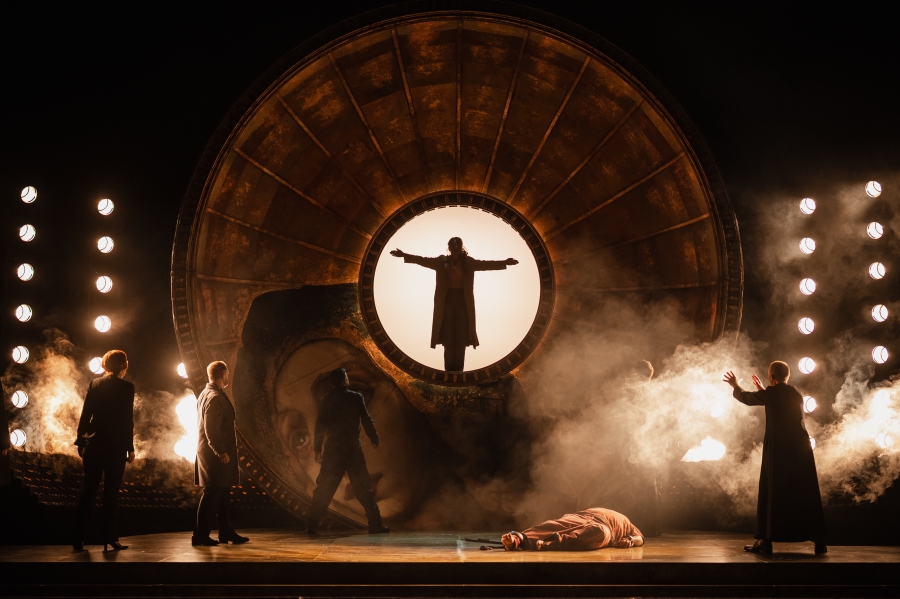
Cast of Tosca – Photo by Dafydd Owen

On the night of the 24th of September, Floria Tosca was performed by Fiona Harrison-Wolfe, whose voice is strong but lacks modulation therefore pathos. Both Harrison-Wolfe, as Tosca, and Presno, as Cavaradossi, seemed to fail to modulate and deliver a more natural progression to higher notes. This was particularly noticeable in the first act when it was like being hit by a sudden increase in volume.   

The interpretations were powerful but the lack of modulation compromised the emotion. Tosca’s Vissi d’arte and Cavaradossi’s E lucevan le stelle failed to move. The artists were not aided by an orchestra that did not shine. Such a compact opera felt a little drawn out at times. Dario Solari gives a solid and impressive performance as Scarpia.

The contemporary setting was used effectively. A large painting of Mary Magdalene on the ceiling of a cupola dominates the scenes emphasising the clash of sacred with profane. Scarpia uses religion for power. Lights, costumes, and staging produce a very striking image where the chorus in colourful costumes surrounds Scarpia who is illuminated as a star. It is not so distant from the quasi-theocratic images we get from the United States today.

The WNO’s Tosca provides good entertainment to a public very keen to applaud at the earliest opportunity. 

Review: That’ll be the Day, Venue Cymru, Llandudno by Richard Evans

Venue Cymru, Llandudno, Sept 12 and touring

 out of 5 stars (4.5 / 5)

T C Productions Ltd

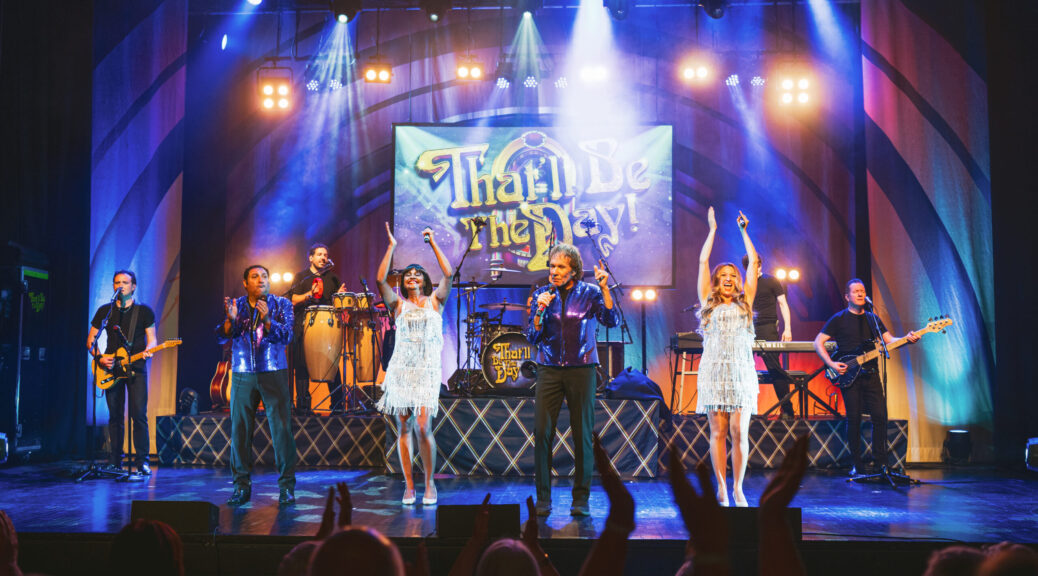
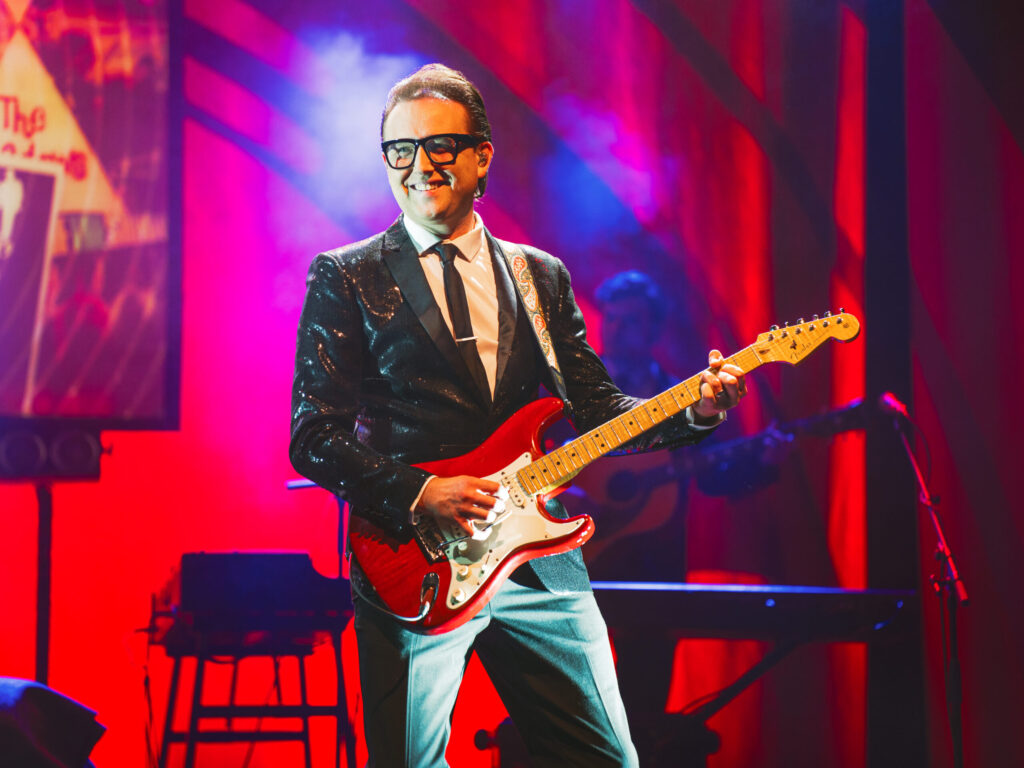
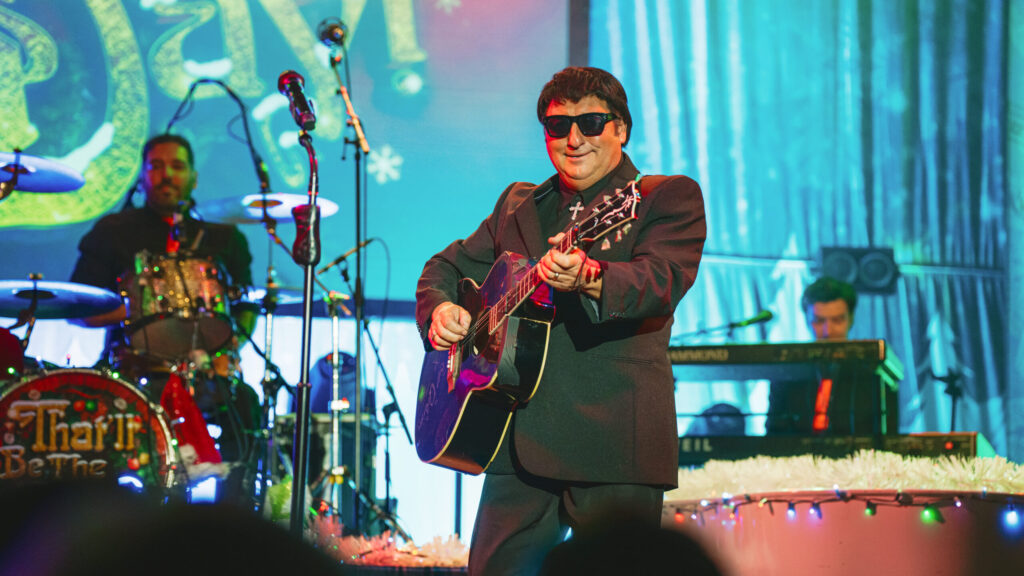
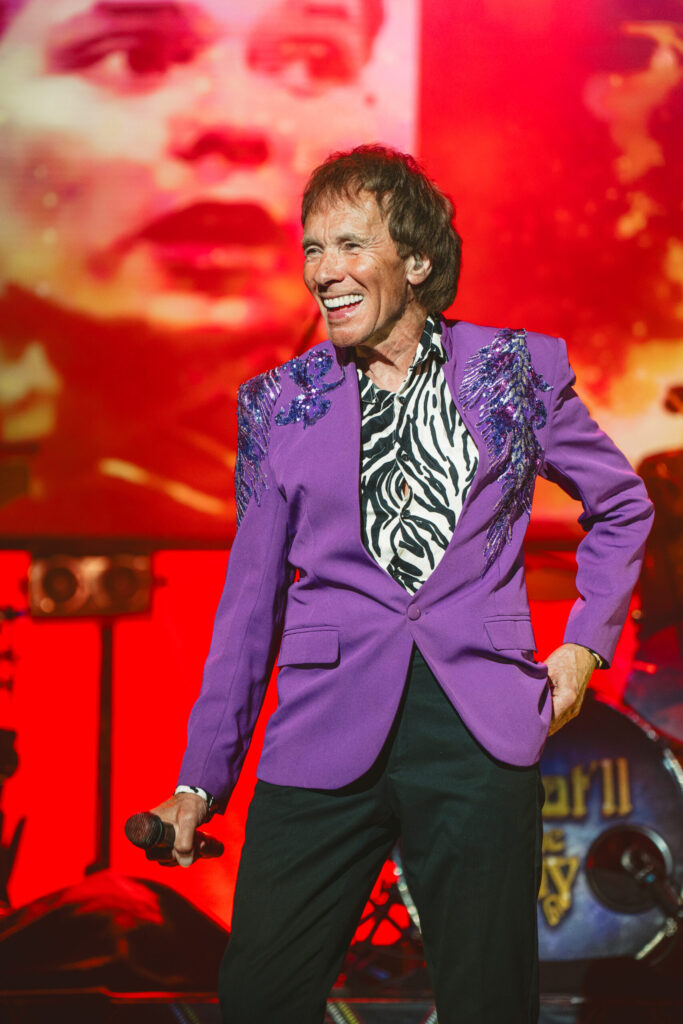
This performance is part of the 40th anniversary tour of ‘That’ll be the day’ and labelled as the farewell tour of Trevor Payne.  Would this be indulgent nostalgia or a more vital performance that loyal fans are used to?  Most certainly it was the latter with a few reminiscences thrown in for good measure.  

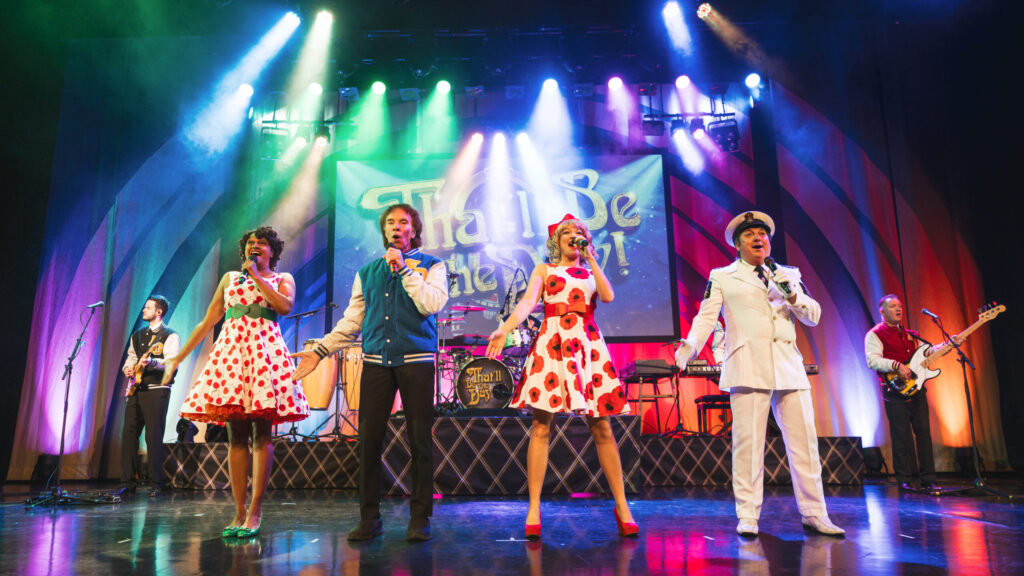
The show starts with a medley of rock ’n’ roll numbers such as ‘Oh Boy’ and ‘Rock around the clock’ and before the interval there is a large focus on sixties music with a range of artists represented including the Beatles, the Beach Boys and Frankie Valli and the Four Seasons.  Each of the main performers take their turn in singing that song best suited to their voice.  For me, the vocals of Nikki Renee Hechavarria were outstanding but there were no weaknesses in the line up.  The songs tended to be of a type, upbeat, optimistic, sing-a-long and all came from the charts.  Would it be too much to ask for something more raunchy like ‘The Who’, or for a protest song from Bob Dylan?

The backing musicians were excellent.  They were on stage for the vast majority of the show, playing a range of different styles and providing backing vocals for countless shows.  Along with the sound and lighting crew these would be the unsung heroes of the show.  There was a nice moment when Ollie Grey was handed the original Fender Stratocaster played by Trevor when the show first started, long before Ollie was able to pick one up.  

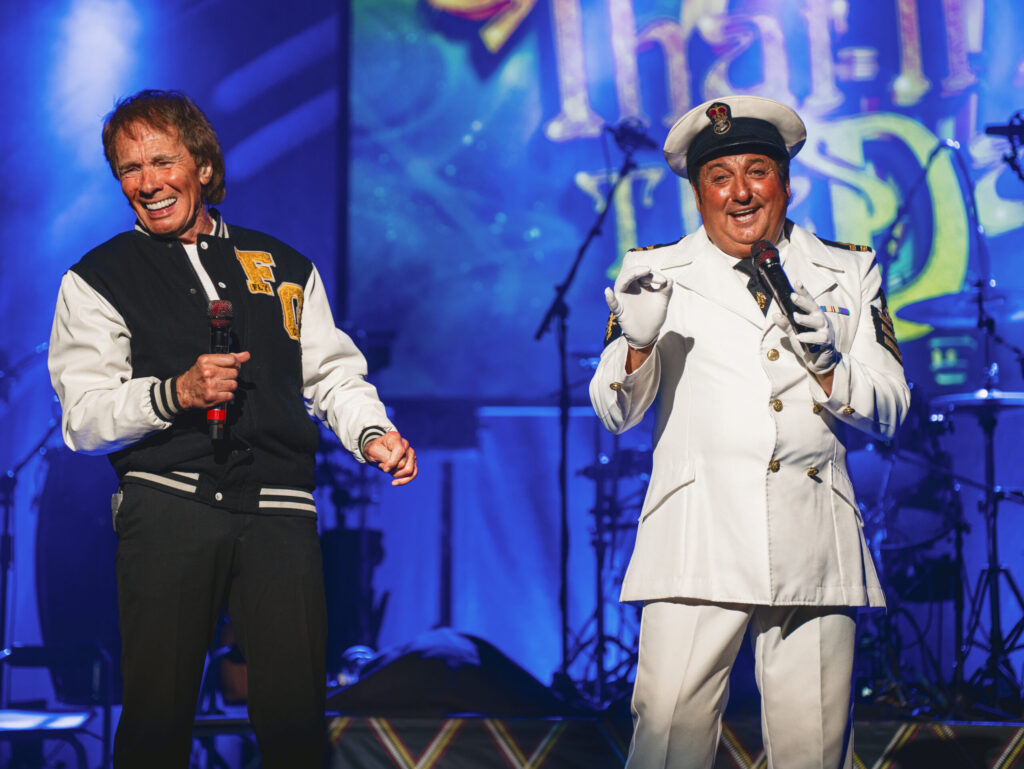
The show is more than a musical review.  Songs are interspersed with small comic videos and comedy routines.  There is great repartee between Trevor, who writes, produces and directs the show and Gary Anderson.  The jokes are often suggestive, much in line with ‘Carry On’ film humour which is highly appropriate given the origins of the show are in holiday camp theatres in places like Minehead and Bognor Regis. There are also sections were performers impersonate popstars.  To do this, a performer has to move fairly seamlessly between characters, and then take on a new persona for a couple of songs.  This makes the show quick paced and engaging throughout. 

To last 40 years, there has to be a winning formula especially when the show has people who return year after year or more than that, travel around to see the show in different venues whether in Britain or elsewhere.  It is great to see how the show has developed playing larger venues and attracting more followers and that they have been generous enough to support charities like the Make a Wish foundation, Childline and Help for Heroes.  During lockdown, the show was streamed into people’s homes with over 200 performances taking place. 

For many an evening like this is a trip down memory lane to see a choice selection of hits from the 1950’s to the 1980’s but there is enough here to engage both young and old.  It is thoughtfully prepared and well rehearsed with the cast and crew working together as a team.  As befits such a well honed show, it is a great nights entertainment. 

Review: Annie Get your Gun, Theatr Clwyd, Mold by Richard Evans

Theatr Moondance, Theatr Clwyd, Mold, Sept 3rd – 6th 2025

 out of 5 stars (3 / 5)

Tiptop Productions

Was this a musical or a concert?

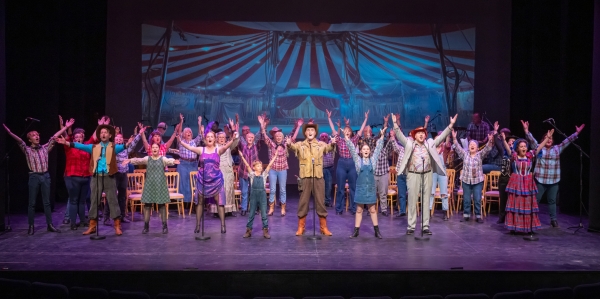
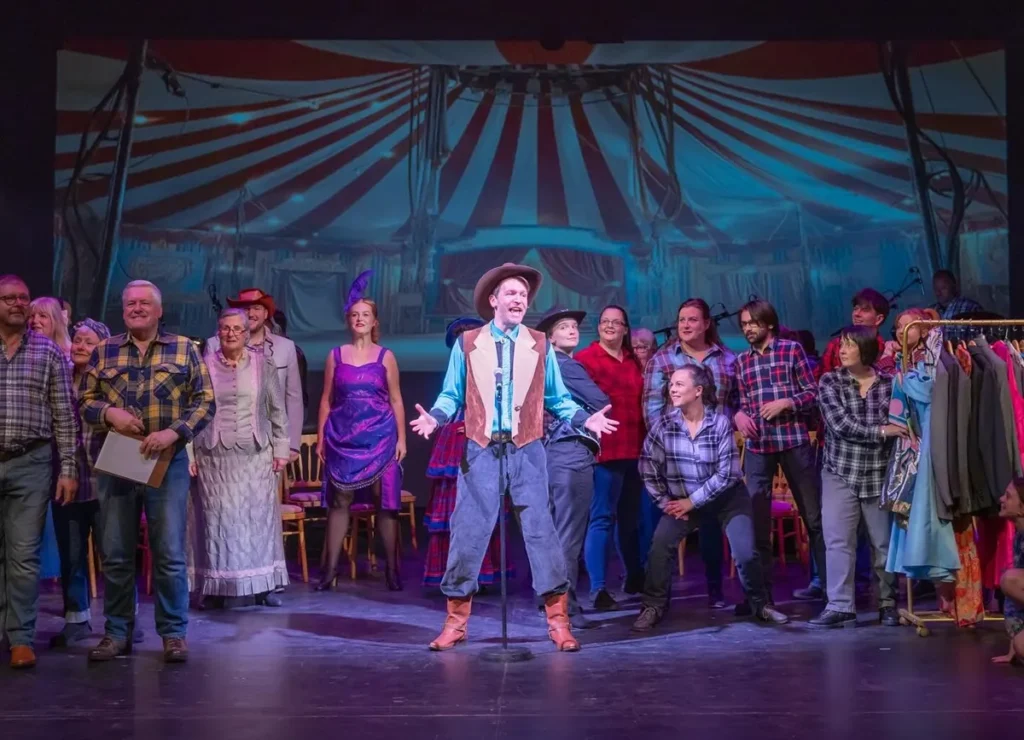
The opening, show stopping number, ‘There’s no business like show business was lively, passionate and well coordinated and indicated that it was the former, a musical.  One would then expect the stage to clear and the acting to start, but instead the ensemble sat down in serried rows and the action took place in front of them, indicating it was more of a concert.  In this way the production was neither one nor the other.  

The story of Annie is loosely based in history.  Annie is a poor girl who traps and shoots animals to feed her siblings.  She is set up to challenge Frank Butler, a sharpshooter in Buffalo Bills Wild West show and wins.  She then joins the troupe and falls in love with Frank but he will not accept Annie’s new found fame and leaves for a rival troupe, run by Pawnee Bill.  Buffalo Bill’s show tours Europe to great acclaim but little financial gain so has to come home and merge with Pawnee, thus bringing the two stars together again.  When Annie loses a shooting match to Frank on purpose, they are reconciled and get married.  

The company are enthusiastic in their endeavours despite being self conscious at times.   Jade Pritchard is well cast as Annie and has a great voice.  She has a good rapport with Gareth Hughes as Frank especially when they are acting as rivals.  Their duet with ‘Anything your can do I can do better’ was memorable.  Annie’s young siblings, Grace Hill as Jessie, Abigail Garner as Nellie and Arlo Lucas as Little Jake were a bundle of energy.  The action though was static at times, limited by the staging where the action took place behind four microphones at the front of the stage.  The production also lacked attention to detail especially in costuming, with some 20th Century shoes on show and the odd suit that seemed straight out of the 1970’s.

The musicals main characters in real life, Annie Oakley and Frank Butler were indeed natural sharpshooters.  Annie came from an impoverished background until she won her shooting contest with Frank.  They married and formed a performing partnership with great success.  Annie, in a long career went on to support women’s rights and to teach self defence lessons.  The Hollywood version is a more saccharine coated, sanitised version where Annie has to lose a second shooting match with Frank in order to win his heart, indicating perhaps that the male ego could not stand the prospect of being less successful than a female.  

The musical raises a question, what does a man look for in a woman?  According to the song, ‘The girl that I marry’ she will be ‘as soft and pink as a nursery’, wearing satin, laces and cologne and having polished her nails.  And that is what Annie had to change to be in order to get her man.  This seems a world away from the real life Annie, and out of kilter with many women today.  However, this should not stop us enjoying what is a feel good show with great Irving Berlin songs and which was enthusiastically and competently performed by the company.   

Let Life Dance – A Review by Eva Marloes

 out of 5 stars (4 / 5)

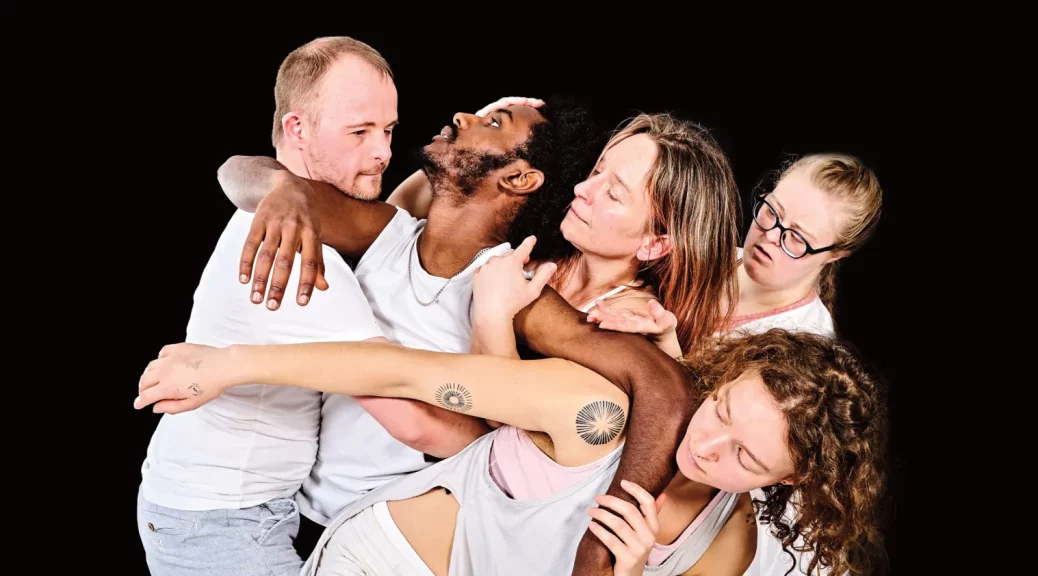
Let Life Dance by Humans Move is an intimate and evocative piece that captures togetherness, isolation, and reconnection. The piece was choreographed by Jessie Brett with the dancers to the music composed by Jered Sorkin. 

The five dancers, disabled and non-disabled, form an ensemble that oscillates from unity to disunity and then unity again. Let Life Dance opens with colourful and playful movement that reminds one of children in the playground. They are disorderly and together. Then a sense of loneliness slips in as one of the dancer moves away from the others.

The piece alternates ensemble movements with solo moments conveying the tension between connection and disconnection in human relationships. The search for supporting and caring relationships is fraught with misunderstandings. The collective carries trappings and a sense of imprisonment for the individual. 

This idea of tension between the the individual and the group is clearly conveyed through delicate movements and explosions of energy. Yet there is a need for a stronger sense of structure. A more dynamic light design and costumes might have also helped shape a story and create a journey for the show’s spectators. Overall, it was a well-received piece full of humanity.

 Let Life Dance is touring Wales now, see here for details.

See Trailer:

Peter Grimes – A review by Eva Marloes

 out of 5 stars (4 / 5)

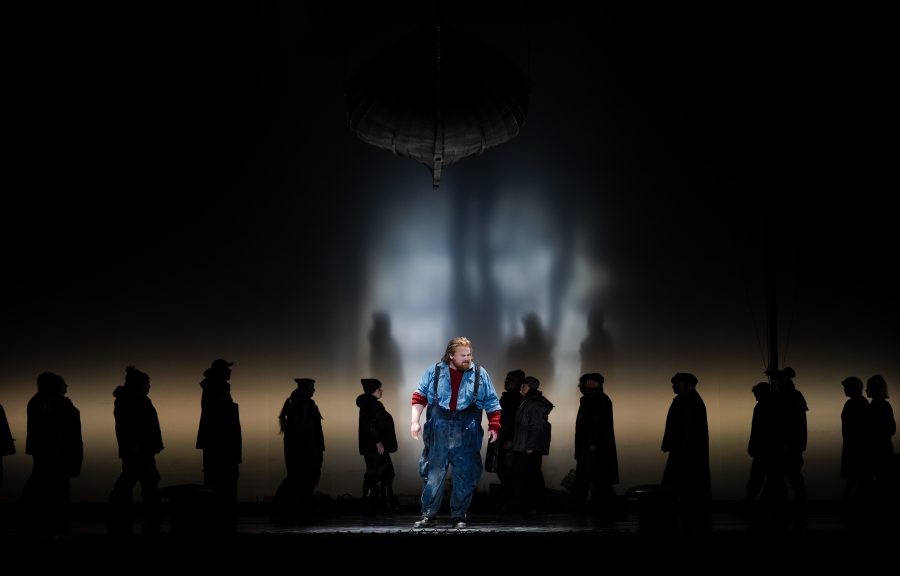
In these dark times of international upheaval and authoritarianism, this tale of suspicion and ostracism feels more potent than ever. Peter Grimes is a fisherman accused of the death of his apprentice. The death is ruled accidental, but in the minds of the people in the village, Grimes is guilty. The judgment is sealed once his second apprentice also falls to his death. 

Peter Grimes is made an outcast, yet he is firmly rooted in his village. The Suffolk coas is much more than a setting; it plays a part in the unfolding of the drama. The music captures the sea and in particular the storm with rising trombones and trumpets and the winds conveyed by the strings. The storm is physical and metaphorical of the inner turmoil of Grimes. Grimes is tied to his village and that tie brings him to his demise.

The tragedy is interspersed with quasi-mystical moments, such as in the aria “Now the great Bear and the Pleiades”. This is performed impeccably by Nicky Spence as Peter Grimes. Spence has a beautiful timbre and conveys the ambiguity of the character with great effect. Less convincing is Sally Matthews as Ellen, Grimes’ lover, whose singing is a little too structured. She brings a coloratura that sits uneasy in Britten’s austere music. 

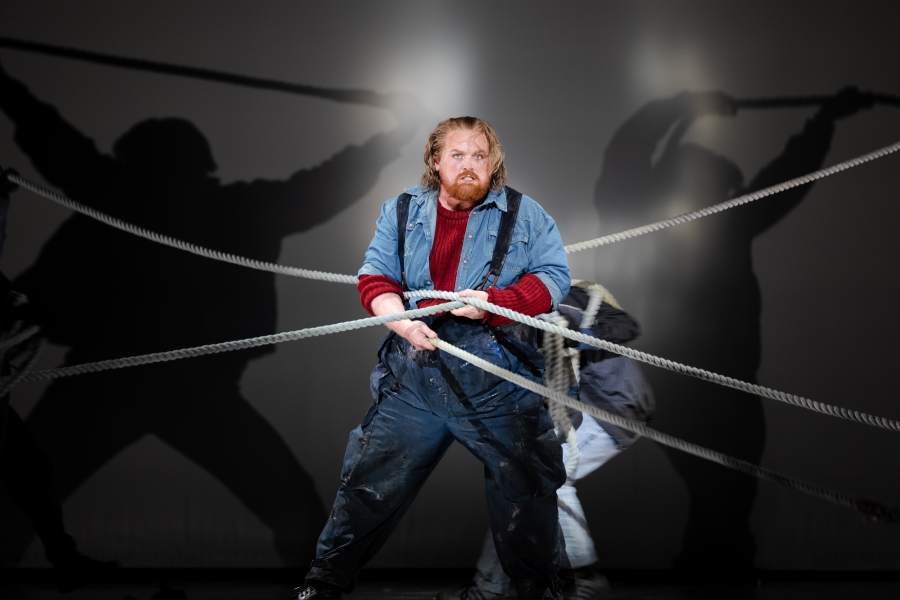
Nicky Spence as Peter Grimes, photo credit Dafydd Owen

Strong performances come from David Kempster as Captain Balstrode, Sarah Connolly as Auntie, and Catherine Wyn-Rogers as Mrs Sedley. Tomáš Hanus is back conducting a powerful orchestra, albeit slightly uneven. The ensemble moment are indeed impressive and the WNO chorus is at its best. They embody the people’s unified condemnation of Peter Grimes.

Britten’s social realism is evident in the costumes recreating a working class 1980s village. The stripped down production brings to the fore the sense of oppression, anger, and defeat. The opera suits the minimalistic style, yet it feels like such minimalism has been forced on the WNO by recent funding cuts. The direction and staging are effective, the performances strong, and more funding well deserved.  

Review: Calamity Jane, Wales Millennium Centre by Gemma Treharne-Foose 

 out of 5 stars (3 / 5)

A rootin’-tootin’, boot-scooting good time…

For anyone looking for a way to escape the horrors of the 2025 news cycle, may I recommend instead a little excursion to the prairies and saloon bar of Deadwood City in Goldrush-era USA? 

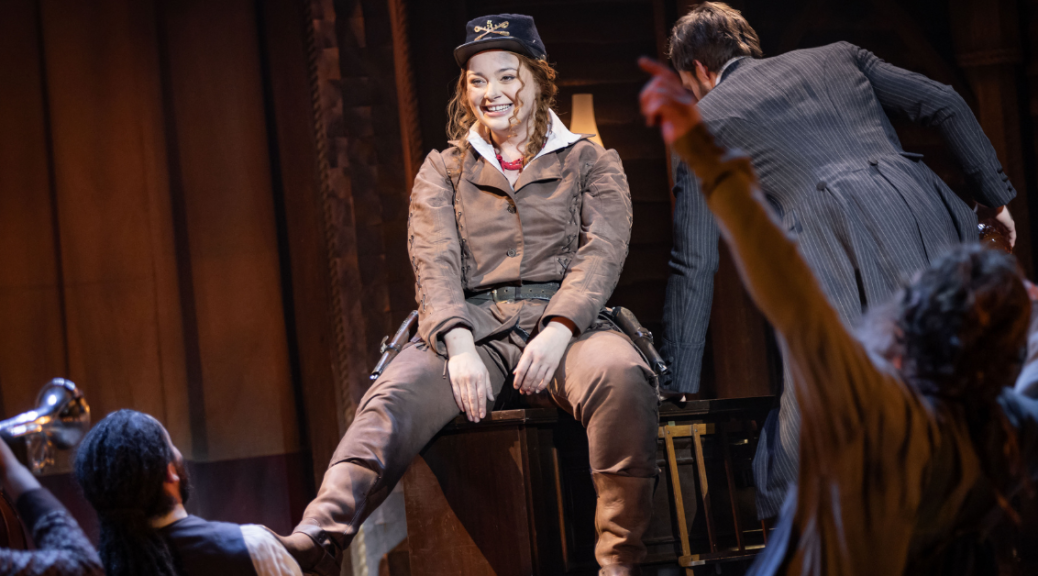
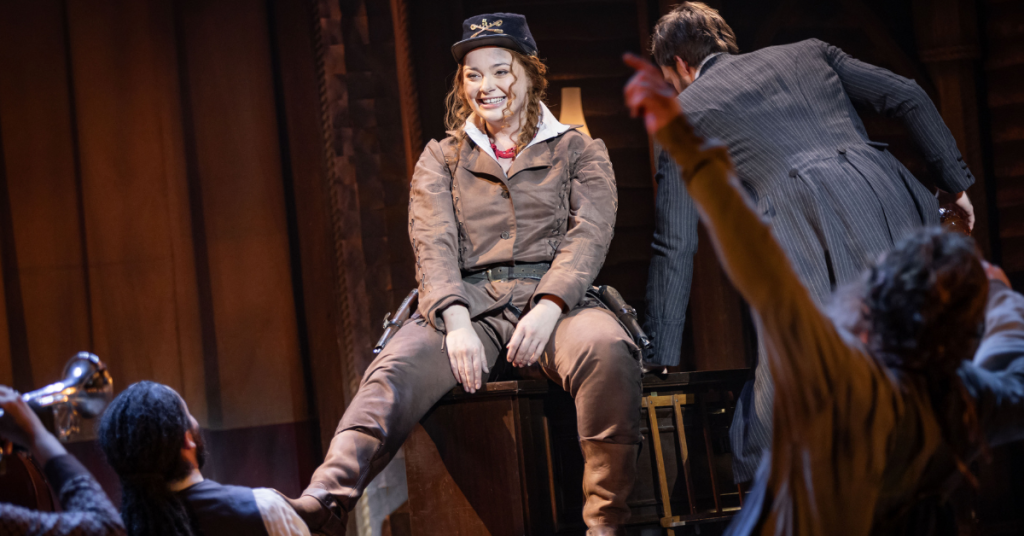
The 2025 touring production tweaks the 1961 stage play, based on the 1953 Hollywood smash musical movie featuring the iconic Doris Day and gives it a little bit of a “modern” touch. You may have memories watching Calamity during holidays, or maybe on a Sunday with your grandparents…you may not know *how* you know the “Whip-crack-away” song or the tune to “Just Blew in from the Windy City”, but even if you don’t remember the movie exactly, the 2025 musical will draw you in for its spectacle. From its cowboys and hoe-downs, to the the Americana bluegrass musicians and the vocal powerhouse that is Carrie Hope Fletcher, there are plenty of story, song and dance nuggets to keep you satiated. 

We meet Calamity, Wild Bill Hickock and a rag-tag ensemble of Deadwood City saloon-goers at the Watermill Theatre, HQ for the production’s story where Director/Choreographer Nick Winston and Director Nikolai Foster first imagined the world of Calamity in 2014. For this production, the production team have added a few extra songs and lost others synonymous with problematic representation or iconography. 

The production does well to navigate some of the awkwardness and “cringe” (to quote my daughter’s favourite phrase) of songs written in an era where men literally imagined the idea, wrote the story, the theme tunes and then staged and directed the show featuring predominantly white men. It’s a bit like watching Little House on the Prairie – it’s almost an absurd parody of the true harshnesses, shocking injustices and brutality of frontier life, but it sure was nice escaping to a fantasy for a few hours. I even enjoyed a song sung by Katie Brown (Seren Sandham-Davies) and Calamity about “A woman’s touch”, where they spruced up the homestead cabin with some tablecloths, patchwork curtains and dried flowers. No trad-wives here though, thankfully – Calamity is whip-smart and there is plenty of sass and energy from Vinny Coyle (playing Wild Bill) and the wonderful Samuel Holmes playing Francis Fryer. Holmes’ comedy chops and comic physicality were a real highlight throughout. 

There were some humorous queer-coded moments which the producers could have leaned into a little more during the scenes where Katie Brown moves in and “runs away” with Calamity Jane. It’s a little “nudge-nudge, wink-wink”, but at least this production has a little more diversity than the man-fest that was the original film. The musicians and ensemble cast mingled about freely providing pace and colour to the script, which at times fell a little flat here and there. Being set in the Wild West with a gaggle of blow-ins, the accents did wander a little “off-piste” at times, but anyone whose watched a production of Guys and Dolls will be familiar with accents oscillating between Noo Yoik and Surrey. It’s all good, clean fun and the cast were great sports and had a great rapport. Huge respect (or should I say Yee-Hawwww!) to Richard Lock for his bow-legged shuffling and toothless gurning as “Rattlesnake” – he really looked the part! 

Centering the entirety of the production in the same Saloon spot may have made sense, but I did find myself wanting to see more more travel, movement and visual interest in the wider set, which could perhaps provide more of a sense of place of the vast rolling plains and prairies where Calamity roamed. Her stagecoach excursions are brought to life by straddling the saloon pianos and chairs, spinning umbrellas, wheels and the two tapping coconut shells for horses hooves. It’s a nostalgic, good time romp through some of Hollywood’s most enduring musical classics and Carrie Hope Fletcher’s voice is truly beautiful. The production finished with an audience rendition of the Black Hills of Dekota, a hoedown reprise and joyous soft-shoe shuffling, spins (and – spoiler alert – there’s a double wedding). Well it was written in 1953 don’t forget…

There’s plenty of life in Calamity Jane and her musical / film iterations – It would be wonderful to see a Hollywood biopic of the real Calamity. Her letters and diary to her and Wild Bill’s daughter Janey in the 1800s were found to contain a true glimpse of her life and character. The songs only tell part of the story. But in the meantime, the stagecoach, Wild Bill and Calam will be in Cardiff til they “Whipcrack Away” on the March 15th. So if you’re fancying a hoe-down and a Sarsparilla, with the gang you’d better saddle up….

Calamity Jane at the WMC – Book here (closes 15th March)

The Marriage of Figaro – a review by Eva Marloes

 out of 5 stars (4 / 5)

A strong cast and orchestra perform well notwithstanding the threat of further cuts to the Welsh National Opera. Outside the Wales Millennium Centre, as many times before, we are met by WNO staff members wearing t-shirts and handing out leaflets and petitions about yet another round of cuts. The once formidable chorus has been halved from 40 to 20 members. Yet, the WNO manages to deliver once again.

Mozart’s Le Nozze di Figaro (The Marriage of Figaro) is based on Pierre Beaumarchais’ political satire La Folle Journée (1784), sequel to Le Barbier de Séville (The Barber of Seville).  Le Nozze is a scathing critique of the power of the nobility. At the centre is the droit de seigneur, the right of the lord of taking sexual advantage of his female servants.

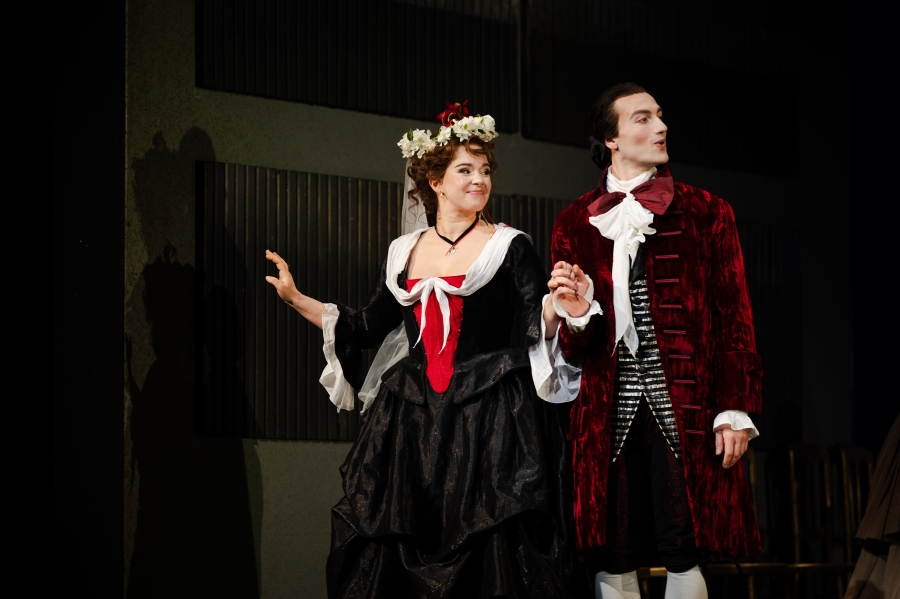
The opera begins with Susanna (Christina Gansch) and Figaro (Michael Mofidian), servants to the Count and Countess of Almaviva, making plans for their wedding. Susanna is afraid that the Count will revive the droit de seigneur to sleep with the bride. Figaro thinks he can outwit the Count of Almaviva (Giorgio Caoduro). Meanwhile, Don Bartolo (Wyn Pencarreg) and Marcellina (Monika Sawa) employ a lawyer to recoup the money lended to Figaro, who has promised to marry Marcellina, if he cannot repay it. The page, Cherubino (Harriet Eyley), in love with the Countess and every woman he sees, pleads with the Countess to help him to avoid dismissal. 

What follows is a farce of mistaken identities, where the plot thickens from trick to trick, new truths are discovered, like Figaro being the son of Marcellina and Don Basilio. There’s always someone who overhears something folding a plot and starting off a new one. At its core, however, is the servants, with the help of the betrayed Countess, plotting against the Count. 

This production has excellent singing and interpretations from all the cast. A funny and skillful Farfallone Amoroso by Michael Mofidian as Figaro, a beautifully delicate Voi Che Sapete of Harriet Eyley’s Cherubino, a moving Dove Sono of Chen Reiss as the Countess Almaviva, and a beautiful Deh Vieni of the excellent Christina Gansch as Susanna, to name a few. Particularly good performance comes also from Monika Sawa as Marcellina and Giorgio Caoduro as the Count. The cast shines as an ensemble, supported by a solid orchestra, conducted by Kerem Hasan. 

Christina Gansch as Susanna and Michael Mofidian and Figaro. Photo by Dafydd Owen.

The strong performances entertain and enchant, but the direction lacks brio. Le Nozze rests on singers and orchestra playing out the satire. We are left with a farce with beautiful music and singing, which misses the political intent. The 18th century’s setting of this revival production constrains the politics of the opera. A modern take could have perhaps exploited the liberties taken by today’s billionnaires, who seem to be above the law. It would have been poignant given the role of billionnaires in impoverishing our society. 

Rigoletto, a review by Eva Marloes

 out of 5 stars (3 / 5)

At the core of Rigoletto is the tragedy of an overprotective father, Rigoletto, who wants to kill his daughter’s suitor, the Duke, a well-known womaniser, but has his daughter killed instead. Gilda is a victim of her father’s control, of the Duke’s seduction, but also of the often misogynistic notions of love as self-sacrifice that lead her to her demise. Yet the Duke is also tragic.

Verdi moved away from Hugo’s story Le roi s’amuse, on which Rigoletto is based. The Duke is not just a womaniser with no scruples, making fun of women in La donna è mobile. He is a dissolute man but one who is seduced by Gilda’s purity and perhaps even falls really in love with her.

It’s a tragedy that is never staged. Most productions are seduced by the need of being relevant, contemporary, even topical. There are times when, thanks to fortuitous timing, the contemporary political setting works. This is the case of the WNO’s production of Rigoletto in 2019 set the opera in Washington at the height of the #metoo era. The staging, direction, orchestra and performances were superb.

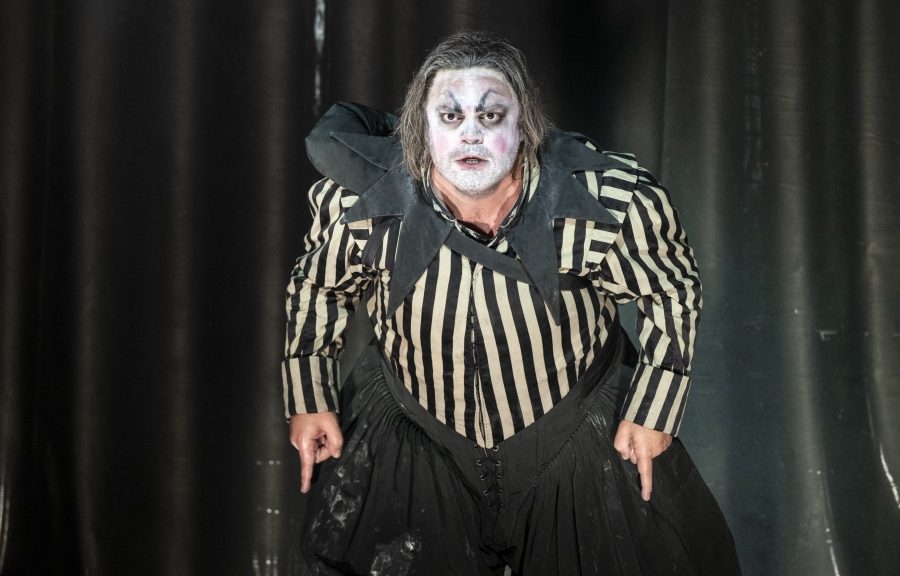
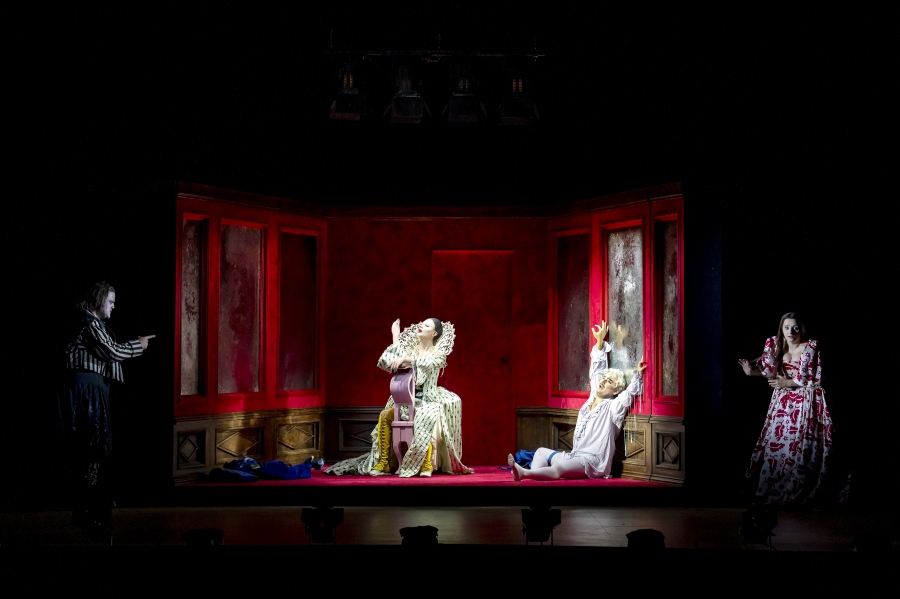
This production of Rigoletto is pleasant, with good performances but tame with a subdued orchestra and no clear take. Adele Thomas’s direction has no clear and consistent interpretation of the drama. There are references to politics and the Bullingdon club but in 18th century costumes making the staging confused and confusing. The direction constraints the performers and fails to convey the contrasting elements of the seductive myschief, tragic love, and suspence of the opera.

Daniel Luis de Vicente, Alyona Abramova, Raffaele Abete and Soraya Mafi in Rigoletto. Photo Richard Hubert Smith.

Soraya Mafi, as Gilda, has a beautiful voice and performs Caro nome impeccably, yet her Gilda is a little too fragile. Raffaele Abete, as the Duke, sings well. His voice is agile but not powerful enough to carry the persona of the Duke. The direction and interpretation makes this Duke a bit of a lightweight. He’s not seductive, he’s not even a bad boy, he’s merely vain. 

Daniel Luis Vicente excels as Rigoletto cutting a very tragic figure and, at times, stealing the scene, including the final quartet. Notable are also the performances of Nathanaël Tavernier as Sparafucile and of Alyona Abramova as Maddalena. Abramova performs soulfully, but being a mezzo rather than a contralto, does not provide a sufficient contrast with Mafi’s Gilda in the final quartet. 

The strong performances make this production pleasant but constrained and at times, especially in the final quartet, disjointed. The orchestra, conducted by Pietro Rizzo, lacks power. The scene of the storm is disrupted by the rather ill-conceived idea of firing lights onto the audience instead of letting the music conjure the wind and thunder.

The WNO can do a lot better than this, as shown recently in Il Trittico. It can excel. Let’s hope this is a blip, perhaps the result of the cutting of funding and constant insecurity over their future. The WNO is a treasure in Wales and should be supported and allowed to grow.

Review: HAIRSPRAY 30.7.24 WALES MILLENIUM CENTRE Patrick Downes

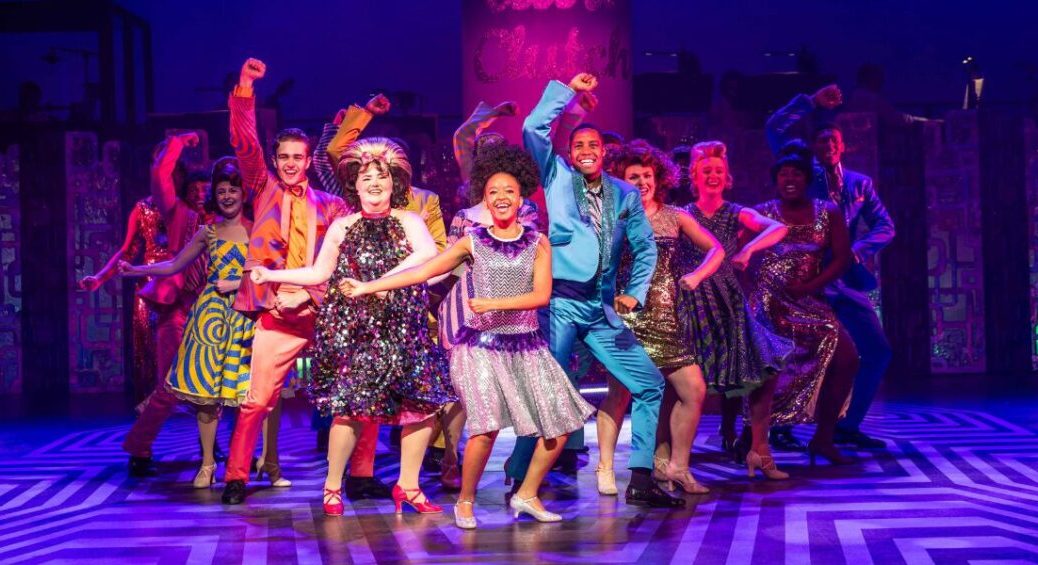
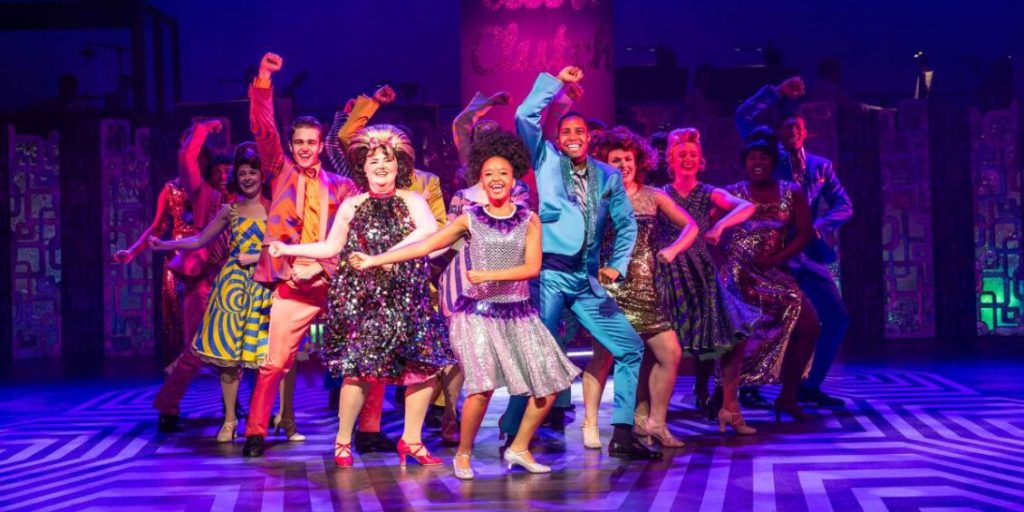
Hairspray at the Wales Millennium Centre in Cardiff was an absolute whirlwind of fun, energy, and infectious joy. This production captured the essence of the 60s with a vibrant, colourful, and over-the-top spectacle that left the audience cheering and dancing in their seats.

From the moment the curtain rises, you’re transported to Baltimore, where the rhythm of the music and the infectious enthusiasm of the cast immediately grab your attention. The iconic songs, including “Good Morning Baltimore,” “Welcome to the 60s,” and the show-stopping finale “You Can’t Stop the Beat,” were delivered with powerhouse vocals and impeccable choreography.

The heart of the show, of course, is Tracy Turnblad, played by Alexandra Emmerson-Kirby in her professional debut. She was just sensational. Her incredible voice made her the perfect embodiment of this beloved character. The supporting cast was equally impressive, with standout performances from Edna Turnblad (Neil Hurst) and Wilbur (Dermot Canavan) certainly stole the show with “(You’re) Timeless to me”.  Michelle Ndegwa also made her professional debut in the show as Motormouth Maybelle having been selected from more than 3,000 people who applied to the open auditions in November last year.  “I know where I’ve been” is such an emotional number and to perform it in the way Michelle did, wow!

The set design was simple but visually stunning, capturing the spirit of the era with colourful projected backdrops and eye-catching costumes. Most touring shows follow the same process – and Hairspray delivered. The choreography was energetic and fun, with the ensemble dancers bringing a high level of skill. The show start seemed a little laboured and it probably wasn’t till the second number things started to gel.

I’ve said that I believe Hairspray has one of the most incredible show finales – even better than Les Misérables – granted no one dies in Hairspray and it would be like comparing a Mini with a Porsche. But it certainly leaves you with a smile on your face and a spring in your step. It’s a feel-good show that’s the perfect antidote to a bad hair day!

Patrick Downes