Bill Kenwright’s Agatha Christie Company previously travelled
the UK with original stage plays of some of the author’s greatest works
including The Hollow, And Then There Were
None and Murder on the Nile. The
company put on a major new production each year for ten years running, each
beginning at the Theatre Royal in Windsor before embarking on national tours. Now, under the banner of The Classic Thriller Theatre Company, this stellar cast present a fast-paced,
fantastically fun thriller based on the 1938 film directed by none other than
Alfred Hitchcock.
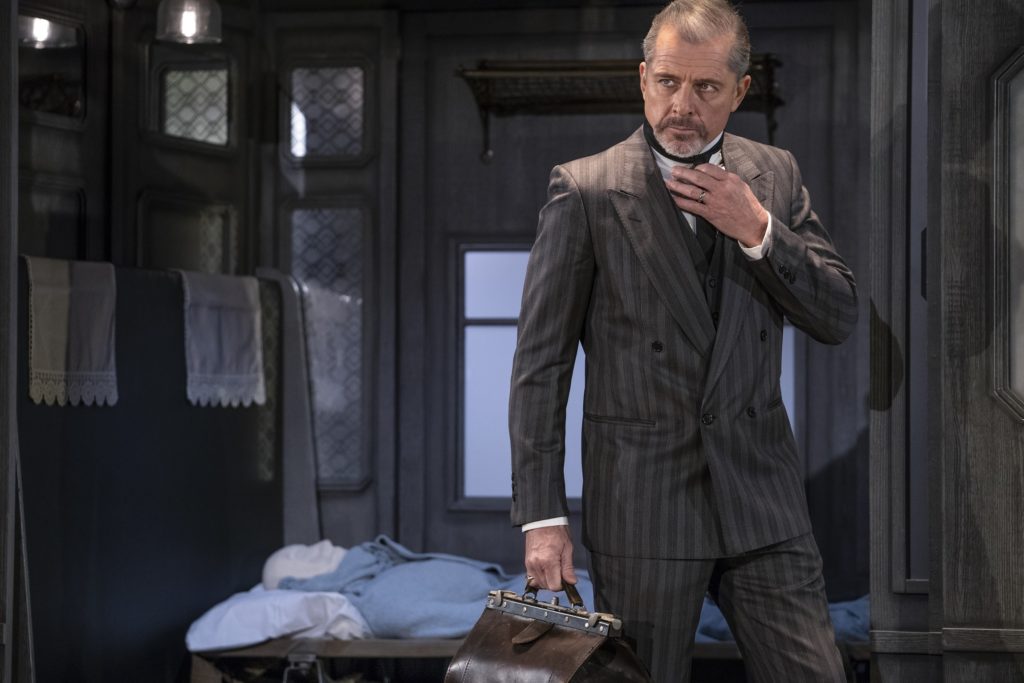
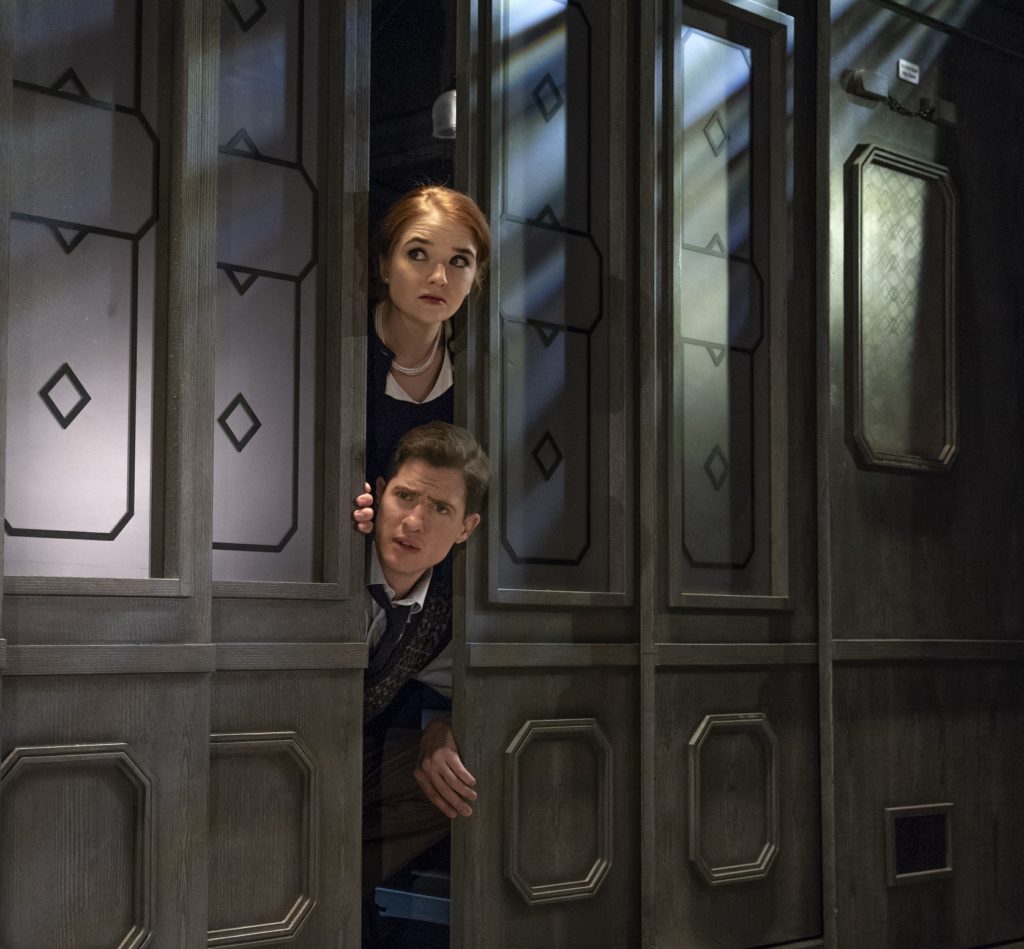
Socialite Iris (wonderfully portrayed by Lorna Fitzgerald) is travelling home from continental Europe to London to marry an aristocrat, seemingly not for love, but for the title it brings. Before she climbs aboard, she receives a blow to the head but is helped onto the train by a friendly, elderly lady by the name of Miss Froy. Later that day it appears that Miss Froy has promptly vanished, yet all of Iris’ travelling companions deny ever having seen the woman. Panic ensues and with the help of a young, and rather handsome, musicologist, Iris is determined to solve the mystery of her lost friend.
To an almost sold out
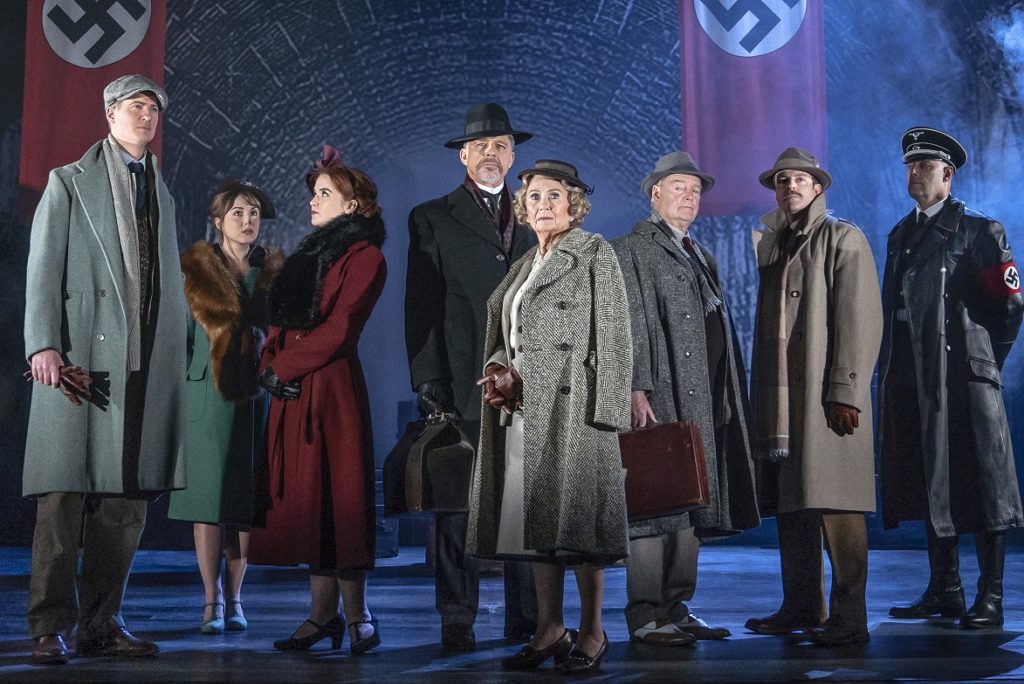
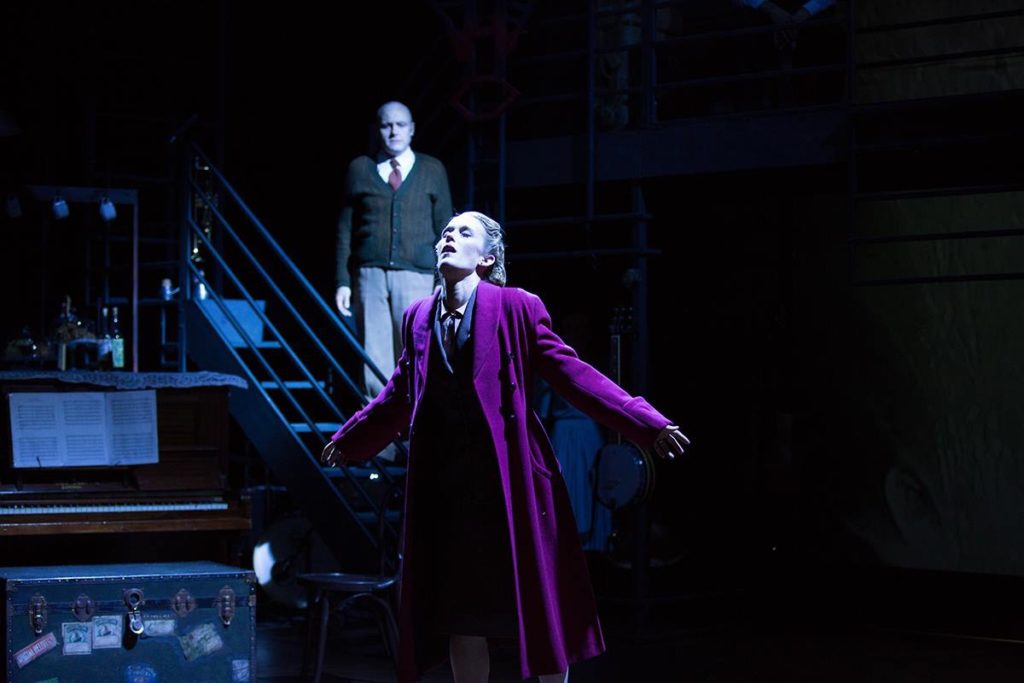
auditorium, the curtain goes up to reveal a platform at the train station. The impressive
set, lighting and sound create the perfect atmosphere, transporting us to that
platform; we can see the steam, hear the engines and watch the passengers and
staff bustling about. The image is also a powerful one with Swastika banners
prominently hanging from the rafters and a Nazi officer patrolling the action.
The story is based just before the onset of World War II and throughout the
play there are numerous references to the political situation, often made humorous
by English cricket enthusiasts Charters and Caldicott (Robert Duncan and Ben
Nealon respectively, both providing light-relief with great comic timing and
comradery).
Most of the play is set on the train itself; another feat of wonderful set design. The compartments swing on from both wings and the action is pinpointed by the opening and closing of the sliding doors. The dining and luggage cars are simply represented with tables and chairs, holdalls and suitcases and, very successfully, there is no pretence that this is ‘theatre’; the cast themselves pushing the pieces on and off, frequently not in black out.
With a star-studded
cast, superb set, lighting and costume design and a fun-filled, dynamic plot
this production is one not to miss, especially if you’re a fan of the good old whodunnit!
The Lady Vanishes is touring the UK
until the end of July 2019.
Theatr Clwyd, Mold
February 4th-9th 2019
Written By: Sidney Gilliat and Frank Launder
Adapted By: Antony Lampard
Director: Roy Marsden
Designer: Morgan Large
Lighting Designer: Charlie Morgan Jones
Sound Designer: Dan Samson
Choreographer: Chris Cuming
Fight Director: Richard Leggett
Dialect Coach: Helen Ashton
Cast includes: Juliet Mills, Maxwell Caulfield, Lorna
Fitzgerald, Matt Barber, Robert Duncan, Philip Lowrie, Ben Nealon, Elizabeth
Payne, Mark Carlisle, Joe Reisig, Natalie Law, James Boswell, Cara Ballingall
It is a cold and snowy night in St Hilary. I drive up to the village hall. All is quiet. I tap on the door. It creaks open…to expose a whole community packed into a warm space – already chatting and laughing and drinking tea. A blast of hot air and frivolity. An absolute treat to be amongst such a friendly bunch all ready to enjoy themselves. And enjoy ourselves we do.
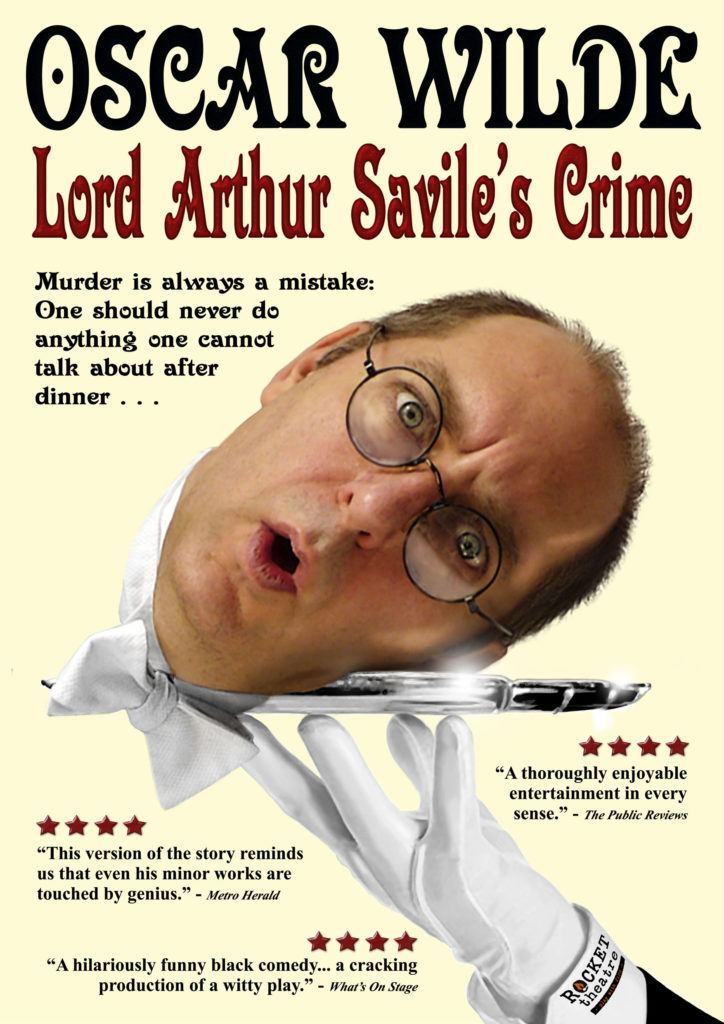
You always think you know Oscar Wilde = that you are au fait with every quip and quiver but no, we all know so little of this clever writer, this scribe of human quirks.
Lord Arthur performed by Martin Harris is positively steaming with aristocratic lunacy – a Bateman come to life, facing out his audience and batting down his batman. Ah, Middlewick performed by Chris Bridgman. Valet, butler, gentleman’s gentleman,player of many parts. Subtle, farcical, multi-talented, the perfect foil.
They do not falter.
We are laughing from the off. We are relishing the peculiar gratification of recognising a line, a title, a character. And then it starts to take a tricky turn. We are being included. Not just eyeballed but persuaded onto the stage. Stage? A chair, a fireplace, a table and a stool just within the curve of our seating. A painting of Lady Savile, young Sybil in fine Edwardian garb, overseeing all of us. And we are suddenly nervous.
Cries of, Oooh I’m glad to be at the back, go out. We egg on our comrades to join in with that curious mixture of jealousy and relief. It is expertly handled. Hilarious! Properly one of the funniest theatrical experiences to be had. The temperature starts to climb. The macabre nature of the tale unfolds and we accept not only the dark side of our humour but the apparent ease with which the upper class is seen to accept its position outside of the law. Lord Arthur and Middlewick start to play with our sensibilities and we are sucked in. We are all in the clutches of the palmist.
D’you think authenticity is what they’re after in St. Hilary?Clearly not! We want more Lady Clem.
A slightly clunky trip to Venice requires us to take a break and enjoy wine and ice cream while the snow falls outside and the temperature rises inside.
In our cups, we rise to the panto atmosphere and settle into the second act with enthusiasm. Lord Arthur, driven to a carefully controlled distraction by his failure to commit murder, pushes on with Middlewick riding shotgun to the story telling. We are roaring with laughter and starting to wonder how it all will end.
And end it does. A sorry damp little ending, perhaps a bit like life itself.
And we are released into the cold, a lot warmer and a little wiser to the power of suggestibility to the gentler mind. It’s all been such nonsense…
There was an Old Person of Ems Who casually fell in the Thames; And when he was found, they said he was drowned, That unlucky Old Person of Ems.
In the article below a range of Welsh and Wales based creatives share with us a selection of cultural events they are looking forward to this year. Thanks to all of our contributors.
Connor Allen, Writer and Actor.
My cultural highlights for 2019 would have to include Betrayal at the Harold Pinter Theatre starring Tom Hiddleston and Charlie Cox. One of my favourite Pinter plays and one hell of a cast, so it should be great!
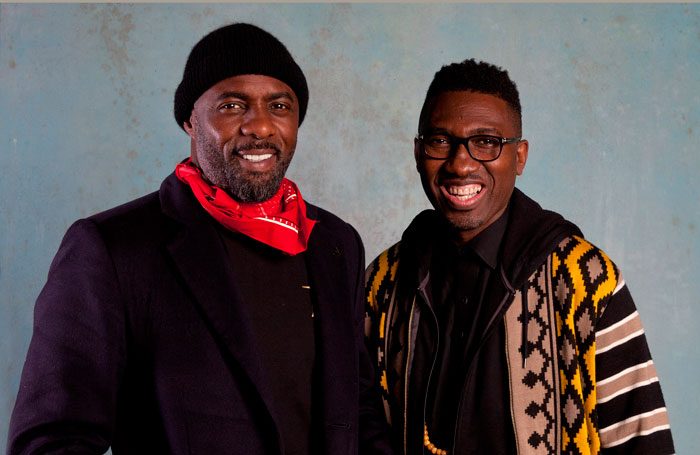
Another one I’m ecstatic for is Tree by Idris Elba and Kwame Kwei-Armah at the Manchester International Festival. The vision of both those artists is nothing short of superb so we are in for a treat whatever they create.
And speaking of the Manchester International Festival Skepta is doing an immersive experience called Dystopia987 and even if you’re not a lover of grime I can bet that it’ll be worth the watch.
Closer to home in Wales I’m looking forward to Mathew Bourne’s Romeo & Juliet coming to the Wales Millennium Centre as previous productions from Mr Bourne have been astounding in terms of choreography and storytelling so I am very much looking forward to his take on Romeo & Juliet.
Also I’m very eager to watch Tigerface by Justin Cliffe at The OtherRoom in Cardiff. I’ve no doubt that it will be an awesome piece and being that I missed previous sharing’s of it I am excited to see the piece in its entirety.
A personal hope of mine for 2019 is that more people and companies are taking risks, especially with minority groups. We’ve played it safe for many years now. Let’s shake it up. And also accepting other people’s views even if they are different from our own. We all come from different walks of life and with that we bring different views and opinions. Let’s show compassion and accept or at least acknowledge other people’s views. We can all learn and grow from each other.
Meredydd Barker, Playwright.
From the 14thof June to the 10thof November, Tate Liverpool is hosting the first, major UK exhibition of artist and activist Keith Haring. Because his work decorates T-shirts and tea towels it tends to be forgotten how subversive he was. This is a superb opportunity to be reminded of how urgent his response was to issues such political dictatorship, racism, homophobia, drug addiction, capitalism and the environment. He died 28 years ago but is as relevant as he’s ever been.
It didn’t happen last year but I will get to see The Idles live this year; I will, I will, I will…
Jo Clifford’s new version of The Taming of the Shrew at the Sherman in March is a must attend.
If I make it, I will be 50 in September and hope to be in Chicago to celebrate. There’ll be a World Music Festival on at the time – think Llangollen International Musical Eisteddfod, but in Chicago – so I’ll dip in and out of that while going to as many shows, plays, bars as I can. Nothing planned for definite, but I think just going to Chicago – and New York beforehand – counts as a cultural event.
I’ve just bought tickets to see Ruby Wax – How to be Human: The Show, “answers every question you’ve ever had about evolution, thoughts, emotions, the body, addictions, relationships, sex, kids, the future and compassion.” I think she’s astonishing, one of the great documentary makers of our time and times.
I always promise myself that I’ll go the Machynlleth Comedy Festival and it never happens, but I am going to make a super-human effort to get there this year.
As for me I’m writing a play called The Huntsman for the brilliant Torch Theatre in Milford Haven. It’s pencilled in for perfomances this Autumn. I’m piecing together the first draft as I write. I have to remind myself to breathe as I do so. It’s about Pembrokeshire when serial killer John Cooper was at large. And along with a brilliant film-maker called Nick Swannell I’ve just begun the process of starting a film company called The Holding Cell. I’m very excited about that indeed.
Be Excited. Be Bold. Be Kind. That, I hope, will be the themes for this year, and these horribly uncertain times.
Mawgaine Tarrant-Cornish, Casting Associate, National Theatre Wales.
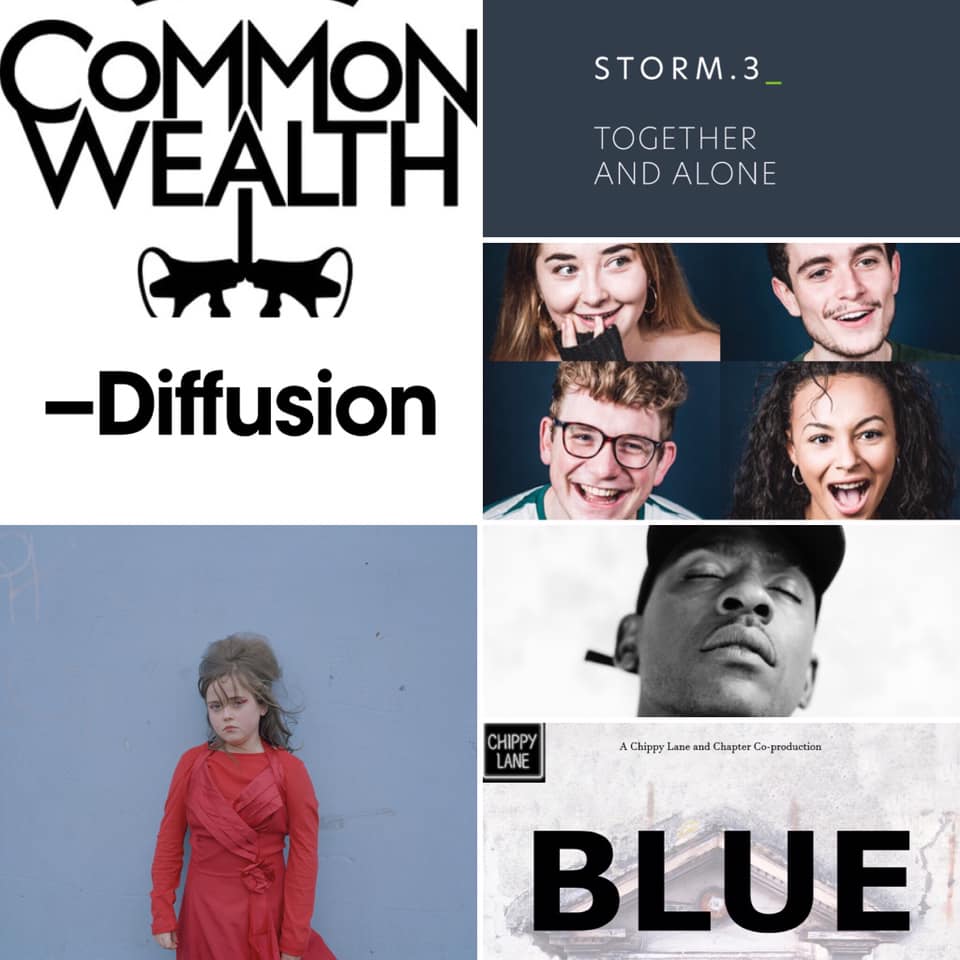
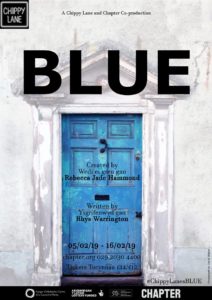
First up I’m excited about BLUE, a new play by Rhys Warrington which has a stellar cast. It’s at Chapter from next week.
At NTW, I’ve been working with Mike Brookes to cast STORM 3: TOGETHER AND ALONE and I can’t wait to see these performers together on stage in March. They’ll be taking over a venue in Newport with this experimental show about how we figure out our place in the world.
Also in March, NEW, from Royal Welsh College of Music and Drama, will hit the Sherman Theatre. It’s your chance to catch this year’s graduating actors collaborating on four brand new plays by up and coming British playwrights. For Wales’ offering, Hannah Noone will direct Jacob Hodgkinson’s BETWEEN ETERNITY AND TIME.
As part of Diffusion 2019, in April, Matt Wright and Janire Najera will create an immersive visual score for JUNIPER, Slowly Rolling Camera’s latest album, which they’ll play live.
At National Museum Wales, the Women in Focus exhibition
continues into June. Part One introduced me to Charlotte James and her Ffasiwn Project with Clémentine
Schneidermann so I’m looking forward to discovering many a new girl crush
in Part Two: Women in Front of the Lens.
I’d love to see DYSTOPIA987 by Skepta at MIF this summer and there’ll be loads more to get excited about in that programme, I’m sure.
Finally, look out for Common Wealth Theatre’s I HAVE MET THE ENEMY (and the enemy is us). They are a force and this is their exploration of our complicity in the arms trade and conflict around the world.
Jonny Cotsen, Theatremaker and Consultant.
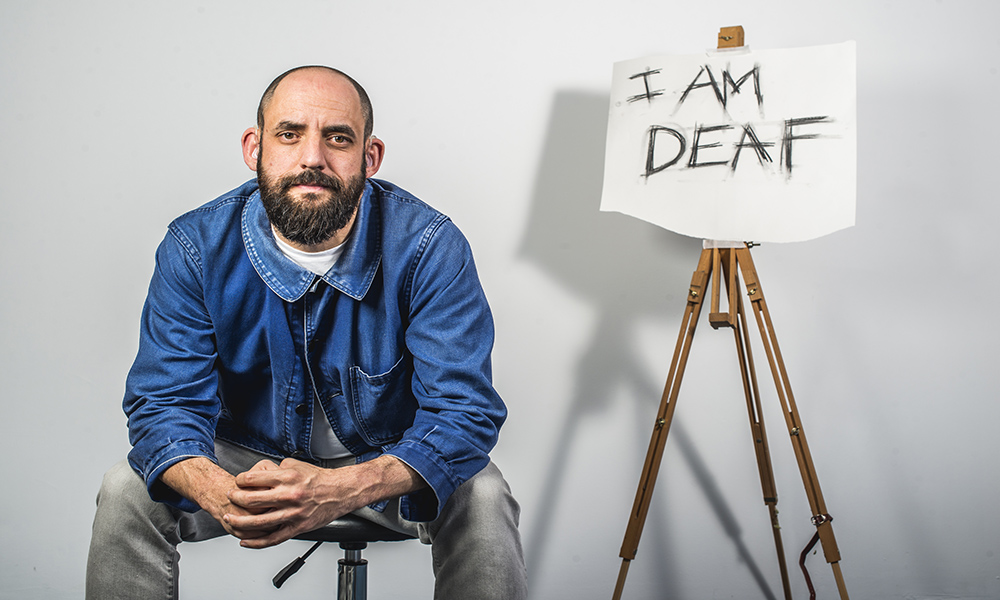
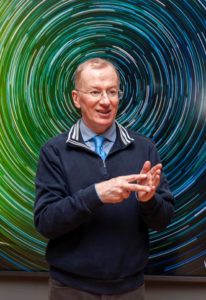
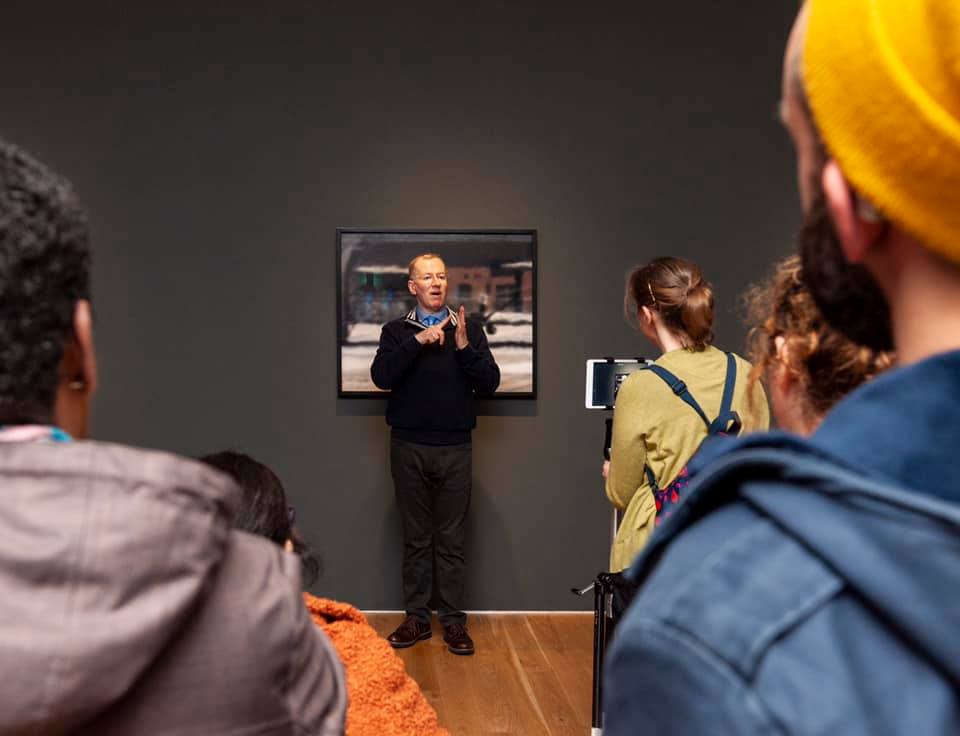
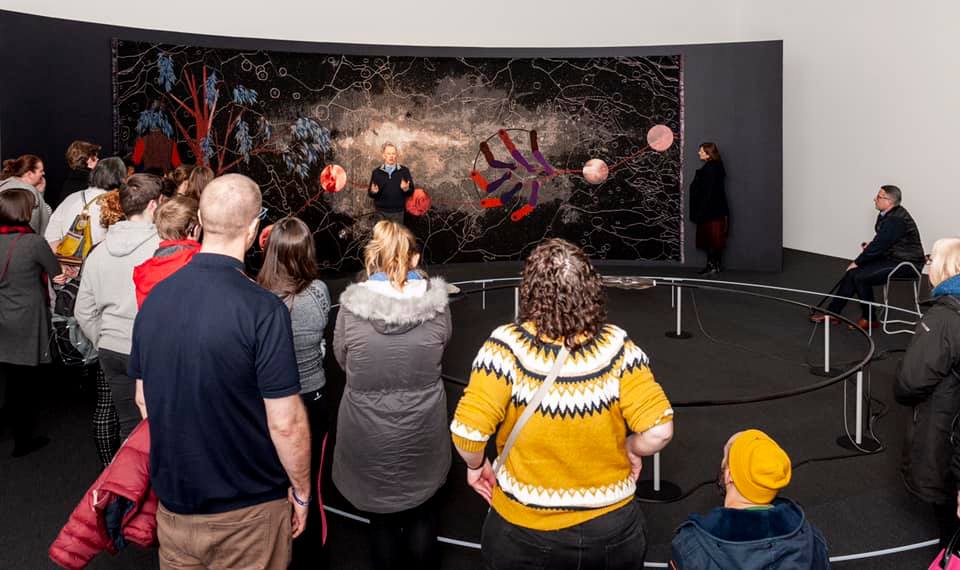
Artes Mundi Tour with John Wilson. I have been campaigning for many years to try and get John Wilson to curate and lead a BSL tour at one of our brilliant museums/galleries. John is one of the most experienced Deaf curators in the UK and for him to come to Wales to led the Artes Mundi exhibition at the National Museum, Cardiff was fantastic!
The event took place two weeks ago and sold out pretty quickly. My background and passion is visual arts and to see this happening in Wales was a personal dream for me. I have been to hundreds of exhibition tours and I usually only understand about 20/30% of what is spoken, for this tour I understood 100%.
I think having a Deaf curator makes a bigger impact because of the language they use and it resonated with a Deaf audience. There was a real mixture of people in attendance; some have never been to a museum before, some attending liked Art but have limited opportunities to see an accessible tour, some just wanted to see John. The feedback was really positive and I hope to bring John back more for more BSL tours in other museums around Wales. You can read and exclusive interview with John and Jonny about this event here.
Mr and Mrs Clark ‘Louder Is Not Always Clearer’. I might be biased because I am involved in this but it is going on another tour from May to June then will be heading for a month at the Edinburgh Fringe at the Summerhall. Louder Is Not Always Clearer has also been selected for the national rural touring and will be visiting rural communities in the UK. Exciting times and we are looking forward seeing wider and more diverse audiences!
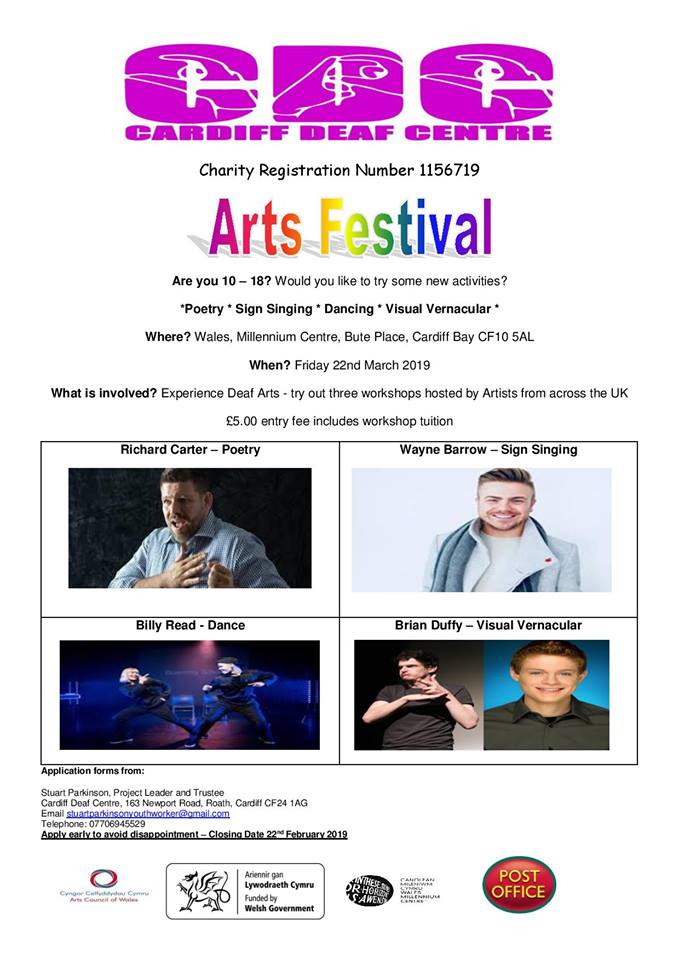
Cardiff Deaf Centre Arts Festival – After it’s success 5 years ago for young deaf people, it is back again in April at the WMC with a range of exciting Deaf artists running workshops.
Hijinx and Frantic Assembly ‘Into the Light” at Sherman Theatre. Always exciting to watch both organisations but to see the two combined… wow!- I am looking forward to see more disabled-led events in 2019. Kaite O’Rieily’s ‘Peeling’ directed by Taking Flight looks interesting as well as the brilliant Graeae’s new production of Sarah Kane’s ‘Blasted’. I am very excited to hear Deafinitely Theatre are creating their version of ‘Horrible Histories’ called ‘Dreadful Deaf’ which is going to be touring later in the year. I am really excited to see what Paula Garfield (Director of Deafinitaly Theatre) is going to do with this. I am sure it will be fun, visual, accessible and mad!
I am also hoping to see Extraordinary Bodies new fully inclusive outdoor touring show ‘What I am Worth’. British Paraorchestra’s ‘Nature Of Why’ is touring and will be coming to WMC. They are the world’s only large-scale ensemble for professional disabled musicians so I am very excited they are coming to Wales.- I have been looking at festivals where we can take our 2 year old daughter along so we are going to head back to the Blue Lagoon Festival in West Wales which we have been many times and its brilliant. We are also thinking (if i can get tickets) of going to the Just So Festival because it looks amazing. I have never been to the Machynlleth Festival so I have made sure it is on my list to visit this year.
Branwen Davies, Writer.
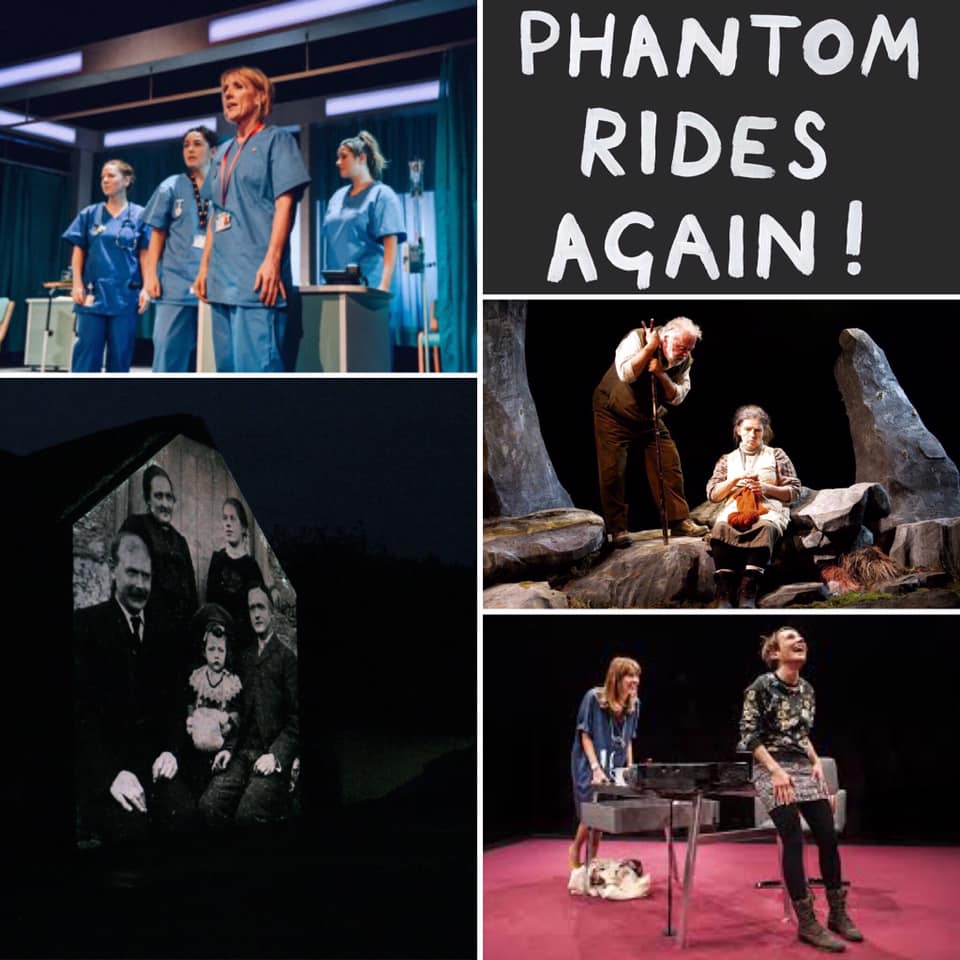
My cultural delights or highlights for 2019? I’m still recovering from the cultural smorgasbord of 2018! The end of the year in particular was a whirlwind of exciting and engaging work that inspired and moved me. I’m still discussing and thinking about some of my favourites – Clean Break’s ‘Thick as Thieves’ at Theatr Clwyd, John Rea’s ‘Atgyfodi’ at Sain Ffagan, the Sherman’s production of Meic Povey’s ‘Fel Anifail,’ good cop, bad cop’s ‘Phantom Rides Again’ at Chapter and Theatr Genedlaethol Cymru’s verbatim musical ‘Nyrsys.’
Last year it was impossible to catch everything so I’m glad there’s an opportunity in 2019 to catch some of the things I missed. On my list – Lovecraft (Not the sex shop in Cardiff) at Galeri, Caernarfon before Carys Eleri takes her show to Australia. Theatr Genedlaethol Cymru’s‘Merched Caerdydd/Nos Sadwrn o Hyd’ that premiered at the Eisteddfod last August and will soon to be touring Wales. NTW’s ‘The Stick Maker Tales’ and Jonny Cotsen’s production ‘Louder v Clearer.’
Other theatre productions I don’t want to miss this year are Fran Wen’s powerful one woman show ‘Anweledig.’ Be Aware’s Turkish/Welsh production ‘Y Brain/Kargalar.’Cwmni Pluen’s ‘Woof’ and Ed Thomas’s new play ‘On Bear Ridge’ (a co-production between NTW and the Royal Court). As one of the Dirty Protest gang I’m excited that we have a new production touring in the spring. Sian Owen’s one woman show ‘How To Be Brave’ is set in Newport and is a love story to the city. On the art front I’m intrigued to see the work on show and the work being developed at Shift and Rugart/Celfryg and the possibilities of these contemporary art spaces at the Capitol Shopping Centre on Queen Street. Another highlight I’m looking forward to is London Sinfonietta Synergy Vocals at St David’s Hall (Steve Reich being hailed as one of ‘the most original music thinkers of our time’)
I want to enjoy more live music this year. I just hope there will still be vibrant and individual venues left to be able to do so. I’m heartbroken that Buffalo and Gwdihw in Cardiff have been forced to close down.
I recently saw Cate Le Bon at The Gate, Lleuwen is performing a series of acoustic gigs in chapels across Wales following the release of her new album ‘Gwn Glân Beibl Budr,’ and Mr (Mark Roberts + Band) is also touring. I love his first solo album, Oesoedd.
My personal hope is to collaborate more with different artists who work differently to me and to have more creative discussions. I’m keen to work more with music and sound and challenge the way I write and create. I’m also keen to explore the possibilities of political plays in Wales. Where are our political plays especially in the current political turmoil we’re facing in Wales and beyond?
Peter Doran, Artistic Director, Torch Theatre.
2019 will start with a theatrical explosion for me, I’ve booked for Wise Children, the first production of Emma Rice’s new company at Bristol Old Vic. Emma Rice is one of the most exciting directors in the UK, her work with Kneehigh was phenomenal. I directed Brief Encounter at the Torch a couple of years ago, unashamedly based on her production with Kneehigh and was probably one of the highlights of my career as a director. Wise Children, I’m told has all the hallmarks of a knee-high production and with two fantastic Welsh actors in the cast, Katy Owen and Gareth Snook and no bridge tolls to pay, this will be a cracking start to the year.
Laura Penneycard and Liam Tobin in Torch Theatre production of Brief Encounter by Emma Rice.
From a Torch perspective, we have Grav back for it’s fifth tour, it’s now like welcoming an old friend back to the theatre; staff, audiences, they all love Grav, it creates such a great atmosphere in the theatre; it’ll be great having him back at the Torch and to take him to London for a short run at the Hope Theatre in Islington! Who would’ve thought that a play about a boy from Mynedd y Garreg would perform in New York, Washington DC and London all in the space of twelve months.
Gareth Ford Elliot, Get the Chance critic and playwright.
My personal highlights of what I’m looking forward to are the Cardiff Fringe Theatre Festival and The Other Room’s Spring Fringe. It will be excellent to see so much work in the first half of the year in Cardiff.
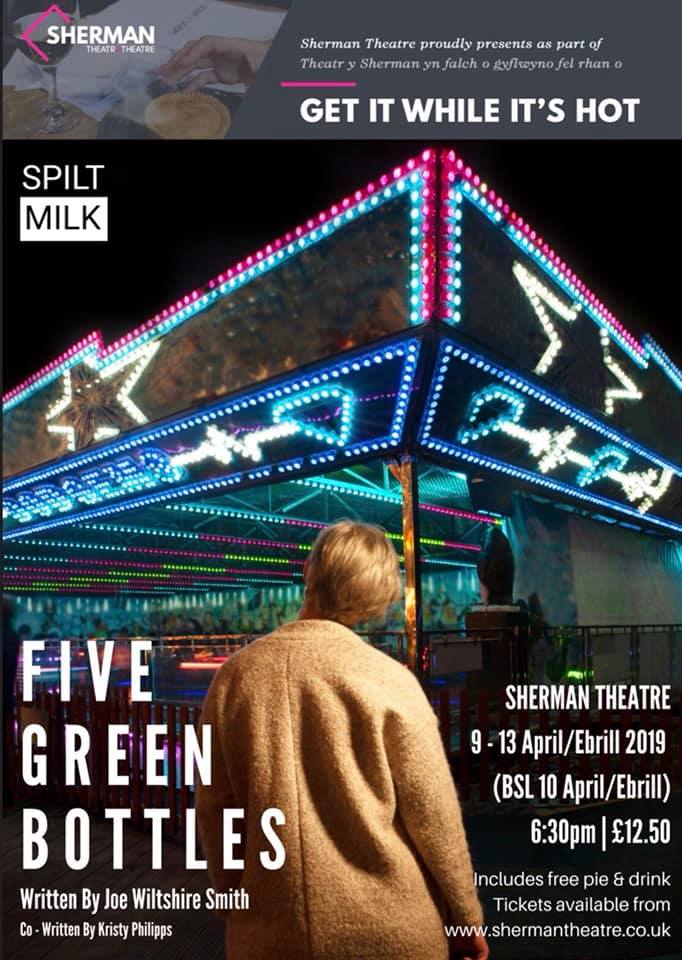
As for specific projects, Spilt Milk’s ‘Five Green Bottles’ by Joe Wiltshire-Smith looks to be an absolute hit. It was a brilliant show at last year’s Cardiff Fringe and to see it with a few extra months work and some changes is a very exciting prospect. Wiltshire-Smith is one of the upcoming Cardiff-based writers and working with Spilt Milk who have contributed so much to Cardiff’s arts scene in the last two years is a combination not to be missed.
David Evans, Head of Production, National Theatre Wales.
I am intrigued to see the The Mirror Crack’d – the WMC’s Co-Production with Wiltshire Creative that will be on at The New Theatre, Cardiff. Agatha Christie shows have been the staple of mid scale touring for years, populated by people “off the telly” in the twilight of their careers. But this is apparently a completely new take on the hoary old country house murders and I am fascinated to see what they have done.
After “Now the Hero” I am eager to see anything that Marc Rees is up to, I don’t know what his plans for 2019 are but whatever they are I will be there.
Matthew Gough, Faculty of Creative Industries, USW, Senior Lecturer Dance
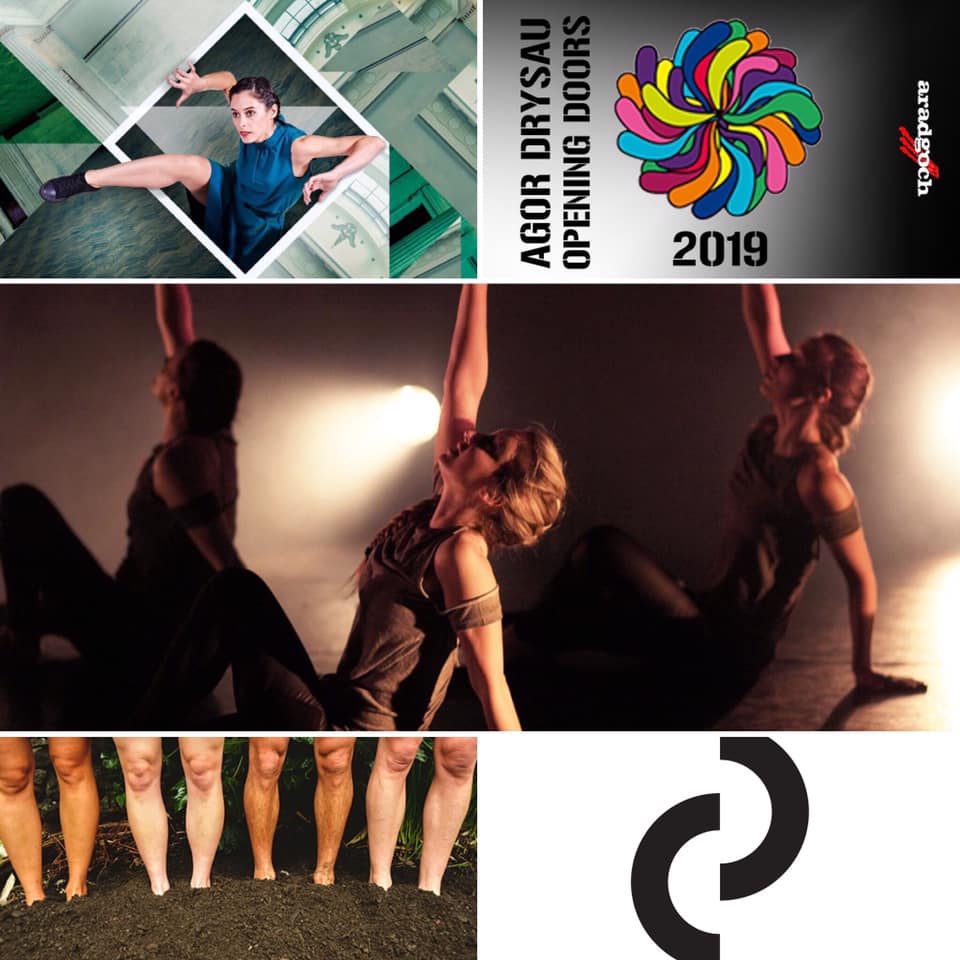
I’ve been looking forward to 2019 for some time, it will bring the first graduates from BA Hons Dance, at the University of South Wales. Some 20 years after my own graduation I will be watching our students with pride as they present their dissertations (March), Perform at MAP festival, and Agor Drysau (March), a repertoire night with work from Wales based choreographers (April), and our end of semester performances at Dance House Cardiff (April, & May). National Dance Company of Wales, and Groundwork Pro are both in a period of new leadership and their plans for future delivery are exciting and progressive. A number of dance artists have (re)established themselves in Wales and, the sector will benefit from the diverse perspectives, and experience they bring. Cardiff Dance Festival always brings a richly curated, international focus to the sector, and I anticipate the next edition will bring more dance delights (November). Overall I look forwards to the Welsh dance sector, adapting, reimagining, and revitalising itself depicts the challenges, and uncertainty that we know 2019 will bring.
Rebecca Jane Hammond, Artistic Director Chippy Lane.
I think topping ‘2018’ will be difficult as there was so much work of great quality being developed and produced. New companies thriving, venues reaching wider audiences and winning awards and most importantly the community rallying together to ensure our work is met with joy and love and great support for one another.
My cultural highlight for 2019: NEW: 2019, Between Eternity and Time Written by our Jacob Hodgkinson, directed by Hannah Noone, commissioned by Royal Welsh College of Music & Drama and Sherman Theatre “I am beyond excited to see this team of collaborators working together and Jacob’s writing getting the recognition it so deeply deserves in Cardiff and London.”
19 – 21 Mar, Royal Welsh College of Music and Drama 2 – 5 Apr, The Gate Theatre, Notting Hill, London
As for our own cultural highlight it’s important I mention BLUE, Chippy Lane’s second production and first foray into new writing. Boasting an authentic Welsh and Wales-based creative team and published by Methuen Drama (Bloomsbury Publishing). This is an enormous achievement for a company not yet three years old. We will also continue our other projects and initiatives by producing more of Chippy Lane’s Podcast and running our Welsh Female Writers Group. We hope you can continue to support us as we continue to create great theatre and provide opportunity.
Paul Jenkins, Theatre Director/Dramaturg/Writer.
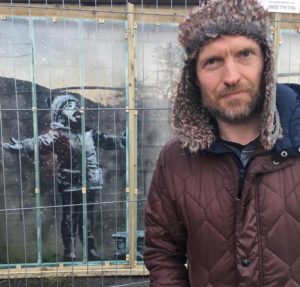
I’m looking forward to new plays from Elgan Rhys & Ed Thomas. Woof, directed by Gethin Evans, is first up at The Sherman and is sure to be a theatrical force from the creative force from the creative team behind Mags last year. Then the brilliant Ed Thomas, whose gritty surrealism defined Welsh theatre in the 90s makes a welcome return with NTW. On a personal note I’ve been inspired by the locals of Taibach while recording responses to the Banksy that appeared over Xmas. This street art asks difficult questions about the economic foundations of Port Talbot and yet has been embraced by the entire community. Freelance theatre-makers like myself rely on the big producing theatres to pick up exciting ideas & support emerging talent, so I’m very much hoping the Banksy story will find a good home and become an essential highlight of 2019.
Zosia Jo, Dance Artist.
Most of the things I am looking forward to in 2019 are still awaiting their funding! Cardiff Dance Festival for example, and my own production- Songs for the Body- which will be a promenade live action concept album with dance, music and spoken word taking over Chapter in October half term.
However one thing that is confirmed is Groundwork Pro’s funding and they will be offering workshops, events, classes and residencies for dance and movement artists throughout 2019. There will be so much opportunity for discussion, training, sharing and professional development. I am really excited to be part of it.
Angharad Lee, Director.
Firstly, I am looking forward to seeing Hadestow which tells a version of the ancient Greek myth of Orpheus and Eurydice, a musical adaptation of the folk Opera concept album by Anais Mitchell.
https://youtu.be/fZoQSThtD6s
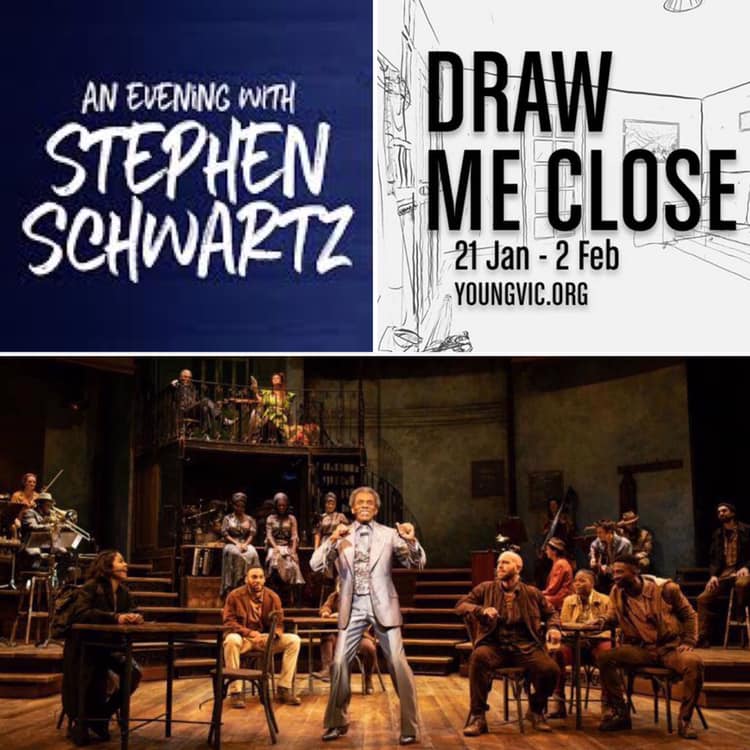
I am silly excited about attending an intimate evening with Stephen Schwarts in Manchester. It’s the first he has done in the UK. I am thrilled to see Wales Millennium Centre devote their Curious Season to mental health later in the year and can’t wait to see what’s in store there. Draw Me Close at the Young Vic looks fascinating also.
Having had a frantic year last year, most of my own creative enegrgies this year are being ploughed into the new BA (Hons) in Musical Theatre Course which will be up and running this September. It’s the first ever undergraduate course in Musical Theatre in Wales and am delighted to be a part of it. Details here,get in touch if you think you would like to apply and come and chat .
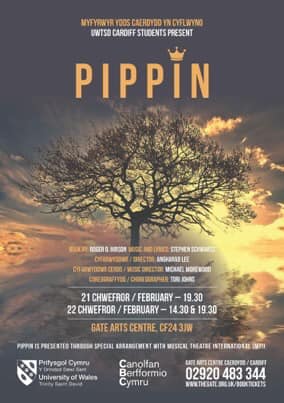
In the meantime I am directing Pippin by Stephen Schwartz and The World Goes ‘Round, both with the fabulous students at Canolfan Berfformio Cymru, UWTSD. Leeway Productons’ 10 Minute Musicals will be rolled out again a little later in the year with some fabulous partners including RCT Theatres who work so hard as a team. We are also thrilled to be working on a lovely Welsh Language production with some young people from Merthyr in the Summer. Hopefully, this year will feel a little more relaxed than last year!
David Mercatali, Director.
My highlight of the year ahead is to see the continued development of the 15-18 year olds in my Introduction to Playwriting group at the Sherman Theatre. Mentored by 3 brilliant writers, Matt Hartley, Branwen Davies and Brad Birch, their work is already showing so much talent and I can’t wait to see what they do this year. My personal hope is to see more new plays produced for longer runs in Wales. There’s many exciting voices with stories to tell.
Rachel Pedley Millar, Artistic Director, Avant Cymru.
Happy 2019 everyone. Avant have an important year lined up, where we have a focus on mental health and well-being. Our Hip Hop theatre piece has a focus on mental health and we hope to head to New York to attend the Hip Hop for metal health conference held by Doug E Fresh and partners. We aim to undertake research on ‘how art can aid those living with mental health conditions?’ Working with other artists (including Sadlers Wells) and our community in RCT.
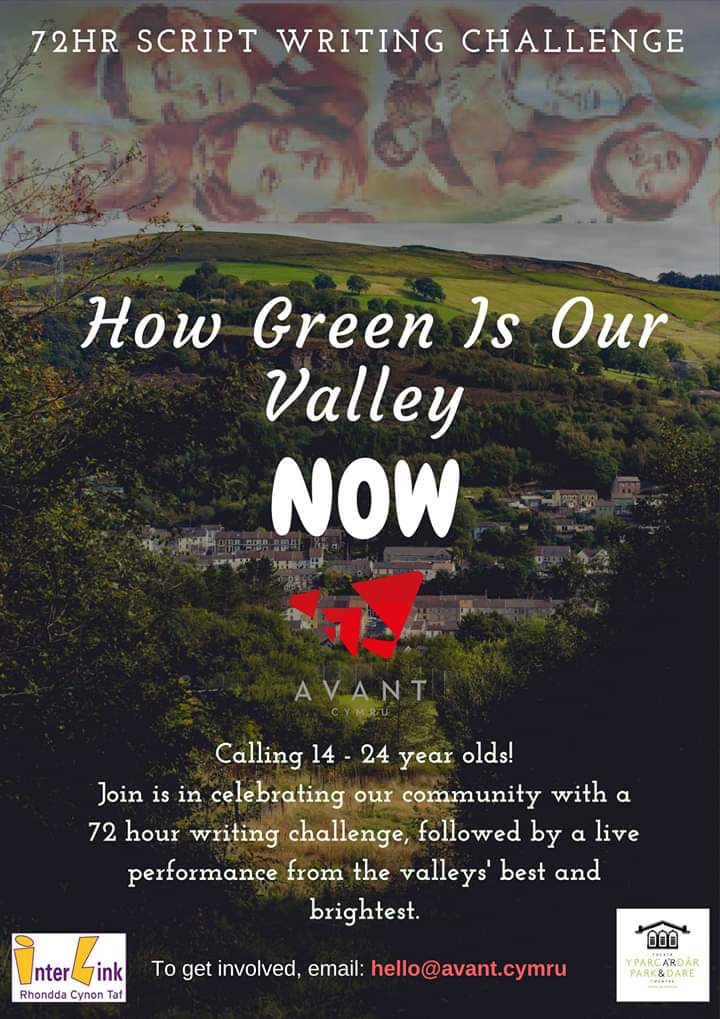
The Valleys have a celebrity year with it being 80 years since Llewellyn wrote ‘How Green Is My Valley’, we want to find out ‘How Green is Our Valley Now? We are always interested in what everyone in our community has to say. Including other artist and we hear Motherlode have exciting plans this year and we can’t wait to hear more about them.
Have a happy, healthy New year everyone. “For all sad words of mouth or pen, the saddest are these: it might have been.” – John Whittier.
Fearghus Ó Conchúir, Artistic Director, National Dance Company Wales.
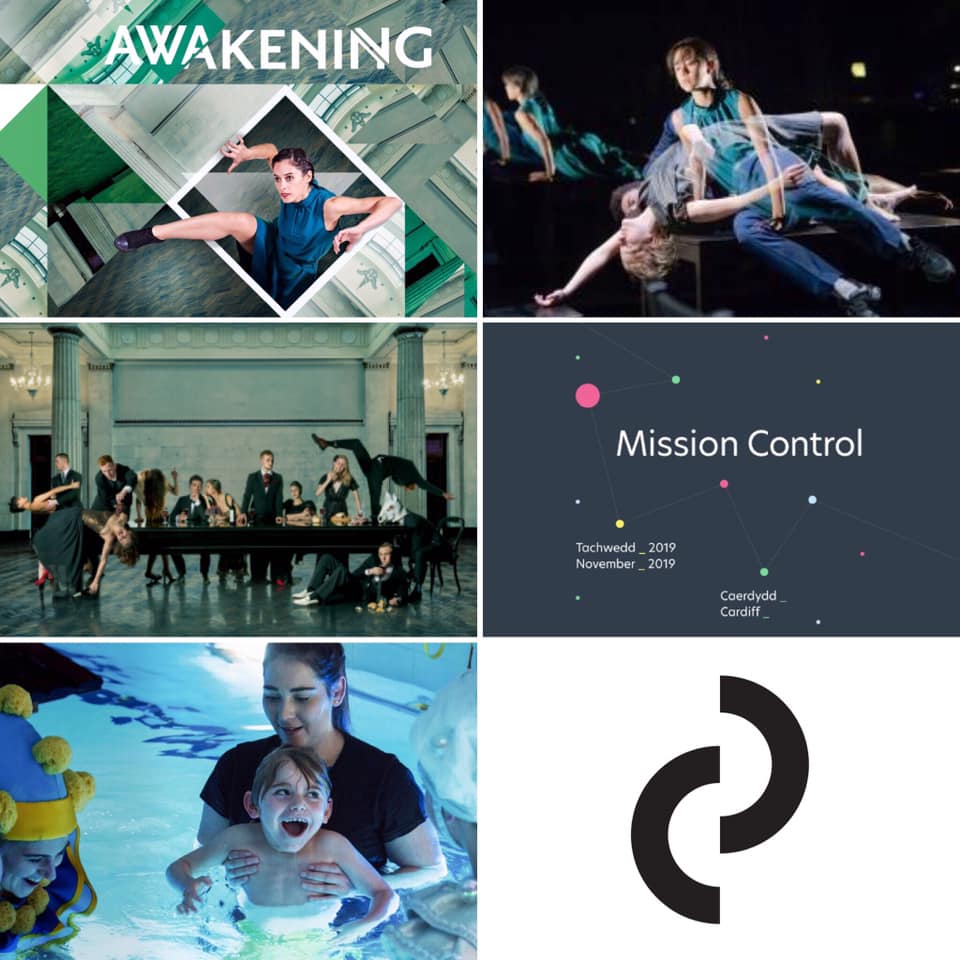
As a newcomer to Wales, there’s a lot for me to learn about, lots to see. Starting closest to home, some of the events I already know I’m looking forward are in our varied activity at NDCWales: our Awakeningprogramme that tours Wales and England in the Spring with magical new work by Brazilian choreographer, Fernando Melo and by our resident choreographer, Caroline Finn, as well as the Roots programme that will tour across Wales in the Autumn with pieces by new choreographic talent.
As a recently-arrived Artistic Director, I’m mostly at a stage where I get to be an excited cheerleader for other people’s work in our programmes, but I’m also happy that in 2019, I’ll get to make work myself, with the company’s professional dancers, with other artists and with different groups across Wales who will all inform the new piece. I knew about Cardiff Dance Festival before I came here, and I’m looking forward to seeing what’s in this year’s programme. And one more dance highlight for me will be the BBC’s #DancePassion on 5th April when the BBC’s social media channels will showcase dance in the UK, with livestreaming (including from NDCWales) and the chance for audiences to interact. I’m looking forward to seeing the diversity of dance that this event will bring to the BBC’s wide public.
Because I’m interested in what bodies get to be visible and to fulfil their potential, I’m inspired by work that shows me what’s possible and pushes me to expand my vision. For that reason, Mission Control, NTW’s collaboration with Hijinx that will be performed in November is something for me to look forward to with its cast of professional neurodivergent and learning-disabled actors as well as members of the Only Boys Aloud choirs. I won’t get to see Splish Splash, the NTW collaboration with Oily Cart that’s made exclusively for children in special schools across Wales and England, but I love that it’s going on and that it’s going to be a cultural highlight for people who mightn’t be included in other events.
Jasmine Okai, Assistant Producer, Fio.
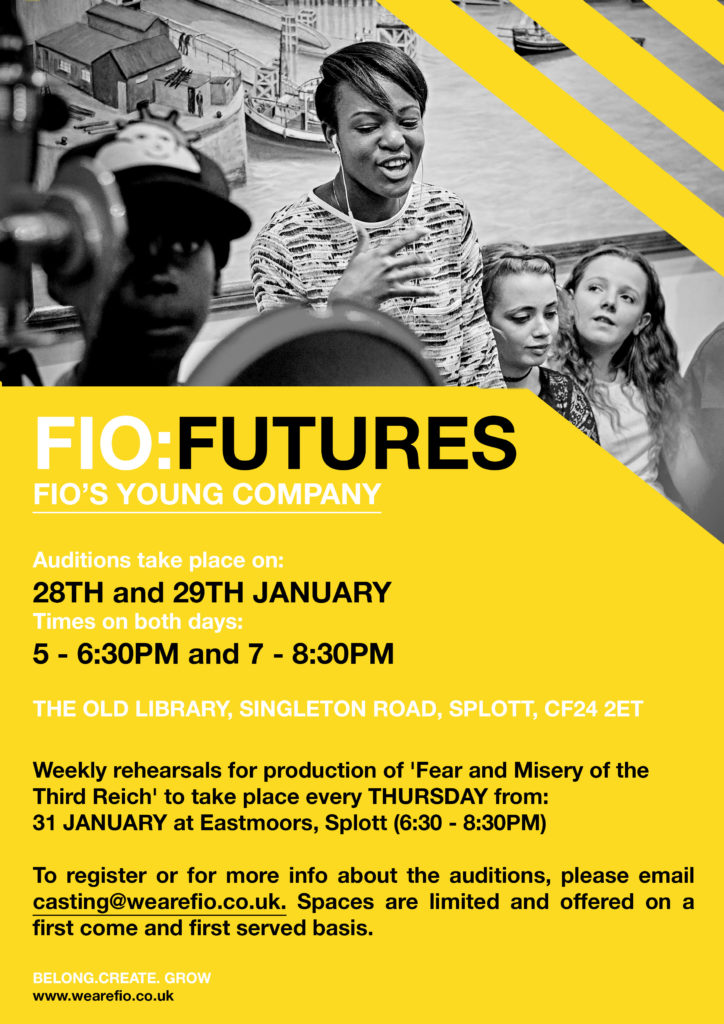
Fio: Futures’ production of Bertolt Brecht’s ‘Fear and Misery of the Third Reich’ showcasing in RawFfest April 2019. This timeless story of the rise of fascism is unfortunately still as pertinent today as it was in the 1940s. Brecht’s play presents a series of vignettes on the everyday lives of German citizens, including Jewish people, living under this oppressive regime of Nazi fascism during World War II. After the success of ‘The Island’ UK tour in October 2018, Fio have since established Fio’s Young Company, Fio: Futures, who will be bringing these important stories to the stage.
William Shakespeare’s ‘The Taming of the Shrew’, as reimagined by Jo Clifford. Shakespeare productions are a classic and, some would argue, integral faction of theatre. What makes this production so exciting is that while keeping the main story of ‘The Taming of the Shrew’, Jo Clifford uses gender reversal within the main characters to switch up the dynamics of the play. How refreshing!
Catherine Paskell, Theatre Director.
Believe. If I Could Turn Back Time. Just Like Jesse James. Gypsies Tramps and Thieves. Bang Bang. I can’t wait to see Cher’s concert. Her tour in October 2019 will be her first live UK dates in 14 years. Her songs, her films, her outfits, her political activism, her Twitter feed. Her music video for If I Could Turn Back Time was too much even for MTV because we could see her tattooed bum cheeks either side of her thong as she straddled that cannon and strutted in front of the navy – so it was the first video to be banned by the channel. Cher’s career and musical evolution embodies the transitions of American cultural forms. She is outspoken, honest and authentic as an older woman in a male-dominated field. It’s going to be an ambitious, theatrical and entertaining show – Cher is my cultural highlight of 2019.
Image Credit Warren Orchard
Tim Price, Playwright
I’m looking forward to the following –
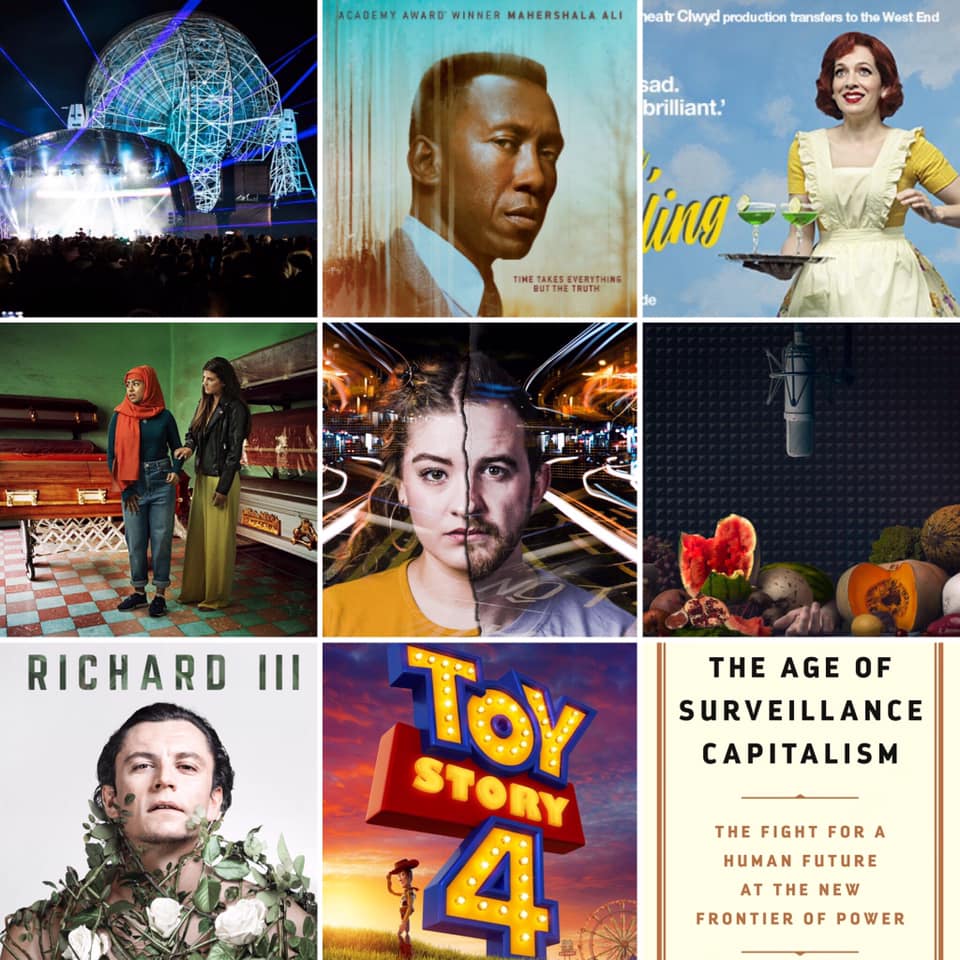
Books – Dignity by Alys Conran, out in April. I loved Pigeon and am looking forward to what Conran does telling a story outside of Wales. The Age of Surveillance Capitalism By Shoshana Zuboff. Zuboff, is a brilliant cultural critic and I think this might have the same impact as Piketty’s Capital.
Films – Toy Story 4, and Star Wars IX. I mean, do I need to justify those? Reuben Ostlund’s Triangle of Sadness starts shooting 2019 but I’m not sure it’ll be released.
Theatre – Richard III by Headlong will be brilliant. And it’s great that Ed Thomas has taken a break from counting money to write another play so I’m excited about ‘On Bear Ridge’ by National Theatre Wales. Berberian Sound Studio created by designer Tom Scutt and playwright Joel Horwood at the Donmar warehouse. Home, I’m Darling at Theatre Clwyd, I missed it first time around. The Funeral Director by Imam Qureshi won the Papatango Competition this year and is being toured by ETC. Nos Sadwrn O Hyd by Roger Williams is a brilliant monologue revived in Welsh for the first time by Theatr Gen.
TV – What We Do In The Shadows has been turned into a TV show released in 2019. I’m also super excited about Jordan Peele’s Twilight Zone, and a new True Detective series. Channel 4 have produced a new 4 parter from Lucy Kirkwood about the porn industry called Adult Material, fellow Cynon Valley boy Gareth Evans has his first TV series out Gangs of London on HBO and Sky Atlantic.
Event – Blue Dot at Joddrell is a brilliant mix of science, astronomy big ideas and music – Gruff Rhys and Hot Chip play this year under the mighty Lovell Telescope. It looks amazing.
Catrin Rogers, Press and PR Manager, National Theatre Wales.
I’ve booked tickets to see WNO’s The Magic Flute, and I have high hopes for that. They’ve just announced their next season, including the return of Bryn Terfel, which is great.
I’ll try to catch at least one of Theatr Genedlaethol Cymru’s touring plays, by Catrin Dafydd and Roger Williams – two writers I admire very much – in the Spring.
I’ve also booked tickets to see National Dance Company Wales’ Spring tour, Awakening. It includes Tundra, which I’ve seen many times but never, ever tire of – honestly, it takes my breath away every time I see it.
In the coming weeks I’ll go with my family to catch the Artes Mundi Exhibition, which I’ve been reading a lot about.
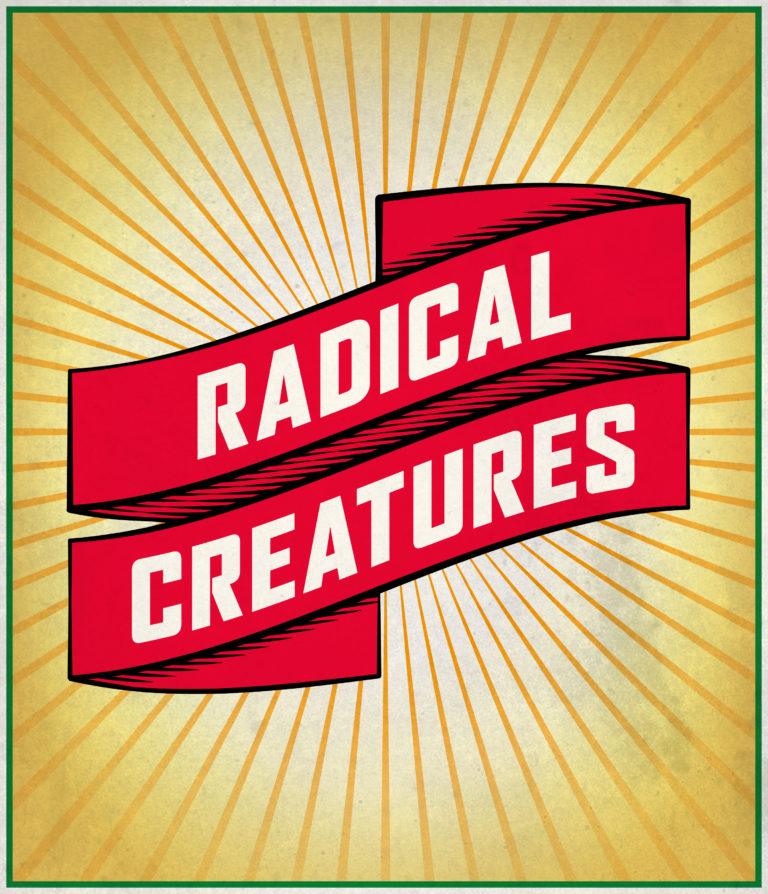
2019 is set to be another fantastic year for the arts. Even though the production won’t be until 2020 I’m excited to see what project will be chosen from National Theatre Wales’ Radical Creatures callout, I think it’s a great initiative and a great choice for female identifying and non binary artists to take more of centre stage in the current arts scene.
From a more selfish point of view my theatre company, CB4 Theatre, will be presenting our inaugural production 10,316, a new devised piece marking the 30th anniversary of the fall of the Berlin Wall. We’re all so excited to get stuck in to the already thriving grassroots arts scene here in Cardiff, so watch this space for dates!
Aside from the arts, 2019 is definitely going to be a bumpy year. With Brexit looming and pressing social issues plaguing the country I really hope that art can do what it does best; listen, respond, discuss, create, inspire, protest. At a time where it’s easy to give into divisions I think it’s more important than ever for the arts world to take a strong stand against hatred and fascism.
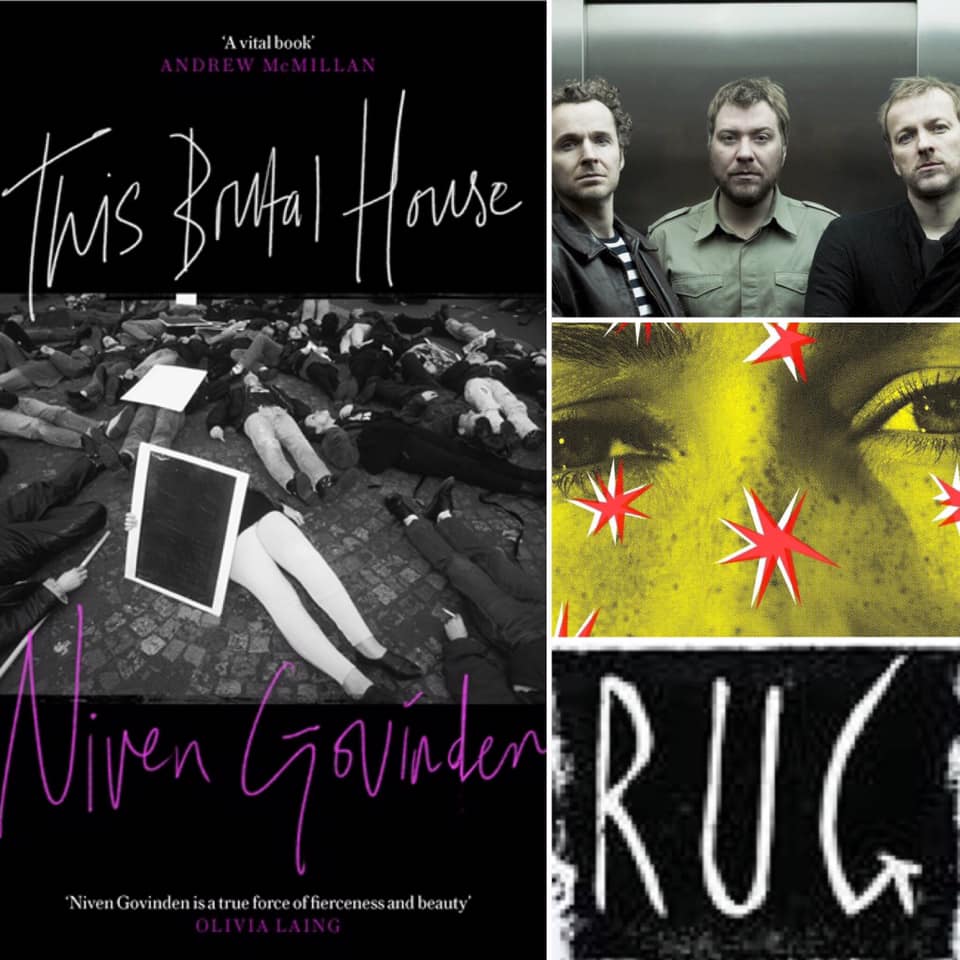
Music-wise, I’ll keep my usual eye on Warp, Hyperdub, and Heavenly. Nubya Garcia is playing Clwb in May, so I’ll try to get down to see her. Mostly though I’ll still be dreaming of SFA making another album and hoping Doves get their arses in gear after the dates they’re playing.
In art, I’m looking forward to seeing how John Abell’s new place, RUG develops over the coming year. 2019 also looks like it’s going to be a brilliant year for new fiction, and the novel I’m most excited about is Niven Govinden’s ‘This Brutal House’, which has been described as a queer protest novel set in the drag ball community of New York City and, therefore, fierce as all fuck.
As far as theatre goes, How To Be Brave by Sîan Owen is coming via Dirty Protest and I am doubly excited to see this full scale show, especially as it is set in my adopted home of Newport and pitches up in the one and only Le Pub. As for my personal hopes: I just hope there is a miracle of some sort that puts a halt to the madness we can see coming our way, and Liverpool and Manchester City lose every game they play between now and the end of the season.
Abdul Shayek, Artistic Director Fio.
So for me, 2019 has started off with a bang- one of my cultural highlights has already happened, Sri Lanka and the Galle Literature Festival, where the amazing spoken word artist Nicole May performed! It also featured writers such as Sir David Hare, Mohammed Hanif and Vahni Capildeo amongst others who I had the pleasure of meeting. I was also lucky enough to find out about the amazing arts and cultural activities taking place across the South Asia region, supported or directly delivered by the British Council, as I joined their bi-annual Arts regional meeting, in my capacity as an Arts Advisor.
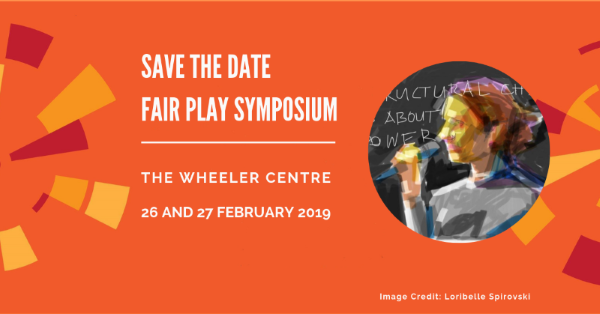
Personally, the next cultural highlight will be my trip to Australia as part of the British Council Australia Intersect Programme. It was brilliant when my counterparts came over to the UK, which included a visit to Cardiff in 2018. Now it’s the turn of the UK participants to visit Australia, learn and understand what the diversity and inclusion picture looks like. We will be visiting Sydney and Melbourne and meeting with a range of cultural leaders. We will also be part of the Fair Play Symposium
Other than that I have a number of other projects and ideas that are currently in motion, all very exciting and some have international elements to them, however, quite a few are funding dependent, so fingers and toes crossed. Other cultural highlights for me include: Manchester International Festival in general, but really looking forward to Trees by Idris Elba and Kwame Kwei-Armah and the collaboration between Flexn and Young Identity will be very exciting.
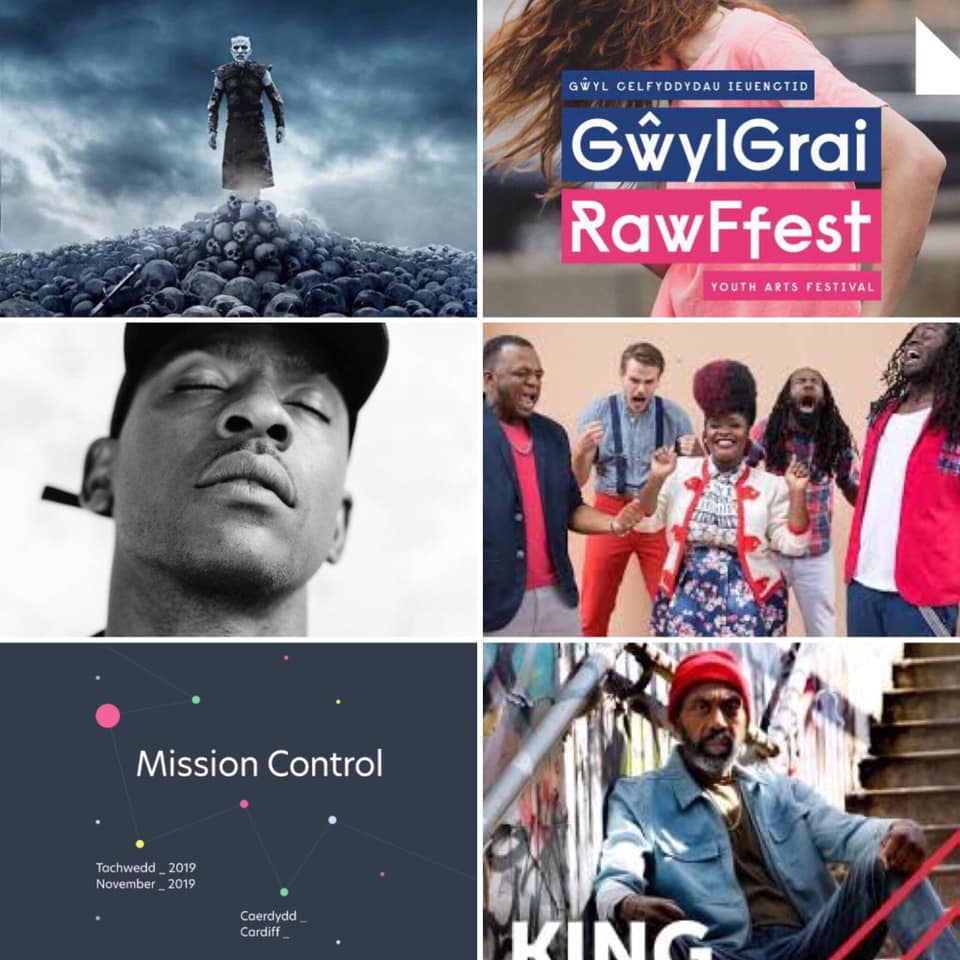
I am really looking forward to seeing King Hedley II at Theatre Royal Stratford East with Lenny Henry. In Wales, I am really looking forward to Rawffest and in Cardiff at the WMC, I am sure it will do what it was initially set up to do and really engage young people from a diverse range of backgrounds. I am also really looking forward to Mission Control the NTW and Hijinx – collaboration. In terms of non-theatre highlights, I can’t wait to see the final season of Game of Thrones, also looking forward to Star Wars IX and the remake of the Lion King. In terms of gigs, I am hoping to catch Tank and the Bangas on their European tour, Anderson Paak when he visits London and Skepta at Manchester International Festival. I’m sure there will be loads more cultural offers which will entertain, inspire and most importantly keep me nourished during 2019!!!!!
George Soave, Producer, He/Him/They/Them, The Other Room.
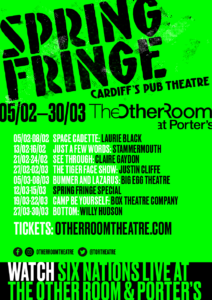
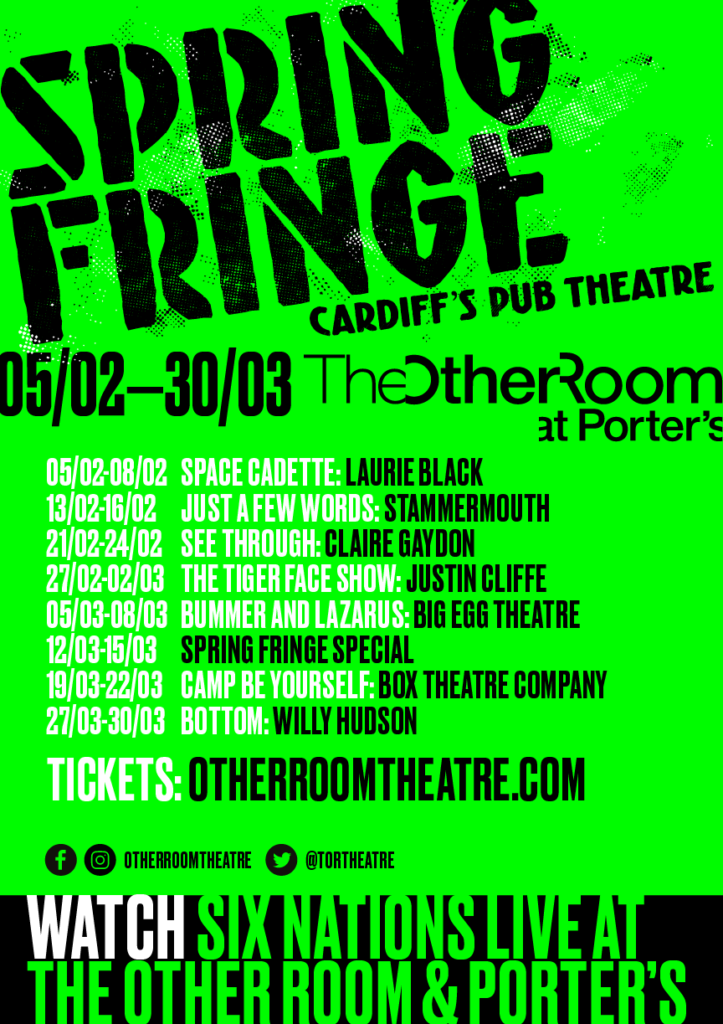
We are kicking off 2019 with an almighty bang. Spring Fringe is the latest addition to our programme here at The Other Room. February and March, traditionally the home to our self-produced work, will now be occupied by eight weeks of imaginative and bold Fringe Theatre. Spring Fringe will champion home-grown companies and provide a platform for non-native touring companies to perform their breakthrough work here in Cardiff. Presenting work from Edinburgh Fringe Festival, Cardiff Fringe and others from across the UK and internationally! Our diverse programme will present eight productions over eight weeks that capture the essence of the fringe – telling imaginative stories in ingenious ways.
What about our self about our self-produced work? The Other Room will remain champions of well-made, daring modern drama and are as committed as ever to producing our own work – if anything we’re pushing the artistic envelope even further in 2019 and this Autumn will see our self- produced work return so watch this space.
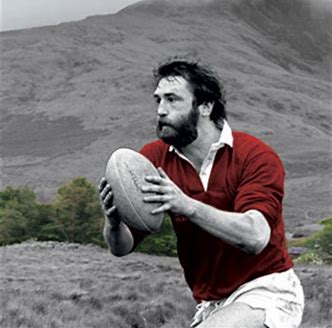
And that’s not all! In the spirit of the fringe, this Spring we are embracing our Cardiffian cultural cousins… the rugby. There’s no avoiding that each spring Cardiff is ignited by the Six Nations Championship, so we thought, if you can’t beat them join them! All five of the Welsh rugby matches will be screened in both Porter’s bar and in the theatre as a part of our Spring Fringe programme. So come on in and enjoy a play, a pint and a match.
Kully Thiarai, Artistic Director, National Theatre Wales.
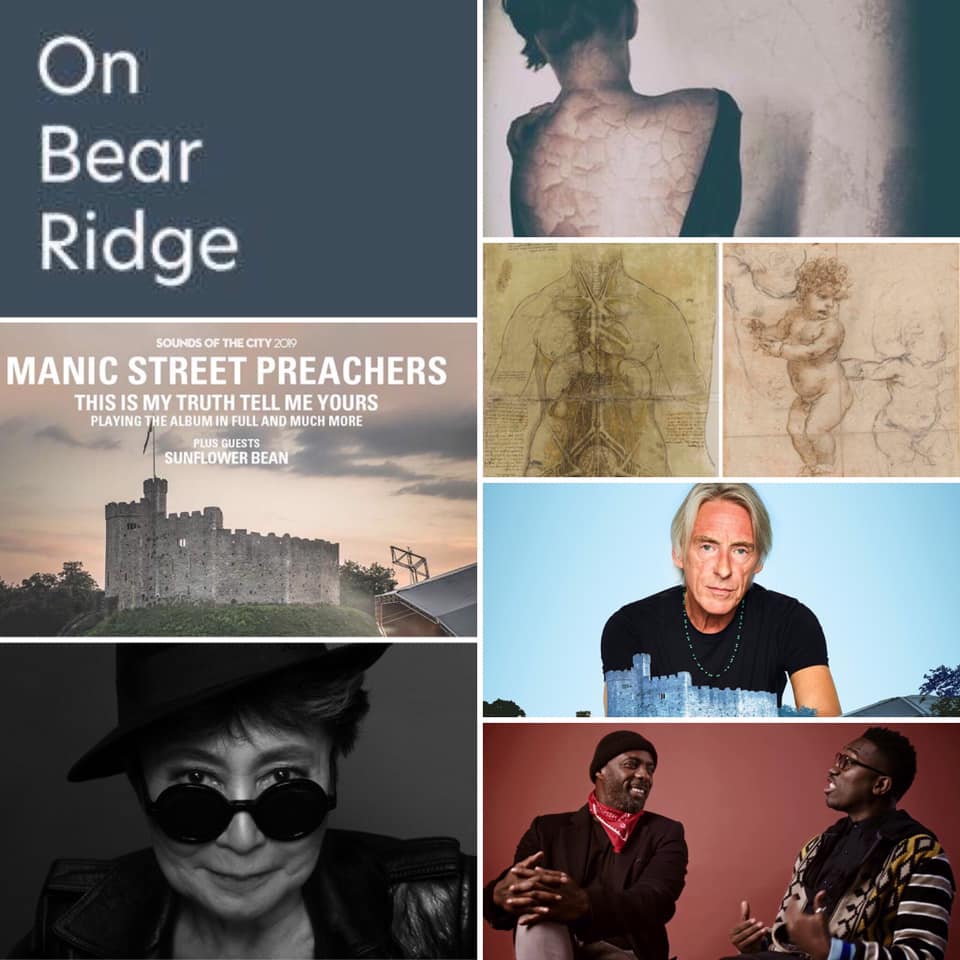
I’m biased I know, but I’m looking forward to Ed Thomas’ new play ‘On Bear Ridge’ that will open at The Sherman in September. He has written a beautiful, poetic and poignant work.
Taking Flight Theatre Company’s production of Peeling by Kaite O’Reilly is touring Wales so I planning to catch that on the road somewhere. I missed it when it was first produced by Graeae Theatre Company many years ago.
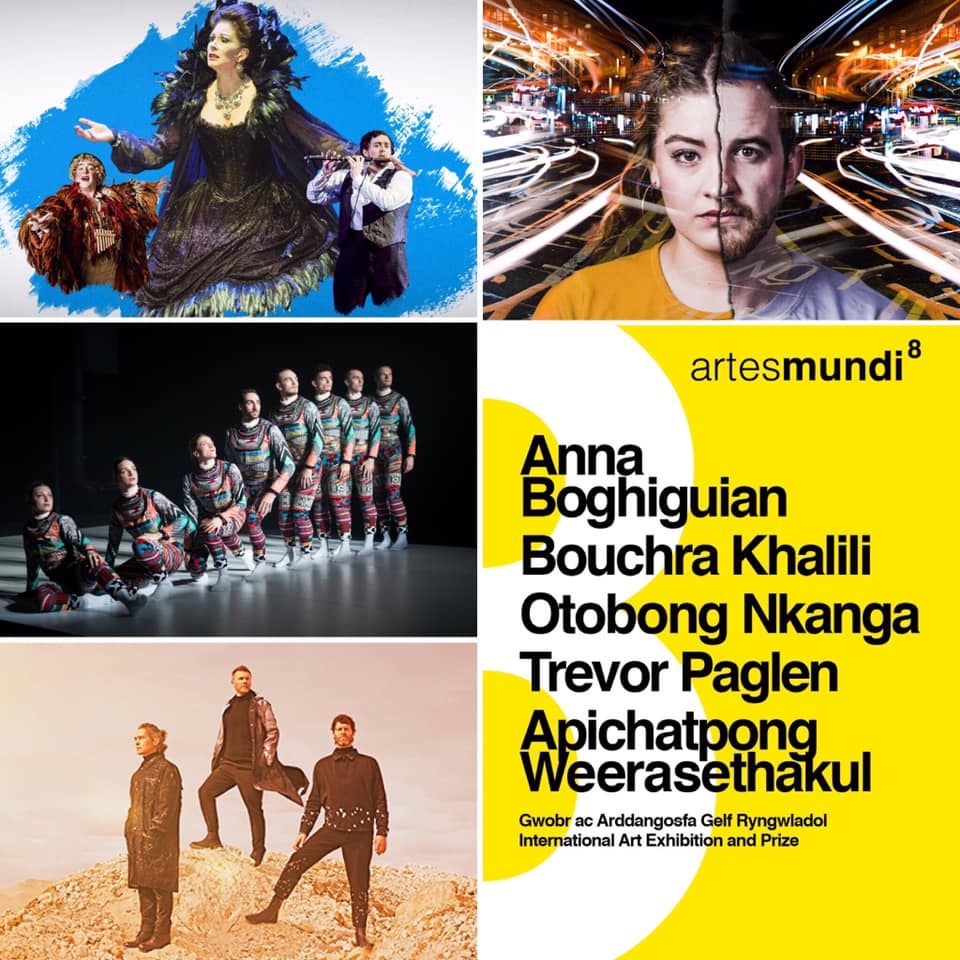
More immediately Artes Mundi 8 has had another great year and finishes soon so catch it while you can! National Museum, Cardiff is also showing the rarely displayed drawings of Leonardo Da Vinci as part of a UK wide simultaneous exhibition.
Two big music nights back to back this summer– Manic Street Preachers and Paul Weller play Cardiff Castle. I will definitely try and go to both!
I’m very excited by Yoko Ono’s Bells for Peace that will be opening event for Manchester International Festival in July. Thousands of diverse voices and an orchestra of bells sending a message of peace to the World seems like a very apt thing to be doing in 2019. In the same festival Idris Elba and Kwami Kwei-Armah will be making a new work called TREE – sounds like a great collaboration to me, combining music, dance and film.
Rachel Trezise, Novelist and Playwright.
Finally this year I get to road test a piece of my own work that’s been on my table for seven years, a play about the Pontypridd boxer Freddie Welsh, said to be one of the inspirations behind F. Scott Fitzgerald’s ‘The Great Gatsby’. I’m going to be working with RCT Theatres and Motherlode Theatre to determine if the work is suitable for public consumption.
Also I’m really looking forward to travelling to Northern Ireland where my monologue ‘Cotton Fingers’, commissioned by NTW for the NHS70 Festival last year, will open in May. The monologue is set in Belfast and concerns abortion laws in Northern Ireland but I haven’t been to Belfast for twenty years.
Most of all I’m looking forward to the publication of short story-master Amy Hempel’s new collection ‘Sing To It’ in late March, her first new work in over a decade. My personal hope for the year is that the UK, and Wales in particular, manages to get through the Brexit withdrawal process without much more trauma. We should know by the end of the year whether the tunnel that connects the Rhondda to the Afan Valley will be able to open as a cycling and walking track. I think that would be a great thing for both valleys.
Get the Chance critic, Sian Thomas
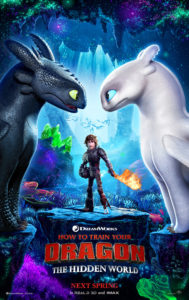
I’m awfully excited for the third How To Train Your Dragon movie. I really enjoyed the films through my teens and have actually managed to make that enjoyment infect others, too. It’ll be nice to see a cushy family film with the family this year.
Personal hopes are to read at least 20 books this year – and review the ones that take my fancy (not the ones I have to read for uni, haha). I’m looking forward to this because it means I’ll easily work on two new year’s resolutions: read more, and review more!
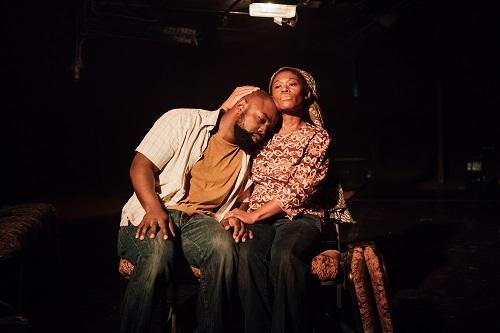
Everyone has a story to tell. The Dark is Nick Makoha’s
story. His is a story of a childhood journey from his home in Uganda to the UK.
It is a journey across a country that is under siege and extremely dangerous.
It is a journey of survival, on a minibus bound for the border. It is a journey
of a mother who desires a better life for her son. It is witty. It is thought-provoking.
At times, it feels terribly real. As Makoha himself says, it puts ‘a face to
the polarising words of refugee and immigrant’.
Featuring Michael Balogun and Akiya Henry in multiple roles, The Dark immerses you in the Ugandan
culture of the 1970s. The brutality and oppressiveness of the Idi Amin regime
is felt throughout. Yet this play is ultimately about the colourful characters
whom Makoha and his mother meet along the way. Balogun and Henry inject such
vibrancy into these people. They transition seamlessly between the different
characters. It never gets confusing as to who they are portraying. Such
transitioning is made even more natural by the excellent use of lighting, as
well as their movement around the stage.
The set is simple enough. It features a cluster of chairs
underneath a massive overhang filled with boxes and bags. This is clearly the
minibus (or ‘mutatu’ in local parlance). In addition, an OHP screen and
projector are to one side, keeping us updated on the times and locations of the
journey. We also get to see some personal photographs of Makoha’s which flit
onto the screen now and again. They act as a gentle and sobering reminder that
what we are witnessing is a reconstruction of real events. This is what makes
the final scenes in particular all the more powerful.
Although engaging throughout, it is in the final quarter of
an hour that The Dark really grips you.
With the border now well and truly in sight, the young Makoha and his mother
have soldiers hot on their tail. But just as the chance of escape beckons, his
mother must make a life-changing decision. It is incredibly tense. Positively
gripping. But what makes it even more powerful come the end is the subsequent
reaction of the UK border official towards the young Makoha. This final scene
left me feeling frustrated and rather angry. And I think that’s what Makoha the
writer is looking for. He wants to shake us out of our complacency. To remind
us of the responsibility we have towards those who have had little choice but
to leave their country of origin because of war and conflict. As such, The Dark is a timely play whose message
we would do well to heed.
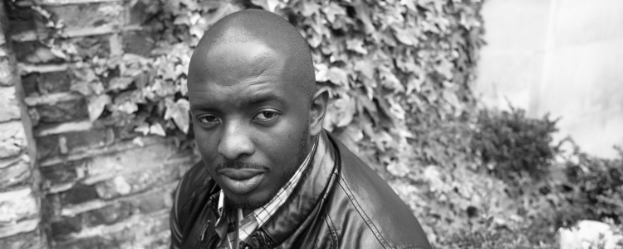
Nick Makoha
The Dark is Nick
Makoha’s story. It is an important story for our time. It may have been made
even more powerful if it immersed the audience into its world via the seats on
stage. That’s where I felt I should be, compelled, as I was, by the
performances of Balogun and Henry to join them on this journey. As it was, this
one-act play still made an impact on me in the way that I think it was meant
to. I just hope that it is seen by much bigger audiences than witnessed it here
in North Wales. It is pertinent. A story that is much needed. There is a power
and importance to this individual’s story that cannot be underestimated.
A Jukebox Musical is one that takes the songs of famous singers or groups and turns them into a show, the most famous example being Mamma Mia. They’ve been around since 1962, but took off in the 2000’s, this one being written In 2005.
They normally fall into two types, the first where they tie the songs together using an original story, like Mamma Mia. The second is where the songs are used as signposts in the life story of the artist, and this is what we have here.
Four guys grow up in New Jersey in the 50’s, where the only way out was through the army, crime or music. They got together, took the name of a bowling alley called The Four Seasons and had a string of hits (Walk Like A Man, Bye Bye Baby, Let’s Hang On, Big Girls Don’t Cry) powered by their group harmonies and Frankie Valli’s unique voice.
The show is divided into four parts (Spring, Summer, Fall, Winter) each told separately by one of the four members, symbolising the group’s rise and fall, and also how the truth has more than one side to it.
Beginning in 1954, we follow Frankie Valliand Tommy DeVito through their ups and downs, time in prison, and the many different bands they go through, before they are joined by guitarist Nick Massi and Bob Gaudio, a singer & songwriter introduced to the others by fellow Jersey Boy and Oscar-winning actorJoe Pesci, which, amazingly, is true.
Produced by Bob Crewe, they were the first white group signed by Vee-Jay Records, and had their first No.1 with Sherry in 1962, and their last with December 1963 thirteen years later.
Written in 2005, this show gets full marks from me for several reasons: The songs are memorable, the staging is great, the performers are highly talented, and the story is incredible. What’s also impressive is that the band are portrayed realistically, they were no angels and paid the price for it. We see the cost of fame, divorces, debts both financial and spiritual, and personal tragedy, but also that what kept them going through it all was a love of music.
With a running time of 2 hours 40, the time flies by, my own highlight being “Can’t Take My Eyes Off You”, which has a special meaning for Welsh football fans reflected by the Cardiff audience, which gave the show a standing ovation, which it utterly deserved.
Emily is a writer, performer and arts facilitator, working in schools, community centres and adult education. She is an award-winning poet and has won competitions for her scriptwriting, animations, and illustrations. She enjoys collaborating with other artists (e.g. she recently toured with harpist Delyth Jenkins) and finding ways to make her ideas accessible.
She originally trained as a social
anthropologist. This foundational interest in people, social systems and the
way we interact with our world continues to inform all her work. She worked for
14 years in London and overseas (including Iraq and Gambia) before moving to
Wales in 1997 for a lecturer post at Swansea University. She settled in Tairgwaith, a small mining
village at the foot of the Brecon Beacons where she and her partner co-founded
a community energy charity Awel Aman Tawe.
Her poetry is published by Seren Books
and she has been writer in residence at many diverse events e.g. Span Arts
Festival of Dying, Dylan Thomas Centenary travelling writing shed, IKEA, several
EU conferences on Climate Change amongst others. She worked for Women’s Arts
Association for 2 years, and ran a programme of Arts and Climate Change
projects for 4 years.
She has worked as a creative writer in
over 100 schools (from nursery to year 13), ran the Neath Port Talbot Young
Writers Squad for 4 years and has led many writing courses for adults eg at Ty
Newydd, and in the community, eg a recent Stories of Change multi-university
creative writing project.
She has done several long-distance
walks to inform her work, e.g. walking the length of Manhattan picking up a
piece of litter from every street to create a long found poem; and walking
across Wales asking every person she met 3 questions about climate change. She
co-founded Peacock Vein ScriptShop in 2004, a forum for scriptwriters, and
continues to co-host the monthly Script café in Pontardawe Arts Centre. She
produces collaborative plays and has had several of her own plays produced
locally eg: Dylan Thomas, Dylan Who?,
Sitting it out in Merthyr and Buoy.
She is a committed Welsh learner, and won the Chair last year at the south Wales Learners Eisteddfod. She has two daughters, and keeps bees.
As a published poet, how did you make the move into script writing?
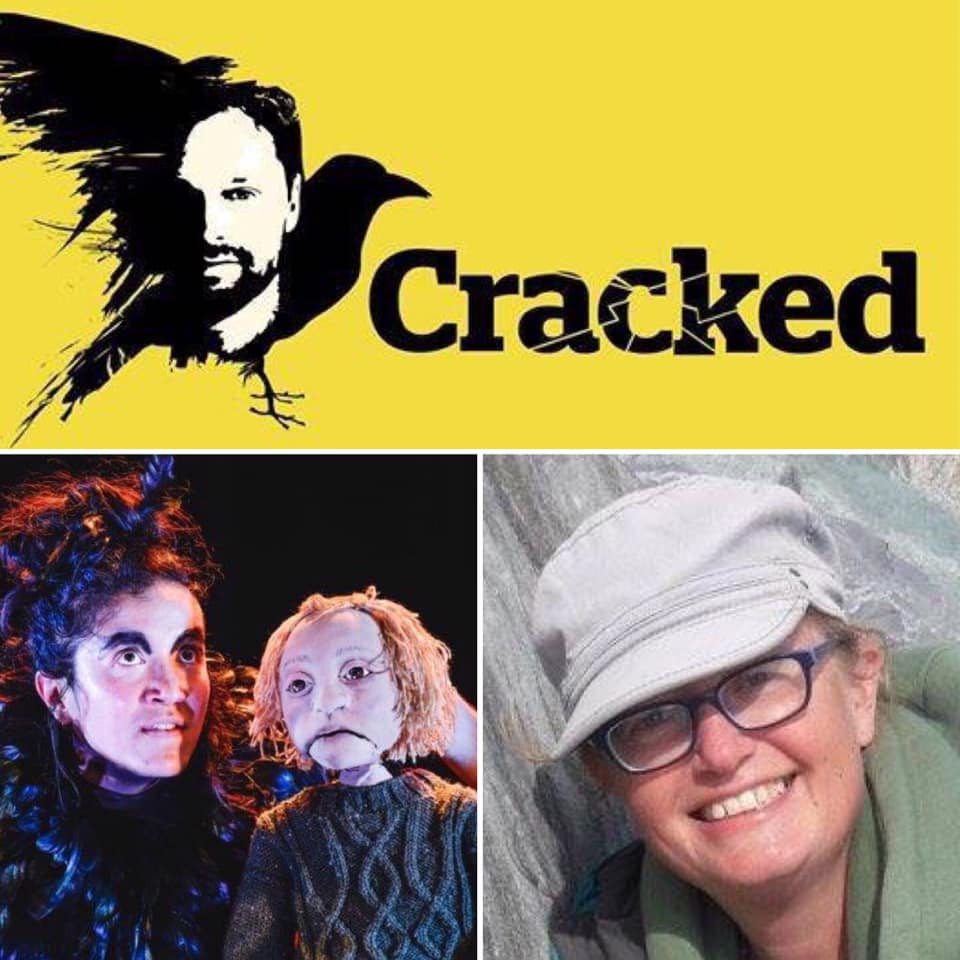
I’ve always loved dialogue. I love listening to people, the way they talk, their turns of phrases. I’m interested in the way people interact, the spaces between them, what they say and what they hide. I have used dialogue in my poetry since I began writing, and have produced many verbatim poems. So the shift to writing scripts wasn’t a hard one. But what I have concentrated on in creating Cracked is how to put more of my approach to poetry into my process of scriptwriting. I started with a series of poems which included “the Surgical Removal of the Voice” These poems led the play in a fundamentally different way to how I’ve written scripts before – primarily through metaphor.
What made you write Cracked?
Aged 9, I wrote a story called The Very Lonely Man. In this, the lonely man’s desperate search for friends leads him to be publicly shamed. The story continued to resonate with me all my life and, in a sense, Cracked is a reworking of The Very Lonely Man.
I’m interested in the subconscious motivations
for our actions; how childhood trauma can profoundly influence us even in
adulthood, often without us being conscious of it. I know from my own
experience, as well as from research, that our inner critic can be a huge
obstacle to a happy and fulfilling life. From my creative work in schools, I find
many pupils suffering from an overactive inner critic. I wanted to create a
piece – for both young people and adults – that explored ‘the life of an inner
critic’; something that could trigger a discussion on how we can respond to the
negative voices inside our minds.
Another big influence on Cracked were 2
teachers who supported me at a difficult time at school. One of them used to
invite me (+ 3 others) to her house during the holidays. This would be totally
unacceptable now. Another supported me in school every Wednesday on an informal
one to one basis. This play is partly a tribute to them.
Can you tell us little about the development process? How the idea of Cavelle has ultimately become the touring play Cracked?
Cracked has been through many incarnations. It originally began as a piece for the Pontardawe Arts Centre Script slam, and then I was selected for the Chrysalis programme through which I received support to develop it. Louise Osborn, as dramaturg, directed the process of helping me explore, with actors, the issues I’m interested in. We examined together the concept of the inner critic and the storyline of Mick and Stewart. I was particularly keen to see how Cavelle (Mick’s inner critic) could be manifested on stage. I was really lucky to work with Louise and a team of great actors in two R&D processes over two years. We shared the play at various stages with live audiences selected specially for feedback on the issues raised and the script has been through a great pile of revisions until finally, I feel it has gelled into the play I wanted it to be.
https://youtu.be/U4u958Shpdc
Why do you think Cracked is important?
‘Voices’ inside the mind are part of the human condition. They help us to make decisions, to understand situations and to comfort ourselves. But sometimes and for some people they can be more negative than positive. Sometimes the inner critic can be crippling and can lead to anxiety, fear and depression. Yet in spite of the universality of it, and the similarity of our inner critics’ messages, we barely talk about it. I would like the play to stimulate discussion about this very real phenomenon, discussion that can lead to practical ways of diffusing the power of the critical voice.
I also think it’s important to consider the storyline of Mick and Stewart. How can we support vulnerable young people in schools without compromising the need for child protection. While the play doesn’t come up with answers to this, it raises the question of what point Mick crossed the line and how he could have managed his support for Stewart in another way.
Who
do you think will enjoy the play?
From the sharings we have held during
the development of the piece, it received very positive feedback. Young people,
parents, youth workers, teachers, therapists as well as a general drama
audience enjoyed it.
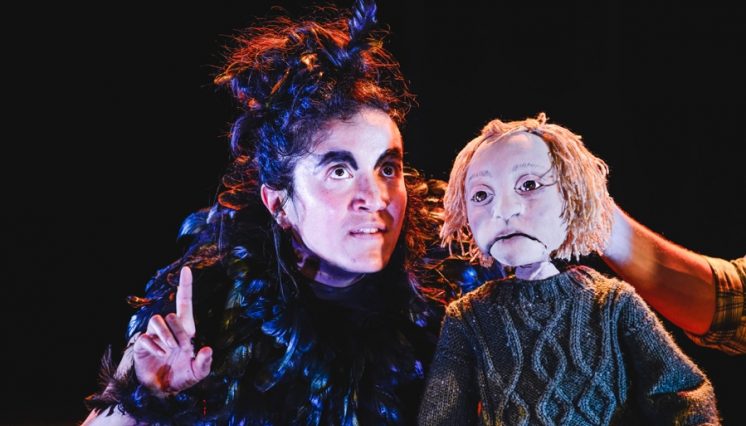
With a cast of 5, an exciting set, puppetry and live music, I feel this play will be enjoyable and thought provoking to a wide audience of adults and young people.
Hi Megan, this chat is specifically about music and the role it has played in your personal and professional life. Firstly to start off what are you currently listening to?
At the moment I’m listening to the Lazarus soundtrack, it’s the current CD in my car and I haven’t changed it for about 6 months, so I often listen to it on short journeys around Cardiff – for me it’s the perfect mid-point between three things I really enjoy: story-telling, musicals and David Bowie. I was lucky enough to see Lazarus at it’s run in London in 2015 – it was brilliantly written by Enda Walsh, and the staging was a great balance between rock concert, performance-art and play. I especially enjoy Michael C Hall’s version of Lazarus as I still find the David Bowie recording quite painful to listen to.
https://youtu.be/B8aEi1oJK9w
We are interviewing a range of people about their own musical inspiration, can you list 5 records/albums which have a personal resonance to you and why?
David Bowie – Underground
I had to think for a long time about which Bowie track to include in this list. To say his work has been an influence on my life would be an understatement. Like lots of people my age, Labyrinth introduced me to Bowie, and as a fantasy-obsessed 9 year old, you can only imagine appeal of the mysterious Goblin King. My mum was happy to cultivate the interest and began to introduce me to his other albums; she even bunked me off school to see his Reality Tour at the NEC when I was 14 and the Lazarus a few years ago (I burst into tears at the end, it was all very embarrassing for her).
Bowie’s influence has woven itself through me in fashion, philosophy and art as well as music. He is the poster-boy of reassurance for strange young minds that it’s cool to be weird; and whilst I have other favourite Bowie songs and albums, Underground was the catalyst.
https://youtu.be/Qga12-bAS4A
Dick Dale – Pumpkin and Honey Bunny, Misirlou
I could have picked any track from the Pulp Fiction soundtrack to remind me fondly of my university years. As a young scenography student Simon Banham (who I’ve been lucky enough to cross path’s with again in a Professional capacity at NDCWales) decided we would study and create studio work based on Tarantino’s cult film.
I fell in love with the movie and learned loads during the project. For me, the driving pace of this track takes me back to the craziness of deadlines. As soon as I hear Yolanda say the iconic opening words I’m always grinning, reminded of some of the best friends and best work I made at that time.
https://youtu.be/A_6ajei_isE
Nick Hennessey – A Rare Hunger
I’ve always loved songs that tell a story, I’d enjoyed musicals from a young age but not really considered a mixture of spoken word and song before going to a Story-Telling event at my local arts centre. Nick Hennessey (a singer, songwriter, storyteller and harp-player) quickly became a firm favourite in my playlists, and the more he toured, the more CD’s I was able to get my hands on. I’ve been able to see him live a few times now and he has a unique way of weaving vivid tales whilst also possessing the most wonderful voice. A Rare Hunger is my favourite album he’s produced so far, the perfect relaxation for the active mind prone to imagination.
I occasionally moonlight as a burlesque dancer, and whilst its certainly more of a hobby than a career; Alchemy is the track to one of my most requested acts, it’s carried me to some exciting shows both in the UK and further afield and allowed me to meet some incredibly inspiring women as well as life changing friends. I was introduced to Johnny Hollow whilst part of a devising society at university. They have an affinity for creating emotive and atmospheric tracks that easily stir the imagination.
https://youtu.be/dtq72jbfQ-o
Adam Hurst – Midnight Waltz
This is track that fills me with pride every time I listen to it. It features as part of Caroline Finn’s Folk a contemporary dance piece that has become well known as part of National Dance Company Wales’ repertoire over the last few years.
https://youtu.be/ZTlFuSsR6Qk
I’ve been working for NDCWales for 7 years now and have heard lots of music, there was plenty to choose from; but I can’t hear this without picturing Folk with joy. For me, it’s a reminder of some of the highlights of my career so far (and arguably highlights for the Company too) Like a few of my other fav tracks, it’s quite fantastical and evocative.
https://youtu.be/p2FYBUjLcqs
Just to put you on the spot could you choose one track from the five listed above and tell us why you have chosen this?
Oh Gosh! To pick a favourite from the list above would be like saying one part of my life has been a more important part of growing up than another – but without question if you ask me my favourite musician, I’ll tell you Bowie; so lets go with that.
Ahead of the 2018 Brecon Baroque Festival, Roger Barrington had the chance to chat to it’s Artistic Director, Rachel Podger about what to expect this year and also about her own flourishing career as one of the world’s leading violinists.
I am going to explore with you the invaluable discoveries and perspective gained from participating in the YANC event held at the Wales Millennium Centre over last weekend.
In this article we look forward to a range of cultural highlights in 2018. Thanks to all of the creative artists involved for their own personal response.
The Director of Get the Chance, Guy O’Donnell recently met with Rachel Boulton, Artistic Director of Motherlode, they discussed her background, thoughts on the arts in Wales and Motherlodes new production ‘Exodus’ which premiers at the Coliseum Theatre, Aberdare on the 5th of October before touring.
Philip Ridley’s acclaimed one-act 2000 play, “Vincent River” tells the story of a mother whose son Vincent has been murdered in a homophobic attack. In the aftermath, she learns about her son’s homosexuality. An interview with Director Luke Hereford.
The Director of Get the Chance, Guy O’Donnell recently met with Sarah Rogers, Artistic Director of Ransack Dance, they discussed her background, thoughts on the arts in Wales and her new production ‘Murmur’, taking place on Fri 14th September 2018 at Memo Arts Centre, Barry.
Get the Chance values the role Welsh or Wales based playwrights bring to the cultural life of our nation. Here is the latest interview in this series with actor and playwright Matthew Trevannion.
The director of Get the Chance, Guy O’Donnell recently met with playwright and actor Joe Wiltshire Smith.They discussed his background, creative opportunities for young people in Bridgend, his new play Five Green Bottles and his thoughts on the arts in Wales.
The director of Get the Chance, Guy O’Donnell recently met with Aisha Kigwalilo. They discussed her background, a new arts project called G.I.R.L. Xhibtion and her thoughts on the arts in Wales.
The director of Get the Chance, Guy O’Donnell recently met with Aleksandra (Nikolajev) Jones. They discussed her background and training, a current project Gravida and her thoughts on the arts in Wales.
We asked our team to choose their personal three cultural events of 2018 along with a favourite performance and/or organisation. Enjoy reading their individual responses below.
Barbara Elin
2018 has been quite a year; when I submit my thesis on New Year’s, it will be the culmination of four years of intense research, and quite the end of an era (and hopefully the start of a new one). So I’m lucky that, in between the furious bouts of writing and the dreaded editing, I’ve been distracted by some truly brilliant productions, too many to narrow down – from the vicious Motherf**ker with the Hat to the inventively-staged Turn of the Screw and the impressive evocation of character in This is Elvis and At Last: The Etta James Story, 2018’s theatre and dance landscape has provided an embarrassment of riches. So I’m going to cheat a little bit in narrowing down to my ‘top 3’…
No two productions have made me laugh this year more than these two – and though they share a common thread of entertaining ingenuity, they’re vastly different from each other. The former showcased the talent of Mischief Theatre’s on-the-spot improvisational skills, the latter was a tightly-wound machine of script, song and silliness. Both of these productions demonstrated how creative and clever the craftsmanship of theatre is – all while making you laugh too!
I love a good musical, and these are two of my favourites in recent memory. The original Young Frankenstein movie is in my top 3 movies ever, so I worried a musical version with a whole new cast could never do justice to the original – well, it did with bells on! Brilliant songs, spectacular setpieces and an original evocation of that original cast made this a must-see. And I have such special memories of seeing Rock of Ages for the first time, so it always has a place in my heart – it’s also one of the only truly great jukebox musicals I’ve seen, and this new cast reinvigorated an already raucous, rip-roaring ride! Can’t wait to see it a fourth time…
These two productions utterly blew me away with their beautiful, haunting performances – both reimagined old classics in new, intriguing ways and were utterly gripping from start to finish. There are moments in both shows that I will never forget, and without doubt they are the best productions of 2018 for me.
Personal Highlight: It’s only appropriate, given my research into Frankenstein and the bicentennial of the novel’s publication, that I started and ended 2017 with Frankenstein-related productions – Young Frankenstein on the West End in January and Cascade Dance Theatre’s Frankenstein on the tail end of November. So my personal highlight of this year would be presenting my research in Bologna for the Frankenstein bicentennial conference. I’m so grateful to Prof Anthony Mandal and the CRECS/ RomText team for this wonderful opportunity.
Venue of 2018:The Sherman Theatre’s dedication to inclusivity, accessibility and innovation remains unmatched in my opinion, and their post-show panels are always a joy to be a part of. Many thanks to Tim Howe for involving me.
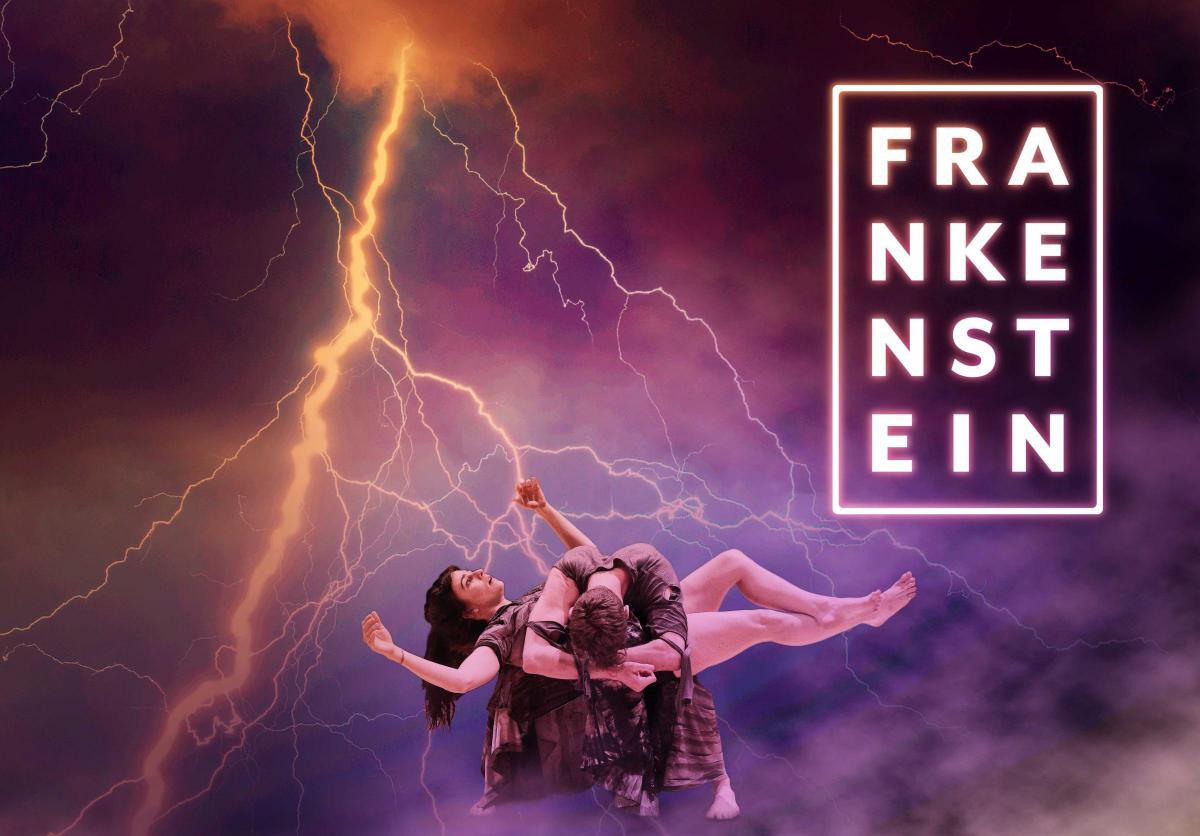
Company of 2018: Cascade Dance Theatre’s Frankenstein did the impossible – reimagined Mary Shelley’s classic almost wordlessly, in imaginative new ways with stunning moments and dark, modern twists. Bravo!
Gareth Ford-Elliott
For number three I’ll say Cheer by Kitty Hughes at The Other Room. This was fun and alternative and out of the things I reviewed, definitely one of the best.
For number two I’d have to say Humanequin by Kelly Jones at Wales Millennium Centre. This was an important piece of theatre and despite not being the best was definitely the most important piece I saw this year.
For things I’ve reviewed I would definitely have to say Cardiff Boy by Kevin Jones at The Other Room is number one. This was the best all-round show I saw outside of the Edinburgh Fringe this year. Every aspect of it was brilliant and it’s up there with one of my favourite shows I’ve ever seen.
For the cultural events, things I didn’t review, I will say Five Green Bottles by Joe Wiltshire-Smith and Spilt Milk Theatre as part of the Cardiff Fringe Festival. This was an excellent script produced independently. Joe is one of the best upcoming writers in Wales and Spilt Milk are one of the most passionate theatre companies. Together they produced an amazing show which I can’t wait to see again, developed, at the Sherman Theatre in 2019.
With underlying serious issues about the struggles and problems of working class Valleys people, Rachael Boulton and her team have created a funny, clever, relevant and thought provoking piece of theatre that strikes a chord with its audience; a reaction that can be heard in their laughter and the warmth of their response. Suspend your disbelief and climb aboard Exodus airways, it’s better than Easyjet!
All credit must go to what must have been an incredible amount of hard work from all of the performers, creators and collaborators. I was unexpectedly riveted to the story they told and absorbed in the whole aspect of the show.
Best thing in 2018 overall was listening to Bruce Springstein’s autobiography (actually published in 2017) which I had on Audible and listened to it twice. What an amazing story – and such a fantastic storyteller. All my life I wasn’t a fan until I read this book.
My favourite arts event I have attended this year was Casgliad hosted by Youth Arts Network Cymru! Such a brilliant weekend with so many awesome creatives!
Sian Thomas
Matthew Bourne’s Cinderella
I’ve only seen two ballets ever and this was the best one. I followed the story and I really liked the subtle changes they made to it and the way it was performed. Lovely show.
Had to include the Fringe! It was the most fun thing I did this summer! Because god I just really really adore this event and I really hope it’ll be back next year – I always love testing out my writing on an audience there. It’s such a safe space and such a confidence booster! Lovely atmosphere, people, and always a lovely summery evening!
Still because he recognised me, the group, and my old review. Loved feeling seen by an author I admire. The story was fab, the representation was great, and it was a lovely book to read to take one’d mind off things. Also ended with a great cliffhanger! I get so excited when he tweets about new books of this series come up. So this is definitely my #1!
My cultural event:
The fact that I wrote 100,000 words of the second draft of my novel!! I’m just super, super proud of myself. There’s not much to be told: I work on it when I can, work on it slow and steadily, make sure everything is okay, and it’s building itself up into something (hopefully) spectacular!
Barbara Michaels
My Three Best of 2018
With such a plethora of good theatre now available to us in Wales, it is difficult to select just three among the cornucopia of events that has been on offer – from the grandeur of Welsh National Opera, up there with the best in the world, to more humble productions working to tight budgets. For my money, here goes:
The multi-talented Rachel O’Riordan’s last production for the Sherman before departing for the Lyric Theatre in London. O’Riordan pulled all the stops out, with the result that this was fun – as a Christmas show should be – but also showed the dark side of Lewis Carroll’s well-known story. Musical numbers were a delight, with several of the characters on stage musicians and rising to the challenge. Not staged as a musical, but one waiting in the wings perhaps? A cunningly designed black and white set allowed for the full range of Carroll’s famous characters – White Rabbit, Mad hatter and even the Caterpillar – to be displayed to advantage.
This new production of a classic breathed fresh life into thetrue-life story of Eva Peron with a brand-new cast who more than justified their selection. Following in the footsteps of Elaine Paige who made the role her own was never going to be an easy task and Lucy O’Byrne’s heart-rendingperformance of ‘Don’t Cry for me, Argentina’ at what was Eva’s last appearance before her death brought tears to the eyes. It was also good to see some of the emerging talent coming out of Wales in the shape of Swansea-born Mike Sterling as Peron.
First on my list is WNO’s La Traviata A revival, true, but excellently staged and performed and with Verdi’s wonderful score rendered with a master touch with two sopranos experienced in their roles and Roland Woods’ sonorous baritone lending gravitas to the role of Germont pater, how could it fail to please? An opportunity for the remarkable WNO chorus to shine and for the ladies among them to enjoy wearing elegant ballgowns. The excellent director David McVicar wisely chose to keep to the traditional, with a sumptuous period setting whose opulence reeked of decadence.
Personal best:
For me, it has to be musical theatre and The King and I, which I saw in London. A sheer joy from start to finish, with Kelli O’Hara as Mrs Anna and Ken Watanabe as the King of Siam taking on the iconic roles made famous by Yul Bryner and Deborah Kerr and performing them with enthusiasm and expertise. First class. Enhanced for me, I have to admit, in that I was accompanied by a posse of grandchildren helping me to celebrate a big birthday!
Karis Price
Theatre Clwyd and Sherman Theatre excelled this year with Lord Of the Flies, with its all female savage cast had me jumping out of my skin and seat whilst offering a critical insight to the frailties of humanity.
However it is the rip roaring, toe tapping hand flapping Great Gatsby from Theatr Clwyd/Guild of Misrule that topped the bill for me in 2018. This innotive, interactive piece held in a run down pub in town was totally engrossing, a brilliant use of venue and a talented cast not just of professionals but community too. (More of this in 2019 please Theatr Clwyd!)
On the whole 2018 was pretty dull in the cinema however one film stood out as been worth the trip to the big screen ” Marvels Infinity Wars” I am an Averger fan girl and this film ticked all the right boxes, it was the ending to the origional Averngers story arch, all the Marvel films todate were building up to this battle … it was worth the wait and the bitter end just left me wanting more. Of course this doesn’t see the end of the Avengers, but it will be the end for some of the best loved characters and the begining for some new… I only hope the sad passing of the wonderful Stan Lee does not mean we loose the style and wit the MU has created.
E. M. BLESS’ON III
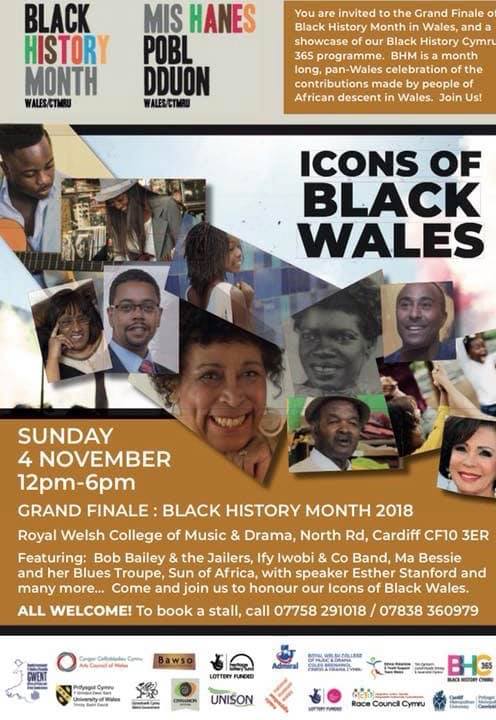
The Black History Month grand finale at RWCMD was my personal cultural event of 2018 because it attracted a broad spectrum of the community. Attended by many dignitaries including the outgoing First Minister – Carwyn Jones AM, newly-elected First Minister – Mark Drakeford AM, Cabinet Secretary for Health, Wellbeing and Sport – Vaughan Gething AM, young people and several elders from various communities in South East, West and North Wales, it was a celebration of diversity in Wales.
From its humble beginnings as Un Bore Mercher on S4C, I could never have imagined that this drama would prove to be so popular with UK audiences. Subsequently broadcast in the English-language on BBC1 Wales, it would become the most downloaded show ever on BBC iPlayer before being shown on primetime BBC1 in the summer. Deservedly sweeping the board at the BAFTA Cymru Awards, I will be outraged if Eve Myles is not at least nominated for a BAFTA in 2019. Her portrayal of Faith Howells, whose world is rocked by the disappearance of her husband, is deeply emotional and utterly captivating. This is surely her defining role.
If I had to pick one album to recommend from 2018, it would Wild Silence by The Wandering Hearts. When I first heard it, it was their incredibly refreshing and genre-blending sound that captured my attention. The more I’ve listened to the album, the more the lyrics have come to the fore and I’ve discovered another fascinating layer to their fabulous array of songs. To finish the year seeing them live in Liverpool confirmed my belief that these guys are destined for bigger things.
My theatre highlight this year has been this co-production between Theatr Clwyd and the National Theatre. With its life-size house for a set, its bold and brash set design, and its wonderful costumes, the overall look is enough to pull you into its 1950s world. Starring Katherine Parkinson and Richard Harrington as the couple living it up in a lifestyle of nostalgia, its saccharine exterior slowly melts away to reveal a darker and very pertinent narrative that will have you firmly gripped from beginning to end. Another triumph for Artistic Director of Theatr Clwyd, Tamara Harvey and her team.
Hansel, Gedeon and the Grimm’s Wood. Wales Millennium Centre, 6-8th December 2018.
A Christmas treat, Hijinx Odyssey cleverly put their unique slant on a delightful but dark compendium of Grimm’s classic tales, centred around a trepidatious Hansel and cheeky, daring Gedeon, deftly played by Danny Mannings and Mathew Mullins respectively. Venturing into the forbidden forest against their parent’s wishes they encounter a host of colourful characters – from partying princesses (Kirsty Rosser and Jen Lacey) to Odyssey’s very own Rolling Stones the Musicians of Bremen (Keith Richards being a highlight, otherwise known as Donkey, played by Matthew Cook), The well-timed physical comedy of The Boy Who Went Looking for Shivers (Freddie Holcombe) and the sinister Wolf and his evil cohorts.
Most impressive was the incorporation of beautifully constructed puppets in the form of the Wolf, Thirteenth Wise-Woman, The Ugly Stepsisters and Witch, constructed by hugely talented University South Wales students as well as a stunning, colourful set and costume design from Kitty Callister. The puppets were skilfully operated by cast including Andrew Todd, Jen Lucey, Andrew Tadd, Geraint Stewart-Davies, Sara Pickard and Sian Fouladi.
A touch tour was offered before the show so I got to experience these magnificent features up close, and audio description provided by Alastair Sill ensured that I had access to the show throughout. All shows were BSL interpreted by Sami Thorpe so that D/deaf audiences had as much choice as hearing audiences in which show they’d like to attend.
The Odyssey Christmas show is always a pleasure to partake in – there’s a fantastic, supportive, familial atmosphere of anticipation and excitement as people of all ages are welcomed in. The fact that audience members are invited to come up on stage at the end to meet the actors and puppets enhances this. The company’s humour and unique character comes through beautifully and this gets stronger each year thanks to the continued commitment of the group, their director, volunteers and support staff.
The show was very clear in terms of structure thanks to cleverly considered and witty writing from Llinos Mai and insightful, creative direction from Jon Dafydd-Kidd, ensuring that the talented cast kept us engaged and laughing throughout. This is a fun and frivolous show that celebrates and maximises the talent of the Odyssey team – ‘team’ being the optimum word – in which every single member is vital and dedicated, all the while not being afraid to go to dark places: something that a lot of inclusive groups are often too afraid to do. Colourful, dark and funny, we were swept up on the journey all the way to the Grimm’s Wood and back again.
Chloe Clarke
Creating opportunities for a diverse range of people to experience and respond to sport, arts, culture and live events. / Lleisiau amrywiol o Gymru yn ymateb i'r celfyddydau a digwyddiadau byw

 (5 / 5)











 (3 / 5)