
Tag Archives: featured

Review, The Ballard of Maria Marten, Eastern Angles, Wilton’s Music Hall, by Hannah Goslin

 out of 5 stars (4 / 5)

13 or 14 years ago, while studying Drama at school, I was introduced to the world of Melodrama and in particular, Maria Marten. We investigated the parallels between the real life story and its dramatisation for entertainment, performing the show ourselves for both audience and coursework purposes. So when I saw the press release for this, I was both excited and anxious to revisit a story which helped me continue my love of theatre.

The Ballard of Maria Marten is based on the true life events of Maria who, growing up poor, meets and falls in love with a series of fortunate men. Eventually, one of them turns out to be awful, physically and emotionally abusing her, leading to her death. Don’t worry, this is no spoiler – the famous story is known for it’s heroine’s unfortunate ending and a big reason it was taken for the stage. This version looks more at Maria’s side; her background, what she may have encountered, her growing smugness at the attention from rich men, desperately wanting love, when eventually, former failings at relationships leads her to be gaslit and abused. In her story, we also encounter other characters to build this back story, highlighting friendship, family, love and womanhood, motherhood and the difficulties of the era.

Eastern Angels have smartly moved away from the melodrama element. The closest we tend to get these days is the Pantomime, and so, while I would have been intrigued to see a modern day melodrama, this story is taken and performed sensitively and down to earth. It is mostly played straight, with the occasional joke or slight kooky characters, but you for sure believe in them. Once we get to know them and become part of their friendship, the end is all the more emotional and painful.

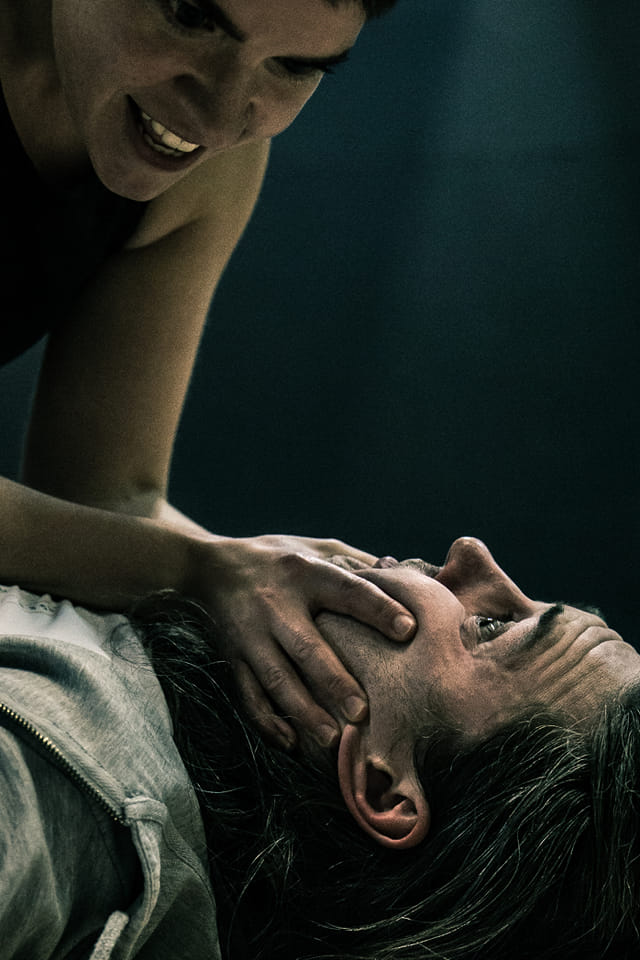
The performers are all women, and they choose to dress up for the first two suitors. This is effective and genuine and so as we see the relationships progress, it makes her heartbreak and abuse become even more dramatic. Her Father and her final suitor are not shown. While the Father isn’t seen as abusive, it highlights how out the picture he is to her and her life. Not giving the “villain” a face is also effective – Elizabeth Crarer, who plays Maria, uses great physicality, reactions and facial expressions to express his abusive nature and it makes it all the more frightening and disturbing, adding to her deterioration.

There is a huge element of girl power and girl friendships in this piece. My memory to some degree is hazy on both the story and the melodramatic version, but adding these characters makes the show more real. And they are all different as of any friendship group. The amazing thing about this version of the story is that we can relate, and with its reflection on events in the last couple of years. We can relate to a friendship group; of them growing up together and coming of age both together and as individuals. The elements of domestic abuse and murder also pick up on issues in the last few years; of potential home abuse increasing through Covid-19 and the sad death of Sarah Everard and others that have come to the surface. Media makes this shocking and tragic, as it really is but not something, sadly, new.

There is a lovely country feel to this production: in Wilton’s Music Hall, the perfect setting for a play set so long ago. The old furnishings and patchwork walls add to the idea of the countryside, with the wooden barn silhouette on stage – fits as if it has always been there. There is recorded music, music that feels very folk but often they will sing the ballards themselves, harmonising beautifully. Unfortunately sometimes the words were lost to the echo of the space which was a shame when it was so beautiful. They also make their own sounds of objects, babies, horses which adds a real sense of authenticity as opposed to recorded soundbites.

The Ballard of Maria Marten is reclaiming back her story. There are no villains in top hats and capes or over the top gestures as was originally meant by turning this sad true tale into a production, but all the gaps in between are filled in the story with this heartfelt, emotional and at times, funny retelling.

Review Andrei Kymach & Llŷr Williams, St David’s Hall by James Ellis

Photo Credit: Alexander Andryushchenko

 out of 5 stars (4 / 5)

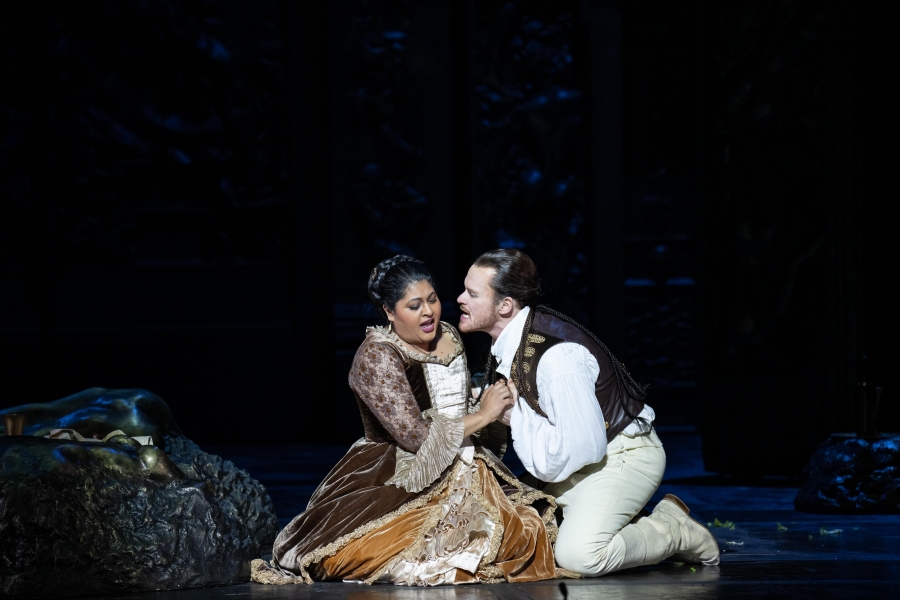
Those pesky storms would keep me from Don Giovanni with Welsh National Opera the past weekend. Though for now I missed the damnation, Andrei Kymach gave up time from the show for a recital at St David’s. Cardiff Singer regulars will know he won back in 2019, a long time ago in the grander scheme of things.

We are living in heightened times. Ukrainian born Andrei offered up a fine conveyor belt of native songs. We need to hear things like this at the moment, with war feeling imminent after two dower years, we’d rather forget in all honesty. These patriotic and joyful songs bleed out of Andrei, a well versed repertoire he will undoubtedly be singing more of in the near future. The songs of Schevchenko, Scheli and Liybomyr would be banned by the Tsars and early Soviet leaders, only ganging resurgence more recently. It is the conviction that Andrei brings to every word of each song that affirms his command as a baritone, filled with gusto and pride.

There is a rock star feel to Andrei’s look, his hair and beard trimmed and cut for his turn as the wicked Don down the bay. A headbanger of another sort, Mussorgsky’s Songs and Dances of Death ended this fine recital with a chilling air throughout. Here the singers details four scenes of lives ending, as Death emerges to claim his reward each time. Things start off particularly dark, with the death of a baby. Other songs sees the battlefield, a man lost in the snow and a knight (disguised as Death) lulling a sick maiden.

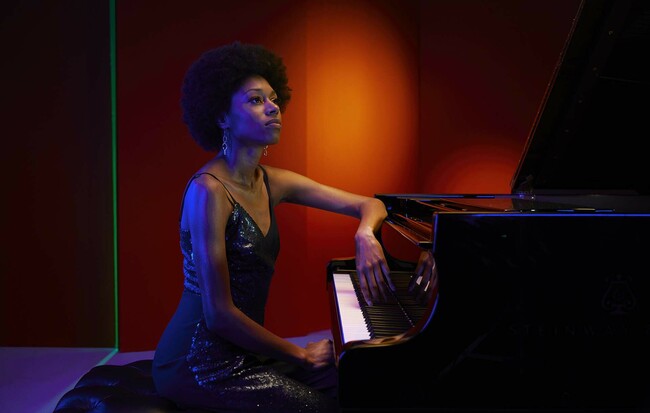
It’s Mussorgsky’s rollicking, compositional nature that makes these songs shine. Andrei is brilliant in execution, truly on top form, wallowing in the ironic, morbid mirror that permeates each bar. Llŷr Williams as accompanist has also excelled, glowing as he plays and never taken over the limelight to much from his partner. A lone piano stool next to Llŷr was intended for a page-turner, none such was needed as he swiped at the sheets, creasing them in each time within their plastic folder. Some three encores would indulge this loving Cardiff audience, who has seen this superb singer grow and grow.

We hope we can find peace at this time. Music will always be the answer.

Don Giovanni continues at the Wales Millennium Centre till 17 March 2022, then on tour.

Review Ailey by Hanna Lyn Hughes

Ailey is about one of the most celebrated American choreographers of the 21st century, Alvin Ailey. Directed by Jamila Wignot, Ailey explores themes of memory and history by delving into significant chapters in Ailey’s life from his working class upbringing to his soaring choreographic success establishing New York based Alvin Ailey American Dance Theater. 

The film starts with rehearsals for a brand new piece choreographed by Rennie Harris to mark the 60th anniversary of Alvin Ailey American Dance Theater. We are then plunged into Ailey’s past via a mix of archive and present day footage. His story is narrated sensitively and lovingly through interviews by his colleagues and friends. The interviewees are wonderful storytellers and I was moved to tears by their love and compassion, particularly relating to the decline of Ailey’s mental and physical health. 

https://youtu.be/97jqfS3_8io

The structure of the film is a triumph. The way in which the film avoids a predictable chronological structure and seamlessly switches back and forth from past to present not only makes for an engaging cinematic experience but also reiterates the significance and importance of Ailey’s legacy. He refers to the ‘blood memory’ of his rural upbringing in Texas as inspiration for many pieces. I was particularly moved by the time worn recordings of African Americans attending the Baptist church, all in white, singing hymns in procession. This imagery overlaid by the sound of gospel singing is not only heart warming in itself, but it is beautifully contextualised by impressive performances of Wade in the Water from the infamous Revelations. This layering of performance and archive footage is key in exhibiting Ailey’s ingenuity in honouring and celebrating his African American heritage through art. The film superbly encapsulates Ailey’s uninhibited love for movement and creation as well as the sorrow and loneliness he must have felt at the height of his success. 

As a freelancer based in Wales, I did not expect the cinema to be the place where I’d feel the most excitement I’ve felt about watching dance in years! I thought I knew all I needed to know about Alvin Ailey but through the course of watching this documentary, I was educated, inspired and truly fell in love. I was taken by his story and his works and could relate so much to his impulse to create. He had something to say and people wanted to listen and I believe that is the basis of a great and successful choreographer. I left the cinema thinking to myself that whilst his time was cut tragically short, we are so lucky to be left in his enduring legacy. As Judith Jameson says in her last interview “Alvin breathed in and never breathed out and we are his breath out” I urge anybody who loves dance or has an interest in American history to watch this film, it is simply wonderful. 

Ailey is available to watch on several streaming platforms if not at your local cinema. 

You can find out more about Hanna and her work in this interview here

Review, The Night Larry Kramer Kissed Me, David Drake, New Wimbledon Theatre Studio by Hannah Goslin

 out of 5 stars (4 / 5)

In a little black box in Wimbledon, we encounter the coming of age LGBTQAI+ tale in 80’s America. Next door is a LGBTQAI+ club which I have been to before, and so having this show next door seems hugely apt and hopefully, educational to young people of the community who may walk past and be intrigued by the stand out poster.

The Night Larry Kramer Kissed me, written by David Drake, is a critically acclaimed off-broadway show. Based in 80’s America, we travel through one man’s self discovery in the gay community, awoken by Larry Kramer’s The Normal Heart, showing how Theatre can awaken someone’s passion but also make them question their very existence. John Bell’s (star of Outlander) character uncovers what many men of the LGBTQAI+ community discovered during that time – the impact of the AIDS/HIV pandemic and the fears, concerns, and lack of education around it during this time. It looks at his own discovery of the community and his sexuality, yet also on protesting, speaking out, love and loss.

Bell is in general just perfection. Each word, syllable and speech is perfect, diction and projection on point, and every part of the story he tells feels like it could be autobiographical. He addresses each of us in the room, not afraid to make eye contact, and with such a small theatre, this is important, making us feel included in his story; as if he is just recounting it for the first time with all its elements and emotions. Finding out that Bell is only 24 years old shocked me. I know him well from the show Outlander, where we practically see him grow up as it is, but the maturity and the earnest nature he brings to the character made him seem way beyond his years. While I was also not yet born during this time in history, Bell being much younger than me also shows how in depth he has clearly looked into the history and the impact it had on people of that time. He is genuinely heartbroken; genuinely enjoying life as he discovers who he is; and every aspect of him is fabulous and in keeping of the culture both of then and now. He also flips through ages – a time when he is just a little boy is mixed in with his first kiss as a teenager to finishing as a young-middle aged man. And each mark of his life is clear. A brilliant feat in itself for a performer.

The set was minimal but effective – big crossed metal pipes, stretching diagonally to the sides of the stage, later lit up, make us feel like we are in a city, with its harsh architecture. This is softened by many candles later, electronic, but effectively made to look as if they are really flicking. Subtly put in nooks and crannies are the historical coloured handkerchiefs, symbolising gay men’s position when it comes to interaction with each other, sex and love. A brilliant moment is when Bell is singing/rapping to a song as he discovers different men in a club, pulling out the handkerchief’s and describing each of them, climaxing to an outburst of fear at those who are HIV positive is poignant, fun and eventually heartbreaking. We hear much of the support given in the community and protest at the time, but little of how some turned their back at some point through fear and lack of education.

In a time where we are all fearful of a virus we at the start knew little about, there is some element of reflection on how the community must have felt at the time. However, an element of fun in put into this production, with scenes in clubs and gyms and meeting different people, lovers and how sometimes it culminated in the death of a person puts this on another level. To live life, only to die of it in the end.

Finally, a comment on the costuming – on point for the era, Bell evokes images of Freddie Mercury and the leather fashions of the community and of the 80’s. Eventually, with tee shirts of the AIDS/HIV support networks and protests at the end, this and the telling of this tale is a blast into the history of such a big part of this community and of history in general, something that even today still feels swept under the carpet.

The Night Larry Kramer Kissed me is such an important production to see, not only to learn a impactful part of history but also of a community that, in the 21st century is still facing hardships and censoring. Bell only makes this so much more poignant with his natural and excellent performance.

Review The Da Vinci Code, Theatr Clwyd By Donna Williams

 out of 5 stars (3 / 5)

Credit: Johan Persson

It’s a well-known fact (well, okay, not a fact exactly but often a popular opinion) that ‘the book is always better than the film.’ This is, of course, subjective, as some of us enjoy reading where others don’t, but in my experience, films tend to have to miss out a lot of detail from its written inspiration due to time, budget and varying other reasons. Unfortunately, this is how I felt about The Da Vinci Code. This is not to say I disliked the stage adaptation but that, for me, the book simply didn’t translate well to the stage. As a big fan of Dan Brown’s book, I felt a lot of the action and the detail was rushed, where the detail of the book’s plot, particularly the detail in the symbology, is what it should be all about.

As we enter the auditorium we are greeted with a projection of the Vitruvian Man, the drawing by Leonardo Da Vinci which depicts a man in two superimposed positions with his arms and legs apart and inscribed in a circle and square, representing his concept of the ideal human body proportions. It is a well-recognised piece by Da Vinci therefore immediately transports us to his world and, to those who are already aware of the plot, to the Louvre Museum in Paris. For those unaware of location, we also hear announcements in French telling us that the museum will be closing in a few minutes time, counting us down to the beginning of the play. There is also appropriately suspenseful music playing which unfortunately becomes annoyingly repetitive after about five minutes!

Credit: Johan Persson

The play begins with Robert Langdon (portrayed brilliantly by Nigel Harman, probably most well recognised for his role in Eastenders) giving a symbology lecture, with a nod to Walt Disney and the Mickey Mouse watch he always wears! We are immediately introduced to most of the ‘cast’ who almost act a Greek chorus, representing bit parts and scene changes, providing summary information, and highlighting important dialogue. All wear hooded tops which they don when part of the ‘cast’, when they’re not portraying a main character. This works well and provides clarity to the story, particularly for those who may not be familiar with it. The piece was excellently cast, and special mention must go to Hannah Rose Caton, who portrays Sophie Neveu beautifully. I am at first taken aback that she isn’t using a French accent but as the action ensues, it’s clear this makes no impact on the role itself. Kudos also to Andrew Lewis, understudy Leigh Teabing who steps into Danny John-Jules’ shoes seemingly last minute (there is no announcement or information in the programme to suggest any cast changes). Having looked forward to seeing Danny John-Jules in this role I am a little disappointed but Andrew Lewis’ portrayal of Teabing is perfect and akin to Sir Ian McKellen’s on screen version. It also appears we are another cast member down, meaning the roles of Sauniere and Remy are played by the same actor, Adam Morris (much to my excitement, having been a huge fan of CBBC’s Maid Marian and her Merry Men as a child!) Morris really steps up to the plate and plays both roles superbly, causing no confusion as to who’s who.

Credit: Johan Persson

The story travels from the Louvre Museum in Paris, to churches, Teabing’s estate, London, Edinburgh etc. so I am intrigued to see how this is going to translate to stage, the use of modern technology and stagecraft allowing for the audience to be transported from location to location seamlessly. The use of projections, easy-traveling set, a few simple props, and creative lighting design mean we clearly move from scene to scene and know where we are without hesitation. Projections are also used to show symbols and paintings and there is effort to home in on the details of these, particularly at Teabing’s home where we see a large projection of Da Vinci’s painting The Last Supper on the wall which is then zoomed in to highlight its supposed hidden meanings. However, I feel a lot of these moments, often huge revelations in the book and in the film, are somewhat rushed here (none more so than the secret revealed to ‘Princess’ Sophie at the end of the play). Where these moments could be lingered on, the action is packed in to two hours, which just isn’t enough time to appreciate the detail.

There are a lot of clever elements in this production which, with a less intricate story, could have worked successfully. However, I think lack of time, and location (allowed for on the big screen) mean that the detail and the atmosphere of the plot get lost somewhat. Nonetheless, a fantastic cast and certainly an enjoyable production, perhaps better enjoyed without the book lover’s expectations!

The Da Vinci Code continues its UK Tour on February 22nd at the Belgrade Theatre in Coventry and finishes on November 12th at The Alhambra Theatre in Bradford. Head to the website to book your tickets:

https://davincicodeonstage.com/

Theatr Clwyd, Mold
February 14th-February 19th, 2022

Cast
Robert Langdon: Nigel Harman
Vernet & Cast: Basienka Blake
Remy & Cast: Adam Morris
Sophie Neveu: Hannah Rose Caton
Sir Leigh Teabing: Andrew Lewis
Fache & Cast: Alpha Kargbo
Silas & Cast: Alasdair Buchan
Sauniere & Cast: Adam Morris
Collet & Cast: Leigh Lothian
Sister Sandrine, Marie & Cast: Debra Michaels

Production Team
Company Stage Manager: Roger Troup
Deputy Stage Manager: Ellie Southwell
Assistant Stage Manager: Mim Evison
Sound 1: Elliott Roberts
Video 1/Sound: Llyr Parri
Wardrobe Manager: Ivy Bridgwater-Court
Relighter: Samuel Baker
Production Carpenter: Chris Ashenden

Creative Team
Author: Dan Brown
Adapters: Rachel Wagstaff & Duncan Abel
Director: Luke Sheppard
Set & Costume Designer: David Woodhead
Video Designer: Andrzej Goulding
Lighting Designer: Lizzie Powell
Composition & Sound Design: Ben & Max Ringham
Musical Director: Chris Poon
Movement Director: Tom Jackson Greaves
Casting Director: Stuart Burt CDG
Associate Director: Leigh Toney
Production Manager: Digby Robinson
Costume Supervisor: Ester Mangas
Props Supervisor: Lizzie Frankl
Associate Props Supervisor: Zoe Wilson
Fight Director: Alison De Burgh

Running Time: 2 hours (including 20-minute interval)

REVIEW JAMAL ALIYEV & MAKSIM ŠTŠURA, ST DAVID’S HALL BY JAMES ELLIS

Jamal Aliyev Credit Kaupo Kikkas

 out of 5 stars (4 / 5)

In a return to live events, the all ways reliable afternoon concerts at St David’s Hall would be my first venture out in this new year.

This first outing for me saw Azerbaijan born cellist Jamal Aliyev and Estonian accompanist Maksim Štšura. It annoyed me that the entire programme was completely changed (Chopin, Schumann and Martinů were billed), though a new show of tricks saw pieces I’ve never heard. Turkish inspired music began filled with experimentation and jazz. Though giving of a feeling of let’s try this and that, I found moments particularly enjoyable: the Henry Cowell like manipulations of the piano and perfumed cello lines were highlights.

An arrangement of Paganini’s Variation’s on a theme of Moses in Egypt takes snippets of Rossini’s really heard opera and shows off the violin, or the cello in this instance. Jamal really gets to prove his talents in this piece, the composer usually pushing the fundamentals of performing along with dynamics. No one takes on Paganini lightly, you feel Jamal has taken great care to bring this together in a showcase of both vim and intrigue.

Some slow tango vibes followed in Oblivion from Piazzolla. Pushing the genre to new heights, Piazzolla has the fortune of being accessible and experimental. Whilst this is not his most audacious piece, I found some joy in this brief outing, evocative of the tango genre it calls back to. Wrapping with up with a work by cellist composer David Popper also gave Jamal more chances to shine. He doesn’t really need to play anything special to prove his talents. Maksim on piano also being a highly watchable, refined pianist, who joins Jamal in this almost hour of fine music making.

Review, Dirty Dancing, Dominion Theatre by Hannah Goslin

 out of 5 stars (3 / 5)

I once went to a shop, bought a watermelon, uttered the infamous line “I carried a watermelon” to receive from the cashier “…Isn’t that from a film?”.

We all know Dirty Dancing. A quintessential love story from the 80’s. Based in the 1960’s, this coming of age story sees teenagers growing up in this time, breaking out of the post war /post 1950’s prudeness and traditions and embracing life, sex, culture. They are becoming more aware of socio and political climates, and women are becoming more vocal and independent. This is when Baby, with her family, spends time at their holiday resort (think American Butlins) and when she leaves 3 weeks later, she has grown from daughter to woman, after meeting Johnny and together, facing a mountain of challenges and issues. Baby’s world is cut open and she soon grows up.

Firstly, I would say that calling this a musical is a little misidentified. Yes, there is music; yes, there is dancing; but very little in singing. Most of the music is pre-recorded. There is the occasional band playing, maybe 3-4 songs sung on stage but other than that, it’s very much like the film; lots of talk and lots of dance. Don’t get me wrong, the dancing is BRILLIANT. Carlie Milner (Penny) has the most envious of techniques, along with Michael O’Reilly (Johnny) who epitomises Patrick Swayze and his snake hips. Together, you can believe they are the envious duo that smashes into the campsite scene. Kira Malou (Baby) also does a great job at performing as if she cannot dance, to slowly building up to being worthy of Johnny’s partnership. But it did feel as if she wasn’t given much stage time to really showcase her skills, until the very end in the encore.

The music is typically 80’s – we know all the songs and sing along, and this does pick it up in enjoyment. There’s more comedy added than the film, and the performers do well to be hammed up enough to be these stereotyped characters supporting; it allows the depths of Johnny to be shown in more detail. The whole cast is so in sync that you wouldn’t quite believe that this was a press night – such perfection in movements, in synergy and in the graceful scene changes and line delivery.

The director for sure knows what they are doing; likely, a show catered for the Millennial and Baby Boomer female audiences, there’s absolutely no hesitation in ensuring that Johnny is swooned over. He is quiet, brooding and tormented, just as we expect from Swayze’s original character, and maybe more muscular. It isn’t until he strips off his top and an accidental bum flash and I think most of the audience had collapsed. As a hot blooded woman, yes it is enjoyable to see, but it also feels quite seedy and thrown in – and I couldn’t help but feel sorry for O’Reilly and the objectification.

What also did not sit right with me was the issue of race. Rightfully so, the cast is a mix of races, which is great to see when theatre and musical theatre especially can be so white, middle class and cis. However, to showcase Baby’s growing independence and outspokeness, the issue of race in America at the time, Martin Luther King, and even the word “Negro” are thrown in. It isn’t developed upon and unfortunately feels uncomfortable, badly placed as well as fueling white savior syndrome. With a number of persons of colour in the cast, I’m sure if this didn’t sit right then I’d hope they would speak up, but to an audience member, it only felt like it was there to show Baby breaking away from tradition and not making a important point about race and history. My memory of this in the film is hazy (and that in itself probably shows a further issue of the original film and their take on this) but even if it was featured in the same way, this is where we, as a reprise to stage, can change this and either fully and completely bring that story to light or not at all. Baby’s independence can be shown in other ways, other than her being the person to speak for a race that is not her own. I also felt it limits the casting process – can a person of colour therefore play the role of Baby or Johnny or any of the other characters? The whiteness of the characters isn’t a point of the narrative in the stage production, as it is in the film with the camp being of Jewish-American tradition, so why limit the casting!? Argument would say that as Baby is Jewish-American, she is part of a minority and can speak but as this isn’t eluded to or even distinguished, I do not feel that there is an argument there.

Dirty Dancing is not what I’d exactly call a musical, but it is good fun nonetheless. Fans of the movie and of 80’s music will be happy to attend for a light-hearted take on this well known tale, with a pink wine in hand and a dance at the end, along with times to swoon, the famous lift and “Nobody puts Baby in a corner”. However, there is a huge conflict of messages throughout and some uncomfortable areas that are never really realised and could probably have done without.

Review, Purple Snowflakes and Titty Wanks, Sarah Hanly, Royal Court Theatre by Hannah Goslin

 out of 5 stars (5 / 5)

Ireland is a place I feel a lot of pride, despite having no blood connection. It was thought we have Irish in my family and so, like anyone, I took that and ran with it whenever Ireland was brought up. Sadly, recent discoveries say otherwise. However, some of my best friends are Irish and since the day I met them, I’ve enjoyed learning about the culture, mannerisms, phrases and the socio and political state of Ireland through history.

It’s quite well known that there is a huge aspect on religion in Ireland. With this, as soon as Catholism is mentioned, you think “Oh here we go. Another Irish play talking about growing up Catholic”, by Purple Snowflakes and Titty Wanks is fresh, and new in its approach and is unlike any play, Irish or not, that I’ve ever seen.

Purple Snowflakes… is a one woman show about coming of age in relatively modern Dublin. It sees the character of Saoirse finding her way through life; her family, her sexuality, religious repression and eating disorders. She fights through life, retelling her story to her friend who is only a memory now. It picks on loss and love, and growth from child to fully fledged adult, and what is important throughout each stage.

Sounds a barrel of laughs right? Well.. actually it very much is. There’s an element of very unique comedy, relating mostly to the Irish culture. The Irish are some very clever and comedic people, using their repression and perhaps sheltered upbringings to be darkly funny. This is no exception for this story – it’s honestly hilarious but when you get too comfortable with this, you get a punch of the serious into your stomach. The highs are perfectly punctuated by the lows; this is what makes this play so brilliant.

It also educates – how would someone growing up, trying to discover who they are, really do this when there is little to no information, no openness and certainly no help with figuring out sexuality, gender or mental health. Perhaps this isn’t the same all over Dublin or Ireland, but certainly it feels like a tale often told and Hanly picks this apart – she encourages and supports feminist morals, of LGBTQIA+ ideals, of being who you are and unapologetic. She makes a statement; not only of the state of lack of education on these elements but also about sticking two fingers up to it and saying I am who I am.

Sarah Hanly, writer and performer, is excellent. She is energetic, bounding around the stage with a vigor we can only imagine having. You feel as if she is growing up on the stage in front of you, not just in her story. By using lights, a small amount of staging and props, the scene is changed quickly and effectively. A very small stage, it somehow expands and with the help of the narrative, you can easily imagine the different places that the character is existing in.

We feel like we are her friend – she speaks to her friend as if she is right in front of her, and we fill that void. She addresses us, often with “do you remember that?” and, while we clearly don’t, she convinces us that we do. And we are there, with her and no one else, not even the other audience members.

I loved every minute of Purple Snowflakes. Your emotions are constantly on edge and this makes it exciting, makes your heart break, makes your sides split, and you cannot tell what happens next. Purple Snowflakes needs to be your next show to watch.

REVIEW The Rocky Horror Show, New Theatre by Barbara Hughes-Moore

Rocky Horror isn’t just a show: it’s an experience. That’s the promise that has ushered audiences into its weird and wonderful world for nearly fifty years. Starting life as an experimental stage play in 1973, it gained a cult fanbase with the iconic 1975 movie adaptation. The film might have bombed, but its success went nuclear: it exploded on the indie scene, and after the countless midnight showings and Halloween screenings that followed, Richard O’Brien’s counter-cultural magnum opus has made its rambunctious debut in Cardiff to remind us why it’s time to do time warp again.

Brad (Ore Oduba) and Janet (Haley Flaherty) are two college kids who are on the road to marriage – until they get a flat tyre just outside Castle Frankenstein. Pathologically prim and proper, they’ve never put a toe out of line; but now they’ve set foot in the lascivious lair of Dr Frank-N-Furter (Stephen Webb), they’re in for a treat – and a few tricks along the way.

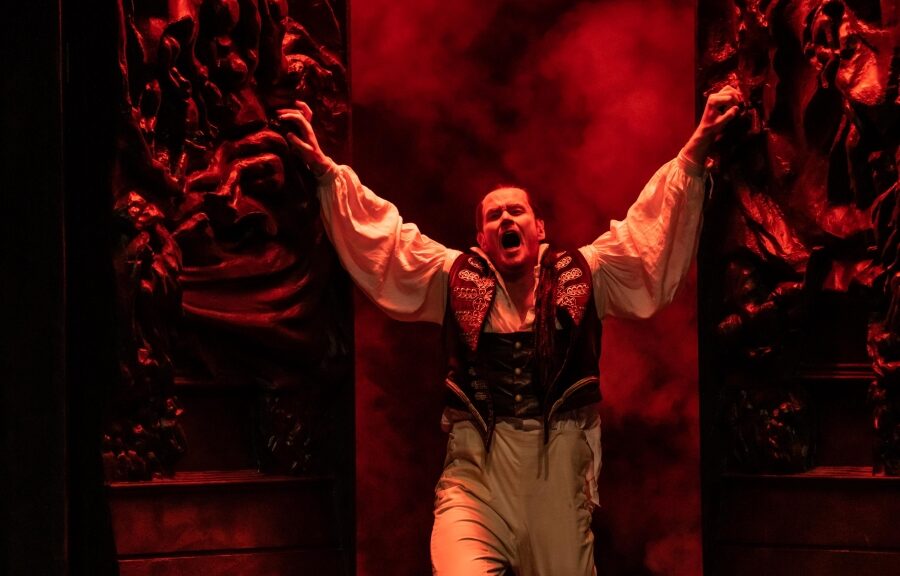
Directed by Christopher Luscombe, Rocky Horror is a non-stop thrill-fest that never comes up for air. The cast are extremely game and honour their filmic counterparts while adding their own unique spin to the characters. And there’s no character more unique than Frank-N-Furter, a role which launched Tim Curry into the celluloid stratosphere. Curry has big platforms to fill, but Webb slips into them with ease. Sensuous, sinister, and seductive, he’s a negligée-d enigma. Masculine, feminine, beautiful, scary: Frank is at the intersection of it all, and nowhere is that better showcased than in Webb’s explosive entrance: “Sweet Transvestite”. From the moment he stepped through the smoke like a demented, diamanté-d Dracula, he had everyone in attendance trembling with antici… pation.

Since his Strictly win, Oduba has proven himself a force to be reckoned with on the stage, moving effortlessly between cutesy doo-wops (“Dammit, Janet!”) and emotive ballads (“Once in a While”). Flaherty is hilariously nervy and nerdy as the vestal Janet, before enthusiastically wooing Ben Westhead’s Rocky (wearing nothing but Speedos and a smile) with the absolute banger that is “Touch-a, Touch-a, Touch-a, Touch Me”. But there’s nothing that touches the gorgeous majesty of “The Time Warp”, which has the ensemble and the audience alike bopping about in harmony.

Everyone looks like they’re having a ball. Stefania Du Toit (stepping in for Lauren Ingram) is perfect as Columbia, the helium-voiced henchwoman with a heart as gold as her top hat. Equally impressive is Suzie McAdam as Magenta, a simmering flame of charisma with a voice like bourbon on the rocks. Kristian Lavercombe plays her brother Riff Raff, an Igor-like acolyte of Frank’s. Lavercombe moves like an unravelling accordion, all sinewy deference and devilry in a performance of which Richard O’Brien himself would be proud. Joe Allen plays Eddie, a role originated by the dearly-departed Meat Loaf. Eddie only lasts for a single song, but if your number’s up, make sure that number’s “Hot Patootie – Bless My Soul”, a rock ‘n’ roll riot that Allen absolutely kills. He also plays the Strangelove-esque Dr Scott (or should that be, Dr Von Scott?) to hilarious results. And Reece Bundin, Jordan Fox, Darcy Finden, Rachel Grundy and Danny Knott are Phantoms so magnificent they put the Opera Ghost to shame.

The plot might be slight but Rocky Horror isn’t about story as much as it is about pure, magnificent madness. Our steward through the madcap melee is Philip Franks, a stalwart of British stage and screen, who has played Rocky’s indomitable Narrator since 2012. He’s the human embodiment of the ‘Keep Calm and Carry On’ slogan; unfazed and unflappable, his beleaguered MC fields obscenities and interjections flung at him from the crowd – something for which Rocky Horror is legend. This is a show that’s performed as much by the audience as it is by the cast – and you might well see as many Columbias, Franks and Magentas in the stalls as you will on the stage.

Framed by a swirl of film reel, Hugh Durrant’s set transitions from 50s kitsch to Gothic camp – its mansion set looks as if Gaston bought the Moulin Rouge – and climaxes in a waterfall of crimson tinsel through which the characters, all dressed in identical scarlet corsets, emerge as their true selves. Sue Blane’s costumes are dead ringers for the ones donned by Curry and co. (and even improve on them on in some instances), and the live band, led by musical director Charles Ingles (stepping in for Greg Arrowsmith), really puts the “rock” in Rocky Horror.

Rocky Horror is a love letter to schlocky sci-fi B-movies and pretty ditties from the 50s (opening song, “Science Fiction/Double Feature”, has never sounded so beautiful or so poignant) – but most of all it’s a paean to self-expression; a fearless celebration of queer joy that implores us, “Don’t dream it, be it”. In Rocky Horror, everyone belongs. No-one is thrown away – even if they’re chainsaw-ed to death offscreen. It’s a ripped fishnets and smudged lipstick kind of a show; glamorous, rebellious, and racy, it’s not so much camp as it is a whole glampsite. Hot Patootie, Bless my Soul – you’ll really love that Rocky Show!

The Rocky Horror Show is playing at the New Theatre through to Saturday 12th February

Images credited to David Freeman

REVIEW Bedknobs and Broomsticks, Wales Millennium Centre by Barbara Hughes-Moore

The Millennium Centre is back with a boom – or should that be ‘broom’? – as the UK Tour of Bedknobs and Broomsticks sweeps through Cardiff this week. Based on the Disney classic and featuring original songs by the Sherman Brothers (Mary Poppins, Chitty Chitty Bang Bang), with new music and lyrics by Neil Bartram, the ambitious production has the unenviable task of making its COVID-weary audience believe in magic again – and I’m thrilled to say it succeeds.

London, 1940: as World War II rages, the Rawlins children are tragically orphaned in the Blitz. Evacuated to the Dorset coast, they are assigned a new guardian: the eccentric Eglantine Price (Dianne Pilkington), a reclusive woman with a penchant for motorbikes and, they soon learn, magic. You see, Eglantine is a trainee witch, and she wants to use her powers to defeat the enemy – until she receives word that her witchcraft academy has suddenly shut up shop with her studies incomplete and a crucial spell unfinished. Armed with the titular bed(knobs) and broomstick(s), Eglantine and the Rawlinses travel back to London to complete the spell with the aid of Eglantine’s erstwhile educator, Professor Emelius Browne (Charles Brunton).

That’s a lot of set up for a story with a comparatively slender plot and a whole lot of animated sequences to translate into live action – but the creative team are more than up to the task. Jauntily directed by award-winning theatre-makers Candice Edmunds and Jamie Harrison, writer Brian Hill updates the original by adding much-needed characterization and depth to the unlikely quintet. West End star Dianne Pilkington leads an incredible ensemble with wit and whimsicality, channeling the legendary Angela Lansbury while putting her own instantly-iconic spin on the character. She brings a brusque charm and a delightful physicality to the role, and convincingly grows fond of her wayward wards without losing her edge. Her chemistry with Charles Brunton as the relentlessly lovable conman ‘Professor’ Browne is enchanting, and the odd couple has more time here than in the movie to get to know each other, making their romance more believable. And, on the strength of their performances here, the actors who play the Rawlinses (different each night, except for Conor O’Hara as Charlie), all have excellent careers ahead of them.

The show’s premier prestidigitator is Jamie Harrison, who is responsible for the magnificent sets and breathtaking illusions and also co-directs. Short of actual magic, I have no idea how he made beds soar, brooms fly, and brought the beautiful briny to bobbing, brilliant life – Harrison, who was also behind the technical wizardry of Harry Potter and the Cursed Child, has really outdone himself here. I genuinely can’t work out how he did it! His illusions complement Kenneth McLeod’s utterly charming puppets, which evoke everything from shoals of dancing fish and an obsequious bird, to a bashful bear and a literal lion king, not to mention a few human-to-rabbit transformations.

The flying bed takes Eglantine, Emelius and the Rawlinses all over the world, from the sleepy Dorset coast to the raucous London streets to the balmy/barmy island of Nopeepo. The vibrancy of these scenes are enhanced by Gabriella Slade’s costumes (Eglantine’s outfits, sequinned sea-wear and Portobello punk couture are standouts) and Neil Bettles’ choreography (the opening scene is a masterclass in movement). As for the musical numbers, ‘Portobello Road’ is a lively highlight, a carnivalesque spectacle of urban chicanery; and ‘The Beautiful Briny’ is suitably sublime, featuring gorgeous underwater locales and an aquatic dance-off – but there’s no substitute for ‘Substitutiary Locomotion’. If you don’t get chills when Eglantine starts chanting, ‘Treguna Mekoides Trecorum Satis Dee’, then, frankly, you haven’t got a pulse.

https://www.youtube.com/watch?v=kctybEBIPtY

The pacing could be a little tighter, and while some of the new songs soar, others are a tad unwieldy. For example, ‘It’s Now’, while excellently performed by Brunton, does exactly the opposite of its title by preventing Emelius from entering the fight – which is exactly what he’s singing about doing! Why are you going into a second verse, Emelius? The Nazis are right behind you!

The ending diverges from the film and is sure to divide audiences too, but it doesn’t lose sight of what the real magic of the story has always been: that being with the ones you love is always an adventure. Well, that and a flying four poster… Spellbinding fun for the whole family, take a step in the right direction and catch this show while you can – you’ll beWITCHED, beDAZZLED, and be-CRAZY to miss it!

Bedknobs and Broomsticks is playing at the Wales Millennium Centre until 5th February 2022