
All posts by Hannah Goslin

[...]

Review, Doctor Who: Time Fracture, Immersive | LDN, By Hannah Goslin

 out of 5 stars (5 / 5)

I’m going to start this by saying – this was a dream come true!

As a big fan of Doctor Who, when this came into my inbox, I screamed and jumped at the chance.

As most fans of something would be, I was dubious and a little concerned if I would like it. I invited my long DW friend along, who felt similar anticipation, mainly because unfortunately we have both lost favour of the recent series and were apprehensive on how they would play this out.

Gone are the times I remember where the Dragon Centre in Cardiff had the tiniest of exhibitions dedicated to the fandom, featuring a 10 minute walk through of things from the set. Gone are the days a long time after when the larger experience in Cardiff was prominent and I remember almost being in tears at how cool it was. This feels like a reincarnation. But one you are fully involved in.

The first thing to say, and we couldn’t stop saying it was the level of detail applied. I couldn’t to this day tell you the layout of this building, but everywhere you looked, there were tiny elements that if you blinked, you would miss them – a picture of a past companion, the general set and aesthetic, nods to past, present, future (little joke there for you), which found us constantly pointing out to one another and gasping with excitement. Perhaps lost on those who have come for just the experience, but certainly a brilliant addition for the die hard fans.

The narrative itself involved past characters, present characters, storylines we have already encountered, interweaved to create this exciting mission. There’s a fracture in time caused by a bomb in the 1940’s, but we need to help the Doctor to save the universe, making life changing decisions and sacrifices along the way (don’t worry – we all come out alive!)

We ourselves, seem to actually travel through time – we meet Davros, we meet Elizabeth I, Leonardo Da Vinci, the Gallifreyans, and all in different rooms and alcoves that are so exquisite in details. We are all engaged with; unfortunately (or fortunately!?) I seemed to have a face that said to interact with and so I may be biased, but it felt as if every person was engaged with. There were, like any immersive experiences, rooms we never saw. But you never felt as if you missed out and eventually the pieces of the puzzle easily fit together.

The performers stuck to their characters perfectly – improvisation techniques on point for any eventuality. A moment where the timeline of one performer didn’t match with the others in the narrative, she swiftly managed to pad the interaction out in character to fill that gap. Every performer was believable, whether in the spotlight or at the sides. True talented artists throughout.

And when the villains we all know get involved – it felt genuinely scary. Not many of the shows ever truly scared me, but confronted in person with the Weeping Angels, the Daleks, Cybermen… and many more – my god, it felt as if I was really running for my life.

For any Doctor Who fan, this is a must. For anyone who wants to have a genuinely exciting adventure and be surprised at (often literally) every turn, this is certainly for you. I felt transported and never wanted to leave.

Review, Kaash, Akram Khan Company, Southbank Centre, By Hannah Goslin

 out of 5 stars (4 / 5)

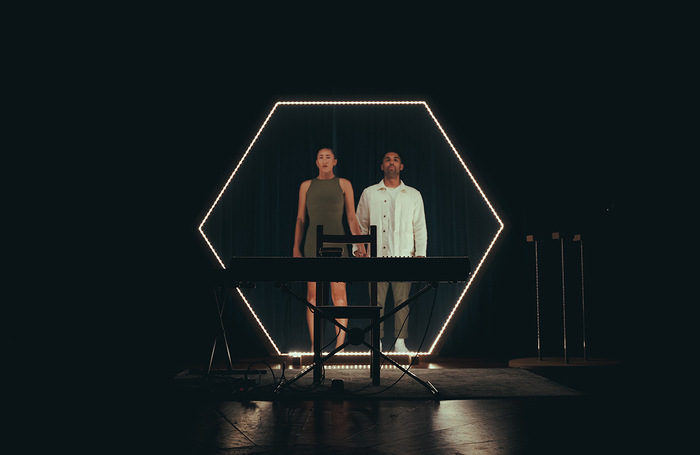
While the seats are still filling, and the last of the audience are rushing in for the no latecomers policy, suddenly someone is on stage. In the darkness, a faint red frame on the back wall, with his back to us.

It’s a wonder whether anyone has noticed him, with chatter still continuing, but the show has begun, and there is a eeriness about this foreboding body.

Akram Khan delivers some of the most interesting, dark and unusual dance productions. This is no different with Kaash. With elements of contemporary dance, influenced with religious, cultural and rhythmic dancing and gestures, the production delivers the deep, dark and at times frightening expressions of Hindu Gods, black holes, creation and destruction and much more.

The colours of the production are earthy and naturalistic – with browns, reds, black and whites highlighting the dancers and the stage itself. It is calming at times, making you feel grounded, and others frightening.

The sounds change from heavy drum beat, to fast paced speech in another language, to naturalistic sounds like wind. However, there is a sense of alienation theory when the sound is cranked up; it gets louder and more foreboding and sounds a little like when a killer is about to appear in a horror film. There is no sense of an end, half expecting something to make you jump but the crescendo is outlived and we are left in bewilderment.

The dancers, using leitmotif gestures that come back and forth throughout, are somehow gentle yet fierce with their movements. Effortlessly sliding around the stage, they make it look easy, but the beads of sweat show otherwise. There is a moment when we see one “breaking down”; physically it is as if she is a robot that is malfunctioning and the movements and way she contorts herself is equally natural and unnatural. It’s difficult to watch but you also cannot take your eyes away.

For a 55 minute piece, Kaash felt like an enternity of a devious world but equally making us want more. It is dark and scary but fascinating and awe inspiring.

Review, You Heard Me, The Albany, by Hannah Goslin

 out of 5 stars (3 / 5)

There really is a lack of basic, physical theatre performances these days. It is encompassed with narrative, but this is usually to explain the physicality, when the physicality is what should be bringing the story across.

With, You Heard Me, we have returned back to the basics and effectiveness with this.

You Heard Me is the true story, by artist Luca Rutherford, as a survivor of sexual assault. On a run, during the day, Rutherford was attacked and if it wasn’t for her lack of silence and fight within her alerting to a passerby, her story may have ended very differently.

The performance is a multi-media performance, expressed through a combination of physical theatre and soundscapes. As previously said, this was interesting as it is rare that artists embark on a purely physical theatre production to express their story. Rutherford almost exhausts herself with her energy and rhythm throughout the piece, showing her fight and her struggle under the physical prowess of her attacker.

However, while there were commentary, changes in lights and adjustments to the stage, it felt very one note and I felt I was waiting for the change, for the WOW moment, for that theatrical power.

By no means do I want to tread on what is a true, emotional and sensitive piece and what I found so brilliant about this was that this was not with an ending we realised. She survived, she got away, but this could have been a lot worse, a lot more like the, unfortunate, tales we often hear. And this made what she expressed powerful to all those female identifiers, or in fact anyone who unfortunately may find themselves in a similar situation.

You Heard Me had a clear message: to fight, to be loud, to not be quiet or ladylike or everything that is impressed upon us, especially in these fight or flight moments. But I did feel that perhaps some different levels to the piece would add to its power as a theatrical performance.

Review, The Ballard of Maria Marten, Eastern Angles, Wilton’s Music Hall, by Hannah Goslin

 out of 5 stars (4 / 5)

13 or 14 years ago, while studying Drama at school, I was introduced to the world of Melodrama and in particular, Maria Marten. We investigated the parallels between the real life story and its dramatisation for entertainment, performing the show ourselves for both audience and coursework purposes. So when I saw the press release for this, I was both excited and anxious to revisit a story which helped me continue my love of theatre.

The Ballard of Maria Marten is based on the true life events of Maria who, growing up poor, meets and falls in love with a series of fortunate men. Eventually, one of them turns out to be awful, physically and emotionally abusing her, leading to her death. Don’t worry, this is no spoiler – the famous story is known for it’s heroine’s unfortunate ending and a big reason it was taken for the stage. This version looks more at Maria’s side; her background, what she may have encountered, her growing smugness at the attention from rich men, desperately wanting love, when eventually, former failings at relationships leads her to be gaslit and abused. In her story, we also encounter other characters to build this back story, highlighting friendship, family, love and womanhood, motherhood and the difficulties of the era.

Eastern Angels have smartly moved away from the melodrama element. The closest we tend to get these days is the Pantomime, and so, while I would have been intrigued to see a modern day melodrama, this story is taken and performed sensitively and down to earth. It is mostly played straight, with the occasional joke or slight kooky characters, but you for sure believe in them. Once we get to know them and become part of their friendship, the end is all the more emotional and painful.

The performers are all women, and they choose to dress up for the first two suitors. This is effective and genuine and so as we see the relationships progress, it makes her heartbreak and abuse become even more dramatic. Her Father and her final suitor are not shown. While the Father isn’t seen as abusive, it highlights how out the picture he is to her and her life. Not giving the “villain” a face is also effective – Elizabeth Crarer, who plays Maria, uses great physicality, reactions and facial expressions to express his abusive nature and it makes it all the more frightening and disturbing, adding to her deterioration.

There is a huge element of girl power and girl friendships in this piece. My memory to some degree is hazy on both the story and the melodramatic version, but adding these characters makes the show more real. And they are all different as of any friendship group. The amazing thing about this version of the story is that we can relate, and with its reflection on events in the last couple of years. We can relate to a friendship group; of them growing up together and coming of age both together and as individuals. The elements of domestic abuse and murder also pick up on issues in the last few years; of potential home abuse increasing through Covid-19 and the sad death of Sarah Everard and others that have come to the surface. Media makes this shocking and tragic, as it really is but not something, sadly, new.

There is a lovely country feel to this production: in Wilton’s Music Hall, the perfect setting for a play set so long ago. The old furnishings and patchwork walls add to the idea of the countryside, with the wooden barn silhouette on stage – fits as if it has always been there. There is recorded music, music that feels very folk but often they will sing the ballards themselves, harmonising beautifully. Unfortunately sometimes the words were lost to the echo of the space which was a shame when it was so beautiful. They also make their own sounds of objects, babies, horses which adds a real sense of authenticity as opposed to recorded soundbites.

The Ballard of Maria Marten is reclaiming back her story. There are no villains in top hats and capes or over the top gestures as was originally meant by turning this sad true tale into a production, but all the gaps in between are filled in the story with this heartfelt, emotional and at times, funny retelling.

Review, The Night Larry Kramer Kissed Me, David Drake, New Wimbledon Theatre Studio by Hannah Goslin

 out of 5 stars (4 / 5)

In a little black box in Wimbledon, we encounter the coming of age LGBTQAI+ tale in 80’s America. Next door is a LGBTQAI+ club which I have been to before, and so having this show next door seems hugely apt and hopefully, educational to young people of the community who may walk past and be intrigued by the stand out poster.

The Night Larry Kramer Kissed me, written by David Drake, is a critically acclaimed off-broadway show. Based in 80’s America, we travel through one man’s self discovery in the gay community, awoken by Larry Kramer’s The Normal Heart, showing how Theatre can awaken someone’s passion but also make them question their very existence. John Bell’s (star of Outlander) character uncovers what many men of the LGBTQAI+ community discovered during that time – the impact of the AIDS/HIV pandemic and the fears, concerns, and lack of education around it during this time. It looks at his own discovery of the community and his sexuality, yet also on protesting, speaking out, love and loss.

Bell is in general just perfection. Each word, syllable and speech is perfect, diction and projection on point, and every part of the story he tells feels like it could be autobiographical. He addresses each of us in the room, not afraid to make eye contact, and with such a small theatre, this is important, making us feel included in his story; as if he is just recounting it for the first time with all its elements and emotions. Finding out that Bell is only 24 years old shocked me. I know him well from the show Outlander, where we practically see him grow up as it is, but the maturity and the earnest nature he brings to the character made him seem way beyond his years. While I was also not yet born during this time in history, Bell being much younger than me also shows how in depth he has clearly looked into the history and the impact it had on people of that time. He is genuinely heartbroken; genuinely enjoying life as he discovers who he is; and every aspect of him is fabulous and in keeping of the culture both of then and now. He also flips through ages – a time when he is just a little boy is mixed in with his first kiss as a teenager to finishing as a young-middle aged man. And each mark of his life is clear. A brilliant feat in itself for a performer.

The set was minimal but effective – big crossed metal pipes, stretching diagonally to the sides of the stage, later lit up, make us feel like we are in a city, with its harsh architecture. This is softened by many candles later, electronic, but effectively made to look as if they are really flicking. Subtly put in nooks and crannies are the historical coloured handkerchiefs, symbolising gay men’s position when it comes to interaction with each other, sex and love. A brilliant moment is when Bell is singing/rapping to a song as he discovers different men in a club, pulling out the handkerchief’s and describing each of them, climaxing to an outburst of fear at those who are HIV positive is poignant, fun and eventually heartbreaking. We hear much of the support given in the community and protest at the time, but little of how some turned their back at some point through fear and lack of education.

In a time where we are all fearful of a virus we at the start knew little about, there is some element of reflection on how the community must have felt at the time. However, an element of fun in put into this production, with scenes in clubs and gyms and meeting different people, lovers and how sometimes it culminated in the death of a person puts this on another level. To live life, only to die of it in the end.

Finally, a comment on the costuming – on point for the era, Bell evokes images of Freddie Mercury and the leather fashions of the community and of the 80’s. Eventually, with tee shirts of the AIDS/HIV support networks and protests at the end, this and the telling of this tale is a blast into the history of such a big part of this community and of history in general, something that even today still feels swept under the carpet.

The Night Larry Kramer Kissed me is such an important production to see, not only to learn a impactful part of history but also of a community that, in the 21st century is still facing hardships and censoring. Bell only makes this so much more poignant with his natural and excellent performance.

Review, Dirty Dancing, Dominion Theatre by Hannah Goslin

 out of 5 stars (3 / 5)

I once went to a shop, bought a watermelon, uttered the infamous line “I carried a watermelon” to receive from the cashier “…Isn’t that from a film?”.

We all know Dirty Dancing. A quintessential love story from the 80’s. Based in the 1960’s, this coming of age story sees teenagers growing up in this time, breaking out of the post war /post 1950’s prudeness and traditions and embracing life, sex, culture. They are becoming more aware of socio and political climates, and women are becoming more vocal and independent. This is when Baby, with her family, spends time at their holiday resort (think American Butlins) and when she leaves 3 weeks later, she has grown from daughter to woman, after meeting Johnny and together, facing a mountain of challenges and issues. Baby’s world is cut open and she soon grows up.

Firstly, I would say that calling this a musical is a little misidentified. Yes, there is music; yes, there is dancing; but very little in singing. Most of the music is pre-recorded. There is the occasional band playing, maybe 3-4 songs sung on stage but other than that, it’s very much like the film; lots of talk and lots of dance. Don’t get me wrong, the dancing is BRILLIANT. Carlie Milner (Penny) has the most envious of techniques, along with Michael O’Reilly (Johnny) who epitomises Patrick Swayze and his snake hips. Together, you can believe they are the envious duo that smashes into the campsite scene. Kira Malou (Baby) also does a great job at performing as if she cannot dance, to slowly building up to being worthy of Johnny’s partnership. But it did feel as if she wasn’t given much stage time to really showcase her skills, until the very end in the encore.

The music is typically 80’s – we know all the songs and sing along, and this does pick it up in enjoyment. There’s more comedy added than the film, and the performers do well to be hammed up enough to be these stereotyped characters supporting; it allows the depths of Johnny to be shown in more detail. The whole cast is so in sync that you wouldn’t quite believe that this was a press night – such perfection in movements, in synergy and in the graceful scene changes and line delivery.

The director for sure knows what they are doing; likely, a show catered for the Millennial and Baby Boomer female audiences, there’s absolutely no hesitation in ensuring that Johnny is swooned over. He is quiet, brooding and tormented, just as we expect from Swayze’s original character, and maybe more muscular. It isn’t until he strips off his top and an accidental bum flash and I think most of the audience had collapsed. As a hot blooded woman, yes it is enjoyable to see, but it also feels quite seedy and thrown in – and I couldn’t help but feel sorry for O’Reilly and the objectification.

What also did not sit right with me was the issue of race. Rightfully so, the cast is a mix of races, which is great to see when theatre and musical theatre especially can be so white, middle class and cis. However, to showcase Baby’s growing independence and outspokeness, the issue of race in America at the time, Martin Luther King, and even the word “Negro” are thrown in. It isn’t developed upon and unfortunately feels uncomfortable, badly placed as well as fueling white savior syndrome. With a number of persons of colour in the cast, I’m sure if this didn’t sit right then I’d hope they would speak up, but to an audience member, it only felt like it was there to show Baby breaking away from tradition and not making a important point about race and history. My memory of this in the film is hazy (and that in itself probably shows a further issue of the original film and their take on this) but even if it was featured in the same way, this is where we, as a reprise to stage, can change this and either fully and completely bring that story to light or not at all. Baby’s independence can be shown in other ways, other than her being the person to speak for a race that is not her own. I also felt it limits the casting process – can a person of colour therefore play the role of Baby or Johnny or any of the other characters? The whiteness of the characters isn’t a point of the narrative in the stage production, as it is in the film with the camp being of Jewish-American tradition, so why limit the casting!? Argument would say that as Baby is Jewish-American, she is part of a minority and can speak but as this isn’t eluded to or even distinguished, I do not feel that there is an argument there.

Dirty Dancing is not what I’d exactly call a musical, but it is good fun nonetheless. Fans of the movie and of 80’s music will be happy to attend for a light-hearted take on this well known tale, with a pink wine in hand and a dance at the end, along with times to swoon, the famous lift and “Nobody puts Baby in a corner”. However, there is a huge conflict of messages throughout and some uncomfortable areas that are never really realised and could probably have done without.

Review, Purple Snowflakes and Titty Wanks, Sarah Hanly, Royal Court Theatre by Hannah Goslin

 out of 5 stars (5 / 5)

Ireland is a place I feel a lot of pride, despite having no blood connection. It was thought we have Irish in my family and so, like anyone, I took that and ran with it whenever Ireland was brought up. Sadly, recent discoveries say otherwise. However, some of my best friends are Irish and since the day I met them, I’ve enjoyed learning about the culture, mannerisms, phrases and the socio and political state of Ireland through history.

It’s quite well known that there is a huge aspect on religion in Ireland. With this, as soon as Catholism is mentioned, you think “Oh here we go. Another Irish play talking about growing up Catholic”, by Purple Snowflakes and Titty Wanks is fresh, and new in its approach and is unlike any play, Irish or not, that I’ve ever seen.

Purple Snowflakes… is a one woman show about coming of age in relatively modern Dublin. It sees the character of Saoirse finding her way through life; her family, her sexuality, religious repression and eating disorders. She fights through life, retelling her story to her friend who is only a memory now. It picks on loss and love, and growth from child to fully fledged adult, and what is important throughout each stage.

Sounds a barrel of laughs right? Well.. actually it very much is. There’s an element of very unique comedy, relating mostly to the Irish culture. The Irish are some very clever and comedic people, using their repression and perhaps sheltered upbringings to be darkly funny. This is no exception for this story – it’s honestly hilarious but when you get too comfortable with this, you get a punch of the serious into your stomach. The highs are perfectly punctuated by the lows; this is what makes this play so brilliant.

It also educates – how would someone growing up, trying to discover who they are, really do this when there is little to no information, no openness and certainly no help with figuring out sexuality, gender or mental health. Perhaps this isn’t the same all over Dublin or Ireland, but certainly it feels like a tale often told and Hanly picks this apart – she encourages and supports feminist morals, of LGBTQIA+ ideals, of being who you are and unapologetic. She makes a statement; not only of the state of lack of education on these elements but also about sticking two fingers up to it and saying I am who I am.

Sarah Hanly, writer and performer, is excellent. She is energetic, bounding around the stage with a vigor we can only imagine having. You feel as if she is growing up on the stage in front of you, not just in her story. By using lights, a small amount of staging and props, the scene is changed quickly and effectively. A very small stage, it somehow expands and with the help of the narrative, you can easily imagine the different places that the character is existing in.

We feel like we are her friend – she speaks to her friend as if she is right in front of her, and we fill that void. She addresses us, often with “do you remember that?” and, while we clearly don’t, she convinces us that we do. And we are there, with her and no one else, not even the other audience members.

I loved every minute of Purple Snowflakes. Your emotions are constantly on edge and this makes it exciting, makes your heart break, makes your sides split, and you cannot tell what happens next. Purple Snowflakes needs to be your next show to watch.

Review, The Queen of Hearts, Greenwich Theatre, By Hannah Goslin

 out of 5 stars (4 / 5)

This isn’t my first Panto of the year, but I could happily see Panto after Panto all year long. And so my invite to The Queen of Hearts at Greenwich Theatre reverted me to my childhood of Panto tradition around Christmas.

We are all used to a Panto being based on some famous tale: Aladdin, Cinderella, Snow White e.t.c. so I was massively intrigued by a Panto with a title and potentially a premise that I didn’t know about. Of course all the same elements were there; the audience interaction, “HE’S BEHIND YOU!”, the call and response of the tragic yet loveable sidekick, the moment where audience birthday’s are called out and of course, the pantomime Dame and her ever more extreme costumes and lust for… well… men.

However, The Queen of Hearts is to some degree a new story. Following most of the basic pattern, we see a love story between a Prince and a Princess; Jack the side kicked is over looked; The Dame has been widowed and on the search for her next man, yet is the mother to all and finally, the bad guy is only out to destroy the kingdom and support his own cause. But it isn’t as straight forward, when the twists and turns that usually we would see coming as we know the initial story (think of Aladdin will at some point rub the lamp; Cinderella will run away from the ball). It is new. It is shiny. It is fun.

Not a lot of Pantos have live music either. Usually it’s a recording or if they are lucky to, they are in the orchestra pit. But, much thanks to the Theatre’s architecture, some to just sheer genius, the small band featured on stage and they were every bit part of the production. From the piano player breaking out of his pit to come and act, to the guitarist laughing at every joke, corpse moment and funny improv, them and along with the other performers who clearly loved every moment on stage and had liberty to change slightly and corpse, showing that they loved it as much as the audience.

My only grumble was the absence of two distinctive Panto parts – the throwing of sweets (ok, Covid!) and the song and dance when they are randomly in the woods and sing a song to keep the Ghosts away; slowly being picked off one by one. Sadly, I waited for this bit and it never came. I love the ridiculousness of it and how it never fits in with the story and it was just a shame that it wasn’t in this particular production.

The Queen of Hearts is a fresh and exciting take on the traditional Christmas staple. It keeps to all the things we expect but adds something new and refreshing to the age old tradition.

Review, Dog Show, The Pleasance Theatre, By Hannah Goslin

 out of 5 stars (3 / 5)

In the upstairs of The Pleasance Theatre, in the cabaret space, a unusual and interesting world unfolds. Firstly, I want to comment on this space and how brilliant it is with what the theatre has done. And it felt sophisticated and relaxing like the 1920’s cabaret theatres of old.

Dog Show is a cabaret meets storytale by the masterminds that are Ginger Johnson and David Cummings. Think drag meets Battersea Dogs Home… in fact, this is the aptly named Crappersea Dogs Home, and we are all the mangey mutts that have been left here. At Christmas, we are told to be on our best behaviour while the highly stylised drag-dogs show us the best ways to be a dog, the dirtiest ways to be a dog, and how we can too find a home for Christmas.

This is, without a doubt, the most unusual of Christmas shows but I think this would be a great start to your Christmas theatre season. It is rude, it is funny, it is utterly hyper real. Each performer has their own Drag-Dog persona: The utterly glamourous who reminded me much of the Poodle in Oliver and Company, the social media Pug star, the raggedy mutt who is a little deranged and so many more. Each are given their own performance moments and they are crude, they are hilarious and in a weird way, recognisable. For instance, a feature of a dog being lustful with a footstool, a age old tale that we hear about dogs and their strange behaviours.

There is also comments and stories that relate to the history of dogs such as the first dog in space. Many were laughing at this, but actually the whole scene was very sincere and quite emotional. It was that perfect addition to the comedy and the camp (although, featuring a swing on stage is a little of both anyway).

Unfortunately for Dog Show, Drag and Cabaret really thrives on its audience and for some unknown reason, the atmosphere wasn’t there. Jokes and beautiful moments fell on deaf ears and while I was cackling in the corner, I felt awful for the performers that there wasn’t that oomph from the audience to support their creativity.

Dog Show is full of comedy, of s-mutt, with excellent content and vision, not to mention beautiful costumes and even more beautiful performers. With a ready and willing audience, they could reach the stars!

Review, Night, Mother, Hampstead Theatre, By Hannah Goslin

 out of 5 stars (4 / 5)

Hands up who grew up with Stockard Channing on your screens as Rizzo in Grease? I think anyone alive today remembers this stunning and fabulous woman, gracing our screens wherever we turn. And i’m sure she is sick of us pointing her out for this and only this.

This is where, Stockard Channing, shows that she is not just Rizzo.

Night, Mother, by Marsha Norman is set in a little farm house in the USA. A unusual evening, a mother and daughter spend time together, chewing the fat, but when Jesse, the daughter (Rebecca Night) drops a big bombshell, this chewing the fat turns into a conversation of love, loss, mental health, pain and ultimately a Mother’s love for her daughter.

Firstly, this naturalistic play is utterly captivating. It is simple and yet extremely effective. I felt intrusive, breaking the fourth wall, yet I could have sat and listened to this duo talk to one another for hours. Channing and Night has instant chemistry, that it is actually really hard to believe they are not this Mother and Daughter pair. They somehow show true family love and a bond which lights up the stage and makes your heart ache and miss your own mother.

Night is everything that her character needs to be – traumatic, struggling, proactive and organised. She looks after her mother and organises her life, and as the story unfolds she naturally does things that anyone would in this situation; as she is talking about the most traumatic things, she folds laundry, she puts things away – she is very matter of fact, and that makes the story and her character all the more unnerving.

Channing is the doting mother – she will do anything for her daughter. But she is funny. She’s the mother we all have, who will bend over backwards but can be sarcastic and ridiculous and your heart just warms, but also breaks for her.

The story is inevitable. The premise is set out in front of us and so when the end comes, while we know it is coming, there’s always hope it doesn’t. We hope there is a change. Doesn’t stop it being a surprise when it doesn’t. And we break, along with Channing at this point.

My only criticism is that I would have loved both actors to annunciate more. Such quiet voices for such a big stage. But yet, in a way, completely naturalistic.

Night, Mother is a hard watch. It touches upon difficult topics but at the same time, you are entirely invested in it. It is absolutely heart breaking and Channing and Night’s relationship doesn’t help this emotional reckoning, with how perfect and naturalistic it is.