

I cannot help but think how lucky some children are to experience theatre like the work that is put on currently across the UK. While independent and fringe theatre is also fantastical and amazing, something about changing a well loved children’s classic and adapting into something new just adds to the wonderful experiences that children can undertake today. And set in the London Coliseum, surrounded by gold and beautifully carved architecture, this was the perfect setting for this show.
Peppa Pig: My First Concert is a little what it says on the tin. With the character’s of Peppa, George, Mummy Pig and Daddy Pig in a combination of puppetry and costume, Peppa and family experience the ranges of classical music but with a child’s input. Supported by a small but well equipped orchestra, children and adults a like are introduced to instruments in a simple and effective way.
We are introduced to well known classics such as Beethoven, Tchaikovsky and Mozart but to gain the interest of children, audience participation is involved with hand gestures, dancing, singing and basic description of what the music tries to convey. It not only makes something seen as potentially old fashioned into something youthful and exciting but also brings such beautiful music in a beautiful setting to the modern age, influencing children from young and changing the ideals of classical music as originally something for the old and middle class.
It also is an easy way for adults and families to get into classical music. We may have heard these songs, minimally on adverts or tv shows, in the background of productions, some of us perhaps knowing a little of the narrative but this was a great introduction to why composers wrote certain songs and what they try to convey.
Peppa Pig: My First Concert is a must see for all the family and especially a fantastic way to engage children in culture that is rich in our society and history.
Spoiler – if I could give this production more than 5 stars, then I would. It has been a long time since I enjoyed and was so utterly transfixed by something as I was with Life of Pi.
Brought out in film form a few years ago, Life of Pi took Hollywood by storm with the interesting and unusual story of a boy who finds himself stranded on a boat, alone with a Tiger.
When I saw the film, I wasn’t as bowled over as everyone else seemed to be. My experience and reluctance was still in situ when I came to see Life of Pi but the promise of puppetry and somehow a boat on stage, made me want to see for myself.
Firstly – the performers were ah-mazing. The interaction and relationships between them was entirely believable, and if this wasn’t on a stage, you could easily believe the relationships that were performed. Each character was fully realised and even when they doubled up on characters, you forgot that you saw them as, say, the uncle beforehand. Costuming helped to some degree but the pure talent of the performers really sold it. The main character of Pi was hilarious and cheeky and such a likeable character. This made emotional parts of the story more intense with someone you like and want to look after. His cheekiness was everything a 17 year old boy would give and it pocketed itself in between the hard moments of turmoil.
The staging was magnificent – unlike anything I have seen before; the whole stage had points where the elements rose from nowhere, where Pi jumps through the stage shocking us, where it changes easily from a zoo, to a ship, to a boat, to a hospital room. Instead of painted set, the entire aesthetic was brought by light and projection – and this became innovative from typewriting style lettering to pin point the place and date, to a starry sky or fish swimming below the boat. This alone was immersive and transfixed me along with the narrative and performance.
And of course, the pièce de résistance, was the puppetry of the animals. From life size Zebras to small fish, the puppetry took on the same technique as debuted in War Horse – entirely believable, the little mannerisms and personalities of these animals came through with the flick of a tale or the twitch of an ear. The larger creatures featured the full bodies of puppeteers inside to help the movement and others helped with various maneuvering by others. But as amazing as these performers were, they were forgotten by the realness they brought across with movement of these puppets.
I will freely admit that I found myself in tears, not only at the narrative, but at the beauty of these puppets, as if they were real animals on stage. They were magnificent and entirely believable.
The less wholesome elements of the story, which features animals being eaten or blood and gore to some degree, is done extremely well and tastefully, using lighting, coloured fabric and ominous music to accompany. You cringe away as if it is real but part of you knows that it is only the well presented theatrics.
Life of Pi, whether you enjoyed the film or not, is one of the best things I have ever seen and is the ultimate must see in theatre. It is every part funny, emotional, awe-inspiring and beautiful. For a West End production, there is the gorgeous element of immersion with the beautiful stage design and the action is shocking and intense as the narrative is meant to be. This is a show I will never forget and have ever since, not stopped thinking about.
Anyone is this World knows of the story of Romeo and Juliet by William Shakespeare. A tragic love story of “two star crossed lovers” who marry against their enemy family’s wishes but unable to be together, die for true love.
Now… what if that hadn’t happened? What if Juliet got to live on? What would happen next?
& Juliet takes this concept, pumps it with musical numbers, upgrades the costumes and set to meet its traditional roots but tickle the modern fashions and includes some more up to date language, slang, which ol Shakey I’m sure would approve of.
I will start this critical approach out by fully admitting that Musicals are not in my top loves of Theatre. I enjoy, and have grown to love them but I wouldn’t say they are what first interests me and nor is it my own training or practice. However, I appreciate the love of these as well as the popularity of them and the talent it exudes.
Beginning with & Juliet, I really liked that how we got nearer the beginning of the show, characters began to pop out on stage, dance and interact with the audience. However, this is a little where my dislike started and made me wonder if I would really enjoy this musical. It felt a little like CBBC; jumping out, waving manically and screaming hello. I did begin to wonder where this would go.
As the production starts, it is strong. Not original songs by any means, this production wraps millennials and 90’s babies in a warm embrace as it brings back the 90’s/00’s boy and girl bands, Britney Spears, and some contemporary popular songs as well. They do a really good job of finding the appropriate songs and fitting them to match the scene. Sometimes, it just made you laugh at the choice and how it fit with the narrative.
Juliet continues her life, finding out that Romeo was a little of a lothario, travels to another city to party and live life, only to end up back in another engagement. But this whole journey and how it ends is all about empowering her as a woman, as an individual and it makes a great point for young females everywhere of breaking out of the patriarchy and being your own person. Points are also touched upon with a gender neutral character; of who they are, who they are becoming and their own love story in between this. It felt contemporary, right and well supported.
They cleverly mirror life with William and his wife, Anne Hathaway – little records exist but it is believed that their marriage was of convenience and so & Juliet aims to bring back some love between this unhappy married couple through the retelling of one of his most famous plays. Anne gets to have a hand, and they break the fourth wall, jumping in and out of scenes to help facilitate. They reconvene and discuss what happened and next steps and we realise that this is a tactic to save their marriage, like a baby or a puppy may be traditionally. Perhaps real life isn’t like Anne and William, or Romeo and Juliet in both the original, real life and this musical, but it makes us believe in love and we can’t help but feel happy leaving the theatre.
However, with the glitz and glamour, the era setting, the choice of pink aesthetic and glitter as well as the hammed up characters, at times, felt more Pantomime than Musical, and for a while it continued to not sit right with me.
Don’t get me wrong – I LOVE a Pantomime. But I came to see a Musical… After a while, this dissipates and you find yourself singing along, laughing at the crude jokes, feeling for the characters and just having a really good time. The campiness is arguably what a Musical is and maybe the choice of this is something other Musicals are lacking. I couldn’t help but whoop and cheer and appreciate the talent, the vocals, the set, the costume, the music and everything in between.
Overall, & Juliet is a less pressured, fun night out. The songs and well performed, there are jokes, dancing and a wholesome feel to what was once a tragic play. You come away dancing, singing and with a smile on your face.
If you have never seen Flamenco dance, they you are surely missing out. A mixture of intense, fast paced and yet graceful movement takes your breath away and yet you feel the intensity in your own blood.
Paco Peña, one of the most formidable of Flamenco guitarists and composers, rejoins with director Jude Kelly, to bring a production comparing and contrasting young and mature performers, both musically and physically. It showcases the traditional dance, and how it drips down through generations, bringing new life to the old dance style.
The first half is actually quite the surprise. In their comfies, skivvies, whatever you call them, we feel as if we have walked into a Spanish bar; the ones you see in tiny Spanish towns or slightly more glamourised on TV and film, where the older musicians are tinkering their beautiful music on the guitar, there’s a make shift drum set, and the vocalising of the locals who have impeccable singing voices. Then, while clearly not ad hoc in this case, the local Flamenco dancers jump into the middle and perform with what they feel in the soul and through their veins.
The staging is minimal – it looks as if we have stumbled on the backstage of a set. This all together is super effective and, despite being in such a large Theatre, feels intimate. However, the novelty unfortunately begins to wear off, especially when the tempo of all the songs chosen for this section have the same slow beat; it soon becomes hard to pay attention to and keep interest. While the dancing is of course extraordinary, the music beautiful, it just wasn’t enough to keep my attention going.
The second half became more of a theatrical production – matching costumes, theatrical lights highlighting pockets of the stage with either a dancer or musician. The same Flamenco style of Spanish guitar and improvised and impressive vocals, this second half is very different – the tempo is interchangeable, from something very poised and slow to fast paced and fun. While I’m sure the theatrical elements added in this half help with its impression, the mixture of tempos and approaches to the dance kept us more on our toes and waiting for the next act.
Paco Peña – Solera is a great introduction to Flamenco. To see where it comes from in tradition to the more heightened modernity. It unfortunately needs a little shake up with the dances and music they put next to one another.
I heard on the Theatre grapevine about this show. Every word was good, if not amazing and therefore, I could not wait to see it.
Anyone who reads my reviews will know my love for the Royal Court and my opinion that they put on the most extraordinary of shows. They get better and better the more I go, but I really am not sure how they are going to top this one.
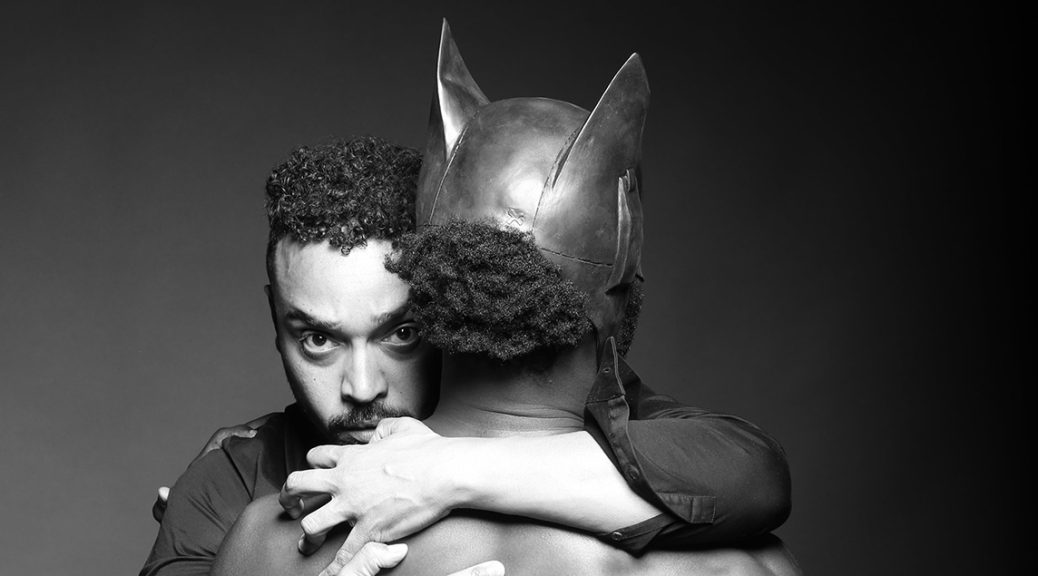
For Black Boys Who Have Considered Suicide When the Hue Gets Too Heavy, is a brilliant production about being male and black with all its pros, cons, its comedy and utter tragedy. It highlights what you would not know if you were not part of that community and the unjust treatment given to general human beings. It looks at each character, their personal issues, past, present, future, the question of masculinity and masculinity as a black man and completely celebrates the community, through dance, music, literature, history.
Each performer is almost a principle character to highlight differences, similarities and to squash away stereotyping. We have the hard character who is angry at the world, the studious and book smart one, the shy one who has also struggled with whether they are black after being brought up in a white community, the queer man who still hides in the heterosexual shadows and so on. While quite simply laid out, when we get into their stories, we realise they have experienced things that we would never expect. Domestic violence, sexual abuse, physical abuse. This highlights how the characters are not just 1 dimensional. They have many layers.
The performers were amazing – with genuine chemistry, effortless performance and tongue and cheek fun, these men seemed genuine friends and as if we were watching in on a group of real people in ordinary life. Only when there are dance cut aways and theatrical elements, do we remember that this is a production.
The elements of dance and physical theatre was astounding. It felt just and as if it fit in, with everyone involved and doing it fluidly, precise and mesmerisingly. Not only did it add to this brilliant production but it heightened it as an astounding piece of theatre.
There is a wonderful balance between these hard hitting stories and absolute belly aching laughter. Some bypasses those not in the community, but the joy heard from others in the audience who it relates to laughing, calling out – there was a comradery and a community setting in just this audience alone. And there was something for everyone – something every person, race, class, age could relate to and therefore, no one felt like an outsider or alone.
For those not in the community, this is a huge learning experience. We get to know of things from the black community, both positive and negative, and some is extremely shocking and un-thought of. I felt more educated and more of an ally than ever before.
For Black Boys Who Have Considered Suicide When the Hue Gets Too Heavy is equal parts hilarious, joyful, painful and hurtful – it is an education for those in the black community and for those not. It is such an important piece of theatre for every. single. person.
I’m going to start this by saying – this was a dream come true!
As a big fan of Doctor Who, when this came into my inbox, I screamed and jumped at the chance.
As most fans of something would be, I was dubious and a little concerned if I would like it. I invited my long DW friend along, who felt similar anticipation, mainly because unfortunately we have both lost favour of the recent series and were apprehensive on how they would play this out.
Gone are the times I remember where the Dragon Centre in Cardiff had the tiniest of exhibitions dedicated to the fandom, featuring a 10 minute walk through of things from the set. Gone are the days a long time after when the larger experience in Cardiff was prominent and I remember almost being in tears at how cool it was. This feels like a reincarnation. But one you are fully involved in.
The first thing to say, and we couldn’t stop saying it was the level of detail applied. I couldn’t to this day tell you the layout of this building, but everywhere you looked, there were tiny elements that if you blinked, you would miss them – a picture of a past companion, the general set and aesthetic, nods to past, present, future (little joke there for you), which found us constantly pointing out to one another and gasping with excitement. Perhaps lost on those who have come for just the experience, but certainly a brilliant addition for the die hard fans.
The narrative itself involved past characters, present characters, storylines we have already encountered, interweaved to create this exciting mission. There’s a fracture in time caused by a bomb in the 1940’s, but we need to help the Doctor to save the universe, making life changing decisions and sacrifices along the way (don’t worry – we all come out alive!)
We ourselves, seem to actually travel through time – we meet Davros, we meet Elizabeth I, Leonardo Da Vinci, the Gallifreyans, and all in different rooms and alcoves that are so exquisite in details. We are all engaged with; unfortunately (or fortunately!?) I seemed to have a face that said to interact with and so I may be biased, but it felt as if every person was engaged with. There were, like any immersive experiences, rooms we never saw. But you never felt as if you missed out and eventually the pieces of the puzzle easily fit together.
The performers stuck to their characters perfectly – improvisation techniques on point for any eventuality. A moment where the timeline of one performer didn’t match with the others in the narrative, she swiftly managed to pad the interaction out in character to fill that gap. Every performer was believable, whether in the spotlight or at the sides. True talented artists throughout.
And when the villains we all know get involved – it felt genuinely scary. Not many of the shows ever truly scared me, but confronted in person with the Weeping Angels, the Daleks, Cybermen… and many more – my god, it felt as if I was really running for my life.
For any Doctor Who fan, this is a must. For anyone who wants to have a genuinely exciting adventure and be surprised at (often literally) every turn, this is certainly for you. I felt transported and never wanted to leave.
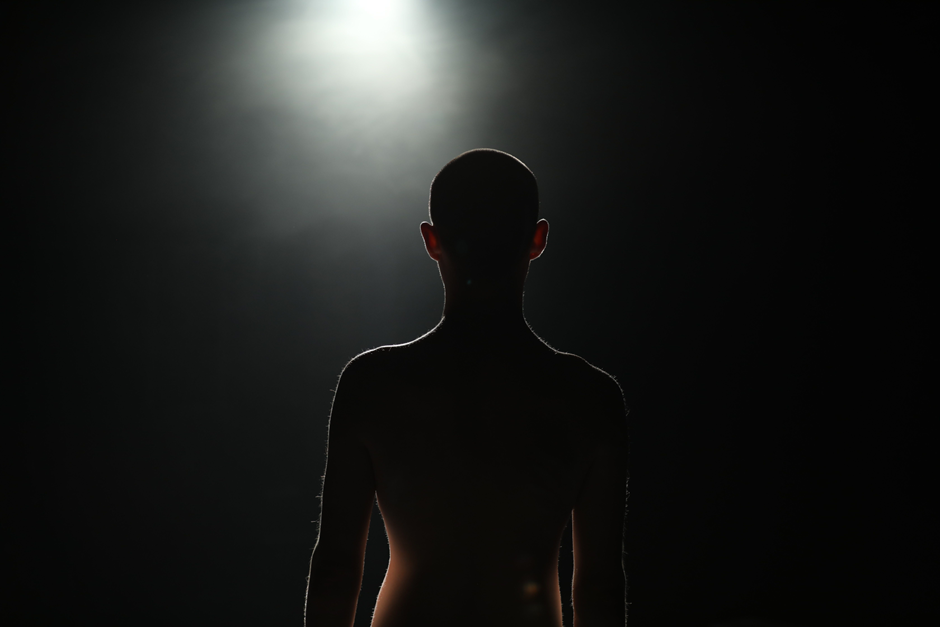
While the seats are still filling, and the last of the audience are rushing in for the no latecomers policy, suddenly someone is on stage. In the darkness, a faint red frame on the back wall, with his back to us.
It’s a wonder whether anyone has noticed him, with chatter still continuing, but the show has begun, and there is a eeriness about this foreboding body.
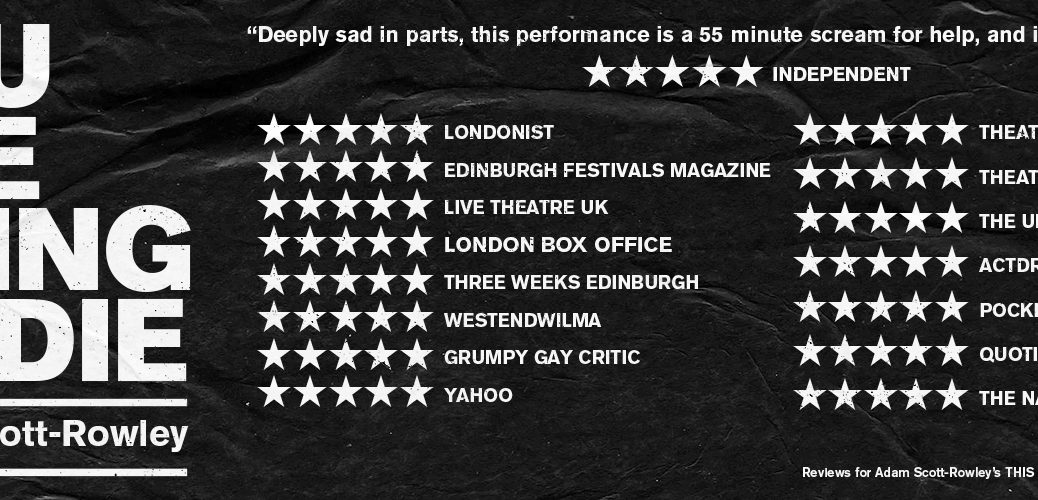
Akram Khan delivers some of the most interesting, dark and unusual dance productions. This is no different with Kaash. With elements of contemporary dance, influenced with religious, cultural and rhythmic dancing and gestures, the production delivers the deep, dark and at times frightening expressions of Hindu Gods, black holes, creation and destruction and much more.
The colours of the production are earthy and naturalistic – with browns, reds, black and whites highlighting the dancers and the stage itself. It is calming at times, making you feel grounded, and others frightening.
The sounds change from heavy drum beat, to fast paced speech in another language, to naturalistic sounds like wind. However, there is a sense of alienation theory when the sound is cranked up; it gets louder and more foreboding and sounds a little like when a killer is about to appear in a horror film. There is no sense of an end, half expecting something to make you jump but the crescendo is outlived and we are left in bewilderment.
The dancers, using leitmotif gestures that come back and forth throughout, are somehow gentle yet fierce with their movements. Effortlessly sliding around the stage, they make it look easy, but the beads of sweat show otherwise. There is a moment when we see one “breaking down”; physically it is as if she is a robot that is malfunctioning and the movements and way she contorts herself is equally natural and unnatural. It’s difficult to watch but you also cannot take your eyes away.
For a 55 minute piece, Kaash felt like an enternity of a devious world but equally making us want more. It is dark and scary but fascinating and awe inspiring.
There really is a lack of basic, physical theatre performances these days. It is encompassed with narrative, but this is usually to explain the physicality, when the physicality is what should be bringing the story across.
With, You Heard Me, we have returned back to the basics and effectiveness with this.
You Heard Me is the true story, by artist Luca Rutherford, as a survivor of sexual assault. On a run, during the day, Rutherford was attacked and if it wasn’t for her lack of silence and fight within her alerting to a passerby, her story may have ended very differently.
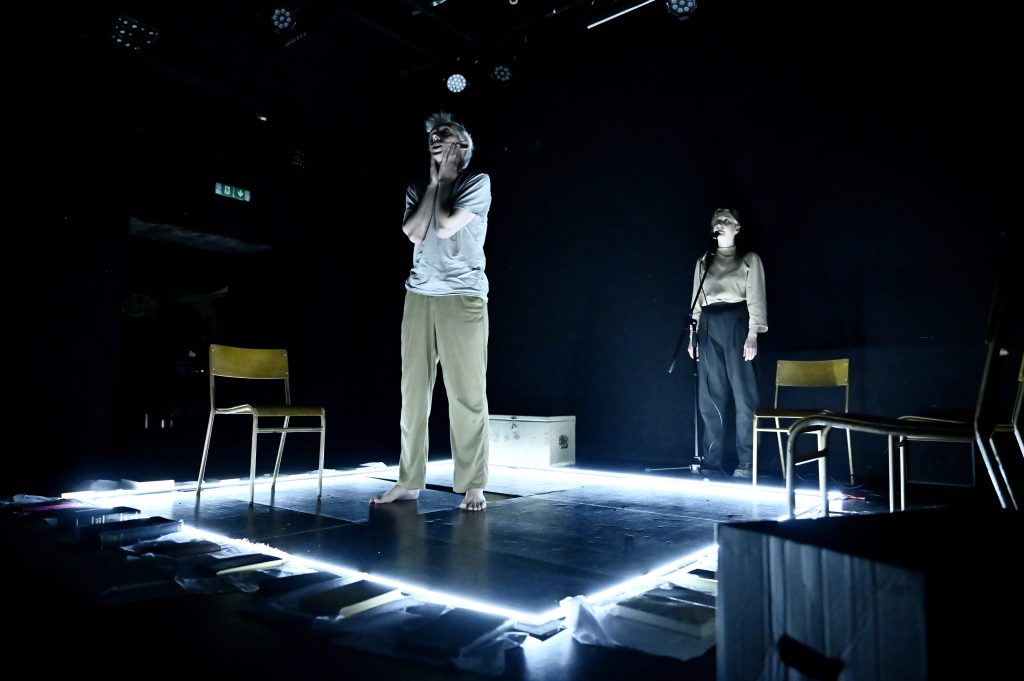
The performance is a multi-media performance, expressed through a combination of physical theatre and soundscapes. As previously said, this was interesting as it is rare that artists embark on a purely physical theatre production to express their story. Rutherford almost exhausts herself with her energy and rhythm throughout the piece, showing her fight and her struggle under the physical prowess of her attacker.
However, while there were commentary, changes in lights and adjustments to the stage, it felt very one note and I felt I was waiting for the change, for the WOW moment, for that theatrical power.
By no means do I want to tread on what is a true, emotional and sensitive piece and what I found so brilliant about this was that this was not with an ending we realised. She survived, she got away, but this could have been a lot worse, a lot more like the, unfortunate, tales we often hear. And this made what she expressed powerful to all those female identifiers, or in fact anyone who unfortunately may find themselves in a similar situation.
You Heard Me had a clear message: to fight, to be loud, to not be quiet or ladylike or everything that is impressed upon us, especially in these fight or flight moments. But I did feel that perhaps some different levels to the piece would add to its power as a theatrical performance.
13 or 14 years ago, while studying Drama at school, I was introduced to the world of Melodrama and in particular, Maria Marten. We investigated the parallels between the real life story and its dramatisation for entertainment, performing the show ourselves for both audience and coursework purposes. So when I saw the press release for this, I was both excited and anxious to revisit a story which helped me continue my love of theatre.
The Ballard of Maria Marten is based on the true life events of Maria who, growing up poor, meets and falls in love with a series of fortunate men. Eventually, one of them turns out to be awful, physically and emotionally abusing her, leading to her death. Don’t worry, this is no spoiler – the famous story is known for it’s heroine’s unfortunate ending and a big reason it was taken for the stage. This version looks more at Maria’s side; her background, what she may have encountered, her growing smugness at the attention from rich men, desperately wanting love, when eventually, former failings at relationships leads her to be gaslit and abused. In her story, we also encounter other characters to build this back story, highlighting friendship, family, love and womanhood, motherhood and the difficulties of the era.
Eastern Angels have smartly moved away from the melodrama element. The closest we tend to get these days is the Pantomime, and so, while I would have been intrigued to see a modern day melodrama, this story is taken and performed sensitively and down to earth. It is mostly played straight, with the occasional joke or slight kooky characters, but you for sure believe in them. Once we get to know them and become part of their friendship, the end is all the more emotional and painful.
The performers are all women, and they choose to dress up for the first two suitors. This is effective and genuine and so as we see the relationships progress, it makes her heartbreak and abuse become even more dramatic. Her Father and her final suitor are not shown. While the Father isn’t seen as abusive, it highlights how out the picture he is to her and her life. Not giving the “villain” a face is also effective – Elizabeth Crarer, who plays Maria, uses great physicality, reactions and facial expressions to express his abusive nature and it makes it all the more frightening and disturbing, adding to her deterioration.
There is a huge element of girl power and girl friendships in this piece. My memory to some degree is hazy on both the story and the melodramatic version, but adding these characters makes the show more real. And they are all different as of any friendship group. The amazing thing about this version of the story is that we can relate, and with its reflection on events in the last couple of years. We can relate to a friendship group; of them growing up together and coming of age both together and as individuals. The elements of domestic abuse and murder also pick up on issues in the last few years; of potential home abuse increasing through Covid-19 and the sad death of Sarah Everard and others that have come to the surface. Media makes this shocking and tragic, as it really is but not something, sadly, new.
There is a lovely country feel to this production: in Wilton’s Music Hall, the perfect setting for a play set so long ago. The old furnishings and patchwork walls add to the idea of the countryside, with the wooden barn silhouette on stage – fits as if it has always been there. There is recorded music, music that feels very folk but often they will sing the ballards themselves, harmonising beautifully. Unfortunately sometimes the words were lost to the echo of the space which was a shame when it was so beautiful. They also make their own sounds of objects, babies, horses which adds a real sense of authenticity as opposed to recorded soundbites.
The Ballard of Maria Marten is reclaiming back her story. There are no villains in top hats and capes or over the top gestures as was originally meant by turning this sad true tale into a production, but all the gaps in between are filled in the story with this heartfelt, emotional and at times, funny retelling.
In a little black box in Wimbledon, we encounter the coming of age LGBTQAI+ tale in 80’s America. Next door is a LGBTQAI+ club which I have been to before, and so having this show next door seems hugely apt and hopefully, educational to young people of the community who may walk past and be intrigued by the stand out poster.
The Night Larry Kramer Kissed me, written by David Drake, is a critically acclaimed off-broadway show. Based in 80’s America, we travel through one man’s self discovery in the gay community, awoken by Larry Kramer’s The Normal Heart, showing how Theatre can awaken someone’s passion but also make them question their very existence. John Bell’s (star of Outlander) character uncovers what many men of the LGBTQAI+ community discovered during that time – the impact of the AIDS/HIV pandemic and the fears, concerns, and lack of education around it during this time. It looks at his own discovery of the community and his sexuality, yet also on protesting, speaking out, love and loss.
Bell is in general just perfection. Each word, syllable and speech is perfect, diction and projection on point, and every part of the story he tells feels like it could be autobiographical. He addresses each of us in the room, not afraid to make eye contact, and with such a small theatre, this is important, making us feel included in his story; as if he is just recounting it for the first time with all its elements and emotions. Finding out that Bell is only 24 years old shocked me. I know him well from the show Outlander, where we practically see him grow up as it is, but the maturity and the earnest nature he brings to the character made him seem way beyond his years. While I was also not yet born during this time in history, Bell being much younger than me also shows how in depth he has clearly looked into the history and the impact it had on people of that time. He is genuinely heartbroken; genuinely enjoying life as he discovers who he is; and every aspect of him is fabulous and in keeping of the culture both of then and now. He also flips through ages – a time when he is just a little boy is mixed in with his first kiss as a teenager to finishing as a young-middle aged man. And each mark of his life is clear. A brilliant feat in itself for a performer.
The set was minimal but effective – big crossed metal pipes, stretching diagonally to the sides of the stage, later lit up, make us feel like we are in a city, with its harsh architecture. This is softened by many candles later, electronic, but effectively made to look as if they are really flicking. Subtly put in nooks and crannies are the historical coloured handkerchiefs, symbolising gay men’s position when it comes to interaction with each other, sex and love. A brilliant moment is when Bell is singing/rapping to a song as he discovers different men in a club, pulling out the handkerchief’s and describing each of them, climaxing to an outburst of fear at those who are HIV positive is poignant, fun and eventually heartbreaking. We hear much of the support given in the community and protest at the time, but little of how some turned their back at some point through fear and lack of education.
In a time where we are all fearful of a virus we at the start knew little about, there is some element of reflection on how the community must have felt at the time. However, an element of fun in put into this production, with scenes in clubs and gyms and meeting different people, lovers and how sometimes it culminated in the death of a person puts this on another level. To live life, only to die of it in the end.
Finally, a comment on the costuming – on point for the era, Bell evokes images of Freddie Mercury and the leather fashions of the community and of the 80’s. Eventually, with tee shirts of the AIDS/HIV support networks and protests at the end, this and the telling of this tale is a blast into the history of such a big part of this community and of history in general, something that even today still feels swept under the carpet.
The Night Larry Kramer Kissed me is such an important production to see, not only to learn a impactful part of history but also of a community that, in the 21st century is still facing hardships and censoring. Bell only makes this so much more poignant with his natural and excellent performance.
Creating opportunities for a diverse range of people to experience and respond to sport, arts, culture and live events. / Lleisiau amrywiol o Gymru yn ymateb i'r celfyddydau a digwyddiadau byw