
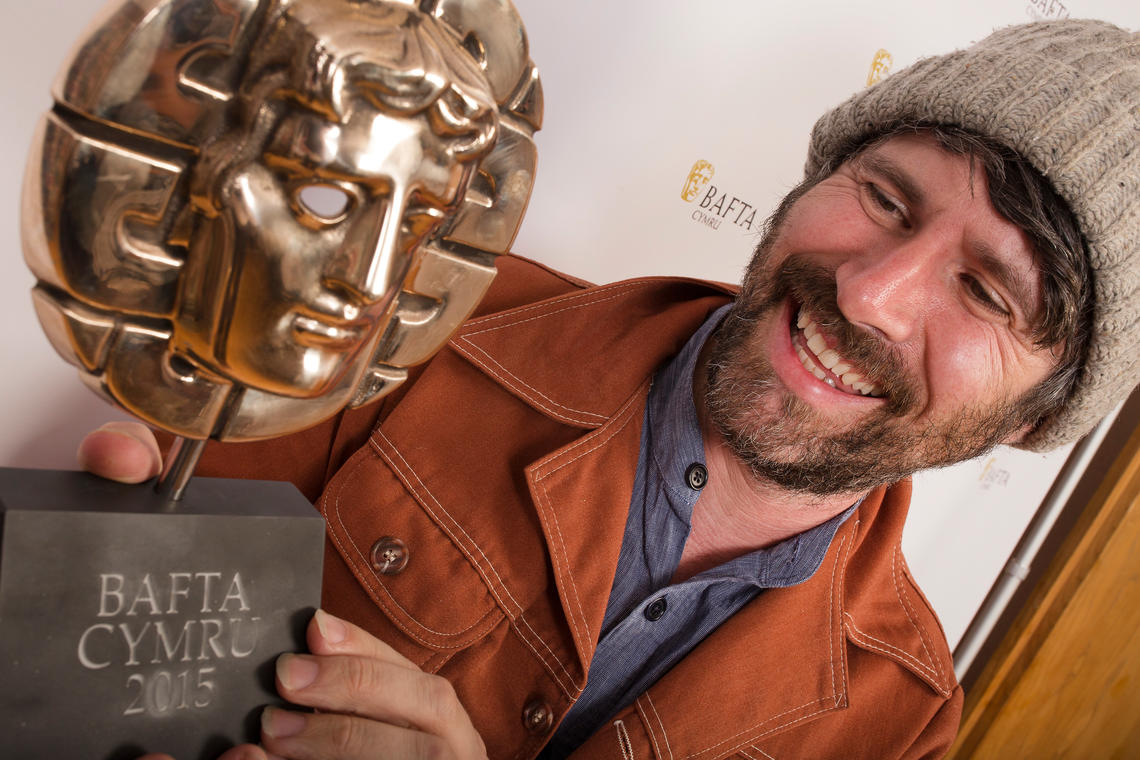
Gruff Rhys winner of Original Music Set Fire to the Stars
With a carpet as red as the Welsh dragon, the streets of Cardiff opened up to support the glamour and talent that has come out of Wales for the 2015 BAFTA Cymru Awards. Stars that are known among the TV dwellers, some who have reached the realms of Hollywood and even celebrities that fly the flag for this wonderful country were out in their glory in the centre of the capital.
Seeing and getting the chance to speak to the likes of Scott Quinnell, Charlotte Church and Russell T Davies was a joy but also a warm sense of pride was evoked for someone who comes from a Welsh mother but predominately studied and trained in this creative country that is not given enough acknowledgement in the industry.
It is all well and good celebrating the United Kingdom as a whole, but to celebrate Wales specifically is a triumph. Underestimated for its acting, musical and writing talent, we have brought out fantastic shows and films from the BBC, S4C and Pinewood Studios.
This especially comes from conversations I have had with those I know in other parts of the country. There is an attitude that this event is nothing but a lower version of the larger event – a laughable act to celebrate Wales. But how can this be? Do people so easily forget that majority of our programmes and creative people come from Wales? And that this is only growing.
Due to this underestimation of Welsh talent, the focus I wanted to find from talking with these people was what should young people be doing in Wales to get into the industry? Many move away to find better opportunities, and while I moved myself, I was under no illusion that there were prospects in Wales, but more to experience somewhere else for a short time.
Russell T Davis especially was so interesting to speak to. He recommended that the industry is hard work but just to persevere. Writing, especially, the key is to just keep writing. And while this is specific, it could be said that this is great advice for everyone. Working hard gets you everywhere and within a country that slowly is becoming more recognised for the talent it produces, the industry will become harder than it already is, and hard to break.
Other conversations, mostly with actors gave opinions that Wales is a great place for the young in the industry. With fantastic institutions, the way to train and get involved has changed from the days of leaving and finding the hard work of the big smoke that is London. London and England no longer is the be all and end all of the industry but nor does the advice to work hard and find these institutions means that the industry is a lonely place where you look out for only yourself. It was said that finding a group that supports talent such as drama classes or dance classes can also open avenues. Some fall into the industry from these outlets but ultimately, with Wales being such a small place, these training classes can open avenues which still will rely on hard work.
This patriotic and beautiful celebration gives much food for thought, especially for those like myself who moved away to find herself never far from Wales and returning. London is beautiful, it’s fantastic but it is vast. Sometimes lonely and difficult in this vastness. And while Wales is becoming more and more recognised for fantastic talent and may one day will become as vast as London, the warmth and patriotism of the country at such events shows that the industry does not need to be so wide and for the solo, but can be homely, welcoming and so close-knit as Wales as a whole, in my experience, has always been.
All posts by Hannah Goslin
Review The Waiting Room Arts Theatre by Hannah Goslin
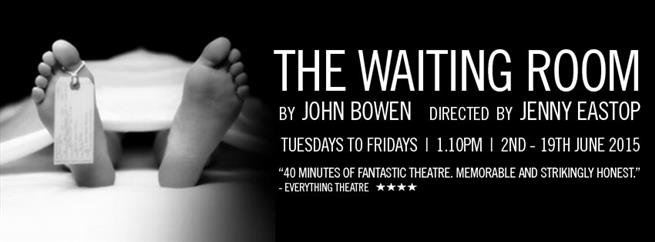
Arts theatre has created a great concept with some lunchtime theatre. Available for around 40mins in a lunch break, the top floor of this bohemian centre is transformed into a place for people to experience a journey in their break from the daily grind.
I chose to attend this with an interest to the Arts theatre that I had not yet attended and to experience this unique and very versatile idea.
The Waiting Room consisted of a small cast, with the narrative seeing the relationship and mystery of two strangers meeting in a dingy waiting room. We can only assume this is of a doctor or hospital waiting room, until it is revealed in speech of a comparison. This continues the mystery. The two character’s share a unique similarity, one that climaxes the plot. Without revealing this, I found that the narrative was interesting and kept us hooked with essentially a 40min chat. However, when revealed, the mystery isn’t as interesting or climactic as would first appear, struggling to compliment the first three quarters of the storyline.
The main two actors are wonderful, Beth Eyre and Mark Rush. A well spoken, rich woman who lives off money and a male sales assistant or ‘buyer’ for an department store. Both character’s were well executed and complimentary of the narrative. However, an additional two character’s in the form of the ‘receptionist’ or ‘assistant’ and the cleaner were introduced. Till the mystery ending, it seemed as if the receptionist had little purpose – with only 3 appearances and less than a few words spoken, unless an important asset at the end, it seems the main character’s could have directed their conversation to an un-answering body. The same was felt about the cleaner who I did not notice till pointed out; to the side of the room forever shining the Arts Theatre’s mural. It seemed that she was there for a sense of comic relief with a thick broad Scottish accent and laziness despite her comments of being the best cleaner. It felt unneeded and unnecessary and the break from the intense conversation did not gel well to the process.
Overall, The Waiting Room was an interesting concept. The narrative was interesting and the reveal gave an emotional sense, however there was a feeling that there was more to be given and something of great potential.
Review The Elephant Man Theatre Royal Haymarket By Hannah Goslin

A story in itself that is legendary, The Elephant Man is a true tale that has been told throughout time. With legendary films starring John Hurt and Anthony Hopkins and other performances through time made on the famous man from the 1800’s, the new resurrection in play form has already graced the stage on Broadway; both with Hollywood star Bradley Cooper, it has now made a boom in London.
For those unknown of the story, John Merrick was a true figure in 1800 society who suffered physical deformities from birth. Beginning in the work house and later in the legendary Victorian side shows, when cast out by his carnival ‘partner’, a compassionate and intrigued medical physician, Frederick Treves, takes him in to the London Hospital for analysis. Becoming friends, Treves helps him with funding to live a normal life and give him the opportunity to enter into society, till his eventual death.
Beginning this extraordinary tale, the design of the set was minimal. There was not much need to change the scenes, just simple additions such as a table and chairs, a bath tub and the use of curtains. Lights were simplistic, and while the costumes were true to the era, it could be easy to fall into the trap of making this more realistic to the performances of the time. However, music and sound were used to highlight the beginning and other elements, creating an eerie atmosphere and something relating to the time period but also something modern – this relating to the stage set up once again in avoiding making this a 1800’s production.
What we are all waiting to hear is of the famous Bradley Cooper as Merrick. There is always part of me that is cautious and at times unwilling to like it when large stars take the leading role. While bringing in bums on seat and revenue to the industry, and of course, at times I have already been proved wrong with stars such as Imelda Staunton in Gypsy, it is also a wonder whether this is blocking the way of potentially more talented rising stars. However, like Staunton, Cooper is more than a welcome addition to the role. When someone is able to act as profoundly and incredibly as he does as Merrick, his already abundant stardom is instantly forgiven. With no special effects, lighting, costume or prosthetics to highlight Merrick’s deformities’, Cooper contorts himself from a ‘normal’ human figure, to the character, while Treves speaks from his medical examination of each body part. While some parts of the body as missing such has his enlarged head and sagging skin, this is forgotten as his contortion is so incredible that you can almost imagine it. With his progression to talking and learning the ways of life, Cooper’s British accent is perfection and even more so interesting with the infliction on the ability to speak that Merrick had – his different intonations famous for their unusual expressions.
It cannot be forgotten that the other performers are just as fantastic without the opportunity to completely transform their figure and voice. Alessandro Nivola as Treves shows a stiffness yet much compassion as the character and his love and care for Merrick is emotionally expressive. Next to Cooper, his performance could be understated, but the two actors bounce off each other in a way that we can only imagine the character’s friendship in reality. Patricia Clarkson, another American actress and one of my favourites brought her comedy and, like Nivola, the emotional friendship that the character gains with Merrick. It’s hard to hear the take on the negative character’s with such compassion shown in these positive ones. Only criticism that can be made of the production is the lack of projection of all characters. Not only those who formed articulate pronunciations, Cooper also struggles with Merrick’s affected voice. The large structure of the Haymarket gives struggle to this and at times, words are lost. Perhaps microphone’s are needed, but a personal argument of mine is unless it is for a purposeful effect, theatre needs to return to its’ original form and training of performers to allow their voice to reach their audiences.
The Elephant Man brings everything to the stage with the slight feeling of modernity. Cooper’s performance not only astounds in the sense of showing true acting talent, but the impeccable ability that the human body and one with exceeding talent is capable of. Not only emotional and heart wrenching, this performance also brings realism and truth of such a difficult story.
Act For Change, National Theatre of Great Britain by Hannah Goslin

Diversity in society is a huge issue to consider. Everywhere is trying to be more encompassing to disabled members of the public, there is more than ever a stamping out of racism and discrimination in all senses.
But why, while much of it is now law, does the arts sector, and notably for this blog post, the theatre, is it not the same?
Act For Change has been alive for around 1 year now, set up by performers who came from what would be known in society as ‘minority groups’. This relates to gender, race, sexual orientation, ability and so on. Its’ aim is to stamp these discriminatory habits even more out of the theatre world.
With testimonies, a Q & A challenging the NT Artistic Director, discussion from a panel and Q & A with the audience, ending on a video of more of those in the industry discussing the subject, AFC covered all basis. And made a real imprint in this industry.
Not enough is being done in encompass disabled performers. While across conference it was a valid consensus that there is an argument of whether the industry should make more theatre showing the stories of individuals in all these sectors or whether casting should be looking for sheer talent and not who they are. While it is a fine line, it seemed that less is being done for disabled performers. Not many are an option, and not much theatre looks at their stories.
A perfect quote I found from the night said, ‘If you want to tell a story you have to tell your own story’.
Different ethnicities, genders and orientations felt the same. Theatre is a way of breaking barriers and addressing taboos and why, on that note, should issues not be addressed that are found in these communities? But why also, are these communities not also celebrated in theatre more? Let’s be honest, many other cultures are more vibrant and exciting that the tweed, tea drinking, white, middle class stereotypes that are continuously produced on stage. Why do we not see this?
Many performers also felt that there was the issue of not being cast because of who they are. Where are the character’s that just happen to be gay? Or female? Or Asian? Does this really need to be such a vital factor? There are gay bankers, female lorry drivers, Asian actors! Why is it that people cannot focus on talent and not on the view of the person entering the room.
Conferences just like these are important to change opinions. Since the blunt interview with the NT artistic director, there has been a change where more theatre is now going to be brought to the NT with a basis on disabled stories and performers, what a difference this makes.
Theatre needs to be not only bring realism and for something for people to admire, but it does need to bring escapism. It needs to stop being run by the elite, and more representative of the people.
More info on Act For Change can be found here;
http://www.act-for-change.com
Review Mondo Galactica London Burlesque Festival by Hannah Goslin
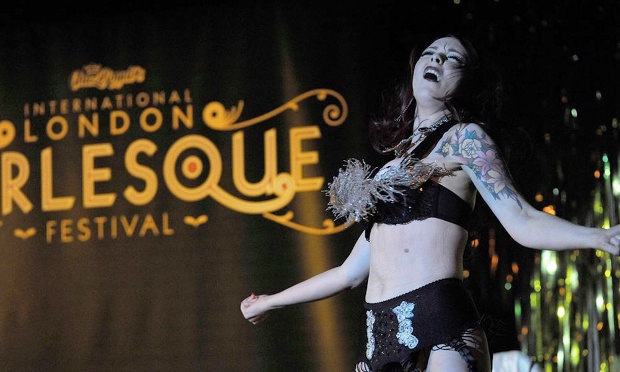
Mondo Galactica
London Burlsque Festival
Dingwalls, Camden
As is common and unique about Burlesque shows to other performances is the intimacy. For those who are used to seeing burlesque and enjoy this element, the idea of seeing more and more flesh in such a small venue would only encourage, but for others, it can be daunting. Bringing a Burlesque virgin along with me, I was keen to employ my knowledge as a trained burlesque performing (who is awaiting enough time in her current wonderfully busy life to reprise her alter ego for the public) but aware that this could open a new horizon for him.
Choosing Mondo Galactica, I thought that this would be an easy and approachable theme to introduce my geeky friend to. But who was I kidding? There’s nothing shy, retiring or otherwise not in your face (sometimes quite literally) about any burlesque show.
Performers need little else but their talent in this unique form of artistic expression and dance combined with their glamorous and at times comical costumes and make up. Mondo Galactica was one of many London Burlesque festival shows, this specifically catering to the nerds among us.
With an abundance of metallic, shiny, silver, green and so on, we were transported into many areas of cultural Sci Fi. Some performers linked to identifiable themes such as a fantastic Boylesque group, where the men very differently to common Burlesque/Boylesque took items off but not to be naked, but in the way of transforming into different nods to classical Sci Fi, such as the evolution of man and Planet of the Apes. Their synchronicity and enjoyment of their elaborate scene changes did not take away the lacking in the lack of clothing and skin on show. This example trumping those who profess Burlesque acts as glorified strip routines.
Other’s showed strip teasing Robots or Space cadets, including one with a nod to Star Trek, yet all had a versatility and different way of alluring the audience. In this industry and especially this specific show, it is hard to compare acts with the abundance of ways that it is possible to entertain in a sexy way , and of which was evident in the different dance techniques and interactions with the audience.
Finally, one of the most important and fun part of Burlesque shows is the audience interaction. A short and amateur master class for these untrained willingly volunteered audience members showed us their version of what they had – shaking the booty, bumping and grinding and interaction with the rest of us. Encouraging us to clap and cheer, the continued encouragement to vocally and physically participant in this show came with this easiness to relate to the current people on stage.
While specifically catered with the theme, the London Burlesque Shows or Burlesque shows over all always have something for everyone. Whether participating or not, this welcoming community will turn anyone into a new view of life – my friend, with not so many words quoted in saying ‘You know what? I REALLY loved that!!!’.
Review Gypsy The Savoy Theatre by Hannah Goslin
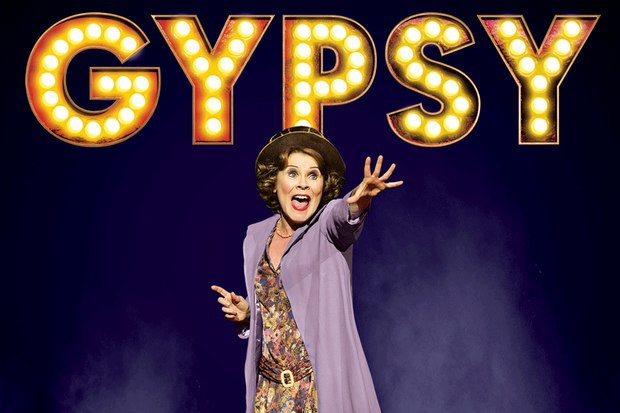
High up in the God’s, this wonderful theatre (The Savoy) is currently housing the renowned and critically acclaimed ‘Gypsy’ starring Imelda Staunton. With tickets selling fast, it was understandable that such a lengthy theatre in height was filling up every night, and so my interest continued escalating.
The story behind Gypsy is based upon true events of the Burlesque actress, Gypsy Rose Lee. Taken from her memoirs, the musical sees the hardship and struggle of Louise (later to become Gypsy) as the shadow of her performing sister, and her determined Mother, struggling to keep grips with her youth and dream of stardom. Events take place, where Rose and Gypsy happen to be in the right place at the right time to perform in the House of Burlesque, where Gypsy is created. This tale of triumph, difficult beginnings and relationships hits every nerve and every feeling.
The staging itself was beautiful and very clever. Scenes appeared and disappeared with a never ending back stage, floating into the shadows and were simple yet effective in illustrating the different areas. No expense has been spared on these ever changing scenes which are rarely used twice, to bring the sense of the character’s constant travelling. Lighting beautifully enhanced specific characters and areas, drawing your eye to the correct moment and to the specific details of the performance. Costumes were also relatable to the times and enhanced each character’s personality correctly. The end costumes of Gypsy, are astounding and lavish – what every vintage loving girl dreams of wearing (including myself!).
Of course, a review could not be written without mentioning Ms Staunton herself. And where could I start? Well known in the acting world, some may have seen her in the likes of Vera Drake and the more contemporary, Harry Potter- it is well known what a fantastic actress she is and the passion and creative skill she has for her characters and projects. However, to see her as Rose, the mother in Gypsy, is something different. Something spell bounding. To quote a patron I heard on the night:
‘I knew she could act but… I didn’t know she could do that! THAT was … something else!’.
Staunton has what myself was unknown of, and that is an incredible voice! Singing every song sent shivers down your spine; her final song, ‘Rose’s Turn’ raised every goose bump and every hair.
Laura Pulver, as Gypsy also brought an amazing depth to the show. Perhaps easy to be in the shadow of Staunton, she makes Gypsy her own and stands out in her own right. Known for shows such as Sherlock and Robin Hood, Pulver brings a completely difference essence to the stage than what you see on television. Her dramatic change from mousey Louise, slowly to sultry Gypsy Rose Lee is fantastic in her change of personality, look, body language and even change in her voice. She shows, simplistically but in a very talented way the growth in age and maturity of the character, so convincingly that it is hard to forget this truth when you feel as if you are growing with her.
If you do anything with yourself till November, make a date with Gypsy. The musical will take you under her spell as Gypsy Rose Lee was known well to do herself.
Review Golem, 1927/Young Vic in the West End, Trafalgar Studios By Hannah Goslin
Much like most of my London reviews, my horizon is slowly being expanded to the different theatres this City has. Trafalgar Studios has been known recently to house actors such as James Mcavoy and Jane Horrocks in small and intimate shows. The studios itself contains two spaces, which contain two different shows at a time; something unusual for the West End. There is a sense of the Western Studio at the WMC in this theatre, which is homely and versatile.
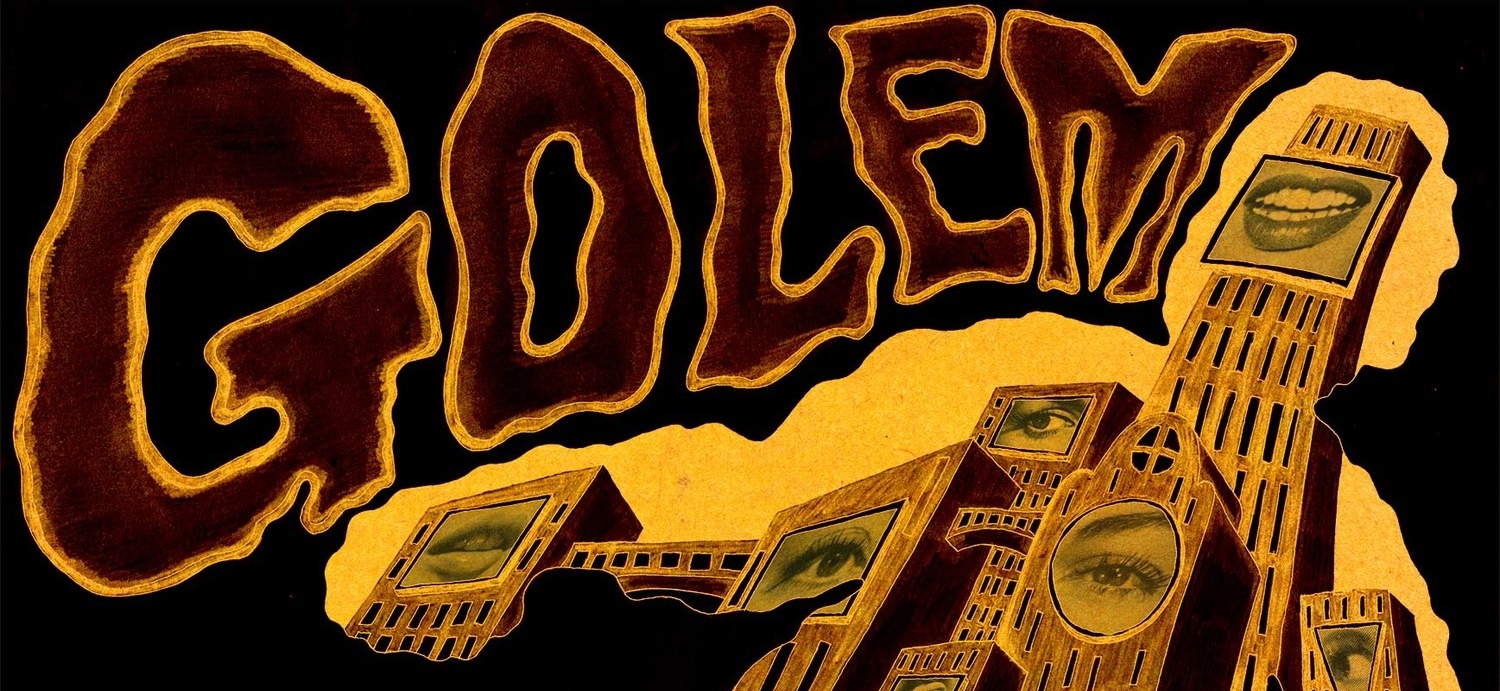
Golem intrigued me initially by its’ marketing. It’s weird and wonderful designs seemed out of the ordinary and with a transfer from the Young Vic, there must be something worth seeing in this show with a name that splits parties on its’ pronunciation.
Golem (‘Go-lem’) is a story about an almost alternative world to ours where the acceleration of media, advertisement and gimmicks quickly take over our lives and control us, when in reality we think that we are the ones in control. This is represented in a clay monster-like creature that is used as a servant to suddenly switch the juxtaposition when influenced by the surrounding society, ultimately subliminally telling us how to live life.
What firstly struck me about this production was the artistic aspect. Walking in, the screen already contained a slightly uneasy collection of drawings of families and persons, accompanied by an eerie soundtrack. When the show began, this changed to this alternative reality world, with a drum set and piano on stage played by two performers, dressed in whichever character they needed to be. There was a reminiscent of alter-reality films such as Hugo, Repo Men and In Time crossed with written fiction such as 1984. However, the artistic aspect and some writing had a sense of Tim Burton, with bright bold colours in costumes and set, darkened make up and strange outfits and hair and the inclusion of contemporary references and comedy.
This continued through to the fantastic set – the performers interacted with cues on the screens which interacted with them when needed. This was extraordinary to watch as we delved into a 2D- 3D world where this alternative world petered on animation and real life. Their placement within the set was so exact that there is a skill to identify in being able to bring across such strong characters and interesting storyline while finding the exact point on stage.
The performers themselves were not only some of the most talented I have witnessed, but managed to bring hilarity and comedy to the narrative but still contain this element in serious scenes. Each had an unusual voice, expressions, body language and stance which was held consistently. Turning of heads and interaction with each other was synchronised, again, reminding much of Tim Burton’s animations. This continued through the use of some character’s doubling up – their talents continuing to shine through how easily they adapted to create new characters while still having the overall common stances of slight hunches and strange sideways facial expressions.
This production is really hard to review – not due to any negativity but more to the abundance of positivity. As a performer, my tastes in what I like to perform in are very selective. While I love scripted pieces, Shakespeare, the more common and likeable, there is a certain feeling of excitement and butterflies in the weird and wonderful; the taboo subjects and those contesting a point. Golem is exactly all of this. Long has it been that a production took my breath away as much as this, and inspired me so much. It’s slowly becoming apparent in my search for shows to watch and review, for entertainment and for interest, that the West End is becoming more open to such theatre and perhaps performances such as Golem are exactly what audiences need to take a leap on.
I only wish that I could really do this production justice. It’s everything you want and everything you need.
Review The Curious Incident of the Dog in the Night-time, The Gielgud Theatre by Hannah Goslin
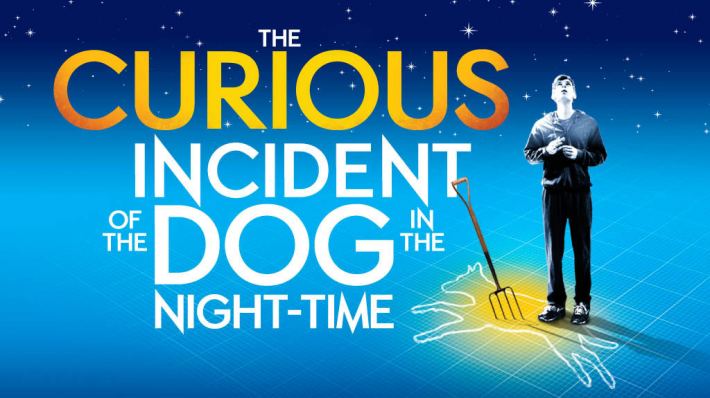
The Curious incident has become a well-known story not only on the theatre circuit but back to its’ origin of reading circles. As a kid I read the book and fell in love with it, perhaps not understanding some content until today.
The Story of Christopher – a boy with autism whose family has been hit with different upsetting events, and how his life changes with the death of a local pet dog, we see his life from school, to family, to how he copes with the outside world.
It is astonishing that the National Theatre were brave enough to take on such a story – autism being a prevalent disability in our society, the risk of taking on this story in a gentle and respectful way was not only courageous of them but so right to do, to show the difficulty that people with this disability undertake on a daily basis.
The set itself designed by Bunny Christie was beautiful. Reminiscent of The Nether that I saw the other week, there was a sense of futuristic and interchangeable worlds with the use of a grid like box created by projections. The scenes changed, the technology used throughout seemed simple but were so mesmerising, and the performers were evidently well talented to take this within their stride. Simple props were used but used well to create a sense of chaos up to the end of the first half and the second half using larger stage changes for more impact compared to the minimalist scenes.
The main actor playing Christopher, Graham Butler was beyond words. Being able to bring a realistic and not taboo-comical take on someone with a disability can be hard to do and was done so well and, as said previously, with a lot of respect. He was able to bring a tear to the eye of the audience with his character’s contrast to those around him, with how hard he finds situations and events. The struggles and viewpoint of the situation were shown well and really struck a chord. The fellow performers and their more naturalistic roles took this in their stride as well, some doubling up at times and creatively being able to interchange with these, at times letting us forget that they were the same person. As a collective, there was a sense that the intricate nature of the performance needed them to be synced and supportive of one another – the use of physical theatre was in abundance and at times the need to lift and support performers horizontally against walls, flipping effortlessly and smoothly over into different directions was beautiful and well executed; a feat only possible with such a strong cast.
An usual take on this production was the use of live animals. My knowledge of laws around this within the theatre world is naive and so shocked and confused me slightly. It was evident that, while still in character, the performers and stage hands were very careful and gentle with the animals during their very short period on stage. As an animal lover, this again struck a chord with me, helping the tears of emotion from the production flow more freely with happiness and with the beautiful and gentle interaction. The brave nature of using these in a live and continuous performance was also brave but knowing their take on the subject, it was known how well they were treated.
Curious Incident exceeded expectations. So perfectly executed, it is hard to come away without feeling any emotion and awe for the production. It is certainly a show that could be seen countless times without boredom ensuing and something that must be a bucket list tick for everyone.
Link to a short documentary on the set design of the production
http://www.bbc.co.uk/programmes/p01jydtx
Review Women on The Verge of a Nervous Breakdown The Playhouse by Hannah Goslin
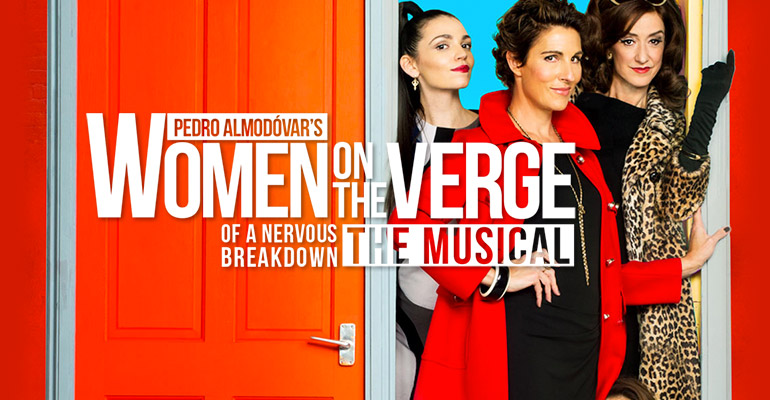
The critically acclaimed and possibly controversial in the West End sector, Women on the Verge of a Nervous Breakdown was a production I was very excited to see. Announced recently with an early closure, this news worried me in the contrast to the good comments I had heard about the production and so there was a slight anticipation to what I was about to embark on.
Women on the Verge is based on a Spanish film (Spanish: Mujeres al borde de un ataque de nervios) written and directed by Pedro Almodóvar. The musical is still based in Spain but with a range of English dialects, we see the story of several women and their lives due to the impact of significant men; 3 women sharing a cheating middle-aged man and two younger women over the dream man. While this sounds an extremely feminist and almost man-bashing in its’ narrative, this comical musical professes much for both genders and orientations, hitting on some stereotypes in a funny way.
Returning to my earlier comment of being slightly controversial on the West End, Women on the Verge dared to bring a new and unconventional musical to the difficult and notorious scene where Musicals consist rarely of productions that are not well-known and usually of whose music everyone already knows, ready to sing along to. As someone who is not hugely into musicals, but is finding slight entertainment in them recently due to the West End, this satirical and broad attempt at a West End musical was right up my street – the music catchy, with a Spanish twist which complimented my love of European and Mediterranean culture and dared to bring out a bit of atmosphere in such a small theatre.
The set itself was something new – minimal in content but very realistic, the scenes were interchangeable and cleverly done so – performers on stage handing each other items during the change, with the main actress (Tamsin Greig) at times looking confused, as if this World was some dream state for her in a split second. This was one of the many comical ‘leitmotifs’ that added substance to the performance. The use of neon and bright colours from the staging to the lights to items of costumes was simple yet very effective, giving a sense of Spain’s change at the time in the 80’s, still with influences of the 70’s and 60’s.
My main excitement was of the main actress, Greig. As a huge fan of this comedy goddess from Black Books, Green Wing and more recently Friday Night Dinner, I was eager to see how she transformed on the stage. And boy, was I not disappointed. Professing a beautiful and strong voice, it was unexpected and awe-inspiring to hear from someone who I have personally put down for just TV scripted humour. Yet she also did not disappoint on the latter. Her comedy aura was huge on stage and her sheer talent to bring the big yet the small little changes in voice, expression or even these in the background gave a sense of naturalism and genuine acting skills.
With such talent, it could be seen as difficult to stand to this on stage, but all the fellow performers managed to do so. Easily, they seemed to have escalated their manic character’s to compete with Greig’s and therefore, there seemed a bond and synchronicity on stage. For such a quick paced and hilarious performance, it is great to see how close and trusting they are as a company to help things run so smoothly.
Ending the show, Greig brought herself out of the character to speak to us, encouraging us to come again and invite others due to the closure. Her humbleness and honesty, as well as some personal humour in congratulating the men of the audience to undertake such a show and to all of us as a collective for embarking on something a little different to the usual West End, was warming and gave us more of a personal feeling to the performance than we already had, after easily relating to the content.
Men or Women, this show caters for all, whether it is the relatable narrative, the comical scenes or the unusual take on a musical, this is a show that would be a shame to miss. So much so, I am considering seeing it just one more time, just as a treat!
Review Frankie Boyle, Leicester Square Theatre by Hannah Goslin
Frankie Boyle
Leicester Square Theatre
29/04/15
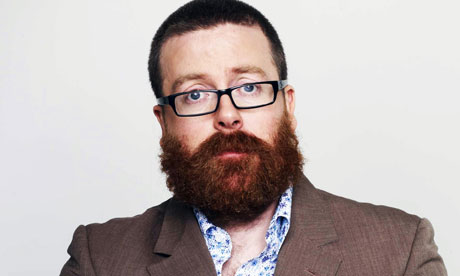
Controversial and often unlikable Frankie Boyle, known for his taboo subjects and risqué jokes took the main stage at Leicester Square Theatre. Known for sell out shows in larger venues, this small and intimate theatre was an unusual setting for the intense comic.
Beginning with a warm up act, the Canadian comedian was loud and hilarious. He brought on subjects that were important and topical but risked making crude and comical comments on these. His performance was an interesting style; he often walked the stage and used a shouting to pause technique, giving us time to laugh and take in the often valid point he had made. There was not a lot of audience interaction, mostly until the end which seemed a shame in such a small venue, however not all comics take that route and this did not change the atmosphere.
Finally, we listen to Boyle himself. In casual clothing, this gig is known to be a trial and error run of new material. Beginning with some of his already existing material, we were brought into and warmed up within his sense of humour. Not for the faint hearted, jokes petered on subjects that would not be welcomed in usual society, and this sense of taboo made the comedy even funnier. The humour that Boyle exhumes caters for a specific audience, however his popularity is evident by the constant hysterics in the room showed that British Society has a more risqué mind than we are professed to have by the media and stereotypes.
Boyle’s new work features comedy for a show that is soon to air. The privilege of hearing these and the intimacy with his judgement of whether the joke would be good enough or not or even be dumbed down enough was interesting to watch, making each person feel a part of his decision-making process.
Leicester Square theatre is well-known for giving space for comics, new and well-known to perform new material. While tickets sell quickly, it is well worth keeping an eye on these for such an intimate and relaxed evening, something that is unusual in entertainment scenes.