
All posts by Eva Marloes

Tosca – reviewed by Eva Marloes

 out of 5 stars (3 / 5)

Politics, sex, torture, love, and of course plenty of death, Tosca is an opera that always delivers. It’s a pacey political thriller where painter Mario Cavaradossi (Andrés Presno) gives refuge to his fugitive friend Cesare Angelotti (James Cleverton), who has escaped prison and is now searched by baddie-in-chief Baron Scarpia (Dario Solari). Add a jealous lover, Floria Tosca (Fiona Harrison-Wolfe), and the drama keeps you at the edge of your seat. Scarpia uses Tosca’s jealously and love for Cavaradossi to find out where Angelotti is hiding, then gets Cavaradossi tortured in front of his beloved Tosca.

Puccini’s orchestration ensures every element is woven together perfectly, every element serves the drama. It’s a compact drama brimming with a whole gamut of emotions. Alas, the Welsh National Opera’s Tosca pleases the public, but does not quite bring out the tension and drama.
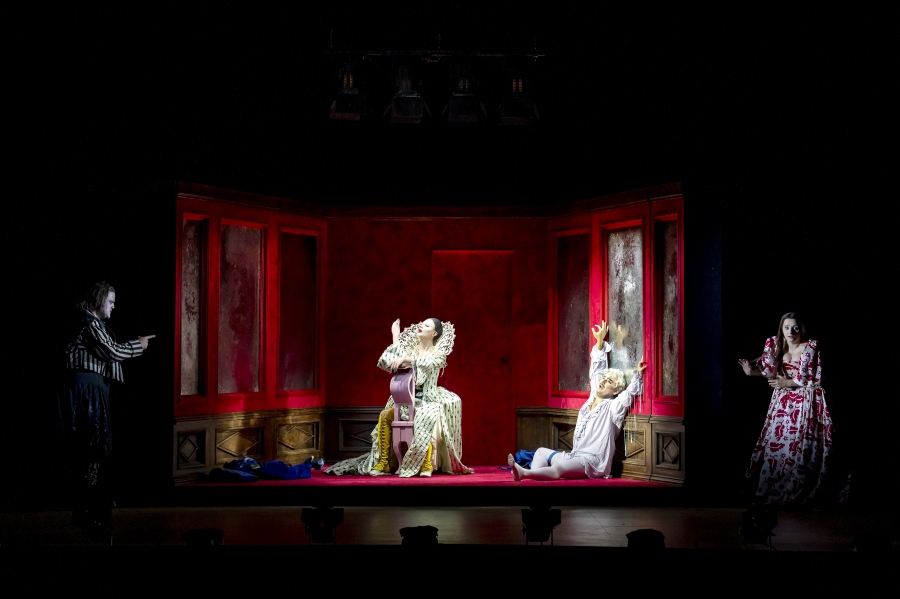
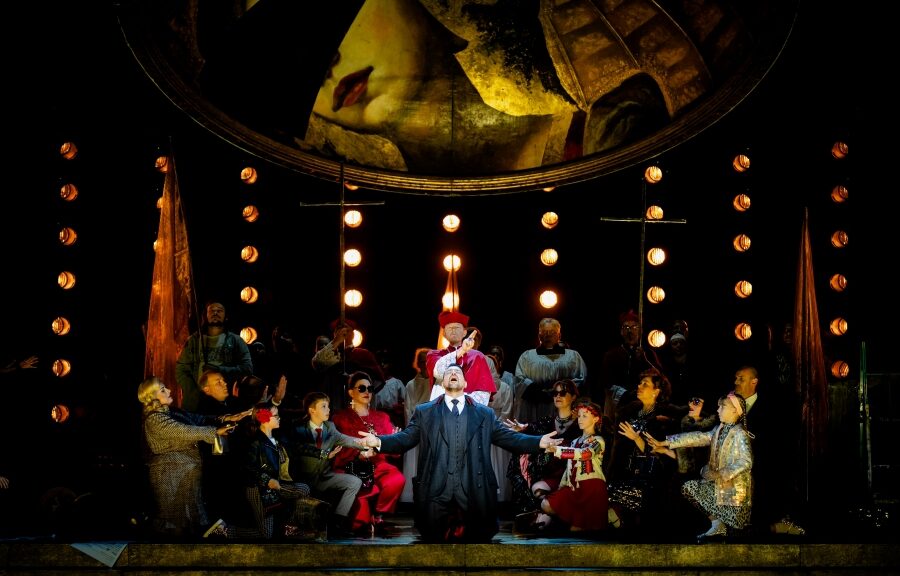
Cast of Tosca – Photo by Dafydd Owen

On the night of the 24th of September, Floria Tosca was performed by Fiona Harrison-Wolfe, whose voice is strong but lacks modulation therefore pathos. Both Harrison-Wolfe, as Tosca, and Presno, as Cavaradossi, seemed to fail to modulate and deliver a more natural progression to higher notes. This was particularly noticeable in the first act when it was like being hit by a sudden increase in volume.   

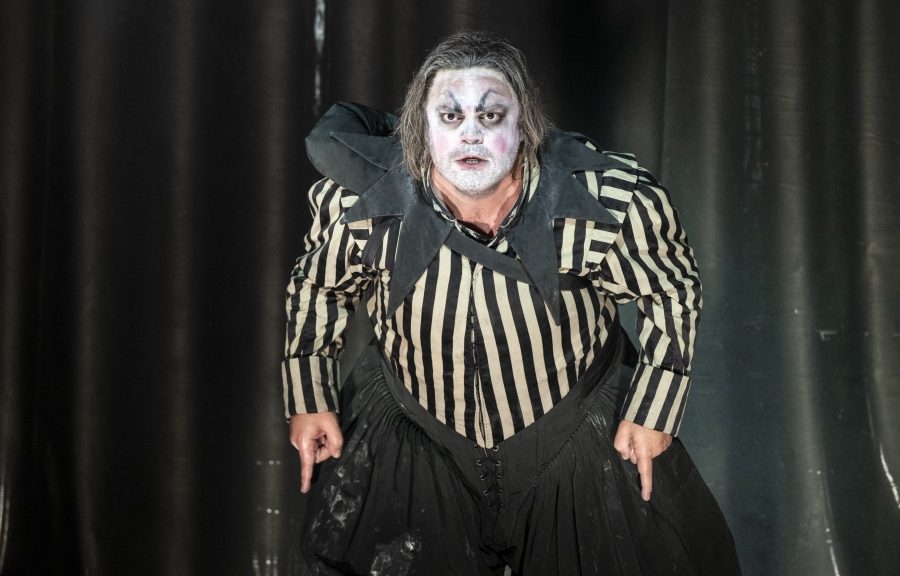
The interpretations were powerful but the lack of modulation compromised the emotion. Tosca’s Vissi d’arte and Cavaradossi’s E lucevan le stelle failed to move. The artists were not aided by an orchestra that did not shine. Such a compact opera felt a little drawn out at times. Dario Solari gives a solid and impressive performance as Scarpia.

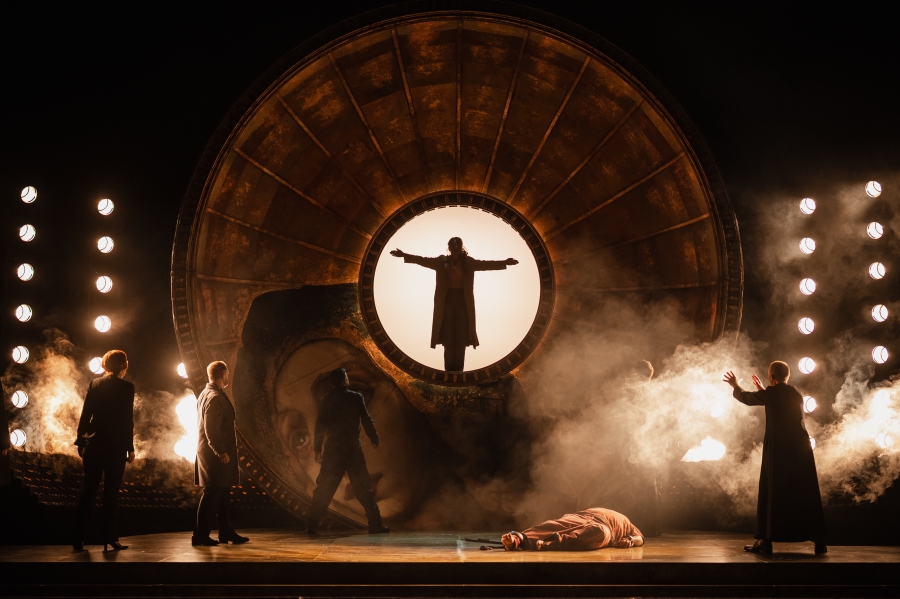
The contemporary setting was used effectively. A large painting of Mary Magdalene on the ceiling of a cupola dominates the scenes emphasising the clash of sacred with profane. Scarpia uses religion for power. Lights, costumes, and staging produce a very striking image where the chorus in colourful costumes surrounds Scarpia who is illuminated as a star. It is not so distant from the quasi-theocratic images we get from the United States today.

The WNO’s Tosca provides good entertainment to a public very keen to applaud at the earliest opportunity. 
Candide, WNO a review by Eva Marloes

 out of 5 stars (3 / 5)

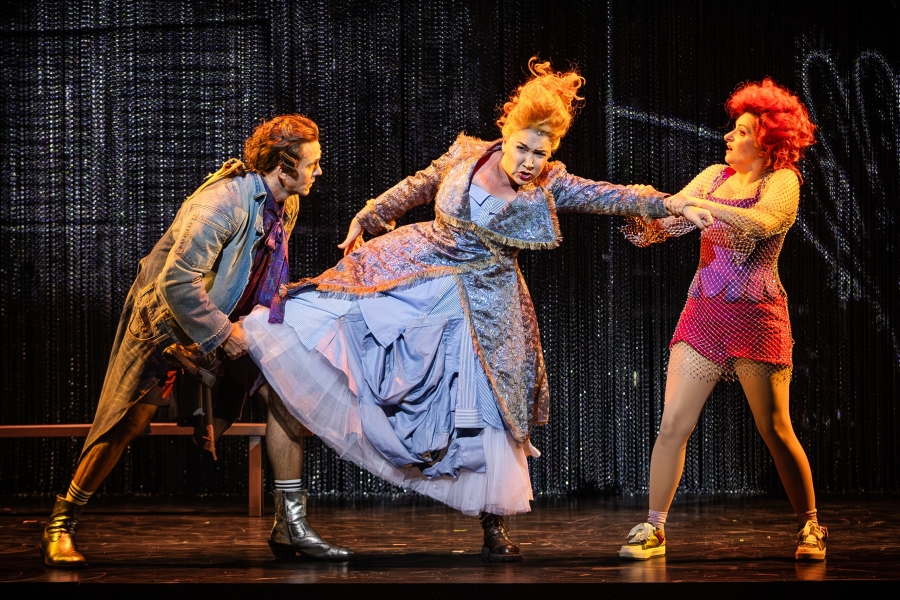
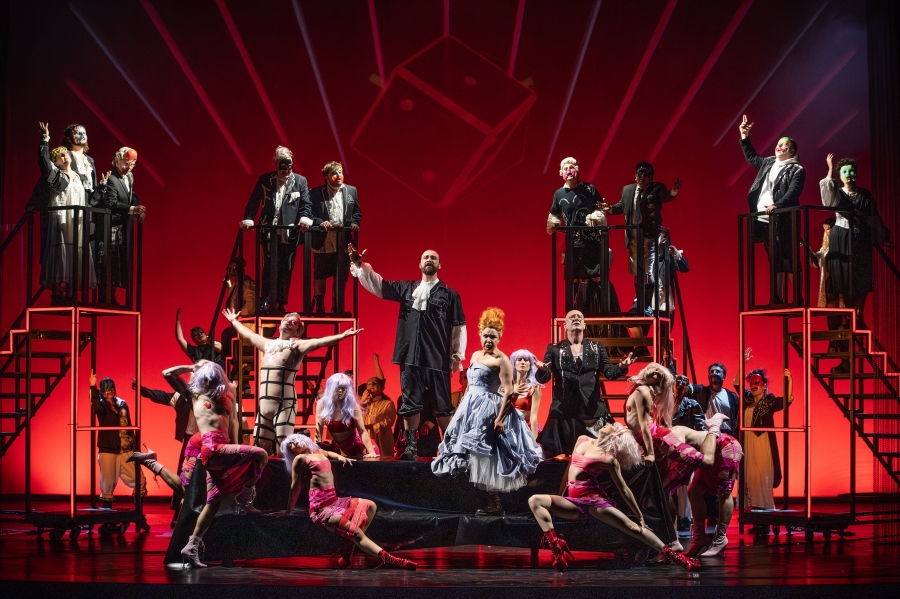
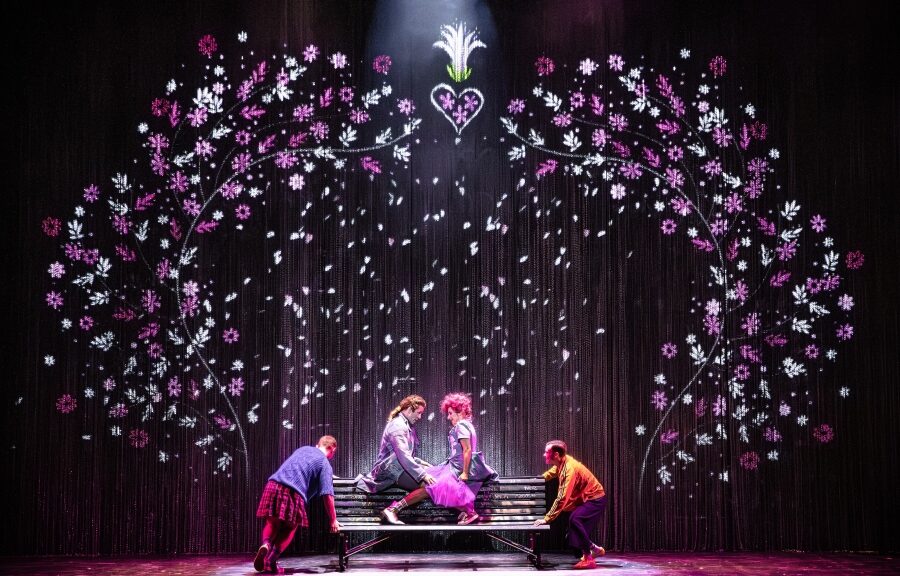
The Welsh National Opera know how to put on a show. On opening night, Cardiff’s public enjoyed Candide by Leonard Bernstein. It’s a light musical, more than an operetta, done in a cheeky tone. The WNO enthralls the public with colour, wit, and excellent performances from all the cast. Of note are also the choreography by Ewan Jones, the imaginative use of light by Rob Casey, to create animations and guide the story, and Nathalie Pallandre’s costumes, where the eighteenth century meets and crashes with the late twentieth century.

The singing by all members of the cast is excellent. Soraya Mafi stands out with a powerful voice and delightful timbre. Excellent is also Amy Payne as The Old Woman, delivering a funny and skillful performance, and Ed Lyon is an impeccable Candide. 

WNO Candide Ed Lyon Candide Amy J Payne The Old Woman Soraya Mafi Cunégonde photo credit Craig Fuller

Alas, Bernstein’s Candide lacks the satire and depth of Voltaire’s original novella. It’s a picaresque pastiche with no subtleties. The good mise en scène, creative costumes, and excellent performances cannot compensate for the lack of substance of this musical. There is no variation in tone in the music or the story. There is no emotional arch, and the cheeky jokes become irksome after a short while. 

The two-dimensional cartoon created by the light animation emphasises unwittingly the lack of depth of the show. Although effective in conveying the comedy in the beginning, the two-dimensional drawings keep the scene flat. As a result, there is little variety in the perspective on stage, just as there is no change in tone in the music. 

There is no escape from a mediocre score and shallow libretto, light years away from the subtle and biting satire of Voltaire, but also from Bernstein’s West Side Story. Yet, people loved it. It’s a bit of fun on a rainy night in what feels like an abrupt autumn.

At a time when culture is under attack, when theft of artistic work has effectively been legalised to make AI viable, one can’t help longing for the amazing productions of Janáček that the WNO gave us in the past. One can’t help yearn for the WNO doing operas to convey the truth of the human condition. 

WNO Candide cast of Candide photo credit Craig Fuller

Let Life Dance – A Review by Eva Marloes

 out of 5 stars (4 / 5)

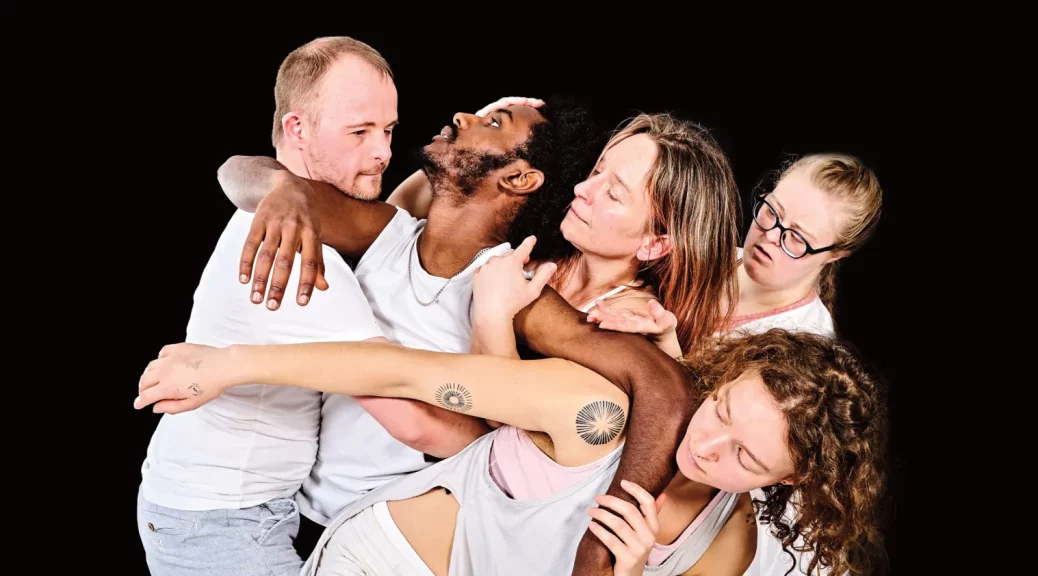
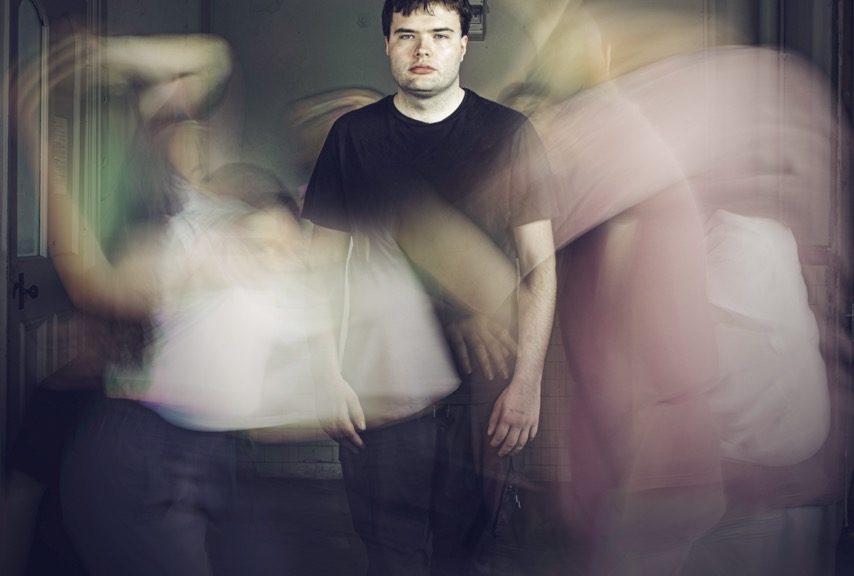
Let Life Dance by Humans Move is an intimate and evocative piece that captures togetherness, isolation, and reconnection. The piece was choreographed by Jessie Brett with the dancers to the music composed by Jered Sorkin. 

The five dancers, disabled and non-disabled, form an ensemble that oscillates from unity to disunity and then unity again. Let Life Dance opens with colourful and playful movement that reminds one of children in the playground. They are disorderly and together. Then a sense of loneliness slips in as one of the dancer moves away from the others.

The piece alternates ensemble movements with solo moments conveying the tension between connection and disconnection in human relationships. The search for supporting and caring relationships is fraught with misunderstandings. The collective carries trappings and a sense of imprisonment for the individual. 

This idea of tension between the the individual and the group is clearly conveyed through delicate movements and explosions of energy. Yet there is a need for a stronger sense of structure. A more dynamic light design and costumes might have also helped shape a story and create a journey for the show’s spectators. Overall, it was a well-received piece full of humanity.

 Let Life Dance is touring Wales now, see here for details.

See Trailer:

Martha – a review by Eva Marloes

 out of 5 stars (4 / 5)

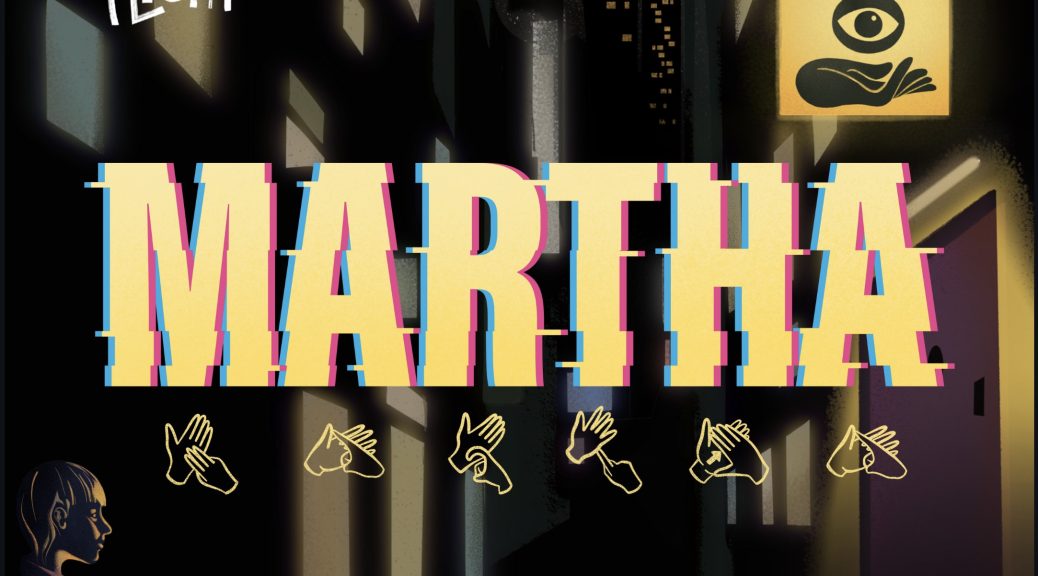
Sweet, funny, and irreverent, Martha conquers the hearts of the public. Martha is a musical play about the marginalisation and repression of deaf people and the use of the sign language that mixes historical episodes with a future dystopia.

The play starts in a retro-looking cabaret club from an undefined era which echoes Berlin during the Weimer Republic as well as Chicago in the prohibitionist era. It’s a clandestine burlesque club where deaf and British Sign Language (BSL) users perform. It is their work, their refuge, their home. In this, it reminded me of Edouard Molinaro’s beautiful and sensitive La Cage Aux Folle.   

Martha is set in dystopian Britain 2055, where sign language is forbidden and deaf children are put through the ‘programme’, which forces different types of therapy in the hope of getting deaf people to speak. Sarah, played by Cherie Gordon, becomes part of the club ‘family’ by claiming to be a deaf person being pursued by the government. In reality, she is a secret agent whose mission is to identify the club and prosecute the people running it.

Sarah’s story of reconciliation with her deaf identity is interspersed with the burlesque acts of the club’s artists. They recount historical deaf figures, such as Princess Alice of Battenburg who sheltered Jews during WWII and Kitty O’Neil who was the stuntwoman for Wonder Woman and speed record breaker. 

The title Martha comes from Martha’s Vineyard, an island off the shore of Cape Cod in the US, which had a higher than usual deaf population and where the deaf and hearing inhabitants used sign language. Martha’s strong message is that of BSL as language, not just a means of access. 

Although the play begins with meta-theatre, by interacting with the audience and with Sarah as a member of the audience, this is lost as soon as Sarah joins the community. The ensemble does a good job at conveying BSL as language and the deaf community as a home, often a refuge from hearing people’s lack of understanding, from condescension, and from repression. 

For a play that deals with harrowing themes of child abduction, forced therapy, torture and killing, Martha is a little tame. The fun duo Duffy and Eben James are remarkable in their clowning abilities, a la Philippe Gaulier. The fun is not countered sufficiently by tragedy. The elements are there, however, and the public shares in Martha’s call for recognition of the full dignity of sign language and of deaf people.

Martha plays until the 21st of June at the Sherman Theatre, Cardiff (see details), then on the 25th and 26th of June at Pontio, Bangor (see details).

Grenfell & We Stand With You – a reflection by Eva Marloes

On the 14th of June 2017, just before 1am a fire starts in the kitchen of flat 16, on the fourth floor of Grenfell Tower. The Fire Brigades are called and arrive at the building a few minutes later. The fire quickly spreads. The policy is to ‘stay put’. Residents are ordered to stay in their flats. The fire reaches the roof, then spreads horizontally. At 2.35am the control room revokes the ‘stay put’ advice. It’s too late. Too many are now trapped. 72 people die. 

That wasn’t an accident. It was well known that cladding was dangerous. Before Grenfell, there were fires in the UK and other countries where cladding played a significant role in the spreading of the fire, such as Lakanal House in London in 2008, Mermoz Tower in Roubaix, France in 2012, Lacrosse Tower in Melbourne, Australia in 2014. 

It was well known that the ‘stay put’ policy was wrong. Six people died at Lakanal House because residents had been told to stay put. It was well known that high-rise blocks needed sprinklers. Yet, still in 2023 Inside Housing reported that over 80% of social housing blocks lacked sprinklers and fire alarms. Sprinklers and the evacuation of residents at Lacrosse Tower ensured that there were no deaths.

Removing cladding and retrofitting sprinklers and fire alarms costs money. Telling people to stay put is easier than evacuating. It also means you don’t need to worry about specific measures to evacuate disabled people. Before the fire, residents raised concerns about safety in the building. They were dismissed, bullied, stygmatised as trouble makers. Deregulation, profit-making, and prejudice killed 72 people.   Grenfell was not an accident.

Chapter Arts Centre honours the victims by showing Steve McQueen’s short visual medidation on the fire at Grenfell Tower and by hosting a series of events, including the ‘We Stand With You’, Common Wealth exhibition, which opens on the 5th of June. The full programme for the events can be found here

Peter Grimes – A review by Eva Marloes

 out of 5 stars (4 / 5)

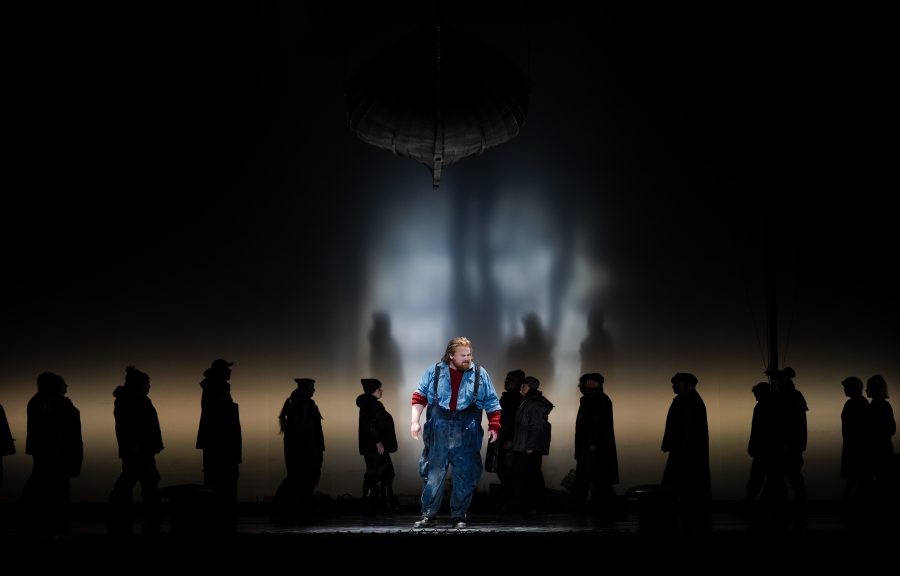
In these dark times of international upheaval and authoritarianism, this tale of suspicion and ostracism feels more potent than ever. Peter Grimes is a fisherman accused of the death of his apprentice. The death is ruled accidental, but in the minds of the people in the village, Grimes is guilty. The judgment is sealed once his second apprentice also falls to his death. 

Peter Grimes is made an outcast, yet he is firmly rooted in his village. The Suffolk coas is much more than a setting; it plays a part in the unfolding of the drama. The music captures the sea and in particular the storm with rising trombones and trumpets and the winds conveyed by the strings. The storm is physical and metaphorical of the inner turmoil of Grimes. Grimes is tied to his village and that tie brings him to his demise.

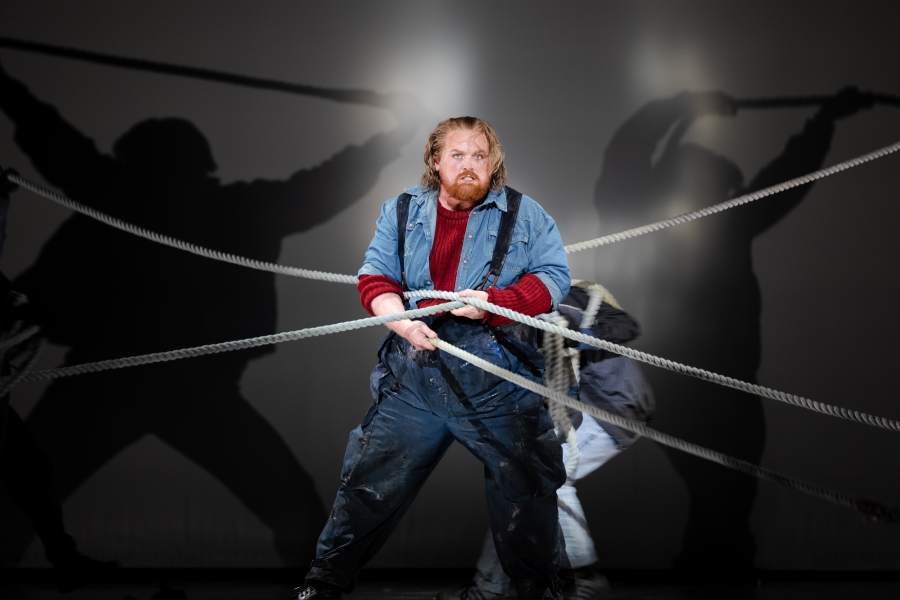
The tragedy is interspersed with quasi-mystical moments, such as in the aria “Now the great Bear and the Pleiades”. This is performed impeccably by Nicky Spence as Peter Grimes. Spence has a beautiful timbre and conveys the ambiguity of the character with great effect. Less convincing is Sally Matthews as Ellen, Grimes’ lover, whose singing is a little too structured. She brings a coloratura that sits uneasy in Britten’s austere music. 

Nicky Spence as Peter Grimes, photo credit Dafydd Owen

Strong performances come from David Kempster as Captain Balstrode, Sarah Connolly as Auntie, and Catherine Wyn-Rogers as Mrs Sedley. Tomáš Hanus is back conducting a powerful orchestra, albeit slightly uneven. The ensemble moment are indeed impressive and the WNO chorus is at its best. They embody the people’s unified condemnation of Peter Grimes.

Britten’s social realism is evident in the costumes recreating a working class 1980s village. The stripped down production brings to the fore the sense of oppression, anger, and defeat. The opera suits the minimalistic style, yet it feels like such minimalism has been forced on the WNO by recent funding cuts. The direction and staging are effective, the performances strong, and more funding well deserved.  

The Marriage of Figaro – a review by Eva Marloes

 out of 5 stars (4 / 5)

A strong cast and orchestra perform well notwithstanding the threat of further cuts to the Welsh National Opera. Outside the Wales Millennium Centre, as many times before, we are met by WNO staff members wearing t-shirts and handing out leaflets and petitions about yet another round of cuts. The once formidable chorus has been halved from 40 to 20 members. Yet, the WNO manages to deliver once again.

Mozart’s Le Nozze di Figaro (The Marriage of Figaro) is based on Pierre Beaumarchais’ political satire La Folle Journée (1784), sequel to Le Barbier de Séville (The Barber of Seville).  Le Nozze is a scathing critique of the power of the nobility. At the centre is the droit de seigneur, the right of the lord of taking sexual advantage of his female servants.

The opera begins with Susanna (Christina Gansch) and Figaro (Michael Mofidian), servants to the Count and Countess of Almaviva, making plans for their wedding. Susanna is afraid that the Count will revive the droit de seigneur to sleep with the bride. Figaro thinks he can outwit the Count of Almaviva (Giorgio Caoduro). Meanwhile, Don Bartolo (Wyn Pencarreg) and Marcellina (Monika Sawa) employ a lawyer to recoup the money lended to Figaro, who has promised to marry Marcellina, if he cannot repay it. The page, Cherubino (Harriet Eyley), in love with the Countess and every woman he sees, pleads with the Countess to help him to avoid dismissal. 

What follows is a farce of mistaken identities, where the plot thickens from trick to trick, new truths are discovered, like Figaro being the son of Marcellina and Don Basilio. There’s always someone who overhears something folding a plot and starting off a new one. At its core, however, is the servants, with the help of the betrayed Countess, plotting against the Count. 

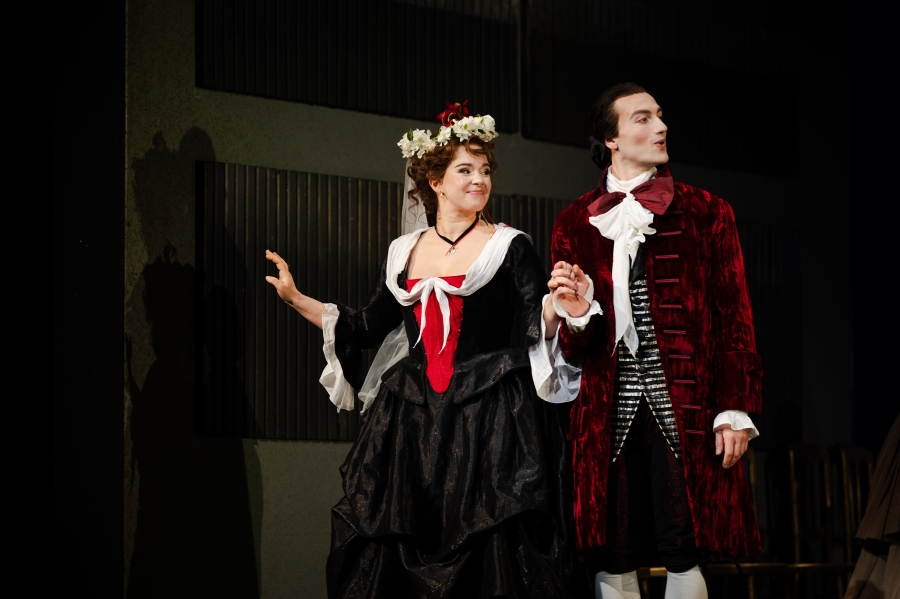
This production has excellent singing and interpretations from all the cast. A funny and skillful Farfallone Amoroso by Michael Mofidian as Figaro, a beautifully delicate Voi Che Sapete of Harriet Eyley’s Cherubino, a moving Dove Sono of Chen Reiss as the Countess Almaviva, and a beautiful Deh Vieni of the excellent Christina Gansch as Susanna, to name a few. Particularly good performance comes also from Monika Sawa as Marcellina and Giorgio Caoduro as the Count. The cast shines as an ensemble, supported by a solid orchestra, conducted by Kerem Hasan. 

Christina Gansch as Susanna and Michael Mofidian and Figaro. Photo by Dafydd Owen.

The strong performances entertain and enchant, but the direction lacks brio. Le Nozze rests on singers and orchestra playing out the satire. We are left with a farce with beautiful music and singing, which misses the political intent. The 18th century’s setting of this revival production constrains the politics of the opera. A modern take could have perhaps exploited the liberties taken by today’s billionnaires, who seem to be above the law. It would have been poignant given the role of billionnaires in impoverishing our society. 

Rigoletto, a review by Eva Marloes

 out of 5 stars (3 / 5)

At the core of Rigoletto is the tragedy of an overprotective father, Rigoletto, who wants to kill his daughter’s suitor, the Duke, a well-known womaniser, but has his daughter killed instead. Gilda is a victim of her father’s control, of the Duke’s seduction, but also of the often misogynistic notions of love as self-sacrifice that lead her to her demise. Yet the Duke is also tragic.

Verdi moved away from Hugo’s story Le roi s’amuse, on which Rigoletto is based. The Duke is not just a womaniser with no scruples, making fun of women in La donna è mobile. He is a dissolute man but one who is seduced by Gilda’s purity and perhaps even falls really in love with her.

It’s a tragedy that is never staged. Most productions are seduced by the need of being relevant, contemporary, even topical. There are times when, thanks to fortuitous timing, the contemporary political setting works. This is the case of the WNO’s production of Rigoletto in 2019 set the opera in Washington at the height of the #metoo era. The staging, direction, orchestra and performances were superb.

This production of Rigoletto is pleasant, with good performances but tame with a subdued orchestra and no clear take. Adele Thomas’s direction has no clear and consistent interpretation of the drama. There are references to politics and the Bullingdon club but in 18th century costumes making the staging confused and confusing. The direction constraints the performers and fails to convey the contrasting elements of the seductive myschief, tragic love, and suspence of the opera.

Daniel Luis de Vicente, Alyona Abramova, Raffaele Abete and Soraya Mafi in Rigoletto. Photo Richard Hubert Smith.

Soraya Mafi, as Gilda, has a beautiful voice and performs Caro nome impeccably, yet her Gilda is a little too fragile. Raffaele Abete, as the Duke, sings well. His voice is agile but not powerful enough to carry the persona of the Duke. The direction and interpretation makes this Duke a bit of a lightweight. He’s not seductive, he’s not even a bad boy, he’s merely vain. 

Daniel Luis Vicente excels as Rigoletto cutting a very tragic figure and, at times, stealing the scene, including the final quartet. Notable are also the performances of Nathanaël Tavernier as Sparafucile and of Alyona Abramova as Maddalena. Abramova performs soulfully, but being a mezzo rather than a contralto, does not provide a sufficient contrast with Mafi’s Gilda in the final quartet. 

The strong performances make this production pleasant but constrained and at times, especially in the final quartet, disjointed. The orchestra, conducted by Pietro Rizzo, lacks power. The scene of the storm is disrupted by the rather ill-conceived idea of firing lights onto the audience instead of letting the music conjure the wind and thunder.

The WNO can do a lot better than this, as shown recently in Il Trittico. It can excel. Let’s hope this is a blip, perhaps the result of the cutting of funding and constant insecurity over their future. The WNO is a treasure in Wales and should be supported and allowed to grow.

Requiem, a review by Eva Marloes

 out of 5 stars (4.5 / 5)

Dance choreographer Karol Cysewski has successfully designed an immersive experience through dance and theatre that conveys the unequal healthcare treatment people with learning disabilities receive, which results in thousands of avoidable deaths every year. (My interview with Cysewski is available here.) 

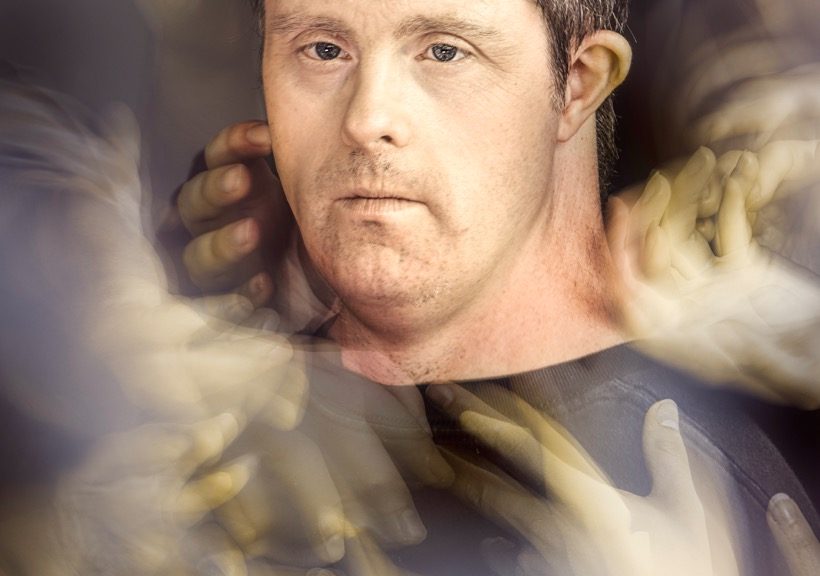
The strength of the show comes from the careful assembling of different elements to create powerful tableaux of patients who are examined, manipulated, neglected. At the centre of the scene and yet unheard. The actors from Hijinx Theatre add veracity to it. Aaron Relf is neurodivergent, Andrew Tadd and Gareth Clark have Down syndrome. Relf conveys a subtle anguish, Tadd has a strong presence on the scene, and Clark plays with the dancers with ease.

The skillful dancing by Gaia Cicolani, Kseniia Fedorovykh, and Harlan Rust employs a range of movements, gentle, precise, then deforming of faces and forms, to frantic and convulsive. The excellent sound design by Sion Orgon plays a key role in creating dark and haunting scenes where dancers and actors come together and apart.

Very powerful are also the set design by Ruby Brown and the lighting design by Sophie Moore immersing us in an uncomfortable mist, where pools of light and hospital curtains play alongside actors, dancers, and sound. The curtains get opened and closed to show us the pain, to cover or cover up the neglect, to signify death.

Yet the show is not perfect, largely due to a didactic and weak text. Most might find this to be a minor flaw, yet I believe it is an element that detracts from the power of the piece and that can be reviewed. The text is too wordy lacking poignancy. Numbers and statistics paint a general picture devoid of the personal concrete experience of a character. Art conveys universal truths through the particular experience of characters.  

Paradoxically, as someone who has worked in the third and public sector, I know how  important it is to ensure the voice of disabled people is included in reports and campaigning material through quotes or interviews. The medical and social context for the show could have been dealt with in the programme or in a prologue. The weak text makes the show more haunting than moving, but well worth watching.

An interview with Karol Cysewski, choreographer of Requiem, by Eva Marloes

Ineluctable part of life, death comes to us all. Yet, many deaths are premature and avoidable. People with learning disability are much more likely to die from an avoidable cause. The signs are missed, people are ignored, neglected, because they cannot speak, they cannot communicate their discomfort, pain, or even just hunger and thirst. They die not because of their disability, but because our healthcare system is not inclusive. 

According to the 2022 Learning Disabilities Mortality Review (LeDeR), 42% of deaths of people with a learning disability were avoidable. Dance choreographer Karol Cysewski tells their story in Requiem, an immersive dance-theatre performance in collaboration with Hijinx Theatre.

I talk to Cysewski in the Seligman Studio at Chapter, set up with hospital beds and curtains. He tells me he wants to engage the audience and make them think about the unequal treatment people with learning disabilities receive. It is often, says Cysewski, the result of “somebody just didn’t think about somebody else. They were too busy and had no imagination.”

A nurse finishing their shift not thinking that the nurse coming in the next shift doesn’t know the specific needs of the patient. “They don’t know how to say ‘I’m thirsty,’ she’s busy and she’s not imaginative enough to imagine that that might happen.” That’s all it takes. Being attentive.

Being attentive is what Cysewski has been doing while teaching at Hijinx Theatre. In his work with people with learning disabilities, he has learned to treat them as people first. 

“Slow down, if you need,” says Cysewski, “and give them achievable tasks. That applies to anyone. Treating people as people first not worrying about their disability. That would apply to anyone.” 

In doing the show, Cysewski has learned about the skills and strengths of each individual actor and what they find more challenging. That might include going to lie on the bed. 

Talking about one particular actor,  Cysewski says, “I’m learning how to give time, how to take time and space for him to learn, because eventually he learns, but he needs more repetition and continuity. I’m learning not to change (what to do), give them different ideas during rehearsals.”

I ask Cysewski what is like for the Hijinx actors to work with professional dancers. he tells me that “working with professional dancers challenges the actors more and it has a better effect.” For instance, they are more comfortable leaning against a professional dancer than another actor. “It makes them look like they’re trained dancers.”

There’s still a long way to go for disabled people to be fully included. Much of the work lies in training healthcare and social care staff in how to communicate effectively with people with learning disabilities.

Requiem uses light, sound, movement, but also smell to stimulate the senses of the audience and invite them to think about how lack of inclusivity leads to avoidable deaths. The message of Requiem is one of compassion. Not in the sense of feeling for sorry for the person, but to acknowledge the dignity of the human being in front of us.

Requiem opens on the 4th of July at Chapter Arts Centre. For tickets, see Chapter.