
Category Archives: Theatre

Review “Housemates”, Sherman Theatre, Cardiff by Tiago Gambogi

 out of 5 stars (5 / 5)

“Housemates” drums up an inclusive revolution

Based on a true story in Cardiff, a serendipitous encounter between Jim, a Cardiff University student, and Alan, a lifelong resident of Ely Hospital born with Down’s syndrome, sparked a profound shift in the realm of care and support. Alan yearned for a place to call home and had a dream: to join a band. Jim, on the other hand, aspired to change the world, though he wasn’t sure how to make it happen.

Hijinx, a leading inclusive theatre company, partnered with the Sherman Theatre to create an extraordinary gem of a theatrical performance that takes the audience on a rollercoaster ride of emotion and reflection. “Housemates” isn’t just a play; it’s a profound exploration of the human spirit.

Set against the spirited backdrop of the 1970s, “Housemates” introduces us to a robust cast of seven neurodivergent and neurotypical actor-musicians who infuse the narrative with a powerful soundtrack featuring classics from T. Rex and Sweet. Playwright Tim Green dedicated two to three years to bring this story to life. Co-director Ben Pettitt-Wade emphasizes the significance of visibility, inclusivity, and the transformative power of human connections within our society. Co-director Joe Murphy underscores the exceptional nature of this story, one that embodies inspiration while remaining curiously overlooked in Cardiff.

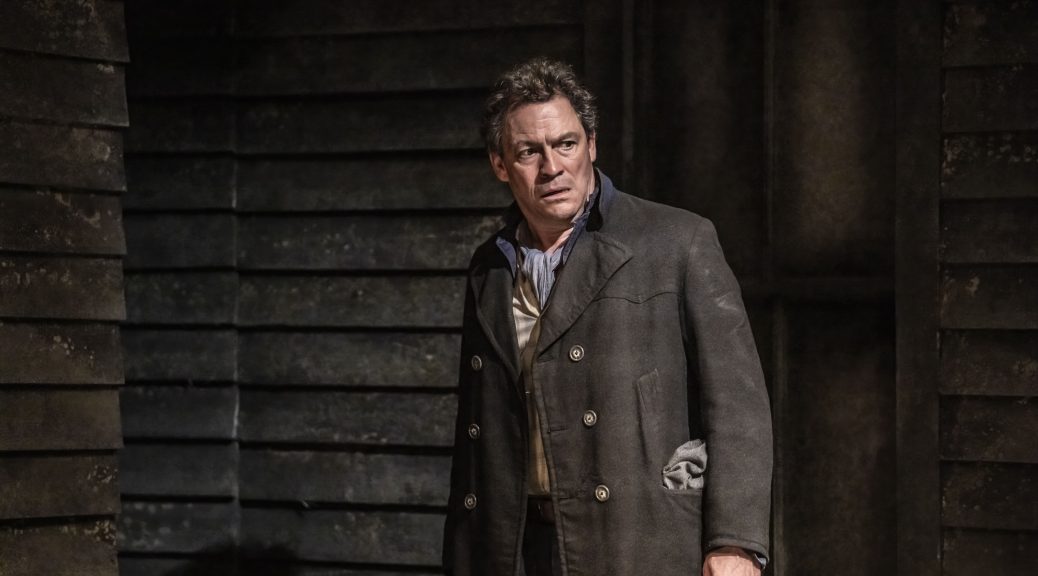
The wonderful ‘70s costumes and the inventive set by Carl Davies transports us to the world of Ely Hospital in 1970s Cardiff. With its green-tiled floor, occasionally scattered with blown orange leaves, and a well-worn wall where the band resides, it visually captivates.

“Housemates” brims with humour and gentle clowning but is unafraid to tackle serious issues. The play courageously sheds light on the derogatory language of the past, such as the dehumanizing term “subnormals” and the terrible legislation of yesteryear like the 1886 Idiot’s Act and the Mental Deficiency Act 1913, which saw over 100,000 people institutionalized.

Actors masterfully navigate delicate subjects with a finesse that is both poignant and humorous. “Are you going to take the ‘angry pill’?” asks the female nurse before the male nurse strong-arms Alan. In another moment, Alan proclaims, “I want sex! In the house… it’ll be like… I am a sex God!” This statement is met with uproarious applause from the audience.

The set is as flexible as it is imaginative, with props ingeniously transforming: a metal frame becomes a bus stop, a trolley of books symbolizes the library, and a hospital bed serves as Alan’s room. Papers tossed in the air symbolize the persistence of the characters as the house application is denied, eventually leading to their triumphant departure from the hospital, each clutching their belongings in bin bags.

The culmination of this incredible journey occurs as Alan triumphantly declares, “This is my house!” Bedecked in a David Bowie-esque costume, he takes to the drums, igniting the stage with electrifying rock ‘n’ roll energy. Alan’s heartfelt dream becomes a reality, culminating in a grand finale with him shining as a drummer, joined by the entire cast as well as extra actors from the Hijinx Academy. Beneath the societal transformation lies the profoundly personal journey of an individual who, after a lifetime within hospital walls, discovers his own stage as a rock star in his own home in Cardiff.

“Housemates” offers a multifaceted theatrical experience, delivering laughter, tears, and a nostalgic journey. With an anarchic and rebellious flair, the show inspires us to close the absurd ways in which neurodivergent people were treated and motivate us to create change and end injustice.

The show is a tale about being genuinely inclusive; it’s about home, identity, and ultimately about taking action. It’s an extraordinary odyssey through time, friendship, and societal transformation both within and without, captivating audiences at the Sherman Theatre, which coincidentally celebrates its 50th anniversary this year.

Tiago Gambogi
@tiagogambogi, Dance Theatre Artist, https://linktr.ee/tiagogambogi

Review The Importance of Being…Earnest? Say It Again, Sorry, Theatr Clwyd by Donna Williams

 out of 5 stars (4 / 5)

The Importance of Being…Earnest?

Many of my generation will best know the classic story of John ‘Jack’ Worthing and Algernon ‘Algy’ Moncrieff, two bachelors who create alter egos named Ernest to escape their tiresome lives, through the 2002 movie adaptation starring Colin Firth, Dame Judy Dench, and Rupert Everett amongst other big names. The men attempting to win the hearts of two women who, conveniently, claim to only love men called Ernest. The pair struggle to keep up with their own stories and become tangled in a tale of deception, disguise, and misadventure. The elaborate plot ridicules Victorian sensibilities with some of the best loved, and indeed eccentric, characters to be found on the modern stage. First performed in 1895 and published in 1899 it is a satire of Victorian social hypocrisy and considered Wilde’s greatest dramatic achievement.

So then, it is a rather genius idea to take this classic tale turn it into a production where audience members take on the main roles- taking the theme of identity (or rather mistaken identity!) to the next level!

The Importance of Being…Earnest? begins in a Victorian household, complete with your typical English butler. The set is constant throughout aside from the odd addition to imply a change of location. It is simple but effective- particularly the window which, on occasion, doubles as a metaphorical window, into the lives of the actors. This window allows us as the audience to take a peek ‘backstage’ as our characters have heated discussions, enjoy an off-stage smoke, or argue about what’s going to happen next unless the actor playing Ernest decides to turn up!

The play starts as any production of The Importance of Being Earnest might start, but it’s clear that this is the calm before the storm as we experience a long, awkward pause as Algernon and Lane introduce Mr Ernest Worthing. This continues with titters from the audience as stage manager Josh and director Simon break the fourth wall in a panic and ask if there’s a member of the audience who could step into his shoes (literally!) Thus, ensues improvised and organised chaos as members of the audience are plucked out to play various roles- reading from scripts, being shoved around the stage by the pros, shouting out lines from signs held up by other audience members and having lines whispered aside. There are many clever japes including actors pretending to don clothing they’re already wearing due to having to start the play again, solo sword fighting or conversations with the air as the audience member has no idea where they’re meant to be standing and some fantastic, over the top physical theatre!

The casting is perfect but special mention must go to Guido Garcia Lueches as Algernon and Rhys Tees as Lane who are the perfect comedy partnership on stage. They set the scene and really carry the piece throughout. Other noteworthy performances include Lucy Trodd as Lady Bracknell whose take on how to be an ‘ac-TOR’ provides a hilarious comedy skit when she attempts to teach the audience member playing Ernest how to, well, play Ernest! Also, Trynity Silk as Gwendolen is a triumph, particularly as the play unravels and she gets more and more merry- having had one too many glasses of the real wine rather than the prop wine!

My only qualm throughout was that it appeared the audience members taking on the two lead roles were somewhat prepared and/or had been planted. For me, this took away some of the comedy magic that can be provided in using audience members as part of a performance. However, I have since learnt that Say it Again, Sorry? have an open-door policy during rehearsals, so it is possible certain audience members may have already had a glimpse into what would be happening on stage that evening.

Say it Again, Sorry? began back in 2018 when Artistic Director Simon Paris set up The Lab Workshops developing his own craft and supporting actors with their acting technique. The team decided that their mission would be to connect people to their inner artist. The Importance of Being…Earnest emerged in 2019 and previewed at The Pleasance Theatre in Islington and has since grown and developed and become a great success- selling out at EdFringe in 2021 and taking on a UK tour in 2023/24.

The Importance of Being…Earnest? continues its tour at the Belgrade Theatre, Coventry from November 2nd-4th and ends at the Tivoli Theatre, Aberdeen on July 5th, 2024. To book your tickets head to the website-

The Importance of Being…Earnest? (interactiveearnest.co.uk)

The Company have requested the note below, which we are happy to facilitate

“The company would like it to be known that there are no plants or prepared audience members that are used during this show, the smoothness of their audience interaction is a testament to their craft and honing.”

Cast:

Guido Garcia Lueches- Algernon

Trynity Silk- Gwendolen

Rhys Tees- Lane

Ben Mann- Josh

Josh Haberfield/Tom Bulpett – Simon Slough

Amy Cook Hodgson/Lucy Trodd – Lady Bracknell

Brendan Barclay- George

Creatives:

Simon Paris- Director

Josh King- Writer

REVIEW Housemates, Sherman Theatre/Hijinx by Barbara Hughes-Moore

Move over Monica, Chandler, Rachel, Ross, Joey and Phoebe: there’s a new set of Housemates in town, and they’re here to change the world!

And that’s exactly what they did, when in 1974 a group of residents at the Ely Hospital went to live with Cardiff University students in a small house in Ruthin Gardens. Alan (Gareth John), a young man born with Down’s Syndrome, meets Jim (Peter Mooney), a rebellious student volunteer. The two become friends, and so begins an odyssey that – after two years, countless letters and submissions and hospital board rejections – culminated in the end of institutionalised ‘care’ and the dawn of supported living.

Written by Tim Green and co-directed by Joe Murphy and Ben Pettitt-Wade, Housemates is a fun and affectionate tale that is raucously brought to life by a hugely talented cast of neurodivergent and neurotypical actor-musicians. The show moves through its story like a song, underscored by an excellent sense of rhythm, movement, and momentum. There are brilliant performances by John and Mooney as the central duo, who lead a superb ensemble cast that includes Natasha Cottriall, Lindsay Foster, Matthew Mullins, Caitlin Lavagna, Richard Newnham, James Ifan and Eveangeleis Tudball. They make a (shockingly) little-known piece of Welsh history feel like an instant classic.

The show begins even before you take your seat, with the cast performing iconic 70s hits that transport you to this era of rockin’ rebellions – and keeps the party going well after the curtain falls. It is simply the most joyous show I can remember seeing in a long time. This vibrant co-production between the Sherman Theatre (the ‘engine room of Welsh theatre’) and Hijinx (one of Europe’s leading inclusive theatre companies) is further proof of the magic of contemporary Welsh theatre: a concert, a comedy, and a clarion call in one.

Housemates is performing at the Sherman Theatre until Saturday 14 October. More information and how to book tickets here. Performances are captioned (in English), audio described and BSL interpreted. Please note that the show contains use of outdated terms for disabled people, ableism, strong language and descriptions of abuse.

Review Housemates, Sherman Theatre and Hijinx by Rhys Payne

Images Mark Douet

 out of 5 stars (5 / 5)

I think that it is a universal fact that during lockdown many of us picked up new hobbies in the hope that it would help that extended periods of loneliness pass by quicker. One of my many lockdown obsessions was checking out new concept albums/recordings of new musicals from all around the world. Whilst on my quest to find my new musical obsession, I discovered a musical called Our Lands Own which told the story of the gruesome Merthyr Rising riots that happened a short drive from my home. It was absurd to me that such a massive moment in history happened a short drive from my house and I never even knew about it! Since then I have become fascinated with not only with the interesting intersection of history/musical but especially lesser-known Welsh history! The brand new play Housemates explores the purposefully hidden, behind-the-scenes investigations into Ely Hospital and the terrible series of events that have been documented there but also the origin story of assisted living schemes both of which took place in my own hometown!

Housemates the play tells the story of an innocently eager person called Jim (played flawlessly by Peter Mooney) who makes the spontaneous decision to volunteer his time walking two hospital respondents, namely on an unassuming walk to the local park. On this adventure, Jim begins to see some of the discrimination and harassment that hospital residents face which only gets worse as he begins investigating into the daily life of the hospital residents which results in immense anger on his behalf. This outrage caused Jim to investigate ways in which to properly integrate the residents into the community which led to the first ever assisting living programme where the patients lived with students. We follow Jim as he campaigns for this programme to be trialled in 12 Ruthin Gardens in Cardiff.

What was particularly interesting about this show was the fact that the production actually began before the audience had even taken their seats! The moment we stepped into the main auditorium at Sherman Theatre Cardiff, we were greeted by a lively band as if we had joined them during a gig in a local pub. They performed a plethora of iconic hits, as well as the expected chit chat that happens with a band during song transitions. This idea of a band-fuelled performance reappeared at the end of the show where the lead character Alan becomes the lead singer of his own band (donning a David Bowie-inspired ensemble and busting out his own drum solo) which helps to create a cohesive, circular narrative for audience.

The highlights of this production, however, were very clearly the characters Alan and Heather (played by Gareth John and Lindsay Foster respectively) who delivered a masterclass in comedic timing throughout! These two talented individuals had myself (and the audience) in hysterics throughout while simultaneously exposing the terrible and intense experiences of people in mental hospitals at the time. It is incredibly difficult to provide both a plethora of comedic moments while also generating sympathy from the audience by the bucket full. The two performers took us on a rollercoaster from eye-watering laughter to heart-wrenching sadness which is no easy feat but these two performers appeared to take it in the stride! One of my favourite moments in the entire production was when Alan and Heather got to experience their first live band performance and they exploded into a totally euphoric dance sequence that was just a pure joy to watch! It was clear that these two were having so much fun being on the stage and that radiated throughout but especially during this specific moment. We went from this moment of pure joy to a deeply heartbreaking scene where Alan shared the abuse he had experienced while under the care of the hospital. The most uplifting moment of the entire show however happened at the end of the show when the entire cast highlighted the success of the assisted living experiment and began listing off all the asylums that shut down due to this scheme (started in Cardiff) being a success. There was something about each person shouting the name of the hospital while scrunching the paper up and throwing it into the bin that was incredibly powerful and had myself very close to tears! I also found it immensely impressive that the band from earlier in the show were able to quickly switch from an accompanying band to an on-stage character. I can barely do each of these things on their own neither switching so quickly which was an incredible display of insane talent!

Overall, Housemates is a powerful piece of theatre that shines a light on a sparsely discussed area of Cardiff’s history! Despite only being just over one hour long, the grounded and honest portrayals captivated the audience and made every moment feel as if it was happening in real-time/the time frame the events actually took place. The production made every single person in the audience experience the length and breadth of human emotion while simultaneously highlighting a key part of Welsh history. I would rate this production 5 out of 5 stars!

Review: Marina Abramović: A Visual Biography & Institute Takeover, Queen Elizabeth Hall, Southbank Centre, By Hannah Goslin

 out of 5 stars (4 / 5)

Arguably, Marina Abramović is one of the most influential and incredible Performance Artists of all time. Her methods of challenging the body, of challenging the social norm, of breaking boundaries and being raw and in your face has transformed much of the performance landscape over the past 50 years and inspired many an artist, including myself.

Abramović is everywhere in London at the moment. Not only with her new book launch, A Visual Biography and her Institute Takeover, both at the Southbank Centre, she is also taking the Royal Academy by storm as the first solo woman performer in their main space and with an opera, 7 Deaths of Maria Callas at the English National Opera. For a woman who was literally on death’s door only a couple of months ago, at 76, Abramović is still pushing boundaries and her body to extremes for art. And us number one fans are happy she still is.

After her memoir in 2016, A Walk Through Walls, telling the story of her life in Belgrade and her art across the world, you wouldn’t think there was much more for her to tell us about. This raw and personal memoir seemed to feature it all, her life, her feelings, her failures, her successes. But in this new book, A Visual Biography, she has teamed up with arts and fiction writer, Katya Tylevich, to delve into her aeroplane hangers full of memorabilia of her life to bring new stories, new insights and plenty of memories.

With both Abramović and Tylevich on stage, this book release felt a lot more casual and free than I remember A Walk Through Walls launch to be. Abramović seemed relaxed, she made us laugh constantly and her stories and anecdotes were mesmerising. There was something changed in her, possibly with a near death experience recently, A Visual Biography seems more a celebration of who Marina is and less about how her work came to be. While her first memoir featured much about her family, she now tells us more of those moments you remember from your childhood. At the time, many seem like terrifying scenarios but certainly ones to be appreciated and laughed at now.

Abramović is hugely engaging and an hour and half did not seem enough to listen to her. She is captivating in her own right, without her magnificent art, with a life full of unique experiences and humbleness.

Following from this, Abramović and the Abramović Institute have taken over the Queen Elizabeth Hall, from front of house to the backstage and areas likely unseen by most of the public. Using the Abramović method, the artists are encouraged to present long duration work over several hours across a number of spaces, allowing the audience to self-lead their experience. Marina herself is not performing, but there’s enough essence of her in each performance to not feel at all cheated.

This was opening night and therefore, taking into account any problems with this. It seemed that much was delayed, from the opening of the venue itself to some of the works. Once you were in, you could see lots in the foyer but the knowledge there is more behind the scenes that you couldn’t quite yet access yet was tantalising but also confusing at times. Once everything opened up, the freedom to roam felt enjoyable and clear, with signs noting spaces and doors you couldn’t enter. It felt like a little treasure hunt throughout the building.

As time went by, the crowds increased and there were many smaller performances in tiny spaces that developed long queues. All performances are well worth the wait but you need to be prepared that some may need a wait. As they are durational, there are a number that change as time goes on, and so instead of doing a once round, always take the journey around a few times as it is ever changing.

Performances ranged from almost no movement, to abusive and loud anarchy, to continual movement pieces. There was something for everyone, including interaction from potato peeling to unusual yet childlike chats with a group of clones. Each art and artist has created something unique and perpetrating to their lives and what they wanted to convey and each was fascinating on their own and in comparison as you crossed from one to the other.

Audiences are almost forced in close quarters at times with one another, and there’s a almost meta sense of freedom to roam but at the same time, being confined closely with strangers. It is an extraordinary exhibition that we wouldn’t have dreamed of having in 2020 during a pandemic.

The sheer determination and strength of the performers, their bodies and concepts are incredible. Not one looked bored. Not one looked as if they were not fully in their space and performance. And this is what is awe inspiring and incredible. One performer spends the entire performance, melting a block of ice with their own bare body… when you think how you feel holding an ice cube for a short time, this on a larger scale without any break in character is impressive and thought provoking. Abramović notes in her book launch that a fit and almost dancer body is needed for her type of work – to sit still or move slowly/hold a position for a long time is actually painful and an experience little of us ever have or will have. We are used to moving when uncomfortable, but this is often not an option in these scenarios.

Marina Abramović Institute Takeover is an immersive, performance art exhibition and experience unlike any other. It is the height of contemporary art and each piece is unlike anything seen before. You may not be seeing Marina herself perform, but the heart of her influence and method is abundant in each performance, while leaving room for the artist to be their own.

Review: RuneSical by Sian Thomas

4/5 stars

Having been invited to watch RuneSical as it came online, I thought the opportunity would present itself as a fun morning. My experiences with RuneScape are fairly minimal – I remember my uncle playing it in the early 2000s, and by “remember” I mean more of “vaguely recall the low-poly, very triangular shapes of the game”, and my partner enjoys grinding the game while watching a movie, or a TV show. He’s pretty well-versed in such a universe both in its actual gameplay and its general public reception, and I asked him to watch it with me for references I definitely wouldn’t get (which happened) and jokes I wouldn’t understand (which also happened). I did initially worry I would be left in the lurch if I didn’t understand much of anything about RuneScape before diving in, but the show is fairly gentle with its audience, with things for people who land anywhere on the spectrum of their familiarity with the game. Ultimately, I like theatre, and he likes the game, so we were both in for a good time.

We watched it together, roaming through the choices presented to us. I went into it aware of it being a choose-your-own adventure (which I admit, I was really interested to see how it would have worked live, and wish I could have seen it in its most natural state!). Each segment of the story presents you with two or more choices for the next, altering your adventure each time. Some choices presented lead to the same decisions being made regardless (Lance adventuring with Odin, for example) in order to get the story moving and not to abruptly end the play before it was to even begin. It was a fun twist to traditional theatre in that way, with a kind of audience participation that I, for once, didn’t find myself dreading with a lump in my throat since I was sat comfortably in my pyjamas, at home. I think the decision to put it online was fantastic – it was interactive and fun, while keeping a strong hold on a traditional theatre atmosphere. I felt like I was there, which was impressive.

RuneSical had a small but talented cast: Christian Maynard (Lance), Katie Pritchard (Odin), Jenna Sian O’Hara (Pearl), Sam Cochrane (The Wizard), Alex Prescot (Player 1), Theo Diedrick (Player 2) & Lydia Barton Lovett (Player 3). Each was skilful in their acting roles and musical ones, the show was filled with fun and lively music, Broadway-esque notes and runs.

While there are around 20 videos to the story overall, as a viewer you will only see 7 each run, so each song sticks out with individuality as each choice is presented and made. My favourites from my particular experience were, The Fisherman Song #2, and It’s Bad Being Good. And, though I never realised it having never played the game, my partner picked up on musical motifs from the game acting as the springboard for some songs, which I thought was a really fun addition to the play!

The album for the musical is available on both Spotify and Apple Music.

RuneSical was a fun, vibrant show sprung from a source I’d never have expected to have or get a musical adaptation, and I really enjoyed watching it! It was more than just a fantasy play and, I felt, more than just a fistful of references and jokes. There was a good heart to the show and a fun plot with a nice twist for its characters.

Sian Thomas

Review, Rebecca, Charing Cross Theatre, London by James Ellis    

Photo credit: Mark Senior

 out of 5 stars (2 / 5)

After a hefty scandal in its original outing, the German take on the classic English book Rebecca as a musical has finally made it to London. Sadly, the curse which is synonymous with the story still leaves it mark…

The elegance and intrigue of Daphne Du Maurier’s tale has not translated well in this staging by Alejandro Bonatto. There is something of a pantomime about the whole thing. I can assume the budget was right for this, even with some practical use of quite a small stage, designer Nicky Shaw should get a shoutout for this. The songs by Michael Kunze and Sylvester Levay have some charm and passion, but remain remarkably old fashioned. Precise extracts from the novel are present, yet it’s the generic vocal line and unappealing melodies which stand out. I spent over 14 hours listening to the audio book and it’s amazing how much was the story just stops and starts on stage. This tension does not always work when you have to take a break with songs.

The cast are vocally fine, with what they are given. I was pleased with the loud and proud ensemble who play the service staff, salty sailor types and Monte Carlo snobs. Our leading lady is never given a first name, the mark of Rebecca as Mr de Winter’s first wife looms over all. As “I”, said second wife is Lauren Jones who works well in the unassuming role. She puts up with a lot, curiously there is no mention of children or plans for any from either wife. Elements of Jane Eyre cannot be denied either. As Maxim de Winter, I wasn’t so convinced with Richard Carson, though dashing and subtly spoken. I didn’t really get the outbursts nor mental anguish from his time with Rebeca and here death. A singing voice that felt quite Les Mis, marginally less depressing than that show.

Kara Lane had fun as Mrs Danvers, perhaps the most fascinating living character in the story. Obsessed with Rebeca whom she always cared for, her singing reach absurd moments belting out the title characters name, some of the best moments in the show. The supporting cast varied from compassion to miscast. Some problematic aspects…the role of Ben who feels quite Sondheim like was played with conviction from an adorable David Breeds, his broken, mysterious, lines signs straight from the book. Sarah Harlington as Beatrice might be the best suited for any of these roles, Piers Bate as Frank Crawley getting little time to show sympathy in the ongoing scandal. Emily Apps as Clarice and Alex James-Ward as Rebecca’s cousin also worked well in the scattered pacing.

Its rare that I’m annoyed with a show. Rebeca deserved better.

Rebecca runs at Charing Cross Theatre till 18th November 2023.

Cyfweliad gyda’r actor Tom Blumberg

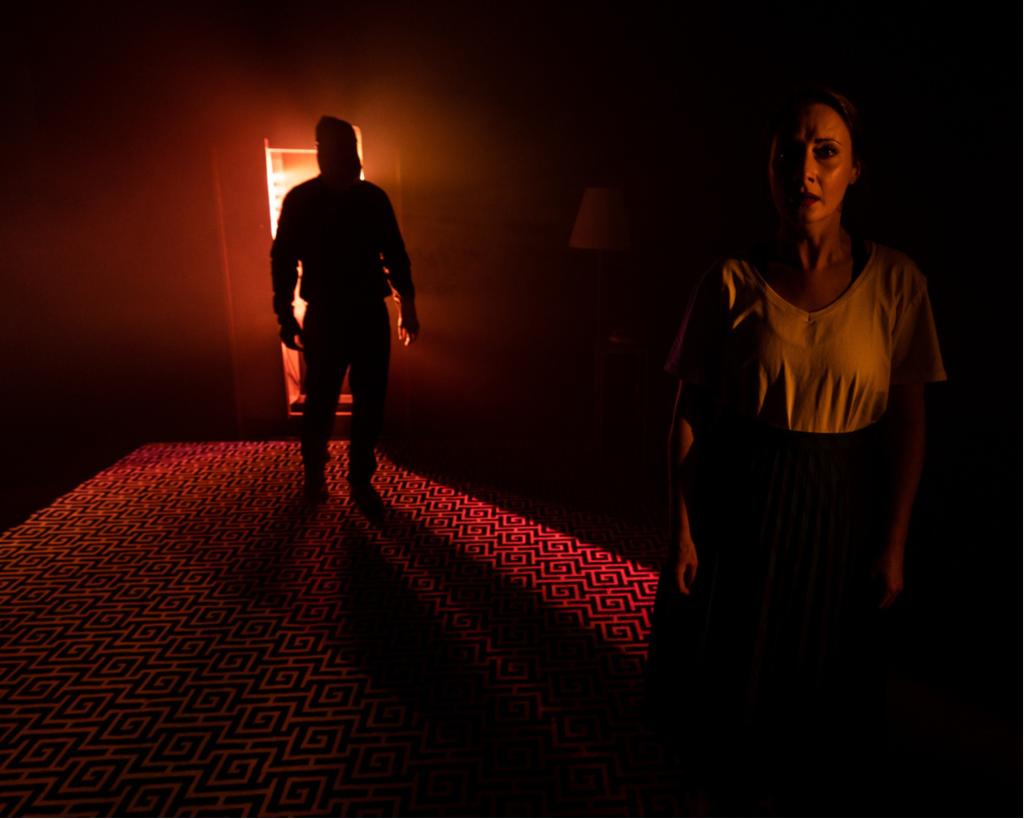
Cyn i ymarferion ddechrau ar gyfer Y Fenyw Mewn Du yn yr Hydref, gofynnon ni cwpl o gwestiynau i’r actor Tom Blumberg am straeon ysbryd, ei ofnau a’i fywyd newydd yn Toronto.

Pam ddylai cynulleidfaoedd ddod i weld Y Fenyw Mewn Du?

Os ydych chi’n hoffi arswyd ac yn mwynhau cael dipyn o fraw (fel fi),  mae’r stori yma’n wych, ac yn llawn eiliadau iasol pur. Ond y prif reswm yw bod prinder straeon arswyd ac ysbryd yn y Gymraeg – wedyn mae hyn yn teimlo fel rhywbeth gwahanol, ac yn gyfle eitha’ unigryw….yn enwedig dros gyfnod Calan Gaeaf!

Ai hon yw’r stori ysbryd gyntaf i chi actio/cyfarwyddo/addasu? Beth sy’n ei gwneud yn arbennig/wahanol?

Ie. ‘Dw i wrth fy modd gyda straeon ysbryd ac felly ‘dw i wedi gweld lot ohonyn nhw, ac mae’n hynod o gyffrous i fod ar yr ochr arall, yn perfformio un am unwaith. Be sy’n ei wneud yn arbennig dw i’n meddwl yw bod y stori’n cael ei pherfformio yn Gymraeg, mae rhywbeth barddonol am yr iaith Gymraeg sy’n gwneud y stori hyd yn oed yn fwy effeithiol yn fy marn i – mae’r delweddau yn fyw ac yn effeithiol iawn.

Rydych wedi symud i Ganada yn ddiweddar, beth ysgogodd y mudo yma, a beth wnaeth i chi gytuno i ddychwelyd i Gymru ar gyfer YFMD?

Do ! Ar ôl 2 flynedd o aros yn yr unfan dros y pandemig, o’dd hi’n teimlo fel amser am antur ! ‘Dw i wastad wedi bod eisiau byw dramor, ac mae Canada yn wlad mor brydferth roedd o’n teimlo fel y lle delfrydol – yn enwedig gyda rhai cyfleoedd actio ar gael yno hefyd, yn golygu gallwn i ddod o hyd i waith yno. Dw i wrth fy modd yno hyd yma. Roedd YFMD ar y gweill cyn i mi allu cadarnhau fy fisa,  ond mae wastad wedi bod yn freuddwyd i fi chwarae’r rhan ers i mi fynd i weld y ddrama yn Saesneg yn y West End pan o’n i’n ysgol ddrama. Mae’n fraint cael chwarae rhan yn ‘premiere y byd’ o’r stori yn y Gymraeg,  felly ‘doedd dim rhaid i fi feddwl ddwywaith am ddychwelyd o Ganada i fod yn rhan o’r cynhyrchiad gyda chwmni sydd wedi ‘nghefnogi i ers blynyddoedd lawer, cwmni sydd yn agos iawn at fy nghalon – a gyda thîm delfrydol o artistiad a chriw cynhyrchu.  Dw i wedi siomi braidd y byddai’n colli fy nhymor Calan Gaeaf cyntaf yng Ngogledd America, achos dwi’n gwybod ei fod yn gallu bod yn eitha’ gwyllt yno ac maen nhw’n mynd i gymaint o ymdrech – ond mi fyddai’n perfformio’n fyw mewn stori ysbryd ar lwyfan, wedyn mae’n fargen digon teg dw i’n meddwl.

Beth sy’n gwneud i chi grynu?

Yr eiliadau mwyaf brawychus i fi mewn unrhyw straeon arswyd yw’r awgrymiadau bach yna o arswyd – fel pan gewch chi gip ar rywbeth sy’n gwneud i chi gwestiynu a wnaethoch chi ei weld mewn gwirionedd, neu ai’ch meddwl oedd yn chwarae triciau arnoch chi, yn dychmygu pethau. Yr eiliadau bach hynny o ddirgelwch, cipolwg o ffigwr tu ôl i chi mewn drych, siapiau rhyfedd yn y cysgodion – pan mae’r dychymyg yn rasio yn wyllt … dyna’r eiliadau mwyaf cyffrous dw i’n meddwl.

Pam fod gwneud theatr yn Gymraeg yn bwysig i chi?

Mae theatr Gymraeg yn hollbwysig :  mae’n hybu’r defnydd o’n hiaith fendigedig o fewn profiad hwyliog a difyr. Mae’n cynnig cyfle hefyd i ddysgwyr gael ymdrwytho yn y Gymraeg y tu allan i’r ystafell ddosbarth, sydd yn allweddol dw i’n meddwl. Dw i hefyd yn meddwl bod y math yma o straeon ysbryd yn cael eu perfformio mor anaml yn y Gymraeg, mae’n grêt gallu rhoi’r cyfle i Gymry Cymraeg brofi stori ysbryd fyw yn ein hiaith hyfryd ein hunain – a dw i ddim yn siwr iawn pam, ond mae’n teimlo’n fwy real yn y Gymraeg !

Oes gennych chi unrhyw straeon ysbryd eich hun yr hoffech chi eu rhannu?

Ddwlen i allu neud hynny ! Dw i wrth fy modd gyda straeon ysbryd, a chlywed profiadau pobl eraill o’r oruwchnaturiol, ond dydw i byth wedi cael profiad ysbrydion fy hun ! Ond dwi’n un o’r bobl od yna fyddai’n falch iawn o gael y fath profiad – mae’n rhywbeth cyfareddol dw i’n meddwl, yn hytrach nag yn frawychus. Mae’r byd go iawn yn llawer mwy brawychus i mi – mae’n gysur i mi rhywsut meddwl bod yna eneidiau o’r gorffennol yn symud yn ein plith … cyn belled bod nhw ddim yn dod ag unrhyw felltithion erchyll fel mae’r fenyw mewn du.

INTERVIEW Tracy-Ann Oberman for The Merchant of Venice 1936

Below is a syndicated interview with Tracy-Ann Oberman for The Merchant of Venice 1936, which is performing at the New Theatre Cardiff from 31 October – 4 November. More information on the show and how to book tickets here.

“The women in my family were as tough as nails.”

Tracy-Ann Oberman is herself no stranger to tough cookies – she’s a formidable actor on stage and screen. But here she is speaking about her great-grandmother and aunts, women with nicknames like Machine-Gun Molly and Sarah Portugal. They came to London from antisemitic eastern Europe at the turn of the last century, and despite all odds managed to build a life and make a living.

Oberman’s family history helped unlock Shakespeare’s enduringly controversial play, The Merchant of Venice. Her relatives survived the Battle of Cable Street in 1936 – a little-known event in London’s East End, when the Jewish community was targeted by the British Union of Fascists, led by Oswald Mosely. Mosley’s blackshirts marched through the area, only to be confounded when the non-Jewish community stood by their Jewish neighbours.

In The Merchant of Venice 1936, Shakespeare’s harsh plot snaps brilliantly into place against this backdrop. Shylock, its anti-hero, is a Jewish moneylender who becomes entangled in the affairs of wealthy non-Jews and suffers terribly for it. In this new version, Oswald Mosely inspires Antonio, the merchant who takes a loan from Shylock and offers a seemingly fanciful penalty for defaulting: a pound of flesh. The heiress Portia becomes “a beautiful glacial Mitford type, awful” – her famous courtroom speech about “the quality of mercy” emerges as an act of hypocrisy rather than humanity. And Shylock changes sex, played by Oberman as a single mother, fiercely committed to her independence and her daughter. “I have one daughter,” she says – “it’s an intense relationship!”

Oberman is an impressively versatile actor – diamond sharp on stage at the RSC and National Theatre, in comedies like Friday Night Dinner and Toast of London, and as Dirty Den’s
nemesis Chrissie Watts in EastEnders. Yet playing Shylock in The Merchant of Venice was never on her radar – growing up, she says, “the play always fascinated and repulsed me.”

Reclaiming the play from a Jewish perspective has proved a transformative experience. It is directed by Brigid Larmour, who recently stepped down as artistic director of Watford Palace Theatre: the pair of them have become, says Oberman, “walking encyclopaedias of this world.” They assembled a strong company of actors – “We call ourselves the Cable Street Collective!” says Oberman. Ray Coulthard’s sneering Antonio and Hannah Morrish’s icy Portia are chilly foils to this ardent Shylock. The result is painfully funny, genuinely upsetting – and unexpectedly moving as the events of the play meld with the heightened drama of the Battle of Cable Street.

Having sold out in Watford and Manchester, the production now embarks on an extended tour. “We’ve had lots of people crying and we get standing ovations,” says Oberman, reflecting on why the show has struck such a chord with spectators. “Whilst they might not have liked my Shylock, they certainly understood why she wants that pound of flesh. She stands in the courtroom with her handbag, with everything stacked against her. A lot of people know that feeling – believing the law is on their side, but discovering it’s only on the side of people that have power.”

This production sat in Oberman’s head for years, as she researched and planned and waited for lockdowns to pass. But now that it has met an audience, what has surprised her? “The thing that surprised me most was the court case,” she considers. “Just how powerful it was to see this woman backed into a corner by all these men, with the palpable hatred and misogyny. It was electric – you could cut the atmosphere in the auditorium with a knife. That was a revelation.”

Playing Shylock as a woman, she insists, isn’t about softening the character – “I didn’t want to make her a victim or change her role in the story” – but, she adds, “maybe I underestimated the impact of a female Shylock. There are a couple of very shocking moments that really upset audiences. In an early scene Antonio comes to borrow money, and Shylock describes him spitting on her and kicking her like a dog – when that behaviour is directed at a woman, it heightens the antisemitism. I think people also see a woman with her rage and anger. She loses her daughter, her money – she loses everything. And when you tell somebody that they’re a monster for long enough, they become that monster.”

The production vividly summons a febrile moment in British history. “My dream is that the battle of Cable Street will be taught as part of the British civil rights movement,” Oberman says. “Mosley had been sending his blackshirts down into Cable Street smashing doors, breaking windows, attacking synagogues and people on the streets, putting up the most horrific leaflets straight out of Hitler’s playbook. But my great grandmother always reminded me that their neighbours – their Irish neighbours, the Afro-Caribbean community, the dockers, the working classes – all stood together. That was a beautiful moment.”

It is clearly immersed in history – but does this also feel like a show about the present? Absolutely, Oberman says. “At a time when we are looking at Britain’s involvement in colonialism and the slave trade, I think we also have to look at Britain’s flirtation with fascism. Oswald Mosley and King Edward VIII, both great friends of Hitler, came close to power – we dodged a bullet. The great message of the play is about the pulling together of all communities – we’re better together, we’re stronger together, especially at times of huge financial and political insecurity. The past shows us what happens when we look inwards: we become very nationalistic and try to pit minorities against each other. We have to be vigilant.”

Oberman doesn’t hide how much this project is personal to her – but it seems she’s not alone. “What has been very moving is how many people want to stay and talk at the end,” she says. That kind of conversations does the play provoke? “A lot of people talk about their own family’s immigrant experience. Young political people want to talk about the Battle of Cable Street, and people who’d never seen a Shakespeare about why they’d found it so accessible. One man came in with about 20 fascist newspapers from the 1930s that he’d found in his father’s loft, which we’ve used as part of our graphics.

There were big conversations: is the play antisemitic? Was Shakespeare? Lots of really interesting conversations.” Part of the impetus behind The Merchant of Venice 1936 was teachers telling Oberman they felt anxious about discussing this contentious play in their classrooms. So the production is accompanied by a prolific strand of education work, alongside the activist group Stand Up to Racism. The team have been into schools and created a pack to support teachers. “We’ve also created an online world which people can look at before or after seeing the play. It’s an incredible resource talking about the play, the 1930s, the history of antisemitism and racism, Oswald Mosley, everything you could want.”

It’s still rare to see a woman standing dead centre in a Shakespeare production – though Oberman tells me, “I can honestly say that when I went into this, it was never with an ego about playing Shylock, it was about wanting to tell the story. I just put my soul into it.” And has it been the experience she hoped? “Every single bit of it has been a complete joy. It’s been more than a piece of theatre – for me, it’s been a mission. And it lived up to all my expectations.”

Interview Credit: David Jays

INTERVIEW Adam Bailey for Jac and the Beanstalk (New Theatre)

The days are getting shorter and the nights are drawing in and that means one thing: the New Theatre’s annual Christmas pantomime is coming, and this year’s is gonna be alriiiiiiiii. Jac and the Beanstalk is the New’s latest festive shindig to sprinkle a little Welsh magic over the Very British artform that is the panto, and Get the Chance’s Barbara Hughes-Moore sat down with the actor bringing the titular adventurer to life: Adam Bailey, fresh from London’s West End who’s starred in the likes of Jersey Boys and The Book of Mormon.

This interview has been edited for clarity.

https://www.youtube.com/watch?v=JH7D76cB8LQ

Thank you for speaking with me today, Adam. Tell us a little bit about Jac and the Beanstalk

What a brilliant panto – I can’t wait to get started. I grew up in Cardiff and it’s going to be a really special thing to be able to come back to the New Theatre.

Could you share some of your memories of the New Theatre?

I’ve been doing shows here since I was a teenager! I did 4 or 5 amateur productions here, so it’s lovely to come back as a professional: it’s a real full circle moment!

And to be playing the titular character, too! Tell me about Jac: what makes him tick?

Well, I’m not sure because we don’t have a script yet! We start rehearsals end of November and that’s when we’ll start to explore all of that. It’s going to be such a fun light show. Panto is a total romp, so I can’t wait!

How did you get involved?

Just like any actor you audition, you sing and you act, and then you get the call.

There are some quite big names on the poster behind you, like Lesley Joseph and Mike Doyle. Have you met either of them yet?

I don’t think I have… although I’m terrible with names and faces!

Well, Mike is a master of disguise, so you could have met him and not known it!

Absolutely!

What are your first memories of panto?

Although it wasn’t a family tradition, I’ve been to panto at the New Theatre as a child. My first proper memories were the first times I did panto when I was in training, during my econd and third year. it’s so much fun, and so important to the fibre of theatre in this country. It’s so many people’s first foray into theatre, so it’s a really wonderful thing.

You’ve performed both in pantomimes like Aladdin, and musical theatre like Jersey Boys in the West End. What are the differences between the two – or is it the same process?

It’s all theatre at the end of the day. It’s essentially your office job! But all the shows you do are slightly different and it’s the people who make it. There is something special about panto and how stylised it is, because there’s nothing else like it. It’s such a British staple and such a unique tradition.

What’s the secret to a good pantomime?

Good people. As long as you’ve got good people, then it’s gonna be brilliant and I’m excited to meet the cast.

Will it get Cardiff audiences on their feet?

Yes! Panto is a party at the end of the day and we want to get everyone up on their feet and feel good. We want to send everyone on their way singing.

How does the show incorporate Welsh references into Jac and the Beanstalk?

The clue is right here in the title: we’ve taken the ‘k’ out of ‘Jack’ for a start!

Will there be room to improv?

With certain characters, yes. Mike Doyle for example has done this over and over and there will be improv… but within reason! This isn’t a seven-hour-long panto: we’ve got to do two a day!

What about the costumes?

They’re nice and bright and colourful! What other shows let you get away with wearing things like this?

Do we have any special effects to look forward to?

I hear there’s a special effect with the giant, but it isn’t common knowledge so I can’t give anything away. You’ll just have to wait and see…

Anything else you can tease about the show?

The pantos here are always brilliant. So come along, enjoy yourself, sing along, have a dance: it’s gonna be great.

Jac and the Beanstalk is performing at the New Theatre Cardiff from 9 December 2023 – 7 January 2024. More information and how to book tickets here.