
Young Critics and 3rd Act critics are working in partnership with Amgueddfa Cymru – National Museum Wales (ACNMW) http://www.museumwales.ac.uk/ on a new free project focusing on the quality and standards of exhibitions and programming at their sites across Wales.
ACNMW are keen to generate feedback and data from interested visitors regarding what makes a good exhibition and programme. The project aims to make the work of museums more accessible to the general public and increase the reach of culture and heritage. The project may also focus on Cadw sites and local museums and galleries.
The project is expected to last for 6 months initially, before being reviewed, and participants will be expected to commit to the lifetime of the project. Staff at National Museum Wales will provide training and workshops, and exclusive expert guidance on their roles. All participants will be supported in critical response methods and use of digital technologies to develop critical thinking skills.
The first workshop will take place on Saturday the 5th of December 10-1pm at National Museum Cardiff, Cathays Park, Cardiff CF10 3NP.
If you aged between 12-25 or 50+ and would like to be involved please contact project coordinator Guy O’Donnell on odonnell.guy@gmail.com
All posts by Guy O'Donnell
Review Dirty Rotten Scoundrels, WMC by Barbara Michaels

Dirty Rotten Scoundrels at Wales Millennium Centre, Cardiff
Book by Jeffrey Lane
Music and lyrics: David Yazbek
Director and Choreographer: Jerry Mitchell
Reviewer: Barbara Michaels, Third Act Critic
Rating: ***
Based on the iconic film starring Michael Caine and Steve Martin, classified as “the funniest film of all time,” Dirty Rotten Scoundrels first hit the London stage as a musical a year ago. Telling the tale of a mega scam pulled by a couple of conmen on the French Riviera who pull out all the stops in a no holds barred contest in order to win the affections (and thus access to the money!) of a millionaire soap heiress, it’s harmless fun in today’s world beset by drug offences and more. Nothing is as it appears – reflected in an atmospheric and skilfully lit set where even the palm trees are manifestly fake!
There is no doubt whatsoever that as a comedy film starring Michael Caine and the wonderful comic actor Steve Martin Dirty Rotten Scoundrels worked wonderfully well; the question is, does it work as a musical?
The answer is yes – but only up to a point. A stage production has advantages and disadvantages over a film – two very different art forms cannot, and do not profess to be, identical. The snap, crackle and pop that characterised the 1988 film does not really get going in the stage version until the second half, when it suddenly finds it feet.
This is due in part to one of the major additions which writer Jeffrey Lane has made to the original film script i.e. the romance between Andre, the hapless and reluctant aide to camp of conman Lawrence Jameson, the conman responsible for laying the trap – or rather traps – to catch an heiress. As Lawrence, Michael Praed is suitably debonair and suave, but could at times be sharper off the mark, but as Andre old-timer Mark Benton has a masterly control of the comedic, delivering his lines with an inherent chuckle. As the object of his attentions, the ‘lady of a certain age’ Muriel – British as opposed to American as in the film – Geraldine Fitzgerald is a delight. The musical number ‘Like Zis/Like Zat’ which she sings with Benton is a gem, and fully justifies adding an additional element which, although it would have been superfluous in the film, greatly enhances the stage version.
Noel Sullivan, as the ‘innocent’ conman the susceptible and lovelorn Freddy whose misadventures are at the centre of the mayhem, performs with gusto. As Christine Colgate, the blonde- with- the- dosh , who is targeted by the conmen, Phoebe Coupe responded magnificently to the challenge , due to Carley Stenson being unwell in the first night at this venue, coming into her own in the hilariously funny ‘Love is My Legs’ in Act II.
A great ensemble performs the dance numbers with verve and expertise and showcases some wonderful costumes, reflecting the era in which the story is set. Overall a show to be enjoyed for what it is – entertainment, and not to be taken too seriously.
Runs until Saturday August 22nd at the Wales Millennium Centre.
Review Barnum at Wales Millennium Centre, Cardiff by Barbara Michaels

Barnum at Wales Millennium Centre, Cardiff
Book by Mark Bramble
Lyrics: Michael Stewart
Music: Cy Coleman
Reviewer: Barbara Michaels
Rating: 4.5
Jugglers, acrobats, gymnasts et al entertain as the audience takes their seats – latecomers miss a treat. Spectacle and excitement with dazzling displays of circus expertise – Barnum has them all. Based on the life of American showman Phineas Taylor (PT) Barnum who took his team of trapeze artists clowns, jugglers plus talented performers such as the singer Jenny Lind all over America and the major cities of the world, this is musical theatre traditional style given a new fillip by Cameron Mackintosh in this Chichester Festival Theatre production.
All the elements of the original Broadway production are here, but for those who were fortunate (or are old enough!) to have seen the production starring Michael Crawford which ran for a record-breaking 655 performances at the London Palladium after it opened in 1981, the big question must be: Does Brian Conley who is playing the demanding and exhausting role of showman PT Barnum live up to the almost-impossibly-high standard created by Crawford?
The answer has to be: Yes! Yes! And Yes! Conley’s Barnum is a likeable con man who could charm monkeys off trees – and does. Though when he forsakes his long-suffering wife Chairy, whose views differ radically from his as to what is right and what is not, siding with him becomes momentarily difficult. Even here, how can you feel anything but gut-wrenching suspense for a man who walks a tightrope to get to the temptation awaiting him on the other side in the shape of a delectable Swedish opera singer?? Metaphorically speaking, you say? No – in a daring act which took weeks to perfect, Conley actually does walk the tightrope. Indeed, throughout the show, along with the rest of the cast, he runs the gamut of acrobatic and dance skills with aplomb and style.
The bubbly Linzi Hateley more than holds her own as Chairy, the wife who despite brooking none of her circus-loving hubby’s nonsense, remains true to him till the end. The story of their marriage, with all its ups and downs, runs in perfect tandem with the on-going razzmatazz of the show, peppered with songs such as the foot-tapping ‘Come Follow the Band’ which opens Act I and Barnum’s theme song of ‘There Is A Sucker Born Ev’ry Minute’ plus the poignancy of ‘The Colors of My Life’ sung with feeling by Conley and Hateley, as is ‘So Little Time’ later, in Act II. If there is a criticism to be made – and in such a polished production it seems almost invidious to do so – it is that Kimberly Blake as opera star Jenny Lind, while looking stunning and ethereal in an ice blue creation that would not look out of place at the Oscars, is a tad too ethereal. The lack of chemistry between her and Barnum renders their love affair not entirely believable – a minor hiccup in an otherwise five star production.
A considerable chunk of credit for the fizzing excitement that characterises this high-energy show must go to the ensemble. On stage for most of the time, the acrobats, trapeze artistes, high wire experts and dancers never flag. Some neat cameo roles, too, from David Birch as an anxiety-ridden Wilton, while Edward Wade’s Julius Goldschmidt is a gem.
With great costumes and breath-taking staging – including a mock-up of the nether limbs of an elephant – this show is a firecracker.
Runs until Saturday August 15th
https://www.wmc.org.uk/Productions/2015-2016/DonaldGordonTheatre/Barnum/
Review NYOW St David’s Hall, 2015 Tour
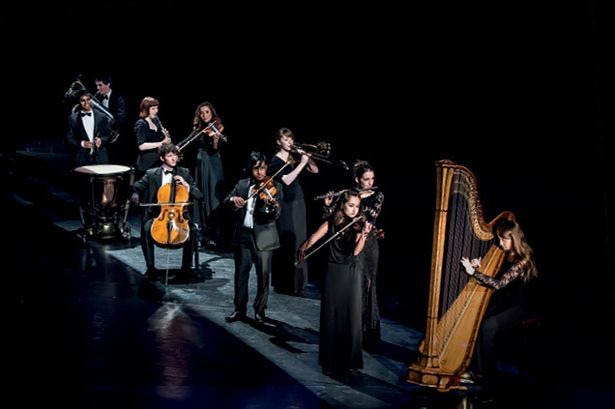
Returning once again to the Welsh capital, the 115 strong National Youth Orchestra of Wales took to the stage at St David’s Hall for the final performance of their 2015 tour. Performing an equally exciting and exhausting compilation of early twentieth-century Parisian ballet works, the orchestra was in the capable hands of internationally acclaimed conductor Paul Daniel (CBE) whose ambitious second half of the programme pushed the orchestra to their limits.
Easing in with Paul Dukas’ lesser known La Péri, this was an apt work to sit alongside Stravinsky’s The Rite of Spring as the two pieces premièred in the same year. Daniel’s was a subtle interpretation; the introductory rousing brass fanfare moved into a contrasting web of gorgeous full bodied melodies in the strings and ethereal orchestral pianissimos that captured the mysticism of the Persian legend of Alexander the Great that the work is inspired by. This was followed by Florent Schmitt`s La Tragedie de Salome, another atmospheric piece during which the impressionistic oboe and cor anglais passages were particularly enticing. Set in two, the second part was characterised particularly well. Full of suspense and percussive pathetic fallacy, the thunderclaps added colour and maintained the momentum of the storm.
It was a well thought out programme. The first half of the concert passed quickly with beautiful melodies and subtlety that was set up to be utterly shattered in the second half by Stravinsky’s savage The Rite of Spring. When I discovered that the NYOW were braving Stravinsky’s finest work, I felt a pang that I was no longer sitting in the violin section. This is a work that every musician wants to experience on stage.
Prefaced by a harp fanfare written during the NYOW residency by two young composers, the intricate introduction was confidently conducted by co-writer Daniel Soley. Immediately following this, Paul Daniel waited for complete silence before handing over to Llewelyn Edwards to initiate the singing bassoon opening to The Rite of Spring during which the orchestra’s capability was showcased.
For the most part, the relentless rhythmic frenzy was precisely executed and the tumultuous full orchestral sound during the sacrifice was attacked with sheer force and commitment; it is clear that Paul Daniel has worked tirelessly with the responsive orchestra to pull off such a monumentally challenging work. Many would be sceptical about whether a programme this ambitious could be effectively performed by a youth orchestra but, as always, the National Youth Orchestra of Wales stepped up to the challenge. Incorporating The Rite of Spring into the programme gave soloists particularly in the woodwind section, the opportunity to demonstrate their maturity as players.
After a two week intense rehearsal and concert schedule, the professionalism and commitment from these talented young performers will come at the usual price. Today the famous Nash Crash begins for them all!
Review The Ladykillers, Chapter Arts Centre, Cardiff by Barbara Michaels
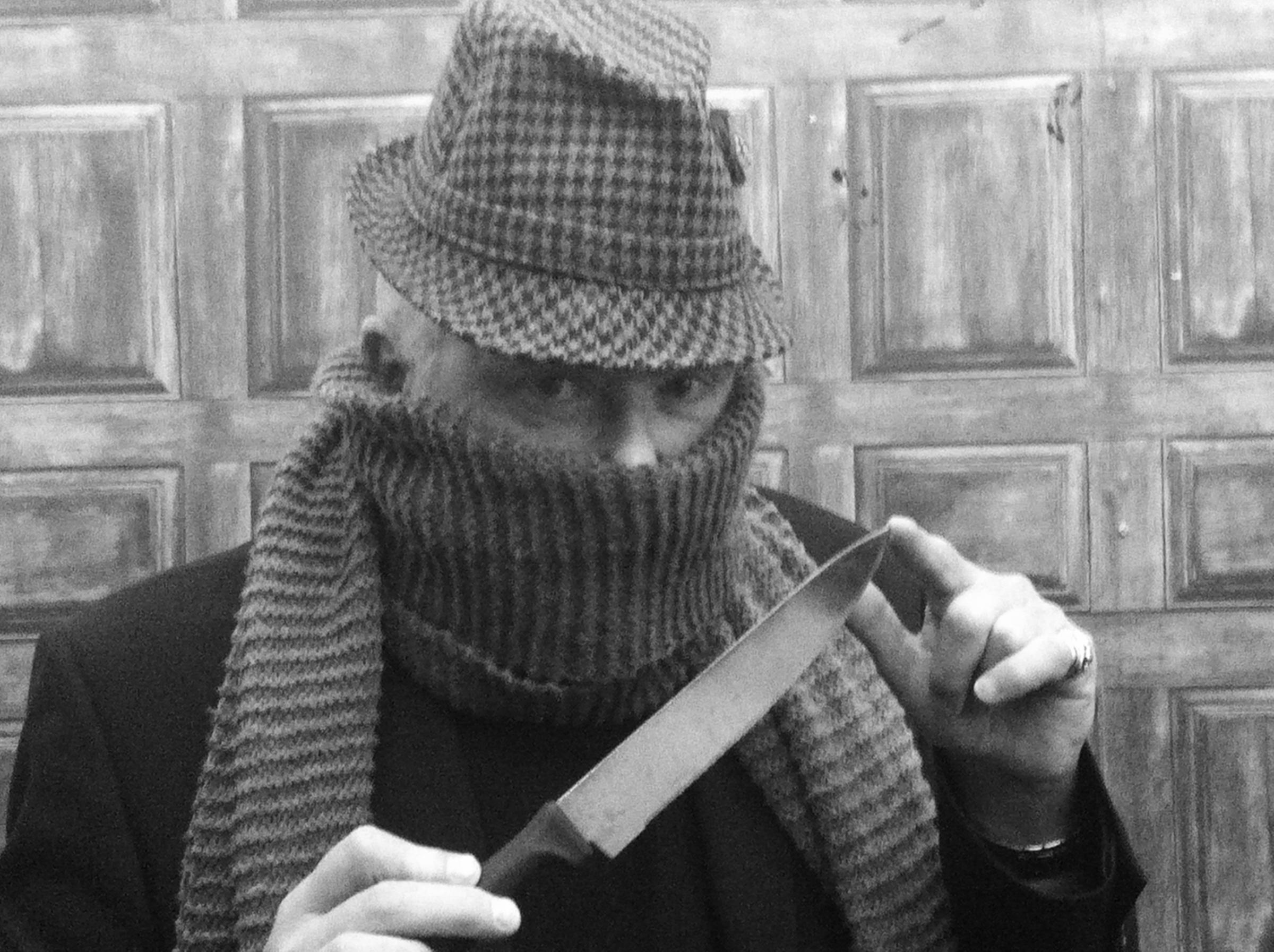
The Ladykillers at Chapter Arts Centre, Cardiff
Original screenplay by William Rose
Adapted by Graham Linehan
Production by Everyman Theatre
Director: Marie-Claire Costly
Reviewer: Barbara Michaels, Third Act Critic
Rating: [3.00]
Murder and mayhem are the buzzwords for William Rose’s comedy-thriller The Ladykillers. For those fortunate enough to have caught a screening of the Ealing Studios 1954 motion picture, Everyman Theatre’s production of the adaptation by Grahan Linehan will bring back fond memories. Who could forget the iconic performance by theatrical icon Alec Guinness as the crafty (and dotty) Professor Marcus?
Take an eccentric old lady living on her own with her parrot and add a gang of crooks masquerading as musicians who rent a room in which to plan a robbery and the scene is set for a series of mishaps. When the old girl, Mrs Wilberforce, discovers what they are up to there is only one solution – to bump her off before she turns them in. But that is not as simple a matter as it might seem – and neither, as it transpires, is the elderly widow who despite her old fashioned appearance might be more than a match for the bumbling ineptitude of the amateur criminals.
Characterisation and pace play a major part in putting on a play of this genre, where a great script full of humour should raise delicious giggles among the audience from start to finish. On opening night this sadly was not the case. It was not until a second half with increased momentum that the performance really got going and we were given a heartening glimpse of what the cast are capable of achieving. It is reasonable to expect things to improve later in the run, for Everyman Theatre has a good track record – their Oh What A Lovely War last year was tops.
As the “master criminal” Professor, Paul Fanning is believable although relying overmuch on twiddling his overlong scarf. Not quite dotty enough for this critic, although the Prof’s darker side is well presented in Act II. As for the rest of the gang, Steve Smith’s sharp suited Mafia-type Louis is spot-on and Arnold Phillips suitably military as Major Courtney. As Harry, the youngest of the crooks, Sion Owen settles into the role nicely in the second half.
Now we come to Mrs Wilberforce, played by Ruth Rees who admirably displays both the mobility problems of increasing age, limping around the stage as is suitable for one later described as Mrs Lopsided, and the finickiest of advancing age in another era. Nevertheless, Rees’s portrayal is still a tad too lively for the part – a few more wrinkles added in make-up might help. Loved the costume, though, particularly in the tea party scene and the posse of old ladies is fun – Lynn Hoare gets it just right as the gushing Mrs Tromleyton.
Full credit to the set designers for their clever use of every area of the stage and for props for some wonderful touches – wonky picture, grandfather clock et al, not to mention the interesting musical instruments.
Runs until Saturday May 23rd.
Review Man To Man Weston Studio, WMC by Barbara Michaels
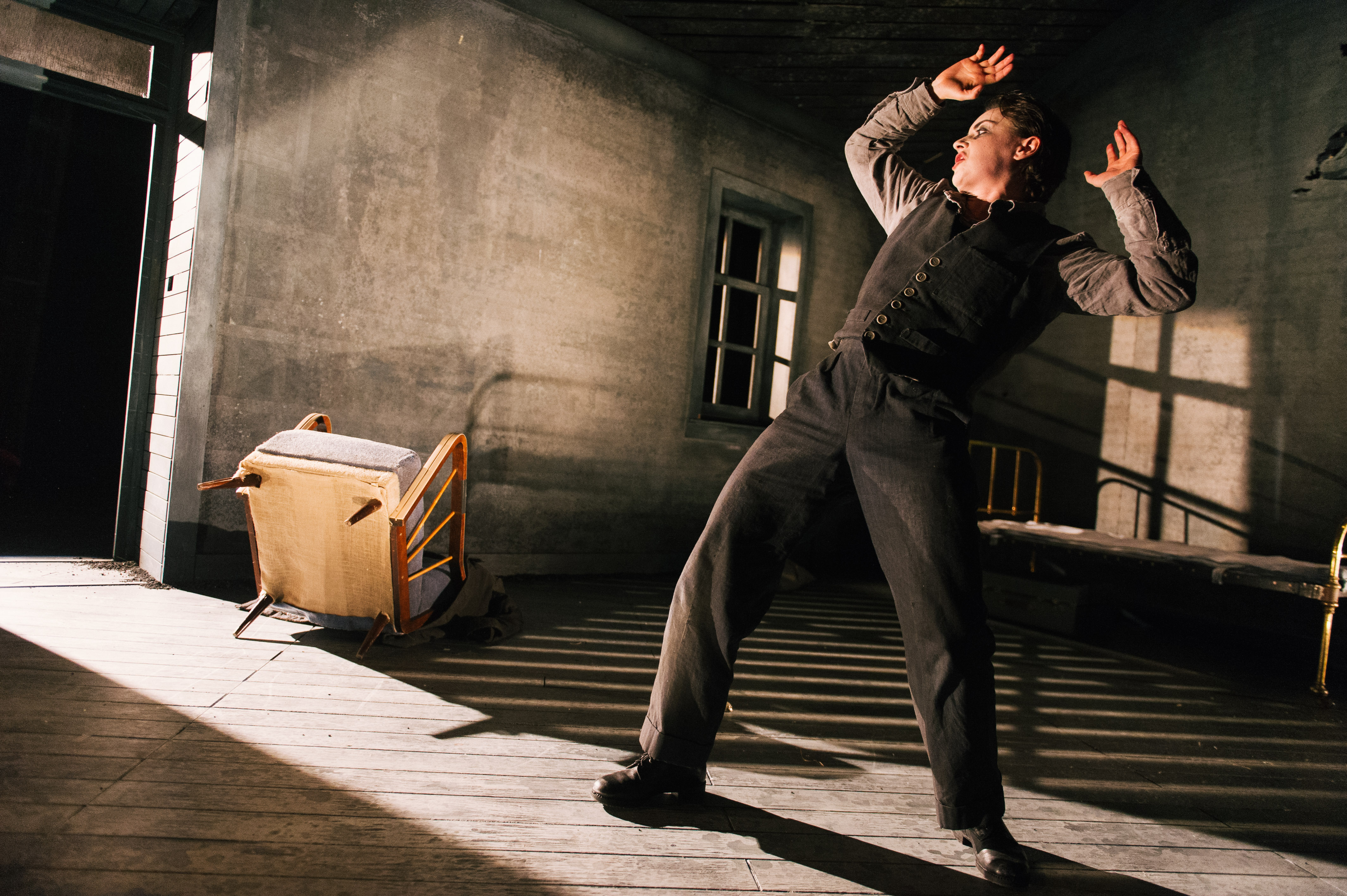
MAN TO MAN Weston Studio, Wales Millennium Centre
Book by Manfred Karge
Translated and adapted for the stage by Alexandra Wood
Co-directors Bruce Guthrie and Scott Graham
Reviewer: Barbara Michaels
Rating: [4.00]
Writer Manfred Karge has brought a new perspective to the horrors of life in Nazi Germany for those hunted down by the regime, with many forced to take extreme measures in order to survive. This is the story of Ella Gericke, a young woman who takes on her dead husband’s job as a crane driver, together with his identity, in order to live. We witness her terror and the lengths she must go to in order not to be found out. Incredibly, she manages to maintain the deception for over forty years. At the core of the piece as the reason for Ella’s decision – Hitler’s persecution of the Jews, brought to the fore when Ella is forced to eat pork (forbidden by Jewish dietary laws) in order to avoid discovery.
This is a brand-new adaptation and production of an extraordinary one-woman play that premiered back in the 1980s when it won considerable acclaim. Offering as it does a searching and searing overview of Germany under the Third Reich, this rare cross-genre piece is not to be missed not only for this reason but for its exploration of identity through episodic scenes in Ella’s life.
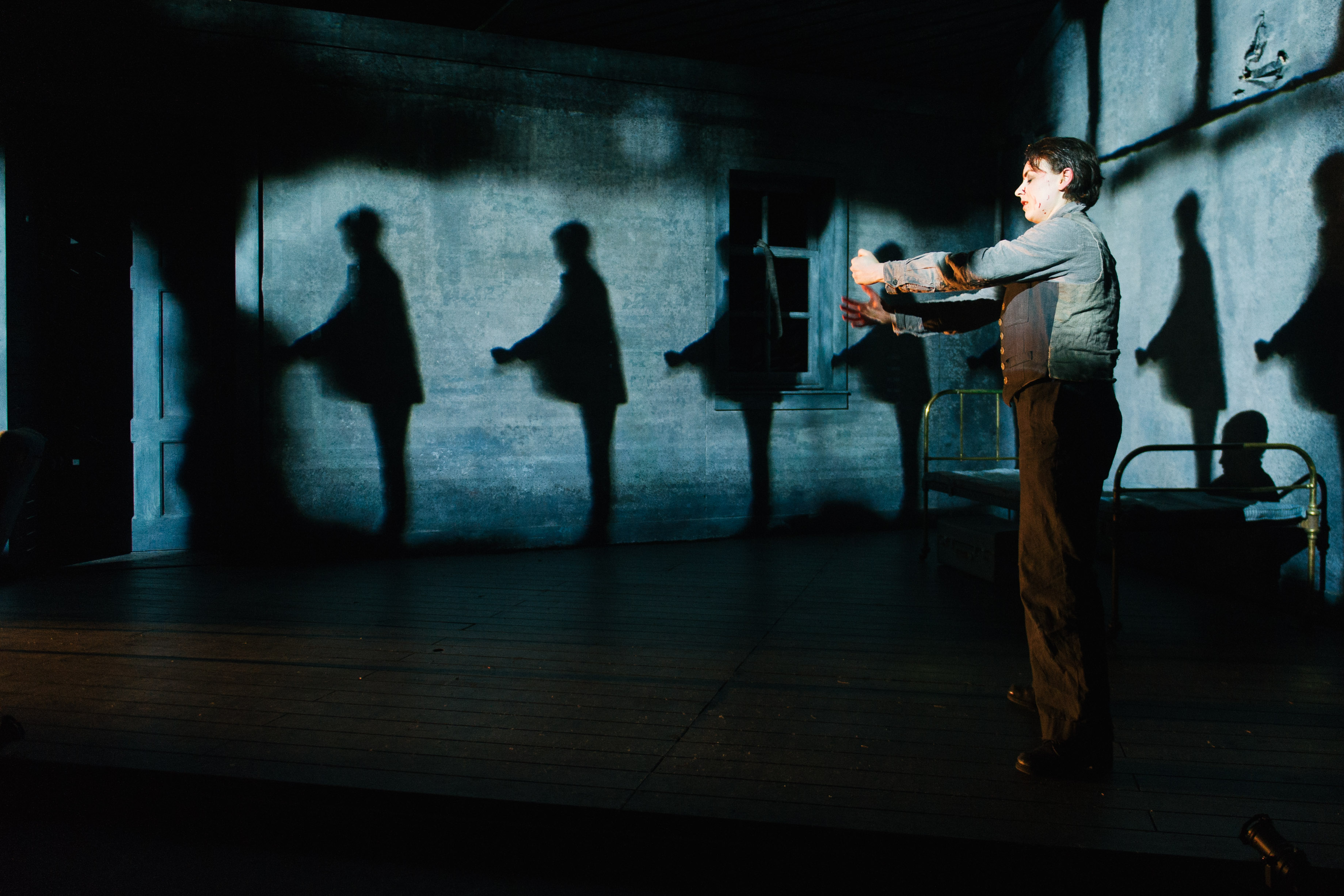
Ella, played by Margaret Ann Bain, struggles to keep afloat in a bewildering male world of beer cellars and crude masculine humour, at the same time leading a false existence with the fear of discovery looming over her. Bain manages to pull off a balancing act, maintaining credibility as a man while retaining an underlying hint of a feminine sexuality at the core of Ella’s being and making the audience aware at all times of the loneliness of a life devoid of close contact with another human being – a life dependant on its memories. No mean feat, this, and coupled with her acrobatic skills – the physicality of the role requires some difficult and hair-raising moves – lifts Bain’s performance beyond the norm, placing her next in line to Tilda Swinton, who received rave reviews for playing the role when the play was premiered at the Segauspeilhaus Bocehum under its original title of Jacke wie Hose. A small caveat, and one that is easily rectified, is that Bain could slow down a tad in the opening sequences in which a strong accent makes for a lack of clarity at times. Nevertheless, an outstanding performance by a young up and coming performer and one well worth seeing.
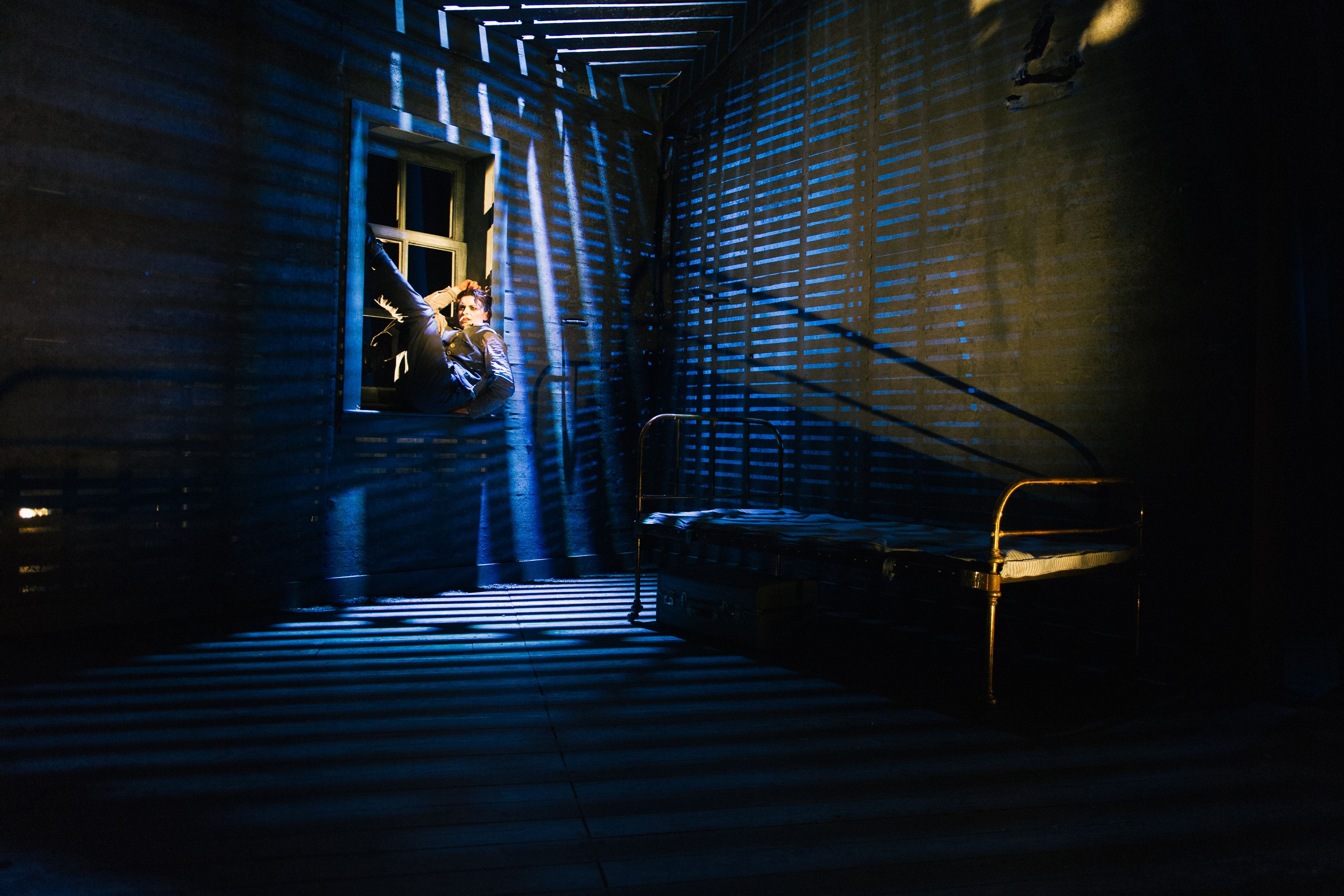
Sparsely furnished it may be, but the set by Richard Kent makes a major contribution in its depiction of scenes such as the fall of the Berlin Wall – great input by video designer Andrzej Goulding -and, poignantly, the mirror image of Ella as a girl, as does Rick Fisher’s clever lighting.
Co-directors Bruce Guthrie and Scott Graham are to be congratulated on bringing to the stage an extraordinary piece whose daring combination of prose and poetry, realism and imagination is in itself a considerable achievement.
Runs until March 27th
Photographic Credit Polly Thomas
Review The Blood of Eden by Julia Kagawa
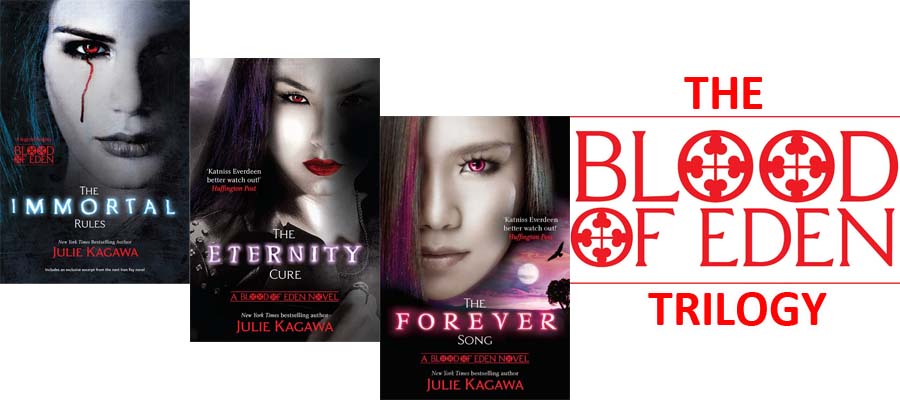
I recently read a trilogy called The Blood of Eden. It’s written by Julia Kagawa, and each of the series of books are equally enticing.
The series is about a girl named Allison Sekemoto and her trials and experiences both before becoming a vampire and then after, with other things weaving their way in and becoming equally important.
While the first book, The Immortals Rules, starts off very slow, you can easily begin to wonder if in fact: Will this book end up like every other vampire story quite possibly ever created? The answer is no, it just takes a while to get there. However following this, you realise that everything you’ve read on the blurb has already happened within the first part of the story, which is only a number of chapters. Your first thought probably races to: There better be something else coming up and fast. And let me tell you, there is!
After my own personal rocky start with the book, once the jagged phase has been passed, the book becomes easily enjoyable and a page-turner that’s so lethal that if anyone tried to grab the book off you, they’d probably get a paper cut. The plot spirals into situations that seem to get even worse as you go, before eventually getting resolved, but usually with another outcome that pushes into the next plot arc, so there’s always something else at the end of one situation.
The second book, The Eternity Cure, starts off neither slow nor fast. The first book leads off with something immediately followed up in the second, however it can be considered slow the way it starts out. Our main character, Allison (Or Allie) is travelling alone in search of someone, with little interactions until the plot finally opens up, and once it does the story immediately starts rolling. One thing I noted about the second book particularly (and later on, the third book) was that at certain times of the story, the next moves of some characters who are meant to be unpredictable, are rather predictable. Maybe I’ve seen too many action/adventure type films or read too many of the books so that I’ve started to notice what the bad guys do and when, but for a character who is our main antagonist, he, on multiple occasions, is described as insane, and often has other tricks up his sleeve, is predictable at a crucial point in the series. (This is towards the very end of the second book and until around a quarter way through the third. I won’t mention what happens in case anyone would want to go into the story without knowing anything to ruin it beforehand.)
The third and last book, The Forever Song, doesn’t actually start off as slow as the others may. It has a clear plot with one main objective, albeit some smaller ones (which gradually grow in importance) fitting their way in. This final book can also become slightly predictable at points, but not at hugely critical times during the plot.
We have a number of consistent characters in the story, starting with our main, Allison Sekemoto, and then we have those immediately close to her. There’s Kanin, the one vampire who made Allison into a vampire herself, he’s the ‘cryptic’ type of character who you suspect to know everything about a situation. There’s Jackal, (Who, albeit, isn’t introduced until the later part of the first book, but is consistent after that.) who was also turned into a vampire by Kanin, making Allison and himself almost “blood relatives”, and runs an army of humans. There’s also Zeke (Or Ezekiel) Crosse, he’s a human who Allison accidentally finds, and inevitably falls for – but it isn’t bland and boring, the whole: “Oh, it was obvious this was going to happen – it happens in EVERY vampire story!” Well. It is at first, but then the ball gets rolling, and you realise you probably didn’t expect to get this far involved.
My own absolute favourite character in this series would have to be Jackal. While at first, he appears to be a huge antagonist, he eventually winds up on the same side as Allison. His speech is full of sarcasm and taunting and his personality is full of: “Act if you belong, and then you will.” Which, I personally took a shine to. Witty comebacks and a confident stride with a mocking smirk thrown in for good measure is the character trope I seem to like best, it seems. Jackal acts to diffuse tension in some situations, can be stubborn and irritating, and can then decide to go to the opposite end of the spectrum and make certain people understand what they need to do to improve their situations – though still with a mocking tone of voice.
The book series as a whole is an enjoyable one. It is neither too short, nor too long. It has amounts of action and adventure to make any fan of that genre happy, and it has comedy and romance to balance out the fighting. Each character is different and leaves a different impression on all, all the while dealing with situations that seem impossible to fix. Vampire stories may not be for everyone, but for those who enjoy them – I’d recommend you this series. It’s not “Just the same thing as all vampire stories”, and can easily leave a positive and optimistic impression for further stories of the same genre.
REVIEW Oh What A Lovely War, Everyman Theatre by Barbara Michaels

Oh What A Lovely War at Chapter Arts Centre, Cardiff
By Joan Littlewood
An Everyman Theatre Production
Director: Jackie Hurley
Musical Director: Lindsey Allen
Choreographer: Richard Thomas
Reviewer: Barbara Michaels
Rating: [4.00]
Portraying the horror of the trenches and the politics behind World War I, Everyman Theatre’s production of Oh What A Lovely War joins the ranks of performances in memory of those who fell that have taken place all over Britain during the past centenary week.
Bringing to the stage once more Joan Littlewood’s iconic 1963 Theatre Workshop production, complete with Pierrot costumes and a backdrop of photographs from the war zones as well as staggering on-screen statements of the numbers lost in what was supposed to be “the conflict to end all conflicts” is an ambitious undertaking. Everyman Theatre rises superbly to the challenge, wisely choosing to present the piece as “A musical play,” rather than musical theatre, although where to draw the line between genres is never clear-cut.
All the more credit, then, to director Jackie Hurley for staging a performance of this profoundly moving piece of theatre, which at times gives rise to an audible intake of breath from the audience as the ever-increasing numbers of the soldiers who died are flashed on the backdrop, yet managing to present in tandem with this an upbeat element which gives a balance to the overall result.
How, indeed, could it be otherwise – despite the grim reality of the core subject matter – when you have a talented young ensemble cast that includes some excellent singers and dancers? Songs that depict to a T both the era and mores of the time – from that of the title to familiar music hall song and dance numbers such as ‘I’ll Make A Man of You, ’ the foot-tapping ‘Row, Row, Row,’ and lump-in-the-throat ones such as ‘Keep the Home Fires Burning’ are memorable. Choreographer and nimble-footed dancer Richard Thomas has done sterling work here, as has Musical Director and on-stage pianist Lindsey Allen (despite grappling with a slightly out-of-tune piano.).
Change of mood is crucial and on the whole handled well, although occasionally erratic, as can happen on a small stage with minimal props. As the fighting escalates, military leaders thrash out the strategies of waging war, putting forward disastrous solutions that only prove them to be blindly oblivious to what is really going on, while the young soldiers who joined up with such youthful enthusiasm slowly come to realise that the “War games” are not at all what they expected.
As a sombre cloud hangs over Europe, the deafening noise of exploding shells brings a powerful sense of the grim reality of war. Amid a number of poignant moments, the one that perhaps more than any tears at the heartstrings is Christmas Day in the trenches. The emotional impact of the sound of the German soldiers singing ‘Stille Nacht’ floating across No Man’s Land, followed by the exchange of gifts and fraternization between the two sides, is huge, giving rise – not surprisingly – to sniffs from some of the audience.
Focus of this production is, quite simply, to honour those who lost their lives while depicting the behind the scenes wheeler-dealing and obstinacy that resulted in such tragically large numbers of young men losing their lives.
In other words: War is a dirty business.
Runs until Saturday, November 15th, at Chapter Arts Centre, Cardiff.
Review Caitlin, Chapter Arts Centre, Cardiff by Barbara Michaels

Credit Warren Orchard
Choreography: Deborah Light, Eddie Ladd and Gwyn Emberton
Director: Deborah Light
Caitlin; Eddie Ladd
Dylan: Gwyn Emberton
Reviewer: Barbara Michaels
Rating: [3.5]
Based on the writing of Caitlin, the wife of Welsh poet Dylan Thomas, this dance production tells of her life with the poet through the medium of a meeting of Alcoholics Anonymous which she started to attend some twenty years after his death. Similar in style that of the one-woman show performed at the Sherman Theatre in 2003, it could equally have been named ‘The Agony and the Ecstasy.’
Caitlin’s recognition of the destruction wrought upon her life is portrayed in a series of dance moves, many of them violent in the extreme. In focussing on the turbulences of the Dylan marriage, director choreographer Deborah Light adheres closely to Caitlin’s own perception of her alcoholism and her life. The athleticism and technical skills of Eddie Ladd as Caitlin are showcased brilliantly, although there is a tendency to over- use of repetition, which can be tedious at times. One thinks of Ladd as a dancer but Light also allows her to speak, albeit briefly. Her speaking voice enthrals as much as her dance technique and makes a considerable contribution to Ladd’s characterisation. Her reiteration at intervals throughout that, while Dylan was a poet, “I could have been a dancer” adds poignancy to the overall projection of chaos, with dancers and furniture crashing around the stage for much of the time.
Ladd’s boundless energy is phenomenal, as is that of Gwyn Emberton, as Dylan. Many of Emberton’s dance moves require him to roll around the floor or balance precariously on a pyramid of stacked tubular and plastic chairs that teeter ominously. The said chairs are an integral part of the production, being used by the dancers use not only to represent actual objects – a baby’s pushchair, for instance – but also mood. There is no set, and these are the only props, barring a paperback book and four glasses of water with sweets in. Seated on some twenty chairs of the same ilk are the remainder of the cast (actually the audience), representing the members of the AA meeting which Caitlin is addressing.
In the year which marks the centenary of Dylan Thomas’s birth and the 60th anniversary of the iconic Under Milk Wood, it was inevitable that all aspects of his life would be explored in theatrical performances both nation and world-wide. His lifelong battle with alcoholism has been well documented; that of his wife Caitlin possibly less well so, In portraying this, and showing that while in some aspects it bound them together, Light’s production shows how eventually it destroyed not only their marriage but both of them.
Runs at Chapter for two more performance: Thursday October 30th at 6.30 and 8.30
Performances on Mon 3 + Tue 4 Nov at Volcano, The Iceland Building, 27-31 High Street, Swansea.
A statement regarding next years Theatre Awards
Theatre Critics of Wales Awards now the Wales Theatre Awards
Dear Friends and Colleagues,
The awards scheme will now be run by an independent, not for profit company and there will continue to be an annual awards ceremony. For 2015 the date and venue have been agreed for January 31st at Sherman Cymru, Cardiff. For work to be eligible for nomination, it must have been created and presented in Wales in the celebrated year. For the 2015 awards, this will be between 1st January and 30th November 2014. In subsequent years the period will change to the start of December to the end of November the following year.
We plan to have individual critics announcing the shortlists and the winners. As we are committed to the awards being increasingly bilingual, we plan to have a Welsh speaking and English speaking presenter alternating during the awards ceremony. We intend both widening the number of critics taking part in the nomination process and also contributing more effectively in the selection of winners.
We will create the longlist by asking more professional reviewers to nominate a winner and Highly Commended shows/individuals for each award and, importantly, give a short written reason for their choices. Unlike previous years, we will stress they DO NOT have to nominate in any category they do not wish to.
Each genre covered will have a panel of jurors, who will be reviewers themselves. They will look at all of the submitted nominations and accompanying comments (to which they will also have contributed) for their genres, and decide on the winners and those that are Highly Commended. For the non-language based awards and overall Director winner, the genre panels will come together and select winners. The panels for each genre and overall panel is then expected to write down WHY the winner has won and a sentence on the Highly Commended, ensuring feedback and openness.
We will apply the National Union of Journalists’ code of conduct and social media guidelines to the way the Awards are conducted. We will ensure the strong link with the Young Critics scheme is maintained as in the past and we will continue to include Young Critics on all of the panels.
The generous sponsorship of the award categories by arts organisations and venues will now also contribute to the establishment of a Development of Critical Writing Fund (DCWF). To emphasise the awards’ independence, they will not be category sponsors. The DCWF will be used to fulfil the following: Enable travel, accommodation etc. for critics to see more performances across Wales – something that is sorely needed – working alongside the Young and Third Age Critics. Act as a network to ensure critics are aware of shows and that reviewing opportunities exist. Work with the venues, individual companies and independent artists on ensuring critics get access to tickets. Work alongside any other organisation that is working to increase capacity and skills across Wales. (We will not directly take the mantle of trainers or pay for reviews etc. as we feel this is the role of professional training organisations, the media itself, and possibly an area for ACW to consider.) Work with venues and organisations to help them build links with their media and with critics.
The awards scheme has enjoyed generous sponsorship from a diverse range of organisations that are not directly arts organisations or venues, such as colleges, agencies, and the media. We are asking those sponsors to continue sponsoring.
Please contact Mike Smith: mike@mediasmith.co.uk or Harriet Hopkins: harriet.g.hopkins@gmail.com with any queries about the awards, how to nominate and sponsorship.