
Category Archives: Theatre

Review, Acid’s Reign, Relish Theatre, Vault Festival by Hannah Goslin

 out of 5 stars (3 / 5)

I am sad that, with this likely the last Vault’s Festival, I haven’t had the chance to visit as much as previous years. But how intriguing, to come across two pieces of Queer Theatre, touching on similar themes.

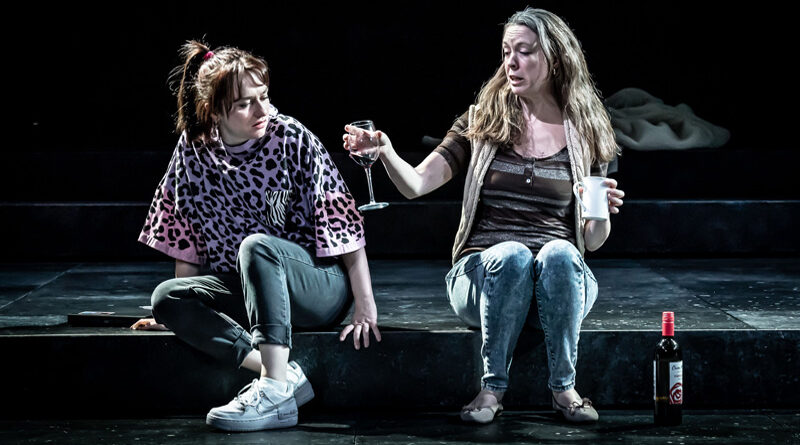
Acid’s Reign is a drag show come informative theatre, highlighting in a cabaret yet theatre narrative, the impact of various pollutants on the World and how it is slowly being destroyed. When I say that there are similar themes, Queer Planet and Acid’s Reign both touch on nature and the element of same sex or a-sexual animals that is not taught in biology class. It was interesting that these were approached for different reasons, but also really great to see different genres of Theatre taking up the political and educational baton with their shows.

Acid’s Reign uses various Drag Queens and Kings to feature as representations of nature – Acid (Joshua Oakes-Rogers) themselves are the “bad guy” that faces support towards redemption, representing a younger character to highlight generational attitudes towards the environment. They are witty, funny, and time of corpse-ing or loss of lines is hilariously well managed, creating layers of comedy and enjoyment that was unintended. They want to build a series of clubs because the World is beyond repair and this is where Mother Nature, played by Son of Tutu (Everybody’s talking about Jamie, film) begins a Christmas Carol style story of different “ghosts” visiting and trying to change Acid’s mind. Son of Tutu holds the stage, certainly embodying the Mother image but also had incredible comedic effect, even in the background.

Scarlett Harlett (Ru Paul’s Drag Race UK) plays the insatiable A-shell, Queen of the Sea, with her wall-shakingly amazing singing voice and continuous innuendo, her character reminding me of a dirty old Hollywood star meets Patsy from Ab Fab. For me, she stood out the most. Maybe some as a Drag Race fan, but I also felt she really commanded the stage and was always on point, even if not at the centre of the story.

Jamie Fuxx brings some masculine energy as our Drag King, Land, bringing yet another incredible singing voice to the mix and some hilarious tongue n cheek dirtiness to the stage. They slot into the cast impeccably, adding to the cacophony of different voices and characters.

Finally, Air is represented by audio, apt in what it is represented. The characters are enveloped with this, as if air can move and embody different persons and helps to culminate the activity and story. Acid is redeemed, and along the way we have been given nuggets of educational facts, some known, some unknown, tinged with comedic effect but also clearly affecting Acid in their solemn response and over all change of heart. We equally come away entertained, but thought provoked.

Acid’s Reign has a cast of incredible talents, all with their own approach and techniques but all with incredible voices and typical comedy skills from Drag/Cabaret shows. But something was missing for me. Perhaps it was just that the show needed a clear format – is this a traditional Cabaret show, where there’s an element of improvisation and crowd inspiration. Is this a musical and therefore represented by the songs that are changed slightly for the message. Or is this a straight play, with the addition of song, trying to bring a message and sticking to a written script. There’s nothing to say that any of it needs to be put in a certain box and cannot be more than one of these things, but at times it felt like too much was trying to be achieved and so lost the spark and perfection of a fully formed production. This clear path may come as a result of many productions, of working on it over years, and we may just be at the beginning of its development.


Acid’s Reign is a brilliant show – it is funny, it is informative, it is entertaining and a feast for the eyes. However, likely still in its infant stage of production, there is so much potential for the show, with the ability to open an important theme to an ever increasing audience as Queer Theatre and Drag comes more mainstream.

Review Sorter, Grand Ambition by Charlotte Hall

 out of 5 stars (5 / 5)

This show had a highly regarded reputation and an amazing preconception, so I had high expectations going into it.

Let me set the scene. When you enter the sold-out performance space, it’s with excitement and anticipation in the air. There are smells, and alternative pop music being played. A bus stop is in the middle of the stage, with about nine black poles dotted around it, and an electronic screen in the middle of the bus stop displaying places in Swansea and times. The screen showed drug terms and definitions before the play started, such as “chasing,” “methadone,” “tick,” “weighing and bagging,” “chasing the dragon,” and “sorter” (which I hadn’t realized until now was a drug term; it means using a drug as payment for work instead of money). This was cleverly used for setting the scene, and these were the terms the performers used in the piece. If you remembered what some of these terms meant, you could understand it when they used them in the piece. The electronic screen was also used to show captions during the performance, as Friday night’s show was one of the captioned performances.

There was an orange light from the left corner, a purple light from the right, and a blue and a green from respective sides of the bus stop before the performance started. The performers used colour so cleverly during the piece, and they had multiple magnetic lights that they would take at different points and put them on the poles to set the scene for what they were describing, as the set was minimalistic. For example, for one scene when Richard Mylan is describing “memory 3,” with a guy named Ernie and a gas fire that he, when he was younger, was getting warmth from, they took a light to that pole, and the light was a warm orangey glow like a fire, to help emphasise the scene for the audience. There were also lights behind the bus stop. An excellent example of the riveting nature of the piece is the use of seagull noises in the background, such as when Sophie Melville’s character gets a view of Mumbles. At another point, there was an electric spark and a heartbeat that kept getting faster. There are many ways in which they use lighting and sound cleverly to envelop the audience into the story.

It is very fast paced, as Richard Mylan will tell his story, and then Sophie Melville will continue with hers, and it goes back and forth throughout, so you have to try and remember what happened in each story. “Sorter” was about a nurse who got addicted to morphine, and he was a high-functioning drug addict, which is based on Richard Mylan’s (writer and actor) life. Sophie Melville played a character who was addicted to drugs, and her boyfriend was also her drug dealer. “Sorter” was an astonishing and impressive piece. It was immersive, with moments of laughter amidst the darkness, and you really felt sympathy for the characters.

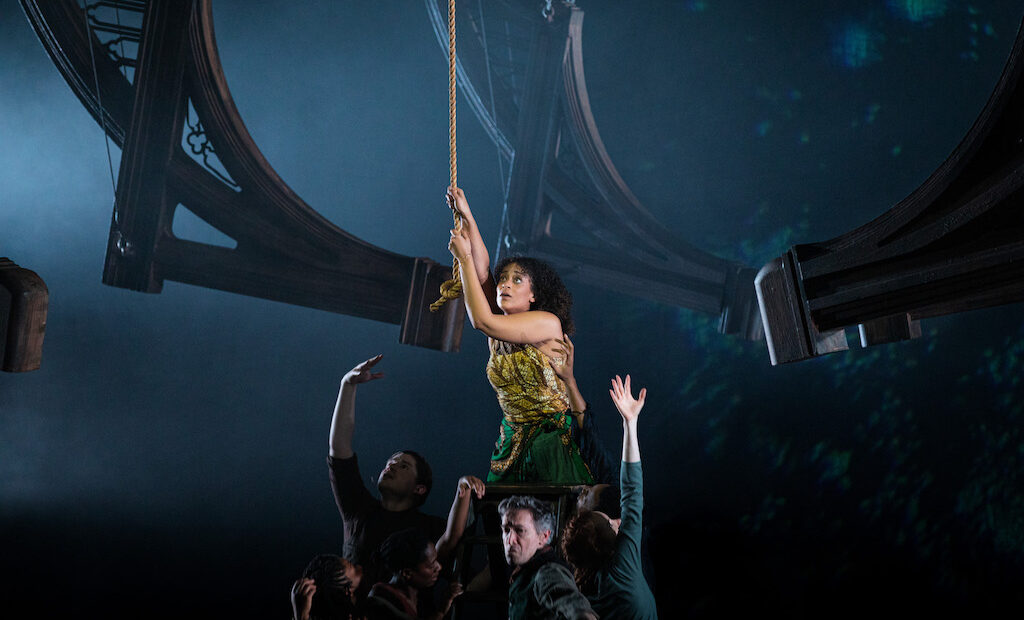
It made you think retrospectively about how harshly you judge homeless people or people addicted to drugs, when many factors go into becoming addicted to something. As Sophie Melville’s character says in the piece, “they are almost impossible to get off” [paraphrased], and a lot of factors go into becoming homeless. Who are we to judge these people when they don’t get the help they need? It was eye-opening and shocking but a must-see. You had to see it in the Grand Arts Wing because you had to be in thrust and a small stage to feel close to the characters, feel sympathy for them, and understand them. Also, there were lots of references to places in Swansea, one being when Jess, Sophie Melville’s character, climbs up on the ladder behind the bus stop and talks about how “people like her don’t deserve to have such a breath-taking view of the Mumbles and Swansea, living in Mayhill” [paraphrased].

Richard Mylan and Sophie Melville are exceptional and tell the story so well that you wish you hadn’t missed it.

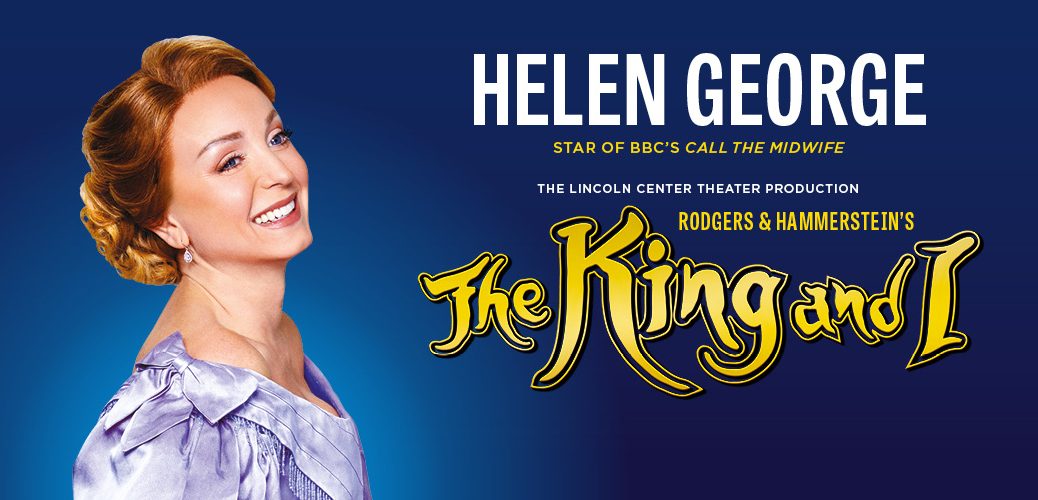
Review, The King and I – Venue Cymru by Richard Evans

Venue Cymru, March 7th to 11th 2023

Rodgers & Hammerstein, based on Margaret Landon’s book Anna and the King

Howard Panter for Trafalgar Theater Productions

 out of 5 stars (4.5 / 5)

“How will I know when I know everything?” “When you are King!”

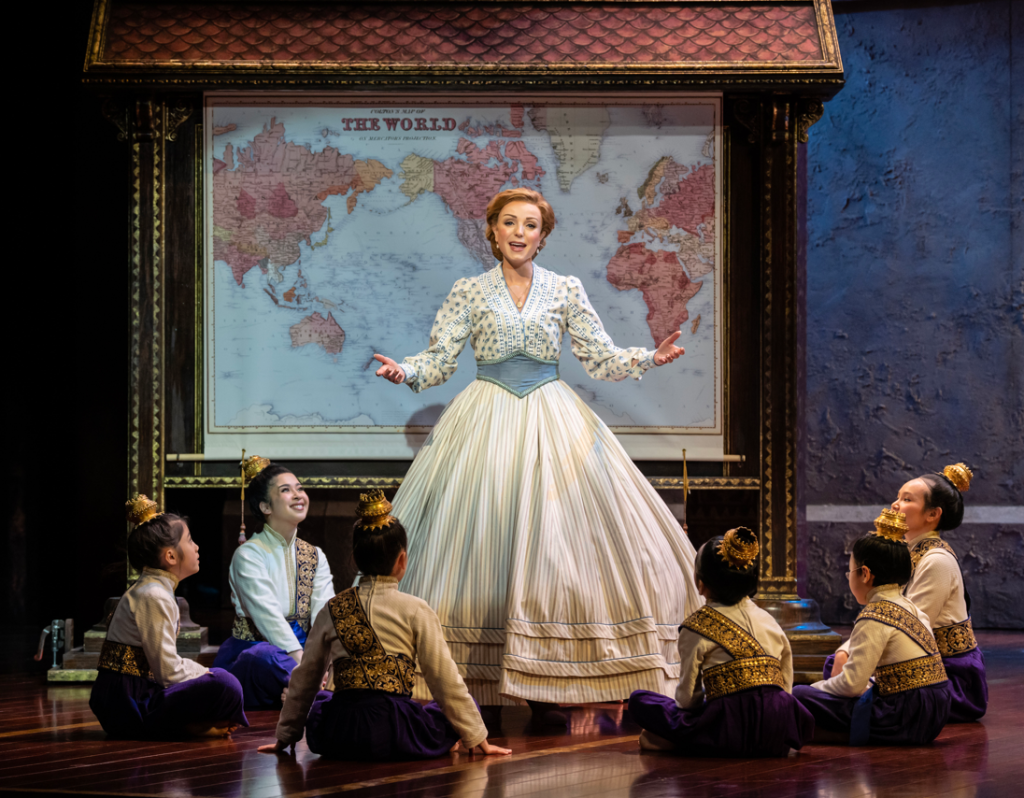
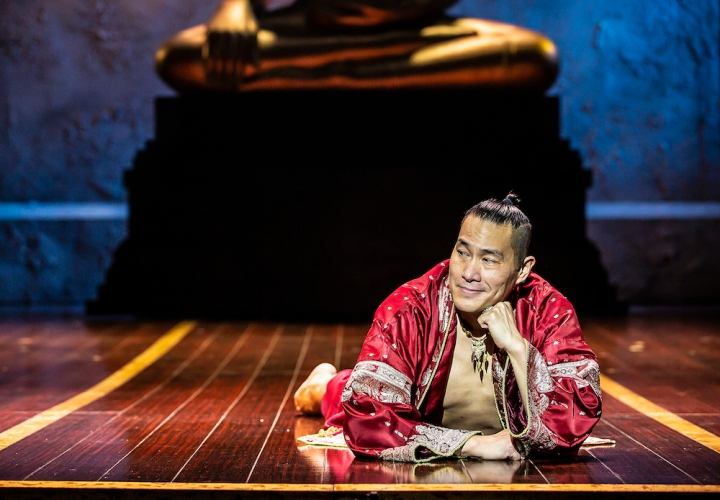
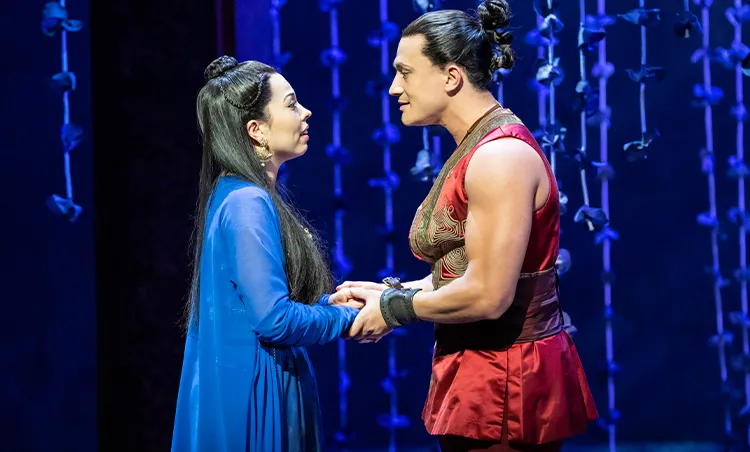
This faithful production of The King and I portrays the unexpected love story between the King of Siam and a schoolteacher really well. It also draws out a series of dilemmas thrown up by a remarkable passage in history, not least the problem of how one inherits omniscience!

At its heart it is the story of two people, the King and Anna, but like much of Rodgers and Hammerstein’s work, the apparently light musical romance is rooted in political change.

For generations, each king of Siam had ultimate power within his protectorate, but the current king is now struggling to reconcile ancient rights with modern progress and the pernicious influence of western colonialism. The king is seen as barbaric, even though the show is set at the same time as the American Civil War, and only shortly after the Indian Mutiny. 

In fact this king is an educated, intelligent man trying hard to balance his autocratic power with a more considerate, conscience-driven approach.  

Opposite him is Anna, an intrepid, forthright widow employed as a teacher to the king’s children – all 67 of them. She arrives in Bangkok accompanied only by her young son, having never lived outside the British Empire. The culture shock in itself would be extreme. 

While others say what they think the king wants to hear, Anna  speaks her mind, becoming a “difficult woman” in the process. Her arrival throws up a number of clashes of culture, attitude and morality, some of which become humorous. Why did Western, Victorian women wear dresses with hoops ten feet wide?  I have no idea.  It is slightly ironic that I viewed this production on International Women’s Day, which seeks to raise the status of women worldwide today. Anna repeatedly asserts her right to be treated with dignity and equality, yet the king sees the role of a woman as merely to serve a man.  

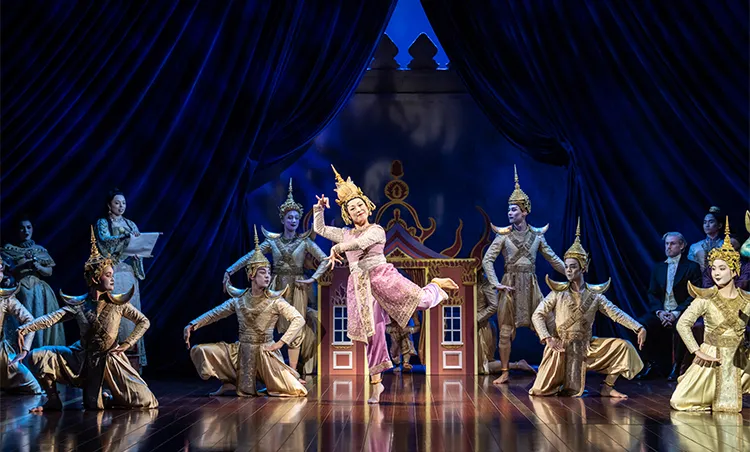
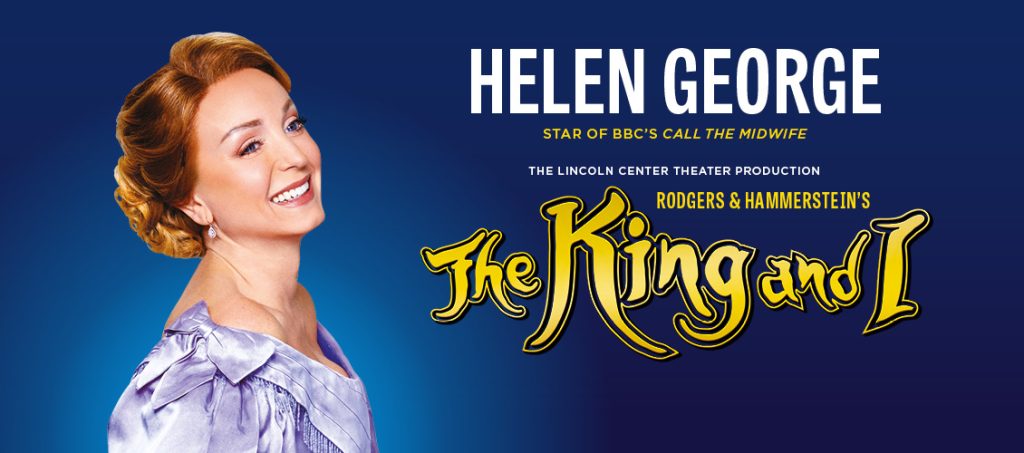
There is therefore much to take from this story. Helen George and Darren Lee are excellent as the leads and are ably-supported by the cast, in particular the children. The score has a number of well-loved tunes, and Marienella Phillips showed her operatic voice to good effect as Tuptim, the chief narrator, a slave girl with an education and attitude.  The choice of Uncle Tom’ Cabin as a showpiece play for western visitors is a definite dig by R & H at US society.  

But there is a problem with this show in the present age: what was vital, bold and brilliant in 1951 lacks the intensity and grittiness that has become today’s standard. It has become a period piece. Some of the songs are very much of their time, and rather twee. 

But this criticism nonetheless admits the show’s classic status; it’s a rattling good story. The score may seem dated to some, but others will recognise their enduring appeal. The audience, of course, lapped it up from curtain-up and offered a sincere ovation at the end. For all its age and increasing creakiness, no one can deny its star quality.    

Review, Queer Planet, Bi-Curious George, Vault Festival

 out of 5 stars (5 / 5)

Have you ever thought of how hetero-normative nature documentaries are. No? Bi-Curious George has, and they are here to shake the natural world.

This is a Drag King, Cabaret show like no other. Comedic, yet informative, this is a live, stage documentary with song, dance, comedy and a whole heap of camp. Think of a Queer David Attenborough meets Steve Irwin. Then triple it and add some comedy and sparkle.

George is a natural on stage. A performance of sheer perfection, we all felt as if we were their friend, as they interacted with us one by one, whether that is by audience interaction or just general eye contact. There are a many people in a room but we are all welcomed. They also made sure that everyone was comfortable – usually audience interaction is something forced upon participants, but George begins by ensuring we are comfortable at the door and then early on, giving us a signal just in case. This is a safe room and that is brilliant to impose upon within a production without taking away its essence or interrupting the discourse.

George brings us a range of factual stories of real animals, real queer relationships, intercourse, courtship and unions. But this is enhanced with songs that have been changed to fit queer narratives, with effective and, in themselves, comedic costumes and guests. The guests themselves are excellent – a singing shrimp, a almost mute magician making balloon animals from plastic bags (trust me when I say, it is something to behold, as this act was of pure genius) which add different levels and elements to the overall production, adding in the cabaret element, with George as our compere.

Queer Planet is probably one of the most genius ideas for a production I have ever seen. It is so excellently executed, with perfection as a performance, informative as a piece of education, yet at the same time, creating a easy safe and welcoming space for all with comedy, pizzazz and genius yet ridiculous concepts and costumes.

Review, Caligula and the Sea, The Company, Vault Festival

 out of 5 stars (3 / 5)

I think most people have heard of the famous Emperor of Caligula; a fierce ruler, with many a famous story about him, like any infamous Roman Emperor. Roman tales are rarely of happy exploits and kindness. And this has not stopped here.

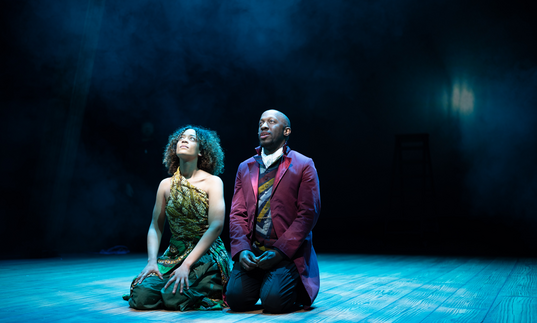
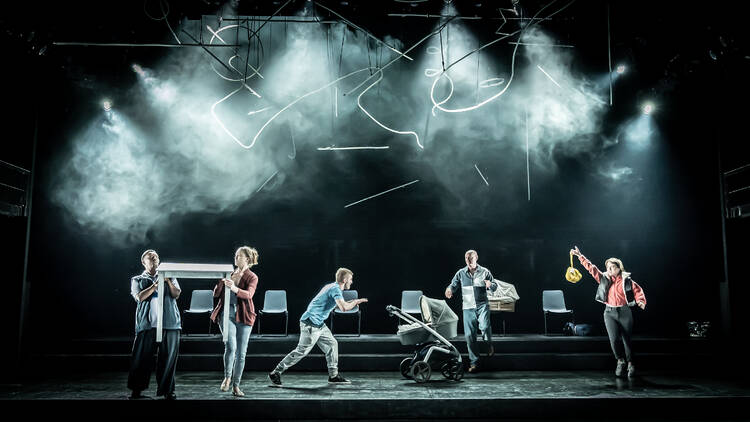
Caligula and the Sea is a growing of age tale of Caligula, from boyhood to ruling an empire. With this, growing through adolescence and adulthood, through turbulent relationships with the God of the sea and his closest companion and how easily power can destroy those innocent relationships.

The production itself has taken an interesting approach; dressed in 1920 – 1940’s garb, there are still elements of ancient Rome, with miniature columns in the garden to Roman armour, it brings a modernity to the story, yet harking back to its roots. However, it did seem a little out of place and there wasn’t much to tie this together with the overall production or story.

The scene they created, with the overbearing blue sheet representing the sea, using this for movement and puppetry was well done and it added to the imposition that Neptune has in the narrative. It was a centre piece to the production, always looming and always above Caligula. It was in itself a visual metaphor to his downfall after thinking he was more than of the immortal power.

Neptune was represented as the waves, as a warrior, as a woman, as puppetry creatures, and this was interesting and mesmerising in the work that went into the different physicality and puppetry skills. It added to the concept of Gods being able to shape shift upon the Earth, yet they were also never frightening. The was something trustworthy, echoing Caligula’s relationship with the God.

The main performers of Caligula and Chaerea had a natural magnetism to one another; bouncing off each other as friends, as brothers, as lovers. In the blink of an eye we see their entire relationship as it evolves and the moments that it goes all too wrong. The heartbreak and turmoil – it becomes evident in Chaerea’s performance and you want only to reach out and support him.

Caligula and the Sea is a unique telling of the story of Caligula’s life and has many theatrical elements to enhance this summary of his rise and fall. It only felt a slight disconnect in the over all aesthetic and felt it would either benefit from completely immersing in one era or the other.

Review, Someone of Significance, Chelsea Rep, The Acting Studio, Vault Festival

 out of 5 stars (3 / 5)

Based in the USA, Someone of Significance features the story of two people who fall in love against the obstacles of life, careers, of each other. The two couldn’t be more different and were it not for a chance encounter, Rosie, a black, left, working class woman and Brad, a white, CEO of a property corporation, would never have met. They have similarities, they have differences, but over a lifetime, their love continues.

For a two person play, the production values are minimal, and this is all that is needed. Props and staging that is changed upon the stage and in front of our eyes, while under the guise of a dimmed light, help to set the scene. Often based in rooms alone, this adds to the secrecy of their union and career, with its limited furniture and lack of distractions.

Each performer has their own corner with a range of clothing and accessories which they change into intermittently for each scene. Unless it is a drastic change, this often seemed unnecessary to the scene and often overlooked. When they changed something to showcase the passage of time, this is obvious and helps to bring the idea of time to the story line. Sometimes, it only felt like a reason for a break during the production, which could have been utilised differently.

The performers themselves were very good. With clear skill and a good approach to naturalism, they were convincing enough as their two characters. They interacted well and bounced off one another but I found it hard to feel this budding love that they were meant to share. Perhaps it was their limitation of stage and direction; often they stood in the same place, facing the audience but there was little movement around the stage to give levels and something with more action. Yes, there was the occasional sitting or a moment when Brad is involved in yoga, but it often felt as if there were invisible X marks the spot for each scene, and it was always the same spot.

Someone of Significance has a great narrative and intention, with good performers who understood their assignment. But it missed something special to believe in the true connection of these characters and left the performers at the will of direction, creating a limitation on the movement on stage.

INTERVIEW Richard O’Brien, Rocky Horror at 50

Below is a syndicated interview with Richard O’Brien about the 50th anniversary of The Rocky Horror Show, which is performing at the New Theatre Cardiff from Monday 10 – Sat 15 April.

What was your original inspiration behind the Rocky Horror Show?

Someone asked me to entertain the Christmas staff party at the EMI Film Studios and so I wrote a song (Science Fiction Double Feature) and with the help of some jokes, performed to much laughter and applause.

In the New Year I wondered whether it might serve as as prologue to the germ of an idea that I had for a musical. I shared that thought with Jim Sharman who had directed Jesus Christ Superstar. Jim liked the concept and away we went.

Why do you think it is still successful today, half a century later?

It is simply a Musical Comedy and as long as it rocks, and the audience are laughing what more could you wish for?

It’s very inclusive, it’s very easy to watch. It’s not rocket science as far as narrative is concerned – Brad and Janet are a couple that we kind of recognise as Adam and Eve or Romeo and Juliet, like a stereotypical couple – we can all relate to them.

It is also a fairy tale which allows us to feel comfortable with its rites of passage storyline. A retelling of Hansel and Gretel if you like, with Frankfurter standing in for the wicked witch.

Richard O’Brien

The Rocky Horror Show creates an atmosphere that is different from other theatre shows. What about the show do you believe makes audiences feel comfortable joining in?

The innocent rather naughty fun of it draws not only a ‘theatre’ crowd but also people who want a fun evening and a guaranteed return on the investment of their ticket price.

What was happening in your life at the time you wrote The Rocky Horror Show?

I was a recent father of my first child and out of work when I wrote the show. 1972-73 was a moment of change. Glamrock and overt sexuality was around, gay people were coming out and there was a ‘buzz’ in the air. There are certain parts of the world where we are a little bit more free to be ourselves. London is certainly one of them. Back in the Seventies you had gay bars, but now you don’t need to because if you walk into most bars in London there will be a gay man behind the bar. That is rather nice.

The Rocky Horror Picture Show (1975)

How do you believe the show supports those who are questioning their identity or sexuality?

The support for the LBGT community was unintended but it is a very welcome addition to the laughter and toe tapping.

Has the show supported your own journey surrounding your identity?

It must have been, to some extent, cathartic but I have always gone my own way and played the cards that I was dealt at birth the best way that I can.

Do you have a favourite character?

I would have loved to have played Rocky, that would have been cool, wouldn’t it? But one thing is essential, you have to be rather handsome, and you know, muscular, and that ain’t going to work. I could have played Janet. They’re all so stupidly wonderful these characters, they’re iconographic.

How do you think the live shows compare to the film?

The live show has an energy that the movie doesn’t have – it wasn’t intentional, but the film was very slow. Once some fans came up to me and said, “did you leave the gaps between the lines so that we the audience could say our lines?”. I said, “Well, ok yes”. But no we didn’t. The movie is a very surreal, almost dreamlike journey, the live show is far more rock and roll.

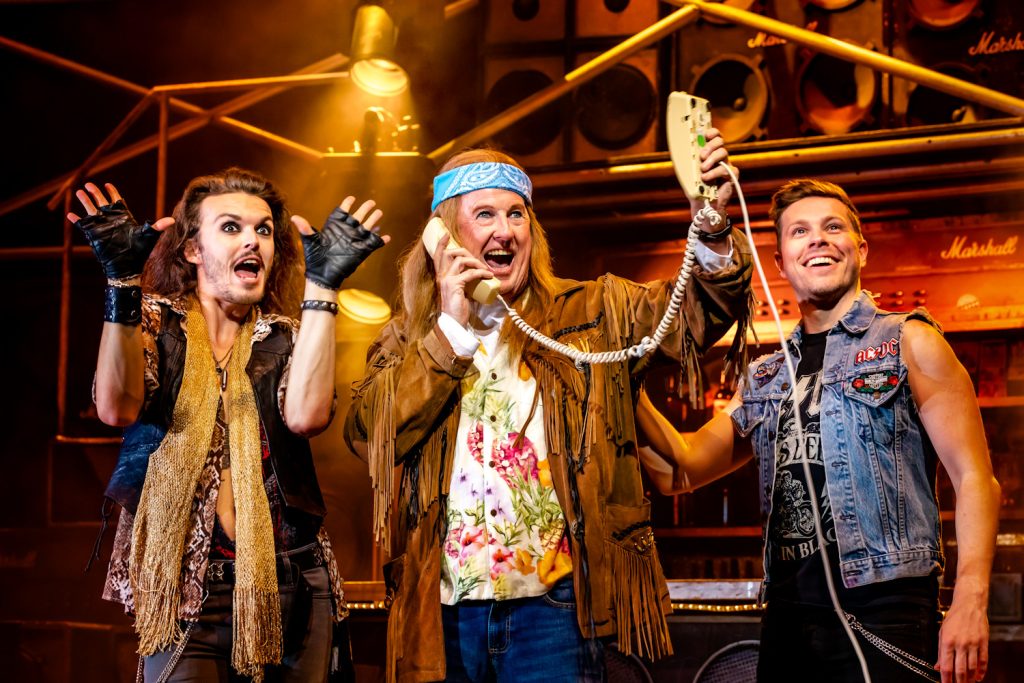
From the 2022 tour of The Rocky Horror Show

What’s your favourite part of the show?

The noise at the end of Rocky is wonderful – it is empowering and exhilarating at the same time it is quite joyous. Rocky never fails to deliver. Each performance lifts the heart and the nightly laughter and roars of approval leave the whole cast with a sense of wellbeing and accomplishment that you rarely get from any other shows.

The Rocky Horror Show remains a huge hit around the world. Do you think the show would be as successful if written today?

Timing is very important as is luck. Zeitgeist sums it up. There are lots of variables in this equation, for instance, would it have been as successful if someone other than Tim Curry had played the lead?

How has the show developed over time? Have there been any adaptations in the past 50 years?

It has remained much the same through the years. If it ain’t broke don’t fix it.

How different do you think your life might have been without Rocky?

I have no idea but, I would have had a good life because I am made that way. My journey has been a different one than others. I guess some people have a game plan. I would imagine they’re rather humourless. Most of us get an opportunity and we wing it. Luck plays an awfully big part in our lives. You should never underestimate that. I am the luckiest person on the planet. I shall be happy as long as I can keep singing.

The Rocky Horror Show is currently touring the UK as part of its 50th anniversary. It plays in Cardiff’s New Theatre in April – more information and how to book tickets here.

REVIEW Ghost Cities, Sherman Youth Theatre by Barbara Hughes-Moore

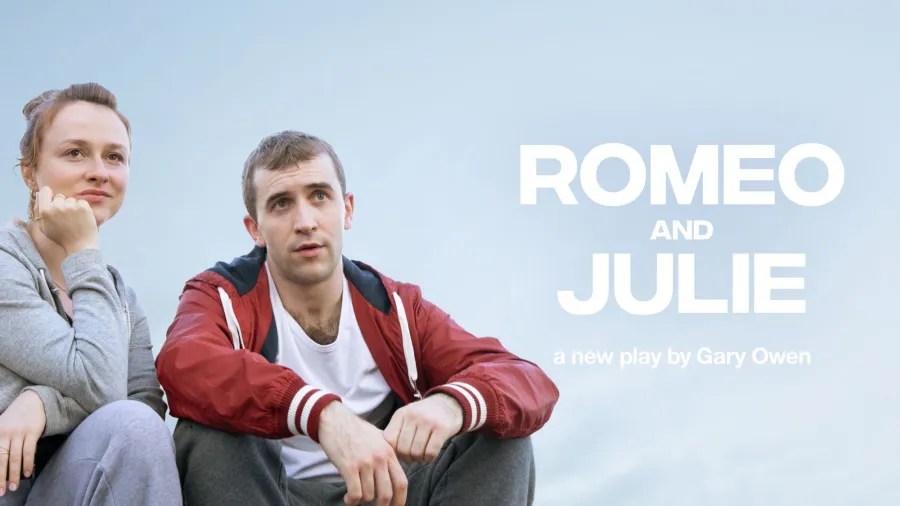
The Sherman Theatre turns 50 this year, and there’s no better way to celebrate than with the golden line-up they have planned for their anniversary: Gary Owen’s much-anticipated Romeo & Julie, Nia Morais’ magical Imrie – and the Sherman Youth Theatre’s Ghost Cities. It’s a new take on Gary Owen’s 2004 drama Ghost City, directed by Justin Teddy Cliffe and incorporating new material by the Sherman’s Introduction to Playwrighting Participants Mared Seeley, Loki Skyrme-Croft, Lauren Hindmarsh and Emma Phelps.

The cast of Ghost Cities. Image credit: Chris Lloyd

Set in Cardiff over a single night, Ghost Cities follows the capital’s lonely souls in a series of interconnected vignettes. There is little to link them directly, save a postcode and a prayer: a universal yearning for connection, understanding, and empathy. I haven’t seen the original play, but there seems to be a nice synergy between the original and its additions. You might be able to spot some of the new material, but it synthesises well with Owen’s text into a cohesive and rewarding whole. And while not every story carries the same sway (some seem as weightless as ghosts), others linger like spectres – largely due to the skill and enthusiasm of its cast and creative team.

The cast of Ghost Cities. Image credit: Chris Lloyd

Designer Ruby Brown (supported by The Fenton Arts Trust) and lighting director Rachel Mortimer have worked wonders with the set. Fragments of what’s happening onstage are projected onto an imposing pyramid, distorted and partial; casting doubt on whether what we’re seeing is what’s really happening. At one point, the pyramid becomes the inner core of a Matrix-like computer algorithm; at another, the live feed of an increasingly sinister political broadcast. These are just some of the many striking images that make the play gripping: a hooded stranger leaning against a door, a phone line stretched across the void, a eulogy illumined by a single beam of light as if from heaven.

The cast of Ghost Cities. Image credit: Chris Lloyd

After The It in 2020 and Treasure Island last year, this is the third Sherman Youth Theatre production I’ve had the privilege to attend – and it’s incredible to see such talented young actors continue to grow in their skill and their craft. They navigate brilliantly through drama, comedy, and even tinges of horror, creating a very specific world for the stories to inhabit: the standouts for me were a teacher explaining her gender transition to a previously scornful student, a hilarious night out at Walkabout that ends in both hope and disaster, and a Deliveroo rider philosophising on the meaning of life. All the while, a disenfranchised young man haunts the stage, very much alive and very much at our elbow – we, and the characters, may just overlook him at our own risk.

The cast of Ghost Cities. Image credit: Chris Lloyd

Ghost Cities is a celebration of Cardiff in its hidden corners. It begins with a single voice and ends with many: in doing so, it seems to say that a city is a living thing, and we are its lifeblood: our lives, our stories, the connections we make and the ones we might miss.

Ghost Cities is performed by Rashid Ali, Lily Cole, Rhys Evans, Theo Greenwood, Daisy Griffiths, Twm Llwyd, Edith McCarron, Maya McDarren, Orrin Niziblian, Pringles North, Elian Owen, Jim Pesticcio, Lucia Taher, Brooke Thomas, Nia Thomas, Rory Tune, Indigo Wernick, and Jett Wood.

Ghost Cities is performing between 2 – 4 March at the Sherman Theatre. More information and how to book tickets here. Tonight’s production is a double bill with the Youth Theatre’s ‘Chaos’.

The cast of Ghost Cities. Image credit: Chris Lloyd

Review, Pijin/Pigeon, Theatr Genedlaethol Cymru/Theatr Iolo, Pontio, by Gareth Williams

 out of 5 stars (4 / 5)

Based on the best-selling novel Pigeon by author Alys Conran, this stage adaptation by Bethan Marlow sees Welsh and English subtly woven together, with every performance using integrated captioning in such a creative way as to lead me to undertake an experimental review in its honour:

The show is currently on tour. Dates and tickets can be found here.

Reviewed by
Gareth Williams

Review The Silence and the Noise, Tom Powell, Pentabus, co-produced with Rural Media. Review by Helen Joy

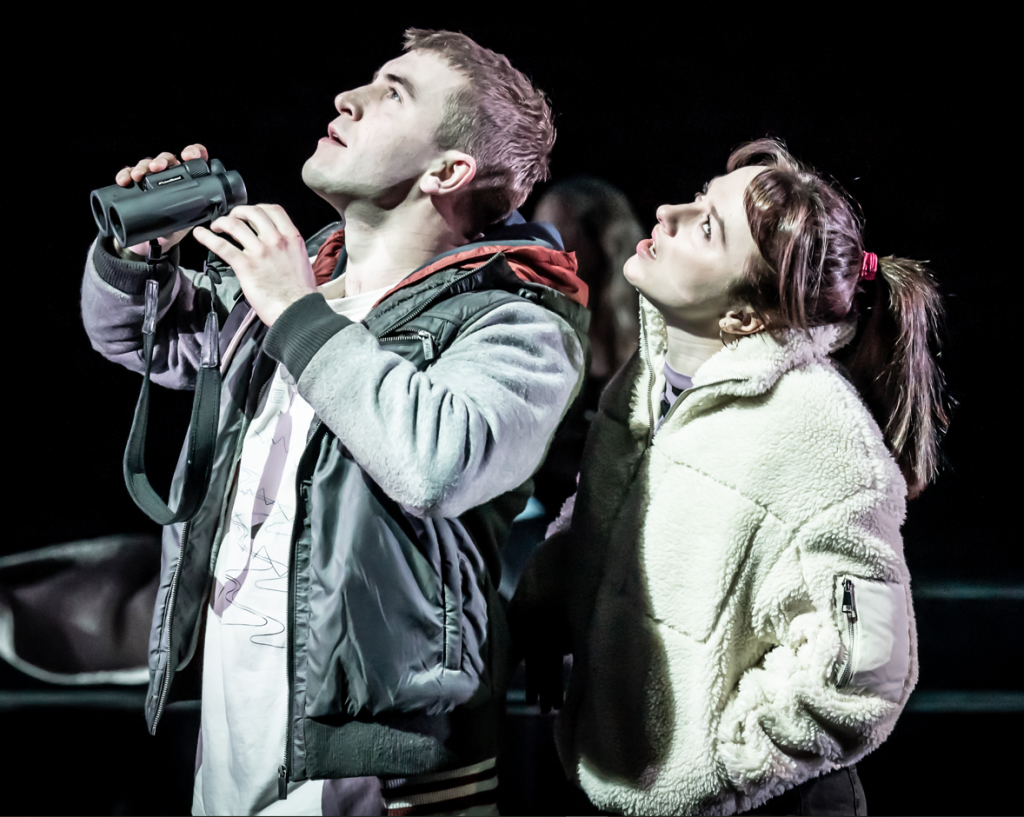
A review of the new digital play, exploring where film and theatre meet, follows two teenagers, one a drug runner and the other the daughter of an addict, as they navigate a dangerous adult world.

Do cats tan? Could you bring me out a blanket?

Tom Powell, The Silence and The Noise, film.

This Be The Verse

BY PHILIP LARKIN

They fuck you up, your mum and dad.   

    They may not mean to, but they do.   

They fill you with the faults they had

    And add some extra, just for you.

But they were fucked up in their turn

    By fools in old-style hats and coats,   

Who half the time were soppy-stern

    And half at one another’s throats.

Man hands on misery to man.

    It deepens like a coastal shelf.

Get out as early as you can,

    And don’t have any kids yourself.

‘’There are 8 reasons why teenagers take drugs: other people, misinformation, popular media, escape and self medication, boredom, rebellion, instant gratification, lack of confidence.’’

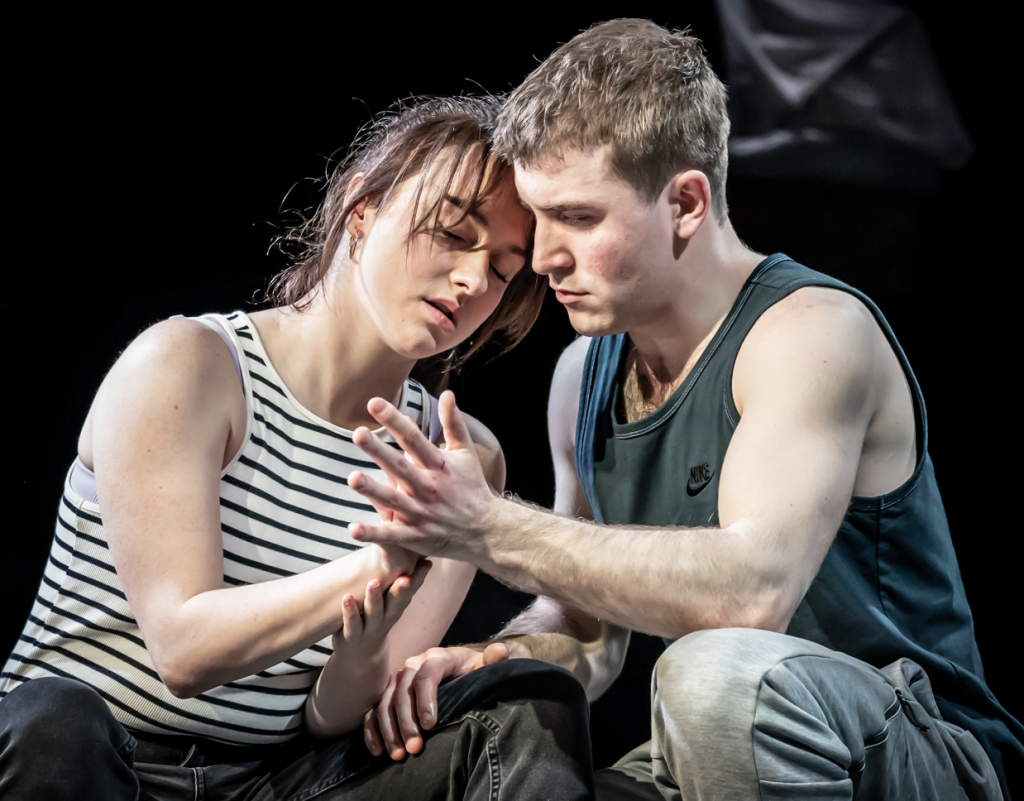
Two teenagers ‘both alike in dignity’, acting out the roles they think they should be playing and railing against the tiny crooked worlds they inhabit on instinct and experience unbalanced and afraid.

Daize and Ant , star crossed indeed and lost in an adult place where parenting and drugs are failing them and where hope and stability come from each other.

This Shakespearean duologue creeps under the skin like a needle. It is a slippery painful rush of child and adult feeling its way through the awkward brilliance of its performers. Exceptional and tragic, closed and candid, ‘you’re not a laugh a minute you know’.

I am reminded of being a lay member on the local restorative justice panel and wishing I could magic better lives for the young people we met. These teenagers couldn’t just say No, their worlds were governed differently. Victims of circumstance.  I think of them often and wonder what we should do differently as we are the village raising the child and we have a combined responsibility.

Powell forces me to return to the debates in my head – where does responsibility lie and what does it look like? Is Ant so upset by his mother’s infidelity that he looks to make money in the easiest and quickest way (sic), justifying his decisions within a dubious moral framework? How does his complicated and dangerous choice compare to Daize’s addicted and failing mother which leaves her daughter to defend herself with a knife and eat cat food? No one should have to eat cat food. It is an axis on which the play turns.

It is all relative. It is not what happens but how we deal with it. This film schleps through nature and nurture and their consequences on transitional minds.

The story telling is adept – our actors are acting out teenagers acting as adults and breaking into juvenility. It is the most powerful and upsetting screenplay. Like those young people all those years ago in the justice system, I want to take them home and protect them, restore their innocence in some naïve and offensive way. That is how convincing they are. 

But Ant takes Daize home and the bravado and the arguments become a search for the relative peace of a family set up, leaving death and chaos behind them. Perhaps this Romeo and Juliet get a happier ending.

Thy drugs are quick. Thus with a kiss I die.

https://drugfree.org/article/top-8-reasons-teens-try-alcohol-drugs/

‘’Teenagers in an impossible situation. They might be each other’s only hope of escape.’ Tom Powell, https://theartiscapegallery.com/writer-tom-powell-on-the-silence-and-the-noise

Shakespeare, Romeo and Juliet