2018’s Festival of Voice, produced by the Wales Millennium Centre builds on previous years’ attempts to unite communities and celebrate voice in all its forms, drawing upon Wales’ wide cultural and musical legacy. This would be my first experience of the festival and it really kicked off in style.
Over the course of a week, I’d be bowled over, discover something new and completely unexpected and leave my typical comfort zone of only watching (and reviewing) theatre. Festivals like these are a smorgasbord of new opportunities to learn something new and develop your palate for new art forms and genres of music.
We were introduced to the opening of the festival from the centre’s Artistic Director and team, before being joined by community and advocacy groups – true to the centre’s vision to be inclusive and accessible, but I did wonder how ‘accessible’ it really is that unless you are familiar with the set-up and already know that you can verify your ticket – the £8 parking ticket cost to park in the nearest car park and see a WMC show would be pretty inaccessible to most carers and people on PIPs and other benefits.
I also need to point out the ridiculous set-up of the toilets in the centre. There are disabled toilets, sure – but the two sets of heavy doors, teeny-weeny area to dry your hands and the smallest bins I’ve ever seen in my life are deeply irritating.
But I digress….enough of the nit-picking and on to the main event…
CARERS CHOIR, GIG BUDDIES AND BILLY BRAG, WMC
Underappreciated, underpaid and perhaps an unlikely group of people to assemble as a choir, the festival was opened by a multi-generational group of carers, who sang with real spirit and heart. Knowing the obstacles and challenges they face in their day-to-day lives, their positivity shone through and the audience were visibly moved by their version of ‘What a wonderful world’ and ‘Lean on me’.
After rapturous applause, it was time for the Gig Buddy crew to crash into the foyer, clutching signs, banging drums and stamping their feet. They had formed a group to protest the fact that the support they receive does not take into account the fact that they too want to access music and arts performances – and these of course fall outside the typical office hours of supporters and carers. In association with Learning Disability Wales and Hijinx Theatre Company, the protesters delivered a skit about the fact that for most people – not being able to go to gigs, movies and performances like everybody else is not only unfair but naturally they’re quite rightly pissed off about it.
This was a brilliant opportunity to showcase the ‘Gig Buddies’ initiative where volunteers are matched (via their interests) to people with additional learning needs and various disabilities who need a little extra support to access gigs and shows. Bloody brilliant idea and I’m hoping to sign up myself.

The main event for the opening of the festival was ‘Topical singer songwriter’ Billy Brag (he doesn’t like to call himself a political performer in case it puts people off!). I knew the name Billy Brag but barely any of his actual material. This would be a new experience, not least for discovering the awesomeness that was supporting artist Nadine Shah, a Tyneside lass whose basy, punky songs are accompanied by soulful vocals.
Her edgy songs draw upon current affairs, world injustices and the hurt and heartbreak of modern life. Performing songs from her 2017 album ‘Holiday Destination’, she gave a fierce and raw performance. The song Holiday Destination and its refrain ‘How you gonna sleep tonight’ is a polemical nudge and critique on the holidaymakers in Kos who complained of refugees on the island ruining their holidays.
Shah tells the crowd “We need immigration – we make food taste better, we make the place look better and we make music sound better, too!”.

Shah’s heritage is Norwegian-Pakistani, and her Northern accent and humour shines through in her work. Billy Brag is – just like Nadine Shah, a storyteller. In between his songs, he delights the audience with his insights, his banter and his stinging observations about what’s going on in the world. He is unapologetic about his views, honest about his flaws and endlessly witty about politics in general.
He skewers Trump in the finale song based upon Bob Dylan’s ‘Times they are a changin’, which was changed to ‘Times they are a changing-BACK’). He tells the audience he wrote the song in a rage in 2016 when Trump was elected. His stories and rambles include the fact that he was schooled the last time he was in Cardiff for using a plastic bottle on stage at the Tramshed. “I’m sorry…I learned from my mistake. The oceans are full of plastic and shit, we need to do something about it.” Since then he’s used a ‘Gig Buddy’ aluminium bottle.
Of the grumpy artist Morrissey, he tells us “What is happening? He’s turned into a bloody gammon!”. Brag’s songs are clever and his set is largely improvised. He plays a song after an audience member shouts out a suggestion – and his final song is the famous classic ‘A New England’.
The entire audience shouts back the lyrics and it’s electrifying. I couldn’t believe I haven’t been following this chap’s career. Where the hell have I been the last 37 years? He has a new fan in the Rhondda, that’s for sure. The opening acts in the foyer and the main concert in the Donald Gordon theatre were rebellious in spirit and sound.
LOVECRAFT (NOT THE SEX SHOP IN CARDIFF), WMC (Ffresh bar)
I don’t know where Carys Eleri has been hiding out but we all need to see more of her. I didn’t know what the show ‘Lovecraft’ was going to be about – something to with science and love, I gleaned from the flyer. But it’s so much better than the event write-up promises.
I can’t praise the producers and director of this show enough for their vision. As sets go, it’s pretty low-tech, a cabaret-style set up within Ffresh bar serves as the set and Carys is accompanied by two screens which form a kind of visual aid and powerpoint for this hilarious one-woman show. The production is a romp through the idiosyncrasies and absurdities of love. What’s the ‘science’ behind love and sex? You’ll get to find out – via Carys’ brilliant stories.
It’s outrageously honest… and completely mental. This show will especially appeal to any women in their thirties who feel the pressure and expectation that society thrusts (‘scuse the pun) upon them.

At times, this feels like you are catching up with one of your girlfriends from Carmarthen who is every bit as outrageous and filthy as you are – and you’ll love her for it. The science narrative is informative, but not the main point of the show. You’ll be drawn in to her off the wall stories, brilliant observations about her Mam (“Carys…can’t you put on a bra..?”) and the dirty and embarrassing secrets we might all experience growing up – ‘fanny gallops’, hallucinogenic trips in the back of a taxi being driven by a unicorn and waking up naked next to another girl. We’ve all been there, right?
The song ‘Tit Montage’ is the highlight of the show, perhaps of the entire festival – and in my opinion would be a credible entry for the Eurovision Song Contest.
The song ‘I brain you’ is pee-your-pants hilarious. If Carys Eleri was running for Prime Minister, I’d probably vote for her. I BEG you to see this show – its been to Edinburgh Fringe already and has attracted a steady stream of adoration from audiences at the Festival of Voice.
There is so much life left in this show – and I hope it tours again (I will be sure to gather as many of my filthy friends as I can to share the experience with). My only negative points are that I could have happily sat through another hour of it before it finished and I now want Carys Eleri to be my best friend/drinking companion even though she has no idea who the hell I am.
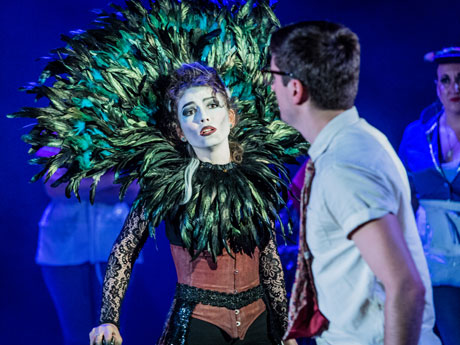
RHONDDA RIPS IT UP (WNO), New Theatre
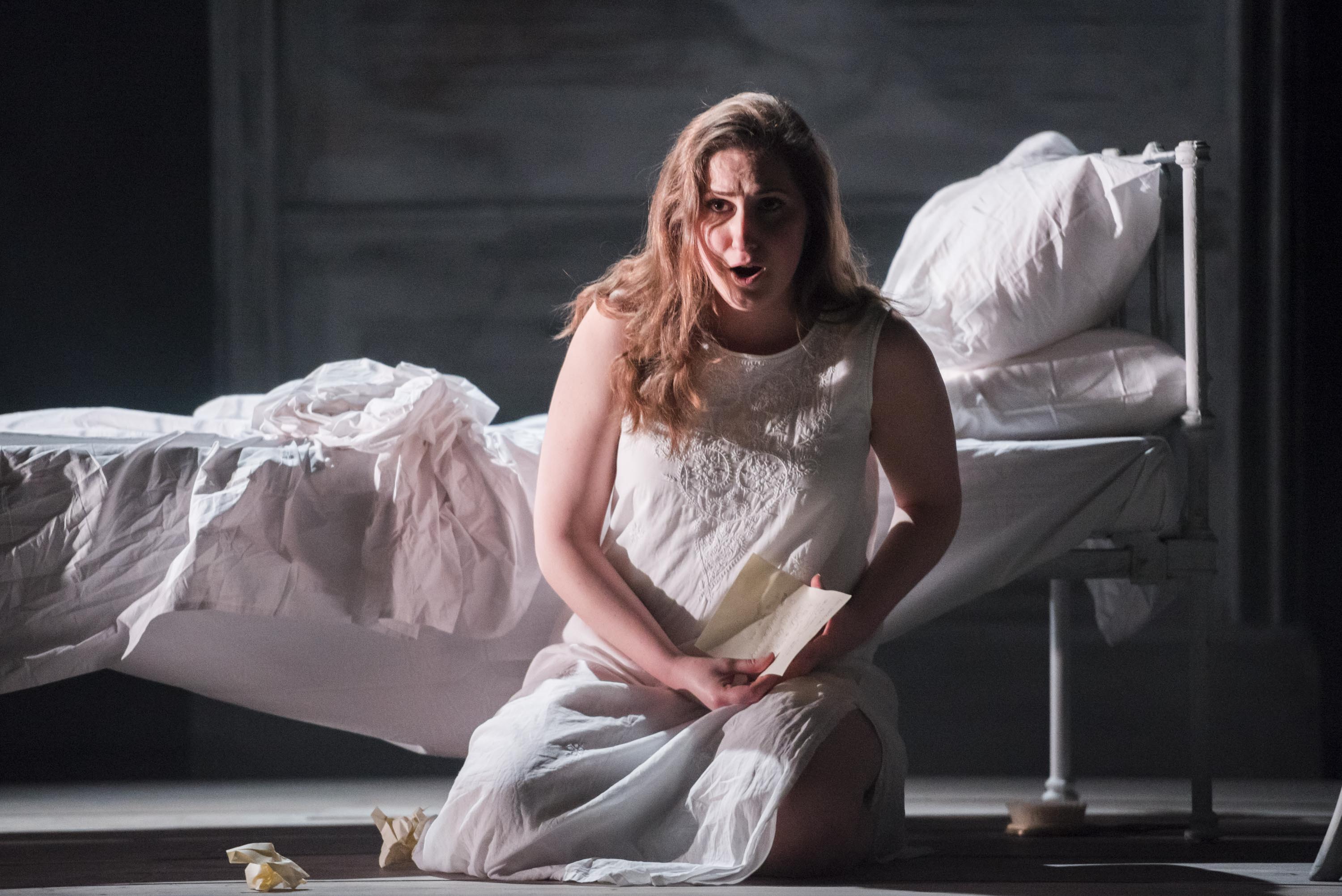
After a somewhat lukewarm experience at my last opera, I wasn’t sure if I was an ‘opera person’. But anyone following the #MeToo movement, who calls themself a feminist or admires the women who took part in the recent ‘Procession’ in Cardiff to mark a hundred years since women obtained the right to vote REALLY shouldn’t miss out on this show.
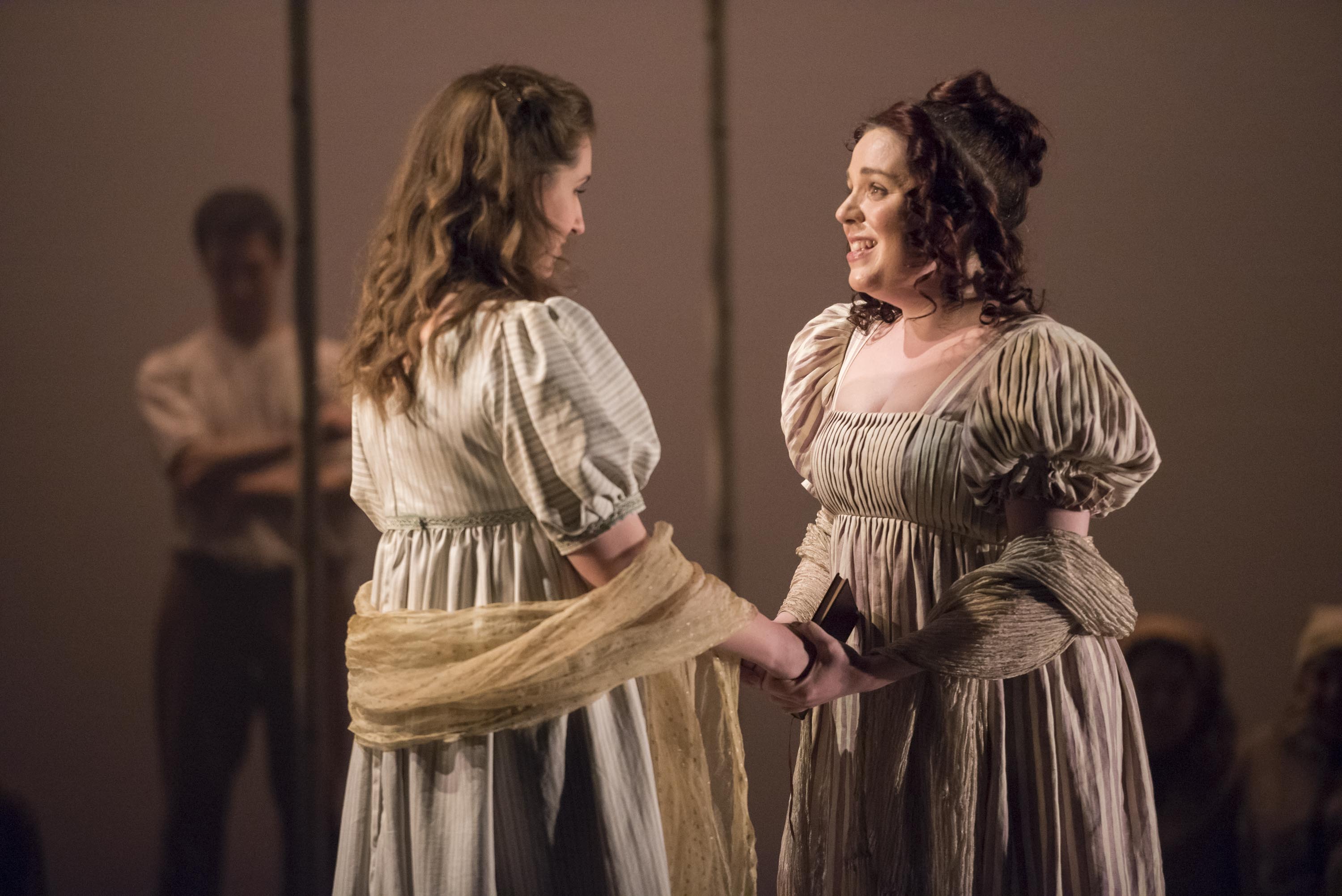
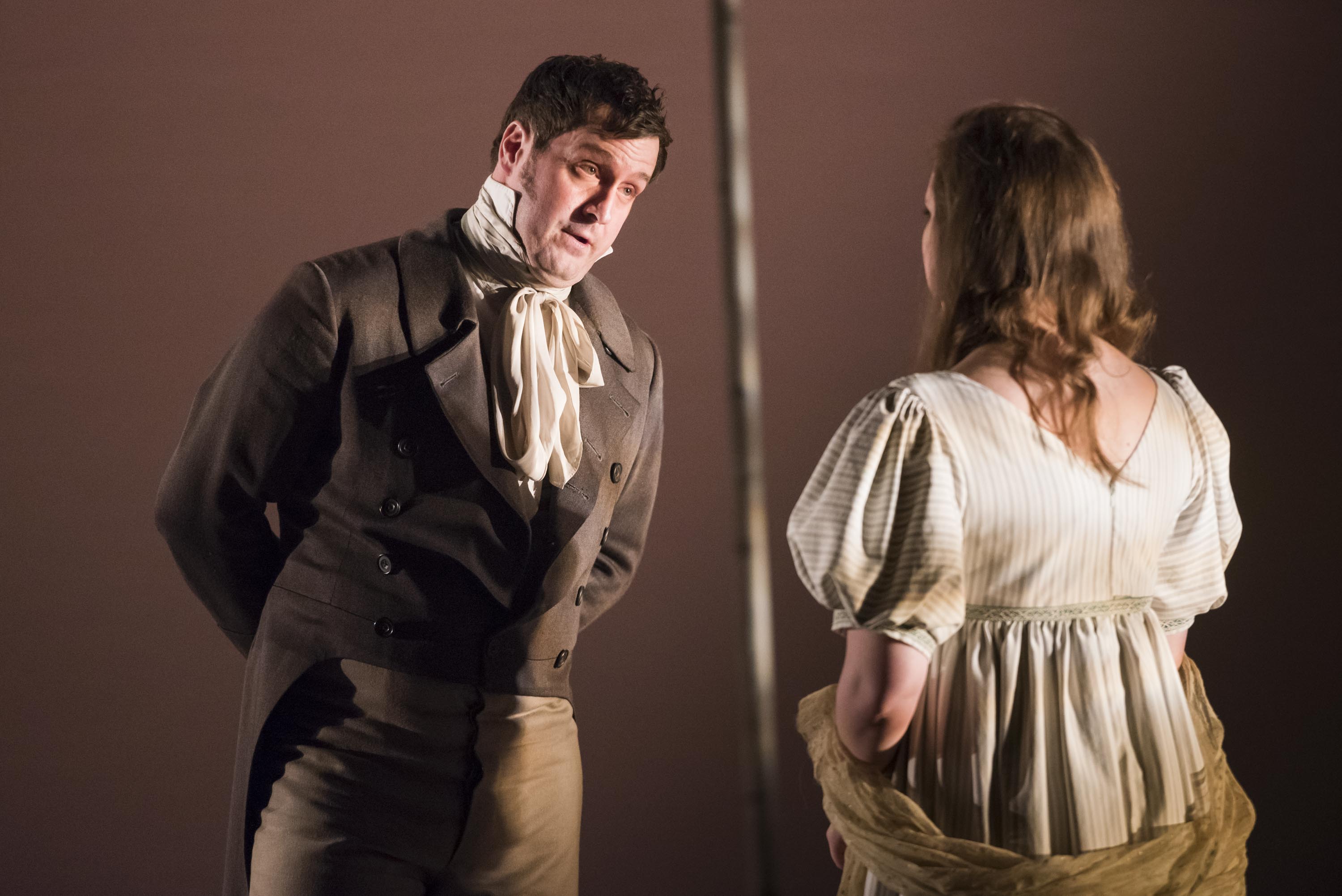
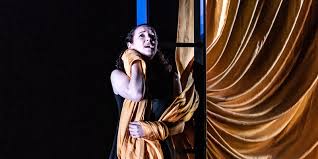
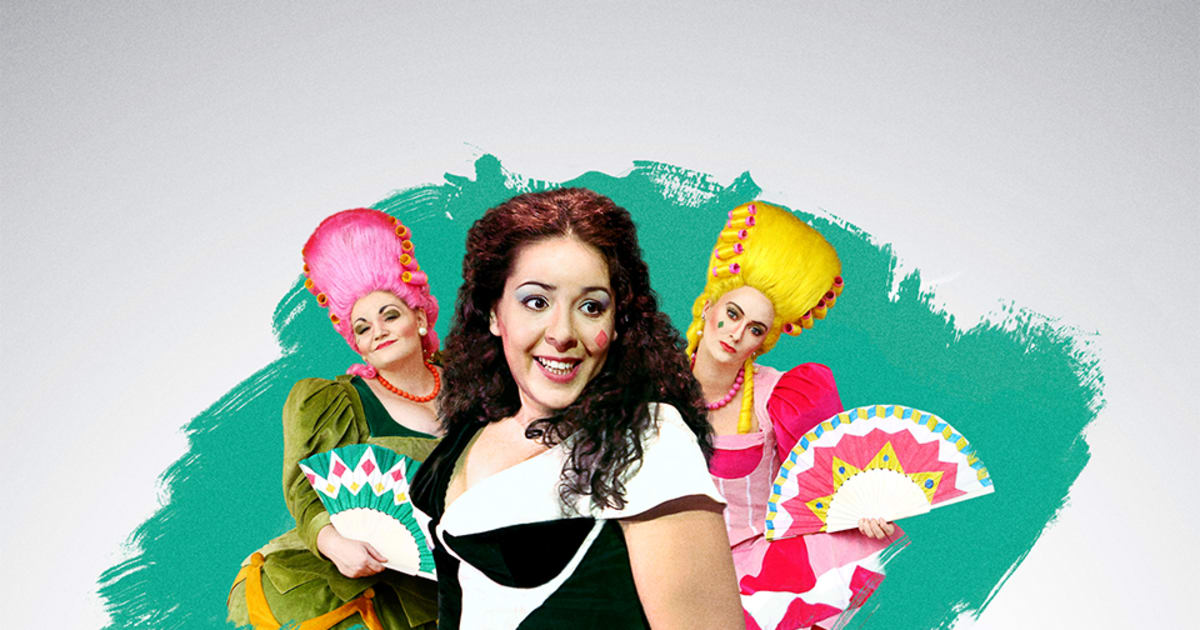
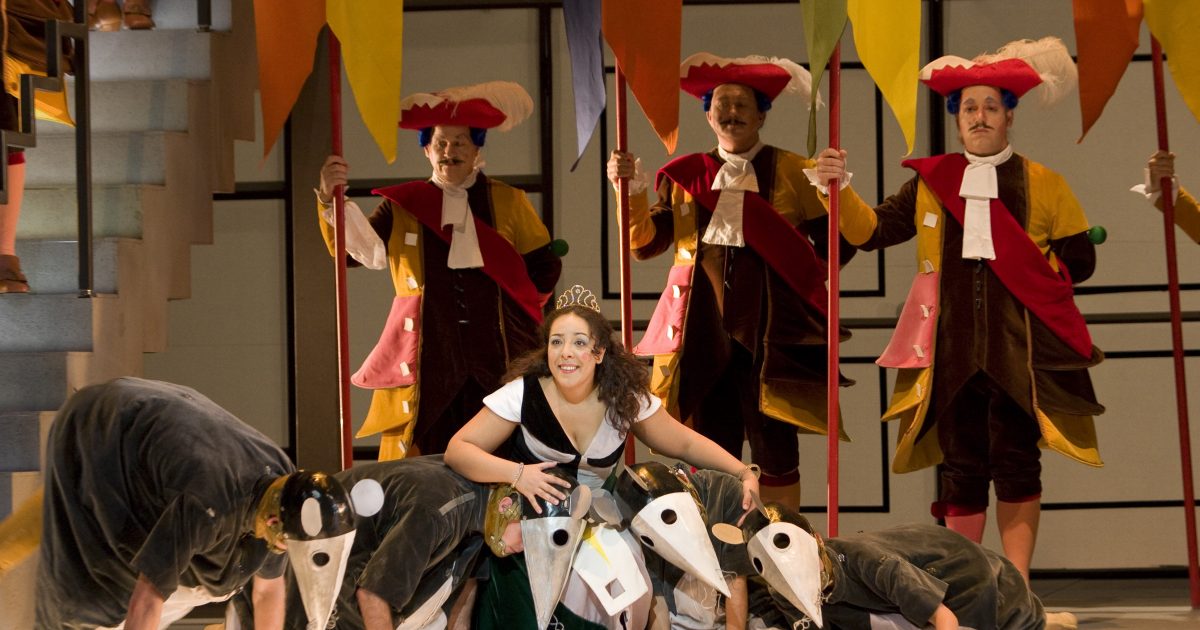
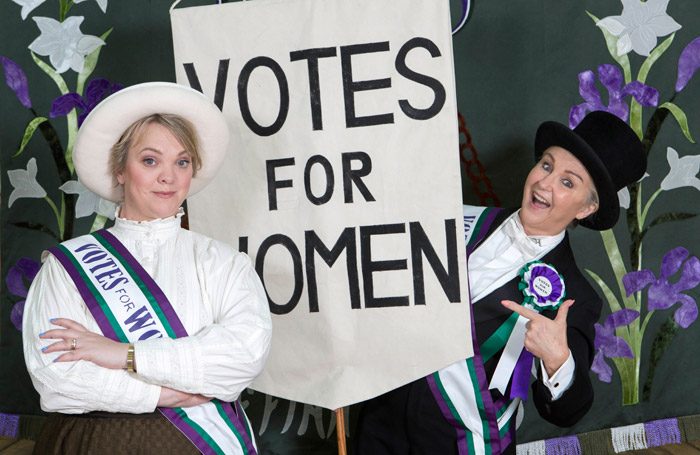
Led by Emcee Lesley Garrett, this is a look back at the stuffy Victorian era and the legendary Margaret Haig (Lady Rhondda) – a politician’s daughter and activist who led the Newport branch of the Women’s Social and Political Union (WSPU). The indomitable Margaret Haig was an outspoken radical who along with other women, was judged and ridiculed by the Asquith’s liberal government for her efforts.
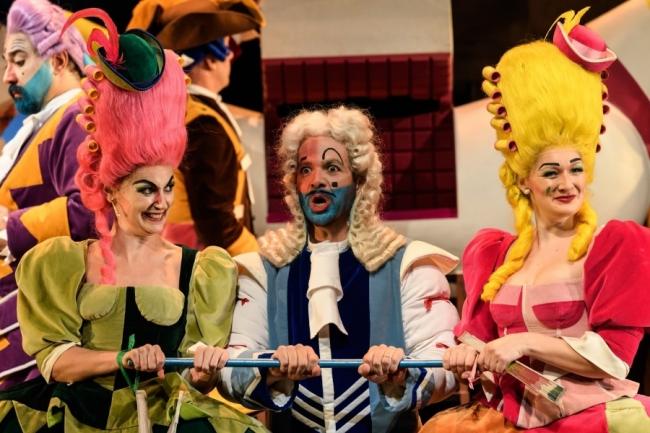
Played by Madeline Shaw, Lady Rhondda is a fearless campaigner. Along with her friends Edith and Prid (played by Paula Greenwood and Meriel Andrew), the production satirises the ‘old boy network’ of both the government and society at the time and pokes fun at the uptight/prissy way in which women were expected to behave.
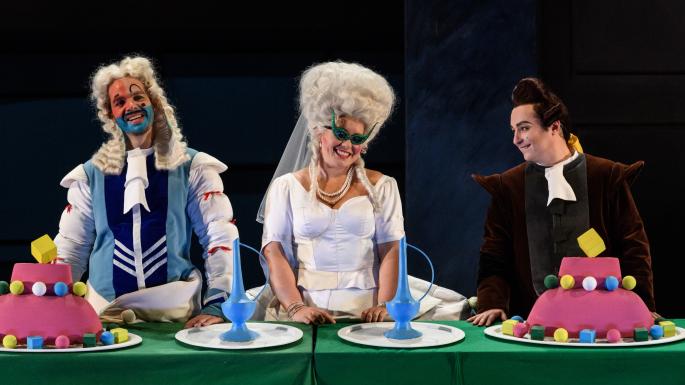
I had no idea opera could be this edgy or this level of hilarious. Everything from the choreography, the physical comedy of Garrett and other cast members, the originality of the songs and cheeky/camp way they are delivered is a treat for the audience.
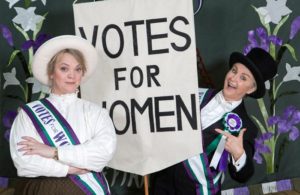
The stand out scenes are the songs ‘My girl’s pussy’ (yes, really!) and the song about the fondant fancies, complete with all the flair and foppishness of the Edwardian music hall tradition. This is Women’s Institute crossed with #MeToo.
There are also guest appearances from the WNO community chorus (who deliver a rousing performance as fellow suffragettes) and a nod to Haig and Helen Archdale’s gay relationship, demonstrating the extent to which Lady Rhondda tore up the rule book and challenged convention, albeit discreetly. There is a telling scene in the show when Margaret Haig and her friend are on the train (with their bomb-making materials) and they overhear a man saying “Suffragettes! If that was my wife, I’d give her a darn good thrashing!”.
Queue a hilariously camp sequence with a bunch of ‘men’ thrashing each other’s behinds with rolled up newspapers in a homo-erotic fashion. Nowadays we’d call this toxic masculinity at its worst – back then, those kinds of attitudes were de rigueur.
I am no opera buff, but WNO have delivered a phenomenal tribute to Lady Rhondda and her contribution as a suffragette and business pioneer.
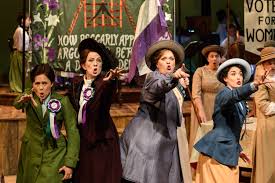
It was sensitive without being syrupy and witty without being cruel. Not everyone will get the satire, apparently – one audience member overheard in the loo commented she didn’t understand why ‘men were being made fun of’ and that she preferred the WNO community chorus to the production itself. For me, the main feeling I got was one of immense gratitude – that so many women like Haig faced violence, imprisonment and the scorn of society and for their dogged determination to change history for the better.
Their first victory was not a resounding success, the first bill allowing women to vote was only for women over 30 with property. There was plenty more to fight for – and with world events and pussy-grabbing presidents reminding us daily, some might say the battle is far from over. But as the legendary suffragette Emily Pankhurst once said:
“Never surrender….never give up the fight.”
GWENNO, WMC (Weston Studio)
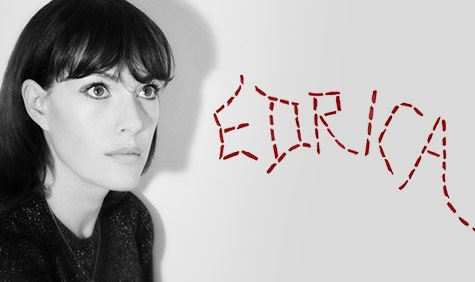
A former member of indie band The Pipettes, Gwenno has already amassed a strong critical following and fanbase after the release of album Un Dydd Olaf in 2015 and Cornish language ‘Le Kov’ in 2018. Her dedication and tribute to Edrica Hughes at the Festival of Voice was a moving tribute to the poet and patchwork quilt artist Edrica Huws (1907-1999).
There was a packed house in the Weston Studio for the one-off performance, entirely created and composed by Gwenno, but this time with the support of a violinist and harpist (Angharad Davies and Georgia Ruth). The stage was dressed like a set – a lived-in parlour with an old-fashioned crib, a fireplace and the markers of domesticity from a time gone by.
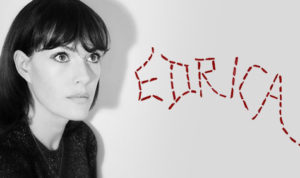
At the foot of the large screen above the stage stood Gwenno’s mixing decks and computer, flanked by a triple harp and wooden toys – the musical set and hi-tec equipment is a curious accompaniment to the ironing board, clothes horse and lamp on stage, denoting the ordinary, humble life of Edrica. On the screen we saw vignettes of slices of history sketched and animated on the screen, accompanying the synthy electric-pop landscape being played and mixed live in front of us.
We saw suffragettes marching in 1907, weaving in and out of the war, a grimy London landscape of the humdrum existence of everyday life, love, relationships and duty stitched together with the dreamy melodies and an almost hallucinogenic quality to the music. I hadn’t known about Edrica’s work or story before. An ordinary wife and mother, she didn’t start expressing herself artistically until age 51.
She became a ‘patchwork pioneer’, breaking the rules and conventions of art and design in terms of subject, material, tone and texture to become a celebrated exhibitor and artist/poet around the world.
Animated by Tad Davies, the on-screen vignettes to not distract so much as heighten the experience for the audience and Gwenno’s gentle vocals, the poppy disco beats, baseline and meandering harp and violin are a thing of beauty.
Gwenno’s soundscape is punctuated by poetic whisperings, especially poignant and beautiful during ‘Anrhefn Pentyndod / The chaos of childhood’ and kooky and marvellous when she donned a cat mask for ‘Y Gath’ / The Cat in tribute to Edrica’s ‘Cat on an ironing board’ piece.
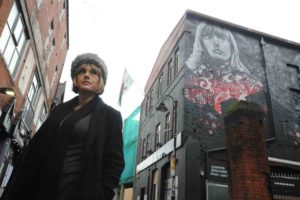
She is not a wild or attention-seeking performer in the sense of other unique artists (like Bjork for example) but she is completely enigmatic – a quiet genius in many senses. She creates riffs and spacey echoes using props – one song loops the sounds made by wooden toys and they are overlaid with a base-heavy disco beat.
It is weird and wonderful and strangely soothing. Edrica is a feast for the senses, the thinking person’s mind disco – and you’ll be richer for having witnessed it.
In between each song, the audience is almost deathly silent for a few seconds – not because the show is bad (because it was clearly bloody brilliant) but because they know they had witnessed something magical and weren’t sure what the rules were. Should we get up and dance? Applaud wildly? Edrica Huws broke the rules during her lifetime and Gwenno is doing the same.
5 stars
Type of show: Music / Theatre / Opera / Performance Art / Poetry
Title: Festival of Voice Venue: Multiple Locations
Dates: 7-17 June
Produced by: Wales Millennium Centre (and partners)
Author: Gemma Treharne-Foose

 (4.5 / 5)



 (4 / 5)

 (3.5 / 5)




 (3 / 5)