
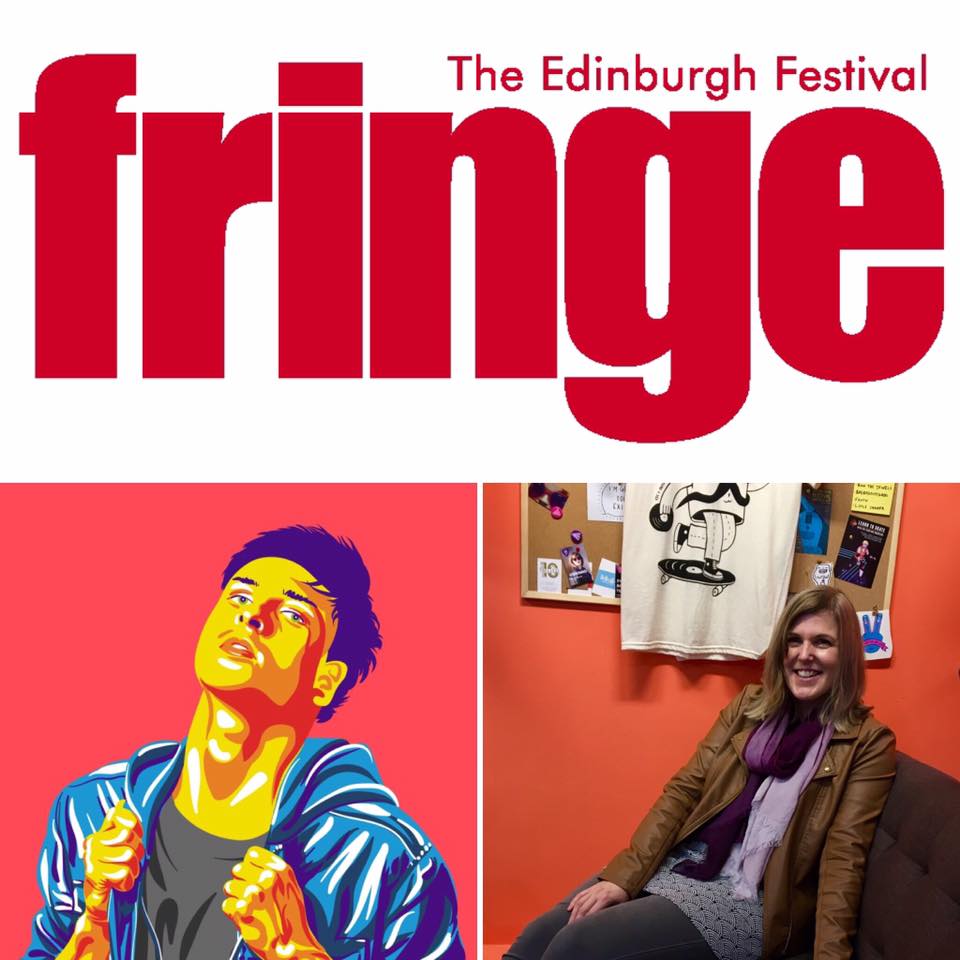
Hi pleased to meet you. Can you please give our readers some background information on yourself and your role in the arts in Wales?
I’m Catherine and I’m the Artistic Director of new writing company Dirty Protest. I’m directing SUGAR BABY by Alan Harris, which Dirty Protest is taking to Paines Plough’s ROUNDABOUT @ Summerhall venue with Wales in Edinburgh this summer. I was a founding creative associate of National Theatre Wales – it was this opportunity that brought me back to Wales. I love what I do and connecting to people with theatre making in Wales.
https://edinburghfestival.list.co.uk/event/778434-sugar-baby/
Can you tell us about the work your company is taking to this Edinburgh Festival Fringe?
SUGAR BABY is a new one-man comedy drama, about a young lad from Fairwater, in Cardiff, called Marc. Marc is trying to borrow £6,000 from a local loan shark, help out his old man, save a girl and survive the day. It’s very funny. Alan’s got an exceptional voice for these Welsh characters, the stories and details pull you in, and you are rooting for Marc the whole way. The cast is one man: Alex Griffin-Griffiths, he’s a graduate of RWCMD and he’s brilliant. It’s a lot of fun to work on together and we are previewing the play in Chapter at the end of July. Chapter are fantastic supporters, their help means that anyone who can’t make it to see the show in Edinburgh can come and see the previews in Cardiff, and help us to develop the play before we head up.
How is work selected to go to the festival?
We want to showcase the best of Welsh new writing, from a writer living in Wales. Alan’s writing is exceptional, and we wanted a play that was uniquely Welsh but that wasn’t stereotypical in its exploration of a lived Welsh life. We chose Sugar Baby because it’s authentic, and an antidote to all the poverty porn plays and TV programmes that we have seen lately. Sugar Baby is a Welsh play at an international-looking Fringe Festival, and will stand alongside some of the best theatre in the world.
Wales Arts International who have funded some of the companies this year state,
“The idea is to help the selected Welsh companies to present their work at the Fringe in the best possible way – with the best conditions – and, importantly, to connect with international promoters and programmers participating in the British Council Edinburgh Showcase.”
Why is their support important along with Arts Council Wales and British Council Wales?
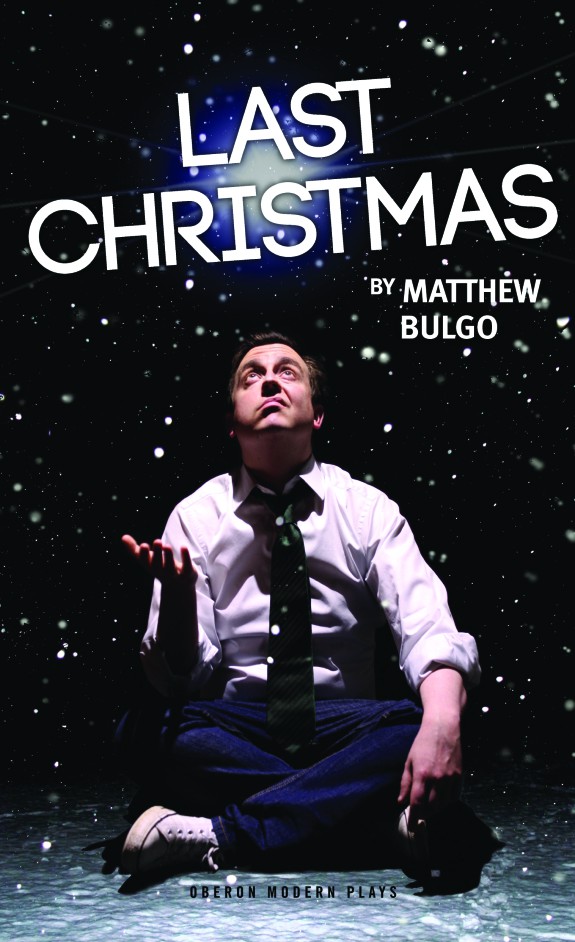
We couldn’t go to Edinburgh without this support. It’s vital for our company growth and to get the best new writing out of Wales. We took Dirty Protest’s production of LAST CHRISTMAS by Matthew Bulgo to Edinburgh Festival Fringe in 2014, supported with Wales in Edinburgh funding. That whole experience was very successful for Dirty Protest. Producers, theatre programmers and promoters from across the world came to see our play and booked it for their venues. We produced LAST CHRISTMAS in the Soho Theatre in London and the Traverse Theatre in Edinburgh. We also had many more conversations about other projects, that are now starting to come to fruition. This happened with the support of Wales in Edinburgh. Dirty Protest is a project-funded company, and usually the grants we receive only allow a maximum 15% of a project to happen outside Wales. For us to build our company, we have to stand on a more prominent stage. It’s difficult to get reviewers and promoters outside Wales to see our work when we perform at home. Going to such a high-profile festival as Edinburgh Fringe has benefits for us, for the artists making work here and for the promotion of Wales’ arts.
The festival features a huge range of productions and there is great deal of competition for audiences, why should audiences come and see your companies work?
It’s a proper laugh – you’ll leave and have had a really good time for less than an hour, so you’ll have loads of time to walk to your next show without having to rush! SUGAR BABY is part of an incredible programme in an amazing venue. There’s something really exciting about being in that environment, watching an excellent actor as you are pulled along this funny and edgy Cardiff story. All that matters is the writing, acting and the relationship between performer and audience. It’s the ultimate live event!
Welsh artists/Companies will be showcasing a range of art forms including theatre, new writing, site-specific work and contemporary dance. In your opinion is there anything that is distinctly Welsh which links them?
What links the artists and companies is a distinct camaraderie. We are a collective who are representing Wales and are proud of presenting our world-class work together. We are all there to help each other out, to bring each other up, and that is something special about the Welsh arts scene. The diversity of art form in the WIE showcase shows that this community belongs to everyone, whether they are into well-made new plays, live art, contemporary dance, reimagined classics – and this needs to be reflected not just in Edinburgh, but in Wales throughout the rest of the year.
What would you recommend seeing from the other Welsh/Wales based companies going to this year’s festival or perhaps the festival as a whole?
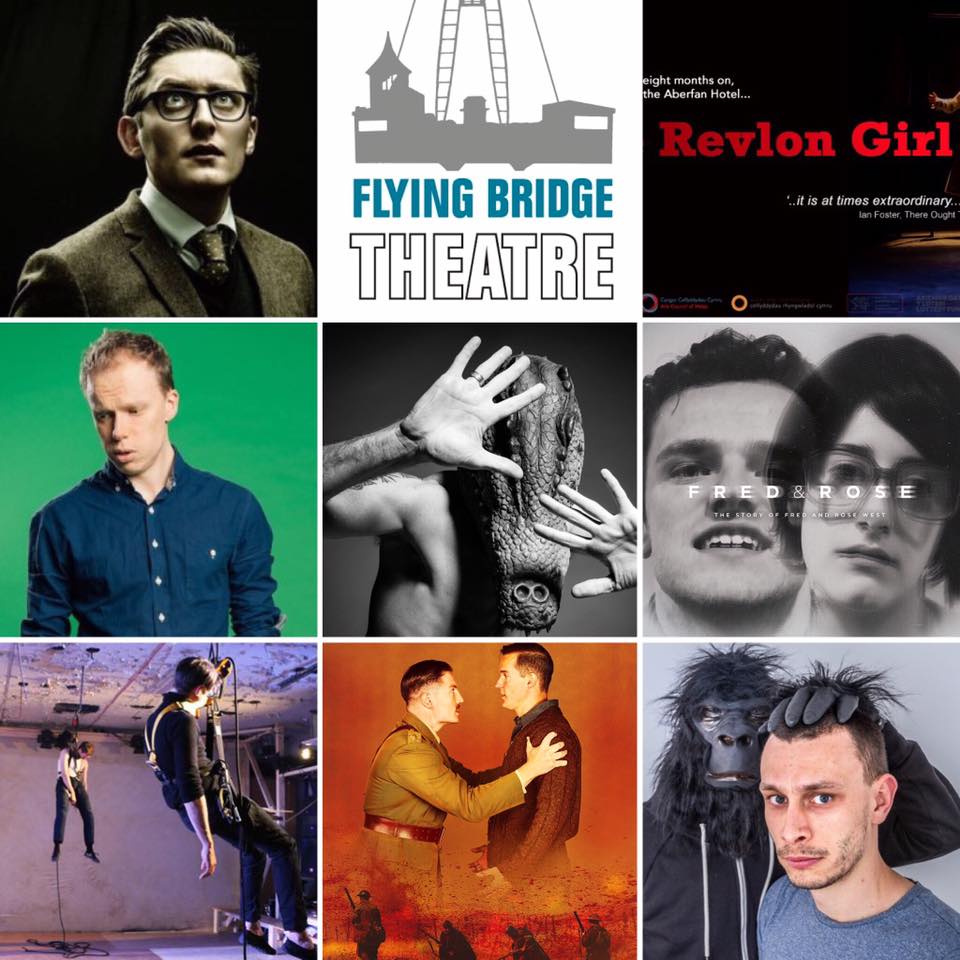
I loved F.E.A.R., the one-man show created by Mr and Mrs Clark and performed by Gareth Clark when I saw it earlier this year. I don’t want to spoil it for anyone who’s going to see it, but there are so many joyful and beautiful and thought provoking moments in the performance. I’ve heard a lot about Revlon Girl, the cast are awesome and I have a huge love for Pontardawe Arts Centre, so I’ll be seeing that. I thought A Regular Little Houdini was great at the Fringe, so I want to see Flying Bridge and Daniel Llewellyn-Willians’ next show, Not About Heroes. I can’t wait to see Seagulls, especially because Volcano who are making it have a whole venue in Leith we can hang out in! I haven’t yet seen all the shows this year, so I’m looking forward to seeing all the productions in the WIE showcase. For the festival as a whole, I’m mainly looking for new, young companies, actors, playwrights and comedy writers. Every year at the Fringe, I discover artists who I know I’ll be looking out for in the years to come. This year, I’ll be checking out FRED AND ROSE in Venue 13. The show is by a group of USW Atrium drama graduates, who are going to Edinburgh for the first time and it looks great contemporary theatre piece. I’ll be watching a lot of comedy too. I’m excited by Tom Neenan’s ATTENBOROUGH, Tom’s a great character comic. His show last year was a about a haunted old vaudeville theatre and it was great comedy storytelling. And who doesn’t love David Attenborough?! Also, the brilliant Jordan Brookes’ newest comedy show on the Free Fringe is him talking about his nan; last year, I saw him re-enact his own birth. This guy is surreal and excellent. And if you missed it last year, my favourite show of the Fringe in 2016 was the Free Fringe comedy, Richard Gadd’s Monkey See Monkey Do. It was exceptionally funny but also hugely brave and just incredible. The show won the Edinburgh Comedy Award last year and is back, this time at Summerhall, just for a limited run.
What do the artists and companies do when they aren’t performing?
We watch other artists’ shows, we see people we haven’t seen since last year, we support each other and meet promoters and venue programmers to get the show on again after the Fringe. Edinburgh is a bit of a bubble, so you try and maintain some perspective and remember there is a world outside the city. I always go to the art galleries and museums in Edinburgh because they are chilled spaces with wonderful exhibitions during August. They open my mind and give me space away from the buzz of the festival. Last year, I went to the Harry Benson photography exhibition in the Scottish Parliament and was in there for 4 hours.
What’s the best Fringe show you’ve ever seen?
I’ve visited the Fringe, as an artist and a punter every year except one for the past 17 years. The Fringe show that sticks with me through that whole time is VICTORY AT THE DIRT PALACE by Adriano Shaplin and the American theatre company, the Riot Group. I saw it in 2002. It was an intense, satirical play, in a tiny performance space that wasn’t one of the big commercial venues. It was about the post-September ’11 American mindset. 9/11 had only happened less than a year ago; the writing was sharp, funny and urgent. The details acutely observed. The ensemble of four were witty and clear. As an emerging artist, about to leave the UK for training in America, I knew that was theatre I aspired to make.
Thanks for your time Catherine.
All posts by Guy O'Donnell
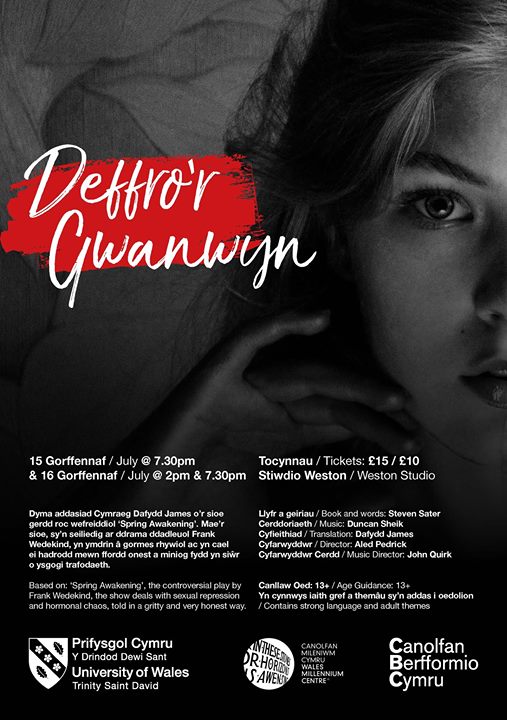
Adolygiad: Deffro’r Gwanwyn, (The Gate/Canolfan Berfformio Cymru) gan Miriam Elin Jones
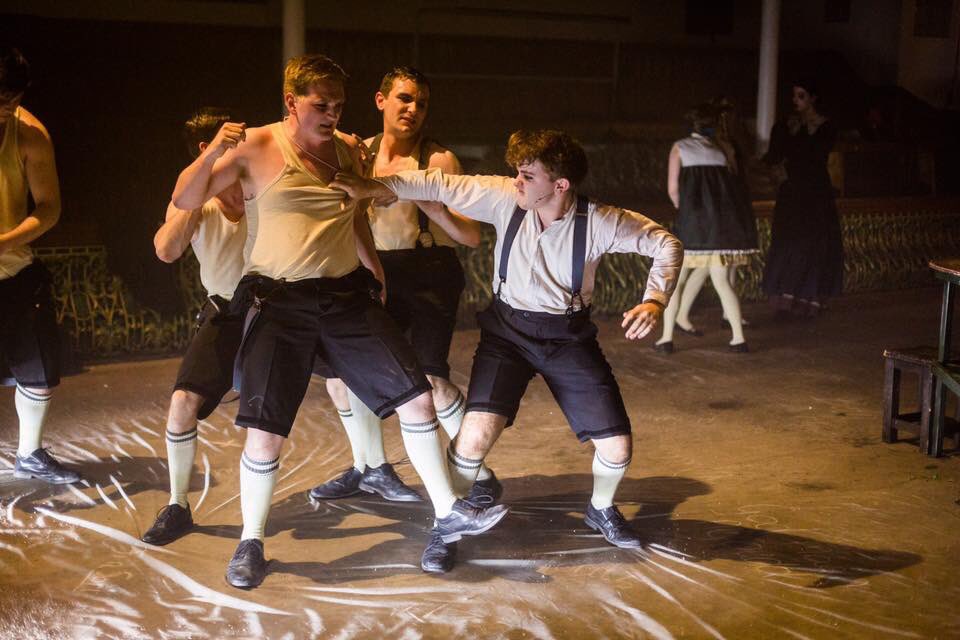
Yn ddiweddar, mae’n bur anodd credu – gyda phob sgwrs yn bob man yn troi o’i amgylch – bod unrhyw un yn gallu gadael eu ffics nosweithiol o Love Island a dianc i’r theatr. Fodd bynnag, nos Wener ddiwethaf, llenwyd seti The Gate gan gynulleidfa yn mynychu perfformiad olaf myfyrwyr BA Perfformio Prifysgol y Drindod Dewi Sant, Deffro’r Gwanwyn.
Mewn oes lle nad oes yna’r un weithred rywiol yn dabŵ a cham-drin rhywiol yn jôc ar enau Arlywydd America, pendronais sut ymateb byddai gan sioe gerdd yn trin a thrafod gormes rhywiol a chulni crefyddol? Dan arweiniad y gyfarwyddwraig Angharad Lee, aeth y cast talentog ati i daclo themâu heriol y ddrama, gan osod eu stamp eu hunain ar gyfieithiad medrus Dafydd James.
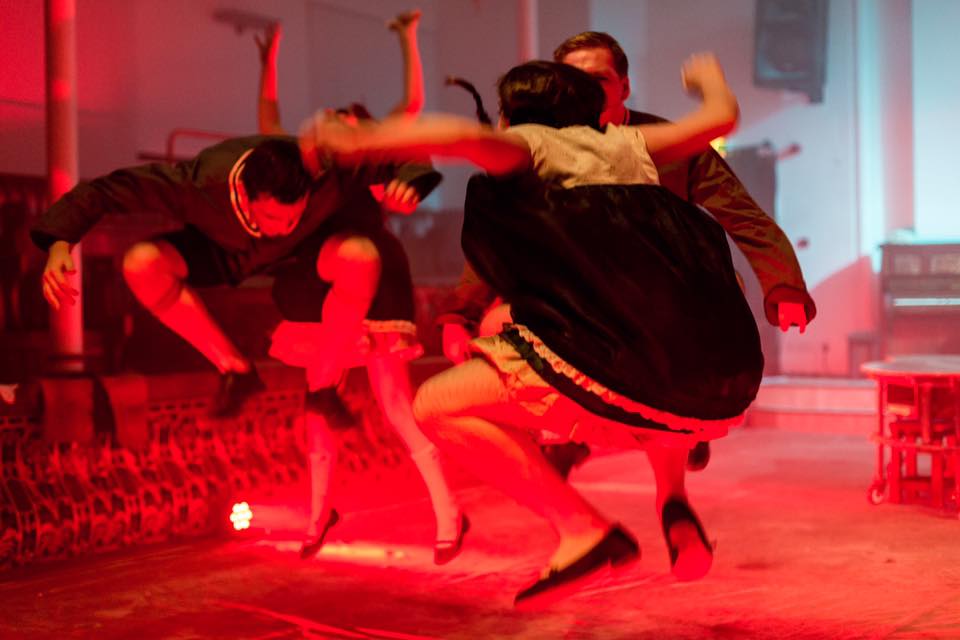
Dilyna stori’r ddrama hynt a helynt cymuned o laslanciau a glaslancesi, eu hormonau’n rhemp a’r rhieni ac athrawon o’u hamgylch yn gwrthod cydnabod eu teimladau na’u dyheadau nwydus. Cyflwynir Wendla a Moritz – y naill methu deall o ble ddaw babis a’r llall â pharchedig ofn ei freuddwydion melys gyda’r nos – a Melchior y rebel sy’n eu harwain ar gyfeiliorn, yn pwysleisio normalrwydd eu dyheadau. Heb draethu rhyw ormod am y plot, dysgir yn fuan iawn nad melys pob anwybod wedi’r cwbl.
Roedd awyrgylch Canolfan The Gate yn gweddu’n rhyfeddol i’r sioe gerdd arbennig hon. Mewn hen eglwys Bresbyteraidd wedi ei haddasu’n theatr, gosodwyd set syml ond symudol – pedwar bwrdd a stolion – a llenwyd y gofod gyda pherfformiadau a choreograffi egnïol. Wrth fynd i eistedd ar un o’r meinciau pren (a brofodd yn briodol o anghyfforddus) roedd yr actorion yn chwarae plant yn ddiniwed braf ar lawr. O’n hamgylch, roedd pileri addurniadol yn britho’r lle, rhai ag ysgydwyd i’w craidd yn ystod rhai o uchafbwyntiau dramatig y cynhyrchiad, ac yn lle pregethwr mewn pwlpid, gosodwyd y band, wedi’i godi i le haeddiannol ar dir uwch. Er ehangder yr ystafell, roedd hi’n eithriadol o gynnes, ac o ystyried gwres y caru tanbaid sy’n rhan mor ganolog o’r sioe, bosib bod hynny’n fwriadol – ond roeddwn ni’r gynulleidfa a’r cast i gyd yn chwys drabwd erbyn diwedd y sioe.
Heb os, roedd carisma cynnil rhwng bob un o’r cast yn dystiolaeth i’w hagosatrwydd a’r cyd-weithio cyson sydd wedi bod yn rhan mor greiddiol o’u cwrs. Golyga natur y sioe bod pob un yn cael cyfle i fynnu llwyfan, a nifer o’r cymeriadau ymylol yn cael cyfle i gamu i’r goleuni. Roedd dicter Martha (Heledd Roberts) i’w deimlo a solo Lloyd Macey fel Otto (serch lletchwithdod ei daldra’n golygu nad oedd yn argyhoeddi fel disgybl ysgol) yn un i’w chofio. O ran y prif gymeriadau, roedd Jemima Nicholas fel Wendla yn serennu, gyda’i holl osgo a’i llais yn efelychu chwilfrydedd diniwed a drygioni merchetaidd ei chymeriad drwyddi draw. Er bod Josh Morgan fel Melchior a hithau yn argyhoeddi fel cariadon ifanc, tueddai i’w lais ef foddi dan sŵn y gerddoriaeth, ac nid oedd mân broblemau technegol o ran y sain yn hwyluso pethau iddo chwaith. Yn goron ar y perfformiadau oll, roedd ymdriniaeth Siôn Emlyn Parry o gymeriad Moritz – yn enwedig ar ddechrau’r Ail Act. Llwyddodd i yrru ias i lawr fy nghefn wrth i’w wewyr meddwl ddatblygu’n raddol, gan ddenu’r dagrau yn ystod ei olygfa olaf.
Wrth i’r ddrama fynd yn ei blaen, diosgwyd siacedi stiff a choleri hirion, Piwritanaidd y llanciau, ond aros gwnaeth y mascara wedi staenio’n drwch dros eu llygaid. Pranciai’r merched ar hyd y llwyfan yn ei ffrogiau llac, gyda’u sanau hirion yn sidet ond yn seductive ar yr un pryd, pob un yn ddoli fregus, hyd yn oed Isle herfeiddiol (Lleucu Gwawr) wrth geisio hudo Moritz. Ynghyd â’r gwisgoedd, gwnaethpwyd yn siŵr fod y llwyfan wrth i’r coreograffi’n ferw o weithgareddau rhywiol, awgrymog gyfleu’r byd newydd y deisyfa’r cymeriadau. Yr unig fai oedd i’r coreograffi ar adegau olygu bod y perfformwyr yn troi cefn ar eu cynulleidfa yn ystod y sioe. Fodd bynnag, ni phechwyd yr un ohonom. Roedd cymeradwyaeth parod wrth gwt y rhan fwyaf o’r caneuon yn dyst i’n mwynhad o’r sioe.
Gyda’r gynulleidfa gyfan ar ei thraed ar ddiwedd y perfformiad, gallaf ddatgan yn bendant na chafodd neb gyfle i ddifaru colli pennod nos Wener o Love Island yn ystod Deffro’r Gwanwyn. Er mai noson olaf eu cwrs dwy flynedd oedd y cynhyrchiad egniol hwn, dyma godi’r llen ar yrfaoedd disglair i nifer o’r cast, sy’n argyhoeddi’n gyffrous iawn i’r diwydiant theatr yng Nghymru, a thu hwnt.
Top Tunes with Rebecca Jade Hammond
Hi Rebecca great to meet you, can you give our readers some background information on yourself please?
I’m a Cardiff born actor and writer and more recently Artistic Director of Chippy Lane Productions Ltd. My next project is “Chippy & Scratch – Does The Diff” performing Tuesday 18th July at Chapter. Limited tickets still available www.chippylaneproductions.co.uk. This is a scratch night for emerging Welsh and Wales based playwrights.
https://www.chapter.org/chippy-scratch-does-diff
This chat is specifically about music and the role it has played in your personal and professional life. Firstly to start off what are you currently listening to?
Well – firstly this was such a great challenge to put together. Music is a massive part of my life and work. It’s so funny as what I’ve chosen now is not what I would have chosen fifteen years ago when I was obsessed with Garage, Incubus and Dido. However, I’ve tried to mix it up to reflect what was me then and now as it’s all contributed to my current taste.
At present I’m listening to H.E.R a mashup of soft R&B and vocally reminiscent of early Aaliyah. Soulful and sassy and easy on the ears it’s great listening when you want to block out the noise of the city. If you like Ray Blk and FKA Twiggs I would definitely recommend it. Old R&B reminds me of my teens, circa 2001 when all I cared about was my Adidas Galaxy’s and my discman breaking (anti-shock button was a lie, it never worked) so any R&B at the moment new or old is very much on my playlist.
We are interviewing a range of people about their own musical inspiration, can you list 5 records/albums which have a personal resonance to you and why?
“Bjork” – It’s impossible to pick one… all of her albums are such exquisite provocative pieces of work. Each, cinematic and theatrical. All of her music transports you to a space of sublimeness. I have to pick though, so probably “Post”. The first play I ever wrote, which looking back was frightfully naive and man-hating included tracks from this album. You can’t help but want to move when you hear her music and it’s impossible to sit still. I remember seeing her live and it was otherworldly and I always feel happier listening to her voice. Favourite track – “Possibly Maybe” – mainly because I’m a sucker for great lyrics and hopeless romantic and when she sings “…but afterwards I wonder, where’s that love you promised me? Where is it?” makes my heart breaks every time.
“Imogen Heap” – Everyone who knows me, knows that Heap is my idol. Her musicianship, creativity and talents knows no limits. Who re-mortgage’s their house to make an album? She is the antithesis of a musician making music to belong to other art forms. I had the pleasure of watching her work as the soundtrack to a Frantic Assembly piece called Pool No Water by Mark Ravenhill several years ago and again in the new Harry Potter play and it simply is extraordinary. Her album “Ellipse” – my favourite I listened to whilst writing a my Masters dissertation on “Theatre as spectacle”. It’s one of those albums where you can listen the whole way through without skipping and it never ever gets overplayed because there’s so much to discover. Favourite track – “Earth”.
“Kate Bush” – I was lucky enough to watch her show in London in 2015. It was a theatrical feast of music, puppetry, Theatre and storytelling. I’ve never witnessed anything like it and i’m pretty certain anyone else who saw it would agree with me. Again, hard to pick a track… but probably “And Dream of Sheep” from “Hounds of Love.” Lyrically beautiful and thought provoking. I listen to a lot of Bush to get things done and I always do!
“Drake” – I can’t really explain it, but when I listen to his work much of what he raps or sings about is the want and need to strive to be better, for success. His compositional skills of sampling and mixing are in my opinion some of the best songs around. He is one of the few rappers that transcends his own genre. I love listening to his albums “Views” and “More Life”, when it’s on my ipod it’s impossible not to walk down the street with confidence thinking – I can do this! Top tracks is “Views”. Lyric – “The only way I got here, coz I put the work in, and did it with a purpose.”
“Beyonce” – Everything about her is just divine. Every album is symbolic of a new chapter in my life. She promotes power, feminism, equality and proof that if you work hard enough you can achieve great creative things. Favourite track – “Grown Woman” from her self titled 5th album. It makes me think anything is possible and it’s just great to dance to with friends or blast out in your car. I love her so much I did a parody in my webcomedy of her video 7/11, I mean I’m no Queen B but I gave it a good go.
Thanks Rebecca, just to put you on the spot could you choose one track from the five listed above and tell us why you have chosen this?
Imogen Heap – “Earth”. Her music is beyond important to me. She is, as my friends would say “Oh – Imogen heap, she’s just so you Bec!”.
Thanks Bec!
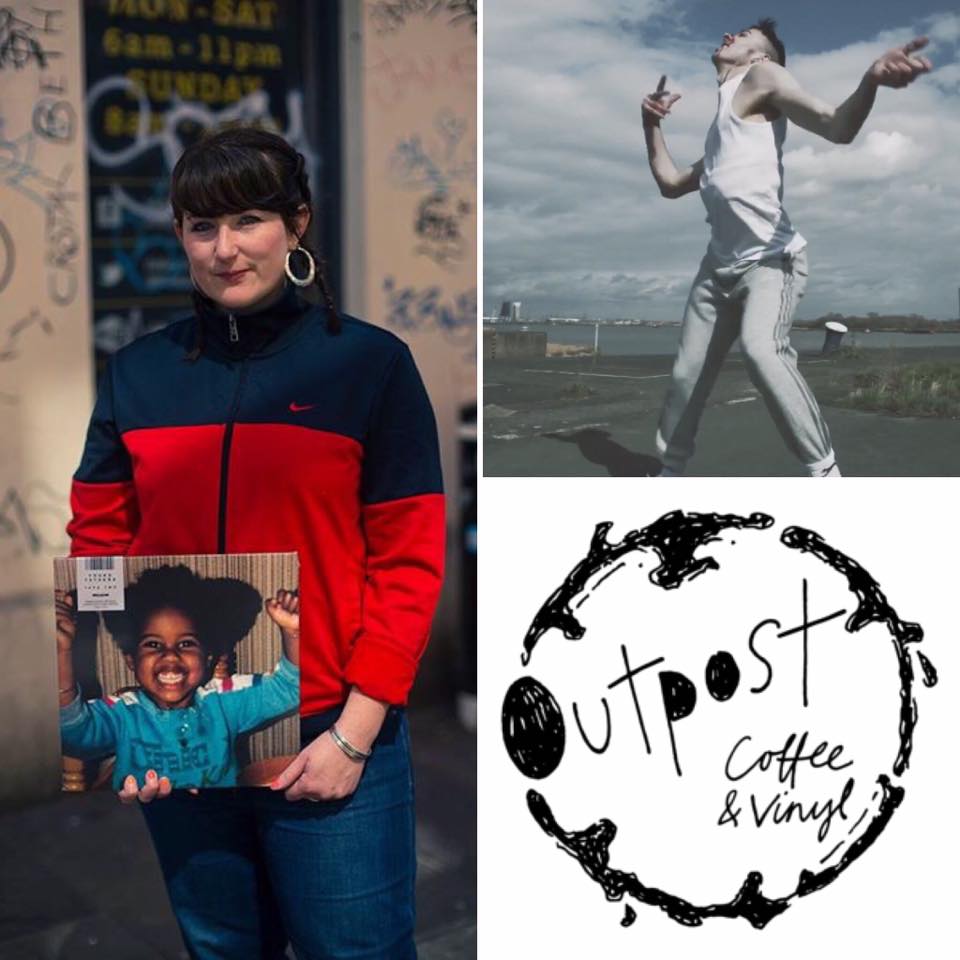
Check out Outpost Coffee and Vinyl Cardiff. For the latest and greatest vinyl and great independent coffee!
http://www.outpostrecords.co.uk
Collaborating with Motherlode, RCT Theatres and Taking Flight Theatre Company to develop a Welsh Critical Network.
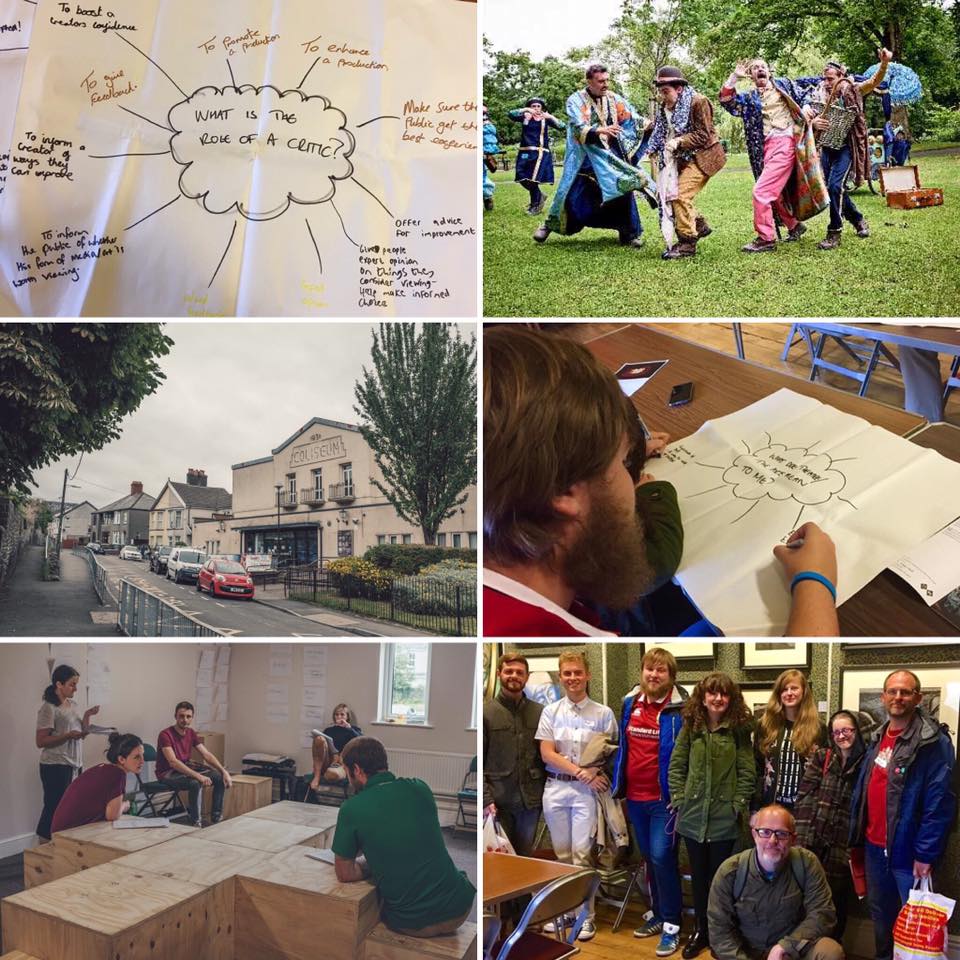
Get the Chance has collaborated with Motherlode, RCT Theatres and Taking Flight Theatre Company to run a series of free ‘Get the Chance to be a theatre critic’ workshops, participants also accessed the rehearsal process and public performances. Get the Chance was able to run this activity with the support of partners and through funding from Arts Council Wales Sharing Together. “A strategic initiative to encourage the development of networking opportunities.”

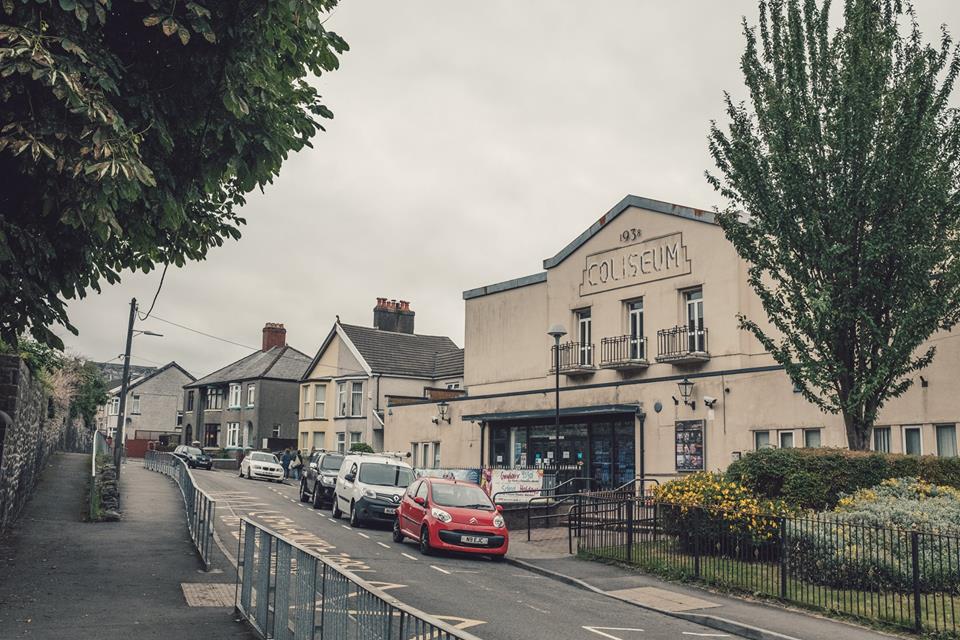
During this activity a free workshop took place at The Coliseum Theatre in Aberdare. During the workshop we discussed the role of the critic, differing methods of giving critical feedback and the role of the press and marketing department. Those attending were strong advocates for arts venues and cultural provision in general.
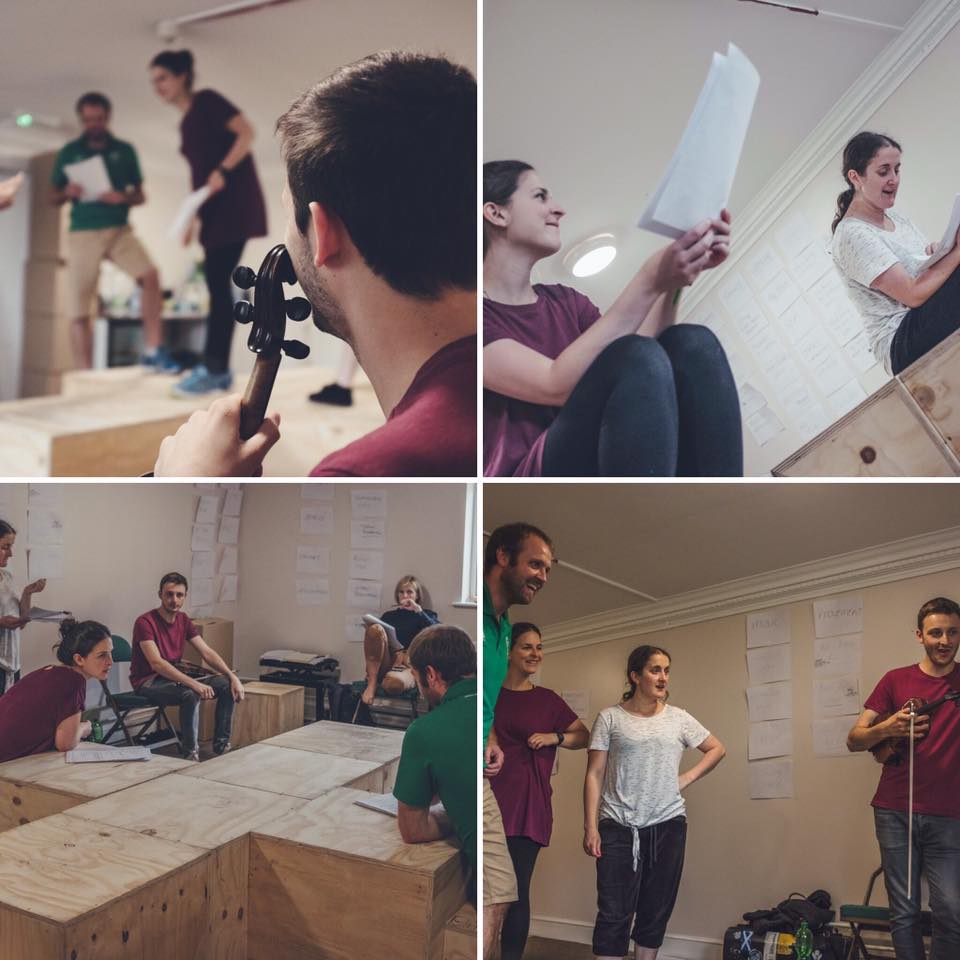
After the workshop we spent time in the rehearsal room with Motherlode who were developing their new production, ‘Exodus’. This gave us a unique insight into the development of the companies work.
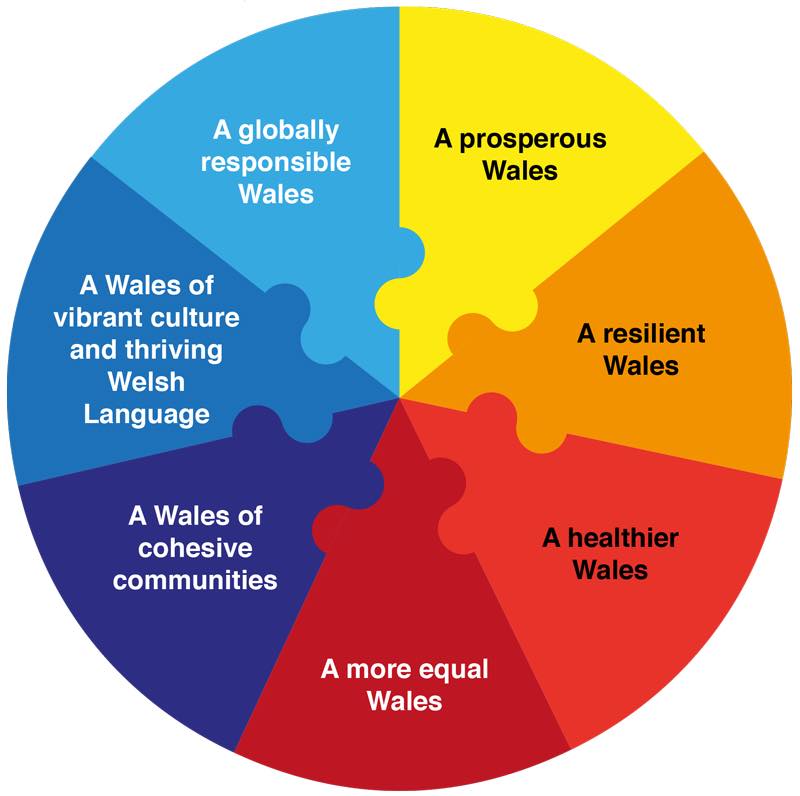
The workshop participants are all excellent examples of Creative Citizens. Get the Chance is developing a socially engaged, democratic audience development model called Creative Citizens Cymru. Many of the fundamental principles of this model are very similar to the principal goals of the Well-being of Future Generations (Wales) Act.
You can read a write-up of the workshop by Vicky Lord at the link below.
http://vickylord.com/2017/06/30/get-the-chance-workshop-write-up/
Get the Chance works in collaboration with a range of individual creatives, companies and organisations in order to achieve our aim of “Creating opportunities for a diverse range of people to experience and respond to sport, arts, culture and live events.” We would like to thank Rachel Boulton, Artistic Director, Motherlode and Nia Wyn Skyrme- Freelance Producer/ Promoter for their statements of support relating to this activity below.
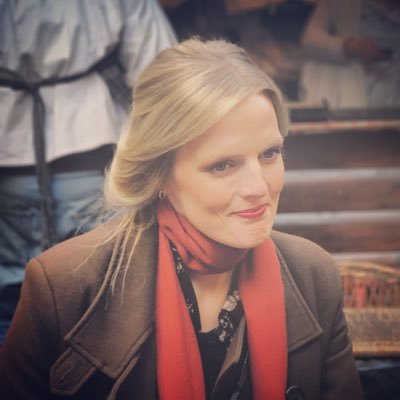
“Motherlode is all about removing barriers to theatre, making entertaining work with a political edge that our friends, neighbours and families can enjoy in a collective experience. In a quick survey we asked 100 women in Wales “Does theatre represent your world view?” 13% said yes, the other half said no, and the other half said they don’t go to the theatre. While this research needs more fleshing out, there’s a problem here with who we’re currently making theatre for and who we’re making it with…Get The Chance is vital to shifting how we talk about theatre, who gets to talk about theatre, and who decides what should be on our stages. It encourages local people to take ownership of their venues and creates a safe environment where communities can take risks and express themselves through sports, culture and live events, regardless of background.”
Rachel Boulton, Artistic Director, Motherlode

“I have been working as a freelance producer for over a year, and I have worked with Get the Chance with almost all the productions I’ve been involved with, as we share a passion for co-working, sharing ideas and contacts and creating active creative citizens in different communities across Wales.
It’s been very valuable working with an organisation like Get the Chance. Arranging reviewers, interviews and specific workshops raising the company’s profile and excellent promotion, sharing ideas and giving advice. Get the Chance have also brokered relationships with their members to become Local Promoters in different areas across Wales.”
Nia Wyn Skyrme- Freelance Producer/ Promoter

We have also recently ran a workshop in collaboration with Taking Flight Theatre Company. We ran a free ‘Get the Chance to be a theatre critic workshop’ on July the 11th at Cyfarthfa Museum. The workshop was attended by a youth group from Merthyr Tydfil. We discussed a range of areas of cultural provision and the participants then went to see Taking Flights production of The Tempest. Their reviews will follow soon!
Thanks to Beth House, Creative Producer, Taking Flight Theatre Company for supporting this activity.
“Collaborating with Get The Chance has been really exciting for us and I feel like we are only just beginning to scratch the surface of what might be possible in terms of working together and developing new arts professionals- and moreover broadening audiences. Thus far, we have been able to tap into groups who have traditionally been excluded from training as well as arts opportunities, often because of access requirements or other barriers. The work I have seen Guy do has inspired groups to think critically about the arts they consume and to want more. We are extremely hopeful that we can seek new ways to go even further with this partnership. More joined up working like this is definitely needed in Wales!”
Beth House, Creative Producer, Taking Flight Theatre Company
Review Black Mountain, Paines Plough, Theatr Clwyd by Bethany McAulay

 (4 / 5)
The Roundabout Theatre is small – and though I initially appreciated the intimacy of the compact audience, as soon as the lights dimmed, I began to experience intense claustrophobia. This, I believe, was intentional on behalf of the production team, who succeeded tremendously in their apparent attempt at creating an almost Artaudian production. I cannot distinguish a moment in which I was not on edge, or physically quivering, for the relentless mystery of the play. Certainly, Brad Birch’s ‘Black Mountain’ is the most refreshingly original, and impressively sinister play that I have ever witnessed.
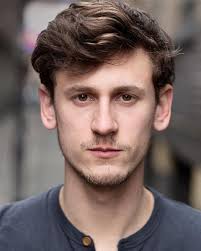
Hasan Dixon portrayed Paul with an extraordinarily potent, compelling, and convincing performance; so much so that one may mistake his acting for genuine fear and frustration. This, naturally, only strengthened the air of threat that seemed to consume the theatre as effectively as the lingering clouds of mist (which, equally, were outstandingly atmospheric). His portrayal was, above all, believable – and that is predominantly what allowed for the exponentially threatening atmosphere that left me feeling equally as terrified as Paul himself.
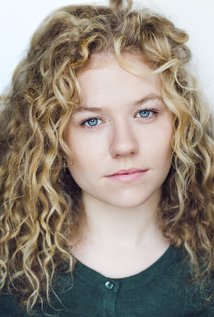
Sally Messham as Helen was extremely well played, and though the actress’ characterisation of the character was beyond satisfactory, the character itself was difficult to understand. Helen’s flaws seemed to be ingrained not in Messham’s performance, but in the script itself, as a character who was initially presented as understanding and concerned for Paul’s wellbeing, abruptly became depraved and psychopathic; which seemed too unrealistic, even for this play
In point of fact, I found that the script lacked substance. Most of the action and thrill derived largely from the physicality and manner of the actors, as well as the technical and atmospheric devices employed. I believe that, had I not viewed this play in the intimacy of the round, and thus felt so closely involved within the performance, the dialogue would not have been sufficiently strong or theatrical enough to create much tension at all.
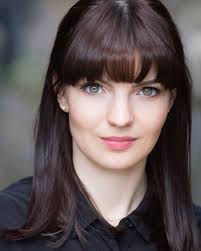
For a large part of the play, Katie Elin-Salt’s portrayal of Rebecca was almost frustratingly unconvincing, and was mostly comprised of repetitive gestures and an unchanging tone of voice. In contrast to Dixon’s consistently adaptable tone and manner, Elin-Salt’s performance did not appear to vary much at all, and became very unstimulating, very quickly. However, I began to understand the characterisation only in the final moments of the play, when Rebecca’s soullessness became intensely ominous, and I started to truly appreciate the darkness of the character. I truly regret that this was only prominent within the final ten minutes.
Although the set itself was essentially non-existent, the production was impressively and ingeniously staged, and though techniques such as sudden descents into darkness were frequently adopted, i was equally as stupefied by the final burst or strobe of glaring light than I was by the first. My feelings of paranoia and entrapment were prominent and consistent throughout the entire performance (though this was certainly not unpleasant – I acknowledged and appreciated the psychological thrill). Additionally, the employment of a single torch on stage whilst the remainder of the theatre remained in absolute darkness, as well as the frequent ear-splitting screams, were profoundly, and intriguingly, effective. Equally, the tension was enhanced tremendously during the moment in which Elin-Salt and Messham disappeared from audience view and ran frantically around the exterior of the seating area. Particularly during this moment, their menace felt like a personal threat.
‘Black Mountain’ was so consistently immersive, and felt so isolated from the world outside the theatre, I had to remind myself on numerous occasions throughout that it was merely a performance.
https://www.theatrclwyd.com/en/whats-on/black-mountain/
Top Tunes with Rhiannon White
Hi Rhiannon great to meet you, can you give our readers some background information on yourself please?
So a bit of background – I’m a Cardiff born, Cardiff based theatre director. I mainly work with my theatre company Common Wealth but I also work on freelance stuff which has ranged from taking a circus to Gaza to making a show on a beach.
The work I make is socially engaged, often political and site specific – we find interesting places to stage our shows in the past we have made shows in houses,boxing gyms, courtrooms and now we’re making our new show in a huge industrial warehouse.
I grew up in Cardiff, St.Mellons – I’ve got a deep sense of love and pride for this city and the incredible people that I know here. I can’t imagine living anywhere else, this city gives me the fuel I need to spark and fuel my imagination. I love the magic of this city.
I think it was growing up in St.Mellons that got me into theatre. We didn’t have very much growing up but what we did have is loads of kids to play with. I spent my childhood playing in the street, dressing kids up in my mums old clothes and on plays on in the garden. I think that’s where my DIY spirit came from in those early lessons of making the most of what you’ve got.
My company Common Wealth grew out of those roots – we were a group of people that came together to make theatre. We started with nothing, making shows in large empty buildings, without funding and with the generosity of people who wanted to get involved.
Over the years Common Wealth has grown, we’ve made work in many different places, with incredible groups of people and are now working on shows in places like Chicago and Germany. Currently I am working on a new co-production with National Theatre Wales called We’re Still Here – I’m mega excited, it’s our first big show in Wales, staged in an epic former industrial warehouse and inspired by the incredible Save Our Steel Campaign.
https://nationaltheatrewales.org/were-still-here
This chat is specifically about music and the role it has played in your personal and professional life. Firstly to start off what are you currently listening to?
Currently I’m listening to Kojey Radical’s album 23winters – he’s a London spoken word, grime artist. I’m loving it because it’s so poignant and powerful it feels like a new genre, he’s also a visual artist so he’s fusing all these different forms together. He’s a powerful man, full of real energy and rooted in his truth. I respect that.
We are interviewing a range of people about their own musical inspiration, can you list 5 records/albums which have a personal resonance to you and why?
The Holy Bible, Manic Street Preachers
This album changed my life, bit cheesy but it did. I discovered it when I was in school and it was one of those ones that spoke to me about who I was, it helped me make sense of the world. It’s genius, I’d go as far to say they’re some of the best lyrics ever written.
Drunken Lullabies. Flogging Molly
I love punk. I love how fierce it can be and that you can loose yourself dancing to it and let everything go. This song is particularly special to me, it’s a song me and my friends used to sing early hours of the morning as the sun was rising. It reminds me of a friend that passed away, Daniel Griffiths. It reminds me of the wild times.
The 4th Branch, Immortal Technique
I also love hip hop, especially it’s conscious, political and says things that we rarely hear. Immortal Technique is an independent rapper in America who refuses record deals, he holds his own. This song particularly resonates with me because it’s about the Palestinian struggle, it captures the situation in all it’s horrific truth. When I was travelling in Palestine this was a soundtrack for me, in a strange way it gave me hope that someone was writing music about it and that was reaching people that might not know.
https://www.viperrecords.com/artists/immortal-technique/
Shame, Young Fathers
Young fathers live. Wow, I dont have the words. I saw these guys at Clwb Ifor Bach, I had no idea and instantly fell in love with their music, I’d never heard anything like it in my life. Shame – has had a massive influence on my work, I use it in most of my workshops, it’s urgency really inspires me. I LOVE the video too.
Let them Eat Chaos, Kate Tempest
Kate’s a force of nature an important artist of our times – she always pops up at the right time, she inspires the shit out of me and puts me back on track. She’s a friend of mine and I’ve loved seeing her grow and smash it over the years. She’s reminds me to be true to myself, the past and to not apologise.
Just to put you on the spot could you choose one track from the five listed above and tell us why you have chosen this?
It would have to be Shame, it makes me feel alive and full of fire. It’s a song you can run, dance, scream and shout too. That’s important to me.
Many thanks for your time
An interview with ‘The Revlon Girl’ company.
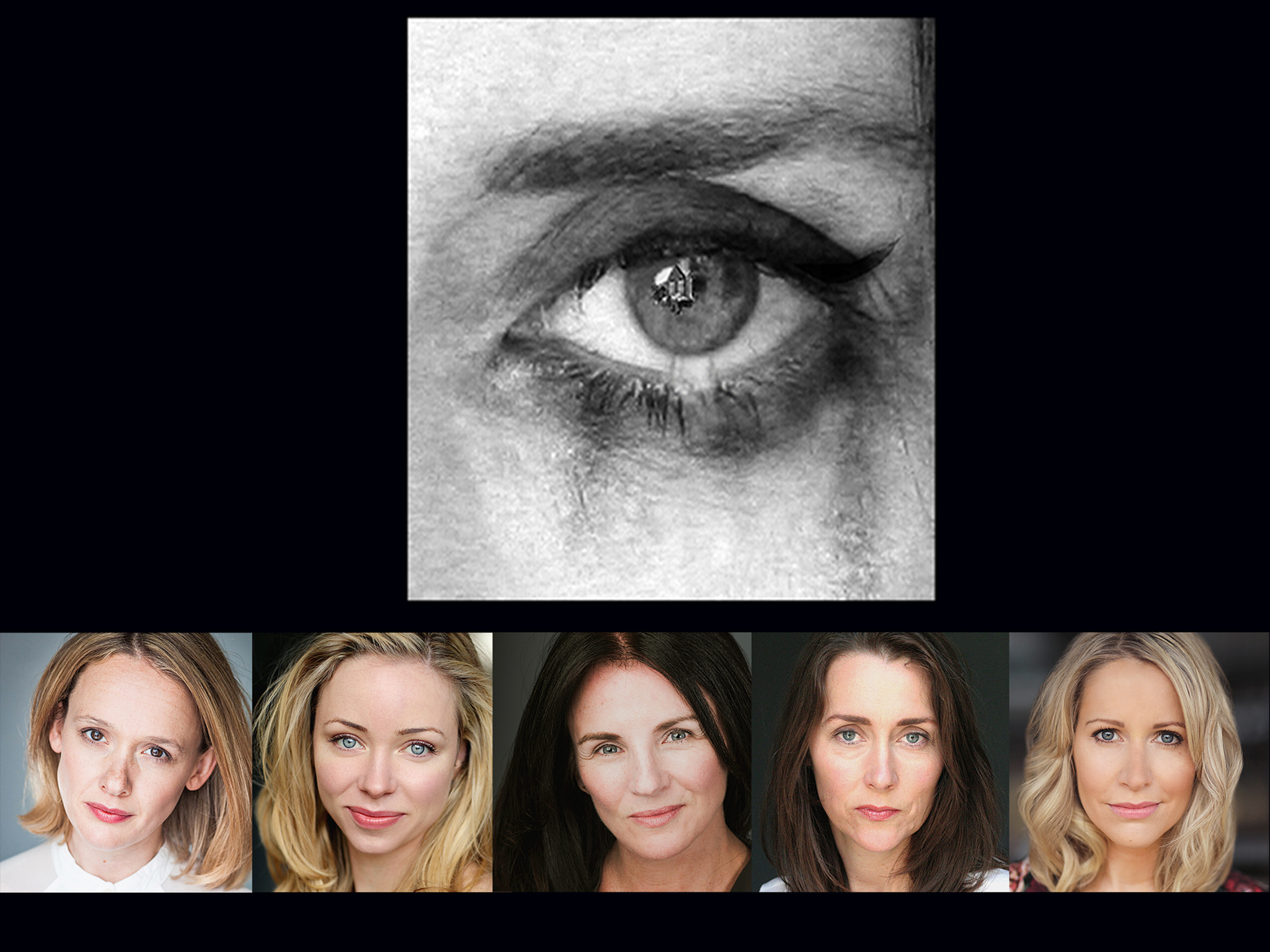 The Director of Get the Chance Guy O’Donnell recently met with The Revlon Girl company. We discussed the plays development, Edinburgh Festival Fringe and their plans for the future.
Hi pleased to meet you. Can you please give our readers some background information on yourself and your role in the arts in Wales?
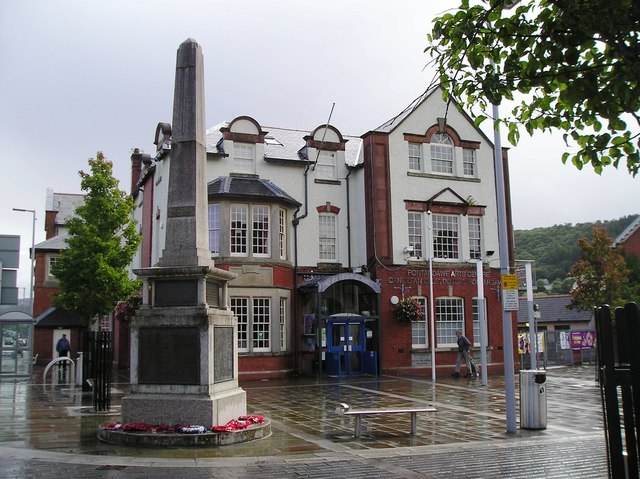
Pontardawe Arts Centre
We are a small Arts venue based in the centre of Pontardawe, 20mins from Swansea. Our aim is to improve the cultural opportunities in the local area by providing a platform for the more striking shows within the arts. Annually we deliver approximately 60 professional shows encompassing drama, comedy, live music and children’s theatre. We also provide development opportunities to improve creative writing, script writing and song writing. We are involved in supporting emerging companies in assisting them with research and development opportunities in supporting the creation of high quality theatre. We also provide the practical things such as rehearsal rooms, technical and marketing support.
https://npttheatres.co.uk/pontardawe/
Writer/Producer- Neil Anthony Docking
Neil is a writer, composer and producer, and has worked in press, radio, film and theatre. He studied music at the University of Westminster and has written for The Guardian (newspaper), Station Road (BBC Radio Drama), The Throne Room (original play for radio), Bay College, Casualty (BBC), Nuts & Bolts, Crossroads, Emmerdale (ITV1) and has been shortlisted for the BBC Dennis Potter Screenwriting Award. He has written, scored and co- produced the original independent British feature film musical, Rain and most recently wrote and produced Storyline, an original comedy for online broadcast. He is married to Maxine Evans (they met in 1984 when they were both members of the West Glamorgan Youth Theatre and, in one way or another, have worked together pretty much ever since). ’The Revlon Girl’ is his first play.
Director/Producer – Maxine Evans
Maxine studied classical acting at the Guildhall School of Music and Drama and has worked as an actor, writer, series editor and director in television, film and theatre. She directed Without a Song or a Dance (shortlisted Best Director at the Cork Film Festival) Nuts & Bolts (ITV/RTS Award winner) and Rain (a Feature Film Musical) while her writing/series editor credits include Coronation Street, Crossroads and Nuts & Bolts (ITV). She continues to develop new writing for theatre (Goat Street Runners and Who’s Coat Is That Jacket?) and has recently directed a new comedy entitled Storyline. As an actor Maxine appears regularly on television- most notably in BBC’s Call The Midwife and A Song For Jenny and as the indomitable ‘Rhian’ in Sky 1’s hit comedy Stella.
Can you tell us about the work your company is taking to this Edinburgh Festival Fringe?
‘The Revlon Girl’ is an original play based on a true story following the Aberfan Disaster of 1966 (in which 144 people were killed- 116 of them school children). Set 8 months after the disaster, the play tells the true story of a group of bereaved mothers who met to talk, cry and to even laugh without feeling guilty. At one of these meetings, the women looked at each other and admitted how much they felt they’d let themselves go. Afraid of being judged frivolous, they secretly arranged for a representative from Revlon to come and give them beauty tips.
https://youtu.be/_mGw96vnoa8
A short version of the play was presented in Covent Garden in 2015 before a full length version toured Wales in 2016 during the 50th anniversary of the disaster to overwhelming audience and critical acclaim.
getthechance.wales/2016/10/01/review-revlon-girl-october-sixty-six-kat-leslie/
Following what we think will be a successful debut at Edinburgh, the play transfers to the London stage in the Autumn for a 4 week run at the prestigious Park Theatre.
https://youtu.be/9DDgYUu4cPo
Wales Arts International who have funded some of the companies this year state,
“The idea is to help the selected Welsh companies to present their work at the Fringe in the best possible way – with the best conditions – and, importantly, to connect with international promoters and programmers participating in the British Council Edinburgh Showcase.”
Why is their support important along with Arts Council Wales and British Council Wales?
As with the many people who have already said that ‘The Revlon Girl’ has worldwide appeal because it is a universal tale with enduring themes that is as much about courage as it is tragedy (and is a story told by women i.e. just over half the global population) I would only add that ‘The Revlon Girl’ exists in part- given that it’s a human story about one of the worst man-made disasters in history- to remind ourselves how indifference is the source of inhumanity and to ensure that this kind of thing never happens again (in fact, on its first outing in 2015, we were surprised just how many overseas audiences came to see it and were bowled over by the story and couldn’t believe that it happened at all)
However, most recently, the play has taken on a chilling- almost prescient – quality; something that has struck not just the writer but also the director and cast in the wake of the Grenfell Tower disaster in West London. Since the play in part explores and illuminates the reasons why disasters like these happen (and why, sadly, they are going to continue to happen) some sections of the play now make stark reading. Indeed, amidst the news reports of the tragedy itself and the subsequent public anger, the writer remarked recently: ’after Grenfell, people are going to think I’ve rewritten the speeches… like Rona’s: “Put up a memorial if you like; in forty or fifty years nobody’s going to remember what happened here anyway. It’ll be something else by then. Another disaster waiting to happen. But it’ll be the same people who’ll say there’s nothing to worry about. Those who’ll be far away and stand to make a lot of money…” ‘
The point is: anyone who has seen ‘The Revlon Girl’ will tell you about its worldwide potential. But that’s a tough mountain to climb. But now, with the help of ACW, British Council et al, it’s time to get out the climbing gear and realise that potential.
The festival features a huge range of productions and there is great deal of competition for audiences, why should audiences come and see your company’s work?
If you’re intending on seeing only one play at the festival, then ‘The Revlon Girl’ is it. Not just is it one of the most moving pieces of theatre you are ever likely to see, it is also one of the most up-lifting. In a sense it has all the hallmarks of a classic (i.e. it is a good story told well by an amazing cast- no gimmicks, no tricks) and fans of Arthur Miller, J.B. Priestly, John Osborne, Clifford Odets, Tracy Letts, Edward Albee, Aaron Sorkin and even David Mamet (or, to put it another way, anyone who likes their drama to be acute, moving, funny and enduring)- should come see it.
Welsh artists/Companies will be showcasing a range of art forms including theatre, new writing, site-specific work and contemporary dance. In your opinion is there anything that is distinctly Welsh which links them?
Difficult to comment at this stage since we haven’t seen each other’s work but I guess there’s one thing I can say for certain: having read about what’s going up and chatting with some of their creators, the one – distinctly Welsh- thing that links them is the sheer diversity of ideas. (I don’t know if there could be anywhere else – outside London of course- that could produce such a breadth of creativity and activity)
What would you recommend seeing from the other Welsh/Wales based companies going to this year’s festival or perhaps the festival as a whole?
I’d recommend seeing them all! And soon!
What do the artists and companies do when they aren’t performing?
Generally speaking, the cast are working all year round doing other jobs like providing voices for CBBC (Michelle McTernan) or appearing in the P&O ads being Rob Brydon’s wife (Zoe Harrison) or shooting new shows for HBO (Antonia Kinlay) or else appearing on stage and screen in a variety of roles (Charlotte Gray, Bethan Thomas). The director (Maxine Evans) is also known as an actor (Call The Midwife, Song For Jenny) and has just come back from shooting series 6 of the Sky 1 hit ’Stella’ by Ruth Jones, playing the indomitable ‘Rhian’.
Other than that, it’s all the things you do in the arts: getting inspired, developing new work and looking for money down the back of the sofa!
What’s the best Fringe show you’ve ever seen?
This is our first time at the Festival so looking forward to answering this question in full next year!
Thanks for your time
Top Tunes with Gary Owen
Hi Gary great to meet you, can you give our readers some background information on yourself please?
I’m a playwright. My family are from Pembrokeshire, I grew up in Bridgend, and I live in Cardiff. Mostly recently I’ve written Iphigenia in Splott for the Sherman Theatre, Violence and Son for the Royal Court, and Killology for both the Sherman and the Royal Court. Right now I’m working on a new version of Chekov’s classic comedy The Cherry Orchard, which relocates the play to Pembrokeshire in the very early 1980s. It’ll be on at the Sherman in October.
http://www.shermantheatre.co.uk/performance/theatre/the-cherry-orchard/
This chat is specifically about music and the role it has played in your personal and professional life. Firstly to start off what are you currently listening to?
I’ve actually got a playlist called “Just Great Songs!” – with the exclamation mark and everything – and I’m listening to that. Right now it’s playing “In Every Dream Home, A Heartache” by Roxy Music. A title I will almost certainly steal for a play one day. And now it’s playing “Glosh” by Cotton Wolf, from their amazing new album “Life in Analogue”.
We are interviewing a range of people about their own musical inspiration, can you list 5 records/albums which have a personal resonance to you and why?
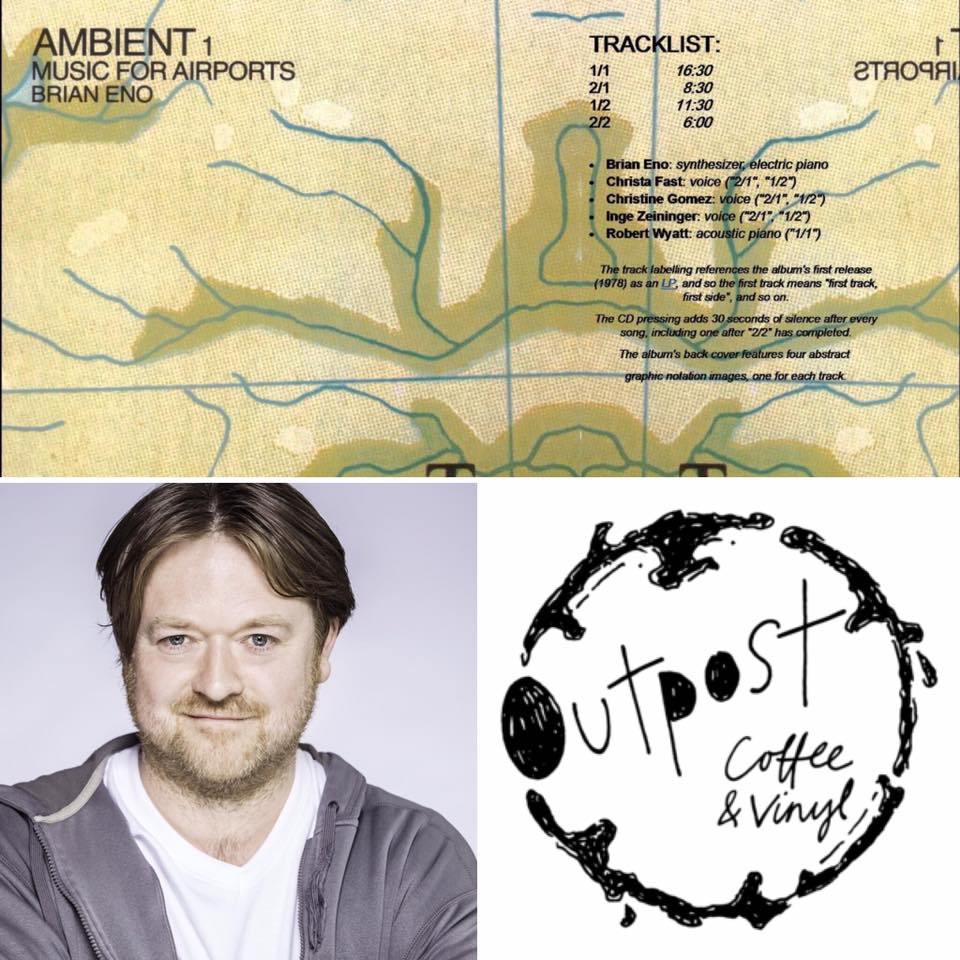
On any day it could be any of dozens of other records, but for today. I find it almost impossible to work in silence, but at the same time if I’m going to work to music it can’t be too engaging, or it’ll distract me. So I’ve got a whole load of records that are maybe not quite music, or just very low key music, that I put on when I need to work. The top one is Brian Eno’s “Music for Airports”, but I use a lot of his ambient albums, especially “Discreet Music” and “Neroli”.
And then there’s a brilliant album called “Electric Enigma”, which is field recordings some guy made by going out into the desert and sticking up a big antenna so he could record radio noise made by cosmic rays and the solar wind and the Earth’s magnetic field. It’s available for free from the Internet Archive and it’s very beautiful.
https://archive.org/details/ird062
And I’ve got a CD-R called “Buildings”, which is two hours of recordings made by sticking contact mikes to buildings with lifts in them. So it’s two hours of lifts, going up and down buildings. Simon Proffitt gave it to me and I don’t know where he got it from. I worry he made it himself. Anyway it’s gorgeous.
“Bendith” by Bendith. Bendith are a Welsh folk supergroup made up of family trio Plu, together with Carwyn Ellis, mop-topped singer from psychedelic pop wonders Colorama.
They came together to make music mostly about Carwyn’s childhood in Carmarthenshire. There’s a lovely documentary show about the project on iPlayer which features live versions of the songs, and lots of pics of the villages and houses Carwyn’s family lived in, lots of elderly men in barns and sheds in the 1970s, and I’ve got a lot of very similar photos of my family in Pembrokeshire. And the music is so breathtakingly beautiful it stops me in my tracks every time I hear it. Not an album I can work to.
“Fantasia on a Theme from Thomas Tallis” by Vaughan Williams. Vaughan Williams is a deceptive composer in that he seems very catchy and undemanding and writes actual tunes (which is probably why I like him) but there’s a huge melancholy in much of his work (which is probably why I like him). “Fantasia…” was written in 1910 and it is, as its title suggests, a fifteen minute riff on a tune written in 1567 by the Elizabethan composer Thomas Tallis. Aside from being straightforwardly beautiful music, I love it because there is something glorious and heroic about these two men, collaborating across four centuries, together creating something neither could have made alone.
“Night Thoughts” by Suede. I have loved Suede since they and I were skinny indie boys in the 90s. Now they are chiselled indie men and I am a haggard old wreck, but I love them still. “Night Thoughts” is their latest album and I think it might be their best.
https://youtu.be/oeWEW3i_Ldg
It’s nostalgic and sentimental and over-blown and glorious. They made a heart-breaking film to accompany the music that turns the album into what we now call a visual album. I was lucky enough to see a screening of it at Chapter, after which Brett and Mat did a q&a. I couldn’t ask them anything as I was too much of a sobbing mess.
“Jesus’ Blood Never Failed Me Yet” by Gavin Bryars. This is a 70 minute piece based around a loop of a homeless man singing a brief refrain, which Bryars recorded I believe in Elephant & Castle in 1971. And what Bryars did was to build up an accompaniment to the man’s voice – gradually he is joined by brass, strings, layers of harmony and eventually Tom Waits turns up and sings along with him. There’s something profoundly deceitful about it. No-one really took this man and lavished the care and attention and love he deserved on him, as they did on this snatched recording of his voice. So the piece is a comforting lie. And yet – it is irresistible. It is beautiful. I fall for it every time I hear it. In my guts I feel it is a wonderful tribute, even as I think it is a lie.
Just to put you on the spot could you choose one track from the five listed above and tell us why you have chosen this?
“Music for Airports” because I need it to work. But then, it’s not proper music. I could just work next to a lift and have Bendith to listen to. Yes, I’ll probably do that.
An interview with Gareth Clark
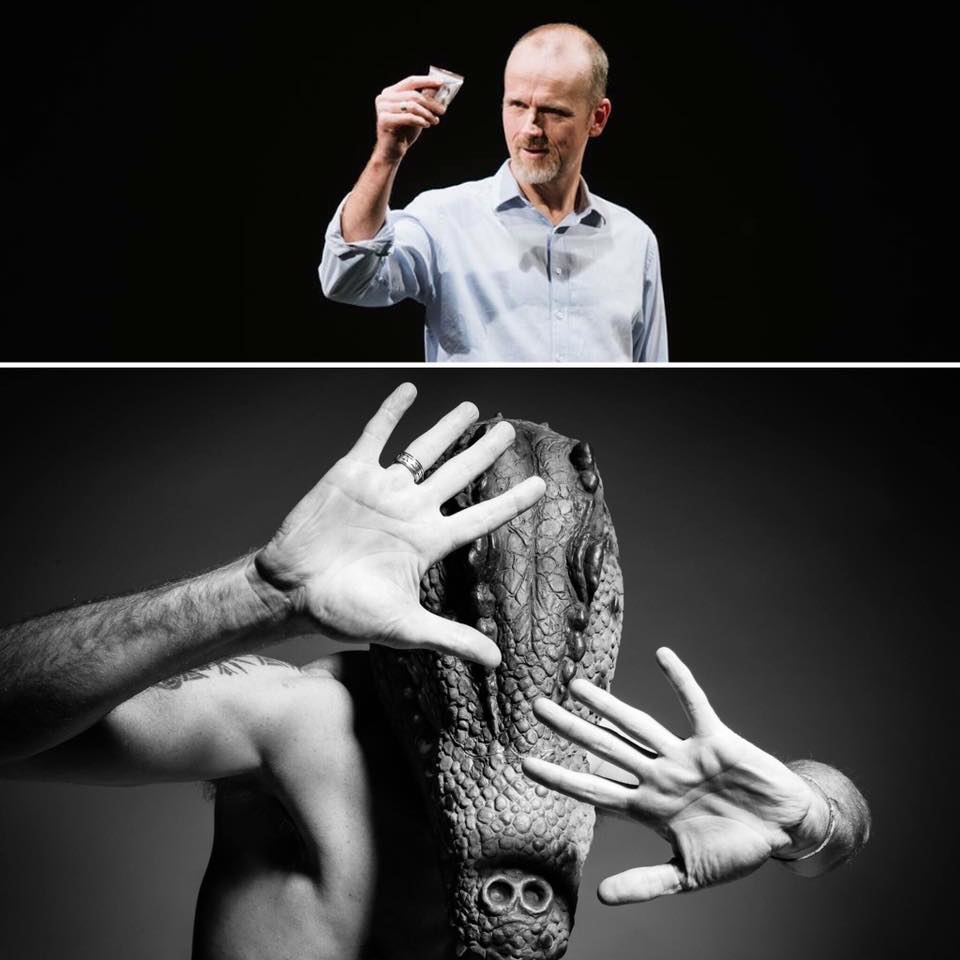
Hi Gareth pleased to meet you. Can you please give our readers some background information on yourself and your role in the arts in Wales?
Hello… I’m Gareth Clark and I work with Marega Palser under the name Mr and Mrs Clark. We make theatre performances and community art projects to share some of our thinking about the way we live and interact with our surroundings. The Clarks have been making performance work since 2006 and we are constantly trying to develop the way we make work so that it is surprising or engaging in different measures…. If that makes sense.
Thanks Gareth, can you tell us about the work your company is taking to this Edinburgh Festival Fringe?
(F.E.A.R.) is a solo show. It’s the first time we’ve produced a solo piece of work and it came from the research I’d done during a Creative Wales Award. It’s an autobiographical show that examines the multiple layers of fear used to control us in childhood and in our adult lives. It’s a direct and sometimes revealing account of how public information films, like those warning us against strangers, and news accounts of terror attacks constantly feed a wariness of other people. How distrust and fear perpetuate loneliness. It is a direct confession of fear from a man conditioned never to talk of such things and I think this opens up the debate about men’s mental health and our willingness to discuss our inner most feelings.
getthechance.wales/2017/03/01/bsl-review-f-e-r-mr-mrs-clark-production-chapter-arts-centre-stephanie-back/
getthechance.wales/2017/03/01/f-e-r-review-helen-joy/
Why is the support of Arts Council of Wales, Wales Arts International and British Council Wales so important?
Edinburgh is a competitive place. The very best are there and it costs a lot of money. The support is essential to help offset some of the risk companies take. However the opportunities are great. Four weeks at the fringe is like a years worth of business in one short hit. The number of people, promoters and producers attending make the festival an essential part of the calendar. Recognising that Welsh companies should be represented makes a lot of sense as the opportunities that are created beyond the fringe are excellent.
The festival features a huge range of productions and there is great deal of competition for audiences, why should audiences come and see your companies work?
That’s a good question and one that we have to constantly ask ourselves. This show. (F.E.A.R.) is a timely reminder that we are being manipulated through some of the press and political powers. There is a strong suggestion that uncertainty and fear allows governments and certain politicians to push through strong and divisive mandates. We’re seeing it across the world and we see it more and more in this country. I think now is a prime opportunity to talk about fear so that we can start discussing hope. However there is a strong lobby that thrives from chaos and war and that is something we have to overcome.
Welsh artists and companies will be showcasing a range of art forms including theatre, new writing, site-specific work and contemporary dance. In your opinion is there anything that is distinctly Welsh which links them?
I’ve not seen all the work. What I always get from watching Welsh companies is the incredible sense of passion. I think Wales has a thriving theatre scene that goes somewhat unnoticed… I think the same of the North East of England too… and I believe it’s time to shake the system up a little.
What would you recommend seeing from the other Welsh/Wales based companies going to this year’s festival or perhaps the festival as a whole?
I’ve been so head down working and trying to sell this show I’ve barely looked at the programme. However I would always recommend what Dirty Protest are doing and I particularly like the writing of Alan Harris. I think Revlon Girl will be on our radar as would fellow Newportonians Flying Bridge. At Zoo venues this year Liz Agiss is performing Slap and Tickle and it’s a real gem of a show. And whilst in Edinburgh I can never resist seeing Stewart Lee who never fails to delight in a subversive masterclass of comedy and Mark Thomas is always inspirational.

What do the artists and companies do when they aren’t performing?
There is always something to do. The morning is generally social media hype. Selling, prompting, reminding, sharing reviews online. Then we take to the streets and hand out fliers for the show usually picking our some key spots or performances that we think liked minded people might attend. The great thing about Edinburgh is seeing loads of shows. We will go to something everyday and sometimes see as many as five shows… supporting other companies in the hope they will do the same for you. Eating and drinking is added to this with some sleep but that how the four weeks will shape up.
And finally what’s the best Fringe show you’ve ever seen?
There are so many. In 2015 it was On Track – Kristien De Proost at Summerhall. She ran for 70 minutes on a running machine whilst directly addressing us and changing costume and shoes. It was mind blowing, life affirming and challenging. I went twice.
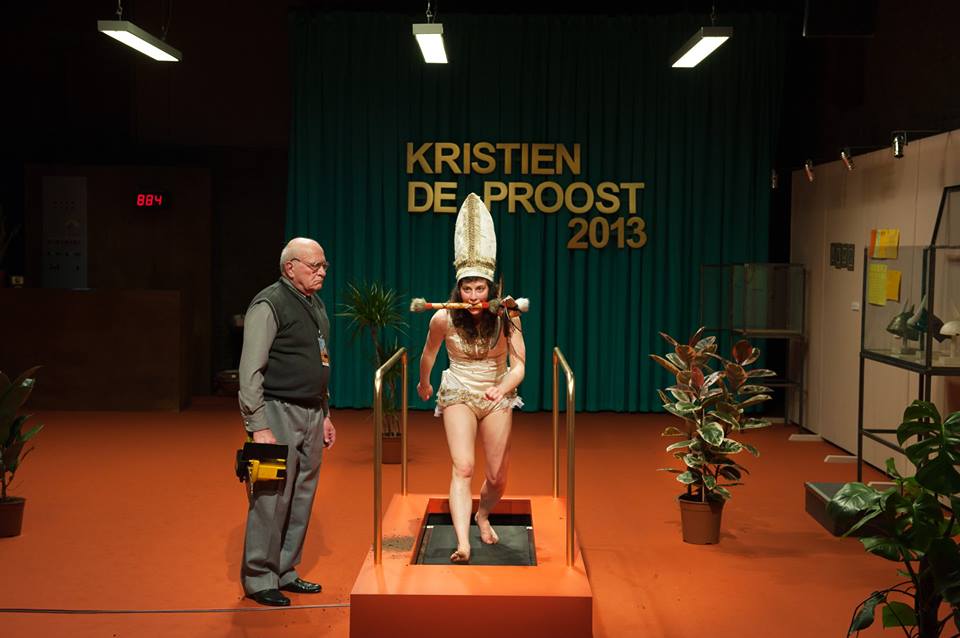
Credit: Mirjam Devriendt
Thanks for your time Gareth and all the best for the festival
“Why I am a 3rd Act Critic” by Barbara Michaels
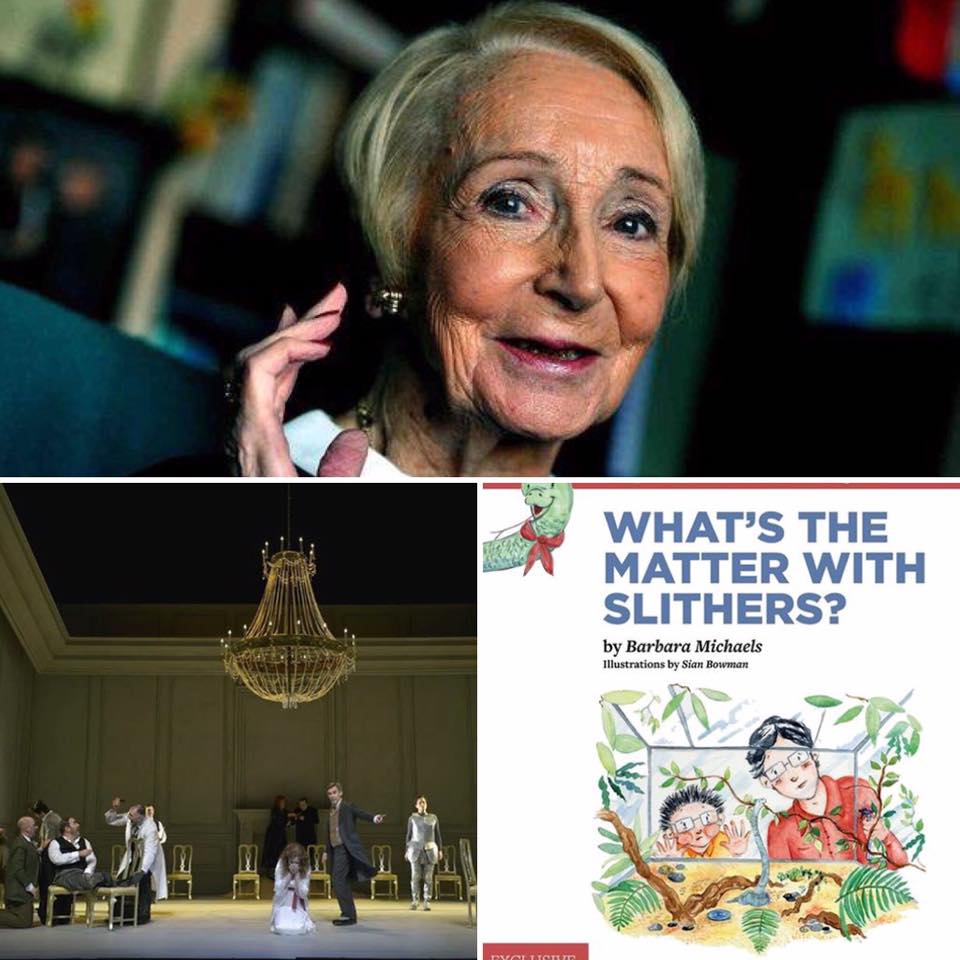
3rd Act Critic Barbara Michaels gives a personal response to being a critic with Get the Chance.
With over half a century of reviewing under my belt, I can hardly remember a time when I wasn’t passionate about both music and theatre. This was intensified when I got my first job on a local paper. I was eighteen, as the most junior member of the staff – and the only female in the days when women on newspapers were few and far between. I was expected to cover tasks such as weddings, flower shows and (to my delight) amateur dramatics.
This was a wonderful training ground which led to me covering professional theatre on my second paper. My big break came later, when I was working freelance and also running a syndication agency. The reviewer covering a first night ballet performance at the Royal Opera House at Covent Garden was ill and asked if I could do it. I have always loved dance but had never previously reviewed a dance production so cut my teeth on the Creme de la Creme. To this day dance is my favourite of all the art forms and – like all the arts – underfunded, if I had the money (which, as an OAP, I don’t) I would support.
Opera in Wales is still regarded by some as only for the elite. This is far from being the case. Please give it a try! We are so fortunate in Wales to have the WNO – a world-class opera company performing in a wonderful venue. Their production of Richard Strauss’s Der Rosenkavalier, which I reviewed recently, was as near perfection as you are ever likely to see.
getthechance.wales/2017/06/18/review-der-rosenkavalier-wno-wales-millennium-centre-cardiff-barbara-michaels/
Life is busy for me. As well as reviewing I edit a community magazine and last year published my first book for young children, entitled WHAT’S THE MATTER WITH SLITHERS? The publication of the book, shortly;to be featured in a Cardiff book festival, coincided with the birth of my first great granddaughter Chloe Jo, and I am now expecting another great grandchild.
