
All posts by Eva Marloes

Puccini’s Il Trittico, WNO, a review by Eva Marloes

 out of 5 stars (5 / 5)

The Welsh National Opera delivers an excellent production of Il Trittico by Giacomo Puccini, where singers, chorus, and orchestra perform beautifully with skill and pathos. This is no small feat for a sophisticated and yet underrated work, consisting of three one-act pieces of starkly different registers. One only hopes that management will rethink the misguided cuts to the wonderful chorus and orchestra.

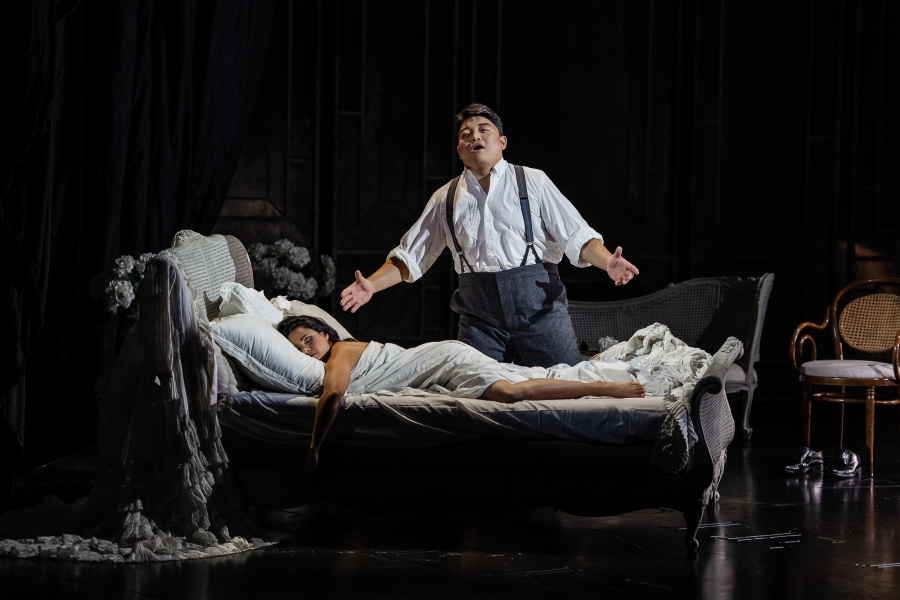
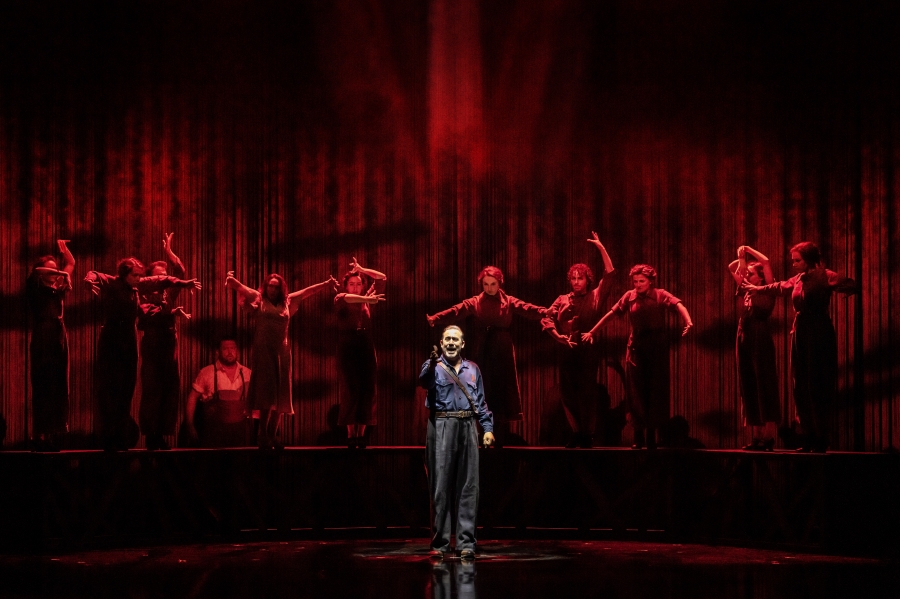
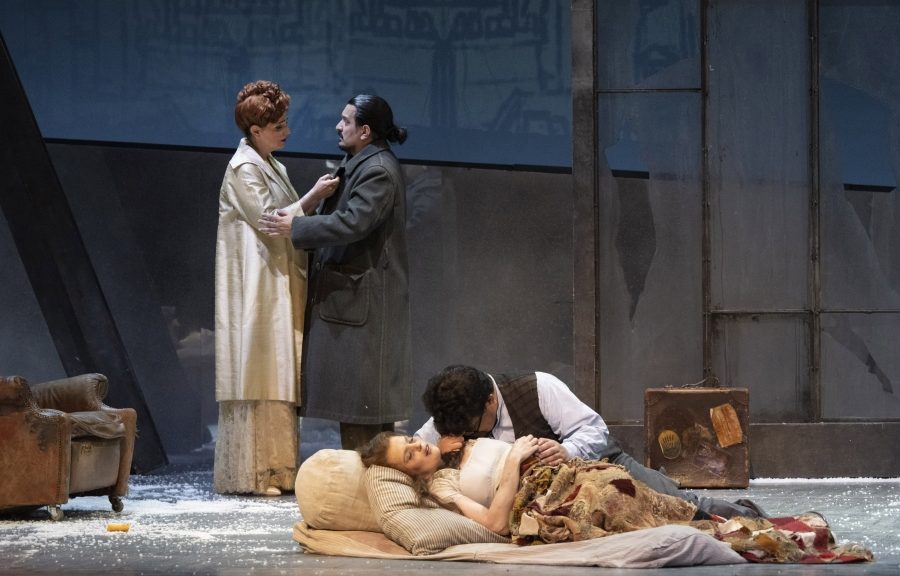
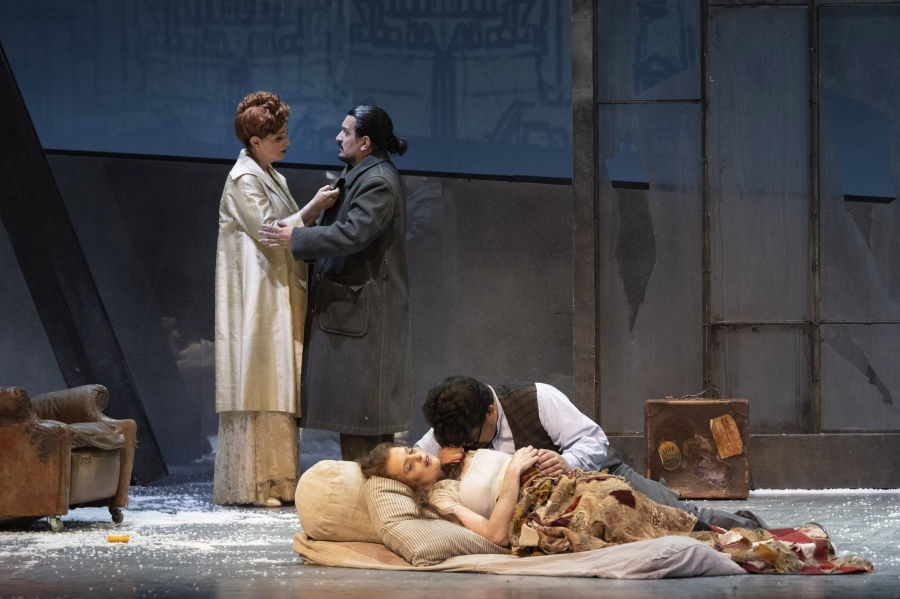
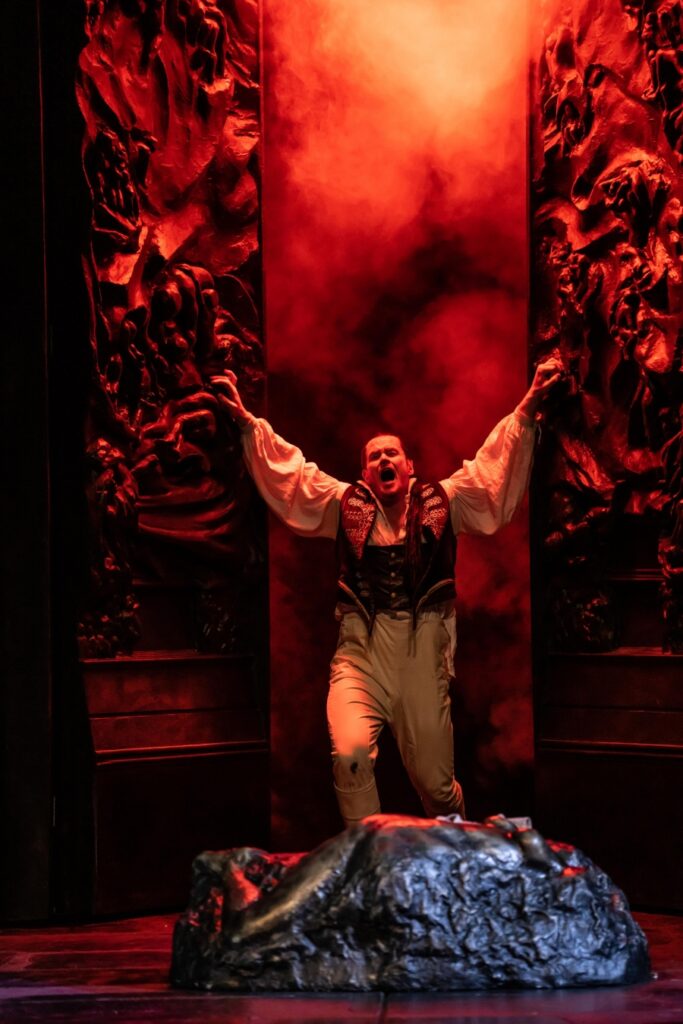
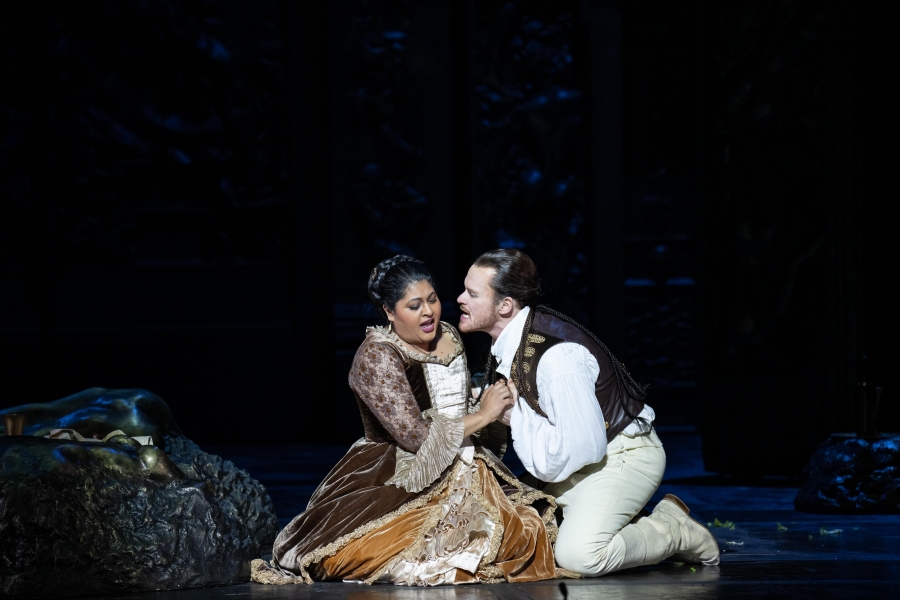
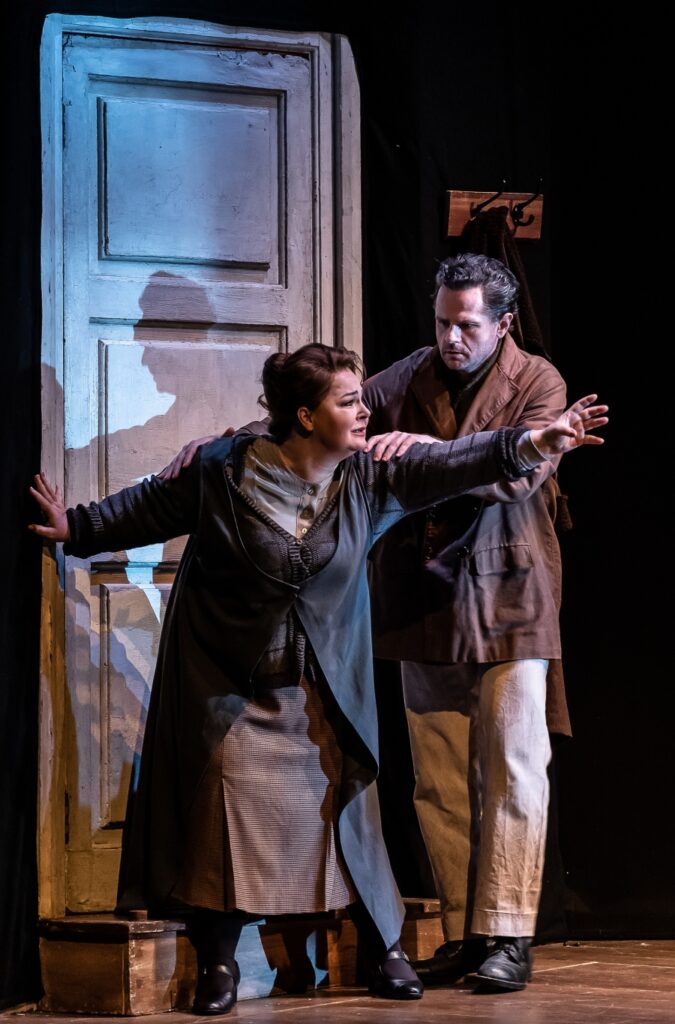
The night begins with Il Tabarro (the cloak), dark and intense, is perhaps the most refined musically of the three pieces. It tells the story of Giorgetta (Alexia Voulgaridou), dissatisfied with her life with Michele (Roland Wood) travelling from place to place on a barge. She falls for kindred spirit Luigi (Leonardo Caimi). Michele realises Luigi is Giorgetta’s lover, kills him, and forces her to look at her dead lover.
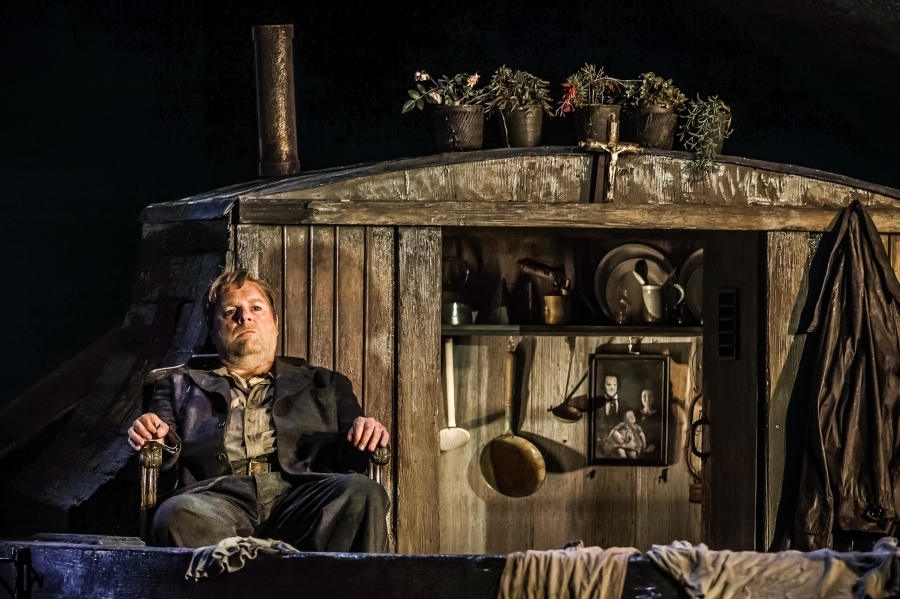
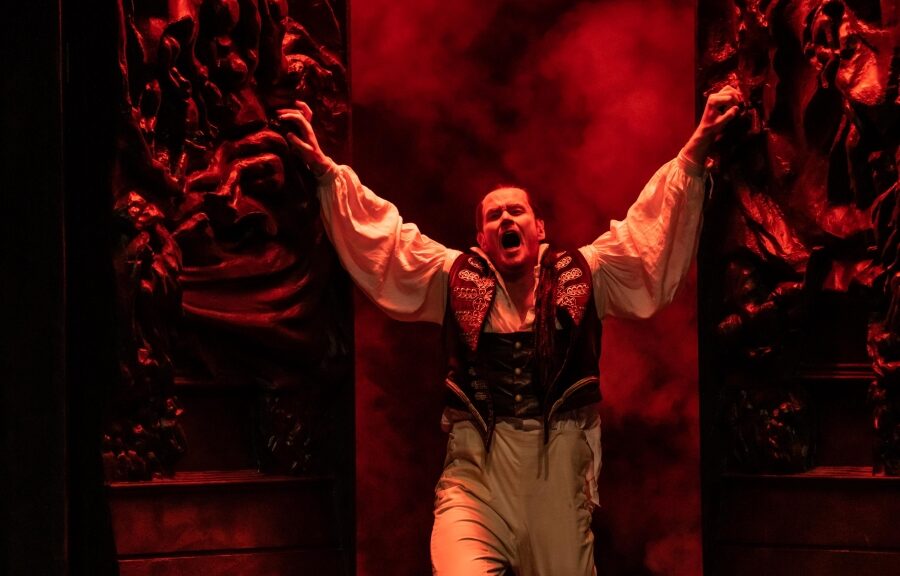
Roland Wood as Michele in Il Tabarro (photo credit Craig Fuller )

Contrary to Toscanini’s dismissal of the opera as grand guignol, Il Tabarro never indulges in sensationalism. Puccini’s mature music combines passion and restraint. Voulgaridou, Wood, and Caimi all deliver the haunting drama with great emotional depth.

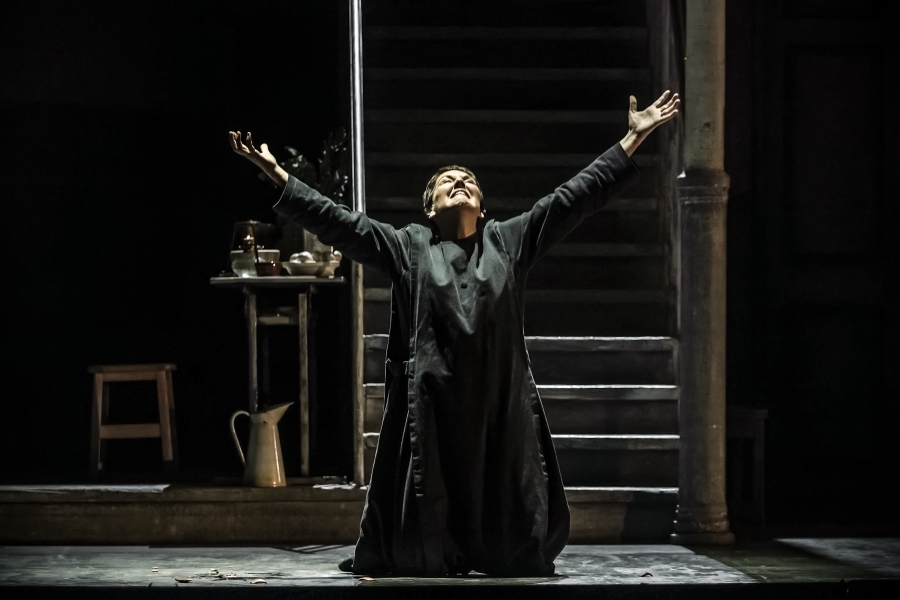
A splendid Alexia Voulgaridou gives voice to the pain of Suor Angelica, the second piece. The story of a woman forced to become a nun after giving birth to a child. Her Princess aunt visits to tell her that her son is dead. Angelica kills herself in the hope of being reunited with him, then she despairs as she realises that her suicide condemns her to hell. In in her final moments of anguish, she experiences hallucinatory or mystical transcendence, and embraces her child. 

The subdue and soft music lets the tension between Angelica’s suffering and her hope unfold. Voulgaridou delivers Angelica’s irrational demise or transfiguration with striking pathos, doing justice to a much misunderstood Suor Angelica

Alexia Voulgaridou as Suor Angelica in Suor Angelica (photo credit Craig Fuller)

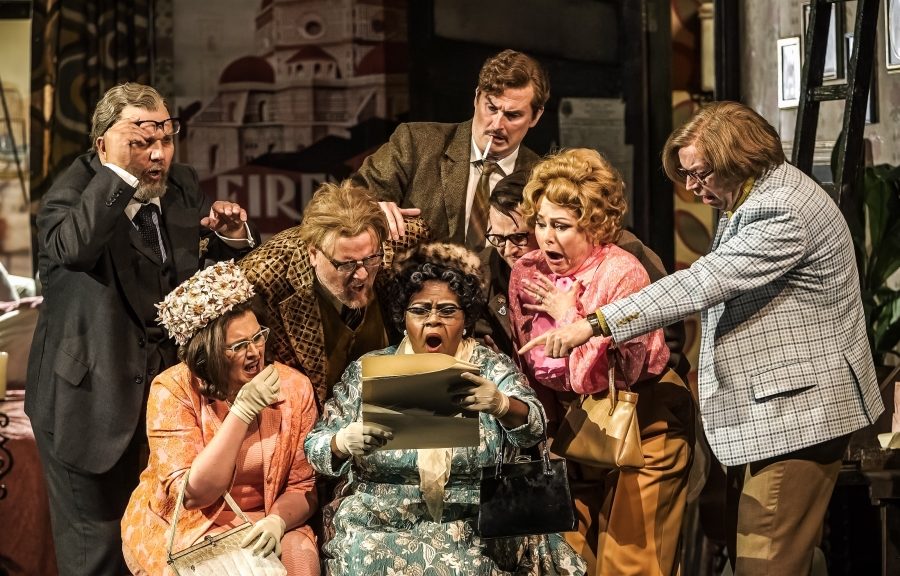
The night ends with the unadulterated fun of Gianni Schicchi, where a family is left penniless as the patriarch dies and leaves his fortune to a monastery. They engage the wits of peasant Gianni Schicchi (Roland Wood), who pretends to be the deceased and dictates a new will to the notary. As he does so, he makes sure the largest part of the family fortune goes to him. 
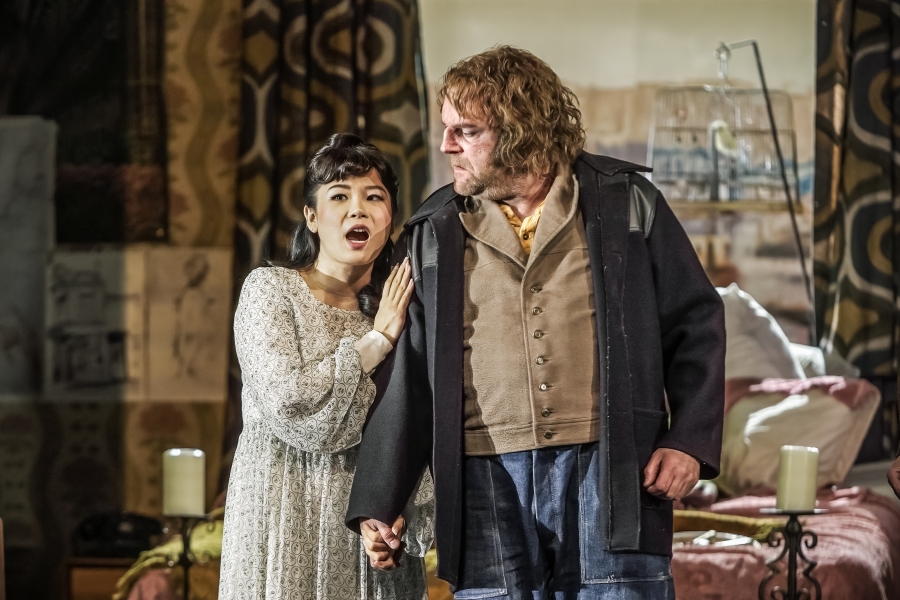
Haegee Lee as Lauretta and Roland Wood as Gianni in Gianni Schicchi (Photo Credit Craig Fuller) 

Roland Wood performs with humour and sagacity, Haegee Lee, as Lauretta, sings Mio Babbino Caro beautifully. The three pieces have an excellent cast all around, including Tichina Vaughn (The Princess in Suor Angelica and Zita in Gianni Schicchi), Wojtek Gierlach (Il Talpa in Il Tabarro and Simone in Gianni Schicchi), and Oleksiv Palchykov (Young lover in Il Tabarro and Rinuccio in Gianni Schicchi), who entertain and enchant the audience.

In the expert hands of Carlo Rizzi, the WNO orchestra brings together the three pieces giving them a sense of continuity. They excel at balancing the restrained with the emotional thus delivering the intensity of Puccini’s music and drama. As Puccini would have wanted.
Britten’s Death in Venice – A Review by Eva Marloes

 out of 5 stars (5 / 5)

The WNO’s production of Death in Venice by Benjamin Britten is a symphony in black and white with minimal staging, effective choreography, and powerful singing. It’s a beautiful and haunting painting that conveys the internal anguish of the protagonist at the core of Britten’s extraordinary music.

Death in Venice is based on the novella by Thomas Mann, where Gustav von Aschenbach is a famous author who travels to Venice to find inspiration. There, he develops an attraction for an adolescent boy, Tadzio. Disciplined and ascetic in character, Aschenbach is torn between his sensual desire and his detached reason. As his attraction becomes an obsession, Venice is taken over by cholera. His passion makes leaving impossible. A glance from Tadzio makes Aschenbach rise from his chair only to collapse and die.  

Aschenbach’s travel to Venice is as internal as it is physical. The initial confusion of the mind that makes him unable to write is lifted at the sight of Tadzio, whom Aschenbach sees as the embodiment of ancient Greek beauty. Yet, the aesthetic appreciation quickly plunges Aschenbach into an internal conflict between his rational mind and his passion for the boy.

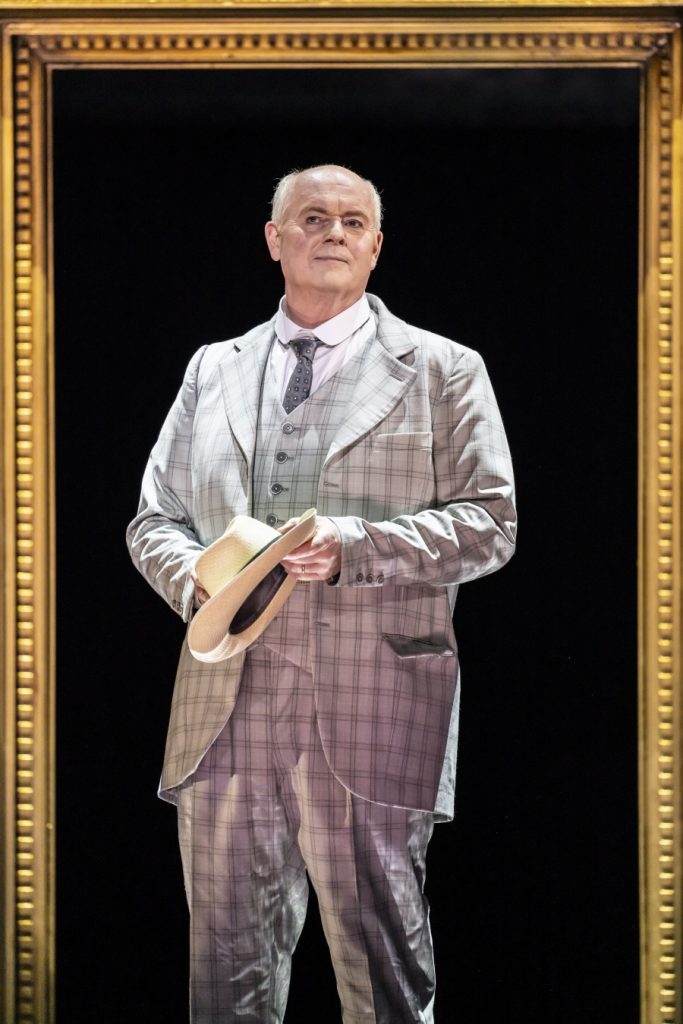
Mark le Brocq as Gustav von Aschenbach. Photo credit Johan Persson.

Olivia Fuchs, who directs this production, weaves together the different elements of music, video, acrobatics, costumes, and song with great efficacy. A black and white video is projected onto the background. It alternates depictions of the sea, at times choppy and at times smooth, Venice almost as a shadow, and Tadzio up close. The most intense moment is when Aschenbach, played by a wonderful Mark Le Brocq, is alone and the scene has nothing but a picture of Tadzio. Throughout the opera, Le Brocq excels in intensity and harrowing beauty. 

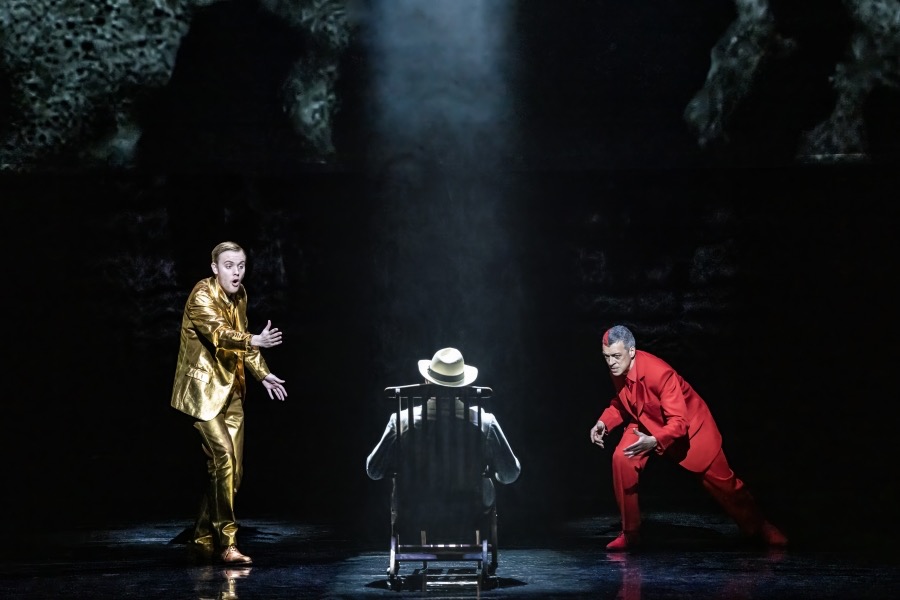
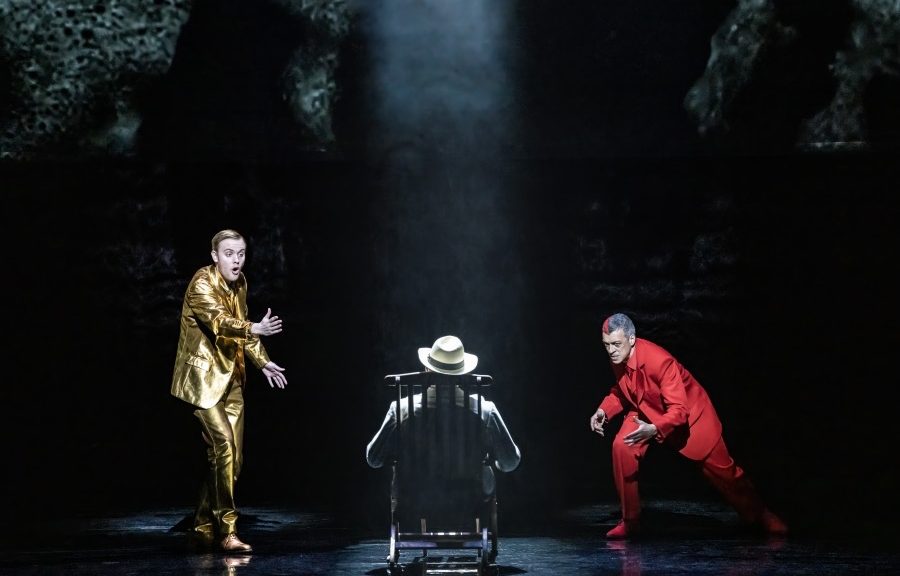
Alexander Chance as The Voice of Apollo, Mark le Brocq as Gustav von Aschenbach, and Roderick Williams as The Voice of Dionysus. Photo credit Johan Persson.

Aschenbach’s internal anguish mirrors the Nietzschean theme of the conflict between Apollo, god of reason, and Dionysus, god of passion. The battle between Apollo and Dionysus unfolds musically in the contrast between the countertenor voice of Alexander Chance as Apollo and the deep baritone voice of Roderick Williams as Dionusus. This is heightened by the juxtaposition of Apollo, dressed in a golden suit, and Dionysus, in a red suit, against the black and white background of the chorus, dressed in white when playing the hotel guests, and in black as Venetians. 

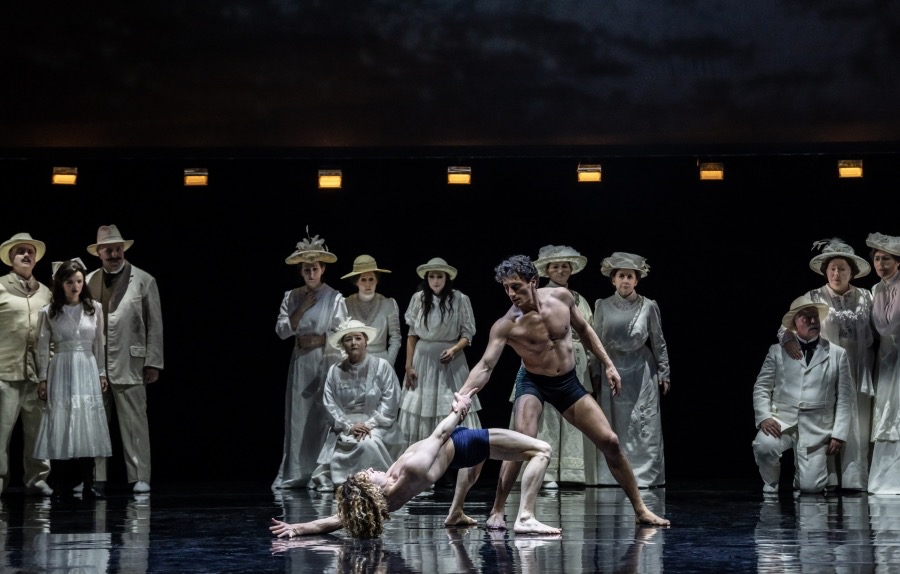
Baritone Roderick Williams and countertenor Alexander Chance are equally enthralling. Tadzio has no voice; rather he embodies beauty through movement to a percussion music which Britten developed drawing on Balinese gamelan. The choice of sensual acrobatics performed beautifully by Anthony César of NoFit State Circus, directed by Firenza Guidi, conveys powerfully the Greek idea of beauty. The homoerotic acrobatic duel between Tadzio and another boy, performed by Riccardo Frederico Saggese, is allusive yet restrained. The result is mesmerising. 

On a minor note, the production could have made better use of light design to emphasise Aschenbach’s internal turmoil. Overall, it is one of the best productions the WNO has given us.

Antony César as Tadzio, Riccardo Frederico Saggese as Jaschiu, and the cast of Death in Venice. Photo credit Johann Persson.

Cosi Fan Tutte – A review by Eva Marloes

 out of 5 stars (3 / 5)

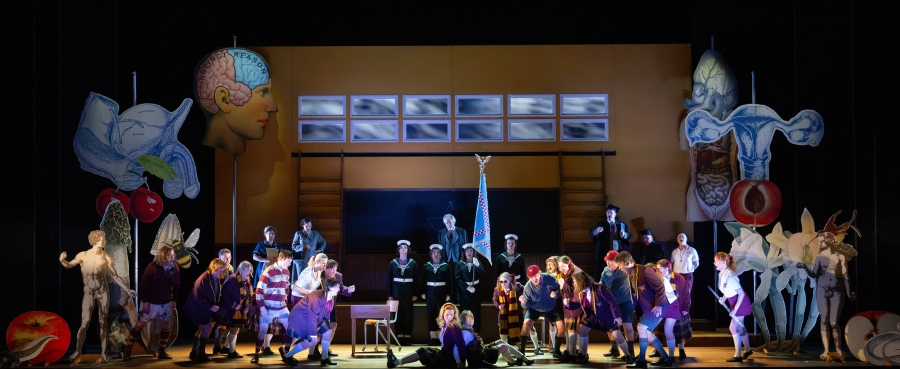
The Welsh National Opera’s staging of  Mozart’s Così Fan Tutte takes literally the opera’s alternative title, The School of Lovers, setting the action in a British school with a 1970s feel. The first act opens with the chorus in school uniforms carrying gigantic cutouts of genitals and plants onto the stage and forcing sexual innuendos on the opera. 

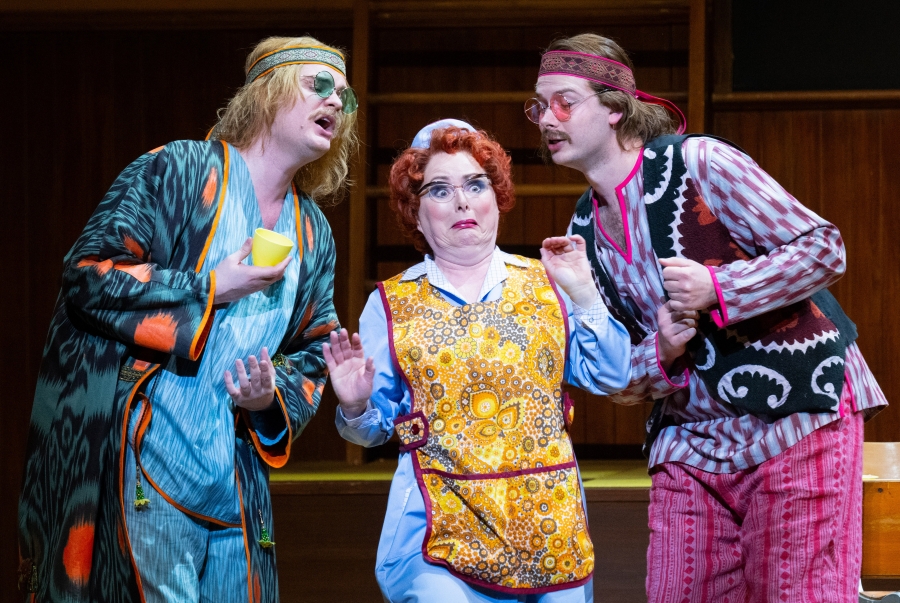
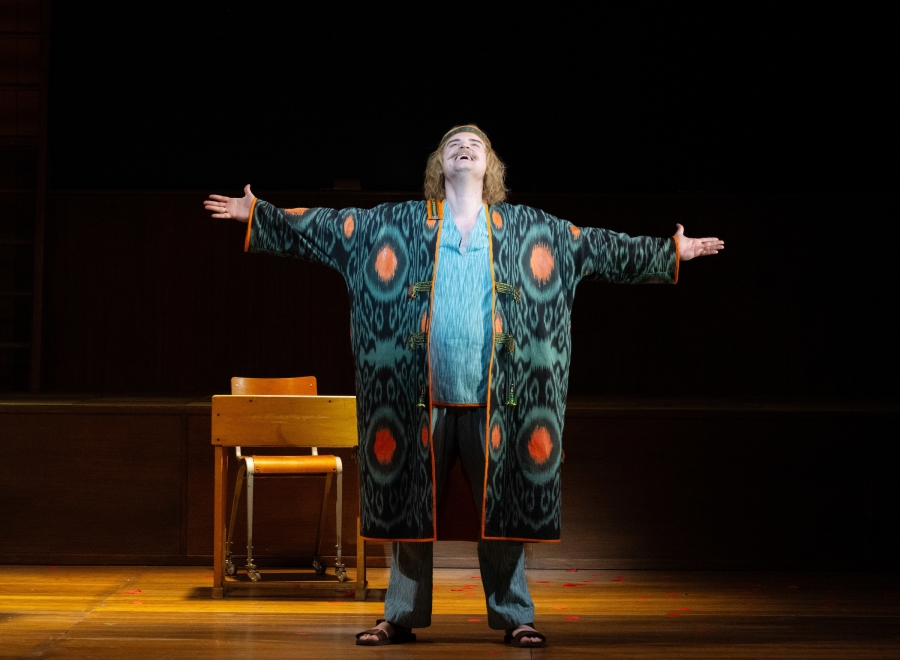
Don Alfonso (José Fardilha) is the headteacher betting with school kids, Ferrando (Egor Zhuravskii) and Guglielmo (James Atkinson), that their fiancés, Dorabella (Kayleigh Decker) and Fiordiligi (Sophie Bevan ) can be easily seduced. The lovers accept and dress up as late 1960s hippies with fake moustache and set off to woo each other’s girlfriend. Don Alfonso engages the service of Despina, here a dinner lady, to add pressure on the girls. Dorabella and Fiordiligi resist the admirers as much as possible but they are outnumbered and outwitted by the conspiracy.

Egor Zhuravskii as Ferrando, Rebecca Evans as Despina, and James Atkinson as Guglielmo. Photo credit Elliott Franks 

The Così Fan Tutte is by no means an easy opera for a contemporary audience. It is blatantly sexist with men putting pressure on women to the point of emotional abuse. The seducers are not only faking love but also pretend to take poison to blackmail the girls into giving in to their advances. Lorenzo Da Ponte’s drama makes fun of the late 18th century battle between reason and sentiment. Mozart’s music delivers its irony by juxtaposing dramatic arias with musical clichés to draw attention to the contrived nature of the situation. This complexity is lost under the direction of Max Hoehn. 

Hoehn’s overtly sexual comedy comes dangerously close to a Benny Hill sketch. Rebecca Evans, as Despina, gives a solid vocal performance, weighed down by the heavy-handed interpretation set by the tone of the production. There is no subtle irony to counterbalance the deep sentiment expressed by Dorabella and Fiordiligi. The occasional incursion of members of the chorus as teenagers doing nothing but playing with cutouts on the scene only succeeds in trivialising the drama. 

Egor Zhuravskii as Ferrando. Photo credit Elliott Franks.

The fine performances keep this unsteady ship afloat. Egor Zhuravskii excels as Ferrando. Sophie Bevan gives a good performance as Fiordiligi, though at times a little strained. Kayleigh Decker, as Dorabella, and Rebecca Evans, as Despina, give good solid performances. The trio Bevan, Decker and José Fardilha, as Don Alfonso, deliver an exquisite Soave sia il vento. This production cuts slightly the opera yet the orchestra, conducted by Tomáš Hanus, maintains a pace that still feels too slow. The strength of this production lies in the ensemble pieces delivered beautifully by the six singers. 

La Traviata – a review by Eva Marloes

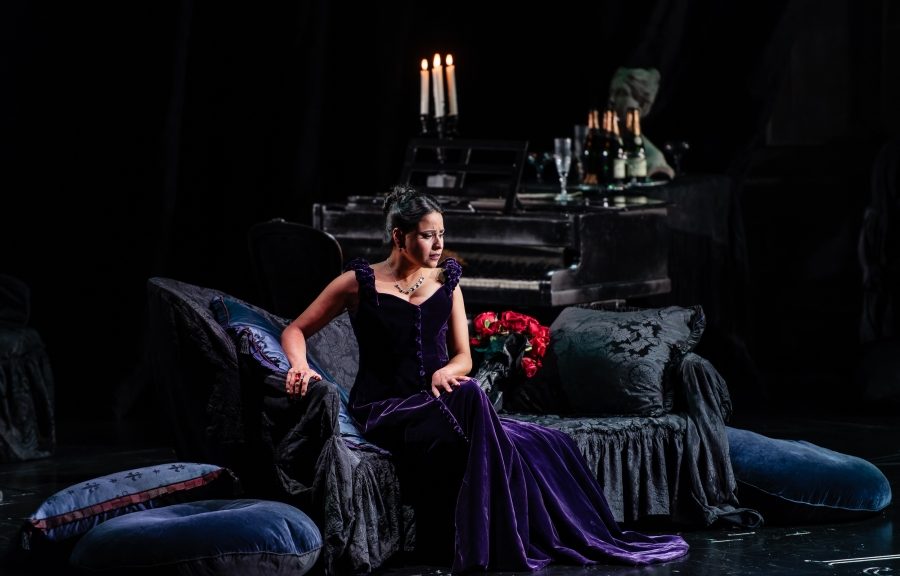
Stacey Alleaume as Violetta in La Traviata, photo by Julian Guidera

 out of 5 stars (3.5 / 5)

In the past week, the documentary In Plain Sight, an investigation by Channel 4’s Dispatches and the Sunday Times, has alleged that comedian turned wellness guru Russell Brand is responsible for exploitative treatment of women, including rape and sexual assault. Just like when the #MeToo  movement emerged, many have questioned the women speaking out. Women are still exploited by powerful men and their sexuality is still policed.

La Traviata couldn’t be more topical. Verdi’s opera was shocking in depicting and taking the side of a ‘fallen woman’, what today might be an escort. Alas, the unimaginative direction, originally by Sir David McVicar, here by Sarah Crisp, makes it look preposterous and bizarre.

Violetta, a courtesan, meets Alfredo at a lavish party. She decides to leave that life and live with Alfredo supporting their life together financially. Unbeknown to Alfredo, his father asks Violetta to leave his son to protect his and his family’s reputation. 

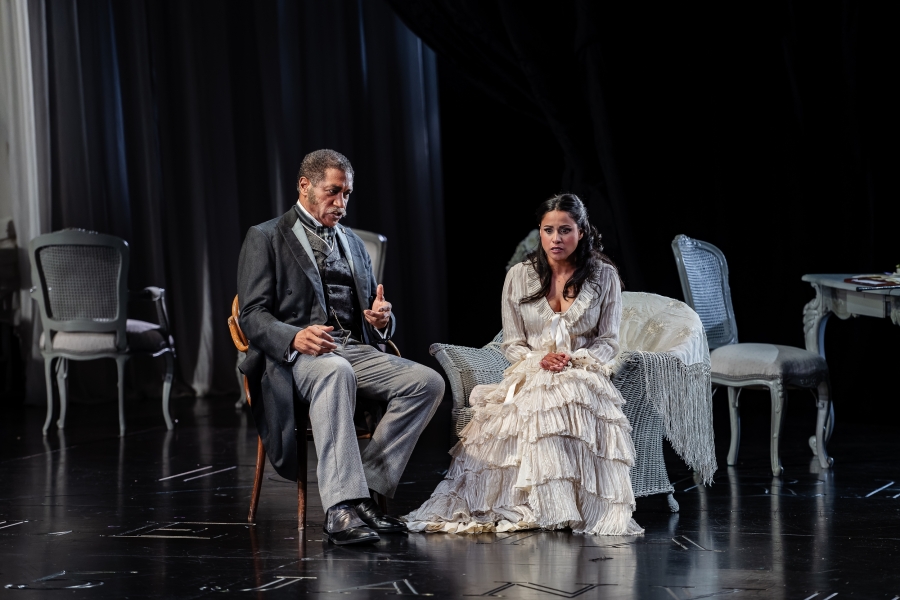
Stacey Alleaume as Violetta and Mark S Ross as Giorgio Germont in La Traviata, photo by Julian Guidera

Violetta leaves Alfredo who feels spurned and acts his revenge by throwing money at her in public to repay her. Verdi thinks she has a dignity and should be respected.

It is none other than Alfredo’s father who defends her and condemns his own son for disrespecting her. Yet, only at the very end Alfredo learns that Violetta sacrificed their love and life together for his reputation. He comes back to see her dying. 

La Traviata could still be a powerful story if set in today’s times, just as James Macdonald’s clever production of Rigoletto did by setting it in Washington DC in the #MeToo era. 

The WNO’s traditional setting fails to convey Verdi’s intention. The choice of a very dark set design, presumably to symbolise impending doom, has a jarring effect on the opening scene whose frivolity and joviality are dampened. It weakens the unfolding of the tragedy and frustrates the solid performances of the artists. 

David Junghoon Kim shines as Alfredo, just as he did as the Duke in Rigoletto. He is at home with Verdi and gives a performance full of pathos. His beautiful tonality and powerful voice deliver longing and sorrow effectively. Stacey Alleaume as Violetta has a splendid coloratura. She’s at ease on high notes and bel canto. In the ‘croce e delizia’ duet with Alfredo in Act I, she seemed often overpowered by David Junghoon Kim when singing at a lower range. She is stronger in the second act with Mark S Ross, playing Alfredo’s father Giorgio Germont, and the final dying scene. Mark S Ross has a beautiful baritone voice. He gives an excellent performance.

The WNO’s chorus is strong as ever. The orchestra, under the baton of Alexander Joel, gives a solid, albeit uninspiring, performance.

David Junghoon Kim and Stacey Alleaume in La Traviata, photo by Julian Guidera.

WNO’s Ainadamar – a review by Eva Marloes

 out of 5 stars (3 / 5)

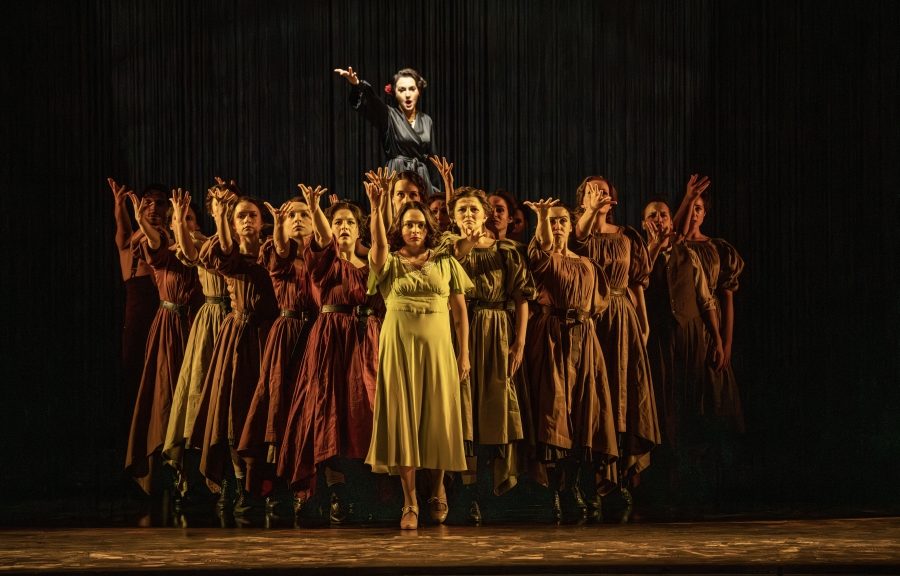
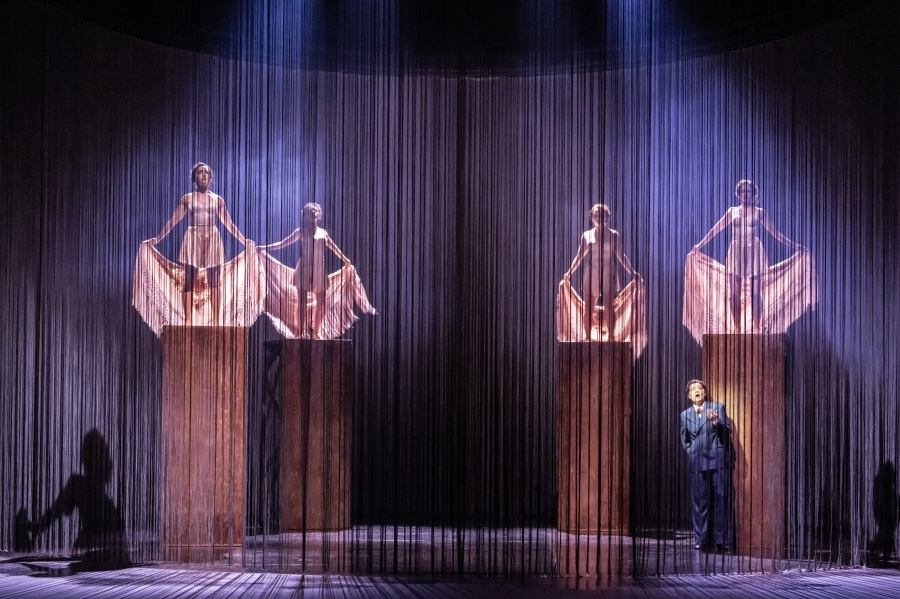
Ainadamar is an homage to poet Federico Garcia Lorca, who was killed by the fascist falangists during the Spanish civil war in 1936. It is told through a series of tableaux where actress Margarita Xirgu, Lorca’s muse, reminisces with her student Nuria of the time she met Lorca, her attempt at persuading him to leave Spain, and his execution.

Ainadamar, which in Arabic means fountain of tears, is one of the early works of eclectic composer Osvaldo Golijov, who excels at weaving together folk, pop, and classical music in harmonious balance. Here, Golijov brings together flamenco’s cante jondo (deep song), electronic sounds, mournful ballads, and classical opera references. His musical complexity is refined but overly dominated by longing and anguish.

The astounding performances of Jaquelina Livieri as Xirgu, Hanna Hipp as Lorca, and Julieth Lozano Rolong as Nuria, make for intense moments of longing, hope, and loss. The imaginative light design and direction keep the audience engaged countering a too simple narrative with no emotional arc.

Hanna Hipp as Federico Garcia Lorca, photo credit Johan Persson

Ainadamar opens with Margarita Xirgu (Jacquelina Livieri) preparing to go on stage as Mariana Pineda, the 19th century liberal martyr subject of Lorca’s play. She tells her student, Nuria (Julieth Lozano Rolong) of meeting Lorca in a bar in Madrid. The scene shifts from a light-hearted rumba to a nostalgic duet. Jaquelina Livieri’s agile and rich voice make Margarita spell-binding. Mezzo-soprano Hanna Hipp, as Lorca, has power and stage-presence, yet tender in her duet with Livieri.

The memory of Havana is broken by the harsh radio broadcast of fascist Falangist Ruiz Alonso. Alfredo Tejada, as Alonso, conveys power and anguish as flamenco cantaor  counterbalancing Lorca’s flamenco cante jondo

Alfredo Tejada as Ruiz Alonso, photo credit Johan Persson

In another flashback, Margarita recounts her attempt at persuading Lorca to flee to Cuba. The nostalgic and dreamlike image of Havana, the route not taken, is a sensual and playful moment that gives way to grief. Lorca does not want to run away and chooses to be executed. 

The final tableau is in the diegetic present of 1969 when Margarita is dying in Uruguay recalling Pineda’s last words of freedom. She is joined by the ghost of Lorca. The scene fades out rather than reach a climax. The sense of loss and longing dominates Ainadamar from beginning to end. There is intensity but no drama. 

Photo credit Johan Persson

La Bohème – a review by Eva Marloes

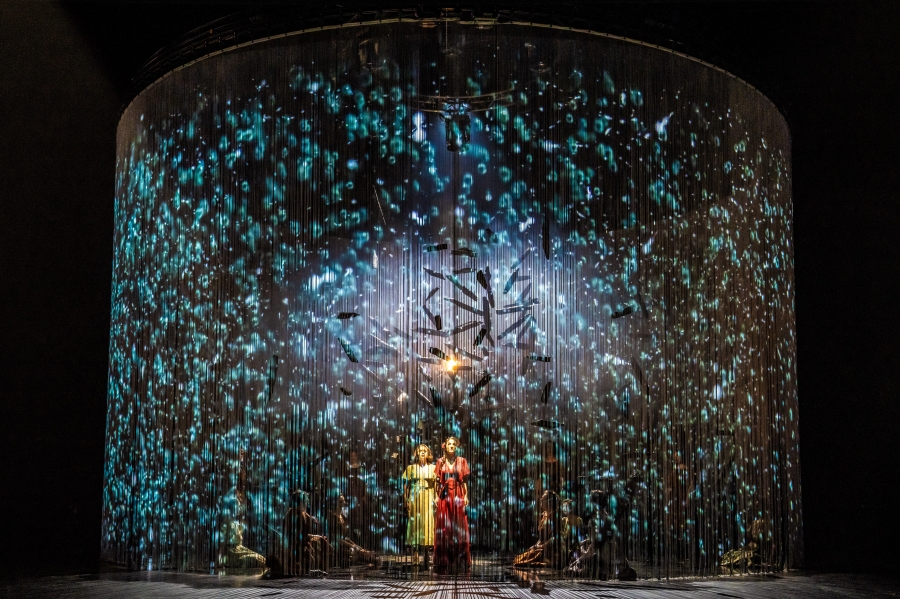
photo credit Richard Hubert Smith

 out of 5 stars (3 / 5)

The Welsh National Opera reproposes Annabel Arden’s 2012 production of La Bohème, set in the early 20th century. It is a straightforward interpretation of Puccini’s opera with a minimal and, at times, unimaginative setting. The WNO succeeds in offering a production that is skillful and entertaining. Strong performances bring to life the romance, tragedy, as well as comedic elements of the opera.

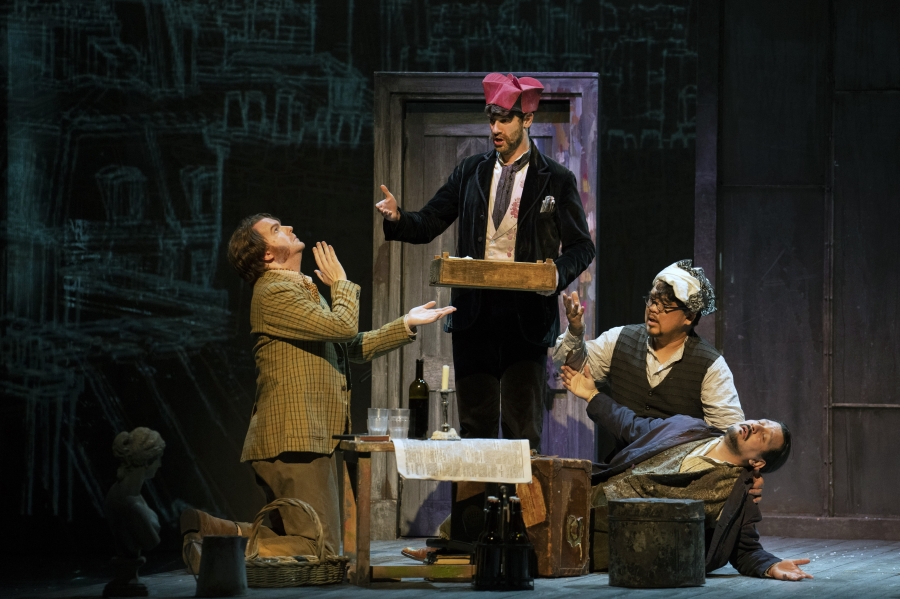
Rodolfo (Jung Soo Yun) and Marcello (Germán E Alcántara) are skint artists living in a cold attic in Paris. Rodolfo falls quickly in love with frail Mimì (Elin Pritchard), but their complicated relationship flounders under the pressures of poverty and Rodolfo’s guilt for making Mimì ill. In contrast, Marcello’s affair with coquettish Musetta (Aoife Miskelly) is passionate and often funny. The friends Schaunard (Mark Nathan) and Alcindoro (Alastaire Moore) add to the bittersweet comedy of the production.

Elin Pritchard, as Mimì, and Aoife Miskelly, as Musetta, shine giving by far the best performances. Pritchard, who was a superb Michäela in a past WNO’s Carmen, is graceful and powerful. She conveys a tender tragedy infused with love and loss. Aoife Miskelly, who previously delighted the audience as the Cunning Little Vixen, performs with brio, charm, and sophistication. Miskelly has a beautiful light in her voice.

Baritone Germán E Alcántara gives a powerful performance with. Jung Soo Yun has a beautiful tonality but limited range. Jung’s voice lacks the power needed to counter the orchestra. This is disappointing, especially after he gave a masterful performance in Les Vêpres Sicilliennes.

photo credit Richard Hubert Smith

The quartet of the two couples Mimì and Rodolfo, and Musetta and Marcello is effective though underwhelming. Mark Nathan, as Schaunard, and Alastaire Moore, as Alcindoro, give robust performances holding the scene in Act Four.

The WNO’s choir is impeccable, as always, with a strong stage presence. The orchestra, under the baton of Lee Reynolds, gives a solid performance. This production of La Bohème is let done by the rehashing of a past production lacking in imaginative interpretation and an overly minimal setting, which here includes video projections of birds and of snow.

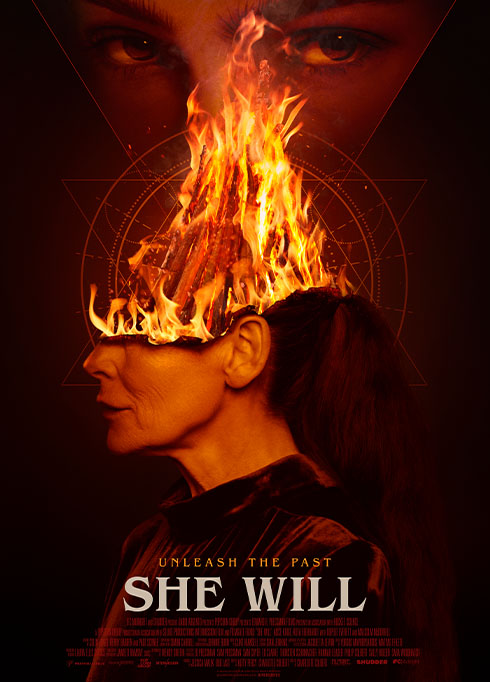
She Will – A Review by Eva Marloes

Contrary to so many horror films that over the years have depicted nature as the enemy and their female protagonists as victims, Charlotte Colbert’s She Will is a tale of personal and collective trauma and empowerment found in a deep connection with the land.

The film opens with the ageing film-star Veronica Ghent (Alice Krige) in a luxurious art deco train compartment taking Traumadol to relieve the pain from a recent double mastectomy. She is travelling with her young nurse Desi (Kota Eberhardt) to a retreat in the Scottish Highlands. At their arrival, they are met with exaggerated characters headed by Tirador, played by Rupert Everett in a little too caricatural Oscar Wilde pose.

All around is a wild and bleak forest that was once the theatre of the execution of women accused of witchcraft. The ground has absorbed the women’s power, be that of witches or of victims of a misogynistic crime, and it now insinuates itself in Veronica’s life bringing healing as well as power.

Director Charlotte Colbert excels at weaving together the physical elements of the forest with the symbolism of trauma and healing. The ground penetrates into Veronica’s cabin as a black sludge and into her dreams as nightmares. It liberates her from the shame she feels of her scarred body, deprived of breasts, symbol of femininity. It also brings redemption from the childhood trauma of being sexually exploited by the director of the film that launched her career, played by Malcolm McDowell. As Veronica embraces the power in the mud, her spirit haunts the film director who commits suicide.

Alice Krige dominates the film with intensity, subtlety, and charm. Krige’s Veronica is captivating in her transformation from a former film-star clinging to beauty by masking her body to an empowered woman with no fear. It is ironic that she played the evil witch in the faux feminist Gretel and Hansel that was so rife with misogynistic themes (see review). 

The film is at its weakest when it leaves behind symbolism and tries to portray real characters and situations. Veronica’s relationship with her nurse Desi has little life in it notwithstanding solid performances. The attempted rape of Desi by a local young man is contrived, only serving the purpose of presenting an example of misogynistic violence which is punished by the revengeful forest. Other characters are a little too incidental adding little and at times disrupting the cohesiveness of the film. 

Aside Krige, it is the physical and mental landscape that carries the film conveyed by the striking photography of Jamie Ramsay who fuses together the haunting images of Veronica’s nightmares and fantasies and the dark and sinister landscape all around her. 

The choice of Scotland as a setting resonates historically. Between 1563 and 1736, an estimated 3837 people in Scotland were accused of witchcraft, a much higher proportion than in other European countries. 84% of them were women. It is estimated that over 60% of the accused were executed. This historical injustice has been addressed by the Witches of Scotland campaign, which has led to an official apology by First Minister Nicola Sturgeon and has inspired movements in other countries. 

WNO’s Migrations, a review by Eva Marloes

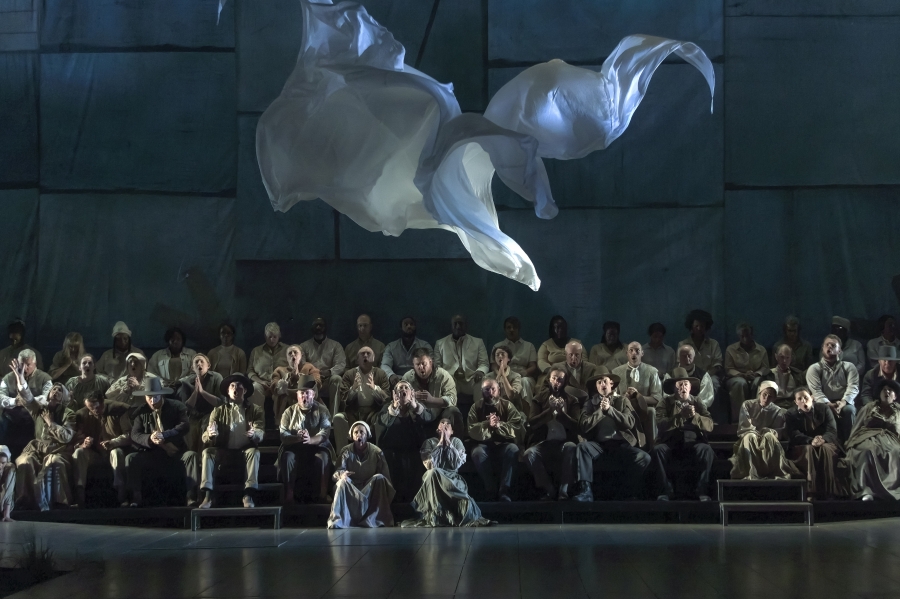
WNO Migrations The Mayflower WNO Chorus photo credit Craig Fuller

 out of 5 stars (2 / 5)

The new opera Migrations, developed by the Welsh National Opera (WNO), brings together disparates histories and issues to send an anti-racist message. The opera consists of six interlocking tableaux protesting racism, slavery, and violence to the natural world. These issues deserve to be told and dramatised, yet drama requires tension, emotions, and characters, which are wholly absent in this production.

Migrations is a pot pourri of protest banners without a trace of life. None of the librettists took the trouble to write a character with real emotions, pain and joy, hope and disappointment. Singers explain disparate histories and issues to the audience rather than tell a story. The message is right and timely, but an opera is not a protest march.

Migrations was conceived as part of the celebrations of the 400th anniversary of the sailing of The Mayflower in 1620. This shows little understanding of the Pilgrims, who are here presented erroneously as oppressed people escaping persecutions. In reality, they were theocratic colonisers with little tolerance for each other never mind anybody else. The choir as Pilgrims singing ‘Freedom’ sits awkwardly with the overall anti-colonial, anti-racist, and anti-slavery message.

There are only two tableaux that stand out. One is Flight, Death or Fog, the story of Pero Jones, enslaved to the Pinney family in Bristol. Aubrey Allicock’s Pero has an impressive presence on stage which confers dignity and gravitas. The other is This is the Life! set in 1968 and depicting two Indian doctors coming to Britain to ‘fill the NHS skills gap,’ as they tell the audience. The Indian classical music and flamboyant Bollywood dance manage to lift the spirits.

WNO Migrations This is the Life Natasha Agarwal Neera Jamal Andreas Jai Bollywood Ensemble photo credit Craig Fuller

Treaty Six by Sarah Woods depicts the plight of the Beaver Lake Cree Nation in today’s Canada trying to stop a pipeline going through their land. The English Lesson features a group of refugees reflecting on who they were at home and their status as refugees in a new country. Eric Ngalle Charles’s Birds sees children as birds migrating and endangered by humans destroying the natural world. The music and the children’s singing lack the necessary sombre tone to convey the message.

On the whole, this mishmash is kept together competently by the singers, the always excellent choir, and orchestra conductor Matthew Kofi Waldren. The music too often resembles a second-rate musical, with the exception of the chorale and Jasdeep Singh Degun’s Indian classical music.

WNO’s Don Giovanni – Review by Eva Marloes

WNO Don Giovanni Duncan Rock Don Giovanni photo credit Bill Cooper

 out of 5 stars (3 / 5)

The WNO offers an accomplished production of Mozart’s Don Giovanni that never quite takes off. Don Giovanni is a womanizer who seduces and even rapes women. He is condemned by the community and unrepentant is brought down to hell. Mozart’s dramma giocoso alternates playful elements with tragedy. The able cast seeks to balance the two but the perhaps confusing direction leads them astray taking the tension away. This is exacerbated by the heavy and lugubrious art design throughout the show that leaves no room for playfulness.

Joshua Bloom performs well as Leporello, Don Giovanni’s servant. However, he expresses a little too much reprobation in singing ‘In Spagna son gia’ 1003’ leaving out the ridiculing of Don Giovanni. In contrast, Meeta Raval plays Donna Elvira, one of the victims of Don Giovanni, with a little too much humour. Donna Elvira feels love and hatred for Don Giovanni. Although Raval sings beautifully and with conviction, the confusing stage directions bring about a too abrupt turn to tragedy leaving out the inherent tension within Donna Elvira. At the end, when she declares she will confine herself to a convent, the audience laughed. Donna Elvira’s suffering is being denied.

Linda Richardson, as Donna Anna, steals the show with a powerful and dramatic voice. There is no ambivalence in Donna Anna who is the victim of an attempted rape by Don Giovanni and whose father, the Commendatore (James Platt), is killed by Don Giovanni as he runs away. Duncan Rock, as Don Giovanni, gives a solid performance, but not a powerful one. Harriet Eyley shines as Zerlina, who is almost seduced by Don Giovanni on her wedding day. Her husband Masetto is played with vigour by James Atkinson, who offers an impressive performance. Don Ottavio, fiance of Donna Anna, is played by Kenneth Tarver whose agile voice is impressive though perhaps lacking in robustness.

WNO Don Giovanni Meeta Raval Donna Elvira Duncan Rock Don Giovanni photo credit Bill Cooper 

On the whole, the performance lacks energy and subtlety. The usually excellent WNO’s orchestra fails to do justice to Mozart’s polyphonic music and keeping the pace slow. This production fails to bring out that alternation between playful and dramatic. Don Giovanni finds his death inviting to dinner the statue of the Commendatore, Donna Anna’s father whom he killed at the beginning. It is rather confusing to see the statue on stage from the very beginning, even before the Commendatore is killed.

The WNO assembles a good cast and can usually rely on a strong orchestra and excellent choir. Their performances are too often let down by the art production and direction, often based on a previous production. In this case, the original direction was by John Caird. This makes originality and innovation impossible.

WNO’s Jenůfa, a review by Eva Marloes

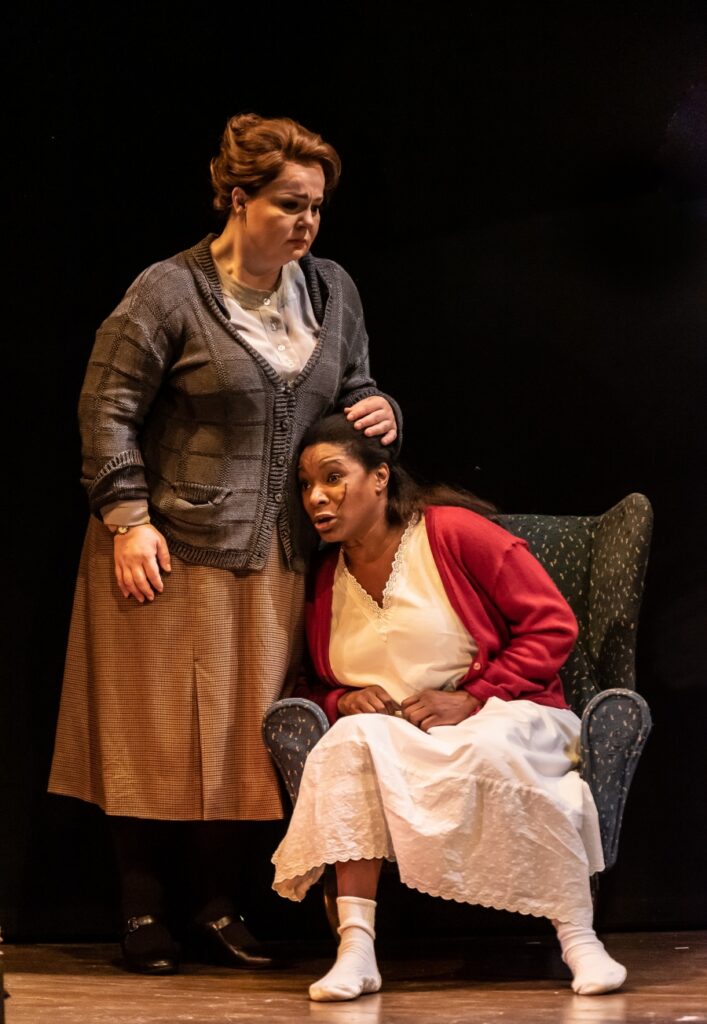
WNO Jenufa Eliska Weissova Kostelnicka Burjovka Elizabeth Llewellyn Jenufa photo credit Clive Barda

 out of 5 stars (4 / 5)

The evening began with the orchestra conductor Tomáš Hanus wishing the performance be an island of humanity. Sorrowful and deeply humane, Leoš Janáček’s Jenůfa was the perfect opera to bring reflection upon the devastating Russian invasion of Ukraine.

The WNO’s Jenůfa touches the audience with the perfect balance of intensity and quiet sorrow. The interpretations of Elizabeth Llewellyn in the lead role and Eliška Weissová as Kostelnička stand out in this impressive production. The orchestra under the capable baton of Hanus conveys the complex beauty of Janáček’s music.

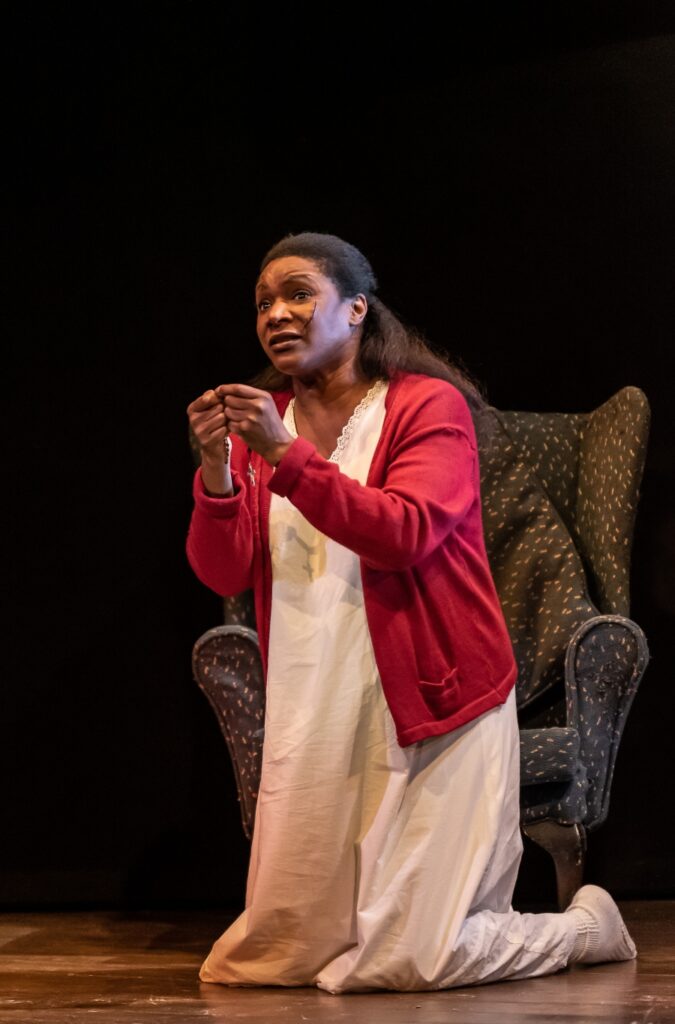
WNO Jenufa Elizabeth Llewellyn Jenufa photo credit Clive Barda 

The story of Jenůfa is decidedly unpalatable to contemporary sensibilities. She is disfigured out of jealousy by Laca, the man who claims to love her, and abandoned by Števa, the man she loves and whose child she bears. Her own stepmother Kostelnička kills her child for fear Laca would not marry Jenůfa. Yet Janáček’s music makes one overlook the misogyny of the story and brings out a deep sense of humanity.

Elizabeth Llewellyn gives an intense and nuanced performance. The tonality of her voice adds a deep and pure emotion. Eliška Weissová’s powerful voice and dramatic interpretation capture well the complexity of Kostelnička, whose strong personality is diminished and consumed by her crime and sin.

WNO Jenufa Eliska Weissova Kostelnicka Burjovka Peter Berger Laca photo credit Clive Barda

Janáček’s Jenůfa is no epic tragedy but a journey taking us to a place of pain and compassion. The WNO orchestra is impeccable in conveying the moments of tragedy, quiet sorrow, and intimate love. Peter Berger gives a solid performance as Laca revealing a compassionate note and Rhodri Prys Jones interprets Števa convincingly. Of note is also Aaron O’Hare in the role of Stárek.

The production is let down by an unimaginative setting that emphasises the ordinary neglecting the tragic and religious dimension of the opera where the infanticide is not only a crime, but a sin. Yet there are a couple of good tableux: one when Števa is at one end of the stage away from the rest of the village that underlines his culpability and one when Kostelnička confesses her crime in front of the jury of the crowd.

The performance was well received by an audience already moved by the current tragic events in Ukraine.