Tag Archives: Venue Cymru

Review: Carmen, Venue Cymru, Llandudno by Richard Evans

A Senbla production of an Ellen Kent Opera featuring the Opera International, Kyiv, Ukraine.

 out of 5 stars (4.5 / 5)

On tour nationwide until May

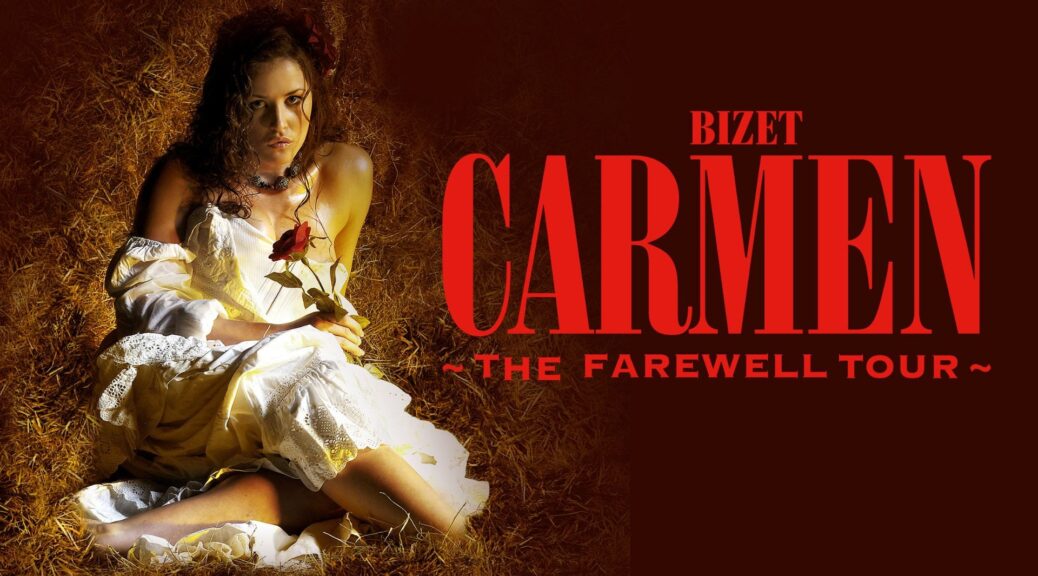
Take a beautiful, enticing, manipulative woman, add a soldier in his finery and then a virile toreador and then stand back to watch the sparks fly.  That is the premise behind Georges Bizet opera, Carmen.  

The character of Carmen is ebullient and vivacious and she is not above using her charm to get what she wants. Her story involves a love triangle between herself and two suitors, a soldier and a bullfighter.  The soldier, Don Jose succumbs to her wiles and is forced to leave his regiment after falling out with his commanding officer.  In the meantime, Carmen has met with the toreador between which there is an instant, mutual attraction. Don Jose goes returns with a childhood sweetheart to see his ailing mother but then the power of Carmens seduction draws him back to her.  Consumed by jealousy when Carmen taunts his love compared to her bullfighter, he kills her.  

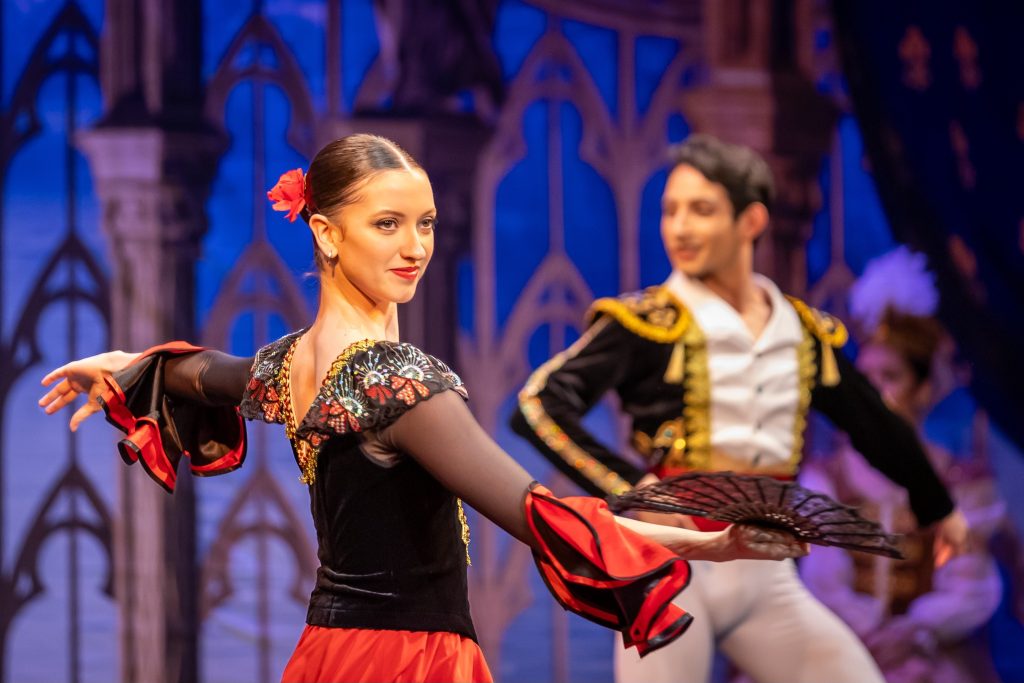
To play Carmen well, good acting skills and a great voice are needed and Mariia Davydova exhibits these in abundance.  The opera is famous for its sultry and seductive songs, such as Habanera and Seguidilla that ignite passion and you could not help warm to Davydovas presence on stage.   Opposite her, Iurie Gisca played Escamillo, the toreador with strength and confidence and Oleksii Srebnytskyi played Don Jose.  While Srebnytskyi did not have the stature of many soldiers his voice was striking, clear and impassioned.  Together with Davydova, they captured the mood of the opera really well. 

The supporting cast attack their role with enthusiasm, accentuating the devil may care attitudes inherent in the opera, however the fight scenes need some attention.  In the denouement, Carmen practically walks onto the knife in Don Jose’s hand and in the conflict between Don Jose and his superior officer they seemed to flap at each other ineffectively.  One nice comic touch was to see soldiers being beaten into submission by factory girls wielding bouquets of flowers.  The scenery and costumes bring the environment in southern Spain to the fore and add a dramatic backdrop to the action.

The story has elements that come across as odd in a modern age, describing cigarette smoke as “sweet smelling, rising up to heaven” and equating it with love.  I’m sure the anti-smoking lobby would disapprove of those lyrics.  The opera also illustrates how limited the choices were for women and people of a labouring class.  Carmen’s character has an untrammelled joy at times, describing love as a bird that can not be tamed, or a gypsy child that knows no laws.  This illustrates an intriguing theme within the opera, the desire for freedom which conflicts with duty and obedience to the law for the sake of avoiding chaos.

In many respects, this is a stirring show.  There is plenty of humour, some playful optimism yet with a tragic ending filled with pathos.  It is definitely a show to pull on the heartstrings.  Alongside La Traviata and Madame Butterfly, this is part of Ellen Kents ballet and opera international farewell tour and they have certainly picked out some action packed operas to present. These three shows should be high up on the ‘must see’ list of anyone with even a vague interest in opera.  
Review: La Traviata, Venue Cymru, Llandudno by Richard Evans

A Senbla production of an Ellen Kent Opera featuring the Opera International, Kyiv, Ukraine.

 out of 5 stars (4 / 5)

On tour nationwide until April

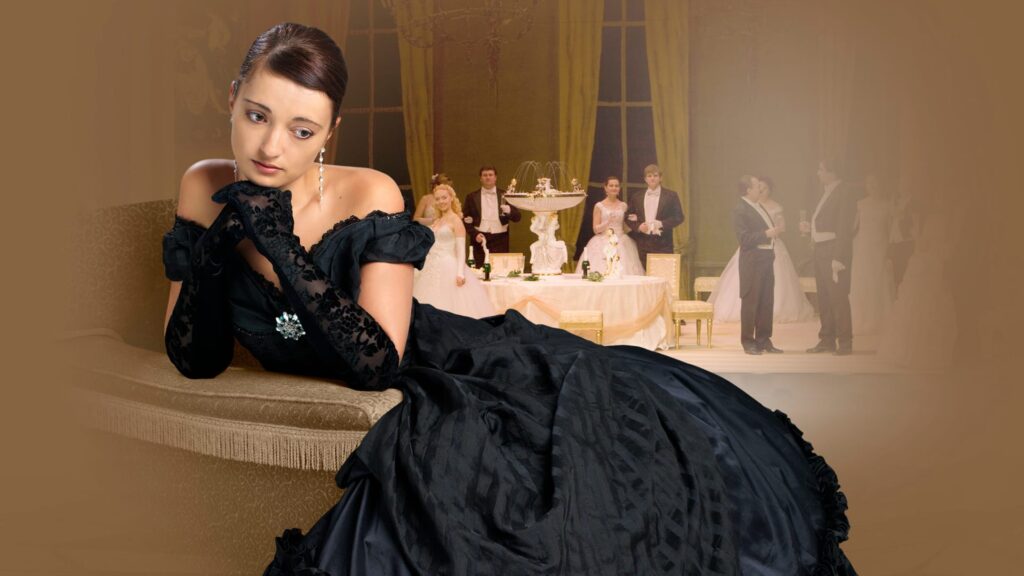
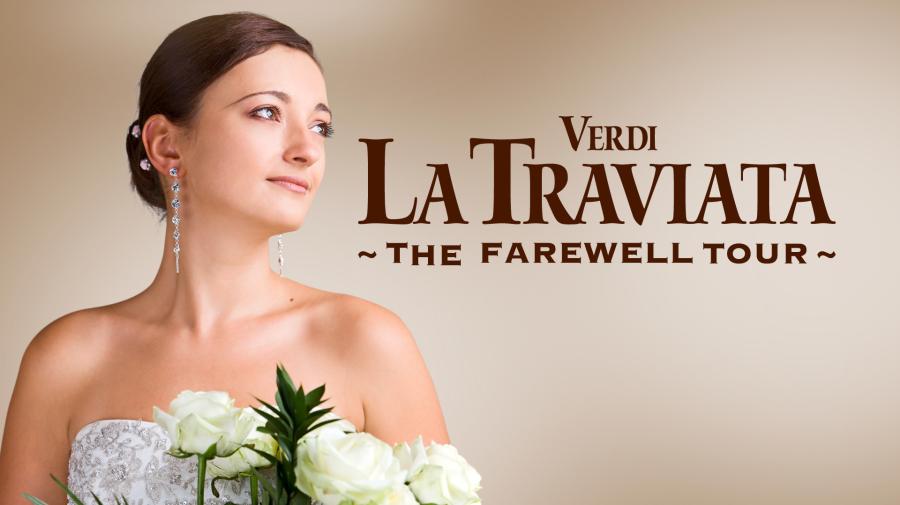
La Traviata, a tale of forbidden love and loss with some hauntingly beautiful melodies.  Can a man from a well to do background fall in love with a fallen woman and find acceptance from his family no matter how rich she is?

Ellen Kent’s La Traviata followed a pattern established over recent years.  The set was simple, an intricate backdrop that stayed the same for each act, with little, yet effective scenery and an orchestra that played subtly.  In effect this drew attention strongly to the stage, the costuming, voices and the acting.  As a visual spectacle this show was pleasing to the eye, the costumes suitably opulent and the background evocative of a grand ballroom.   The voices were superb but movement on stage was often more pedestrian than animated.  

The story, based on a play, the Lady of the Camellias by Alexandre Dumas is a tragedy.  Violetta is dying but when she meets a gentleman, Alfredo, they fall passionately in love.  His father persuades Violetta to abandon Alfredo to preserve the family’s honour and protect the reputation of a younger sister.  However, once Violetta is nearing her end, she is reconciled with Alfredo and the father shows some remorse for causing their rift.

The storyline dictates that the spotlight is very firmly on the soloists and in particular the lead soprano, Violetta, played by Viktoriia Melnyk.  Her voice was rich, powerful and striking especially when hitting the top notes.  Her duets with Alfredo, played by Hovhannes Andreasyan in Act 1 and with Alfredo’s father, sang by Iurie Gisca in Act 2 are heart warmingly memorable.  The large company support the leads well although more could be made of some scenes for example when the Baron challenges Alfredo to a duel.  I expected to see much more anger from the Baron.

By modern standards, there are some weaknesses to the plot.  The father, despite being told that Violetta is dying asks her to make a huge sacrifice stating that Alfredo will fall out of love with her when her looks disappear in the future.  Hardly the most understanding attitude to someone in the last throes of tuberculosis.  However, like any story it is a child of its time and attitudes have changed.  Of course women today have more personal freedom and their success in life is not defined by achieving a good match.  Society is also not as condemnatory towards people with a so called illicit lifestyle.  No matter how good a person Violetta was, she could never achieve respectability because she was a courtesan.

This production of La Triaviata is part of the farewell tour for Ellen Kents opera company.  It is accompanied by Carmen, also showing at Venue Cymru, and Madame Butterfly.  Over the past 30 years, Ellen Kent Opera and Ballet International has established a reputation for producing high quality opera and opening up the genre to a wider audience.  La Traviata is a classic opera that lives long in the memory and is therefore a fitting part of this farewell tour and leads to a sense of expectation for the next instalment, Carmen.    

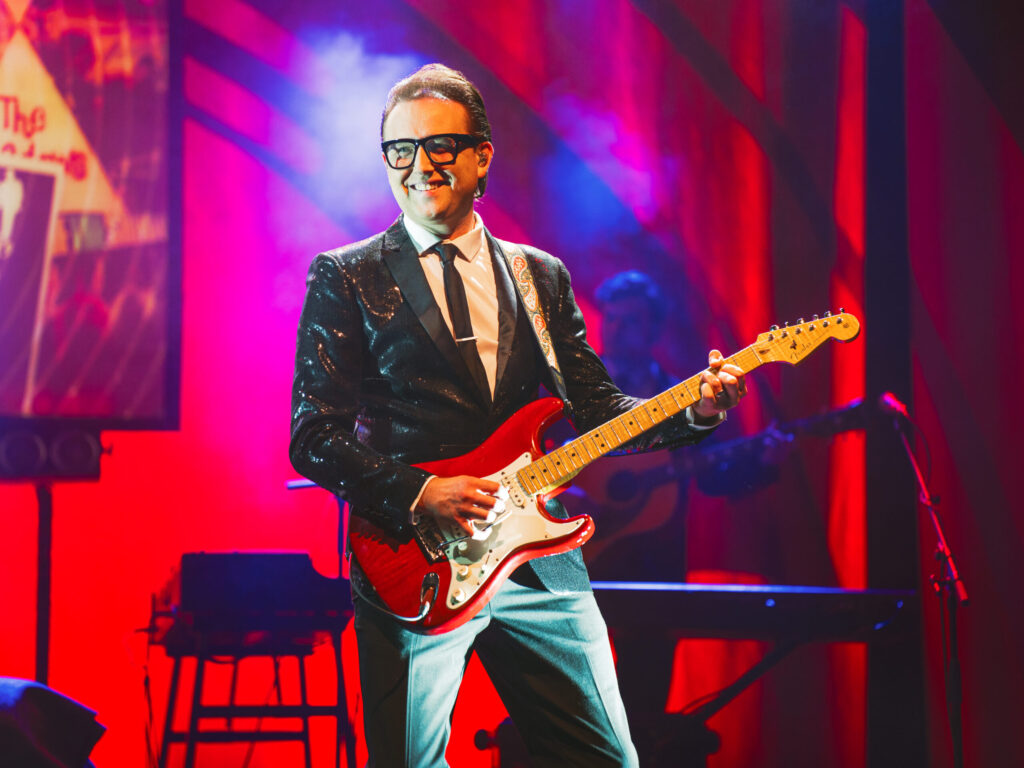
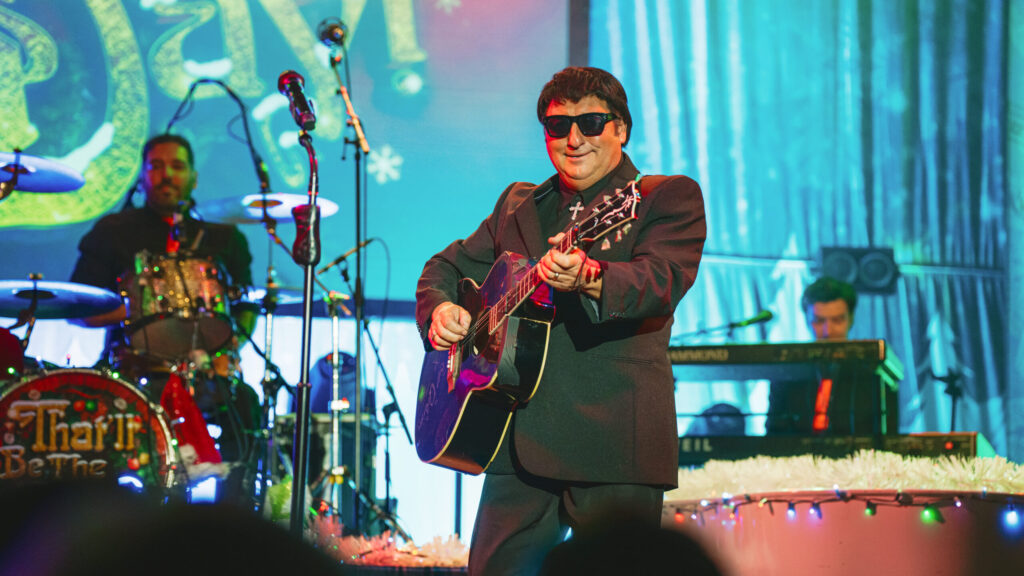
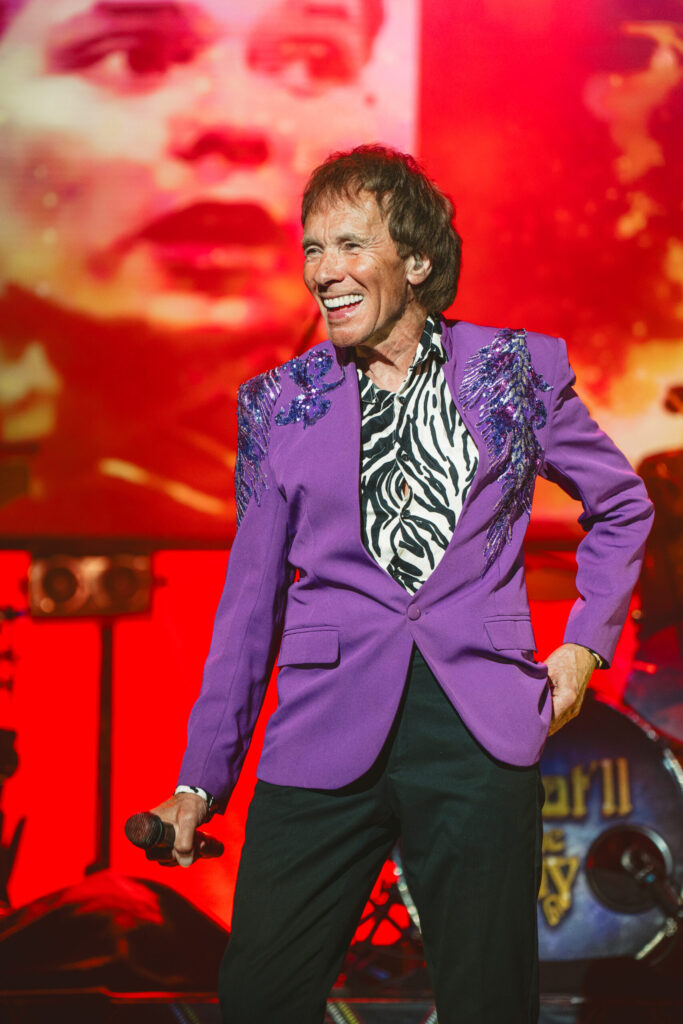
Review: That’ll be the Day, Venue Cymru, Llandudno by Richard Evans

Venue Cymru, Llandudno, Sept 12 and touring

 out of 5 stars (4.5 / 5)

T C Productions Ltd

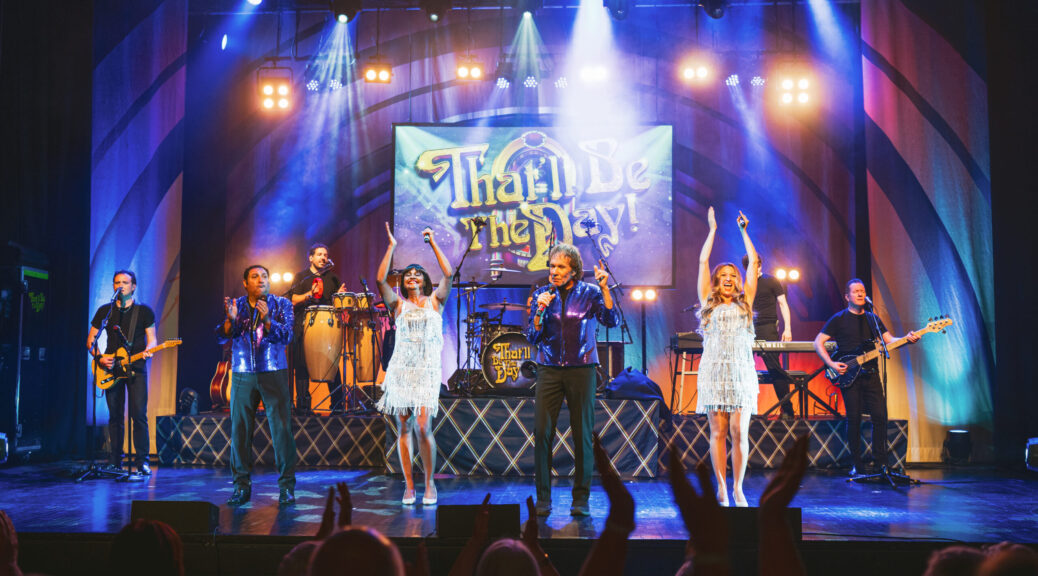
This performance is part of the 40th anniversary tour of ‘That’ll be the day’ and labelled as the farewell tour of Trevor Payne.  Would this be indulgent nostalgia or a more vital performance that loyal fans are used to?  Most certainly it was the latter with a few reminiscences thrown in for good measure.  

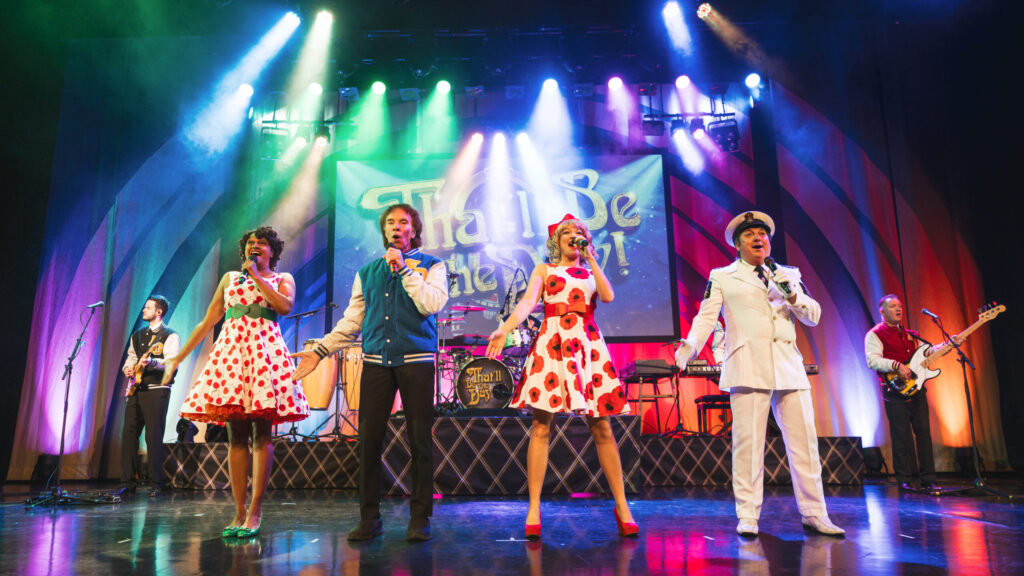
The show starts with a medley of rock ’n’ roll numbers such as ‘Oh Boy’ and ‘Rock around the clock’ and before the interval there is a large focus on sixties music with a range of artists represented including the Beatles, the Beach Boys and Frankie Valli and the Four Seasons.  Each of the main performers take their turn in singing that song best suited to their voice.  For me, the vocals of Nikki Renee Hechavarria were outstanding but there were no weaknesses in the line up.  The songs tended to be of a type, upbeat, optimistic, sing-a-long and all came from the charts.  Would it be too much to ask for something more raunchy like ‘The Who’, or for a protest song from Bob Dylan?

The backing musicians were excellent.  They were on stage for the vast majority of the show, playing a range of different styles and providing backing vocals for countless shows.  Along with the sound and lighting crew these would be the unsung heroes of the show.  There was a nice moment when Ollie Grey was handed the original Fender Stratocaster played by Trevor when the show first started, long before Ollie was able to pick one up.  

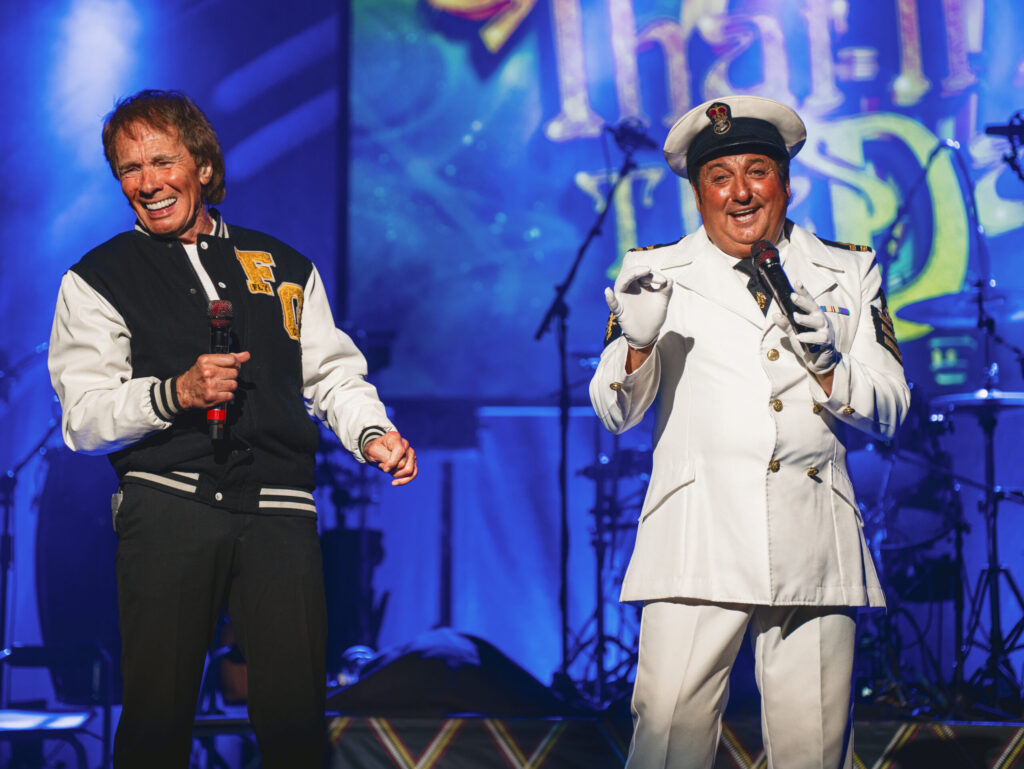
The show is more than a musical review.  Songs are interspersed with small comic videos and comedy routines.  There is great repartee between Trevor, who writes, produces and directs the show and Gary Anderson.  The jokes are often suggestive, much in line with ‘Carry On’ film humour which is highly appropriate given the origins of the show are in holiday camp theatres in places like Minehead and Bognor Regis. There are also sections were performers impersonate popstars.  To do this, a performer has to move fairly seamlessly between characters, and then take on a new persona for a couple of songs.  This makes the show quick paced and engaging throughout. 

To last 40 years, there has to be a winning formula especially when the show has people who return year after year or more than that, travel around to see the show in different venues whether in Britain or elsewhere.  It is great to see how the show has developed playing larger venues and attracting more followers and that they have been generous enough to support charities like the Make a Wish foundation, Childline and Help for Heroes.  During lockdown, the show was streamed into people’s homes with over 200 performances taking place. 

For many an evening like this is a trip down memory lane to see a choice selection of hits from the 1950’s to the 1980’s but there is enough here to engage both young and old.  It is thoughtfully prepared and well rehearsed with the cast and crew working together as a team.  As befits such a well honed show, it is a great nights entertainment. 

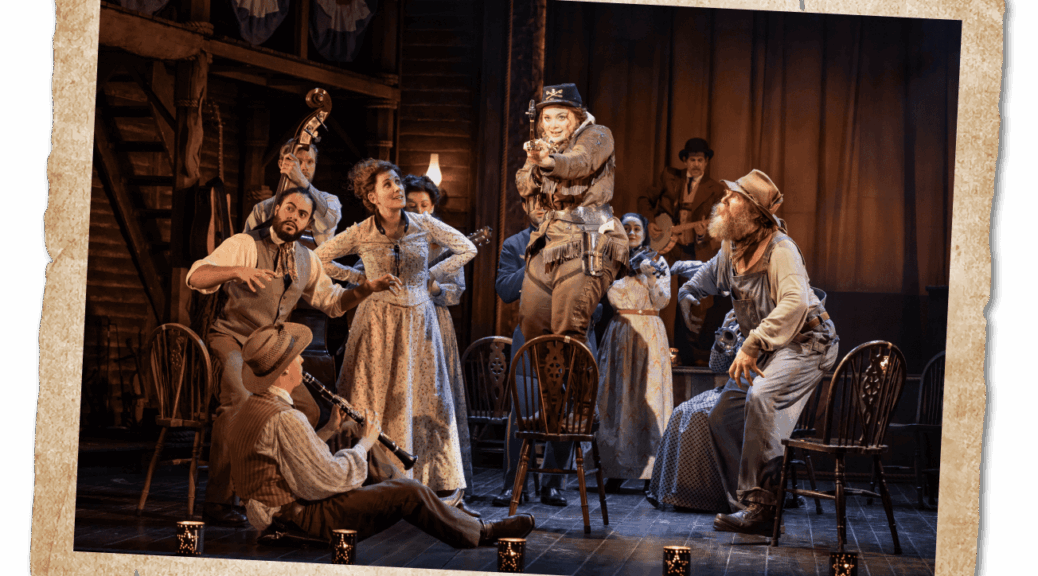
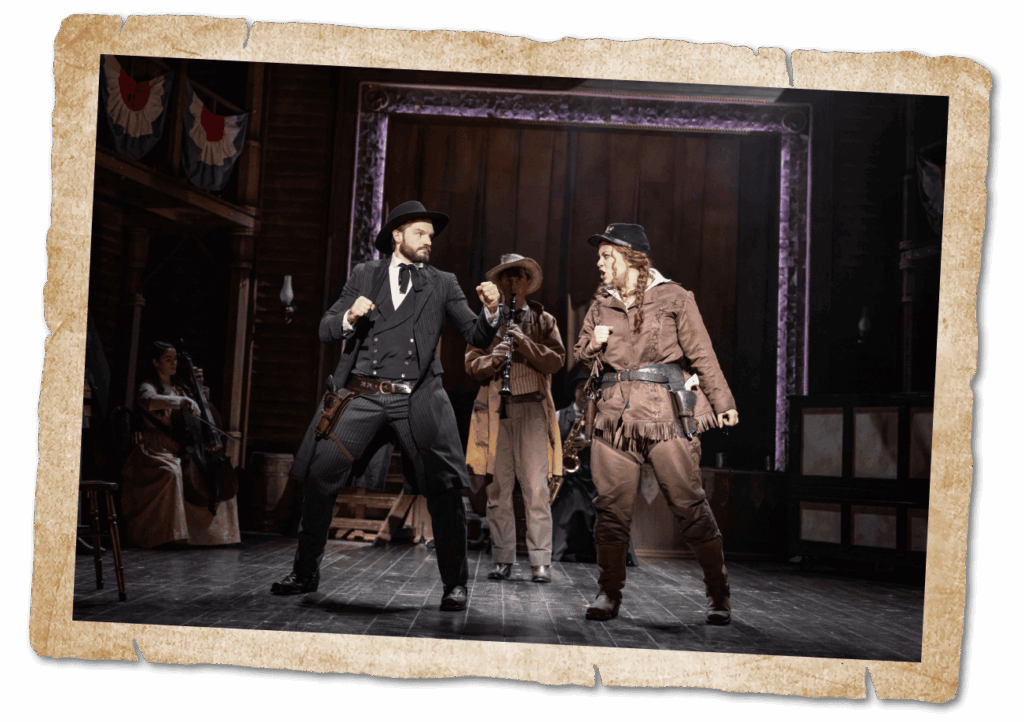
Review: Calamity Jane, Venue Cymru, Llandudno, by Richard Evans

Venue Cymru, Llandudno, 26-30th August 2025 and touring

 out of 5 stars (5 / 5)
Jamie Wilson productions, Kevin McCollum, Gavin Kalin productions, evolution productions, Tilted, Willette & Manny Klausner in association with Grace street creative group and David & Hannah Mirvish. A Watermill Production.

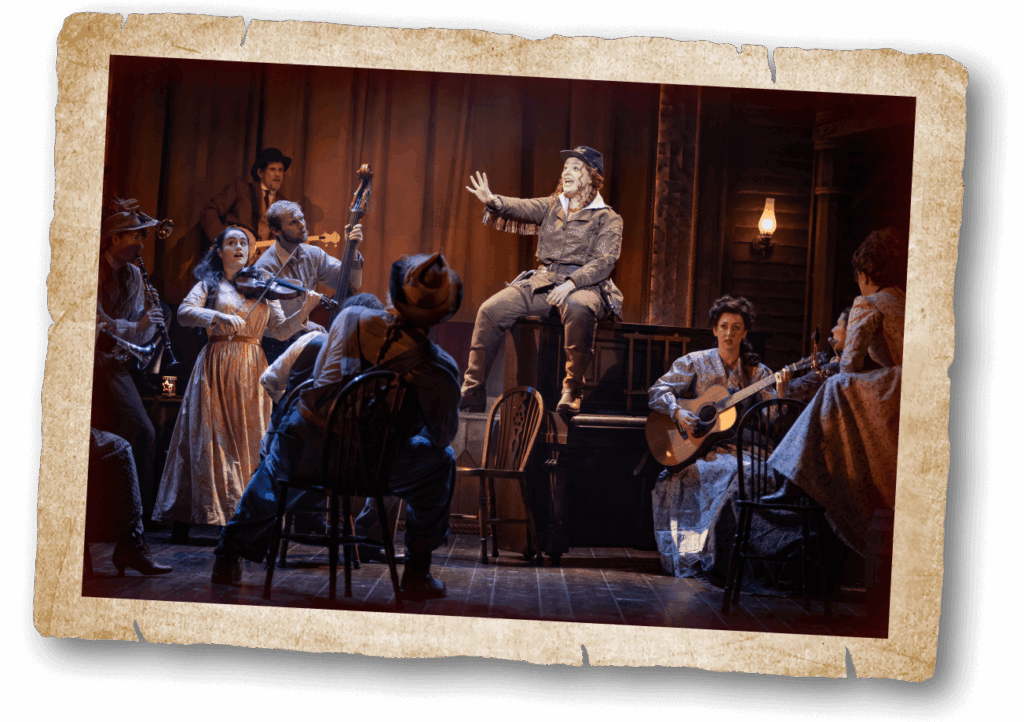
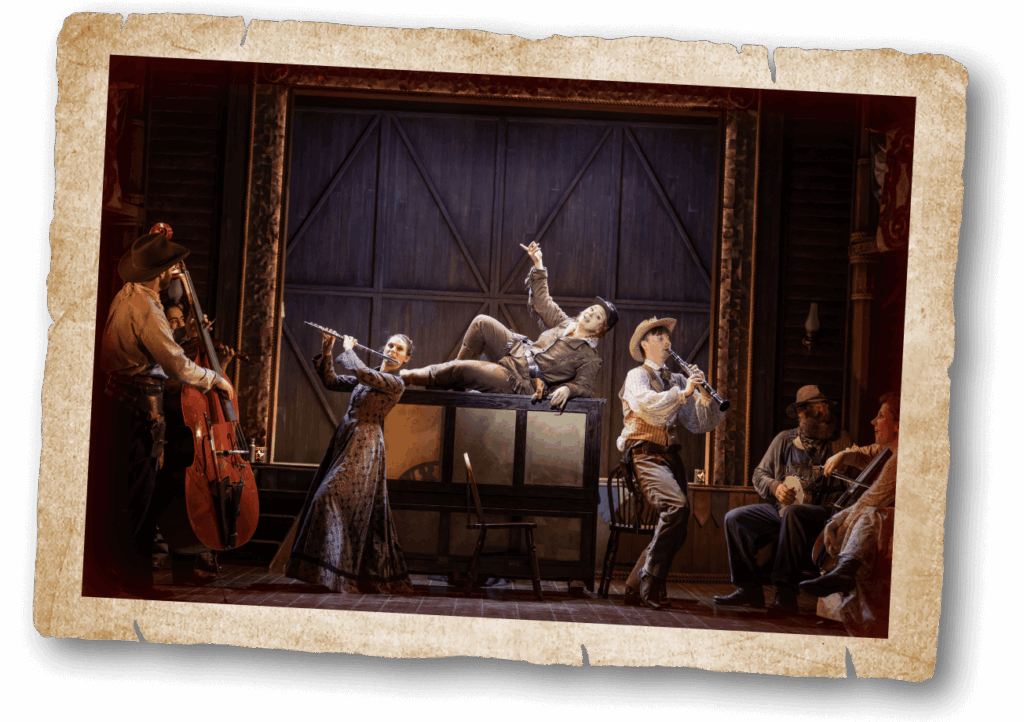
Calamity Jane. They’ve turned the legend of a gun totin’, liquor swillin’ girl masquerading as a man into a love story.  The actual events of Calam’s life are based in fact, but have been exaggerated, not least by the woman herself.  However, we should not let our quest for reliable history get in the way of a rattling good story which is what this musical is.

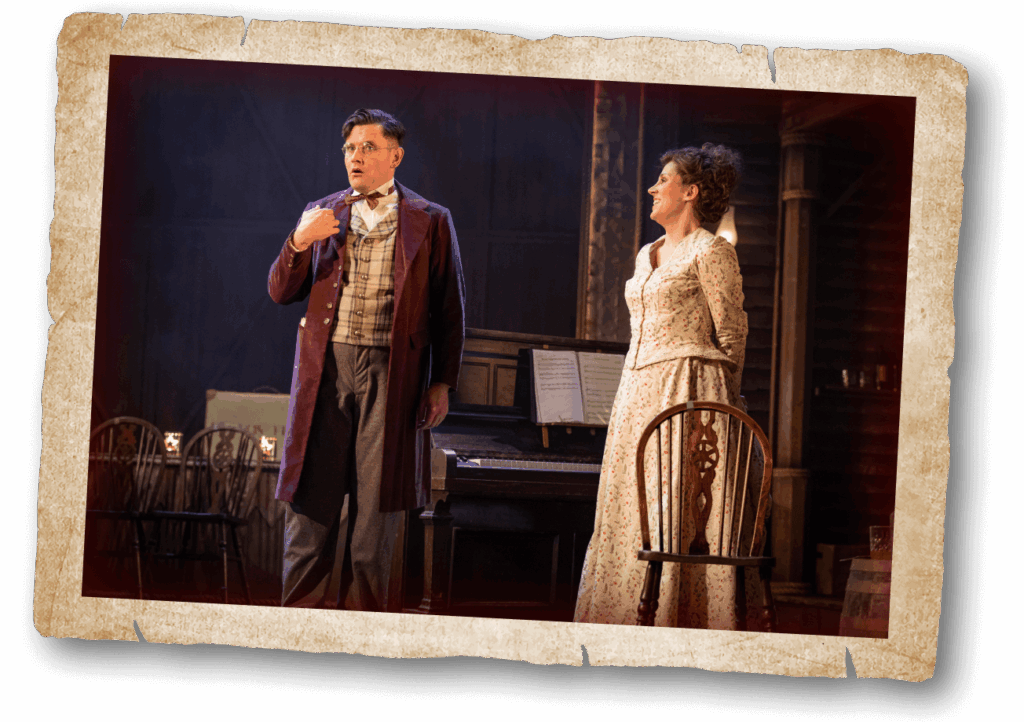
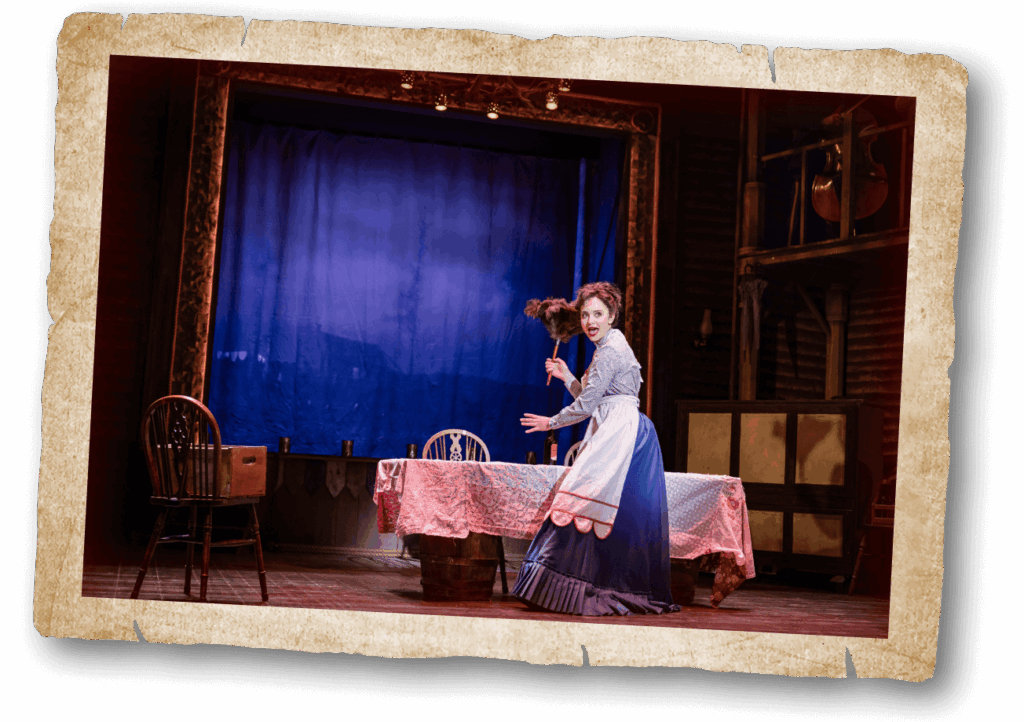
Calamity Jane breezes into a Deadwood saloon having guarded the stagecoach safely into town.  On the coach is Francis Fryer, an entertainer.  Sadly, he does not possess the attributes desired by a hard living audience that has been starved of female company.  He is a man.  When the saloon owner nearly causes a riot trying to fool the waiting crowd that Francis is actually a woman, Calam goes to Chicago to tempt a music hall star, Adelaid Adams to come to Deadwood. As befits her name, she makes a disastrous mistake and brings back her maid, Katie Brown.  However, Katie turns out to be a roaring success and settles with Calam in her run down shack and brings out the more feminine sides to her hosts character.  The two women then become love rivals for an army lieutenant, Danny, before Calam realises that her love for her long time companion and critic, Wild Bill Hickok is mutual and Katie is free to marry her soldier.

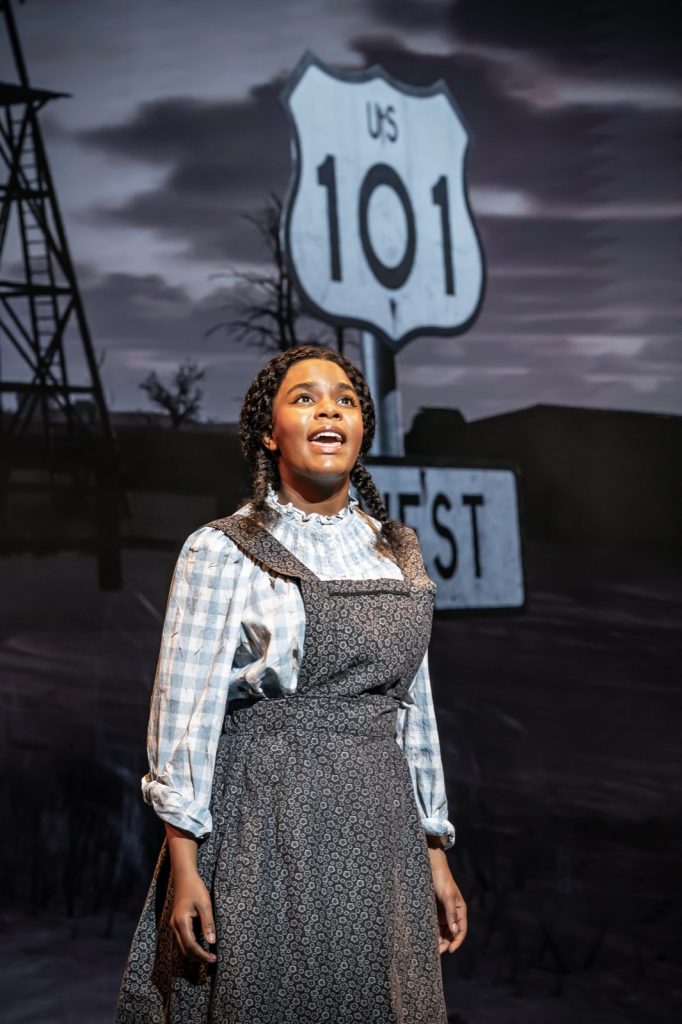
Carrie Hope Fletcher is great as Calamity, commanding the stage with her presence.  She is ably supported by Seren Sandham-Davies as Katie, Samuel Holmes as Francis and an understudy for Bill, Thomas Wolstenholme. The company provided plenty of warmth, energy, optimism and banter as the story unfolds into a quick placed drama.  Scene changes were effected by moving props and this required some imagination, not least in the formation of a stage coach by the cast.  The music gave a hoe down feel to the show and there were plenty of catchy numbers to go along with the iconic ‘whip crack away’ Deadwood stage song making this a feel good show.

There is some depth to this story.  Bill Hickok repeatedly wants Calam to be more like a girl, but she is more comfortable wearing buckskin leathers, carrying a six gun and earning the right to be accepted in this hostile culture on her own merit.  However, most of her compatriots drool over the suggestive temptress that is Adelaid Adams.  Herein is a spectrum of femininity and surely there is a place for all along that line.  A woman should be free to be who she wants to be.  Men need not be threatened by a physically strong, aggressive woman and should not expect a woman’s best qualities to lie in her appearance.  Not a bad lesson to come from a good nights entertainment.  

In one sense the story is a throwback to watching Rawhide or the Virginian on TV for those of us with long memories.  We now know that the entertainment industry has sanitised and romanticised stories of the wild west.  The reality was more raw and brutal than we have been led to expect, not least to the surrounding Native American Indian cultures that were often dispossessed quite violently.  However, this is just a story based on the life of a remarkable individual and if a story is a good one, it is worth telling and by the audience reaction, this musical is certainly that.  A raucous, enthusiastic reception was given to a deserving cast after a sparking show.

Review: An Inspector Calls, Venue Cymru, Llandudno by Richard Evans

Venue Cymru, Llandudno, May 13th – 17th 2025 and touring

 out of 5 stars (4.5 / 5)

A PW production. Directed by Stephen Daltry. Written by J. B. Priestley

“Send not for whom the bell tolls, it tolls for thee.”  John Donne, Meditations.

J. B. Priestley’s play is now regarded as a 20th Century classic and rightly so.  Especially since Stephen Daltry’s revival in the 1990’s it has become a staple in so many English Literature curriculums up and down the country. Would this production live up to the play’s reputation?   Tonight, it certainly did.

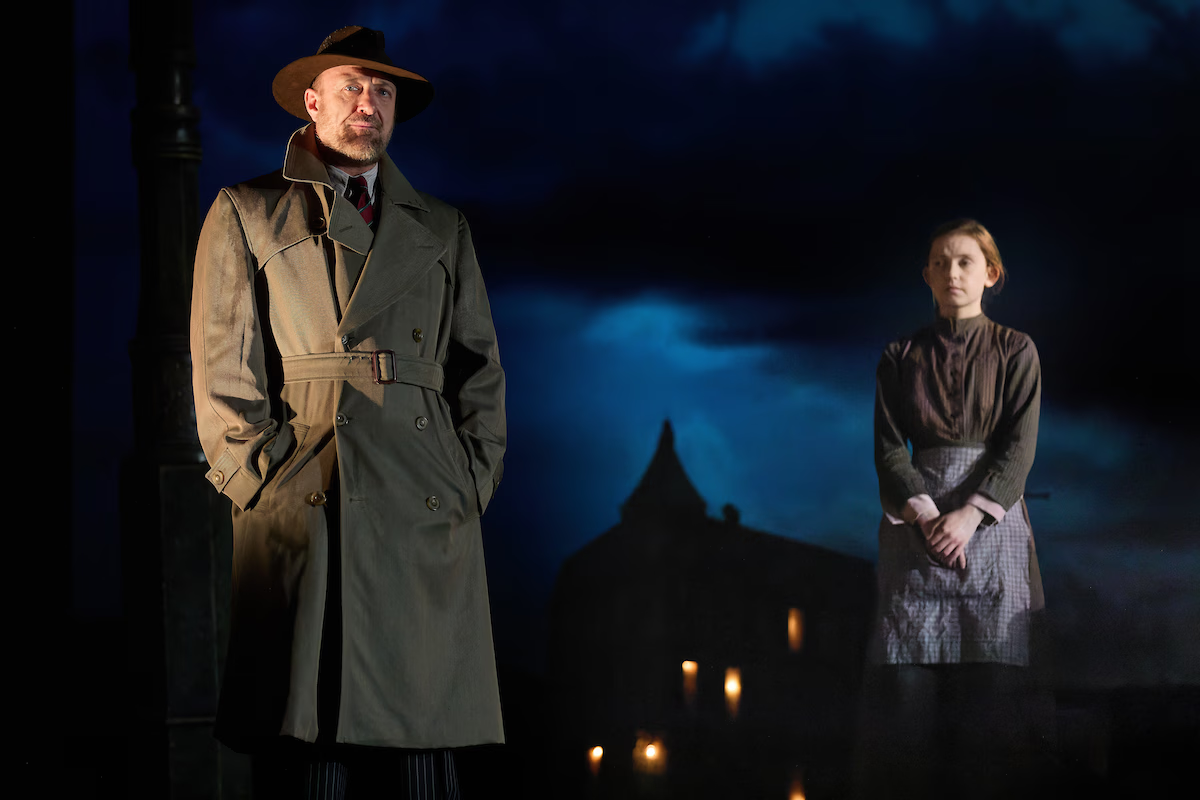
The action focuses on the highly successful Birling family who are celebrating the betrothal of their daughter to the son of a rival business firm.  As this takes place, an inspector knocks at the door and informs them of the death of a woman, Eva Smith, from a painful suicide.  The inspector in turn interrogates every member of the Birling family and the fiancé to uncover their part in Eva’s demise, something that they had been unaware of and felt no responsibility for.  In a dramatic climax, the family understand that this inspector was a mysterious imposter and that there was no suicide so intend to carry on as usual, until they get a phone call informing them of the death of a woman through suicide and that an actual inspector is on his way to investigate. 

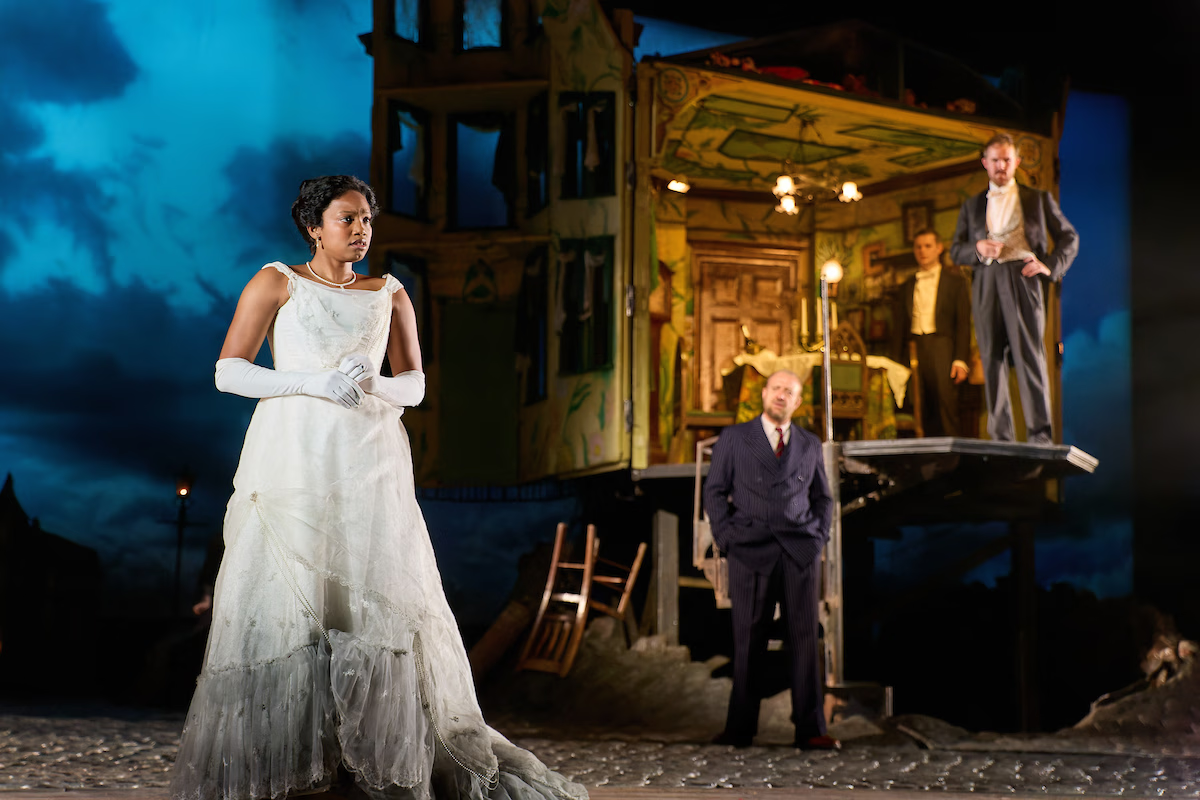
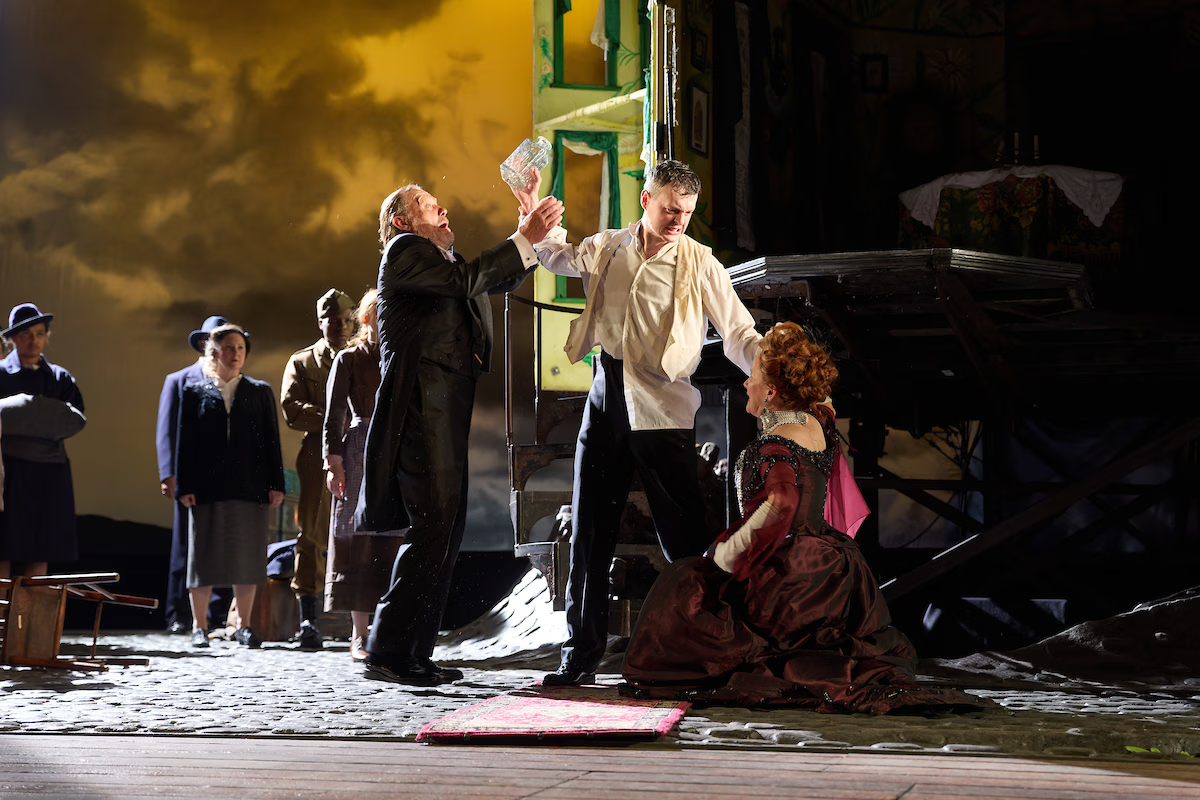
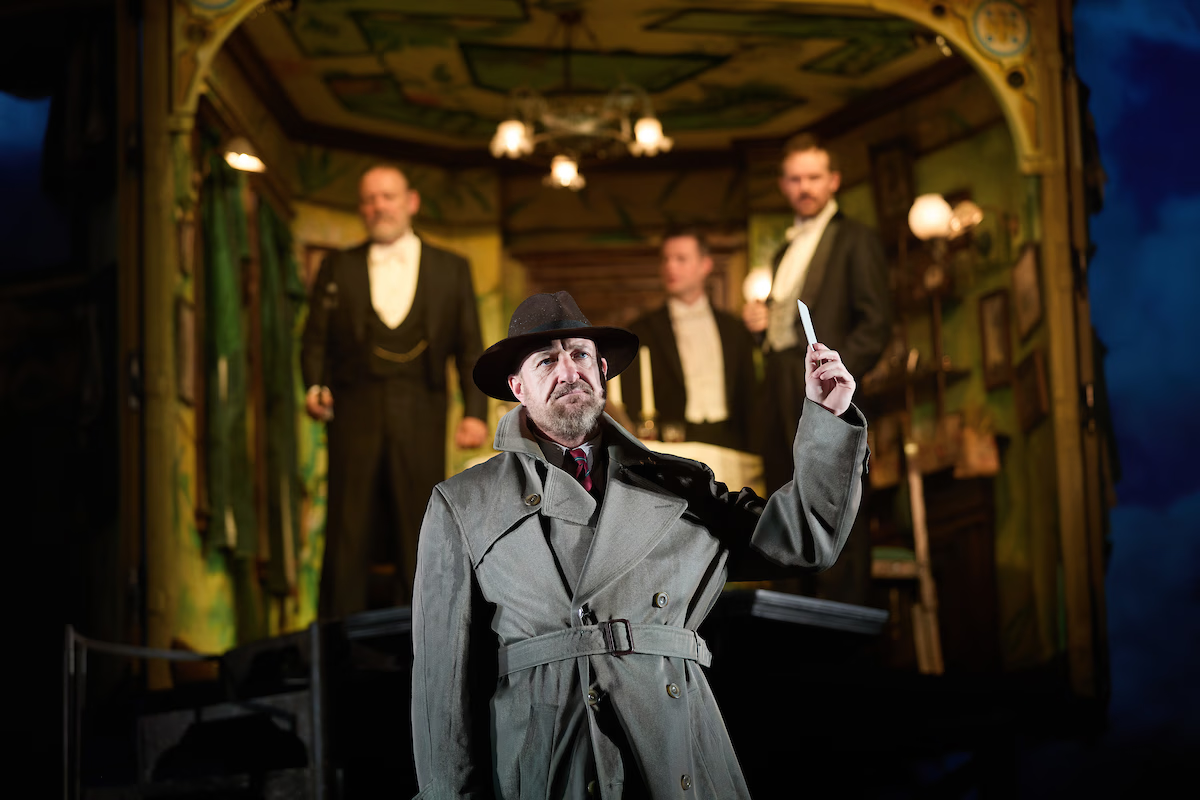
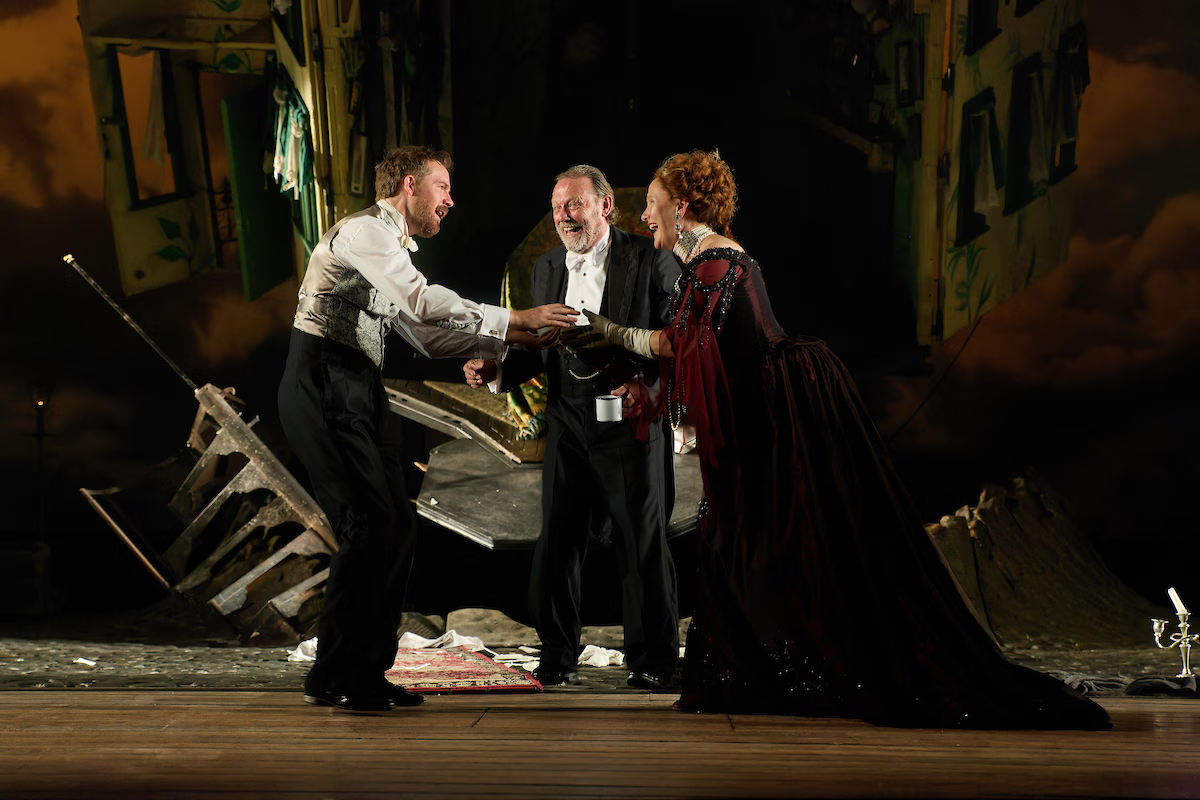
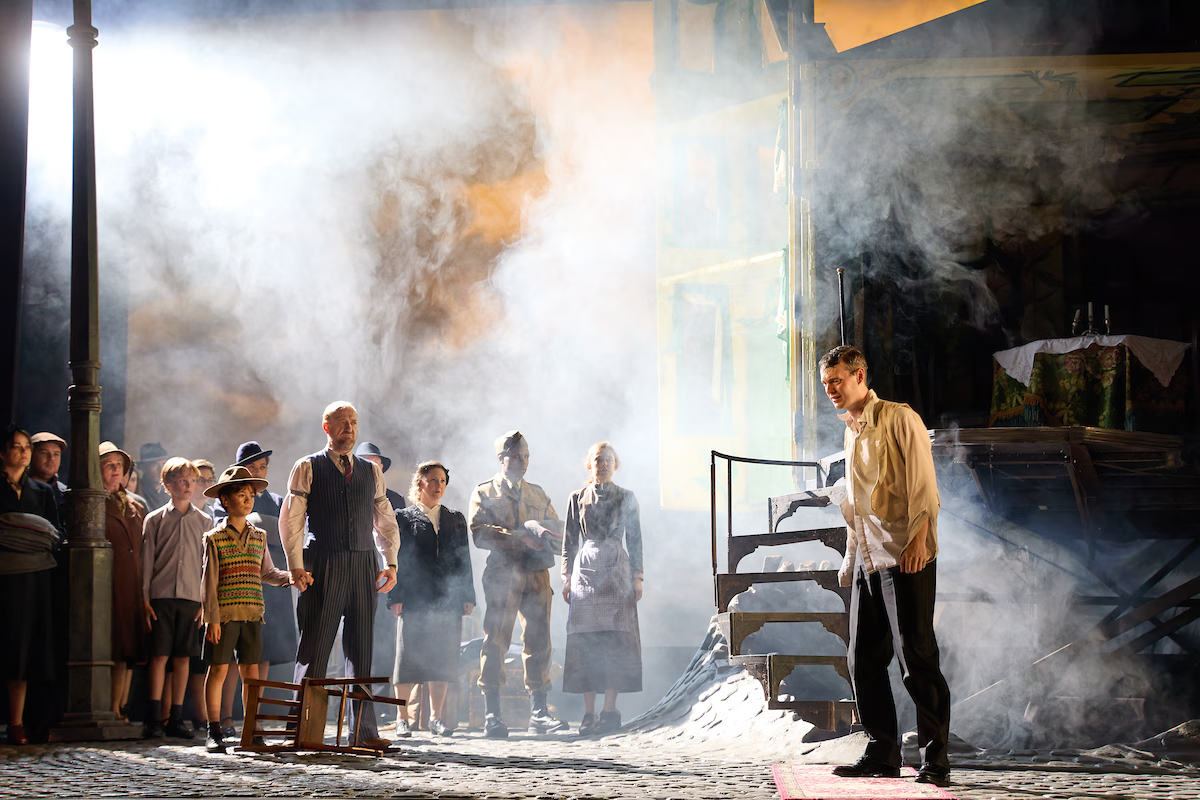
The cast communicated the powerful nature of this play really well.  Tim Treloar was excellent as the inspector and Leona Allen striking as Sheila.  However, in a play with much confrontation there were times when dialogue was lost as people spoke very quickly and the music while adding drama to the action could be too loud.  The set was effective, with the dining room of the family set above the stage.  When the family realises they will be disgraced by their callous treatment of Eva, the room collapses.  There is attention to detail.  When Mrs Birling walks from her house, a carpet is rolled out for her to walk on.  

The play has several layers of meaning, some obvious, others more subtle.  The most striking point is that we belong to a society and have a duty of care to a greater or lesser extent for each other.  A laudable ambition which is undermined by an inherent selfishness that we all seem to possess.  Less apparent is how the play attacks the hypocrisy of Victorian and Edwardian society and its attendant class system.  As the song “All things bright and beautiful” illustrates, ‘the rich man in his castle, the poor man at his gate’, a structure ordained by God.  Priestley’s socialist views reacted strongly against this idea.  

The play is regarded as a drawing room drama, and as such, it has waxed and wained in popularity as presentation fashions have changed in time.  However, the play has an enduring appeal and is a timely reminder of our sense of common humanity.  It is of course a hard hitting call to conscience to be mindful of the less privileged in society and ensure that they can access a decent lifestyle.  It may not be comfortable viewing, but it is compelling theatre with a highly pertinent point to make in our increasingly materialistic society.

Review: The Rocky Horror Show, Venue Cymru, Llandudno by Richard Evans

Venue Cymru, Llandudno, March 3rd – 8th 2025 and touring

 out of 5 stars (4.5 / 5)

Howard Panter for Trafalgar Theatre Productions, Mallory Factor for Hill Street Productions and Rupert Gavin

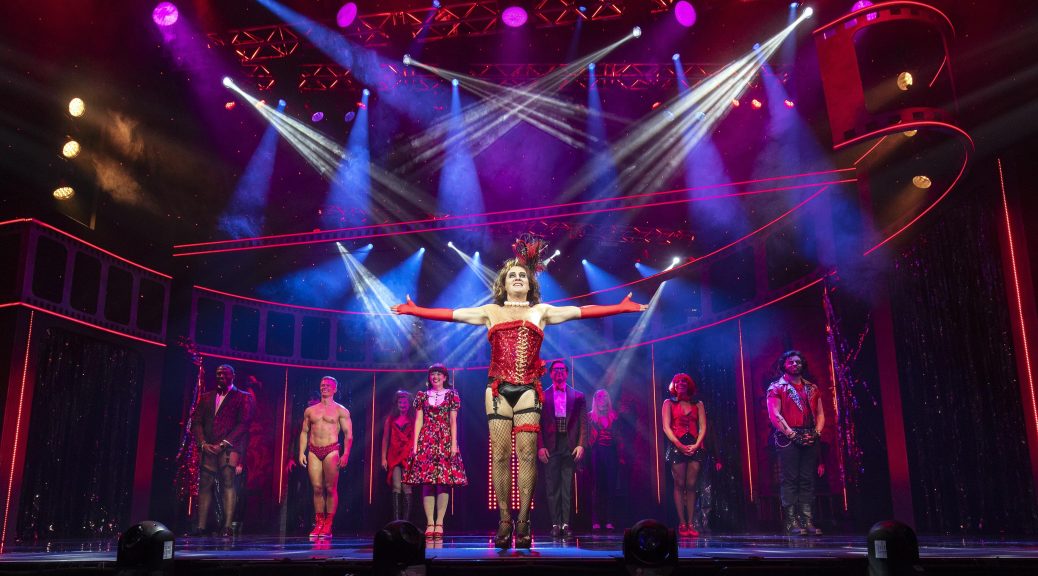
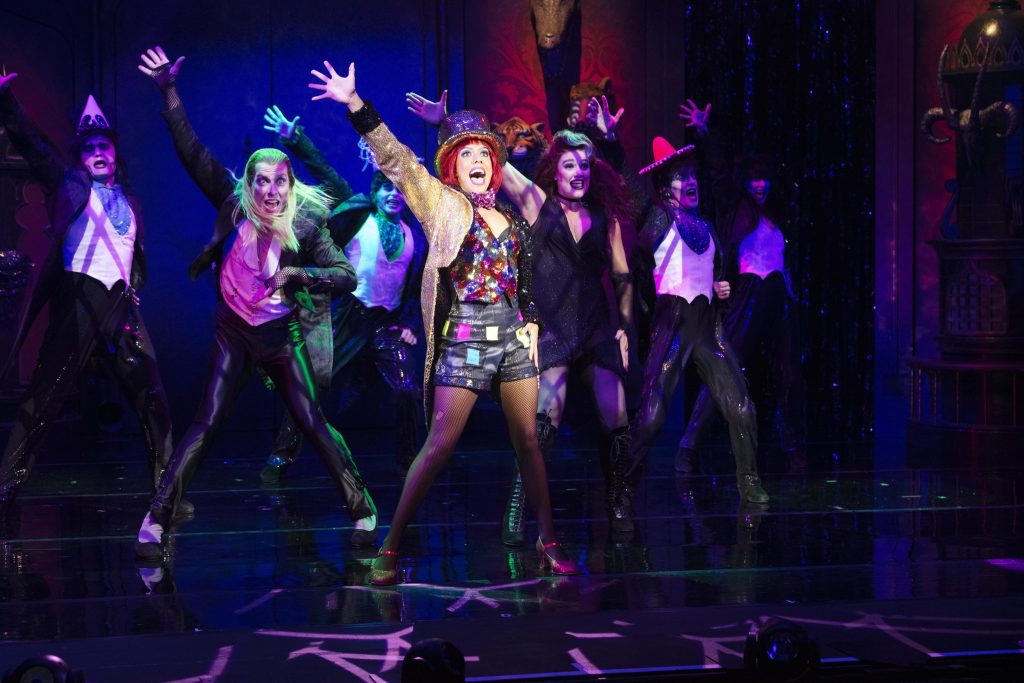
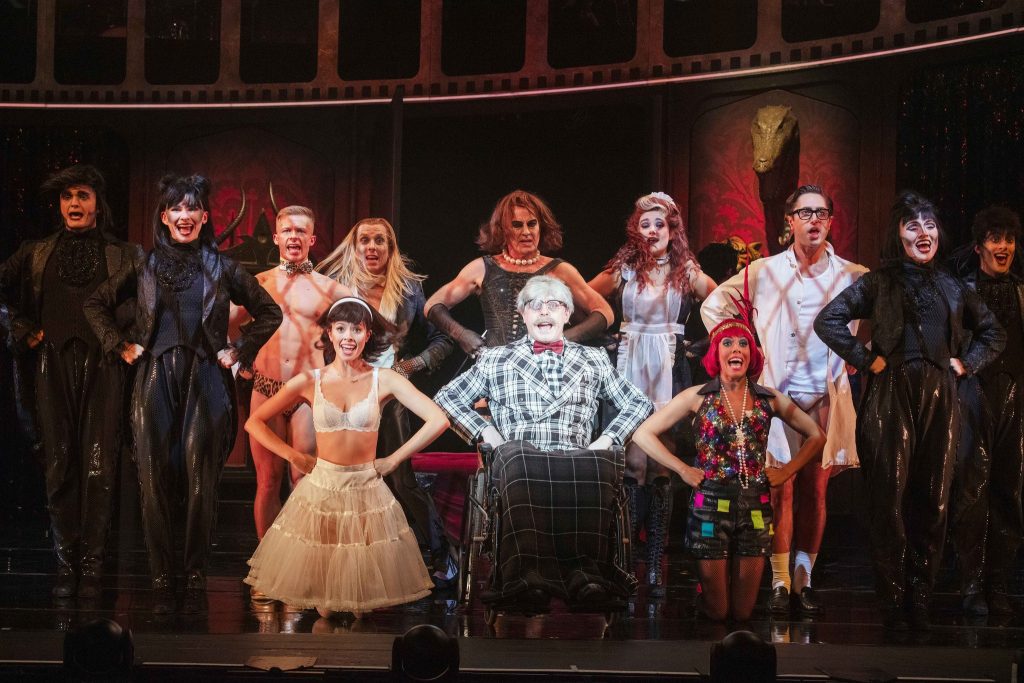
The Rocky Horror Show has come a long way since it debuted upstairs in the Royal Court theatre in a 10.30 showing in an auditorium seating 60 people.  What is it about the show that gives it a lasting appeal?  Certainly there is a prevailing sense of fun throughout and the music is upbeat and energetic with the signature song, Time Warp having a timeless appeal.  However it is the subversive nature of the story that has seen the show gain its cult following. 

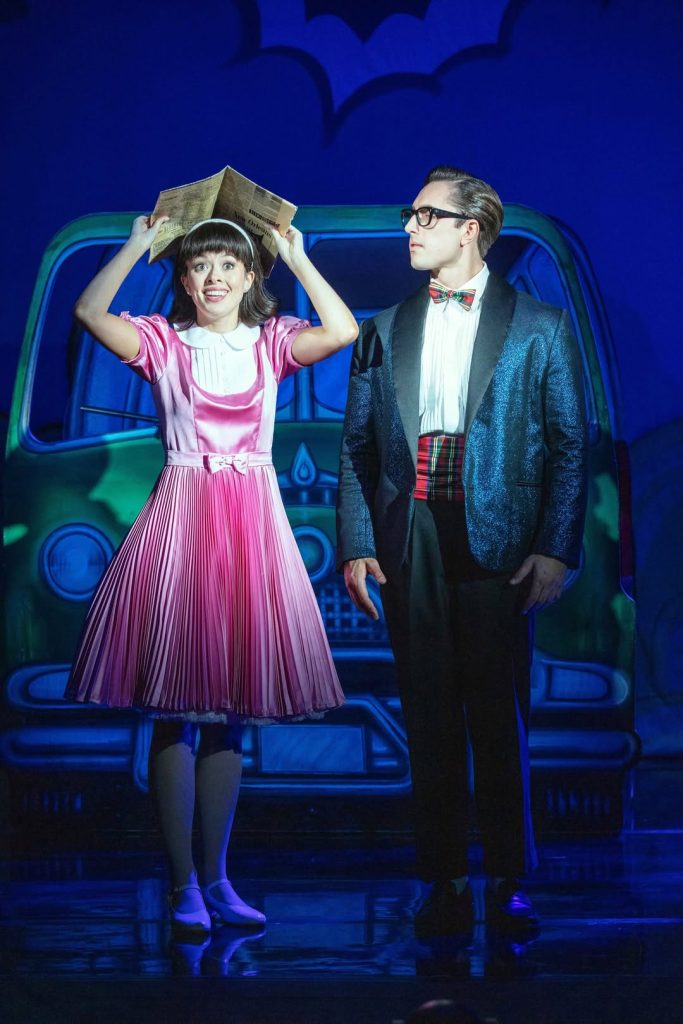
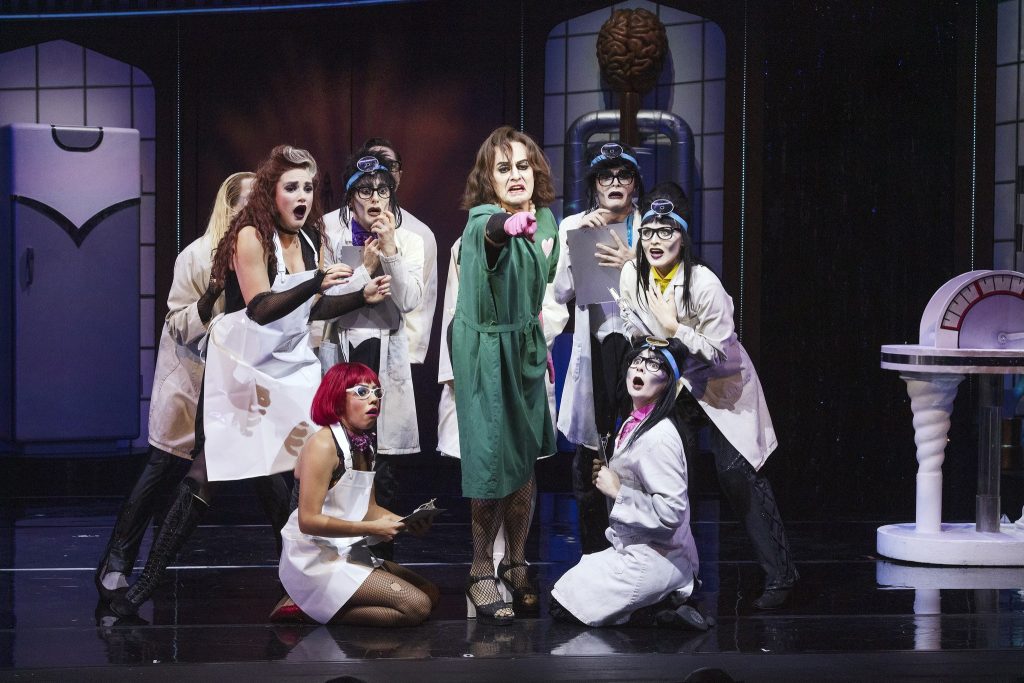
The storyline in one sense is a sideline.  It was never meant to be profound, rather it was a spoof on a long line of 1950’s B-movies that had a sci-fi theme.  A sweet couple having just got engaged break down in their car and seek help from Frank n Furters castle in the distance.  There they enter an alternative reality that shakes their perception of normality to the core.  Of course some of the inhabitants are aliens who take revenge on Frank n Furter who is guilty of having a profligate lifestyle and betraying some of his loyal servants. 

The cast were well drilled, enthusiastic and energetic.  Adam Strong as Frank n Furter was suitably commanding and was ably supported by the sinister Job Greuter as Riff Raff and the ebullient Jayme-Lee Zanoncelli as Columbia.  The choreography was slick and well rehearsed while the set was simple, adaptable and effective.   

The show is narrated by Joe McFadden who was excellent in dealing with the interruptions from the audience.  These have obviously become part of the tradition of the show as they were not only tolerated but expected.  Some of these were funny, sometimes the interruptions were intrusive.  Either way, McFadden handled them well

First produced in 1973, the play picks up on the attitudes that exploded in Britain with the advent of the permissive society.  This was the era of glam rock where people played around with traditional male and female norms and were less afraid of being openly indulgent in their sexual appetites.  To quote, ‘Give yourself over to absolute pleasure’.  Can people really do that without consequence?

Writer Richard O’Brien never expected it to last but shortly after it bombed on Broadway for not being high brow enough, he heard that it was getting cult following on campuses across the USA where students were attending a performance in costume.  A new trend was formed that allowed those of us who were normally constrained by their career driven, family orientated lifestyles could throw off those shackles and go wild for the evening.  

Now that the show is over 50 years old, does it retain its cutting edge?  It is still subversive but has to be slightly more explicit to give that shock factor.  There is also a disconnect.  Having started off with such humble origins, the glitz and glamour of a West End style show seems slightly out of place.  However, that does not detract from what remains a fun filled, light hearted and still slightly shocking show.

Review: Swan Lake, Imperial Classic Ballet, Venue Cymru, Llandudno by Richard Evans

Venue Cymru, Llandudno, October 18th 2024 and touring

 out of 5 stars (4.5 / 5)

An Imperial Classic Ballet production. Ballet Artistic Director – Katsiaryna Fadzeyeva, Conductor – Nikita Suhik, Concertmaster – Polina Chaika.

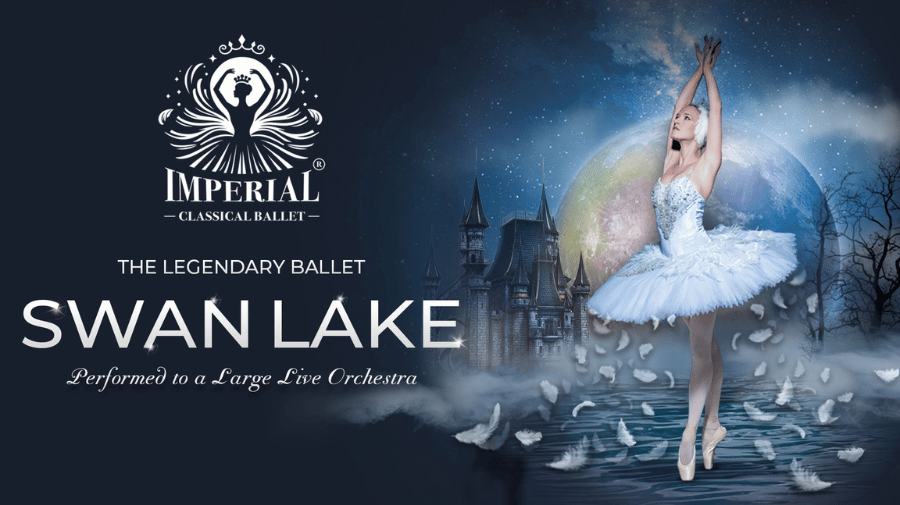
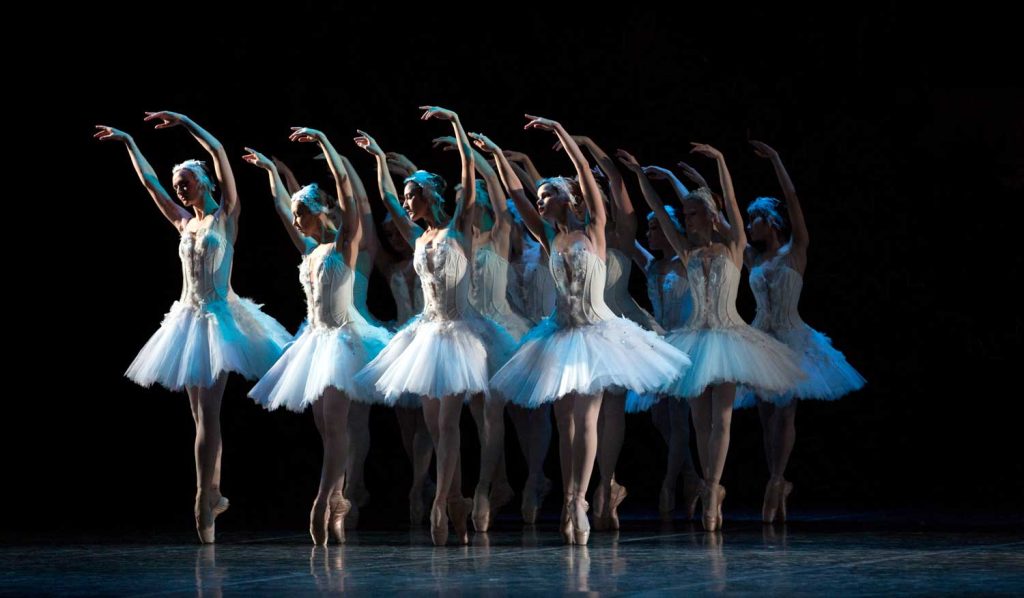
Swan Lake, a timeless story that became the standard for classical ballet and redefined the genre.  Would this production continue to entrance the audience as much as the ballet has since its first presentation?

The libretto is well known and at its heart is a love story.  Prince Siegfried is disappointed at his birthday celebration that no suitable bride is presented to him.  After, while hunting he sees some swans by the lake.  He is entranced by the white swan, Odette who insists that she and the other swans are human and have been put under a spell by the evil magician, Rothbart that can only be broken by everlasting love.  In Act 2, the Prince has to choose his bride and eventually sees Odile, Rothbarts daughter and sees an uncanny resemblance to Odette.  In the heat of celebration he confesses his love for Odile, breaking his vow to Odette who watches on from the window.  Once he realises, the Prince returns to the lake to see the grief stricken swans.  He begs forgiveness of Odette and declares his love.  Rothbart challenges him, but love prevails.  

The ballet tugs at the heartstrings throughout taking you through a range of emotions from joy to grief.  This is enabled by Pyotr Tchaikovsky’s moving score.  He pioneered the use of leitmotifs, snatches of music that are assigned to a character and repeated when they appear on stage.  Musically it is challenging.  On speaking to the first violinist she commented that Tchaikovsky composed on a piano, having five fingers available while the violinist has only got four, the thumb being used as a grip.  The orchestra proved the point that dance and music are natural extensions of each other and portrayed the emotions in the ballet really well.  

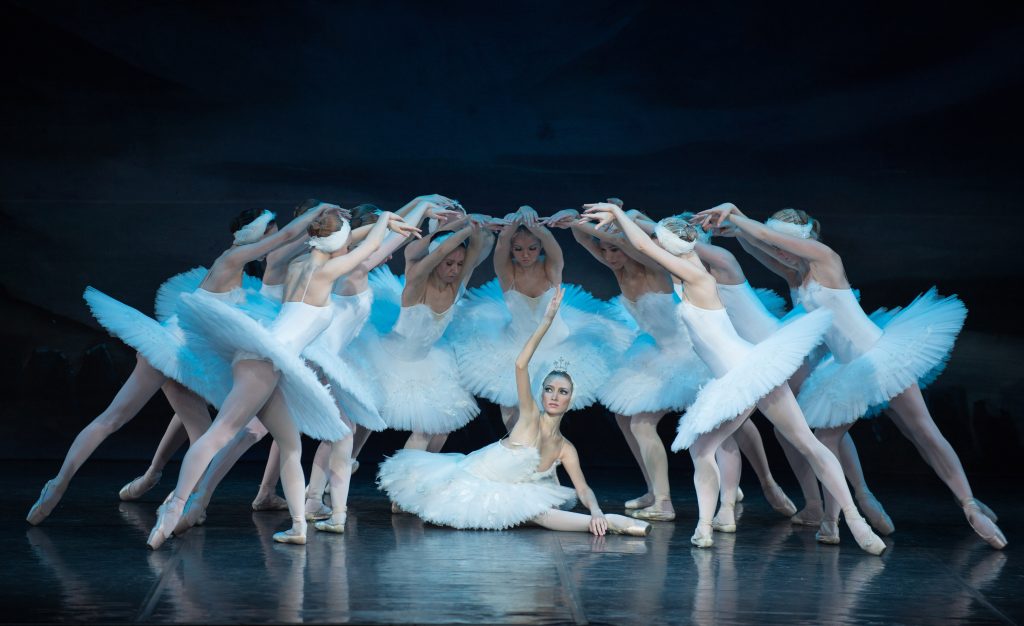
To perform Swan Lake is difficult, comparable to Sleeping Beauty in its complexity, yet the lead roles are compelling for any aspiring dancer.  There were a series of tableaux illustrating the skills of the dancers which provided ample evidence that ballet makes extremely difficult manoeuvres look effortless.  The part of Odile/Odette is particularly challenging both technically and emotionally yet illustrated that the movement of the human body can be beautiful as it combines grace, poise and strength.  This performance did not disappoint, yet again this dance proved to be compelling viewing  

The ballet troupe and orchestra, in the midst of a gruelling schedule for their national tour were enthusiastic and committed tonight, although my impression is that the emphasis in this production is on demonstrating prowess rather than storytelling. However, this did not spoil what was an excellent and thoroughly recommended evenings entertainment.  

Review: Come from Away, Venue Cymru by Richard Evans

Venue Cymru, Llandudno July 30th – Aug 4th 2024 and touring

 out of 5 stars (5 / 5)
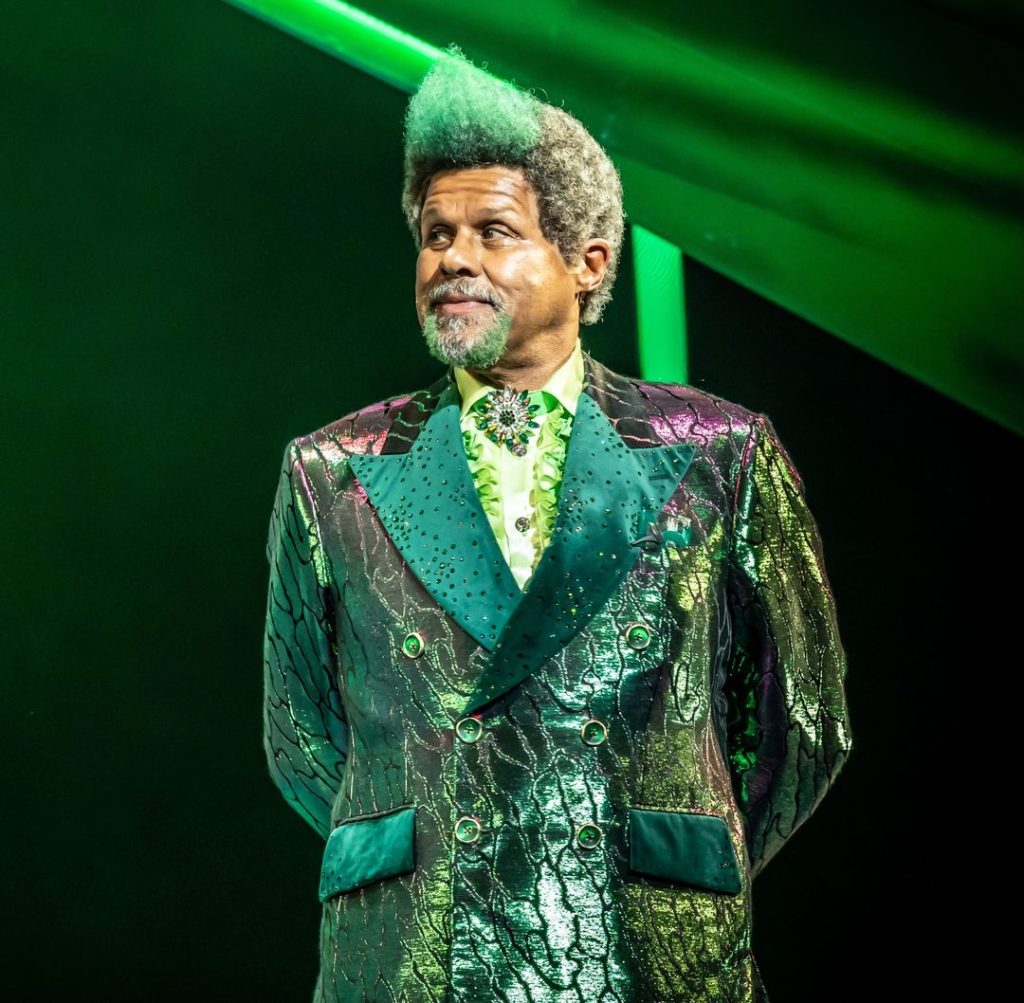
Irene Sankoff and David Hein

Smith & Brant Theatricals, Red Hanger, Gavin Kalin Productions, Tulchin Bartner Productions, Echo Lake Entertainment, Square Peg, Stephen and Paula Reynolds, Fiery Dragons, Judith Ann Abrams/Peter May, Nancy Gibbs, Curve Leicester

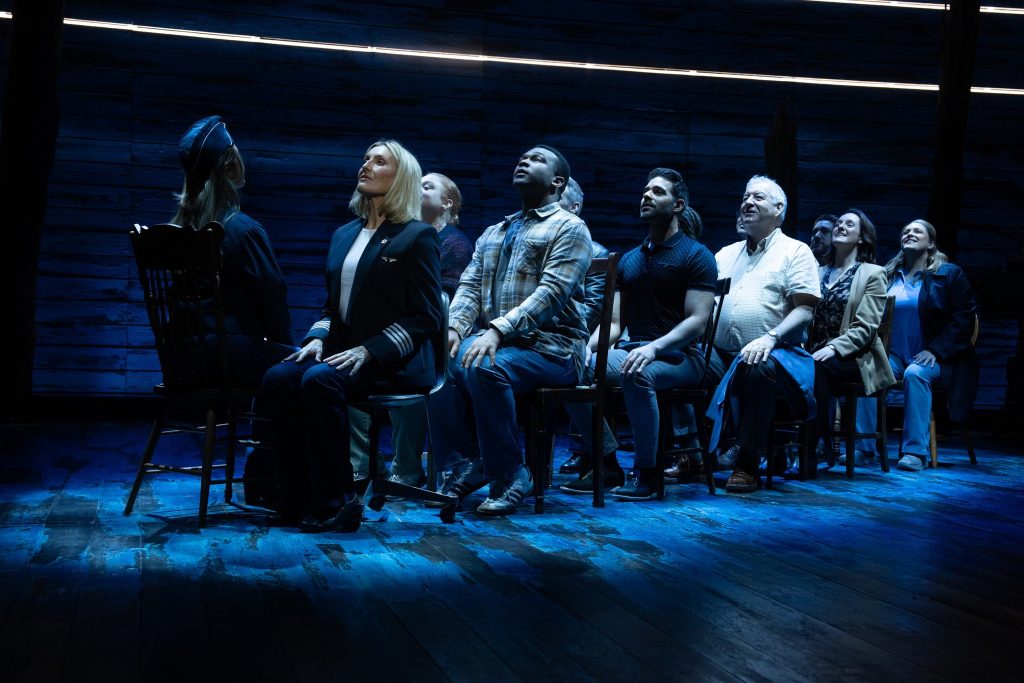
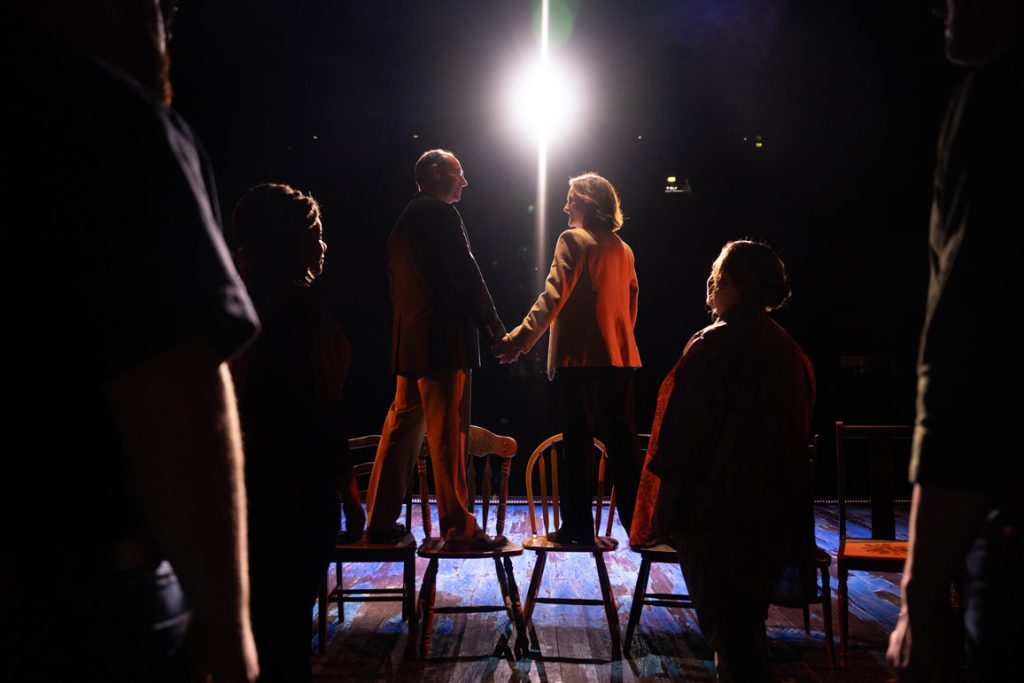
Come from away documents a remarkable experience.  As the tragedy of 9/11 unfolded and American airspace was closed, many planes had to make unscheduled landings in far flung places.  38 of them landed at Gander airport, Newfoundland.  

With a population of about 9000, the local community found themselves hosting 7000 unexpected incomers with a range of different languages, customs, medical and dietary needs.  There were also 19 animals including a pregnant bonobo ape.  This was a refugee scenario where the hosts were entirely unprepared.  The days that followed demonstrated the best in human qualities.  Food was drummed up, beds found, activities were organised such that lasting friendships were formed that have been sustained to this day.   

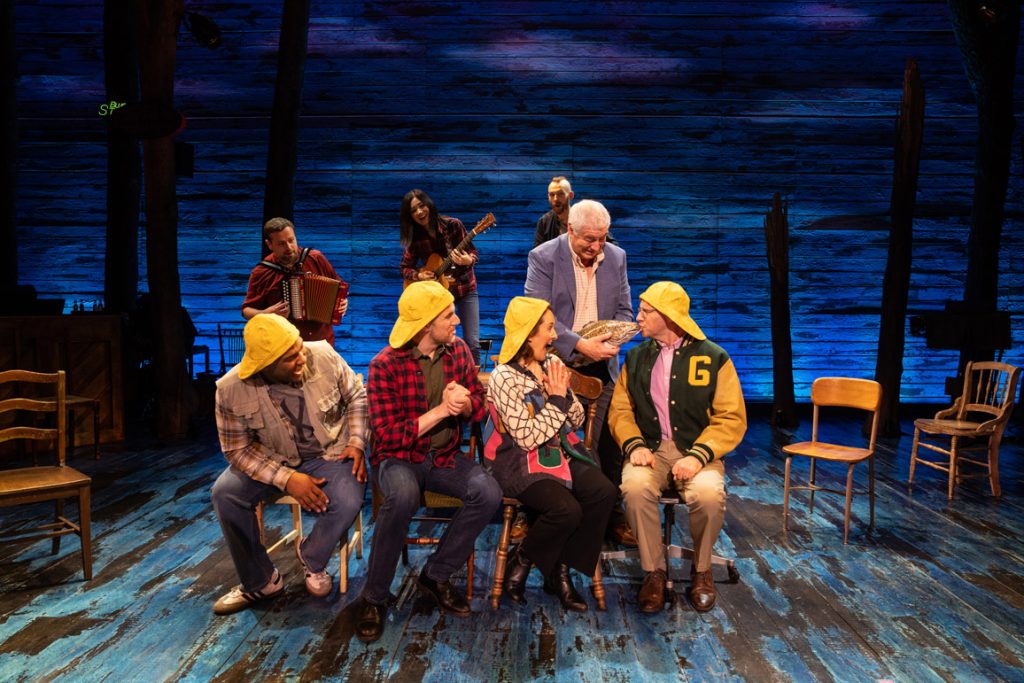
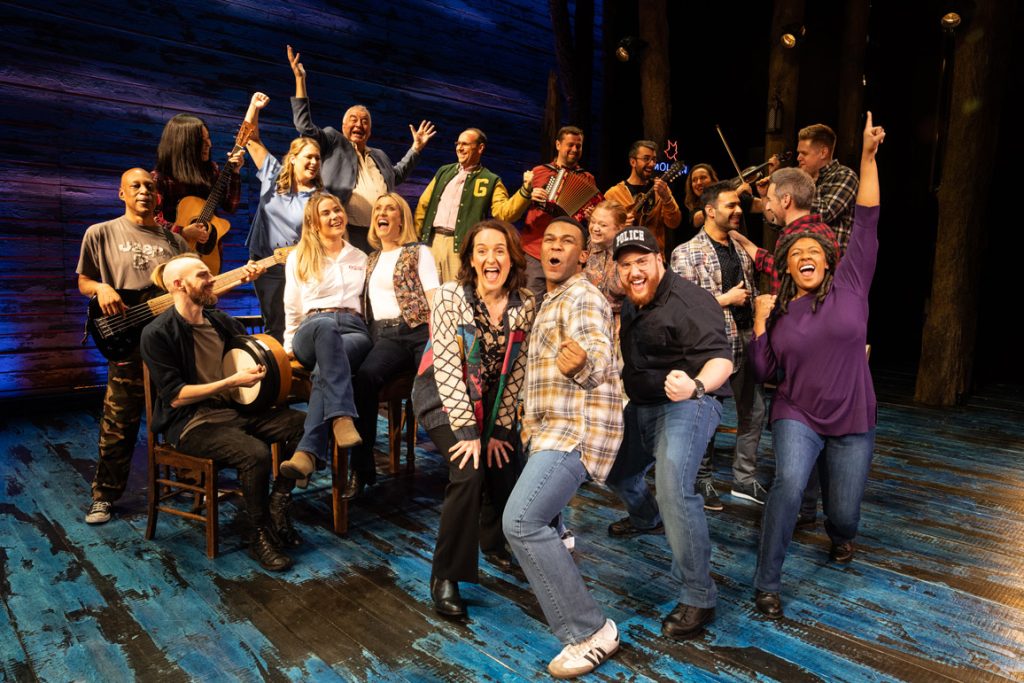
Would the stage be the best place to retell these events or would a film be better?  On the evidence of this performance, the energy and immediacy of the stage is a great platform and the cast exploited this story in excellent fashion.  It was a prime example of ensemble theatre, a close knit team working together in a fast moving, intense drama.  Actors do an outstanding job as they switch roles from hosts to incomers seamlessly and retell these events and their aftermath.  There is a great backing group playing a range of Irish-Canadian melodies to enhance the action. 

The individual stories invoke a range of emotions when you hear them.  Diane and Nick were on the same plane, met and the following year got married.  Hannah was worried for her son, a firefighter in Brooklyn yet was comforted by Beulah who also had a firefighting son.  It is in the minutiae that the poignant moments rest.  A moment when a Christian song, a Muslim chant and a Jewish incantation are heard as people pray, emphasising the importance of faith in coming to terms with life experience.  A scene where an older gentleman reveals to a Jewish rabbi that he had a hidden Jewish background dating from his early life in Poland.  Two people communicating through the use of Bible references to encourage each other when they had no shared language.   

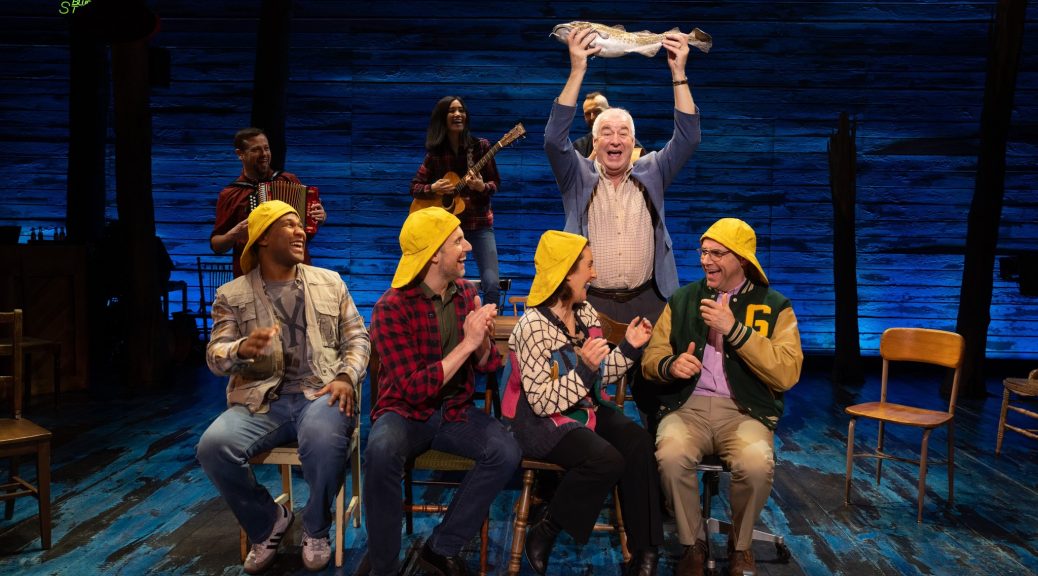
The welcoming nature of this Canadian-Irish community is graphically shown in the ceilidh held one night.  It saw some visitors inducted as honorary Newfoundlanders through ‘screeching in’, drinking a shot of Irish whiskey and kissing a fish, a custom used to welcome new cast members to the show.  This to me is an enduring legacy of a must-see show, the power of community.  Had this town not been as tight nit and warm in its embrace, the experience of the incomers might have been quite different.  As it is, they felt an immense debt of gratitude but in attempting to express this, received a standard response, ‘It was nothing, anyone else would have done the same.’  It was not nothing, it was remarkable.  This makes the show a privilege to watch.  

Review: Jesus Christ Superstar by Richard Evans

Venue Cymru, Llandudno July 1st – 6th 2024 and touring

 out of 5 stars (4 / 5)

David Ian for Crossroads and Work Light Productions with Nederlander Producing Co. UK with Michael Watt presenting the Regents Park Open Air Theatre Production

Lyrics by Tim Rice and Music by Andrew Lloyd Webber

What’s the fuss? Tell me what is happening.  

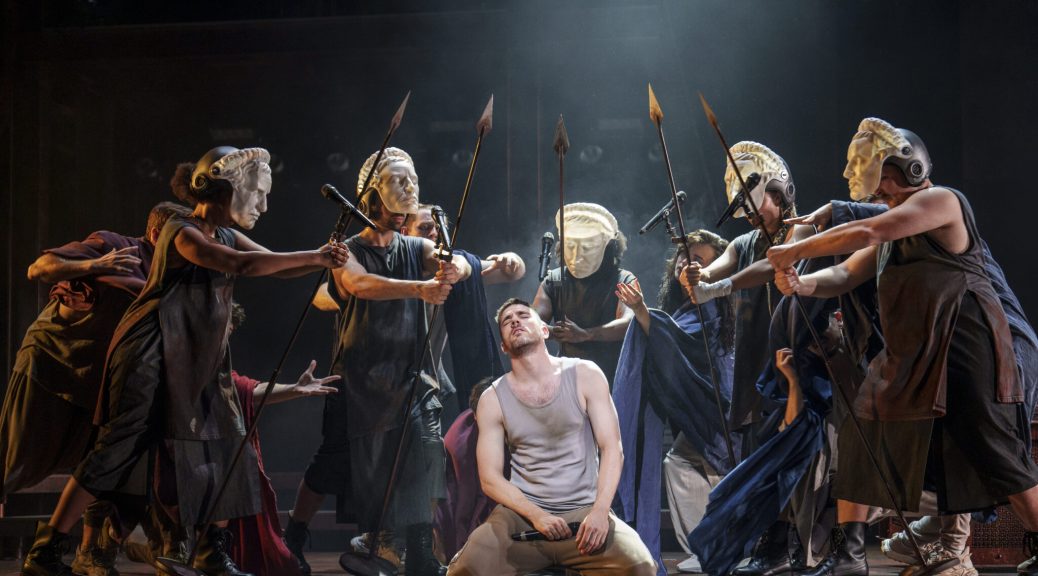
Telling the story of the last week of the life of Jesus through the eyes of Judas was an original, imaginative idea when this musical was first produced in the early 1970’s.  Would this staging of Regents Park Open Air Theatre’s revival recapture that early promise?  Owing to the nature of this story, this would be a near certainty.  To recreate the crucifixion of Jesus on stage, if done well, can not fail to be dramatic and this production adds plenty of imagination to this already thought provoking musical. 

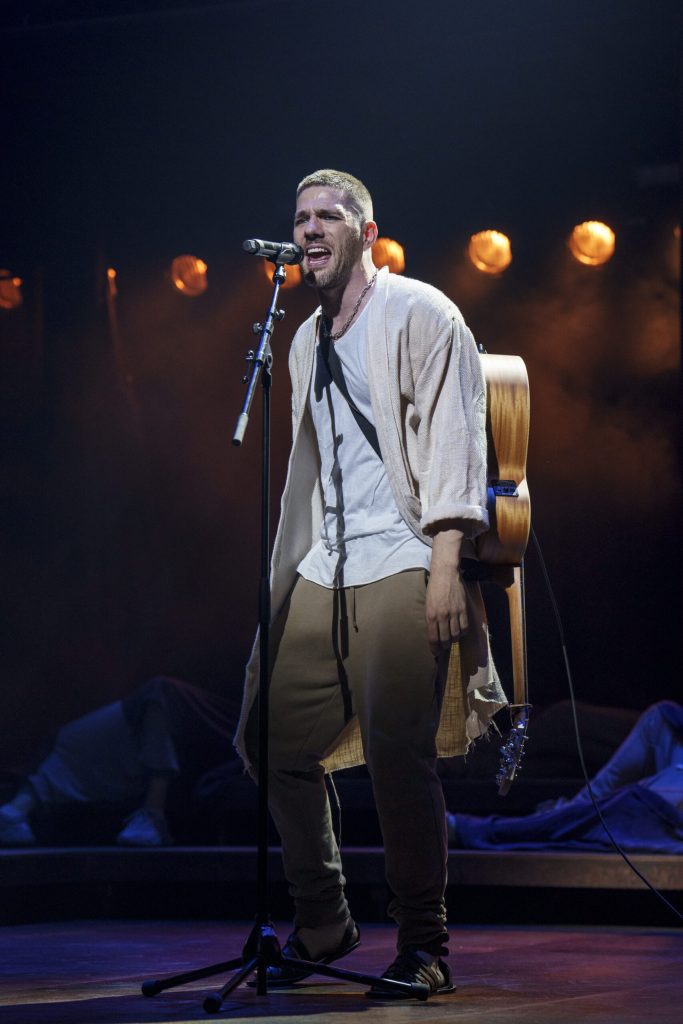
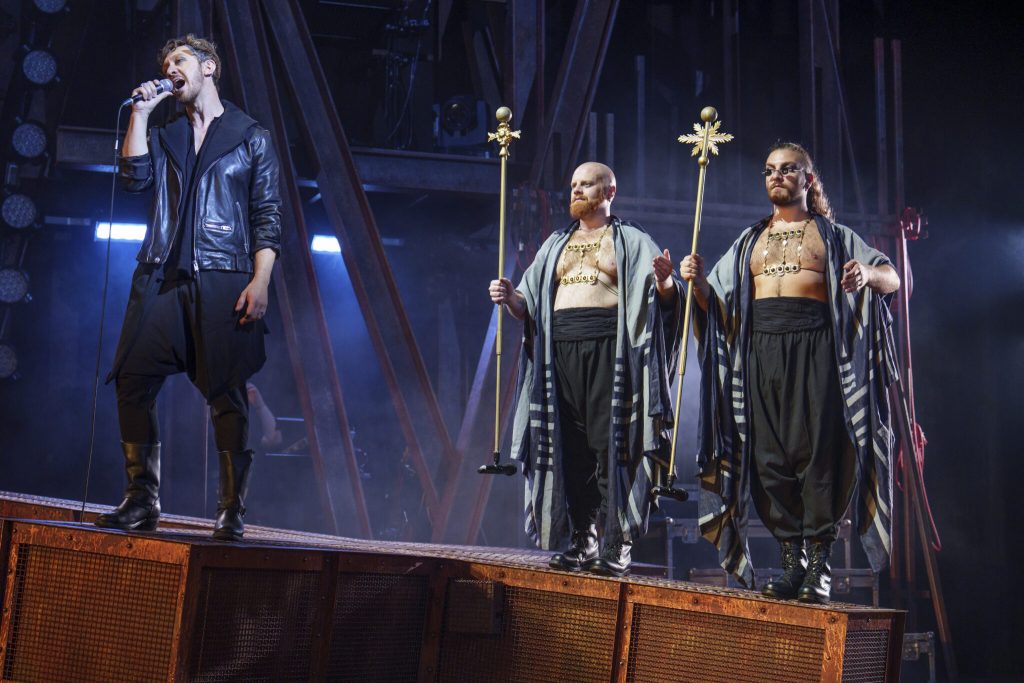
The cast attacked this story with elan, Luke Street who played Judas in this performance was suitably moody and filled with angst.  The moment when he took the payment for his betrayal was done very well.  Ian McIntosh as Jesus grew into his role and provided some stand out moments especially as he was praying in the Garden of Gethsemane shortly before his arrest.  Strangely though, Jesus is portrayed as a vulnerable man who is struggling to come to terms with his fate throughout the play.  However, aside from his episode in Gethsemane, Jesus was in control and walked knowingly towards his fate, scathing to those who attempted to deflect him.  

The choreography was well planned, purposeful and added to the drama.  The set put the cross at the centre of the production, although it was odd that the chief priests walked on an instrument of torture that in Biblical times was a symbol of being cursed.  They would have been ritually pure therefore would never knowingly touch such an instrument of death.

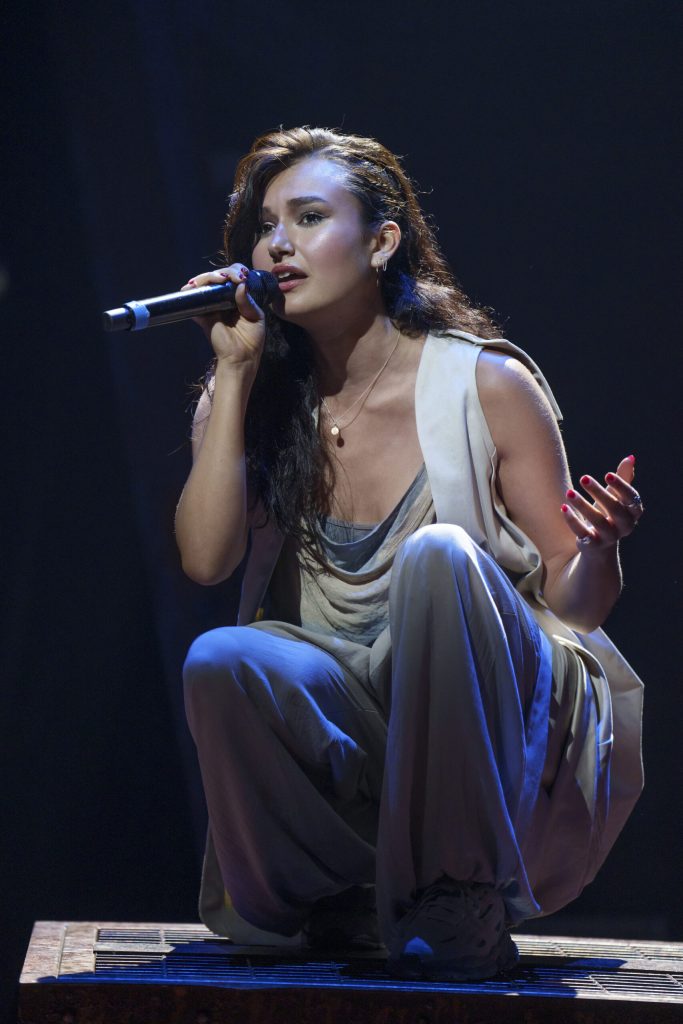
The musical is stuck in a time warp to some extent, the music and lyrics resonant of the early 1970’s and since then some of the stories concerning Jesus are less well known.  It would help to have a good working knowledge of these biblical events.  However, it was great to hear this score once again as some of the songs have become favourites for many.  Hannah Richardsons rendition of ‘I don’t know how to love him’ and ‘Everything’s alright’ were beautiful.   

It is easy to see the play is not without its problems including the logical flaw in its premise.  Telling the story through Judas’ eyes is an intriguing idea, but of course, he was not around to see the crucifixion having already killed himself.  He is the side story.  The power in this story is not the actions of Judas, but what happened to Jesus.  Even then, crucifixion in itself is not significant.  It  is just another, particularly grisly form of execution.  One Roman commander crucified 500 people in one day.  He would have killed more but ran out of wood.  It is the death of Jesus that is significant and it is what happened to, and about Jesus after his death that makes this any story at all.  To give Judas a sort of equal billing as Jesus after their death, sitting down together in the afterlife as the last scene depicted seems very strange.  

However, we should not let factual relevance get in the way of a good story and this remains a striking piece of theatre that brings more awareness of the death of Jesus to the general public.  While it may not be doctrinally sound to those who profess faith, it avoids being offensive as some other plays or films have been.  The first time I saw the play if became a memorable experience.  This too will stay in the memory for a while.

Review: The Wizard of Oz, Venue Cymru by Richard Evans

Venue Cymru, Llandudno March 5th – 9th 2024, Wales Millennium Centre, Cardiff July 23-28th and touring

 out of 5 stars (4.5 / 5)
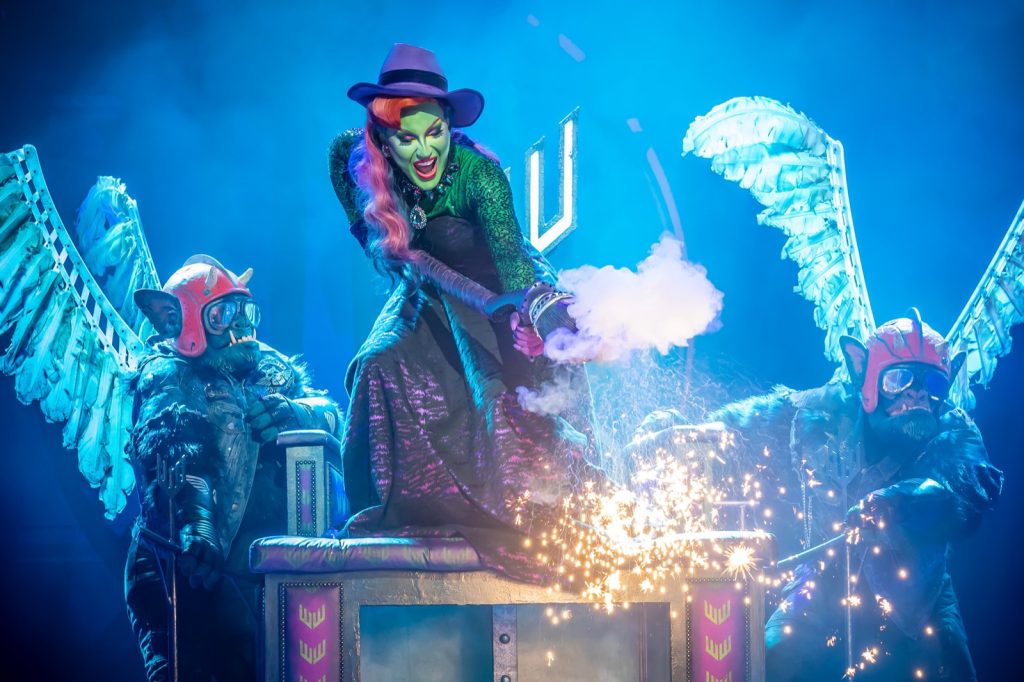
Produced by Michael Harrison and Gavin Karin Productions. By arrangement with the Really Useful Group Limited. Adapted by Andrew Lloyd Weber from the 1939 Motion Picture.  Book by L. Frank Baum

Somewhere over the rainbow… in a land that I heard of once in a lullaby

Why has this film and subsequent musical retained its attraction?  In the preface to his book, L. Frank Baum describes the book as a modernised fairy tale in which the wonderment and joy are retained and the heartaches and nightmares are left out.  It is this fantasy and escapism that has proved enduring, for the same reason, Star Wars has retained its appeal. 

The storyline starts with a petulant Dorothy who feels a common teen angst where she feels neglected.  On running away, she is transported to a fantasy land and seen as a hero for accidentally killing the wicked witch of the east.  She then embarks on a journey to Oz, to see the wizard and gain the means to go home.  She encounters various characters and makes firm friends with the brainless scarecrow, heartless tin man and cowardly lion.  In order to earn her passage home and to find respectively a brain, a heart and some courage, the intrepid four are sent on an arduous task, to bring the broomstick to the wizard of the wicked witch of the west.  

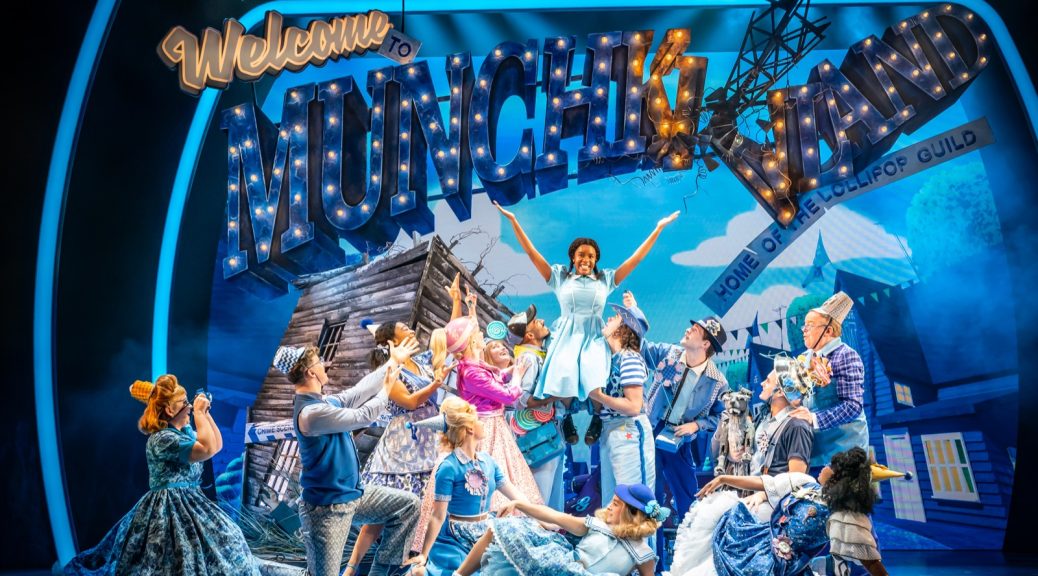
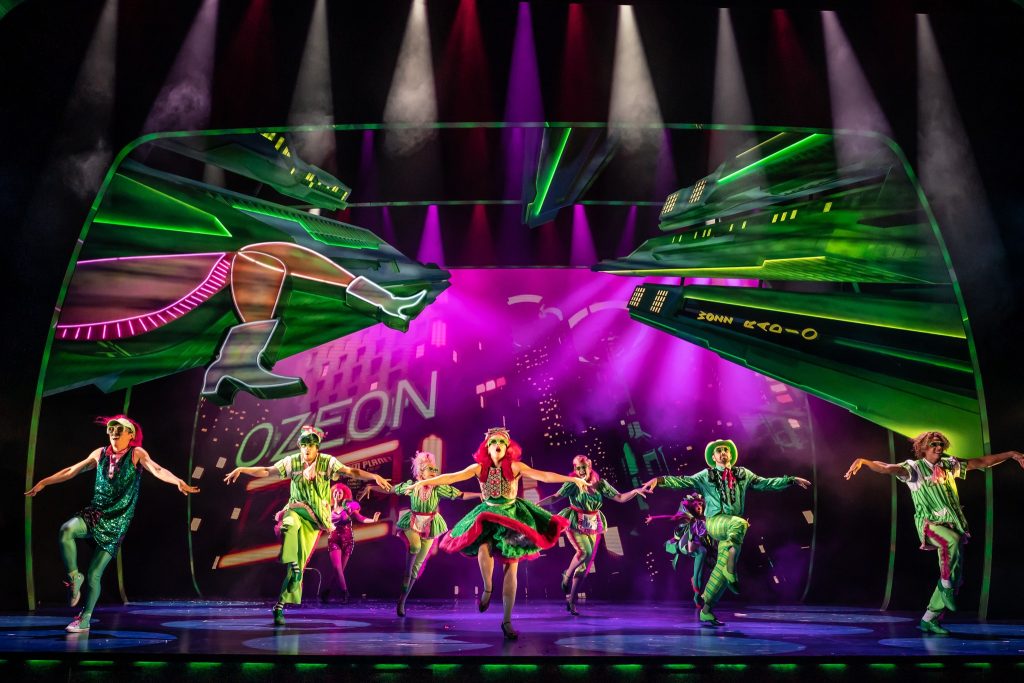
This story is well known and ranks among many peoples favourites so it is a challenge to bring it to the stage once again in a fresh way.  This production adds a bit of glitz and glamour to do this, the props are minimalistic, but the music and video backdrop add plenty of pizazz to proceedings. Some of the visuals are stunning, notably the tornado scene which was highly effective, and in general they are used imaginatively to set the scene and augment the action.  

The cast have a couple of celebrity names, Gary Wilmot gives an assured performance as Professor Marvel and the Wizard while The Vivienne, winner of the first series of Ru Paul’s drag race makes a threatening, devious Wicked Witch of the West.  However, the show is carried by Dorothy, played by Aviva Tulley.  She made ‘Somewhere over the rainbow’, the signature song, her own and was a lively presence throughout.  The supporting cast were energetic and committed, making this a fast paced, joyful experience.  

The musical is faithful to the original story and incorporates most of the favourite songs from the 1939 film as well as some more contemporary numbers from its recent revival.  However, the production lacks the simplicity and innocence of the film, replacing it with the loud score and striking visuals.  Does is loose some of its allure in this process?  

There is plenty of enduring meaning here, not least, your heart, brain and courage are latent inside you.  Dorothy learns to appreciate home when she understands what she is missing.  But it is in joyful escapism that this story comes to life.  It is a colourful interlude from the mundane, gritty reality of life.  This may explain its appeal to marginalised groups in our society but there is enough here for anyone to identify with and makes this a warm, feel good experience that is well worth seeing.