

Category Archives: Uncategorized

REVIEW: BOTTOM at The other Room by Gareth Ford-Elliott

 out of 5 stars (5 / 5)

Bottom is an auto-biographical play about Willy Hudson, a queer man exploring the overriding questions of, what it is to be a “bottom” or a “top”, why does it matter and whether “bottom” in bed means bottom in life?

It’s a coming-of-age story, a queer story, a gay story, a story about insecurity in many forms, about relationships and ultimately, a classic love-story. But really, who needs labels when you’ve got substance? And Bottom has substance in bucket loads.

Willy takes us on his quest for love from the moment he came out to the morning after his first sober date. He’s awaiting a text from his date which triggers him to explore various aspects of his life and why this text, as opposed to the others, is so important.

Before this, Willy has been partying and sleeping around, as a bottom, for his entire sexual maturity, if he’s not been at home masturbating. This is the first time he’s felt a connection and the first time he’s not needed drugs or alcohol. But there are problems, the dinner he cooked was burned, he couldn’t ‘get it up’, he hid in his bathroom and they didn’t have sex.

As the play develops, in its non-linear pattern, we learn about Willy’s sexual history – but what we’re really doing is understanding his quest for love. Willy isn’t looking for sex, but that is what he’s been taught, so that is what he gets.

Willy Hudson immediately establishes a relationship with the audience from the moment he enters wearing only a towel, looking for his clothes which are hidden underneath our chairs.

Hudson’s performance is honest, he feels like himself, it barely comes across as acting. It feels as only Willy could have played this part. Hudson deals with his past emotions critically and delivers a brilliant performance, channeling his inner Sasha Fierce.

Hudson’s honesty and self-reflection leads into his writing too, which is carefully constructed into a brilliant non-linear plot. This allows Hudson to stay true to his story, whilst also telling a theatrically intriguing story. The writing is beautiful, honest, well-structured and funny. There’s no way you’d guess this is Hudson’s debut as a playwright.

Director, Rachel Lemon, admits this was a hard show to direct, in the post-show Q&A. Hard because it’s so truthful to Willy, there were times where the best artistic choice changed Willy’s story somewhat. But, Lemon does a good job of maintaining a strong piece of theatre whilst telling Willy’s truth.

It is chaotic at times, Willy jumping all over the place with his non-linear plot. That chaos however is representative of Willy’s life in the story, so it works brilliantly, and Lemon’s direction ensures this succeeds.

Tic Ashfield’s sound design compliments the play perfectly. I’m no Beyoncé fan (sorry Willy, I prefer Rihanna), but the music choices are brilliant and are exploited at the right times for emotional effect. The inclusion of Beyoncé isn’t a weird gimmick that Hudson throws in as a fan, which was the worry going in. It fits.

You’ll do well to see a more important and relevant play than Bottom in Wales this year. Hudson doesn’t fall into the trap of negativity that surrounds so much LGBTQ+ theatre and media generally. He spoke about the importance of positive LGBTQ+ stories and how it was important to him that this was positive, in the post-show Q&A.

Yet, Hudson doesn’t shy away from tough topics and critiquing aspects gay culture either. He also speaks about fears of backlash that he’s seen other shows get. But says that at the end of the day, “it’s just a story and it is my truth.”

Not only for the LGBTQ+ community though, Bottom should be celebrated by everyone. In a time when the government are forcing a debate about the education of LGBTQ+ relationships, this couldn’t be more relevant or important. You could do a lot worse than take your kids to see this production. It is a play I needed to see at fourteen or fifteen and is equally important now.

It’s an educational piece, but not supposed to be. It doesn’t aim to teach, it’s just a story. This fact is just a reflection of where we’re at as a society.

I have personally never related so much to a piece of theatre. Yet, I’m not LGBTQ+. Hudson tells a human story, where the protagonist happens to be queer. He doesn’t simplify it to labels, he explores the human behind the labels within LGBTQ+ and wider society. This is so powerful and something we need more of.

Bottom it is a heartfelt, honest, funny and thought-provoking exploration of gay relationships in modern Britain. Miss it at your own risk.

Bottom is part of The Other Room’s ‘Spring Fringe’ curated spring season. One of eight shows coming to Cardiff’s only pub theatre over eight weeks. Tickets can be found HERE.

BOTTOM at The Other Room, Cardiff
27th – 30th March 2019
Written, Performed and Produced by Willy Hudson
Directed and Produced by Rachel Lemon
Sound Design: Tic Ashfield
Movement Director: Jess Tucker Boyd
Lighting Design: Lucy Adams
Line Producer: Sofia Stephanou
Dramaturg: Bryony Kimmings
Graphic Design: Jimmy Ginn
Photographer: Joe Magowan
Videographer: Tristan Bell

REVIEW: TURBINES at RWCMD by Gareth Ford-Elliott

 out of 5 stars (1 / 5)

Turbines by Sarah
McDonald Hughes follows six students (aged around 15-16) in a unit-classroom as
they deal with the stabbing of a schoolmate. This leads to Mia stabbing her
teacher in the first scene as the play attempts to explain why this happened,
exploring who these young people are.

The play suffers from the use of stereotypical characters who
possess little depth and writing that feels lazy. As though
students are chucked in a unit and that will justify the stabbing, but it doesn’t.
Even within their backstories, their presence in the unit is not justified.

As it is, the play feels it would be more interesting placed
in a standard classroom as the play currently comes across as a series of events
that are mostly irrelevant or insignificant, particularly given the moral
protection of the unit.

The flow is constantly interrupted, and it moves too fast
without allowing time to explore the characters. There are a few breaks that offer
potential such as Tina’s boyfriend breaking up with her or a flashback to the
start of Mia and Grace’s early friendship. But even these scenes show very
little emotional intrigue.

There is no overriding story, really, besides the two
stabbings. The backstories cover most of the play, but these are stereotypical.
Parents who argue, a young pregnancy, an ill mother, and so on. These
backstories are not unique, offer little significance and just when you’re
expecting something to tie it all together, they look at some turbines, say
they feel calm, and nothing happens.

Moving onto the turbines, the title of the play and the key
piece of symbolism provided. Trying my hardest to drag something out of this, I
would say that the turbines are meant to represent serenity and persistence in a
tough environment. A symbol that allows the students to express. The rotation
of the blades also possibly referring back to the cyclical nature of knife
crime. The symbolism is somewhat tacked in and unclear, with potential it’s
just not reaching.

Turbines explores
multiple possibilities that can happen when the major event, the stabbing, occurs
and explores how that might affect their lives differently. It’s also unclear
which of these is the ending or if the writer wants there to be one specific
ending. Perhaps not an issue for where this piece was imagined to be but given
that it appears to try to question why this stabbing might occur, the lack of a
definitive ending is a problem.

I can see where this play goes wrong in the writing process,
as it has a singular focus at its core and fitting that to a cast of seven is hard.
It centres around Mia and everyone else is basically irrelevant. And if that is
the aim, then why bother with 90% of the rest of the play? There is potential
there for a good play about Mia. But it needs expanding, focusing and lots of
cutting.

I just struggle to see how a play produced in collaboration
with Paines Plough could be quite this underdeveloped. My guess is that the
writer wasn’t afforded the time or support necessary for this piece to succeed.
I don’t think you can pin the play’s failures solely on such a talented and
promising writer.

Emily Ling Williams direction just falls a little flat. There are attempts at characterisation through the acting, some of which work, some don’t. The tone and pace are not handled particularly well, however this is quite hard as the story beats are all over the place. It’s a tough play to direct, but Williams stumbles to raise the bar for the production.

Rocky Hood’s lighting works well, very understated, but is one of few positives from this production. The sound design from Jack Lancelot Stewart is fine. It’s nothing exceptional and sometimes intruding, but decent overall.

Clare Johnson’s set is a little clunky and often gets in the
way, although does a good job of establishing location. The fans, representing
wind turbines, just look tacky and don’t work.

The performances from the cast of seven are all decent. But really, most of the actors don’t have much to play with. There are clearly attempts at characterisation made by the actors with the director. Amesh Edireweera’s mannerisms as Liam, Finnian Garbutt’s boyish immaturity as Reece and Nina Bloomgarden’s grace as Grace all stand out as expansions on the script.

Unfortunately, the school teacher, portrayed by Lilly Tukur,
Jack (Harry Heap) and Tina (Julie Lamberton) are all pretty much unsavable. The
performances are good for the most part, given what they had, but they really
deserve better.

Abbie Hern stands out as Mia. Her character has the most
substance and is the most explored. Hern rises to this and delivers a great
performance which is one of few shining lights in this production.

Turbines examines
young people and their actions in what is an underwhelming production that can’t
be saved by its strong cast.

Turbines performed at The Bute Theatre, Royal Welsh College of Music and Drama
19 – 21 March 2019 in Cardiff
Transferring to The Gate Theatre, London, 2 – 5 April
Written by Sarah McDonald Hughes
Directed by Emily Ling Williams
In Collaboration with Paines Plough
As part of RWCMD’s ‘NEW’ Season
Starring:
Abbie Hern as Mia
Nina Bloomgarden as Grace
Finnian Garbutt as Reece
Amesh Edireweera as Liam
Julie Lamberton as Tina
Harry Heap as Jack
Lilly Tukur as School Teacher
Production Team:
Set & Costume Design: Clare Johnson
Lighting Design: Rocky Hood
Sound Designer: Jack Lancelot Stewart
Assistant Production Manager: Alexandra Drescher-Elphick
Stage Manager: Jessica Forella
Deputy Stage Manager: Cara-Megan Rees

Assistant Stage Manager: Amy Hales
Design Assistant: Rachel Merritt
Technicians: Ella Cunnison, Kitty Dunning, Jamie Holden  and Paul Kaiba
Venue Technician: Evie Oliver
Supervisors: Kristy Bowers, Rob Clarke and Laura Martin

REVIEW: Bummer and Lazarus at The Other Room by Gareth Ford-Elliott

 out of 5 stars (3 / 5)

Bummer
and Lazarus
is an absurdist play by Yorkshire-based Big Egg Theatre. Loosely
based on two real-life dogs of legend from 1860’s San Francisco, we follow
Bummer and Lazarus as they try to find food and a way out of the room they are
stuck in.

Whilst Lazarus has an existential crisis and is desperate to
know the meaning of everything, Bummer is much more grounded and focused on the
goal of escape. Lazarus asks an infinite amount of questions before truly
testing Bummer’s patience, driving the conflict throughout.

The writing from Jack Harrison varies a lot. There’s a lot of
subtlety to the writing which is brilliant and the rhythm at times is great. But
the mood and tone rarely shift which makes the production a little stale.

Bummer explains the existence of time, inanimate objects and
indeed existing itself to the curious Lazarus. However, this is all stuff the
audiences knows and the novelty of Lazarus’ innocent thirst for knowledge wears
off quickly.

These conversations fill the time but don’t hold the attention.
There is some wit and humour, but really not enough to carry the play. The subtlety
of the relationship changes are good, but ultimately the play doesn’t fulfil its
potential.

The performances also vary. The physicality between the two is generally good. Bummer the old, wise, beaten dog and Lazarus an excitable puppy. But where the physicality works, the emotion behind the characters feels bland and underdeveloped. Perhaps an issue with the writing but the performances from Jack Harrison and Alec Walker don’t do enough.

Some people will love this show. If you can get over the
issues, there are certainly things to enjoy in this production. If you’re a fan
of absurdist theatre, then definitely go and see this. The potential is
certainly there, it’s just not quite hitting every note.

Bummer and Lazarus is an absurd comedy about two dogs working through an existential crisis that doesn’t quite realise its potential.

Bummer
and Lazarus
is part of The Other Room’s ‘Spring Fringe’ curated spring
season. One of eight shows coming to Cardiff’s only pub theatre over eight
weeks. Tickets can be found for this and other upcoming Spring Fringe
shows HERE, with an ever-growing discount for the more shows you book.

Bummer and Lazarus performed at The Other Room
05 – 08 March 2019
Presented by Big Egg Theatre Company
Written and Directed by Jack Harrison
Produced by Lydia Harrison
Performed by:
Lazarus – Jack Harrison
Bummer – Alec Walker
Assistant Director – Dave Reeson

REVIEW: SEE-THROUGH at The Other Room by Gareth Ford-Elliott

 out of 5 stars (4 / 5)

See-Through is an amusing exploration of Claire Gaydon, a 29-year-old, Drama school graduate, “giving it a go” on the old YouTube. A semi auto-biographical play about boundaries online, oversharing and the relationship between a mother and daughter.

The play opens with Claire Gaydon singing ‘Gimme More’ by
Britney Spears, (an excellent song choice), before she sits down, back to the
audience and presents herself through a screen.

Early on, Gaydon establishes her character and tells us this is a true story with a few fabrications. The character finds her voice and begins establishing her channel. Starting out with generic challenges and funny videos with her mother. The more she shares, the quicker we learn that other content will get more views.

In particular, content where Claire overshares with titles such as “Sex and Weed”. The more she overshares, the more she knocks down the boundaries between her and the audience. Eventually, Gaydon goes too far and shares a very personal experience. Something she hasn’t even told her mother, who subsequently finds out through the video. This forces Claire to re-evaluate and reflect on her YouTube experience.

The performance from Claire Gaydon is strong. It’s obviously a personal piece, but one she is critical and self-aware about in her performance. Gaydon obviously enjoys the funnier moments of the script, but it is the more serious ones where her performance is strongest.

The writing is witty and amusing but doesn’t hold back on personal details of the character. Despite seeing the majority of the performance via a screen, we get to “see-through” to the emotion of the character behind the screen. This is something we don’t get in real world YouTube which works really well and is a really nice concept.

A worry going in was that the play would trivialise YouTube a bit, but it doesn’t do this. Another worry was that the use of technology would take away from the intimacy of the play. But if anything, it allows us to get even closer to the character. Gaydon just has fun with it and through a good use of technology delivers an interesting piece both in terms of its content and presentation.

There are moments that could be cut a little. Moments that drag, especially near the start, where Claire researches YouTube – which ultimately serves as a quick introduction to audience members who are not so familiar with the platform. We learn a little about the character through this, but really not enough for the opening minutes. This is, however, carried well by humour and is the only real blip in the production, and one which is ultimately understandable.

See-Through is not the most plot-heavy play, but its strength isn’t in the plot. There is a story that jumps around in terms of timeline, revealed through the screen chronologically. But this is more of a character-based piece which peaks as we eventually go behind the screen and see Claire writing a letter to her mother.

A real strength of the play is that it could go down with any age-group. Anyone “older” who is put off by the mention of YouTube really needn’t be. It’s objectively funny and enjoyable as well as having a deeper message and a story to tell which will resonate with almost anyone in some way.

The message is subtle and well crafted, which is a testament to the writing and performance of Claire Gaydon. It’s intimacy and excellent character work will have you thinking about it long after the production is over.

See-Through is a humorous, intimate and emotive play that explores the character behind the screen of an aspiring YouTuber.

See-Through
is part of The Other Room’s ‘Spring Fringe’ curated spring season. One
of eight shows coming to Cardiff’s only pub theatre over eight weeks. Tickets
can be found for the upcoming Spring Fringe shows HERE, with an
ever-growing discount for the more shows you book.

SEE
THROUGH
performed at The Other Room
21st – 24th February 2019
Created, performed and presented by Claire Gaydon
Associate Directors: Jaz Woodcock-Stewart and Grace Gibson
Music by James Jacob
Video Editing Support: Joseph Brett
Stage Manager: Ben Lyon

REVIEW: JUST A FEW WORDS at The Other Room by Gareth Ford-Elliott

 out of 5 stars (4 / 5)

Just a Few Words explores the psychological and emotional impact of having a stutter. How that affects your everyday life and indeed, your love life. We follow our protagonist (Nye Russell-Thompson) as he struggles to tell the woman he loves how he feels.

I’d heard a lot about
this piece and my main worry going in was that the writing would be structured poorly.
This isn’t a worry that need be had. The writing from Russell-Thompson is
brilliantly structured as we follow the protagonist’s journey through his mind,
preparing what to say.

Just a Few Words is
frustrating at times as a slow-moving piece of theatre, deliberately so. This
allows the audience to imagine, if not feel, the frustration that can be felt with
a stammer. Not to pity but understand. You never feel sorry for the character
which is a real strength of the piece. He feels like someone going through
something which is presented as normal and relatable.

A one-man-show created
and performed by Russell-Thompson, you can’t help but notice how this is more
real to Nye than it would be to another actor. Even without the knowledge of
who he is. This is a credit to his abilities as an actor, but also serves as a
note to organisations who don’t hire disabled actors to play the roles their
disabilities represent.

The debate about
stammering being a disability will continue, a debate I’m not qualified to
comment on and one this production doesn’t claim to solve. But what this play does
present clearly is that Just a Few Words is
stronger because of Nye’s personal performance. And it is the character’s
emotive story that is the main strength of Just
a Few Words.

The music and sound utilised in the production are excellent. From stuttering on an Otis Redding love song played on a record player in the beginning, to a grainy, static from said record player that runs for the entirety of the play. The sound is simple but adds a huge amount to the ambiance.

The minimalist set is great too. A record player in one corner, a table in another and the use of pre-written cards which act as subtitles for our protagonist’s thoughts that scatter around the stage complete the show and makes it everything fringe theatre should be.

Just a Few Words is an excellent and relatable portrayal of life with a stammer, blending a beautifully minimalist approach with powerful writing.

Just a Few Words is part of The Other Room’s
‘Spring Fringe’ curated spring season. One of eight shows coming to Cardiff’s
only pub theatre over eight weeks. Tickets can be found for the
upcoming Spring Fringe shows HERE, with an ever-growing discount for the more shows you book.

JUST A FEW WORDS performed at The Other Room
13th February – 16th February 2019
Presented by StammerMouth
Created and Performed by Nye Russell-Thompson
Stage Manager: Megan Randall

REVIEW: BLUE at Chapter Arts Centre by Gareth Ford-Elliott

 out of 5 stars (5 / 5)

Blue is a powerful drama set by the Welsh, Carmarthenshire coast which centres around the Williams family dinner in the looming absence of a father figure.

The play starts when daughter Elin brings former teacher, Thomas, home to sleep with him. However, to Elin’s surprise her brother is in and her mother home early. A confusion over Thomas’ presence ensues and drives the play forward.

Thomas finds himself awkwardly
caught in a family argument under tragic circumstances but is ultimately the
trigger for improvement and progress amongst the family.

The writing from Rhys Warrington is brilliant. Meticulously paced and incredibly detailed, the script starts out light-hearted and funny but as it progresses, and delves deeper into the characters, we notice something isn’t normal. At no point does anything feel forced, the play flows naturally and develops with great care.

Blue is subtly political in talking about lack of funding for the NHS. But doesn’t stray from the importance of the characters involved whose lives are being ruined by these cuts.

It’s fair to say, Rhys
Warrington is off to a great start with his first feature-length play and I can’t
wait to see what he writes next.

The direction from Chelsey Gillard is simply stunning. Every aspect of the script is explored diligently. This play could have been easily mismanaged but Gillard controls it masterfully. Beautifully allowing performers time to draw scenes out and the design elements to set the scene. Chelsey Gillard is forging a name for herself as one of the pioneering directors of contemporary Welsh theatre and her achievement with Bluehas only boosted that claim.

The performances are exceptional
from every performer. Sophie Melville is brilliant as Elin. Proving once again
what a talent she is, Melville encapsulates the final stages of teenage angst
with growing mid-20’s maturity brilliantly.

Gwydion Rhys plays Elin’s shy brother, Huw, expertly. His eyes lighting up the moment Thomas asks about Minecraft. A heart-breaking and simultaneously heart-warming moment as it’s clear this is the first time someone has taken an interest in his interests outside of his online alternate-reality. We can all relate in some way to Huw and Rhys’ portrayal is a testament to this.

Jordan Bernarde’s performance as Thomas is handled with as much care as the character is attentive to the others. We can sense Thomas’ awkwardness and even though we’re aware he’s really there to sleep with Elin, we see his kind-hearted nature too. It’s only when Thomas exits the play that you realise the impact Bernarde’s performance has on the production.

Choosing a standout performance is near-impossible, but if we are to do so, it has to be Nia Roberts in portraying the matriarch figure, Lisa Williams. Everything is perfect from Roberts in this performance. At the mention of her husband, everything about her character changes, from tone to body-language – perfect. This performance will standout as one of the best in Wales this year.

The sound design from Tic Ashfield is very understated and effective. The sound mostly soothes into the background, almost unnoticeable if you’re not looking for it – but is powerful and essential to the production.

Oliver Harman’s design is
simple and functional. Detailed to what one would expect any living/dining room
to look like, with nothing left to waste. The blue door is, in particular, a
nice touch.

Ceri James’ lighting is an essential tool for setting the mood, which James does excellently. Subtly changing throughout and providing a nice alternative to blackouts between scenes which is specifically good. The slight blue tint in some of the lighting is also lovely.

It’s frustrating when a production leaves the design elements as an after-thought and whilst it’s very subtle in Blue, the design, on all fronts, contribute hugely to Blue’s artistic success.

It’s important to stress what a team effort this production is. Huge credit must also go to Rebecca Jade Hammond for creating and producing this piece, as well as all involved at Chippy Lane and Chapter in the making of Blue.

BLUE is
a heart-breaking drama about a family split in their grief of a father figure
who is both no longer present and not yet absent.

BLUE performed at Chapter Arts Centre, Cardiff
World Premiere 5th – 16th February 2019
Running time approximately 90 minutes
Created and Produced by Rebecca Jade Hammond
Written by Rhys Warrington
Directed  by Chelsey Gillard
Cast:
Elin – Sophie Melville
Thomas – Jordan Bernarde
Lisa – Nia Roberts
Huw – Gwydion Rhys
Designer: Oliver Harman
Lighting Designer: Ceri James
Sound Designer and Composer: Tic Ashfield
Dramaturg: Matthew Bulgo
Co-Producers: Chippy Lane Production and Chapter
Stage Manager: Bethan Dawson
Production Assistant: Sophie Hughes
BSL Interpreter: Sami Thorpe
Photography: Kirsten McTernan
Marketing and PR: Chloe Nelkin Consulting & PR

REVIEW: Laurie Black: SPACE CADETTE at The Other Room by Gareth Ford-Elliott

 out of 5 stars (3 / 5)

Laurie Black is sick of humankind and decides to take us on her journey to be the first woman on the moon. A contemporary cabaret show that showcases Black’s musical and comedy abilities through her quirky, green alter-ego (who might not be an alter-ego).

Black takes us on her journey
escaping Earth and encountering David Bowie’s alien spaceship (yes) before
landing on the moon. The journey, which takes three-days but feels like an hour,
is a fairly simple one as far as plot goes but exists to give context and thematic
links to the main event of comedy and music.

Black’s music is a varied mix of genre that, for the most part, has a somewhat futuristic feel. She exploits the sounds of synths, piano and a small drum machine well on stage. But, it is Black’s enthralling voice which captures the audience the most. Not relying solely on her voice however, Black is also a great songwriter using witty pop culture references, the occasional political statement and comedic wordplay.

Mostly original music,
there are some covers of popular songs in Space
Cadette.
Starman by David Bowie stands out as a strong point where the
audience are encouraged to sing along with the “la, la, la”s. There are also covers
of Radiohead, Muse and Leonard Cohen as well as a funny reference to The
Proclaimers.

The comedy and storytelling that comes between the songs was usually good. Nothing to make you belly-laugh, but enough to keep you interested. It is fair to say also, that the comedy suffered due to the low turnout on the night. Some jokes are sleepers which will have you chuckling two-hours after the show as you walk home in the rain – which Black correctly predicts.

The stage set-up is simple.
For the most part it’s just a microphone stand and a piano. This worried me at
first, but as the show goes on, it isn’t an issue as Black keeps the attention
on her. Except for one moment when she gets out her mini-moon that she passes
around the audience.

There’s a lot of frustration in the show that gets channelled into humour and songs. On Black’s journey to the moon, we see further into her persona and whilst the outer-shell is hard, by the end we can tell she secretly loves us. There’s no particular agenda to the piece but an overriding theme of frustration at the current state of the world.

Space Cadette is part of The Other Room’s ‘Spring Fringe’ curated spring season. One of eight shows coming to Cardiff’s only pub theatre over the next eight weeks. Tickets can be found for Space Cadette and other Spring Fringe shows HERE, with an ever-growing discount for the more shows you book. If you can’t make the show, but like the sound of Laurie Black, you can find her music on most streaming services online.

Space Cadette is
an enchanting, funny cabaret show from Adelaide Fringe 2018 winner, Laurie
Black. An exploration to the moon that has so much to say about Earth.

SPACE CADETTE at The Other Room, Cardiff
5th February – 8th February 2019
Created and performed by Laurie Black
Technician: Garrin Clarke

Rebus: Long Shadows, New Theatre Cardiff by Barbara Hughes-Moore

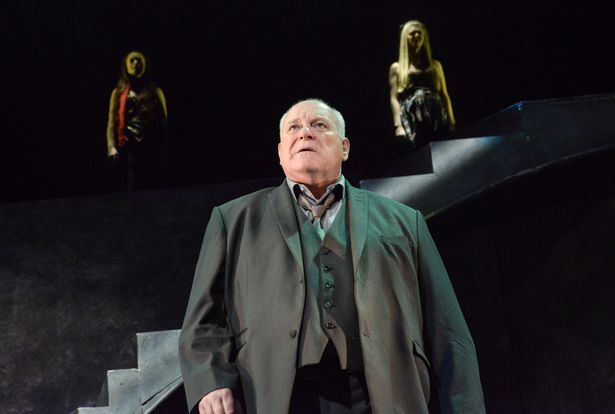
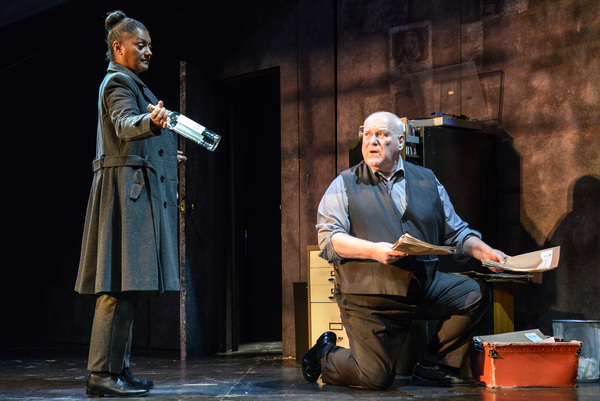
Rebus: Long Shadows is a new story written by critically-acclaimed author Ian Rankin and adapted exclusively for the stage by award-winning playwright Rona Munro. Starring Ron Donachie, Cathy Tyson and John Stahl, the story follows the titular DI, one of Scotland’s most famous fictional detectives, now retired, as he exhumes the faux pas of the past to find justice in the present.

Though I don’t claim to be a Rebus aficionado by any stretch of the imagination, I’ve enjoyed the various incarnations of the character, though for different reasons. DI John Rebus, played onscreen by John Hannah and Ken Stott, is the archetypal hard man, a gruff detective and former SAS soldier with PTSD and a serious drinking habit. Hannah’s Rebus was a youthful yet world-weary DI with a whole host of personal demons despite his fresh-faced looks. Stott’s Rebus, replacing Hannah in season 2, was a more convincing cynic given his age and natural gruffness. Both versions boast a bleak brutality, but Hannah’s inner monologue denoted a more internal, psychological approach, whereas Stott’s Rebus was more external and thus retained a greater sense of mystery and ambiguity.

Long Shadows’ Rebus seems to be pitched somewhere between the two, played here by Ron Donachie who portrays the character in the BBC radio dramatizations of Rankin’s novels. Donachie is a very genial stage presence, a lovable curmudgeon who is plagued by the ghosts of past. Rebus is not so much an analogue detective in a digital age as a displaced Diogenes trying to make it in millennial Edinburgh.

It was disappointing not to see Cathy Tyson as Rebus’ procedure-driven protégé DS Siobhan Clarke (played by Gayanne Potter/Claire Price in the series), but understudy Dani Heron does a great job as the jaded DS even if she doesn’t look old enough to have been working a case for a quarter of a century. Her banter with Donachie is one of the show’s highlights, as both actors ably conjure that catty camaraderie of a long-lived friendship. She also gets one of the show’s best lines when Rebus frets about ‘the way lassies dress these days’, by responding that ‘young women can’t be prisoners of their fathers’ fears’.

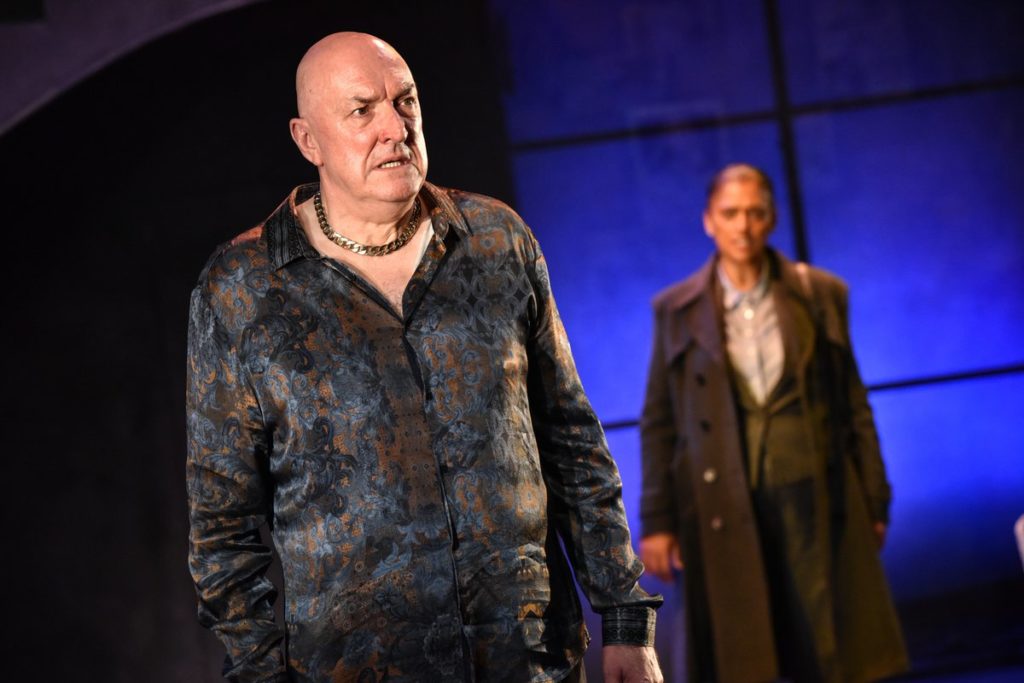
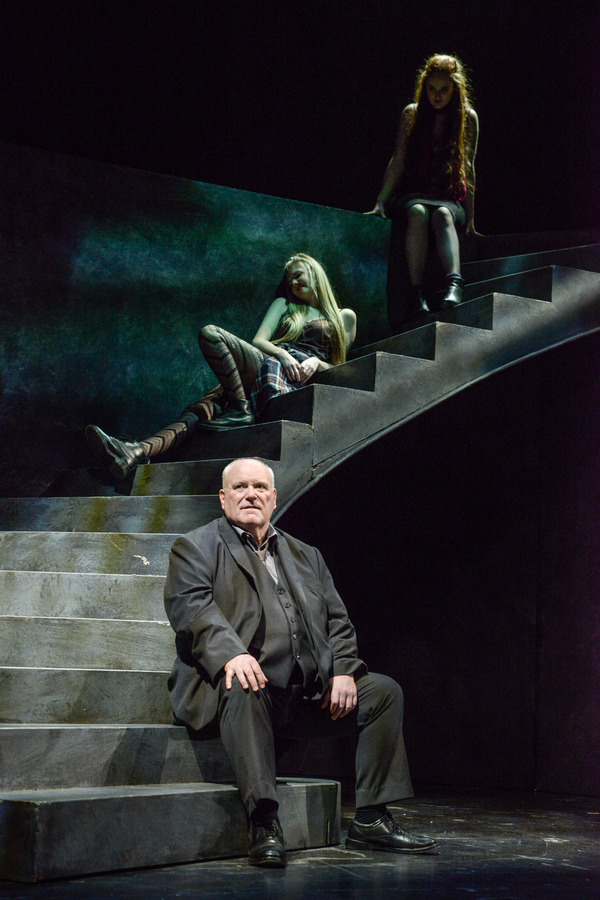
The cast is brilliant across the board, from Eleanor House and Ellen Bannerman as the ghosts of the victims Rebus failed to save – the former of whom also plays the dual role of (murdered) mother Maggie and (surviving) daughter Heather – and Neil McKinven masters multiple roles with charm and skill whilst making each one distinctive and memorable. However, the standout of this production is John Stahl as ‘Big Ger’ Cafferty, Rebus’ amiable nemesis. There’s a layer of artifice to every actor in the show except Stahl, who imbues an earthy authenticity into the vibrant, larger-than-life (in name and nature) character. Stahl’s deliciously imperious performance captivates from the second he steps onstage, slipping seamlessly from debonair to devilish in a way that could have be cartoonish in the hands of a less capable actor. His performance is worth the price of admission alone.

Rona Munro’s script is interesting and engaging, and
Robin Lefevre’s skilful direction guides the audience through the murky mystery. The surname Rebus originates from the phrase ‘Non verbis, sed rebus’ (‘not by words, by things’), a phrase which describes a form of heraldic expression used in medieval times that used symbols, pictograms and illustrations to represent new words/phrases. This was taken up by Sigmund Freud, who believed dreams could be (re)interpreted in a similar way. It’s a fitting name for a gritty detective who has to sift through reams of fakeries and facades to find the villainy behind the civil veneer.

The production has a number of discretely creative touches, predominantly Ti Green’s evocative set featuring a central curving staircase that takes us down into the lair of Rebus’ mind, and a set which functions interchangeably as a poky flat, a nightclub, a pub, and a swish penthouse suite. The Gothic touches of the ghostly apparitions (aided by Chahine Yavroyan and Simon Bond’s lighting) are effective as they berate and motivate Rebus, but their near-constant presence reduces their potency. This element might have been more effective if Rebus had been the lead investigator of the cases in question, which would have given a sense of urgency and regret, and a more compelling motivation beyond just a general obligation to justice.

As such, the mystery of who the true antagonist is falls a little flat, because it’s fairly obvious from the moment they appear. Relocating the crime drama to the stage already reduces the nuance of a book or film/tv show, which can include breadcrumbs in the background – a throwaway glance, a name on a file, a news report – whereas onstage everything is rather unambiguously right there in front of you. The scene at Cafferty’s swish apartment, while engrossing, goes on for far too long, and despite the talented female-driven creative team, DS Clarke is frustratingly side-lined by the narrative, and Eleanor House’s Heather (though intriguingly layered) is stopped mid-potential by the arbitrary ending. I would certainly be interested to see how her character develops, especially in conjunction with Stahl’s Cafferty, if we ever get a sequel.

Interesting and enjoyable, Rebus: Long Shadows is a compelling addition to the longstanding, multi-media mythos of its eponymous investigator. Playing at the New Theatre until Saturday 9th February, it’s well worth a watch, especially if you’re already a fan of Rankin’s crotchety copper.

Review: WOOF at Sherman Theatre by Gareth Ford-Elliott

 out of 5 stars (2 / 5)

Please note this review contains references to sexual violence and detailed analysis of the productions plot.

WOOF by Elgan Rhys is a new Welsh-language (occasionally bilingual with English subtitles at every performance) play about two men, Daf and Jesse, who have different expectations of one another.

In a lustful first meeting we see the pair’s first sexual encounter and
follow their romance along some ups and downs until their final
“sexual” encounter and the fallout.

Woof portrays
big topics such as open/polyamorous relationships and sexual assault both in
the context of modern gay life. However, Elgan Rhys fails to really explore any
of these topics in a way that does them justice.

One main reason why is
because the characters are cliché “types” of gay men. One wanting marriage and
kids, the other wanting an open relationship. But this is the extent of their
individuality. Even the way they speak is basically identical and generic.

Because of this, despite
the characters having clear goals, the motivations that drive them aren’t clear.
For a play that relies so heavily on bubbling under the surface, we should be understanding
the motivations.

Rape is used as a
“turning point” and feels more like a plot point than a major life event in
Jesse or Daf’s life. Things do change after this, but again, the motivations
that drive these changes are invisible. Because of this, it doesn’t feel like
we’re watching a play, we barely see how they’re feeling and when we do, it
mostly comes through speech and feels unnatural.

Things happen, we get
spoken to about them, and then the characters move on to the next stage of the
plot. It feels like a draft of a script that has figured out its structure, but
not found the character’s voices or even the characters themselves.

One positive is that we
see real love from both characters to each other, even if they don’t always
care for the other.

Elgan Rhys presents a lot in Woof and some people will really identify with it, because of the evocative nature of the topics presented. But it explores very little of these huge themes and how they affect the characters, which is where this play particularly falls down.

The tone of the direction from Gethin Evans doesn’t help solve this. It’s
quite flat throughout. The odd scene or moment is well controlled by Evans. But
the piece overall feels odd. The subtext isn’t portrayed well throughout the
performance at all and the build-up to the rape scene, as well as the scene
itself, is really poor because of this.

Whilst neither Aled Pedrick as Jesse or Berwyn Pearce as Daf do particularly
badly in portraying what they’re given, neither really rise and meet the task
either. There are great moments from both, however.

Jesse’s immediate reaction to being raped is horrifying. The confusion and fear are portrayed well – but this doesn’t hold and the performance of Jesse declines into mediocrity afterwards. Meanwhile, the performance of Daf peaks in more comedic moments – but struggles with the darker ones.

There are moments of good chemistry between the two, particularly in the
first third of the play. A scene where the two characters exchange phone
numbers is particularly nice. Some real chemistry which is lovely as well as
being the first time we see real care and love in the two. But then, there’s a
lot that feels unnatural. For example, whenever the characters talk about their
relationship – which is the central conflict of the piece.

The set and design from Elin Steele is simple. Nothing out of this world but
it works. It’s a similar story for Katy Morison’s lighting design too. Some
moments that are good, the club scene in particular, but ultimately underused.

The sound by Sam Jones doesn’t have a huge impact on the overall production.
An announcement of “Happy New Year!” on the sound system doesn’t fit
the tone and music isn’t exploited nearly enough.

The design elements really could set the tone for the piece but instead, as
happens too often, feel like an afterthought.

Now that we have critically assessed the play itself, there are some other things that desperately need to be addressed.

Firstly, the lack of trigger warnings was a huge issue. “Sexual content”
does not equal “rape/sexual violence”. This desperately needs addressing by the
Sherman in the remaining shows as this was incredibly irresponsible.

The tone on the night and marketing is out of place with the nature of the
piece. Having feedback boards outside with various LGBTQ+ flags on it, was a
strange contrast from portraying a toxic gay relationship and gay rape.
Marketing it with the words “bold” and “gritty” are also out of place with what
we see. This isn’t a bold play because it doesn’t challenge its audience.

In the programme notes, Rachel O’Riordan, former artistic director of the Sherman Theatre and the person who commissioned this play, said, “the play…will ask our audience to look at some uncomfortable truths.” This is true. It asks its audience to observe some uncomfortable truths but doesn’t challenge them by exploring those truths.

It seems that from start to finish, the whole theatre had the wrong attitude with this play, from top to bottom. From commissioning, to presenting, to marketing and warning its audience about the issues it deals with. It’s a presentation of something that may well be true, but not an exploration of the themes or characters.

There will be people who really enjoy Woof
and it is worth seeing, in full knowledge of what it’s about.

WOOF is a dark portrayal of a toxic, yet loving relationship, between two male characters who are ultimately underdeveloped.

WOOF performed at the Sherman Theatre, Cardiff
31 January – 9th February 2019
Written by Elgan Rhys
Directed by Gethin Evans
Cast:
Daf – Berwyn Pearce
Jesse – Aled Pedrick
Designer: Elin Steele
Sound Designer: Sam Jones
Lighting Designer: Katy Morison