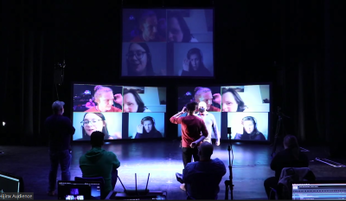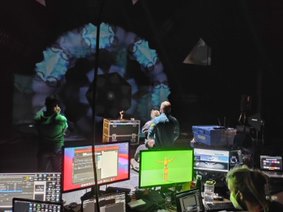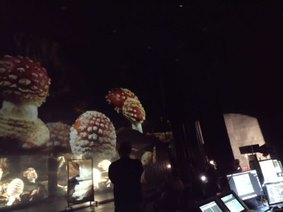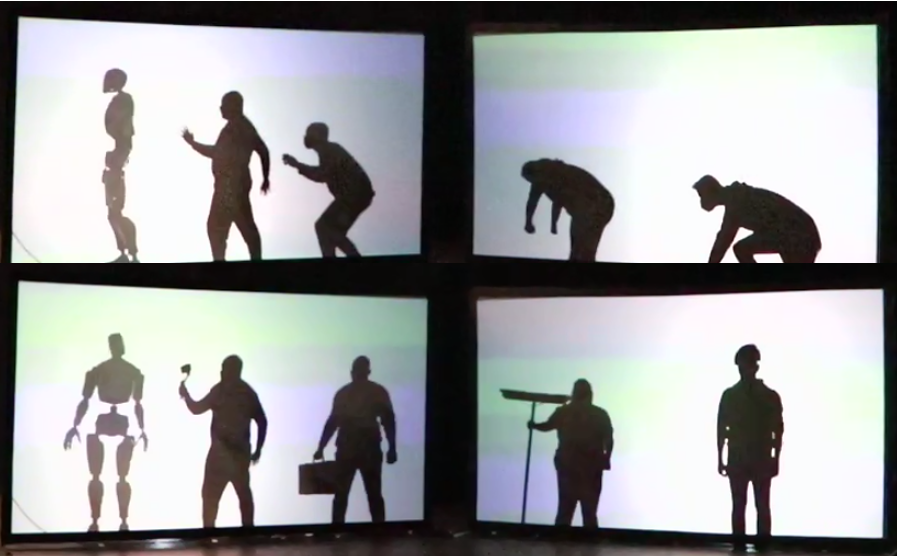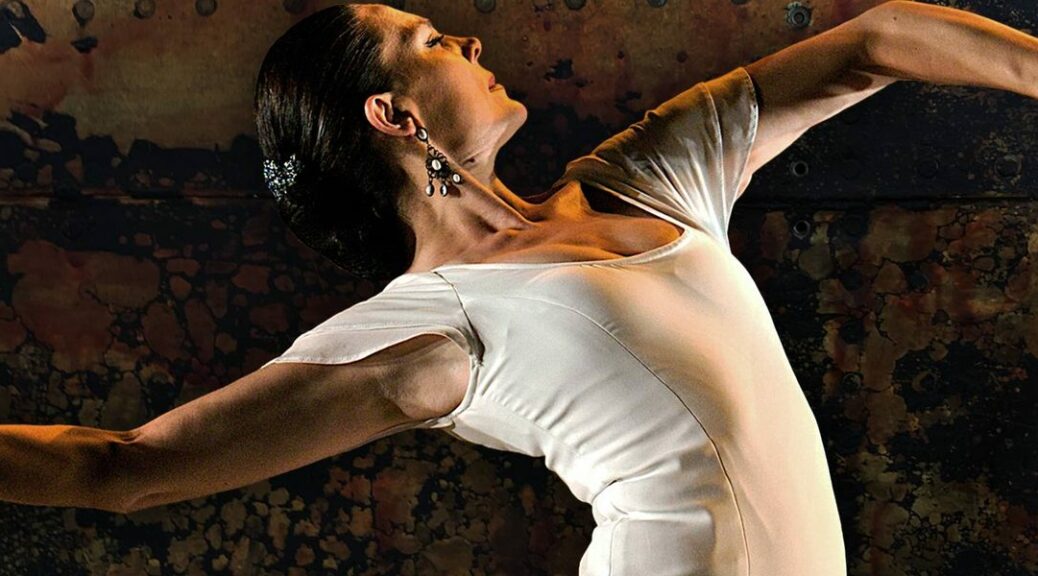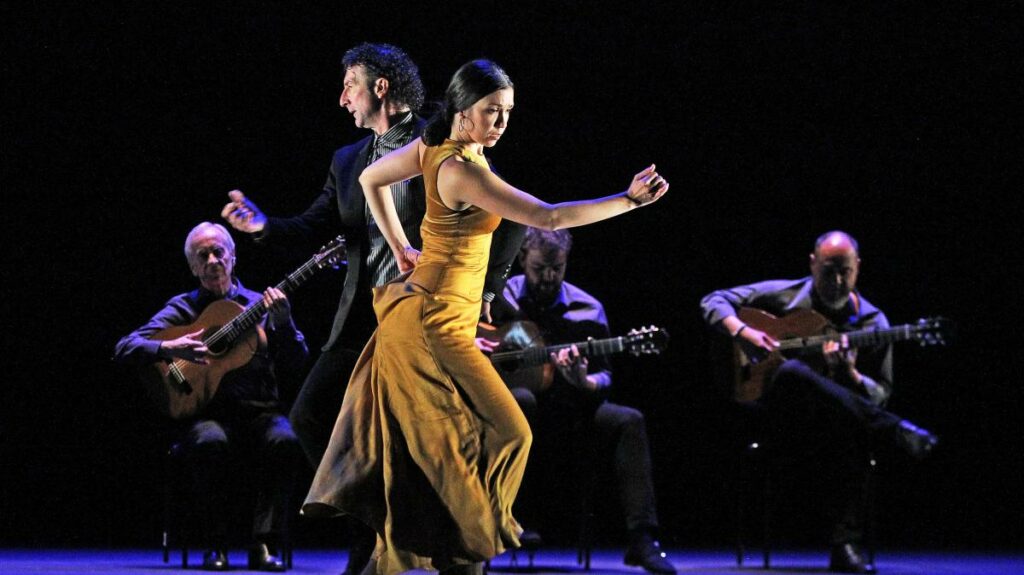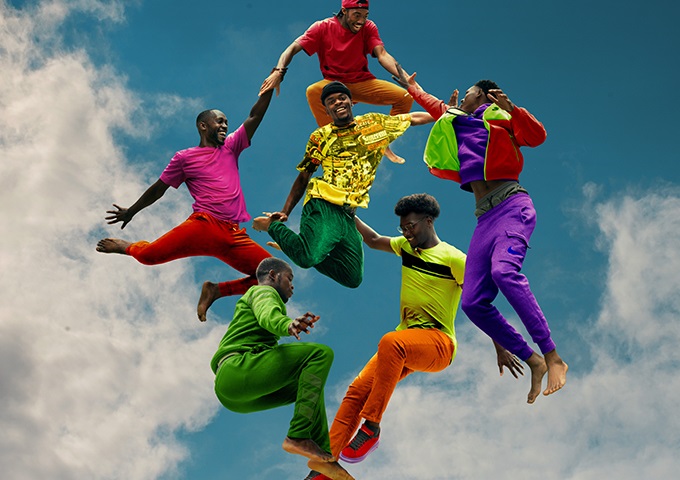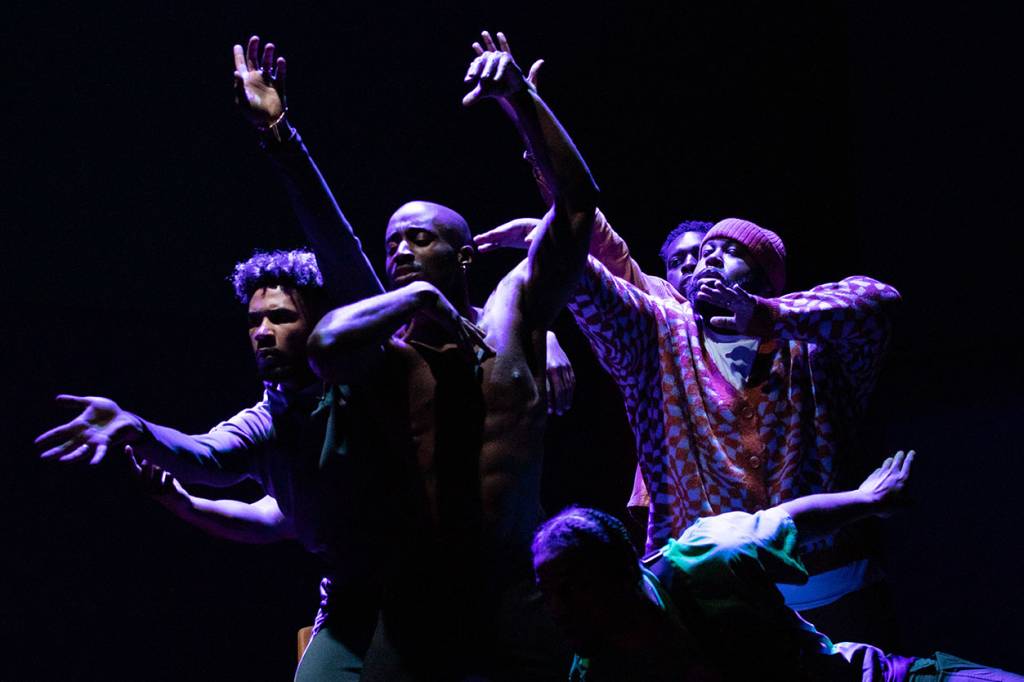

There really is a lack of basic, physical theatre performances these days. It is encompassed with narrative, but this is usually to explain the physicality, when the physicality is what should be bringing the story across.
With, You Heard Me, we have returned back to the basics and effectiveness with this.
You Heard Me is the true story, by artist Luca Rutherford, as a survivor of sexual assault. On a run, during the day, Rutherford was attacked and if it wasn’t for her lack of silence and fight within her alerting to a passerby, her story may have ended very differently.
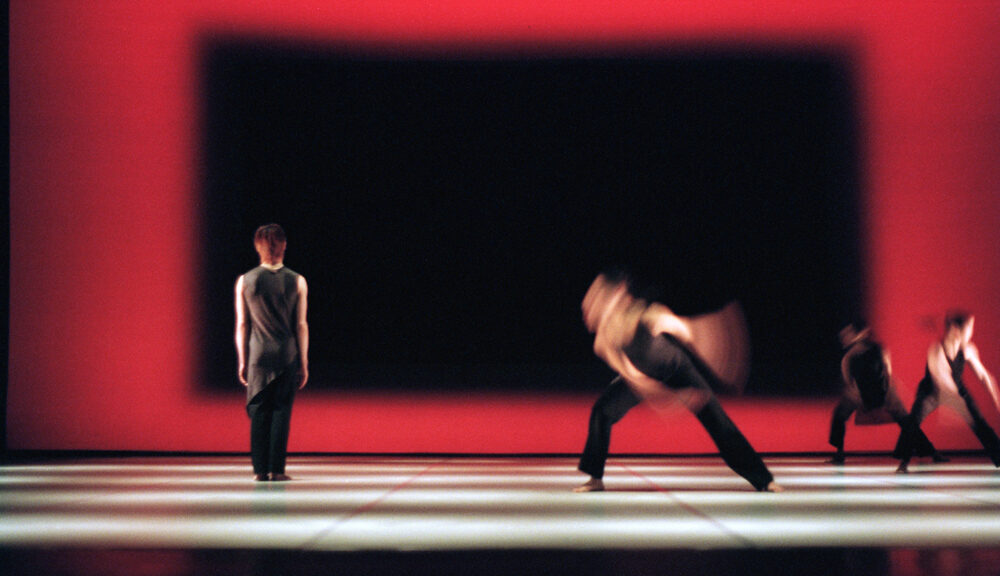
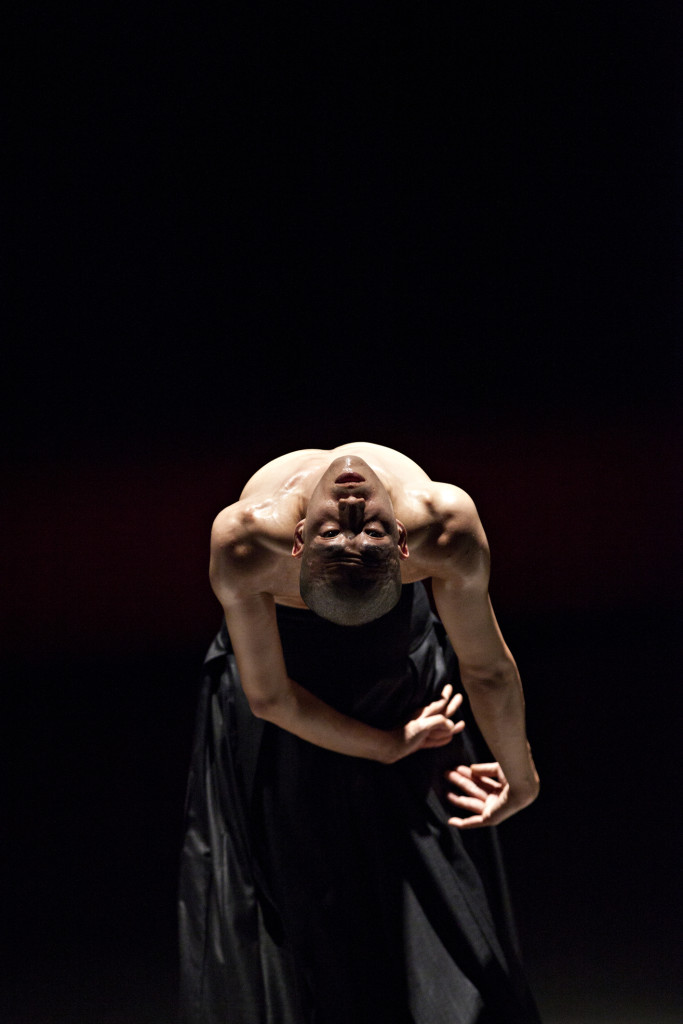
The performance is a multi-media performance, expressed through a combination of physical theatre and soundscapes. As previously said, this was interesting as it is rare that artists embark on a purely physical theatre production to express their story. Rutherford almost exhausts herself with her energy and rhythm throughout the piece, showing her fight and her struggle under the physical prowess of her attacker.
However, while there were commentary, changes in lights and adjustments to the stage, it felt very one note and I felt I was waiting for the change, for the WOW moment, for that theatrical power.
By no means do I want to tread on what is a true, emotional and sensitive piece and what I found so brilliant about this was that this was not with an ending we realised. She survived, she got away, but this could have been a lot worse, a lot more like the, unfortunate, tales we often hear. And this made what she expressed powerful to all those female identifiers, or in fact anyone who unfortunately may find themselves in a similar situation.
You Heard Me had a clear message: to fight, to be loud, to not be quiet or ladylike or everything that is impressed upon us, especially in these fight or flight moments. But I did feel that perhaps some different levels to the piece would add to its power as a theatrical performance.
*Trigger warning: the play contains discriminatory slurs directed towards the GRT community, and some distressing scenes*
Stone the Crows has had a fascinating journey to Chapter’s Seligman Theatre. Written by acclaimed playwright Tim Rhys, it debuted as a film starring Terence Stamp and Nick Moran and has now finally made its way to the medium for which it was conceived, in a breathlessly bold new production by Winterlight in association with Company of Sirens.
Boo Golding. Image credit: Noel Dacey.
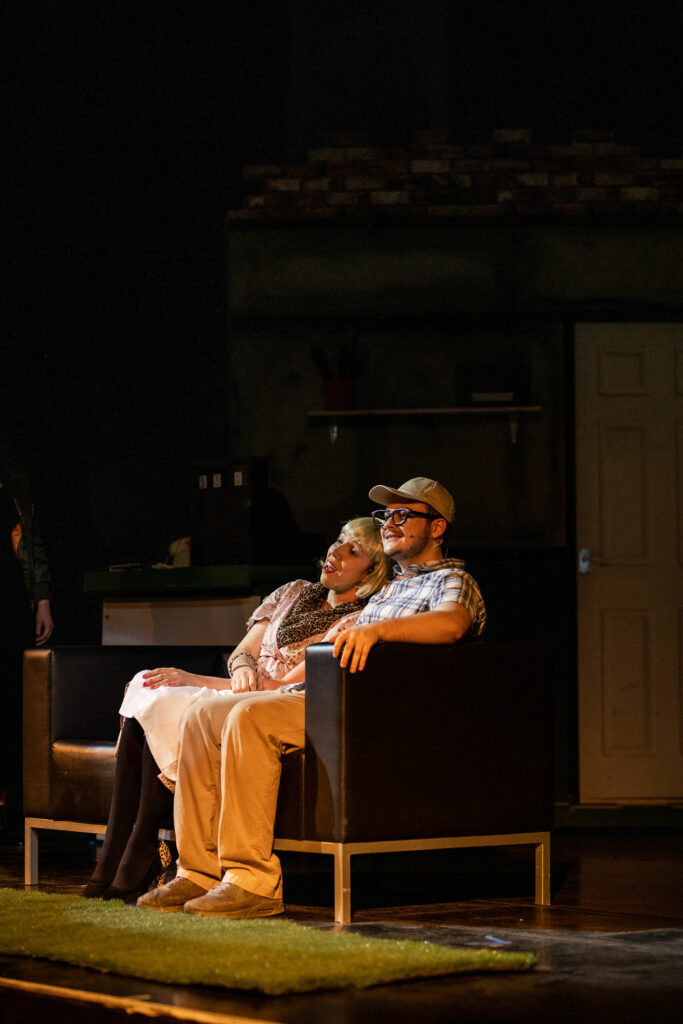
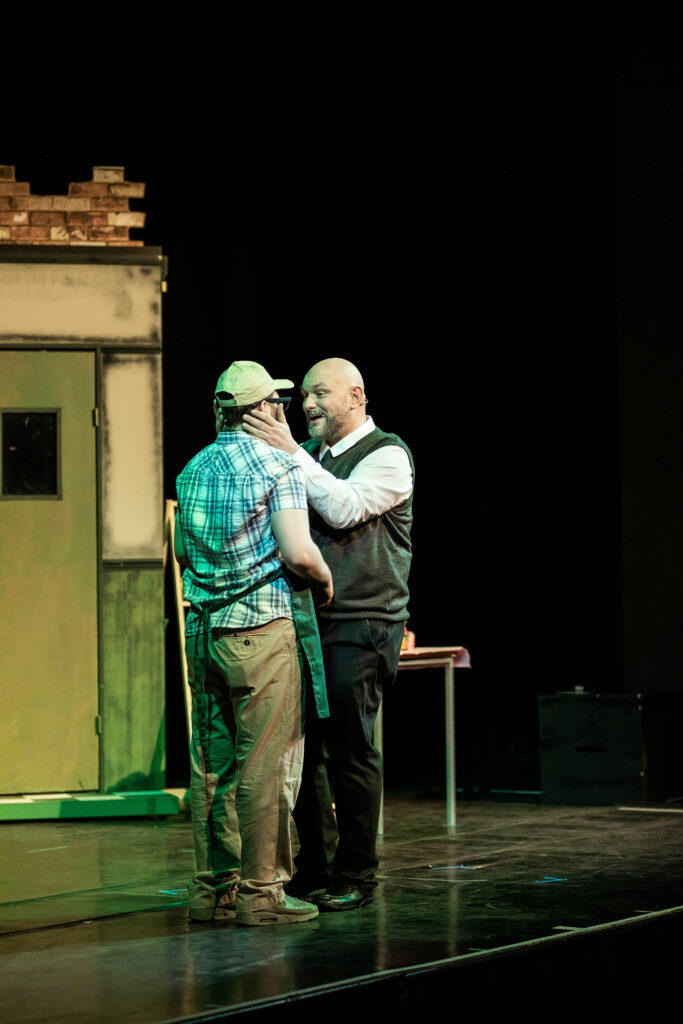
Tucker (Oliver Morgan-Thomas) is a jaded urbanite who longs to escape the choking grip of city life, so he snaps up a ramshackle farm on the suburbs. While Tucker clings to the dream of peace, what he really wants is uncontested dominance – but this brash new king has a challenger to the throne: Crow (Boo Golding), a mysterious loner who worships the forest and is prepared to do whatever it takes to defend it.
Boo Golding and Oliver Morgan-Thomas. Image credit: Noel Dacey.
Directed with kinetic intensity by Chris Durnall, Stone the Crows is the transcendent culmination of everything Company of Sirens has worked to achieve. This is a play about borders: between people, between identities, between the urban and the rural, and between those who respect the land and those who gut it for profit. Even its setting transcends categories or definitions: Rhys terms it a ‘social jungle’, a liminal space in which the tangible and the psychological blur together.
Boo Golding. Image credit: Noel Dacey.
And Golding’s Crow is a character who embodies liminality. They exist free of binaries, expectations, demands. They adore the forest with an anchorite’s zeal, and spend the play’s first few minutes meticulously constructing a skeletal altar from twigs and branches in the manner of an ancient ritual. While Golding is mercurial as the wind, Morgan-Thomas is all iron and grit, hard as the city that built him; there’s a simmering machismo to his performance which suggests that rage, fed and informed by white supremacy, is never far from the surface.
Oliver Morgan-Thomas and Chris Durnall. Image credit: Noel Dacey.
Tucker’s particular evil can be seen in the awful, racialized abuse he directs at the Travellers who live and work on ‘his’ land. The title itself evokes a racial slur against Roma people (specifically the Romani communities of Eastern Europe). While it’s unclear to what extent GRT people were consulted in the making of the play, the creative team’s intentions are firmly in solidarity with these marginalised communities (and very firmly against despotic legislation currently making its way through Parliament), and Rhys and Golding depict the main character with empathy, nuance and complexity.
Boo Golding. Image credit: Noel Dacey
The visceral connection between its two central performers is the axis on which the story turns. While Golding shifts effortlessly between Puck-like trickster and vengeful spirit, Morgan Thomas’ laddish certitude grows increasingly sinister as the action unfurls. They mimic, complete, and predict each other; there’s a dynamism to their exchanges that, even when they don’t interact directly, renders their connection immediate and undeniable. It also means that when their characters do finally ‘meet’, it’s breathtaking.
Boo Golding and Oliver Morgan-Thomas. Image credit: Noel Dacey
Nature, though, is the master here, captured by Eren Anderson’s exquisite music. His soundscape beautifully weaves the gently unspooling song of the forest. He plays, at first, only when we are in Crow’s perspective, as if the primal music of the spheres flows only through them, and not Tucker. All we hear when Tucker speaks is the snap of a twig underfoot and the susurrus of rustling leaves. But then, when allegiances and sympathies start to shift, their melodies intertwine like roots.
Hypnotic and engrossing, Stone the Crows is a masterpiece of gorgeous brutality. The play leaves us at a threshold, and you must decide whether to turn back or to cross into the unknown.
Get the Chance supports volunteer critics like Barbara to access a world of cultural provision. We receive no ongoing, external funding. If you can support our work please donate here thanks.

Fiji is a black comedy framed as a living room, this play is full of laughs and quirky moments from the off. The concept of Fiji is Sam (Pedro Leandro) and Nick (Eddie Loodmer-Elliott) met online only a short while ago, during the weekend they finally meet in person where it all spirals out as fast as lightening.
Sam’s destroyed his devices & told everyone he’s bought a one-way ticket to Fiji but instead he’s with Nick. The two feel that they have a deeply special relationship and plan to spend the rest of their lives together. However, for Sam that life will be very brief, he has asked Nick to kill and eat him, with a strong belief that Nick ingesting Sam will be the ultimate exchange of love, making their bond inseparable.
From mundanity of cheap Spanish wine, an enormous lemon & sarcasm – their humour contrasts like an avalanche with what they have planned ahead. As individuals their human vulnerability and tenderness grips the audiences attention whilst grasping onto the concept of cannibalism. Coming together for this horrific purpose, both intensely relate on how internet dating can be poisonous within the fanatical world of perverse relationships.
As the true reason for the weekend becomes clear, you can’t but help become transfixed on how this weekend will end. Their frequent questions & answers sparks conversation by a tense countdown, which we directly visit during the final moments of the abrupt murder. These questions offer deep & reflective considerations about what has led to this shocking decision: does it stem from maternal issues, as scientific research, what will Nick’s ‘experiment’ disclose? And all the while the two men reassure each other that they want this to happen, each for their own personal reasons.
This play is based on a real life incident in Germany. It interrogates what the rules would be in a situation like this: who gets to decide how it plays out, and what responsibilities are involved, both between participants and in their wider social circle? The discussion is remarkably balanced, as the characters reconcile the issues within their own instances, arguing the case for personal choice, whilst acknowledging there is a world outside where these actions are known to be wrong.
This is a well articulated production offering romance and laughter alongside repulsive horror, there’s really deep, dark & deadly thinking in the midsts that invite you into the world of the unknown.
Matthew Bourne has always pushed the boundaries of the ballet world, and he’s back with an innovative reimagining of Tchaikovsky’s most enchanting work: The Nutcracker. Having originally premiered the show in 1992, Bourne and the New Adventures team have added plenty of twists, tweaks, and treats to this sumptuous blend of the classic and the new.
The story might be sparse but Bourne and co have thrown a few more ingredients into the mix. Clara (Katrina Lyndon) is trapped in a dreary orphanage ruled by the maniacal Matron (Daisy May Kemp, dressed as a despotic liquorice allsort) and the dastardly Dr Dross (Danny Reubens: be-whipped, bothered, and be-leathered). On Christmas Eve, Clara and the other orphans are paraded around in front of the genteel governors, whose gifts for the youngsters are snatched away the moment their kindly benefactors leave. But Clara’s grown quite attached to her present: a patched-up doll who becomes a hunky prince (Harrison Dowzell) and spirits the whole company away to Sweetieland.
The stellar orchestra ensures that Tchaikovsky’s score has never sounded more magical, and the sheer skill on display is breath-taking. There’s an effortless elegance to every movement and Bourne’s playful and innovative choreography never disappoints. Lyndon is a compelling lead, especially when sharing the stage with either Dowzell or Jonathon Luke Baker’s naughty Knickerbocker Glory. Ashley Shaw is delectably devious as the sickly-sweet Sugar Plum who’s hiding a bitter centre, and shares an unruly chemistry with Dominic North as the petulant Fritz and, later, the bon vivant Prince Bon Bon (there aren’t many people who could carry off walnut whip epaulettes, but North is one of them).
The first act compellingly subsumes you into a Dickensian purgatory before transporting you to a world of candyfloss and freedom. The second act loses some of the first’s drive but dials up the spectacle: a frothy pink fever dream painted in shades of Busby Berkley and Roy Lichtenstein courtesy of Anthony Ward’s resplendent sets and costumes (though Sugar Plum and Clara’s second act outfits might have benefited from a bit more extravagance). It gets even kookier when the guests start turning up for the royal engagement, everyone from a bunch of hard-boiled Bikers to a Candyfloss clique and a trio of polyamorous toreadors. Meanwhile, the stage is set for the wedding of the century which takes the phrase ‘Let them eat cake’ to a new level – quite literally.
Bourne never takes a story at face value: he shakes it like a snowglobe and weaves magic from the debris. His brand of joyous iconoclasm breathes new, anarchic life into well-trodden tales – and make no mistake, this isn’t your grandmother’s fairy tale: there’s something deliciously risqué about the entrance to Sweetieland being through a pair of cherry-red lips, and even the title itself is a little suggestive. The whole thing is flirtatious, mischievous, and enticingly irreverent. Unlike in the original, there are no sword battles, no royal mice, and the sugar plum fairy is not as sweet as she seems. However, while removing the Mouse King from the narrative gives Clara more agency, it also pits her against another woman in the fight for a man’s affections. Sweetieland might be a transgressive utopia, but it’s still ultimately consumed with the question of which bride will join the groom on top of the cake.
Sleeping Beauty might still be my favourite of Bourne’s new adventures, but Nutcracker! is easily his most joyful. A cacophony of confection from start to finish, it’s a decadent, delightful treat you’ll want to savour for yourself.
Theatr Clwyd today announce a massive summer season of activity. The season boasts an incredible mixture of musicals, comedy, drama, music, and family activities. The venue welcomes the return of many community performers that have not been able to take to the stage since before the pandemic.
Theatr Clwyd produces brand new productions in this season. Celebrated Virgins, A Story of the Ladies of Llangollen (20 May-4 June) is a brand-new production written by Katie Elin-Salt and directed by Eleri B Jones. Based on the true story of Eleanor Butler and Sarah Ponsonby. When they fell in love, they were forced to leave their homes and cast out by society. Taking up residence in Llangollen they became minor celebrities, forced to witness their own lives written about by those who could never understand. Now, they are back, ready to take back the story that’s rightfully theirs – on their own terms.
A Pretty Sh*tty Love (8-23 July) is a drama that is based on the true story of a couple and their journey. Hayley wanted to fall in love – to find her prince. She never found it though, she never looked in the right place. Then along came Carl. This is a new play by acclaimed playwright Katherine Chandler and directed by Francesca Goodridge. This show contains challenging themes.
There are also two brand new musicals being co-produced with Theatr Clwyd this season. First up is Milky Peaks (1-12 April) Milky Peaks: the warmest welcome in the cold bosom of Snowdonia. However, under the gleaming pebble-dash, strange forces are rising: both political and supernatural. Can three lost souls and a shabby drag queen save the community’s heart? Milky Peaks reunites writer Seiriol Davies with collaborators Matthew Blake, Alex Swift, Dylan Townley and Áine Flanagan, the producers who co-created the critically acclaimed How to Win Against History. Advisory age 14+
Secondly in the Autumn Season The Famous Five: A Brand New Musical (23 Sept-15 Oct). Based on Enid Blyton’s multi-million-selling novels, this brand-new musical written by Elinor Cook, with music and lyrics by Theo Jamieson, is an exciting and heart-warming family treat celebrating adventure, bravery and friendship for everyone aged 7+. The show will be directed by Theatr Clwyd Artistic Director Tamara Harvey, and will be co-produced with Chichester Festival Theatre. When George and her dog Timmy find out that her cousins Julian, Anne and Dick are coming to stay, they’re pretty sure the whole summer is ruined. But out in the bay lies Kirrin Island and a ruined castle filled with mysteries to solve. Together they embark on a daring mission with the future of the planet at stake – a mission that might just be the making of the Famous Five…
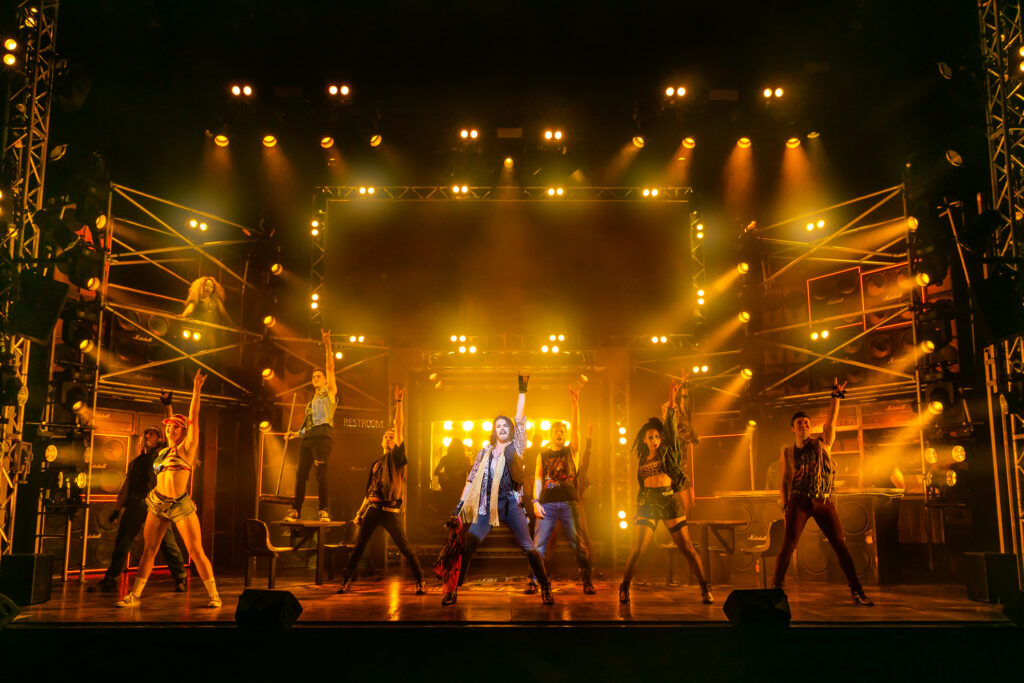
The pantomime on offer this Autumn will be Robin Hood, The Rock ‘n’ Roll Panto! (19 Nov-14 Jan) The show will have all sing-along songs, fabulous frocks and dazzling sets that you’re used to. The venue can now announce that beloved panto dame Phylip Harries will return for all the usual panto fun.
Back to summer activities, and the Flintshire venue will welcome many touring productions. The Rise and Fall of Little Voice (18-23 Apr) stars Shobna Gulati (Coronation Street), Ian Kelsey (Emmerdale) and introducing the two-time Drama Desk Award Nominee Christina Bianco. This Northern fairy-tale explores small-town dreams and finding your voice. The show includes power ballads by Judy Garland and Shirley Bassey. Boeing Boeing (24-28 May) is an award winning comical-farce brought to you by London Classic Theatre. The Play That Goes Wrong (26-30 Apr) once again returns following its 2018 sell-out run in Mold. For musical lovers, Willy Russell’s tragic tale Blood Brothers (2-7 May) follows the story of twins separated at birth.
The venue once again welcomes National Dance Company Wales with their trio of dance performances One Another (10-11 May) and Ballet Cymru present their Mold debut, Dream (29 May) a vibrant, fresh, and joyous new ballet based on Shakespeare’s A Midsummer Night’s Dream.
There is plenty of comedy this season with monthly comedy clubs as well as Mark Watson’s show This Can’t Be It (12 June) after its postponement in January. Kiri Pritchard-McLean brings her tour Home Truths (30 Oct) as she returns home to Anglesey talking about all things from rescue chickens to learning Welsh.
This summer sees the return of Family Arts Festival (29-31 July) the weekend will be jam packed with boredom busting events, activities, workshops and shows all at low cost. Keep your eyes peeled on social media for more details. If you can’t wait for that, come along to Julia Donaldson’s much loved children’s story The Gruffalo (13-15 May) full of songs, laughter and monstrous fun, also join Twirlywoos Live! (20-21 May) for an adventure in their big red boat.
With music from Dionne Bennett and the Royal Welsh College in their performance Blue Summer (22 June) and Rush Theatre presenting The King of Reggae (1 May) there is something for everyone and there will more classical music concerts to be announced on the 8 May.
Theatr Clwyd welcomes back the following community performers to the venue, Jaxx Martine’s Popstarz Academy (26 June), Footsteps Dance (28-29 June), Shirley School of Dancing (1-2 July), Clint & Nikki Theatre (4-9 July), Whitton Morris School of Dance (14-16 July) and Elsberdance (21-23 July) and Elite School of Dance (25-27 July).
Theatr Clwyd Members enjoy priority booking until the 22 March when all events will be on sale for the public. To book these and many more please visit Theatr Clwyd’s website www.theatrclwyd.com or by calling 01352 344101. If you would like to become a member or to learn more about exclusive membership benefits, please visit www.theatrclwyd.com/give/membership
Starring the Man from Atlantis himself, the legendary Patrick Duffy, Catch Me If You Can is an intriguing thriller that will keep you guessing right up until the final moments.
While it might sound like a stage version of the Tom Hanks/Leonardo DiCaprio crime caper, the play is in fact an adaptation of Robert Thomas’ French thriller, Trap for a Lonely Man. This entertaining new production is produced by Bill Kenwright and adapted by Jack Weinstock and Willie Gilbert. The story follows Daniel Corban (Duffy), an ad exec who’s honeymooning in the Catskills when his newly-wedded wife goes missing. Fraught with worry, Corban enlists the help of his detective pal, Inspector Levine (Gray O’Brien), but his prayers are instead answered by the local priest (Ben Nealon), who brings the erstwhile Elizabeth (Linda Purl) home – only for Corban to denounce her as an impostor.
A triptych of performances make this a worthwhile trip to the theatre. Duffy won hearts as Bobby Ewing, Dallas’ favourite son, and here demonstrates impressive range as the frantic Corban, all shabby elegance and harried grace. He shares his most riveting moments with scene (and life) partner Purl (Happy Days, Homeland), who draws both sympathy and suspicion as the enigmatic Elizabeth. And O’ Brien, known to most as Corrie’s treacherous Tony Gordon, plays the wearied, washed-up detective with sardonic aplomb. There are excellent supporting turns by an on-form Nealon (Soldier Soldier) as well as Hugh Futcher, Paul Lavers, and Chloe Zeitounian.
Directed by Bob Tomson (Blood Brothers, Evita), the story is clever and engrossing and the cast’s lively performances make for a very involving whodunnit. The intriguing stakes are heightened by the ‘60s setting – modern enough to feel relatable, distant enough to ensure that the mystery can’t be solved through more convenient means like CCTV, smartphones and DNA evidence (still a nascent form of technology at this stage). Julie Godfrey’s palatial ski-lodge set traps the actors in a decadent cage, and the rising tension is punctuated by Matthew Bugg’s sound design and Chris Davey’s lighting.
While the pacing could be tighter in parts and the mix of comedy, drama and mystery takes a minute to commingle, it has all the ingredients that made Columbo and Murder She Wrote such a treat. There’s a reason they’re called ‘cosy mysteries’. While Bobby Ewing always tried to do the right thing, can the same can be said of Daniel Corban? Well, that’s for you to find out. With contemporaries like Mad Men’s Don Draper, it’s anybody’s guess. Fun, smart and engrossing, Catch Me If You Can is a ripping yarn with the kind of twists and turns you’ll want to unravel for yourself.
Get the Chance supports volunteer critics like Barbara to access a world of cultural provision. We receive no ongoing, external funding. If you can support our work please donate here thanks.
13 or 14 years ago, while studying Drama at school, I was introduced to the world of Melodrama and in particular, Maria Marten. We investigated the parallels between the real life story and its dramatisation for entertainment, performing the show ourselves for both audience and coursework purposes. So when I saw the press release for this, I was both excited and anxious to revisit a story which helped me continue my love of theatre.
The Ballard of Maria Marten is based on the true life events of Maria who, growing up poor, meets and falls in love with a series of fortunate men. Eventually, one of them turns out to be awful, physically and emotionally abusing her, leading to her death. Don’t worry, this is no spoiler – the famous story is known for it’s heroine’s unfortunate ending and a big reason it was taken for the stage. This version looks more at Maria’s side; her background, what she may have encountered, her growing smugness at the attention from rich men, desperately wanting love, when eventually, former failings at relationships leads her to be gaslit and abused. In her story, we also encounter other characters to build this back story, highlighting friendship, family, love and womanhood, motherhood and the difficulties of the era.
Eastern Angels have smartly moved away from the melodrama element. The closest we tend to get these days is the Pantomime, and so, while I would have been intrigued to see a modern day melodrama, this story is taken and performed sensitively and down to earth. It is mostly played straight, with the occasional joke or slight kooky characters, but you for sure believe in them. Once we get to know them and become part of their friendship, the end is all the more emotional and painful.
The performers are all women, and they choose to dress up for the first two suitors. This is effective and genuine and so as we see the relationships progress, it makes her heartbreak and abuse become even more dramatic. Her Father and her final suitor are not shown. While the Father isn’t seen as abusive, it highlights how out the picture he is to her and her life. Not giving the “villain” a face is also effective – Elizabeth Crarer, who plays Maria, uses great physicality, reactions and facial expressions to express his abusive nature and it makes it all the more frightening and disturbing, adding to her deterioration.
There is a huge element of girl power and girl friendships in this piece. My memory to some degree is hazy on both the story and the melodramatic version, but adding these characters makes the show more real. And they are all different as of any friendship group. The amazing thing about this version of the story is that we can relate, and with its reflection on events in the last couple of years. We can relate to a friendship group; of them growing up together and coming of age both together and as individuals. The elements of domestic abuse and murder also pick up on issues in the last few years; of potential home abuse increasing through Covid-19 and the sad death of Sarah Everard and others that have come to the surface. Media makes this shocking and tragic, as it really is but not something, sadly, new.
There is a lovely country feel to this production: in Wilton’s Music Hall, the perfect setting for a play set so long ago. The old furnishings and patchwork walls add to the idea of the countryside, with the wooden barn silhouette on stage – fits as if it has always been there. There is recorded music, music that feels very folk but often they will sing the ballards themselves, harmonising beautifully. Unfortunately sometimes the words were lost to the echo of the space which was a shame when it was so beautiful. They also make their own sounds of objects, babies, horses which adds a real sense of authenticity as opposed to recorded soundbites.
The Ballard of Maria Marten is reclaiming back her story. There are no villains in top hats and capes or over the top gestures as was originally meant by turning this sad true tale into a production, but all the gaps in between are filled in the story with this heartfelt, emotional and at times, funny retelling.
In a little black box in Wimbledon, we encounter the coming of age LGBTQAI+ tale in 80’s America. Next door is a LGBTQAI+ club which I have been to before, and so having this show next door seems hugely apt and hopefully, educational to young people of the community who may walk past and be intrigued by the stand out poster.
The Night Larry Kramer Kissed me, written by David Drake, is a critically acclaimed off-broadway show. Based in 80’s America, we travel through one man’s self discovery in the gay community, awoken by Larry Kramer’s The Normal Heart, showing how Theatre can awaken someone’s passion but also make them question their very existence. John Bell’s (star of Outlander) character uncovers what many men of the LGBTQAI+ community discovered during that time – the impact of the AIDS/HIV pandemic and the fears, concerns, and lack of education around it during this time. It looks at his own discovery of the community and his sexuality, yet also on protesting, speaking out, love and loss.
Bell is in general just perfection. Each word, syllable and speech is perfect, diction and projection on point, and every part of the story he tells feels like it could be autobiographical. He addresses each of us in the room, not afraid to make eye contact, and with such a small theatre, this is important, making us feel included in his story; as if he is just recounting it for the first time with all its elements and emotions. Finding out that Bell is only 24 years old shocked me. I know him well from the show Outlander, where we practically see him grow up as it is, but the maturity and the earnest nature he brings to the character made him seem way beyond his years. While I was also not yet born during this time in history, Bell being much younger than me also shows how in depth he has clearly looked into the history and the impact it had on people of that time. He is genuinely heartbroken; genuinely enjoying life as he discovers who he is; and every aspect of him is fabulous and in keeping of the culture both of then and now. He also flips through ages – a time when he is just a little boy is mixed in with his first kiss as a teenager to finishing as a young-middle aged man. And each mark of his life is clear. A brilliant feat in itself for a performer.
The set was minimal but effective – big crossed metal pipes, stretching diagonally to the sides of the stage, later lit up, make us feel like we are in a city, with its harsh architecture. This is softened by many candles later, electronic, but effectively made to look as if they are really flicking. Subtly put in nooks and crannies are the historical coloured handkerchiefs, symbolising gay men’s position when it comes to interaction with each other, sex and love. A brilliant moment is when Bell is singing/rapping to a song as he discovers different men in a club, pulling out the handkerchief’s and describing each of them, climaxing to an outburst of fear at those who are HIV positive is poignant, fun and eventually heartbreaking. We hear much of the support given in the community and protest at the time, but little of how some turned their back at some point through fear and lack of education.
In a time where we are all fearful of a virus we at the start knew little about, there is some element of reflection on how the community must have felt at the time. However, an element of fun in put into this production, with scenes in clubs and gyms and meeting different people, lovers and how sometimes it culminated in the death of a person puts this on another level. To live life, only to die of it in the end.
Finally, a comment on the costuming – on point for the era, Bell evokes images of Freddie Mercury and the leather fashions of the community and of the 80’s. Eventually, with tee shirts of the AIDS/HIV support networks and protests at the end, this and the telling of this tale is a blast into the history of such a big part of this community and of history in general, something that even today still feels swept under the carpet.
The Night Larry Kramer Kissed me is such an important production to see, not only to learn a impactful part of history but also of a community that, in the 21st century is still facing hardships and censoring. Bell only makes this so much more poignant with his natural and excellent performance.
It’s a well-known fact (well, okay, not a fact exactly but often a popular opinion) that ‘the book is always better than the film.’ This is, of course, subjective, as some of us enjoy reading where others don’t, but in my experience, films tend to have to miss out a lot of detail from its written inspiration due to time, budget and varying other reasons. Unfortunately, this is how I felt about The Da Vinci Code. This is not to say I disliked the stage adaptation but that, for me, the book simply didn’t translate well to the stage. As a big fan of Dan Brown’s book, I felt a lot of the action and the detail was rushed, where the detail of the book’s plot, particularly the detail in the symbology, is what it should be all about.
As we enter the auditorium we are greeted with a projection of the Vitruvian Man, the drawing by Leonardo Da Vinci which depicts a man in two superimposed positions with his arms and legs apart and inscribed in a circle and square, representing his concept of the ideal human body proportions. It is a well-recognised piece by Da Vinci therefore immediately transports us to his world and, to those who are already aware of the plot, to the Louvre Museum in Paris. For those unaware of location, we also hear announcements in French telling us that the museum will be closing in a few minutes time, counting us down to the beginning of the play. There is also appropriately suspenseful music playing which unfortunately becomes annoyingly repetitive after about five minutes!
Credit: Johan Persson
The play begins with Robert Langdon (portrayed brilliantly by Nigel Harman, probably most well recognised for his role in Eastenders) giving a symbology lecture, with a nod to Walt Disney and the Mickey Mouse watch he always wears! We are immediately introduced to most of the ‘cast’ who almost act a Greek chorus, representing bit parts and scene changes, providing summary information, and highlighting important dialogue. All wear hooded tops which they don when part of the ‘cast’, when they’re not portraying a main character. This works well and provides clarity to the story, particularly for those who may not be familiar with it. The piece was excellently cast, and special mention must go to Hannah Rose Caton, who portrays Sophie Neveu beautifully. I am at first taken aback that she isn’t using a French accent but as the action ensues, it’s clear this makes no impact on the role itself. Kudos also to Andrew Lewis, understudy Leigh Teabing who steps into Danny John-Jules’ shoes seemingly last minute (there is no announcement or information in the programme to suggest any cast changes). Having looked forward to seeing Danny John-Jules in this role I am a little disappointed but Andrew Lewis’ portrayal of Teabing is perfect and akin to Sir Ian McKellen’s on screen version. It also appears we are another cast member down, meaning the roles of Sauniere and Remy are played by the same actor, Adam Morris (much to my excitement, having been a huge fan of CBBC’s Maid Marian and her Merry Men as a child!) Morris really steps up to the plate and plays both roles superbly, causing no confusion as to who’s who.
Credit: Johan Persson
The story travels from the Louvre Museum in Paris, to churches, Teabing’s estate, London, Edinburgh etc. so I am intrigued to see how this is going to translate to stage, the use of modern technology and stagecraft allowing for the audience to be transported from location to location seamlessly. The use of projections, easy-traveling set, a few simple props, and creative lighting design mean we clearly move from scene to scene and know where we are without hesitation. Projections are also used to show symbols and paintings and there is effort to home in on the details of these, particularly at Teabing’s home where we see a large projection of Da Vinci’s painting The Last Supper on the wall which is then zoomed in to highlight its supposed hidden meanings. However, I feel a lot of these moments, often huge revelations in the book and in the film, are somewhat rushed here (none more so than the secret revealed to ‘Princess’ Sophie at the end of the play). Where these moments could be lingered on, the action is packed in to two hours, which just isn’t enough time to appreciate the detail.
There are a lot of clever elements in this production which, with a less intricate story, could have worked successfully. However, I think lack of time, and location (allowed for on the big screen) mean that the detail and the atmosphere of the plot get lost somewhat. Nonetheless, a fantastic cast and certainly an enjoyable production, perhaps better enjoyed without the book lover’s expectations!
The Da Vinci Code continues its UK Tour on February 22nd at the Belgrade Theatre in Coventry and finishes on November 12th at The Alhambra Theatre in Bradford. Head to the website to book your tickets:
https://davincicodeonstage.com/
Theatr Clwyd, Mold February 14th-February 19th, 2022
Cast Robert Langdon: Nigel Harman Vernet & Cast: Basienka Blake Remy & Cast: Adam Morris Sophie Neveu: Hannah Rose Caton Sir Leigh Teabing: Andrew Lewis Fache & Cast: Alpha Kargbo Silas & Cast: Alasdair Buchan Sauniere & Cast: Adam Morris Collet & Cast: Leigh Lothian Sister Sandrine, Marie & Cast: Debra Michaels
Production Team Company Stage Manager: Roger Troup Deputy Stage Manager: Ellie Southwell Assistant Stage Manager: Mim Evison Sound 1: Elliott Roberts Video 1/Sound: Llyr Parri Wardrobe Manager: Ivy Bridgwater-Court Relighter: Samuel Baker Production Carpenter: Chris Ashenden
Creative Team Author: Dan Brown Adapters: Rachel Wagstaff & Duncan Abel Director: Luke Sheppard Set & Costume Designer: David Woodhead Video Designer: Andrzej Goulding Lighting Designer: Lizzie Powell Composition & Sound Design: Ben & Max Ringham Musical Director: Chris Poon Movement Director: Tom Jackson Greaves Casting Director: Stuart Burt CDG Associate Director: Leigh Toney Production Manager: Digby Robinson Costume Supervisor: Ester Mangas Props Supervisor: Lizzie Frankl Associate Props Supervisor: Zoe Wilson Fight Director: Alison De Burgh
I once went to a shop, bought a watermelon, uttered the infamous line “I carried a watermelon” to receive from the cashier “…Isn’t that from a film?”.
We all know Dirty Dancing. A quintessential love story from the 80’s. Based in the 1960’s, this coming of age story sees teenagers growing up in this time, breaking out of the post war /post 1950’s prudeness and traditions and embracing life, sex, culture. They are becoming more aware of socio and political climates, and women are becoming more vocal and independent. This is when Baby, with her family, spends time at their holiday resort (think American Butlins) and when she leaves 3 weeks later, she has grown from daughter to woman, after meeting Johnny and together, facing a mountain of challenges and issues. Baby’s world is cut open and she soon grows up.
Firstly, I would say that calling this a musical is a little misidentified. Yes, there is music; yes, there is dancing; but very little in singing. Most of the music is pre-recorded. There is the occasional band playing, maybe 3-4 songs sung on stage but other than that, it’s very much like the film; lots of talk and lots of dance. Don’t get me wrong, the dancing is BRILLIANT. Carlie Milner (Penny) has the most envious of techniques, along with Michael O’Reilly (Johnny) who epitomises Patrick Swayze and his snake hips. Together, you can believe they are the envious duo that smashes into the campsite scene. Kira Malou (Baby) also does a great job at performing as if she cannot dance, to slowly building up to being worthy of Johnny’s partnership. But it did feel as if she wasn’t given much stage time to really showcase her skills, until the very end in the encore.
The music is typically 80’s – we know all the songs and sing along, and this does pick it up in enjoyment. There’s more comedy added than the film, and the performers do well to be hammed up enough to be these stereotyped characters supporting; it allows the depths of Johnny to be shown in more detail. The whole cast is so in sync that you wouldn’t quite believe that this was a press night – such perfection in movements, in synergy and in the graceful scene changes and line delivery.
The director for sure knows what they are doing; likely, a show catered for the Millennial and Baby Boomer female audiences, there’s absolutely no hesitation in ensuring that Johnny is swooned over. He is quiet, brooding and tormented, just as we expect from Swayze’s original character, and maybe more muscular. It isn’t until he strips off his top and an accidental bum flash and I think most of the audience had collapsed. As a hot blooded woman, yes it is enjoyable to see, but it also feels quite seedy and thrown in – and I couldn’t help but feel sorry for O’Reilly and the objectification.
What also did not sit right with me was the issue of race. Rightfully so, the cast is a mix of races, which is great to see when theatre and musical theatre especially can be so white, middle class and cis. However, to showcase Baby’s growing independence and outspokeness, the issue of race in America at the time, Martin Luther King, and even the word “Negro” are thrown in. It isn’t developed upon and unfortunately feels uncomfortable, badly placed as well as fueling white savior syndrome. With a number of persons of colour in the cast, I’m sure if this didn’t sit right then I’d hope they would speak up, but to an audience member, it only felt like it was there to show Baby breaking away from tradition and not making a important point about race and history. My memory of this in the film is hazy (and that in itself probably shows a further issue of the original film and their take on this) but even if it was featured in the same way, this is where we, as a reprise to stage, can change this and either fully and completely bring that story to light or not at all. Baby’s independence can be shown in other ways, other than her being the person to speak for a race that is not her own. I also felt it limits the casting process – can a person of colour therefore play the role of Baby or Johnny or any of the other characters? The whiteness of the characters isn’t a point of the narrative in the stage production, as it is in the film with the camp being of Jewish-American tradition, so why limit the casting!? Argument would say that as Baby is Jewish-American, she is part of a minority and can speak but as this isn’t eluded to or even distinguished, I do not feel that there is an argument there.
Dirty Dancing is not what I’d exactly call a musical, but it is good fun nonetheless. Fans of the movie and of 80’s music will be happy to attend for a light-hearted take on this well known tale, with a pink wine in hand and a dance at the end, along with times to swoon, the famous lift and “Nobody puts Baby in a corner”. However, there is a huge conflict of messages throughout and some uncomfortable areas that are never really realised and could probably have done without.
Creating opportunities for a diverse range of people to experience and respond to sport, arts, culture and live events. / Lleisiau amrywiol o Gymru yn ymateb i'r celfyddydau a digwyddiadau byw