2022 was a fantastic year of queer representation in the media. We saw the iconic Ru Paul’s Drag Race gain mainstream attention; the world became obsessed with the Netflix original series Heartstopper and the Lightyear movie turned heads after including a same-sex couple! It is obviously a fantastic thing that as a global community we are seeing more and more queer representation in the media. While these ground-breaking queer moments are so vital for the global LGBT+ community, it’s also important that we take time to celebrate local queer stories/moments and events. I was personally most excited about the return of Pride Cymru after two years of the entire world standing still, especially when it was announced that this year Pride Cymru will be returning but this time it will take place in June (Pride month) and inside Cardiff Castle! While this is a fantastic announcement, I am slightly concerned however that people will get into the mindset that this is Cardiff Pride instead of the actual title of Wales’ Pride festival. As someone who has grown up in Cardiff for my entire life, it’s so easy to fall into that awful trap of thinking Cardiff is the centre of the world but it’s not just Cardiff that makes up Wales!
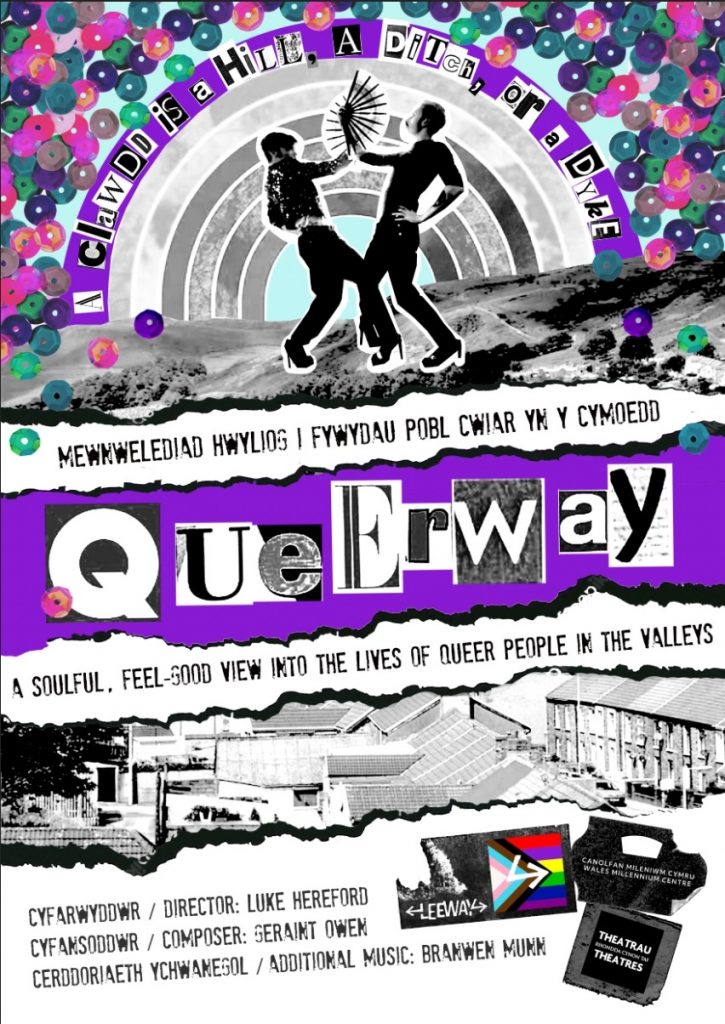
Queerway is a brand new song cycle musical that celebrates and shares the true stories of queer people and those connected to them growing up in the South Wales valleys coming from the incredible minds of Geraint Owen who I was first introduced to during his run-in XXXmas Carol at the Wales Millennium Centre last year with my review available here and Luke Hereford (who is currently touring fabulously fun show Grandmothers Closet.)
The cabaret-style musical sees a compact cast explore the trials and tribulations of coming out, finding true love and a mum’s love for their trans child in an very raw and emotional show. What is unique about this show is despite the actors changing (literally and figuratively) into different characters on stage, the set itself does not change ensuring the focus stays on the emotional underpinning of these real and local stories.
In his debut to the musical theatre world, this brand new song cycle stars Welsh Drag King superstar Justin Drag (Ren Simons) who spearheads the transition events (which you can learn more about here , which for the first time will be hosted in Wales Millennium Centre in two weeks!
Considering this was the first time he had taken to the stage, Justin was completely comfortable in front of the audience even socialising with the audience before the show! My favourite number in this entire show would have to be the track “Not that Type of Gay” which was a hilarious duet between Justin (Ren) and Harrison Smith. The song discusses how the two opposing queers (one being extremely masculine and the other hyper-feminine) who are falling in love with one each other despite being polar opposites. This number highlights the important discussions about what things “gay” which is an issue that many people still fight with when considering sexuality even today. I also really enjoyed the fact that this song gave a nod to the Kings which is the local gay bar that I have frequented on many an evening!
The most powerful song throughout this show however would have to be “I Love you Anyway” which was an incredible song performed by the immensely talented Kate Griffiths.
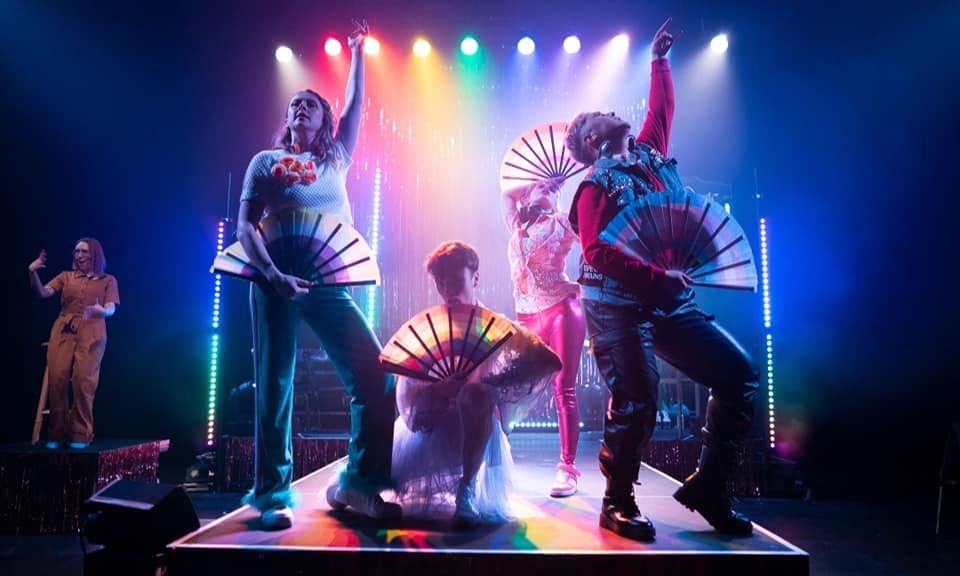
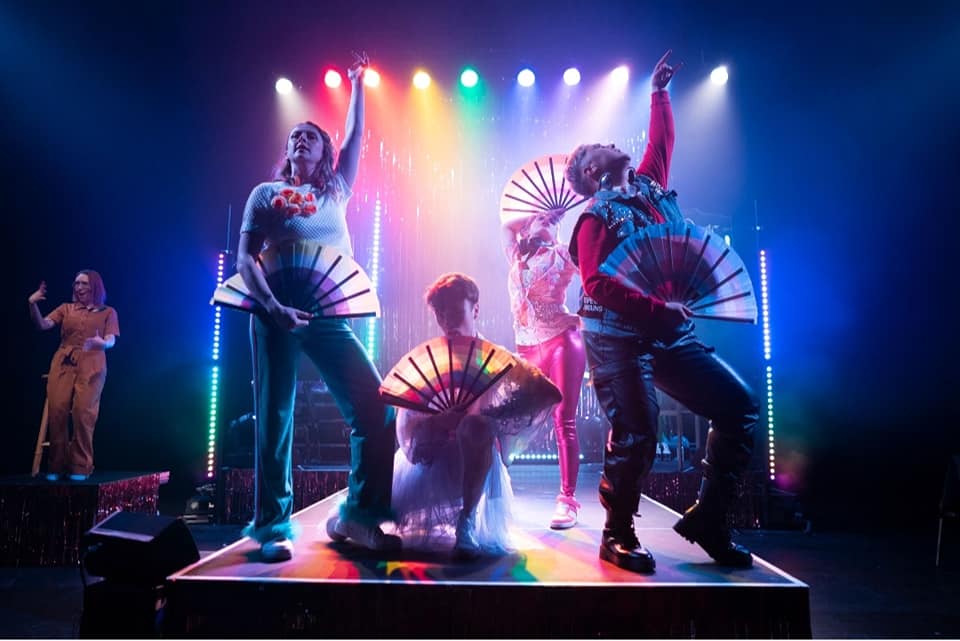
The number is told from the perspective of a mother who has discovered her child is transgender and how this has affected her family. The honest and real look into the range of emotions a parent experiences when there child is going through this transition was so insightful and by the end of the song, where the mum reaches a point of unmatched love and support, every person in the audience (my self-included) was in tears! The combination of insane vocals and moving lyrics worked beautifully together to create a very moving performance that everyone seemed to really enjoy! From a song that tugged on every heart strong to a song that made everyone want to jump up and dance along. Towards the middle of this show, there was a fabulous queer medley of iconic songs that was gave full on energy and fun. The performers donned headphones to explain the electric and club-style tracks which was a wonderful inclusion and when they busted out some wonderful fan-ography (dancing with fans) was just so incredibly flamboyant which is something I personally love!
Overall, Queerway shines a light on not just queer stories but from the perspective of those who are just a short drive away. The stripped-back nature of both the prop and set means that the audience can really submerge themselves into the emotional and powerful yet honest and real undertones of the show!
In what might prove to be a testing trip to London, amid strikes and cold streaks, any fears or doubts floated away on opening night, an hour in the company of Bill for this 44th birthday.
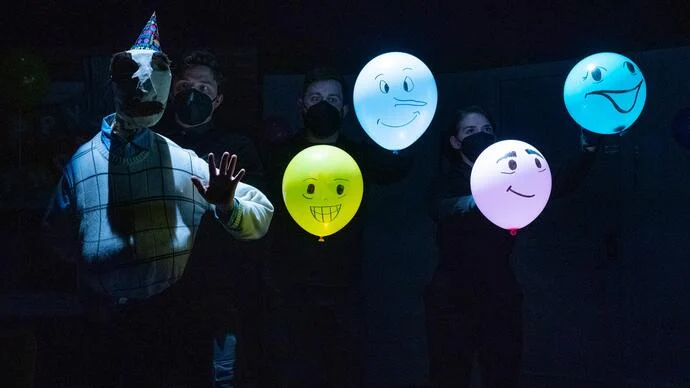
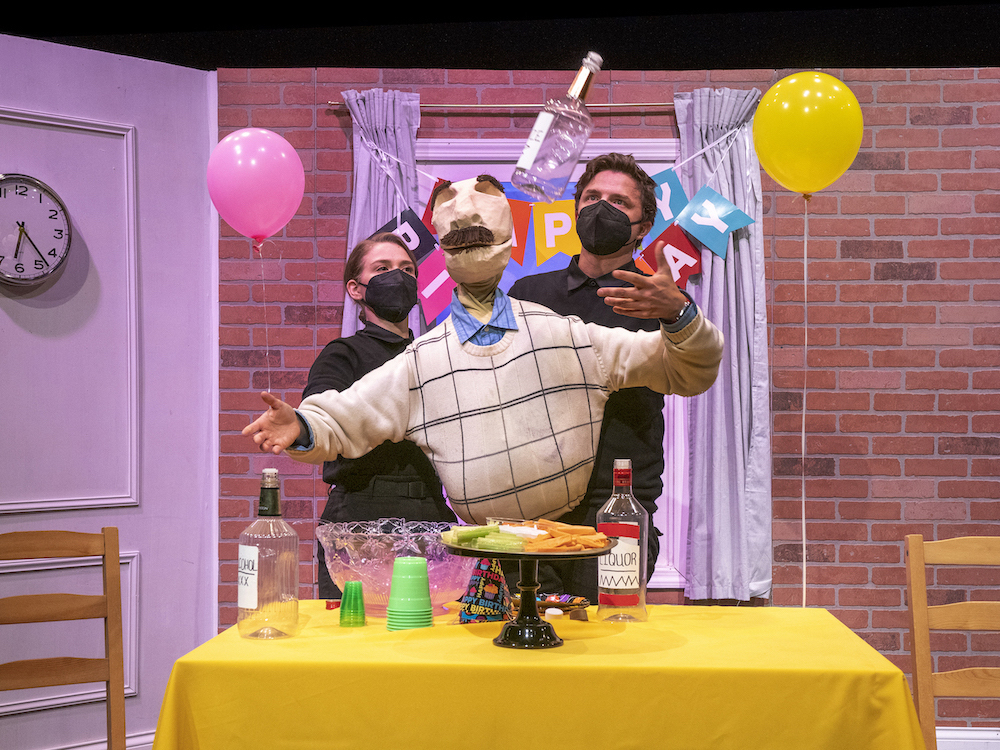
This work of Dorothy James and Andy Manjuck is what could only be described as the the creation of an apparition, or more specially Bill. He is brought to life with such conviction, a mere pot-bellied torso, arms and eyeless head. The fun and bravado of Bill prepping for his big night, is gradually met with disappointment and the awful feeling of loneliness, something we can easily relate to, the past few years considered.
Thanks to the easy appeal of the show and witty, British like humour this will go down very easy. Dorothy and Andy have a kinetic energy, each sharing one of Bill’s arms, the former also accommodating his torso, the latter his head. There is Mr Bean and Wallace and Gromit in some of the flamboyant mannerisms and weird dance moves, Andy’s legs are also Bill’s legs. It held up as rather touching as well, Bill later watches a VHS seeing his life go by from cradle to current day, a smaller wooden puppet used to astounding effect. Surreal, drunken episodes feature party crashing balloons and a giant version of Cary the carrot, a crudités that no one ate.
Photo Credit: Richard Termine
This is a piece which has seen some delays in getting out there, this being Bill’s first London adventure and we simply cannot believe his luck. Also, shoutout to Jon Riddleberger who dealt with a lot of the prop side of things and was an extra injection of humour, amid the sad revelations. Music by Eamon Fogarty was also noteworthy for each vibe and tone change. We are all essentially Bill, finding our way in this post-pandemic world, seeking friends to define and make us, to aid in the blandest of life and also reflect upon the pang of memories filled with regrets and of course, happiness.
In short, London loves Bill!
Bill’s 44th continues at The Pit, Barbican Centre till 4 Feb 2023.
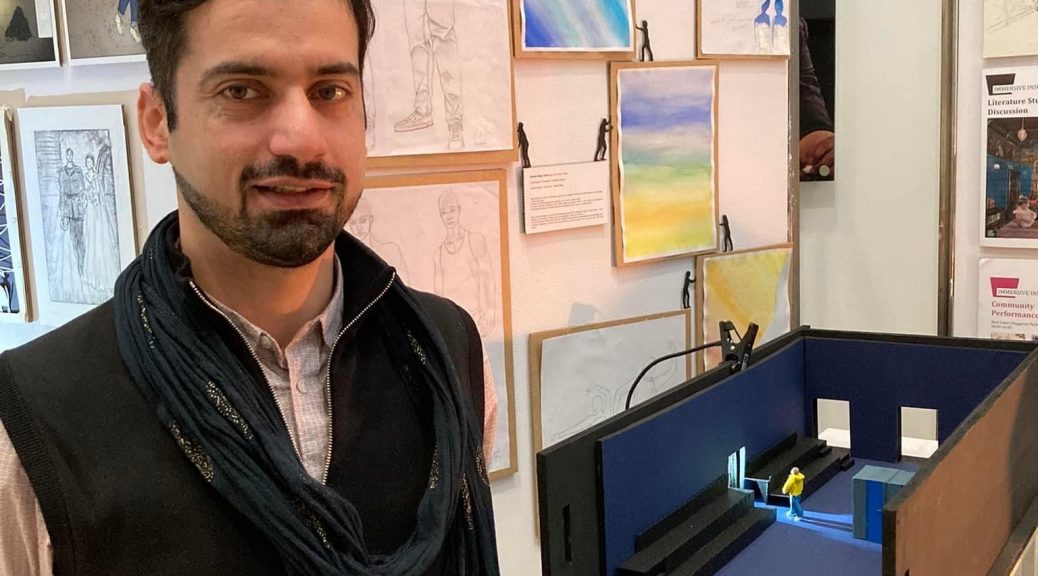
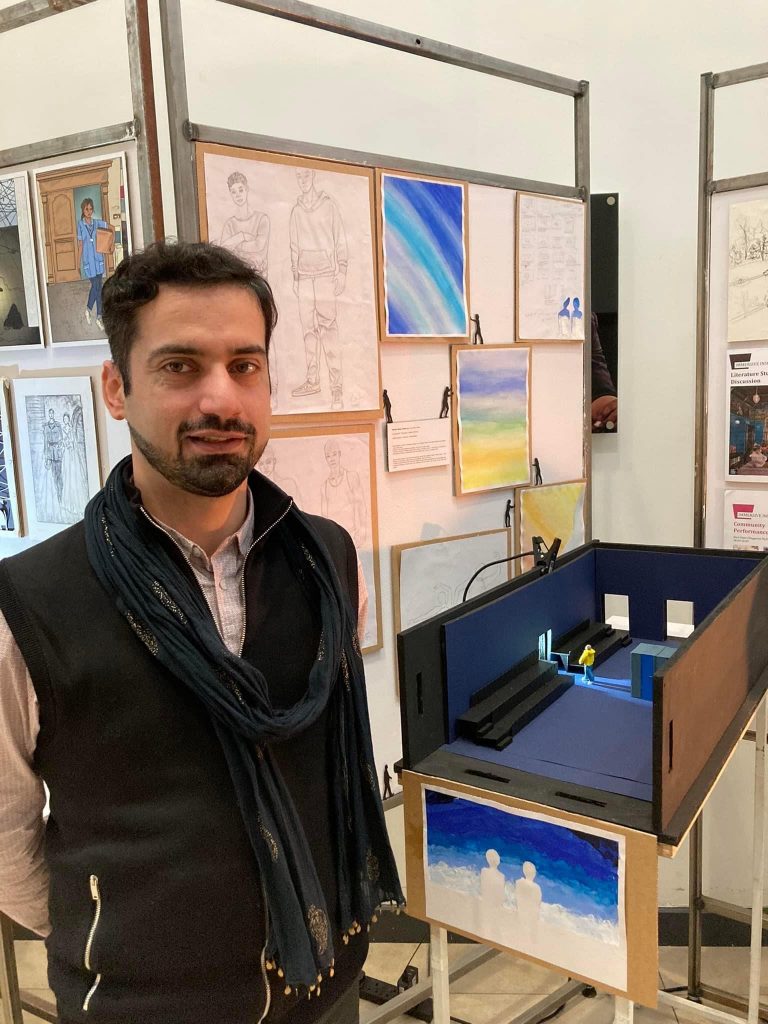
In this interview Mehdi gives an overview of his career to date and shares his experience as part of Fio’s Arise Wales Creatives programme for Emerging Directors at RWCMD.
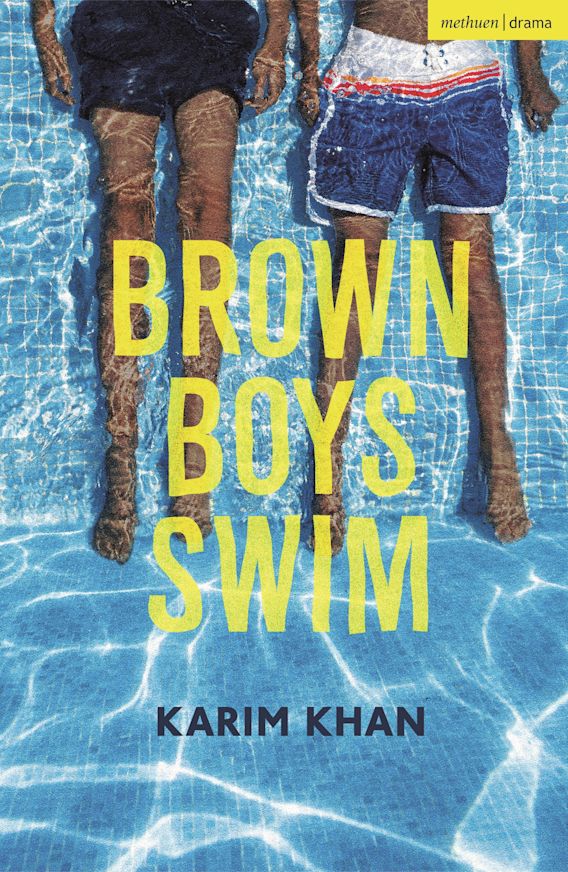
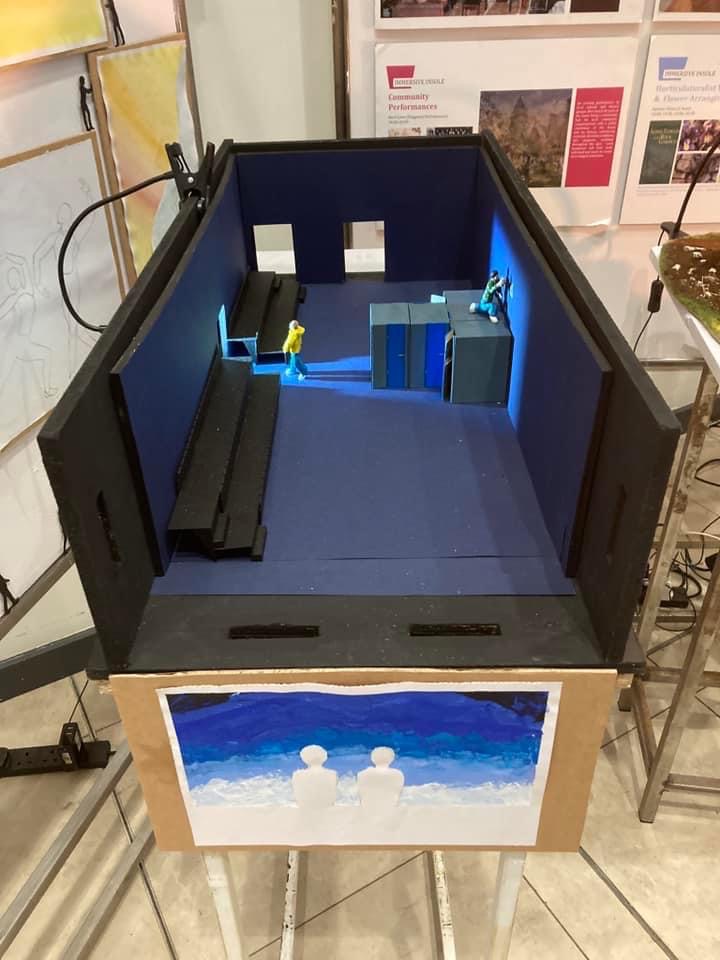
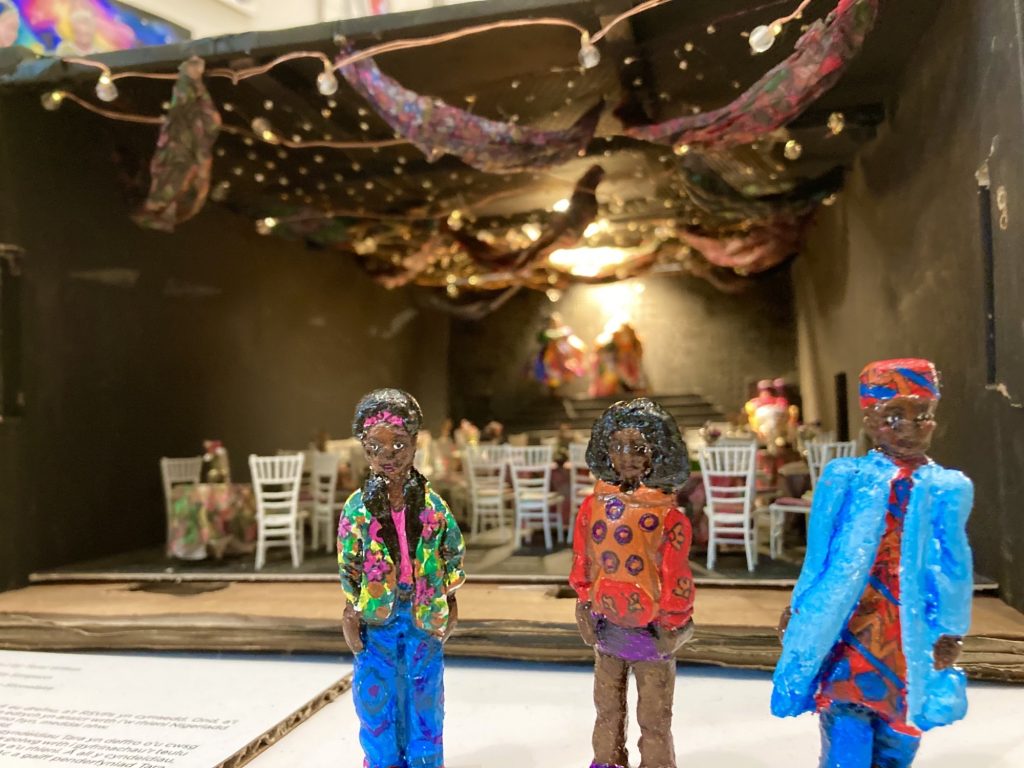
Director Mehdi Razi in front of the model box and designs by Kathryn Brown of Brown Boys Swim by Karim Khan
Hi I am originally from a Shiraz in Iran I first came to Wales in 2015 for a Masters in Product Design at Cardiff Met. During my time as a student I found Cardiff to be a very welcoming city. After completing the Masters I worked for two years in the Design Industry, based in Splott.
I was always interested in the performing arts and after moving to Wales a few things changed in my life, offering the opportunity to focus on the performing arts as a career. Initially I started ushering and volunteering through Sherman 5 at the Sherman Theatre and National Dance Company Wales on the Dance for Parkinson’s programme
Volunteering helped give me an insight into the possibilities of different areas I could work in the arts. This alongside shadowing and then later assisting on performances gave me an option to see things in detail and how I could invest in these areas as a career.
I developed my experience as a Producer about 5 years ago with WNO on a placement and shadowing on productions. I produced an R and D project called Beyond the Rainbow with Oasis (who support Refugees and Asylum Seekers) and the Refugee Council for Wales, this resulted in an informal sharing at the Wales Millennium Centre.
I then started on small assisting roles with the company and also enjoyed working as an emerging producer for Theatr Clwyd. During lockdown I worked on some projects of my own with support from ACW
Thankfully as Lockdown eased, work opportunities opened up and I assisted Joe Murphy as trainee Assistant Director on Christmas Carol in 2021 at The Sherman Theatre, Cardiff.
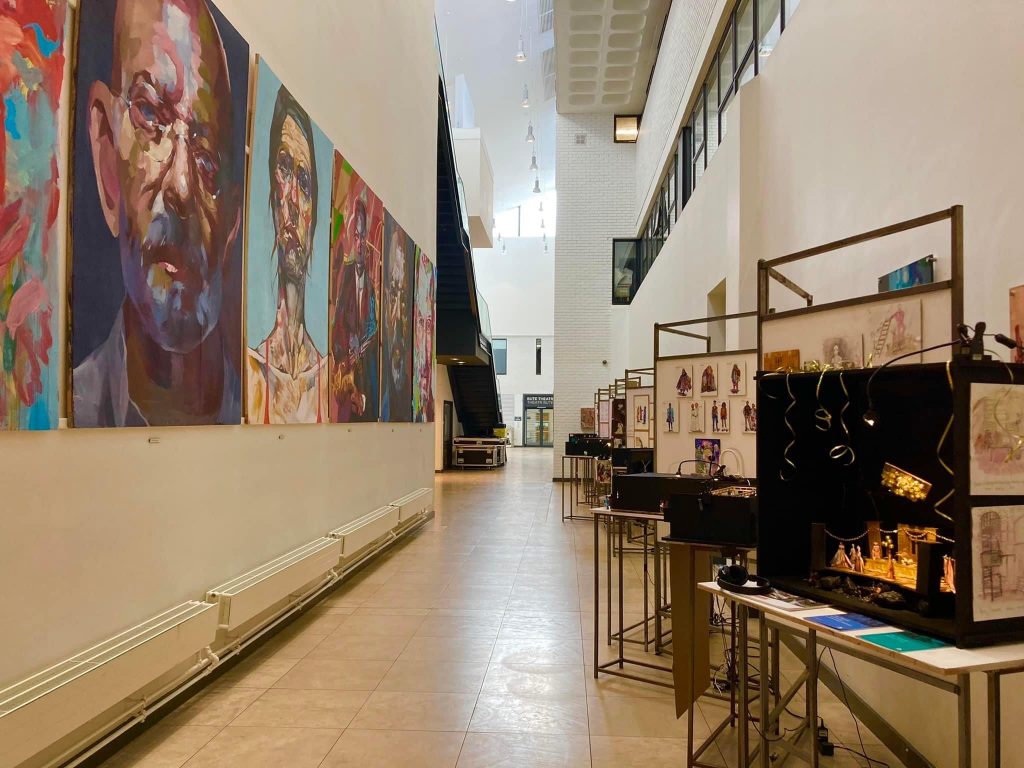
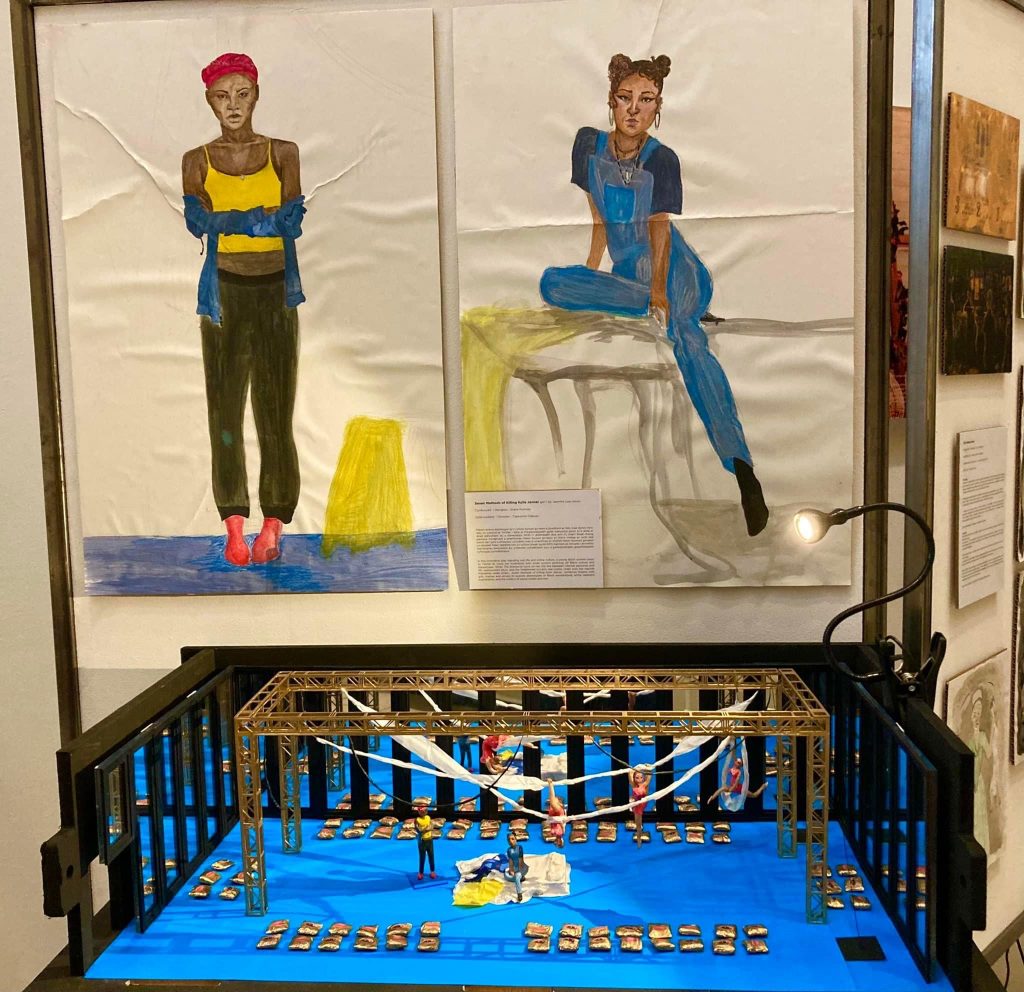
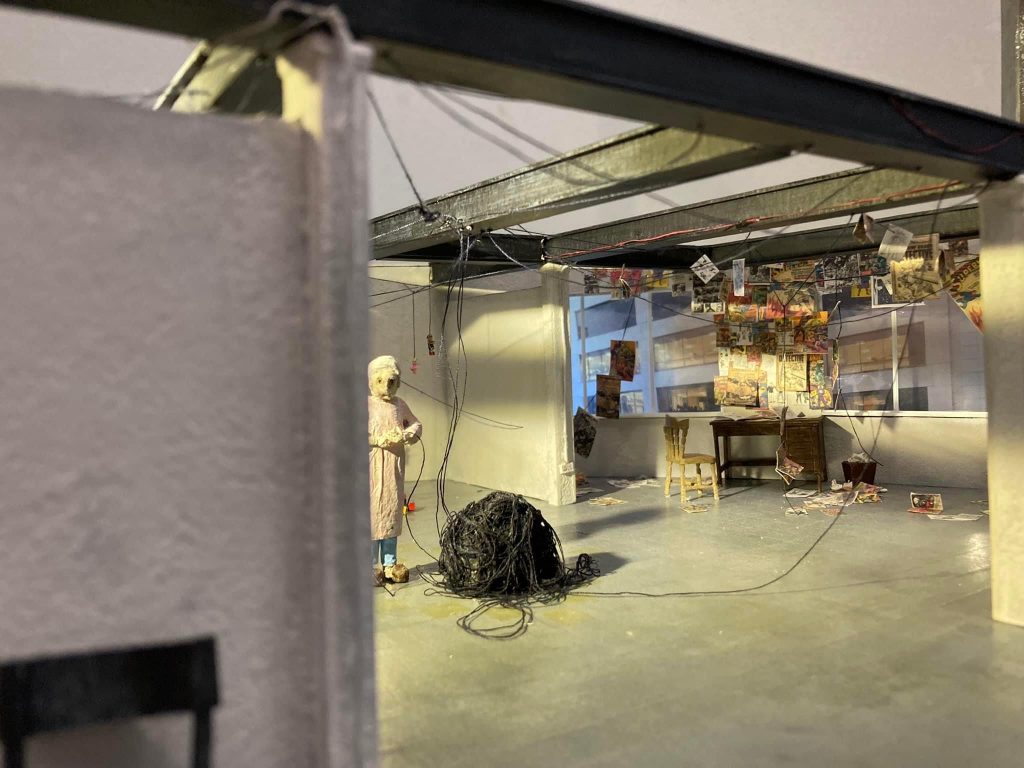
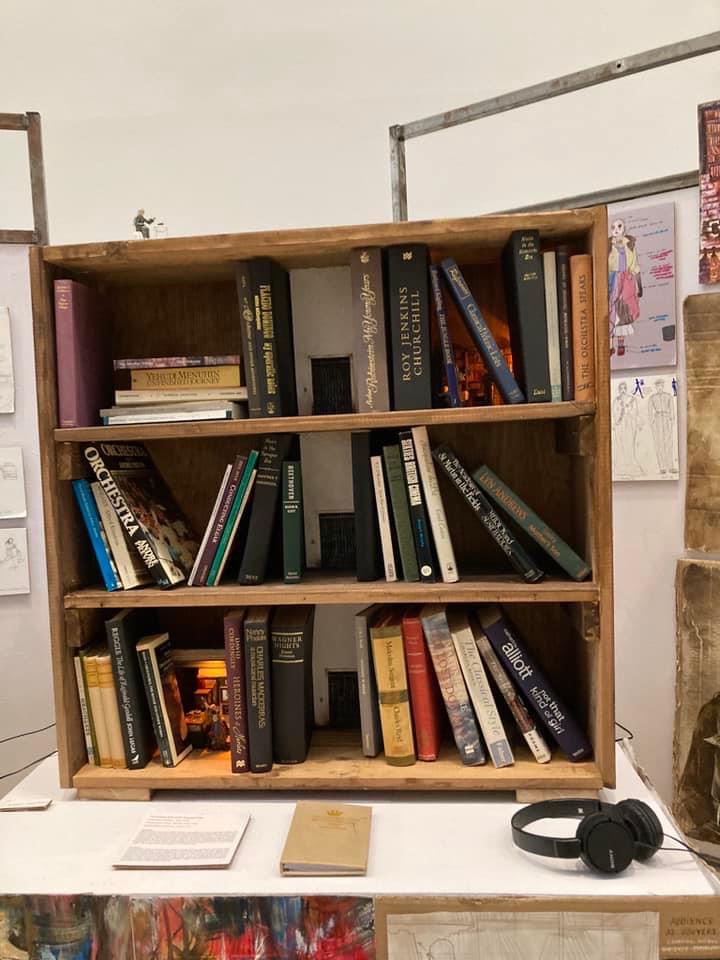
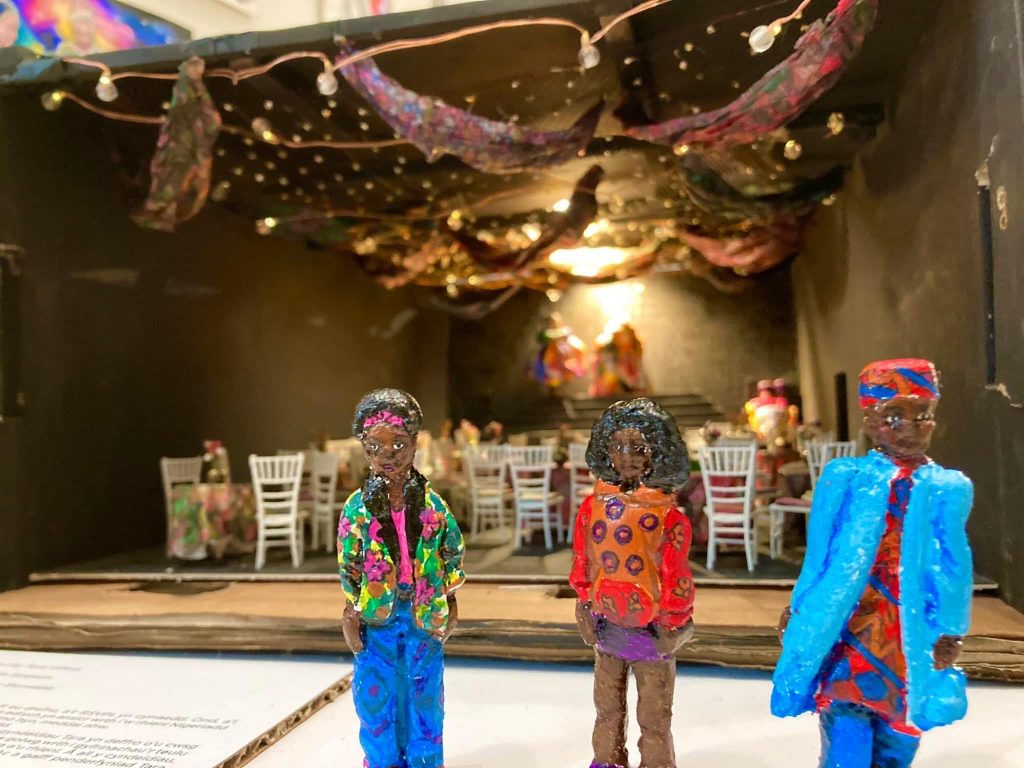
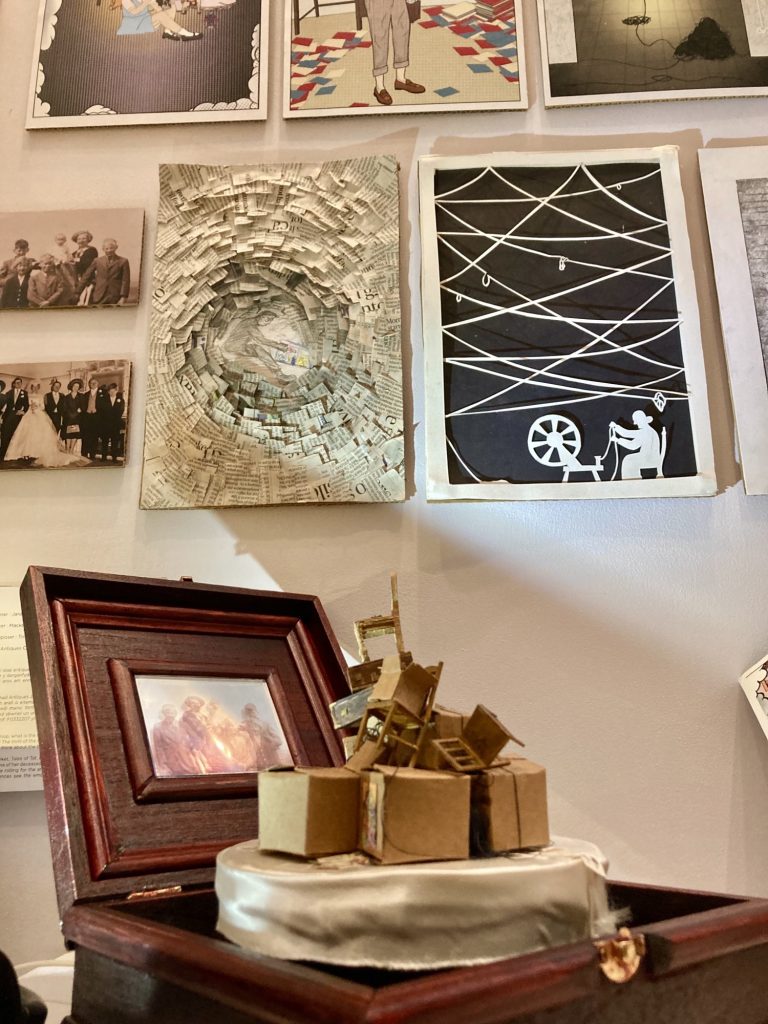
The Design for Contemporary Drama Exhibtion at RWCMD
We were then put in pairs and given some plays to work on in order to help develop our working relationship. I was partnered with a RWCMD Design Student called Kathryn Brown.
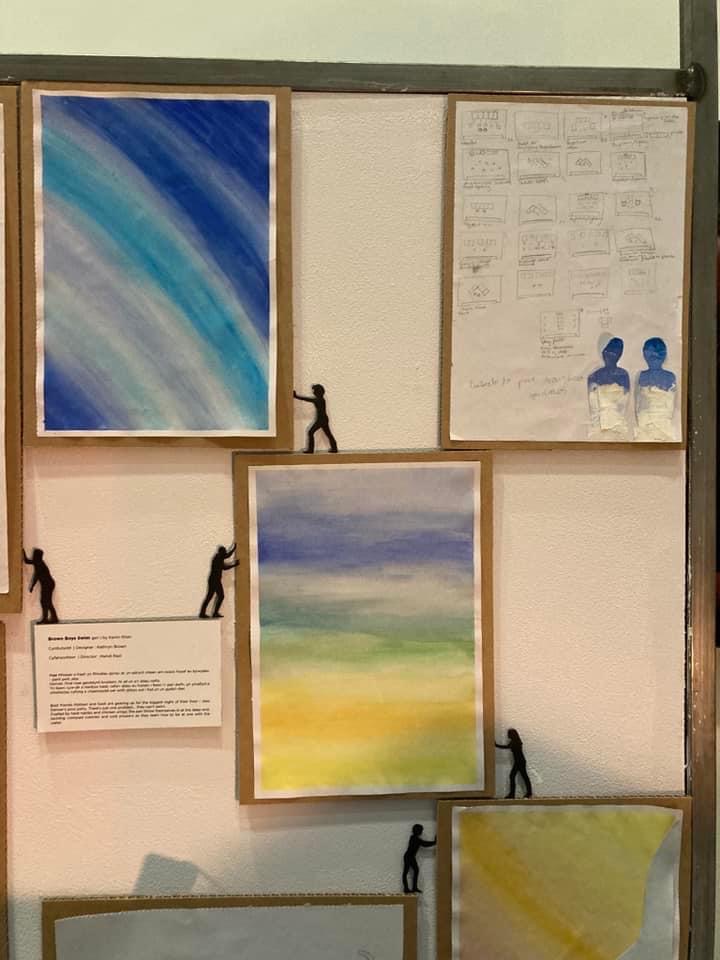
Kathryn created a mood board and we discussed the different elements of the production. We worked on the core idea of movement and cubic elements, The play interrogates feelings of oppression and the individuals place in society. Kathryn found that the traditional changing cubicle in the swimming pool would be great metaphor for the boys lives, sharing and then isolation so we played with this element.
Kathryn’s designs
We then worked on choreographic elements for the space. We had a few creative meetings, and considered what the change of position of the cubicles in the work would this mean to the audience and storyboarded the development of the play together.
A rough design was presented to me and we then looked at the blocking and the choreography was clear, we focused on the visual details, lighting, colour and transitions in the space. We focused on design details and construction, how scenery might be moved around the space and considerations of construction. A more detailed version of the model box was presented to me, we then finalised the design details and the practicalities of the sightlines for the audience.
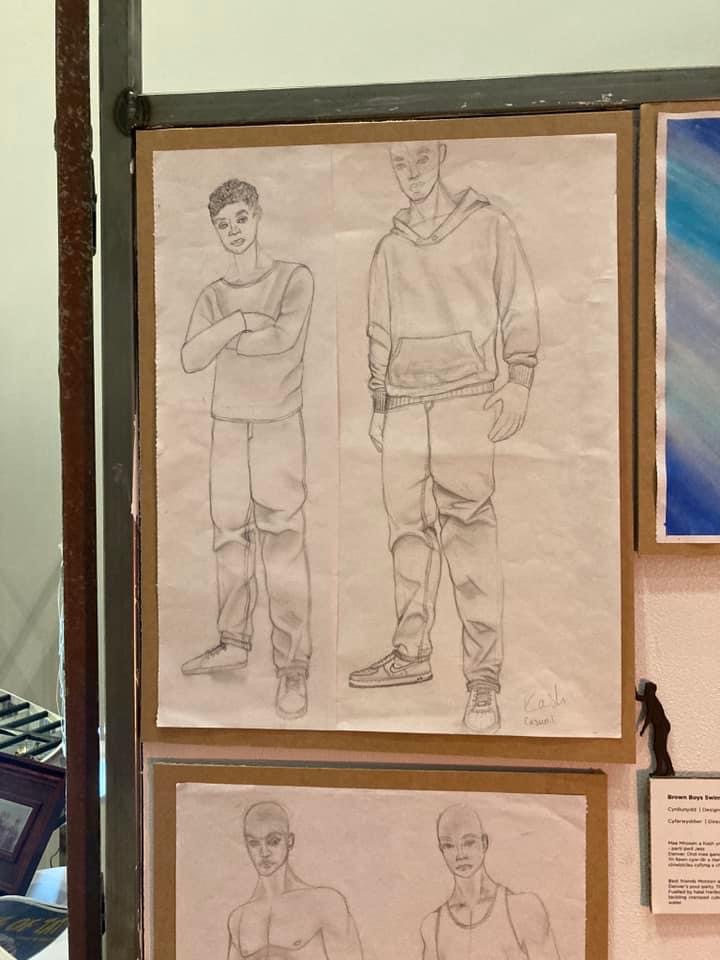
Kathryn’s costume designs
Our brief was based on a specific space called The Studio at Chapter Arts Centre so we went on a site visit to the venue.
Kathryn’s finished model box
This was my first project at College I really enjoyed going into the design studio as I have a design background myself. Everyone involved was very inclusive, it was very collaborative. The RWCMD Tutors would often come in to chat, it was great to see such a high level of support.
I enjoyed being around the students, RWCMD is comfortable and homely, its a welcoming campus you can have lunch and work its such a pleasant environment.
The exhibition at RWCMD runs until the 10 Feb you can find more information below with a selection of images from other RWCMD Designers.
In this latest in the series of Playwright interviews Peter Cox gives an overview of his career to date, his time working for National Institutions, access to the arts for all and his hopes for the future. Interview by Director of Get the Chance, Guy O’Donnell.
Hi Peter great to meet you, can you give our readers some background information on yourself please?
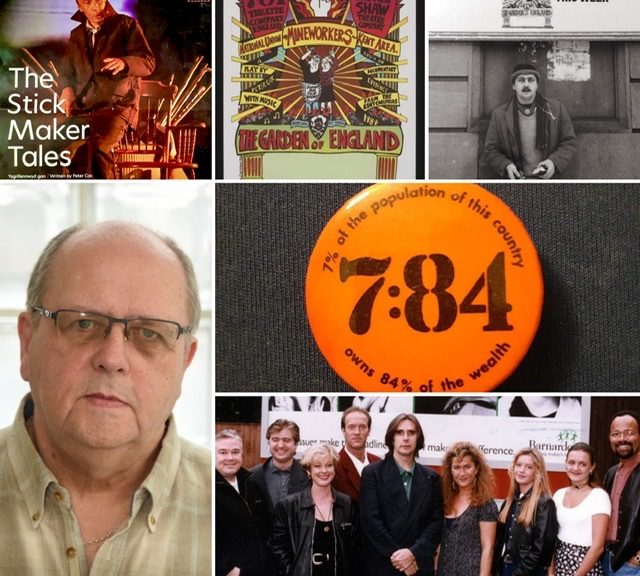
I began my writing career at the Royal Court Theatre in London where I won the George Devine Award for most promising new playwright in 1983. My stage plays have since been commissioned and performed by companies throughout Britain – including 7:84 Theatre Company, the Royal National Theatre, Belfast Opera House, the Wales Millennium Centre and National Theatre Wales.
I’ve written and developed film and television drama for the BBC and various independent companies. My radio drama has been broadcast on BBC Radio 3 & 4 but I’m maybe best known as the writer of 227 episodes of the acclaimed Channel 4 drama serial, Brookside, between 1986 and 2003. During this time, I was a lead member of the writing team that created multiple-strand stories for more than 2,400 episodes.
Throughout my career writing drama for theatre and television I’ve been privileged to work alongside, and with, masters of these forms including Samuel Beckett, Edward Bond, Billie Whitelaw, Michael Bogdanov, Danny Boyle, and Sir Phil Redmond CBE. The experience of learning alongside people who are working at the top of their profession is unbeatable and led me, in turn, to a commitment to mentoring theatre makers and writers.
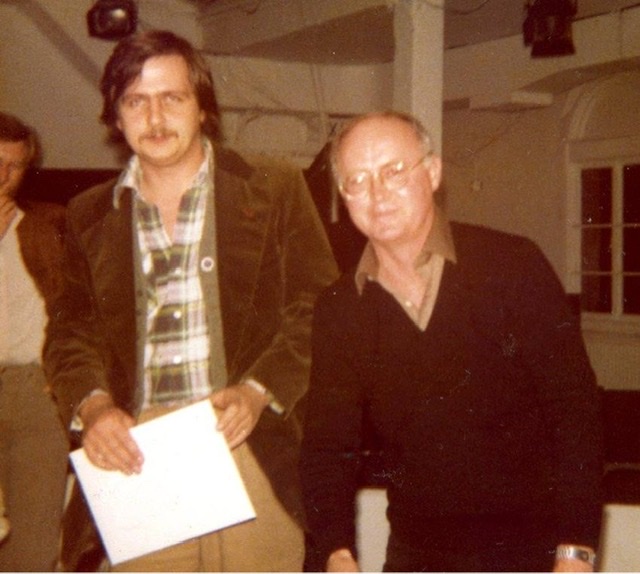
Peter (left) working as Assistant Director with Edward Bond on the play The Worlds, performed by the Royal Court Young Peoples Theatre (AKA The Activists) in the Theatre Upstatirs.
Alongside my writing work I’ve been very active in the Creative Industries sector in Wales including creative leadership and advocacy in community arts, cultural policy making, economic and cultural regeneration, broadcast radio and television drama production, professional theatre, youth theatre, live music promotion, carnival, and cultural tourism.
I’m a founder trustee and ex-Chair of CARAD(Community Arts Rhayader and District), a Registered Charity that has developed a regionally significant Rural Community Arts and Heritage resource that’s brought more than £5 million of inward investment into Mid-Wales. During my leadership term CARAD facilitated the active engagement of more than 118,000 members of the community and helped to inspire and deliver over 650,000 hours of community participation and engagement in arts, heritage, and media projects.
In the 2010 New Year’s Honours list I was awarded an MBE for services to community arts – in essence, an acknowledgement of the amazing vision and hard work of many local people.
So, what got you interested in the arts?
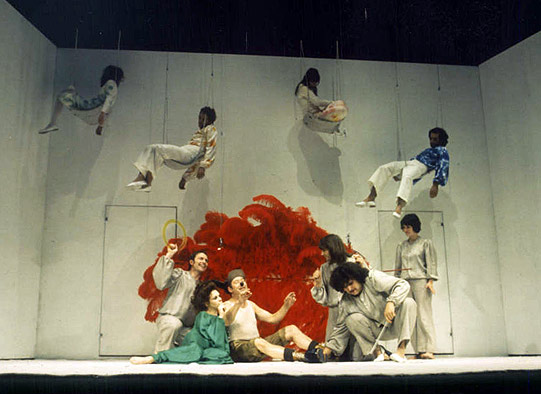
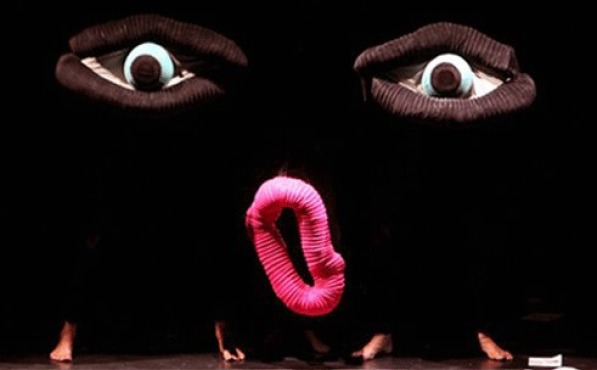
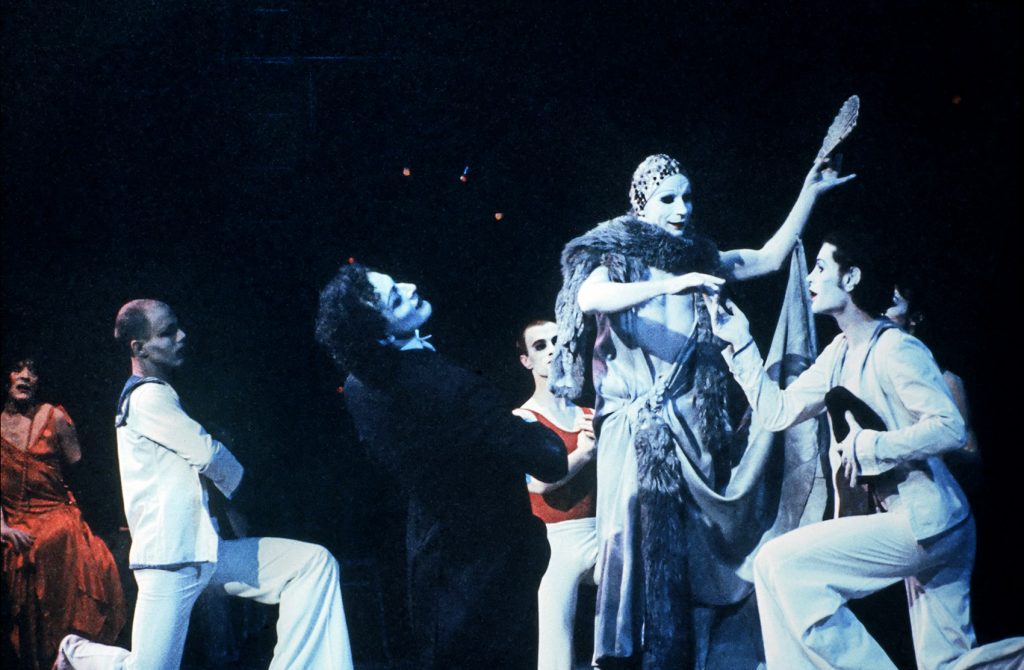
My earliest theatre-going experiences fuelled my desire to pursue a career in the performing arts. My first, on a teenage school-trip, was watching Peter Brook’s ‘A Midsummer Night’s Dream’, with its rock-circus staging and Bottom being given a clown nose rather than an ass’s head. A few years later, as a drama student, I was awestruck watching the fabulous giant puppetry of Swiss theatre troupe Mummenschanz. Soon after I was deeply moved and inspired by Lindsay’s Kemp’s extraordinary, ‘Butoh’ influenced, movement-theatre production of ‘Flowers’ at Sadler’s Wells. There are visual stage images from all three productions seared into my memory to this day.
Peter Brook’s ‘A Midsummer Night’s Dream’,Mummenschanz‘Flowers’ at Sadler’s Wells.
In each of these shows, the non-traditional theatre techniques and visual language used were incredibly powerful and profoundly enhanced the storytelling. Primarily though, I was conscious of the way my emotions, imagination and creativity were provoked by these vividly effective, stylised, and subversive theatrical approaches. I was hooked.
Why do you write?
I write to try and harness the vast numbers of ideas that just keep bursting out of my sub-conscious mind. I write to try to capture and express moments of extreme crisis, of powerful emotions, from rage and hate to love and grief. I write to make an actor’s blood run faster and to make audiences laugh and cry.
As both a playwright and screenwriter, I’ve researched in, and written about, many socially and politically challenging environments, including: the Bogside in Derry in 1982/3 just after the Hunger Strikes, across British coalfields during the 1984/5 Miners Strike, in Southern Sudan – a war and famine zone, during the Troubles in the Falls Road Belfast 1988/89, and so on. At the heart of all this work there are real people facing very real, and serious, crisis points in their personal and community lives.
Those are stories that need to be told.
Can you tell us about your writing process? Where do your ideas come from?
I watch the world – politics, journalism, human behaviour and frailty, social trends etc… and generate ideas on a daily, if not hourly, basis. I never block any of my own ideas – I note them down, then they either get used or not. Sometimes they might resurface years later in an entirely new context.
I use a diverse range of process techniques, like T Cards and colour coding for structure, but my approach to storytelling is always the same, whatever the form… find a compelling character, or group of characters, and put them into a story that pushes them up against and beyond their own boundaries. The challenges they face, both mirror and echo the challenges that audiences face every day.
Can you describe your writing day? Do you have a process or a minimum word count?
Getting into my ‘writing zone’ is crucial. Blanking out all the extraneous noise from life and the world around me. Once there I honestly can’t say how the magic happens – when the words flow it’s an alchemical process. Researching and note-gathering are replaced by something akin to ‘channelling’ as characters, action, dialogue and images form in a kaleidoscopic visualisation.
I never judge or edit as I go – that comes later. I’m completely committed to revising and re-writing and I’m not afraid to write twenty or thirty drafts or more. I’m a strong advocate of the strength and power in a good relationship between writers, directors, and dramaturgs. I work on the understanding that writing is a form of improvisation on the page. I never ask, ‘Do you like what I’ve written?’ Always just, ‘How can it be better?’
Do you have a specific place that you work from?
When I worked as Writer in Residence with No Fit State Circus – on three site specific shows -my ‘standing-desk’ was a wheelie bin, out in the open air, with my writing files and laptop perched on top of it. I wouldn’t swap that experience for the world, but when it comes to writing every day, often for very long hours, I prefer my desk in my office space at home.
You began your writing career at the Royal Court Theatre and won the George Devine Award for most promising new playwright. We recently interviewed playwright Diana Nneka Atuona about her play Trouble in Butetown. Her script was recipient of the 2019 George Devine Award for her play then titled, ‘The Boy from Tiger Bay’. What role do awards and prizes play in a writer’s career and what difference, if any did it make to yours?
Huge congratulations to Diana. Winning the George Devine Award opened many professional doors for me, and I still place it high on my CV. Just as important though – was that it gave me a huge confidence boost and a validation of my writer’s voice.
I think it’s important that all ‘competitions’ should take the process very seriously. They need to be run with integrity and with good, sensitive communications. Giving thoughtful, considered, and professional feedback should be at the heart of the process – that way, everyone who enters is a winner.
I was fascinated with some Tweets you shared recently on a commission from The Royal National Theatre touring Welsh Miner’s Welfare Halls, where you also worked with 7:84 Theatre Company. How do you come to be involved in this project?
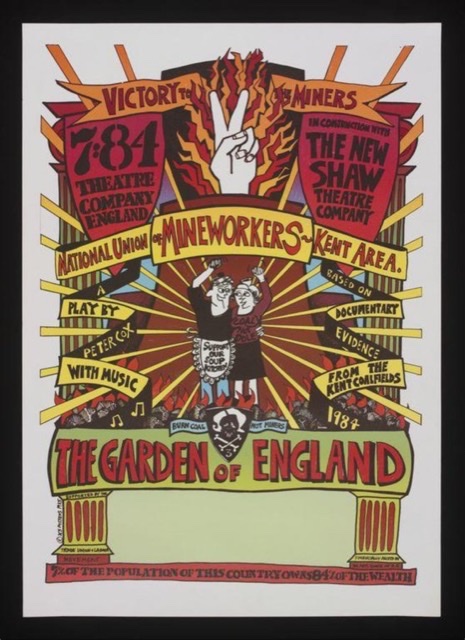
Just after winning the George Devine Award, I was commissioned by Peter Gill, Associate Director at the Royal National Theatre, to go into the Kent Coalfield to live with a militant striking miner – and then to create a verbatim play taken from interviews with miners for the duration of the strike. I travelled to every coalfield across the rest of the country, interviewing and researching on picket lines, mass demos, in soup kitchens etc.
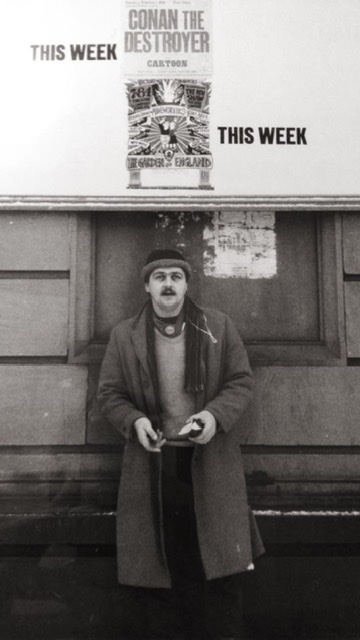
After the first version of the play was done at the National, (The Garden of England, directed by Peter Gill), I was asked to write a touring show with songs – inspired by that verbatim research – for 7:84 Theatre Company (England). We played some amazing huge venues to thousands of striking miners and their families – with the buses that brought the audiences being sponsored by other trade unions and using volunteer drivers. (Opening night in front of 2,500 in Sheffield City Hall, second night another massive audience in Newcastle City Hall, then Manchester Town Hall.) Our Wales venue was the Parc and Dare and it was an extraordinary night, as was the rest of the tour!
Peter outside of the Parc and Dare 1985.During the tour of Garden of England.
Then, in a strange turn of events, once the strike was over, Peter Gill commissioned me to go back to Kent to conduct another whole sequence of interviews in the defeated mining community. Once again I created a powerful piece of verbatim theatre, but one which was very different in tone to the first two. The two verbatim pieces played in the Cottesloe Theatre at the National Theatre.
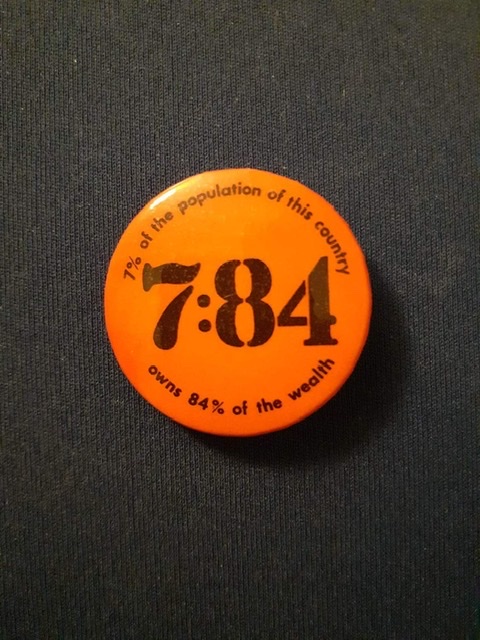
My connection with 7:84 was a big influence on me. I was very lucky to get picked up as a young playwright by such a theatre visionary as the late John McGrath who founded the company. John was extremely encouraging to me and gave me various opportunities. He enabled me to go on the road with the company in both England and Scotland, as a form of apprenticeship. He commissioned me and I wrote several plays for 7:84. He put me on the 7:84 management committee. I owe him a lot. He had a fierce intellect and was extremely shrewd and analytical – always pushing societal boundaries and hierarchical cultural constructs. Working so closely with him inspired me to do the same – something I try to do with every new project I undertake.
What role do you think National Theatres and Playwrights have in telling the narratives of the citizens of their respective nations?
To be a good playwright you must care in equal measure about your characters’ and your audience’s lives. You need to be adaptable and flexible to create a wide range of characters and stories. You need serious commitment, stamina and staying power. You need to be ready to shed tears as you dig into the depths of your own life experience to bring those emotions to life in your characters. You need to love drama, and the power it has, to affect people’s lives. All these things apply to being a good National Theatre as well.
A large part of your career was spent writing episodes of the Channel 4 drama serial, Brookside, between 1986 and 2003. During that time, you were a member of the writers’ team that created multiple-strand stories for more than 2,400 episodes. You have said about your work on Brookside that “As you might guess I love story and the power of story metaphor in people’s lives.” We often see the term, “Writing Team” on long running serial dramas, can you share how this process works for the writers involved?
A Writers Room, or being on a Writing Team, is most commonly associated with American TV Drama Series & Serials. Breaking Bad for example, has a formidable reputation for the strength of its Writers Room – one of the reasons it has been so globally successful. Brookside story-lined with the Writers Room model – right from the day it started in 1982.
During my time on Brookside there would be twelve to fourteen writers on the team at any one time. We’d meet with the producers every six months to determine long-term story potential for all core characters. Then we’d meet for two days every month, in storyline sessions led by the Producer and / or the Exec Producer, where we’d intensively thrash out a block of twelve episode outlines at a time. We’d then go on to be commissioned individually to write single episode scripts – or possibly two or three for more experienced writers. While in the Writers Room we’d fight for stories, find twists and turns, generate the drama, seek out the humour and push the political and social boundaries as far as we could. We’d argue fiercely about politics, sex, religion etc… to the extent that, on one occasion, Security was called to attend as someone had reported a fight was taking place!
Writers Rooms don’t suit all writers, and they can be quite attritional places. Often there’s a high fall-out rate, and on shows like Friends they’ve been identified as being brutal and unforgiving. All of that said, when they work well, and when they suit you, it can be a fantastic system to work within. I had the great fortune to write for Brookside for eighteen years and my time in the Writer’s Room was like a monthly injection of the best drug going – intensely focused and collaborative creativity. I developed huge respect for my colleagues and for their commitment to driving our series to be the best that it could be. The fact that people still stop me, and talk about stories from over twenty years ago, is a great tribute to the effort we made at the time to tell the best stories we could that viewers would identify with.
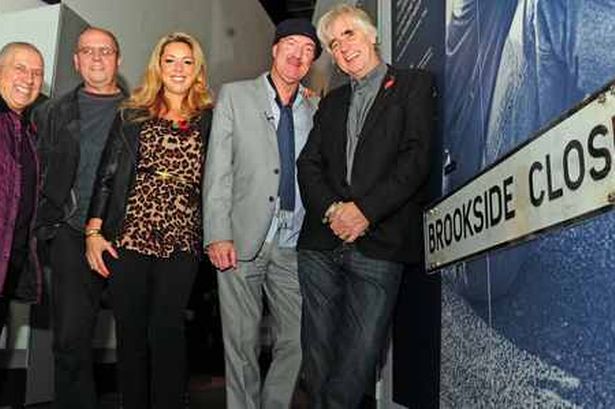
Peter with the cast and creatives from Brookside
In news just announced this week I’m very pleased to see that all episodes of Brookside have been digitally remastered and are due to be shown on STV – a free to air streaming service. I’ve no doubt that many of the stories that we told across the 80s and 90s will still resonate in the viewer’s lives.
Are there any particular storylines that you are most proud of during your time on Brookside?
Tough question. I was part of the Writers Room Team that generated storylines that ran through more than 2,400 episodes. I wrote 227 episodes which is a huge amount of broadcast television drama. To give you some idea of scale… just writing my episodes alone would be around three million words. By the time the team has story-lined and scripted over 2,400 episodes you are well into the tens of millions of words!
Brookside was conceived to bring real issues and real lives to the British television screen, through an ongoing drama serial. It was brave and ground-breaking. We prided ourselves on being ahead of social, political and legal issues and trends. Our audience looked to us to be challenging the boundaries of British politics through the eyes of ordinary people. We gave a voice to the genuine concerns, fears, and aspirations of our viewers – people with little or no power over their lives and their futures. Brookside was recognised from its first episode as ‘gritty social realism’, but we weren’t afraid to make people laugh along the way.
It was very important to us that we moved with the times. In the 1980s there had been a major national focus on Trade Union politics, and this was reflected in the programme. As we moved into the 1990s other social issues began to dominate, including LGBT+ issues, drug misuse, rise of feminist politics etc. Brookside further explored all these issues and many more.
So, having created hundreds of Brookside stories, it’s very hard to pick out a favourite – although the three-year-long ‘Body Under the Patio / Jordache’ story of domestic violence and child abuse is high on my list.
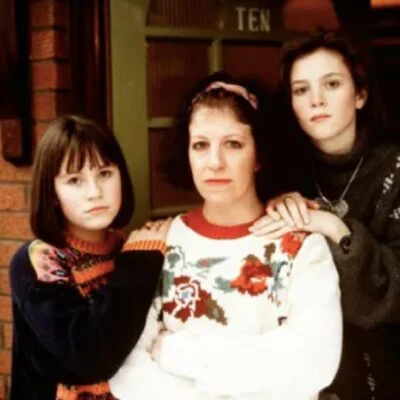
The Jordache Family
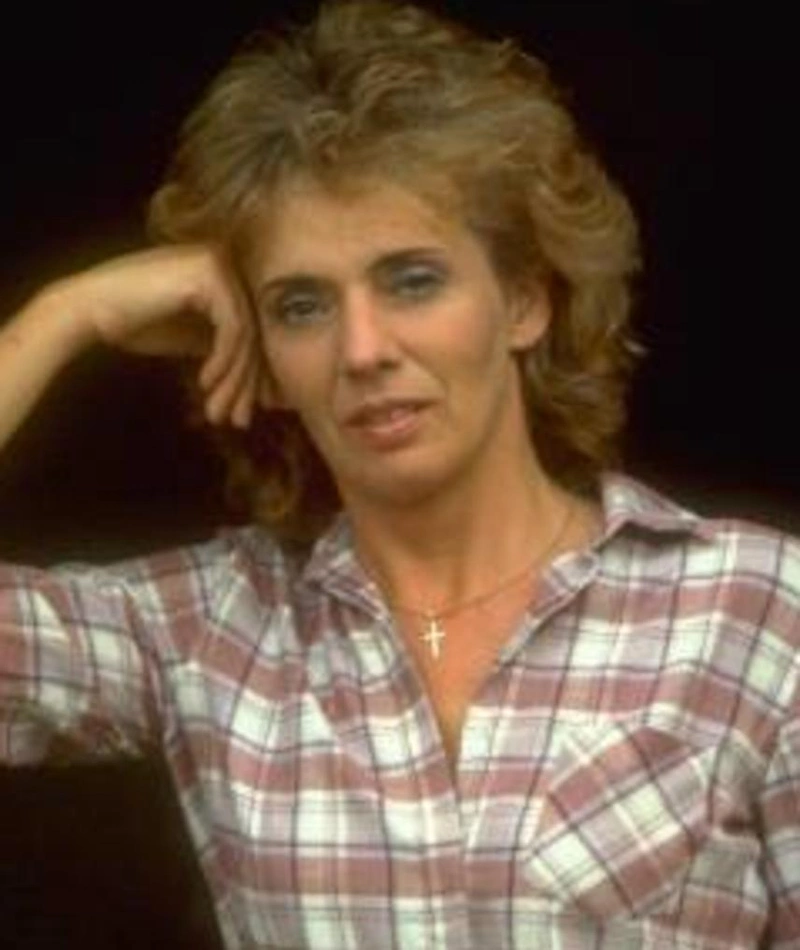
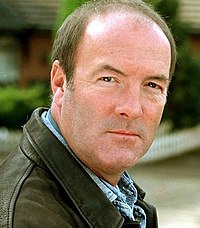
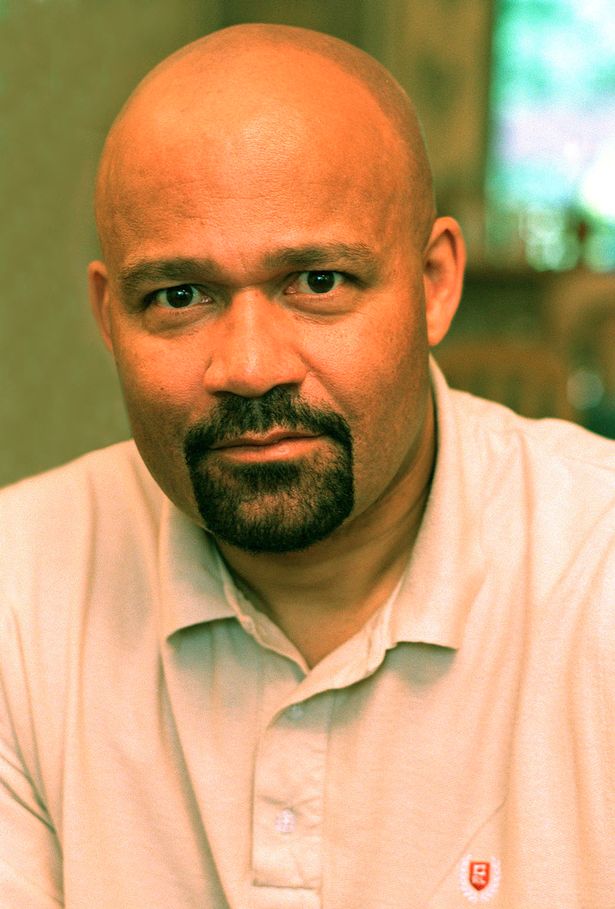
Maybe an easier way to frame it is to recognise that I have four favourite Brookside characters who were iconic soap characters played by outstanding actors who were great to write for: Sheila Grant, Jimmy Corkhill, Sinbad the Window Cleaner, and Mick Johnson. (Sue Johnstone, Dean Sullivan, Michael Starke, and Louis Emerick).
Sheila GrantJimmy Corkhill,Sinbad the Window Cleaner,Mick Johnson
Each of them was a working-class character who grew in strength and influence over many years from essentially the same starting point – as one of life’s underdogs – people with no power or agency in wider society. Each of them showed great resilience, courage, and human spirit to overcome all the adversities they faced, and a political system heavily weighted against them.
Throughout your career you have often worked with the general public and young people in particular devising work together, how does this process differ from being commissioned to write a script by yourself? Can you make any suggestions for good practice in terms of this method of creativity and writing?
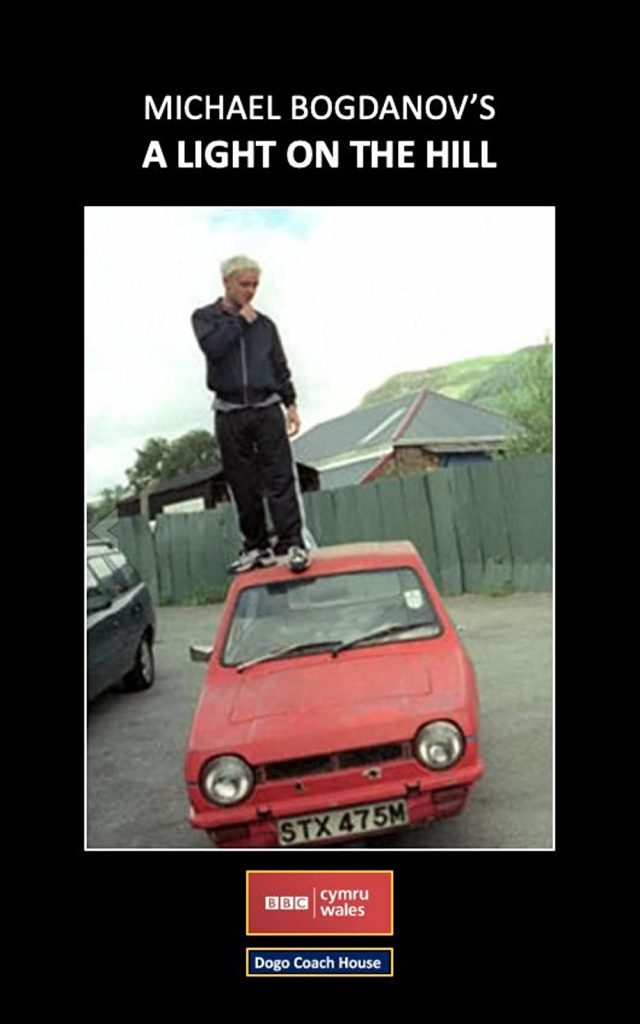
I’ve had extensive experience creating drama with communities including large-scale community plays in Wales and London, youth theatre in Belfast, youth and community film for the Rural Media Company and the BBC Wales Millennium Film, ‘A Light on The Hill’, commissioned and directed by Michael Bogdanov.
In all instances I aim to balance the process and the product equally. I always set the bar as high as possible, and ensure the whole project is delivered to the highest professional standards. This has an immense impact on the participant’s self-esteem and sense of achievement and can have a profound effect on people’s lives, including those in the audience. Best practice includes providing good access that removes barriers of all kinds, good listening and learning skills, honesty, respect, and integrity. With those basic principles in place everything else is about creating supportive systems and logistics that give people the best chance to grow in confidence and deliver at a level that they never thought they would be able to achieve.
Peter (centre) working in 1989 with with a group of young women from the Falls Road in West Belfast on his play Ma Hat Ma Coat and The Ghandi Girls
There are a range of organisations supporting Wales based writers. I wonder if you feel the current support network and career opportunities feel ‘healthy’ to you? Is it possible to sustain a career as a writer in Wales and if not, what would help?
It’s difficult to envisage a time when it will be genuinely ‘healthy’ as demand far outstrips supply. For example, the National Theatre Wales Community has four hundred and eighty-two members in its Writers Group. Let’s say half of them are active and wanting to write plays and get them performed. That’s over two hundred writers, while the number of commissions via companies like Theatr Clwyd, NTW, Sherman etc, will come nowhere near that in any one year.
This makes sustaining a career through theatre writing extremely difficult, except perhaps for a handful of playwrights. I’ve always thought of myself as a dramatist, not just a theatre playwright. This means in practice that I’ve gone out of my way across my career to find opportunities to deploy my core skills in a wide range of performance settings – radio, TV, film, circus etc. I would estimate that probably over 90% of my career earnings have come from working outside Wales.
If you were able to fund an area of the arts what would this be and why?
My ‘wish list’ would include: a Rural Region of Culture, youth theatre, touring theatre, new writing by writers of all ages, opportunities for women playwrights, mentoring… it could go on to be a very long list!
What currently inspires you about the arts in the Wales?
I’m hugely inspired by the number of young people coming through high-quality training and their determination to find all kinds of opportunities to tell diverse stories through drama. Their belief in what they do, and their love of it clearly transcends all else. But it’s very clear that, although financial remuneration doesn’t drive theatre makers on – poor financial rewards work against theatre makers from poorer backgrounds, so we risk those voices not being heard.
What was the last really great thing that you experienced that you would like to share with our readers?
Just before COVID, I worked with Sue Parrish, Artistic Director of Sphinx Theatre Company, a long-standing collaborator. The project we created was Words as Weapons – in partnership with Tom Kuhn of the Writing Brecht Project at Oxford University, Rowan Padmore from Arts at the Old Fire Station with CRISIS, the homeless charity, in Oxford and a group of participants with lived, often current, experience of homelessness.
As part of my preparation to run a sequence of writing workshops I read nearly one thousand Brecht poems, newly translated into English by David Constantine and Professor Tom Kuhn. It was a great privilege to be given access to this work, pre-publication, and what a journey of discovery it proved to be – page after page of surprising subjects and diverse styles. I’ve always believed Brecht had a voice that speaks to our lives today, but the more poems I read the stronger this conviction became.
Our writing group would meet every Monday afternoon and I’d use some of these Brecht poems as triggers for creating new work – in whatever form each group-member wished to try; poem, lyric / song, monologue, scene etc. When we read the Brecht poems aloud and discussed them, we found that their contemporary resonance and relevance was often quite extraordinary. He wrote some of these poems one hundred years ago, but he could easily have been writing directly about today.
Brecht’s words, his weapons, proved to be a fantastic catalyst for generating some exceptional new writing. Our workshop approach encouraged and nurtured each writer’s own voice. As each member of the group grew in confidence, they found themselves liberated and they pursued their own new writing with real energy and purpose. Each of their voices became clearer and stronger. I’ve no doubt Brecht would have genuinely celebrated this spate of creativity and commentary. As they created each new piece their hunger to express themselves matured, their words demanded to be shared and their voices demanded to be heard.
When we all stepped out onstage, in our live Words as Weapons performances, the packed houses listened intently and were moved and entertained as well as intellectually stimulated and politically provoked. But at the same time, these audiences were struggling to get their bearings.
This was two worlds colliding: 1920s Berlin v Oxford 2018.
They understood that they were listening to new writing – but they also knew we were sharing some Brecht poems – and at times they found it impossible to work out who had written what and when! That was a great project on so many levels.
It has been with great delight that I’ve seen most of the recent canon of Lazarus Theatre in London. I’ve revelled in their bold take on the classics, a particular solid Doctor Faustus last year proving this.
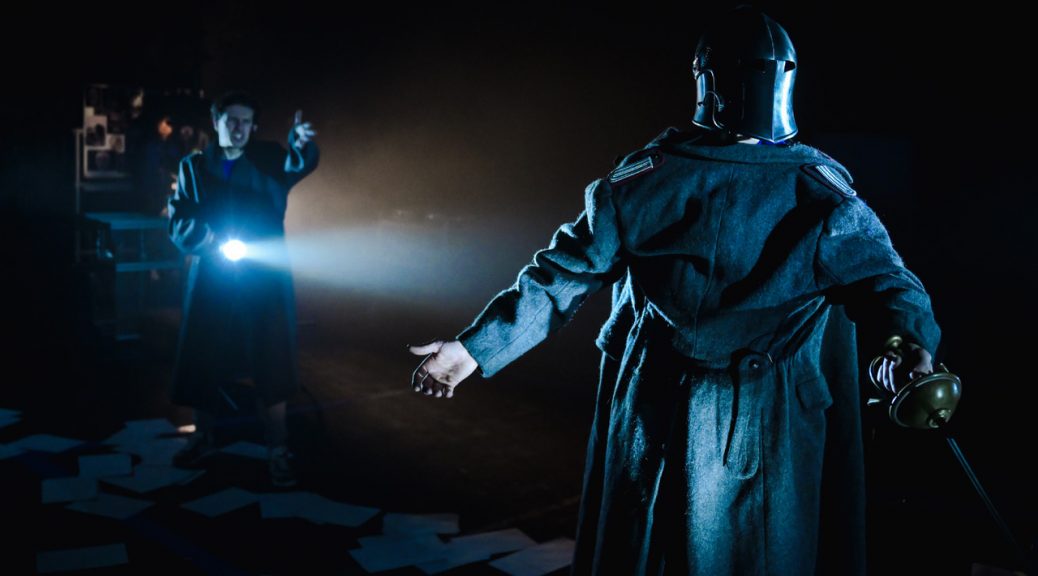
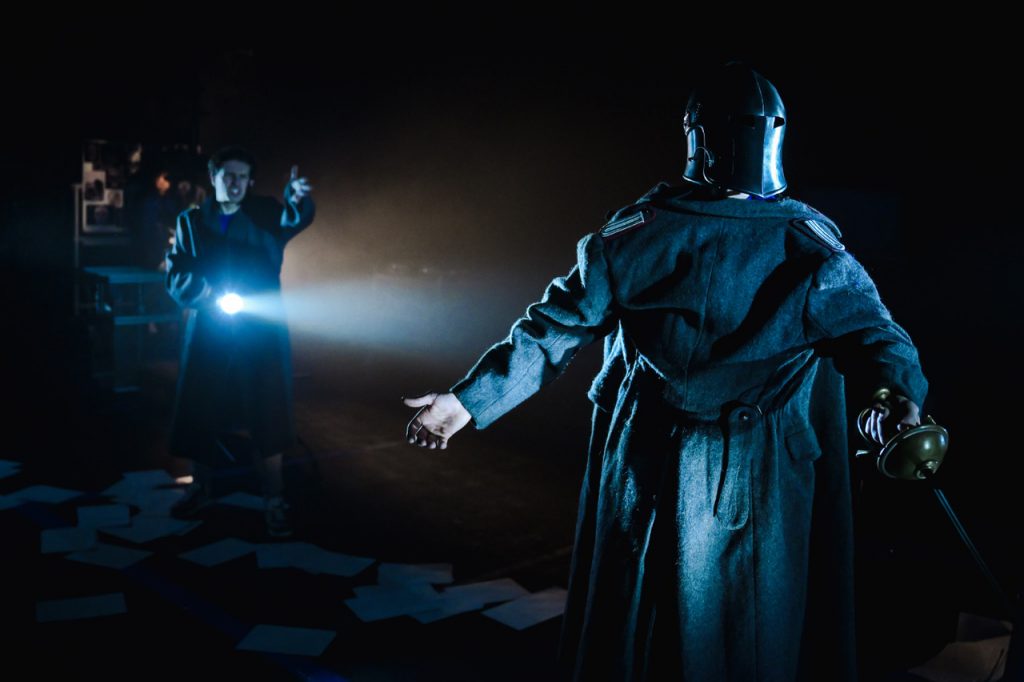
Sadly, with the new year came a Hamlet which didn’t work on a lot of levels. Starting off with what looked like an AA meeting, declared as a safe space for the characters to speak their minds. It would have been a quirky idea to have had the Bard stripped back to just this scope, though the chairs are pushed away and a lot of tricks ensue. Michael Hawkey as the lead finds his first professional turn here and though it might not be the most remarkable take, there is youth, charm and some menace. There appears on surface level to be no Gertrude nor Claudius present which might be one of the major reasons why this cock-sure showing may not work as well as it should.
Photo credit: Charles Flint
The play maintains a flow as it went on. My major concern was the watery take on the verse and therefore the story. For it appears you may cut Hamlet down to a mere 90 minutes, but you’ve got to own this time and not always worry about fireworks. Director Ricky Dukes should be commended for his Russian Roulette risk taking here, though I did find myself bothered by multiple scenes. Hamlet still gets his Jeffrey Dahmer with Yorick, who’s head is plucked out of a fridge. Video work would show Ophelia’s real-time unending and a Mortal Combat style duel at the final were highlights. Hamlet’s death remained one of the show most disappointing aspects with alas, no ‘flights of angels singing thee to thy rest’.
The hustle of the cast would see some fine performances. Lexine Lee as Ophelia twas more retrospection then mania with with the role. Alex Zur is given little time to shine as Horatio, the rest of the players covering multiple roles and menacing proclamations as the father ghost.
Put simply I would have preferred to watch Mystery Science Theatre do their ribbing on an awful dubbed take on Hamlet on German TV back in the 60s. I’m still faithful for the rebirth of Lazarus once more.
Hamlet continues at the Southwark Playhouse Elephant till 4 Feb 2023.
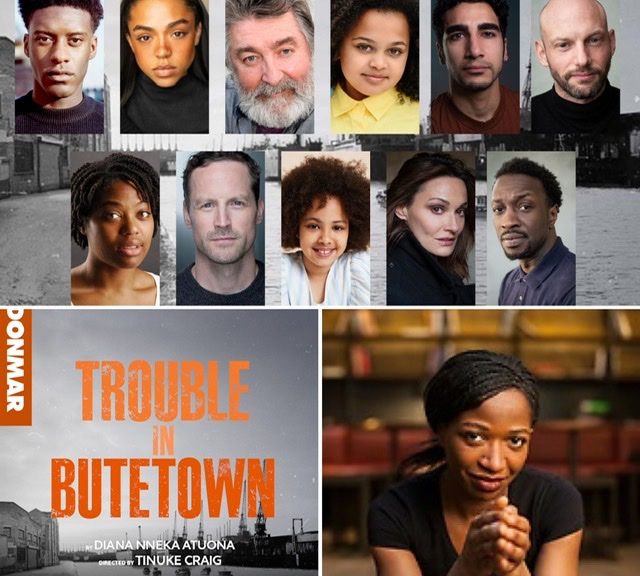
Hi Diana, great to meet you, what first got you interested in the arts?
As child, I was always into creative writing and storytelling. I wanted to be a song writer (still kind of do) and I would also write short stories. I wrote my first play when I was around 11 or 12 for my church and just loved the idea of entertaining audiences.
Can you tell us about your writing process? Where do your ideas come from?
Ideas come in a variety of ways for me. Either I go looking (which rarely yields results) or I just get flashes of inspiration. It has to be said though, that it is pretty rare for me to find an idea that I fall in love long enough to want to work on but when I do, there is no greater feeling. I often start with finding the world first then, figuring out a premise before populating the world with characters. In terms of process, I now understand the importance of planning and structuring where I can so I try to complete that first before I start scripting.
Can you describe your writing day? Do you have a process or a minimum word count?
I definitely don’t have word count. On a good day, I’d have been doing some writing in my head the night before so I really try and put that down until there is nothing left in my head or until I have to get on with life duties. I do try and write from the beginning of the story until the end but if there is a scene I am struggling with, I’ll just skip it and focus on one that’s strongest in my mind.
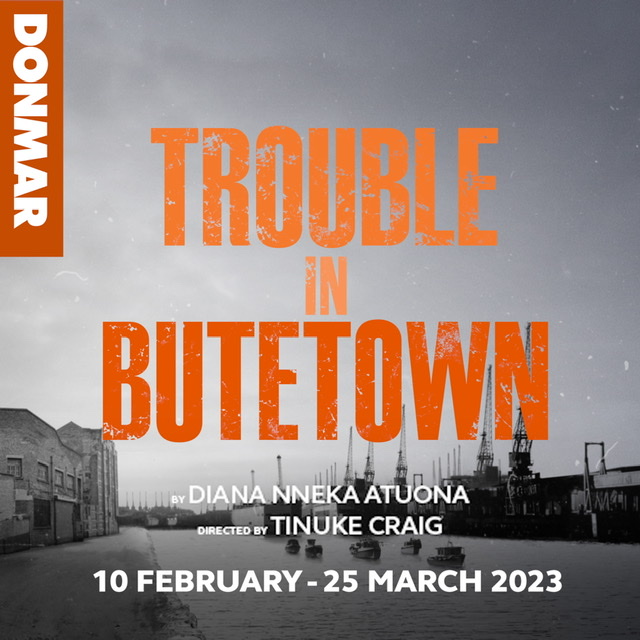
Your latest play Trouble in Butetown plays at The Donmar Warehouse, London from the 10 February. The production takes place in an area of Cardiff Docks, called Butetown or Tiger Bay during World War Two. The production information describes the area as “home to souls from every corner of the globe” What drew you to this location and period for your play?
I fell in love with the history. It’s strange as, prior to writing about Tiger Bay, I knew very little about its history so I cannot explain what led me to go down that path but I’m glad I did. The more I researched, the more I fell in love with it. As a girl from Peckham in south London, I know a lot of people would be surprised to hear that I would choose to write this story but actually, there are elements of Tiger Bay’s history that I can relate to. I grew up in London, so I understand the world of racially diverse communities first hand. As a Peckham girl, I know what it’s like to grow up in a town that has a negative reputation that is not completely deserved, neither is it completely undeserved (we’re also both experiencing massive gentrification).
I also grew up around people like the characters in my play, salt of the earth types who would take the mick out of you but also have your back if you were ever in trouble. Tiger Bay’s cultural identity is also made up in part, of the West African culture. Being of West African descent myself, I felt I could easily relate. There were many periods I could have set this play in but I chose WW2 as the world of Jim Crow that the black American GIs who arrived in Cardiff suffered under, contrasted very nicely with the diversity and inclusion of Tiger Bay. I also felt that we have seen a ton of WW2 stories depicting the life of white Britain. I don’t believe I have seen anything that depicts the life of British people of colour.
Do you think the plays period and themes will resonate with contemporary audiences?
I think it will. This is a time where people are very open to forgotten histories. I also think that the themes of race and identity are very pertinent today. Essentially, this is a human story and I don’t think they ever really go out of style.
Most definitely. The George Devine is a very well regarded theatre award and it was a real privilege to win it. It got the play in front of many venues, the Donmar being one of them and the rest, as they say, is history. The TRHW award was really important as it provided the necessary funds for me to develop the play and also provided support for the production as a whole. I am very grateful to have received both.
There are a range of organisations supporting UK based writers. I wonder if you feel the current support network and career opportunities feel ‘healthy’ to you? Is it possible to sustain a career as a writer in the UK and if not what would help?
That’s a pretty tough one for me to answer as historically, I never wrote fast enough to make a consistent living as a writer. I have however found that there has often been support when I needed it most, I am thinking of amazing organisations like The Peggy Ramsey Fund or the Fleabag fund. I think there can always be more support for writers especially due to the precarious nature of our jobs.
If you were able to fund an area of the arts what would this be and why?
I would probably say that I would fund new writing from under represented voices. In order for this industry to remain fresh and vibrant, we need a diversity of voices.
What currently inspires you about the arts in the UK?
The landscape has changed so drastically since I started on this journey. There is a real appetite for new stories and there does seem to be a willingness from a lot of organisations to support new talent. It does feel like it’s all for the taking now.
What was the last really great thing that you experienced that you would like to share with our readers?
My daughter turning three years old. She is the love of my life and to be surrounded by all our friends and family meant the world to me.
You can find out more about Trouble in Butetown and book tickets here
Interviewed by Guy O’Donnell, Director Get the Chance
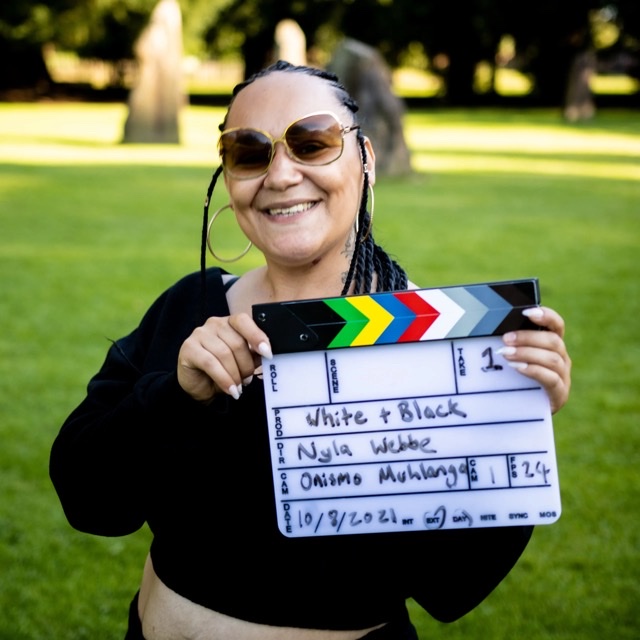
Hi Nyla great to meet you, what got you interested in the arts?
For as long as I remember I have always had a love for performing. My parents said that they would watch me with my teddies in the garden pretending I was in another world and talking to myself, I was always creating stories and living in my own imagination. I also attended a very creative church growing up and from the age of 6-12 I was involved in productions, always singing, dancing and acting.
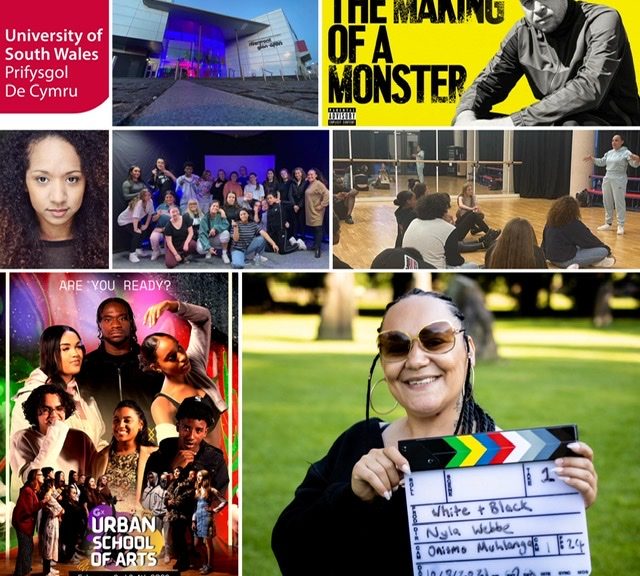
You are the Creative Arts Development Officer for G Expressions based in Newport, the organisation “works to support young people aged 10-25 to dance develop and achieve their dreams. Through dance, theatre, and leadership activities , giving young people the confidence, tools and skills to achieve their goals.” How did you come to be involved in the organisation and why is its work important?
My family members run the organisation and since it began in 2010 I have always been involved in some shape or form. I was a young mum, therefore my children were my priority and my personal dreams of performing were put to the side but I assisted with G-Expressions on projects and would help out with dance at their previous studio ‘Bella Bella’. When they started doing theatre shows in 2014 I was keen to help out and began shadowing and assisting the writer and director of the shows, which happened to be Alexandria Riley.
Alexandria Riley
I then made my debut as a starring role in their production of ‘Sisters Acting up’ and felt such a buzz, even being at the age of 28 it was an amazing feeling and seeing how G-Expressions facilitate all their service users and staff, giving them a platform to achieve their dreams was such a great feeling. I then became an assistant director on their last show ‘Hard Knock Life’ and also got my job as Creative Arts Development Officer.
Being able to support young people in exploring their creative gifts is like a dream job for me. Giving them a safe place where they don’t feel judged and can be who they want to be, with the encouragement and guidance to do so gives them confidence and self-belief to reach their full potential.
You have written and are currently working on a new live production for G Expressions called Urban School of Arts. The production is described as “An original story filled with dance and drama about young people surviving their journey through performing arts school, all in hopes of pursuing their dreams of becoming artists” Can you tell us more about the creative process for the production and your intentions for it?
I began writing the story line during the Pandemic, after discussions with young people during a podcast I had set up through G-Expressions called ‘Say it How it is’. It was a great opportunity for young people to talk about different topics that they felt they were affected by and allowed them to talk openly and honestly, as most had said that they don’t feel listened to or even understood by authorities and adults. The stories came from real life topics and made me want to raise awareness about these topics that young people face, to help them talk more about it but to also give them a platform to express themselves in a creative way where they can be heard. I always wanted it to be an original as in the past we have used music that people know but have always had the issues of copyright, but I felt that we were in a place where we could offer more opportunities for artists to be recognised for their talents. I worked with some local young artists who love to write and produce and we managed to get funding from the High Sheriff to bring in a professional producer and work in the studio to record these songs. We now have a soundtrack alongside the show and I would love to see this tour and possibly see other drama schools put it on, who knows?
Urban School of Arts can be seen at The Riverfront Theatre, Newport from 03-04 Feb, tickets can be booked here
Much of your work takes place in Newport and is supported by The University of South Wales and The Riverfront Theatre, what more can be done to create opportunities for young creatives based in Newport?
We need more funding and buildings, it’s a simple answer really. G-Expressions are fortunate to have such a great partnership with USW and are now building on their relationship with The Riverfront Theatre and I am hoping that more opportunities come from this show. Access for young people interested in the arts is difficult, especially the young people we work with who don’t have the right backgrounds or finances. There needs to be more training and projects for them to be involved in.
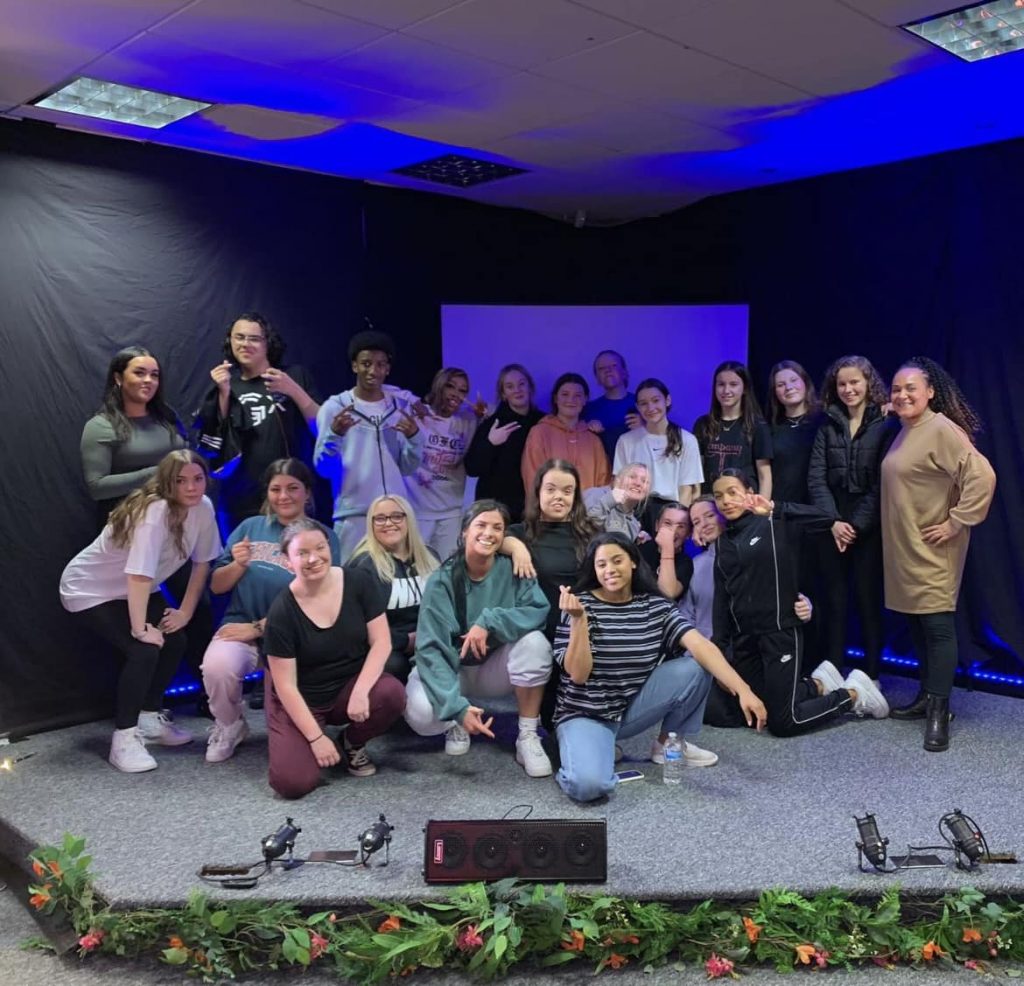
The Urban School of Arts company.
If you were able to fund an area of the arts what would this be and why?
Training and development for artists who are new and need that bit of support. For myself, giving opportunities is so important.
What currently inspires you about the arts in the UK?
People who are doing things their way and making their mark. I feel that there is so much talent out there that people don’t know about, but they are creeping through the gaps and slowly getting noticed. I am inspired by those who don’t quit, those theatre groups and artists who are doing what they love despite the challenges they face is inspiring.
What was the last really great thing that you experienced that you would like to share with our readers?
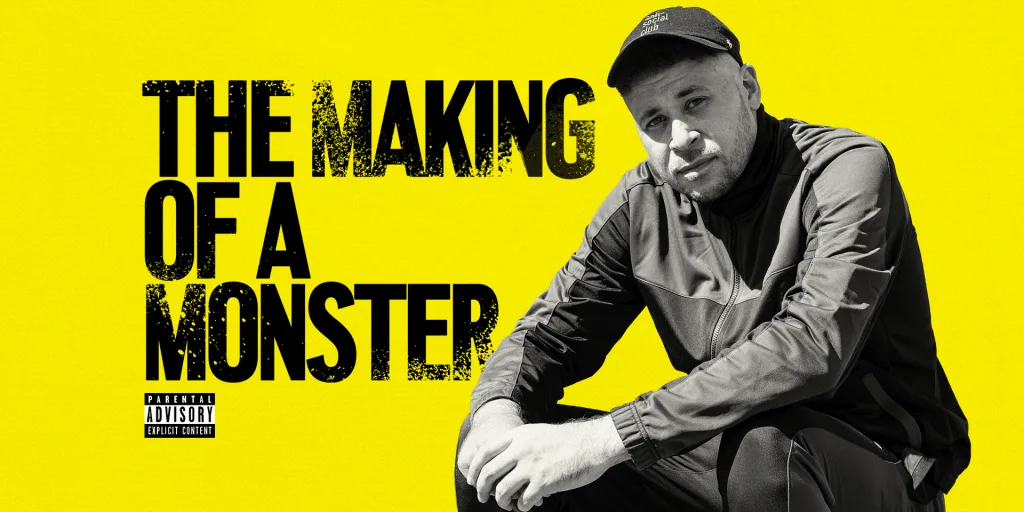
‘The Making of a Monster’- Connor Allen’s raw talent and vulnerability to be brave and so in your face was a true example of an all-round creative. It was a brilliant show that I hope continues and is recognised for its genius way of writing and performance.
When applying to join Get the Chance I talked about how as someone who has taken part in a plethora of community productions across Wales in both on and off-stage roles I have a deeper understanding of how the mechanics of putting on a show works. Usually, as a reviewer, we are focused on whatever happens on or around the stage for the three-ish hours of a select performance but I am going to start this week’s review a little bit differently by talking about something that happened before the auditorium even opened for “The Lion, the B*tch and the Wardrobe. As me and the famous Aunty Chris sat eating waiting for the doors of the venue to open, we discovered that Bar One at Wales Millennium Centre was selling a unique “B*tch Juice” cocktail to help celebrate the press evening of the show we were moments from seeing. At around £6 (which was under what I expected to pay for a cocktail at the Millennium Center) the vodka, cranberry and lemonade drink was incredibly refreshing and wonderfully delicious! In fact, I’m going to try experimenting at home to try and get the recipe as close to the one I had as possible as it was simply that nice!
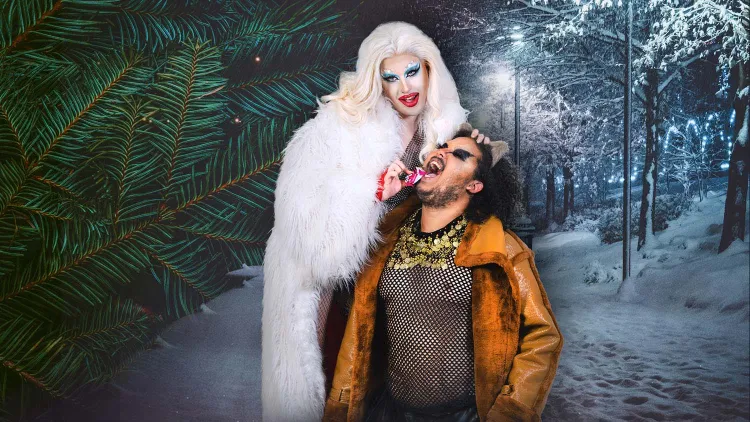
This time last year I was invited to attend a performance of XXXmas Carol where I talked about my not-so-secret love of Polly Amorous from meeting her in nightclub settings and being absolutely astonished by how much of an incredible performer she was on the stage! When it was announced that Polly and the gang were returning for ‘The Lion, the B*tch and the Wardrobe’ the surprise of Polly’s acting prowess was gone. I walked into this show (sort of unfairly) with the knowledge of the previous show and how amazing the sober songbird of Splott was but despite all this she still managed to surpass the already high bar she had previously set! Not only had she built on her already fantastic stage presence but her vocal abilities seem to have only grown tenfold since the last time.
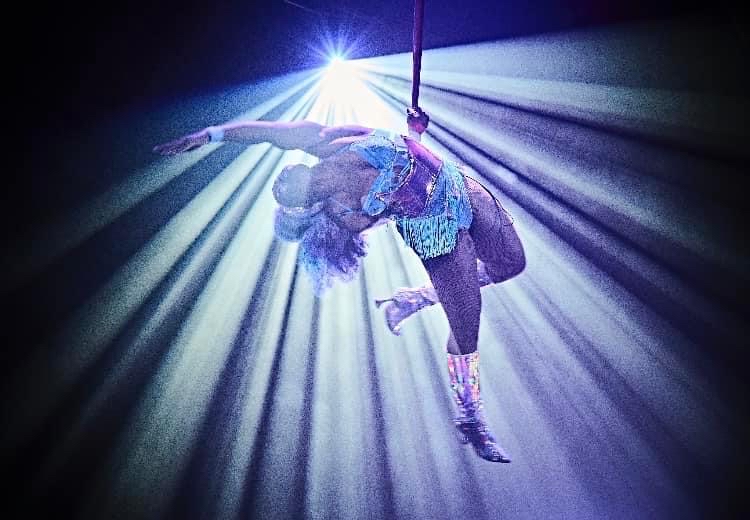
The show opens with Polly and her personal piano player Felix Sürbe as they take the audience of a whistle-stop tour of iconic Christmas anthems! The later sections of these mash-ups were where Polly really found her footing and managed to introduce her brand of hilarious humour and amazing vocals! Polly not only plays an integral part of the camp retelling of the CS Lewis story itself but also acts as a narrator of the show helping to transition from storytelling to an array of performers to scenes flawlessly. She is able to maintain the humour embedded into the show while also driving the plot without appearing like she is pushing things along which is not an easy thing to do. Whenever I watch Polly perform I always ask if she can give us a rendition of defying gravity from Wicked as this is a musical I love and is one of my favourite songs she does in her set. This is why I was totally overwhelmed when she not only busted out of a performance of this iconic song but did so while suspended in the air on a zip wire. Seeing her dangle in the air while singing about flying not only made sense narratively but the humour in her being left on stage had the audience howling!
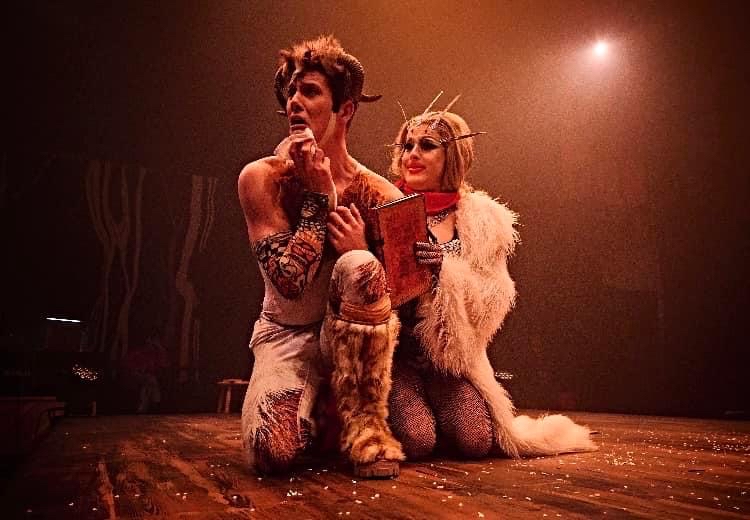
In last year’s performance, we were introduced to the incredibly sensual Erik McGill who wowed the audience with his gravity-defying trapeze skills. This year he was given a much bigger responsibility of playing the loveable (yet extremely horny) Mr Bumnus. From the moment we first met this unique character to the more emotional moments throughout Eric is able to portray this goat/Human hybrid creature wonderfully while taking the audience on an emotional rollercoaster throughout. His first performance was a beautiful routine which involved Erik scaling up a floating lamp post and showcasing the most mesmerising poses and positions while keeping a lustful gaze at Polly the entire time. He manages to control his body in such a smooth and fluid way meaning that the transitions from poses is just as entertaining as the tricks themselves. Early in the show, we see a hilarious scene where Mr Bumnus was Polly to spank him in return for secrets that would help the host on her quest. Erik does a fantastic job of taking this sexual (by nature) scene and injecting the perfect amount of comedy making it suitable for the stage. My favourite moment of this character however was just after an emotional moment with Mr Bumnus is violently punished for betraying the queen and Polly needs to find a way to bring him back to life. This leads to Polly discovering a paddle and using it to deliver a thunderous spank that not only jolts him back to life but straight into an incredible trapeze act. While Asha Jane delivered a wonderful performance of “It’s Raining Men”, Erik soared through the air on his trapeze with every time he leapt from the trapeze I physically jumped out of my seat! The range of flips and tricks he was able to perform while dangling so dangerously high in the air had my heart racing on the floor so I can’t imagine what he would have been feeling up there!
I was a little disappointed however that Rahim El Habachi had a much more drawn-back involvement in this year’s show not only because he is a friend of mine but also because his unique brand of belly dancing is always a crowd favourite! Last year he was able to showcase his dance skills, live singing and showcase original spoken word pieces and while he could showcase some of his talents, he did not have as many opportunities as last year! This performance was much more focused on his acting talents as he took on the role of a sexy reindeer and the mighty Ass-lan where he was able to throw his voice in such a way to create a powerful, bombing sound this character has become associated with. Throughout the show, Foo Foo LaBelle was able to showcase her incredible burlesque-infused performances including a police-inspired number where a lucky audience member was selected to go on stage and receive a sensual lap dance live in front of everyone. The performer was able to totally command the stage while also allowing for a reasonable amount of chaos and comedy with the audience member involved which is always a gamble in shows! I also thoroughly enjoyed the rendition of “Feeling Good” by Asha which ended with a vibrant explosion of streamers with every performing storming the stage to help mark the end of act one!
Overall, creating a queer retelling of a story originally created by a devoted Christian is not only an extremely powerful and political statement but also the fantastical elements of Narnia lend themselves beautifully to the series of unique performances. Polly managed to anchor the explosion of sensual eroticism (of whips, chains, spanking etc) with a mind-blowing performance and wonderful vocals (from Polly included) which is no easy feat! I would rate this show 4.5 stars out of 5!
You can find out more about the production and book tickets here
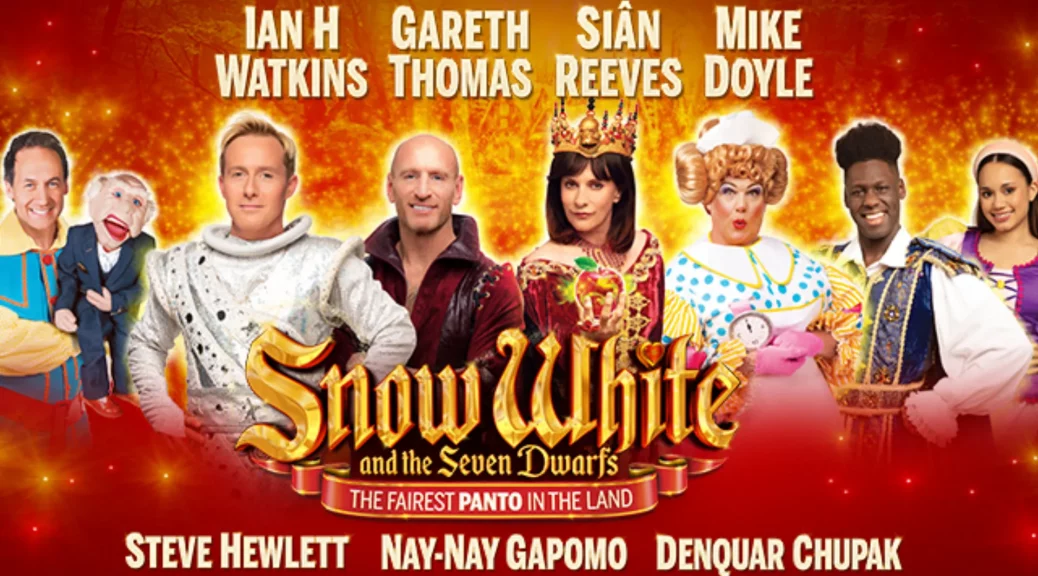
Take your first Steps to a perfect Christmas! With last year’s Aladdin interrupted by the pandemic, the New Theatre’s annual in-house panto returns with the spirit of Christmas back in full swing. Presented by Crossroads Pantomimes and directed by David Burrows, Snow White and the Seven Dwarfs is a magic apple you’ll want to take a bite of.
Nay-Nay Gapomo in Snow White and the Seven Dwarfs (photo credit: Tim Dickeson)
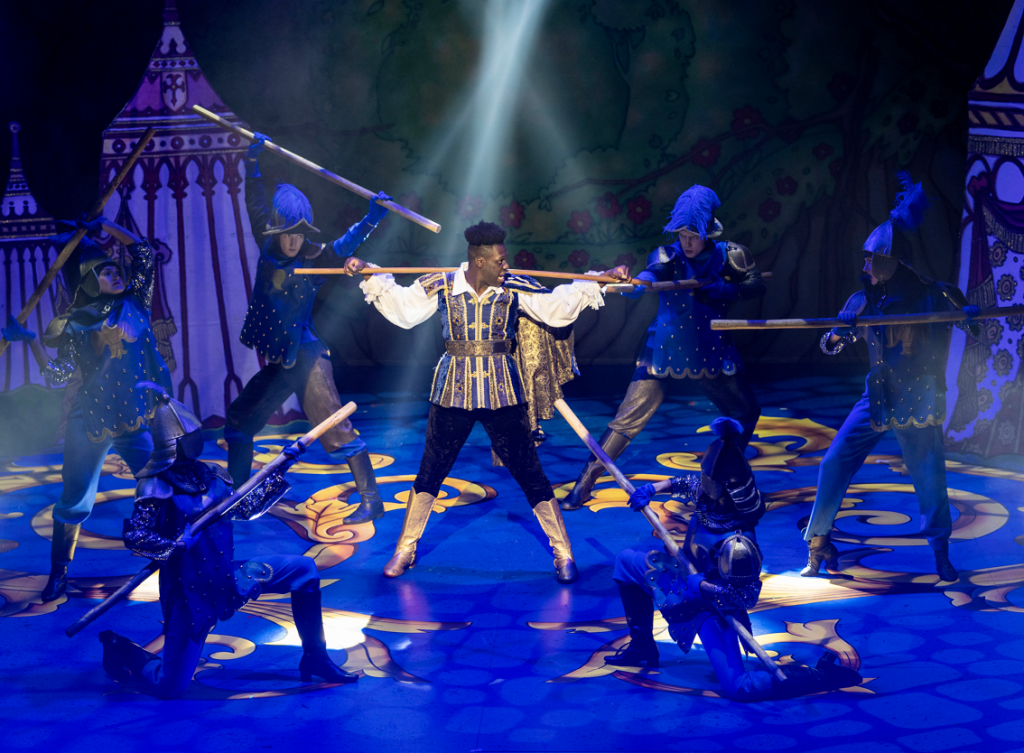
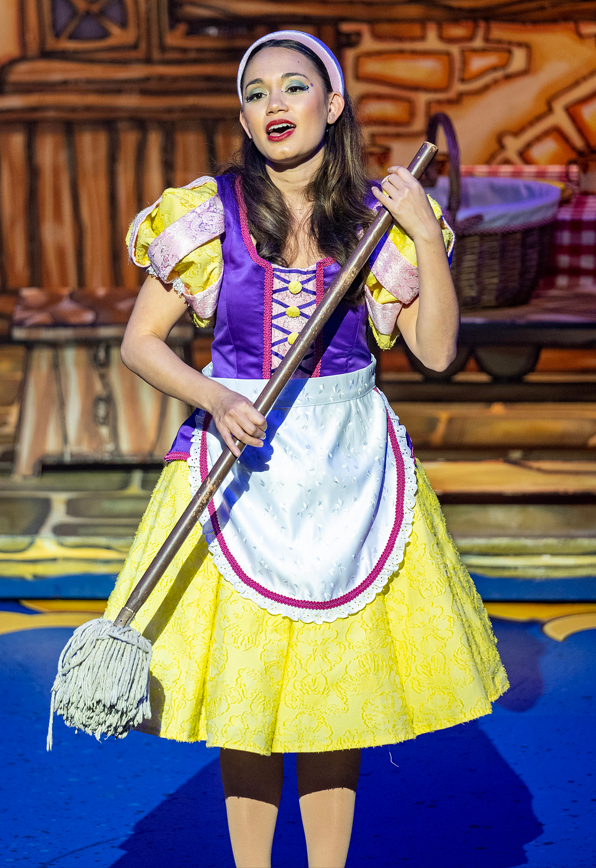
Alan McHugh’s script draws on the story we know from Disney’s animated retelling while bringing some big panto laughs. Denquar Chupak plays the titular princess with characteristic sweetness and style, making a welcome return to the New after playing Princess Jasmine last year alongside Gareth Gates as Aladdin. A lovely romance blossoms between her and Nay-Nay Gapomo’s Prince Carwyn, who Queen Lucretia (Siân Reeves) has her (evil) eye on.
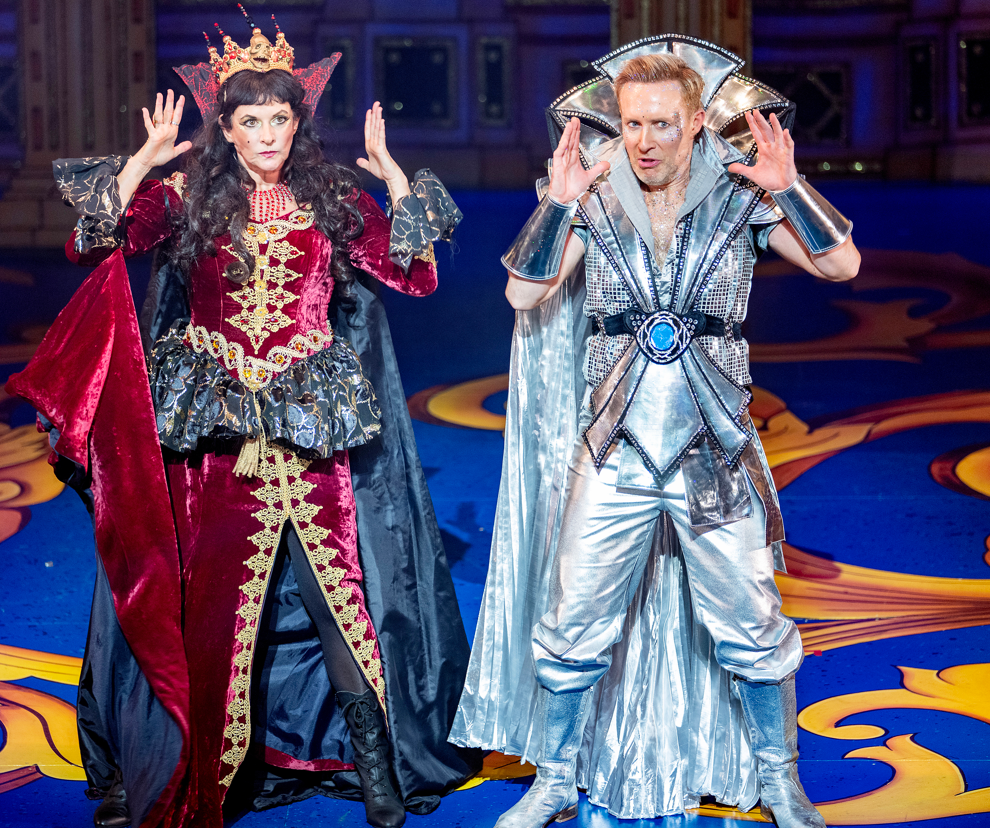
Siân Reeves and Ian ‘H’ Watkins in Snow White and the Seven Dwarfs (photo credit: Tim Dickeson)
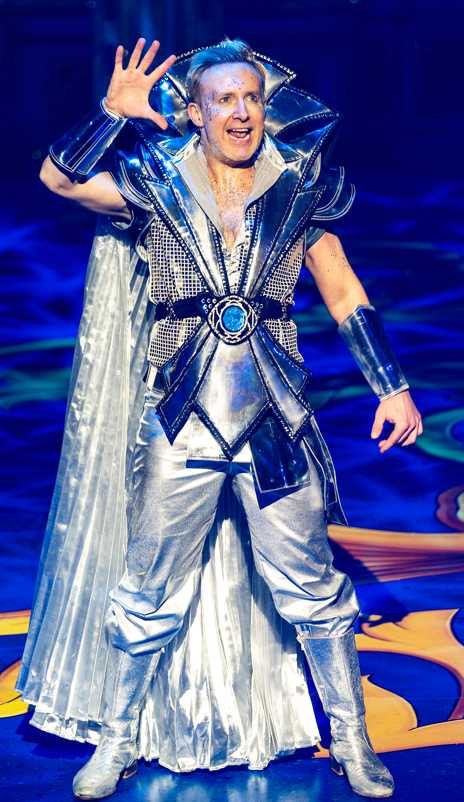
Local boy and pop icon Ian ‘H’ Watkins from international supergroup Steps plays the Spirit of the Mirror and has an absolutely smashing (!) time onstage. Decked out in silver sparkles (imagine if the Tin Man started a pop career and you’re halfway there), he gets the audience on their feet and Stomp-ing to the beat of a classic pop medley quicker than you can say 5, 6, 7, 8! He’s far and away the Heart(beat) of the show. If, by the time you see H from Steps riding a flying motorbike over the audience, you don’t feel as though you’ve got your money’s worth, then that really is a Tragedy.
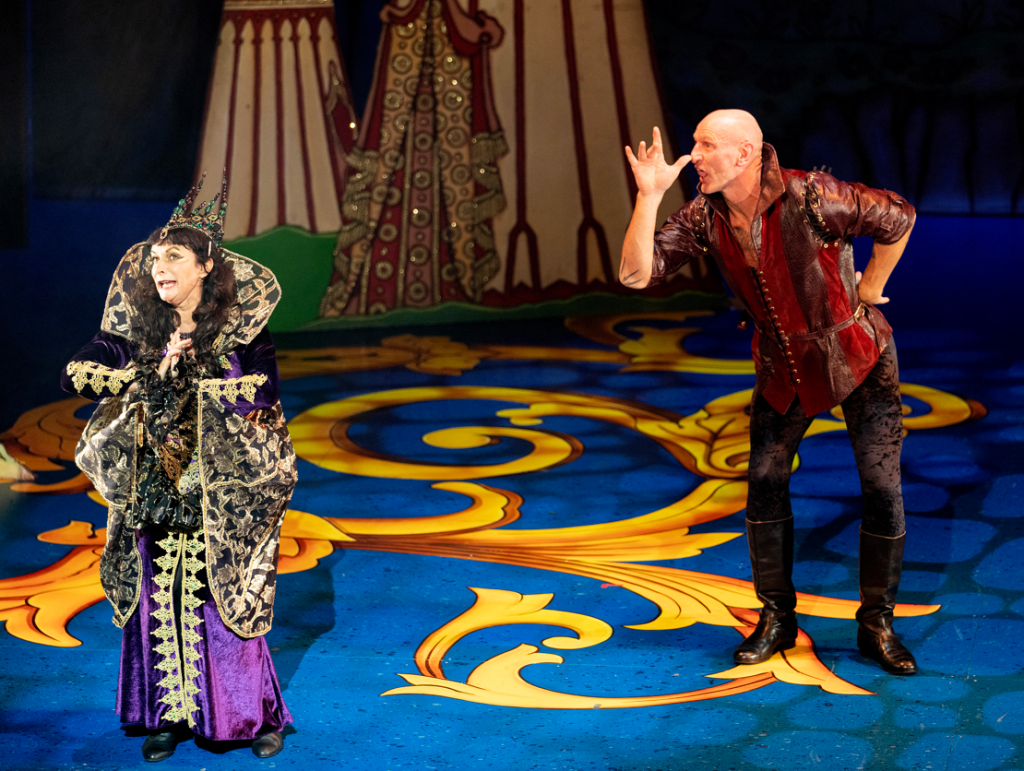
Siân Reeves and Gareth Thomas in Snow White and the Seven Dwarfs (photo credit: Tim Dickeson)
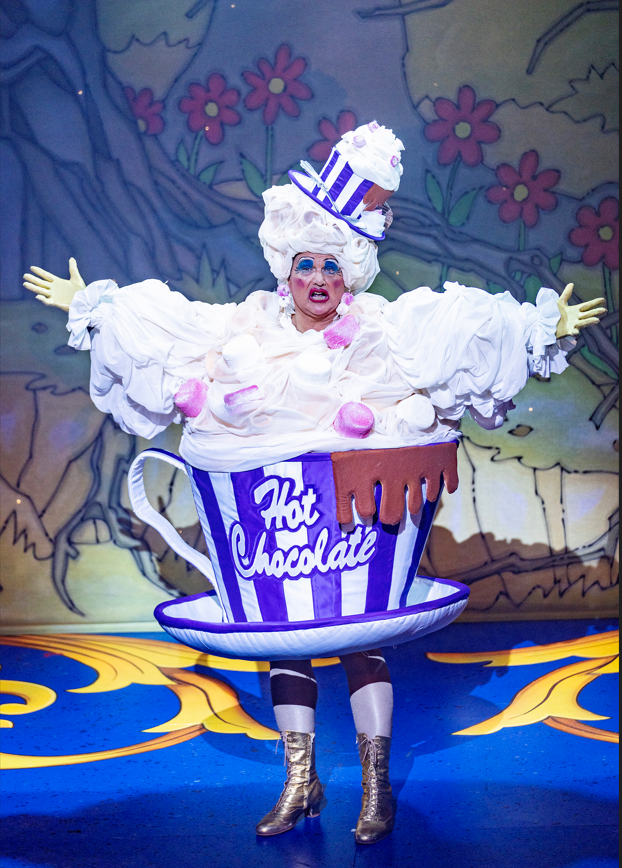
He riffs especially well off the other two feathers on the show’s Welsh crown: legendary Welsh rugby player Gareth Thomas as Henchman ‘Alfie’, and Panto Dame Extraordinaire Mike Doyle as Nurse Nancy (who’ll be at the New again in February with his own show, ‘Rock with Laughter’). While a few of the tropes could do with an upgrade – the 12 Days of Christmas went on about a week too long for me, but the kids in the audience were loving it – they’re performed with such joy that you can’t help but join in (though I think the time could have been better spent with another Steps dance-break, for example!) There’s potty humour for the little ones and innuendo for the adults, and while it’s not always my cup of tea, it was often my cup of cocoa – which Mike Doyle dresses up as in one memorable moment! His Shirley Bassey has to be seen to be believed, though my personal fave is an outfit that cannot be described and certainly not Trifled with.
Mike Doyle in Snow White and the Seven Dwarfs (photo credit: Tim Dickeson)
While ‘The Magnificent Seven’ of the title don’t feature often, they make an impression when they do – kudos to Gareth Elis, Ella Howlett, Mia Jae, Tiaan Jones, JB Maya, and especially James Rockey as the Seven’s eccentric Eric Idle-esque leader Doc (though I was quite surprised they hadn’t cast actors of short stature in these roles). But it’s better the devil you know as Siân Reeves vamps and camps it up as the vain(glorious) Lucretia, especially during her own Steps number – though if anyone’s walking away from this show with a crown, it’s Britain’s Got Talent finalist Steve Hewlett, whose ventriloquist act with grouchy puppet ‘Arthur’ has more than earned his royal seal of approval!
Denquar Chupak in Snow White and the Seven Dwarfs (photo credit: Tim Dickeson)
With enchanting scenery and brilliant special effects, Snow White and the Seven Dwarfs is brimming with festive magic and brings a fantastic new twist on the original tale you know and love.
Snow White and the Seven Dwarfs is playing at the New Theatre through to 8 January 2023. You can find more information on the show and book tickets here.
Ian ‘H’ Watkins in Snow White and the Seven Dwarfs (photo credit: Tim Dickeson)
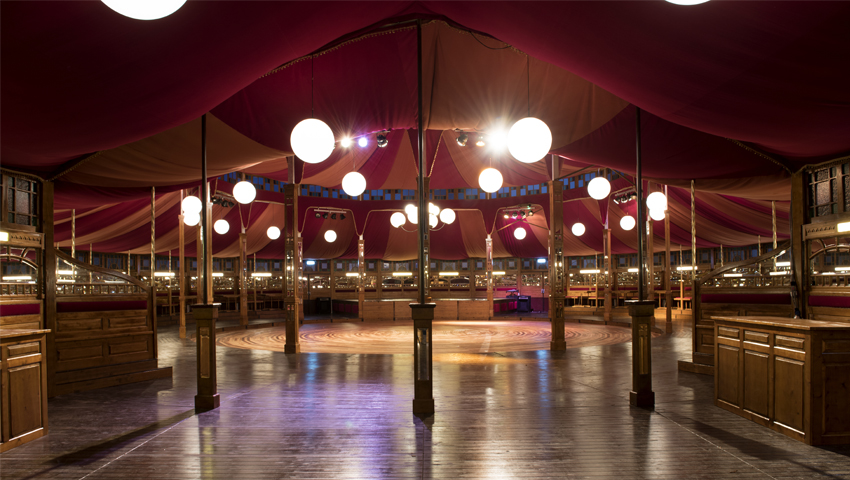
As soon as I saw details of ‘the Spiegeltent’ I was intrigued and wanted to experience it – it didn’t disappoint. When you walk in you are transported from the freezing, noisy hustle and bustle outside into a warm, welcoming space which, although it seats 500, feels intimate and special. I didn’t use it – but was surprised and impressed to see the generous bar area as you walk in, and that added a luxurious (and practical) touch. I can really imagine the tent coming into its own for the current production of Castellana which is described as cabaret, circus, burlesque and comedy, with the tent’s dark, ‘smoky’ atmosphere.
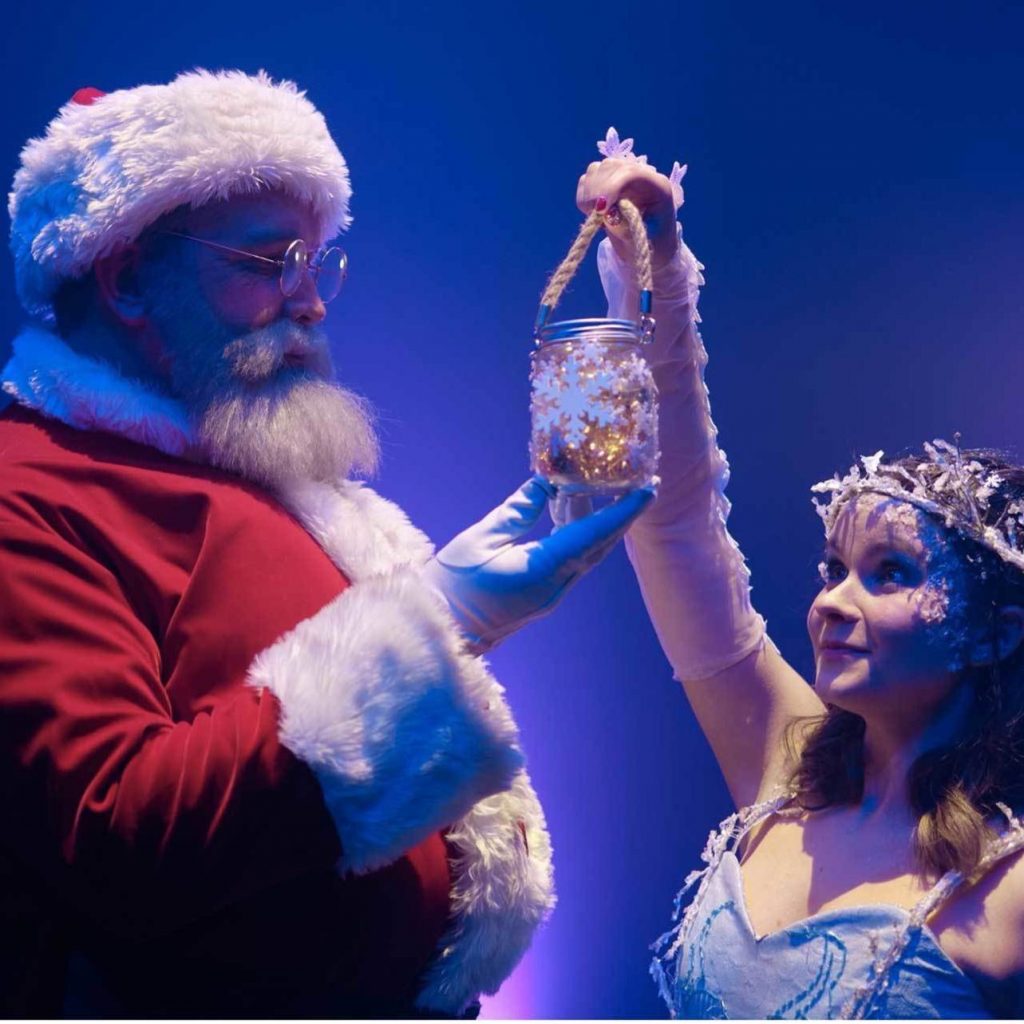
Anyway back to Santa’s Wish. I took my 9-year-old son with me to see this production but had no idea what to expect and was worried that it might be a bit young for him, but in fact I’d say it is aimed at older primary school children rather than younger ones.
The production is bright, colourful, the characters are engaging and my son was quickly taken with the humour and delivery of the male elf, as well as the tumbling and tricks. As the story went on, it felt as though a little of the initial humour was lost as it became a more serious story, and I think for younger children, a few more breaks in the songs and story for a bit more ‘panto slapstick’ would appeal and give light relief. The story was fairly easy to follow – though again I think some of the nuances were lost on the children, and it has the messages you’d expect from a children’s production – being kind to the planet and to one another, so you can’t argue with the sentiment.
My son judged the aerial acrobatics to be ‘amazing’ and it was certainly unusual to see a little of that in a children’s Christmas production, so that added to the spectacle. I did wonder if perhaps a little more could have been made of this aspect of the show however, and I wasn’t keen on the very dull rather transparent costume used for the aerial work. At one stage the performer came on to the stage wearing stilts, but nothing was really made of this skill, they just seemed to be being used to make her taller than the others which I found a bit baffling.
The entire cast are strong singers which was nice and meant that songs were pleasant and easy to listen to, and whilst this performance is done ‘in the round’ at no time did I feel that they had their backs to us or that we couldn’t see what was happening. It was also effective that they made use of the space amongst the audience – stopping to ask little ones if ‘they had seen Santa’ etc – which delighted some little girls behind me and included the whole audience in the action. The props for the under the sea scene were creative and effective (I may have to make an Octopus umbrella myself now!) and being able to use the aerial lift for additional special effects worked well. There were lots of ‘Instagram’ moments and it did feel that we were seeing a Christmas spectacle, which lived up to my hopes.
On the downside, there is no interval, so the children are sitting for about an hour and a quarter in total. The younger children in from of me really struggled with this – the little girl (about 3) fell asleep quite early on and the older boy (around 5 or 6) was complaining that it was ‘taking ages’ at about 20 minutes into the performance. Obviously all children have different capacities to sit for long periods, and in fairness to the cast – they very much encouraged everyone to get up and dance with them in the last section of the production, although I am not sure how much of the very end of the story many people took in, because having got everyone on their feet to dance and sing along, there was still about 10 minutes of story to complete after that. I think many parents with restless children were expecting that to be the end, so I felt for a few parents having to quieten down their children and try and get them to listen to the very end of the tale. The other issue is something that I struggle with everywhere we go – the volume. My own son winced at the loud music a few times and the little boy in front of me had his fingers in his ears on more than one occasion. I am not sure why every cinema showing and production we go to these days is so loud, but at nearly 50 (so my hearing should be less sensitive these days) I found the music too loud and so it’s not surprising that younger, more sensitive ears found it too loud as well.
All in all I loved the venue and my son and I were very glad we went. It was something a bit different in a beautiful, atmospheric venue. The cast are all talented and the production clearly made every effort to offer something for everyone, from the delightful, sparkly ‘Snowflake’, the rough and tumble of the other elves, the humour and the circus tricks to the big man himself. It was a magical Christmas spectacle, but just be aware that you might have to manage some restlessness for the very young.
Kate Richards
Get the Chance
Creating opportunities for a diverse range of people to experience and respond to sport, arts, culture and live events. / Lleisiau amrywiol o Gymru yn ymateb i'r celfyddydau a digwyddiadau byw

 (4 / 5)




 (2 / 5)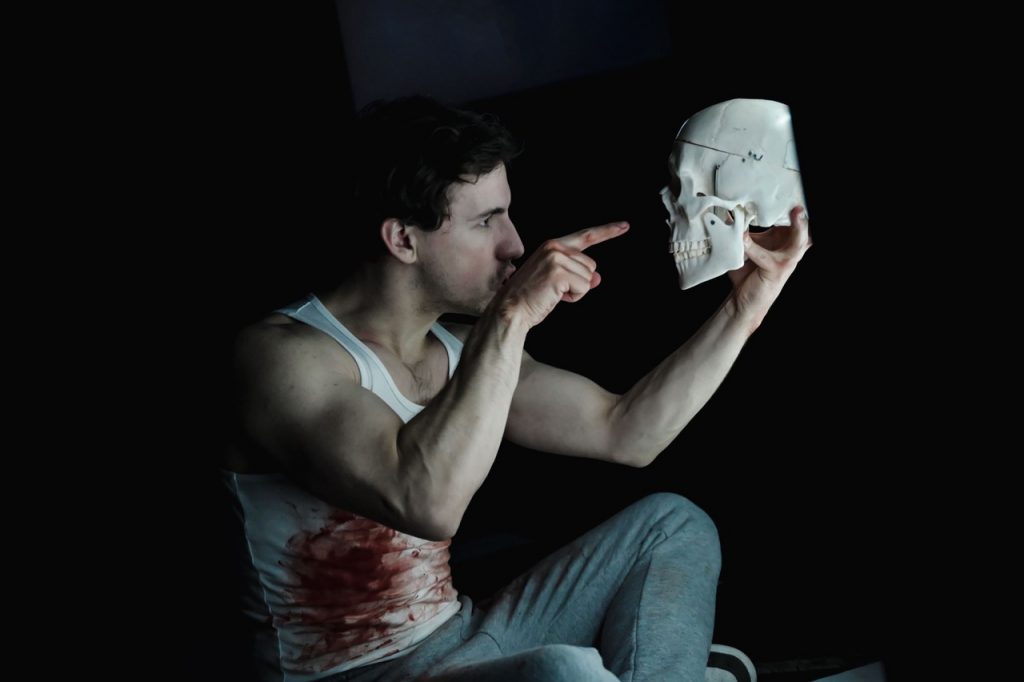


 (4.5 / 5)