Category Archives: Theatre

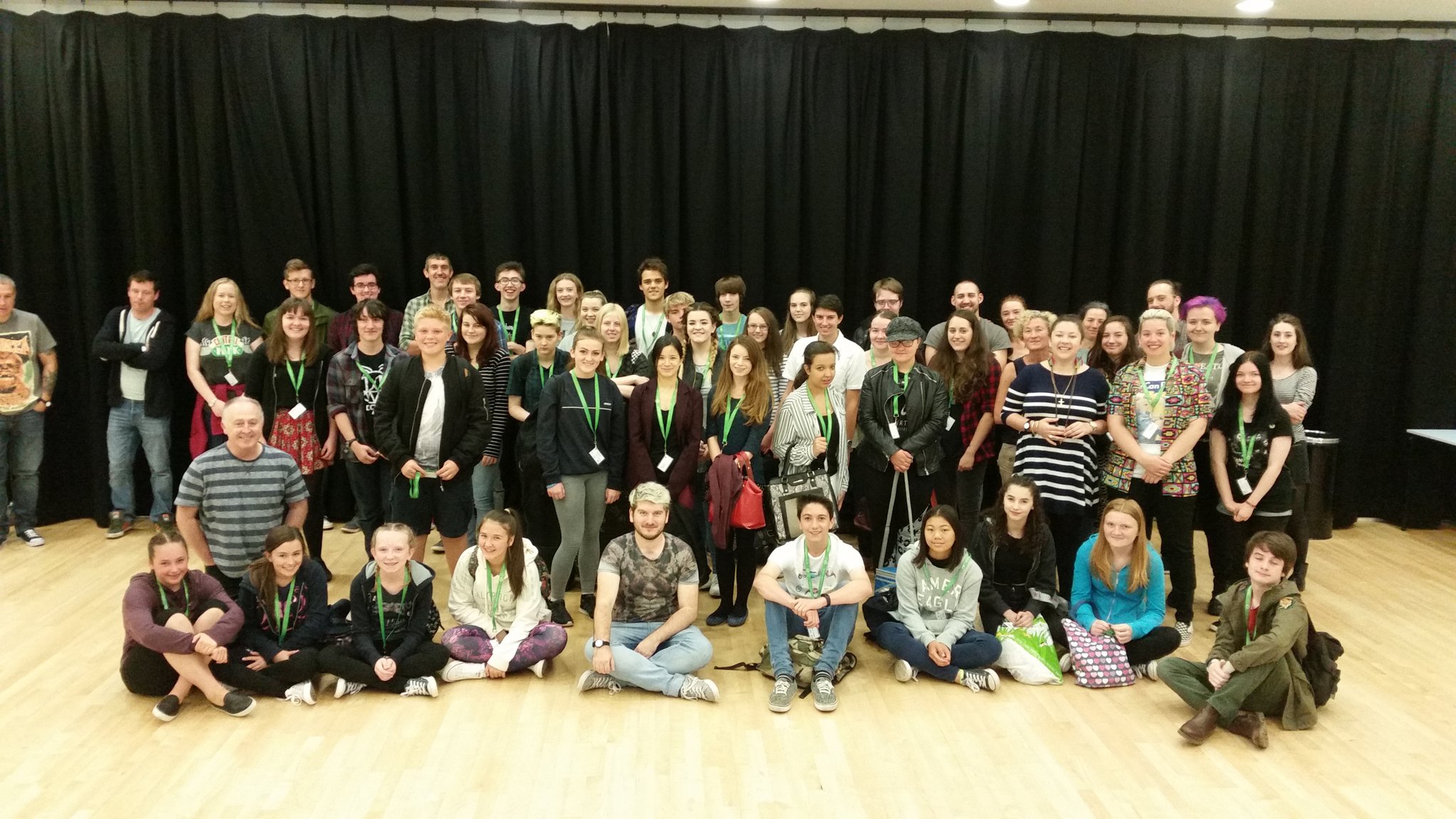
Young Artists Festival 2016, The Other Room

 
YAF_blog-3
 out of 5 stars (5 / 5)
The Other Room Theatre, founded in 2014, is not only Cardiff’s first pub-theatre, but it is a platform for all theatre creatives in Cardiff to produce, showcase, and be showcased as exciting, emerging artists, in their own right. Also, did I mention that they are Fringe Theatre of the Year? This year’s cohort (the second to tread the, alcoholically doused, boards of Porter’s bar) certainly held a prestige in being there. The festival itself only reflects what The Other Room already embodies in its very existence: collaboration, support and exploration; a platform, a place where you land your first job. As participants of, not only, an intense work-shopping programme but a profit share job, the young artists finished the week with enough of the box office profits to forget the majority of the days before by paying their round at the bar. Young director, Bruno Chavez, (previously involved in the 2015 festival as a writer) beautifully articulated, when expressing his own experiences with TOR, that ‘The festival is a purified version of what theatre is.’ Bruno, as well as young writer Susan Monkton (previously an acting participant), are proof of TOR’s undeniable devotion to their community. And, after director Kate Wasserberg’s declared, on the very first day, ‘You’re our guys now’ the sentiment became only more solidified.
In order to respond to the festival with the respect and admiration that I hold for it, and everyone involved, demanded from me was a personal investment – a vulnerability and an immersion. I began writing a play about garden gnomes, I played a ‘dramatised’ game of ‘Never have I ever’, and began to develop a directorial eye for pioneering, new theatre. But, I never f***ed the chair… So, yes, I now hold very little objectivity, but the The Other Room’s dedicated ethos in its love for artists is infectious.
It seems only apt that TOR team would open the festival, Monday morning, with an introduction to starting a company from scratch. Something emphasised by every industry professional from Tamara Harvey (Artistic Director of Theatr Clwyd) to Gemma McAvoy (Agent from Emptage and Hallett) was the roots accessible to an emerging artist, and a desire to empower the individuals. Unfortunately, if I were to delve as far as I would like, into all the insightful workshops we have experienced this week, this would end up resembling a governmental report, so that’s not happening. However, highlighted by Tamara and Kate was a need for equality within our industry (not only as female directors but as parents, regardless of gender); it is something that I’d like to reiterate. Following http://www.pipacampaign.com/, provides support to the Parents in Performing Arts campaign, allowing equal opportunities and access for parents and carers working in the performing arts. Now, for any aspiring theatre makers, to gain just some of the knowledge and empowerment that the chosen 40 artists involved in the festival have acquired, the following websites are not to be overlooked: https://www.equity.org.uk/home/ and http://www.arts.wales/. Of course, you could just sign up for next year’s festival. Stay posted via http://www.otherroomtheatre.com/en/.
Acting, writing, stage management and directing are professions massively stigmatised, and consequently individuals succumb to a generalised stereotype. The stereotype is wholly valid… Stereotypically, they are rule-breaker. Artists – they deify revolution, eccentricity and creation! Required for such demanding crafts are: specifically unique individuals, indispensable in their, collaborative, quest for creation. So, these people, that is what this article and this festival is all about.
IMG_1527
Most of the week culminates to the formation of the artistic companies and their performances of new, ten minute, plays written by acclaimed playwrights; Joel Horwood, Morgan Lloyd Malcolm, Lisa Jen, Alun Saunders and Sam Burns. Shadowing these companies has not only been insightful, but a lot of fun! At this point I would like to throw a shout out to Porthcawl Comp who let me chill in a bar all week, in the name of work experience – you the real MVP. So, without any further ado, here’s what the companies did, and how that became to be.
 
Mirror Loop – Morgan Lloyd Malcolm
A primal uproar against society’s shredding and crippling expectations. As women continue to precipitate actions of self-deprecation and disbelief in ability we subject the next generation to the cycle. The unity of women in a palindrome of a script. Of course, we could also see the piece as a comparison between the mid-life crisis and the intoxicated, purposeless 20 something.
What really struck me about this company, led by Seren Vickers, was the call for an open dialogue and conversation. As a response to this, actors, Andrea Edwards and Alexandra Lewis clearly embedded their souls, in a devotion to the truth within this piece of feminist prose. The scattering of a character’s direction, thoughts and inanimate props seamlessly fuel an uprising for something more.
978654
 
Look Up – Nicola Reynolds
Thought provokingly normal. All of us have had conversations which hold a clear resemblance to that of these characters’. We all have experienced, or can acknowledge, a friendship with unexplainable depth; how much do we, and can we, actually understand? And, should we be questioning the societal demands to talk ‘Game of Thrones’ around confessional suicidal thoughts. Susie Gale and Lauren Page, in the space of days, were able to develop an unwavering bond that bred a very real and tangible world within The Other Room.
The bleakness of an exposed hate, post-EU Referendum, the indifference to prior civil awakenings, and the objectification of a society’s primped and preened as sexual props. A constant agitation, an uprising within one’s self simply leaving only an ugly aggressor. ‘I’m twenty two and I’m so tired.’ It isn’t too extravagant of a statement, really.
A piece demanding in such an investment from one’s self (a vulnerability to be showcased) also demanded a directorial nurturing – with compassionately insistent nudges Nicola Reynolds urged and empowered her actors to be able to ‘pick it up,’ by themselves – resulting in a flawless performance.
The Ugly Pen – Sam Burns
The timeless story of how ugly boy meets ugly girl.
In a societal info structure of discrimination and oppression those who stand up are the ‘ugos’. As an audience positioned to be inactive, unaffected ‘tourists’, Sam Burns and this company dare to question our responsibility to accept and cherish all within our society. So, the cast defiant, and unrefined, challenge us. As the four cast members stand within their chalked ‘ugly pen’, their entitled ‘environment’, what cannot be suppressed is their voice of antagonism, as the characters insuppressibly narrate their stories.
For this cast, perhaps the most blatant, if not most challenging, of obstacles was their own attractiveness. Yet, alike a blinding charisma – counteracting a director’s, somewhat, restricting vision – their gurning faces shone through a window (coverall hole) of opportunity.
653565766767465454
You Make Me – Joel Horwood
Tobias Weatherburn and Rebecca Ormorod are tireless fabricators of energy. Director Emily Stroud offered an open plane for exploration – evident in a mutual vision of their story as a (brave) freed movement allowed actors to thrive.
Horwood’s script holds matter to the derailed relationship – what will be the inerasable snapshots in the aftermath? Nostalgia has become a cultural phenomenon. Facebook memories, snapchat, timehop, Horwood and the company suggest that it’s not just a self-indulgence but a self-inflicted spiralling of regret and, with a scattering of joy, an inevitable sadness. With the cast’s domineering presence it hauls an immediacy of passion.
Frozen – Lisa Jen
Strikingly real, relevant and receptive. Bruno Chavez simplistically stages the offensive stamp of a Western civilisation upon a broken people. Through its dialogue is an exposed brutality, torment and desperation, captivatingly delivered in Melanie Steven’s (symbolically) broken English, but through Disney’s lyrical genius it swells in gravity.
My first interaction with this group included a frenzied, exploration of youth with cast member Carys McQueen. Yes, we danced to ‘For the First Time in Forever’, and it was art. But, now, ‘Open up the gate’ will never sound as self-possessed, or melodic, to audiences as it was before. From young Rima’s wandering escapism to her mother’s entrapment, both actors selflessly stripped inhibitions raw. A desperation – in Carys’ fixation and Melanie’s stare -, and an intensity of character than only a subjection to abject horror can bring. An essential provocation.
Blue Sky Thinking – Alun Saunders
People, bacon, insecurity. What does any of it really mean? Seriously, it would make my job a lot easier. However, in the uncertainty is its charm. Frederick Wienand confines his actors to a self-containment of character as they interweave monologue. The performance itself exudes an air of philosophical debate. Through all the societal questioning, the cast master a comedy eased from simplicity and truthfulness. A coincidental humour in coincidental lives.
‘What is in the script, and what have we invented?’ A question posed by, actor and mentor to the artists, Steffan Rhodri. Not only for a progression in the script’s direction, but also as an existential question for the characters. What boundaries do draw, what mechanisms do we develop, how do we structure humanity?  Engaging and endearing.
A Play That Isn’t About Sex – Joel Horwood
I have spent days in tormenting deliberation as to how I could express my love for this group without sounding perverted… the eternal struggle. This group exposed themselves in a way in which I have never seen people soberly do – this circle of trust stimulated by director Duncan Hallis was almost a testament to humanity.
Experimentation and exploration was key to this piece. A use of physicality, embedded and emphasised from the first rehearsal, enabled the symbolising of tyrannical power, or down-trodden vulnerability, or a corrupted youthfulness. Sex in the grand scheme of things? It embodies everyone. It embodies our everyday lives. War, children, food, euphoria, disturbance. The opting to possess a sense of ambiguity within the piece maximised an accessibility to it, as well an acceptance of murky circumstances. Seven exceptional performers with one chair, in unity, highlighted an unquestioned societal morality in the availability of sex as an inanimate exercise. At what age did we begin to sexualise bananas?
‘A Play That Isn’t About Sex’ – Allowing ourselves to feel in an overwhelmingly constructed reality. But, perhaps it’s easier to do when ‘The chair doesn’t have eyes.’
99999999999999999999999
 
Too often forgotten, but never to be unappreciated in their abilities and dedication are the stage managers. Dunyasha Barrow and Amy Arkle-Jones (mentored by, the festival’s Stage Manager, Steffi Pickering) managed two groups each, in which they took a responsibility for; the sourcing of props and costumes, lighting and sound – all that is technical. Rehearsal reports and call sheets. It is all mind- numbing, so here’s an homage to you guys. Also, there’s young artistic lighting designer Alia Stephen who devotedly lighted every single performance with skillful insight. I’ll move on now, because we all know you’re not ones to relish in the spotlight.
Writers – ever enigmatic and elusive – were to emerge on the Friday morning with their plays to offer, each in their own specifically self-deprecating way. From Monday’s workshop with playwright Mathew Bulgo – hospitable in its musing silence and offerings of Haribo Starmix – the young writers began to develop (or birth) their stories. Bulgo, as well as playwrights Gary Owen and Alun Saunders, tutored their writers through the struggles of writers block and finding their own voice. Seamlessly flowing words, the visualisation of text/the creation of something ‘watchable’ – the pinnacle of the craft. They are all very smart, but in addition to that, writers strip themselves to expose a vulnerability, which many artists would never dare to do. But, it’s the sharing – that’s the scary part. But, the love they receive from those they share their pieces with – that’s what they chase. From the corner that I peered from, from the bar stool that I perched on, in every initial reading there was a warmth and a collective of smiles as the gravity of what was happening, and what these pieces symbolised, was digested.
8
Warlines – Holly Fry
Holly, in response to meeting a sincere and personable tramp in London, took to chronicle the strands of such an unfortunate life. A truthfully cutting Welsh voice. In its simplicity and cheery pessimism, a silenced story and people rise. Insightful and intelligent.
Angus – Bruno Chavez
Daring, unconventional and shameless.
Schizophrenia – a mystery to many in its misrepresentation, and ‘taboo’ nature – is tormenting in its clarity, in this striking piece. Demanding in investment, a menagerie of individual response, as well as embodiment and exploration surfaces, for an audience, as well as performers. In their addressing, the audience are torn from their self-contained bubble, and seized.
Service Please – Melanie Stevens
Melanie Stevens sings the anthem of a people – a people who work in customer service. With a singeing relatability and humour, Melanie encompassed the audience with ease. Within a simple reminder that waitresses are people what surfaces is a profoundly honest, and suppressed outrage.
Always Tuesday – Emily Garside
A real world full of real people. Sometimes it’s hard to imagine.
Emily Garside offers a special relationship – with dark intricacies – and it’s fascinating. Do we just comply with society’s rules of relationships/connecting? And, how meaningful can these ‘approved’ relationships be?
Through art and cake we are happy – discussion or involvement in a form of creation, beauty and self-indulgence. (Garside’s piece, intended or not, truly embodies the Young Artists Festival itself.) Of course, vomit too – as a subject – can fasten a connection with human kind. But, through a fear of rejection, or being denied, we discuss soaps instead of mental illness.
‘I’ve tried mindfulness, but I prefer vodka’
Bloody Paperwork – Lawrence Quilty
Is there truly a humanity behind politics? Politicians. What are they pushed to? Trained to be? I ask because I have no idea. Like, how I assume, many of us feel about politics.
Something highlighted in a rehearsal of the piece was the character’s movement. Confined by so many bodies Aiden Glass (MP) can only infiltrate or resign – a life in parliament. But, these people have families. Those families are hounded as the tabloid media stir and agitate within the pot-holes of fear within a nation. Corruption has seeped so deep it has stained even the bed-rock of our democratic nation.
Quilty skilfully probes into the intrigue of a plagued and destructive system.
Who Was Howell Davies? – Dai Hill
Death is awkward. Where is the line when discussing the dead? Perceptive in the exploration of a relationship between father and children, and with a compassion documents the life of a man plagued by his hindrances. A blinding ignorance and naivety in Hill’s characters sources a golden Welsh humour. But, with it comes the undertones of a despondent, misogynist Welsh working class.
Beautiful – Susan Monkton
A conflict of interest. Rape. Who is to blame?
An issue as relevant today as it was for previous generations. A simple misunderstanding, illustrated through destructive, self-assured monologues. Monkton’s twining of dialogue highlights a desired gender equality disregarded by the sports industry. Class, sexism, mental illness all suppressing; whether they silence or provoke is profoundly individual. The actors sat, inactive. In its rehearsed reading Emily Stroud brought a required simplicity to the staging; it is how it is deciphered – true and false.
C
 
Lastly, I would just like to thank all the wonderful artists who welcomed me to create with them, and shared their work with me. I don’t doubt that I will see you and your work sometime in the near future, hopefully in The Other Room.

Review, The Hound of the Baskervilles, Chapterhouse Theatre Company, By Hannah Goslin

hound-1038x576-1

 out of 5 stars (3 / 5)

In the heart of Dartmoor, tales of murder, mystery and mythical creatures has haunted the moors for decades. Thanks for Sir Arthur Conan Doyle, my family home is full of these attributes and fame, however it has been little explored on site in the form of theatre.

With the moors in the distance and the back drop of the Moorland House Hotel, Yelverton, I took my Sherlock fanatic parents to witness this infamous fictional tale.

Open air theatre I find is always quite a difficult type of theatre.  You have very little prop and staging to use as touring with this is very difficult as well as little access to the lighting, sounds and special effects we experience in indoor performances.  Chapterhouse- well known for their many outdoor travelling theatre productions luckily has this under control and still lead us to enjoy the changing scenery and premises with the use of song and professionally conducted actors.

Sherlock Holmes as a character I find is very difficult and quite an achievement to be able to play. I am never entirely sure who he is meant to be. Adaptations from the older days show him to be very serious and controlling while recent performances make him a little more eccentric than usual and almost comical.  Chapterhouse played upon both of these, at times Holmes being almost a buffoon in his performance to other times a leader and quite demanding. Whether this is Sherlock or not is entirely up to interpretation- myself is still on the fence of who I think he should be.

To support this take on the story to stage , the use of a man dressed in a pantomime dog’s costume and play upon the writing was used for comedy and the audience really seemed to enjoy this. Whether this is appropriate for such a genre of writing I am unsure but without access to means that in house theatres could produce, maybe this comical view is a good way to address that.

Overall I did enjoy this production. It certainly felt that while we were viewing a story on a cold Moor (while in reality is the sunny Summer)that we were involved in the story, and with the real Moor nearby, who knows what could be lurking on our exit!

Review Unreachable, The Royal Court, By Hannah Goslin

Unreachable

The Royal Court

 out of 5 stars (5 / 5)

With a big name at the forefront of the cast bill, a huge Doctor Who fan such as myself was irritatingly excited by the prospect of seeing such a formidable actor as Matt Smith in the flesh. To expand on my use of ‘irritatingly’ – as one who believes that you should credit a show on the talent and not on the fame of the actors, I could not help but be intrigued by comparing the number 11 Doctor to the new character on stage.

A very simplistic stage representing the back stage of a film set, this minimalist approach to set was well orchestrated in mirroring the comical and at times satirical narrative, picking upon often lavish and over the top Hollywood approaches to hit films.

Unreachable follows the storyline of a creative yet challenged director and his search for the perfect light for a wonderful film; this is of course against those with less genius who want to film a film and be done with it, ranging from an actress who suffers from a lack of empathy, a mother like figure yet strong independent female producer, a bumbling yet lovable camera man, a eccentric and crazed actor and finally a corporative supervisor. All have the common feeling of a film being like any other and the need and want for completion, there are at times similarity in the Director and his creative search and our eccentric actor who believes everything is ‘filth’ and uncreative. This hilarious character is nothing but a pleasant addition to the cast, bringing in a loud, obnoxious and thoroughly side splitting array of metaphors along with pure energy constantly throughout the piece.

Of course, we cannot go through without a comment on Matt Smith. Those who have only seen him in Doctor Who may find themselves a little disappointed by the lack of difference between his character in Unreachable and the TV show. However, such similar characters are hard to differentiate. Both vulnerable, a little odd and in need of some company but not admitting to this. Smith bounces around, is kind and sweet but also childlike. Difference being that he has little authority in this production compared to the Doctor; he needs people around him, he needs the companionship and is lost, when the Doctor needs this without realising, pushing those around him away.  When you compare these, they are different and he does amazingly well to make this subtle difference. Once seeing him in an array of other roles, you do know he is not a one trick pony, but just a sufferer of casting a similar part.

During Unreachable, there were moments of corpse-ing and times of possible breaking away from the story and direction. This did nothing but make this comedy even more funny, and showed a great relationship between characters, actors and that they were enjoying the production. Nothing is worse than a performer obviously going through the motions – such fun an interesting writing, such wonderful and comical direction, it was a joy and wonderful to see the actors finding the play just as funny as we did.

We felt a part of something special. We did not want to leave. We only wanted to be a part of their world forever.

Review Threepenny Opera, National Theatre, By Hannah Goslin

 out of 5 stars (5 / 5)

It is very rare to come away from a performance and struggle for words. Whether they be good, bad, indifferent. In the case of Threepenny Opera, the sheer perfection of this production left me gobsmacked and lost for words at this phenomenal production.

From the fantastic theatre practitioner Brecht, the performance hits every note of his theories on the performance not letting us as an audience relate but self-reflect and critically review the political scenario of the performance. In the current climate when the UK has left the EU and there are turbulent times, a performance where the hero is an anti-hero, and the good guys are just as corrupt as the bad guys, it’s hard to not find a similarity to what is happening in the World currently.

Threepenny is humorous, it is dark and it is clever and brilliant. Each performer has delved into their character, changing their appearance, stance, movement to relate to them. While we have our ‘main’ character, each performer stands out in their own right, some even doubling up roles but this is hard to notice with how well they change themselves. Not to mention the satire of Opera as a theme itself – an industry well known for being stereotypically middle class, this Opera is from the poor and the down and out; it’s for us normal people. Not to mention each performer’s wonderful voice showcasing that it isn’t just the middle class with talent.

https://youtu.be/v800yLRgKLg

ThreePenny is darkly comical, with a staging that is reminiscent of unusual world’s created by Tim Burton; the odd but strangely  enticing world created in Golem by 1927 which showcased in Trafalgar Studios last year, yet is still entirely new and beautifully constructed.

Threepenny is nothing short of perfection. And a production that you must tick off your bucket list.

https://www.nationaltheatre.org.uk/shows/threepenny-opera

Review Cut, The Vaults by Hannah Goslin

 out of 5 stars (2 / 5)

Deep under Waterloo station is this mysterious and unknown theatrical hub. It is unclear where we go and this brings such brilliant surprise when we enter an entirely white and plastic tunnel. We are greeted as if we are boarding an aircraft – a journey of emotional turmoil.

Throughout the 1 hour running time, we are plunged into darkness, brought back into the light to either be greeted by a frightened and worried female or our humble flight attendant. The storyline sees the woman and her fear as she is stalked by a stranger.

The switching from dark to light, the use of a small handheld torch gives us a sense of vulnerability and fear, as if we relate to the woman and her peril. At times this does become a bit much and the fear factor soon loses its’ affect. While we are still engaged in the performer and her ability to appear in different parts of the room and switch her appearance and her personality in a matter of minutes.

While the performer Hannah Norris is wonderful and clearly very skilled, the novelty of the changing and the dark to light soon wears off with nothing to continue keeping us surprised. It felt that more should be given to us, and shock factors initiated to keep us relating to the character’s emotions.

Never the less,  I would still encourage others to come and watch this production. The overall intention, clever staging and performance ,  just feels that there could be so much more.


Review Guys and Dolls, New Theatre Cardiff by Barbara Michaels

 
imagegen.ashx
 out of 5 stars (4 / 5)

Still popular well over half a century since it opened on Broadway, everything rests on the roll of the dice in Guys and Dolls, the iconic musical set in Manhattan and based on the short stories of Damon Runyon. Gangsters and their molls are at the centre of the action as con man Nathan Detroit struggles to find a venue for his upcoming illegal crap game. High-rolling gambler Sky Masterson offers a solution, but only if Nathan can come up with an attractive enough bet. And he does – in the shape of uptight Evangelist missionary Sarah Brown. The subsequent shenanigans take us from Times Square via the dance clubs of Manhattan to the sewers of New York City.

This latest revival, fresh from the West End stage, proves once again what a great musical this is. This time round it has the plus of being staged with choreography masterminded by the brilliant Carlos Acosta. It is difficult – I might go further and say well-nigh impossible – to find a dancer and choreographer who can equal Acosta for Latin American rhythms that sizzle with white-hot heat. As the action switches to Havana there is just about everything here – rumba, samba, cha-cha – you name it. Ballet – of course. Full marks to the multi-faceted ensemble for coping with it all.

So bristling with talent is this Chichester Festival Theatre production that it is difficult to know where to start with the accolades, but one must begin somewhere so let us be logical and begin with the two male leads whose crap games and on-off romances form the pivot on which the plot revolves. As Sky Masterson, Richard Fleeshman cuts a debonair figure in the role of the gambler willing to take on any bet if the stakes are high enough.  Fleeshman has a great tenor voice, heard to advantage in the number I’ve Never Been in Love Before at the closure of Act I. The target of his bet, with whom he ends up falling in love, is the Bible-bashing Evangelist Sarah Brown, played by Anna O’Byrne who belts out the lyrics with gusto.

That accomplished actor Maxwell Caulfield plays Detroit with a great sense of timing and a wry humour. His evident relish for the role is infectious. Caulfield’s Detroit is a likeable rogue, despite his dragging his feet where marriage is concerned: a fourteen year engagement seems a trifle overlong by any standard! The lucky lady is Miss Adelaide, lead singer and dancer at the Hot Box, the night spot where much of the action takes place. Louise Dearman, as Detroit’s fiancée whose dreams of domestic bliss are taking forever to come true , is superb, notably so in that wonderful number Take Back Your Mink. Dearman has the role down to a T – to the extent of almost stealing the show at times.

Detroit’s and Masterson’s fellow gamblers are all perfectly cast, with Jack Edwards as Nicely-Nicely Johnson and the lugubrious Craig Pinder as Harry the Horse, while Mark Sangster is a nimble-footed Benny. Boys – you were splendid. The live orchestra, under the direction of Andy Massey, provides the accompaniment to the memorable musical numbers which include that well-known Luck Be a Lady and the foot-tapping Sit Down, You’re Rockin’ the Boat.

http://www.newtheatrecardiff.co.uk/what’s-on/guys-dolls/
Runs until Saturday 9th July
Guys and Dolls New Theatre Cardiff
Music and Lyrics: Frank Loesser
Book: Jo Swerling and Abe Burrows
Director: Gordon Greenberg
Choreography: Carlos Acosta and Andrew Wright
Reviewer: Barbara Michaels
 

Review Service Episode Four: Fire Walk, Cardiff Fringe by Kaitlin Wray

1460328912759

 out of 5 stars (4 / 5)

After the success of Episode Three: Taking Stock, I saw at the start of my Cardiff fringe theatre festival, I was excited to watch Episode Four: Fire Walk. I was not disappointed in the slightest. The story line was even crazier and funnier than the first one. The writing  by George Infini is incredible, he knows exactly what will make the audience laugh.

One of the great things about this show and Episode 3 was the little sketches at the beginning. It sets the scene and gets you right into the show straight away. The ‘forbidden’ romance between Steven and Gene, played by Grant Cawley and Isabelle Paige escalated even more. It got to the point where Gene had to ask for Gavin’s help, played by Sam Harding. This whole interaction was hilarious and got the audience fully immersed with their romance. All actors stayed true to their characters from episode three and it felt like I was watching a series. For episode four there was an additional character called Marshall acted by Jonathan Dunn. His character fitted perfectly with the old manager, Jackie, played by Susan Monkton. They worked as a double team which felt the need to torment the restaurant staff in every way possible. They were a perfect combo that had some marvellous quirks added to their characters.

Even though it was a short comedy it told a great story and the ending left us wanting to see more. This is a well collaborated group where everyone has put in their time and effort into creating a great performance. It was wonderfully directed by Steve Bennett who added even more comedy moments to the already remarkable writing. I thoroughly love the collaboration between Infini Productions and A Clock Tower Theatre Company. I will be looking out for them in future productions.

Review Meet Fred, Hijinx Theatre

Meet-Fred-343x343-for-fringe-reg-300x300
 
 out of 5 stars (3 / 5)

In Meet Fred, Hijinx Theatre Company skilfully entwine all that is existential – penis jokes to political anguish – through one puppet called Fred. Just go and see it for yourself – It’s apparent simplicity and inclusivity (perfectly mirrored in The Other Room) is its charm.

Advocating the collaborative process, not only does the Director (Ben Pettitt-Wade) direct, but he also showcases this role within the play. Fred’s sublime puppetry and movement shows an inspired devotion from Dan McGowan, Morgan Thomas and Craig Quat through harmonious craftsmanship. However, some of the acting (rooted in improvisation) was, consequently, forced but then, quite suddenly, frenziedly unrestrained – as actors stormed out of doors zealous and soap-operaesque. Yet, blazingly Dan McGowan projects his Fred. In fact, it is far too easy to allow yourself immersion in, solely, his performance. Do resist the temptation, the spectacle of meeting Fred is within its unification for artistic illusion/societal awakening.

Through Fred, parallels are seamlessly drawn to today’s political climax as the defenceless, in an increasingly self-serving society, are subjected to the status of a puppet. Fred is begrudgingly bearing witness to the rise of the mercenary, or consequently lumped in a box. ‘Don’t blame me, blame the system’ penetrates an air of, too blissful, comedic ease.

Pettitt-Wade’s illustration of a messy, ‘self-directed’ life branches from the flourishing/twining set design to the incorporating of the deceivingly metaphoric. A lot of life is incomparable, and unexplainable to others; the cast and crew seem to relish in this conception – ‘Rice is water.’ It rains harder on some.

For the cast, sustaining an audience’s full submission with such taxing content: an unfulfilling, tragically ‘acceptable’ and some-what accepted lifestyle of the oppressed is hard – especially as Meet Fred is a play only wholly satisfying after being digested. So, take friends, chuckle at the lavish littering of expletives, and take it for what it is. An oppressed puppet, an oppressed, emerging under-class, or a shout into the void? Hijinx are pioneering in their ability to make innovative, intelligent, inclusive theatre. Challenging stigma; enabling their disabled performers.

Type of show: Theatre
Title: Meet Fred
Venue: The Other Room
Dates: 28th
Author: Devised by Hijinx Theatre
Director: Ben Pettitt-Wade
Ben Pettitt-Wade: Director
Ceri James: Lighting Designer
Tom Ayres: Technician
Martin Vick: Stage Manager
Dan McGowan: Puppeteer & Voice of ‘Fred’
Morgan Thomas: Puppeteer
Craig Quat: Puppeteer
Lindsay Foster: Lucille and The Maker
Richard Newnham: Jack
Tom Espina & Giulia Innocenti of Blind Summit: Puppetry Dramaturg
Running time: 60mins

REVIEW CABARET ((RICHARD BURTON COMPANY) RWCMD BY JAMES BRIGGS


 out of 5 stars (4 / 5)

Audio review of the production with music from the production

‘Cabaret’ is highly regarded as being one of the greatest musicals of all time and has some magnificent songs and fascinating characters, it also has a strong compelling and highly political storyline with a message from history that can’t be ignored. Set in Berlin on the eve of World War Two in the 1930’s, it shows the rise of the Nazis against the apathy of the masses, and describes a change that would prove to have terrifying consequences for everyone who lives in Berlin. Most of the story unfolds in the seedy ‘Kit Kat club’.

I was not sure of what to expect when attending the Royal Welsh College of Music and Drama for this production as I had only heard some of the songs from the musical and was unfamiliar with the storyline, so I must admit when the house lights dimmed and the characters began to enter the stage to the song ‘Willkommen’ I was slightly perplexed at the characters in front of me and their stage presence especially only being 17.

For many, including my mother who I attended the show with, imprinted on their mind was the film version of the musical starring Liza Minnelli as Sally Bowles, Joel Grey as the compère and Michael York as the young Englishman.
The stage show opens with the arrival of a young American, Cliff Bradshaw (played by Jonathan Radford) in Berlin on New Year’s Eve 1930. In a chance meeting at the railway station, he’s becomes friends with the very polite and helpful Ernst Ludvig (played by Tom Corbishley) who refers Cliff to Fraulein Schneider’s lodging house while he is staying in Berlin. Later in the story, Cliff is introduced to the ‘Kit Kat Club’, a cabaret club where anything can happen. He meets Sally Bowles, a singer who escapes reality when performing her songs in the club.

Set against Cliff and Sally’s relationship, and the relationship between Fraulein Schneider and her Jewish fiancée, the Nazis start to show their might and their threat is felt by all at both the unassuming lodging house and the Kit Kat Club. Adena Cahill as the upper class English Sally Bowles is very good. Fraulein Schneider was played by the believable Rosie Archer whose characterisation was excellent as well as that of Dafydd Gape who played the kind, caring and helpful Herr Schultz. Jennifer Ruth-Adams who played Fraulein Kost was able to do this very well and produced some comical scenes when trying to get her sailor lovers out of the lodging house without Fraulein Schneider finding out.

However, for me the star of the show was Corey Jones as Emcee, whose performance was outstanding and whose stage presence was simply mesmerising and as soon as he entered the stage you could not take your eyes off him. Jones’ Emcee was extremely dark and edgy with an exceptionally strong character and you were never quite sure if he was simply a welcoming host, or one that really despises all people.

Corey Jones as Emcee

Photographic credit Kirsten Mcternan

The level of the singing in the production was brilliant and there was not one character that slipped out of their German or American accents. It felt as though I was in Berlin watching the show. The performance of ‘Tomorrow Belongs to Me’ by Ross Hoey as a young Nazi was very chilling and this was made more powerful when the Nazi flags dropped down on each side of the stage. With well-known songs such as ‘Maybe This Time’, ‘Cabaret’ and ‘Mein Herr’ it is sometimes difficult to live up to audience expectations but the cast of this production surpassed themselves. The band that played during the performance was equally exceptional and brought the music to life.

The ‘Richard Burton Theatre’ housing the performance was very fitting and gave the audience a feeling of intimacy with the characters on stage. You felt you were part of the audience in the ‘Kit Kat Club’ taking part in all the action.

The staging worked equally very well with the theatre and as one entered the theatre we were greeted by a large structure hanging diagonally on stage with simply some chairs below it. There was also a large use of period lights on chains that along with the structure moved during the performance. This was used extremely well as it gave the effect that the ‘Kit Kat Club’ was opening up in front of the audience. The minimal set worked extremely well and allowed the audience to concentrate more on the characters opposed to the surrounding.

The Entr’acte from the Musical ‘Cabaret’.

Overall, this is an utterly breath-taking performance even if it is rather risqué in parts with a chilling end but I will certainly be attending far more shows at the Royal Welsh College of Music and Drama because if the level of performance is always this high, you are guaranteed an amazing night at the theatre.

Type of show: Theatre
Title: Cabaret
Venue: Royal Welsh College of Music and Drama
Dates: 22-30 June
Director: Paul Kerryson
Music: John Kander
Lyrics: Fred Ebb
Musical Director: Nathan Jones
Choreographer: Tom Jackson Greaves
Set Designer: Tina Torbay
Lighting Designer: Becky Heslop
Costume Designer: Jessica Campbell Plover

Review Cabaret (Richard Burton Company) RWCMD by Helen Joy

Cltnv1PWgAAYMyq

 out of 5 stars (4 / 5)

I go into the theatre weighed down by the recent slating on social media: in response to a comment in favour of collaborative working, I was compared to those who did nothing as Hitler rose to power. Troubling from all sides.

I hadn’t seen Cabaret for a very long time, if ever, and couldn’t say that I knew the story. Apposite as it turns out. We all know the songs but few of us know the context.

Partly it’s the space, partly it’s the artistic direction, but this is in your face from the start. And everything is in your face – teeth and tits and hips and all the grotesque of the carnival, smiling, enticing and taking you in. I watch the audience press back in their seats, personal space invaded and we are thrilled.

The story begins and like the train, rattles along happily. Two love stories unfold through song and speech – the older grocer and the landlady, the young American writer and the English show girl – against the light and dark and desperate of mid war Berlin.

The completely brilliant and mesmeric Master of Ceremonies holds each of us in his stare, winking and steely, welcoming and chilling. Better than Wayne Sleep, says my neighbour, he was evil too but ooh, this one makes me shudder. We all want him to notice us, take us into his lascivious dangerous, oh so colourful world.

Sally is sumptuous. Her voice purrs lines of love and confusion and roars and rises as the cabaret of her life is told. As it all unravels around her and the snippets of intrigue evolve into the political cabaret of Nazi Germany, we want her to leave, go to Paris with her man – but she hates Paris.

We witness the sadly comic and beautifully performed love affair of the Fraulein and the Frau over fruit and schnapps come together and fall apart and he leaves, his Jewish faith unwelcome now.

It ends. Our MC rides out with our battered journalist on his train home. He strips. His pink triangle stitched to his shirt. He folds into stage black.

I wish they sold CDs, says the lady in front of me. Oh, so do I. How much would I have relished hearing it all again on the way home. Brilliant, says another. Shocking, says someone else, hadn’t expected it to be so, well, sexual, not sure some of it was necessary. Wonderful, says a young man, reeling slightly.

I am reeling too. How do you know when it is time to act and when it is time to wait and see what happens? Cabaret.

Type of show: Theatre
Title: Cabaret
Venue: Royal Welsh College of Music and Drama
Dates: 22-30 June
Director: Paul Kerryson
Music: John Kander
Lyrics: Fred Ebb
Musical Director: Nathan Jones
Choreographer: Tom Jackson Greaves
Set Designer: Tina Torbay
Lighting Designer: Becky Heslop
Costume Designer: Jessica Campbell Plover