
 (5 / 5)
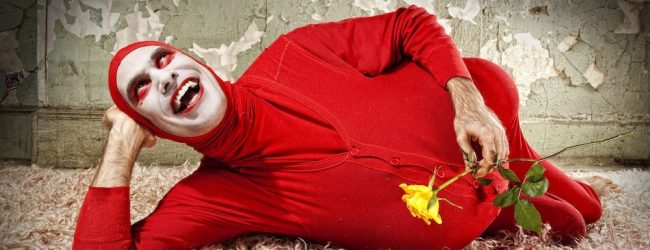
Bouffon : A theatre concept that is unique, niche and rarely seen in contemporary theatre. Red Bastard could easily be said to be the father of this style.
As a student studying performing arts 5 years ago, I was introduced to Red Bastard and fell in love with not only him but Bouffon – a type of theatre where a character who is misshaped and says the things no one should ever say, it is shocking, hilarious and fantastic. Not for those who are too PC!
Lie With Me is Red Bastard’s second show. This time he takes on love, and asks the questions we are all scared to ask and think about – What counts as cheating? What even is love? And pointing out that we all LIE.
Red Bastard uses 3 alter egos – Red Bastard is the devlish and mysterious figure who gets off on our lies, our infidelities, our animal instinct. Eric is the performer – he almost does not agree, he is apologetic and horrified by Red Bastard. And finally a man with no name, who just wants love and to be loved – he’s respectful, giving and rounds up the show with a wonderful soulful ending.
Red Bastard moves across our stage, like a little round devil ; licking his fingers as he enjoys our lies like a delicious cake, miming making sandwich’s, cutting deserts, and filling his evil belly with it. You cannot help but laugh at this but admire his precision in his movements; his known movement of walking and rubbing his misshapen body as he speaks to us is almost like a star struck moment to us fans.
It is unclear how planned and how much improv he uses – he interacts with us but seems to be ahead of us all. This shows true skill as a performer that we know he cannot possibly predict all the infinite options that can come from the audience, but he is so precise and perfect that he takes it in his stride and reacts perfectly every time.
Red Bastard is a hero of mine and he did not disappoint. A well researched performance, he has no qualms, fears or want to not offend, to not tell us what we are thinking, and makes us come away contemplating what life really is, whilst our stomachs hurt from laughing so much.

Hannah Goslin
All posts by Hannah Goslin
Review Becoming Shades, Chivaree Circus, Vault Festival by Hannah Goslin

(5 / 5)
In the deep dark underground of The Vaults in London, Vault Festival obtains every corner. Lightened by UV and Neon, packed full of people, in rooms that seemingly appear from nowhere – what a perfect place to stage an apocalyptic underworld full of circus extraordinaire.
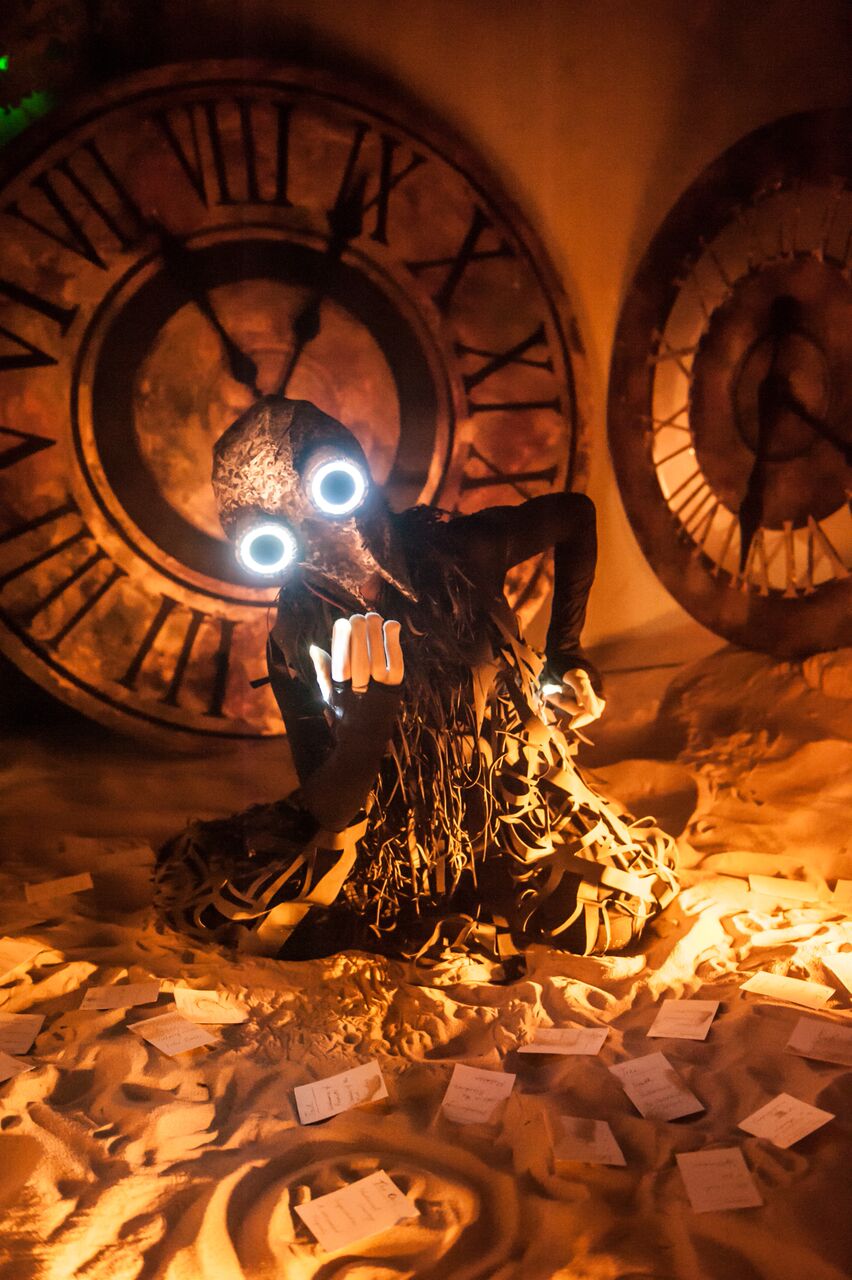
Becoming Shades is mostly entirely run by women – but these women are fierce. They occupy this expanse of an Underworld, making us stare and gasp in awe at their circus techniques – but not all is what it seems. This is dark, real dark – a feeling of two acrobatics with a grudge; a girl pulled into the chaos and forced to perform; three henchmen and their comical relationships; all run by our ‘ring leader’ – a gas masked mystery, moving almost like an old person but still curious and inhuman-like.
https://vimeo.com/245702028
This promenade performance moves the audiences across the space – our henchmen guiding us with mime and fear – we’re never sure if they will hurt us or play with us. They move us with such ease – the lighting changing and acting as a beacon for where we must go.

The costumes and set are exactly what you would expect – reused material yet with a finesse of circus tradition; everything encompasses this watery, dark underground world.
There’s no ‘tud dah’ moments; no smiles; we know we cannot be hurt and we will leave eventually but there’s the 1% that makes you think you’ll be with this group of mischiefs forever.
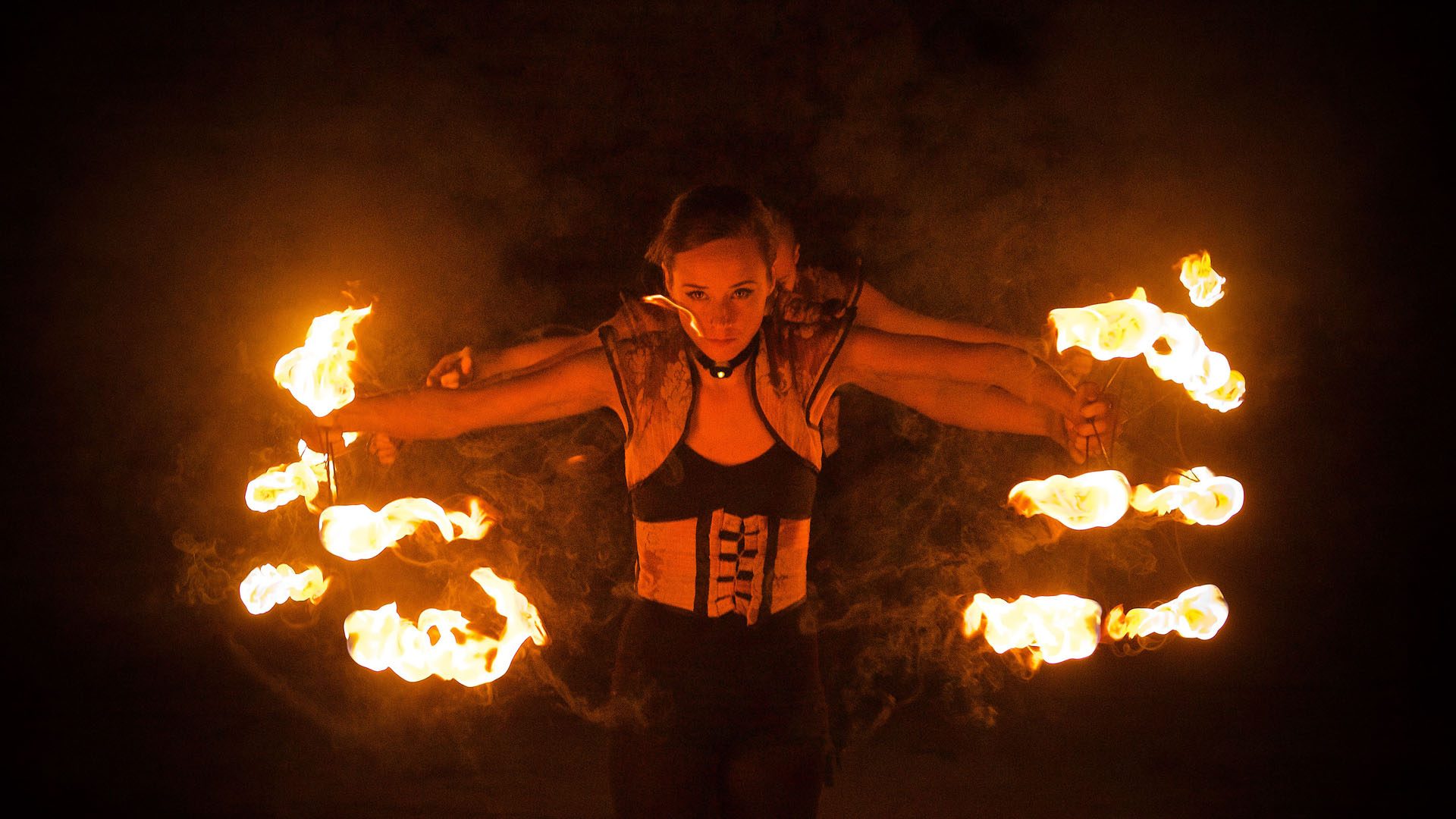
The stunts are undeniably creative, surprising and inspiring; seeing each muscle in the performer’s bodies move in the light as their sheer strength and flexibility turns around a rope; silks; flaming hoops and so on. And then there are fire breathing, juggling, all to grab your attention and keep you guessing.
The cast themselves did a great job of constant character; the interval let us stay in the area and they loitered; looking sad and bewildered; listening to the live music which was very necessarily dark, indie and mood enhancing. Or they decided to play with us, invite us to be entertained instead of checking Twitter.
Beyond Shades evokes a little reminder of No Fit State Circus ; energetic, unusual but still with their own take and own identity. Just as No Fit, they are incredible and nothing short of sheer perfection, something like you have never seen before.
Hannah Goslin
Review A Clockwork Orange, Exeter Northcott by Hannah Goslin

 (2 / 5)
Unless you have lived under a rock, everyone knows A Clockwork Orange, written by Anthony Burgess and hitting our screens in a feature film in 1971.
The story features violence, rape, theft and a utopian type existence where everyone fears the youth gangs swarming the streets and committing such atrocities. Eventually this becomes too much and ring leader, Alex, is imprisoned for two years until being chosen for an experiment meant to “cure” him.
Not only have I seen the film, but countless stage performances; this story lends itself to easily be customised – a directors heaven in producing their own take on the story.
This time around, the show has been taken on by Exeter University’s Theatre society. They make great headway with staging – with high level stage and props to use, they enable the time period to be stretched and changed, adding to this concept of a utopian world. The costuming is in addition to this; complimenting the time period the story comes from (70’s), again there is creativity with time periods and a huge sense of different empowerment with the use of army uniforms. This story is a fearful one, which we have come close to with societal atrocities spanning across our country, therefore not placing this anywhere specific in time or location makes this relateable to our fears for the future.
The performances themselves were ranging in quality. Thinking of a University Society, it’s understandable and expected that there would be a element of different levels of skill. However you cannot say that no one was not fully in their performance, and all in all showed great professionalism.
My issues with the performance was it felt as if there was a struggle to cut down content and the second half felt rather long. This is a common mistake when starting to bring page to stage and something that can only be enhanced but which most practitioners have fallen to once or twice.
There was an obvious need to try and shock us – rape scenes, nudity, false blood etc. Now I love performances that do this – devised performances that create a sense of surprise and in a taboo fashion is great but difficult with a well renowned story that is known for its taboo content. I only think that to keep the audience, the company should have taken the advice of less is certainly more.
Finally, the performers added a new element to this show – musical numbers. While I commend this bold move, it did not feel as if it worked – a more violent and sweary West Side Story comes to mind. Somehow this did not gel with the production but was a commendable move.
All in all this production of A Clockwork Orange was an interesting take on the original story – paying homage to the main themes of a possible future existence in our society, along with a nod to the original book and film’s time period, the company did well to produce something new yet still recognisable, throwing their all into their characters and doing this with no fear.
Hannah Goslin
Review Flossy and Boo : The Alternativity, The Other Room, Cardiff, By Hannah Goslin
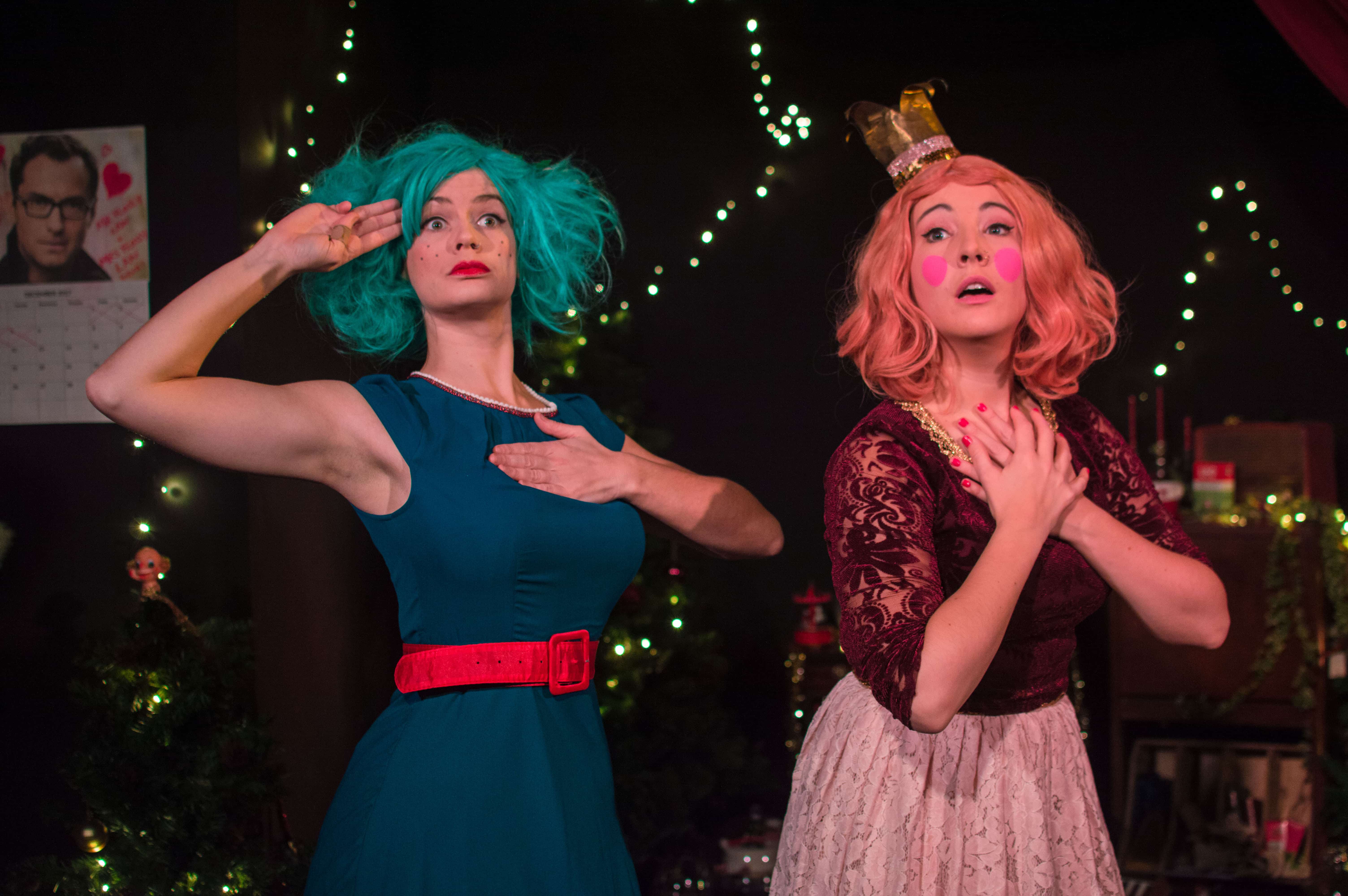
Photo by Llyr Attala
(5 / 5)
What do you think about when it comes to Christmas? Religion, commercialism, Santa and his Reindeer, Scrooge?
Christmas sees a lot of theatre come to the stage, but usually it’s the wholesome, profound meaning conclusion for children or we delve into religion. Where is the room for an adult production?
Flossy and Boo have hit the nail on the head. This comical duo has been asked by the almighty man of The Other Room to put on a Christmas production – however, they do not know what Christmas is or a play for that matter.
A hilarious, slapstick and musical production ensues with the idea that we will reach a nativity production but first we must see the concept behind Christmas – the duo’s research.
Purely at random, we the audience are in control of the schedule, picking from a stocking the topic. Flossy and Boo use this technique a lot in their work and I am a big fan – it shows real talent and skill to be able to produce a show where you never know the order.
Music is always a key part of their work and their comical original music always comes as a surprise to the rhyming and the road it will take. A favourite of mine was a American Southern acoustic number where the use of the floor, a tambourine, guitar and beautiful voices were all they needed. It was strong, powerful and a lovely addition to their more gentle, folk music.
And we cannot leave without a note on the set and props – thought was put into every aspect not only making it homely but complimenting each topic – things became creepy when needed, others warm and fuzzy and each bit was there for a reason.
Great thought is put into each any every part of their work and when things may go awry, these two are amazingly skilled that it becomes part of the production. We feel welcome, we feel like friends and this Christmas, we laughed, tapped our toes and smiled at something very different and totally brilliant.
Review The Claim, Tim Cowbury and Mark Maughan, The Bikeshed Theatre, Exeter, by Hannah Goslin
 (3 / 5)
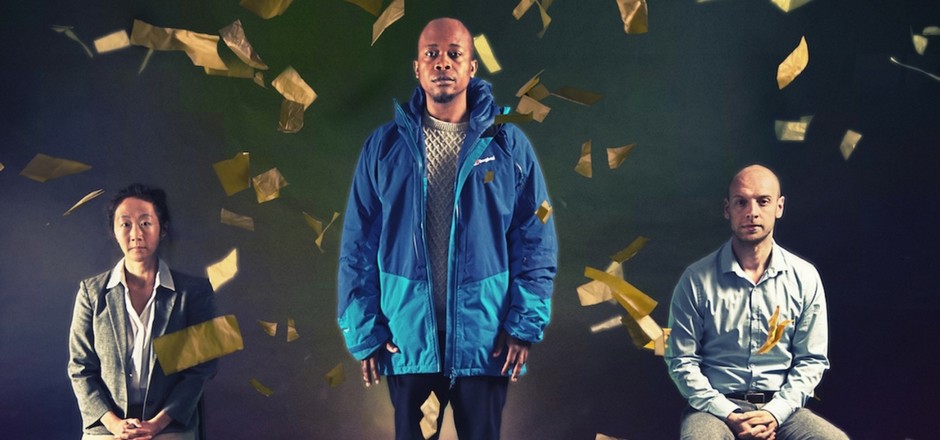
In the brick walled room, the stage is set up with bright vertical solo lights and rostra featuring one white chair and a box of tissues. Simplistic yet clinical.
The Claim is a story featuring an asylum seeker and two British office staff dealing with his claim to seek sanctuary in the UK.
The play purely faces upon the narrative. The interaction features interaction between the two office staff, their personal lives, their relationship and the participant, Serge; Serge and his broken English with one office staff and Serge and more fluent speech with the other office worker which we understand to be translated French.
This is a sneak peak at the difficulties in understanding communication, how stories can change a little like language Chinese whispers, and how a small misinterpretation can cost someone’s life and safety. In contrast, we see the luxury lives that we take for granted in the interaction of the two office workers but also picking on race and sexism and how even in a stable country as the UK, there is still hardship of some kind ; that makes us question why these two have less sympathy for Serge than they should do.
The conversations are rapid as they interrupt one another with short bursts of involvement. There’s a little Pinter-like technique in this, when some questions are answered and others aren’t, purposeful pauses, all highlighting the miscommunication and the lack of listening from the office workers. These short bursts also make us as frustrated as Serge – why can they not understand him? How are they getting it so wrong? Just help him.
At the beginning of the play we are invited to see an installation outside of interviews with real asylum seekers and this all brought together gives the points being made in the play a face, a personality and leaves you really thinking about the state of immigration and level of help governments give.
The Claim is a sympathetic look into current issues and a very thought provoking performance.
Hannah Goslin
Review Fourteen Days, Balletboyz, Exeter Northcott, by Hannah Goslin
(5 / 5)
Balletboyz have been a favourite of mine since my university days. Always heading to the Taliesin in Swansea, this company have never struggled to surprise me with their brilliance.
Today was of no exception.
Looking in the crowd the audience was of a mixture – dance enthusiasts like myself, an older generation who may or may not have seen them before and know their unique and modern take on dance and a huge amount of boys and young men. Beating the stereotype of ballet and dance being for girls, these masculine role models are obviously very influential.
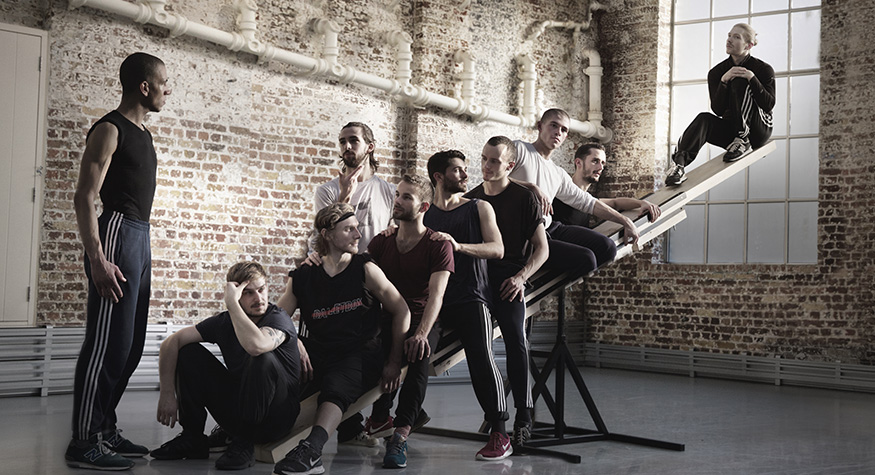
Fourteen days comprises of 4 short pieces followed by a longer finale. As the programme states, these dances are created by a host of different choreographers, including Strictly Come Dancing’s, Craig Revel Horwood and all feature an underlying theme of balance and imbalance.
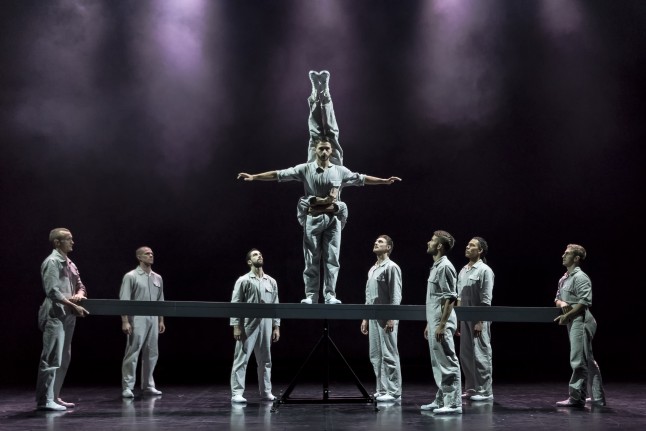
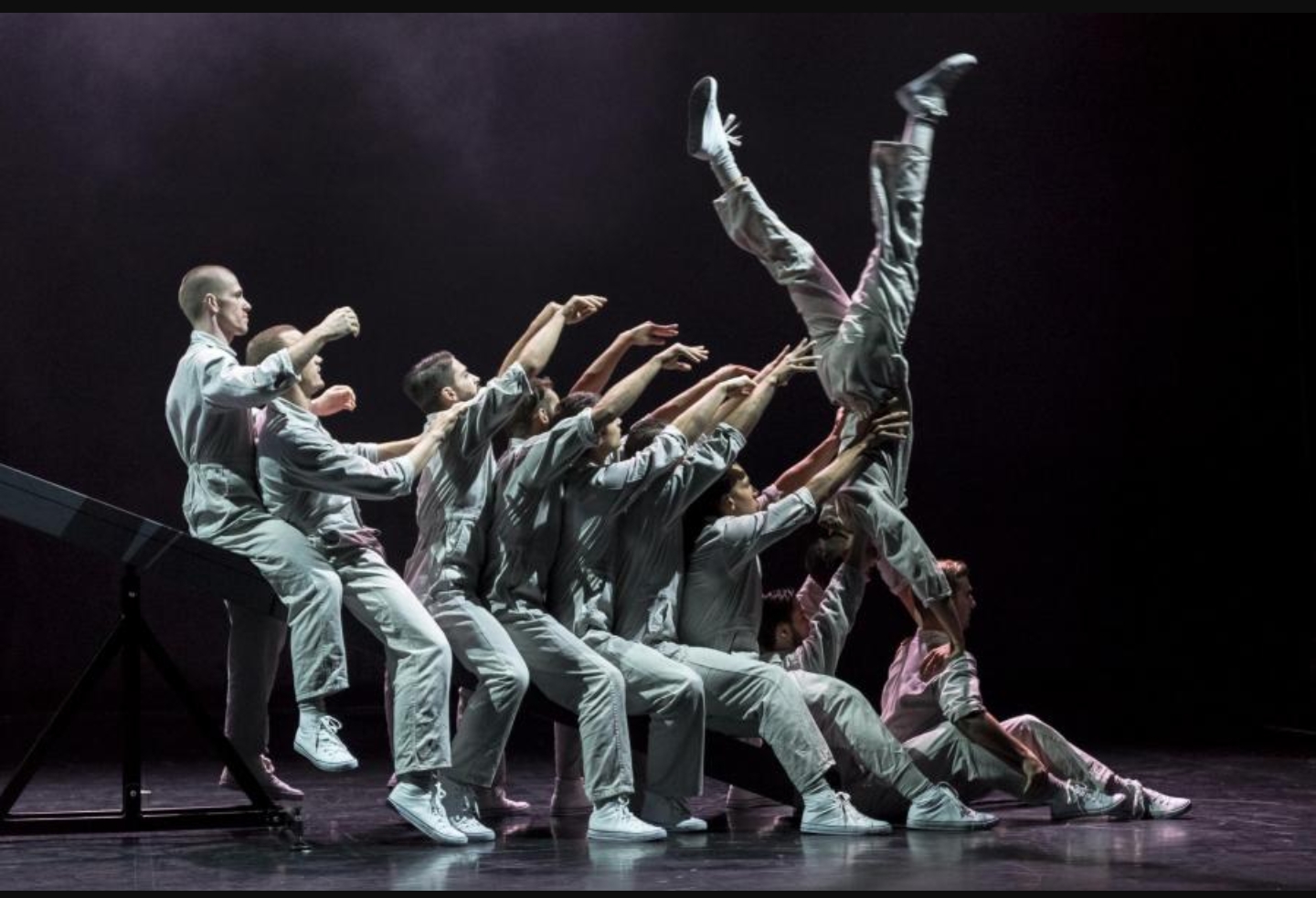
“The Title is in the Text” is our first piece by choreographer, Javier De Frutos and really draws on the theme. Set around a see saw, the dancers balance, propel and manoeuvre around it creating beautiful shapes and a sort of child-like playtime with each other . It’s simplistic, yet powerful and with elements of subtle humour with the interaction and response between them. Dressed in jumpsuits, firstly it feels mechanic and as if they are workers but the play in the dance makes them feel more childlike.
“Human Animals” by Iván Pérez changed the dynamic completely. The floral shirts with legs bare for all muscles to be seen makes this animalistic – the routine gentle, light and almost mimicking deer jumping in a forest as one. It’s repetitive but easy and lovely to watch.
To me, “Us” by Christopher Wheeldon was the highlight of the show. With only two dancers, the performance is intimate, a consistent flow and full of emotion. Along with the music by Keaton Henson, this very minimalist piece but full of vigour and emotional power resonated personally with me, leaving me in tears at the beauty of love and conflict.
“The Indicator Line” by TV star Craig Revel Horwood is in itself a surprise. There is a Soviet element to the narrative and comes across as very dictator-like but with bells on. Mostly I would expect something musical theatre based from him and that’s a little of what we get but it’s strong, powerful and full of momentum. The dancers also show a great talent in their trade when ballet and contemporary turns to tap. However there’s anger in the tap -no Fred Astaire here, this tap dancing means war.
And finally, “Fallen”by Russell Maliphant – a rebirth from it’s debut in 2013. Until I read that fact, there was something familiar about the piece but nothing less enjoyable. The whole ensemble is involved and there is always something to watch. Different scenes broadcast from different areas; crescendos come and go and levels change from all to duo to solo and back again. This piece has a fluidity to it, not just in dance but in its expression, leaving you struggling to take your eyes away.
What I love about Balletboyz is their ability to be about the dance. Yes the odd bit of staging and changing of lights adds to their composition but mostly the stage is naked, stripped bare of trickery leaving us engaged with the dancers who make every element look effortless and with sheer beauty.
Hannah Goslin
Review Fiction, Bikeshed Theatre by Hannah Goslin
 (4 / 5)
In the brick theatre of the Bikeshed, we are separated into singular seating, correspondent to our numbered headphones. Instantly we are dubious of what is about to happen especially when you end up in the front row and your guest is right at the back.
The only other things in the room apart from us spaced out is a large projection screen and a lectern. The projection screen acts as our welcome party before we are delved into sheer darkness.
Fiction sees us travel through a world of imagination and suggestion. Being in pure darkness, we feel vulnerable and open to the elements. Therefore sounds effect us more than normal, we do not feel as safe as we normally would and suddenly there are voices describing and taking you through an almost apocalyptic world and story.
One hour of this would, from the outside, seem tiresome but somehow the content of the narrative and what we create in our mind keeps the entire experience interesting and new.
The wonderful thing about this event is that while the narrative is the same, our own minds create a world that would be different to the next person. An uncertainty of whether the person speaking is sat next to you or not – yet you still do not reach out and move despite a 95% assurance it’s all coming from the headphones.
Fiction is very clever, intense and very simple, yet brilliantly executed. Such a clever experience is very unique and totally worth undertaking.
Hannah Goslin

Review People, Places and Things, Headlong, Exeter Northcott Theatre by Hannah Goslin

(4 / 5)
People, Places and Things by Headlong Theatre has taken the theatre scene by storm. Debuting at the National Theatre, London , the production was all anyone could talk about.
Touring the UK, a different cast still brings the story and theatrical experience from a world famous stage to our local venues.
Taking on the issue of addiction, we are taken though the life of Sarah as she undertakes rehab and combats her stubbornness against asking for help. We meet other characters, learning their stories and the different ways addiction manifests.
The naturalism from the actors is fantastic. There is no stereotyping of ‘junkies’ or the help they receive that we see on television and projected by the media. The stories are hard hitting where we are thrown from sympathy to dislike and to understanding.
Adding to the performers, the staging, lighting and sound adds to emphasising the clinical rehab atmosphere as well as helping us to understand moments of reaction from drug taking and the reaction of coming off them.
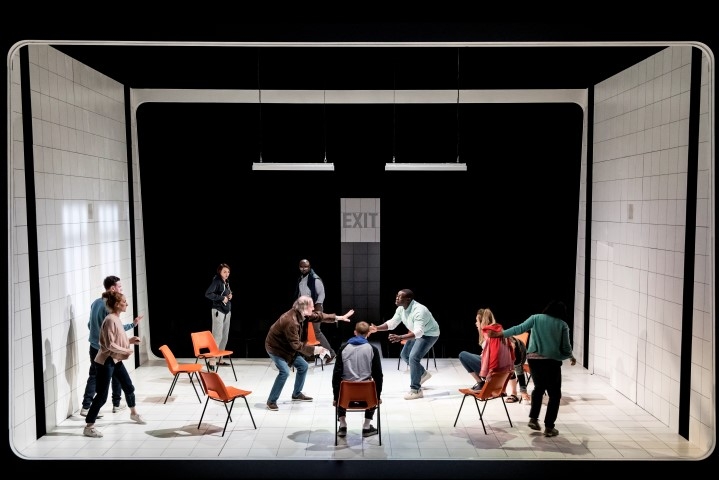
The stage is interchangeable and develops into different rooms with ease. The audience are placed either side making it feel as if we looking into a box – something like a zoo or science experiment adding to the sense of combating our original thoughts of addiction.

People, Places and Things is a hard hitting revelation of a play, taking our initial misconceptions and bringing forward the truth.
Hannah Goslin
Review, Spamalot, Exeter Northcott Theatre by Hannah Goslin

(4 / 5)
If anyone is anyone from the ages of 20 and above, it is unlikely that you did not grow up with Monty Python and their slapstick, intelligent humour. Despite the Python’s Holy Grail making its debut on our screens in 1975, their comedy and genius sketches have become not only legendary but with the ability to never age, becoming a deep part of British culture.
To bring something so acclaimed to the stage must be daunting, however with the input of Python’s own Eric Idle and original Holy Grail score writer, John DuPrez, what we see on television is brought to live performance with every bit of silliness and pizzazz as the original.
The performers themselves took on every character with perfect recognition of the originals, to uncanny resemblances of John Cleese in King Arthur particularly, making us feel as if the Python’s were really in the room. To bring such simple comedic tricks that often are hidden on television, the performers perfection in timing and perfectly rehearsed actions and movements, made us see a performance that left little to critique in what could be improved upon.
Fun was poked at the status that the performance found itself in – as a live musical number with little to hide in special effects. Songs were created about how romantic songs lead to a kiss or how an actress had been off stage for too long and her annoyance at this. Special effects weren’t trying to be hidden and clever, but became satirical and obvious, creating humour in not only our views of musical theatre but adding to the key approach that the Python’s take to comedy.
What really made this production special was the interaction with the audience. We were not left behind or made to watch but our knowledge engaged us in the action – singing along to well-known tunes, laughing uncontrollably at the same jokes that never get old, and cheers from the crowd at favourite character entrances and scenes from the original sketch. Even a slight moment of corpse-ing from the performers did not take away from the fun – personally I love a moment when performers slightly lose track. To me it makes them human but also shows how much they enjoy the performance themselves, and such as in this case, it never destroys the audience’s belief but creates more humour for them.
Spamalot is a well-constructed and brilliant production, bringing the 1970’s humour of the Python’s to new audiences but also revoking comedy for the older fans; modernising the production to fit current situations yet somehow keeping the original essence of The Holy Grail, this performance is a triumph.
Review Mixed Grill?, Beyond Face, Barbican Theatre Plymouth, by Hannah Goslin

(2 / 5)
My first time at the Barbican, this little theatre tucked away in an alley opposite Plymouth Aquarium is a little gem in itself.
For my first trip here, I came to see Mixed Grill? by Beyond Face. The production uses many elements of music, video, real life story telling and picking up on history and present day topics related to race, with some physical theatre/dance fusions thrown in. One could say this is for sure a multi-media production.
The premise of the show is to highlight and explore race, from two mixed raced performers where they share their personal stories and feelings but also make comments on well-known worldly stories. They support this with mixture of music that represents the Caribbean and Britain and combine this with a narrative of making a traditional Caribbean curry for their British friends. Not only does the smell of real life cooking add to the senses and bring you into the room, but the naturalism of the performances invites you to the discussion.
A simple set, we see a bookcase with blank frames, adding to the tales of not feeling placed or at home with who you are and where you are. Other than that, it is set like a standard kitchen and with all the appliances and ingredients for the performers to make this curry, it is very lifelike and relatable. This puts us in the room and makes us feel affiliated with the performers, giving us the option to side with their ideals and opinions on race.
The performers themselves pick up on very good points – showing physically with black and white liquid the ‘one drop system’ in America which was originally unknown to me; transpiring their uneasiness with their own difficulties when it has come to race and their stories and, for example, the male performer and the 50/50 life he had growing up in London where he was accepted but other times not, through dance and physicality. They were lovely additions but it did feel as if a lot of the other points they made could have been presented this way.
While you can tell they have theatrical backgrounds and a want to show important points through this, the script was lengthy and, at times, were just chatting but without conviction. Such a huge amount of facts and points must have been hard to recite and therefore lost a little personalisation and theatricality – unfortunately it felt over rehearsed and scripted. As previously said, the physicality, while it was good but seemingly also felt in production still, perhaps throwing more of this into the performance to compliment the speeches would have made this feel less like a lecture and more of a performance. With this also comes projection – at times their voices did not quite fill the room or music drowned them out and this was a real shame as I really wanted to hear what they were saying from the important points to the comedy they were also trying to bring.
Saying all of this, Mixed Grill is a great concept, comical and a joy to watch but it still felt in a scratch stage and could become something really interesting and amazing – physicality, energy and more theatrical projection is needed just to push it that little bit further! And there is something about this pair and their approach to comedy and vast knowledge and research into an obviously personal subject that makes you really root for their success.