
All posts by Gareth Williams

If my life were to be described on Twitter, my 140 characters would probably include: Amateur Baker, TV Lover, Welsh Learner, Contemplative Christian, One-time Alien Voiceover, Country Music Convert, Anxious Introvert I love the arts and am passionate about the importance of their place within society, whether that be TV, radio, film, literature, the theatre, social media, the list could go on... Here's to the creatives of the world!

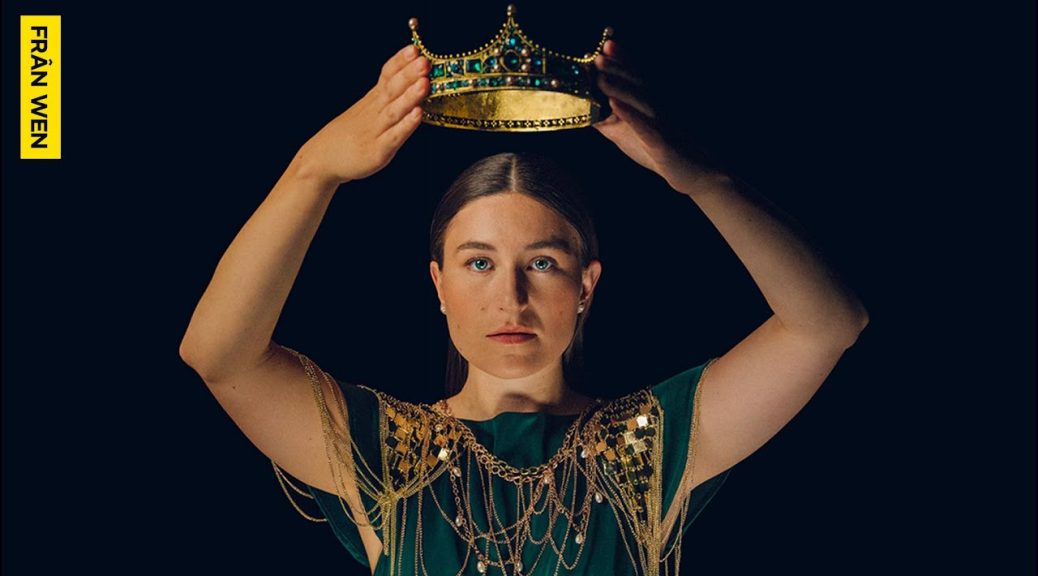
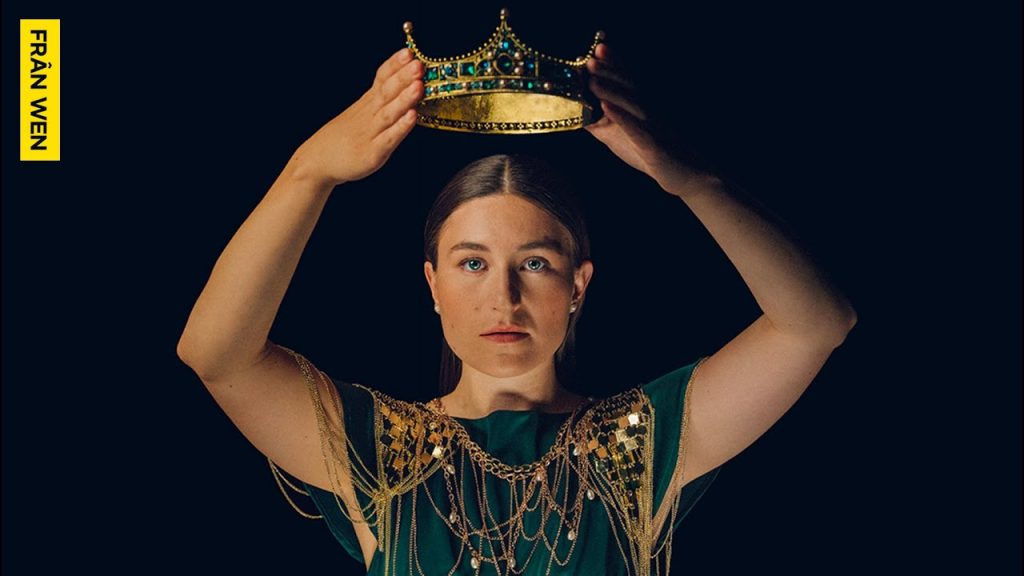
Review, Branwen: Dadeni, A Wales Millennium Centre & Frân Wen Production, by Gareth Williams

 out of 5 stars (4 / 5)

A turning point? Branwen: Dadeni certainly feels like it. This “epic new Welsh language musical” heralds a potentially exciting new era for the nation’s theatre. Why? Because it is by far the most ambitious, large-scale theatre production in the Welsh language yet. Testament to what can be achieved when the might of Wales Millennium Centre meets the creative ambition of Frân Wen. It is no understatement in describing the show as worthy of a West End run. The culmination of a long-held confidence by some that our culture is worth investing in.

Adapted from The Mabinogi, this new version exports the mythic weight of the original into a bold and contemporary style. The result is a classic piece of theatre, Shakespearean in size, but with a cutting edge that makes it feel fresh and new. The musical element is a key component to this: a combination of choral tradition, music hall operetta, Sondheim-influenced harmonies and Disney-inspired ballads. Seiriol Davies has not been afraid to draw from the wide pool of musical theatre history and infuse it with Welsh character to create a score brimming with personality. The result is a captivating story. An absorbing commentary on power, family and history that could have been heavy or dictatory but has, instead, been generously and lovingly portrayed.

The costumes fit nicely with each of the characters: from the flowing dresses of the idealist Branwen (Mared Williams) to the army-like uniform of her renegade half-sister Efnisien (Caitlin Drake). So too, the choreography captures beautifully their contrasting personalities: particularly the swish swooning of Matholwch (Rithvik Andugula) in the presence of a buttoned-up Bendigeidfran (Tomos Eames). It is in the songs though that this royal cast of kings, queens and consorts really comes to life. And when one hits the right note, the emotional affect can be overwhelming. Take the tale of the snowfall for instance. The way that Mared gently presses her vocal against the window through which her character witnesses such a scene. So poignant and hopeful, it brings a tear to the eye. Or Gillian Elisa’s vivacious solo, in which her character runs roughshod over the King to proclaim where true power lies. It is delivered with such abundant force as to raise a rapturous applause from the audience.

These are moments which are memorable not just in the context of the show. They make an indelible mark on the mind in the way that some of the best musical theatre productions do. Finding yourself driving home with lyrics still playing out in your head. Fingers tapping the melody on the steering wheel. Feelings still flowing through your body as you go to bed. This is a sure sign that Branwen: Dadeni has in some way been a success. It certainly lays down a marker for future work, which is as challenging as it is inspiring. At a time when investment in the arts is in danger of falling, may Branwen: Dadeni be the start and not the end of something.

Reviewed on the final night at Pontio Arts Centre in Bangor by Gareth Williams
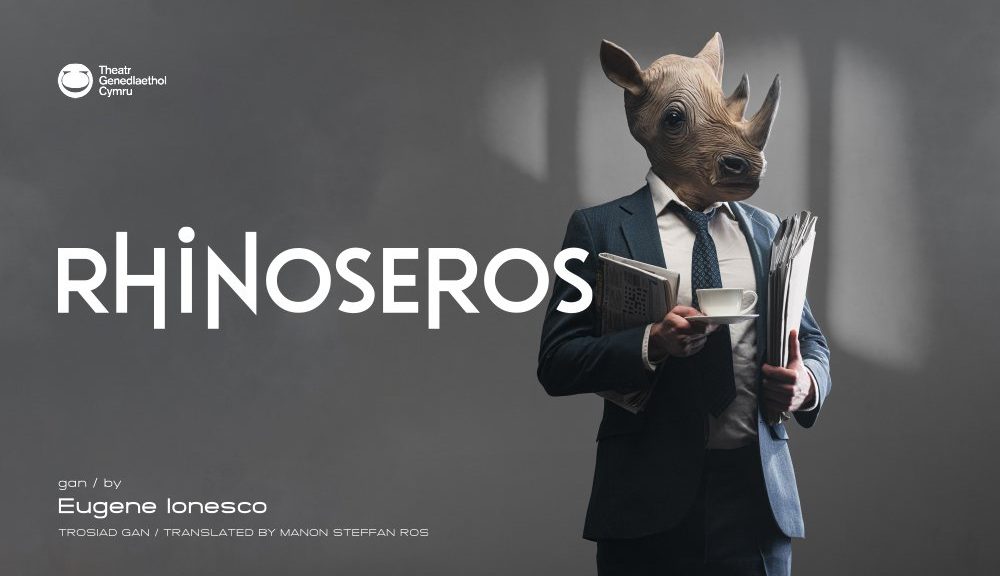
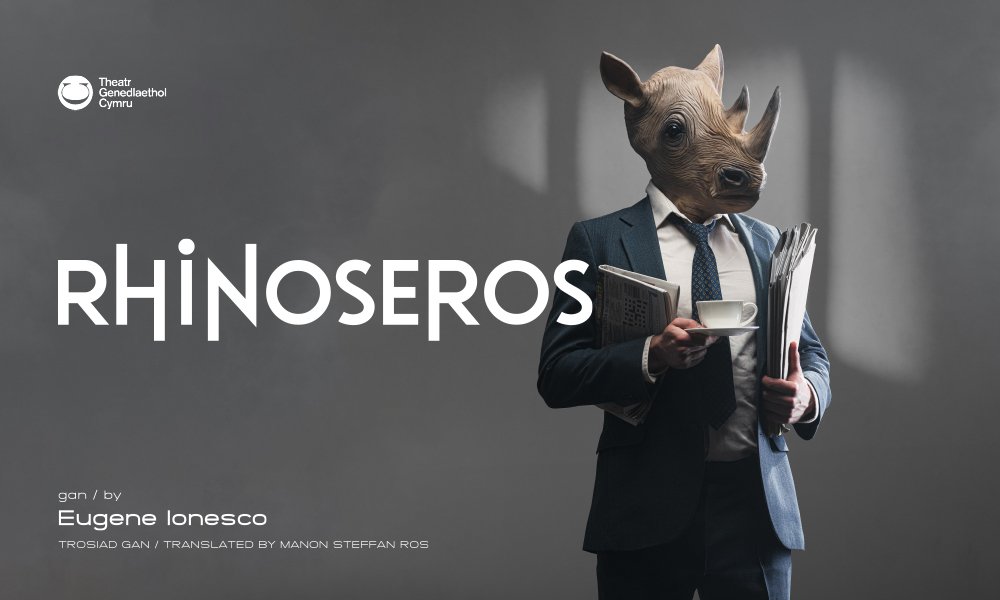
Review, Rhinoceros, Theatr Genedlaethol Cymru, at Pontio, by Gareth Williams

 out of 5 stars (4 / 5)

In contrast to NTW, Theatr Genedlaethol Cymru goes from strength to strength. Rhinoceros is the latest in a series of shows and commissions to offer fresh, bold and imaginative theatre. In fact, Manon Steffan Ros’s adaptation of the classic text by Eugène Ionesco is the first Welsh-language production that feels not just national but international in scope. This, in spite of the fact that pop cultural references populate the dialogue.

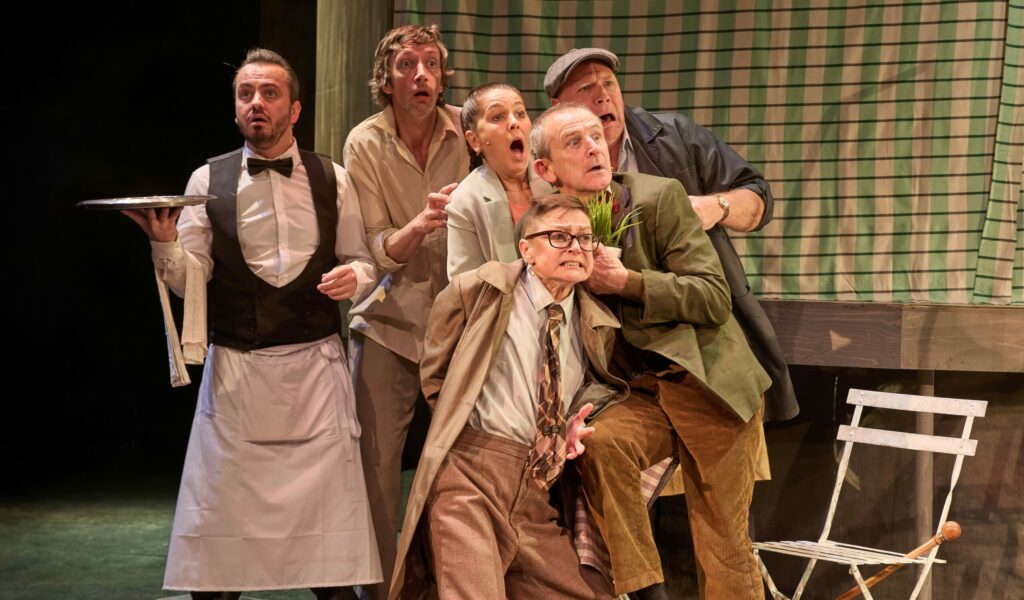
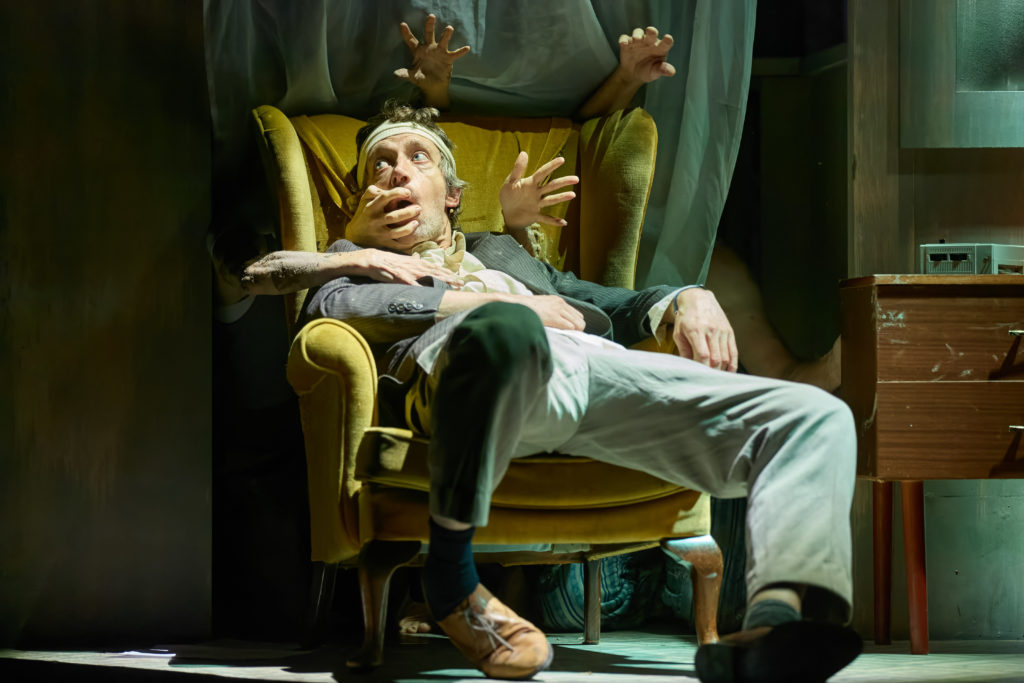
I say this as a Welsh learner who had to sit and listen to the play without audio description or captions. A problem with the Sibrwd app meant that I was forced to engage with it on its own terms. It is testament to not only the actors but the whole creative team that I became immersed very quickly in this increasingly-apocalyptic world. Set in an unknown location in Wales, friends Bérenger (Rhodri Meilir) and Sian (Bethan Ellis Owen) are enjoying tea outside the local grocer’s shop when a rhinoceros runs in front of them across town. The small but effective skill of the actors to shake the furniture to create the vibrations of its movement is but one of several parts that make this a spellbinding watch. Everything from the placement and use of props to the physical manifestation of the creature within each of the characters makes Rhinoceros a captivating commentary on social conformity.

Bethan Ellis Owen perfectly embodies the absurdity that underscores the whole production. For in her transformation, we witness the destructive, dramatic and the ridiculous. Her hysterical movement and exaggerated speech causes laughter among the audience even as it contains a nervous quality that points to a more serious tone. For Meilir presents an increasingly distraught and tortured soul as he fights desperately against the change, from person to creature, that friends and colleagues succumb to. This is no linear tale however: horror is always punctuated with the comic; fairy dust is often laced with fatalism; and the funereal contains a certain cultural irony. It is a melting pot of genres and emotions, expertly crafted and directed by Steffan Donnelly and his team.

What ratchets up the drama and emotion of Rhinoceros is the absence of an interval. It allows the momentum to build to an epic proportion, making its conclusion all-the-more powerful and demanding. It is, at its best, a warning: do not allow the light to be infected by the dark. And this speaks not only to its distinctly Welsh culture but to a Western world in danger of doing just that.

Click here for show dates.

Reviewed by
Gareth Williams

Series Review, Anfamol, S4C, by Gareth Williams
 out of 5 stars (4 / 5)

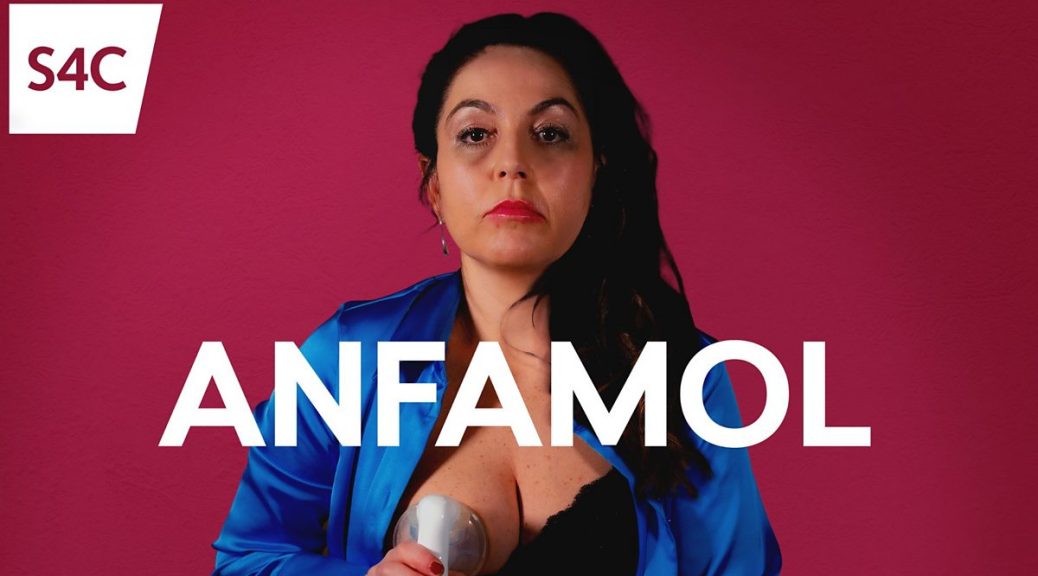
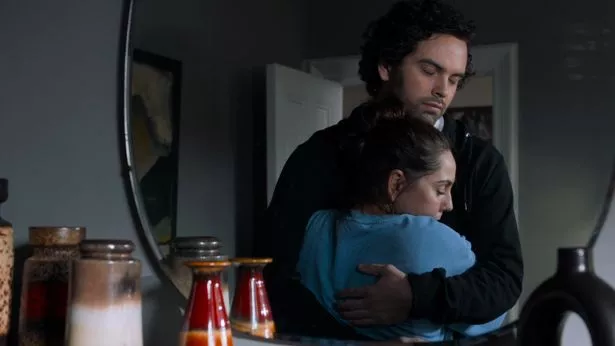
A Welsh adaptation of Fleabag seems quite superfluous in the face of Anfamol’s success. For this is a production that takes the best of Phoebe Waller-Bridge’s comedy and turns it into something original. First conceived as a stage play, the critical acclaim which it received has seen Rhiannon Boyle now adapt it for the screen. She has taken the frank, witty, dark and direct elements of her monologue and traversed them into a script that is punchy and pointed, hilarious and harrowing. The result is a five-part series that injects S4C’s schedule with something that is vivaciously fresh. Boundary-pushing at its best.

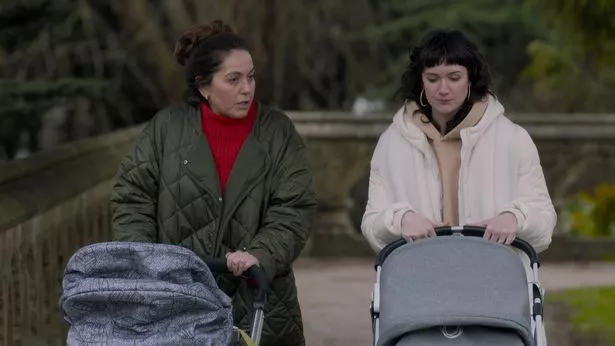
Bethan Ellis-Owen reprises her role as Ani, a forty-something single woman looking to become a mother on her own terms. Ellis-Owen brings a subtle sharpness to her emotions; able to portray dogged determination and inner brokenness with apposite aplomb. Her knowing side-looks to camera borrow unashamedly from Waller-Bridge; while the addition of fantasy sequences, particularly with exotic sperm donor Estevez, offer the kind of quirky aside that feels distinctly Welsh. (Think Parch or Enid a Lucy). There is a dark side to such visions however. For alongside the comic that, in part, comes from its overtness to sex and unabashed portrayal of the fertility process is the devastating effects of postnatal depression and the exacting reality of life as a single mum. Ellis-Owen manages to navigate these emotional shifts with ease; and in doing so, presents to us a character that is highly empathetic, and authentic in every way.

She is joined by a stellar support cast, of which Sara Gregory is the most prevalent. Playing Nia, a kind of nemesis to Ani, Gregory brings a chic strength to her character that cleverly masks a hidden life of sadness and despair. While publicly portraying herself as “Blueprint Mother” online, privately, Nia is struggling. Her birth-plan goes out the window; her marriage is distant, husband absent; and when Ani trolls her online, her success as an online blogger is left in tatters. But along with Ani’s seemingly perfect sister (played by Lowri Gwynne), the drama comes to a point where perfection is extinguished as a myth and vulnerability is celebrated in all its f***ed-up glory. Sticking two fingers up to the chauvinistic, infantile male sex at the same time, it becomes a powerful and thought-provoking piece on feminism, motherhood and mental health in the present age.

Anfamol continues S4C’s excellent batch of female-led dramas whilst offering something very different to what has come before. And though it may feel derivative of Fleabag, it is by no means a copy of it. It has its own distinct subject matter and significant narrative to tell.

Click here to watch the series.

Reviewed by
Gareth Williams
Review, The Martin Decker Show, A Kevin Jones/Keiron Self Co-production, by Gareth Williams
 out of 5 stars (4 / 5)

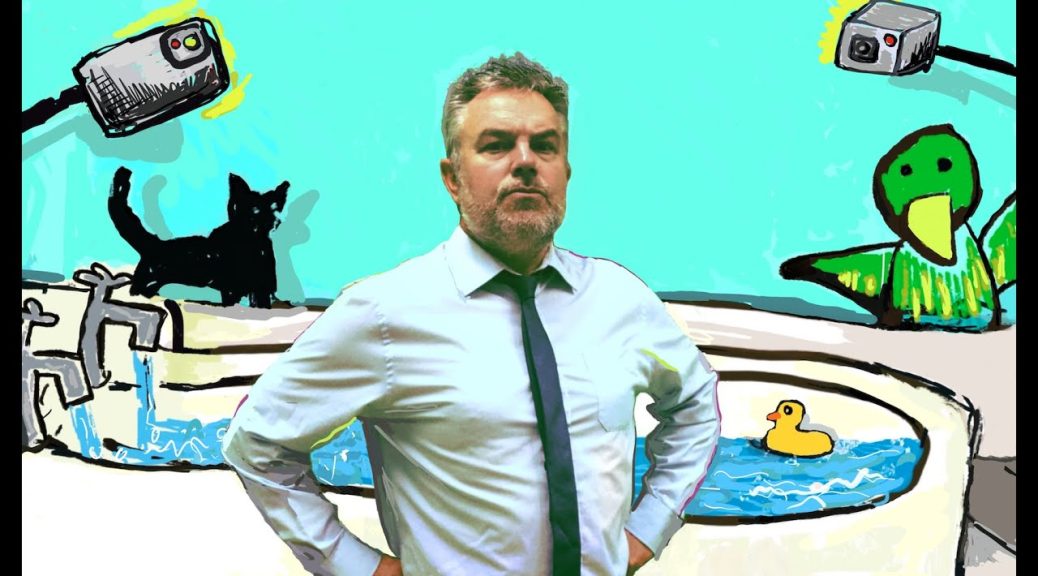
The Covid lockdowns presented both challenges and opportunities for creatives. For actor Keiron Self and producer Kevin Jones, The Martin Decker Show was conceived in such a context and now reaches its climax in a 70-minute film. Shot almost entirely on iPhone and GoPro cameras, it is a witty and cleverly conceived mockumentary that parodies the self-made ‘stars’ of social media. It lightly pokes fun at the online world of gaming and fitness videos while telling a story that contains a real depth of emotion. I was pleasantly surprised by its ability to be both humorous and heartbreaking. It is by turns off-piste and tragic.

Fans of Self will recognise in his protagonist some of the hapless romanticism of another of his characters, Roger Harper, from the sitcom My Family, for which he’s best known. In Martin Decker though there is a repressed sadness behind the jollity that eeks out as the narrative progresses. This results in a story that is full of pathos, made all the more prominent by the comedy on which it is built. What is witnessed is, in essence, a mid-life crisis; a mental breakdown of sorts of a white, middle-aged man who refuses to accept that his wife no longer loves him. The film ingeniously points to this state of affairs: from the slightly rundown semi-detached dwelling to Martin’s loose-fitting appearance in shirt and tie, not to mention the many calamitous moments while filming videos for his YouTube channel. He is, in many ways, a reincarnation of Keith Barrett, actor-comedian Rob Brydon’s character in the sitcom Marion & Geoff. He certainly displays the same kind of false positivity that at once draws sympathy and pity. But there is also a growing insanity, presented in such an offbeat style that one is forced to laugh at him at times, in spite of oneself and his situation. Martin’s stubborn refusal to admit what is happening right in front of him becomes both the cause and effect of his comedic value. Add in the deadpan commentary of Lynne Seymour, who also plays Martin’s wife, and it is a recipe for pure entertainment.

There is a serious side though. For encased within scenes of Minecraft videos and tinselled-up cars are genuine moments of tragedy. They beat palpably through the silence which is held by Self with such deftness that it’s hard not to be emotionally struck by the hopelessness and humility of his personal circumstance. It comes to a head in the bathroom, where most of Martin’s videos have been shot. He hides in a cupboard from whom he thinks is his wife’s new fella when, in fact, it is her. There is something incredibly poignant about her message to him, delivered, as it is, via the very camera that he has used to form his own YouTube channel. The consequence, when he finally faces up to reality, is so simply and beautifully done that one is left to admire, with satisfaction, a film of unexpected depth and genuine charm.

The Martin Decker Show may start with its protagonist faking applause for his own show. But by the end, this real audience member was clapping authentically, so impressed was I by this lockdown creation.

For more info, including cinema screening dates, click here.

Reviewed by
Gareth Williams
Review, Imrie, A Sherman/Fran Wen co-production, at Theatr Clwyd, by Gareth Williams

 out of 5 stars (4 / 5)

What is striking about Welsh play Imrie is its richness. Rich in language. Rich in description. Rich in lighting. Rich in characterisation. This coming-of-age story is like a rainbow bursting into life, pouring its colour out on stage with a vibrancy that reverberates throughout the whole production. Each element resembles a charged particle which, in collision, drives forward a powerful narrative about identity and belonging. It is a tour-de-force in aesthetics, as well as telling of its message.

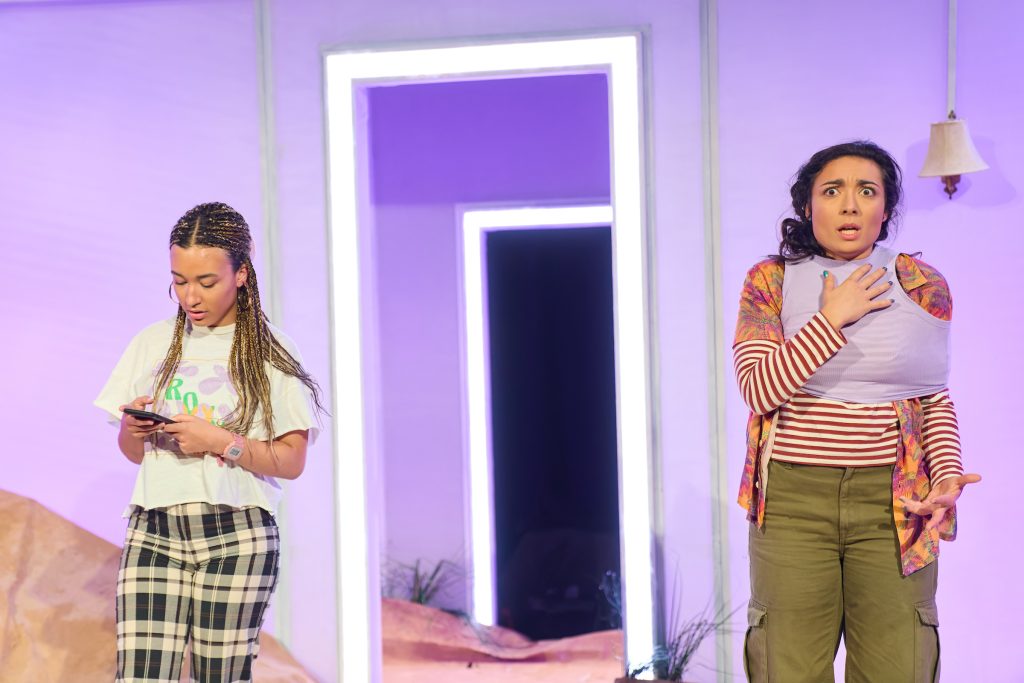
Credit: Mark Douet

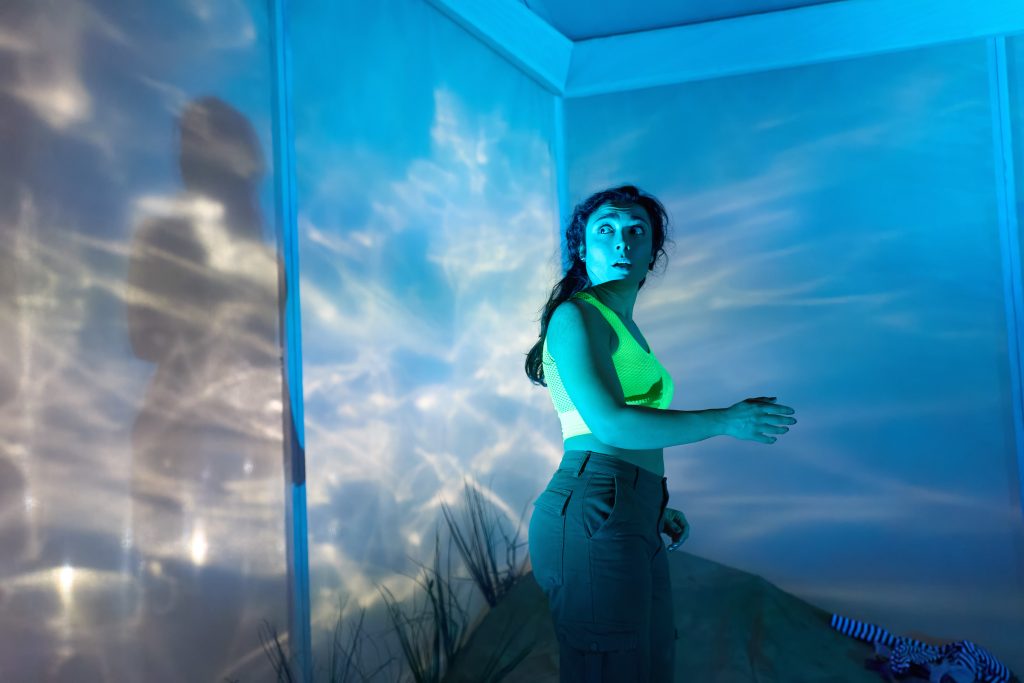
Elan Davies and Rebecca Wilson take on the roles of Josie and Laura in this two-part drama. They are half-sisters seeking to fit in in their own ways. It begins with Laura dragging Josie along to a party on the beach, she wanting to become one of the ‘in’ crowd while her sibling would rather be elsewhere. So while the former attempts to act ‘normal’, the latter runs off, after being made fun of, and finds herself alone with only the sea for company. And when from the water she hears a voice calling, a journey into an otherworldly tale takes place. This ethereal experience is captured brilliantly by the lighting that shimmers and shapeshifts across the three walls of the enclosed set. But it is also the flexibility and freedom of Davies’ physicality that produces beautifully an event which exists between the real and the imaginary.

There are parallels with Caryl Lewis’ recent novel Drift, particularly in relation to the female protagonist. Along with Disney’s Turning Red and The Little Mermaid, it is fair to say that writer Nia Morais has tapped into something bigger with Imrie. Certainly, that desire to break free from the expectations of family and (patriarchal) society burns strong here. To tie it in with the theme and symbol of water gives it a weight that bears down on the scale of contemporary classic. Its relevance is shored up by its exploration of sexual and racial identity. In particular, the conversation between the two characters at the end is thought-provoking, challenging and inspiring in its interaction with intersectionality. This is a further facet to the richness of Imrie, whose immersive soundtrack wraps the audience in its atmospheric tones which, along with the Welsh language, contributes to a mythic quality. Its basis in Cymraeg also adds a poetic lyricism to the dialogue which, though stereotypical, actually strengthens its value as a cultural expression of (self-)acceptance.

Credit: Mark Douet

Most definitely driven by Frân Wen’s passion for young people, when coupled with the Sherman’s support for innovative new Welsh writing, Imrie becomes a bold piece of theatre. Its message may be common but at its heart is an imagination that beats with such originality that it feels fresh. Celebratory of life, even as it depicts its struggles, Imrie reveals something of how identity blossoms, arising out from the depths to become all that we are, rich in colour. A play to be enjoyed whatever age you are.

Reviewed by
Gareth Williams
Review, Steeltown Murders, BBC Wales by Gareth Williams
 out of 5 stars (4 / 5)

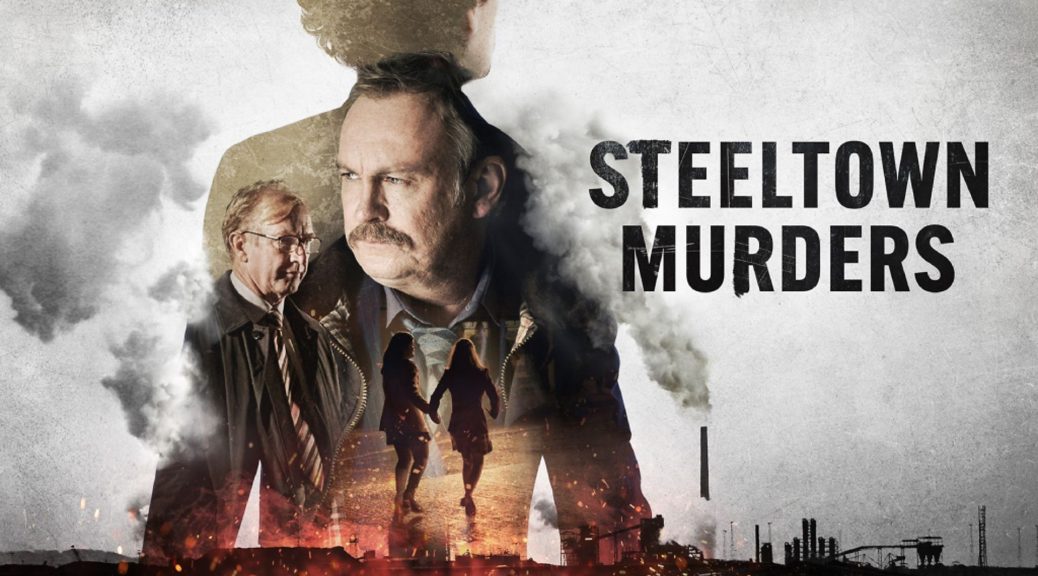
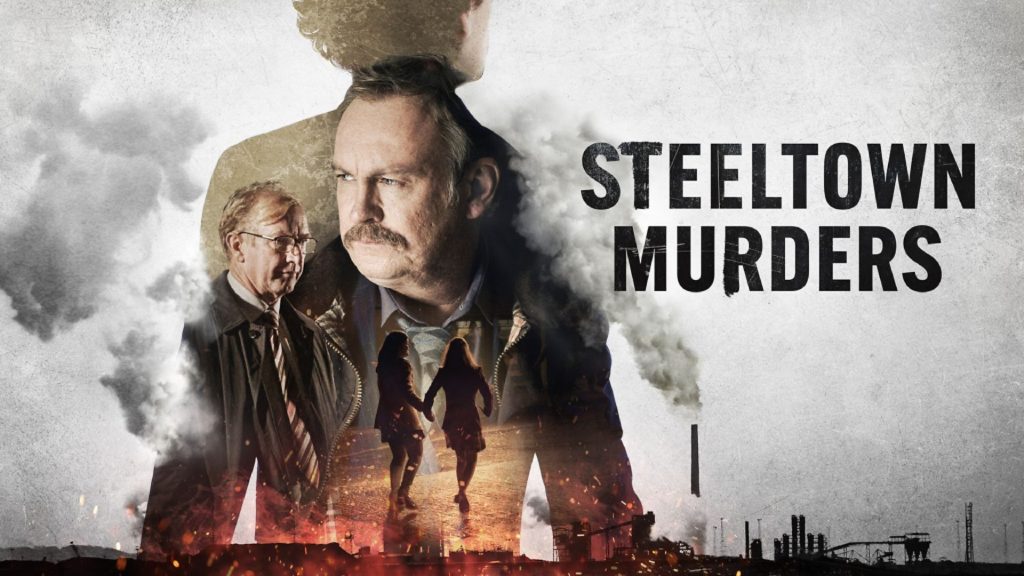
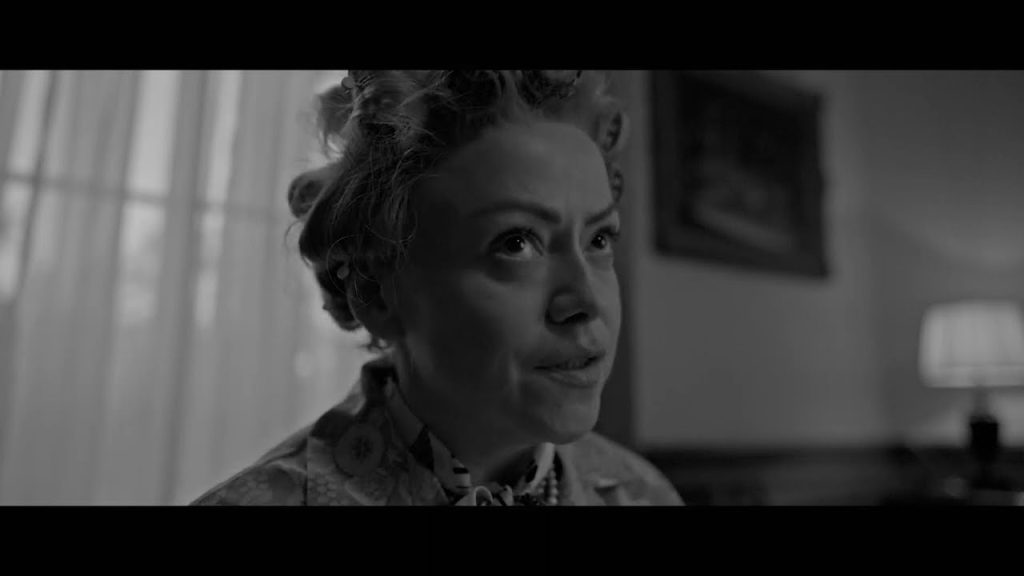
Steeltown Murders may be yet another Welsh drama in the ever-popular crime genre, but it is very well done on the whole. Telling the true story of how DNA was used in a pioneering way to solve a cold case in Port Talbot, it flits between the 1973 setting of the murders of three girls and the early 2000s with ease. Starring Philip Glenister, whose accent was nicely perfected through immersion into his Welsh roots, alongside Steffan Rhodri, who play the chief investigating officers, it is a drama that is understated, and effective as a result. Verisimilitude permeates its presentation, and is its greatest strength.

The aesthetic is beige and brown, particularly in its 1970s scenes. The “present” day has a drop more colour but remains blunted by a noirish sensibility. It suits the story and the location well, the unsolved murders hanging over the families and wider community like the smoke from the factories. When music is used, it is in a typically melodramatic way, especially over highly emotional scenes and end-of-episode montages featuring the various characters that come into play. The cast is large, a result of spanning over two timelines partly, but even when each is considered separately, Steeltown Murders feels like an ensemble rather than a two-man show. Glenister’s DCI Paul Bethall is well-drawn – strong-willed, single-minded, haunted by the past – as is Rhodri’s DC Phil Bach – dry-humoured, attentive, poised. But even bit-part characters such as Seb, played by Matthew Gravelle, husband to Sita (Natasha Vasandani), who was two of the girls’ friend, is complete enough to add real weight to the narrative, particularly in its final episode. Whether this is down to its basis in real events, and therefore people, is open to question but, even in spite of this, every actor appears to embody their character with respective heart and attentiveness.

There is the slight criticism towards exposition, and explanation of the forensic and scientific methods that sound plainly for the audience’s benefit. This takes away slightly from its realism which is nevertheless strengthened by the localised accents on show and a bilingualism which, though under-used, was still welcome insofar as representation is concerned. Never for a moment can Glenister be thought of as merely a star signing, his commitment to the role and the overall drama depicted as much in Bethall’s seriousness as his relationship with Steffan Rhodri. The two make a great pairing, sparring off one another with an ease and respect that lightens the dark tone of the narrative. They never dominate the screen however, meaning that the case itself always takes centre-stage even when their part in it is pivotal.

This four-part drama may not be ground-breaking in-and-of itself but Steeltown Murders does tell a ground-breaking story of how DNA technology was used to catch a killer. As such, it is simple but effective; good at what it does, without breaking any new ground.

Click here to watch the series on BBC iPlayer.

Reviewed by
Gareth Williams

Polar Night, Jodie Marie, by Gareth Williams
 out of 5 stars (4 / 5)

Three weeks in the Arctic Circle has certainly left its mark on Jodie Marie. The Welsh singer-songwriter’s new EP shivers with the cold fjord breeze and echoes the icy terrain of Norway’s northern tip. Yet there is also a log-fire intimacy and crunching of soft snow in its sound. It evokes a wild landscape of welcome and wonder. Polar Night is firmly rooted in the geography of its creation.

Opening track ‘Seiland’ plunges the listener into the frozen setting of Jodie Marie’s base with a continuous choral hum. Its simplicity is a theme that defines this record, here manifested in a short instrumental arrangement that tingles the senses. There is a wonderful incongruity between the constraint and freedom of her isolation. This is expressed in the rich combination of soulful vocals and balladeering piano which run through the rest of the record like a stalactite. Meanwhile, lyrics such as those on the title track – “biting wind / I’m frozen here / at the water’s edge / I feel free” – and ‘Blue Hour’ – “I’m lonely / but I feel alright” – act as a stalagmite that meets in the middle to create a solid pillar of yearning love.

The idea that absence makes the heart grow fonder becomes more explicit as the record progresses. And as it arises from the environment in which Jodie Marie finds herself, the songs are ripe with imagery and metaphor. There is something of the sacred in being “surrounded by beauty / and all I see is you” on ‘Blue Hour’. The wooing harmonies conjure up a whooshing wind on ‘Eye of the Storm’, tempered by the comfort of the electric guitar strings, resembling the arms of a loved one. Meanwhile, the stars become a focal point on ‘Closer to You’, the line “miles apart / but we share the same view” reinforcing the intriguing contrast of separation and connection found throughout the EP. It seems this Scandinavian island offered something more than just creative inspiration for Jodie Marie.

Final track ‘Reindeer Heart’ encapsulates the gentle nature of this EP musically whilst also reaffirming the metaphorical link between landscape and love in its lyrics. There is something mystical about this final song, borne of sensitivity and encouraged into being, as a presence that “leaves no traces… that the eye can see”. It is more in the vein of ‘Carageen’ than anything else from her last album ‘The Answer’. But whilst that arose from the Pembrokeshire shoreline, Polar Night was formed amidst the darkness of the far-northern hemisphere. Jodie Marie has captured this setting perfectly, so that even in the midst of its warm Spring release, its sense of place can be keenly felt, and when the sun goes down, embraced.

‘Polar Night’ is out now. Listen to it on Spotify here and/or order a physical copy of the EP here.

Reviewed by
Gareth Williams

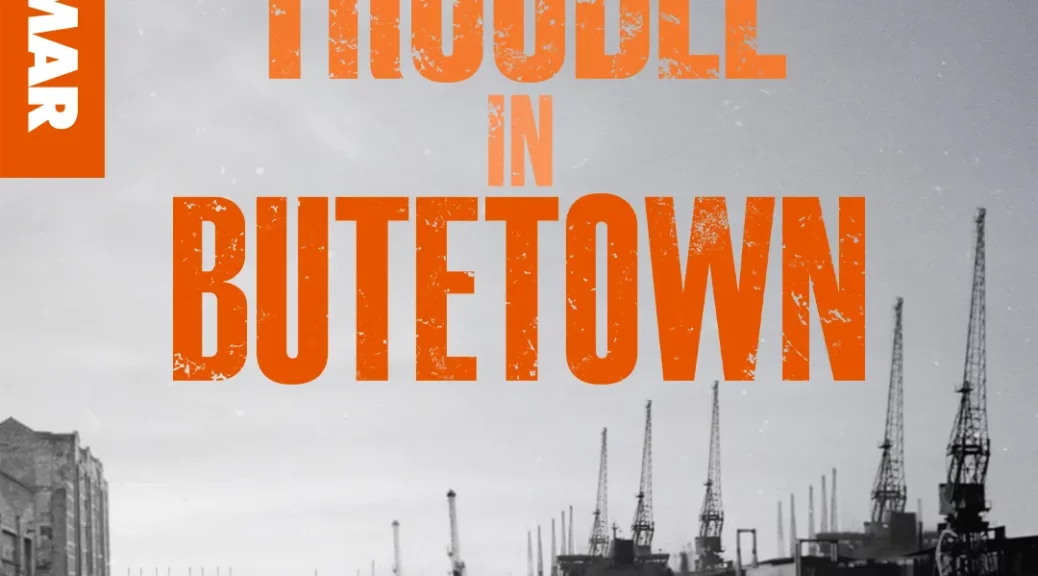
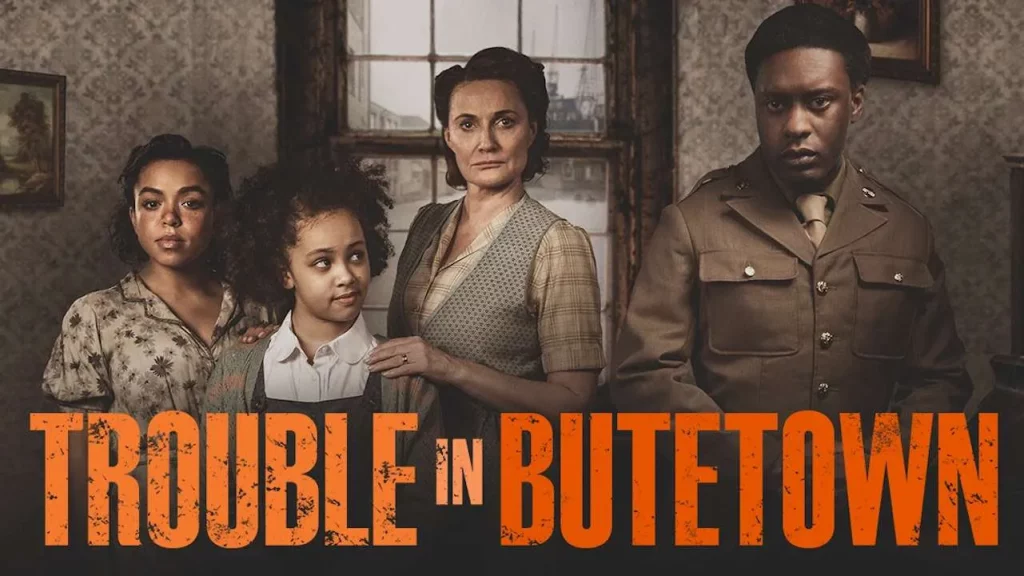
Review, Trouble in Butetown, Donmar Warehouse, by Gareth Williams

 out of 5 stars (4 / 5)

To see the Wales-based play Trouble in Butetown performed on a London stage was a tantalising experience. This was a rare example of accent and language reverberating around a place not situated within the confines of its nation. To hear Welsh being spoken miles from home in front of a multicultural audience where English was the common denominator was both a surprise and a delight. When coupled with the intimacy of the Donmar, where the audience are immersed right in the action, the familiar phrases, said without translation or explanation, made for an authentic performance that was unexpected but welcome.

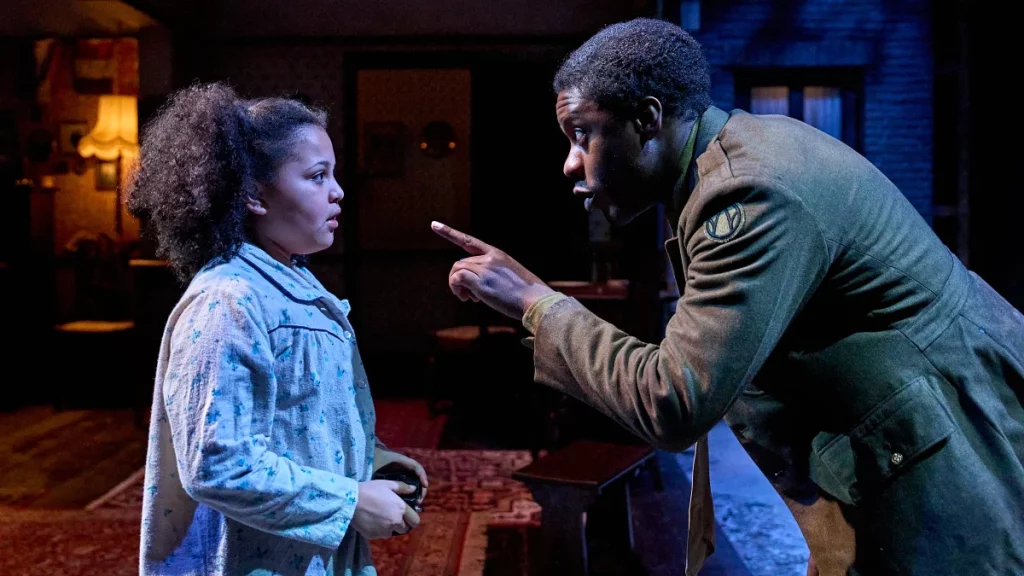
The scenery and costume added well to the verisimilitude, transporting us all into the living room of an illegal boarding house in wartime Cardiff. Credit must also go to the dialect coaches who have worked wonders with a cast of mixed nationalities, Sarah Parish among them who, as the matriarch Gwyneth, delivers a voice of which those in the Valleys would be proud. She may be the star name in this production but the star performance goes to young Rosie Ekenna as Georgie. Making her debut on stage, her confident and agile performance belies her nine years of age. She produces a character that is full of attitude and vigour; tough as nails, and a quick wit which is keenly delivered. Her relationship with Samuel Adewunmi, who plays American GI Nate, wanted for the murder of a fellow soldier, is especially wonderful, the two bouncing off one another as equals in both their dialogue and action.

Rita Bernard-Shaw also shines as Connie, an aspiring singer, whose stirring renditions of jazz standards and blues numbers mark her as a real talent vocally. Meanwhile, Zephryn Taitte brings a much harder edge to Norman than Call the Midwife fans are used to seeing (he plays pastor Cyril Robinson in the long-running series). His presence on stage is always evident though never dominant; a character of compassion borne of struggle and hardship. His inclusion, alongside fellow immigrant worker Dullah (Zaqi Ismail), means that Trouble in Butetown portrays what the programme calls the “cosmopolitan community with seafarers from all around the world making Cardiff their home”. In doing so, it cannot help but include racial tensions which, though localised, speak to universal issues, giving voice not only to past generations but present struggles too. This is a story not only of Tiger Bay but contemporary Britain too.

There is a feeling at the end of the play that what has been witnessed is a celebration of diversity. It presents Wales’ capital city as a place of welcome and integration that belies the historical notion of a homogenously white population. It also presents the cultural importance not only of BAME identities but the native language of the nation, included here not as statement or stereotype but as real expression of lived experience both then and now. It challenges the notion, still prevalent in wider society, that Welsh is a ‘dead’ language. Trouble in Butetown plays a small part in taking it beyond the border, and in doing so, communicates cultural inclusion on several fronts.

Trouble in Butetown premiered at the Donmar Warehouse between 10th February & 25th March 2023.

Reviewed by
Gareth Williams

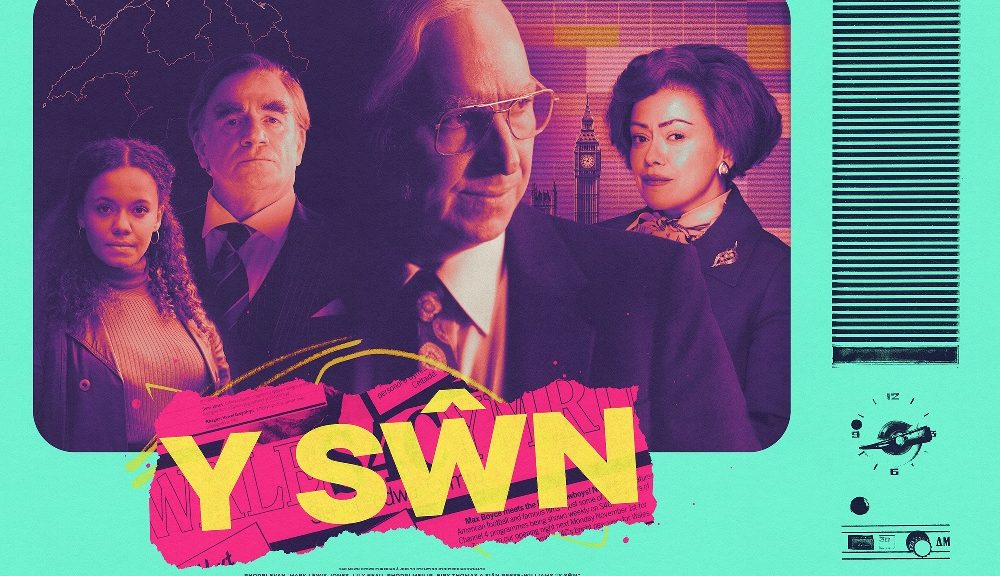
Review, Y Sŵn, a Swnllyd/Joio/S4C film, by Gareth Williams

 out of 5 stars (4 / 5)

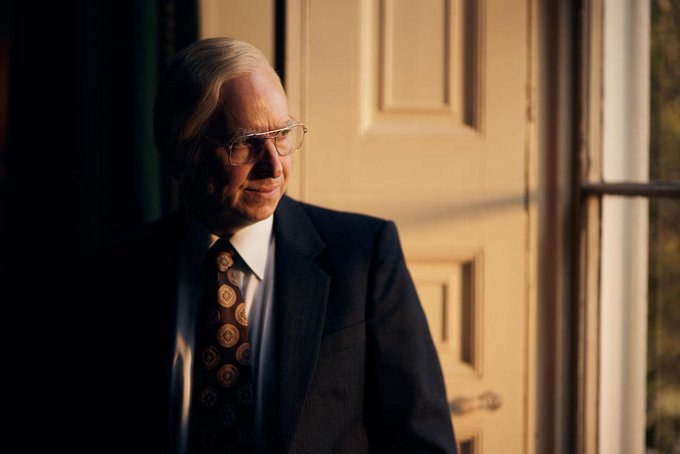
What a fascinating film Y Sŵn is. No sooner has its writer, Roger Williams, struck gold with cult horror Y Gwledd than his Midas touch turns to the marking of forty years of S4C with this: a striking production that is as offbeat and realist, telling the story of how the Welsh TV channel came into being. Featuring an all-star cast of Welsh natives who perfectly attune themselves to playing key public figures of the time, it successfully immerses itself in the optimism and rancour of Margaret Thatcher’s first-term as Prime Minister. Full of energy and a bursting palette of colour, it truly marks itself as a distinctly British yet uniquely Welsh film.

The aesthetic right from the get-go resembles that of Killing Eve. In big bold letters, we are introduced to CARDIFF. The year is 1979 and there is a rich seam of colour which paints a positive picture of urban Welsh life. Ceri Samuel (Lily Beau) works at the Welsh Office, taking us into a shiny Mad Men-style series of corridors and meeting rooms where we are also introduced to key players in the civil service and government. The clever contrast between the ebullient colour of the former and monochrome presentation of the latter quickly marks out the heroes and villains of the piece. It also represents the vitality and strength of a nation against a stuffy and outmoded political leadership. Other forms of pop art appear throughout to give the film a slightly off-kilter, comedic edge. This sets it apart from the more fictionalised social realism of films like Pride to become a self-referential melodrama that nevertheless manages to maintain a sense of seriousness in respect of the story it wishes to tell.

The fine balance between dramatic and comedic forms is supremely kept by the onscreen talent. Assisted by the magnificent make-up and wardrobe departments, each character stands at an acute junction between verisimilitude and caricature. Willie Whitelaw is perfectly realised in the bushy eyebrows pinned and preened on Mark Lewis-Jones’ face. Sian Reese-Williams ensures a finely-pouted, drably-accented portrait of a scruffy-haired Iron Lady. Rhodri Meilir could turn up his pristine English act no more as Welsh Secretary, Nicholas Edwards. They play the part of authority figures straight enough to make them believable whilst subtly exaggerating them to undermine the abuse of power which leads to their attempts to back down on a manifesto pledge to establish a Welsh language television channel. In contrast, Carys Eleri plays Ceri’s superior with an effervescent humour that makes her a sympathetic character. Eiry Thomas plays devoted wife Rhiannon with enough emotional heart that belies her stereotypical dress. And Rhodri Evan brings a warm smile and gentle demeanour to troubled protagonist Gwynfor Evans to ensure his battle against the political might of Downing Street and Whitehall is portrayed with sufficient weight so as not to become a trivial matter. This is an important story albeit told in a highly imaginative way.

Y Sŵn represents the very best of Welsh filmmaking, in both its content and production. The ending is a surprising yet interesting one, paying homage as well as subverting an oft-derided formula. Its effect is heart-warming, in such a way as to instil a sense of pride in Welsh identity, complete with self-deprecation and humour. It also speaks to the small budget with which it was made, creatively used and referenced in the 4:3 home-movie ratio. You wouldn’t know it though from its professional and glossy finish. Y Sŵn is a real labour of love which stands among the best in contemporary British cinema.

Y Sŵn is showing in selected cinemas throughout March 2023. Click here to find out more.

Reviewed by
Gareth Williams

Review, Pijin/Pigeon, Theatr Genedlaethol Cymru/Theatr Iolo, Pontio, by Gareth Williams

 out of 5 stars (4 / 5)

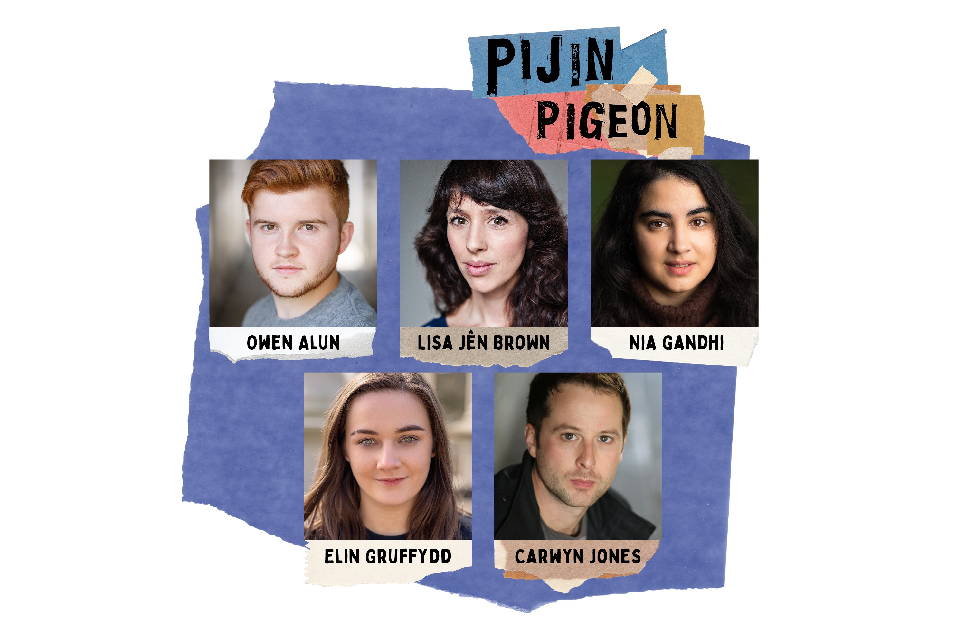
Based on the best-selling novel Pigeon by author Alys Conran, this stage adaptation by Bethan Marlow sees Welsh and English subtly woven together, with every performance using integrated captioning in such a creative way as to lead me to undertake an experimental review in its honour:

The show is currently on tour. Dates and tickets can be found here.

Reviewed by
Gareth Williams