Tag Archives: Gothic

Dracula’s Guest (Brother Wolf) – a review by Barbara Hughes-Moore

A chilling start to spooky season at Newport’s Riverfront Theatre

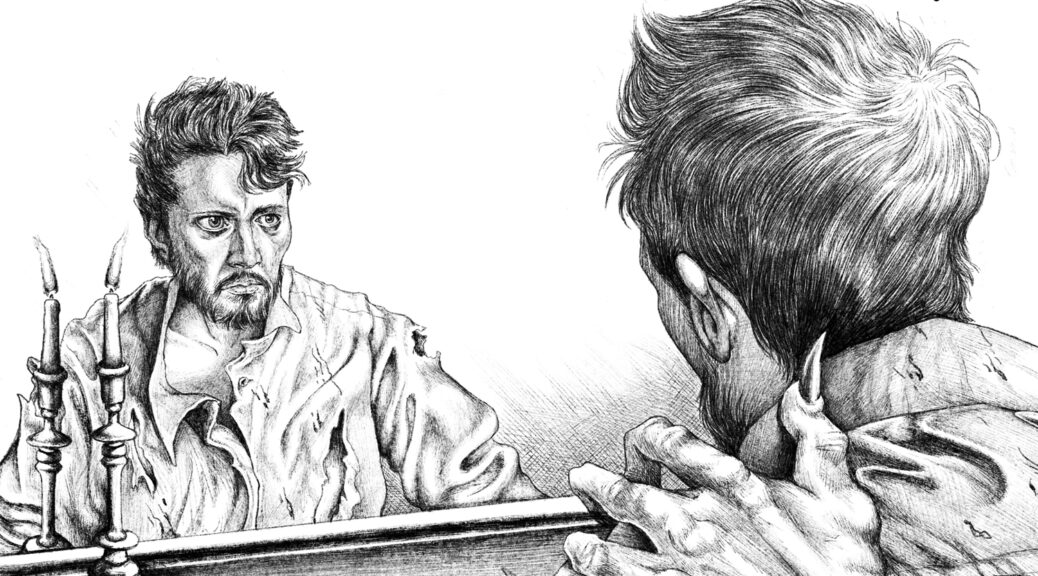
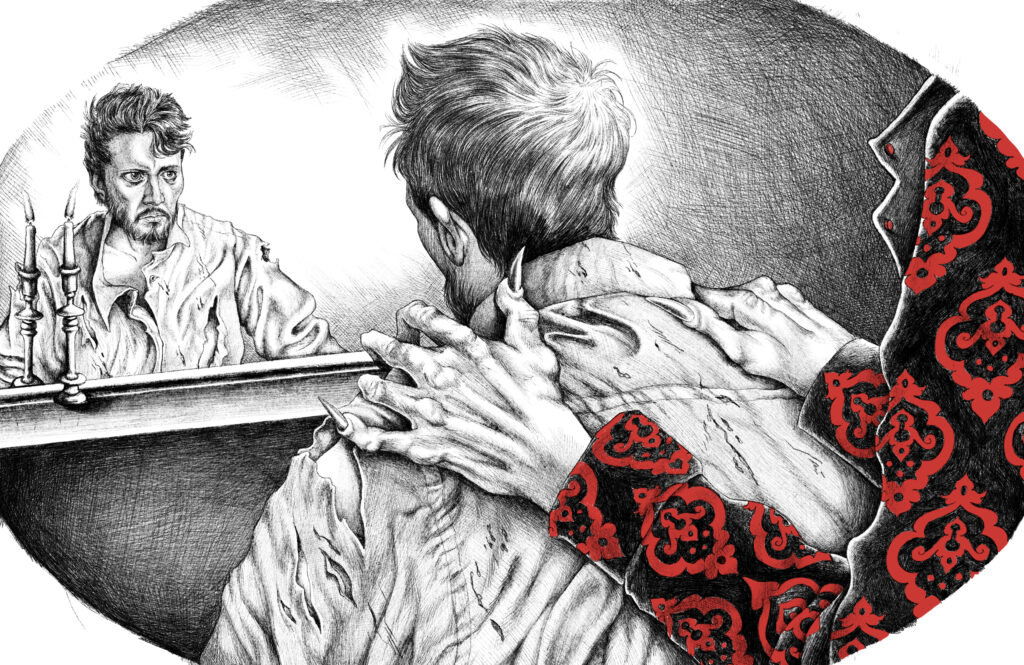
Inspired by Bram Stoker’s genre-defining vampire novel of 1897, Dracula’s Guest shines a light on a relatively minor character in the Dracula canon; one who is often overshadowed by flashier, more bombastic figures like Van Helsing and the Count. That character is R.M. Renfield: Dracula’s bug-eating mortal servant/familiar who, in exchange for the promise of eternal life, assists his diabolical plans to set up a new vampiric feeding ground in England. While the book never reveals Renfield’s backstory, Dracula’s Guest seeks to answer this tantalising ‘what if?’ – with a few terrifying twists and turns along the way.
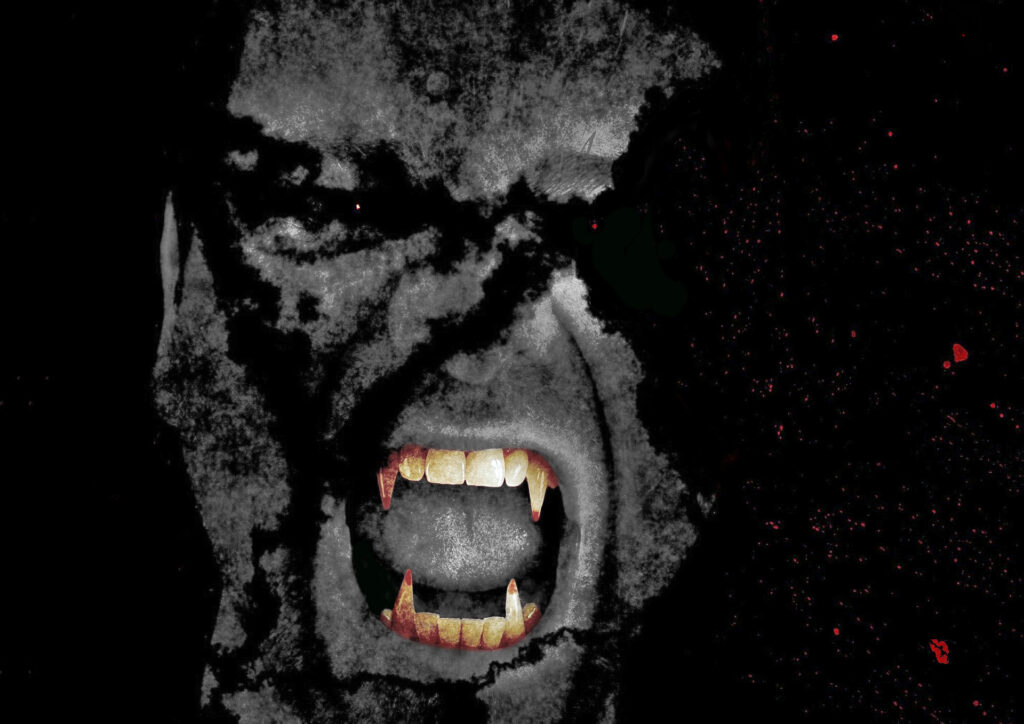
The play is directed, adapted and produced by James Hyland, who also stars as Dracula opposite Ashton Spear as Renfield. ​Premiering in 2021, Dracula’s Guest won the Dracula Society’s Hamilton Deane Award and an Offcomm Commendation at the Off West End Awards, both in 2022. This taut two-hander begins with Renfield alone, trembling at a table set for two. On the menu tonight: a glass of brandy and a rotting pig’s head. The second chair is empty – but it won’t be for long. In sweeps the Count, and the Gothic feast begins.

Over the course of a tense and often gruesome hour, we watch the pair engage in a psychological game of cat and mouse. Hyland’s passion for the source text is clear, and he does well to weave in many key motifs from Stoker’s work while striking a few bold, original notes of his own.
One of these is to hone in on Dracula as a figure of compulsion. His Count is a sadistic manipulator, a toxic narcissist, and a staunch believer in his own myth. He embodies some of the new ‘vampires’ of our own age: manipulative and coercive men in positions of power, who use tools like negging and gaslighting to dominate and control. In the novel, he is an old warlord trapped in a new age, waxing lyrical about his gory glory days. This is a sense that Hyland does well to capture in his performance, giving the impression that Dracula was thirsty for blood long before he acquired the dark gift.

His Count is still very much at war, but it is also a stage that he craves: part shogun, part showman. Hyland’s performance leans into the theatrical bombast of Hammer Horror and even further back in film history, to the Expressionistic silent movies which still influence our cultural image of the vampire today. There’s even something of the feral balletics of Gary Oldman’s Kabuki-inspired performance in Hyland’s unsettling physicality and bursts of animalistic rage. Hyland, who I had the pleasure of interviewing earlier this week, clearly has a feel for the Gothic and would surely have brought that to past productions of Jekyll and Hyde and A Christmas Carol that he has created and starred in under his production company, Brother Wolf.

Spear, in contrast, grounds us in a truly empathetic humanity. In a novel so preoccupied with the often-fine line between sanity and madness, Renfield sits at the intersection between truth and delusion. His and Hyland’s interactions play like a dance (at times literally), with moments of dark comedy intercut with sequences of bug-eating grossness that aren’t for the faint of heart. And the psychosexual undertones within Stoker’s novel are present here, too, with Dracula seeking to persuade his captive to ‘join’ with him in perhaps more ways than one.

The play is all the more unsettling because Renfield is not Dracula’s only Guest: the audience, too, has been invited into his hallowed halls, and may likewise be looking for the exit, especially during some of the grislier bits! A testament, I’m sure, to the skilful sense of tension and unease that has been crafted, both by the two actors onstage along with Chris Warner’s spine-chilling score. It’s a taut and unsettling two-hander that will have you sleeping with the light on long after the lights go down.

Vampires are creatures of the past who also represent our present. Through them we might reflect on our own heritage and histories, what haunts us in our waking lives, and what we refuse to let die. While the script could be tighter in parts, the play builds to a genuinely shocking climax that will have you asking yourself what happens next. Dracula’s Guest may well have the answer, but the question remains: would you invite them in?
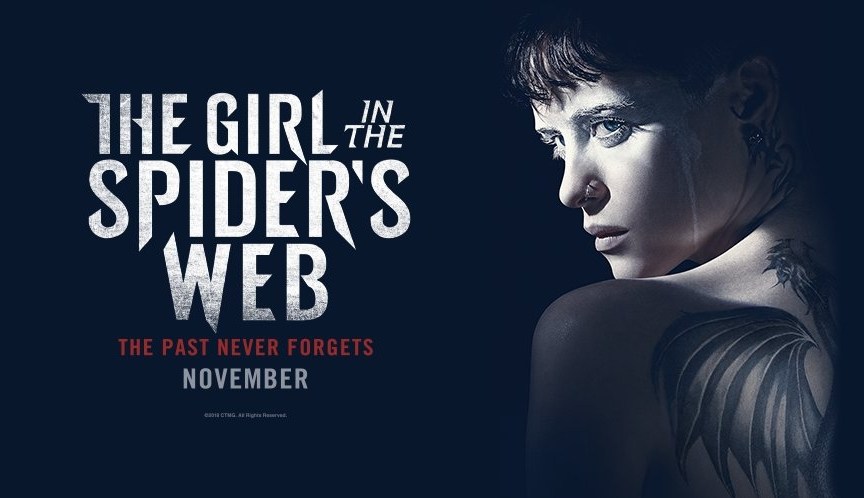
Review The Girl in the Spiders Web by Jonathan Evans

 out of 5 stars (4 / 5)

The cases of Lisbeth Slander, The Girl with the Dragon Tatoo, are not for the faint of heart or the for people that lack the ability to pay attention to the details happening on-screen. They are sharp, modern Gothic thrillers that never go easy on the characters and won’t let leave you feeling too optimistic by the end. As soon as this movie starts there is images and visual hints for the rest of the story at hand, two sisters playing chess together and a spider crawls out from under one of the pieces, their father calls them into his room and he pats some kind of machine, the sister Lisbeth takes her sister by the hand and runs away. On the edge of a balcony, the sister goes back to her father while Lisbeth takes the chance of falling out of a balcony and into the snow.

Then kicks off a wild opening sequence that incorporates key imagery of the movie and launches us into present time. It is unique, memorable and effective.

Filling the big black boots of Lisbeth Salander is Claire Foy. She fit into the leather jacket and trousers well while being given an appropriate punky head of hair. Foy’s true strength comes through when the character says hardly anything, many times in the movie she must process information, or listen intently or clearly be pushing her emotions down.

One day she gets a new assignment from a rich man named Frans Balder (Stephen Merchant), he has created a programme called Firefall which is capable of giving whoever has it full control of any missiles in the world. This, of course, was a terrible idea and only now does he regret making such a thing (say nothing of that this is something out of a Saturday morning cartoon idea). So Lizbeth has another case on her hands.

Lizbeth successfully takes Firefall and a special National Security Agent, Edwin Needham (LaKeith Stanfield), whose priority it is now on Lizbeth’s trail. One night while she is quietly bathing she hears a rummaging and men in masks are in her place and they take the laptop with Firefall and set her place aflame. Being that all this is happening there is, of course, a story here and investigating needs doing so in comes Mikael Blomkvist (Sverrir Gudnason), her lover/partner from the previous stories and head of Millenium Magazine. Along with all these players, there is the crime syndicate called The Spiders with a figure that has a very important connection to Lisbeth’s past.

The original Millenium Trilogy was published posthumously from the author Steig Larsson but alas an endearing character and success mean that nothing is really sacred so the books were continued with different authors. I actually cannot attest to the quality of the book because I have not read them. However, the question is raised about being true to style, characters voice, and message.  This is a world of victimized women, brutality, information is true power and there are either bittersweet or certainly no happy endings.

Being the established tone of this world director Fede Alvarez was a good choice to take the reigns as director. With his remake of Evil Dead and Don’t Breathe, he is a creator that has a talent for creating haunting images and visceral experiences. These are Gothic tales, where moments from the past carry over to the present and such such images must be striking and say something about the story, I won’t describe them, you will see them and understand. Also, there are more than a few visceral encounters throughout and you feel the impact of the punches and bullet shots, with the use of a shaky camera that always knows what to focus on and sharp sound design, hearing every tightening rope, gasping breath and shattering glass.

The whole stories construction is well built. Characters have their own voice, serve their purpose as players in a game, yet you still believe they are real people, there are a MacGuffin and plenty of twists and turns throughout. Though there are just a few times when things play too neatly for Lisbeth and the concept of Firefall is not the most feasible.

Heightening most of the scenes is the score by Roque Banos. He invokes Bernard Herman’s score in Psycho with mostly strings played fast to produce a shrieking effect. Other times he brings in drums to emphasize the rhythm and time sensitivity of the scene at hand.

This world and these characters have become like Sherlock Holmes, Zatoichi, James Bond or Batman. Where it is fertile landscape for stories, though they are distinct and the characters are defined but also malleable enough for other actors, writers, and directors to come in and give their interpretation of the world.

If you are a fan of any of the other movies then this one will also appeal to you. If you care for hard-hitting spy thriller then this one will check all the boxes also. If are a fan of both of those but also care for deeper subject matter in terms of characters and why they do what they do then this one, again is for you, if not then pass on by when you buy your ticket, but if so get right on it!


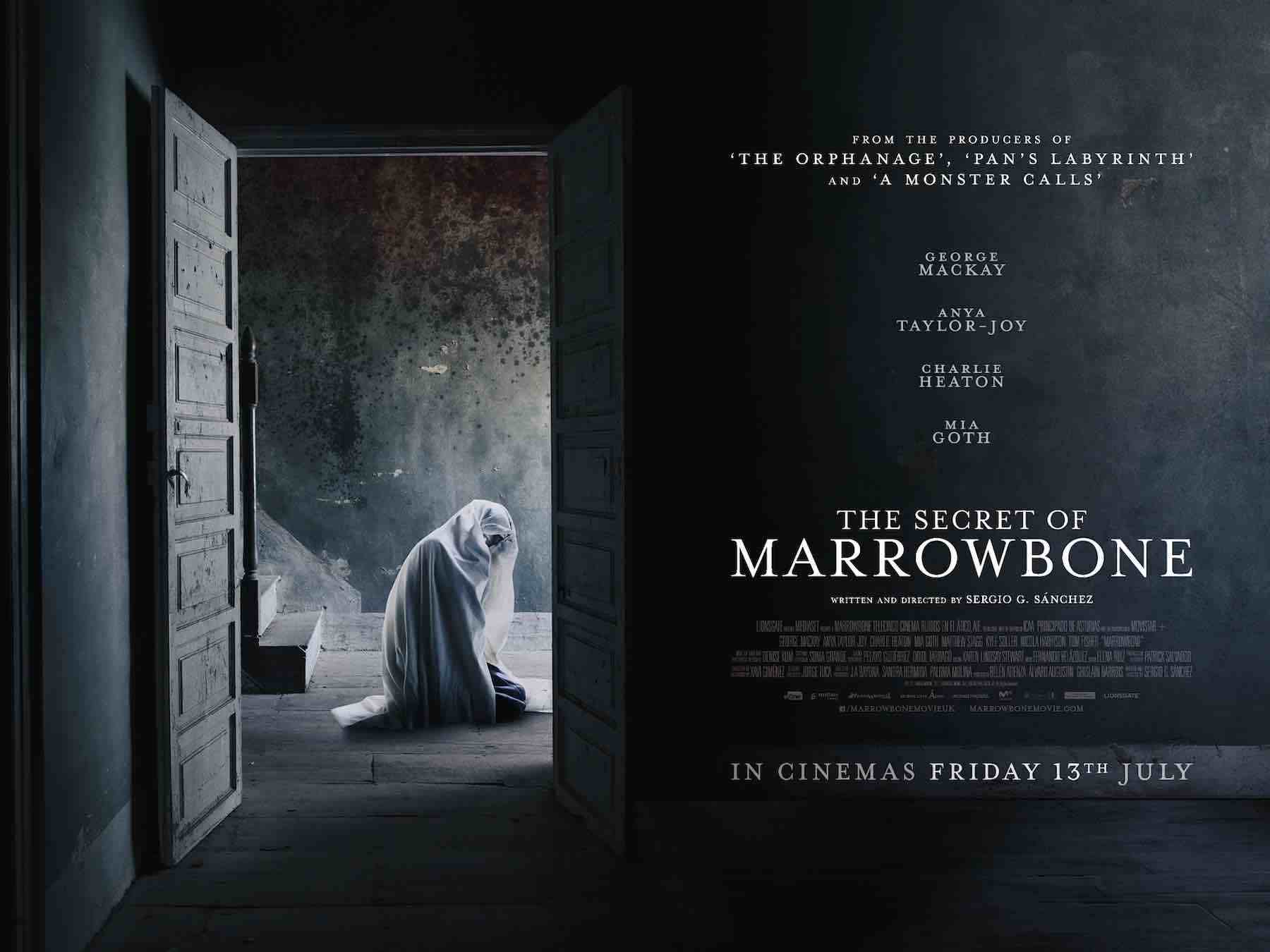
Review The Secret of Marrowbone by Jonathan Evans

Horror works best when the frightening moments are left in the blank spaces. We can have scream’s and see horrific sights but the elements that truly grip us are what we do not see or the things that go by unexplained and we are left to conjure the terrifying within our own minds. The Secret of Marrowbone uses this as the launching point to hook us as audience members and keep us watching through the experience.

A family enters a run-down old mansion way out in the middle of the countryside. The mother marks a line in the dust and says once they cross it all things before will be forgotten and this is their new start, especially Father. The family is Jack (George MacKay) the eldest at twenty years old, Billy (Charlie Heaton) the angsty younger brother, Jane (Mia Goth) the peacemaker and little Sam (Mathew Stagg). They live in the house under the name Marrowbone, fix up the house and have a fun time, one day out all of the children meet Allie (Anya Taylor-Joy). Meanwhile, the mother is getting sicker and sicker and eventually passes. If her death is known before Jack turns twenty-one the children will be put into care so it has to remain a secret. One peaceful day a shot comes through the window, Jane looks through and there is a man standing across the house, she yells, Jack runs and then it cuts to months later. This is where the movie truly begins.

Now it is months later and all the mirrors have either been removed or covered in sheets, there is a large red stain on the ceiling and they all speak of a ghost in the loft. Only Jack is allowed to venture into town for the essentials.

While in town one day he meets up with Allie and they clearly want to be together, however also on the scene is Tom (Kyle Soller) a lawyer that is also interested in Allie and is seeing to the Marrowbonbe’s affairs.

The cast is one of the most solid elements of the movie. Everyone fills a certain role but they are able to reach different emotional levels, from being passive aggressive to full rage. The standout is Anya Taylor-Joy, who brings such realized, caring nature to the performance.

Some of the most effective moments of the movie are the sequences of fright. We all know them, dark room, something’s in there, and somethings gonna go boo! But this movie times its shots very well and there is an appropriate amount of buildup to them. The most effective element is that there are moments when something can happen and all the air gets sucked out of the room for a few moments. Sometimes something does go boo, others nothing happens so we are always left guessing.

Within these moments are tender ones though, moments of the family having fun, joking. An entirely doom and gloom movie would ultimately become a purely depressing experience, contrast needs to happen.

By the end of the movie, all is revealed. Perhaps if all wasn’t it would be a better movie, but I digress. It took me a bit to go over some of the details that didn’t sit right with me immediately when everything was revealed but after going over it it does all hold up well.

The Secret of Marrowbone cuts deep by leaving you not knowing when it will cut or even what by. When it does it is sharp and efficient. It has a heart, which many horror movies lack, comes with a talented and invested cast and understands the mechanics of the genre very well.

Rating: 4 stars

Review The Woman in Black by Jane Bissett


 out of 5 stars (4 / 5)
 
The tale of the Woman in Black comes from the pen of the acclaimed author Susan Hill and I guarantee this stage adaptation, the legacy of the talented playwright Stephen Mallatratt, will not disappoint you.
It is 27 years since this production was first taken from the page and brought to the stage and its longevity is testament to the art of storytelling and the drama of theatre. The ability to tell a gripping story is a thread which runs through time itself and is as deep seated in us today as it was when stories were passed down by the telling of  tales and before the Viking Sagas were written down. Every culture has its own myths and legends to draw on and before the advent of electricity and modern technological it was common for families to gather together in the evening, in the dark glow of the fireside to recount tales that would capture the imagination and transport them to times and places of both the past and the future.
Susan Hill’s novella, The Woman in Black, is a Gothic tale of love, loss, fear and revenge. As with all ghost and horror stories it has an unexpected ending,  a twist in the tale, which sets us thinking and is the hook that makes us remember the story and gives us the ability to tell it to others again and again.
At the start of the play, in scene one, we are introduced to the two characters, Arthur Kipps and an Actor who he has engaged to assist him in the telling of the story that changed his life and his future. It is clear right from the start the importance for Kipps in telling his story, as not only a warning to others but as a means of trying to exorcise his own demons. In the telling of this tale it holds up a mirror to us all to examine our own fears of what we know and believe and indeed what we do not.

This is the story of solicitor, Arthur Kipps, recently widowed and who four years earlier had been sent from London to the coast to put in order the affairs of a recently deceased lady. The subsequent events of that journey will haunt Kipps and change his life forever.
As a way to exorcise the spectre of the Woman in Black and indeed as a causionary tale, Kipps employs an actor with whom he shares his manuscript of the events that happened.
In the play that unfolds before us we see the actor coach Kipps to perform all other parts other than his own and the story begins…..
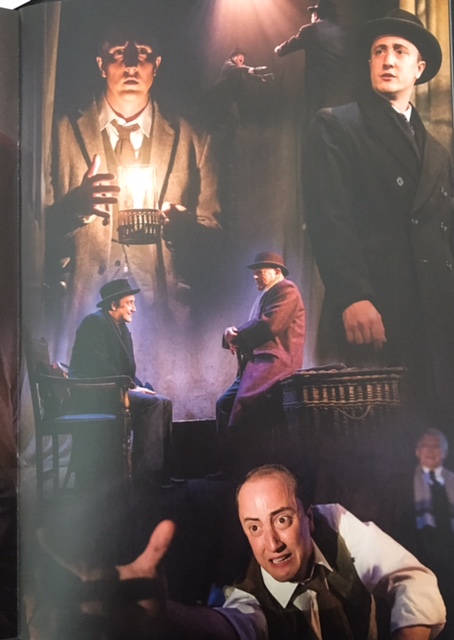
As a lover of Gothic Horror and Ghost Stories in general I really enjoyed this production. Both David Acton (Arthur Kipps) and Matthew Spencer (The Actor) gave wonderful performances which transported the audience out of the theatre and onto the marshes. We joined Kipps and the Actor, spell bound as they told of the events surrounding the Woman in Black, eventually revealing her tale from within Kipps chilling story.
Both Acton and Spencer gave gripping performances as Kipps and the Actor in this two handed play in which you just got so much more that two chaps on a stage. The range of sound effects (Gareth Owen) and the dramatic and atmospheric lighting (Kevin Sleep) created a spellbinding backdrop on which the tale was told. There is no elaborate staging to distract you which means you are only limited by your belief in the tale and your own imagination.
There was audience participation in the form of fear and gasps and I am not 100% sure I did not hear, at one point a lady scream or was that coming from the stage?
This is a must see for anyone who loves a well told ghost story that will send a shiver up the spine. but be careful on the way home, you may not have left the theatre alone……