Tag Archives: halloween

INTERVIEW James Hyland, Dracula’s Guest (Newport Riverfront)

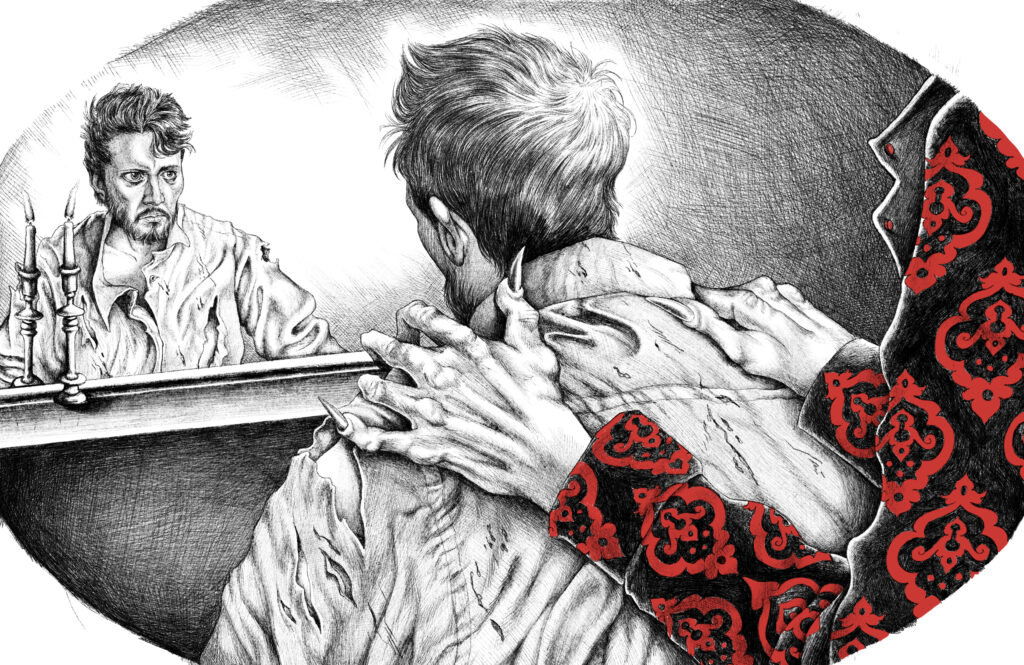
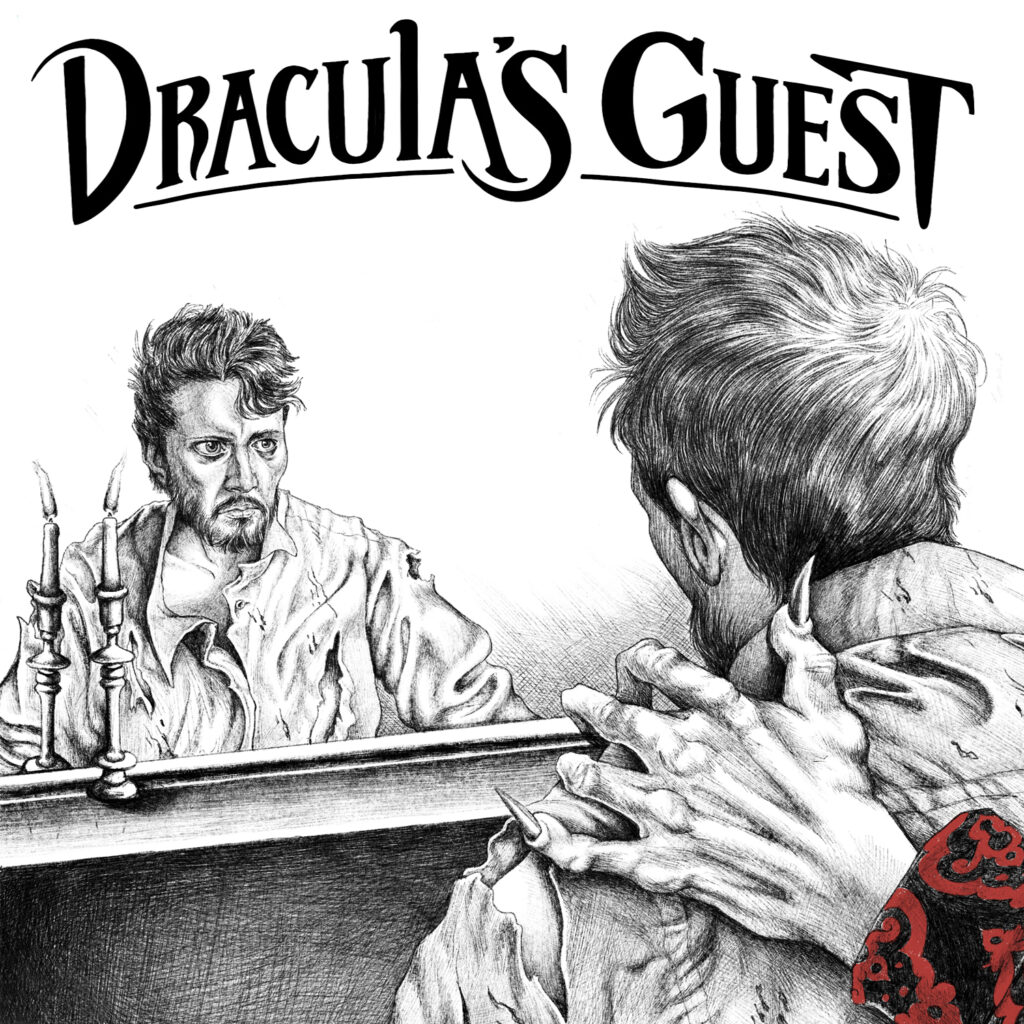
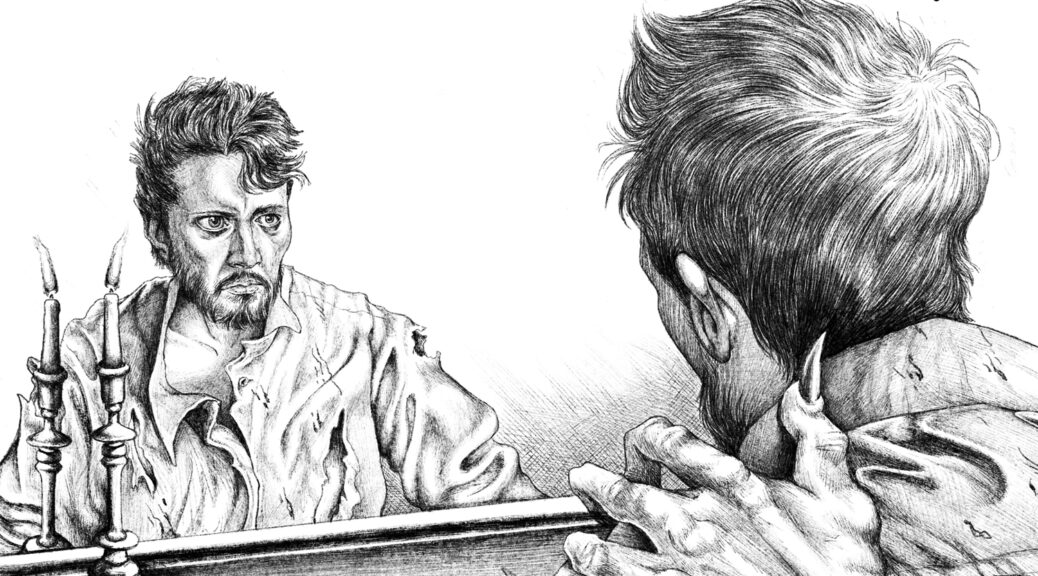
Dracula’s Guest, which performs at Newport’s Riverfront Theatre this Friday (2nd October), promises to be a bold new take on Bram Stoker blood-curdling Count. In the original novel, we meet the character of Renfield in an asylum, eating insects and raving about his ‘Master’ (Dracula), who has promised him eternal life. But in Dracula’s Guest, we get the chance to meet him as the man he once was – indeed, at his fateful first meeting with Dracula himself. Get the Chance’s Barbara Hughes-Moore sat down with James Hyland, who directed, produced, adapted, and stars in the play, to talk about re-envisionioning this most (in)famous of vampires.

Dracula is one of the most adapted characters in literature. What is your favourite version of the character, and why? What impact did it have on your depiction of the Count?

I think one’s first introduction to the Count often has the most impact. For me, it was Christopher Lee’s portrayal in Jimmy Sangster’s film adaptation for Hammer, directed by the legendary Terence Fisher. Christopher Lee, of course, was an incredibly versatile actor; he could play anything, really, and his extraordinary performance as Dracula has certainly stood the test of time. I adore his command of the screen without saying a single word; beautifully economical and sharply focused. There are many other impactful examples, including that of fellow South Londoner Gary Oldman, whose exquisite portrayal in James V. Hart’s adaptation for the screen, directed by the great Francis Ford Coppola, was one of the very first to grapple with Dracula’s lost humanity. Oldman brought incredible gravitas to the role as well as a delicious rawness.


The short story ‘Dracula’s Guest’ is often regarded as a deleted scene from the novel. What aspects of the original did you want to retain for this play?

I used only the title of the short story, as it perfectly encapsulates the themes of my adaptation. While based primarily on Bram Stoker’s novel, my interpretation also draws from his other works.

What other works of Gothic or horror fiction were you influenced by in crafting the play?

I adore anything related to Dracula or vampires, so my love for the Horror genre with regards to those characters has always been an artistic influence–ever since childhood really. To be honest, it wasn’t my plan to create an adaptation as I was hard at work researching a war story at the time, and I felt that Bram Stoker’s novel had already been successfully explored to “the nth degree”. I believed I had nothing new to add to the long list of stage and film adaptations–until a singular question popped into my head during the pandemic which absolutely thrilled me: “What if…?” That question gave rise to a flurry of notes that continued for the better part of a year. The research was an absolute joy because I was taking another deep dive into one of my favourite genres, having previously adapted Strange Case of Dr Jekyll and Mr Hyde for the stage which, incidentally, is also still on tour in the UK.

What is especially compelling about the central relationship between Dracula and Renfield?

I remain particularly interested in what brought Renfield to his degraded status as portrayed in the novel, specifically regarding his prior interactions with Dracula. As this had not been previously explored on stage, giving both characters a voice here presented a unique opportunity to write about unfamiliar aspects of their personalities and experiences.

What role does the audience play: are we innocent spectators, or are we complicit in Dracula’s mind games?

That would be telling. No spoilers here.

The Gothic is a genre which is deeply connected to the senses: to memory, psychology, and feeling. When the curtain falls, what do you want the audience to feel?

I rarely talk about what I want the audience to “feel” prior to seeing the play because theatre often operates in a realm beyond words and as a process of discovery. That’s a conversation I’m more likely to have after an audience has watched the performance as I’m always interested in the uniqueness of each person’s response. There are, of course, a multitude of moments that have been carefully constructed to elicit specific responses from the audience in order to accentuate the various themes of the play and its overall objective as a piece of drama. Above all, though, I wanted to create something that was very human, albeit with dark, fantastical leanings.

Nina Auerbach once wrote that ‘every age embraces the vampire it needs’. Why, in 2026, do we still need Dracula – and how does your version reflect the age we inhabit now?

As with all of my plays, I have sought to create a drama that mirrors the human experience and reflects many aspects of our nature, both good and evil. Thus, I have attempted to make the piece as relevant as possible to our most recent collective experiences, but through the prism of the twisted and the grotesque–as Horror is often the perfect genre for the exploration of the unspoken. What those experiences are, I shall let you discover.

Dracula’s Guest is performed at The Riverfront, Newport, on Friday 2nd October. More information on the show and how to book tickets here.

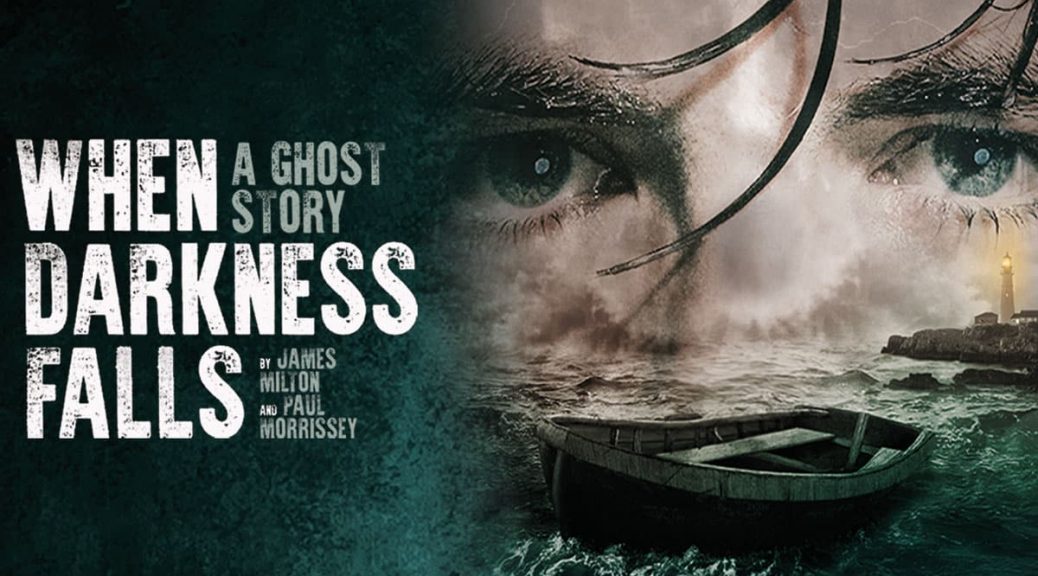
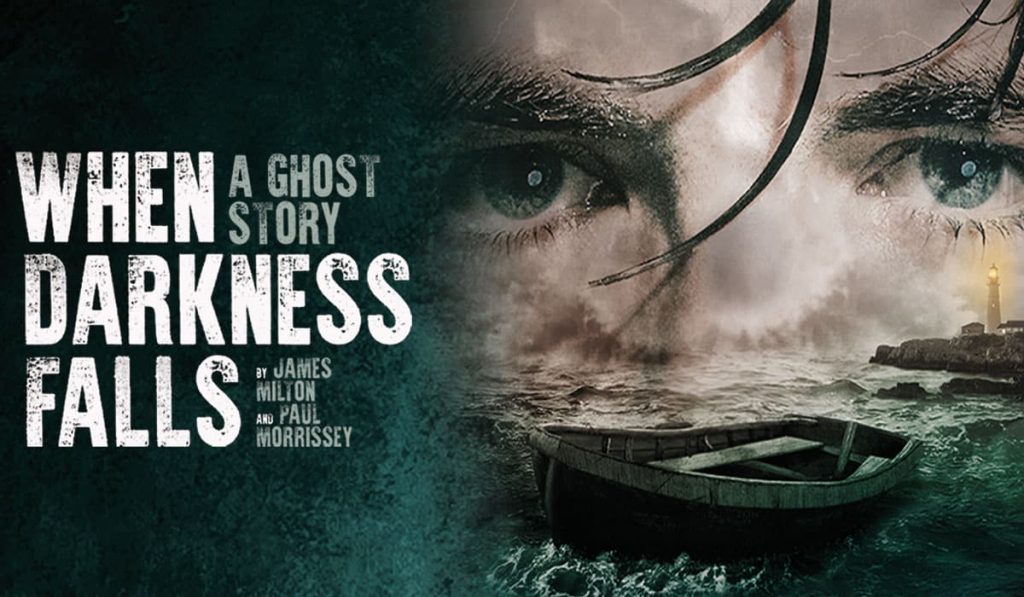
REVIEW When Darkness Falls, New Theatre by Barbara Hughes-Moore

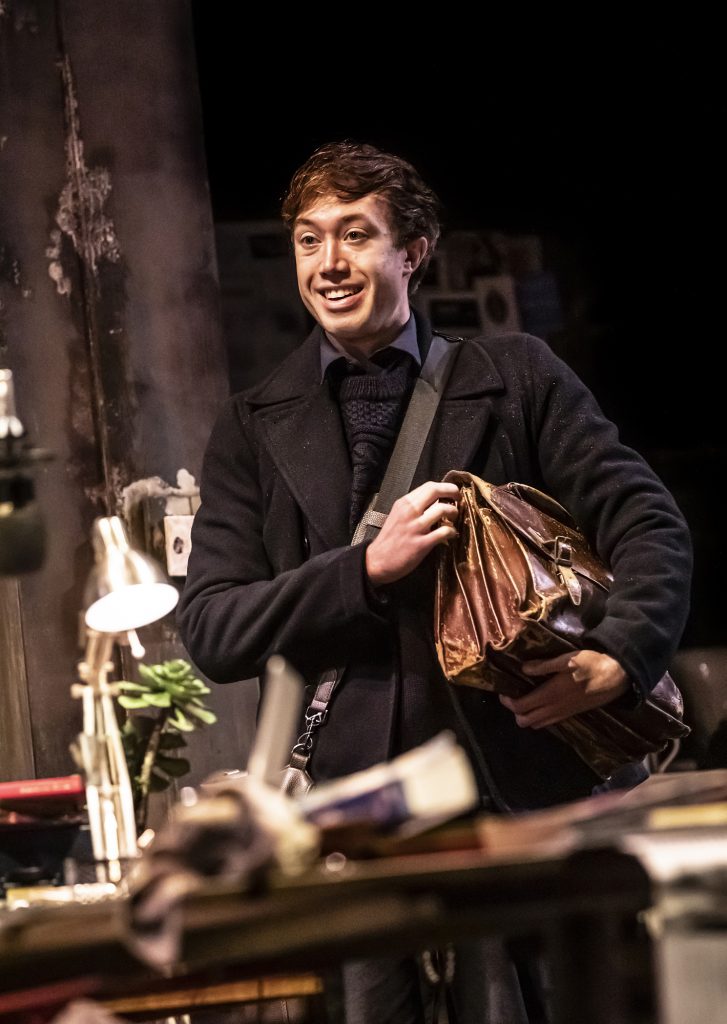
You know that feeling, right? When you’re alone, and yet you know – somewhere deep in your soul – that you’re being watched? That singular chill down the spine is what’s promised by When Darkness Falls, a new ghost story by James Milton and Paul Morrissey (who also directs). Now touring across the UK, this tense two-hander is playing at Cardiff’s New Theatre this week, with plenty of tricks and treats for audiences this Halloween season.

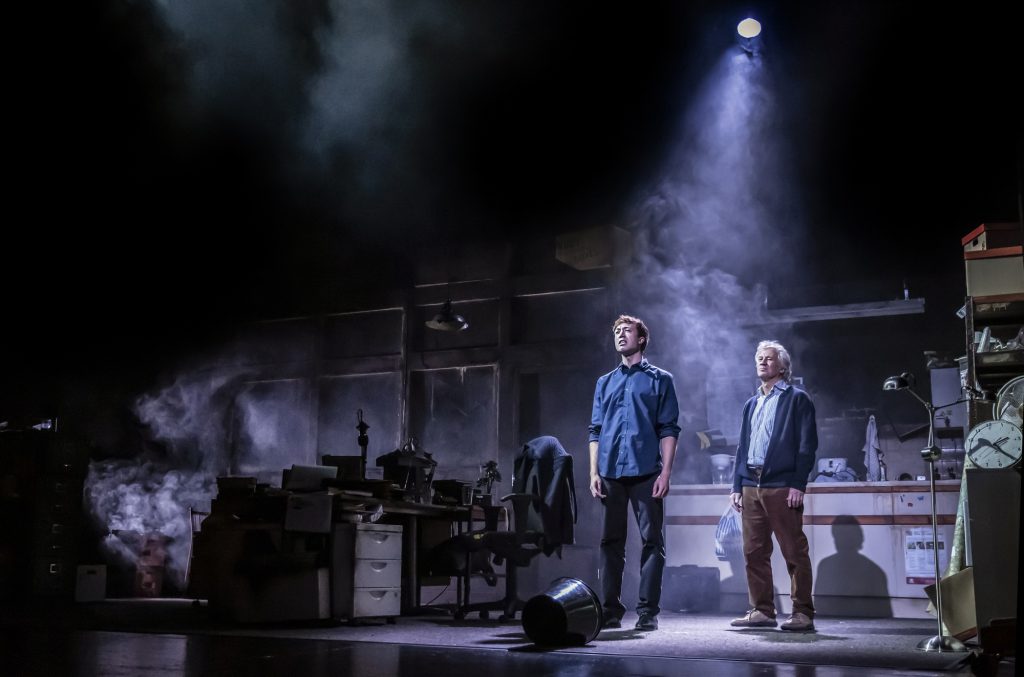
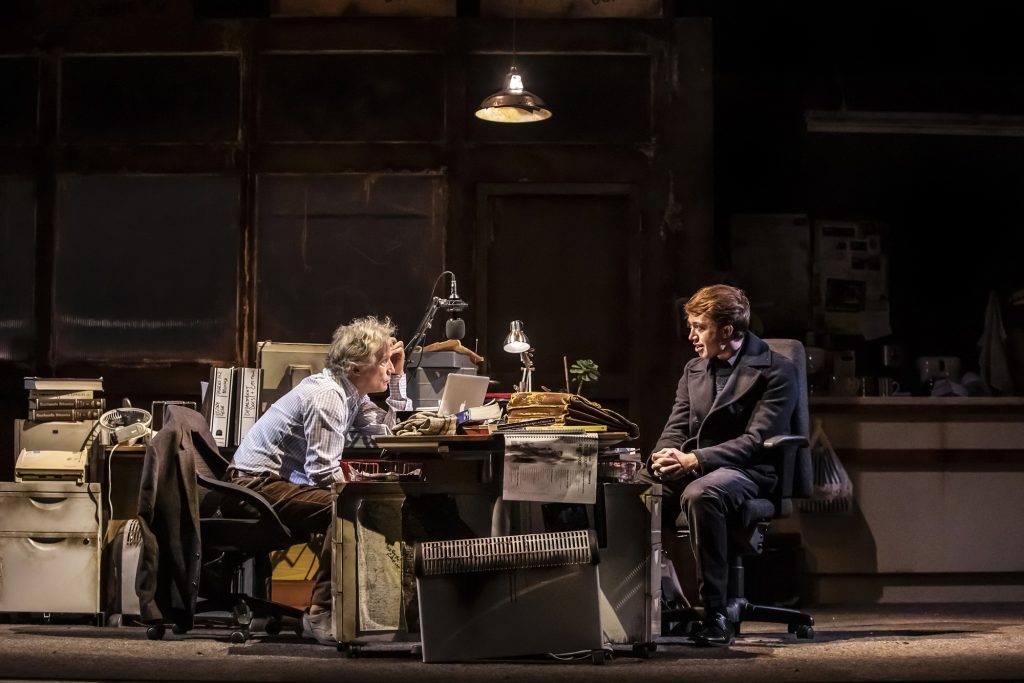
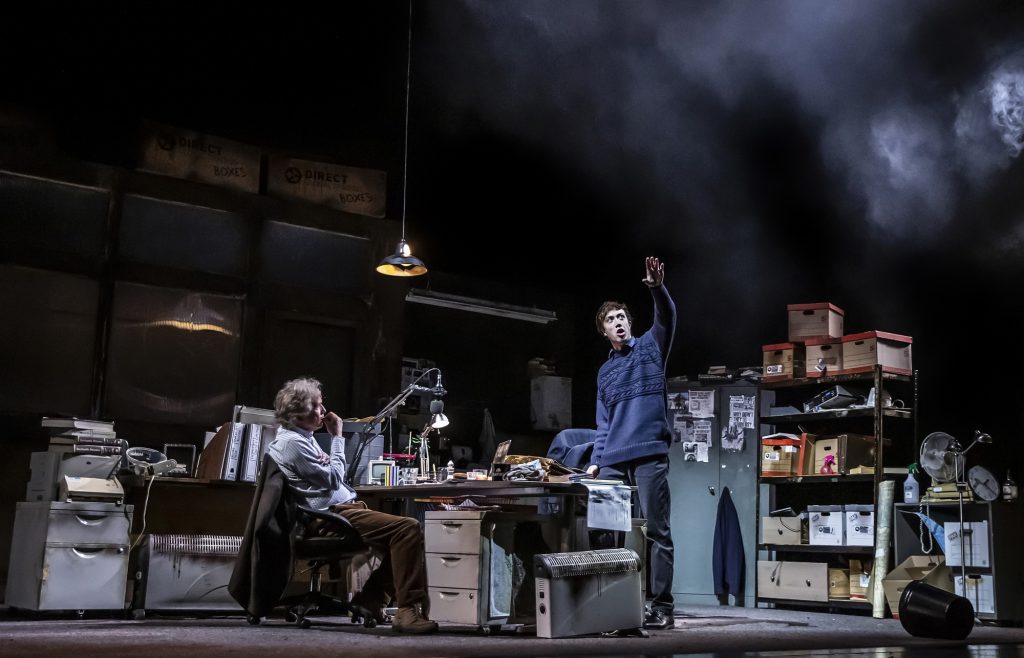
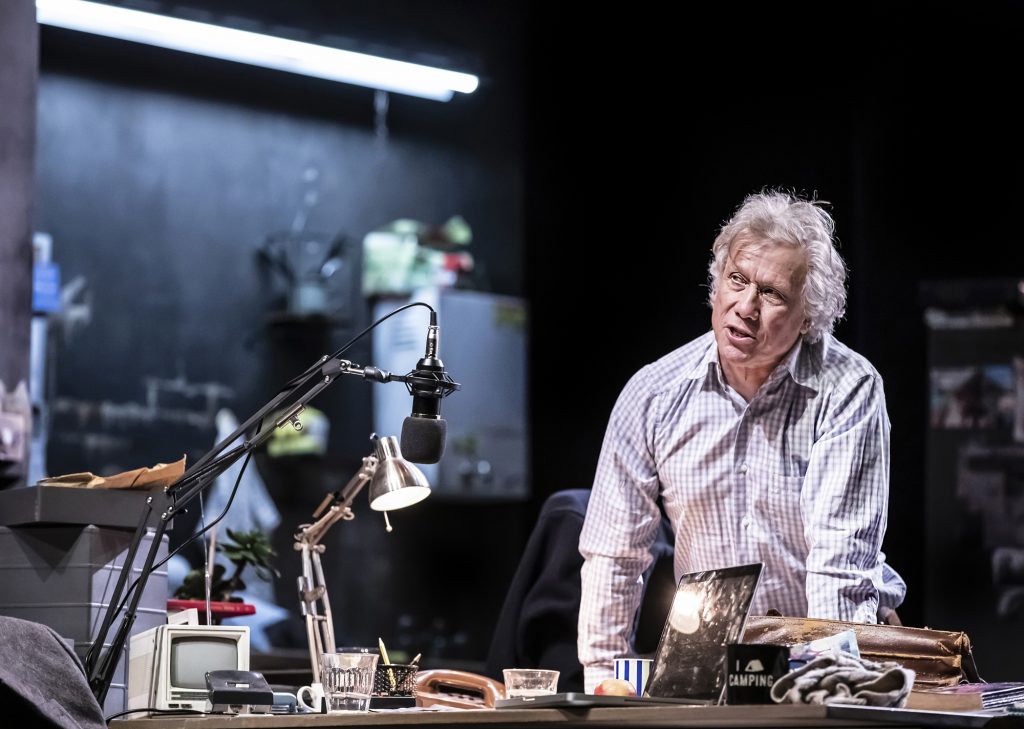
The story is deceptively simple: John Blondel (Peter Duncan), Guernsey historian and sceptic of all things that go bump in the night, invites a mysterious young man known only as The Speaker (Daniel Rainford) to record the first in a series of podcasts charting the ghoulish history of the island. A storm is brewing outside but also within, as nightmarish stories of torture, murder and revenge unfold, and long-repressed secrets are dragged into the light.

Save for an eerily effective (and, dare I say, ghostly?) performance from Rhys Jennings, who voices the parapsychologist on the tapes and who understudies both lead roles (you can check out our interview with Rhys here), Peter Duncan and Daniel Rainford are the only two people onstage throughout. They do an excellent job of drawing you in to the play’s strange, spooky world and holding your attention (not to mention your breath!) And it’s the kind of show which yearns to be watched again, once you know all the twists and turns.

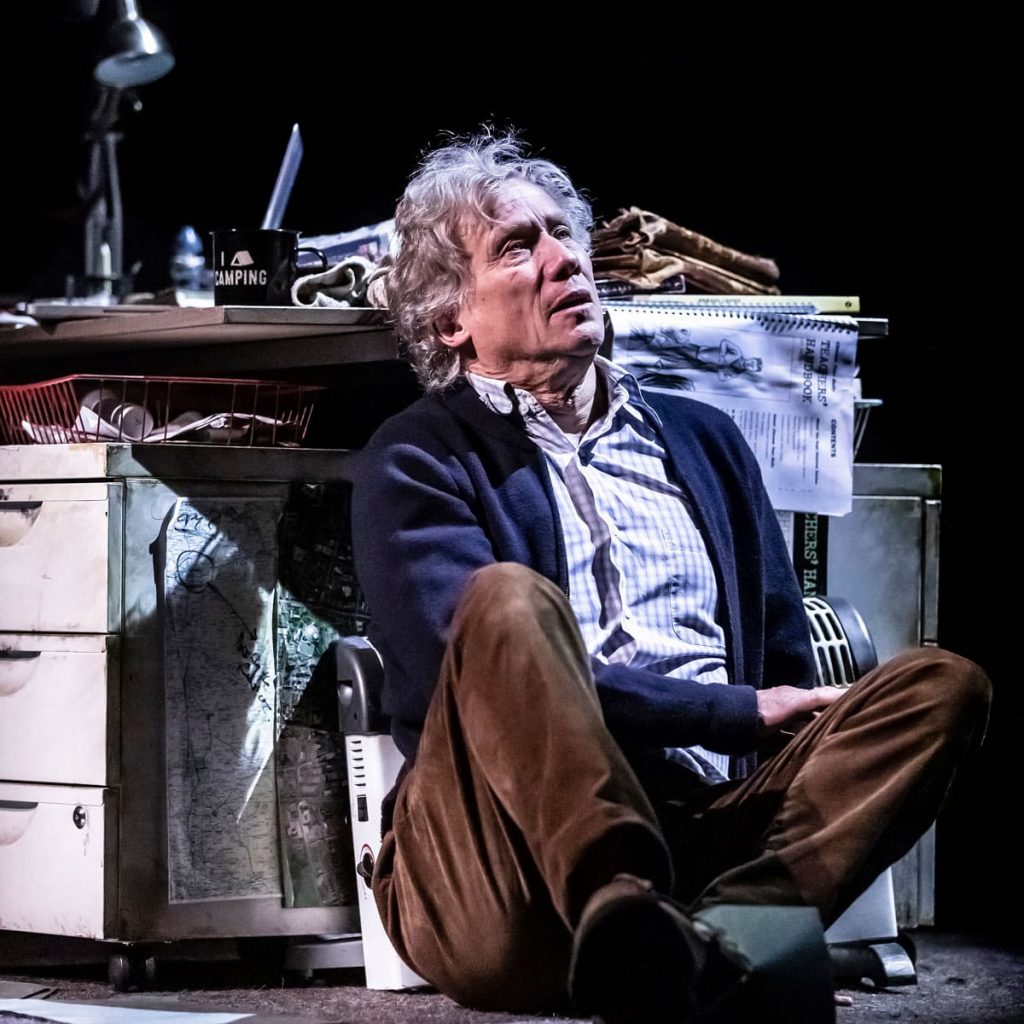
Though he became a household name through his beloved tenure on Blue Peter, Duncan began his career on the stage in Laurence Olivier’s National Theatre. Here, Duncan conveys a very sympathetic sense of jaded affability before descending into something akin to madness. He spars extremely well with Rainford, who is fresh off his acclaimed turn as Tommo in Private Peaceful, a role he originated. Rainford is a captivating storyteller, and his calm and measured demeanour ably conceals the deep waters within. There are moments when the pair ‘step into’ the characters of the stories they tell, which I would have loved to have seen mined further. And while the Speaker’s arc blossoms into something fittingly tragic, Blondel’s is an unfinished symphony – perhaps setting up a sequel. You certainly get invested enough in the characters and the story to want one.

Their interactions are underscored by a host of ghostly illusions, courtesy by John Bulleid, Associate of the Inner Magic Circle with Silver Star, who was part of the team behind Harry Potter and The Cursed Child. The effects – and jumpscares! – are cleverly interwoven into the set, which is designed by Justin Williams, and by Bethany Gupwell’s lighting and Daniel Higgott’s sound. The set – a dismal, purgatorial office – is filled with shadowy corners and a creepy corridor of opaque glass that makes every reflection ghostly.

While the show gets a little less scary in the second half – and there are some deliberately funny lines that Duncan in particular delivers with relish – it ramps up the tension the way a dripping tap becomes a tidal wave. This is a dread that oozes, that seeps into the cracks of your very soul. What’s scarier still is that it’s based on truth. The tale of the German soldiers was especially haunting, as was its message: that the most frightening thing of all is the human capacity for cruelty. That sort of horror is absorbed into the walls of a place; it cannot be bricked in or painted over. It can only be confronted.

While the play ends on a somewhat ambiguous note, it leaves us with a question: do you believe in ghosts? By the time the curtain falls, you might just get your answer. Suspenseful and spooky, this is the perfect show to get you in the Halloween mood. When Darkness Falls, will you rise to meet it?

When Darkness Falls is playing at the New Theatre Cardiff from 11 – 15 October (you can find out more about the production and book tickets here).

Review Halloween (2018) by Jonathan Evans

My god, this franchise is confusing. Ironic because the original movie is so a simple, and minimal with its story.

John Carpenter’s original Halloween is one of the essential watches for horror lovers and movie fans in general. It is the perfection of the slasher genre, with a killer that is pure evil, a simple but effective way of shooting it and a score that hooks itself deep in your brain. Yet at the end of the movie it seems like it was done but the success meant more had to be made and so they made seven more movies, then Rob Zombie told his version of the material with two movies and now we are here, forty years later from the original and ignoring all the middle material. But this is the third movie to be titled Halloween. Told you it was confusing.

Opening the movie are two British podcasters that host a show about killers, crimes and other such grim subject matter. They go to Smith’s Grove Rehabilitation Hospital where for forty years Michael Myers has been kept locked away from the rest of the world, never speaking a single word. One of them has something for Michael though, the mask he wore on his night of rampage. This sends the other inmates into a frenzy but Michael still stands there not saying a word.

Cutting then to the classic score we all know from this franchise and a rotten Jack-O-Lantern that slowly reforms back to life, a symbol of Michaels reawakening, the franchise and this whole gruesome affair.

Carpenter himself does not fill the directing chair this time around but he is back as the composer. Carpenter composed nearly all his movies and Halloween was arguably his best job. A dark theme that is like the pulsing of the heart that grips you in tension and then a movement that ignites fright. In recent years he has been more focused on his music and he is very good at it. Here he gets to do one of the things he does best, he doesn’t completely reinvent the theme or copy and paste it, it stays true to the core of the score and adds little things, like a power chord from a guitar and other layerings to deepen then experience, it’s a great score that has received an appropriate update.

Filling in the directors chair is David Gordon Green. He has a diverse filmography, nothing that would make someone point to him and say “He’s the man for this job!” but we’ve had plenty of surprises of directors taking on franchises and actually doing great things with them. He and cinematographer Michael Simmonds incorporate a few intricate long shots that build up the suspense well and he portrays the kills with loud screams and plenty of blood.

Whenever something becomes truly popular and others seek to replicate it and/or a franchise is kicked off there is a big risk of homogenization. We want to feel like this is the world and characters that we’re familiar with but not a color-by-numbers experience. This gets a little closer to it but luckily strikes the right balance of being its own thing while taking its cues from the original and also giving a few nods while it’s at it. An example of this is that a key image is a white mask Michael wears, there isn’t any true significance to the mask itself, it was chosen because it has blank features which reflect the character, in context Michael stole a mask while getting ready for his night of slaughter. Same for the boiler suit, he happened to cross paths with an unlucky worker, here he by chance kills another worker in a similar navy blue boiler suit, would he have taken a red one? Or not killed him if it was yellow?

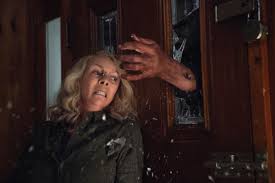
The most original part of this entire movie is how it portrays Laurie Strode. She is now a grandmother, slightly estranged from her daughter and granddaughter, living in a fenced off house ready of anyone that comes looking for trouble. It’s not that unbelievable yet I can’t think of many other movies that have done this, so many characters in horror sequels seem to go back into normal life after the traumatic events. Laurie was just a regular teenage girl and for no real reason came face to face with her friends being killed and pure evil. Jamie Lee Curtis fills the role with badass authority, taking no nonsense while she loads her guns and fragility, clearly having to live her life in fear and paranoia.

This is a refocus of Michael Myers as an unstoppable force of nature. A slow monolith of death that will keep coming no matter what. This was the original intention and is what makes the character so endearing. But in the first movie he was twenty one years old, now he’s in his sixties, I have to question whether his slow pace is because he doesn’t need to rush or because he’s getting on in years. Another interesting touch is that Nick Castle is playing him again, he hasn’t done that since the first movie. His average height and build add to his inconspicuous nature and his smooth walk with an upright posture adds to the unsettling nature because he’s about to commit the most barbaric act. An extra touch is the prominent sound of his boots while walking, like the ticking clock of death, they sometimes abandon this when he needs to pop out of the shadows. I guess that would make him easier to find.

This is probably the best sequel that this great movie ever got (though there truly isn’t much heavy competition), it caters to the fans while invites new viewers in. But part of the enduring quality of the first movie was how it could show horrible acts but could be quiet and slow. This movie is more generic and loud. In terms of slasher horrors this could be much less subtle and more poorly made, for Halloween, it could be better but is worthy enough to have the name.

Rating: 3 stars