Tag Archives: featured

REVIEW, EDWARD SCISSORHANDS AT WALES MILLENNIUM CENTRE CARDIFF BY BARBARA MICHAELS


Ballet, based on original story and film by Tim Burton
Adaptation: Caroline Thompson
Devised and directed by Matthew Bourne
Music; Danny Elfman and Terry Davies


 out of 5 stars (4.5 / 5)


Making a welcome return to Cardiff, Edward Scissorhands is arguably not only the most hauntingly beautiful of Bourne’s innovative and unique productions but the most in depth and soul searching. Brought up to date with new music, the story of a boy that is different and as a result suffers jibes and discrimination, Bourne infuses this new production with an added poignancy cognisant with contemporary mores and awareness of mental health issues.


Based around the central character of a boy with an abnormality which causes him to face problems in the world – a world unknown and alien to him – Edward Scissorhands is complex and far from easy to relate in balletic form, although Bourne can be forgiven for the occasional grunt or shout. Created by an eccentric inventor, Edward is left unfinished with elongated scissors in place of hands when his creator unexpectedly dies, leaving him to face the challenges of an unknow world. As with all Bourne ballets, the dance is an amazing mix of classical and modern plus maximum use of mime, danced with empathy and expertise by Bourne’s New Adventure Company.


On Press night, the lithe and lissom Liam Mower, who back in 2015 first danced the central role of Edward – arguably one of the most difficult roles in Bourne’s diverse repertoire. – brings to the stage a knowledge and perception of the character, targeting the highs and lows of a young man who is desperate to be accepted despite fighting against prejudice and suspicion.


Not only do the principal dancers shine, but the whole of Bourne’s young and enthusiastic New Adventures Company show expertise in the different dance genres, segueing seamlessly from one to the other, under the tuition of New Adventures Take Part Creative Director Kerry Biggin who on opening night in Cardiff, danced the principal female role of Peg Boggs, the young housewife who befriends Edward. Opposite her, Dominic North dances a self-assured Bill Boggs.


Bourne’s choreography, inclusive of both the lifts and Grandes jetés of classical ballet and bang up to date acrobatics of street dance (seen also in Bourne’s ballet The Car Man) is in this respect unique. Lez Brotherston’s atmospheric set designs make an important contribution to the success of this ballet, aided and abetted by Howard Harrison’s atmospheric lighting. Worth noting that Brotherston also designed the great costumes.


Overall, a ballet that with a dark element yet with comic touches throughout that lighten the load. Does Edward overcome the problems of the title? It would be a spoiler to tell!


Review, Mr Jones by Liam Holmes, Theatr Soar, Merthyr Tydfil by Bethan England

 out of 5 stars (4 / 5)

A pair of muddy trainers, a tan rucksack and jumper are the only items that sit upon the stage of Theatr Soar. The atmosphere was set by soaring Welsh anthems such as Green Green Grass of Home and Yma O Hyd filling the eaves of the converted chapel.

Liam Holmes as Stephen Jones, enters, in a square of light. His natural cadence and natural ability mean he instantly won over the audience’s hearts. Asking where his rugby boots are to an off stage unknown person, the moments of silence and glances towards this unknown character are poignant and we are immediately aware of something unspoken. The entreaty to ‘talk about it,’ leading to the awkward admittance of this ‘being a bit weird’ sets the scene perfectly for this moving piece about the pain of the Aberfan Disaster for families of the village and that inability to fully express the pain and trauma of that traumatic event.

The simple stage and lighting transports us from house in Aberfan to the waterlogged rugby pitch where Stephen is practising his kicks after his winning penalty against Dowlais in the semi-finals. The stage is used ably, the space filled by Liam and Tanwen Stokes as Angharad. The ‘in the round’ space allows Liam and Tanwen to fully immerse us in the story; Angharad watching from the audience, berating Stephen for being on the pitch rather than at home with dad or entertaining his younger brother, Dafydd. Throughout the play the space is used to great effect, bringing the audience truly into the action.

The sound is also excellent. From the soaring sounds of the crowd as Stephen steps up to take his winning kick, the rumbling of the ‘thunder’ that turns out to be the starting of the waste coal sliding down the mountainside, to the haunting spoken records of Dafydd and the parents of the lost children from the school. In particular, I enjoyed the use of Owen Sheers’ ‘The Green Hollow,’ echoing throughout the space and reminding us of the very human loss of this disaster.

I especially enjoyed the use of Welsh phrases throughout, which were used particularly evocatively during the description of the coal duff slipping down the side of the mountain. Hearing the Welsh then echoed with the English, or vice versa ensured that the script was still accessible to all. I would have liked to hear even more as I thought that this was an excellent device used in an innovative way by the writer.

The pair are ably directed by Michael Neri, clearly they have been told to not be afraid of weighted silences which leave the audience breathlessly waiting for the next line. The humour peppered throughout captures the essence of the valleys village, that easy natured way of speaking to each other which is balanced with what is not said, the glances unseen and words unspoken. With barely any props or set, we are transported between the different scenes of the action; the pitch, the mountain top, the bustling hospital of St Tydfil’s and the dark home of Stephen, Dad and Gramps.

The final scenes perfectly counterbalance the earlier humour and playfulness between Stephen Angharad. There wasn’t a dry eye in the house as Liam delivers the final lines to that unknown voice, his dad, as the two desperately struggle to come to terms with what they have lost. The final cry from Stephen of ‘I’m still here Dad!’ as the lights fade brings the story to its heartbreaking conclusion, leading to a well deserved standing ovation.

The piece was particularly poignant in Merthyr Tydfil but the themes of loss, family, friendship and unspoken love will be met with universal acclaim no matter where this is viewed. I highly recommend Mr Jones, but do make sure you take those tissues along with you!

“It’s not the reports that are going to change the world; it’s taking a plate of food to your neighbour and listening to music together.”

In this short article Priscilla Addey-Blankson, Race Council Cymru, Windrush Cymru Elders, Project Officer gives an overview of the collaborative work of Race Council Cymru and Royal Welsh College of Music and Drama to connect communities through the arts.

Hi I am Priscilla, I work for Race Council Cymru and hold the role of Windrush Cymru Elders Project Officer. I am originally from Ghana and I have dedicated the past year and a half to working closely with the Windrush Elders community.

In my capacity, I act as the primary point of contact for the RCC, Windrush Elders and their associated projects. My responsibilities extend to planning and coordinating various events and activities for the Elders, actively collaborating with them to develop, promote, and implement enriching projects. I am deeply committed to supporting and enhancing the well-being of the Windrush Elders community through my role.

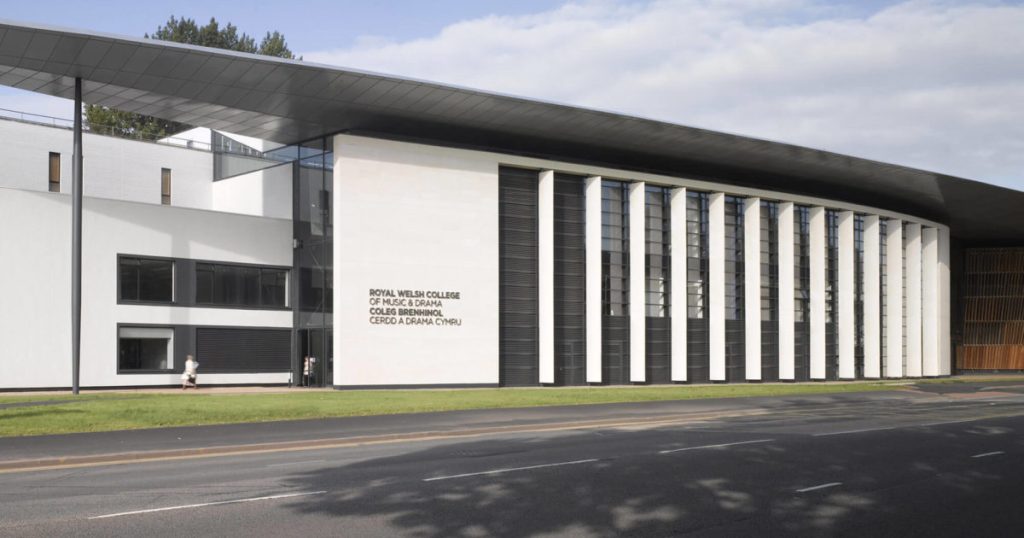
The Race Council Windrush, Cymru Elders meet every Thursday at RWCMD, the group often have speakers and share information about activity in their community. The group recently had a visit from Anna Mudeka who played the role of of legendary South African singer and activist Miriam Makeba in Mama Afrika which was performed in College recently.

Anna shared the compelling narrative of her life journey, delving into her musical pursuits and cultural heritage. She captivated everyone with the introduction of the Nyunga-nyunga, a traditional musical instrument, explaining its details and how it works, gladly fielding the Elders’ inquiries.

Ms. Mudeka shared her personal challenges, drawing inspiration from her icon, Miriam Makeba, and emphasizing the profound impact Makeba had on her own musical journey.

The session unfolded with Anna Mudeka’s enchanting Swahili music, actively involving the elders in the Hakuna Matata song. The interactive nature of the performance allowed The Elders to proudly shout out their countries of origin.

In a delightful moment, Anna Mudeka introduced The Elders to the distinctive click sounds used in her songs, offering a brief tutorial and incorporating it into her performance. The session further featured a recitation of poignant poems by Nelson Mandela and Miriam Makeba, concluding with the lively Dance Pata-Pata music that had The Elders joyfully swaying.

Anna said of the activity “I really enjoyed meeting The Elders and I knew straight away that this would be a learning experience for me too. I loved listening to them talk about their love for Wales. It was a joy to share some time with them all.”

Anna Mudeka centre and the RCC, Windrush Cymru Elders

The entire experience evoked nostalgic reflections, with Elders sharing amusing childhood stories. A particularly resonant quote emerged from the session: “It’s not the reports that are going to change the world; it’s taking a plate of food to your neighbour and listening to music together.”

You can find out more about the Race Council Cymru, Windrush Cymru Elders here

You can find out more about the work of the Communities Engagement Partner at RWCMD here

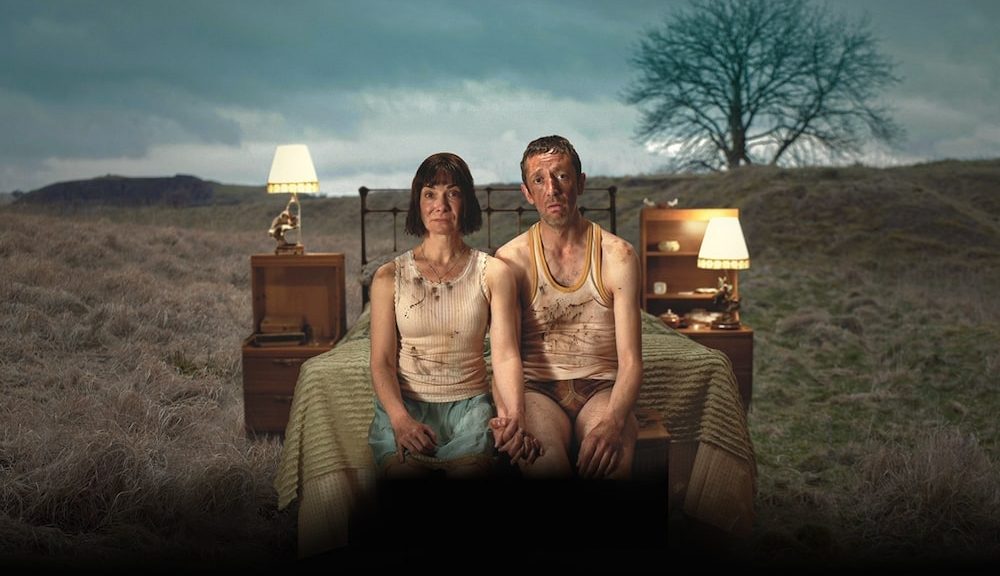
Review ‘Wife of Cyncoed’, Sherman Theatre by Katie Berrisford

Image Mark Douet

This was an absolute celebration of so many aspects of life that can be easily missed; self-love (in all manners of the word), companionship and reconnection. This one woman show gracefully took us through a myriad of scenes, drawing us into Jane’s life and leaving me on the edge of my seat. Carrying a multitude of character can be very tricky, and indeed could have at times been slightly clearer, but Vivien Parry’s performance was a triumph that garnered a standing ovation at the end.

April Dalton’s set at first looked incredibly simple but tuned out to be perfect- a little dull at first but hiding a lot of light and fun. The carpet was the perfect background for Jane’s transformational experiences and was elevated by Katy Morison’s lighting and Sam Jones’ sound designs, transporting us from Roath Park to London to dancing naked in Caerleon.

Hannah Noone’s direction was understated but allowed Parry’s sensuality to shine and roam around the whole stage space.
To me, the show felt like it would hit every audience member differently. There was a lot I could relate to, but a lot that would hit differently depending on the time of life you saw it.

One of the main messages that I took away from Matt Hartley’s script was that it’s never too late. Never too late to find yourself, have those conversations that are needed or to become a better person. It was a subtle story of redemption for all the characters, and I left wishing every character we met the best as they carry on their life well after we’ve left the auditorium.

Sherman Theatre is known for its young plays and dynamic work, so seeing a story of an older woman was a breath of fresh air, I just hope that younger audiences aren’t put off from attending as they would be missing out. It runs at The Studio until March 23rd with a range of prices for all ages.

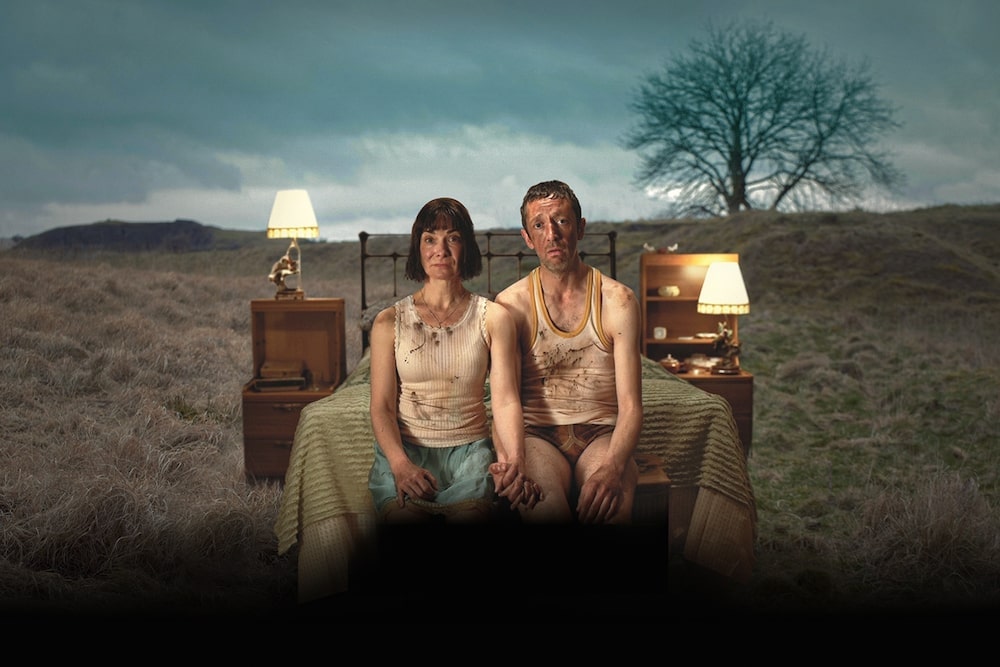
REVIEW: THE WIFE OF CYNCOED, SHERMAN THEATRE, CARDIFF BY BARBARA MICHAELS

Image Mark Douet

Writer: Matt Hartley

Director: Hannah Noone

Designer April Dalton

Composer and Sound Designer Sam Jones

 out of 5 stars (4 / 5)

Reviewing a new play – and, furthermore, a one-woman play – is guaranteed to send a frisson of excitement down the spine of even the most seasoned of reviewers. The Wife of Cyncoed does that in spades, an added bonus being that the monologue is played out by none other than Vivien Parry – and what a tour de force it is for this Welsh actress!

On stage non-stop in a monologue that lasts for one and a half hours with no interval, Parry – who performed in a preview on her 60th birthday – gives it all she has got from start to finish. Taking place in the upmarket Cardiff suburb of Cyncoed and the atmospheric Lakeside area, this – the first production of the season for the Sherman – has a make-or-break quality about it, in reference to both the plotline and the setting.

Fear you not – this monologue from the pen of writer Matt Hartley could be set pretty well anywhere. The story – that of Jayne, a newly divorced woman whose life takes an unexpected turn, offering her an opportunity that she may or may not be brave enough to take – manages to be both entertaining and poignant, a tale of self-discovery, and second chances, of a road that may or may not be taken.

A monologue is a genre that depends not only on the writing but on the delivery (think Alan Bennett’s Talking Heads and the iconic Thora Hird). In Hartley’s monologue, the multi-talented Parry, seen recently in Cabaret in London’s West End and well-known to Welsh audiences for her sterling work with Theatr Clwyd, steps up to the challenge head on. Parry taking command of the stage from her first entry. Not only does she become Jayne but in using different voices with maximum effect changes character to reflect other people in her story, in particular her two grown up children, with whom- to say the least of it – she doesn’t always see eye to eye.

Parry gives a brilliant and empathetic performance, but could do with slowing down her delivery a tad at times in the first hour. Having said that: full marks and more for amazing movement and dance, giving full justice to the underlying message, described by Hartley as “A a howl of rage against how older women are perceived and overlooked.,” and getting under the skin of the character warts and all.  Staging is at a minimum (not even a chair) but Katy Morison’s clever lighting and Sam Jones atmospheric sound track provide this with effect while remaining unobtrusive when necessary.

Could this be one for Edinburgh Fringe? Yes. For Hartley’s monologue – the story of a woman of a certain age with the message that life is for living – could be set anywhere.

Runs until 23rd March 2024 at Sherman Theatre, Cardiff

THE HOUND OF THE BASKERVILLES, THE CRIMES AND COMEDY COMPANY, GWYN HALL, NEATH – A REVIEW BY KEVIN JOHNSON

 out of 5 stars (4 / 5)

A production by the Crime and Comedy Theatre Company created on the 120th anniversary of the story, this is presented as a radio-play live on stage. Starring Colin Baker, Terry Molloy and Dee Sadler, it’s been adapted and directed by Martin Parsons.

One of the most famous cases faced by Sherlock Holmes, it’s actually based on Conan Doyle’s third novel, and sees the detective consulted by Dr Mortimer on behalf of her friend Sir Charles Baskerville, who has just inherited the title after the strange, untimely death of his father. She reveals the dark, centuries old curse on the family and asks for Holmes help to prevent the new heir suffering the same fate as the last.

Maybe it’s the concept, the classic story or even the way the actors and director convey the story, but there is something so warm and old fashioned about this production. A merging of a theatrical play and a radio mystery broadcast, it works as both. In fact, I enjoyed closing my eyes and listening to the sound effects of the countryside, the birds, the animals and even the weather. It gives a much richer atmosphere to the play and adds an extra dimension to the story. Such sounds are not immediately apparent with your eyes open, it really evokes the eeriness of the moor, and brings the story to life. In fact, for people who have loved ones who are blind or partially-sighted, this is an excellent opportunity to see things from their perspective, to share a performance you can both enjoy equally. My late mother lost her sight in old age, I think she would have loved this show.

There’s a vein of humour running through it to relieve the tension, some tongue in cheek, and plenty of in-jokes and references to other stories for Holmes fans, including one of the most famous and chilling lines from the stories: “Mr Holmes, they were the footprints of a gigantic hound.”
The cast of seven are excellent, and a special mention must go to Martin Parsons for the adaptation. Although a Holmes fan I’ve never really cared for this story, but it’s made me reassess my opinion. Go see it, enjoy it, maybe even close your eyes, but remember, whatever you do, don’t try to cross the moor at night….

You can find out more about this production here

Britten’s Death in Venice – A Review by Eva Marloes

 out of 5 stars (5 / 5)

The WNO’s production of Death in Venice by Benjamin Britten is a symphony in black and white with minimal staging, effective choreography, and powerful singing. It’s a beautiful and haunting painting that conveys the internal anguish of the protagonist at the core of Britten’s extraordinary music.

Death in Venice is based on the novella by Thomas Mann, where Gustav von Aschenbach is a famous author who travels to Venice to find inspiration. There, he develops an attraction for an adolescent boy, Tadzio. Disciplined and ascetic in character, Aschenbach is torn between his sensual desire and his detached reason. As his attraction becomes an obsession, Venice is taken over by cholera. His passion makes leaving impossible. A glance from Tadzio makes Aschenbach rise from his chair only to collapse and die.  

Aschenbach’s travel to Venice is as internal as it is physical. The initial confusion of the mind that makes him unable to write is lifted at the sight of Tadzio, whom Aschenbach sees as the embodiment of ancient Greek beauty. Yet, the aesthetic appreciation quickly plunges Aschenbach into an internal conflict between his rational mind and his passion for the boy.

Mark le Brocq as Gustav von Aschenbach. Photo credit Johan Persson.

Olivia Fuchs, who directs this production, weaves together the different elements of music, video, acrobatics, costumes, and song with great efficacy. A black and white video is projected onto the background. It alternates depictions of the sea, at times choppy and at times smooth, Venice almost as a shadow, and Tadzio up close. The most intense moment is when Aschenbach, played by a wonderful Mark Le Brocq, is alone and the scene has nothing but a picture of Tadzio. Throughout the opera, Le Brocq excels in intensity and harrowing beauty. 

Alexander Chance as The Voice of Apollo, Mark le Brocq as Gustav von Aschenbach, and Roderick Williams as The Voice of Dionysus. Photo credit Johan Persson.

Aschenbach’s internal anguish mirrors the Nietzschean theme of the conflict between Apollo, god of reason, and Dionysus, god of passion. The battle between Apollo and Dionysus unfolds musically in the contrast between the countertenor voice of Alexander Chance as Apollo and the deep baritone voice of Roderick Williams as Dionusus. This is heightened by the juxtaposition of Apollo, dressed in a golden suit, and Dionysus, in a red suit, against the black and white background of the chorus, dressed in white when playing the hotel guests, and in black as Venetians. 

Baritone Roderick Williams and countertenor Alexander Chance are equally enthralling. Tadzio has no voice; rather he embodies beauty through movement to a percussion music which Britten developed drawing on Balinese gamelan. The choice of sensual acrobatics performed beautifully by Anthony César of NoFit State Circus, directed by Firenza Guidi, conveys powerfully the Greek idea of beauty. The homoerotic acrobatic duel between Tadzio and another boy, performed by Riccardo Frederico Saggese, is allusive yet restrained. The result is mesmerising. 

On a minor note, the production could have made better use of light design to emphasise Aschenbach’s internal turmoil. Overall, it is one of the best productions the WNO has given us.

Antony César as Tadzio, Riccardo Frederico Saggese as Jaschiu, and the cast of Death in Venice. Photo credit Johann Persson.

Review: The Wizard of Oz, Venue Cymru by Richard Evans

Venue Cymru, Llandudno March 5th – 9th 2024, Wales Millennium Centre, Cardiff July 23-28th and touring

 out of 5 stars (4.5 / 5)

Produced by Michael Harrison and Gavin Karin Productions. By arrangement with the Really Useful Group Limited. Adapted by Andrew Lloyd Weber from the 1939 Motion Picture.  Book by L. Frank Baum

Somewhere over the rainbow… in a land that I heard of once in a lullaby

Why has this film and subsequent musical retained its attraction?  In the preface to his book, L. Frank Baum describes the book as a modernised fairy tale in which the wonderment and joy are retained and the heartaches and nightmares are left out.  It is this fantasy and escapism that has proved enduring, for the same reason, Star Wars has retained its appeal. 

The storyline starts with a petulant Dorothy who feels a common teen angst where she feels neglected.  On running away, she is transported to a fantasy land and seen as a hero for accidentally killing the wicked witch of the east.  She then embarks on a journey to Oz, to see the wizard and gain the means to go home.  She encounters various characters and makes firm friends with the brainless scarecrow, heartless tin man and cowardly lion.  In order to earn her passage home and to find respectively a brain, a heart and some courage, the intrepid four are sent on an arduous task, to bring the broomstick to the wizard of the wicked witch of the west.  

This story is well known and ranks among many peoples favourites so it is a challenge to bring it to the stage once again in a fresh way.  This production adds a bit of glitz and glamour to do this, the props are minimalistic, but the music and video backdrop add plenty of pizazz to proceedings. Some of the visuals are stunning, notably the tornado scene which was highly effective, and in general they are used imaginatively to set the scene and augment the action.  

The cast have a couple of celebrity names, Gary Wilmot gives an assured performance as Professor Marvel and the Wizard while The Vivienne, winner of the first series of Ru Paul’s drag race makes a threatening, devious Wicked Witch of the West.  However, the show is carried by Dorothy, played by Aviva Tulley.  She made ‘Somewhere over the rainbow’, the signature song, her own and was a lively presence throughout.  The supporting cast were energetic and committed, making this a fast paced, joyful experience.  

The musical is faithful to the original story and incorporates most of the favourite songs from the 1939 film as well as some more contemporary numbers from its recent revival.  However, the production lacks the simplicity and innocence of the film, replacing it with the loud score and striking visuals.  Does is loose some of its allure in this process?  

There is plenty of enduring meaning here, not least, your heart, brain and courage are latent inside you.  Dorothy learns to appreciate home when she understands what she is missing.  But it is in joyful escapism that this story comes to life.  It is a colourful interlude from the mundane, gritty reality of life.  This may explain its appeal to marginalised groups in our society but there is enough here for anyone to identify with and makes this a warm, feel good experience that is well worth seeing.

REVIEW: Hadestown by Sian Thomas

I had the pleasure of seeing Hadestown live in the West End on March 3rd, 2024. It was in the Lyric Theatre – a beautiful and ornate setting for this play, and thankfully, came equipped with the brilliantly rotating floor that’s perfect for this show. Hadestown is a musical that I’ve been listening to since about 2018, and unfortunately for me – I discovered it right after it had ended its first London debut with its test run of shows, and have been waiting for it to return ever since. Which, in a way, is very relevant and poetic of me. This is a musical that I’ve always found fantastic, either the Broadway or Off-Broadway version, and now the West End version too, since I always knew I’d more than just enjoy seeing the production live.

I would describe Hadestown as one of my favourite musicals of all time, and having the opportunity to see it live was not lost on me. I was emotional from the first few notes (and cried more often during the show than just during the ending – anyone sitting near me was a trooper for sure).

I’ve always loved the way its themes seem to rise above the era. When I first discovered it in 2018, I’d had no idea it had been around and predated Off-Broadway with even earlier versions of the recording by Anais Mitchell, since I had assumed there were implications of the 2016 US election, general poverty, and the Great Depression in there. And, there are, but there’s more than that, too – so much of the story circles all the way back around to love, and trust, and faith in yourself and in each other.

The myth of Orpheus and Eurydice is, and remains in this production, a tragedy – which I knew going in, though I still found myself weepy when it happened – and coupled with the mirror of Hades and Persephone, the show is perfect for a Greek mythology enjoyer, as well as anyone who appreciates a good song and dance number, and hands you a good excuse to cry in a theatre from the story.

Softened to the original Broadway recording, I went into the West End production fairly blind to the casting choices.

The acting and singing, and general performance, of each cast member was genuinely incredible. I’d have to pinpoint Gloria Onitiri’s performance of Our Lady of the Underground as my absolute favourite song from the show – which was a surprise for me, as the songs that I tend to gravitate back to the most is Wait for Me, and its reprise. She deserved her flowers and more for that performance, and I’m sure she gives that same energy each night. Genuinely a delight to watch her sing one of the greatest notes in the whole show.

Overall, this show was already near and dear to my heart, but this production was absolutely phenomenal, and worth seeing again and again.

Sian Thomas

Review, Orchestra of the Swan, Revolutionaries, Renegades & Visionaries, Stratford Play House by James Ellis

 out of 5 stars (4 / 5)

In what would be a trip finally making it to Stratford Upon Avon, I was here for a few days. I caught the eye of an exciting concert. The Orchestra of the Swan offered up a riotous evening of Avant-Garde delights, of both the musical and spoken kind.

It was a hefty programme, spanning almost a Millenia, thanks to narrator Mogali Masuku. She delivered all the spoken material, with a sharpness and attention. Though she did fluff quite a few lines, perhaps a bit more rehearsal would have helped. Saying this, I loved her energy, she sat during the music and was easily lost in her own little ballet. It was highly infectious. Her range of writing saw Dickens, Blake, Dr King, Hildegard von Bingen with plenty more. There may not have been much of a through line between the spoken work, but the emphasis on the radical paired well with the music which followed.

David Le Page as director and lead violin exuded vitality, the whole group of musicians played wonderfully with him. The orchestra has a great air to them, approachable and highly attractive. Amazing how with such breeze they change from one work to another, with little of tonal whiplash. Revolution 9 from John Lennon is a brief affair, recognisable and easily parodied as a meditation on the number and some fluttery notes that follow. Extracts from Shostakovich’s String Quartet No. 8 proved perfectly suited with Arthur Koestler’s Darkness at Noon. Paranoid pangs of being taken in the night by the powers that be are spoken of, were a real worry for the composer also. Perhaps the best pairing of the night, the Shostakovich was alert and wonderfully deary.

Blake’s America a Prophecy, with Mogali reading was wonderfully evocative of the new world and its use of metaphor. Biber’s Battalia is a resounding thrill, proving composers were tinkering with discordant ideas a long time before modernism. The amazing, putty like effect of smearing the notes to create the fermentation of unease, without really being too challenging musically. The piece proves a lot and is always a lot of fun. Jean-Féry Rebel, in an arrangement by Le Page of Choas was another addition to this idea, I found I had goosebumps throughout. Classical in form, though not afraid to shock with further alternative ideas on shape and harmony.

Readings from John Cage and the I Ching, are fascinating views on quietness and the random manner of life. Hearing 4’33 by Cage, we sit in silence, the players at a complete rest. Via a computer, no notes were given to Cage for the pieces and so he famously chose to present it as a piece of music anyway. How sacred a moment to spend in almost silence, the Quakers and others know the value of it and we should to. I found it rather cathartic to be in my own rest state if only for these few minutes. Dare I say…twas life affirming.

Piazzolla’s Four for Tango is another shock and delight, proving you can meddle with convention, this time in the tango genre. Gil Scott-Heron (another Le Page arrangement) and the iconic The Revolution Will Not Be Televised was a jazzy scope, the words of truth ringing out circling the Civil Rights Movement, Mogail coming into her own here, aside a reading of Martin Luther King. Voodoo Child by Jimi Hendrix (a Le Page arrangement) also went down well, a perfumed, heightened listen. The end featured T. S. Eliot and Beethoven’s Eroica Symphony finale, a stirring sprit to wrap up with, the latter being solidly done, the former abstract yet true.

This sold out concert proved a triumph and would have faired well with a younger audience, as a first experience of concert going.