Yn anffodus mae taith y berfformiad yma wedi cael ei ganslo, darllenwch yr adolygiad isod, diolch.
(5 / 5)
Weithiau,
pan y’ch chi’n aros i weld ail gyfres ddrama ar Netflix neu iPlayer mae’r heip
a’r ‘build up’ yn anhygoel. Ond yn amlach na pheidio, braidd yn siomedig yw’r
canlyniad. Dyw hyn bendant ddim
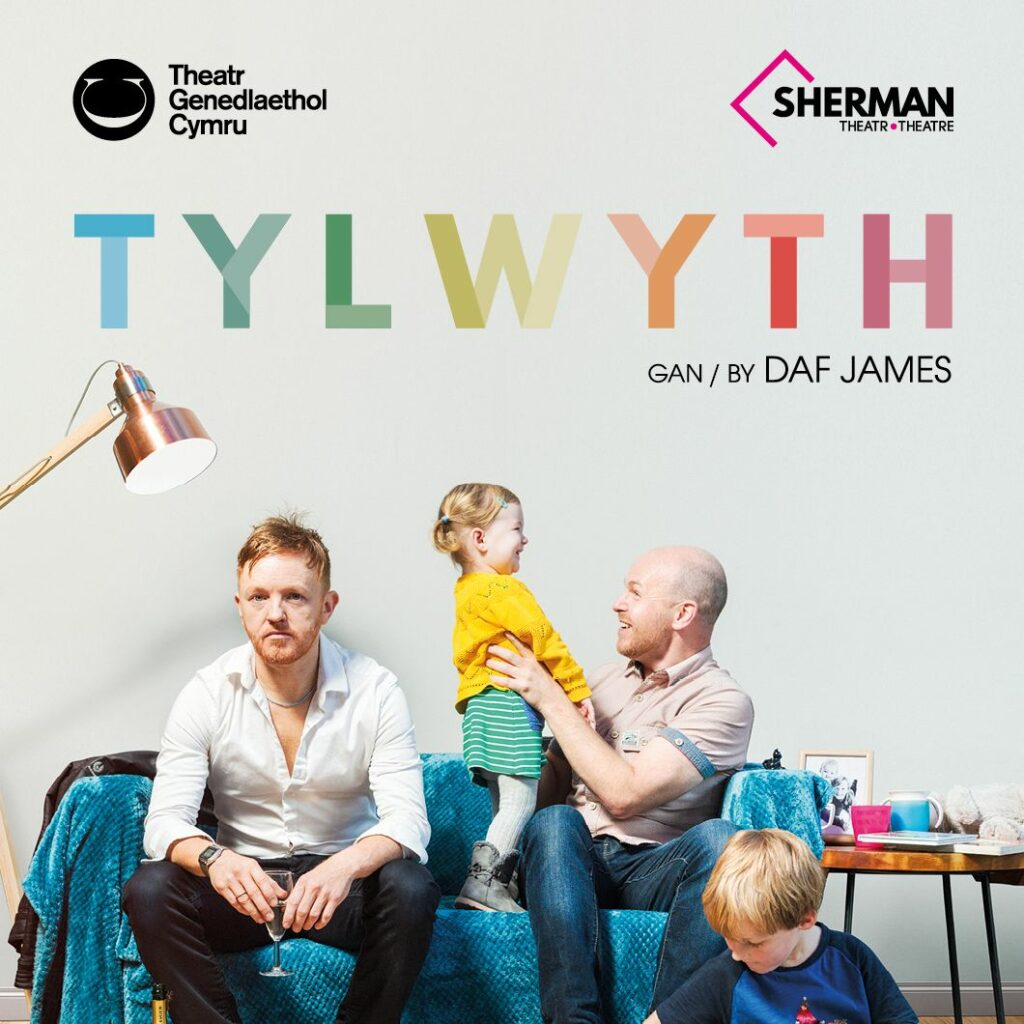
yn wir am ‘Tylwyth’ sef y dilyniant i ‘Llwyth’, drama hynod lwyddiannus Dafydd
James sydd ar daith ar hyn o bryd. Waw! Dyma gyfanwaith gwbl trawiadol a
chaboledig. Mae’r holl elfennau sydd eu hangen i greu darn o theatr ysgytwol yn
perchnogi’r sioe hon. Heb os nac oni bai y prif uchafbwynt yw’r sgript
sy’n grafog a chignoeth ar adegau ac yna’n delynegol a huawdl ar y llaw arall.
Mae’r awdur yn dilyn strwythur y ddrama flaenorol i ryw raddau ond credaf bod
sgript ‘Tylwyth’ yn fwy clyfar eto. Mae monologau Aneurin yn gweu yn gynnil
drwy gydol y ddrama ac yn cyfuno arddull gynganeddol, gyda dyfyniadau
o lenyddiaeth, emynau a rhigymau Cymreig. Mae’r chwarae ar eiriau a’r dychan
pwrpasol yn gampwaith llwyr. Dyna pam mae angen i mi brynu’r sgript gan fy mod
eisiau ei darllen er mwyn ei gwerthfawrogi eto!
Hanes yr un
cymeriadau â ‘Llwyth’ a geir yma – Dada, Gavin, Gareth, Rhys ac Aneurin, ond
degawd yn ddiweddarach – y llwyth hoyw sydd bellach yn bobl proffesiynol, yn
rhieni, yn aeddfetach a challach i fod, a’r llwyth felly wedi troi’n
dylwyth. Yn gymysg â’r cymeriadau hyn cyflwynir un cymeriad newydd sef Dan – gogleddwr
a phartner amyneddgar a chariadus Aneurin. Mae’r ddau wedi mabwysiadu dau o
blant bach ac er bod Aneurin wedi bod ‘ar y wagon’ ers pum mlynedd, mae
diafoliaid y gorffennol yn ei boeni o hyd. Mae bwganod ei isymwybod yn ei
arwain a’i demptio i fyd tywyll ei orffennol ac mewn un noson wyllt o gyffuriau,
rhyw ac alcohol, mae’n mentro wynebu ei gyfrinach a’i ofnau personol dwysaf.
Canlyniad y weithred yw bod Aneurin yn agor hen greithiau sydd wedi’i boeni ers
blynyddoedd.
Mae’r actio
a’r perfformiadau i gyd yn ardderchog – ensemble gwych sy’n cydweithio’n
effeithiol, ond i mi mae Danny Grehan fel Dada a Simon Watts fel Aneurin
yn serennu. Ceir gwaith corfforol bwriadol symbolaidd gan yr actorion
ar adegau sy’n creu awyrgylch hynod effeithiol. Hefyd mae llwyfannu a chyfarwyddo
cynnil a chlyfar Arwel Gruffydd yn arbennig. Mae’r set yn gyfuniad o lefelau a fflatiau
symudol ar ffurf hanner cylch, ond sydd hefyd yn medru cael eu trawsnewid i
greu lleoliadau gwahanol. Roedd hyn yn f’atgoffa o set draddodiadol Roegaidd, ond
ar ffurf lawer llai wrth gwrs, ac roedd y goleuo yn llwyddo i greu naws hyfryd.
Dimensiwn ychwanegol ond hynod bwysig yw’r trac sain a’r defnydd o ganu unigol a chorawl a oedd yn hynod ddoniol a dychanol. Roedd y cyfan yn ategu at un o driciau clyfar Daf James sef gwneud sbort deifiol am yr iaith Gymraeg a’n ffug barchusrwydd fel Cymry. I ddweud y gwir, mae’r coegni atom fel cenedl yn hynod lwyddiannus, bwriadol a dyfeisgar sy’n ein hannog fel cynulleidfa i ystyried ein credinedd ar adegau. Ymysg y themâu yma mae’r awdur yn trafod Brexit, hunaniaeth, rhywioldeb a moesoldeb. Ond y prif thema yw cariad a sut mae cariad yn trechu popeth yn y pendraw. Yng ngeiriau cân Eden ‘Gorwedd gyda’i Nerth’ “Cyffwrdd â’r grym yr hyn sy’n gariad pur”.
Os nad ydych wedi gweld ‘Llwyth’ ddeng mlynedd yn ôl, sdim ots – mae ‘Tylwyth’ yn sefyll ar ei thraed ei hun fel drama annibynnol. Ewch da chi i’w gweld. Llongyfarchiadau i bawb sy’n gysylltiedig â’r cynhyrchiad rhagorol hwn ac yn arbennig i weledigaeth Daf James a thîm Theatr Genedlathol Cymru.
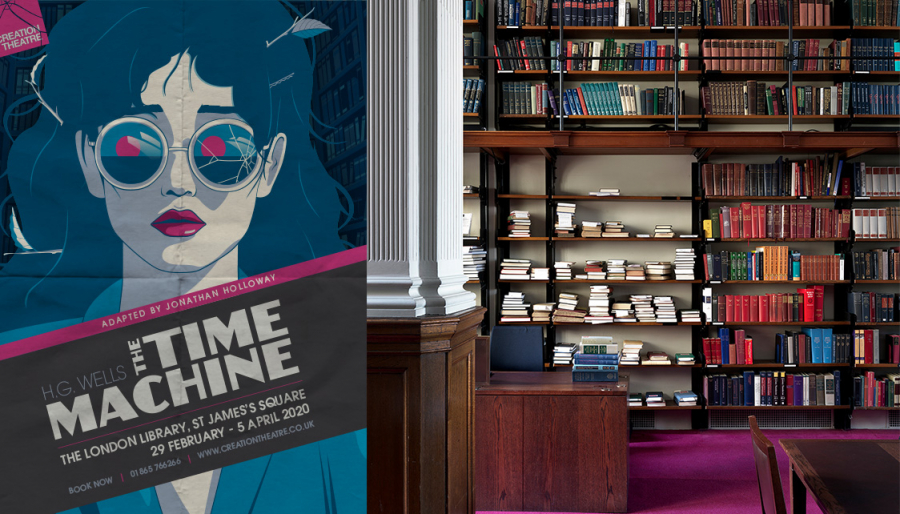
The Time Machine is based on the different dynamics existing around time travelling – written by Jonathan Holloway & directed by Natasha Rickman. Featuring Rhodri Lewis (time traveller), Funlola Olufunwa (chat show host), Graeme Rose (computer), Paul Taylor (time traveller), Sarah Edwardson (DRI), Clare Humphrey (time traveller). This play was derived from the book HG Wells giving it a different spin, even more so having this play performed at The London Library.
The start began with a scientist captured in a hologram screen prepping the audience by giving us a mental break down of the implications that was going to be unravelled. Then driving us down a road of discovery by providing a brief overview of the fundamental factors we as the audience would be encountering in solidarity motion . A unique achievement of being explicitly imaginary but maintaining the feel of being realistic as we experience a close reflection of what it’ll be like to tap into a new era through time travel. Shortly after the hologram we were accompanied by a time traveller who held a big brown bag which contained primal survival tools to break free from the power of the unknown that goes beyond our era when we as an ensemble yell ‘Zoom’!!!
‘Time Machine’ depicts technical intelligence, artificial intelligence infused with exclusive insights into the implications of the barriers facing us through trial & tested climaxes throughout humanity. This play projected the manifestation of the consequences of knowing too much, knowing too little, etc. All information used to produce this play were a collection of research data from scientific findings.
This play is truly a powerful dystopian as well as an utopian visionary becoming the space between the extraordinary taking us through a primitive space of human being counterfeits operated primarily on robotic-systemised technology; diminishing the present from the future giving off a nurturing fugitive space. The exploration of the library feel was what led this to feel like fantastic promenade performance. Extracting elements from smart devices, computer sequences, repetitive patterns helped to structurally enhance a rich flavour to secure an effective transition as we continued to time travel throughout the library, in various locations inciting new information to process every time.
Time Machine speculates on all the If’s & but’s, hidden truths that could make or break, cause heartbreak, confusion, seclusion then delusion before it all becomes to much handle! This play offers a unique experience shared between the audience & the actors creating a divine collective experience explored when going on a journey through some of lives most evocative spaces.
The use of space in this play was pure genius! the creativity, inspiration & innovation to what the future awaits was key to successful suspense & tension in this play! I managed to catch up with Jonathan Holloway after the show who’d gently touched on the amount of research which was a massive contribute to putting the play in its full effect!
Edalia Day has brought a very unique and very interesting
production to the forefront at this year’s Vaults.
Beginning slow and slightly awkward, Day seems nervous and
uneasy in this plain white room. Soon we are to realise, this is very much a
clever theatrical technique to their story and very much the beginning of
something special.
Too Pretty To Punch brings Day’s autobiography to the stage.
Identifying as trans, Day transforms the stage into their life story, the
trials and tribulations and turmoil in accepting who they are and seeking
acceptance in society. It then continues into a widen view of the issues trans
people face and eventually brings in verbatim videos to others facing the daily
obstacles.
It would be easily and still powerful to have used these
videos to support Day’s points, but they go the step further – animation is
projected onto screens, one an ordinary square screen, another slightly
misshapen and another as a moveable canvas. These are used to flick between
images and animations as they move across the stage, along with physical
theatre by Day, making the action come to real life in our eyes.
Some of the performance feels like we are getting to know a
new friend – Day addresses us and talks to us like a new friend being made, but
then some poignant moments being transferred into visual elements adds a unique
and clever nature to this production and hits the points home.
Supported at times with kitsch music that reminds me of
Golem by 1925, this makes the production feel a little special and like nothing
on the theatre scene right now.
Too Pretty To Punch is not only a really important production to see but is also one of the most unique and fascinating pieces of theatre I have seen in a long time.
What can I say that drew me to this production? Ultimately
that the show image is of two men in the nude hiding their gentlemans and
looking like they are loving life.
Animals is the story of two cousins, a long way from home,
trying to make a life in London. They enjoy drugs, music and cheese. They enter
moments of absurd hallucinations, finding the meaning to life but ultimately
gaining a new love for their friendship.
Animals is an interesting production; mainly consisting of a
duo doubling up on characters, there’s an element of The Inbetweeners, with
rude jokes, silly humour and really unique moments of comedy.
It took me some time to get into the rhythm of the
production and understand its niche concept, but equally there were moments of
comical genius and once I understood the approach, it became more enjoyable.
The two performers play very good parts; similar yet very
different, there was a naturalism to their performances, even as hallucinated
characters, and the chemistry between them was relaxed, bouncing off one
another with ease.
I am not sure where this production can and should go, but
it felt much as if there needed a bit of development and perhaps a moral
direction to the narrative.
Animals is comical, enjoyable and unique. While I wouldn’t say that this is a must see production at the moment, I would say that it is however a good laugh and an easy production when you’re not in the mood for anything too heavy.
Take audience participation, the hilarious parts of life and
throw in two comedians and you get a whole hour of a great night out.
Dave Bibby, in his new show, takes his usual love of getting
the audience involved and on stage and transports us through elements of life,
competing to be the better sex.
Games range from releasing blown up balloons, representing
our first poo as babies, to scooting along our bums in our first car, to losing
our virginities with slinkies. The inventiveness and creativity of the games
and their representation is unique and clever, leaving us laughing firstly at
the intelligent creations but also gearing us up for how the ordinary human
completes such a task.
Bibby is totally honest with us, finding elements hilarious,
turning any “mistakes” (as this is a show in progress) into a hilarious
addition, and picking up or moving along the action with ease and confidence.
We feel safe and well within his hands but happy to make fools of ourselves and
join together to cheer on strangers.
Life: The Gameshow is exactly what we need in these uncertain times; a moment to relax, have fun, be pleasantly surprised but also to join together for common enjoyment.
Hi Tracy great to meet you, can you give our readers some background information on yourself please?
Hello. I’m from Swansea. I went to an amazing creative primary school where we were taught Beatles songs, bombarded with the chronicles of Narnia and where I met some of my closest friends. I then went to a pretty tough all girls school where I met girls from all walks of life and then I went to Gorseinon College where under the brilliant Simon Pirotte, my love of theatre grew. I then went to Lancaster Uni to study Experimental Theatre after being highly influenced by Volcano, and as part of that course I did a playwriting module where I wrote my first play ‘past away’ which was commissioned by Sgript Cymru, on my return to Wales. I then went on to write a number of plays for the Sherman and other companies. Alongside writing,I started making TV Documentaries and set up ‘Gritty Productions’ with Chris Rushton. We make hard hitting films and radio programmes for BBC about homelessness, prostitution, and the benefit system.I also make my own performance work, writing and performing and collaborating with other artists, which is more experimental/ autobiographical.
So, what got you interested in the arts?
Well there’s definitely been a number of inspirational teachers along the way. Then my Dad used to make up silly bedtime stories and I’d always loved dressing up and making up songs, so I guess it secretly was always there. My sister whose an English teacher now, definitely passed on to me the love of words and stories. I never really went to the theatre growing up other than the Christmas panto at the Grand Theatre with the social club, my parents used to go to. The earliest memory I have of theatre was when I was 6, my infants school were doing a production of The Wizard of Oz. The teacher’s asked for people to volunteer to sing and my friend Lucy literally pushed me on to the stage. I was terrified but I did it, and I got the part of Dorothy, that moment actually propelled me into theatre and I’ve loved it ever since.
Can you tell us about your writing process? Where do your ideas come from?
Ideas come to me randomly, often when I’m out and about, sometimes from images, sometimes from conversations I’ve heard or had or something I’ve read. I’m a bit of a hoarder, so I often keep postcards, photos, bits of text etc and they get recycled. I’ll often think of visual moments first and write from images/ photo’s as starting points and then plays start to build from there. I also like to think about what I’m scared of, or what questions I want to ask about the world right now and that often starts my brain ticking.
Can you describe your writing day? Do you have a process or a minimum word count?
Since having Hartley, my 4 year old, my writing process has changed (for the better I think) Now, because of time restraints, I write for a few hours in the morning while he’s at nursery and then at night when he’s gone to bed. I have to be much more structured and give myself deadlines and tasks, like to complete a scene in a morning, but I think that definitely has made me procrastinate less and value my writing time more.
Why and where do you write?
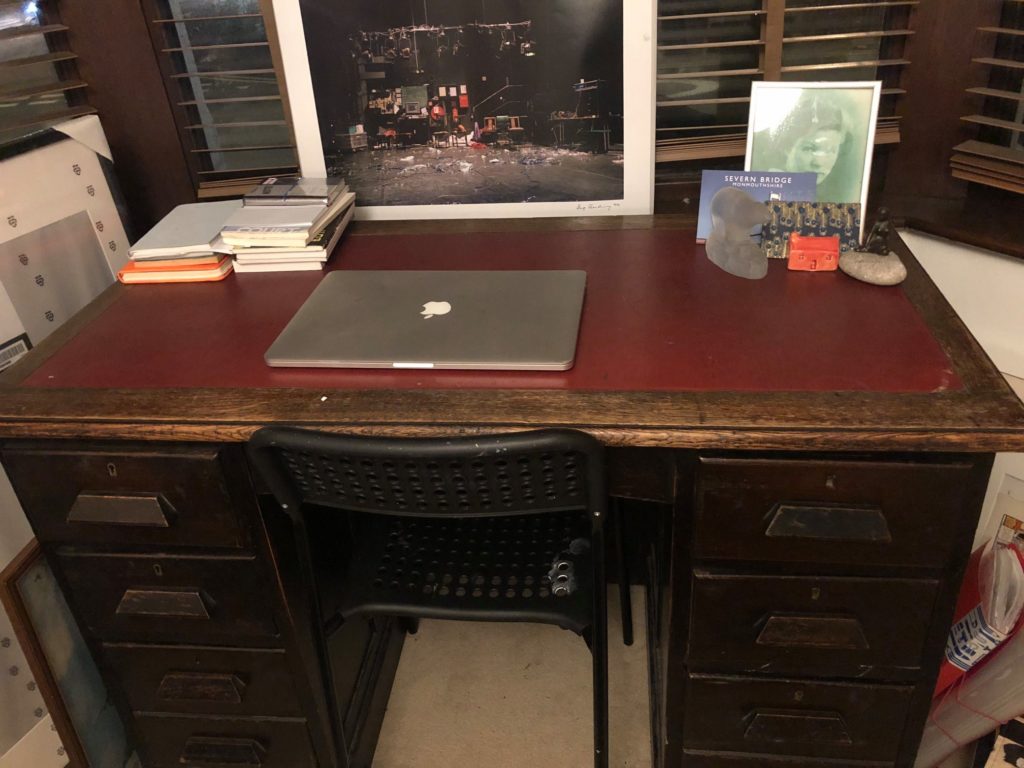
I write because I often find that’s the only way I can express what I really want to say about the world. I often write when I have a strong feeling or instinct about something that I really need to say and don’t know how else to articulate it. Normally I write on my desk at home. It’s an old-fashioned writing desk, which we’ve named William! I like to think about the stories that were created on it previous and the people who sat at it. I also have a few little inspiring things on there and things that are important to me- they keep me going when I get stuck. I also often have music that I rely on for the play and will listen to that constantly through the process. (I tidied it for this photo!)
Your latest play Ripples, co-produced by Royal Welsh College of Music & Drama in collaboration with Sherman Theatre takes place in a group rehab centre in Bridgend. It “compassionately explores what leads us to seek help.” How did you come to tell this story?
I think every play is different and therefore has a different approach. With Ripples the commission and challenge was to write a play for 8 people, which is both terrifying and exciting. I did a lot more planning with Ripples at the start of the process, thinking about where 8 characters may be thrown together in a dramatic situation. I also really wanted to challenge myself to write a play where the 8 characters are on stage for the majority of the play together- That was a big challenge I tell you!
As I mentioned, as well as theatre, I make Documentaries and a few years ago, I had been doing a lot of research about Rehabs and found a brilliant one in Bridgend and that place always stuck with me. Then I had questions about how I felt about the world right now- I was thinking a lot about ‘How do you fix people in a world that’s broken?’ Where are the safe places? and also personally about how I felt overwhelmed by the constant bombardment of bad news stories and out of the combination of all those seeds, Ripples started to grow.
Why did you choose Bridgend as the location of this play?
I chose Bridgend as that’s where the original rehab I had been researching was, but spoiler alert- this isn’t a play specifically about Bridgend and it isn’t verbatim either, although I have done a lot of research to make sure the stories are authentic and true to what might go on there. I think with every play, you have to find the right form and story for that play, so the actual Rehab and Bridgend as a place was just a starting point. I then starting thinking more about the technique I wanted to explore in the play and the characters I wanted to create. I was drawn to psycho-drama as I felt this was the most dramatic and instinctive technique that I could play with. The great thing about the New season is that you get to work with the actors and director early on in the process to workshop the script, so they have been involved and invested right from first draft stage and this has been invaluable, as I’ve been able to bounce ideas around with them and really flesh out the characters and stories collaboratively- and they are a really talented bunch- so that’s such a treat!
With productions such as We’re Still Here by NTW portraying the lives of Neath Port Talbot Steel Workers. Theatr na nOgs production Nye and Jennie examining the political background and personal inspiration of Aneurin Bevan and Jennie Lee, and your new production based on the real lives experiences Bridgend residents do you feel that Welsh Theatre is presenting representative stories of its citizens on our stages?
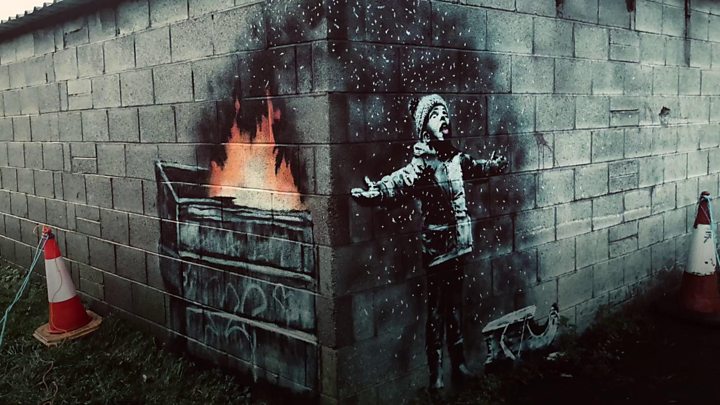
I think it’s important to tell welsh stories that have a universal reach, so for me the themes of the play; Trauma, Survival, Empathy and Compassion can all relate to Wales but also have bigger resonances in the world right now. The next project that I am working on with Paul Jenkins is wholly a verbatim play about the Banksy that appeared in Port Talbot and this is specifically a Welsh story, right from the heart of the community in Port Talbot, but again it raises universal questions about community, art, money and values and I think I’m drawn to projects that do that.
There are a range of organisations supporting Welsh and Wales based writers, I wonder if you feel the current support network and career opportunities feel ‘healthy’ to you? Is it possible to sustain a career as a writer in Wales and if not what would help?
This is a tough one. I think there are opportunities in Wales, but they are few and far between and often there a lot of people fighting for those opportunities and commissions, so you have to keep proving yourself or have someone fighting your corner. I couldn’t survive just writing plays, but I also wouldn’t refer to myself as wholly a playwright as I love working in TV and film and creating my own work. I find that I need that variety to keep my creative juices flowing I feel extremely lucky and thankful to Simon Harris, who took a massive chance on me (back in the day as a young 22 year old, first time writer) and more recently Wyndham Price who last year commissioned my first feature film and Philip Carne who has supported my last 2 plays, without those people I definitely wouldn’t be writing now. Also I feel it’s great to have development schemes, readings and competitions, but playwrights need productions and I wish there was more money being thrown at dramaturgical support and development that could lead to this.
Simon Harris, Wyndham Price, Philip and Christine Carne
Sherman Cymru have recently announced the reinstatement of their literary department, on a one year pilot basis funded by ACW. What does this say to you as a Playwright as regards the venues intention to support your craft? What change do you hope will be realised with this new department at Sherman Theatre?
The news of a new literary department at the Sherman is really exciting as I feel there has a been a big gap in Wales in this area. Hopefully this will mean more plays will get read and developed so more voices will be discovered and produced, which is really a brilliant thing. Joe Murphy at the Sherman, Paul Jenkins and Adele Thomas have been great dramaturgical support and I think it’s important for writers to have that support early on in the process, from people that they trust. I think I need to be challenged as a writer. I need to be able to talk about my work and have people really interrogate me about my ideas- this has been invaluable for me to progress further.
Joe Murphy, Paul Jenkins, Adele Thomas
If you were able to fund an area of the arts in Wales what would this be and why?
There are so many things I would like to fund, but if I had to choose one, I would fund writing/theatre workshops for younger people. I think we really have to nurture that next generation of welsh talent, support them and encourage them to get their voices heard
What excites you about the arts in Wales?
I love the network of artists in wales. I often rely on my fellow artists to bounce ideas around and give me feedback on scripts. I also like to repay the favour when I can and I think that that critical eye is crucial in order for us to keep upping our game and challenging ourselves to be bolder and braver. The Playwrights programme and the JMK directors programme at Sherman Theatre were both brilliant as I feel from that I have developed a great network of writers/directors who I can now call upon and trust; Working with Hannah Noone on previous plays and Matthew Holmquist on ‘Ripples’ has been such a joy.
Hannah Noone, Mathew Holmquist
The new Unheard Voices scheme the Sherman has just launched is a brilliant step in the right direction- we definitely need more female voices on our stages! and the literary department is such an exciting thing too and I really hope it will encourage the next generation to get writing, and all those writers with plays in their bottom drawers to dig them out and develop them further.
What was the last really great thing that you experienced that you would like to share with our readers?
The last show I saw that really hit the emotional button for me was; I’m a Phoenix Bitch by Bryony Kimmings at BAC. I’ve always loved her work it’s honest, raw and emotional and she’s one of my biggest inspirations. It’s on at Mayfest in Bristol, if you get chance to catch it- I’d highly recommend it.
This is a BSL video review. You can read a written version of the review by Chris below.
https://youtu.be/Zv_41vl_taM
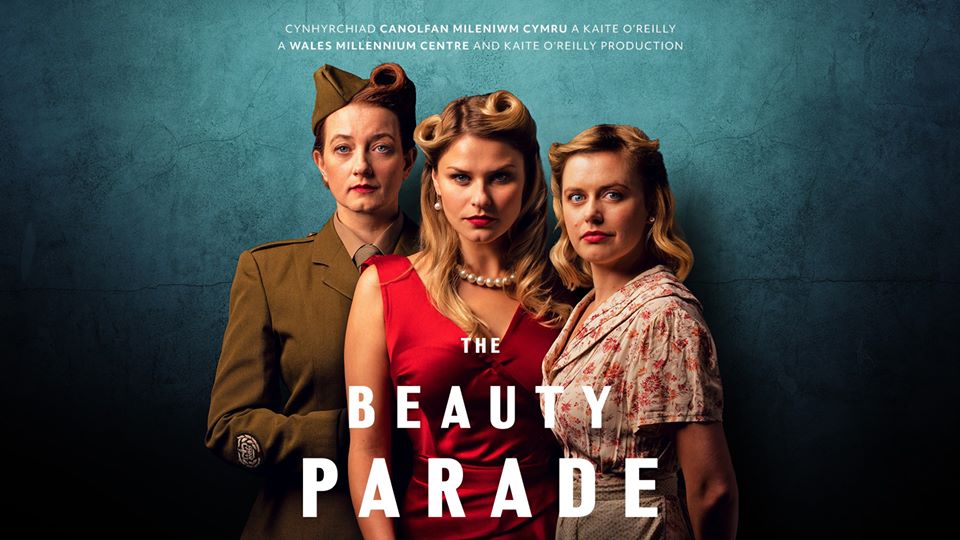
Hello my name is Chris Coles, I went to the WMC to watch Beauty Parade. The play itself was about three woman who were spies in World War Two. It showed what life was like being spies, that they don’t live for long during the War, it was a max of 6 weeks if they were lucky.
The play itself was amazing showing the good relationship between deaf people and hearing people can work. Special effect, captions and music were brilliant and written well into this play. I recommend you see this play if you like period drama.
Heather a Deaf friend of Chris also attended, Heather said that it was great to see a Deaf actress in a mainstream production and she enjoyed the way the captions and effects were presented.
The Beauty Parade plays at The Wales Millenium Centre until the 14th of March.
(Please note this review contains detailed discussion of the play’s plot) Based on the hugely popular novel by Khaled Hosseini, The Kite Runner, adapted for the stage by Matthew Spangler, had a lot to prove. Despite enjoying two runs in the West End in 2016 and ’17, I wasn’t as enamoured with the piece as many other audience members. Having studied the novel at A-Level, the boldness of the story and the narrative poetry which I had loved, weren’t quite captured in the theatrical language of this adaptation. Though it still packs an emotional punch and features innovative staging ideas, overall the play felt a little slow and watered down.
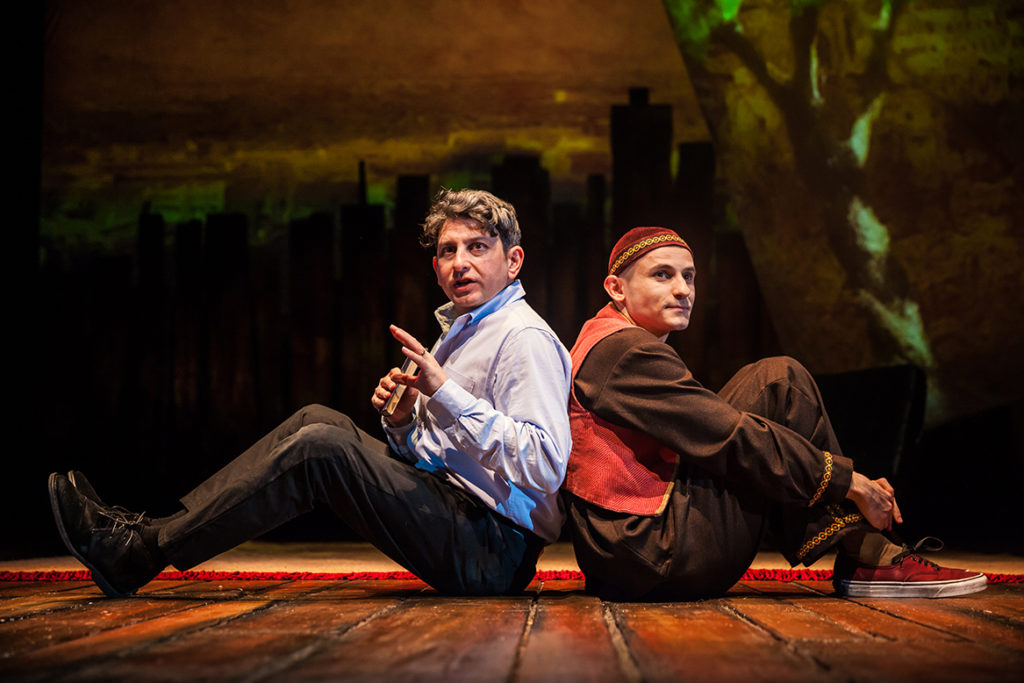
An unlikely friendship: Amir (David Ahmad) and Hassan (Andrei Costin). Image: Betty Laura Zapata
The story is narrated by Amir (David Ahmad) as a grown man, recounting his life in almost verbatim style, which, as a confessional story is a sensible choice but this sometimes takes away from the drama of the moment. Told in chronological order, the play begins with Amir’s childhood in Afghanistan where, as a wealthy Sunni Pashtun, he enjoyed a comfortable life and spent his days playing with his father’s servant, Hassan (Andrei Costin), ostracised for being a Hazara Shiite. On the fateful day of the kite tournament, Amir witnesses a horrific assault on his best friend, and his passivity haunts him decades later; when a phone call from an old friend comes out of the blue, Amir travels from his new home in California to Pakistan in an attempt to finally atone for his sins.
The whole production of this adaptation is minimally staged. The music is mostly provided by onstage tabla player, Hanif Khan, as well as Tibetan singing bowls used to create atmosphere. The live music is one of the play’s shining factors and it draws us into the world immediately.
https://youtu.be/qJtaNjoY5hQ
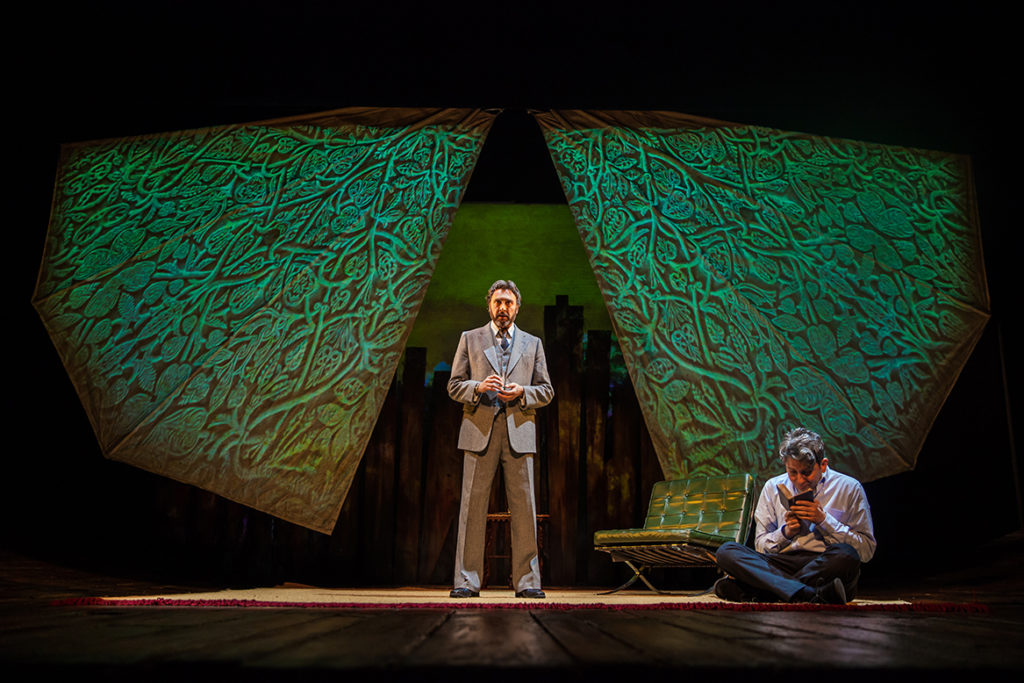
Barney George’s set is equally sparse: just a wooden floor which curves like a skateboard ramp and alternating patterns projected onto a central rug. The backdrop changes colour and is decked with mounted wooden posts to vaguely resemble city skylines, but neither adds much to the production. There are also two giant canvas kites which swing down to conceal scenes and characters, which are effective, and which also show us Amir’s childhood pomegranate tree and later, Hassan’s death, through William Simpson’s projection design.
Baba (Dean Rehman) and Amir (David Ahmad) on the minimal set. Image: Betty Laura Zapata
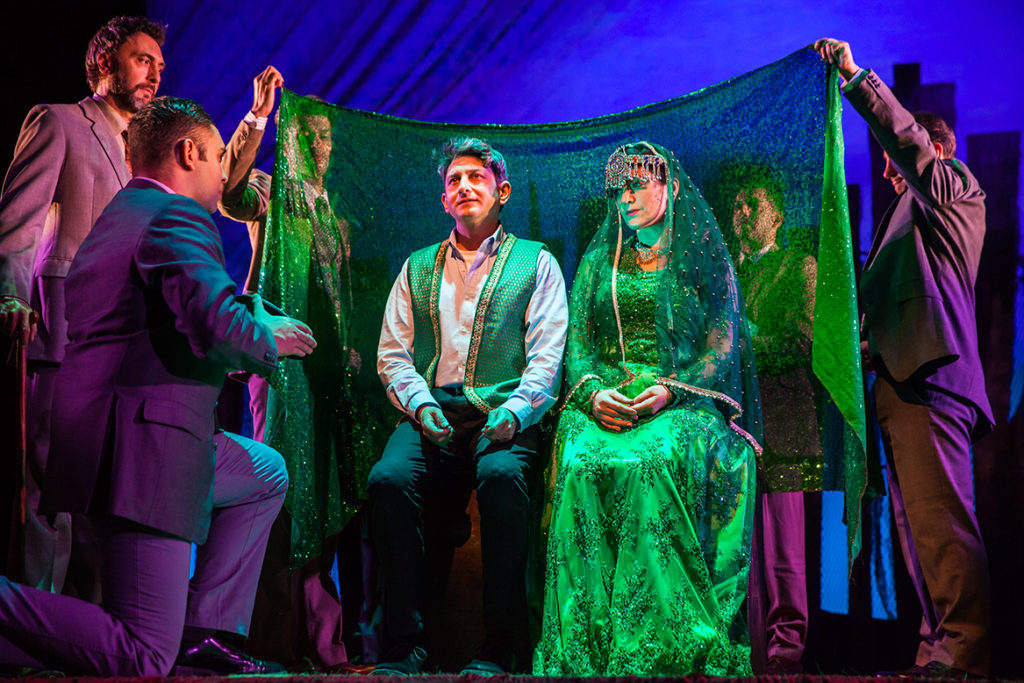
The sparseness of the stage works for the more distressing scenes where we only need to see characters and their expressions, but it makes the joyous ones like Amir and Soraya’s (Lisa Zahra) wedding feel a bit flat. Kitty Winter’s dancing is not quite lively enough to bring up the energy, nor is Charles Balfour’s lighting and Drew Baumohl’s sound really utilised to inject a party atmosphere either. This theme continues with the kite flying scene; there were only two tissue-paper kites, and they were clutched, not flown, in the hands of ensemble cast members, while Amir and Hassan’s kite was just mimed. The whole cast did do a good job of creating the tournament’s excitable tone and the use of several large, wooden Schwirrbögen, swung to create the sound of the wind, was very effective, but I wanted more kites – whether projected, or suspended in the auditorium. Now I wasn’t expecting a Mary Poppins moment, but I had hoped for much more of a spectacle for the novel’s most iconic scene.
The wedding of Amir (David Ahmad) and Soraya (Lisa Zahra). Image: Betty Laura Zapata.
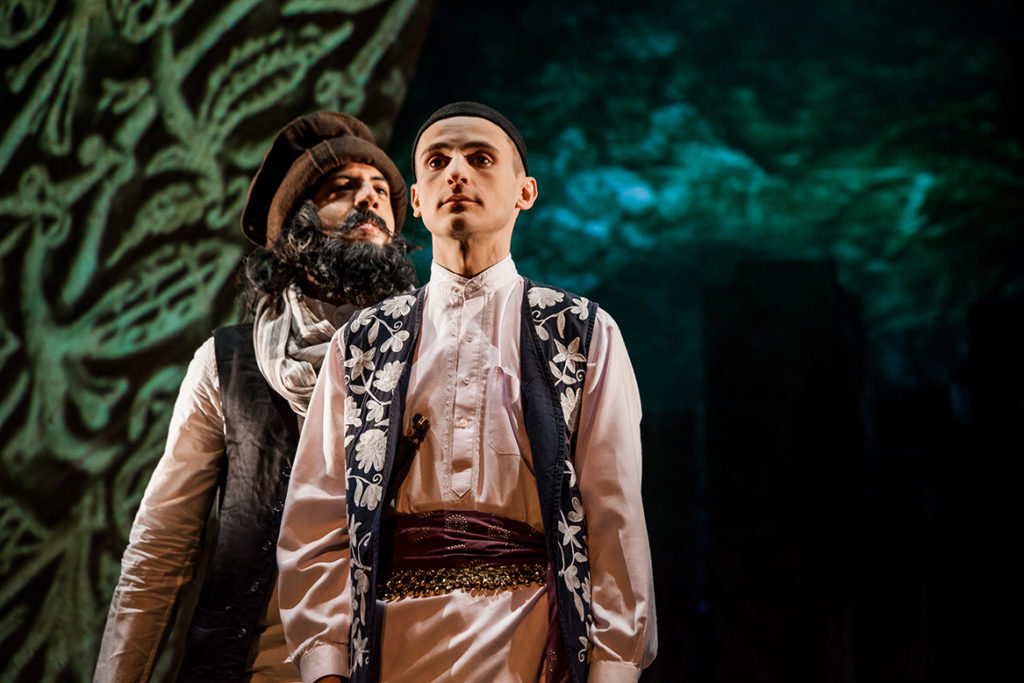
The performances are strong, with David Ahmad bearing most of the weight as the central character who almost never leaves the stage; he does a great job of capturing Amir’s selfish, self-pitying persona and is given plenty of fodder to do it with routinely interjected monologues. Andrei Costin is well cast as the faithful lamb Hassan, and he brings real pathos with Sorab; having Costin play both characters is a clever yet logical choice on director Giles Croft’s part, fitting in with the idea that father and son share an unmistakable resemblance. The decision to represent the characters as children through adopting somewhat whiny children’s voices, however, is a bit of a misstep, sounding inauthentic and becoming a little grating. Child-like physically (which Costin and Ahmad already perform well), coupled with simply speaking with an Afghan accent would have sufficed, and would still have contrasted with adult, American-accented Amir; Hassan’s voice need not contrast anyway as we never see him grow into a man. Dean Rehman is also great at grounding the piece as Amir’s father, Baba, bringing a nuance to the role with both power and sensitivity.
The most harrowing moments such as Assef’s assault on Hassan and Sorab’s attempted suicide are neatly hidden or dealt with offstage but still manage to evoke a few audible gasps and genuine sniffling from the audience. The subject matter is difficult enough that visual representation is not needed but I did want Sorab’s dancing scene to be more poignant. In the book, it’s an exploitative and sinister moment where Amir realises the suffering of Hassan has multiplied in his son, and is the catalyst for Amir finally fighting for someone other than himself. In the same vein, author Hosseini’s Assef is more sadistic – leering yet captivating – but Bhavin Bhatt plays him with a gravelly voice which makes him almost a caricature. Despite his strong portrayal as the teenage bully, Bhatt doesn’t quite manage to evolve the character convincingly into the wild, paedophilic fanatic. The fighting (directed by Philip D’Orléans), even with a knuckleduster in the mix, is also a bit lacklustre.
There is one incredibly emotional scene in the hospital however, where Amir prays for Sorab’s recovery on a prayer mat made by a rectangle of light, and where Ahmad gives a tear-jerking performance of desperation. There’s also a touching point at the end where Amir finally stands up to Soraya‘s racist father (Ian Abeysekera) and shows Sorab how to fly a kite, causing a flicker of a smile on the boy’s face. Amir asks Sorab if he would like him to run to capture the kite they have won together and Sorab nods; Amir tells him, ‘For you, a thousand times over’ – a moving and cyclical moment of atonement which I feel should have been the final line.
The Kite Runner is a faithful adaptation with a hard-working ensemble cast and great use of use music, but it’s a little bland and lacks the vitality of its original medium. It is well-crafted and unspools nicely over its 130 minutes, but never fully takes off and gives us the spectacle we need.
The Kite Runner continues its UK-wide tour until 4th July.
I am going to be honest with you dear readers, I was rather dubious about Message In A Bottle.
I’ve never been a huge fan of Sting or The Police, but the fact this was another dance production by the wonderful Katie Prince of Zoonation fame (of which I am a fan) I was really intrigued with how the two could combine.
A really poignant story, Message In A Bottle focuses on a family torn apart from war and disaster, facing a life of a refugee and starting life again. A story that has often hit our newspaper headlines and breaking news articles on TV.
Zoonation has been known for its comedy – taking existing stories and giving them a comical yet urban feel to them. This production from Prince is something so different and dare I say it, my favourite to date from this choreographer and director.
Somehow the music from Sting fits every scene so well, without much change to the music, the world this family exist in feels almost alien and somehow the electronics of his songs, and the earthly beats of others just fit so well to the story and the characters.
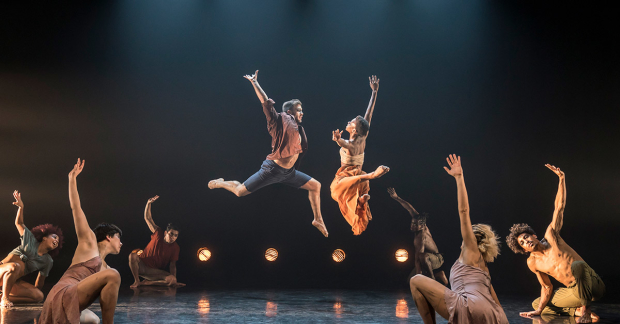
The dancing, of course, is flawless and awe inspiring as Prince’s work always is. It is great to see her branch out even more with choreography – previous work lending to the fact it is urban, a hip hop version of a story; this production has these moments, but there are also beautiful contemporary moments, really showing the skills and versatility of each dancer.
And a review cannot be written without mentioning the set – a combination of multimedia usage with projections, a cubed stage where the background is ever changing, costumes that just fit effortlessly with the colour schemes and the lighting effects that are those I haven’t seen before in a show but also manage to include us the audience – an absolute triumph.
Message In A Bottle is an absolute masterpiece. It is everything from a dance show and more, and somehow, if you weren’t a fan of Sting or The Police before, you will now have them on repeat.
Growing up, I studied them intently, seeing majority of their shows whenever I could, fan girling over them each time. When hearing about I Think We Are Alone, and that the equally inspiring and admired by me since I was a kid, actress/director/creative extraordinaire Kathy Burke was involved, I literally needed to see this production.
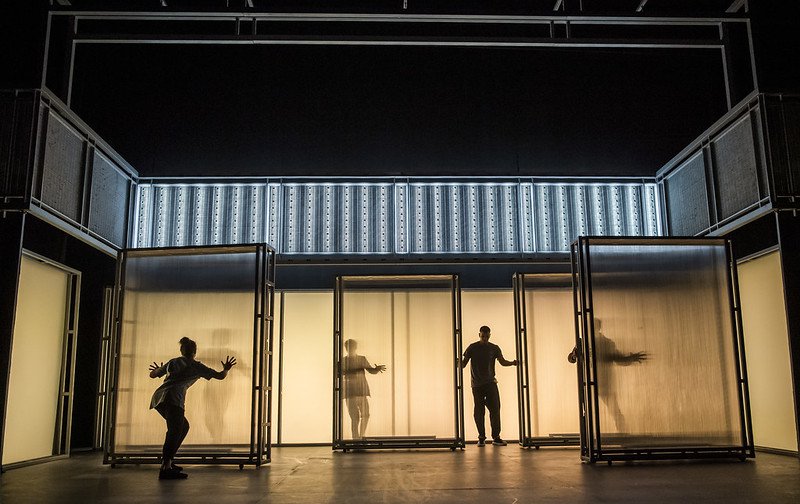
Perfection as always, the stage is beautifully set – simplistic yet interesting and comprising of moving blocks of glass, the stage is open for all possibilities.
I Think We Are Alone looks at the intertwining stories of five people. It’s all about human feelings, real love, between family and friends and partners. About loss. And about how fragile life is.
The play is funny, it’s witty and it’s well written. But I couldn’t help but feel underwhelmed. If I had come to the production, without a name such as Frantic Assembly to it, it would be brilliant. Perfection, well executed, with fantastic acting, brilliant direction and a stand alone wonderful play. But there was very little physicality, boundaries pushed and that special Frantic Assembly essence that I have grown up loving and inspired by.
They add a little bit, a lift here and there, using the glass squares as climbing frames, but this could have fit in any play and been just as good a direction. I felt that I was always waiting for a crescendo or for Frantic to really throw themselves, splashing their trademark across the stage and into our hearts.
I Think We Are Alone is wonderfully written, fantastically acted out and as it’s own production, heartwarming and heartbreaking – I just wished that there was more of Frantic Assembly in the final product.
Creating opportunities for a diverse range of people to experience and respond to sport, arts, culture and live events. / Lleisiau amrywiol o Gymru yn ymateb i'r celfyddydau a digwyddiadau byw

 (5 / 5)
 (4 / 5)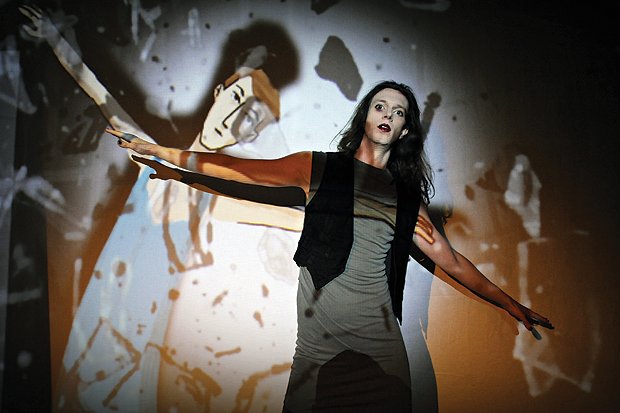
 (3 / 5)