

Category Archives: Theatre

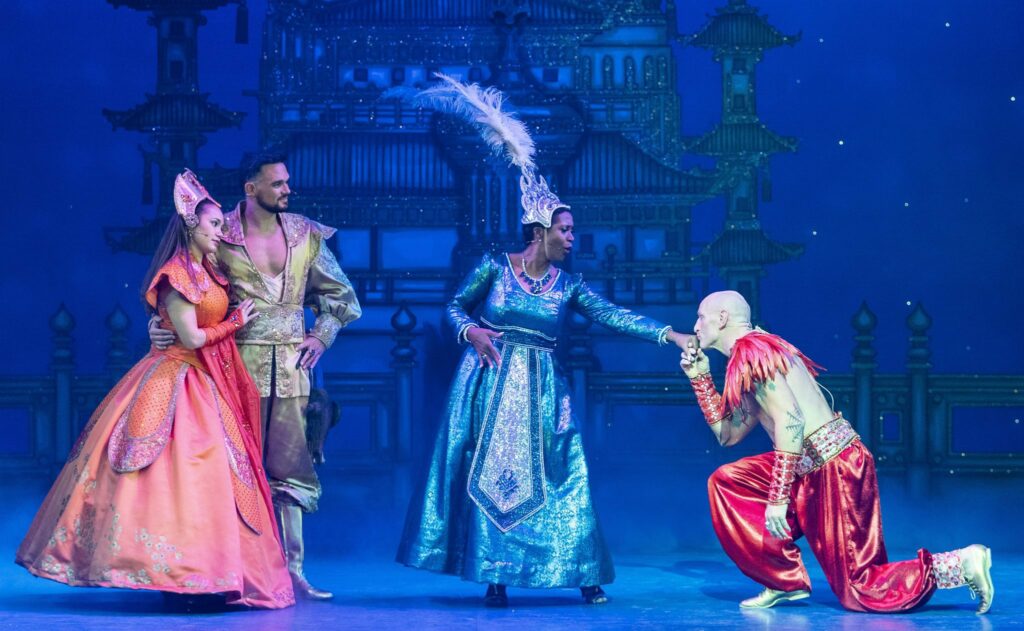
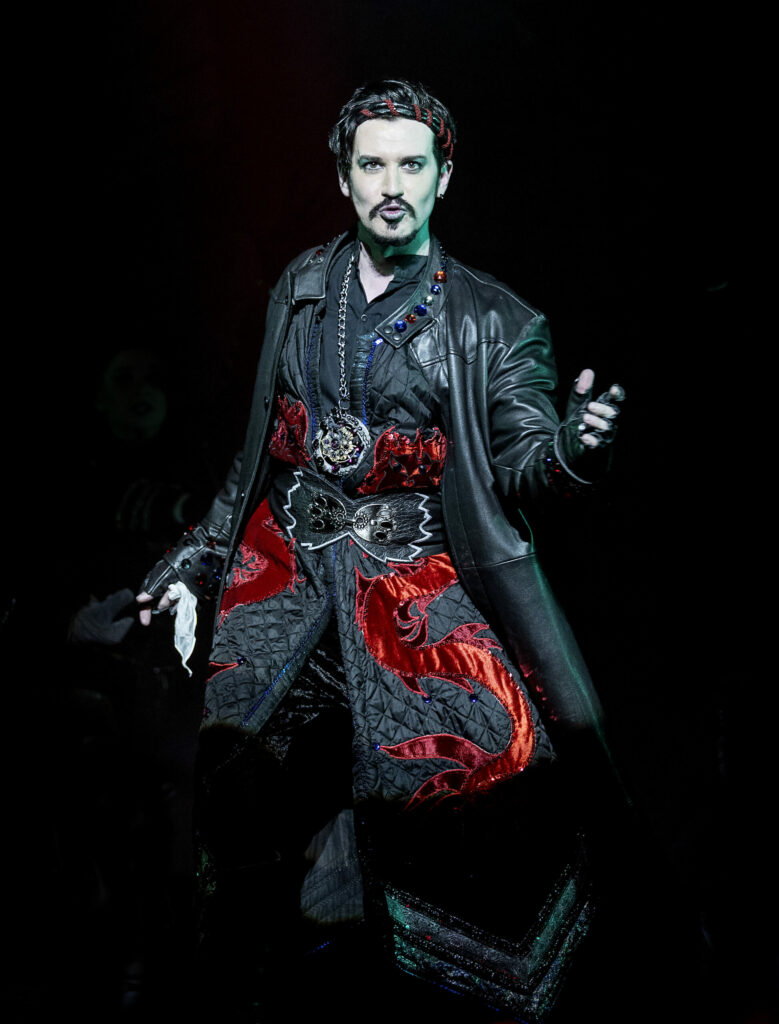
PREVIEW Priscilla Queen of the Desert at the New Theatre Cardiff 20-25 September

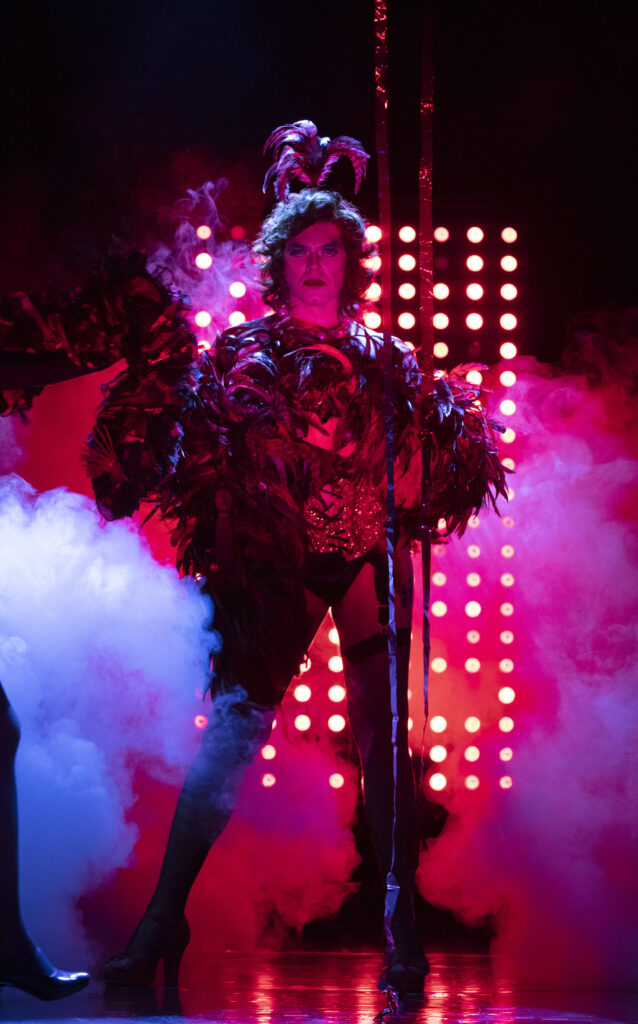
After endless months of lockdowns, Zoom hangouts and laughable attempts to bake banana bread, we’re all dusting off our boots and getting our sequins out of storage as we take a step back into ‘ordinary’ life following an extraordinary year and a half. But Priscilla Queen of the Desert is here to put the ‘extra’ in ‘extraordinary’!

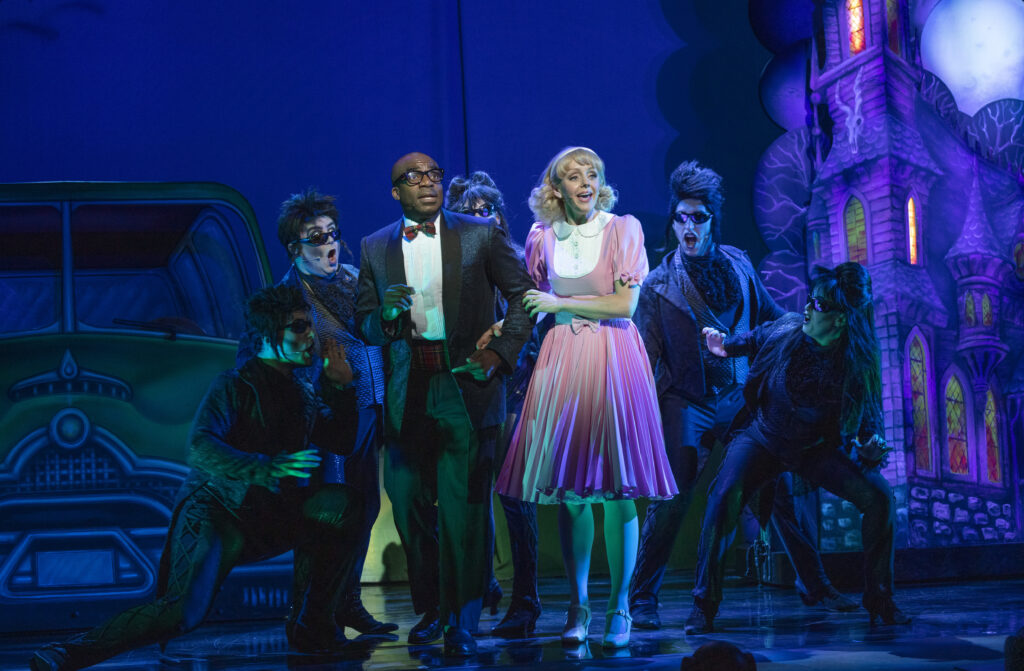
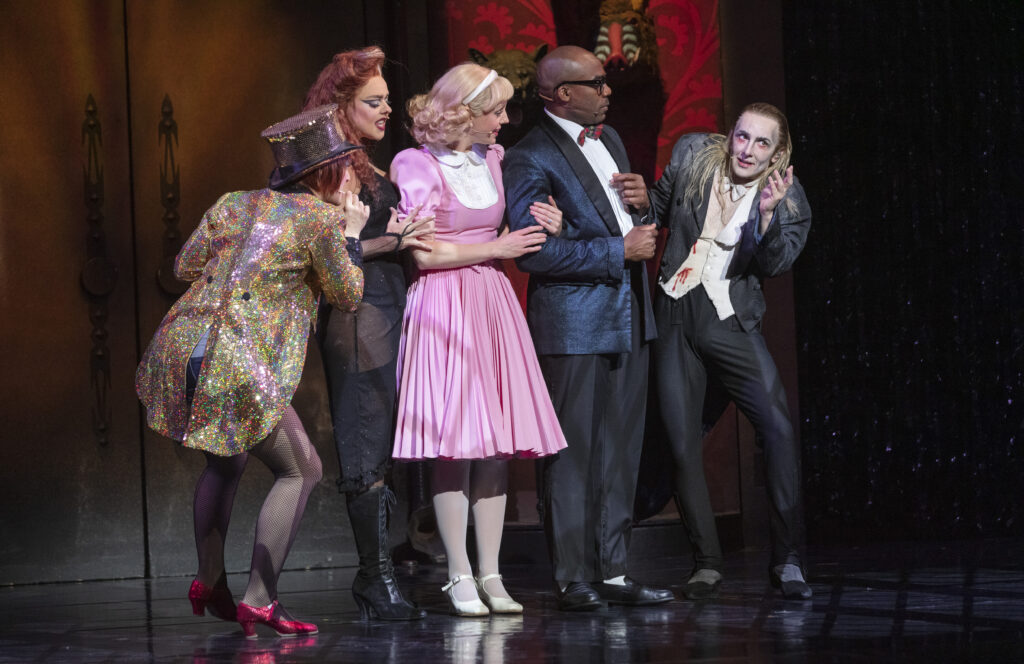
The UK Tour is the inaugural event of the New Theatre’s much-anticipated reopening, and there truly couldn’t be a better show to welcome us back. Based on the Oscar-winning 1994 film which starred Hugo Weaving, Guy Pearce and Terence Stamp, Priscilla Queen of the Desert centres on three friends as they journey through the Australian outback in the titular tour bus. Produced by Mark Goucher and West End icon Jason Donovan (in his producing debut), the show stars Miles Western as Bernadette, Nick Hayes as Adam/Felicia, Edwin Ray as Tick/Mitzi, who lead an amazing ensemble through such classic tunes as ‘It’s Raining Men’, ‘Hot Stuff’, and ‘I Will Survive’ and many more.

After so much uncertainty for so long, it’s amazing to be seeing a show which proclaims to be ‘pure joy guaranteed’ – and I for one can’t wait to hitch a ride.

Review to follow!

Priscilla Queen of the Desert UK Tour will be playing at the New Theatre Cardiff from Monday 20 September to Saturday 25 September

Priscilla UK Tour

Preview by
Barbara Hughes-Moore

Get the Chance supports volunteer critics like Barbara to access a world of cultural provision. We receive no ongoing, external funding. If you can support our work please donate here thanks.

Review, Is this a Waste Land?, Charlotte Spencer Projects, Sadlers Wells, By Hannah Goslin

 out of 5 stars (4 / 5)

Out in the East of London, we are taken to a barren land sitting in between skyscrapers and posh looking apartment buildings. Some built, some in the stages of being built, with the Olympic park and Orbital tower also over looking us.

There’s nothing here, but bits of old materials, items, objects in a small part of this fenced off area. We are asked to pick an object, and so the performance begins.

Armed with headphones and work gloves, we follow instructions spoken to us to explore and experience this space, at times as a group, at times on our own. Music and soundscapes are added to the recording, adding atmosphere and transporting us to different places while we look out on the concrete land. Over the space of an hour and half, we become familiar with this space, beginning to think of its past, present, future, of our own lives and those less fortunate or even in better positions. We think of society, of politics, of environment and nature. We think of London and gentrification. So much comes out of an empty fenced area and a bunch of junk.

Soon it is clear that we are being told different instructions, splitting up and doing different things in different groups. We are the performance, and while the instructions will be the same for each performance, it is clear that there is scope for each production to produce something unique dependent on the participants.

There is at first hesitation: What are we waiting for? What are we doing? What is the reasoning? Soon we are immersed and so all the elements and subjects that are brought to light that I mentioned earlier become clear, giving food for thought and making us feel a range of very deep emotions.

At times, there are professional performers who do their own things to the side, creating physical performances of their own, of artistic installations that are there and blink, you could miss them. A lot goes on and again, this makes each performance different for those attending – some may see some things, and from a certain angle, others something completely different. And that is the beauty of this.

Something so barren becomes familiar and filled with items, with people, with physical theatre, and without words, when we are teaming up or constructing, we work together and it makes sense. Somehow, communication isn’t always needed – after some time, we all just understand one another.

There are for sure some hard hitting moments; we are instructed to make, to create, to perform and soon we see it destroyed or taken away and there is a real social and political underbelly to what we are experiencing.

Is this a Waste Land? Is a complete triumph of physical theatre, of space exploration, of immersion and of poignant point making.

Review, Amelie The Musical, Criterion Theatre, By Hannah Goslin

 out of 5 stars (4 / 5)

If you are a millennial, I guarantee you watched Amelie the film when you were a teenager and fell in love with its weirdness, quirkiness and general artistic cinematography.

I feel that it was a cult film for us all, that we remember and hold a special place in our hearts. Which is why when I heard it had been turned into a musical, I was dubious on what they had done.

But boy was I wrong.

If you haven’t seen Amelie, it is about this girl who is sheltered from the World as she grows up. When she reaches adulthood, she decides to move away but still shies away from everyone, not going out or engaging. When one day, she bumps into the love of her life and everything changes. She goes on a journey to make people happy and in the process, coming out of her shell to grab love and hold onto it.

In true Amelie style, the whole production – set, lighting, costuming has this mellow tinge reminiscent of the 70’s. Dark blues, browns, yellows, reds all light up the stage, giving it that chic, French feel that the film holds so dear.

It also does not shy away from how quirky and original the original narrative is. Amelie is a strange girl and so is her story, and so no memorial points that I remember from the film are missed, bringing them in in poignant or hilarious ways, and integrating them into the songs. I feared that what I loved most about the film would be missing, but it wasn’t and was elaborated on with gumption.

The music was also reminiscent of the atmosphere created – all those on stage played a live instrument, and it gave that french, grungy, Paris street feel that you associate with the city; the chic, unusual, hippy feeling – the too cool for school feeling. It balanced the narrative well, and made me honestly forget that this was a musical. Usually, expecting something perhaps a little tongue and cheek, or satirical, this was complimentary and really reflected the story and its aesthetic.

The performers were also brilliant. Never missing a beat, they were so perfect, moving from scene to scene with effortless grace, sometimes it was easy to forget they were real bodies in front of you and not an edited film.

Amelie The Musical is everything you want it to be and more. For those millennials who grew up with this firmly in their teenage years, it brings the film and story to life, with all the original elements and enhances it before your eyes.

Review, The Memory of Water, Hampstead Theatre, By Hannah Goslin

 out of 5 stars (4 / 5)

In true Hampstead Theatre style, the staging is impeccable and welcomes you as soon as you come in. All based in one bedroom, the room is traditional and like ones I remember my Grandmother having when I was a child. Above the staging is ever changing cloudy sky, that throughout the production, seems to reflect the mood in colour and atmosphere.

This set is only the beginning of this well thought out play. The Memory of Water is a story of grief, relationships and secrets. Of the passing of a Mother and the memories associated with her and their childhood. As things unravel, we see new sides of each character and the impact that both memories and relationships have on how we live our lives and think of our past.

The set of the bedroom not only makes this feel intimate, but adds to the sense of a broken fourth wall. The interactions between all the characters are perfection; they bounce off one another, are quick witted and natural. We certainly feel like we are going through the moments of grief between family members, and their estranged relationships, while their memories bring them back together. It is easy to feel relatable to and anyone who has lost someone can certainly feel their life reflected.

The performers move effortlessly around the stage, feeling at home, comfortable and all the while very naturalistic. Even when we see interactions with the deceased, this is meant to be hyper-realistic but there is a fine line between feeling whether this is real or not.

The Memory of Water is a very relatable depiction of family ties, of the importance of memories in how they shape yourself, your life and how you view others. It is also a very enjoyable production, feeling like an easy and immersed narrative.

Review, Curtain Up, Theatr Clwyd by Gareth Williams

 out of 5 stars (4 / 5)

Curtain Up is a celebration. It is a celebration of creativity, imagination and Welsh talent. Over three fun-filled weeks, it has been the setting for a series of short plays that have all taken the notion of play to heart. And where better to host this menagerie of pure ingenuity than Theatr Clwyd. It has certainly delivered on its aim to make the world a happier place one moment at a time. Coming out of conversations with creative freelancers, Curtain Up has given writers the time and space to write again, actors the chance to perform on stage once more; and allowed stage managers, lighting technicians, and sound operators, to name but three, to return to what they do best. It is a reminder to all of us of the power and wonder of live theatre.

Oat Jenner’s smile said it all. It was the widest of smiles among the 10 actors taking part in the final week of plays. It seemed that he couldn’t contain his delight during both Normal Day and Seen, expressing the same euphoria felt by so many after so long. No wonder the excitement in the room was palpable. The opportunity presented to the audience at the start of the night, to choose which props would feature and who would play who, only heightened the sense of anticipation*. And with each week’s performance, the cast and crew delivered. It may not always have worked – the Cadbury’s Milk Tray in Kristian Phillips’ Trwsio: Repair was ripe for comic exploitation but came over rather dead in what was an otherwise touching story – but when it did, it produced chaos aplenty (see Sion Pritchard’s inventive use of a skipping rope in Just Another Blue Marble and the hilarious water spray face-off in In the End). Such fun.

There were moments of real depth alongside the humour. I found The Order of the Object by Lisa Parry to be a fascinating critique of both the religious and the secular; Jennifer Lunn’s Stop the Drop a deftly comic analysis of political power and influence, steeped in contemporary irony; and the symbol of a child’s pink and flowery wellington boot to be a potent symbol of subversive oppression in Alun Saunders’ Beginnings/Dechreuadau. It was left to Thieves by Mali Ann Rees to reduce me to tears, in a moving story of love, friendship and loss that was brilliantly written and wonderfully acted by Catrin Mai Edwards and Miriam O’Brien. Meanwhile, David Bower’s performance in Seen by Katherine Chandler was utterly mesmerising. What a storyteller he is, working his magic alongside Chloe Clarke in a tale of online dating, belonging, and love. And the improvisation of Sian Reese-Williams and John Carter in Life 2.0 was a masterclass, making it seem as though the prop chosen by the audience had been theirs to rehearse with all along.

To choose a favourite among this smorgasbord of 15 plays would be like picking your favourite child. They were all so very different, ranging from the virtual (The Ongoing Eternal Search for ‘Da’) to the real (Letting Go). The inclusion of the Welsh language in and amongst them was great to see, the surtitles accessible and undistracting. The way that they were weaved into Mari Izzard’s The Ongoing Eternal Search for ‘Da’ was cleverly done; and they held extra poignancy in Beginnings/Dechreuadau whilst adding superbly to the realism of Trwsio: Repair. If there was one play that really struck me though, it was Nine Point Two Minutes by Ming Ho. It shone a spotlight on some of the pressures of the healthcare system and its effect on both doctors and patients. It was so effective that the sense of injustice apparent in Ho’s narrative, pressed home through the fragility and passion of Llŷr Evans and Anita Reynolds in their roles respectively, was impossible to miss. It was but one of many highlights over the three weeks of Curtain Up.

Curtain Up has been the perfect opportunity to revisit the theatre safely again after lockdown. It has been an enjoyable pilgrimage to Theatr Clwyd every Wednesday night for the past couple of weeks for a fabulous evening of entertainment in the company of some of Wales’ finest. Its success must surely pave the way for similar shows in future, if only to continue supporting the very best in the nation’s emerging talent both on stage and off. I will miss this weekly trip to the theatre on a hill. But I am grateful to director Tamara Harvey et al for making it a return to savour. The words from Finding Your Feet by Samantha O’Rourke feel like the most fitting to end with here. They seem to sum up what has been the overwhelming response to Curtain Up from both creatives and audiences alike: “Thanks for being here. Thanks for listening. It means a lot”.

*This review is written in response to the Wednesday night performances over the production’s three-week period. Therefore, references to certain props and actors are made accordingly.

Reviewed by
Gareth Williams

Review, The Song Project, Royal Court Theatre By Hannah Goslin

 out of 5 stars (5 / 5)

In the Jerwood upstairs, we are welcomed by smiling faces, finding our seats around the outside of a circular orchestra, filled with instruments and plant life.

The Song Project is what is says on the tin. A show created with feelings, thoughts, emotions and life circumstances and turned into song. While this feels a little like how songs are created in general, there is something new, interesting and unique about this performance.

The performers interact with us, with eye contact, welcoming us to the space, so while this is a performance, it certainly feels as if we are being welcomed by friends and into a less formal space.

There for sure is a feeling of something quite European about the type of music – reminding me of Sigur Ros, Little Talks, Bjork with its sense of sound scaping sounds and not following a usual song that one may find in the charts. With only 4 performers, they each chop and change instruments and places in the orchestra, showcasing their absolute talent.

Each song speaks to you. There are lyrics on depression, on fear, on the trails and tribulations of life, but all something that someone in the room could relate to. It’s serious at times, sometimes you just need to close your eyes and feel it in your soul and others it makes you laugh out loud.

Combined with well thought out lighting and set design, the movement of the performers around the space for sure makes this feel very professional and rehearsed but at times ad hoc and keeping us on our toes.

The Song Project could easily be described with one word: Inspirational. Coming away, I felt euphoric and sentimental as well as fully inspired to create my own work. The Song Project has something for everyone, and feels like a very intimate and extraordinary gig.

Welsh Theatres face huge programming challenges as they prepare to reopen in uncertain new climate

Balancing the long established financial pressures to reopen at full capacity now that Welsh Government regulations allow, brings many considerations and challenges for Welsh theatres and performing arts venues who at their heart know building audience confidence is imperative for the sector to survive.

Creu Cymru, Wales’ Performing arts sector alliance that champions and connects people, audiences and communities, is clear that the vast majority of its members, who represent virtually all of the nation’s professionally run theatres, arts centres and producing companies are facing complex commercial, programming, staffing and health and safety challenges as they prepare to fully reopen for the first time since the March 2020 nationwide, pandemic-enforced closures.

Louise Miles-Payne, Director, Creu Cymru explains “While most theatres across Wales are delighted to be preparing for their long-awaited reopening, our recent poll showed that venues of all scales unanimously reported their concerns around the competing financial pressures to reopen at full capacity as regulations allow, while many feel continuing with social distancing and therefore lower audience numbers is likely to remain the only viable route to achieving vital audience confidence. As we represent the sector in Wales, encouraging customers to make use of the free to access lateral flow tests that can be sent to your home and carried out in your own time. Knowing that you are safe before you go to a performance helps protects those around you and will keep the magic of theatre alive. We will be promoting this message through our ‘Testing, Testing 123 campaign’ launching Tues 31 August.”

However, historic commercial arrangements with promoters often means the venue is in a difficult position. Angela Gould, Programmer and Audience Development Manager, RCT Theatres said “Trying to reschedule previously cancelled shows that had sold out at full capacity is difficult as many venues may still feel a way off fully reopening their spaces. They need to honour contractual agreements while doing what they feel is best for their audiences while still making the show financially viable.”

Adapting to need for fluid planning is problematic as theatres have to continually plan for different scenarios. The marketing of performances is a particular challenge as many Creu Cymru members reported that ‘shows keep dropping out for various reasons such as ticket sales are not where they should be, there’s not enough lead time to market shows properly, a feeling we can’t market shows confidently as we can’t guarantee they’ll go ahead and are wary of losing the trust of our audiences.  Some promoters decide there is too much of a financial risk, for example will Christmas pantomimes go ahead or not.’

Managing differing public opinions is something many theatres reported. Louise Miles-Payne, Director, continued “Welsh theatres told us they anticipate some audience members will want the freedom to remove masks when seated while that may deter others from returning. Managing perceptions of both promoters and the public will be unchartered territory for many venues as some people will have an expectation that everything is resuming and working to normal, and at the same time some audience members may be shocked when performances are not going ahead and can’t understand why things get rescheduled. Therefore theatres are in a difficult position managing the different expectations and realities of all parties.”

Producing companies in some respects have greater control and flexibility over their choice of space for performances and how they can create a solution they feel best works for their performers and audiences. Paul Kaynes, Chief Executive, National Dance Company Wales said “It’s clear we need to continue to be agile in this period, so we’ve offered venues outdoor performances option. Many were building stages in their car parks and green spaces and we had an exciting programme to offer outdoor audiences, especially those new to dance. This is the stepping-stone for many audiences to access live performance again before we ask them to take the leap back indoors. We’re planning to make that leap in the autumn, mostly performing twice in an evening instead of once, to enable at least some socially distanced performances for those who are seeking them.”

The first show to welcome back a full capacity audience in Wales will be Jimmy Carr at St David’s Hall Cardiff on the 31st August. Cardiff Council’s Cabinet Member for Culture, Venues & Events, Councillor Peter Bradbury said: “We are delighted that the first live show with a full indoor capacity audience in Wales will be at St David’s Hall, and especially with such a high-profile name in Jimmy Carr. Over the last 18 months, we have missed live entertainment so much and come to realise what a crucial part it plays in our social lives

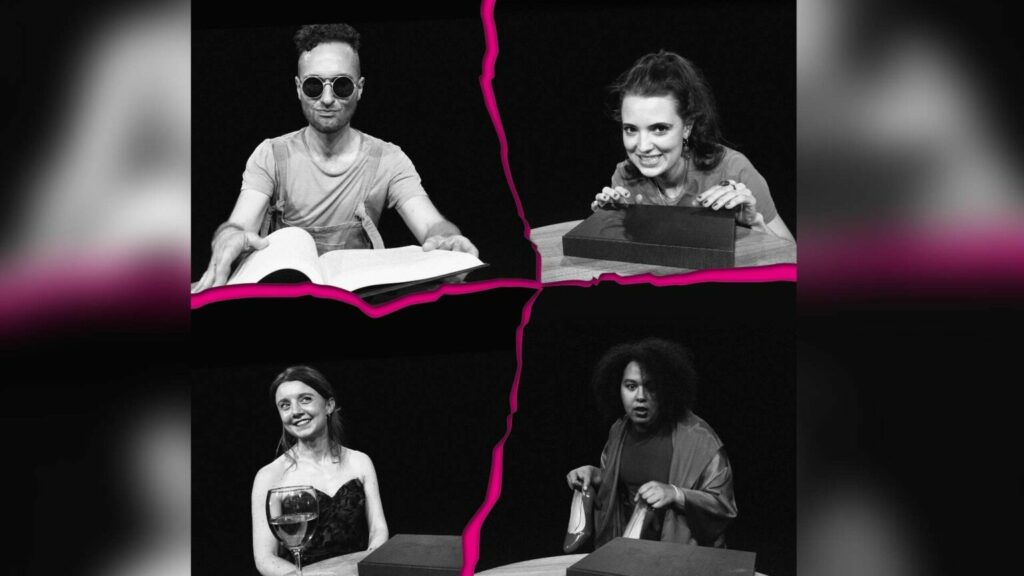
Review Curtain Up – Week 1, Theatr Clwyd by Alicia Jelley

Boy is it good to get back to the theatre, and new production ‘Curtain Up’ at Theatr Clwyd certainly didn’t disappoint!

it took me back to my A level Drama days with it’s intimate theatre in the round setting. 5 short plays commissioned during Lockdown, with 10 different actors, playing different roles and using props selected by audience participation. Very random but added to the comedy highlights!

You could see the sheer joy the actors got out of performing again and it felt quite emotional to see them do their thing and applaud their efforts after such a troubling time for all artists.

Curtain Up will be at Theatre Clwyd until 4th September, with each week a different 5 plays being performed by different actors and of course different props, meaning you’ll get a new show every time! If you love old school dramatics, you’ll love this!

An Interview with Francesca Goodridge, on Curtain Up at Theatr Clwyd, conducted by Gareth Williams

Curtain Up is a celebration of creativity, live theatre, and Welsh talent.

Over the course of three weeks, three companies, comprising of ten actors each, will perform 15 new plays – five each week – by 15 Welsh playwrights. That’s 15 voices with 15 very different stories to tell.

Associate Director Francesca Goodridge took some time out of her busy schedule preparing for week one to tell us a bit more about this exciting new project from Theatr Clwyd.

How would you describe Curtain Up?

It’s like a conveyor belt of theatre. So we start week one with a group of ten actors who work on five new plays, about 10-15 minutes long each, written by five playwrights who were specifically commissioned for this project. They have one week of rehearsals, one week of tech, and then open the following week. Meanwhile, during their tech week, a second company of ten actors come in and start rehearsing another five plays, with the third group of ten actors coming in to rehearse another five plays a week after. So that’s 15 new playwrights that have been commissioned for a project involving 30 actors in total.

How did the idea first come about?

It was borne from a series of conversations that Tamara (Artistic Director) and Liam (Executive Director) were having during lockdown with freelancers. They just asked, ‘What can we do to support you guys? What do you need?’ and the general consensus was that creative people can only live when they’re being creative – we’re just such strange beings, aren’t we, that nothing else really feeds our soul – and so Tamara and Liam came up with this concept, this conveyor belt of theatre, which allows us to give as many freelancers as possible the opportunity to be creative. It gives 15 writers a paid commission to write something after what might have felt like an age; to write something that is going to be seen, and hear people saying their words. It gives actors a space where they can just play and learn lines and be silly again. And it allows design, stage management, lighting, all of these freelance jobs, an opportunity to use their craft again after so long; to be creative on a huge scale.

And I’ve heard there is an opportunity for the audience to get involved as well…

So not only do the audience have the opportunity to see five new plays each week but the really good thing about Curtain Up is that an audience member can come every night and see something different. We’ve cast it in such a way that two actors learn every role, and at the start of the show we “rock, paper, scissors” it to see which actor will do which show that night and what part they are going to play. (So that’s the fun and excitement we’ve really been missing; the chance to not just be creative in rehearsal but for that to still live and breathe in the production.) Also, the writers were asked to include an unspecified prop in their play so the actors don’t know what that prop will be. The audience chooses the props at the start of the night and the actors are only handed the prop as soon as the play starts so there’s some improvisation: they have to react differently, which can change the course of the play. It’s all about having spontaneity again and feeling that excitement of live theatre. Every night is super-charged because things change, props change, the costumes change, an actor might do the scene opposite one actor one night and then do the scene opposite a totally different actor the next, so every night it’s something different.

Has it felt like an explosion of creative energy being back on stage after so long?

I think everyone has felt the same, me included. On day one, going into a rehearsal room and thinking, ‘Oh my gosh, can I even do this anymore? I haven’t done this for so long. Can I still do this?’ But I feel so lucky right now to be sat on a stage, and it’s the same for the whole company, not just the actors but stage management too, to be able to do the things that we love and we’ve really missed. I think an explosion is a great way of putting it because I think that’s what it will feel like every night. It is going to be different; and I think, in a world where nothing really feels steady at the minute, it’s kind of nice to have that little bit of tension on stage as well, that little bit of no one knows what’s going to happen, and the excitement and energy that comes from that.

Was it a conscious choice to perform the plays in the round?

It was a conscious decision because it’s about bringing people together again and, ultimately, the reason why this project is so special is because we aren’t flying in sets or have a huge budget. What is at the heart of it is storytelling and actually hearing stories again, which is what I’ve missed so much. I think being in the round is so much like sitting around a campfire and telling a story – that is where we come from and how we tell stories. It also allows the actors to have real fluidity. They can move; and with it being double cast, it opens the space and it becomes like a big playing field for them. We want the audience to feel like they’re in this bubble and to feel like we are all united again in being together.

How important do you think it is that there is such a diverse range of writers with such a diverse range of stories to tell here?

You can’t tell a story the same, and what is so exciting about this is having five stories from five writers with five different backgrounds – totally different people, totally different identities, with totally different upbringings, from totally different homes – so every single play is different. One of the plays is set on a spaceship, for example, and then for another we’re in someone’s living room. And that is the beauty of theatre: that we are transposed from place to place and we totally believe that. It’s so imaginative.

But though each of the play’s are different, each of the five writers was given a theme – so the first one is new beginnings, the second is finding feet, and so on – so that every night has got an arc that will take us through the night. So although the audience will see five different stories each week, they will have gone on a journey on the night through these themes. And to add to the diversity, we have some Welsh language stories too, which was a bit of a logistical challenge to make sure that four of the actors were Welsh speakers, but it’s been really great to have these Welsh language plays as well and to have Welsh language theatre included. I know that this was one of the most important things for Tamara and Liam, to make sure that it was truly diverse and was championing many different voices in Wales.

How excited are you about the writing talent coming out of Wales at the moment, and the opportunity that something like this affords them?

The thing that excites me most is working with a writer and sitting down to work on a new play and having that seed of an idea and seeing it through. It is one of the best things in the world. But aside from these sorts of opportunities, what Curtain Up has done is given 15 people a chance to write – how many of these writers may have come out of lockdown and lost their love for it, or not had the opportunity to do it, or were working elsewhere and had no time to fit it in – so as much as it’s about wanting to commission new writers, it’s also about giving people time and space to just write, without them feeling like they have to come up with anything. Yes, this is a commission, but more than that it has given them a bit of time and a bit of space to just do what they love. If that then ignites something in them to then write something else, great. But it’s about letting people have time and space to just do what they love without having to produce something all the time; where there’s no pressure to write. That’s hard when it’s something you might be doing alongside another job because you need to live. So, yeah, I think more of that would be great because that is where some of the best work is made, when there’s no pressure to have something in by a deadline, as you can make what you want when you have time and space.

Click here to find out more and book tickets.

Conducted by
Gareth Williams

Theatre, A Lifetime of Great Memories by Kevin Johnson.

We recently published a new article on the return to physical Theatre performnces. In response to this article Get the Chance critic Kevin Johnson shares Theatre means to him.

Theatre was never part of my life growing up, only books, television, music & cinema, and the nearest one was ten miles away. Then one day I read in a newspaper that Ben Kingsley, who’d just won the Oscar for Gandhi,  was going to do a one-man show in London. For some reason I decided that I wanted to see that. A trip to London back then wasn’t simple, tickets had to be booked either by post or over the phone, months in advance in the days before the internet, and it meant an overnight stay, but luckily I had family there, so at least I didn’t need a hotel. I couldn’t have picked a more intimidating venue for my first play: The Theatre Royal Haymarket is the third oldest in London, built in 1720, and unlike most theatres in the capital which are huddled together in busy streets, it stands alone on a major thoroughfare, giving it plenty of space to be appreciated. This was due to a massive renewal scheme in 1820 sanctioned by the Prince Regent and overseen by architect John Nash. The buildings on either side are painted white, and although not part of the theatre itself they make it look much bigger than it is, while six giant Greco-Roman columns hold up a portico above the door like a temple. Inside it is even more intimidating, with murals on the walls and ceiling, and the main colour throughout is gold.

The Haymarket is on the upper scale of London theatres, both in its appearance, capacity  and in the quality of plays and actors performing there, and this permeates most aspects of the venue. During the interval, for example, as well as drinks from the bar, staff roam around with trays offering small bottles of wine and champagne, and the programmes for the plays are the classiest I have ever seen: the covers are a shiny black with the names picked out in – what else – but gold. 

The play was based on the real 19th century actor Edmund Kean, who had also appeared at the Haymarket in his heyday. He was an actor of great renown, both for his talent and also his scandalous lifestyle. The poet Coleridge said that watching Kean act was like “reading Shakespeare by flashes of lightning”, for me, watching Ben Kingsley act was similarly mesmerising. I had always liked comedy, and there was plenty in this play, but what I had never experienced before was the sheer weight of silence, the heaviness of pause that a great actor can bring to a performance.

It wasn’t just me, the whole audience was enthralled, and you really could have heard a pin drop. That was the moment I became fascinated by the theatre, and I still am. It has brought me so many incredible memories over the years.

I was soon a regular at my nearest theatre, the Grand in Swansea, which actually has a bigger capacity than the Haymarket. The ‘Royal’ in its name I later found out meant that the theatre had received a licence from the reigning monarch to perform serious drama, whilst others could only perform lighter plays, comedies and variety.

The Grand has a pedigree too, founded in 1897, and I’ve seen many amazing moments there: Timothy West in Death of a Salesmen holding a whole audience in the palm of his hand. Other great memories include Anthony Hopkins in Pravda at the National Theatre doing an entire play with his voice in a much deeper, gravelly tone than I would have thought possible. His two Oscars notwithstanding, he is one of the finest actors I have ever seen. The National Theatre of Scotland touring with Black Watch at the Barbican, a play about the Scottish Regiment in Iraq, with songs, routines, even a mime, seemed to have everything but the kitchen sink yet was phenomenal, and one of the best live shows I’ve ever seen. Billy Piper in Yerma at the Young Vic, giving one of the greatest portrayals of human pain and the desire to be a mother ever seen onstage: Sophie Melville at the Sherman in Cardiff in Gary Owens’ Iphigenia In Splott, a searing one-woman monologue which put her in direct competition with Billy Piper for the Evening Standard Award.

But ironically the best play I’ve ever seen occurred much closer to home than any of the others, in fact I was even a member of the cast: that was The Passion in Port Talbot. Performed over three days in Easter 2011, it was a passion play with a cast of nearly a thousand locals, a small band of professional actors, and Michael Sheen in the lead. It had an audience of nearly 20,000 in total, plus many more watching online, and was described by the Guardian as ‘one of the outstanding theatrical events not only of this year, but of the decade’. Sheen co-directed it with Bill Mitchell of Cornish company Wildworks, and they did an award-winning job. Written by Welsh poet Owen Sheers, it was simultaneously filmed as ‘The Gospel of Us’.

So if you haven’t already, give theatre a try, you may be as pleasantly surprised as I was and it could lead to a lifetime of great memories.

Get the Chance supports the public to access a world of cultural provision. We receive no ongoing, external funding. If you can support our work please donate here. All and any contributions are greatly received, thank you.

Kevin Johnson