If i’m entirely honest, I couldn’t spend time on a spin bike for more than 10 minutes, let alone 1 whole hour and while acting as well.
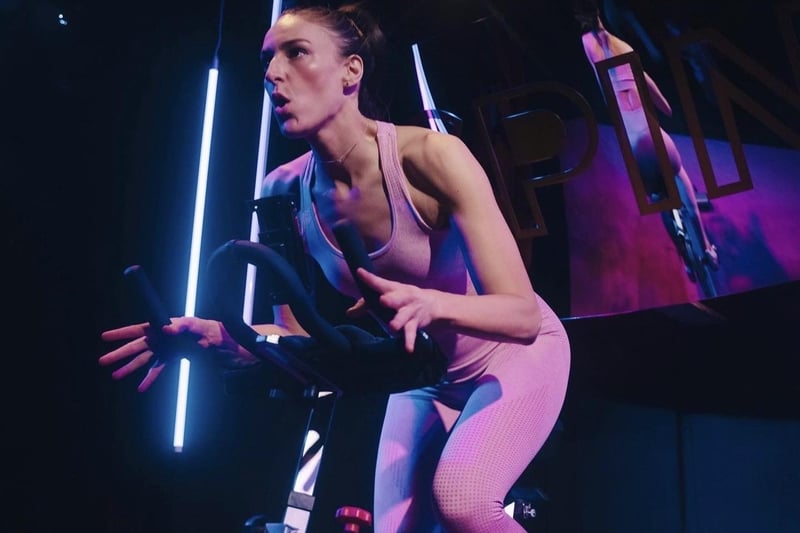
This is what makes Spin so unique. This one hour production, based on eating disorders, the social pressures of bodies, particularly female identifying bodies and the influence we can have on each other, comes from the point of view of one person who has (in her opinion at the start) changed her life around to become a spin class instructor. During this time, 80-90% of the production is this one performer constantly on a spin bike, lacking sweat and not missing a single breath. This is commitment and talent.
This monologue features information on her past, her own eating and fitness journey, the impressions enforced on us from the media, on her and her sister that anything that isn’t thin is wrong and disgusting and we see her almost convincing herself that what she is saying, is what she believes. But we know it isn’t, and so does she. We witness her go through a turmoil of changing opinions, guilt and questioning of realism.
As mentioned previously, she manages to perform this on a spin bike and if not, she is up on stage, with every bit of power and action in her. If she has been drinking coffee, I for sure need to know what brand for that energy level. But of course, this is more than a caffeine hit; this is a well constructed level of fitness and performance talent to allow her to do both simultaneously.
The narrative, written by Kate Sumpter (also our performer) is very raw and honest. It touches on our own insecurities, no matter our body types, how judgemental we are without necessarily knowing that we are and how utterly influenced we are. I found myself questioning, as I always feel I do as a curvy woman, when performances, on stage or screen, talk about weight and eating issues and the performer(s) are a thin, beautiful person that I would love to be. And I caught myself, during the narrative she expresses of everyone judging bodies, doing the exact same, wondering what this person had to complain about. I checked myself and knew that what Sumpter had written, was emanating subconsciously within me. It isn’t a thought I believe, representing my own insecurities and realised very quickly that this production is hugely important in recognising that unconscious bias that we all have.
Spin is a tour de force of performance ability, physically and mentally and is extremely well written for anyone, female identifying or other, who struggles on the whole spectrum of body issues and influences from the media. It puts everything in perspective and makes you question your own subconscious.
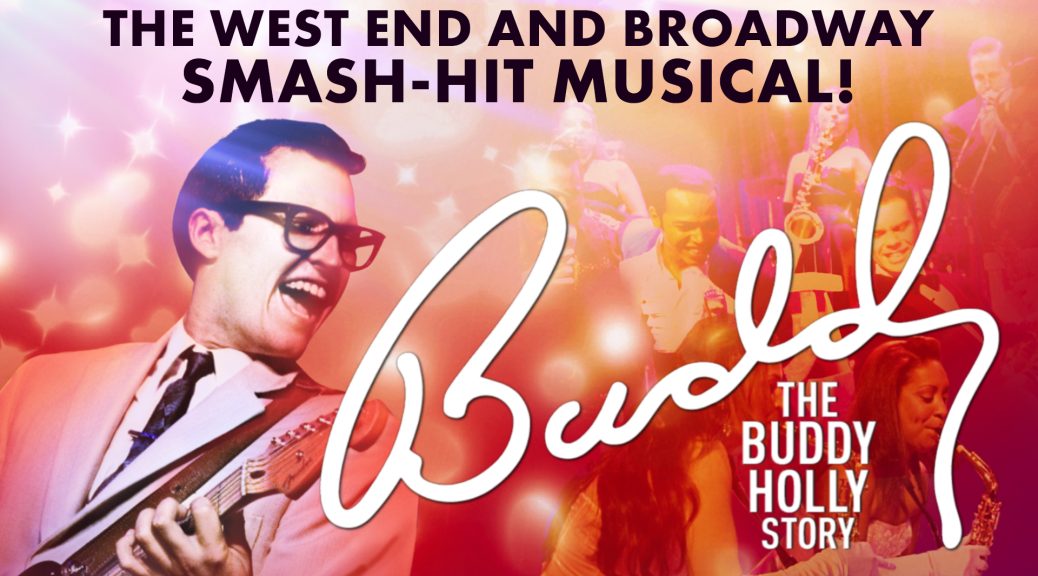
Get the Chance Community Critic Barbara Hughes-Moore speaks with AJ Jenks, one of the stars of the number one national UK touring production of Buddy – The Buddy Holly Story. Birmingham-born AJ trained in actor/musicianship at the Mountview Academy of Theatre Arts and has since gone on to play musical icons like Elvis Presley, Barry Gibb and Mick Jagger before taking on the role of Buddy Holly (which he shares with Chris Weeks).
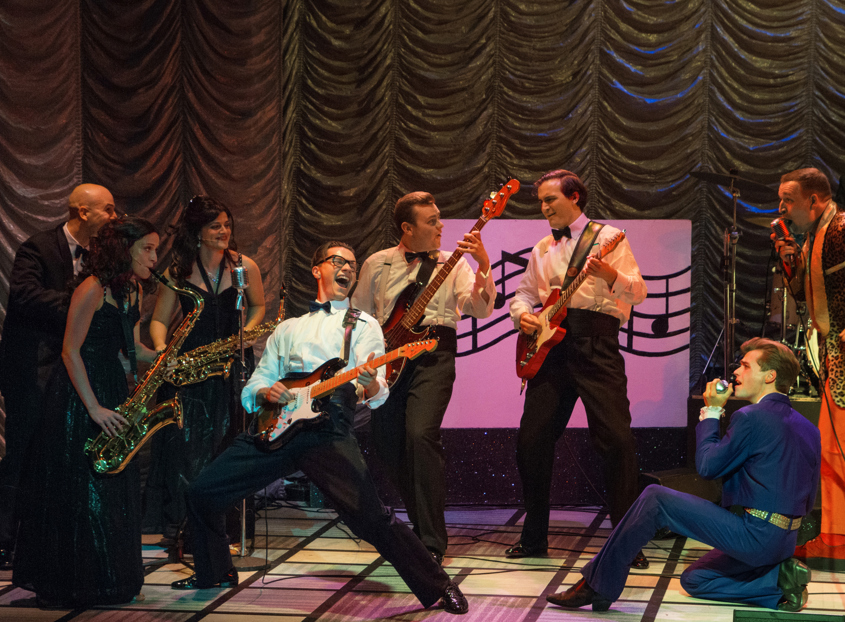
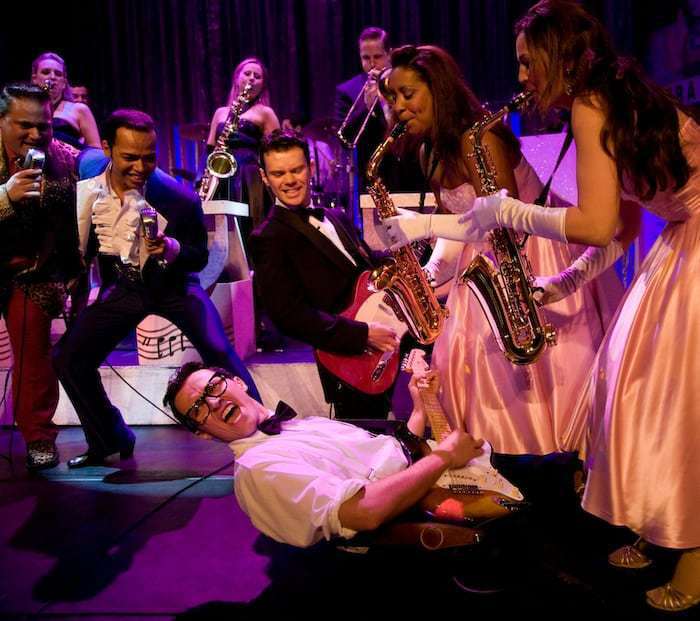
Buddy is one of just a few iconic musicals including Les Misérables, Phantom of the Opera, Joseph and the Amazing Technicolour Dreamcoat, Miss Saigon, Evita and Cats to reach three decades on stage. It follows the musical icon’s meteoric rise from his rockabilly roots to international fame and his legendary final performance at the Surf Ballroom in Clear Lake, Iowa, before his untimely death at the age of 22. In just 18 months, Buddy revolutionised the face of contemporary music, and would influence everyone from The Beatles to the Rolling Stones.
Featuring a super talented cast of actor-musicians, Buddy includes 20+ of his greatest hits, including the timeless classics That’ll Be The Day, Peggy Sue, Oh Boy, Everyday and Rave On. It also features classics from Buddy’s contemporaries, like the Big Bopper’s Chantilly Lace and Ritchie Valens’ La Bamba, as well as rip-roaring versions of Shout and Johnny B. Goode.
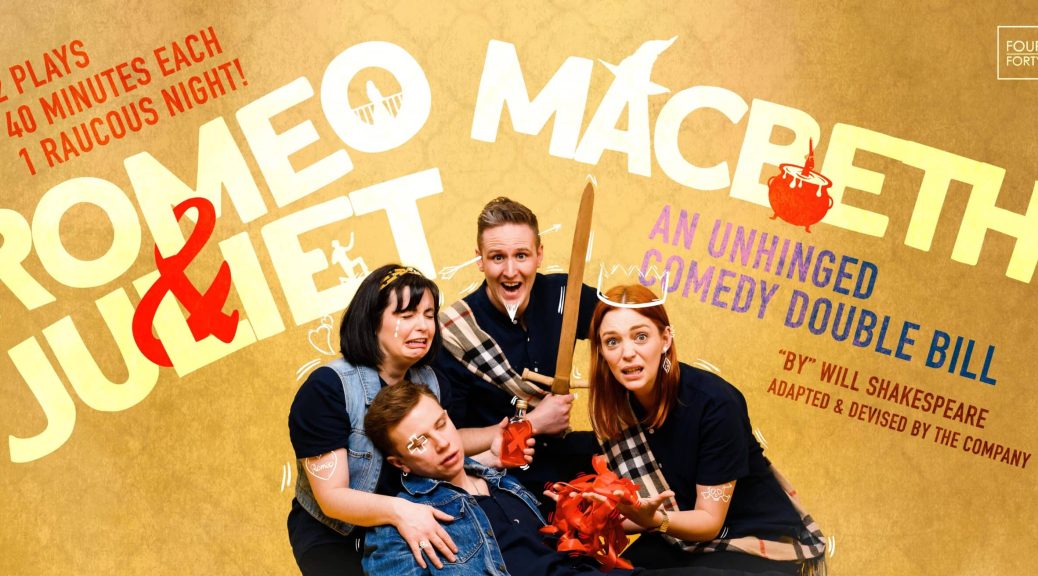
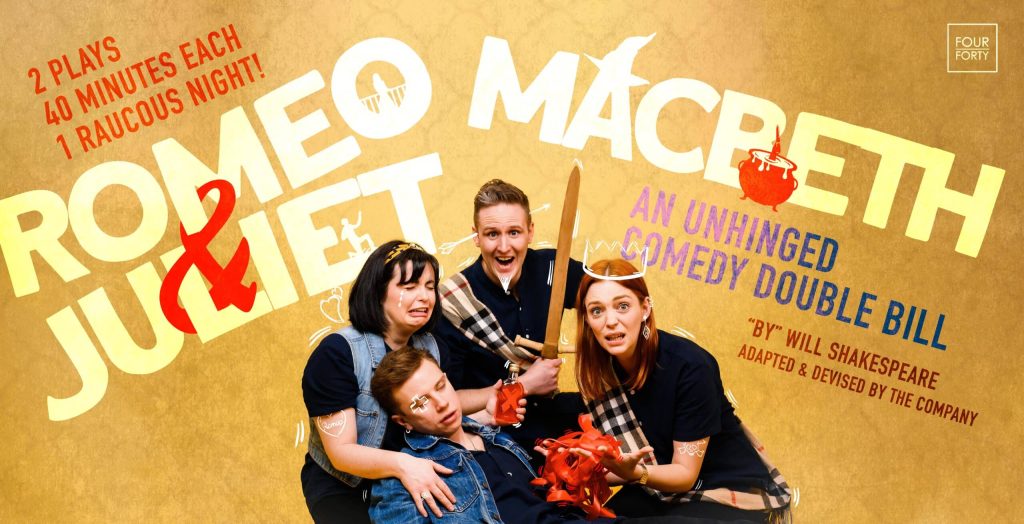
When I think of Shakespeare, the words that spring to mind are ‘funny, ‘witty’, ‘sharp dialogue’, ‘a roller-coaster journey’ and 440 Theatre certainly deliver on all of those and add a sprinkle of magic in their own unique and charismatic way.
Shakespeare is wonderful, but sometimes it can drag out a tad, with plays commonly being three hours or so. No so with 440 Theatre! They have taken something brilliant and offer the audience the highlights, with each play being just 40 (ish) minutes. Two Shakespeare plays and an interval for your ice cream in under two hours? Done and dusted!
A simple set, costumes and small cast of just four actors (Luke Thornton, Amy Roberts, Lizzie Robin and marvellously acted and directed by Dom Gee-Burch) brought us this, quite frankly, unique but highly effective take on the two well known plays. There was singing and guitar playing (a special mention to Roberts for her incredible voice and Thornton for bringing comedy gold to the songs), an abundance of wigs, a very clever use of umbrellas and gags-a-plenty, to make sure that the laughter didn’t stop. Gee-Burch was stand out in his various roles, never failing to be deliver hilarity, whether playing the friar, nurse or any one of the three weird sisters. His presence lit up the stage and he truly stole the show. His comedic genius shone through, and his timing was impeccable. Every single one of the actors gave their all and must have been exhausted by the end after maintaining such high energy and not faltering throughout.
First up, the tale of two star-crossed lovers, Romeo and Juliet; never was a story of more woe (and hilarity, true farce and an interesting case of rigor mortis!) and who knew it was all Pat’s fault? Pat, the character Shakespeare forgot to mention (you’ll need to go along and watch 440 Theatre to see how that story unfolds).
Swiftly followed by Macbeth – very obviously the Scottish play thanks to the tartan sashes, wigs and a hint of Taggart (‘there’s been a murrrrder!’). Brilliantly acted, traitorous goings on, dancing ghosts and full of farce. I particularly enjoyed the nod to the Tesco clubcard savings. Again, Gee-Burch shone in his many parts, particularly as the three weird sisters. Thornton’s reactions to them certainly demonstrated how the natural talent of Gee-Burch continually surprises and delights, even to his fellow actors along with the audience.
This is a surprising re-telling of Shakespeare that I recommend you experience for yourself. It is full of surprising comedy moments to catch you off guard and while that was mostly really good fun, it could be a little jarring if slapstick humour is not your particular cup of poison. Watch out for each death scene being milked to the absolute, well, death!
This is an exceptionally special, hilarious, speedy tour of two of Shakespeare’s arguably greatest plays. High energy and thoroughly good fun, a must see if you love the Bard (and especially if you yearn for slightly shorter renditions of the world’s greatest literary works).
Running time: Approximately 2 hours (including 15-20 minute interval).
(Please note this review features an overview of the productions plot)
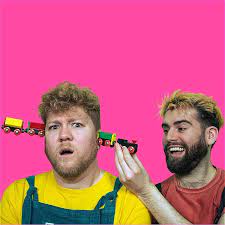
Choo Choo is a play that is said to give ‘an entertaining exploration’ about Obsessive Compulsive Disorder, intrusive thoughts and ableism. It is a collaboration between Nye Russell- Thompson (writer and performer), Nerida Bradley (writer and director), and is co-written by Duncan Hallis (also performer) and Tafsila Khan (also assistant director).
Before the play, you could hear owls hooting and snoring, you could see a character seemingly sleeping stage right (Laura Goulden, one of the BSL interpreters, I found out later), a yellow chair and a red chair on either side of a small table in the middle, a small radio on top, and some cubed lights in the background- the amount of lights not evenly shown so perhaps this could give us a sense of uncomfortability from the start.
The start of the play saw two characters (Nye and Duncan, one dressed in a yellow top and red dungarees and the other dressed in a blue top and yellow dungarees) come on, yawn, and start their wake-up song. There was a lot of comedy in this play, even from the start, and the characters seemed a bit childlike, although they lived together and they discussed darker themes of intrusive thoughts, being that the basis of the play was Nye’s character was getting thoughts about killing his best friend. There was repetition in their daily routines and rhyme in the song, and they played games with each other all day, from the radio. On the other hand, there was also a lot of darker, adult themes with pregnancy, dying, violence, game/ talk shows (that included audience participation!) and more. The story saw them going through the day, playing games, Nye getting intrusive thoughts, singing the same song the following day but Nye doesn’t feel as happy as normal because of the intrusive thoughts he had last night. Then playing a game as a talk show getting requests from listeners/ audience members, and Nye gave a request to Duncan disguised as an audience member, to explain his intrusive thoughts and what should he do about it. With Duncan then replying saying he was a bad person and he should feel guilty etc, which made Nye feel even worse.
There is radio static at home before they go to bed, of Nye hearing a train get louder and the lights getting brighter, before the new day, which is the day that they are supposed to go on holiday together. Nye doesn’t want to come (he has been trying to isolate himself because he doesn’t want to do anything to hurt Duncan) and so Duncan goes to the train station (for the holiday) by himself, and the train is delayed. The Transport for Wales announcement tells him about intrusive thoughts and OCD, and how his friend is feeling, and then Nye appears at the station. Nye and Duncan hold onto each other over the platform edge, as Duncan is reassuring him that Nye won’t hurt him. They end the show by demonstrating how intrusive thoughts are okay to have, and you shouldn’t be scared of them making you be a bad person, because they are just thoughts, and we are not our thoughts. This is shown through them saying an intrusive thought, like putting the iron over your hand, pushing someone over the edge of the train platform, and the audience would clap if they had ever had that thought.
I enjoyed that there was a lot of comedy in the show and it was light-hearted when Nye wasn’t worrying about hurting his friend, but I didn’t see how it was about ableism and linking to OCD. He was starting to isolate himself, not leave the house, and I can see how intrusive thoughts link to OCD, about how people with OCD can think that they have to do certain things otherwise bad things will happen to people they love, but I don’t see where that fits in, in the show. It had promising writing, but the themes weren’t hard hitting in my opinion, as compared to the other shows I have seen and reviewed were I felt affected and emotional coming out of it.
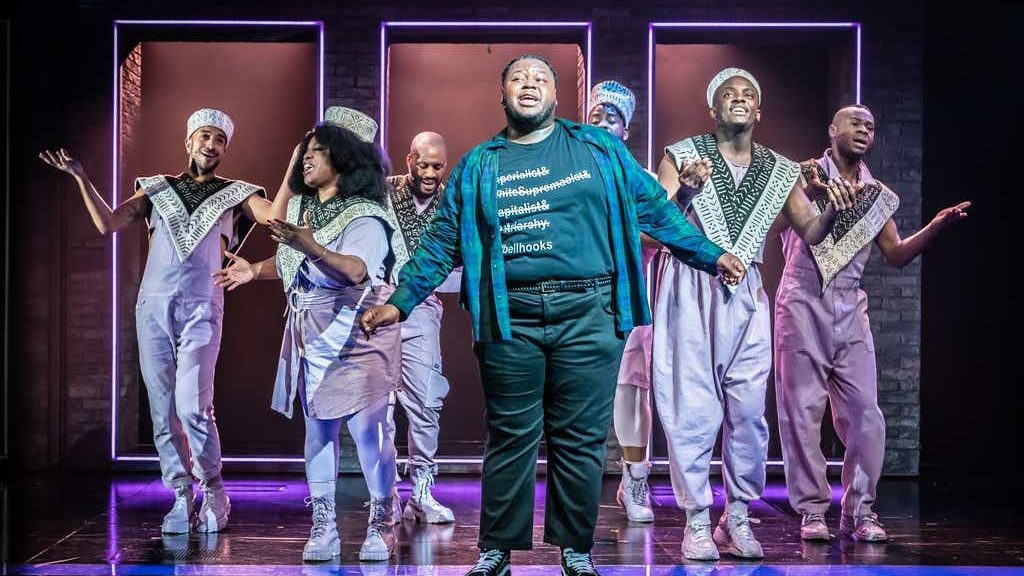
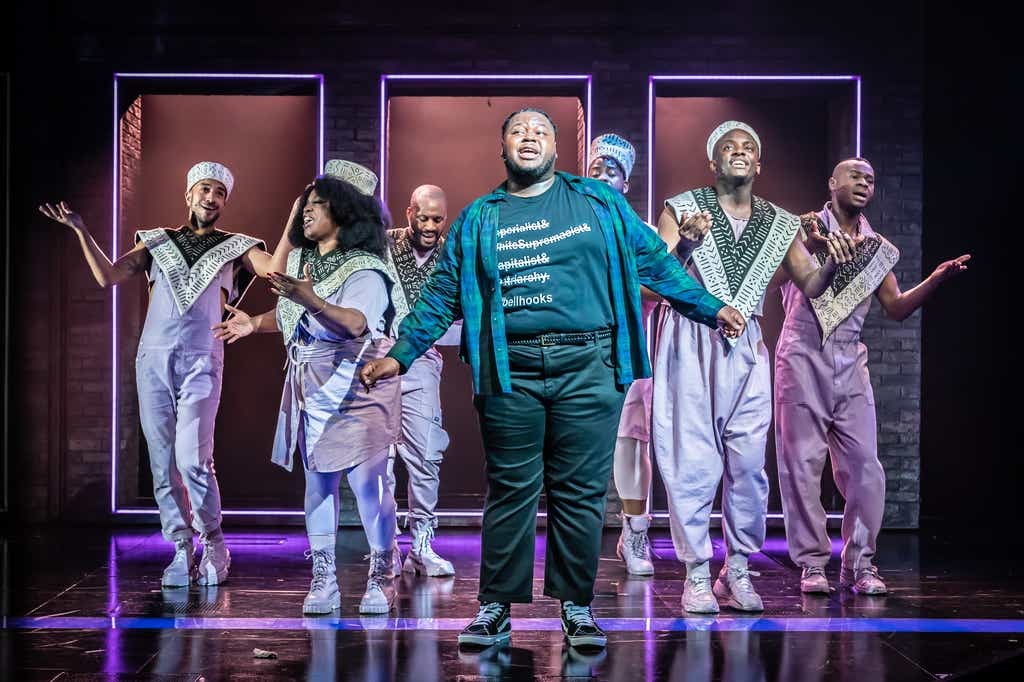
The Barbican is ablaze with a new musical offering. A Strange Loop remains an unforgettable encounter, leaving many fine images and tunes in the brain. The songs by Michael R. Jackson are packed into this show, no interval and no prisoners here. Our leading man Usher, is his namesake at the theatre putting on The Lion King. As a young, black, gay, overweight male, he tries to find his way through and writing musicals is his escape, his passion. Yet, can Usher make it as a musical master?
There is a lot going on in this show, many themes tackled and many relatable moments for a lot of different people. Usher is very sweet as a character, down trodden by his fellow gays, snobs, family and more. A wonderful ensemble of singers dubbed his ‘Thoughts’ loiter around the stage and fill him with insecurities. Said ensemble are just one of the many highlights of the show, I’m thinking back to the outrageous musical number where black figures from history come to haunt Usher: Maya Angelo, Harriet Tubman, James Baldwin, aside an embodiment of 12 Years A Slave, clutching an Oscar. The show does have many shocking moments, never shying away from sexual, racist and homophobic bursts that left us all upset.
Director Stephen Brackett has made a wonderful production, fabulous use of the stage. I’ve yet to recover from the head turning finale scenes featuring gospel, a 80s style sitcom and even a funeral. Amazing how honest we hear truths about the parental figures in this story, the lack of support for Usher as an artist and as a gay man. Some of these songs are so catchy that I cannot even sing them now due to the context within.
The show very much belongs to our Usher: Kyle Ramar Freeman. Hardy ever off stage and with great comic timing, I was taken so much with how endearing the role is. You need a great voice and even bigger theatrical presence, Kyle does all this and more with aplomb. His brings these truths out to the role, the exhausted, bottled up emotions exploding at the end were majestic. His turn as the gospel preacher was another sensation.
This was a surreal, outrageous thrill that needs to seen at once.
A Strange Loop continues at The Barbican till 9 Sept 2023.
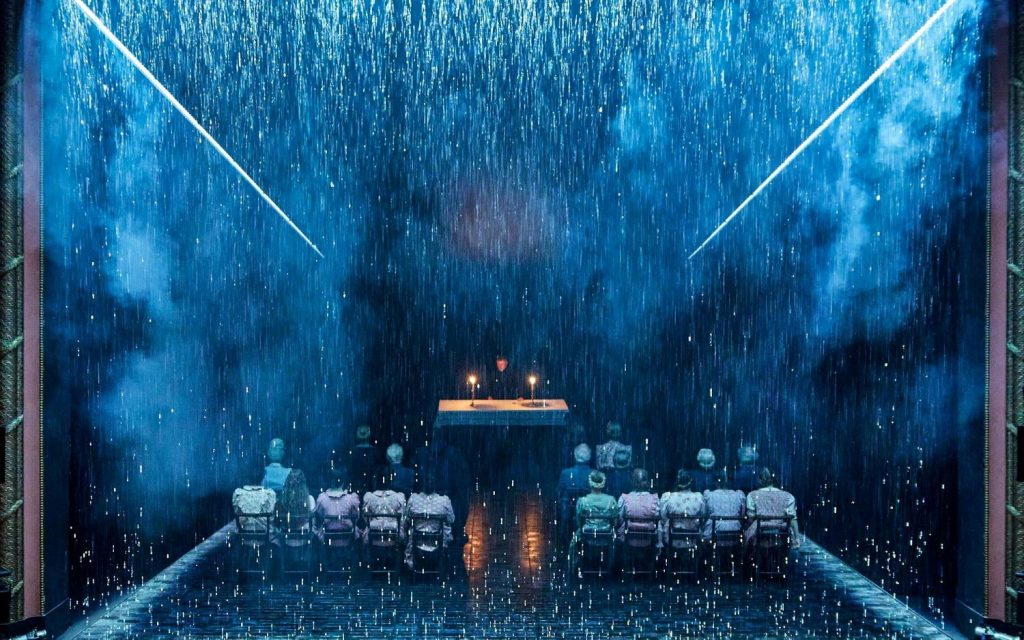
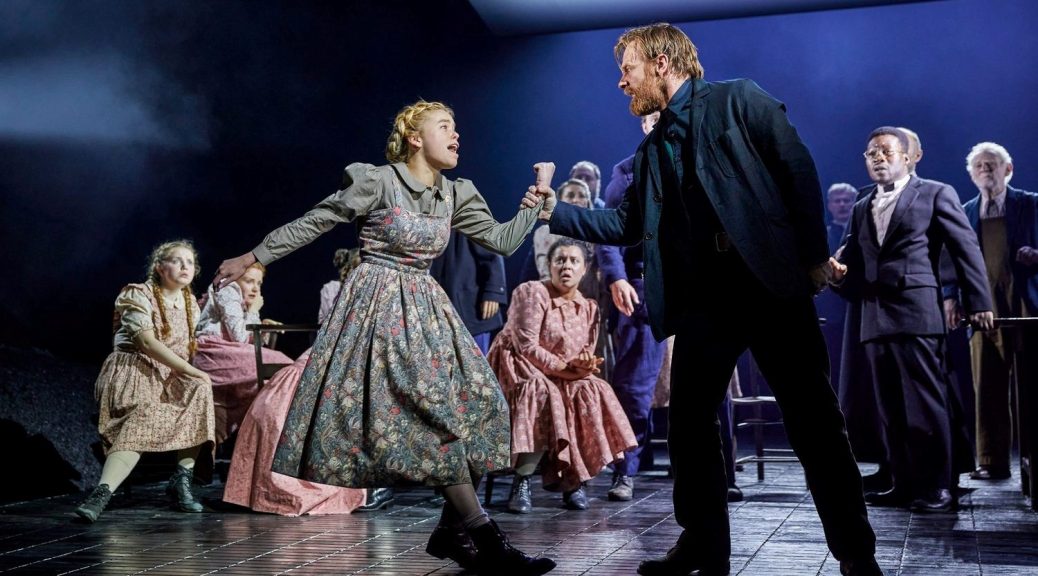
Lyndsey Turner’s version of Arthur Miller’s masterpiece of 20th century theatre will not be underestimated. There is a striking use of lighting thanks to the talents of Tim Lutkin, who wants to expose these characters at every angle. The stage is often alight, a large screen above the stage mimics a Rothko abstract. Perhaps the most showy thrill of this hot shot show is the water feature. Rain treacles down the front of the stage, no doubt the first few rows were in the splash zone. Its gimmicky and it’s real meaning may be contested, but I have much praise for this production.
The soft ambient drones thanks to the work of Tintying Dong and Christopher Shutt are the ever present vain throughout. The girls of the village offer further effective vocalising passages to add to the exquisite broth, another acoustic thrill. The atmosphere is heightened thanks to this and the music of Caroline Shaw also adds to this remarkable story. The actors at the start remind us of the context of the play’s creation: Miller mirroring the Salem Witch Trials with the ongoing attack from Andrew McCarthy in the ever increasing anxiety about communism in American life. Miller weaves a fine tale, facts mingle with dynamite theatre, there is never any disrespect here. The show is therefore set in the time it was written to hammer this truth home.
The Crucible remains a fine example of how not to be in a community. Its is the indulging of gossip, conjecture and hatred for the fellow man that sees these events play out. Faith and delusion intermingle and the threat of the devil and his effect upon people. Yet who has seen what? Are they really servicing the devil himself? The play skillfully used old timey English language without being too archaic, we hear and understand these characters clearly.
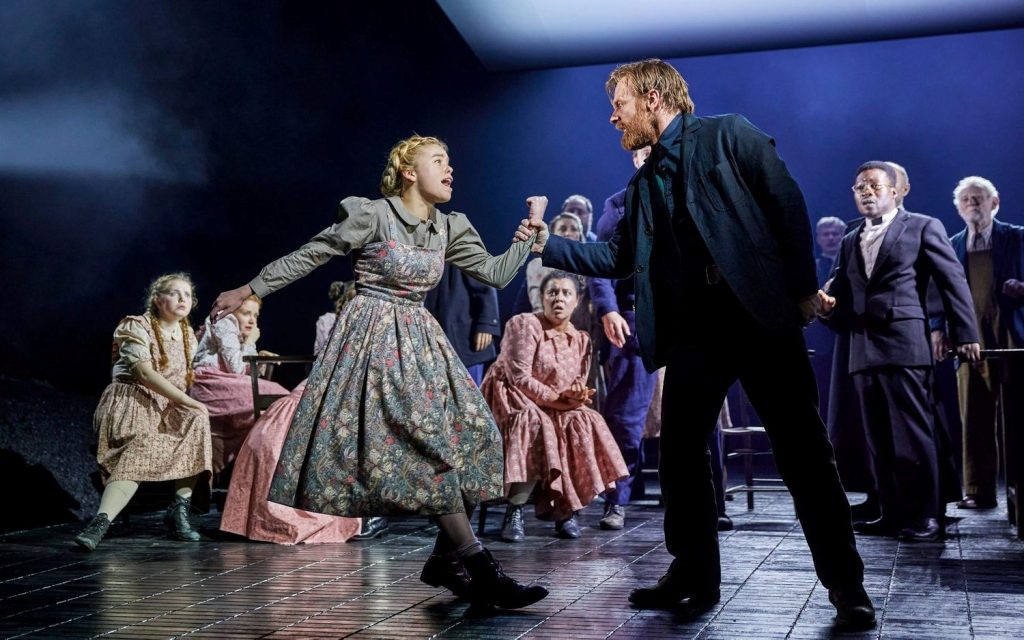
A remarkable cast, stun in a list of names as long as the village. Too many to say, but Nick Fletcher does well as the annoying Reverend Samuel Parris who potter’s about lost in his own pomposity. Milly Alcock is a resounding Abigail, one of the girls accused of dancing naked in the woods. Many Irish and English accent float around though Milly’s give wonderful across the pond pipes and her convulsions were immeasurably disturbing. Brian Gleeson has a lap of honour as John Proctor. This saintly figure, who fights for his wife Elizabeth aside his problematic role with Abigial.
Elizabeth is Caitlin FitzGerald, the tall, blonde presence who was hardly involved in any of the witch implied antics. I love her resilience in the face of terror. Giles Corey was a grand Karl Johnson, who get good laughs and offers great insight. Reverend John Hale is Fisayo Akinade, the serious and effective role who on the quest for truth, finds horror instead, as many girls and women are tried for witchcraft with the sentence being hanging. My favourite role was Matthew Marsh as Deputy Governor Danforth. I was awash with goose bumps for the tense trial scene and Marsh is a jammy voiced, highly intimidating figure and simply gloria in the role. Also how the quest for truth, though still extremely biased. I’ll say sorry now for not going into all the great acting in this show.
Just go and see it.
The Crucible is at the Gielgud Theatre till 2 Sept 2023.
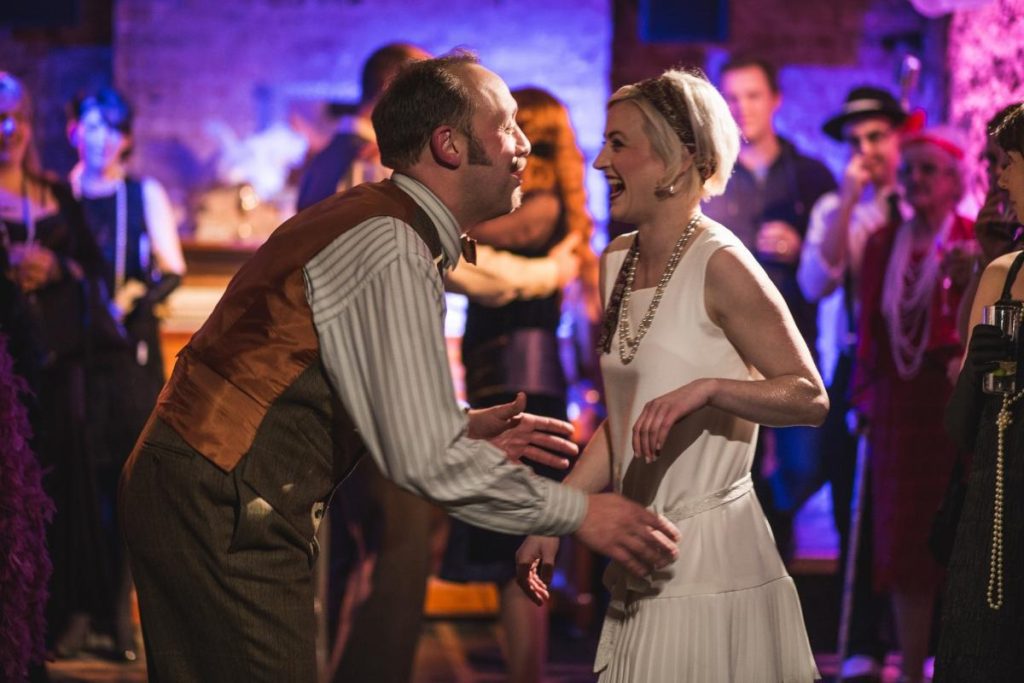
The Great Gatsby is an immersive performance that truly takes us back in time to the rip-roaring 1920s and is made exquisitely unique by taking place in the derelict Dolphin Pub, within Mold itself. From the moment you book your tickets at ‘Gatsby’s Drugstore’ you know you are in for a real treat.
Photo Credits Sam Taylor
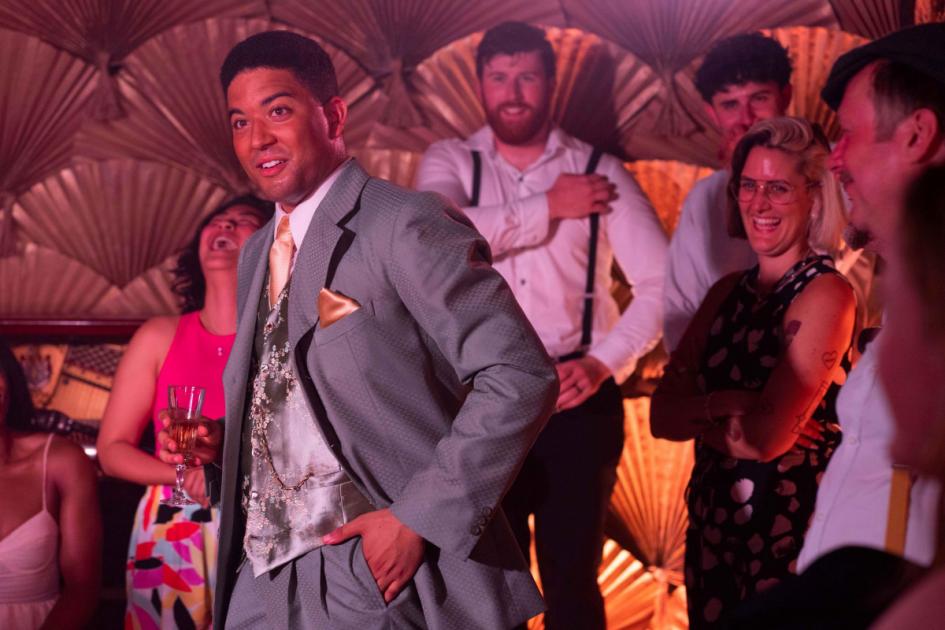
Upon arrival, you are welcomed to the party and when you enter the venue, you feel as though you have stepped from the 2020s, over a magical threshold and back into the 1920s. Warmly greeted by music and the characters, who are already singing, playing the piano and coming round welcoming you to the party! Casually chatting, introducing themselves, all with a drink in hand and a smile on their face. This interaction was wonderful and I loved chatting with Carroway, George, even being offered to be looked after by Gatsby himself, during the interval. It was unique and thrilling, adding to the immersive element and making you feel as though you were surrounded by the story.
Theatr Clwyd invites you to the best roaring 1920s party ever and they are certainly not wrong! We are instantly immersed into another way of life and are taken on a journey that makes us pine for an era long gone. Seeing the forbidden love story between Daisy and Gatsby unfold, through the eyes of Carroway, there is plenty of fun, dancing and singing to be had. But behind the glitz and the glamour, we see that there are cracks and the problems that we experience today were the same then; cheating, lying, falling in love with the wrong person at the wrong time. The second half builds the tension and culminates in the dramatic conclusion that F. Scott Fitzgerald intended of his Great Gatsby tale.
The cast are simply magical, from Hammett, playing the most likeable Carroway I have ever seen, leading us through the story, introducing us to his cousin Daisy, played delightfully by Bethan Rose Young, her beguiling husband Tom (Troy Marcus Richards), the vivacious Ms Baker (played perfectly by Seren Vickers) and the charming Gatsby himself (Richard McIver’s captivating performance, hitting peak levels of suave).
Hammett is word perfect, despite his lengthy dialogue, and utterly delightful in the role, charming the audience, almost as much, but not quite, as Gatsby himself. McIver is sophistication itself, with his immaculate costumes, piercing eyes and facial expressions, and his interaction with Young. Together, they are mesmerising as Gatsby and Daisy, their delightful chemistry perfecting the romance that we all yearn for. Making it all the moreheart-breaking when Gatsby is revealed to have told a few untruths of his own. Young does not just play Daisy, she is Daisy, delivering her lines in the most achingly beautiful and emotive manner, my heart almost shattered when she uttered ‘I’m glad it’s a girl. And I hope she’ll be a fool – that’s the best thing a girl can be in this world, a beautiful little fool’. A special mention too for Bevan and Blainey, who play husband and wife, George and Myrtle, who are key characters in the story. They are a constant and hold the link between the audience and the rest of the cast perfectly, whilst singing, dancing and playing the piano delightfully. Each and every one of the cast gave their all and embodied their characters, increasing the intensity of the immersive nature of the evening.
The set is simple, the derelict pub is obviously, well derelict, with its exposed brick, however, it is dressed up and completely altered, very cleverly, with drapes, a couple of pianos and superb lighting. It is instantly believable that you are in a dance hall one minute, the boudoir the next, or helping Daisy make life changing decisions in her bedroom the moment after. Whilst the action takes place over three floors, there is no obligation and accessibility is kept in mind throughout, with no fixed seating, but chairs dotted around and theatre staff on hand to assist. There are also performances to choose from that are signed and audio described, along with touch tours. There is no need to be nervous of the interaction, it was a perfect balance of being involved, but not putting anyone into an uncomfortable situation.
1920 dress code is encouraged, but not a must, pop on your pearls and dancing shoes, grab a prohibition cocktail from the bar and be ready to meet the Great Mr Gatsby himself and have a sublime evening, one that will stay with you for a very long time to come. The most refreshing and fun theatre performance I’ve witnessed (and been part of!) and I left feeling like I had truly experienced one of Gatsby’s decadent and extravagant parties!
The Dolphin Pub, Mold
Wed 28 Jun – Sun 27 Aug 2023
Authors: Director: Amie Burns Walker Associate Director: Fiona Kingwill Set and Costume Designer: Heledd Rees Assistant Director: Juliette Manon Choreographer: Holly Beasley-Garrigan Casting Director: Polly Jerrold Musical Director – Alex Wingfield Accent and Dialect Coach: Mary Howland Lighting Designer: Rachel Sampley Safeguarding, Inclusion and Consent Consultant: Bayley Turner Sound Designer: Phil Grainger Wigs, Hair and Make up: Noah Ehrhardt Fight Director: Lucky 13 Action Cast: Siobhan Bevan – Myrtle Huw Blainey – George Jack Hammett – Nick Richard McIver – Gatsby Troy Marcus Richards – Tom Seren Vickers – Jordan Bethan Rose Young – Daisy
Running time: Approximately 2 hours and 30 mins (including 10-15 minute interval).
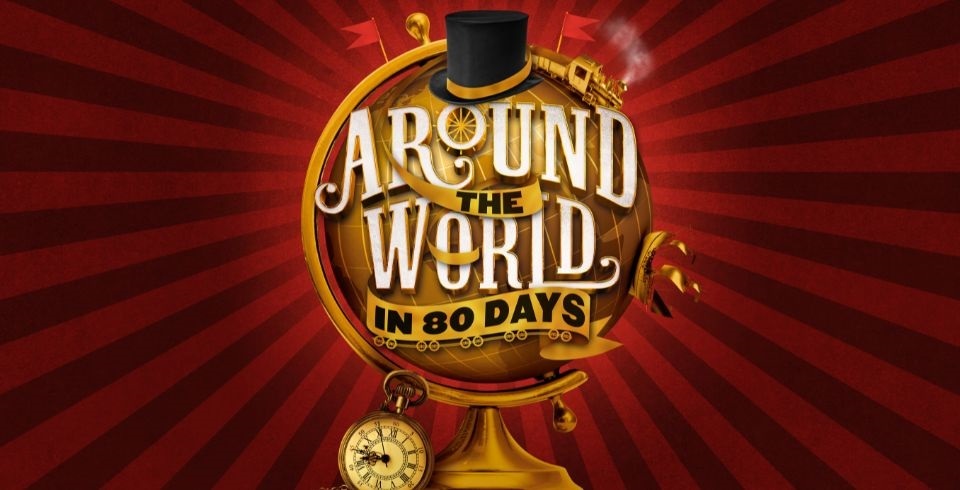
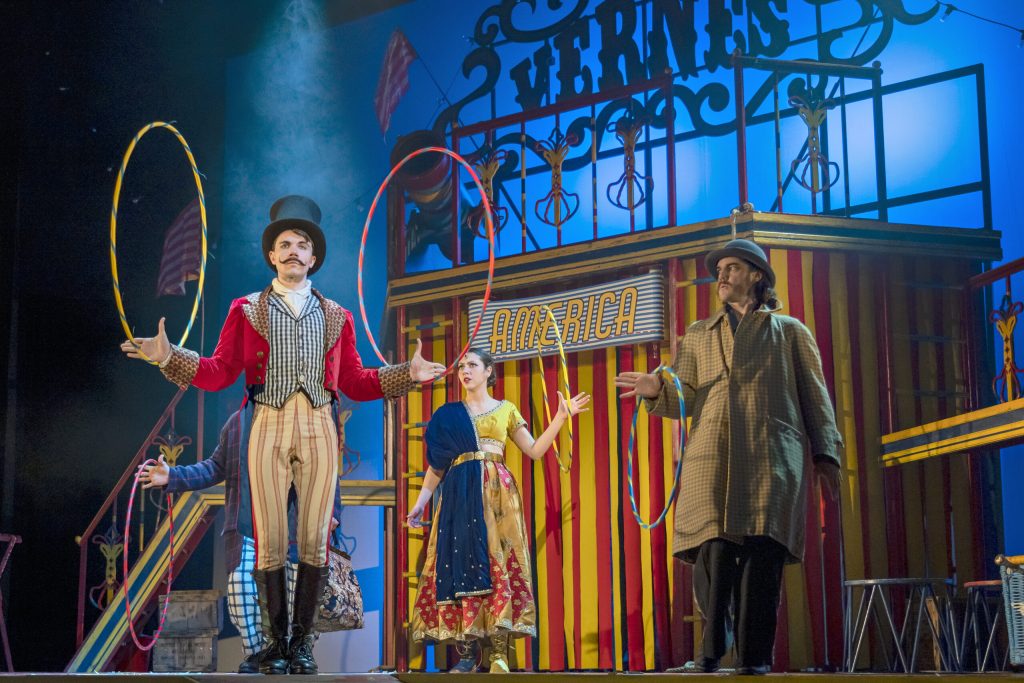
150 years since its publication, Around the World in 80 Days is a story that continues to inspire and entertain us. Jules Verne’s classic tale of Phileas Fogg’s quest to circumnavigate the globe has been adapted multiple times in films, TV series and video games. This new version, adapted and directed by Juliet Forster for Tilted Wig and York Theatre Royal, adds a new spin on the material that brings a sense of energy, anarchy and fun for the whole family!
The cast of Around the World in 80 Days
A versatile and talented cast of five play circus performers trying to stage a (rather chaotic!) rendition of Verne’s Victorian-era novel. The quintet of actors, acrobats and puppeteers play multiple roles, such as Alex Phelps who deftly plays both the finicky Phileas Fogg and the beleaguered Ringmaster trying to keep the whole thing together. The antics have shades of Mischief Theatre’s The Play That Went Wrong, making it an ideal introduction to theatre for kids and families.
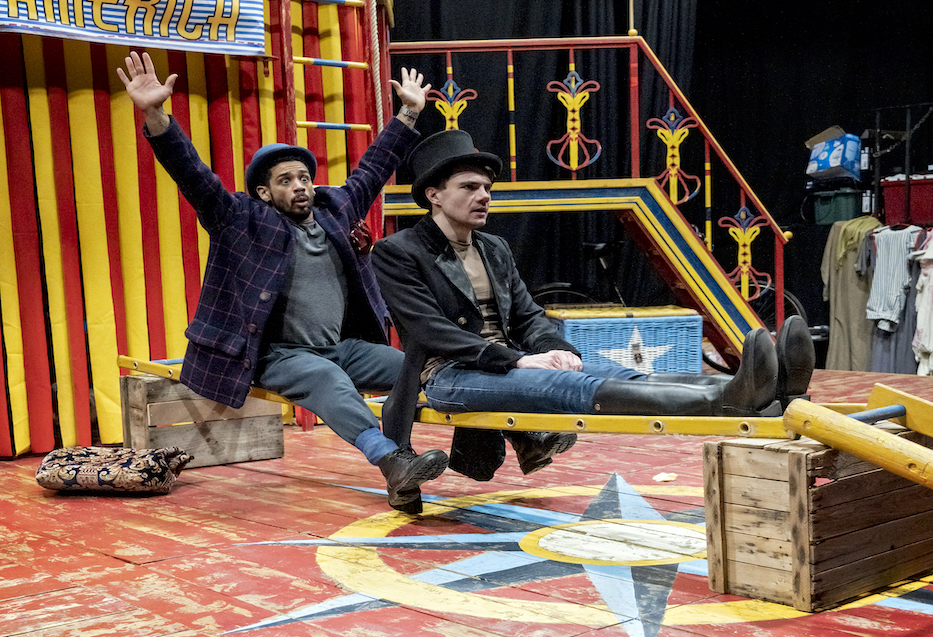
Genevieve Sabherwal, Eddie Mann and Katriona Brown in Around the World in 80 Days
The cast are on top form, bringing zeal and panache to a well-trodden tale. The show features a number of well-choreographed and excellently performed circus acts, including fight scenes, dance scenes and a standout battle over a see-saw that must have been far easier to perform than the actors made it look. While the first act lacks some pace, there is a zesty creativity to proceedings that keeps things chugging along, with puppets and props used to convey train journeys, elephant rides, and a tipsy tussle between Inspector Fix (Eddie Mann) and Passepartout (a hugely lovable Wilson Benedito).
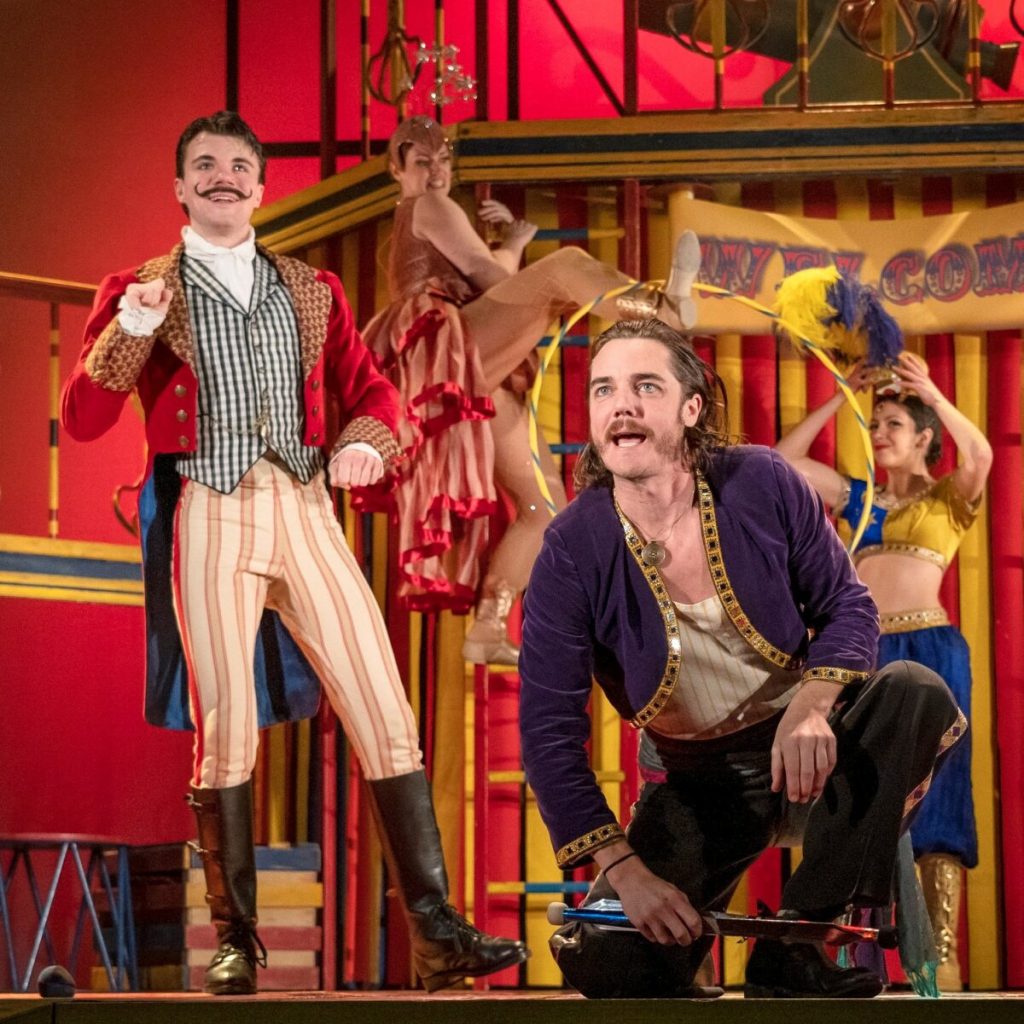
Wilson Benedito and Alex Phelps in Around the World in 80 Days
Writer Juliet Foster, who also directs, does a great job of navigating the aspects of the story that haven’t aged quite so well, addressing the British colonialist underpinnings of the storyline in which Indian princess Aouda (Genevieve Sabherwal) is ‘rescued’ by Fogg and Passepartout, and shedding light on the real-life story of American journalist Nellie Bly (Katriona Brown) who, inspired by Verne’s story, undertook the same journey and broke Fogg’s (fictional) record by over a week.
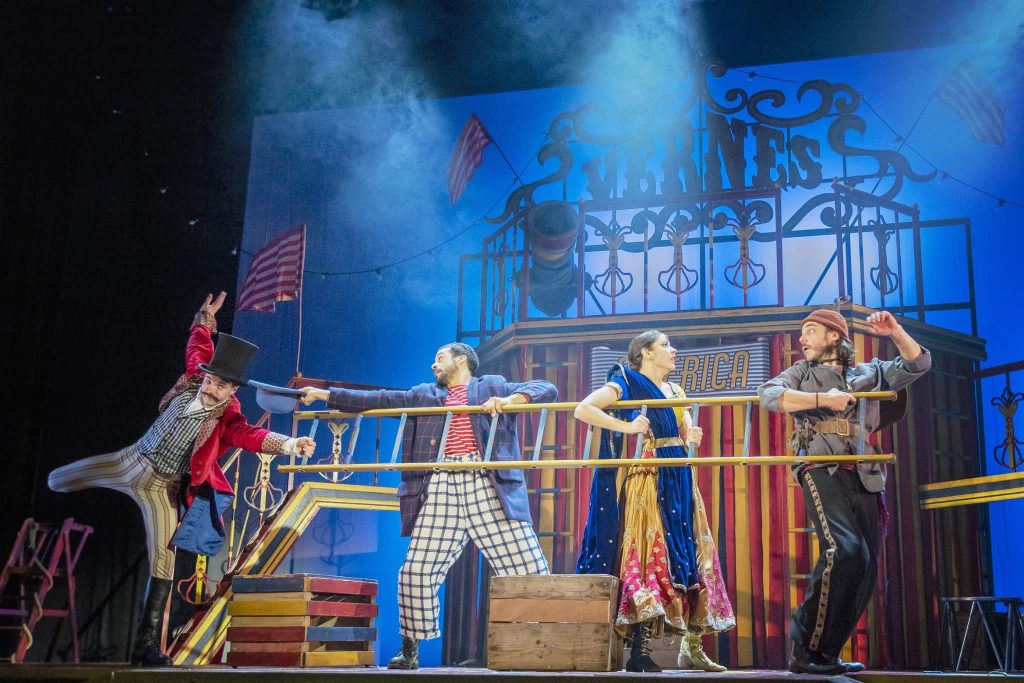
Alex Phelps, Katriona Brown, Eddie Mann and Genevieve Sabherwal in Around the World in 80 Days
The circus elements bring a sense of spectacle to the proceedings, with Eddie Mann’s Knife Thrower twirling electric flames in a stunning light show (he also plays a sharpshooting cowboy with an action scene all to himself) while Barton whips a target in half from metres away. More circus antics and acrobats, of which this excellent cast are clearly capable, might have added even more to the story (perhaps even some more onstage musical or dance sequences), though the cast are consistently entertaining and Sara Perks’ stage and costume designs add pizzazz. With a little tweaking, though, it could be exceptional.
Alex Phelps, Wilson Benedito,Genevieve Sabherwal and Eddie Mann in Around the World in 80 Days
Originally staged in school fields and socially-distanced venues in 2021, and inspired by the many months spent locked down in our homes, Tilted Wig’s Around the World in 80 Days is a slice of escapism that will take you on a charming journey across the globe – and all without having to leave the New Theatre!
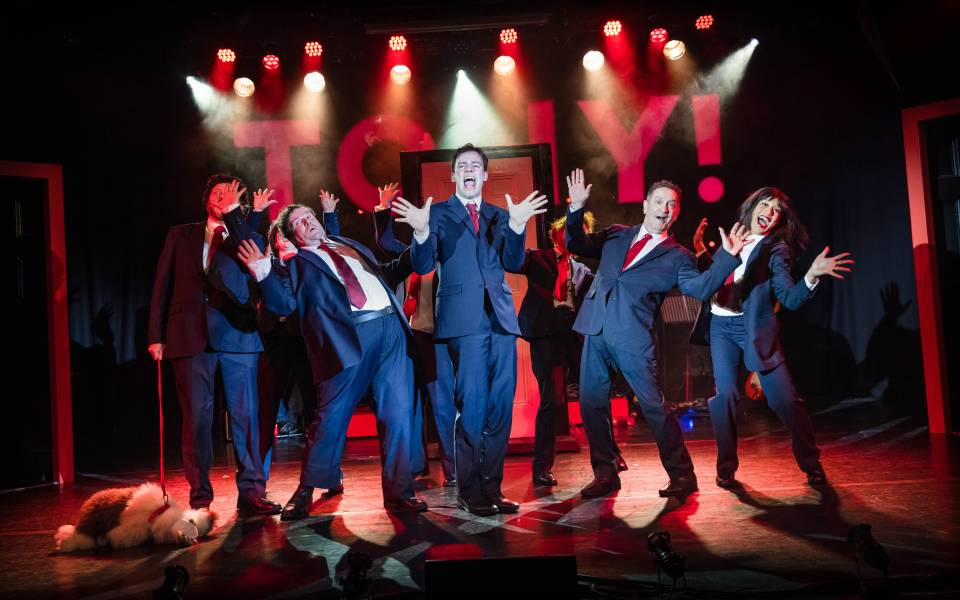
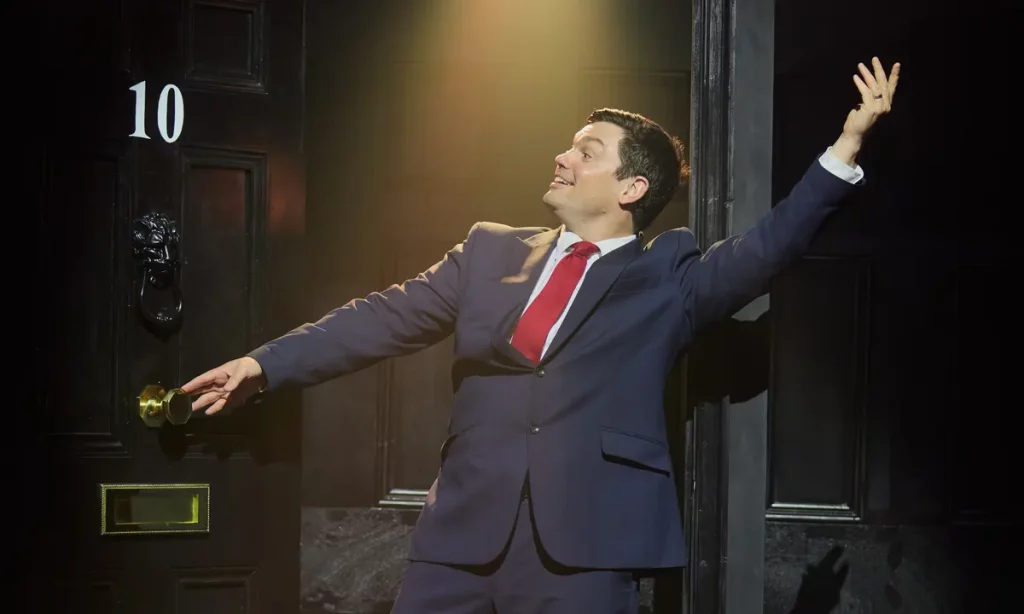
When you hear the term ‘rock opera’, your first thought might be of icons and iconoclasts: Ziggy Stardust, Meat Loaf, Pink Floyd. You don’t tend to think of the Member of Parliament for Sedgefield – but TONY! [The Tony Blair Rock Opera] is here to give former Prime Minister Tony Blair his very own American Idiot (but more on George W. Bush later).
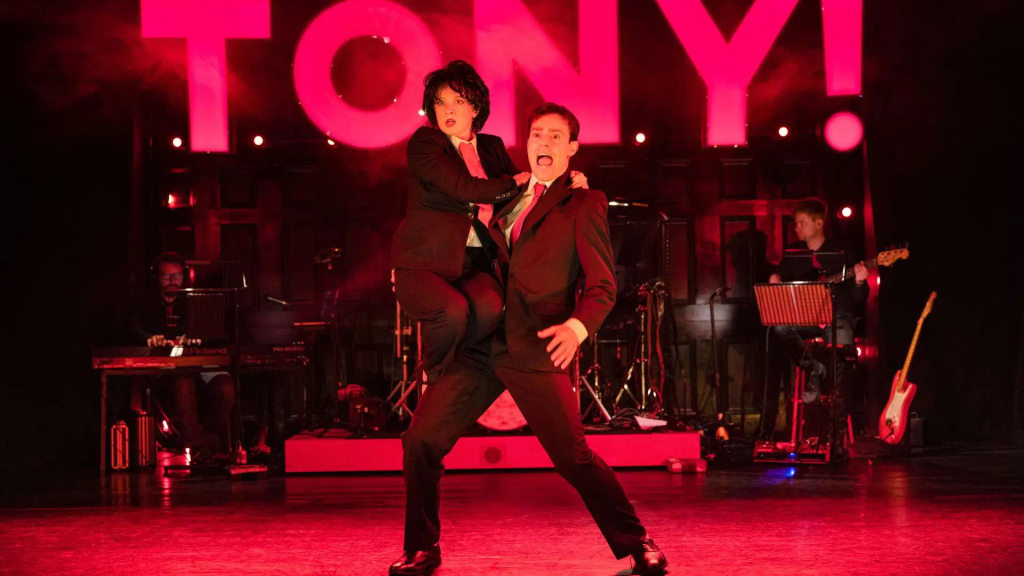
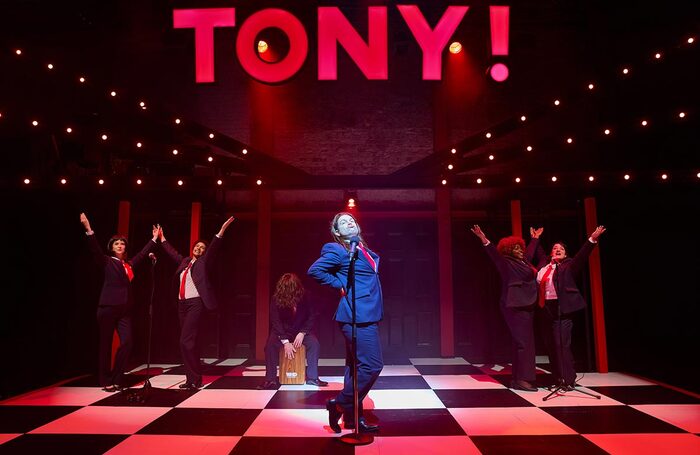
Billed as Yes, Minister meets The Rocky Horror Show, TONY! is the unruly brainchild of comedian Harry Hill and songwriter Steve Brown. Directed by Peter Rowe, it follows the titular politico from cradle to grave, from his stint as a wannabe rockstar in his student days to becoming leader of the Labour party and winning a landslide victory at the 1997 election, plus the precipitous legacy of his special relationship with POTUS and ‘personality’ politics. Jack Whittle, who previously stole the show in Mischief Theatre’s Comedy About a Bank Robbery, is a pitch-perfect PM, nailing all of Blair’s mannerisms from the rictus grin to the ‘right on’ charisma that lent New Labour its groovy young poster boy.
https://www.youtube.com/watch?v=MHOWpmYKbl8
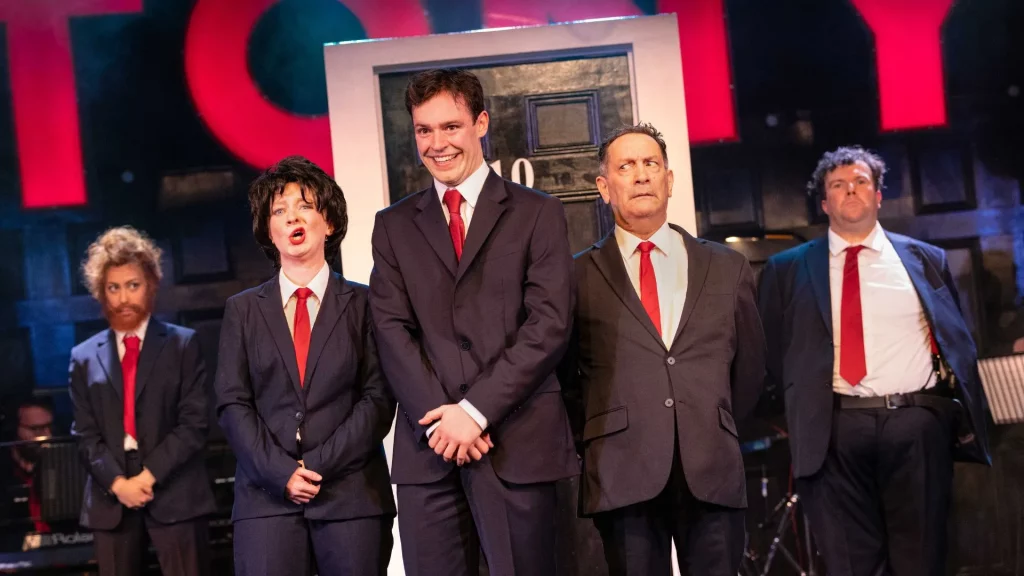
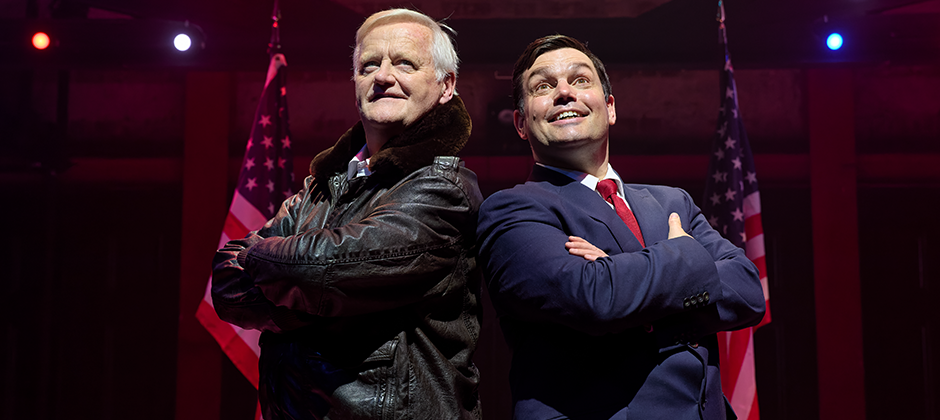
We follow Tony through a cavalcade of larger-than-life characters, including loved-up Liverpudlian Cherie (a top-form Tori Burgess – her running joke about fox hunting is a real winner) and bumbling frenemy Gordon Brown (Phil Sealey). Through it all, Tony is dogged by the angel and devil on his shoulder: the former, a near-saintly Neil Kinnock (original cast member Martin Johnston), portrayed as a tragic Llywelyn-style hero cut down in his political prime, with a rousing ‘Do You Hear the People Sing?’-esque swan song. (We were promised a Les Mis moment, after all). As for the latter, Howard Samuels is delectably devilish as Peter Mandelson, our sinister master of ceremonies and the architect of Blair’s ascent to the big leagues.
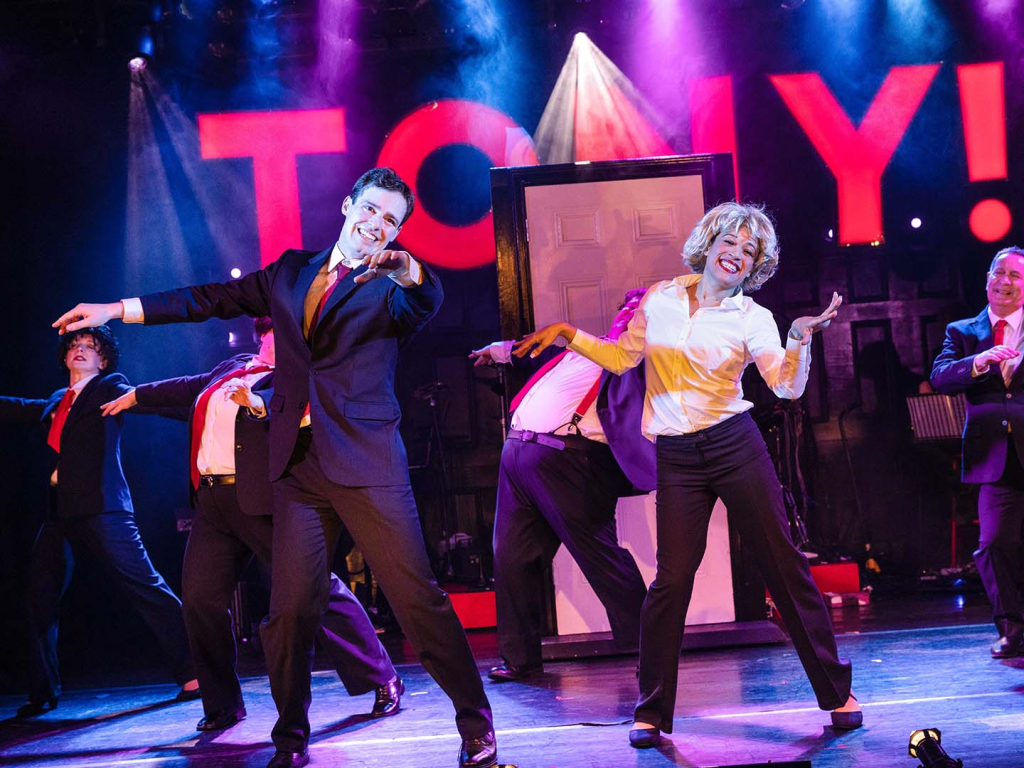
They’re joined by an excellent three-piece band (Oli Jackson, David Guy and Harry Brent) and supported by a lively and versatile cast including Rosie Strobel as a rabble-rousing John Prescott, Sally Cheng as the adulterous Robin Cook, Emma Jay Thomas as a dance-mad Princess Di, and William Hazell, who covers all the roles in the show and gets to shine as a briefly-spied Bill Clinton and as Blair’s boyhood hero ‘Mick Jaggers’. The cast double up in roles, which brings us Sealey’s memorable turn as a Groucho Marx-inspired Saddam Hussein and Johnston as a flight jacketed Dubya puppetered by Samuels’ bewigged Dick Cheney.
The accents are broad, the comedy even broader (bordering on bad taste), and the gags fly faster than insults at the PMQs – but the show doesn’t scrimp on the harsh reality. Blair’s accountability in the 2003 invasion of Iraq, and the three other wars he oversaw during his tenure in Number 10, are on full display, even if his culpability is downplayed into naïve self-advancement. What it does nail, however, is that Blair isn’t a pop star, but a political luvvie: picking pizzazz over principles, soaking up the spotlight while the Gordon Browns of the world are made to wait in the wings.
Entertaining with flashes of brilliance, TONY! isn’t here to set the record straight: it’s here to put that record on a turntable, smash it with a comedy mallet, and dance on the debris. While the set, wigs and costumes could do with some polishing, TONY! gets away with it in the name of slapstick silliness – and its final song has moments of genuine power and poignancy, with nods to ‘Springtime for Hitler’ and Dr Strangelove. If you’re au fait with Harry Hill’s oeuvre, you’ll find the rhythm quickly, and if not, you’ll likely still be swept away in the irreverence of it all. It might not be endorsed by the real Tony Blair, but it certainly was by the audience on opening night, who couldn’t have given it a more rapturous response. The question remains, though: TONY! may have had its Mamma Mia! moment – but will you go again?
What do you get when you cross Yes, Minister with The Rocky Horror Show? You get Tony! [The Tony Blair Rock Opera], of course! This, at least, is the bonkers pitch from comedian Harry Hill and Steve Brown, the comic creatives behind the West End’s weirdest smash hit show.
Billed as “a reckless reappraisal of the life of former Ugly Rumours front man and Britain’s first pop Prime Minister Tony Blair“, it follows the titular Tony from Easy Street to Downing Street in a madcap musical experience like no other, featuring a cast of larger-than-life characters from George W. Bush to Princess Diana.
But don’t expect a history lesson, says co-creator Harry Hill: “In our world Tony’s born singing and dancing, Saddam Hussein is played as Groucho Marx, and Gordon Brown occasionally turns into the Incredible Hulk – let’s just say all the facts are there… but not necessarily as they occurred!”
Having opened on London’s West End in May, it now embarks on a UK tour, including a planned four-week stint at the Edinburgh Festival Fring,e and of course this week at Cardiff’s prestigious New Theatre. While the show is sure to divide audiences (it comes with a note that neither Tony Blair, the Tony Blair Institute, nor any other person featured in this production have endorsed or are affiliated with the production), Hill maintains that it has something for everyone: “It’s a show for Tony Lovers and Haters everywhere – and everyone in between.”
Creating opportunities for a diverse range of people to experience and respond to sport, arts, culture and live events. / Lleisiau amrywiol o Gymru yn ymateb i'r celfyddydau a digwyddiadau byw

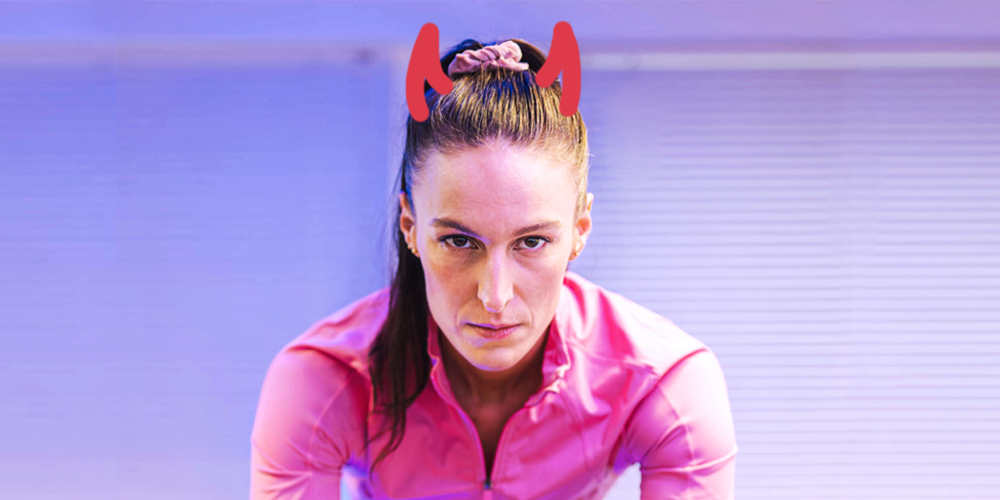
 (4 / 5)
 (3 / 5)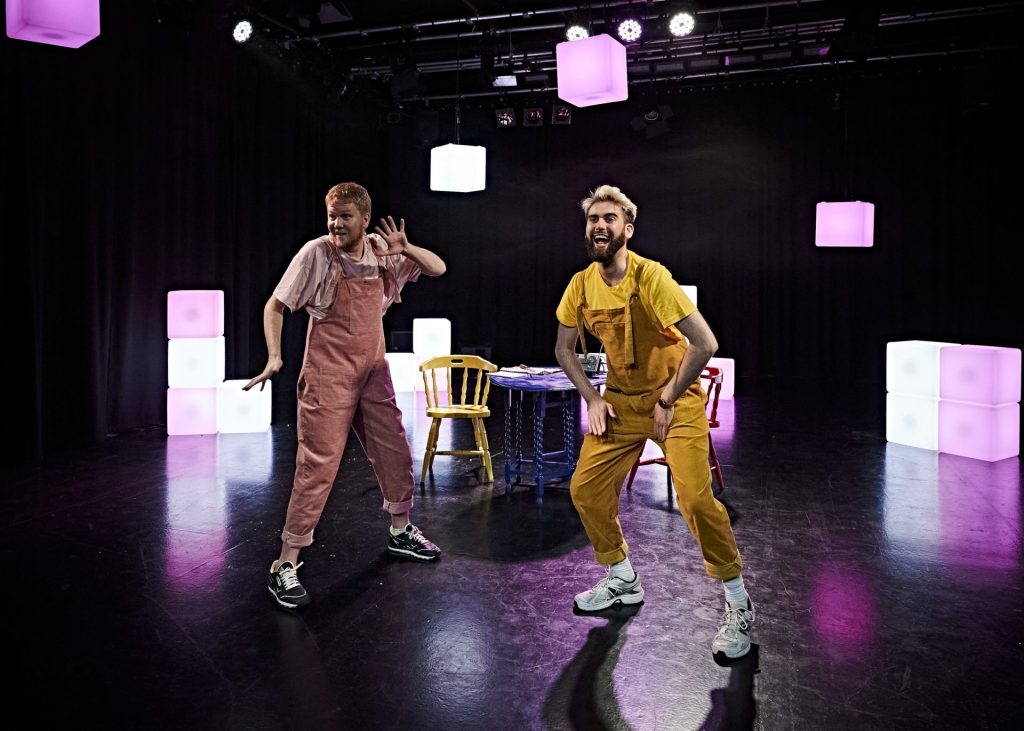
 (5 / 5)