Category Archives: Museums & heritage

Free Workshops Wriggle! & Quentin Blake: Inside Stories at NMW, Cardiff this Saturday the 15th

14570262_10154734510260649_7483558099493210088_n

This Saturday the 15th of October from 10-12 pm there is the opportunity to attend a free exclusive workshop at National Museum Cardiff. During this workshop we will be focusing on 2 exhibitions;

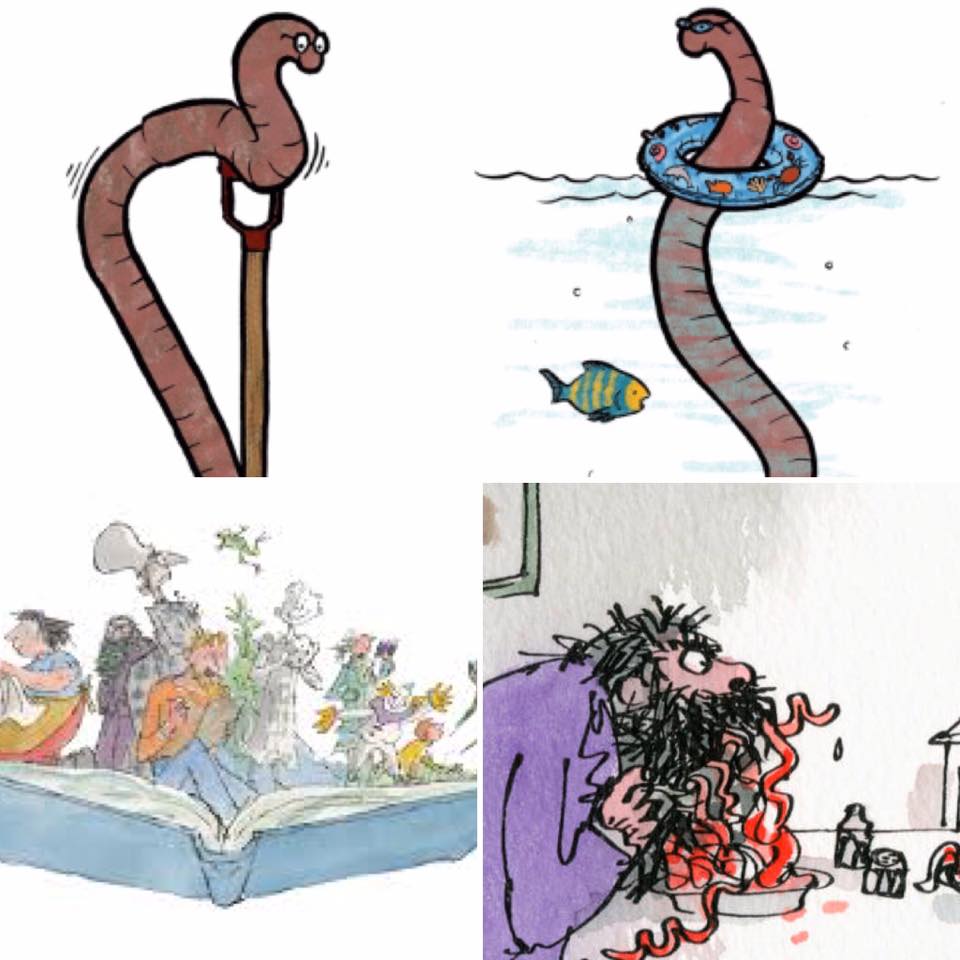
“Wriggle! The wonderful world of worms”

An exciting, family-friendly exhibition delving into the wonderful world of worms. Crawl inside the amazing ‘wriggloo’ and get an earthworm’s eye view of the world. Discover the mind-blowing diversity of worms and find out more about where and how they live. Use our fun interactive game to discover what kind of worm you really are! Explore how worms have crawled into all areas of popular culture, from books and movies to heavy metal music.

https://museum.wales/cardiff/whatson/9051/Wriggle-The-wonderful-world-of-worms/

The group will also visit and discuss

Quentin Blake: Inside Stories

Quentin Blake: Inside Stories celebrates the work of one of the world’s most important and best-loved illustrators. Best known for his illustrations in the books of Roald Dahl, Quentin Blake’s work is recognised worldwide.
This exhibition gives a unique insight into the origins of some of Blake’s most iconic and popular creations, ranging from his illustrations in Roald Dahl’s The Twits and Danny the Champion of the World, to his own Clown, The Boy in The Dress by David Walliams and illustrations in books by John Yeoman, Russell Hoban and Michael Rosen.
It includes first roughs and storyboards, many never shown before, with finished artwork to demonstrate how ideas evolved, often in close collaboration with the authors. It shows how Blake brings to bear a wide range of different techniques and media including inks, watercolours and pastels applied with a variety of touch, in response to the particular mood of a book and the nature of its characters, to create his distinctive and unforgettable illustrations.
https://museum.wales/cardiff/whatson/8916/Quentin-Blake-Inside-Stories/

During the workshop the curatorial staff at  NMW, Cardiff will discuss the exhibition with you all and you will be able to discuss how the exhibition developed and what the response from the general public has been. We will then go and discuss the exhibition together as a group. As usual everyone attending will be requested to create a blog type response. This can range from a formal review to imagery, video its up to you really but everyone has to respond!

If you would like to join Get the Chance and attend this free event please email, Guy O’Donnell, Project Director odonnell.guy@gmail.com

Free Workshops Wriggle ! & Quentin Blake: Inside Stories at NMW, Cardiff, Sat the 15th

14570262_10154734510260649_7483558099493210088_n

This Saturday the 15th of October from 10-12 pm there is the opportunity to attend a free exclusive workshop at National Museum Cardiff. During this workshop we will be focusing on 2 exhibitions;

“Wriggle! The wonderful world of worms”

An exciting, family-friendly exhibition delving into the wonderful world of worms. Crawl inside the amazing ‘wriggloo’ and get an earthworm’s eye view of the world. Discover the mind-blowing diversity of worms and find out more about where and how they live. Use our fun interactive game to discover what kind of worm you really are! Explore how worms have crawled into all areas of popular culture, from books and movies to heavy metal music.

https://museum.wales/cardiff/whatson/9051/Wriggle-The-wonderful-world-of-worms/

The group will also visit and discuss

“Quentin Blake: Inside Stories”

Quentin Blake: Inside Stories celebrates the work of one of the world’s most important and best-loved illustrators. Best known for his illustrations in the books of Roald Dahl, Quentin Blake’s work is recognised worldwide.

This exhibition gives a unique insight into the origins of some of Blake’s most iconic and popular creations, ranging from his illustrations in Roald Dahl’s The Twits and Danny the Champion of the World, to his own Clown, The Boy in The Dress by David Walliams and illustrations in books by John Yeoman, Russell Hoban and Michael Rosen.

It includes first roughs and storyboards, many never shown before, with finished artwork to demonstrate how ideas evolved, often in close collaboration with the authors. It shows how Blake brings to bear a wide range of different techniques and media including inks, watercolours and pastels applied with a variety of touch, in response to the particular mood of a book and the nature of its characters, to create his distinctive and unforgettable illustrations.

https://museum.wales/cardiff/whatson/8916/Quentin-Blake-Inside-Stories/

During the workshop the curatorial staff at NMW, Cardiff will discuss the exhibition with you all and you will be able to discuss how the exhibition developed and what the response from the general public has been. We will then go and discuss the exhibition together as a group. As usual everyone attending will be requested to create a blog type response. This can range from a formal review to imagery, video its up to you really but everyone has to respond!

If you would like to join Get the Chance and attend this free event please email, Guy O’Donnell, Project Director

odonnell.guy@gmail.com

Spending Time Credits at the Tower of London by Hannah Goslin

Cp50HcOWYAACjp-

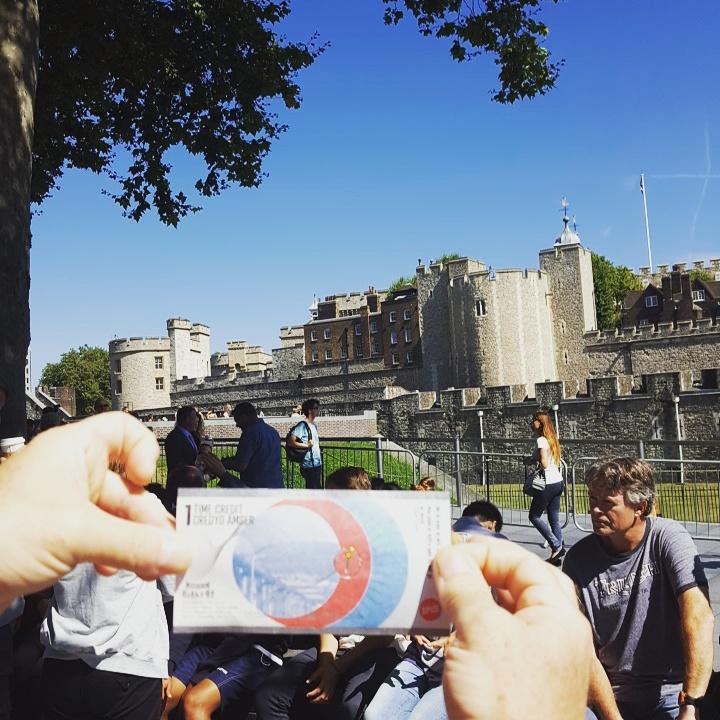
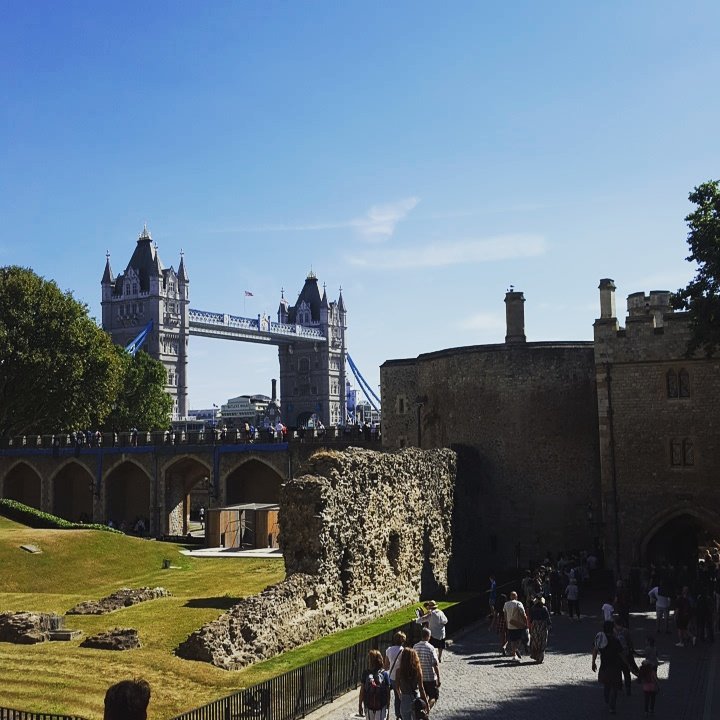
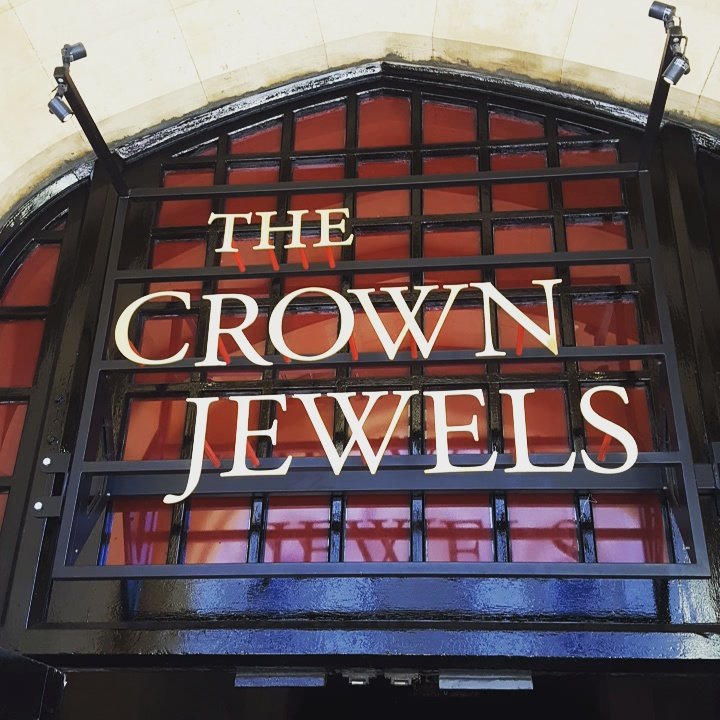
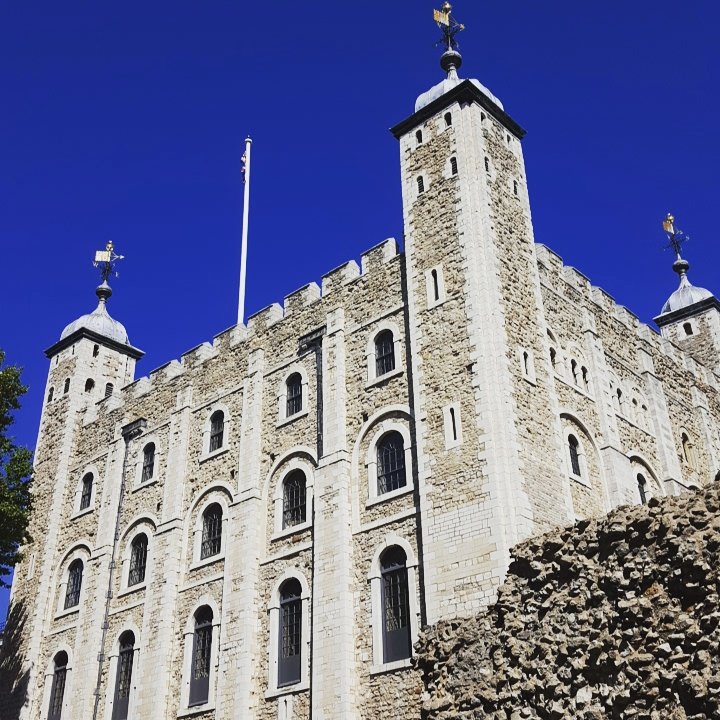
Thanks to Spice Time Credits, I recently had a wonderful trip to the Tower of London.

My parents were visiting from Devon and I wanted to treat them. Since their last visit to the Tower 35 years ago, the history and memory was a bit vague and I, was a complete newbie.

Cp6s0_NWIAYGqSI

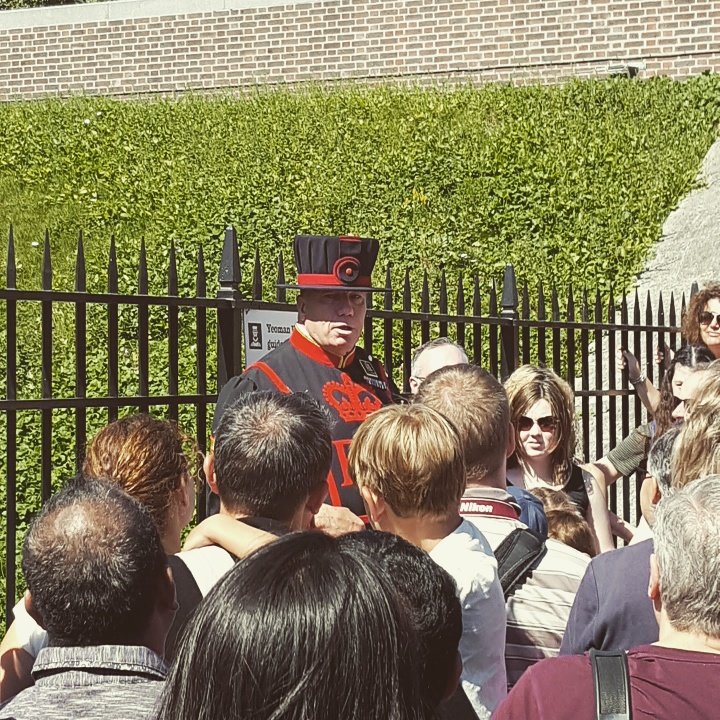
We had no issues with accessing the Tower with our tickets- joining the free tour that happens every 30 mins which was full of comedy and excitement by our animated Beefeater guide and on such a gorgeous sunny day, the compound shone as bright as the Crown Jewels.

Cp6s_6AW8AAkIXh

Cp6sl03W8AEC8QS

Without the use of these Credits, I doubt we would have accessed such a brilliant historical and cultural day out in the rare British sunshine. Thanks Time Credits!

Cp6s-h9XYAE9rWR
Hannah earned her Spice Time Credits reviewing for getthechance.wales . All members earn when attending and reviewing a range of sport and cultural events.
Further information on the Spice Time Credit network can be found at the link. http://www.justaddspice.org/get-involved/get-started-with-time-credits

Review, Romeo and Juliet, Everyman Theatre Cardiff, By Hannah Goslin

De Ja vu ensures when I arrive once again for the second time that day at the Everyman Theatre, this time for Romeo and Juliet.

The basis for the staging is the same as before, with the added props and different lighting. It does become a different scene and clever recycling of the set. As before in Peter Pan, performers had head mics, this performance has a microphone at the front of the stage that picks up the entire area. This does dip in and out with parts being louder than others – a slight lack of consistency. This is where the performers should have compensated for this potential eventuality with their own voices. The lighting itself was below average.  It felt as if the technician was testing the lighting on the night itself and times when the sky was dark, the staging was not sufficiently lit or had drastic changes in light that felt uncomfortable and a little annoying – taking attention away from the performance.

The cast  were a large range of abilities and ages. Feeling as if I am pulling away from supporting my fellow young performers, it felt as if the older performers were the best- whether this comes from experience or more understanding of the play. Others seemed to lack understanding of the text, evident in their stunted execution. At all times performers were on stage, watching the scene intently if not in it but this was only effective when it was consistent – I found myself being drawn away by performers who lost concentration and looked bored as their eyes drew away from the performers.

Marketing the show, we expected to see a traditional dressed production – which is hard to get wrong in performance. This performance had taken a modern approach to the performance and this was fine for what it was. The producers could have worn any clothes and it would have been the same. An abstract and metaphorical approach was taken at times, using basic physical theatre to represent parts. Again this lacked consistency – we either wanted an emotional and real interpretation or a physical theatre piece. It unfortunately did not seem to gel in this case.

Romeo and Juliet unfortunately felt confused and lacking a clear path. While the performers seemed to work hard, it did not always pay off and I came away feeling a little uninspired.

 out of 5 stars (1 / 5)

Review, Much Ado About Nothing, The Lord Chamberlain’s Men, Cardiff Castle By Hannah Goslin

much-ado-1038x576

 out of 5 stars (4 / 5)

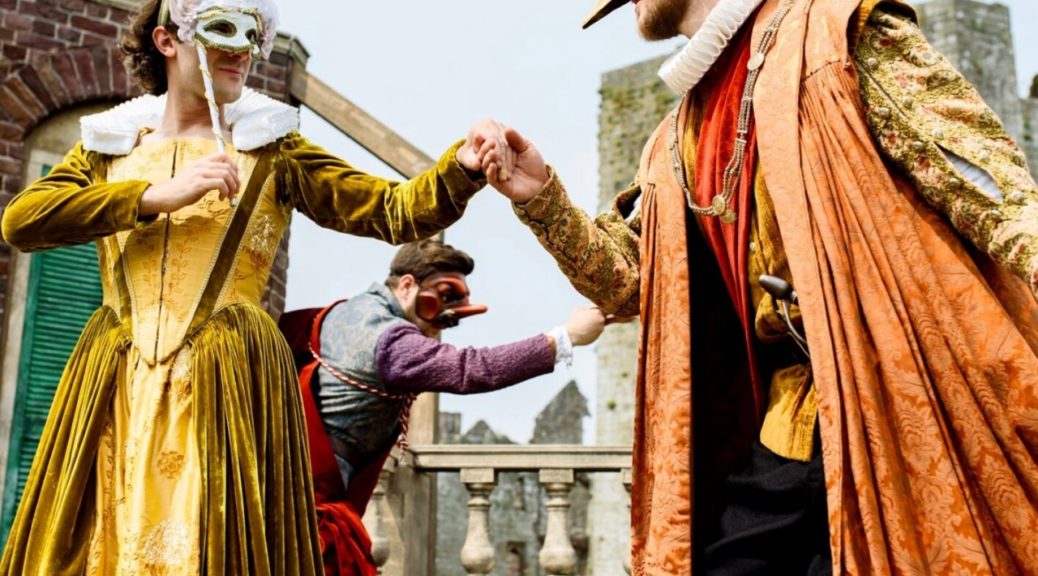
Summer is here and despite a lapse in sunshine, there’s nothing like watching history in such a cultural setting. In the middle of Cardiff Castle, surrounded by its brick walls, we were encouraged to sit on the gardens and in our own chairs, enjoying picnics and little tipples while British Theatre unfolds.

It’s surely a testament to Shakespeare and his wonderful writing that we are still taking his plays and producing our own adaptations.  It is of course also down to the performers to bring it alive.

Often companies to revive the well known plays to a modern audience will base it in a familiar setting for them to relate to and get other generations involved. And there’s no quabble that there are beautiful renditions in this manner. However, sometimes it’s just what you need to see his plays produced in the original way they were.

There was an essence of The Globe about the setting (despite us sitting down).  While the heavens wanted to open no one moved, rooted to the ground.  The company did what is very rare to see these days and had an all male cast – back to the roots, men were the ladies and doubling up was continuous. Such brilliant actors, this only added to the comedy and the men playing women did the right amount of ‘hamming up’ for comedy and reflect the writing without ruining the character or the illusion. Transitioning to other male characters, they easily transformed their voices and persona to counteract previous characters, showing the brilliance of these performers.

Benedict was especially funny. A evidently talented and comical actor, he executed his actions and the text with the right intention and was by far the most hilarious on stage – one time flinging himself across the stage and surprising other actors into corpsing. Some see this as a bad aspect but audiences enjoy seeing the performer’s finding things humorous and showing their enjoyment of what they are doing.

The Lord Chamberlain’s men will be continuing to tour this wonderful production. Spice up your Summer with some old fashioned fun. If you’re unable to experience The Globe, this production is a close second.

Review, The Hound of the Baskervilles, Chapterhouse Theatre Company, By Hannah Goslin

hound-1038x576-1

 out of 5 stars (3 / 5)

In the heart of Dartmoor, tales of murder, mystery and mythical creatures has haunted the moors for decades. Thanks for Sir Arthur Conan Doyle, my family home is full of these attributes and fame, however it has been little explored on site in the form of theatre.

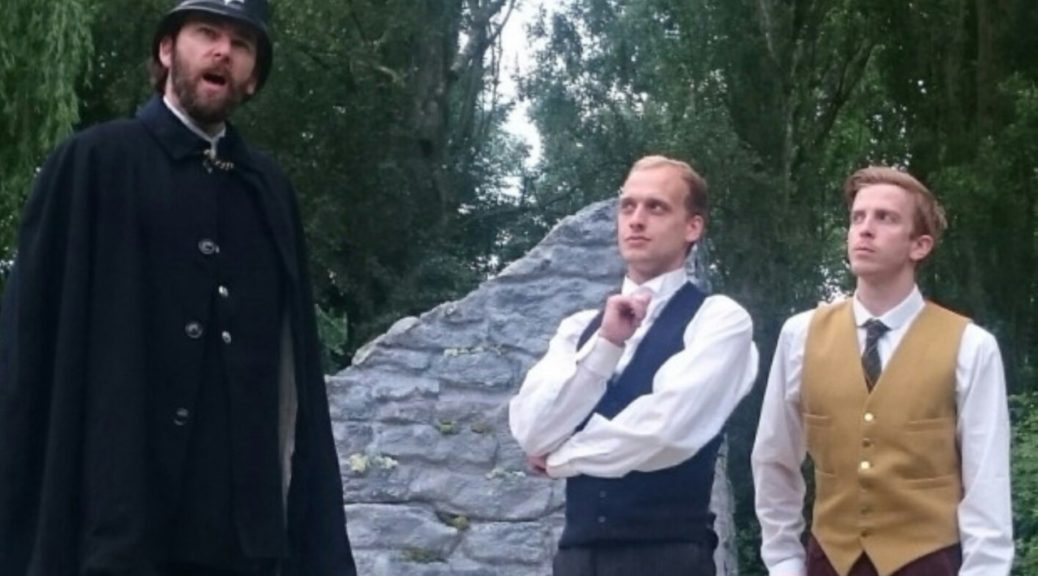
With the moors in the distance and the back drop of the Moorland House Hotel, Yelverton, I took my Sherlock fanatic parents to witness this infamous fictional tale.

Open air theatre I find is always quite a difficult type of theatre.  You have very little prop and staging to use as touring with this is very difficult as well as little access to the lighting, sounds and special effects we experience in indoor performances.  Chapterhouse- well known for their many outdoor travelling theatre productions luckily has this under control and still lead us to enjoy the changing scenery and premises with the use of song and professionally conducted actors.

Sherlock Holmes as a character I find is very difficult and quite an achievement to be able to play. I am never entirely sure who he is meant to be. Adaptations from the older days show him to be very serious and controlling while recent performances make him a little more eccentric than usual and almost comical.  Chapterhouse played upon both of these, at times Holmes being almost a buffoon in his performance to other times a leader and quite demanding. Whether this is Sherlock or not is entirely up to interpretation- myself is still on the fence of who I think he should be.

To support this take on the story to stage , the use of a man dressed in a pantomime dog’s costume and play upon the writing was used for comedy and the audience really seemed to enjoy this. Whether this is appropriate for such a genre of writing I am unsure but without access to means that in house theatres could produce, maybe this comical view is a good way to address that.

Overall I did enjoy this production. It certainly felt that while we were viewing a story on a cold Moor (while in reality is the sunny Summer)that we were involved in the story, and with the real Moor nearby, who knows what could be lurking on our exit!

Creative Cardiff Pop-Up Hub: Reflections on Hub Environments for the Arts

1

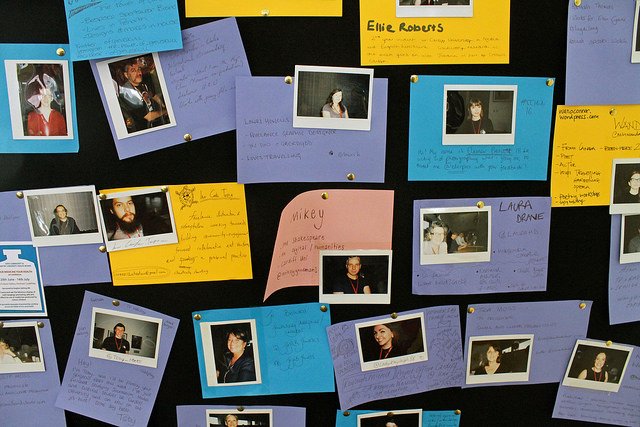
All images taken from social media linked to the project

In the same week that it was announced that Britain was leaving the EU, free-thinkers in Cardiff were exploring new and innovative ways for arts professionals to work together as part of the Creative Cardiff pop-up hub.

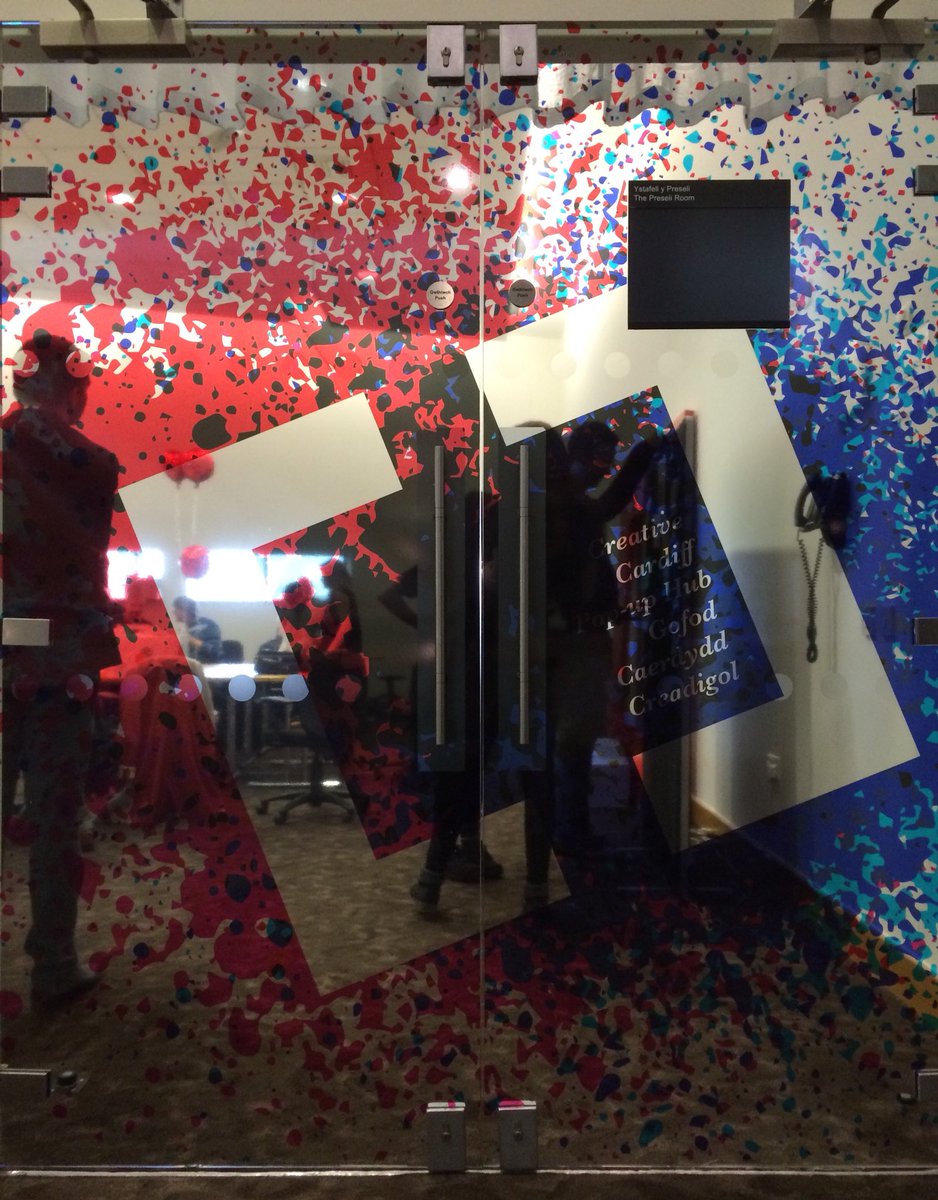
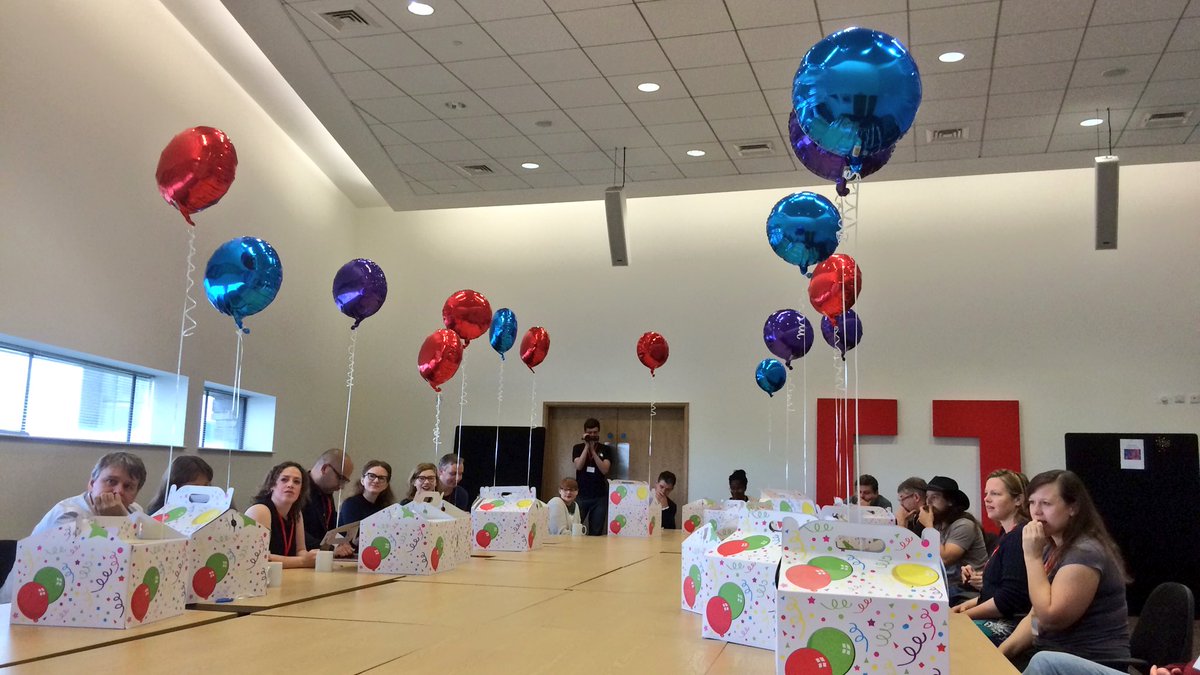
From the 20th-24th June selected creatives occupied a temporary pop-up workspace in the Wales Millennium Centre as part of an initiative organised by Creative Cardiff. Sara Pepper, director of Creative Economies at Cardiff University, was a key organiser of the event having researched existing approaches to creative hubs both within, and outside of Wales. Pepper champions ‘hub’ models as potential centres for innovation within the Cardiff creative economy. Sara Pepper has authored a blog post in which she outlines her research which you can access via the link below:

http://blogs.cardiff.ac.uk/creative-economy/2016/06/16/a-creative-hub-for-cardiff/

2

Creative Cardiff is an online network of practicing creatives in the Cardiff area initiated by a team at Cardiff University. The network went live in October 2015 and already currently has a membership of over 550 practitioners.

This form of online network has already proven useful to both my peers and myself, practicing within universities as well as on a freelance basis. Organisations such as EMVAN (The East Midlands Visual Arts Network) provide valuable access to creative opportunities and share relevant events information, thus implementing a meeting of like-minded practicing creatives and audiences alike.

What Creative Cardiff achieved in this recent venture is to demonstrate that the hub environment prompted an acceleration of the outputs of its occupants whilst retaining its supportive values. There are early indications that hubs may prove to be beneficial to the development of creative networks and productivity within the city. That these values could be propagated successfully within the physical space of a hub supports the demand for more dedicated collision spaces for creatives, which could support existing online networks.

“Our network aims to bring together people from across the full breadth of the city’s creative economy – from dancers and marketing professionals to architects and app developers. By collaborating and sharing ideas we want to encourage more innovation and creativity in our city” – Creative Cardiff.

3

Reflecting on my own experience of working in the hub, I found the pop-up nature of the arrangement provoked thought and reflection on the nature of the co-operative working arrangement rather than focusing on the development of individual creatives. This differs from the way in which arts students or employees within other creative industries are usually encouraged to practice, and on the surface seems to contradict productivity. Although the arrangement of the short-term hub might have been initially disruptive, established examples have indicated that co-operative working increases productivity – hence Google’s eagerness to provide exciting, open workspaces for their employees to work collaboratively.

I found the group was particularly concerned with how professionals from various creative fields might gather to achieve the aforementioned aims of Creative Cardiff, whilst still continuing to realise autonomous objectives within their own creative practices. Countless discussions were had on the topic, and throughout the week questions were raised regarding the benefits, physical design, core values, social and creative impact of working in this way to name but a few. Issues such as these are often interrogated on occasions where creative practice mingles with academic insight.

4

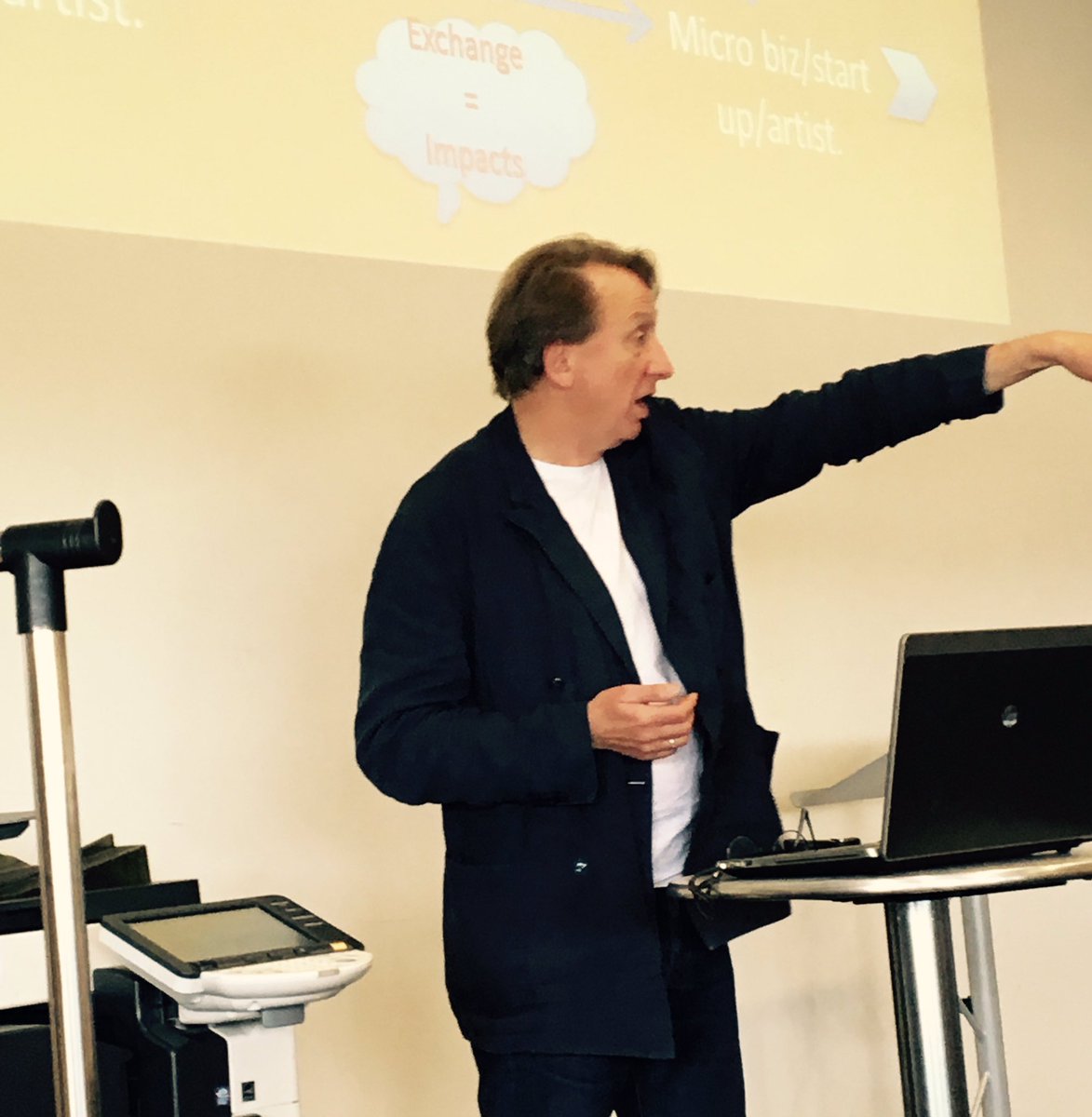
A particularly successful feature of the pop-up hub was the daily ‘Provocation Sessions’ provided in the mornings within the hub space. During these sessions, the hub members were invited to hear professional reflections on the nature of creative spaces and productivity and discussion on these topics was encouraged. We heard from a range of speakers including Prof. Wayne Forster of the Welsh School of Architecture, Clare Reddington and Jo Landsdowne of WATERSHED (Bristol) and Prof. Jonathan Dovey, UWE Professor of Screen Media and director of REACT. Such sessions provided an opportunity for focused learning and interaction amongst the hub members that I believed complimented more casual encounters experienced in the joint space.

5

I found Prof. Jonathan Dovey’s insights regarding the hub as a creative eco-system especially informative and motivational. His experience has demonstrated that hubs can provide instances of exchange, impacts and continued mutual support amongst their occupants. Dovey placed particular emphasis on the benefits of shared values within creative hubs, such as generosity, openness, trust and excitement.

It is the presence of these shared values, possessed by the members of the pop-up, which contributed towards the success of the Creative Cardiff hub, and defined the unique and progressive environment that I experienced as a member.

6

With the project only spanning over a short week, the conditions of the hub could not be established in the way in which an organically cultivated hub space might. However, many would agree that the potential for development and continuation of the project was evident. Through research carried out by Cardiff University, we can be positive the project has contributed to the development of creative hubs in Cardiff in the future. As well as this, I hope there is recognised potential for such hubs to become part of an interconnected network of creatives spanning Wales, the UK, and even Europe and globally.

Perhaps the potential of a hub network is way in which creatives can demonstrate that, despite established individualist tendencies, we are in fact better together.

To view Amelia’s Creative Cardiff profile, please follow the link below:

http://www.creativecardiff.org.uk/users/amelia-seren-roberts

Twitter: @amelia_seren


Interview Adeola Dewis “Art can allow new, creative ways of seeing the everyday to emerge”


207372_10150558342515296_7621089_n

Hi Adeola, You are currently a Visual Artist and Research Fellow at the University of South Wales. Is it possible to give our readers some background information on yourself?

Yes, I am actually coming to the end of my research fellowship. It was an 18 month contract with the University of South Wales and part of a large AHRC (Arts and Humanities Research Council) funded project called ‘Representing Communities.’ I am an artist, researcher,  a mother of 3 boys and a Caribbean woman resident in Wales since 2003. A lot of my work is informed by my day to day experiences.
217083_10150558346030296_8002310_n

You held a President’s Award scholarship for PhD research at Cardiff University, Wales and have received several grants from the Arts Council of Wales to develop and realise collaborative arts projects. Was there a moment in your career when you knew the areas you wanted to focus on?
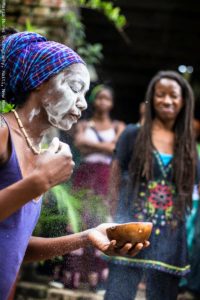
 by Maria Nunes 02

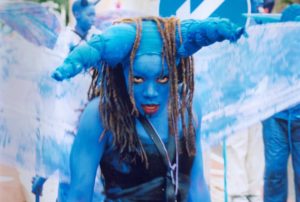
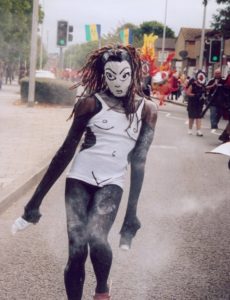
When I was little I wanted to be movie star! (laughs) Drawing has always been part of my life from as far back as I can remember, and dance as well.  I knew I loved art and always wanted to be an artist or arts practitioner. I have very supportive parents and they really fostered my love for culture and always believed in my art, what I could do and the difference art could make to circumstances. It was during my first degree in Trinidad that I actually became convinced that I could be an artist, that I could make art and have exhibitions. My lecturers were also great examples of successful practicing artists. Being Trinidadian, Carnival was always part of my life. It was during my MA at Howard Gardens that I became interested in Carnival performance as a way of engaging the ideas of integrated arts. This Carnival interest has evolved to include ideas around re-presenting self in public spaces and what that means for social issues around notions of belonging and un-belonging, visibility and how we react to social, political, personal situations through temporary transitory performances and rituals.
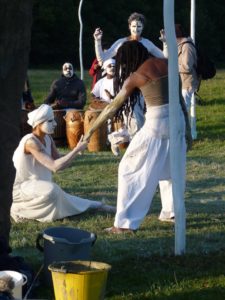
13522001_10154421603905649_2608251298474307930_n

You mentioned your parents I wonder if there are any individuals or organisations that helped support you in developing your skills and knowledge?

 I have a long list of individuals that have helped in the development of my work but again I think the core always goes back to family – my parents, my sisters, my boys, my husband and so on. When I moved to Wales I felt in some ways as if I had to start again, to prove myself, make new contacts and forge my own little space within this art world. It was a really insecure space to be in to be honest. I joined organisations like W.I.D (Welsh Independent Dace) and C.A.D.M.A.D both of which no longer exist. S.W.I.C.A (South Wales Intercultural Community Arts) helped a lot as well, providing a space to explore and meet other artists with a range of different skills. My first solo exhibition in Cardiff was in g39 when it was on Mill Lane which was funded by the Arts Council of Wales. I feel like an ole timer now! The Butetown History & Arts Centre was also a great support to help me show my work. They too have recently lost their funding. I think the key thing though is about meeting people, travelling, experiencing, talking about your work and interests and being true to what you want to do. As part of this current research I have developed connections with the Butetown Community Centre and individuals working with and in community.
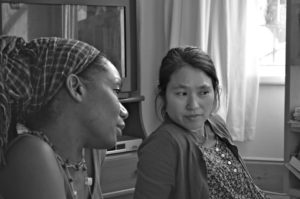
13567136_10154421631600649_1652986525087605783_n

Awareness of Carnival (which you have a great deal of personal experience and knowledge in) as an art form is growing. In your opinion what is needed to help the art form develop?

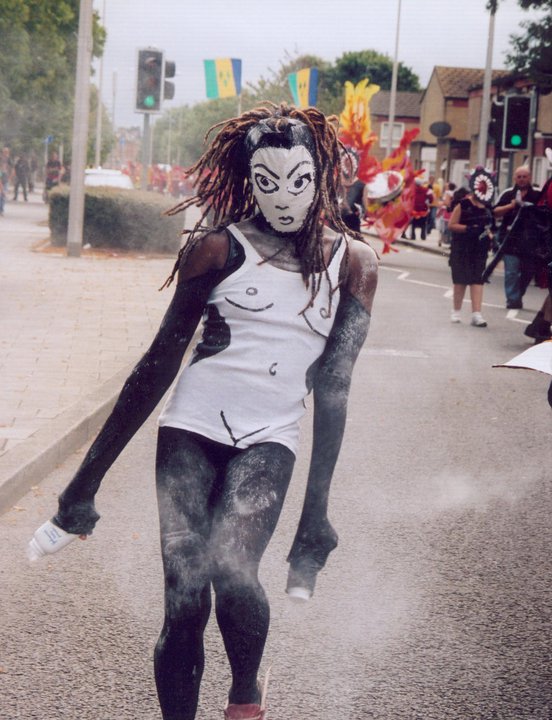
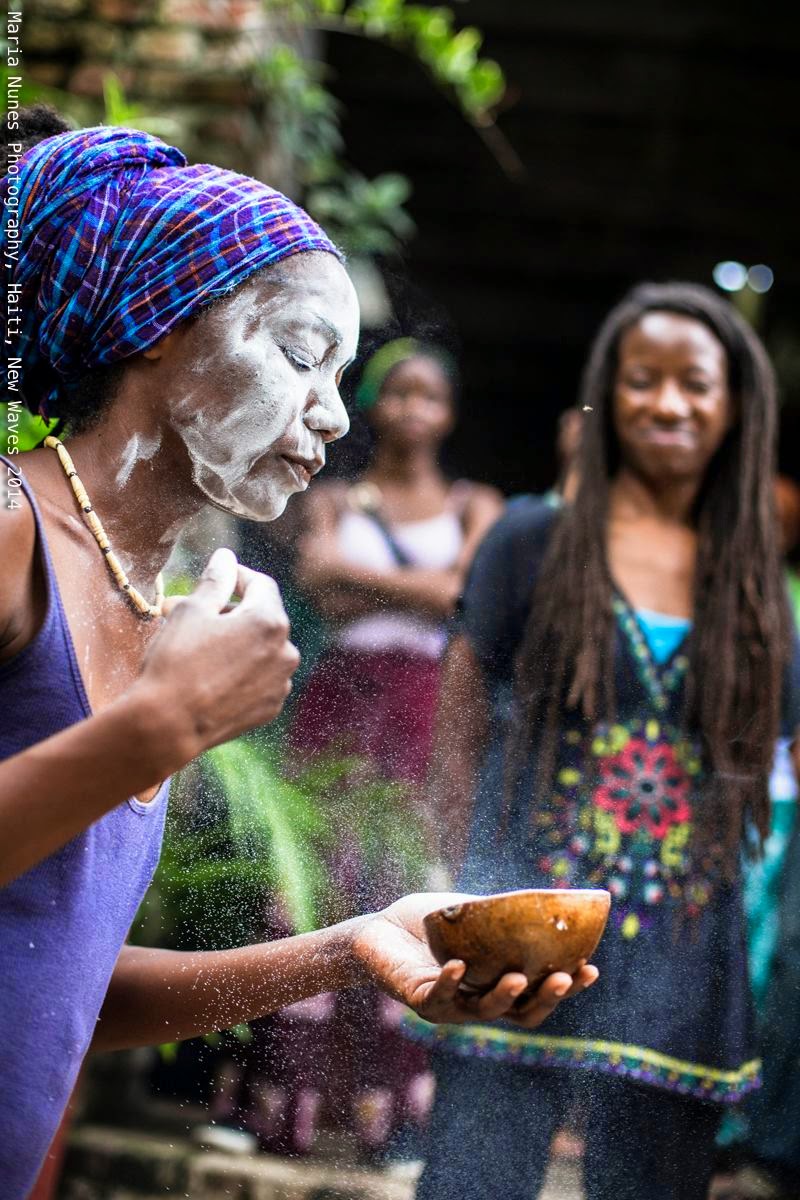
 That’s a great question. Carnival can be seen as a public participatory celebration of a people. It is moving and fluid and reflects issues within a society through song, dance, costume and so on. Development is a tricky word, because what does that really mean and for whom? In some regards Carnival development needs an injection of cash and government support. But I would argue that a Carnival really belongs to the people and ‘development’ could also be about handing-over and seeing what emerges over time. I am still learning about this Welsh space and I think there are carnivalesque ’emancipatory’ performances that occur in spaces like stadiums and on the streets on rugby match days. Carnival to me, becomes meaningful if the people need it. It’s tricky when it is just another fashionable purely aesthetic street parade.
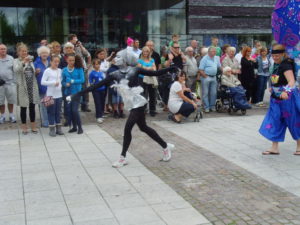
SNV31470

You are currently focusing on first generation Caribbean migrants associated with Butetown, facilitating ideas of community re-presentation. How did this project develop and what responses have you had to date?
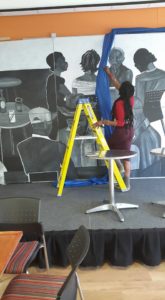
by Carrole Fox

I have absolutely loved being a part of this project! I had the opportunity to work with Elder Caribbean migrants and to be immersed within Butetown learning about their rich history and why the space was so attractive to people travelling from the Caribbean. The project has culminated in several exhibitions including one at the Cardiff Story Museum, one in the Butetown Community Centre that includes a series of photographs of the Butetown Domino Club members by local photographer Simon Campbell.
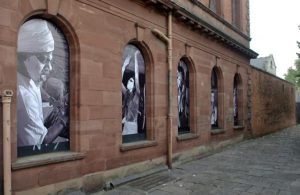
by John Briggs 02

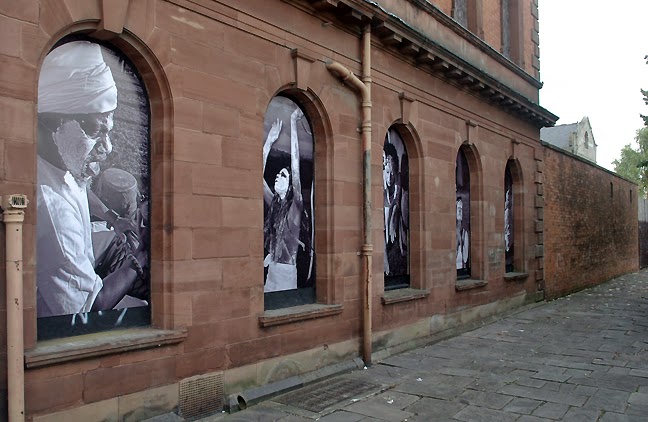
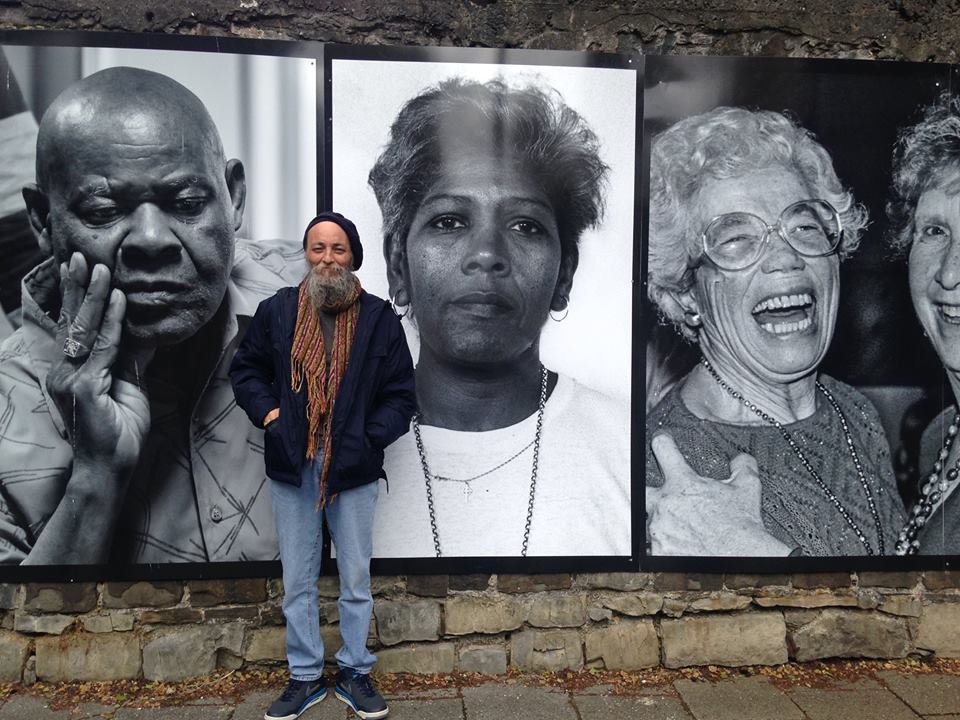
The other end-of-project exhibition is on the Network Rail wall opposite Loudoun Square on Bute Street. It is a series of portraits by different photographers who have made Butetown a focus in their work – Simon Campbell, Keith Murrell, John Briggs and Andrew McNeill. We even managed to get a photo by Bert Hardy.
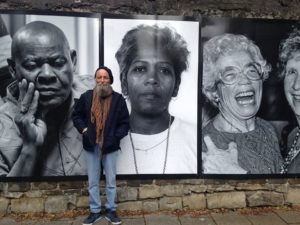
13507087_10154421643555649_3080952284288185602_n

This Bute Wall exhibition looks at Butetown, the diversity, the elders and ideas of community wellbeing and representation. Generally responses have been positive.
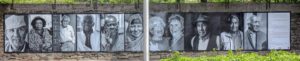
Butetown Elders by Simon Campbell

Do you think that arts and culture in Wales represents the diversity of the citizens and communities you have worked with?

 Well I think if we look closely enough we will see people representing themselves in so many ways. I think representation is crucial and the diverse fabric of Wales has been actively engaged in places like Cardiff Story Museum and Glamorgan Archives. In my experience I am not convinced that the diversity is always reflected in the visual art world but again, it is about where we look, what is made visible and what inevitably becomes less visible. But I feel positive. I think there is good work happening, a lot of talent and room for alternative ways of engaging arts.

You frequently support workshop activity with members of the public, do you think this type of activity is important and why?

 Yes, I think workshops are important. As an artist working with the public opens you up to different people and conversations and experiences which as I mentioned earlier are crucial to art development and relevance. Also, I think one of the aims of art is that it is for everybody. It can challenge, inform, educate and really allow new and creative ways of seeing the everyday to emerge. Workshops are an opportunity to share art with different people and it also allows you to think about ways of making art-making/doing accessible and relevant to a diverse groupings
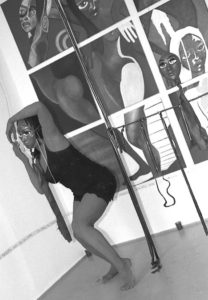
by John Briggs

What are the opportunities for those interested in carnival in Wales?

Carnival is huge! There is room for everybody. First there is the question of what aspect of Carnival interests you. I know the performance department at the Atrium are starting to actively use carnival as part of their teaching. Any formal art – music, costume and set design, painting, sculpture, dance can lend itself to Carnival. The main ingredient especially with performance is not the qualification but the desire and passion to want to do it. We have the Butetown Carnival on the bank holiday weekend in August. It is a great opportunity to create and explore the potential of a Carnival in Wales. Those interested can contact Keith Murrell founder of BACA (Butetown Arts and Culture Association) at the Butetown Community Centre.

13413535_10154588301796874_6196259796899434927_n

If you were in charge of funding the arts in Wales what would be your priorities?

 My priority will probably be informed by spending time with different artists and communities and seeing how their visions relate to the broader political agenda for the country.

When you aren’t involved in culture or research what do you like to do in your spare time?

 I feel like I am always involved in one kind of culture or another. I love spending time with my boys. I love drawing. I love dancing and laughing and learning. I also enjoy watching world cinema.

Many Thanks for your time Adeola

 Thank you!

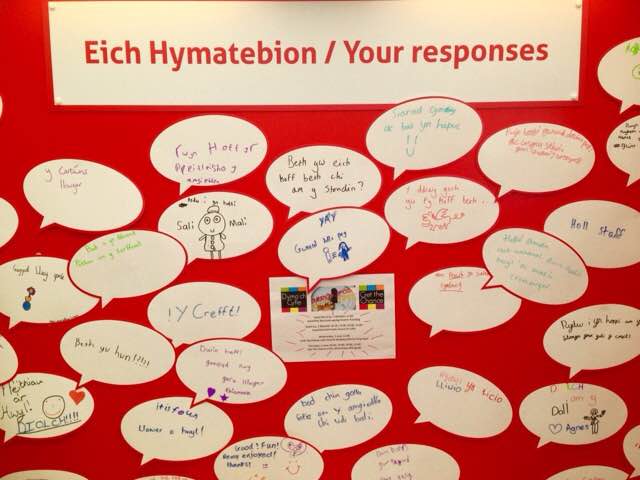
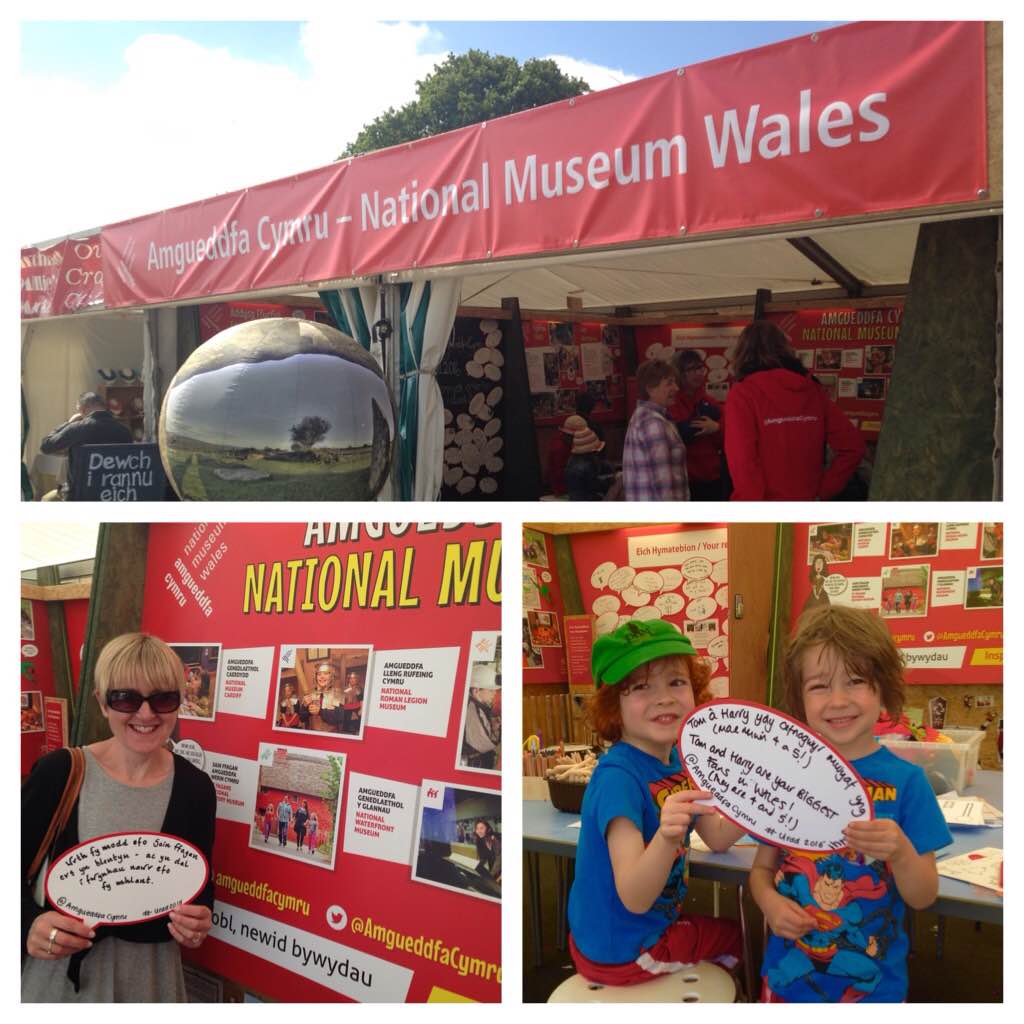
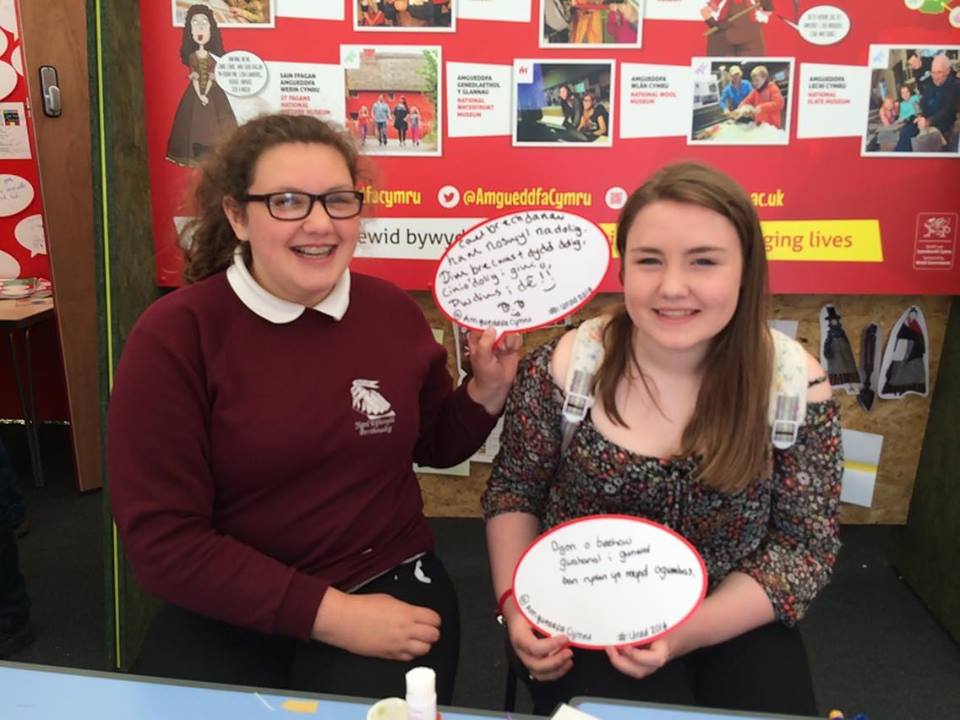
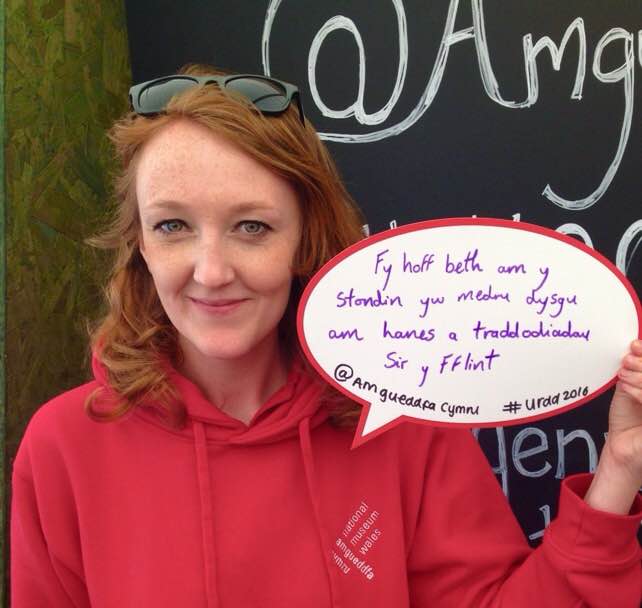
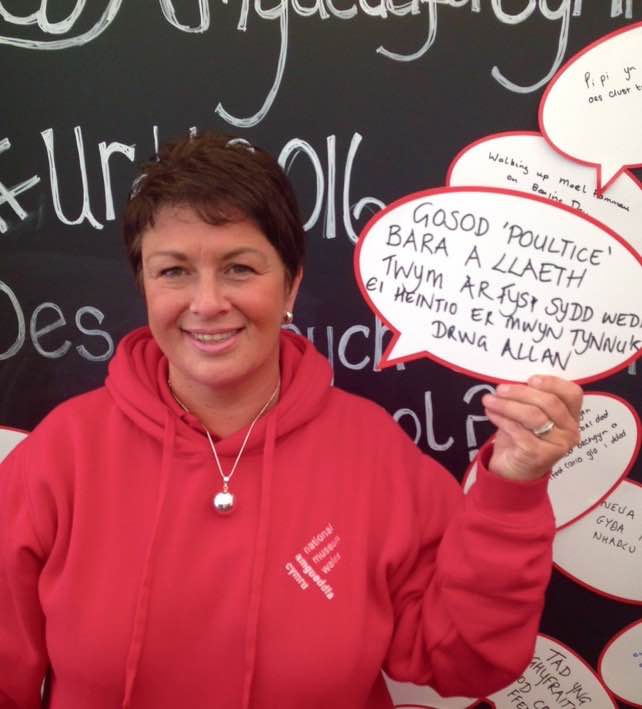
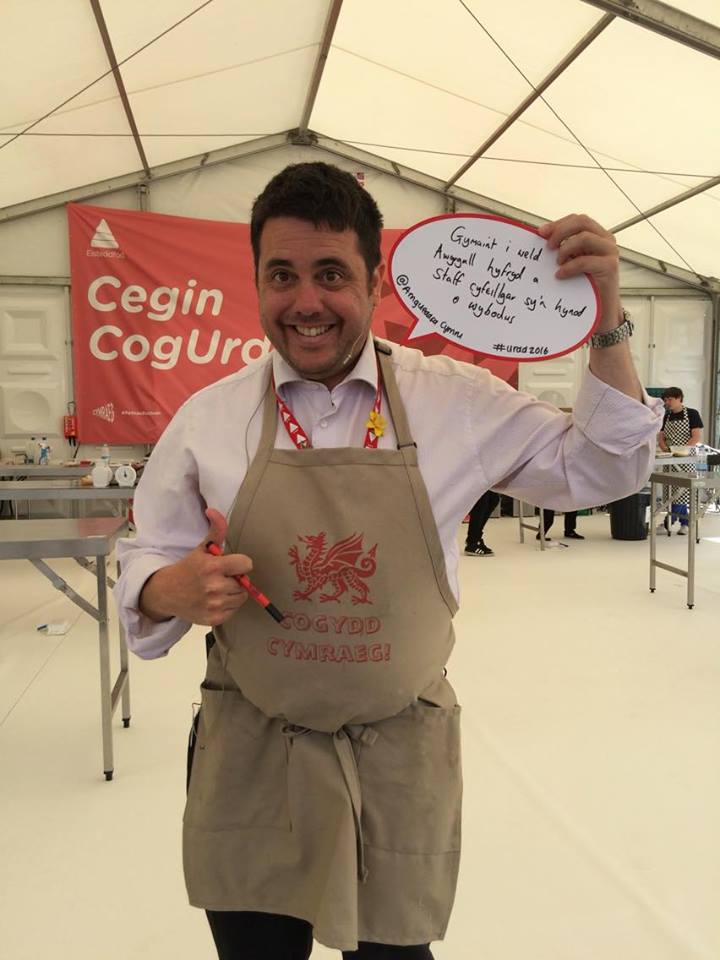
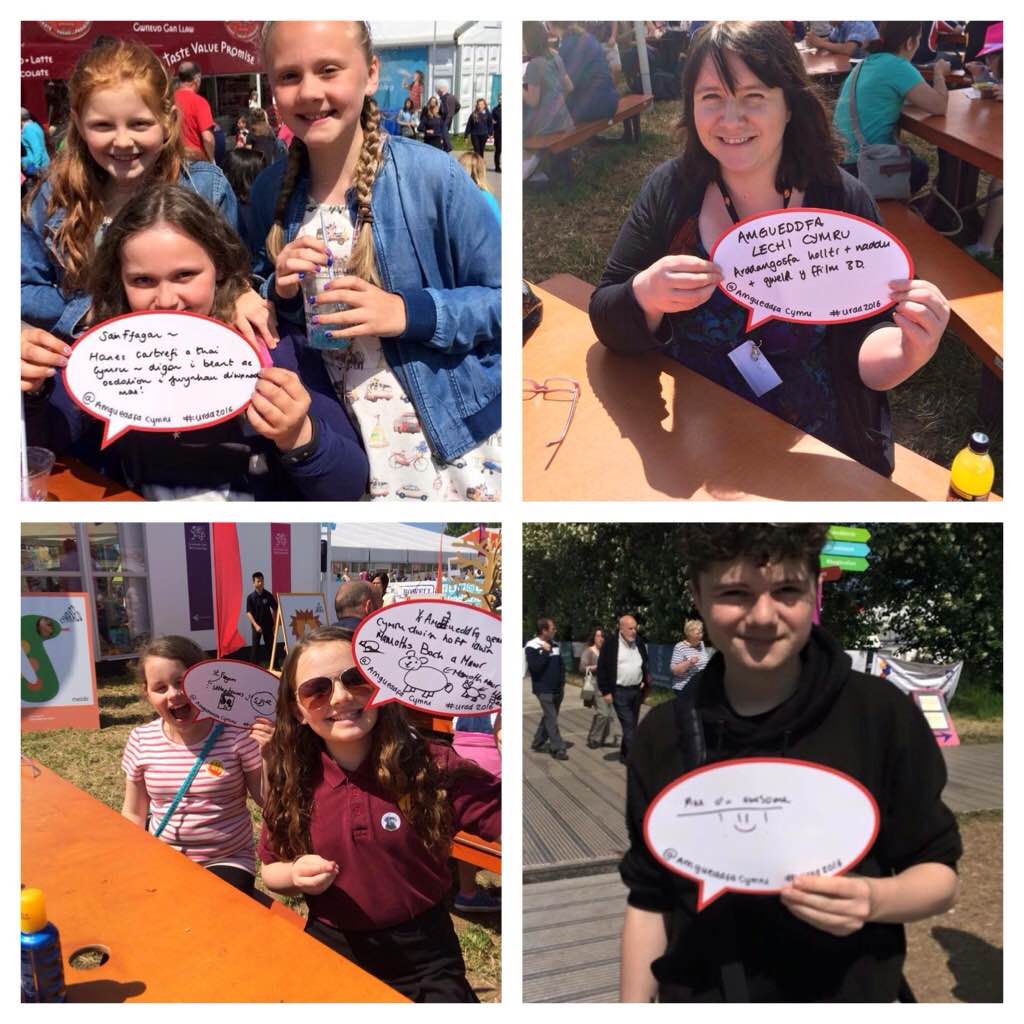
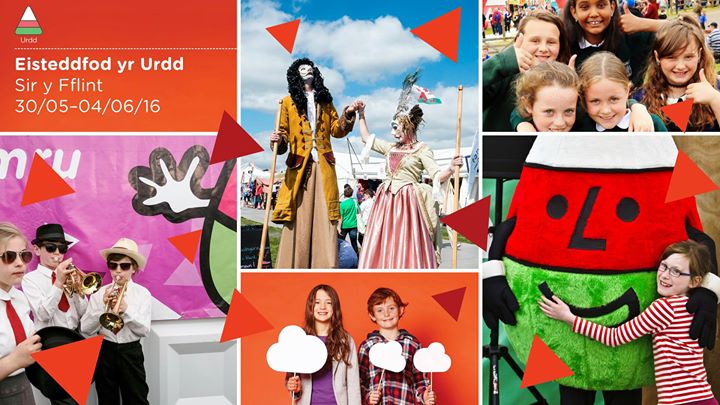
Dyma’ch Cyfle yn cydweithio gyda staff Amgueddfa Genedlaethol Cymru yn Eisteddfod yr Urdd 2016.Get the Chance is collaborating with staff from National Museum Wales at the Urdd Eisteddfod 2016

FullSizeRender
Mae Dyma’ch Cyfle/Get the Chance yn cydweithio gyda staff o’r Amgueddfa Genedlaethol Cymru yn Eisteddfod yr Urdd 2016 yn Sir Fflint.
Dyma’ch Cyfle /Get the Chance is collaborating with staff from National Museum Wales at this years Urdd Eisteddfod in Flintshire.
IMG_3459
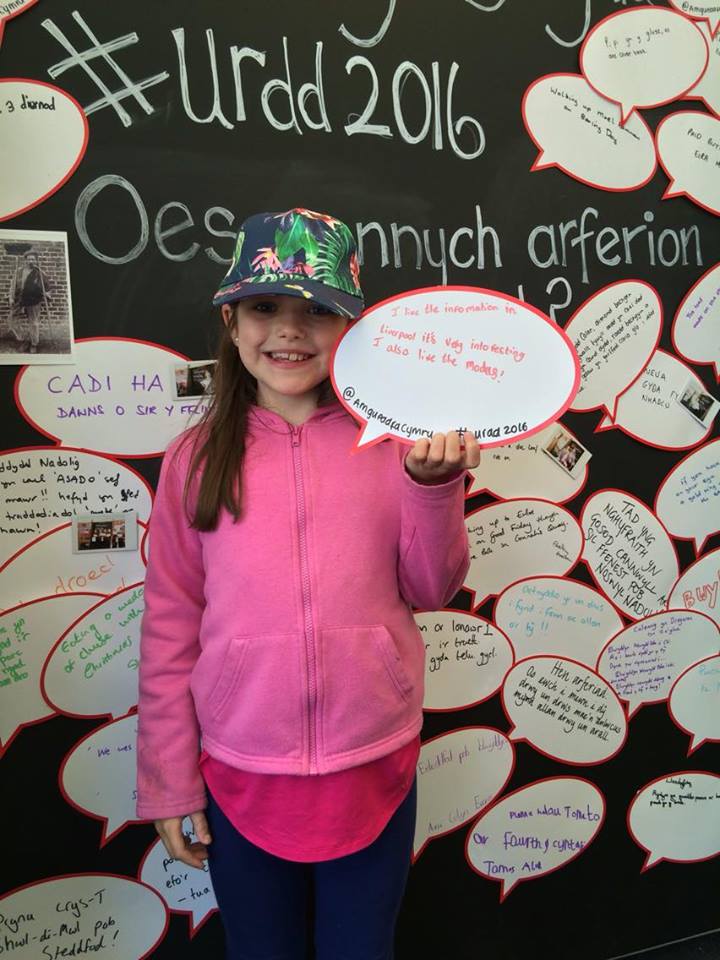
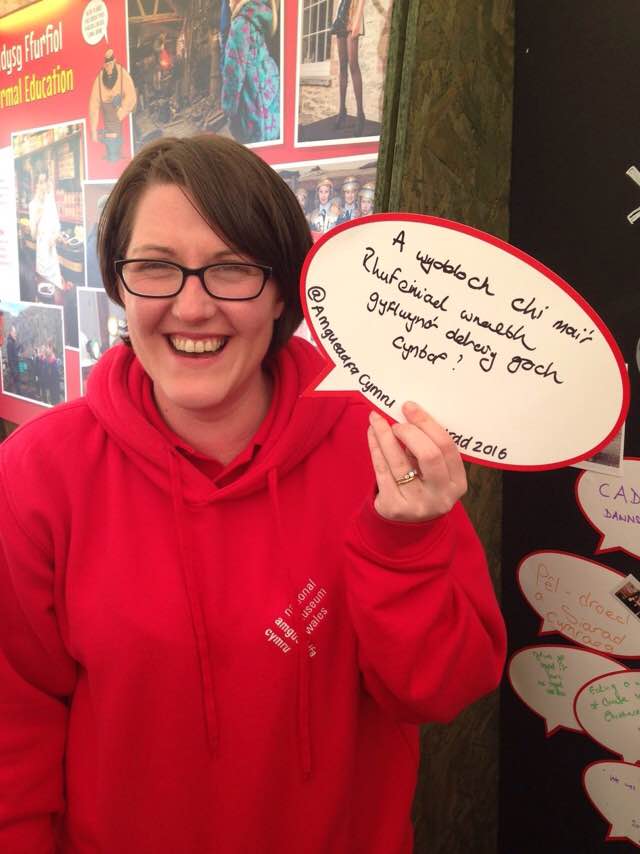
Rydym yn cefnogi aelodau o’r cyhoedd i rhoi adborth ar y perthnasau gyda Amgueddfa Genedlaethol Cymru a traddodiadau diwylliannol.
We are supporting members of the public give us feedback on the relationships with Wales National Museums and Cultural traditions.


IMG_3460
Rydym hefyd yn rhannu adborth ar yr Eisteddfod ei hun.
We are also sharing feedback on the Eisteddfod itself.
(null)
IMG_3454
13341977_1063881383686947_1938836649_n
IMG_3455
13318764_1063895690352183_1897234170_n
IMG_3456
13318749_1063881073686978_1228650407_n
 
IMG_3453 (1)
13329928_1063885527019866_1677774721_n
 
IMG_3483
 
IMG_3484
Menter gymdeithasol wedi’i leoli yn Ne Cymru yw Dyma’ch Cyfle, yn gweithio tuag at greu cyfleoedd i amrywiaeth o bobl sydd am brofi ac ymateb i chwaraeon, celfyddyd, diwylliant a digwyddiadau byw

  • Mae Dyma’ch Cyfle’n arddangos gweithgaredd ar wefan cylchgrawn ar-lein getthechance.wales/
  • Mae’r wefan yn cynnwys gweithgreddau gweithdy, adolygiadau, erthyglau golygyddol a llawer mwy
  • Mae’r wefan yn blatfform i’n haelodau i rannu, trafod a gwerthuso eu hymatebion personol gyda’u rhwydweithiau a’r byd ben baladr
  • Dyma’ch Cyfle yw’r gymdeithas sy’n cynrychioli aelodau Beirniaid Ifanc Cymru, Beirniaid Cymunedol Cymru a 3ydd Act

 
Digwyddiadau ar stondin Amgueddfa Cymru, Eisteddfod yr Urdd Fflint 2016
 
Dydd Mercher, 1 Mehefin 11:00 – Gweithdy Beirniadu gydag Aneirin Karadog
Dydd Iau, 2 Mehefin 10:30, 12:00, 14:00, 15:00 – Gweithdai Beirniadu Dyma’ch Cyfle
 
 
Get The Chance is a social enterprise based in South Wales, working to create opportunities for a diverse range of people to experience and respond to sport, arts, culture and live events
 

  • Get The Chance uses its online magazine website getthechance.wales/ to showcase its activity
  • The website content will feature workshop activity and outcomes, reviews, editorial features and much more
  • Our website is a platform for our members to share, discuss and evaluate their personal responses with their networks and the wider world
  • Get the Chance is the host organisation for members of Young Critics Wales, Community Critics Wales and 3rd Act Critics

 
Activities on Amgueddfa Cymru-National Museum Wales’s stall, Urdd Eisteddfod 2016
 
Wednesday, 1 June 11:00 – Critic Workshop with Aneirin Karadog (Welsh language)
Thursday, 2 June 10:30, 12:00, 14:00, 15:00 – Get a Chance Critic Workshops (Bilingual)

Digwyddiadau ar stondin Amgueddfa Cymru, Eisteddfod yr Urdd Fflint 2016/Activities on Amgueddfa Cymru-National Museum Wales’s stall, Urdd Eisteddfod 2016

eisteddfodyrurdd2
Menter gymdeithasol wedi’i leoli yn Ne Cymru yw Dyma’ch Cyfle, yn gweithio tuag at greu cyfleoedd i amrywiaeth o bobl sydd am brofi ac ymateb i chwaraeon, celfyddyd, diwylliant a digwyddiadau byw

  • Mae Dyma’ch Cyfle’n arddangos gweithgaredd ar wefan cylchgrawn ar-lein getthechance.wales/
  • Mae’r wefan yn cynnwys gweithgreddau gweithdy, adolygiadau, erthyglau golygyddol a llawer mwy
  • Mae’r wefan yn blatfform i’n haelodau i rannu, trafod a gwerthuso eu hymatebion personol gyda’u rhwydweithiau a’r byd ben baladr
  • Dyma’ch Cyfle yw’r gymdeithas sy’n cynrychioli aelodau Beirniaid Ifanc Cymru, Beirniaid Cymunedol Cymru a 3ydd Act

Digwyddiadau ar stondin Amgueddfa Cymru, Eisteddfod yr Urdd Fflint 2016
 Dydd Mercher, 1 Mehefin 11:00 – Gweithdy Beirniadu gydag Aneirin Karadog
Dydd Iau, 2 Mehefin 10:30, 12:00, 14:00, 15:00 – Gweithdai Beirniadu Dyma’ch Cyfle
 
Get The Chance is a social enterprise based in South Wales, working to create opportunities for a diverse range of people to experience and respond to sport, arts, culture and live events

  • Get The Chance uses its online magazine website getthechance.wales/ to showcase its activity
  • The website content will feature workshop activity and outcomes, reviews, editorial features and much more
  • Our website is a platform for our members to share, discuss and evaluate their personal responses with their networks and the wider world
  • Get the Chance is the host organisation for members of Young Critics Wales, Community Critics Wales and 3rd Act Critics

 Activities on Amgueddfa Cymru-National Museum Wales’s stall, Urdd Eisteddfod 2016
 Wednesday, 1 June 11:00 – Critic Workshop with Aneirin Karadog (Welsh language)
Thursday, 2 June 10:30, 12:00, 14:00, 15:00 – Get a Chance Critic Workshops (Bilingual)