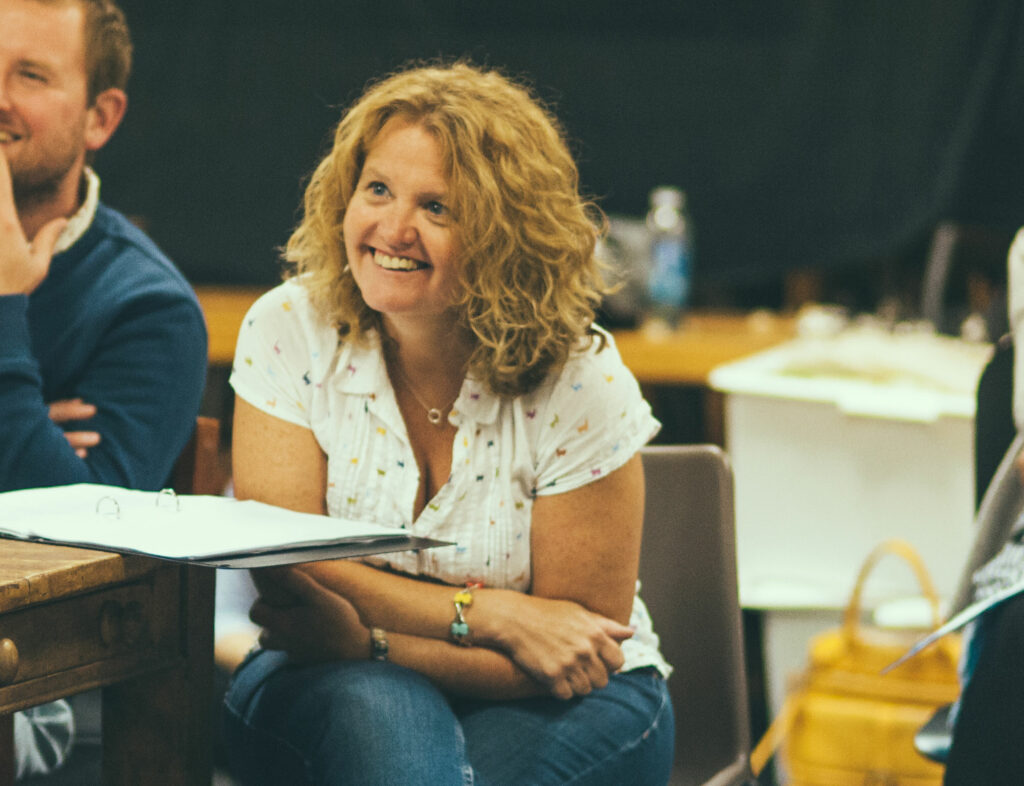
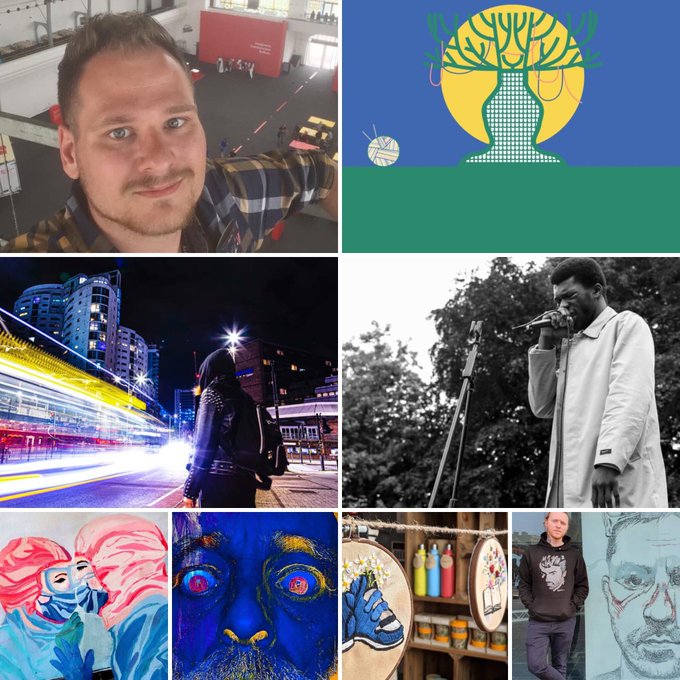
Hi I am Guy the project coordinator for Get The Chance. I am a trained secondary teacher of Art and Design and have taught at all Key Stages in England and Wales. I am also an experienced theatre designer and have designed for many of the theatre companies in Wales.
Hi Chris so to kick things off, what got you interested in the arts?
A passion for books which I’ve never lost. The ideas contained within them have informed everything I’ve ever done. I love words but now I’m just as interested in what lies between them. There lies the drama.
Company of Sirens is working with Sight Life Wales to perform ‘How My Light Is Spent’ at Chapter from the 16th – 20th August. It’s a production which is described as “What lies beyond the purely visual?” How did this project develop and what are your hopes for the future?
For me the attraction of working with the blind and partially sighted was to discover what was possible. Lock down was a double whammy for many of them, marginalised by their condition and the pandemic the situation became frightening as their interactions shrank further and for many disappeared totally. The performance tells their experiences of this time.
Locating the performance in a forest creates an analogy between lockdown and being trapped in a situation you can’t see yourself emerging from. The only solution being friendship, support and in this case the kindness of strangers.
Last November we presented “With Eyes Closed” performed between both lockdowns. This proved a life affirming experience that audiences responded to and identified with.
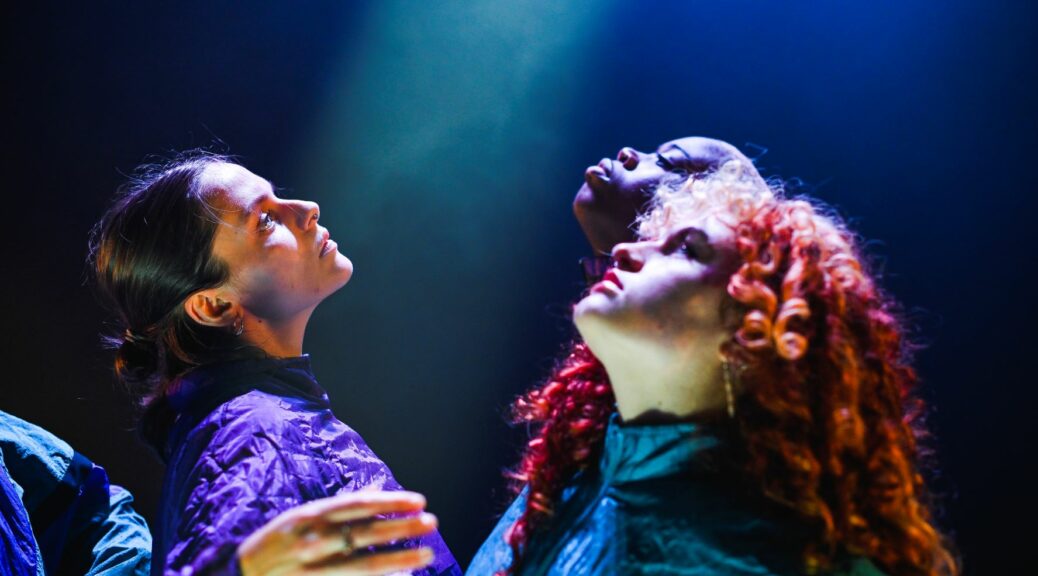
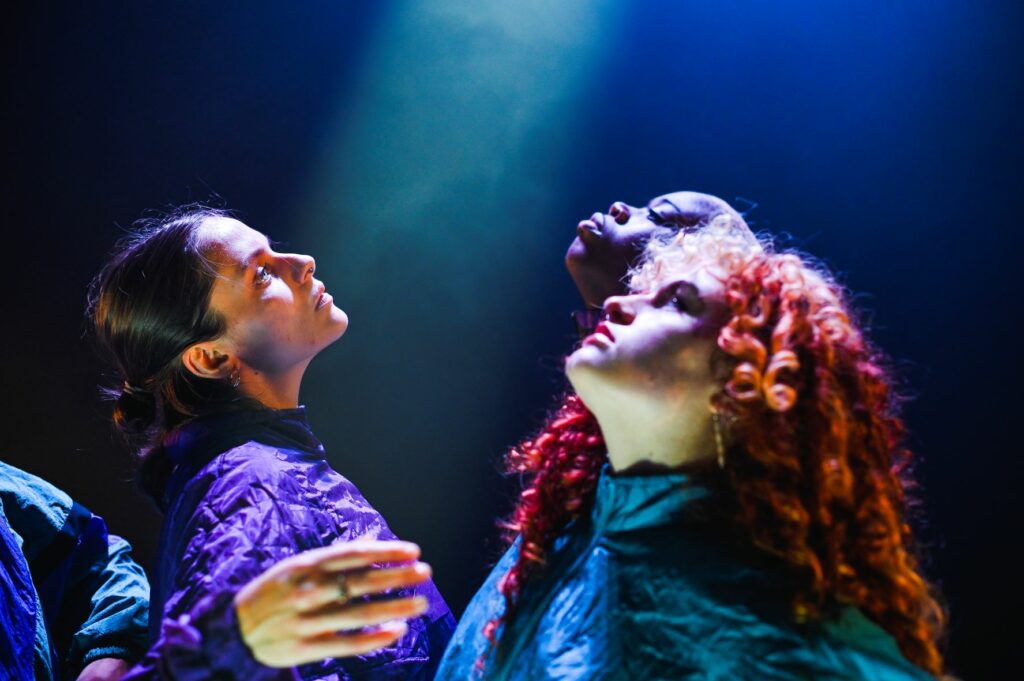
Image from With Eyes Closed
With this new piece we wanted to look more closely at when and how each person’s sight was lost and how they have reconnected with some of the things that are important to them.
The copy for the work references the Covid 19 Lock Down. With the successful roll out of the Covid-19 vacancies, the arts sector is hopeful audiences will continue to return to venues and theatres. How do you think artists can best share stories of the recent Pandemic?
The pandemic was the seismic event of our time that artists will need to respond to. I believe this creative response will impact upon the nature of the work for some time. This project came from the participants’ need to express how lockdown impacted on their lives to a lesser or greater extent. There is much humor in the stories and definitely hope going forward.
If theatres want to attract audiences post Pandemic , what do you think they should do?
It seems that some of the ways theatre existed mid pandemic are here to stay in some form.
I personally feel separating theatre from a live and present audience response isn’t theatre. A live audience leads, creates and forms a performance. Without it you have only 50% of the experience. That’s not to say it can’t be appreciated online but you lose the power to inform the drama by your presence and direct response.
Company of Sirens have worked with members of Sight Life Wales before, how did this relationship develop and can you tell us about your creative process?
We led taster workshops three years ago in order to gauge interest and explore ways of working. The work is participant led while we as a company allowed their ideas to come to fruition. They learn skills, gain confidence and meet friends, while we explore a new and original way of extending our practice.
My background stretches back to working with companies such as Cardiff Lab, The Practice and collaborations and workshops with European artists. It is this visual and exploratory approach we look to introduce to the group.
The concept of people with sight loss participating in a highly visual performance style is an interesting paradox but hugely appropriate. Restricted by visual impairment the performers want the opportunity to move, and beautiful things occur.
Get the Chance works to support a diverse range of members of the public to access cultural provision. Are you aware of any barriers that creatives or audiences in Wales face? If there are any, what might be done to remove these barriers?
I think it lies in the mindset of the creative. We deliver a large programme of work, working primarily with new writers and professional actors and creatives as well as the community and groups with protected characteristics..
I think to be inclusive is to approach each project whoever it may be aimed at with fairness and integrity. It’s a way of thinking that once embedded flows naturally into each process. I don’t believe imposing conditions aids creative work and development. We need to always take risks but that shouldn’t negate inclusivity.
If you were able to fund an area of the arts in Wales what would this be and why?
Experimentation, risk and the right to fail, without those factors the arts are a museum and we are treading water.
What excites you about the arts in Wales?
The fact that current directives will, I believe eventually lead to a fairer natural way for all people to experience the empowering nature of the arts, and that young creatives keep pushing the boundaries of what’s possible.
What was the last really great thing that you experienced that you would like to share with our readers?
Working with Sightlife Wales
Thanks for your time, Chris
You can find out more about How My Light is Spent and book tickets at the link below. All performances are Audio Described.
French music filled the Royal Welsh over the past few days. In a concert entitled ‘Beauty in Darkness’ has at it’s focus the Quartet for the End of time by Olivier Messiaen, written whilst at a POW camp in Poland during WWII. The surreal nature of the piece stems from biblical protheses of the end of all things. Whilst the first part of the night had an unclear focus on composers effected by the Holocaust, these were unlisted pieces, which had a laid back and cheery feel to them.
The Messiaen quartet has such a strangeness about it, it’s hard not to be taken along. The oddball mix of instruments (violin, cello, clarinet and piano) proves the oddness though the effect on an audience since it’s first airing in the actual camp, can’t be underestimated. A devout Catholic, Messiaen saw hope through the darkness of his circumstances. A sparseness fills the work as the clarinet gets a resounding solo filled with bird song and staggering breath work. The cello has an unbearable and moving movement in the middle, the violin at the end reaching a similar sadness. The piano throughout is pounding, ethereal. It’s easy to underestimate the quartet but when sat there listening you feel the true power of Messiaen as a composer.
Violinist Bartosz Woroch has had the honour of performing once again, this piece where it first premiered. Here he leads, his love of the work always present. Fine musicianship. On piano, Ayaka Shigeno battles the outrageous nature of her role, almost being the back bone of the work in a fierce display. I’ve heard Robert Plane play this piece with his clarinet a few times, he was replacing another ill musician. If anyone can truly do this part, it’s Plane who always dazzles. The rapt silence which fills his solo, the shrieks and sweet harmonies in other parts. WNO’s Rosie Bliss on cello makes her instrument weep more than usual, in an offering of such touching beauty. Few pieces in chamber music are truly as touching as this.
–
Composer Hélène de Montgeroult is a new discovery for me. With recent campaigns from Clare Hammond, new ears will get to hear more of a woman who lead a stimulating life. An aristocrat who fled France during The Great Terror, she would later be nearly executed were it not for her rousing variations on the French anthem. I’d like to think that story is true, you can already see the feature film on her life. With an army of students from the college, an array of her Etudes graced a small but eager afternoon audience. How utterly charming these pieces were. Somewhere between Mozart, Brahms and early other romantics with her own voice ringing through. There was a spiralling technique, with moments of humble resignation and a confidence in its music making.
The students did an impressive job of bringing these fluttery etudes to life. There may have been a misstep here and there, but the whole concert remained a delight. Looking back, I’d say the Etude no. 28 in E major stayed in the mind. The left hand notation for Etude no. 99 in E flat major for two pianos was another highlight. With the amount of musicians on stage, it went along swimmingly with the occasional adjustment to the piano stool as brief rest bites. Promising young musicians played in this and we all hope their time at the college is fruitful.
The real question remains why she has been forgotten to time? Is it sexism or politics? This remains an unjust crime which is in need of swift rectification. Consider me a proud convert.
Clare Hammond’s recording of Montgerolut’s Etudes with BIS Records is due for release in autumn 2022.
With dates across Wales in Swansea, Cardiff and Bangor, this hour long evening of contemporary dance will take you on an abstract and athletic journey through the cutting-edge research of Professor Paola Borri. OPTO NANO was created with an exceptional cast of five performers and explores pioneering cell imaging techniques using microscopes and lasers. Using dance to bring biophysics to the stage, the choreography proudly champions collaboration from across different worlds in a dynamic burst of movement, light and colour. Powered by an electronic sound score from critically acclaimed Welsh composer R.SEILIOG, the work celebrates the arts and research that modern Wales has to offer.
Jack Philp Dance is lead by choreographer and director Jack Philp. A Wales based artist with a fascination for science and digital technology. Lead by the latest advancements in the world around us and driven by a love for the physical body, his work seeks to capture the wonder in those things through energetic, colourful and collaborative choreography. Jack has toured work with his independent collective as well as choreographed for companies and universities across the UK; presenting work on stage, film and for digital experiences.
OPTO NANO tours Wales with dates in Swansea, Cardiff and Bangor from March – April 2022.
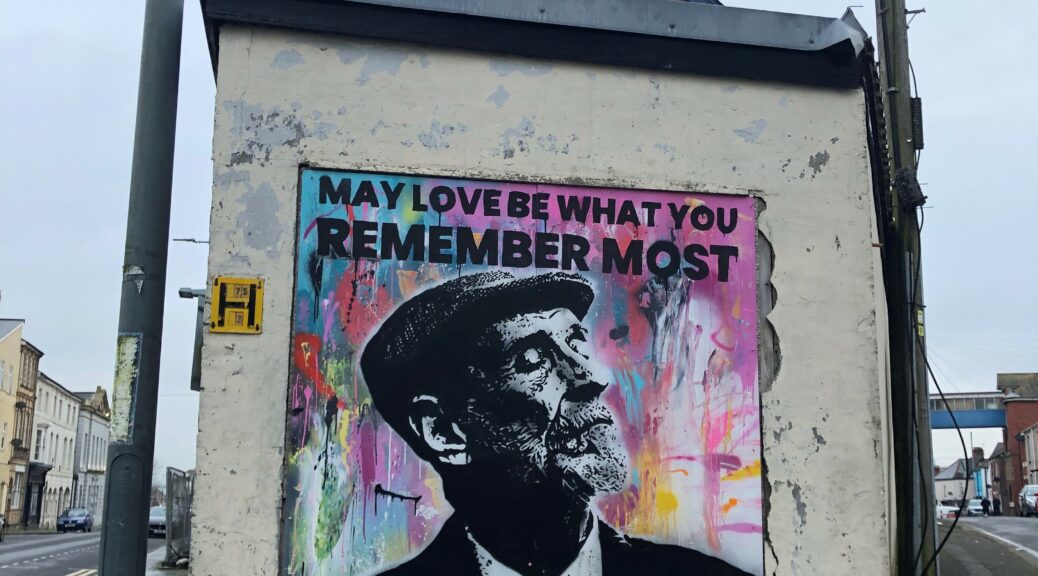
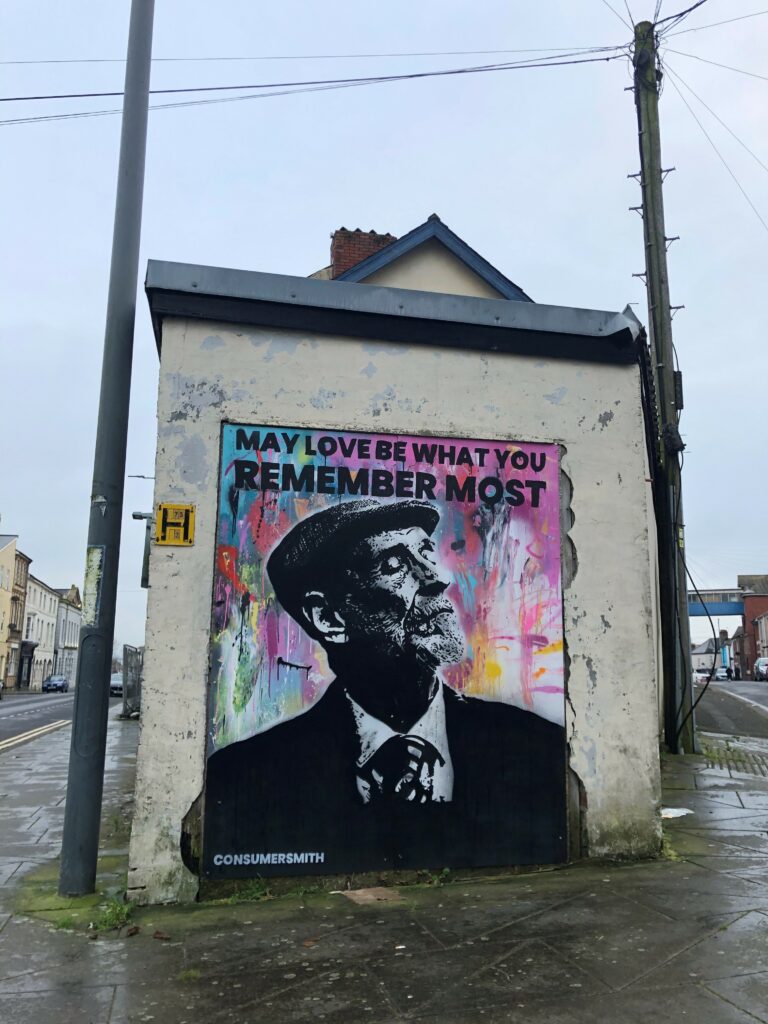
Local artist CONSUMERSMITH has kindly given The Riverfront Theatre & Arts Centre permission to sell prints of his headline-hitting lockdown-inspired street art ‘May Love Be What We Remember Most’.
The prints show the piece in its original home, the street where it was created, as a nod to the fact that it originated as a site-specific memorial for the coronavirus pandemic.
The money raised from the sale of these prints will go back to fund future projects that The Riverfront will be working on with artists and the community to bring people back together to enjoy the arts and being creative in person once again.
CONSUMERSMITH comments ‘I think it’s fantastic that The Riverfront are using my work to raise money to fund projects that will bring artists and the community together. The very nature of street art is being for the people.’
Sally-Anne Evans, The Riverfront’s Community Arts Development Officer adds ‘We are so honoured to be the home of this wonderful artwork. It was central to our community project ‘Share the Love’ that we ran while closed and now the piece is going to allow us to run more activities and reach more people now that we’re back open. As a registered charity Newport Live and The Riverfront are extremely grateful for donations and public support to be able to do a lot of the community work we do and we really hope that these wonderful prints prove popular so that we can use the money raised to run some wonderful workshops and community sessions. Lockdown showed us that the people of Newport love being creative, and we would love to be able to invite more people through our doors to join us for exciting new projects in 2022.’
Throughout the Riverfront’s closure the artwork was on display in the front windows of the building for passers-by admire. The piece stands as a memorial for life lost in recent times and during the pandemic. The elderly, the vulnerable, the isolated, the lonely, the people in care unable to be visited, so apt was its new home in the window of a building built for people to come together to socialise and share joy, yet a building forced to stay closed to keep people safe.
The piece will be on display in the Riverfront’s first floor gallery from the Art on the Hill weekend of 26-28 November through until the new year so that visitors can admire the vibrant portrait in person and up close.
The A3 prints of May Love Be What We Remember Most are available for purchasing at the price of £8 each from the Riverfront Box Office. You can view the Box Office opening times and find out how else you can support The Riverfront online at newportlive.co.uk/Riverfront.
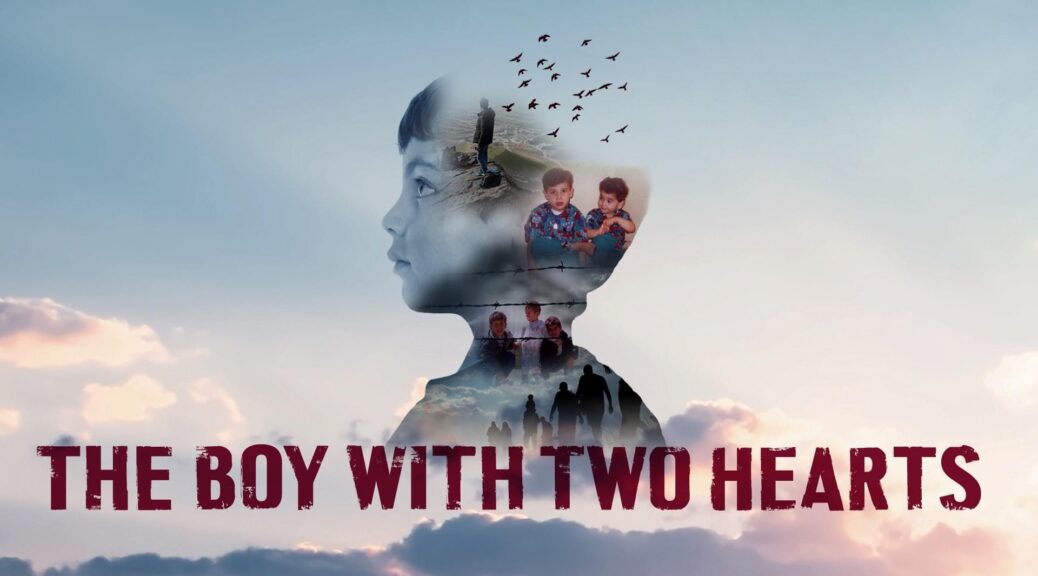
The Boy With Two Hearts written by Hamed Amiri, adapted for the stage by Phil Porter. Wales Millennium Centres’ first homegrown production since reopening and the first Welsh refugee story brought to the stage.
This true story moved me to tears, it was one of the most inspirational plays I’ve ever seen. This story could be happening today, with the recent events which has led to the fall of Kabul.
The play was performed by Hassam/Son (Shamail Ali) Hamed/Son (Farshid Rokey) Hussein/son (Ahmed Sakhi) Fariba/Mum (Gehane Strehler) Mohammed/Dad (Dana Haqjoo) and singer Elaha Soroor
In 2000, Hamed Amiri’s family have to leave their home and their life in Herat, Afghanistan. They need protection from the Taliban, who have issued a warrant to execute the mother, Fariba Amiri, for speaking out against the Taliban, demanding freedom for women’s rights. They also need medical help for the oldest son, Hussein, who has a rare, life-threatening heart condition.
Their journey leaving their home, learning to live with nothing, having to spend a long time on the road, never being safe, worrying every day whether they will ever make it to the UK, their “safe haven”, and having to put their lives into the hands of smugglers again and again is heart-breaking, one of many families who have left their lives behind to find safety in Europe and continue to do so.
Clothes hang from rafters above the stage in WMC and a disarray of suitcases and clothing are strewn around the edge of the stage. Creative stage captions set the scene and draw you in to the families fight and struggle but it’s not just about the hardship, it’s about fear, love, family, determination, courage and hope – these are the emotions that ignite a fire inside of you whilst you’re drawn into their powerful story.
The play is split between two emotional, nerve-racking journeys. The first shows the families cold and desperate journey through Moscow and then onto Europe, travelling by hiding in car boots, lowering themselves into the back of a lorry to hide from police and almost suffocating crammed inside a shipping container, without food or drink, however, these are only a small part of the family’s history. Their journey depicts how much they rely on the kindness of strangers, but we also see how so much cruelty while travelling to the UK leaves Hamed mistrustful of others.
The second path they take is through Hassam, Hamed and Hussein’s determination to succeed, once they settle in Cardiff, it also takes us on Hussein’s journey with the healthcare system for the treatment he so desperately needs. The wonderful vocals of Afghan singer Elaha Soroor, drifts on and off the stage throughout the play, observing the family’s’ heartache alongside the audience but also lending her haunting vocals, like death, to accompany the beat of Hussein’s heart, his fight for life and his struggle to breathe. Despite having been through the toughest times one can imagine, Hussein Amiri’s hope and positivity shines so bright and seems to have no ends.
The actors are so skilled at pulling you into every situation they encounter, drawing you into their love for one another and the pain they endure. This story is a moving and absorbing memoir, it is a very emotional love letter to the NHS. It oozes hope, courage and a love for life, it tells the story of how many lives a person can touch in just a short time and deserves to be shown to a very, very wide audience.
Trawsnewid is an Amgueddfa Cymru- National Museum Wales project aimed at LGBTQ+ young people aged 16-25. The project is run partly online and in person at the Waterfront Museum in Swansea.
The project explores queer Welsh history and the lived experiences of LGBTQ+ people living in Wales today through talks and workshops. There is also opportunity for participants to deliver their own talks and workshops with support from the museum. So far, the group have created a digital cabaret and a delivered a series of workshops for Swansea Pride and are working towards creating a museum takeover event and an exhibition at the Waterfront Museum in March.
We are looking for new participants to join this project, so if you identify as LGBTQ+ and are aged 16-25 and would like to get involved with the Trawsnewid project, please email bloedd.ac@museumwales.ac.uk for more information.
If you would like to watch the Pride Cabaret created by the participants of Trawsnewid, you can view it below:
Comedy has come a long way in Cardiff, especially in a city that is as heckle-heavy as Cardiff. It’s always been heavy heckle: there’s a certain je ne sais quoi in the air around the Taff and the Docks. Cardiff can make or break you as a comedian and/or your mental health.
Local Butetown resident, Leroy Brito (well known for his work on Tourist Trap and BBC Sesh) programmed a stellar line up at the Weston Studio of rising stars from across the United Kingdom including Morgan Rees, Priya Hall, and Yuriko Kotani.
The copy from the WMC read “comedian Leroy Brito curates this stand up comedy night featuring some of the funniest comedians on the circuit”- and they’re not wrong.
Morgan Rees
The evening opened with Cardiff boy Morgan Rees, with Brito compering throughout the evening. Rees is exceptionally funny, and may well become the next big thing in the comedy scene from Wales. Weaving in strands of his personal life with quotidien observations on the minutiae of the day to day life, I look forward to seeing more of Rees’ work in the future.
Priya Hall
Priya Hall knows her audience, and she knows her audience well. She memorably brings to life anecdotes of her family, the miner’s strikes, her (legendary) Nan. Priya is hilarious, and warmingly witty, and, like Morgan, is another up and coming comedian from South Wales. Brito’s gone out of his way to curate some of the best new talent from Wales on the Weston Stage, and it’s appreciated.
Yuriko Kotani
Yuriko Kotani is an England-based comedian, and called ‘one to watch by Time Out’. Kotani’s comedy is an absolute joy to behold, laying bare the intimacies of her experiences, and quotidien observations on the minutiae of day to day life. Kotani will be around for quite some time, and her career will continue to reach new heights with her groundbreaking comedy.
Brito’s work as a producer and a programmer is impressive, and amongst some of the best work seen at the WMC, both in terms of programming, and in terms of the talent on stage. Comedy in Wales has been predominantly on Zoom: but it’s coming back with a vengeance.
Hi Zara great to meet you, can you give our readers some background information on yourself please?
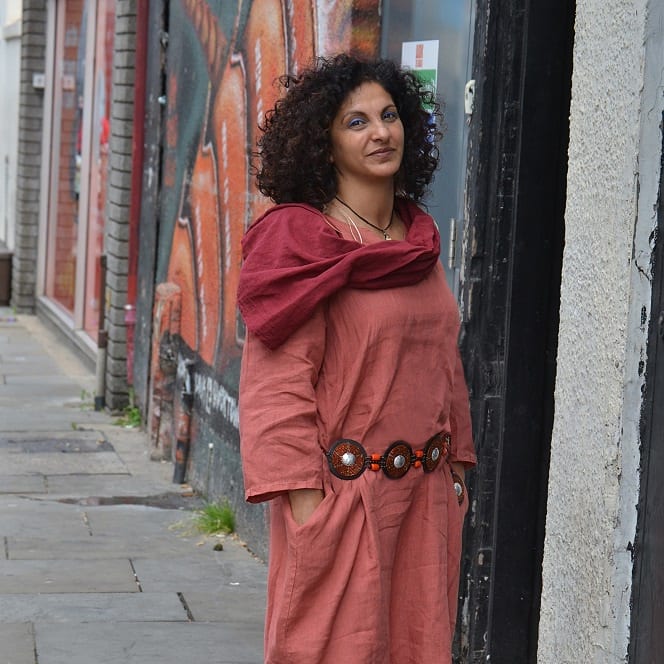
My name is Zara, and I am photographer from and based here in Cardiff. My degrees are in English Literature rather than photography – I am self taught but I get some helpful advice from my partner who did study photography.
What got you interested in the arts?
When I was growing up, we always had books and went to the cinema, so that started it off I suppose. I still enjoy film and reading but it started when I was young. At Christmas we’d go to the theatre to but when I was a teenager, I became interested in Indie music.
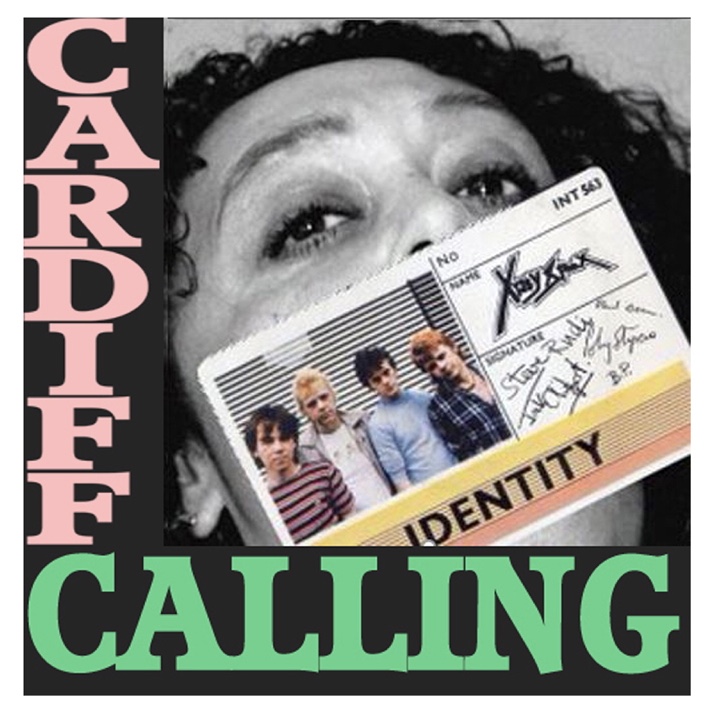
Cardiff Calling (great name!) is a new project featuring brown and black fans of punk and goth music and fashion. We have really enjoyed looking at your photos to date on your Twitter feed. How did this project develop and what are your hopes for the future?
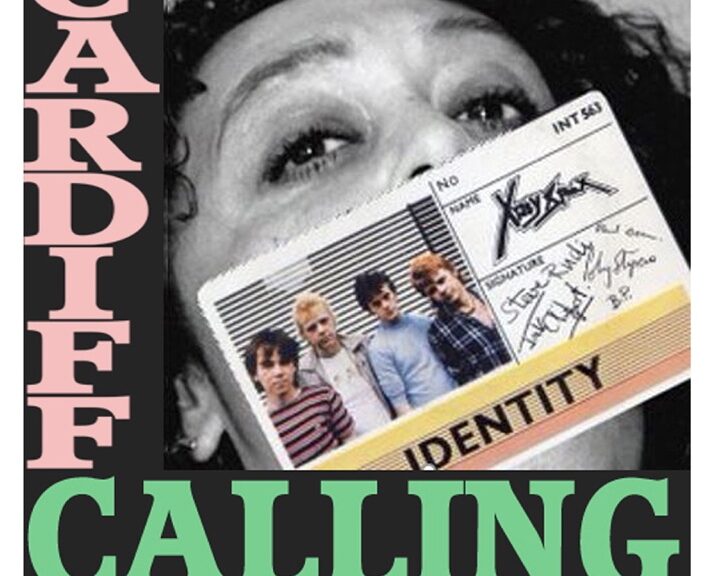
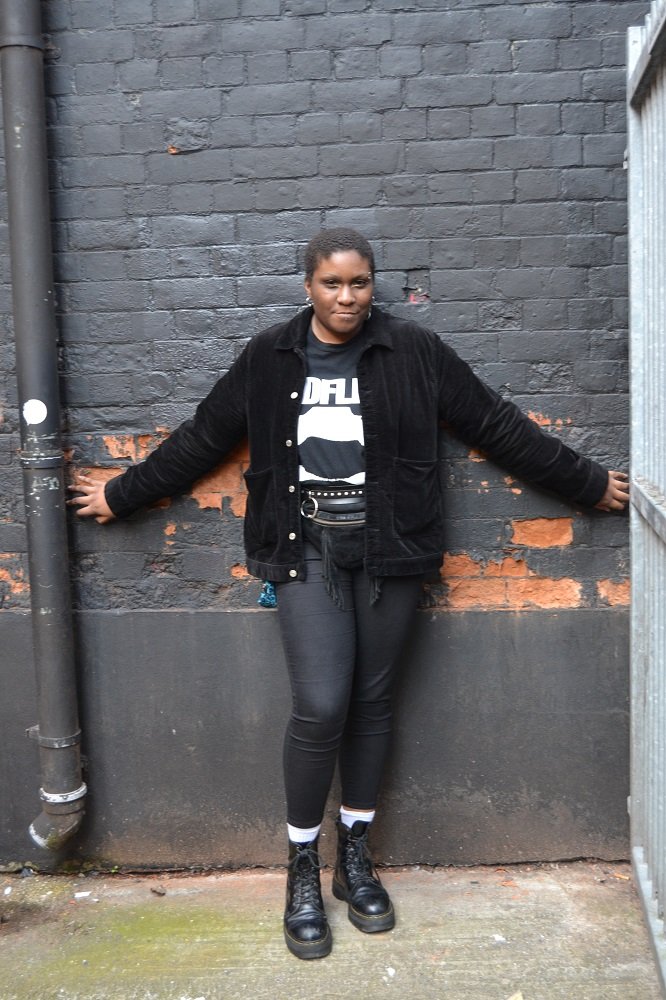
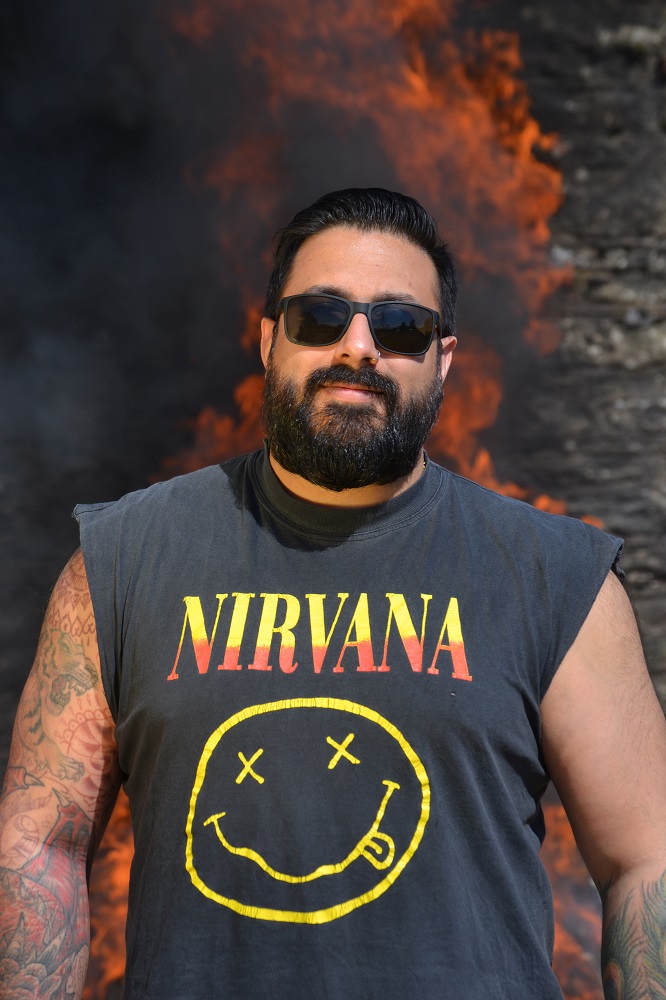
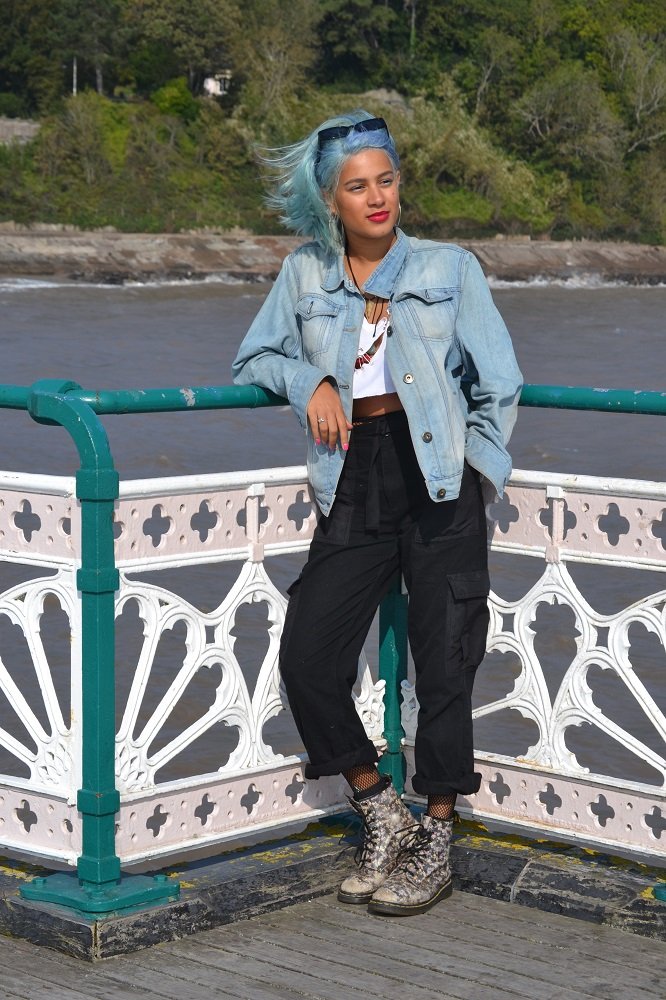
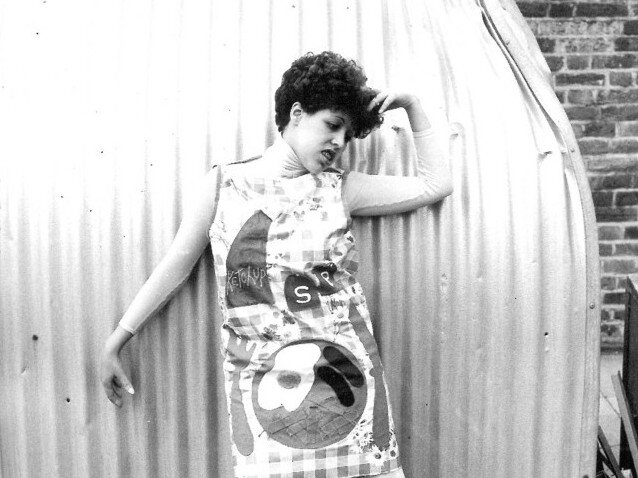
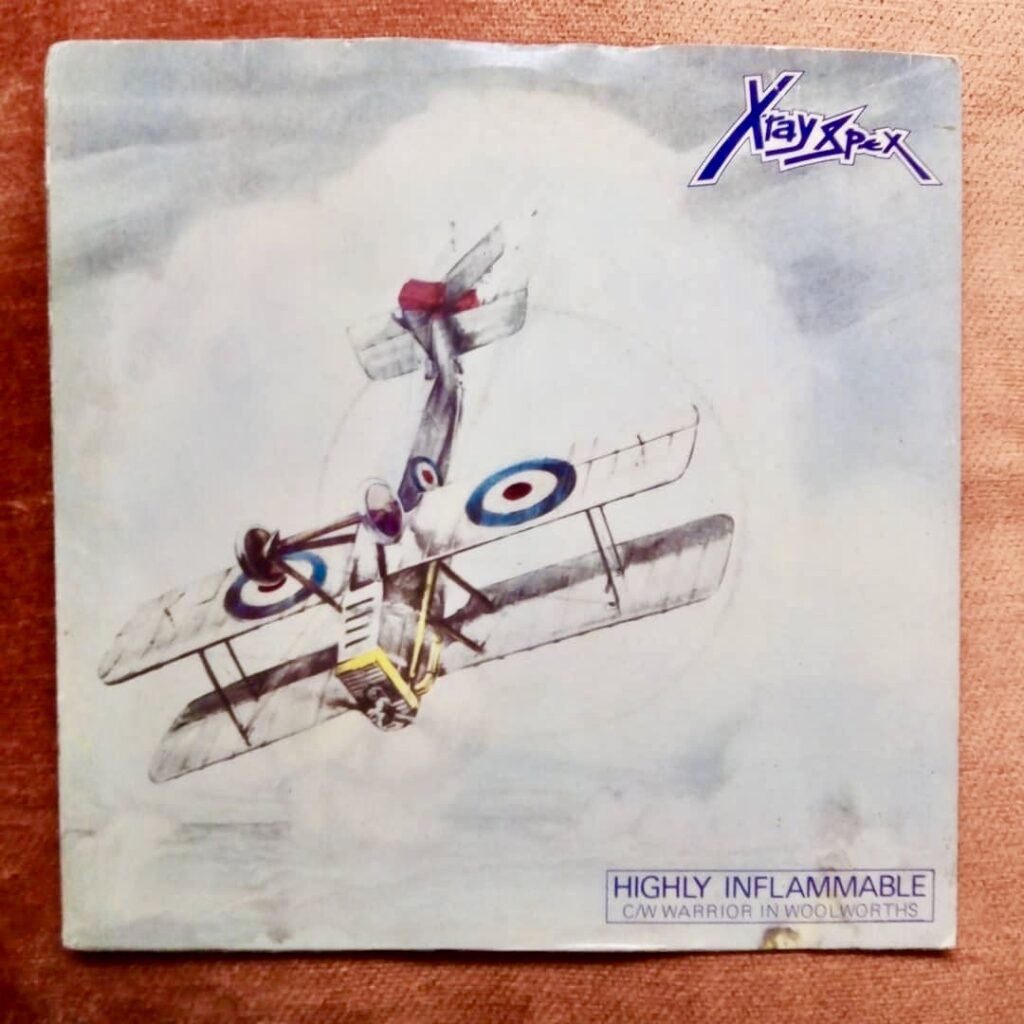
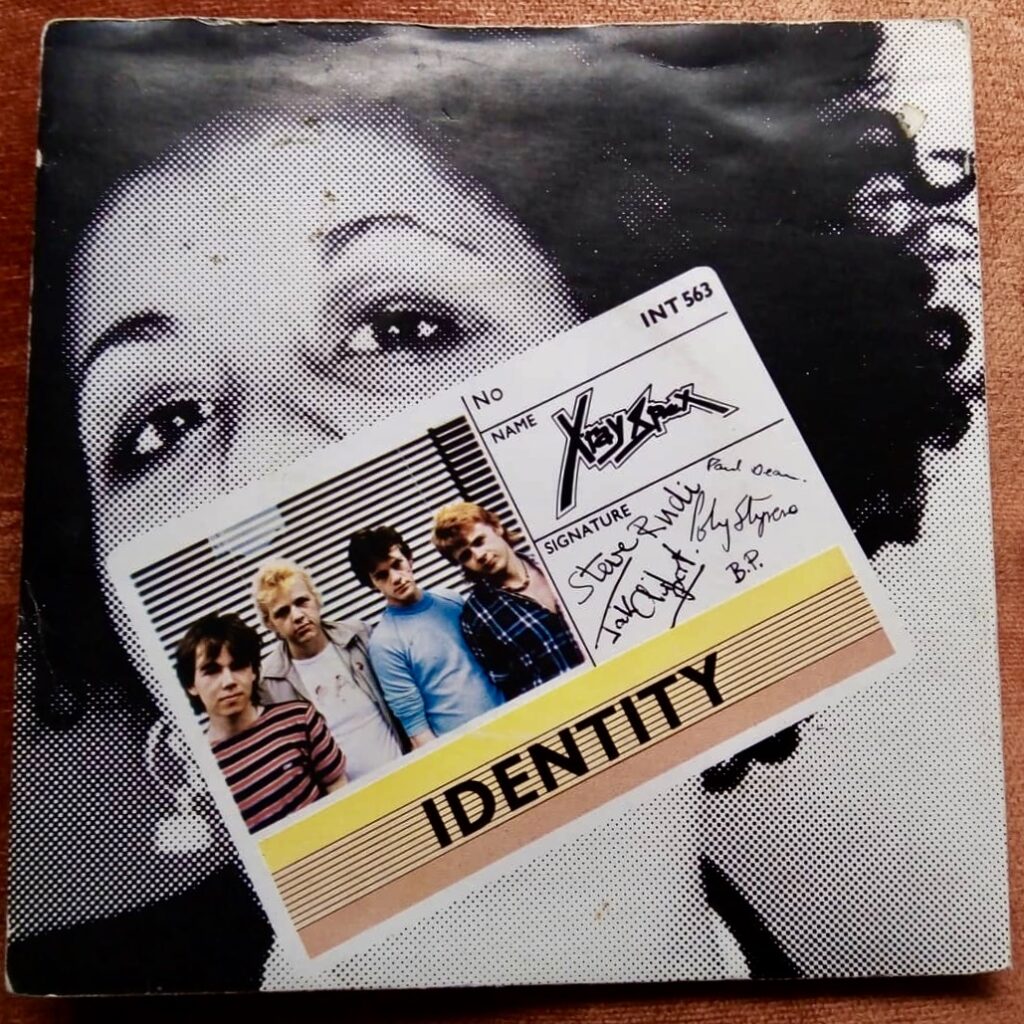
Thanks. The Cardiff Calling flyer is a mash up of the Xray Spex single sleeve ‘Identity’ and ‘London Calling’ album cover by The Clash. This project came from an idea I had after I photographed fans of the punk singer/icon Poly Styrene. It has developed because I wanted to focus on brown and black fans of punk and goth music and fashion because as a brown person, I am interested in it, and I know I’m not the only one who is. It’s as though we go to gigs, buy the music, dress the part, but are a niche within a subculture and all I want to do is show some visibility.
A selection of images from Cardiff Calling are featured below
I would like to have an exhibition of this current project and I want to link my portraits with my street photography – both are mainly focused on the overlooked. I would like to continue in a similar line of looking for and photographing underrepresented groups within Indie music with a particular focus on brown and black people. I will probably combine it with street photography in the future.
Over the last 18 months with the BLM movement and black history now being taught in Welsh schools do you feel artists of colour in Wales are now being fairly represented in education and cultural spaces?
I don’t think artists of colour are fairly represented and more needs to be done, particularly as we are part of Welsh life and culture. Therefore, it’s only right and fair that black history be taught in school, and it should start as early as the infant school. A movement like BLM is really important because being treated unfairly based on the colour of your skin is wrong. It’s disappointing that black and brown people’s input is being recognised quite late in the day because of systemic racism but I am hopeful that representation in education and cultural spaces both behind the scenes as well as up front in the gallery/theatre/cinema space will be the norm sooner rather than later.
If you are interested in getting involved in Cardiff Calling you can contact Zara at zaramader@hotmail.com
You reference Poly Styrene in your work, why is she such an inspiration to you?
Poly Styrene is such an inspiration for me because she was one of only a handful of non-white people in a famous punk band and being a woman as well was quite extraordinary. Being half Somali and half British myself it was unusual at the time to see a woman with the same ethnicity as me who was famous. I don’t know if it was in her mind that she would be inspirational to a brown girl in Wales, but she was. There wasn’t the same type of language when I was growing up as there is today like ‘you have to see it to be it’. But it certainly helps to see people like you doing things you’re interested in.
Poly Styrene
Get the Chance works to support a diverse range of members of the public to access cultural provision. Are you aware of any barriers that creatives in Wales face? If you are, what might be done to remove these barriers?
I think certain barriers are a problem for creatives in Wales such as a lack of time and money. The creative industries aren’t given the same type of priority as more tradition careers such as teaching, law or medicine, they are also peddled as difficult to get in to and more difficult to sustain unless you get lucky, or you know the right people. I hope organisations realise that opportunities need to be created that offer finances and useful links to people that need it. These offers need to be genuine and real for creatives, of any age, to build a career.
With the roll out of the Covid-19 vacancies, the arts sector is hopeful audiences will return to venues and theatres. If theatres want to attract audiences, what do you think they should do?
It’s been a difficult time for a lot of venues, but the vaccine rollout has been a good thing to help arts spaces open again. I think theatres could consider cheaper ticket prices for a period, maybe approach organisations, schools and disadvantaged groups that may have less access to the theatre in general.
If you were able to fund an area of the arts in Wales what would this be and why?
This a difficult one. It would be a toss-up between cinema and photography, but I really enjoy watching films, so I’ll go for film. Also, I appreciate the skills involved from different parts of the creative industries that come together that get a film made.
What excites you about the arts in Wales?
What excites me about the arts in Wales is the array of talent here in different disciplines. Because we are lucky to have people from different cultures with careers as artists it adds a new aspect to arts practice here in Wales. We help Wales and its cultural output in a very positive way.
What was the last really great thing that you experienced that you would like to share with our readers?
I was given two Xray Spex 7 inch singles from a friend recently and because I have a record player I’ve been able to listen to them. It’s made me listen to some of the vinyl I have and I really enjoy it. It’s a small thing but I appreciate.
With the roll out of the Covid-19 vacancies, the arts sector is hopeful audiences will return to venues. If venues want to attract audiences, what do you think they should do?
Put on shows. There is a spanner in the wheel called R & D. It’s like an insurance policy against bad theatre, but all it does is clog up the system, and nothing gets produced in fear of it not succeeding. Companies funded as part of RFA have a track record of creating great work, and there should be a level of confidence in those companies to do that. The development of new writing or a seed of an idea is different, but still, there should be places for that work to be seen and tried out; otherwise, there will be nothing on our stages. No product, no audience, no data to be collected for future strategies. Invest in the art.
Which venue has a special place in your heart and why?
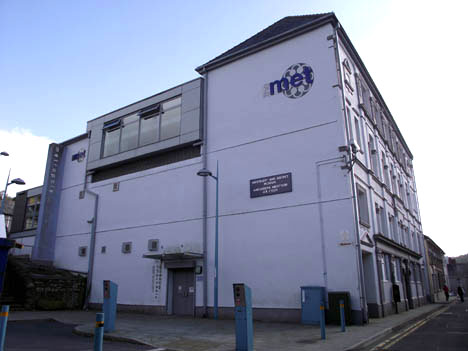
There are so many in Wales to mention. Places like The Muni, The Gwyn Hall and the Met, these venues had the nerve and the guts to produce two productions of ours that then toured No1 venues in the UK. But also, how the entire staff bought-into being part of the production from the box office staff to the people working in the café, to those that made sure the venues were clean and safe and comfortable places for people to enjoy a good night out. They felt pride in being part of something exciting, which brought in audiences. I will always be grateful for their generosity and humour in making those shows a success.
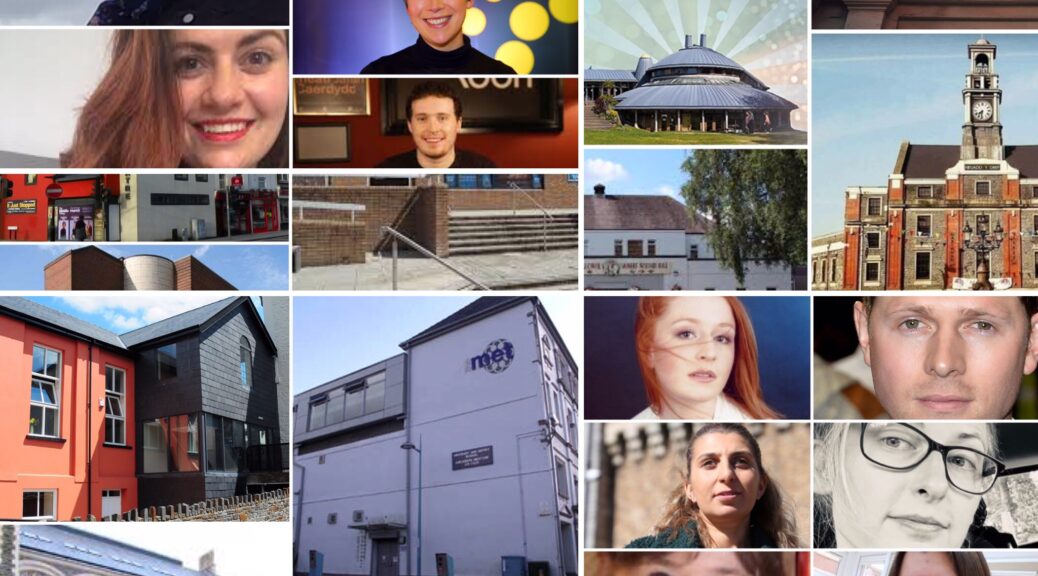
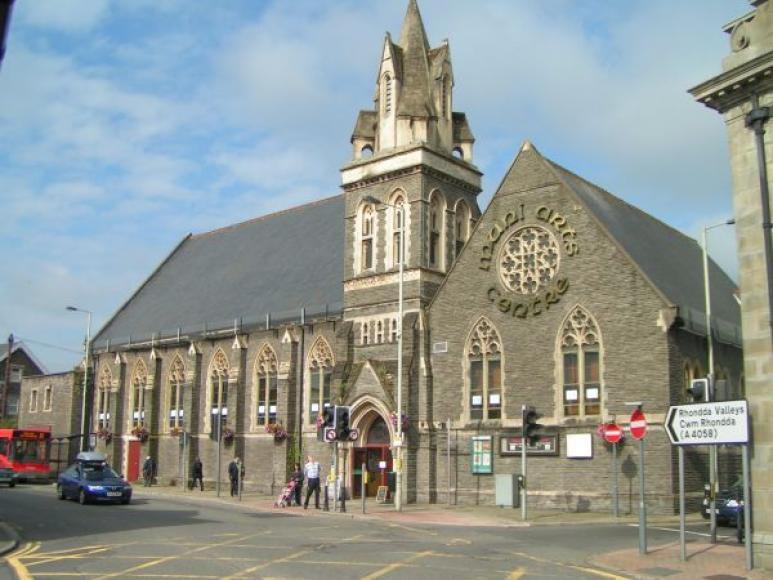
The Muni
The Gwyn Hall
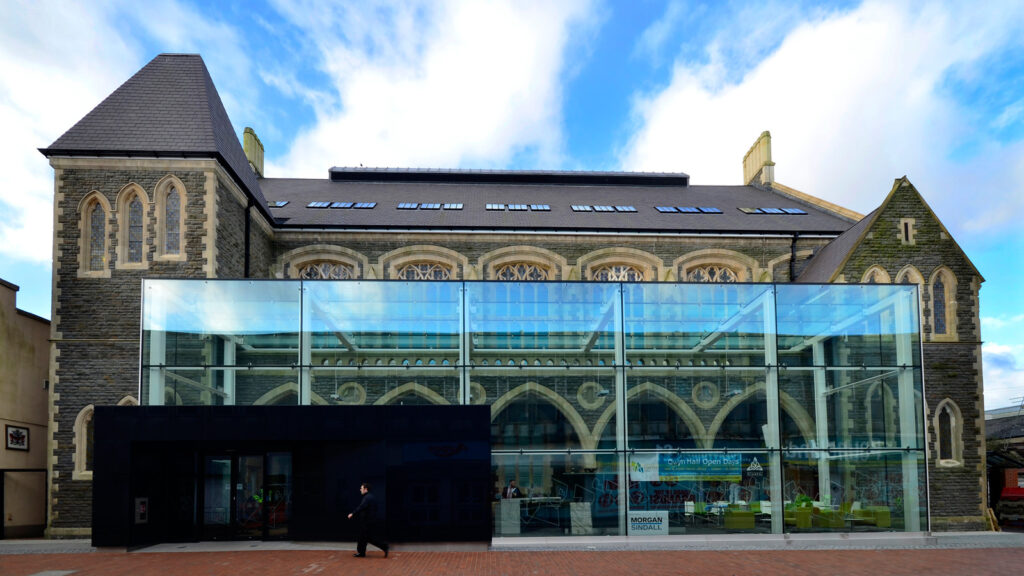
The Met
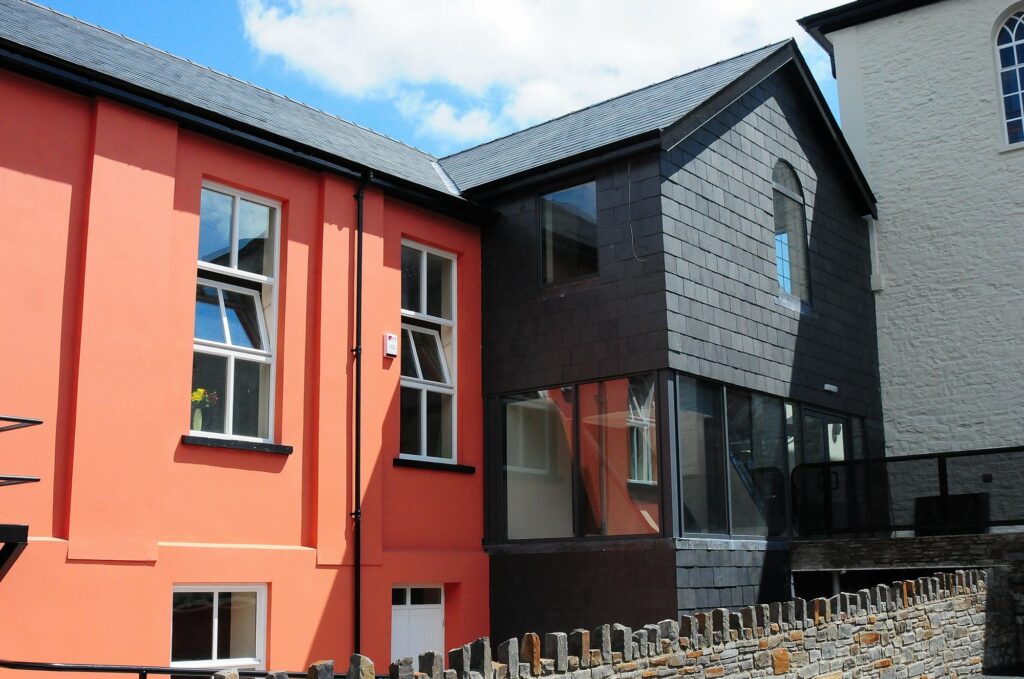
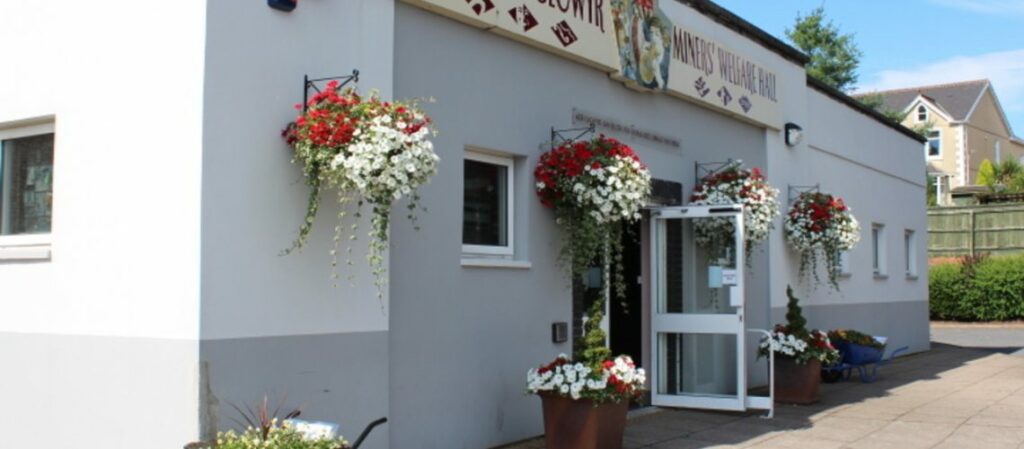
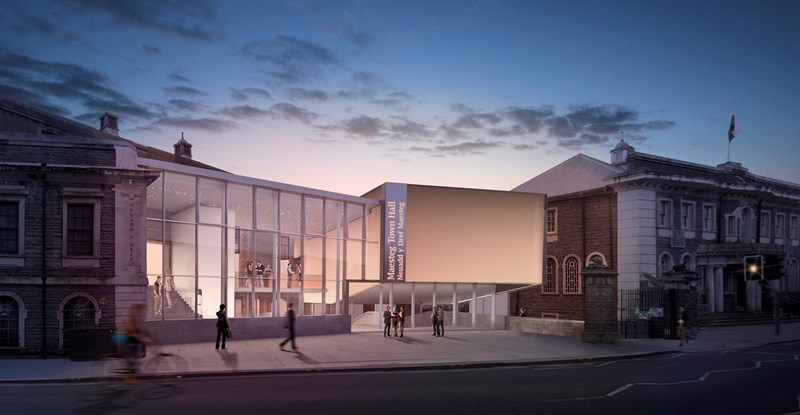
Our current collaborations with our Consortiwm Partners Soar in Merthyr; The Welfare in Ystradgynlais and The Town Hall in Maesteg, are perfect examples of venues at the heart of their communities, their knowledge of their audiences are intrinsic to a successful thriving theatre culture.
The Soar
The Welfare
Maesteg Town Hall
Our co-production partnership with Aberystwyth Arts Centre is joyful. We have been in discussions and pre-production for Operation Julie since 2017, and when it does finally get to the stage next summer will be one of the most thrilling experiences I have had in co-producing a show.
Aberystwyth Arts Centre
The National Youth Theatre on Great Britain planned to produce The Masters House on the 14 -17 July. On the 10 July they announced that due to Covid-19 isolation requirements they have had to cancel the performance. One of the plays directors Chris Sonnex tweeted in response.
“We can’t forget it’s also a reminder of the incompetence of this government, Johnson acted too late over & over, the people in charge hired their incompetent friends & they’re systematically letting down the arts. The disregard they give artists and theatre is because they are scared of the power we have, the opposition we send, the empathy we encourage. We weren’t working with young people, we were working with artists and activists, who will not forget this governments shit. I don’t want to hear anyone chatting about talking Tory or being apolitical. I want you all to hold these incompetent pricks to account. They’re letting your parents down, you are down and the younger generation down. Artist must revolt. Create. Revolt and fight.”
Is Chris correct?
Yes. In recent meetings with young creatives – that is very much what they want to say. Our responsibility is to support them in saying that. To make a change.
In response to Covid-19 Many theatres and arts organisations have developed work to be performed outside. Have you seen any work created in this way and can you see audiences having an appetite for it to continue?
Yes, Theatr na nÓg and Theatr Brycheiniog were involved in a test event for Welsh Government. Although our experience of outdoor theatre is minimal, it was joyous and a great way to be back in the world of producing and performing live.
I think it is a way forward to keep theatre in the public eye in this weird world. However, as we know, it is so weather dependent, and I think the consequences of the climate crisis make it impossible to predict any dry season with certainty. A discussion is needed on insurance, especially for smaller companies and venues with so much more at risk of cancelling performances—also, a dialogue between local authorities, companies and venues to have a consistent message on rules and regulations.
Prior to Lockdown many venues did not stream any pre-recorded or live performances should they continue to do so and if so, how can they do this without harming their physical performance offer?
Needs must. However, it is not theatre. It is not a shared experience. Without the incredible investment needed in creating quality digital productions that you can monetize effectively, it will be the death knell of live performance. Obviously, as an added resource that sits alongside a show for audiences to access, it is and has been of benefit for us to widen our reach and to get our work seen not only in South Wales but all over the world. But, engagement, real engagement is vital. Never underestimate the power and impact of live theatre.
Chris Sonnex, Director
With the roll out of the Covid-19 vaccines, the arts sector is hopeful audiences will return to venues. If venues want to attract audiences, what do you think they should do?
Be better, don’t bet on what you think is a sure bet. Innovate, listen to people, stand up for people, make something exciting. Remind people what they were missing out on all this time, I don’t need to see Romeo and Juliet again, and if I did I could watch it on streaming services, give me something else. STOP MAKING ALL WHITE PRODUCTIONS, HIRE ARTISTS OFFSTAGE AND ONSTAGE FROM THE GLOBAL MAJORITY
Which venue has a special place in your heart and why?
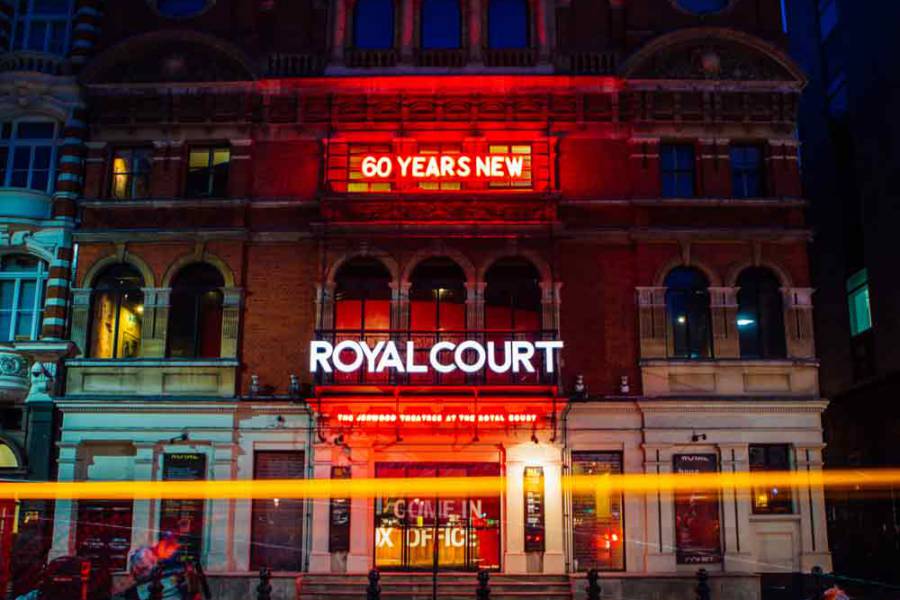
The Royal Court, if it wasn’t for that family led by Vicky Featherstone, I wouldn’t be where I am now, wouldn’t have a career, wouldn’t have learnt all the things I know now. Also the upstairs space is the best theatre in London, changes every damn time.
Vicky Featherstone
The National Youth Theatre on Great Britain planned to produce The Masters House on the 14 -17 July. On the 10 July they announced that due to Covid-19 isolation requirements they have had to cancel the performance. Yiu wer to Direct this production and tweeted in response.
“We can’t forget it’s also a reminder of the incompetence of this government, Johnson acted too late over & over, the people in charge hired their incompetent friends & they’re systematically letting down the arts. The disregard they give artists and theatre is because they are scared of the power we have, the opposition we send, the empathy we encourage. We weren’t working with young people, we were working with artists and activists, who will not forget this governments shit. I don’t want to hear anyone chatting about talking Tory or being apolitical. I want you all to hold these incompetent pricks to account. They’re letting your parents down, you are down and the younger generation down. Artist must revolt. Create. Revolt and fight.”
Are you correct?
Yes. Yes I am. Some people might not think I am. And that’s fine. Because that’s a democracy. You know what a democracy isn’t, putting in bills that silence journalists, stifle, and ban protests, decimate the arts education, lets poor people starve to death, tries to destroy the national health service, and sells everything that’s publicly funded off. That’s closer to fascism. So, you might not agree with me, but that’s a right you currently have. If you don’t fight this government, in years to come you might not have that right anymore.
In response to Covid-19 Many theatres and arts organisations have developed work to be performed outside. Have you seen any work created in this way and can you see audiences having an appetite for it to continue?
Theatres more than four walls, it’s a movement, its art that cant be contained (at the best of times). Arts organisations, especially people that deal with community and youth work, have been utilising outside work for years. Audiences have an appetite; it’s been there forever. It’s not new. It is bringing theatre to the people. Long may it continue, but let’s not forget the wonderful organisations and individuals that have been doing that forever.
Prior to Lockdown many venues did not stream any pre-recorded or live performances should they continue to do so and if so, how can they do this without harming their physical performance offer?
Don’t let the necessity and the medium dictate the work you make. If it’s just to make sure your relevant and to be seen like you’re doing something, then we don’t need that. If its interrogating the art, if its pushing the art form, keep doing it. Having said that Zoom shows aren’t my cup of tea, and a static shot of a theatre space bores me, (filming theatre reminds me that I don’t have a choice over where my gaze is, that you’re telling me where to look, not earning it. Which annoys me somewhat.) However I will say, the scope and reach that you can get when you do it well, is spectacular, there’s a real diversification of who you are reaching, it means people that can’t leave their house for whatever reason can see it, that people that can’t afford nights out can see it, that people not based in the city or town that its put on can watch it. That’s great. That audience deserve that you give them something really good, so don’t half ass it.
Get the Chance supports the public to access a world of cultural provision. We receive no ongoing, external funding. If you can support our work please donate here. All and any contributions are greatly received, thank you.
Louise Miles Payne, Director, Creu Cymru
With the roll out of the Covid-19 vacancies, the arts sector is hopeful audiences will return to venues. If venues want to attract audiences, what do you think they should do?
I think the main thing is to make sure that audiences feel comfortable and know that venues are doing all they can do keep people safe.
Enhanced cleaning.
Hand-sanitiser stations.
Wearing of face coverings.
Modified routes around the buildings to avoid overcrowding.
Possible contactless ticketing, possible staggered arrival times and security checks.
Restricted stage-door activities post-show.
Some socially distance performances may still be available (where possible).
Staff and performers will take part in lateral flow testing.
Audiences will be encouraged to do their own lateral flow tests prior to attending.
Audiences should not attend if they have any Covid-19 symptoms or have been asked to self-isolate by Track, Trace and Protect.
Refunds will be available to patrons not able to attend for these reasons.
Audiences recommended to bring minimal possessions.
We really want to see audiences back in our venues. Some have already reopened with live performance and cinema with limited capacity and are a great example of how it can be done safely.
Which venue has a special place in your heart and why?
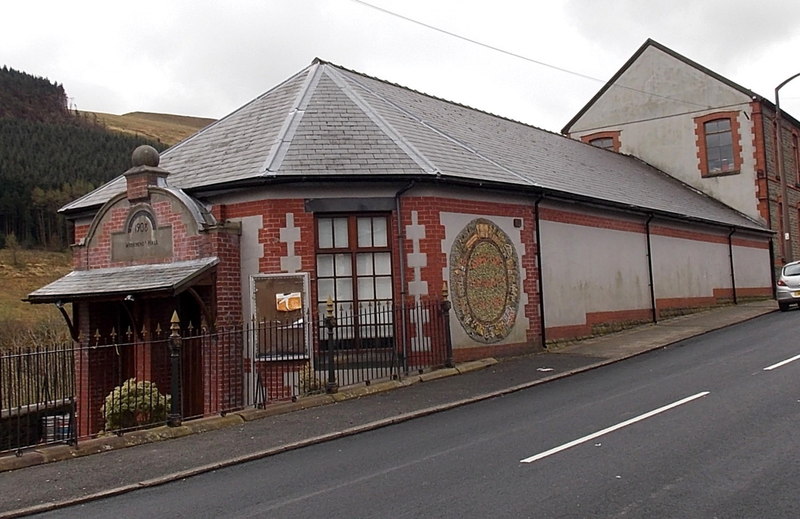
That’s tough one as the majority of venues in Wales are Creu Cymru members so I wouldn’t want to favour any one place! I’ll cheat and choose a non-member. Parc Hall in Cwmparc, just outside of Treorchy in the Rhondda. This was the first venue I worked in after University and I did everything from book the shows, box office, technical, marketing and teaching drama classes! It’s a beautiful example of a miners hall and was just a joy to be at.
Parc Hall
The National Youth Theatre on Great Britain planned to produce The Masters House on the 14 -17 July. On the 10 July they announced that due to Covid-19 isolation requirements they have had to cancel the performance. One of the plays directors Chris Sonnex tweeted in response.
“We can’t forget it’s also a reminder of the incompetence of this government, Johnson acted too late over & over, the people in charge hired their incompetent friends & they’re systematically letting down the arts. The disregard they give artists and theatre is because they are scared of the power we have, the opposition we send, the empathy we encourage. We weren’t working with young people, we were working with artists and activists, who will not forget this governments shit. I don’t want to hear anyone chatting about talking Tory or being apolitical. I want you all to hold these incompetent pricks to account. They’re letting your parents down, you are down and the younger generation down. Artist must revolt. Create. Revolt and fight.”
Is Chris correct?
Probably. I’m slightly sick of hearing terms like ‘non-essential’ and ‘unskilled’ when it comes to the arts. I’m sure people have been enjoying lots of TV, streaming services, books, online events etc over the last few months. These were all made by highly skilled people who deserve respect. Either that or just turn everything off. No TV, no streaming, no You Tube, no radio. See how they like it then.
In response to Covid-19 Many theatres and arts organisations have developed work to be performed outside. Have you seen any work created in this way and can you see audiences having an appetite for it to continue?
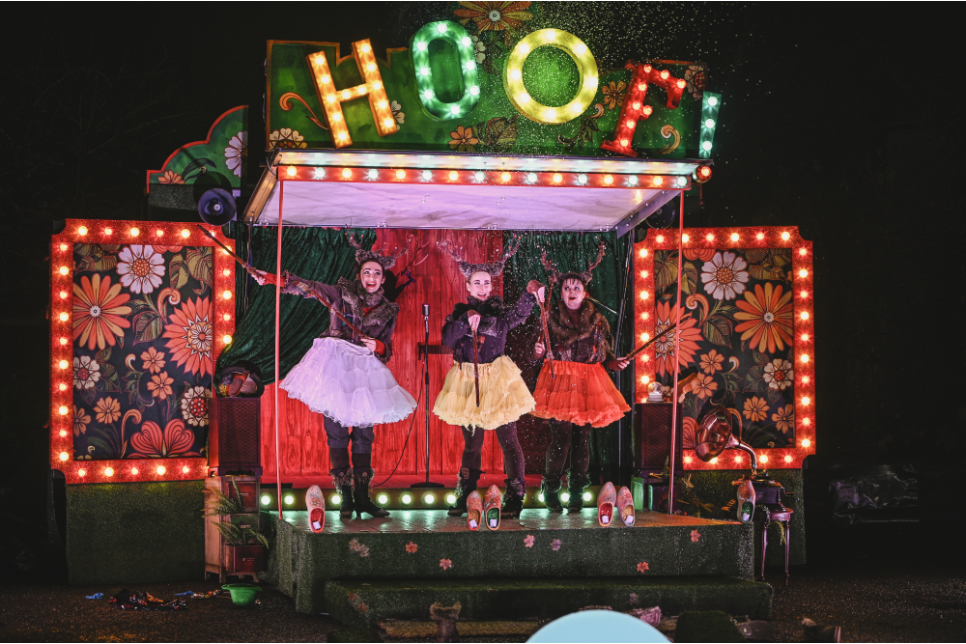
Until recently I was lucky enough to live near Chapter so I went to see both the Theatr Iolo shows there last year (Baby, Bird and Bee and Hoof) and it was fantastic to see live theatre again. There is a fantastic history of outdoor theatre in Wales so I see no reason why it shouldn’t build and continue after the pandemic.
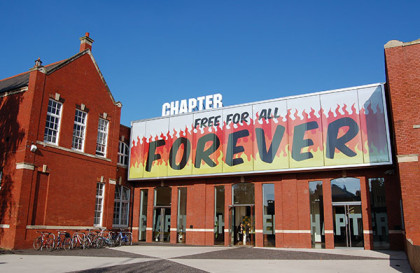
Chapter Arts Centre.
Baby, Bird and Bee
Hoof
Prior to Lockdown many venues did not stream any pre-recorded or live performances should they continue to do so and if so, how can they do this without harming their physical performance offer?
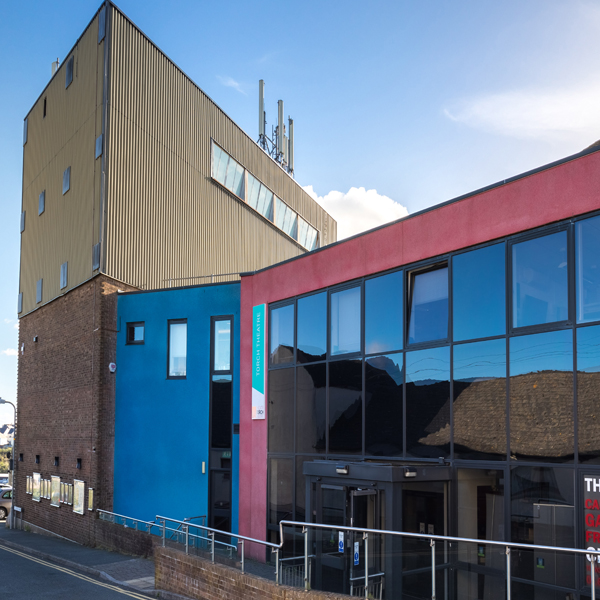
The upside to streaming has been the accessibility of it all. Audience members who may not have been able to attend in person have been able to watch and experience performances normally out of reach. I know that there is a call to try and continue with some kind of hybrid but I just worry about this might work. Personally, I’ve enjoyed the live stream performances made especially for online such as Daniel Kitson performing live on stage at the Torch Theatre in Milford Haven or Sherman Theatres ‘Merthyr Stigmatist’, over the ones that just broadcast a live show. Watching some of the NT Live shows at the start of the pandemic just made me think about what I was missing. Although not paying the ticket fee and travel costs were a massive bonus.
Daniel Kitson
A mix is probably the answer but a smarter way of doing both would be great.
Viv Goodman, Performing Arts Lecturer, Coleg Gwent
With the roll out of the Covid-19 vacancies, the arts sector is hopeful audiences will return to venues. If venues want to attract audiences, what do you think they should do?
Looking at this purely through the lens of drama education, venues have been a key issue for Performing Arts courses throughout the pandemic. When the prospect of face-to -face learning returned there were considerable restrictions over the number of students who could be in our rehearsal rooms at any one time and -with around 100 students across four different courses at Coleg Gwent -this was very difficult to accommodate in a practical way that was meaningful and workable. The real turning point came when we were offered financial support from Welsh Government that would enable us to hire venues off campus so that all our students could re-commence practical work safely. At that point I was working with our USW degree students on Tracy Harris’ play ‘Ripples’ , which had been written for the final year BA hons and Masters degree students at RWCMD in 2020.
Having spent the entire rehearsal period remotely, with students auditioning for Tracy online and working with original cast members Shannen McNeice and Mark Henry Davies over Teams, we were then able to hire a rehearsal space at RWCMD to workshop and film the students’ performances. It felt both apposite and a privilege to take the play back to its roots and the funding meant that I could have Tracy and Mark with us to develop the students’ work further. So, for us , something incredibly positive had emerged from such challenging circumstances and the student experience turned out to be above and beyond what I had originally hoped for them. As a Drama educator I feel very fortunate to be teaching in Wales and to have had this support for missed learning made available to us; in recent months it has been dismaying to read of proposed funding cuts to Performing Arts education in England and I hope very much that this is an indication of greater support and encouragement in Wales.
In response to Covid-19 Many theatres and arts organisations have developed work to be performed outside. Have you seen any work created in this way and can you see audiences having an appetite for it to continue?
This was, of course, an obvious solution to proposed performances over the last 18 months and it is so encouraging to see some exciting productions happening again. I remain a little concerned by this, however, as is an option that is only really available to specific styles of performance and can therefore only solve the problem in a limited way. At one point during remote learning it was suggested to me that we perform student pieces outside but this option is at its most effective in more expansive performance styles such as classical plays or family entertainment. I had already made careful selections of material for the students to explore, and of course this is always done with their specific learning and training needs in mind, and I really didn’t feel that an outside performance would meet the needs of the piece or the students. In addition to this point, I feel that outside performance exists quite within its own right and to mis place styles within it or to over-use it could take away from its uniqueness.
Lisa Parry, Playwright
With the roll out of the Covid-19 vacancies, the arts sector is hopeful audiences will return to venues. If venues want to attract audiences, what do you think they should do?
I think it basically comes down to clear communication and theatres are very good at communicating with their audiences. We’re used to living in a Covid world now, so simply making everyone aware of the rules and regulations before they arrive will help people’s stress levels I think. I think theatres need to cater for people who are nervous about returning though, and people who are clinically vulnerable too. Will theatres have special performances where social distancing is maintained for example? I think the emphasis needs to be on welcoming people back and accommodating them rather than excluding them if they haven’t had both jabs for example.
Which venue has a special place in your heart and why?
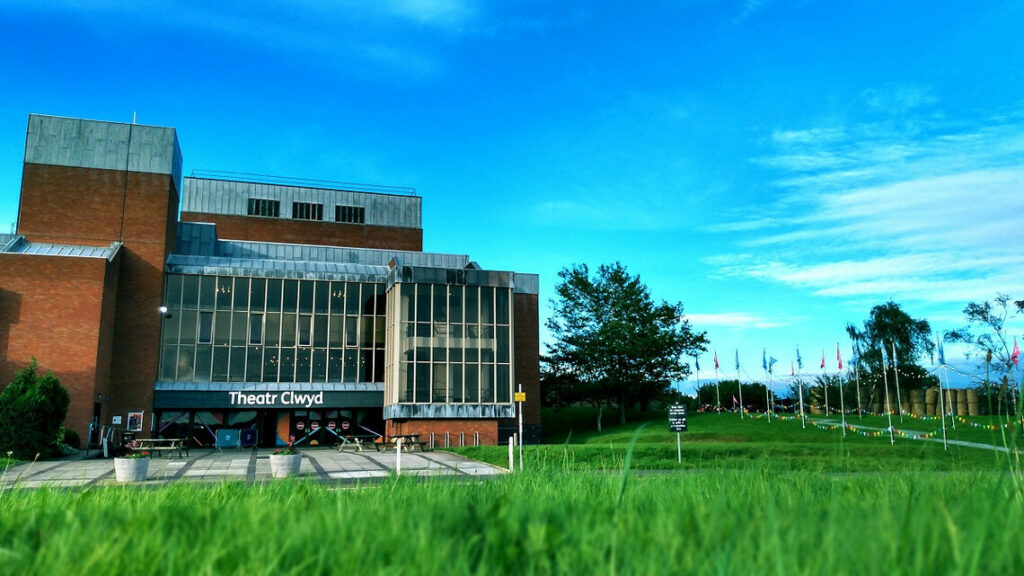
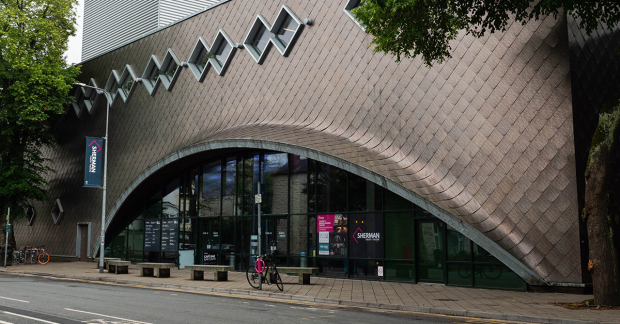
I’m going for two. Theatr Clwyd because the care it has shown for its audiences, community and freelancers has been second-to-none and I can’t wait to get inside the building again. And also the Sherman, because that’s my local, the theatre which has helped develop me as a writer and a place where I’ve seen life-changing productions and made lifelong colleagues and friends.
Theatr Clwyd
Sherman Theatre
The National Youth Theatre on Great Britain planned to produce The Masters House on the 14 -17 July. On the 10 July they announced that due to Covid-19 isolation requirements they have had to cancel the performance. One of the plays directors Chris Sonnex tweeted in response.
“We can’t forget it’s also a reminder of the incompetence of this government, Johnson acted too late over & over, the people in charge hired their incompetent friends & they’re systematically letting down the arts. The disregard they give artists and theatre is because they are scared of the power we have, the opposition we send, the empathy we encourage. We weren’t working with young people, we were working with artists and activists, who will not forget this governments shit. I don’t want to hear anyone chatting about talking Tory or being apolitical. I want you all to hold these incompetent pricks to account. They’re letting your parents down, you are down and the younger generation down. Artist must revolt. Create. Revolt and fight.”
Is Chris correct?
No one will forget the way the government has reacted to Covid – certainly not the younger generation. I was on the school run the other day when a friend said to me how the generation coming through will remember it in a similar way to how he does the miners’ strike and how it’ll affect how they vote as a result. In terms of the work they make, of course it’ll be there.
More widely, is it theatre’s place to revolt and fight? It’s difficult to say it’s not when you look at the legacy of Brecht and Boal. My worry is how the government is already heading that opposition off. Freelancers and buildings which join together to make that kind of work are on their knees because of Covid and a lack of support from the government. Yet at the same time the government has dangled £120 million in front of companies from across the UK as part of its Brexit Festival, now named Festival 22, and some have embraced it as a funding source, despite the outcry from freelancers because of its political origins. If it’s our job as an industry to create, revolt and fight – is that fighting? Can state-sanctioned projects ever really be in opposition to the agenda of the state, however arms-length the organisers’ claim it will ultimately be? Should those companies have refused the money and called on the government to reassess the entire thing after Covid wreaked so much havoc? This debate is hurtling towards us but if you even think Chris might have a point, it’s difficult not to start thinking about what your approach to the festival might be and what the legacy of it will be in terms of artistic opposition across the UK.
In response to Covid-19 Many theatres and arts organisations have developed work to be performed outside. Have you seen any work created in this way and can you see audiences having an appetite for it to continue?
No, not yet. I’m hoping to catch some things later this year. I’ve seen the sets for work outside Chapter and it’s lifted my spirits. I don’t see why that wouldn’t continue – it makes complete sense, especially if audiences feel safer outdoors. Theatre is a relationship between creatives and audiences. If outdoor work will get an audience – why wouldn’t we make it?
Prior to Lockdown many venues did not stream any pre-recorded or live performances should they continue to do so and if so, how can they do this without harming their physical performance offer?
Yes, I really think they should. We have the technology. The National Theatre even has a sharing platform. Is there a way to establish some kind of UK-wide platform, or piggyback onto the NT’s? Theatre is a live medium and live will always be the best experience but it feels really unfair to see London companies getting more cash because they have a UK remit, and then keeping all of that work in London when they could so easily stream it. Streaming after the show has gone down is one way to allay fears re people not going in person because they know it’s going to appear online, but I genuinely can’t see it affecting ticket sales, especially after the time we’ve all had apart. People want to be physically together again. I just think if this experience has taught us anything, it’s that we have a responsibility to each other and as a theatre community that means thinking about audiences who can’t, for whatever reason, see the show in the building. I also think it could bring audiences to theatre too, although there are huge issues in all of this regarding online access etc.
Tafsila Khan, Theatre Director, Access Consultant and Creative Associate, Wales Millenium Centre.
I feel as a disabled person, the last 18 months have given us the time and space to think about what venues offer to their audiences. I believe as venues start reopening they should have their audiences at the center of all decisions. I think something else we have learned is that there is more than one way to engage audiences, for example through digital works.
Scott Arthur, Actor and Co-Director, The Far Away Plays
With the roll out of the Covid-19 vacancies, the arts sector is hopeful audiences will return to venues. If venues want to attract audiences, what do you think they should do?
First and foremost, venues need full support so that they can be as ambitious as possible. Over the last 18 months people have become so accustomed to staying in that it might take a while for them to even realise that theatre is an option for a good night out again. Of course, lots of regular theatre-goers will be chomping at the bit to get back into venues, but in order to attract a diverse audience too, who might not think theatre is for them, the prospect of going to the theatre needs to seem as exciting as possible. Venues also need a little bit of help from artists who can guarantee a high audience turn out too. It would be great to see well established actors, writers, and directors from Wales, who’ve made a bit of a name for themselves and carry a bit of clout, commit to being part of a play at a venue in Wales that badly needs the support and attention. This would also be a great opportunity to make sure lots of recent drama school graduates are part of a production too, many of them having the most difficult start to their careers.
In regards to venues feeling COVID safe, it’s a relief to see the Welsh government has a little bit of sense, compared to those in Downing St, when it comes to face masks and social distancing. The main priority is making sure all audience members feel safe, and I’m sure Welsh venues will lead the way in doing so. regards to the venues feeling COVID safe, it’s good to see the Welsh government has a little bit of sense in compared to those in Downing St, when it comes to masks and social distancing. The main priority is making sure all audience members feel safe, and I’m sure Welsh venues will lead the way in doing so.
Which venue has a special place in your heart and why?
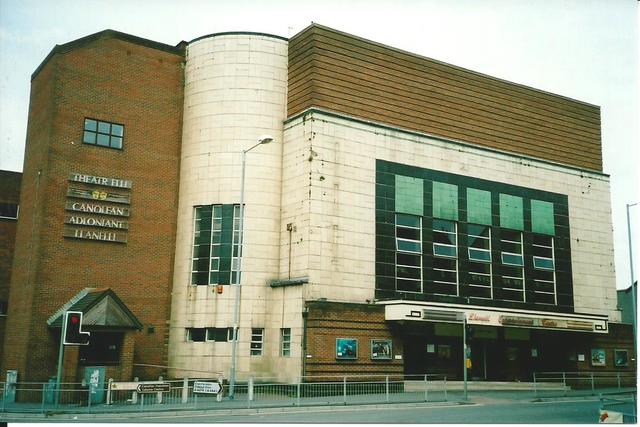
Theatr Elli, Llanelli. Sadly, it closed its doors back in 2012 due to the opening of Ffwrnes, but it’s this beautiful, old Art Deco theatre on the inside, whilst on the outside it’s an almost dystopian looking building that’s bang in the middle of the town. It meant so much to so many artists from the area. Word on the grapevine is that a private investor is trying to restore it to its original glory and for it to become an all round arts centre once again. That would be truly special.
Theatr Elli
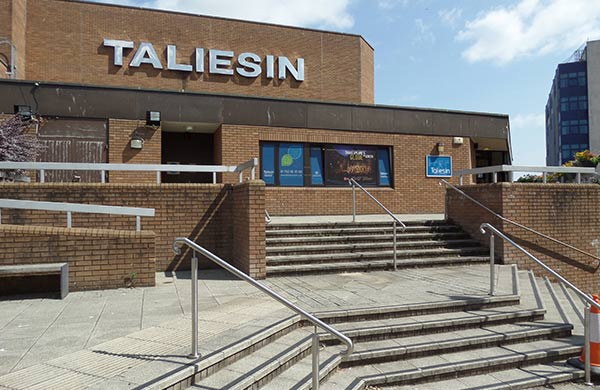
Taliesin Arts Centre, Swansea, has a special place in my heart too. It’s such a beautiful theatre and an incredibly vital arts venue for South Wales too.
The National Youth Theatre on Great Britain planned to produce The Masters House on the 14 -17 July. On the 10 July they announced that due to Covid-19 isolation requirements they have had to cancel the performance. One of the plays directors Chris Sonnex tweeted in response.
“We can’t forget it’s also a reminder of the incompetence of this government, Johnson acted too late over & over, the people in charge hired their incompetent friends & they’re systematically letting down the arts. The disregard they give artists and theatre is because they are scared of the power we have, the opposition we send, the empathy we encourage. We weren’t working with young people, we were working with artists and activists, who will not forget this governments shit. I don’t want to hear anyone chatting about talking Tory or being apolitical. I want you all to hold these incompetent pricks to account. They’re letting your parents down, you are down and the younger generation down. Artist must revolt. Create. Revolt and fight.”
Is Chris correct?
Absolutely. Theatre’s been in need of a revolution for far too long now, even way before the pandemic.
Prior to Lockdown many venues did not stream any pre-recorded or live performances should they continue to do so and if so, how can they do this without harming their physical performance offer?
It’s difficult. Streaming performances have given a whole load of people the chance to see a production who wouldn’t normally get the opportunity to watch that particular piece. Perhaps the way forward is to stream the production for two/three nights only, right at the end of the run, or after the play has finished? The physical performance element has to be prioritised for sure.
Elise Davison, Artistic Director & CEO, Taking Flight Theatre
I went inside a theatre today to start planning a project that should have been delivered in 2020 and is now scheduled for 2022. Most of our discussions centred around all the things we used to talk about pre pandemic. But there was one major difference, we were not only focussing on what would be happening in the space but also about how we could make that available in a creative way to an audience watching from home.
As we re emerge lets not forget that for some people coming to a physical theatre building is still not a possibility, maybe it never was. Lets not unlearn the lessons we learnt out of necessity ‘because we had to’ when we don’t ‘have to’ anymore. For some of our audience will still want the option to enjoy theatre from home and we now have the tools to do this.
Lets not forget about flexible working, remote recruitment and meetings. Lets explore a hybrid approach to making work, for the audience but also for the creatives.
Lets keep our spaces open, experimental and welcoming and please lets continue to work collaboratively. As we press reset lets use this as a chance to keep removing barriers to keep thinking outside the box.
Avant Cymru gave a response based on how their organisation has embraced the challenges of working outdoors to create new work for and with the public.
Avant Cymru are a forward-thinking company from the Rhondda Valleys. We have been living and engaging with our community throughout lockdowns and through conversations around recovery. Planning the events which have taken place though live social distance events or through digital showcasing; Rooting Hip Hop Theatre in Wales workshops, Hydro Jam, Henry V, Cyber Jam, Coming of Age, Hip Hop for Better Mental Health evening, Twelfth Night and Dark Thoughts R&D as shows and we have been involved in newsletters #OurStreet, graffiti pieces #PositivePorth, Stage Combat courses, regular dance session and engaging with others events.
We have key collaborators who co-design our work in the local community and with people from our community of interest. Co-designing, listening and being inspired by our communities needs and ambitions are our shared goals. We believe that there is room for everyone to access the arts and listening to everyone is the most relevant way to create cultural provision.
Our work is still a hybrid between digital and live/in person. We featured work in last years C Venues Ed fringe and we are preparing work to do the same this year. As well as other exciting work which we are going to be testing and trailing using zoom read throughs and continuous conversations with both local communities and communities of interest.
Outdoor work has always been a part of our repertoire. Jams, festivals and shows made and adapted to fit in many types of outdoor spaces. The outside work has been sometimes out of necessity, the doors have not always been open for disabled, working class or hip hop artists all elements which are relevant to the work we create. But also through choice, because the Rhondda provides, green (eco-friendly) and beautiful spaces, where the work we creates sits perfectly in these settings.
We are really grateful to Porth AFC and Welcome to Our Woods who offered us Outdoor space during this time. To Welcome to Our Woods for providing us with the opportunity to create in a place an amazing space, where the wood used to build to build the stage will be relaced, through new trees being planted and hydro electricity from the water running off of the mountains, and only a short walk from the train station, a place where the planet and the people could be healthy. Greener ways of working will be involved in all projects going forwards.
As well as amazing venues, we have been able to collaborate with over 114 freelancers; freelancers from RCT, and from drama, dance and Hip Hop communities. We have been able to work together to support not only creative work but each others mental health and well-being. It has been a hard time for many and the opportunity to come together either digitally or in times in person, has been invaluable. We are grateful to each and every freelancer who has collaborated with us at this time, we cannot wait to start planning the next projects together.
Avant have upcoming digital shows, live classes opportunities already on our website www.avant.cymru with more opportunities coming soon.
We have 5 spaces on the next stage combat course from the 30th of Aug, if anyone is interested in getting involved email us at hello@avant.cymru or follow us on social media.
You can read more about HydroJam in this article by Ann Davies here
Cory Shipp, Theatre Designer
With the roll out of the Covid-19 vacancies, the arts sector is hopeful audiences will return to venues. If venues want to attract audiences, what do you think they should do?
I think they need to advertise what they are doing to make audience safe, which is ultimately our biggest problem at the moment but honestly we could have done with higher audience numbers anyway! I’d love to see more theatres doing Pay What You Can, advertising better prices for single seats for those of us who go it alone as well as better access.
Which venue has a special place in your heart and why?
Oooh tough choice! I have so much love for The Orange Tree in Richmond as they did such a huge amount for me as a designer when I was starting out and are incredibly welcoming and supportive with a real focus on artists well being. In Wales, it’s always going to be Theatr Clwyd. I’ve only been lucky enough to work their once, just before the pandemic, but they really opened their doors during the closure to freelancers, with regular check ins, bursaries for those of us who were struggling financially and generally are a great advocate for wells talent which I really admire.
Orange Tree Theatre, Richmond.
Theatr Clwyd
The National Youth Theatre on Great Britain planned to produce The Masters House on the 14 -17 July. On the 10 July they announced that due to Covid-19 isolation requirements they have had to cancel the performance. One of the plays directors Chris Sonnex tweeted in response.
“We can’t forget it’s also a reminder of the incompetence of this government, Johnson acted too late over & over, the people in charge hired their incompetent friends & they’re systematically letting down the arts. The disregard they give artists and theatre is because they are scared of the power we have, the opposition we send, the empathy we encourage. We weren’t working with young people, we were working with artists and activists, who will not forget this governments shit. I don’t want to hear anyone chatting about talking Tory or being apolitical. I want you all to hold these incompetent pricks to account. They’re letting your parents down, you are down and the younger generation down. Artist must revolt. Create. Revolt and fight.”
Is Chris correct?
100%. I admire Chris Sonnex so much as a director and a human – he’s a great person who has passion and fight in all the right places, and he’s determined to make change. It is no secret that a Conservative government doesn’t support the arts – I don’t know why, they just don’t. As much as I admire people who don’t want to make art political I don’t think we have a choice anymore if we want to survive and make change. It is thanks to the choices this government made that a lot of us have ended up with very little income, grants or any level of financial stability mainly because they put the needs of themselves over others, and failed to listen to our industry leaders who were telling us this wouldn’t work. We shouldn’t be taking this lying down anymore.
In response to Covid-19 Many theatres and arts organisations have developed work to be performed outside. Have you seen any work created in this way and can you see audiences having an appetite for it to continue?
I think outdoor work is incredible and should be seen more. Its a shame it took a pandemic to bring back the wonderful outdoor touring circus/festival vibe that appeals to so many people! I don’t think its a replacement at all for indoor theatre, but a complete alternative experience – although I think people avoid it due to the terrible unpredictability of British weather….
Prior to Lockdown many venues did not stream any pre-recorded or live performances should they continue to do so and if so, how can they do this without harming their physical performance offer?
I don’t think it will ever harm the physical performance! Surely it just increases audience numbers and improves accessibility chances. A lot of us will still always prefer to see it physical, but perhaps cannot because of travel, financial ability and a variety of other reasons. You don’t see the NT struggling with audience numbers because of NTLive….
If we open up smaller performances to a much wider (and sometime international!) level I cannot see any reason that that wouldn’t be more successful than none at all once the initial costs were dealt with – which I appreciate is expensive but ultimately we’re improving access and that is so important and is the way we need to look at moving forward.
Dan Jones – Artistic Director, The Other Room Theatre
With the roll out of the Covid-19 vacancies, the arts sector is hopeful audiences will return to venues. If venues want to attract audiences, what do you think they should do?
In the first instance I think some joy is needed, a celebration of the shared live experience that has been out of reach for so long. A reminder that when humans connect, creativity leads to magical and enriching experience. But that is not to say that it should all be sunshine and roses. I believe we have a duty to be honest. But if we can find hope in the truth it would be a much-needed remedy.
Which venue has a special place in your heart and why?
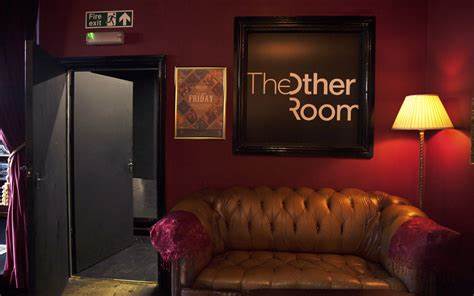
The Other Room of course. I have quite literally given my 20s to it and traversing the next 12 – 24 months to secure the legacies of Kate, Bizzy and everyone else this theatre has touched is very important to me.
The National Youth Theatre on Great Britain planned to produce The Masters House on the 14 -17 July. On the 10 July they announced that due to Covid-19 isolation requirements they have had to cancel the performance. One of the plays directors Chris Sonnex tweeted in response.
“We can’t forget it’s also a reminder of the incompetence of this government, Johnson acted too late over & over, the people in charge hired their incompetent friends & they’re systematically letting down the arts. The disregard they give artists and theatre is because they are scared of the power we have, the opposition we send, the empathy we encourage. We weren’t working with young people, we were working with artists and activists, who will not forget this governments shit. I don’t want to hear anyone chatting about talking Tory or being apolitical. I want you all to hold these incompetent pricks to account. They’re letting your parents down, you are down and the younger generation down. Artist must revolt. Create. Revolt and fight.”
Is Chris correct?
I think there is a lot of truth in that, and many ideas chime with my own. A word of caution on revolution, however. Access to opportunity in the arts is a colossal issue for the sector. Revolution requires sacrifice. It must be those with privilege that revolt, those who can shoulder the sacrifice, but at all costs they must protect fair and equitable conditions for those starting out and those from marginalised and less fortunate backgrounds.
In response to Covid-19 Many theatres and arts organisations have developed work to be performed outside. Have you seen any work created in this way and can you see audiences having an appetite for it to continue?
To my shame, no. This isn’t an offering that has found me in my current circumstances. I think if the decision to be outside is earned creatively, that is to say it enhances the story that is being told, then I think audiences will lap it up. Meaningful and rich story telling can take place anywhere. The famous words of Peter Brook are the foundations of The Other Room, and with the uncertainty of our future I predict some exciting adventures that will expand our brand and creative horizons.
Prior to Lockdown many venues did not stream any pre-recorded or live performances should they continue to do so and if so, how can they do this without harming their physical performance offer?
Personally, I do not think digital offerings pose a great threat to theatre as we know and cherish it. I suspect a lot of people like me (who worked on and offered digital content) became fatigued by the offering pretty quickly. We are not filmmakers; we are theatre makers, and the live shared experience is the cornerstone of the medium. To me, digital offerings cannot compete with that. That isn’t to say elements of the digital experience cannot be incorporated. They just need to be earned creatively.
There’s no denying though that the digital offerings seen over the past year or so have made a lot of work accessible to those who would otherwise not have been able to consume it. Asking questions of all access barriers is only a good thing. For me that is what theatre can do, view digital offerings as a weapon to wield against access barriers and inequity. I keep faith that the commercial potential of digital theatre is capped and will not pose a meaningful risk to the live “physical” performance. This is a belief and opinion though, so perhaps as a contingency, if we all view the digital form as a tool for structural change maybe we will stay on track.
With the roll out of the Covid-19 vacancies, the arts sector is hopeful audiences will return to venues. If venues want to attract audiences, what do you think they should do?
I think venues, despite the complications and hardship of Covid, had a responsibility to keep in touch with their audiences and their freelancers during lockdown and to find a way to nurture and provide during the long months of lockdown. It’s been interesting to see how different venues and companies have done this and adapted and reacted as months went on. Dirty Protest for instance have been holding weekly ‘Writer Gyms,’ Pontio held a series of workshops and Theatr Clwyd had their outside stage and online play readings. I think the venues who have been successful will see a sense of loyalty and these audience members readily return and support. Some venues and companies have discovered that maintaining an online relationship and communication has enabled them to connect with new audience members and I hope that the ease and practicality of connecting online won’t be lost when venues re-open. Not everybody will be jumping at the chance to return to the auditorium and venues will need to be sympathetic to different needs and provide variety and options and to communicate with audience members. I strongly believe also that there needs to be a celebration of being able to reunite and return to venues and that venues provide joy, escapism, comfort and connection.
Which venue has a special place in your heart and why?
I was recently appointed as the new Literary Manager of the Sherman Theatre so perhaps biased but the venue does have a special place in my heart! I first performed at the Sherman in 1997 when I was a member of National Youth Theatre Wales and performed there as a RWCMD acting student. I have also had various plays performed at the Sherman (‘Dominos’ and ‘Gwagle’) and the opportunity to direct Criw Brwd’s ‘Yn ei Blodau’ in the studio theatre. I have led on the ‘Fresh Ink’ projects and the ‘Young Writers’ programmes in the past and benefited in taking part in writer groups at the Sherman led by Alan Harris and Brad Birch. I am very excited about the plans and productions in the pipeline and the voices and stories the Sherman are nurturing, celebrating and supporting. There is a breath of fresh air to the work and I am really looking forward to seeing how the Sherman can grow and evolve in this new theatrical landscape.
Sherman Theatre
The National Youth Theatre on Great Britain planned to produce The Masters House on the 14 -17 July. On the 10 July they announced that due to Covid-19 isolation requirements they have had to cancel the performance. One of the plays directors Chris Sonnex tweeted in response.
“We can’t forget it’s also a reminder of the incompetence of this government, Johnson acted too late over & over, the people in charge hired their incompetent friends & they’re systematically letting down the arts. The disregard they give artists and theatre is because they are scared of the power we have, the opposition we send, the empathy we encourage. We weren’t working with young people, we were working with artists and activists, who will not forget this governments shit. I don’t want to hear anyone chatting about talking Tory or being apolitical. I want you all to hold these incompetent pricks to account. They’re letting your parents down, you are down and the younger generation down. Artist must revolt. Create. Revolt and fight.”
Is Chris correct?
Chris is correct! We need to be vocal and honest at how atrocious and incompetent the government in Westminster have been and continue to be. Theatre is powerful. It does have the power to transform lives and choosing not to support freelancers, artists, community and young people’s projects will have a long lasting and devastating effect on society. Yes, many sectors have been affected and yes the pandemic forced many difficult decisions but the Arts have suffered blow after blow and yet it was the Arts and artists that people turned to to survive during the lockdown! This is an industry that can adapt and respond and make things happen safely and effectively (have you met stage managers?!) but also an industry that has the power to heal and help make sense of it all as well as the ability to unite and bring people together. If we remain quiet, if we are not willing to speak up then we are in danger of losing a vital cog in what makes society work.
In response to Covid-19 Many theatres and arts organisations have developed work to be performed outside. Have you seen any work created in this way and can you see audiences having an appetite for it to continue?
Outside work is nothing new but seems to be another alternative currently with our theatres closed. Theatr Iolo have created beautiful work for babies and young children – Baby, Bird & Bee and Hoof for instance. I’m excited that Os Nad Nawr, a company Wyn Mason and myself set up are currently co-producing a new play ‘Gwlad yr Asyn‘ (Donkey Land) with Theatr Genedlaethol Cymru. The play opens at the WMC on August the 10th and then tours outside venues including Theatr Clwyd, Plas Glyn y Weddw, Pontio, Pembrey Country Park and Aberystwyth throughout August. This has been made possible by venues collaborating and a real need and want to reach out to audiences starved of live theatre. The production is a part of a series of open-air shows at the various locations. There is a real festival feel to the productions and I think that we are hardy and experienced enough to enjoy outside entertainment whatever the skies throw at us!
One of my main joys regarding theatre is the ability to share the experience live with an audience. That is what I’ve missed the most. Sitting in the dark with strangers experiencing something in the moment and being moved and enthralled together and then discussing what we’ve experienced in the bar or the queue to the toilet after! However, I have enjoyed watching online theatre during lockdown, especially productions that were created specifically for an online platform and devised and experimented with the platform or retained a theatrical feel. Eddie Ladd’s ‘Fy Ynys Las’ was a great example as was Dirty Protest’s ‘Kill Me Now’ (which can be enjoyed again at the Edinburgh Festival – Summer Hall events) and Frân Wen’s ‘Faust + Greta.’
I’ve also enjoyed online productions streamed from venues and locations I probably could never have travelled to and I know venues have been able to attract new audiences by providing online streaming. I feel venues need to continue to develop online streaming and provide online options as it has huge implications with accessibility and attracting audiences who can’t or are uncomfortable travelling to the venue.
Zara Mader, Artist
With the roll out of the Covid-19 vaccines, the arts sector is hopeful audiences will return to venues. If venues want to attract audiences, what do you think they should do?
I think they should make ticket prices more accessible regardless of where you sit in the theatre, consider the programming and who and what is commissioned.
Which venue has a special place in your heart and why?
I am quite fond of The New Theatre. Although the seating is snug, I’ve seen an array of plays there and I always feel like it’s a bit special.
The National Youth Theatre on Great Britain planned to produce The Masters House on the 14 -17 July. On the 10 July they announced that due to Covid-19 isolation requirements they have had to cancel the performance. One of the plays directors Chris Sonnex tweeted in response.
“We can’t forget it’s also a reminder of the incompetence of this government, Johnson acted too late over & over, the people in charge hired their incompetent friends & they’re systematically letting down the arts. The disregard they give artists and theatre is because they are scared of the power we have, the opposition we send, the empathy we encourage. We weren’t working with young people, we were working with artists and activists, who will not forget this governments shit. I don’t want to hear anyone chatting about talking Tory or being apolitical. I want you all to hold these incompetent pricks to account. They’re letting your parents down, you are down and the younger generation down. Artist must revolt. Create. Revolt and fight.”
Is Chris correct?
Yes I think what Chris says is fair and correct. The arts offer so much to people and bring so much money in to the economy and this government’s flippancy and incompetency is jaw dropping.
In response to Covid-19 Many theatres and arts organisations have developed work to be performed outside. Have you seen any work created in this way and can you see audiences having an appetite for it to continue?
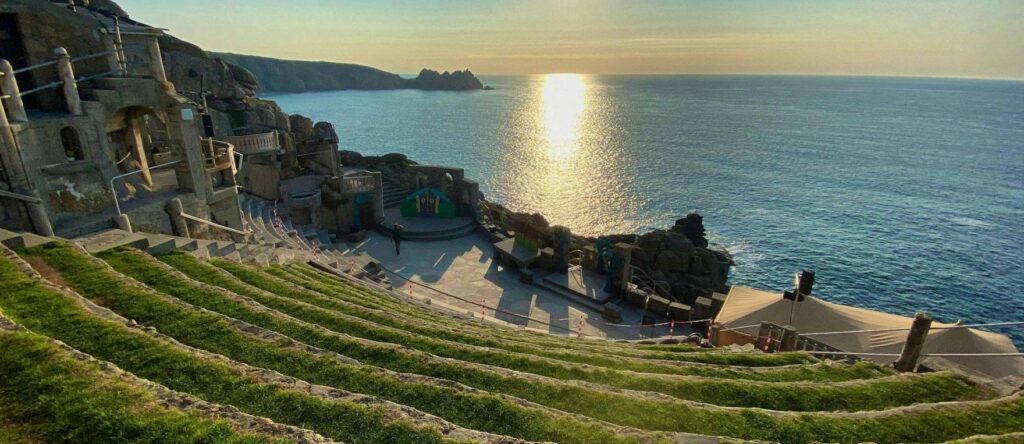
I have been to a couple of offsite film screenings and have been to the wonderful Minack Theatre in Cornwall so yes I could see audiences wanting it to continue. It adds another dimension to the theatre going experience.
Prior to Lockdown many venues did not stream any pre-recorded or live performances should they continue to do so and if so, how can they do this without harming their physical performance offer?
Yes I think venues should continue streaming performances if they can. It is particularly good thing to offer other theatres and possibly cinemas particularly if audience members cannot make the physical performances when and where they are originally on. These types of performances could bring new audiences in to the theatre and possibly give the idea that a job in the theatre is an option.
Owen Thomas Playwright
With the roll out of the Covid-19 vaccines, the arts sector is hopeful audiences will return to venues. If venues want to attract audiences, what do you think they should do?
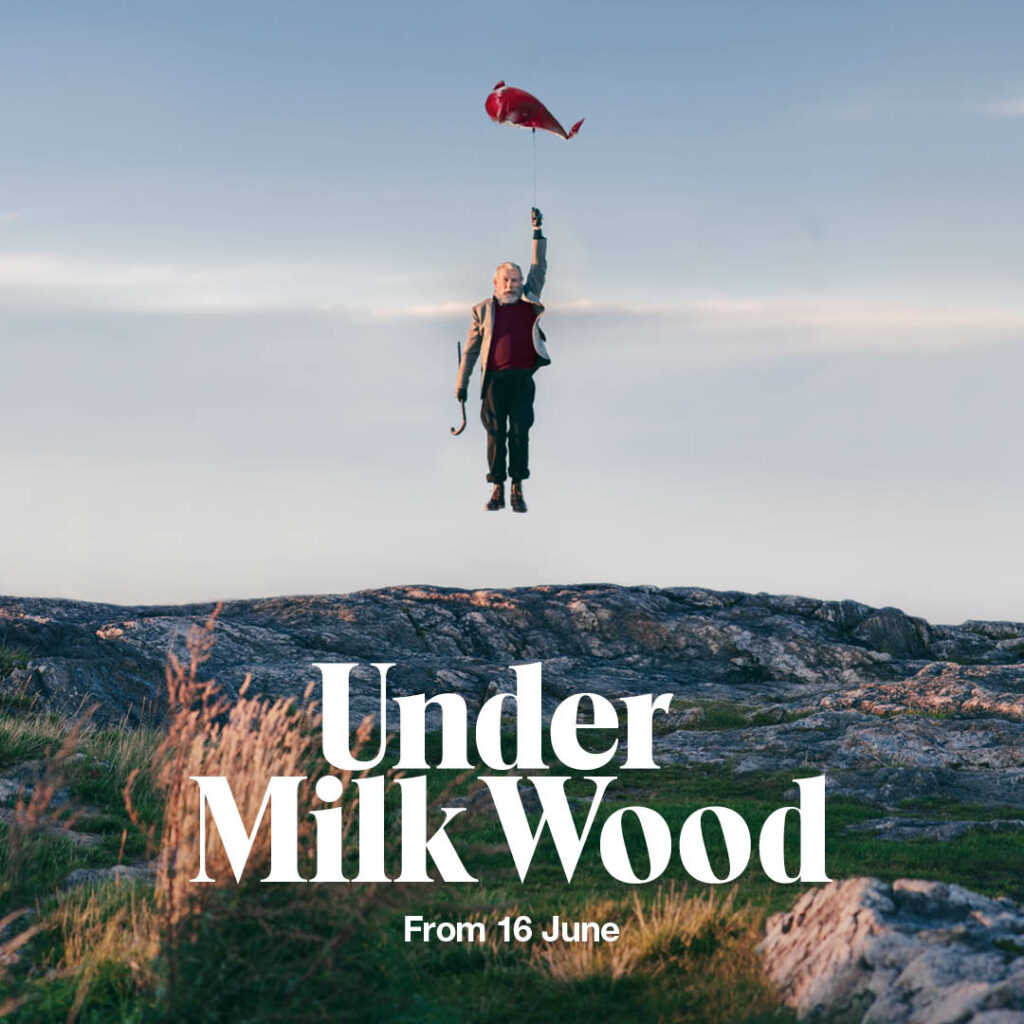
It is primarily going to be about restoring the confidence of the audience in the first instance. Things aren’t just going to pick up where they left off, so a cautious, pragmatic approach is key. The thing that makes the theatre so special, namely sharing a unique experience with a group of strangers, is the thing that has also made us vulnerable. I was lucky enough to see ‘Under Milk Wood’ at the National Theatre recently which showed me how it is possible to see work safely indoors. We sat in distanced pairs, we were safely marshalled in and out of the theatre and we all respected the Covid requirements. It felt a little odd, if safe. But when the lights went down and the show began we were all able to forget the world for a while. It was a profoundly moving experience and for the first time in a long time it gave me a sense of hope.
Which venue has a special place in your heart and why?
There are many venues in Wales that have a special meaning for me. Theatr Brycheiniog is where my theatrical career began, and the Sherman Theatre, Cardiff is where I was given the opportunity to develop. But because of the huge impact the building has had on so many aspects of my life, then The Torch Theatre in Milford Haven is incredibly special. Working with Peter Doran on both ‘Grav’ and ‘The Wood’ ultimately gave me the confidence to become a full-time writer, and for that I will always be grateful. I will always carry a torch for the Torch.
Theatr Brycheiniog
Sherman Theatre
Torch Theatre
The National Youth Theatre on Great Britain planned to produce The Masters House on the 14 -17 July. On the 10 July they announced that due to Covid-19 isolation requirements they have had to cancel the performance. One of the plays directors Chris Sonnex tweeted in response.
“We can’t forget it’s also a reminder of the incompetence of this government, Johnson acted too late over & over, the people in charge hired their incompetent friends & they’re systematically letting down the arts. The disregard they give artists and theatre is because they are scared of the power we have, the opposition we send, the empathy we encourage. We weren’t working with young people, we were working with artists and activists, who will not forget this governments shit. I don’t want to hear anyone chatting about talking Tory or being apolitical. I want you all to hold these incompetent pricks to account. They’re letting your parents down, you are down and the younger generation down. Artist must revolt. Create. Revolt and fight.”
Is Chris correct?
Without question the Arts is one of the sectors that has been most overlooked in this pandemic. It is worth noting that one of the things that kept most people going during the lockdown periods was the arts in some shape or form, be in boxsets or podcasts or plays or music. We are a resilient and creative sector, but I do agree with the sentiment that it is time to fight for what we love. The thought that there are young people who have decided against a career in the arts because of this pandemic is very worrying as we depend on the talent and innovation of the next generation of artists. Before becoming a full-time writer, I was a Drama teacher for 20 years and I saw year in year out the enormous benefits that the subject, and other arts subjects has on the lives of young people. I find the governments plans to cut funding for Arts subjects in Higher Education to be yet another worrying sign of their attitude to us as a sector.
In response to Covid-19 Many theatres and arts organisations have developed work to be performed outside. Have you seen any work created in this way and can you see audiences having an appetite for it to continue?
This week I am very excited to be going to see some outdoor theatre, namely ‘Hoof’ by Theatre Iolo. They are a brilliant company who I am incredibly excited to be developing an outdoor show for at the moment. Open air theatre can be an amazing experience, if somewhat restricted by the tempestuous British weather and the turn of the seasons. But there is clearly an appetite for people to see theatre outdoors. It can be an excellent way of keeping audiences engaged and another step on the road to building up their confidence to come back into a theatre again. There is a great tradition of outdoor theatre in the UK and some brilliant, innovative companies and performers out there, so yes, I think the appetite will remain strong.
Hoof
Prior to Lockdown many venues did not stream any pre-recorded or live performances should they continue to do so and if so, how can they do this without harming their physical performance offer?
I think streaming is going to be a part of theatrical output for the foreseeable future. As people’s confidence rebuilds, this is a good bridge between the audience and the theatre. We recently filmed ‘The Wood’ and one positive was attracting audiences from further afield to the play.
The Wood
In my opinion it will never replicate the feeling of being in a theatre, as the lights fade and the audience settles. But if it keeps work being developed and enjoyed by audiences then that can only be a good thing. Revenues are going to take a while to return to what they were pre-pandemic, so streaming becomes not only a way of continuing to engage with your audience, but also a source of much needed finances as the theatre begins to find its footing once more.
Alétte Fontaine, Playwright
With the roll out of the Covid-19 vaccines, the arts sector is hopeful audiences will return to venues. If venues want to attract audiences, what do you think they should do?
With the success of the vaccination programme against covid-19, we are starting to see a positive shift in attitude from the arts sector in regards to reopening venues. For a majority of people, the wearing of masks has become commonplace, though the government’s plans of asserting new “freedoms” and lifting restrictions has stirred inevitable concern for some members of the public, amid fears of spreading and catching the virus. In conjunction with the cautiousness and protection of perhaps the most vulnerable members of our society, would it not be sensible to continue the wearing of masks in enclosed spaces, if not so to decline the sheer volumes of people being required to self-isolate?
Furthermore, in order for theatres amongst other venues to reopen successfully, it may be worth reflecting on the pilot testing schemes such as the World Snooker Championship held at the Crucible earlier this year. The event held just under 1000 spectators, at full capacity during the final between Mark Selby and Shaun Murphy. Within this pilot testing scheme, 28 cases of Covid-19 were detected and tracked which helped to prevent further spread.
As always, the risk of infection is on the tip of everyone’s tongue, and to allow full-capacity audiences back into our venues, matching pre-pandemic conditions, could be a step too far. To welcome people back safely, providing evidence of a negative test is arguably one of the better ways for reassurance of both performers and viewers alike, and I believe being cautious with numbers as we slowly ease back into “normality,” may be the most suitable option moving into autumn and winter.
Which venue has a special place in your heart and why?
A venue I believe warrants a special place in my heart is the Sherman Theatre, based in Cardiff. Since 2016, I have undergone two minor shows as a young performer; now moving onto producing original work as part of their Introduction To Playwriting programme, led by Tim Howe.
Sherman Theatre
The team have always been fully committed to producing new writing as well as elevating voices which have not had the platform they deserve, to share work and build relationships with the theatre. As a young playwright, it can be difficult to gain representation and respect in such a competitive industry, with many arguing you’re too inexperienced to be given a moment of presenting your work onstage. As such, I am beyond grateful for my local theatre to have supplied me with the chance of producing a monologue for online viewing, an audio drama and now being able to showcase alongside four professional writers as part of their autumn festival for new writing. With numerous guest speakers including but not limited to Tim Price, Catherine Paskell, Nerida Bradley, instructive tutors such as Branwen Davies, Matt Hartley, Katie Elin-Salt, Tim Howe, I have equipped authenticity and insight into honing my craft and knowledge about how the industry works.
Prior to Lockdown many venues did not stream any pre-recorded or liveperformances should they continue to do so and if so, how can they do thiswithout harming their physical performance offer?
Pre-pandemic, it was uncommon to see shows streamed online, as theatre has predominantly, and will continue very much to be about the live aspect and atmosphere built in intimate venues. Taking away this live, physicalised aspect of theatre can also remove its integrity and emotional impact on an audience, as we often struggle to regain this sense of feeling from looking through a screen.
Despite this, earlier in the year I witnessed an online production of Rhiannon Boyle’s “Kill Me Now,” which was hosted by Dirty Protest theatre group. This was featured live via Zoom. Overall, I felt the formatting was successful and engaging with its audience, with the play’s subject matter of promoting funeral services bonding well with its webinar style.
After seeing this production, I now believe that physical theatre can work in collaboration with online performances, without hindering their physical performance offer. It may also be a good idea to suggest the recording of live productions in an archive which people can pay access to view, as with National Theatre’s “at home” platform.
Additionally, I believe after an introduction of my work being digital and the increasing number of digitalised performances, we should continue to explore theatre in all mediums, and often these online performances allow for better connectivity and accessibility, such as the use of closed captions, interpreters, audio descriptions, versus live theatre.
Hi Brad great to meet you, can you give our readers some background information on yourself please?
Hi Guy, it’s great to meet you and be here for the interview and to share some about the exhibition with your readers.
A transplant from Alabama, I’m a visual dramaturge with a diverse practice – from set, costume, and projection design to assistant directing to more management/producing/development roles across a variety of genres, from opera to theatre for young audiences to new and queer works. I am the resident designer for Chicago Fringe Opera; was the program coordinator for Prague Quadrennial 2019; run the online magazine Ascending focused on emerging theatre designers, scenographers, and visual dramaturges; designed the award-winning British pavilion Make/Believe at PQ 2015; and have had work selected for World Stage Design 2017.
For me theatre is the ultimate art of collaboration – which I define as the exploration of ideas that do not exist until everyone is in the room. Really great theatre (wether narrative, musical, dance, opera, physical, or any other type) thrives on the intersection of a diverse group of people bringing their talents together to create a unique experience for audiences, and I try to always approach my work in that spirit.
What got you interested in the arts?
Originally it was music – I have vivid memories of these concerts on public television with two nested grand pianos playing full orchestral scores, so for most of my childhood I wanted to be a concert pianist. This led into choir and eventually theatre. However, I have always been interested in both the theatre making itself and the wider system, having studied business management and organizational theory at the undergraduate level. I’ve also always had a deep love of literature and history which have fed into theatre, as well as growing up around some great storytellers.
Some examples of Brads work below
You are curating a new exhibition at the Wales Millennium Centre called Your Voice which runs from 22 July – 29 Aug 2021. On the WMC website, the exhibition is described as “During the first lockdown the Wales Millenium Centre invited people of all ages to share their stories and experiences during this challenging time through art. The call out captured the imagination of the nation, and you received hundreds of pieces that responded to lived experiences over the past year – from lockdown to Black Lives Matter, to reclaiming the environment and our hopes for the future. Artworks were sent from all parts of Wales – from Pembrokeshire to Newport, Builth Wells to Caernarfon, and by artists aged 4 to 90 years old. The pieces include paintings, spoken word recordings, digital art, photography, installation, mixed media and film.”
How did you decide what artwork to exhibit and what are your hopes for the project?
Actually we didn’t decide in most cases – that is to say that almost all of the art in the exhibition was submitted through the open call and there was no curation in regards to what was included – everyone who submitted has their piece on display! There are a few pieces which were commissioned from community-based artists and some pieces which have come to the centre through partner organizations or other community groups, but overall the exhibition has emerged from the wide range of work submitted through the “Voices of Change” open call. We have also really striven to treat each of the over 400 individual pieces with real integrity – treating each equally as a wonderful and exciting contribution and having all photographs and digital creations professionally printed.
A selection of artwork from the exhibtion below
What I was charged to do was more curating the experience looking at the visitor’s journey through the building and how the art would all be installed. We looked at a number of approaches and ultimately settled on a series of thematic galleries, which give some sort of narrative frame to each group of works. We have also tried to create a unique one-way journey through the building, which includes all the major public spaces, three different views into the Donald Gordon theatre (including walking through a tech booth), and number of interactive engagement points. I have sought to be inspired by the spaces in the building and to create dynamic conversations between the physical space and the works in being placed in them.
Examples of Brad’ design for the exhibition below
I hope that people get a sense of the diverse communities and groups that not only make up Cardiff but all of Wales and of the creative force that lives here. The exhibition should not only be reflective, but also a real celebration of the creative resilience that has lived on and thrived over the last 18 months.
Detail-of-Crocheted-Tree-by-Flow-Maugran
Samantha Brow WSNBR
You are also exhibting work from the Theatre Design course at RWCMD, how did they come to be involved?
Actually, we are exhibiting work of emerging designers from 4 different courses across Wales –University of South Wales, Aberystwyth University, Coleg y Cymoedd, and RWMCD. We have some of the best training in the world for theatre designers in Wales, and many of the course have been industry leaders in the last year of finding ways to continue practical training and making work under all the COVID challenges, and I wanted to celebrate these amazing artistic incubators that contribute so much to Wale’s cultural life.
When I was offered the role of curator, part of it was a commission to design an installation to be part of the exhibition. Instead of which, I decided to showcase the work of these emerging artists working in Wales. The last year has particularly hit emerging theatre designers, who are often making less than minimum wage to begin with in addition to the emotional and mental stress that the industry places on those just starting out. And yet, there are a good number of designers who are working in Wales regularly with smaller fringe companies but are often overlooked by more established producers who go after London-based designers. So, I wanted to really bring some of these creatives to the forefront.
We are hoping that the general public gain a greater understanding of what designer’s do, with 4 of our designers offering more in depth looks into their process. It might also inspire some young people who have not considered theatre design to think of it as a possible career path or to pursue at university. There are so many opportunities developing now for those interested to get involved and for fresh voices to be developed, and I hope that this part of the exhibition plays some small role in encouraging people to become storytellers themselves.
You are an ex RWCMD student yourself what designers inspire you practice?
There are so many thst I find that really difficult to answer. Last summer I was on a podcast called Beyond the Lights and on listening back I realized I mostly just talked about other designers.
I’m definitely inspired by the work of Gary McCann and of the late Paul Brown, but also that of Sophie Jump, Vicki Mortimer, Stefano Poda, John MacFarlane, Colin Richmond, Leslie Travers, Luboš Hrůza, and so many others. I’m particularly interested in how different genres and disciplines intersect and can create new or more impactful audience experiences.
Get the Chance works to support a diverse range of members of the public to access cultural provision. Are you aware of any barriers that creatives in Wales face? If you are, what might be done to remove these barriers?
Specifically in theatre, I think there are three big barriers. One, at least as an emerging designer, is the list of skills that you need to even get someone to look out the window – let alone get your foot in the door – is immense and basically only acquirable through doing a good university degree, which are often competitive entry. However, courses like RWCMD are eager to have a greater range of voices on their courses, but really struggle in connecting with young people who might consider that a career. So the whole industry has to do the work directly and support degree courses in planting the seeds early with people from all socio-economic backgrounds that encourages and inspires them to pursue theatre as a career.
Secondly, the performing arts industry is almost exclusively operated on a “who you know” basis, so there is a huge pressure on networking and continuously putting yourself out there despite a continuous stream of rejection (or in most cases unanswered inquiries). Adverts for roles as a theatre creative (whether designer, director, or choreographer) are few and far between, with theatre’s inviting artists to make work with them most of the time. So it becomes a very insular system with breaking in being a game of sheer luck. When I moved back to Wales in autumn of 2019 I reached out to almost every company I could find in Cardiff and the surrounding area, some of whom I had met previously or had mutual connections that encouraged me to introduce myself, and only 3 even returned my emails, and all of those responses were “thank you for your interest but we have the people we like to work with and have our next three seasons already planned out”. I can’t think of any other industry like that.
And finally, there is a real barrier to establishing yourself in this career, which is now at least being discussed more widely thanks to platforms like Scene Change, but still in nowhere near as honest or dynamic terms as it needs to be addressed.
Most emerging theatre designers are working obscene hours – sometimes 60- or 80-hour weeks – making far less than minimum wage trying to make it all work and often getting almost no credit for their contributions to productions or projects. It is absolutely emotionally, mentally, and financially draining. Many of the people I would have said would be the greatest designers of my generation have already left the industry – people whose work was so beautiful that it would catch my breath and leave me speechless in brilliance far beyond their experiences – they have moved onto other brilliant careers, and that is terribly sad. The industry really is overdue a reckoning about career development and paying people a living wage at all levels.
With the roll out of the Covid-19 vacancies, the arts sector is hopeful audiences will return to venues and theatres. If theatres want to attract audiences what do you think they should do?
Venues and producers really need to consider and actively listen to their audiences. They need to find authentic voices and ways of connecting with those who they want to attend the work and ask themselves how they can better serve the communities that surround them, whether that is a small local organisation or one with a national pull. Far too often decision makers think they know what audiences want or engage projects which are only superficially giving voice but at the heart are quite hollow or ego driven by an artist. Why this story? Why now? And why is this person (or group of people) telling it?
And a big soap box of mine is don’t just ask global majority artists to work on or tell stories that are uniquely theirs. Engage artists and ask them what stories they want to tell and support them in doing so!
If you were able to fund an area of the arts in Wales what would this be and why?
It would definitely be smaller companies that are doing really dynamic work both in engaging young people and new audiences and those taking chances on new creatives! There are some really wonderful people working hard to produce work on tiny budgets and what they could do with more funding would really be industry shifting.
What excites you about the arts in Wales?
The shear breadth of quality work that happens across Wales. But also I look around and see so much potential – there are so many places, building, and institutions that are ripe for a renaissance of sorts and I hope that potential really blossoms into an even more dynamic and flourishing global arts scene.
What was the last really great thing that you experienced that you would like to share with our readers?
I got to sit in on a dress rehearsal of the RWCMD puppetry performances inspired by the Artes Mundi artists – there were some absolutely inspiring moments ranging from reflectively poetic to slapstick style comedy – the creativity and dedication of the first year designers never ceases to amaze me!
RWCMD students with their puppets. Credit Jessica Seren Jones
Creating opportunities for a diverse range of people to experience and respond to sport, arts, culture and live events. / Lleisiau amrywiol o Gymru yn ymateb i'r celfyddydau a digwyddiadau byw

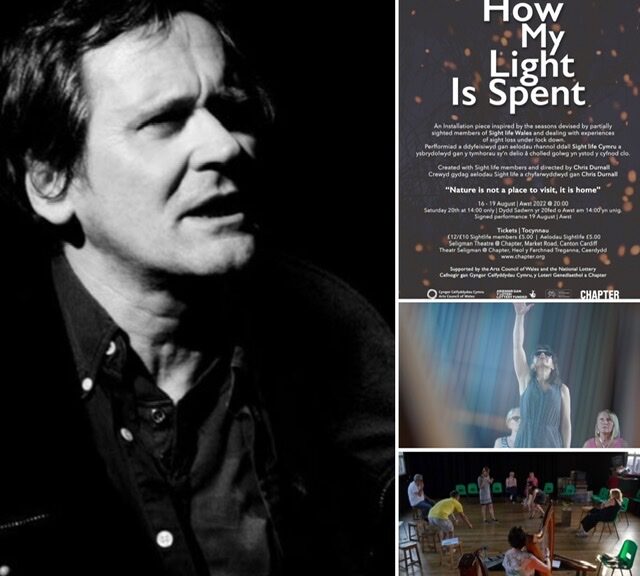
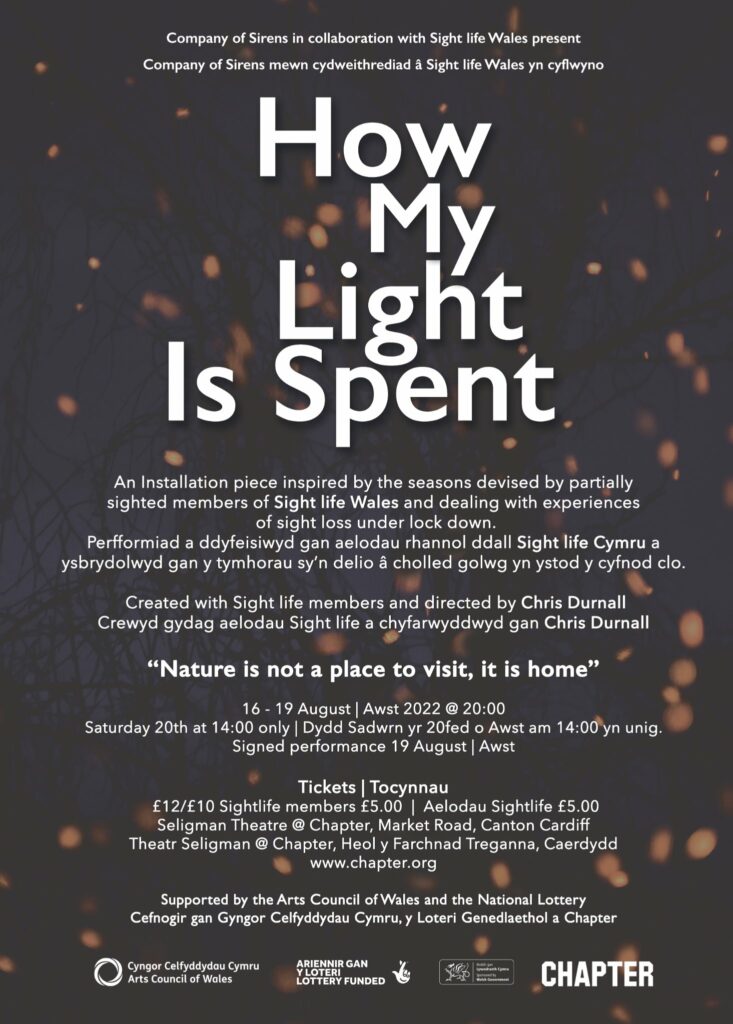
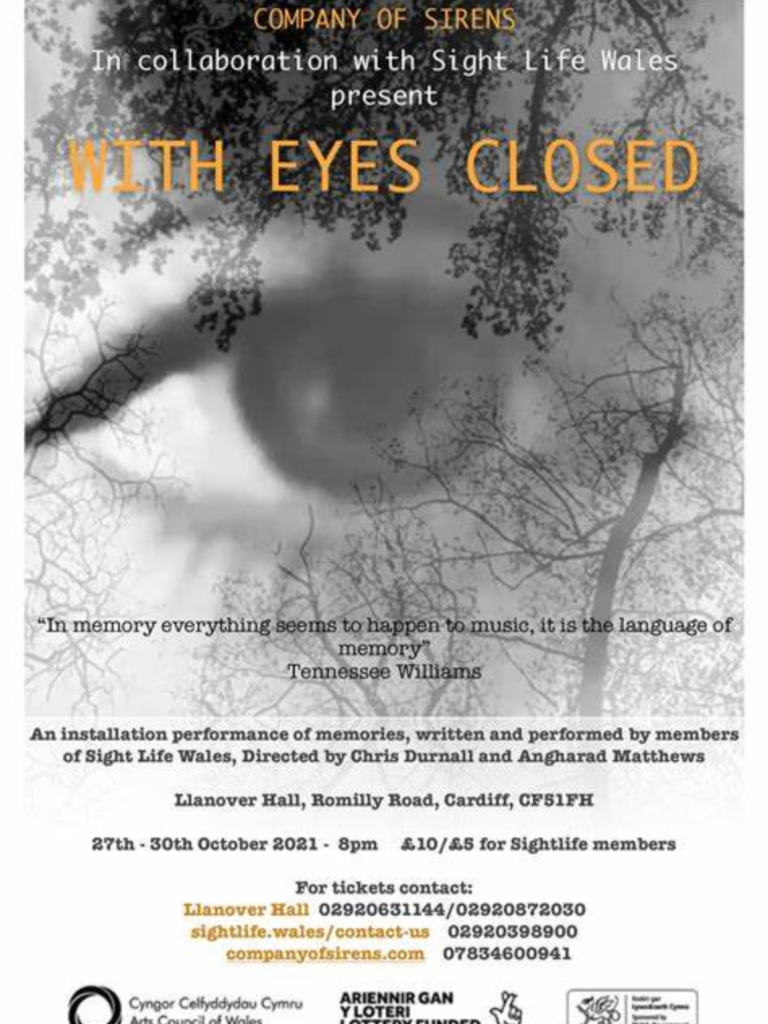
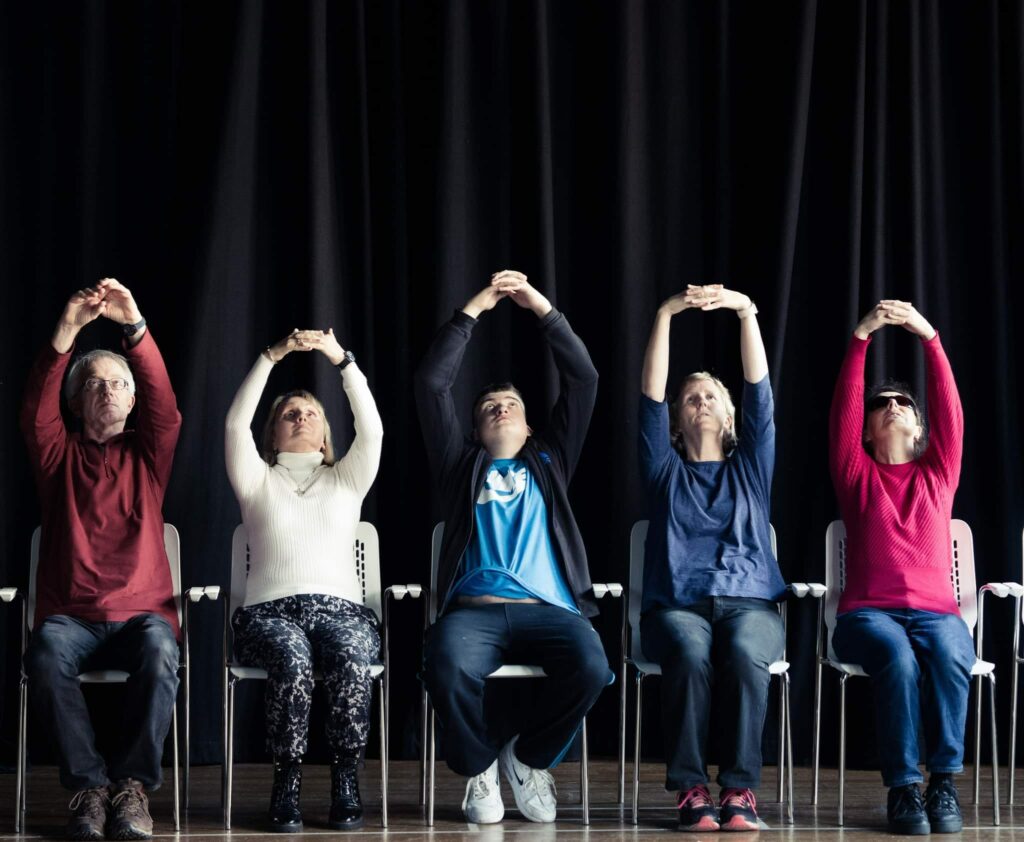
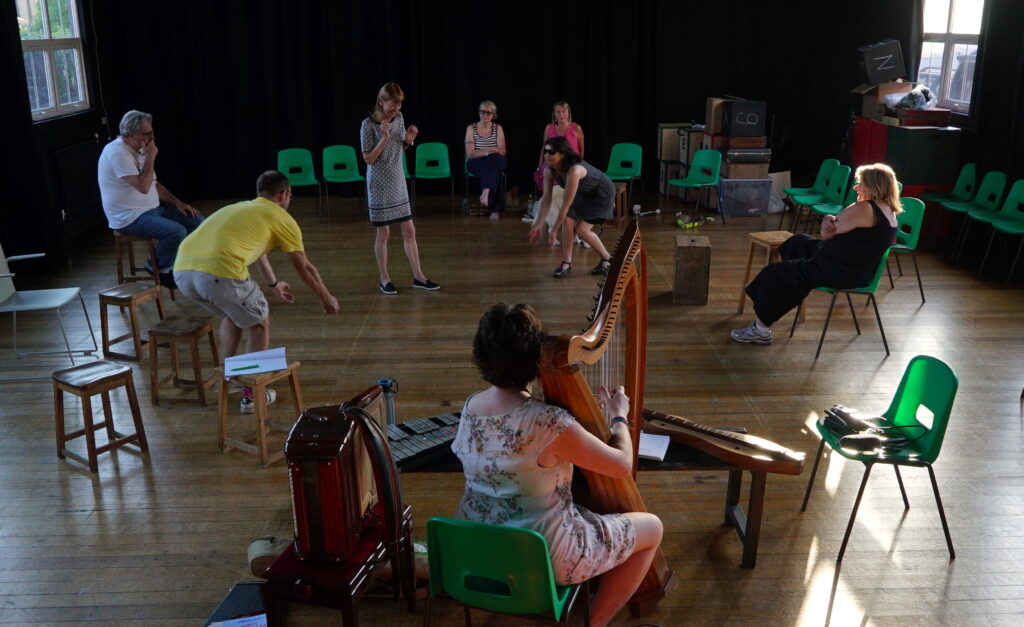
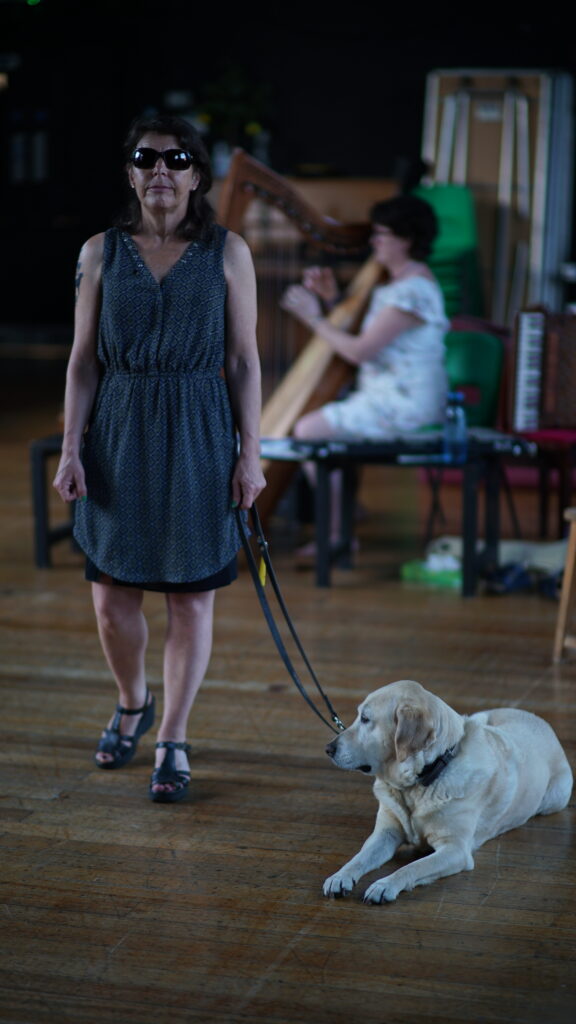
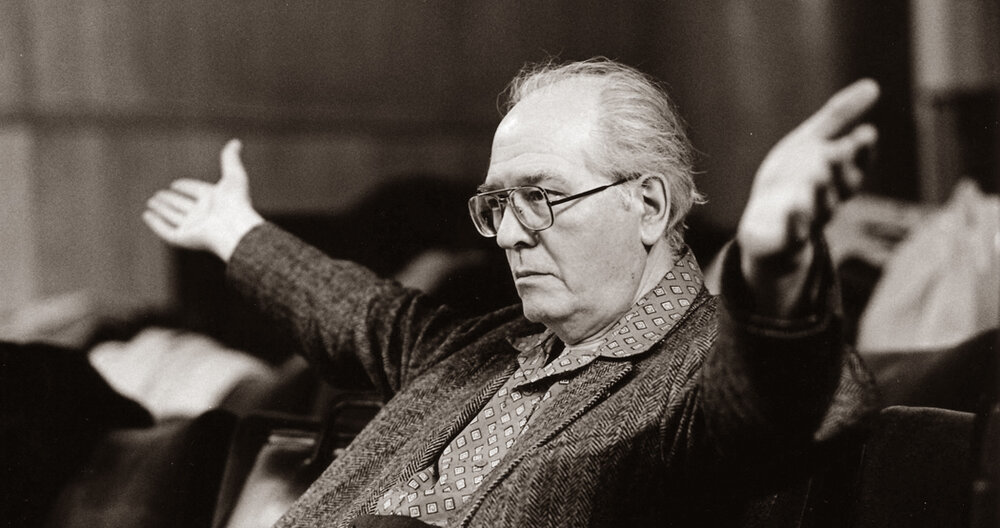
 (4 / 5) Messiaen’s Quartet for the End of Time