Hi I am Guy the project coordinator for Get The Chance. I am a trained secondary teacher of Art and Design and have taught at all Key Stages in England and Wales. I am also an experienced theatre designer and have designed for many of the theatre companies in Wales.
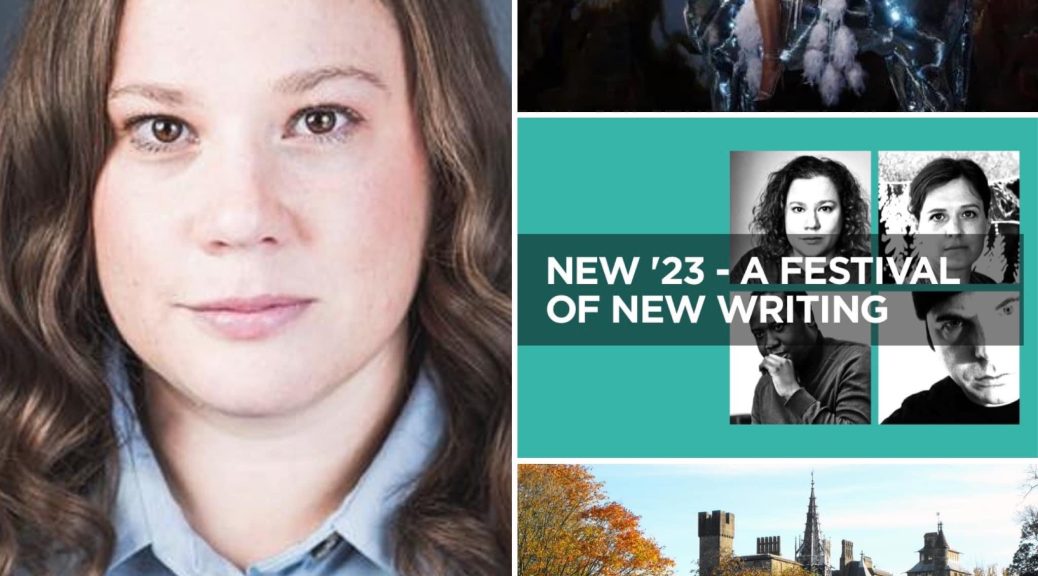
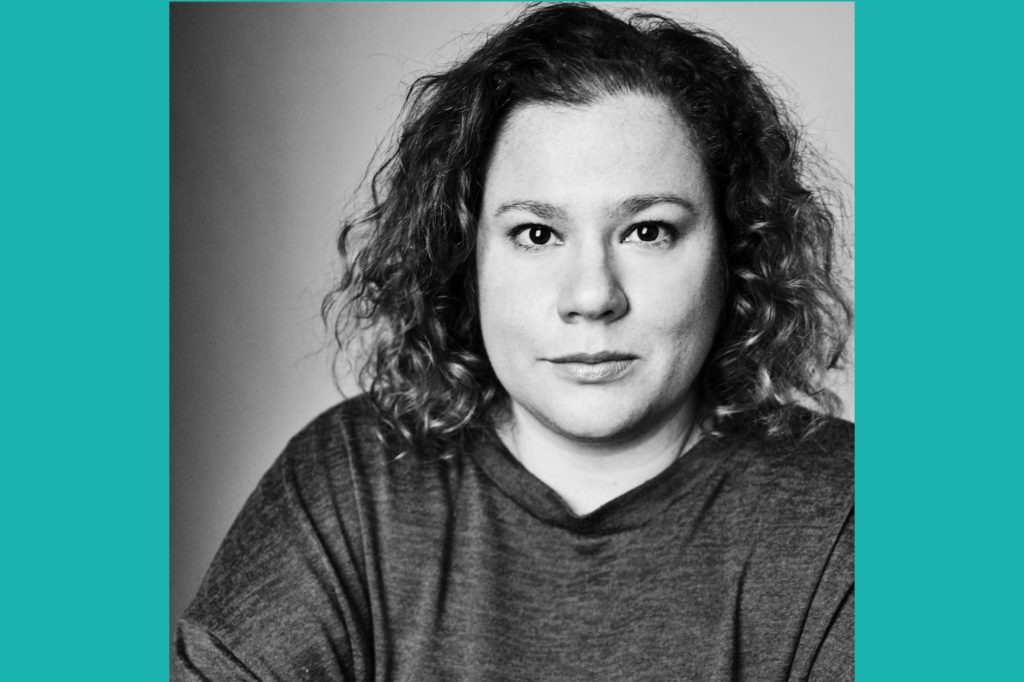
We last interviewed Welsh Playwright and Artistic Director of Chippy Lane Productions Ltd, Rebecca Jade Hammond, in September 2022 just prior to her play Right Where We Left Us being performed at Chapter Arts Centre. We caught up with Rebecca again during rehearsals of Mad Margot which is one of four plays, forming RWCMD New 23 Season.
Hi Rebecca, great to catch up again, it’s been 8 months since we last spoke, with the cultural sector finding a way through the impact of Covid how has your professional career been impacted by this difficult period?
Lovely to speak with you again. To answer your question, I think most writers still feel a sense of ‘world on pause’. It seems that emerging writers making traction pre-pandemic are now picking up the pieces and having to go again at a slower pace. I have always written but it wasn’t until 2019 that I started to take it seriously and since then I have seen steady (if not fast enough) progress. I often feel frustrated that I didn’t take the plunge and start younger, but then I check in with myself and remember that you reap what you sow regardless of age. You have to keep going, apply for everything, have those coffees (with no agenda), meet people, network, write, write, write and get better. At some point something has to happen. I always say: “you have to keep going, you’re too far in to go back now” – I believe this 100%.
Mad Margot is described as a new play that “charts epic events in young bodies, caught between childhood and adulthood in Bute Park, Cardiff.” Can you tell us more about this work?
I originally had this idea in 2020 attending the National Theatre Writers Group. I banked it, knowing that a writer at my point would never be given the opportunity until I was profiled.I let it percolate, wrote bits of it – but kept it for future possibilities. It wasn’t until my play RIGHT WHERE WE LEFT US was on in September 2022 that I was approached by Sherman Theatre and RWCMD with the offer of a commission. The brief was for it to be with ten actors and thread in Welsh translations with the support of Branwen Davies. Of course I accepted and over the last year we have worked hard to bring it to fruition.
MAD MARGOT is a piece about the disintigration of mental health in young women (specifically Margot’s) in the midst of teenage pregnancy. At a time when she should be protected, safe and supported she is alone and trying hard not to drown. Charting the murky world youngsters occupy between childhood and adulthood in Bute Park, MAD MARGOT explores mob-mentality, power-structured relationships and sexuality in relation to the system of patriarchy. Personally it is a nod to my youth growing up as a young Cardiffian in North Cardiff. Always out, not wanting to go home and building an urban family of friends. In fact, several of the characters are based on real people I grew up with including myself.
I have realised as a writer I am obsessed with the rhythm and timbre of dialogue and ensuring it’s as authentic as possible. This piece is incredibly wordy and hard to speak without speaking fast, breathing between punctuation and of course, in a Cardiff accent. It’s exhausting for the actors but rewarding. It’s also incredible to see how they’ve committed to the material. They’ve taken it and run. We are sharing the responsibility to serve this story.
The play is at once epic and historical in its approach yet hyperlocal in its gaze, taking place a stone’s throw from RWCMD in Bute Park. How have you combined these elements in your work?
I have left these ideas and concepts with Llew (Designer) and Jac (Director) both Cardiffians and Welsh speakers. Being deeply aware of the confines of NEW and the play being in Rep the only thing I asked for was it to feel like a vast space with leaf’s. I left everything else up to them to put their stamp and vision on the piece. I am a firm believer in collaboration – it’s the ultimate form of making art. No one can really do it alone and so I have left them to figure out the world in that way. Without giving too much away there are artistic nods to Cardiff, Bute Park and my youth. Also, this piece is a loose reimagining of MEDEA and so, it was important that the words, the performances and the story sing out loud without too much fuss and spectacle. Peter Brook once said “all you need is bodies in space to be engaging” and I like to think we will deliver this in the final production.
The production uses a range of pop culture references and contemporary slang, how did you approach these elements and have you had any feedback from young people? Were you worried about getting any of this wrong?
I mean, I don’t think I’m old yet. I am in my 30’s so I don’t think I had to dig that deep to connect to the material. However, I am a different gen to that of 16+ in 2023 and so I researched a lot about young people in Cardiff. I also worked with the students to ensure the characters sat authentically in their bodies and that the words felt realistic to them. It is amazing how much ‘being young’ is still exactly the same as when I was a teenager. The rules, politics, banter, bullying, dynamics and struggles are all as was. There’s something comforting but also deeply worrying that not much changed.
With regards to other elements, music is always a big part of my writing process and the worlds I build in plays. I have always wanted to integrate rap music into one of my stories and this seemed like the perfect opportunity working on a young persons piece. We actually collaborated with another student Israel J. Fredericks (El Guapo) on creating a rap section for one of the characters who wants to be the next ArrDee / Central Cee. Israel wrote a rap and together we found a beat based on a detailed brief I gave him on the character. This process was enlightening and supportive. Giving our piece another opportunity to utilise the talented skill sets of the students. We are also utilising the ballet experience of one of the actors, singing and Welsh speaking. Continuously having a dialogue and making them part of the conversation. It’s been an organic / openly creative journey for us all getting to this point.
Mad Margot is one of four new plays which will premier at RWCMD at the end of May before transferring to The Yard Theatre, London in early June. The NEW season from RWCMD “showcases its commitment to empowering the next generation of actors, collaborating with the UK’s best writers and directors, and bringing new voices and diverse stories to the stage” Why is this work to support emerging actors and the UK’s best writers and directors important to you?
NEW is an important part of the college’s history and as a writer a gift to be able to explore work that has big casts, epic themes and enables you to experiment with form. It’s a tricky task, but I have seen so many NEW pieces over the years I knew exactly what should be done. Shout-out to Daf James’ FOR ALL I AM in 2016, which in my opinion is the benchmark for when the brief marries up perfectly. From the story, to the characters, to utilising the students and the execution of performance – it is a masterpiece. I am aiming for that… wish me luck.
MAD MARGOT is also significant because it’s the first time NEW has had a bilingual piece in English and Welsh and has several Welsh students in one piece. Platforming RWCMD commitment to Welsh talent and celebrating the Welsh language. For the student/actors, it is the last show they perform before going into the industry. It is an important marker for them leaving education and going into the professional world. I think it’s essential that these pieces are modern, edgy and use all the tools in their box. Make them proud of their work and a piece that they have had a hand in creating. I hope I have given them something they will always remember as a challenge and opportunity to excel but also put THE DIFF on the map.
The play is Directed by Jac Ifan Moore and has Welsh Language Adaptations and Dramaturgy by Branwen Davies. When we discussed this, you said you aimed to reflect contemporary Cardiff in its use of “Wenglish” by young people. How have rehearsals reflected this aim and do you think you have been successful?
What’s wonderful is that we have a mix of fluent-speakers, those learning and those with no Welsh experience at all. Everyone is supportive and encouraging to those who don’t speak the language and the rehearsal room is naturally moving from Welsh to English as it does in the play. Both our SM, DSM and Designer also speak Welsh too so that aids for the language being readily used. I am also learning, so it’s been wonderful to be part of a space where I can brush up on my Welsh.
From a writing perspective Branwen Davies and I have a lovely working relationship where she was very sensitive to my words still translating in Welsh in a Cardiff-style way. I think she’s captured it perfectly and I have been honoured to have her guidance and also my words turned into Cymraeg. Bi-lingual pieces are still rare even in Wales and I am a firm believer that there should be more and that in future work I will work more within that medium. It’s been a thoroughly enjoyable process.
And finally what culture have you been consuming recently that you would recommend our readers to catch up on?
I have favoured listening to music whilst walking and running this year. Also, as a form of mindfulness and to distract me from my forever racing head. It helps me write and figure out story plots, characters and possibilities.
I am listening to a lot of R&B and rap like; Central Cee, RKAYY (Cardiff Rapper), GoGo Morrow, SZA, Doja Cat, Jaish, Drake, El Guapo, Giggs, Jay Z, Little Sims, Mabel, Lauryn Hill, The Carters, Dr Dre, Eminem, Nicki Minaji, ArrDee, Aitch, 9lokknine and my Queen Beyoncé!
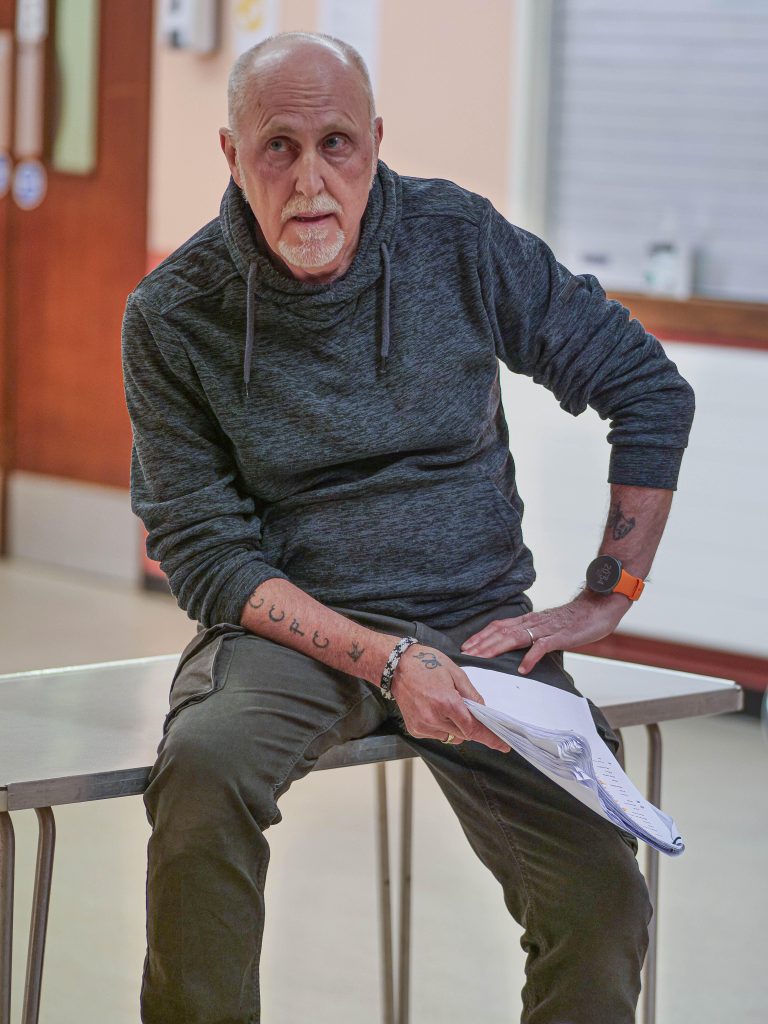
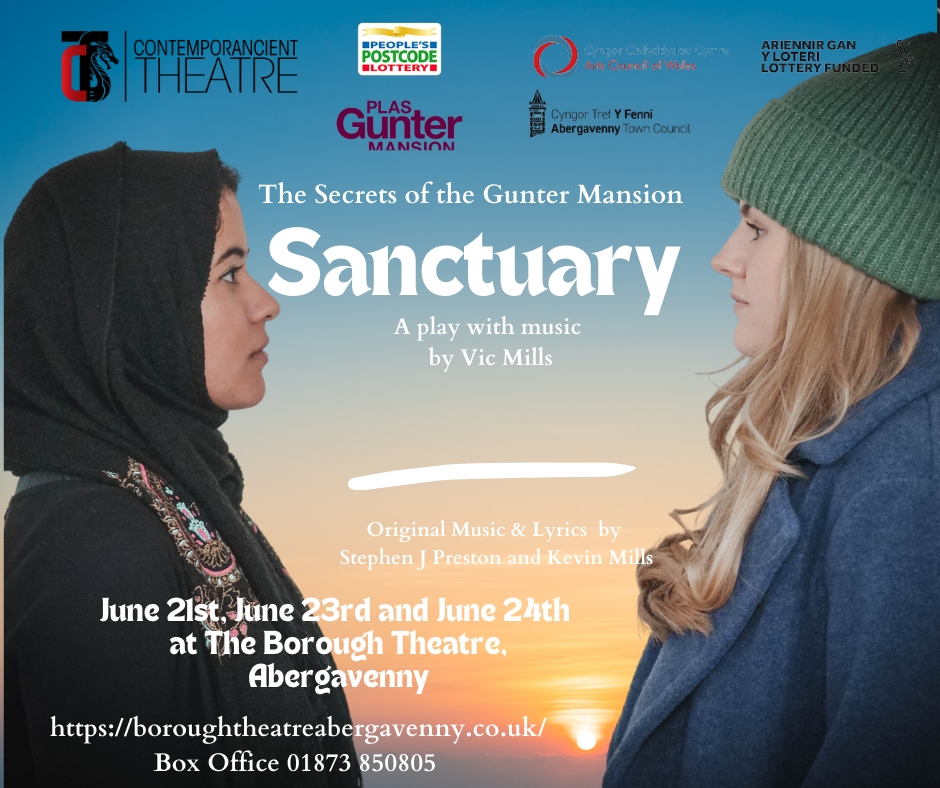
In our latest Playwright interview, the Director of Get the Chance, Guy O’Donnell meets Playwright Vic Mills, they discuss his career to date, his latest play ‘Sanctuary: The Secrets of the Gunter Mansion’ and his thoughts on career support for Playwrights in Wales.
So, what got you interested in the arts?
I came from a non-conformist chapel background, where both of my parents were public speakers, writers, teachers, preachers – so performance of the spoken word was part of what we lived and breathed from infant hood. Music too was central to life. Both my parents were avid readers and we grew up in a home without a television so I read a huge amount – many of the classics before I was eleven.
Why do you write?
That’s probably changed great deal over the years – from poetry as a teenager and young adult to writing for theatre from the time I was about 20. I write because I enjoy the process and each stage of sharing and developing a script is incredibly exciting – the isolation in the first part of the process and then the development of a script with a team is nerve-wracking and exhilarating. Then, right through to the first performance the piece continues to develop and is still changing and hopefully improving until it’s last performance. The chemistry with my director, Neil Maidman, and recently with the Contemporancient Team of poet Dr Kevin Mills, composer Stephen Preston and our actors is hugely exciting.
Can you tell us about your writing process? Where do your ideas come from?
Research around a specific subject – like The Chartists, mental asylums in Wales, Dr Richard Price, ‘The Gunter Mansion’ in Abergavenny – is the starting point – finding where the theatre is in a story, what might be relevant, challenging, inspiring, for contemporary audiences. Then, like most playwrights, I build scenes around conflict. I also search for empathy with every character I develop – they all have to have something of me in them – good, bad and appalling.
I have written theatre with a social and political drive, often linked to an aspect of Welsh history in the last twenty years and that continues to be my focus.
Whilst I usually produce what might be called ‘naturalist dialogue’ as central to a piece, the work itself is not usually naturalistic overall. My great inspiration is Brecht and so music, poetry, ‘chorus’, multiple playing, non-linear structure, are all key tools in creating something meant to evoke intellectual challenge rather than pure entertainment.
Can you describe your writing day? Do you have a process or a minimum word count?
I usually spend a year or so reading around a subject and then write a first draft of a play obsessively and very quickly – maybe within 10 days. I don’t keep any record of how much time I spend at it during those days – but writing comes easily when it comes at all and it usual flies out when it’s ready to. It gets huge amounts of patient re-working for months afterwards, but the arc is there.
Do you have a specific place that you work from?
I have a study and a MacBook Air. I write notes in proper notebooks with a fountain pen. I like fountain pens a lot. I really like fountain pens. Once I start writing the script – its straight on the MacBook though.
Your latest play ‘Sanctuary: The Secrets of the Gunter Mansion’ plays at The Borough Theatre, Abergavenny at 7.30pm on Wednesday 21st June.
“This new play with music tells how, for more than 400 years, Abergavenny has provided sanctuary for those in danger – here the horrors and joys of their secret stories are told in thrilling theatre and music.”
Can you tell us more about the background to this production and your hopes for its production?
This started with reading an historical text about two leaders of the Jesuits being caught in a priest hole in Worcestershire in 1605 and exploring the idea of people being hunted, tortured and killed for their faith but also willing to do the same things to other people, with only marginally different faith. This seemed incredibly relevant to life for people in many parts of the world today so worth exploring. We have worked with ‘The Plas Gunter Mansion’ in Abergavenny, where these priests probably hid in the months prior to be caught – we have linked that with the story of Syrian refugee woman in Abergavenny today – she is not an historical figure but is based on stories of real Syrian refugees in Wales.
We’ve worked with Syrian musicians and our composer to bring the cultures together in music and explore the idea of sanctuary in Abergavenny and in Wales across the ages. It’s a play about the Welsh nation being made up of people from around the world and about the importance of tolerance. But there’s a lot of difficult stuff in the play about people’s willingness to suffer for their beliefs and to make others suffer who do not share them.
Kevin, my brother, an academic and poet, has produced wonderful verse for the piece and has worked with Stephen Preston, our musician/composer to create stunning songs alongside our Syrian musicians. We’ve worked with our close collaborator, film maker Chris Lloyd to deliver a multi-media piece, where film and visual imagery plays a huge part. Our director and dramaturg, Neil Maidman, is someone I have worked with for more than 25 years so we shape a piece together, understanding each others strengths pretty intuitively by now.
We hope that through exploring our shared history, we will learn more about ourselves and those with whom we share our communal lives and spaces.
This will be performed during National Refugee Week and all performances will be free for refugees.
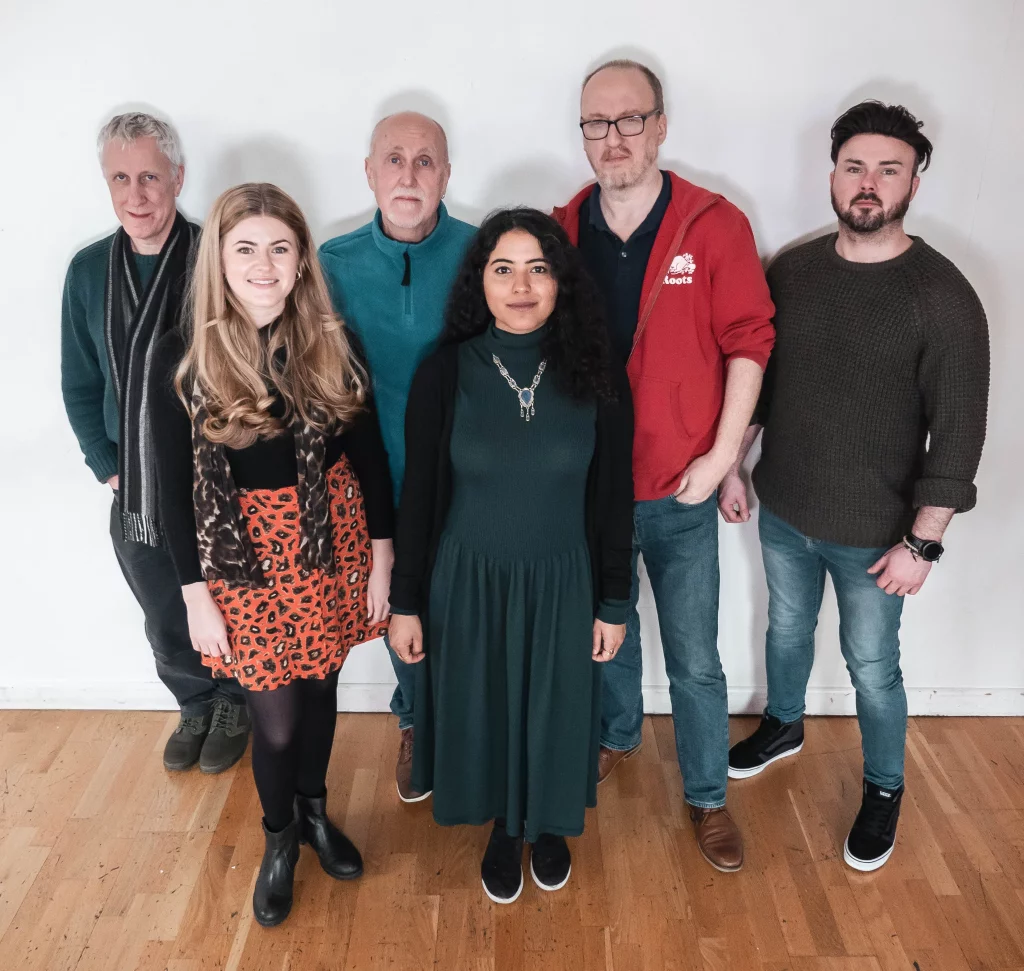
Sanctuary – Cast, Director, Writer, and Lyricist
What role do you think Theatres and Playwrights have in telling the narratives of the citizens of their respective nations?
You can tell from my previous answer that this is a central tenet of all I do as a writer and what this theatre company, Contemporancient Theatre, is all about. Heb Hanes – Heb Hunaniaeth is our motto, and that is at the heart of what we do.
There are a range of organisations supporting Wales based writers. I wonder if you feel the current support network and career opportunities feel ‘healthy’ to you? Is it possible to sustain a career as a writer in Wales and if not, what would help?
I worked as a drama teacher, English teacher and Deputy Headteacher until I was able to retire at 55, and work full time in theatre. I was able to write and get plays produced throughout that time and have had plays of mine produced and performed all around the world. I have never made any money to speak of through that. If a play of mine is performed I get about £50 per performance in royalties.
I spend a huge amount of time applying for funding – far more that I do actually writing or developing scripts. If I had to rely on what I earned from theatre to live, I couldn’t. I ensure that freelance actors, musicians, crew etc are paid union rates and I try to find some money in the budget for writing and script development. I don’t know how anyone writing for theatre could make a living just by writing, unless they were hugely successful.
You are a member of the Get The Chance team yourself and have reviewed a range of productions. Why are you a member of our team of volunteer critics and what value does this opportunity have to you?
I watch as much live theatre as I can, and I usually have very strong opinions about what I experience. Part of the joy of any art is the discussion it evokes – Get The Chance gives people an opportunity to formulate and articulate ideas about performance arts so it’s a vehicle for them and publicity for the event that have attended. What’s not to like about that?
If you were able to fund an area of the arts what would this be and why?
One of my many causes is ‘working class people in arts’ and theatre specifically, of course.
The tradition of great working class actors, playwrights etc that fuelled British theatre has been choked off. I would love to see bursaries or grants for theatre practitioners of working class background to support their work, and organisations like ACW creating funding areas for projects delivered by practitioners from the working class.
What currently inspires you about the arts in the Wales?
The extent to which good work continues to get put on despite the odds.
What was the last really great thing that you experienced that you would like to share with our readers?
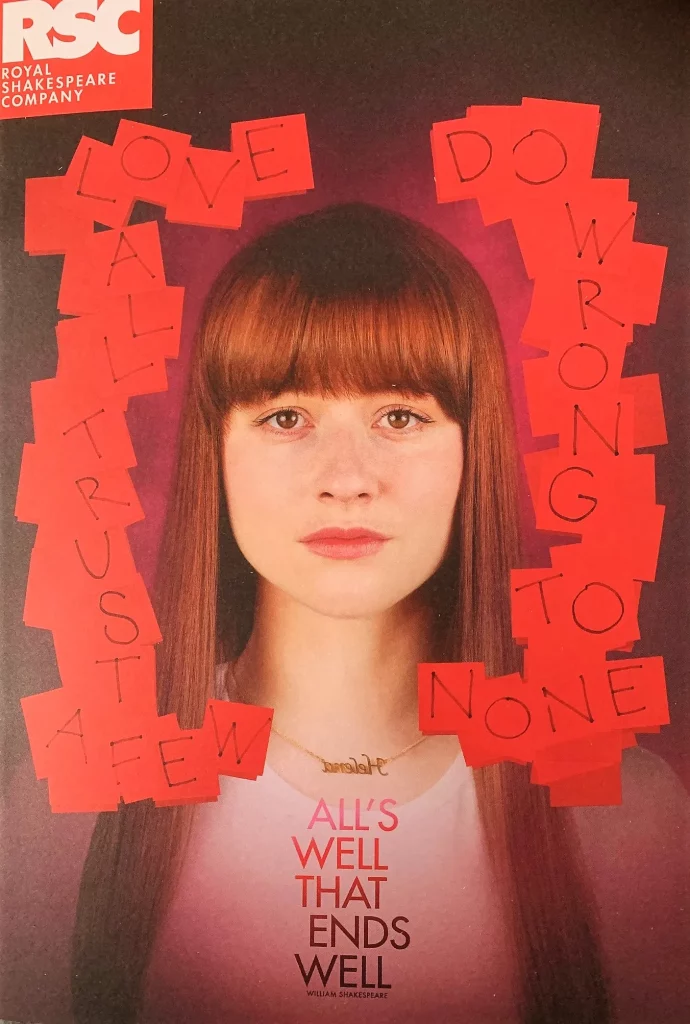
I saw Rosie Sheehy in Alls Well That Ends Well at the RSC Stratford last year. Didn’t know her, or of her, at the time. Stunning, stunning performance – by a kid from down the road. Blistering and inspiring. I love actors who can really speak verse – get verse. Wonderful physical and vocal performance. I love the fact that she was there and blew everyone else off the stage and that she’s a Welsh kid from an ordinary background.
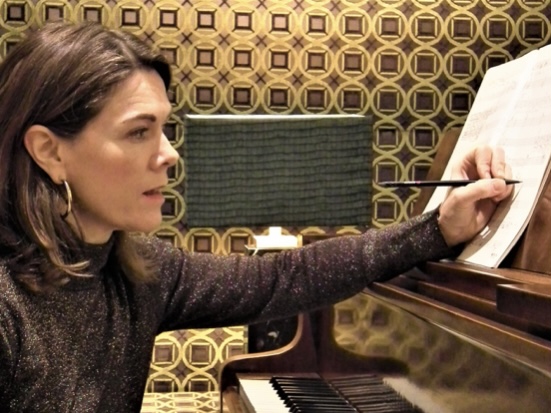
Hi Julia, great to meet you.You have a background in music and education, can you give our readers some background information on your career to date?
Straight out of Music College (RCM) I worked principally in the world of orchestral bassoon playing, freelancing with the BBC Symphony, BBC Scottish and also specialising as a baroque and classical bassoonist. I performed, recorded and toured internationally with ensembles such as The Academy of Ancient Music and the Orchestra of the Age of Enlightenment. Alongside playing, I’ve been composing since I was a child. I write wide ranging music from orchestral to solo instrumental works, from opera to songs for children. I loved my own childhood music experiences and have been teaching music since I was a teenager. Creating Kodaly and Dalcroze inspired learning flows for groups of children is a particular passion. I enjoyed wonderful years as Head of Primary Music at Llandaff Cathedral School before moving to the RWCMD firstly for an M.Mus in Composition and then as a tutor for baroque bassoon and early years pedagogy.
So, what got you interested in the arts?
I had an inspirational class music teacher in my Primary School years. She introduced us to recorders, singing, tuned and untuned percussion. I remember enjoying the lessons and putting on fun concerts and productions. My parents were also very supportive in organising piano and ballet lessons and making sure we did our music practice.
What importance does music have in your life and how have you combined the two areas of music and education in your professional career?
Music gives me great joy as a performer, composer, worshipper, listener and educator. From the synergy of being in a high functioning orchestral wind section to the joy of engaging babies and toddlers in perfectly age-appropriate songs and games – the ability of music to open doors into the transcendent is extraordinary.
Music education has interweaved with performing and composing right across my career, often intermingling. It feels rather like cooking to me. You have a room of “ingredients” people/instruments/voices/music and you work deftly with what you’ve got to create a delicious meal that everyone enjoys. It’s about creating the optimum environment to bring out the best in each person’s unique flavour.
“Tell me, I forget. Show me, I remember. Involve me, I understand”.
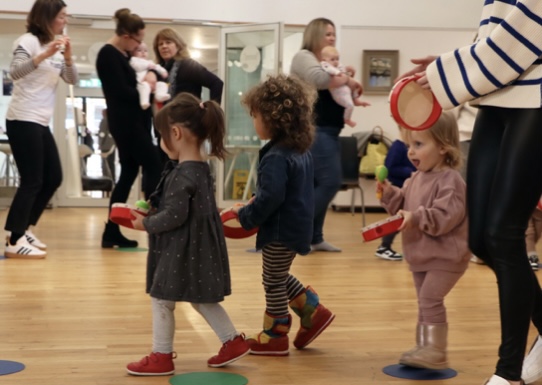
You are delivering two different music activities as part of a RWCMD Music Residency at Penarth Pier Pavilion, as part of a new partnership with the Vale of Glamorgan Council. A one-year pilot has been agreed that will see the college run parent and toddler music sessions, base a small ensemble at the pavilion and put on Dance Band evenings for the local community. The parent and toddler music sessions will be run by yourself, Julia Plaut, a composer who served for many years as Head of Primary Music at Llandaff Cathedral School, and take two forms – Morning Mini Music and Little Concerts. Running on a weekday morning in the pavilion gallery, Morning Mini Music sessions are focused on music and movement that help children with interaction and socialisation. Little Concerts will be weekend afternoon music events for families, specifically designed for the under-5s, that feature new works from RWCMD composers”
Credit Kirsten McTernan
How did you come to be involved in this project and what are your ambitions for its delivery?
Part of my work at the RWCMD is mentoring selected students in early years pedagogy. This project gives industry-facing experience to these students under the umbrella of an expert practitioner. My ambition is that we deliver high quality musical experiences for Penarth children and their families that create a real buzz locally while providing sector leading training for RWCMD students. You can find out more about the project and book tickets here
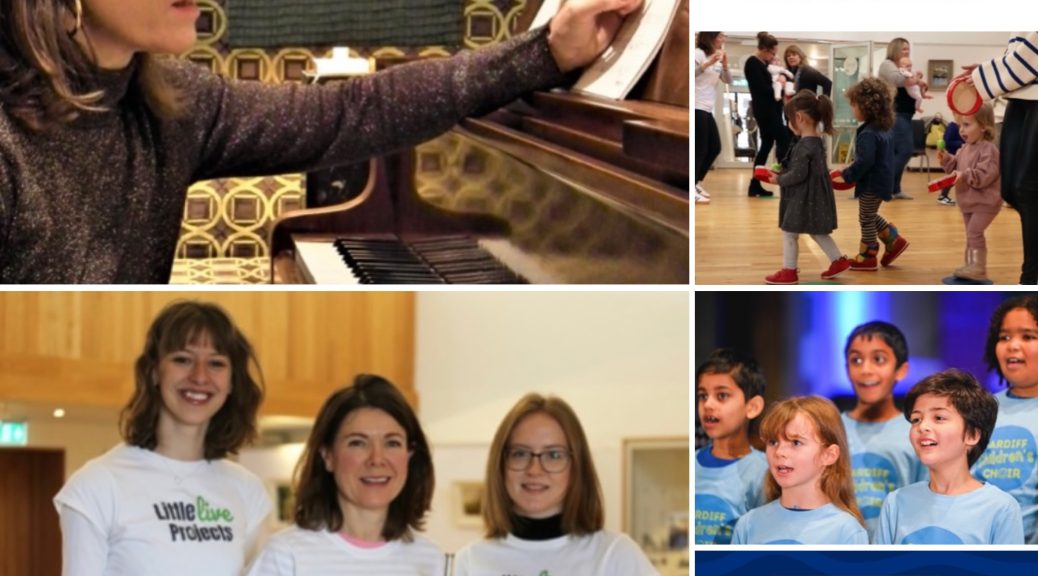
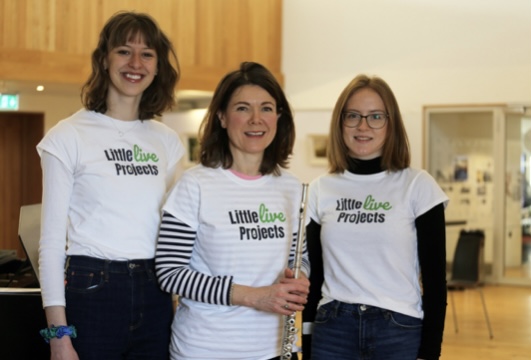
You are the Artistic Director of Little Live Projects, this charity works to “inspire young people to flourish through sharing excellent musical experiences with professional musicians” How do you deliver this work?
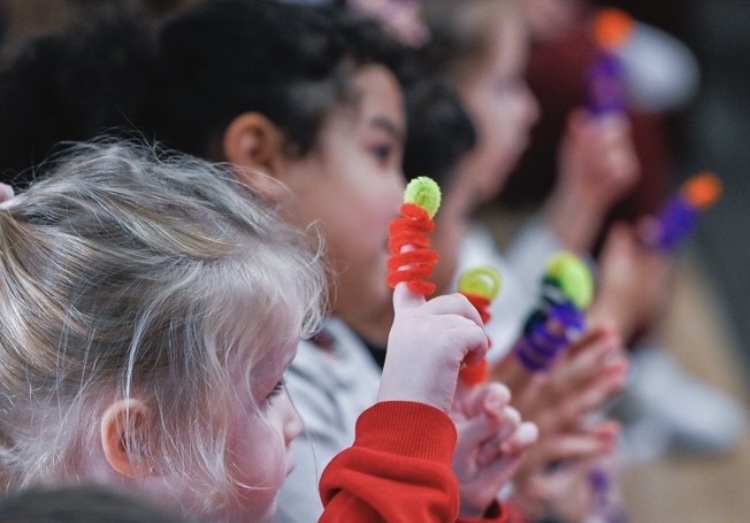
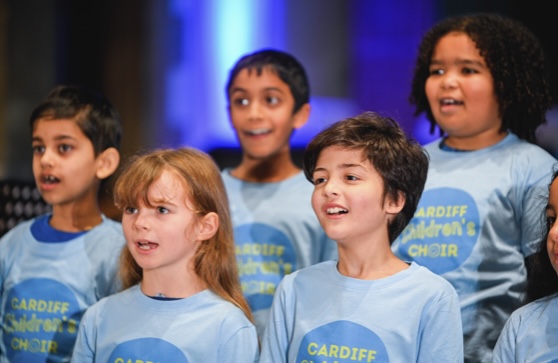
Little Live Projects has two strands. One is the Little Concerts series of joyful interactive chamber music events presented in partnership with the RWCMD. The other is the Cardiff Children’s Choir, an after-school community choir for children aged 5-11 years based at Urban Crofters near City Road in Cardiff. The choir welcomes all local children and particularly those from displaced families or who are facing barriers of any kind.
Credit Kirsten McTernan
You have close links with The Royal Welsh College of Music and Drama in Cardiff, how did this relationship develop?
Quite a few of the RWCMD staff team have been professional colleagues over the years. I’m a tutor for baroque bassoon and early years pedagogy there. I formally pitched the Little Live Projects vision as part of my M.Mus studies. The RWCMD and Little Live Projects share a strong synergy of vision for future focussed training with outstanding student experience delivered by world-class staff in providing transformative experiences for diverse communities.
The Little Live Projects Team.
Funding for musical provision is increasingly being cut for young people, can you see the impact on young peoples lives and possible career paths as professional musicians as a consequence?
Good quality instrumental music tuition is a very expensive to fund, and importantly, to sustain over long enough to allow children to become accomplished enough to consider a career in music. El Sistema style initiatives like Making Music Changing Lives in Cardiff are doing brilliant work to address this deficit. I have questions about the usefulness of the large group instrumental teaching that takes place in schools which only gives a cursory taste, often on poor quality instruments and without the formation of basic good technique. I am however excited by the potential for choral singing to provide a quicker route into embodied musical understanding and real accomplishment. It works brilliantly in large groups and embeds aural and other transferable skills that children could then take into learning an instrument.
If you were able to fund an area of the arts what would this be and why?
I would fund an expert Kodaly practitioner to lead singing in every primary school in Wales one day a week. Each child has a singing voice that can be nurtured, giving them a worthwhile means of self-expression. Through singing together children develop the intimate knowledge of a social togetherness in which discipline and order prevail. Not only would these practitioners lead and embed singing but, in doing so, they would be providing continuing professional development for staff to carry on the singing confidently during the rest of the week.
What currently inspires you about the arts in the Wales?
I am inspired and encouraged by the way Ty Cerdd are championing Welsh composers and creators across a broad range of styles. I also gain a lot as a member of Anthem’s Atsain Network. Hearing nuts and bolts stories from other community music practitioners from around Wales gives me loads of inspirational ideas.
What was the last really great arts event that you experienced that you would like to share with our readers?
Recently I attended a fabulous concert by Genesis Sixteen and Harry Christophers singing Handel’s Dixit Dominus at RWCMD. The musical excellence and vibrant energy that was released through seasoned professionals mentoring young singers, conductors, instrumentalists and soloists (aged 18-23) was breath-taking. It made my heart sing to see the cascading of good things into the next generation of musicians.
We last chatted as part of the series that Get the Chance ran during the height of the Covid Pandemic in April 2020. During this period many Welsh or Wales based arts graduates were hugely impacted by the Pandemic. Their usual opportunities to meet agents, prepare for final year exhibitions or productions took place in later years or sadly not at all. To raise awareness of the diverse talent graduating during the year GTC offered any Welsh or Wales based graduate the opportunity to be showcased on our website.
So, I guess the big question is what impact did Covid have on your career?
Obviously with there not being any work during Covid, it was kind of a chance for me reflect on what I had learned through my education years and decide where I wanted to go when Covid eventually eased off. At the time, one thing that I wanted to take a step back from was theatrical acting and focus on more on acting for camera, as theatre was something I did so much in my education years. I found that taking that break from working and having time to focus on where I wanted to go, helped me come up with a plan. My plan was simple, get an agent and have more experience in acting for camera at a professional standard. I was very fortunate to get both of these achievements just as we were coming out of the last lockdown which worked out perfectly ready for me to get back out there as the industry started to open back up.
One of the biggest lessons I learned through Covid was maintaining a positive mindset, keeping yourself occupied (even if it’s not related to what you want to do) and not letting rejection get you down. A way I do this now is by having a full time job so that I always have a income coming in, so pressuring myself in getting specifically acting jobs doesn’t really concern me as I always have some kind of money available, so the stress of worrying about bills and car insurance isn’t present, but taking priority to the acting jobs as this is where I’m taking my career.
Did any positives come out of this period that has been helpful for your current work?
Definitely my representation. My agent at Vella Wozniak has been the best thing to happen to me in my professional work. They are constantly submitting me for jobs, having update meetings where we talk about future plans and all the positivity that comes with it. All of the clients have a group chat where we all help each other out with supporting each other, sharing information and just industry related help. Having the representation that I have just makes me feel better about my talent and capability in the industry and I’m very thankful for it.
I believe you are in preproduction for a new YouTube fan series based around Dr Who? With Russell T Davies returning to write for the series and a new Doctor and Assistant announced what changes do you think this might bring to the world of Dr Who?
David Tennant as The Doctor is what inspired me to be a actor in the first place. With Russell T Davies back and David Tennant it’s like my dream come true, especially because we’re getting 3 episodes with him and Catherine Tate back for the 60th anniversary! I have very high hopes when Ncuti Gatwa takes over fully next Christmas too. He’s such a talented actor who I’m sure will bring something unique and new to the role. I think the biggest changes we’ll see are going to be in the production values, going off Bad Wolfs previous production of His Dark Materials and the quality of that show. I’m also expecting there to be more spin off shows, obviously this is just my own prediction, but with the success of other projects like the MCU having its own cinematic universe, I think Doctor Who will go down that route which will make it at the forefront of mainstream television again.
What currently inspires you about the arts in the Wales?
I don’t think a lot of people realise how much there is going on in Wales, especially Cardiff in terms of the filmmaking and acting industry. You have the BBC, Bad Wolf Studios, Sex Education, Doctor Who, Casualty, The Millennium Centre, New Theatre, Chapter Arts Centre, extra work, filmmaking apprenticeships… The list goes on. There’s always been this idea that moving to London or studying in London is the way forward in acting but when you take a step back and look at what we have in Wales, You can actually see that everything you need is on your doorstep and it’s only growing bigger.
What was the last really great thing that you experienced that you would like to share with our readers?
It’s so hard to pick one experience. It’s got to be the support I’ve received from friends, family and my representation, Glynis and all of the team at Vella Wozniak. It’s been nothing but positivity all around and I consider myself very lucky to receive the support that I have. The plans that we have in coming this year fills me with nothing but excitement and I can’t wait to share the hard work we’ve put into it with everyone.
Thank you.
You can follow Lewis and find out more about his work at the links below.
Hi Chris, great to meet you, can you give our readers some background information on yourself please?
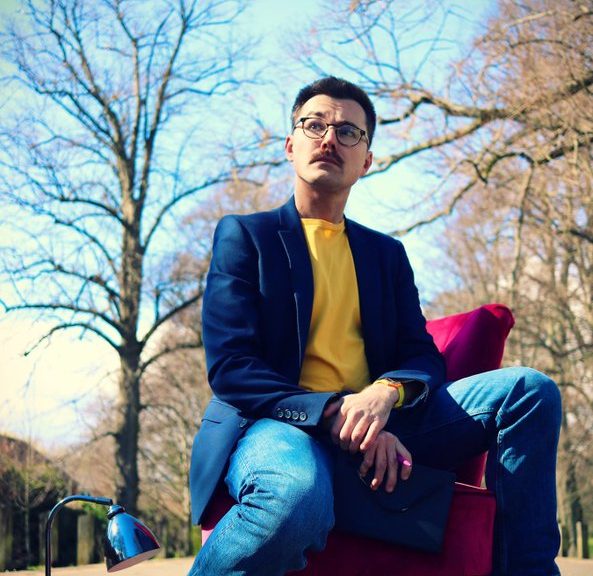
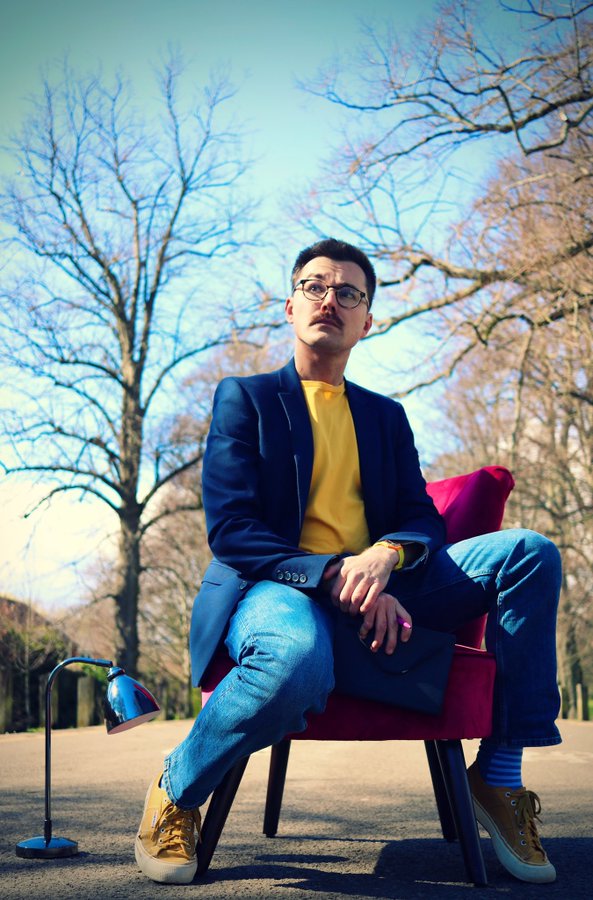
Shwmae! I am a writer. I was born in Abergavenny, raised in Ebbw Vale, and then Cwmbrân, and now living in Bridgend with my fiancé. I had a Welsh language education in Pontypool (and now I predominately identify as a Welsh language theatre maker). I studied my BA in Drama at Aberystwyth University, and my MA in International Dramaturgy at the University of Amsterdam. I’ve been writing for theatre for about 10 years now, having had many fantastic opportunities to exercise and explore new work. I’ve been fortunate to work with Theatr Bara Caws, Theatr Genedlaethol Cymru, Theatr Iolo, Theatrau Sir Gar, National Theatre Wales, Dutch National Opera, Ensemble Modern, Cwmni Theatr Frân Wen and Cwmni Theatr Arad Goch. I’ve also worked in a pharmacy, as a teaching assistant and a drama club facilitator. It’s all relative!
So, what got you interested in the arts?
I have my parents to thank for that. Neither of them work in the arts, but they regularly took my sister and I to the theatre from a very young age. The stating point was likely seeing ‘Budgie the Little Helicopter’ at the New Theatre, Cardiff. They also took us to Kids Week in London (a brilliant initiative) during the summer, all the way up until we were 16. They always encouraged broad-mindedness in any art form we watched. We went to all sorts of theatre across the country, as well as the cinema, museums, art galleries, as well as the weekly movie nights we would have at home.
Why do you write?
I see the world in a very creative way. Ideas come to me all the time from all corners of life. Human behaviour and experience is theatrical. I have too many ideas. Writing is a method in which to make sense of things. News bulletins and anecdotes and shared-experiences and reading historical documents translate into creative artforms that I visualise. To me, everything has creative potential. I can’t always deal with things ‘just’ as they are, or as matter of fact. I like to imagine and interpret all the time, and ask – ‘why are things like that?’
Can you tell us about your writing process? Where do your ideas come from?
Anywhere. And new ideas usually catch you off-guard! There’s been many a situation where I have had to say: ‘Stop a minute, I have to write this down!’. From there, it’s usually many weeks of toying, thinking, contemplating, researching. If the idea disappears after 6 weeks, then I can’t love it that much to begin immediately. I don’t always start with ‘something to say’. That usually comes later. If I have an idea, and later on it begins to resonate with my own personal opinions, experiences or perspective on things (or challenges them) – and the idea sits with me long enough (I get bored quite easily too) – then I know I may have something. I also thrive on collaboration. I like to work with a director very early on to really uncover a play.
Can you describe your writing day? Do you have a process or a minimum word count?
I personally don’t think there’s such a thing as a writing day because, every time I sit down to ‘write’, I usually scroll on Twitter or stare blankly somewhere. You have to let the ideas come to you. Sometimes they come in chronologically, order sometimes in a random order. The ‘process’ is trusting that it is a process that requires time. I also think it’s healthy to have a different approach and process with each new play. Let the work dictate to you what it needs. I recently completed the first draft of a new play entirely by hand in a notebook because I wanted to try not writing any of it at home and to make the process more mobile. Now I have to find time to type it up . . .
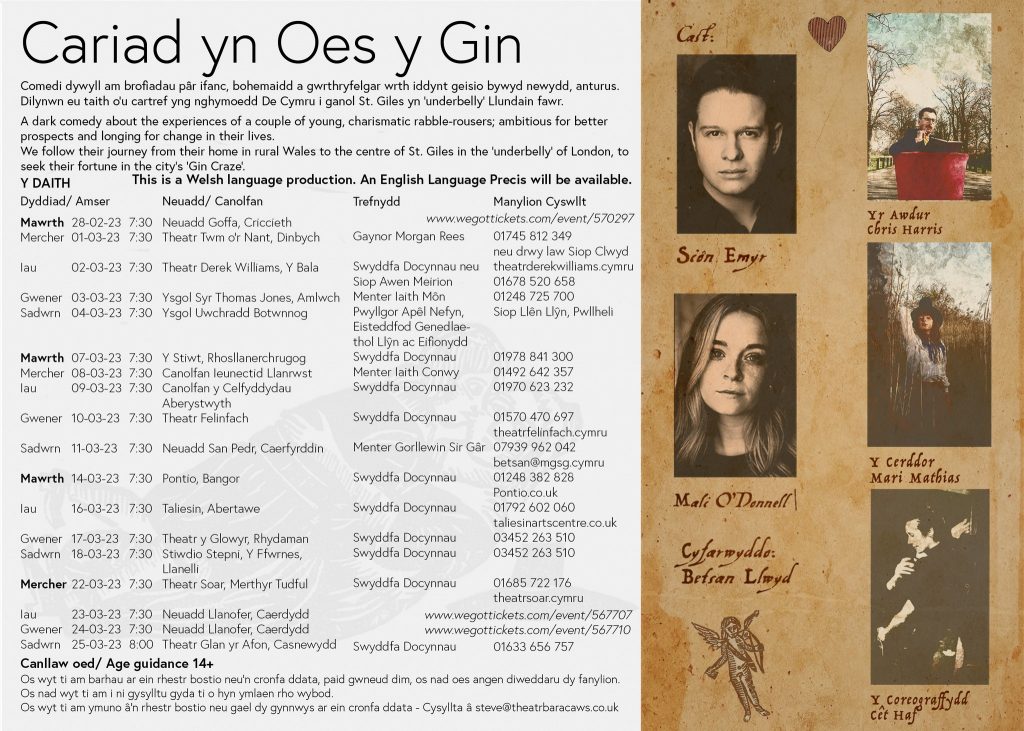
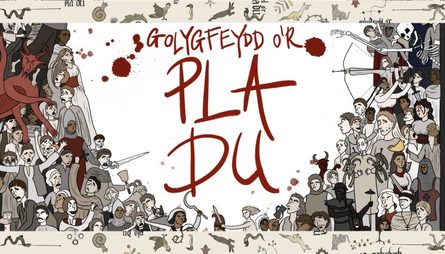
This spring you have two new Welsh Language productions on tour, Cariad yn Oes y Gin produced by Theatr Bara Caws which is described as “A dark comedy about the experiences of a young, bohemian and rebellious couple as they seek a new, adventurous life.” And Golygfeydd o’r Pla Du, a Theatrau Sir Gâr Production, supported by Theatr Genedlaethol Cymru which is described as “A mischievous, black (death) comedy about crisis and corruption, packed with scandal, songs, singing goats and horse sh*t. Welcome to the Black Death – there’s nothing funnier.”
There is clearly a theme of dark comedy in your work! What inspired both productions and what are your ambitions for the tours?
‘Cariad yn Oes y Gin’ was inspired by asking how something so destructive, like gin, was discovered for the first time. I was interested in how, in 1736, it affected people on a societal level, and how a bridge once build between the lower and upper classes was suddenly eradicated because of gentrification. I also wanted to see it through the lens of a young, care-free (and rather naive couple) who get a big slice of reality when paving their own way through life.
Mali O’Donnell and Sion Emyr in ‘Cariad yn Oes y Gin’ – Kristina Banholzer
I’ve thought a lot about the nature of love and relationships over the past couple of years, and how one must adapt and, sometimes, compromise in a true relationship, whilst also holding on to their very true selves. Gin, a new and destructive drink in society, becomes a symbol of freedom and power for this young, rabble-rousing couple.
‘Golygfeydd o’r Pla Du’ R&D – Ray’s Photographs
‘Golygfeydd o’r Pla Du’ began life as wanting to be popcorn-theatre for Welsh language audiences in the vain of some of my heroes: Mel Brooks, Monty Python and The League of Gentleman. It’s written for 4 actors sharing around 35 characters. It’s fast, it’s polymathic and outrageous. Of course, like all theatre work, it quickly evolved into something more than just a satirical comedy, and I began to see how crisis, such as a pandemic, brings out the true nature of people. It seems there are many out there who benefited from the COVID-19 pandemic, and the play aims to make an acknowledgment of that through satire.
Both productions take place in an historical context. Do you think the plays period and themes will resonate with contemporary audiences?
I think so. I find it easier to contemplate what is going around us in the present through a historical lens. There’s a sense that enough time has settled for us to learn from history and to see things exactly as they are through the ‘then’. The ‘Gin Craze’ saw many people’s freedoms being curbed, not just on the basis that the drink was doing so much harm to people, but the working classes were entirely to blame for the increase in violence. You’d be surprised at how much corruption and scandal became evident as a result of the Black Death. People began to see the cracks in their leadership and in the feudal system. The ‘Peasant’s Revolt’ came shortly after that. It wasn’t all ‘Partygate’ or how much of public funding was spent on a private jet flight of 30 minutes, but the gesture of abuses of power was very much the same. Through history, we see lessons that have never been learnt.
There are a range of organisations supporting Wales based writers. I wonder if you feel the current support network and career opportunities feel ‘healthy’ to you? Is it possible to sustain a career as a writer in Wales and if not, what would help?
Yes, it certainly feels healthy. I was very fortunate to be invited to a few of those schemes myself (particularly the Sherman Theatre’s schemes in 2016 – 2018 curated by Philip and Christine Carne, Brad Birch, Gethin Evans and David Mercatali). My worry is that there still aren’t schemes to commit to writers long-term – to take risks. Theatr Bara Caws, Theatrau Sir Gar, Theatr Iolo, Blackwood Miners Institute . . . they’ve all taken a risk on me by following through. It takes time, but I don’t know a single aspiring/emerging writer who wouldn’t want to take that time if it meant the end-goal was getting their work seen and discussed by a paying audience.
Is it sustainable being a writer? No, not really. But I recommend training and taking work in other aspects of the arts, if possible: box office, outreach, education, administration, technical . . . whatever. It all feeds into your understanding of the working mechanism that makes up an arts organisation and gives you a greater appreciation of it. However, never work for free.
If you were able to fund an area of the arts what would this be and why?
Access. It’s a financial barrier for many companies, and the costs are increasing for everything. A ‘Dream Scheme’ would be to see core arts organisations given additional resources and funding to ensure that all aspects of access can be addressed: in-house software for captioning, cheaper/free hire of captioning software (Theatr Gen’s access app Sibrwd is super-easy, for example)
More funding to ensure BSL interpreters/Audio describers are given more performances and more preparation time, access costs being subsidies by larger funding bodies (but not necessarily included in core production budgets) and that wide-spread training is free, accessible and continuous.
What currently inspires you about the arts in Wales?
An identity that has shifted from that of coal miners and choirs and drowned villages to telling the real, contemporary stories of the diverse people of Wales. Also, our awakened sense of nationhood sat in the context of the British Empire. I’ve seen a lot of Welsh language work in the past few years that touches on this in an exciting way. To put all that into context, I went to see ‘The Corn is Green’ by Emlyn Williams at the National Theatre last year. Without going on about it, there’s a reason why that play ISN’T being performed in Wales and HASN’T for a very long time.
What was the last really great thing that you experienced that you would like to share with our readers?
Oh, I went to see Damien Chazelle’s new film ‘Babylon’ recently!
In it, I saw two of my favourite films slammed together in an orgiastic, unapologetic party: ‘Singin’ in the Rain’ meeting ‘The Wolf of Wall Street’. It actually made me think a little about ‘Cariad yn Oes y Gin’ (I love it when that happens – you’re nervous about an idea you’ve thought of, and then see someone else execute it in a different context, making you confident that your idea will work!). For all the drug-fuelled, addicted splendour that ‘Wolf’ and ‘Babylon’ brought, the party has to die down eventually, because people get hurt. That’s what we see in Dylan and Nansi’s journey in ‘Gin’.
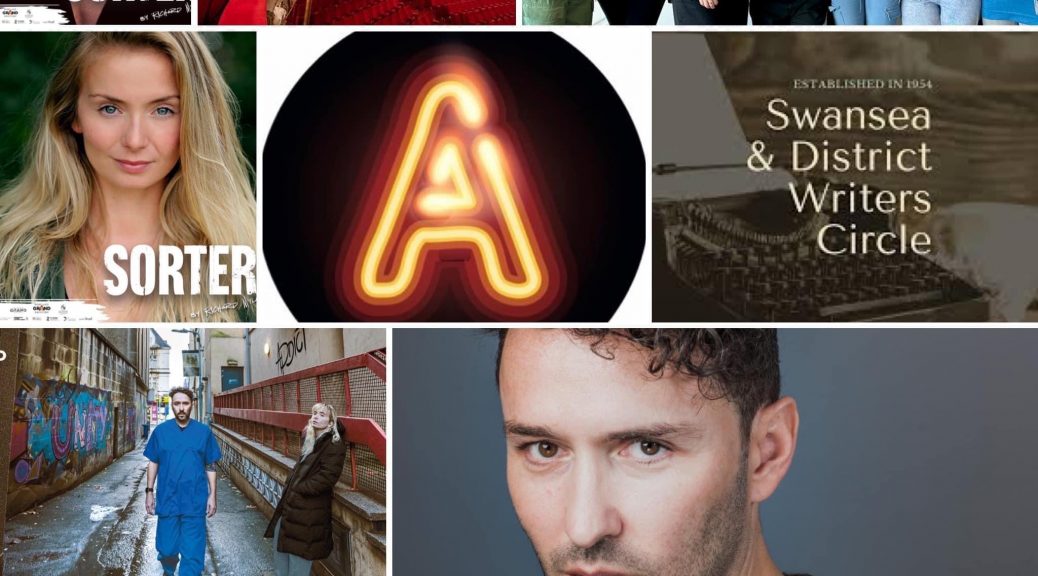
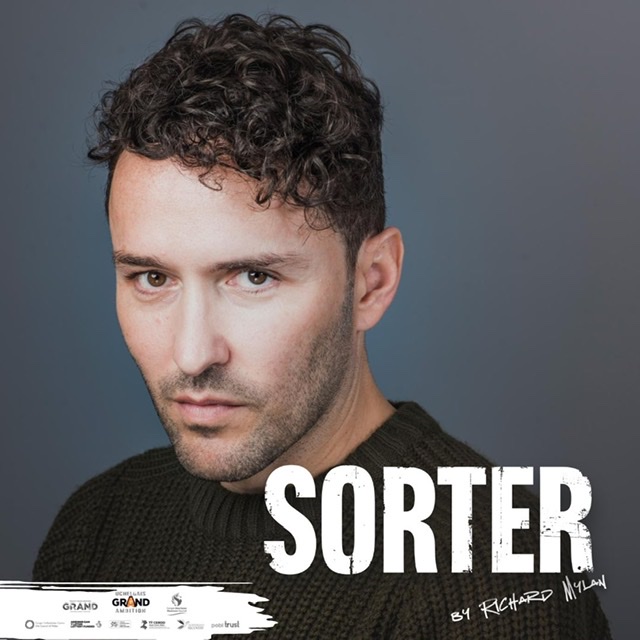
In our latest Playwright interview the Director of Get the Chance, Guy O’Donnell meets Actor and Playwright Richard Mylan, They discuss his career to date, his first play Sorted for Grand Ambition, the companies focus on creativity in Swansea and Richards personal approach to creativity and sharing his life experiences with the wider world.
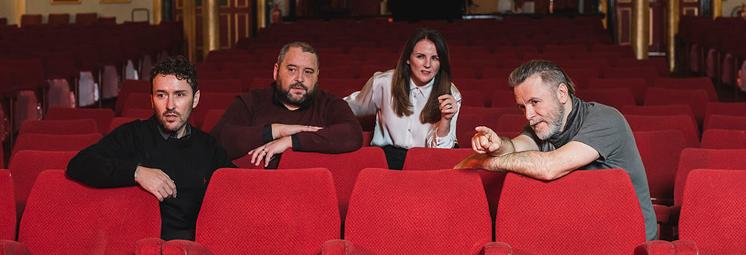
Hi Richard, great to meet you, many audiences in Wales know you from Theatre or TV, can you tell us how you got started in the arts? I originally trained as a dancer, got into a Lloyd Webber musical where I spent 4 years (which was very much my schooling). Started dipping my toe into acting, loved it- I’ve been an actor over 25 years. Now I co-run the resident theatre production company Grand Ambition at the Grand Theatre, Swansea along with fellow creatives: Michelle McTernan, Steve Balsamo and Christian Patterson.
Richard Mylan, Christian Patterson, Michelle McTernan and Steve Balsamo.
We’ve had an incredible first year, we produced a Gala performance to celebrate 125 years of the theatre and ‘A Number’ by Caryl Churchill.
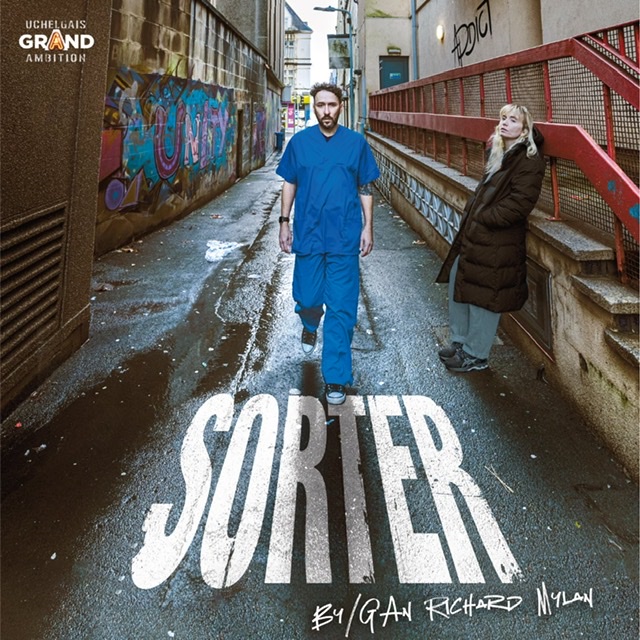
As well as many community outreach projects and the formation of TAG (The ActorsGroup). We’re currently in rehearsals for my debut play Sorter our first original production.
So, what got you interested in the arts?
Rubbish in school- got positive attention for dancing so went with it… It was the gateway really, once I discovered the different forms of dance, choreography- I was hooked. It was my first glimpse of creativity as apposed to learning.
Why do you write?
Sorter is my first attempt at writing. I wrote it to make sense of 20 years of my life as a heroin addict. I was originally going to write it in diary form- just to get it documented & out of my head. But I struggled to write in the first person. Probably because I felt disconnected from it all… or in denial. So I went to a very familiar place as an actor – play form, my lived experience through two characters and when I did that, 20 years flew out of me in three weeks. It was a very cathartic experience.
Can you tell us about your writing process? Where do your ideas come from?
For me it came from real life. Before I began writing I knew the basic structure. I also did A LOT of research. Before I attempted to write real life vicariously, I made sure I was heavily informed. That way, I could deviate from the structure if I wanted to…go with it to a certain extent. Sometimes it was a blind alley, sometimes it was a welcome discovery.
Can you describe your writing day? Do you have a process or a minimum word count?
It’s just structured writing time, but I don’t really have a process as such- or a word count. I’m far more productive if I don’t put pressure on myself.
Do you have a specific place that you work from?
Not really. I can work anywhere as long as it’s an environment where I can focus, but that could be at home with the TV on in the background or a busy cafe. Sometimes life going on around me can put me into a rhythm.
You first play Sorter will premier at Swansea Grand this March. The marketing information for the production states that you wrote Sorter, to “come to terms with your battle with heroin addiction & hope it can lead to a bigger conversation with addictions treated with empathy, dignity & understanding.” has it been difficult for you to share so much of your own personal journey on the page and stage?
I’ve been in recovery for over 10 years so I feel safe enough to explore it all. I’m also incredibly supported by the Grand Ambition team, the staff at the theatre and Swansea Council.
As well as your professional writing debut, Sorter marks the premier production for Grand Ambition a new and exciting creative collective based at Swansea Grand Theatre focusing on a new perspective to capture the arts through the Swansea lens. It’s a collaboration with Swansea Council and Swansea based professional artists – Richard Mylan, Steve Balsamo, Michelle McTernan and Christian Patterson.Why did you and the other creatives involved decide to launch this new company now and what has been the reaction?
We felt that Swansea people should see themselves on stage at the Grand Theatre, their lives and communities reflected in quality work. We also felt very strongly that we could help to create opportunities for those living in/from Swansea. Historically we’ve haemorrhaged creative talent as a city and when you look at our incredible cultural heritage that doesn’t make sense. So we want to add to the brilliant work from theatres & companies like Volcano, Lighthouse, Fluellen etc. We want to bring our collective experience and help to enrich the ecology of venues and output.
What are your future plans for this new company?
To tell Swansea stories, bring new footfall into the theatre, build opportunities for Swansea talent and inspire the next generation of theatre goers and theatre makers.
As well as being a Writer and Actor the public also know you through your documentary Richard and Jaco: Life with Autism. The documentary provided a fascinating insight into your and Jaco’s relationship and the form of autism Jaco lives with known as Pervasive Developmental Disorder (PDD) Both the documentary and Sorter share aspects of your personal life with the wider world, beyond your professional work. Why is it important for you to work in this way and have there ever been times when it’s caused you any doubt?
I’ve always had doubts about sharing my personal life. But its always come from a genuine desire to change the common narrative. It was a joint decision to share Jaco with the world and he’s very glad that we did. But ultimately it was because our experience with Jaco is one of joy, hope and personal learning and growth. I’d not seen any documentaries that reflected that autistic experience.
With my addiction issues it was different because I was carrying it around with me. A huge negative weight that was affecting my mental health. So going public was really about unburdening that weight. But also it was because professional addicts are not generally known about because stigma and the fear surrounding it stops anyone sharing their experiences.
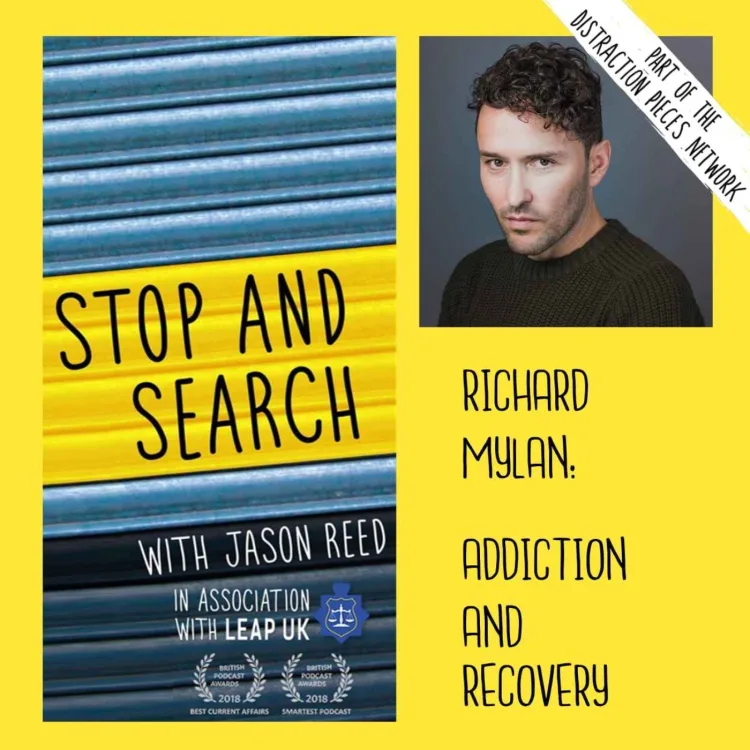
You can listen to Richard sharing his personal journey in the Podcast below from the Stop and Search series. He shares his battle with addiction in hopes that he can raise awareness for other people who may be struggling, and to wipe away the stigma that can often come with addiction. In this special episode we have a very intimate conversation with Richard about his heroin use which lasted twenty years – how and why he got to that place of addiction, and his advocacy for a change of attitudes.
There are a range of organisations supporting Wales based writers. I wonder if you feel the current support network and career opportunities feel ‘healthy’ to you? Is it possible to sustain a career as a writer in Wales and if not, what would help?
It could and should be better. It’s healthy in terms of output but not so healthy in terms of support. Output- because freelance writers are resourceful, determined, used to fighting to support their own ambition by any means. But that’s not sustainable. I think organisations realise this in general terms, but more needs to be done to support our network of writers, from budding to established. I learned a lot from my time with Swansea & District Writers Circle. We can all learn from support networks such as these.
If you were able to fund an area of the arts what would this be and why?
There are many areas of the arts that need funding but In Swansea right now and in Wales, there is a real shortage of technical talent, designers, set builders, stage managers, lighting designers and stage technicians. The infrastructure to nurture talent is there so I would fund grassroots and pathway opportunities.
What currently inspires you about the arts in Wales?
The quality of work currently being made in Wales is a huge inspiration to me. Companies like Theatr na nÓg, Leeway Productions, Sherman, Clywd and then creatives like Hannah McPake, Seiriol Davies, Tracy Harris, Dan Lloyd, Francesca Goodridge, Sophie Melville- the list is long!… they’re all smashing it and inspire me.
What was the last really great thing that you experienced that you would like to share with our readers?
Yesterday during rehearsals. The process of bringing Sorter to the stage is blowing my tiny mind! Every day is a great experience at the moment & I can’t wait to share it with our audiences.
In this interview Mehdi gives an overview of his career to date and shares his experience as part of Fio’s Arise Wales Creatives programme for Emerging Directors at RWCMD.
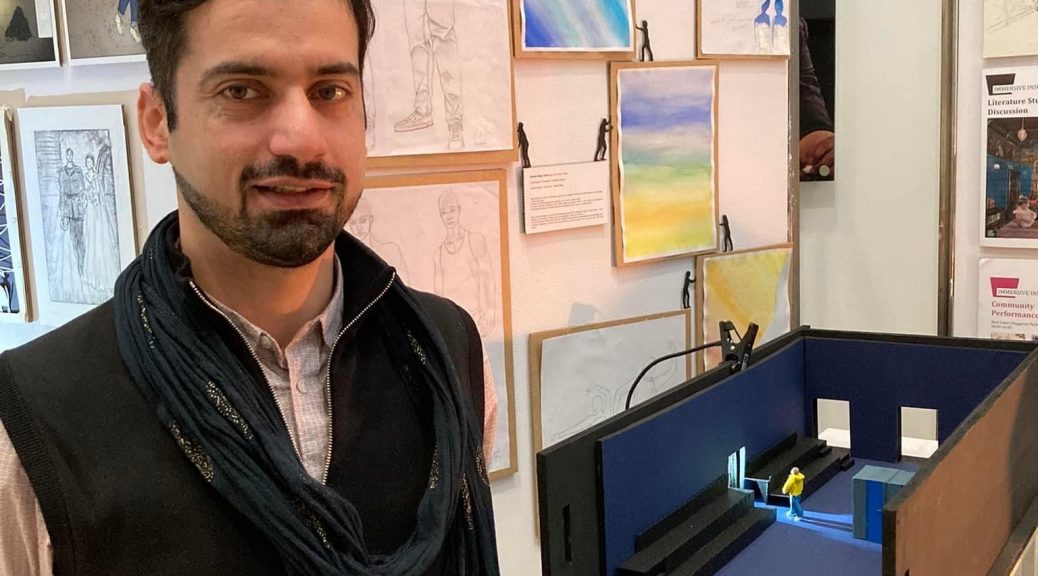
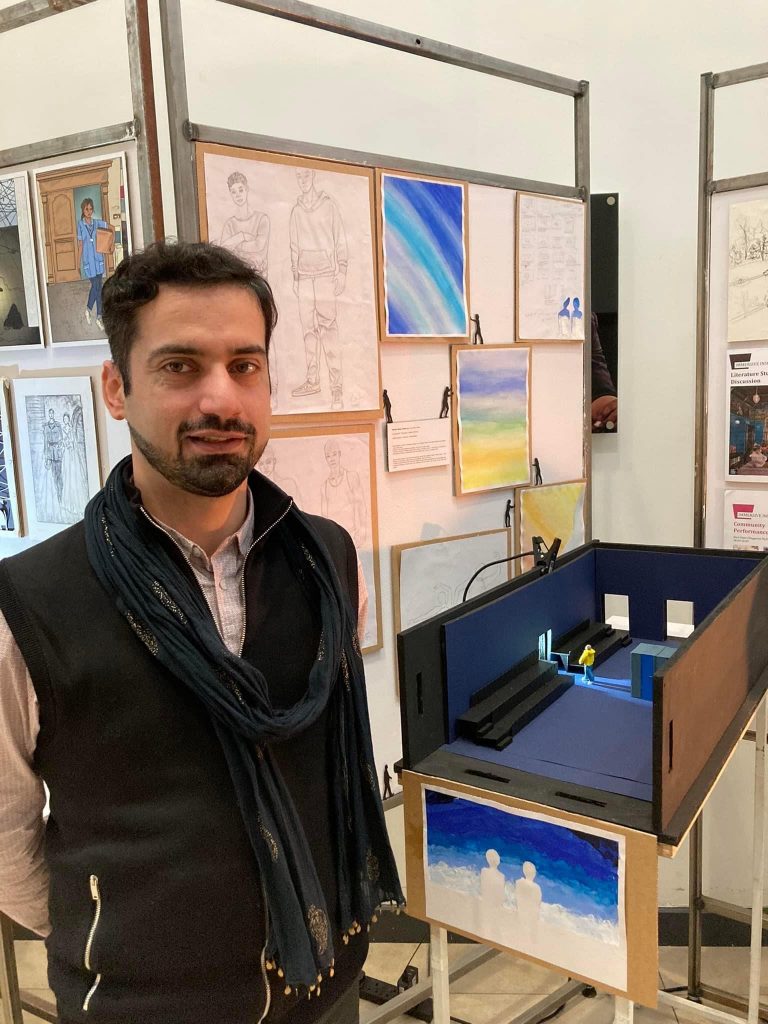
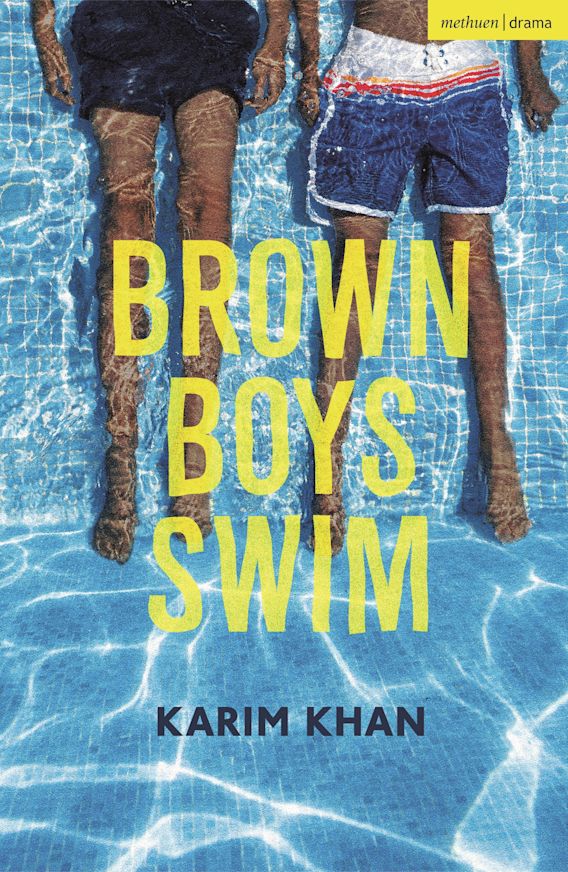
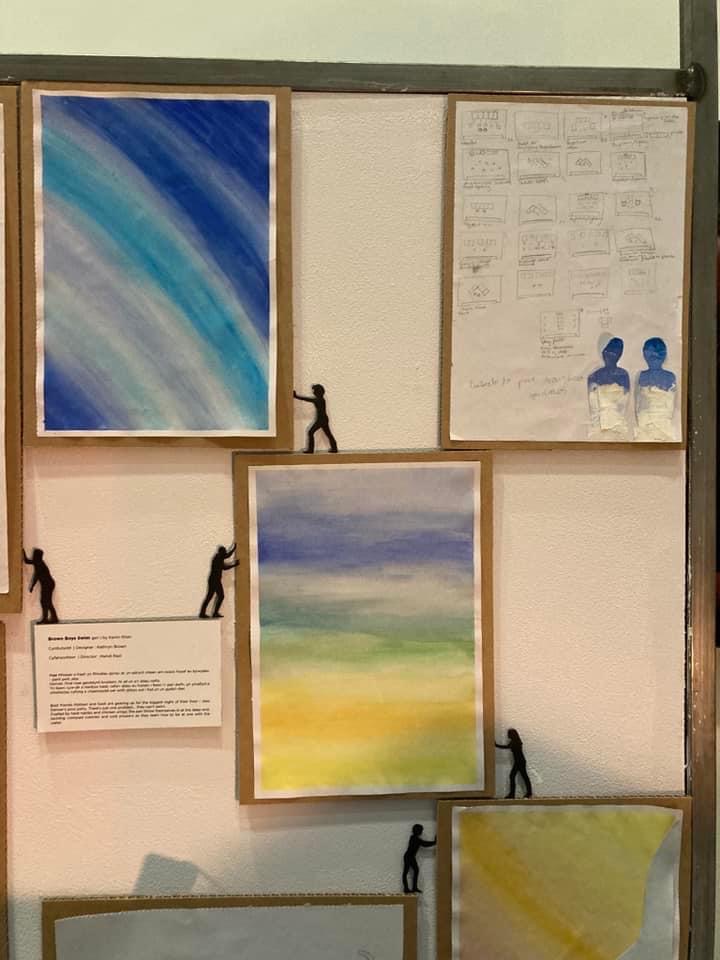
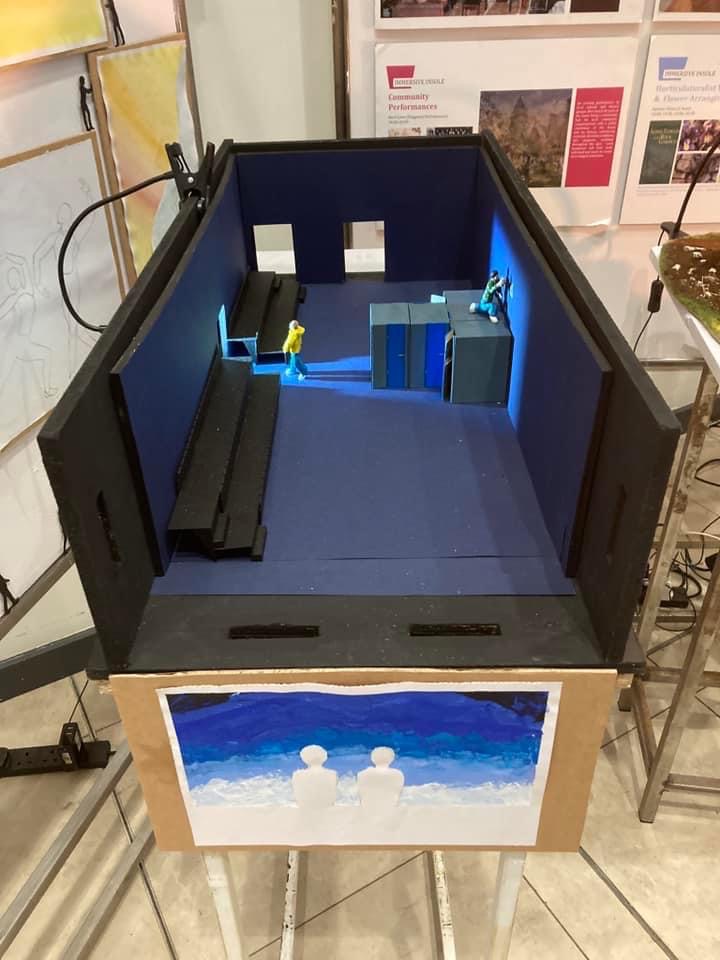
Director Mehdi Razi in front of the model box and designs by Kathryn Brown of Brown Boys Swim by Karim Khan
Hi I am originally from a Shiraz in Iran I first came to Wales in 2015 for a Masters in Product Design at Cardiff Met. During my time as a student I found Cardiff to be a very welcoming city. After completing the Masters I worked for two years in the Design Industry, based in Splott.
I was always interested in the performing arts and after moving to Wales a few things changed in my life, offering the opportunity to focus on the performing arts as a career. Initially I started ushering and volunteering through Sherman 5 at the Sherman Theatre and National Dance Company Wales on the Dance for Parkinson’s programme
Volunteering helped give me an insight into the possibilities of different areas I could work in the arts. This alongside shadowing and then later assisting on performances gave me an option to see things in detail and how I could invest in these areas as a career.
I developed my experience as a Producer about 5 years ago with WNO on a placement and shadowing on productions. I produced an R and D project called Beyond the Rainbow with Oasis (who support Refugees and Asylum Seekers) and the Refugee Council for Wales, this resulted in an informal sharing at the Wales Millennium Centre.
I then started on small assisting roles with the company and also enjoyed working as an emerging producer for Theatr Clwyd. During lockdown I worked on some projects of my own with support from ACW
Thankfully as Lockdown eased, work opportunities opened up and I assisted Joe Murphy as trainee Assistant Director on Christmas Carol in 2021 at The Sherman Theatre, Cardiff.
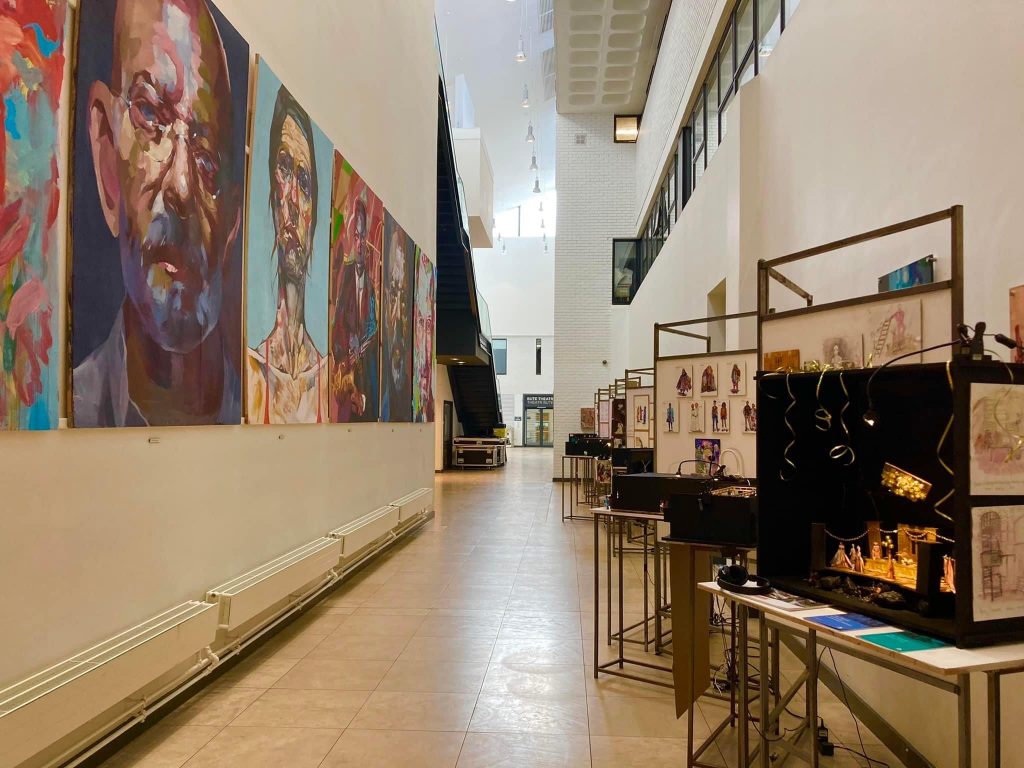
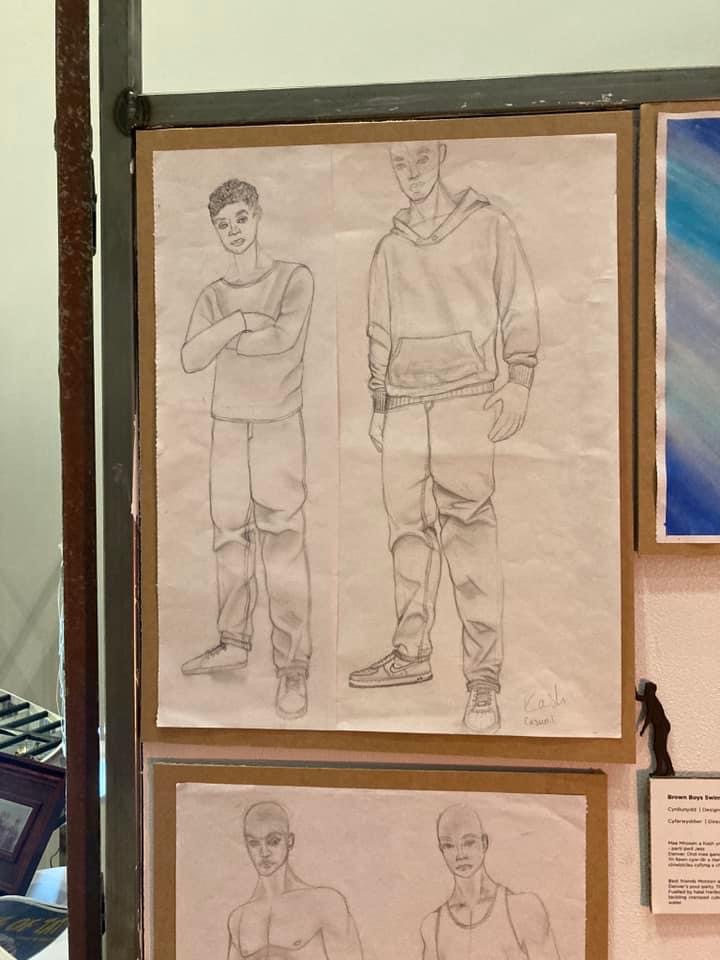
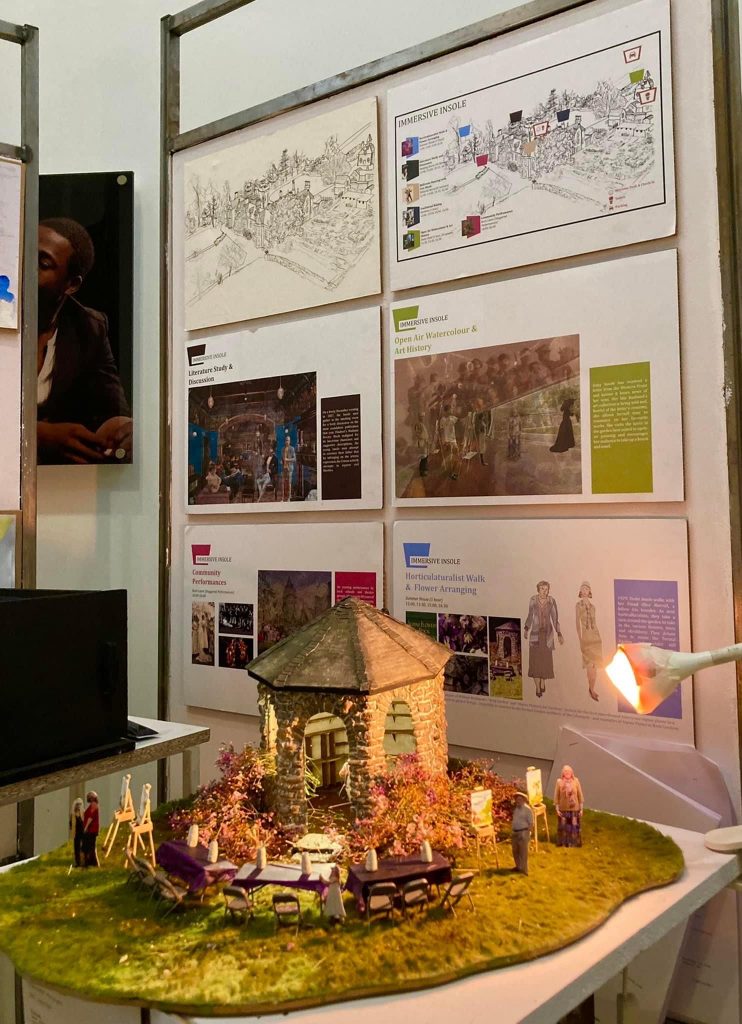
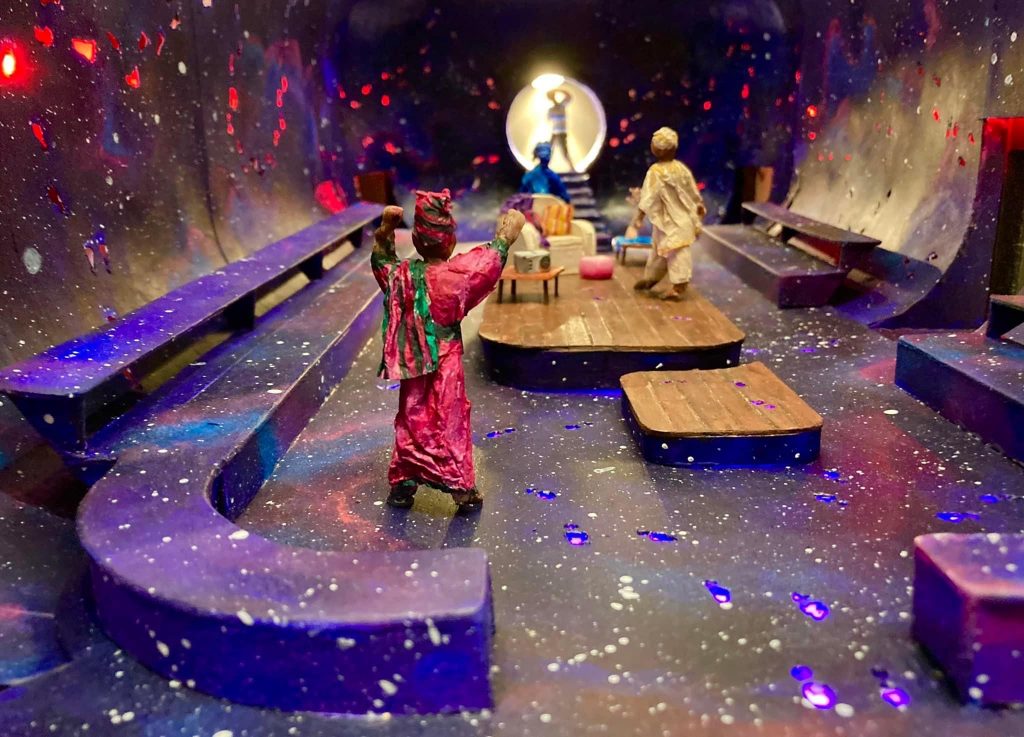
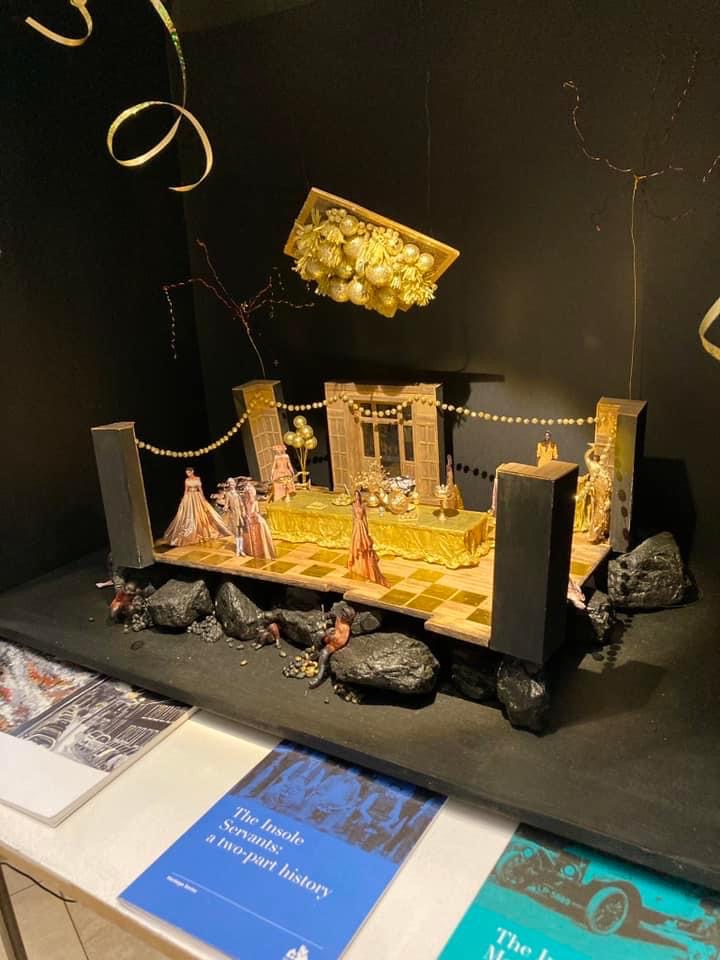
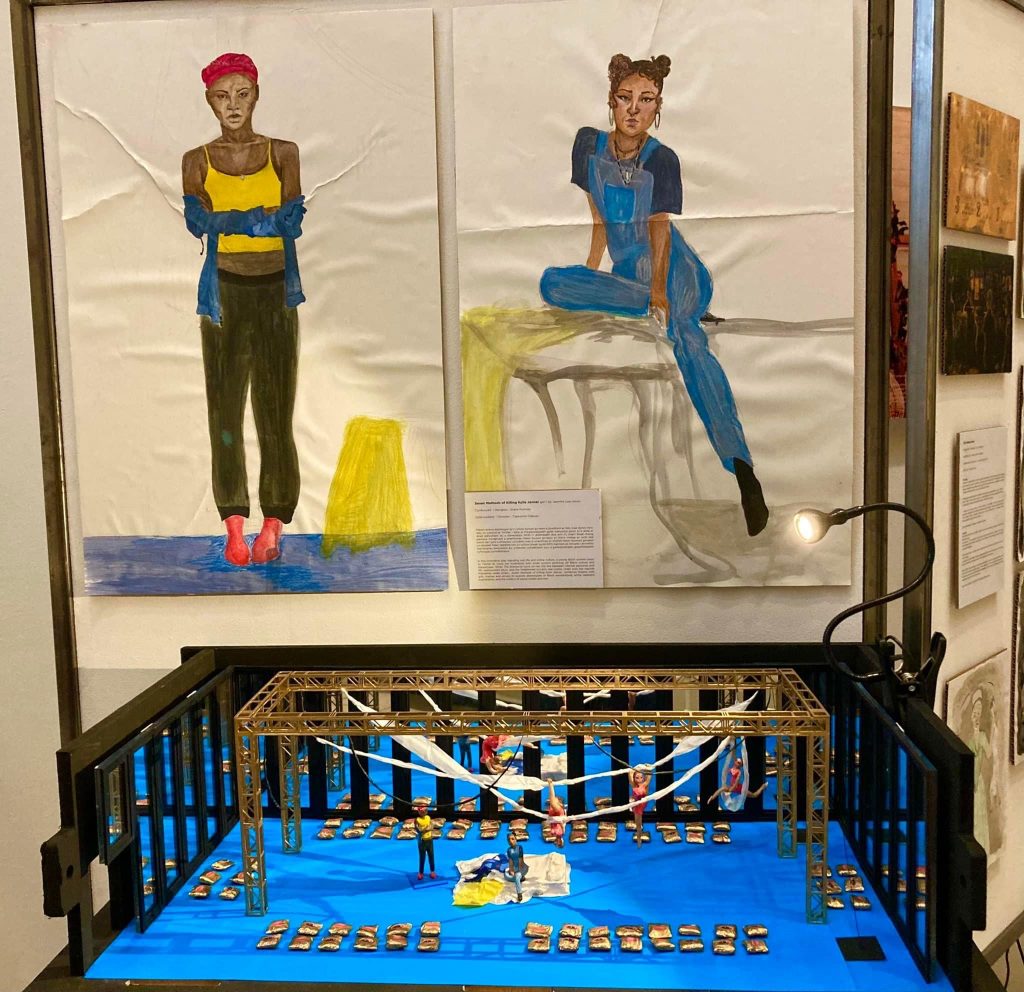
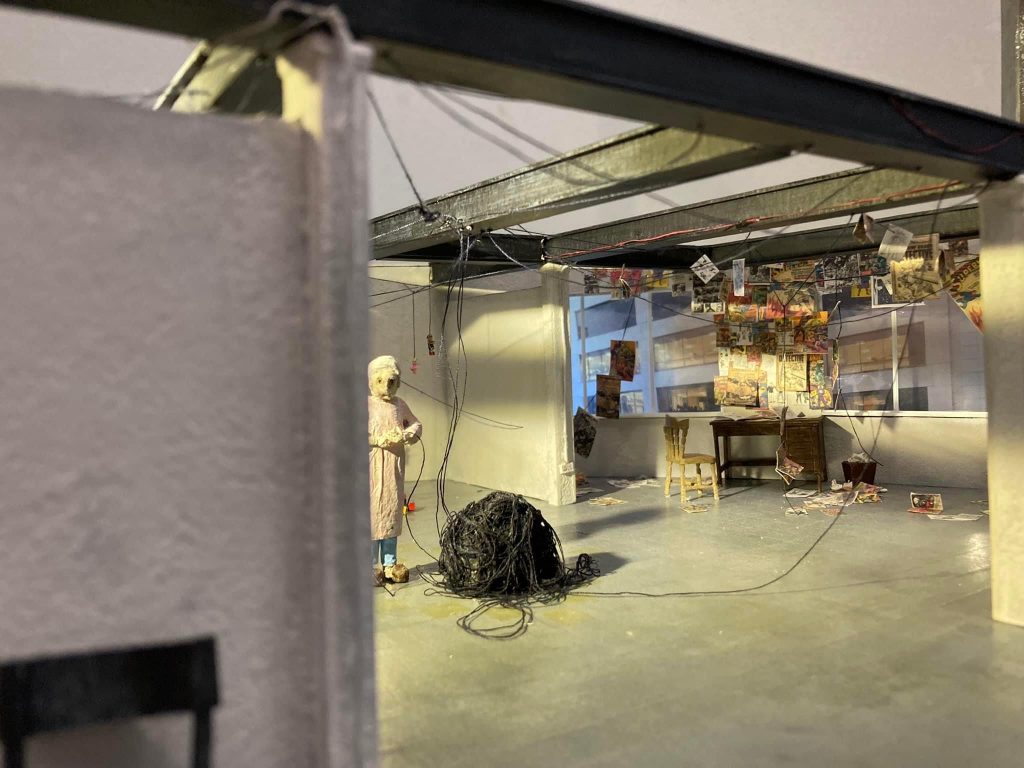
The Design for Contemporary Drama Exhibtion at RWCMD
We were then put in pairs and given some plays to work on in order to help develop our working relationship. I was partnered with a RWCMD Design Student called Kathryn Brown.
Kathryn created a mood board and we discussed the different elements of the production. We worked on the core idea of movement and cubic elements, The play interrogates feelings of oppression and the individuals place in society. Kathryn found that the traditional changing cubicle in the swimming pool would be great metaphor for the boys lives, sharing and then isolation so we played with this element.
Kathryn’s designs
We then worked on choreographic elements for the space. We had a few creative meetings, and considered what the change of position of the cubicles in the work would this mean to the audience and storyboarded the development of the play together.
A rough design was presented to me and we then looked at the blocking and the choreography was clear, we focused on the visual details, lighting, colour and transitions in the space. We focused on design details and construction, how scenery might be moved around the space and considerations of construction. A more detailed version of the model box was presented to me, we then finalised the design details and the practicalities of the sightlines for the audience.
Kathryn’s costume designs
Our brief was based on a specific space called The Studio at Chapter Arts Centre so we went on a site visit to the venue.
Kathryn’s finished model box
This was my first project at College I really enjoyed going into the design studio as I have a design background myself. Everyone involved was very inclusive, it was very collaborative. The RWCMD Tutors would often come in to chat, it was great to see such a high level of support.
I enjoyed being around the students, RWCMD is comfortable and homely, its a welcoming campus you can have lunch and work its such a pleasant environment.
The exhibition at RWCMD runs until the 10 Feb you can find more information below with a selection of images from other RWCMD Designers.
In this latest in the series of Playwright interviews Peter Cox gives an overview of his career to date, his time working for National Institutions, access to the arts for all and his hopes for the future. Interview by Director of Get the Chance, Guy O’Donnell.
Hi Peter great to meet you, can you give our readers some background information on yourself please?
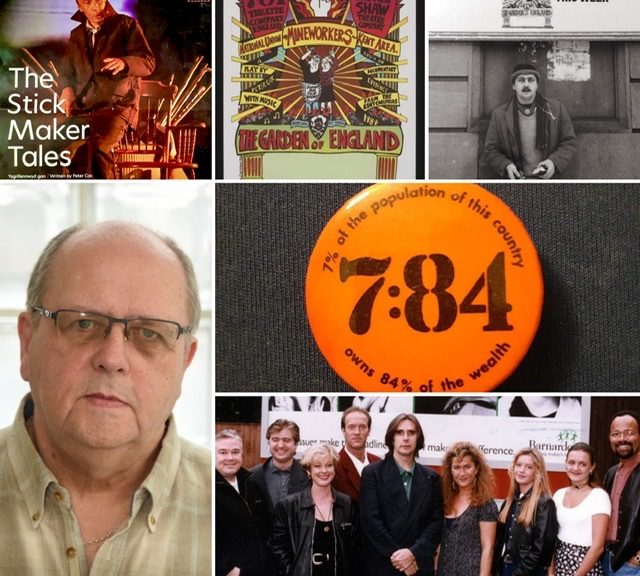
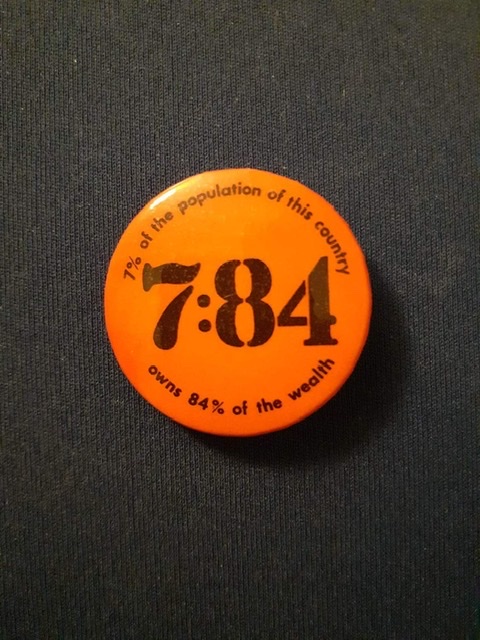
I began my writing career at the Royal Court Theatre in London where I won the George Devine Award for most promising new playwright in 1983. My stage plays have since been commissioned and performed by companies throughout Britain – including 7:84 Theatre Company, the Royal National Theatre, Belfast Opera House, the Wales Millennium Centre and National Theatre Wales.
I’ve written and developed film and television drama for the BBC and various independent companies. My radio drama has been broadcast on BBC Radio 3 & 4 but I’m maybe best known as the writer of 227 episodes of the acclaimed Channel 4 drama serial, Brookside, between 1986 and 2003. During this time, I was a lead member of the writing team that created multiple-strand stories for more than 2,400 episodes.
Throughout my career writing drama for theatre and television I’ve been privileged to work alongside, and with, masters of these forms including Samuel Beckett, Edward Bond, Billie Whitelaw, Michael Bogdanov, Danny Boyle, and Sir Phil Redmond CBE. The experience of learning alongside people who are working at the top of their profession is unbeatable and led me, in turn, to a commitment to mentoring theatre makers and writers.
Peter (left) working as Assistant Director with Edward Bond on the play The Worlds, performed by the Royal Court Young Peoples Theatre (AKA The Activists) in the Theatre Upstatirs.
Alongside my writing work I’ve been very active in the Creative Industries sector in Wales including creative leadership and advocacy in community arts, cultural policy making, economic and cultural regeneration, broadcast radio and television drama production, professional theatre, youth theatre, live music promotion, carnival, and cultural tourism.
I’m a founder trustee and ex-Chair of CARAD(Community Arts Rhayader and District), a Registered Charity that has developed a regionally significant Rural Community Arts and Heritage resource that’s brought more than £5 million of inward investment into Mid-Wales. During my leadership term CARAD facilitated the active engagement of more than 118,000 members of the community and helped to inspire and deliver over 650,000 hours of community participation and engagement in arts, heritage, and media projects.
In the 2010 New Year’s Honours list I was awarded an MBE for services to community arts – in essence, an acknowledgement of the amazing vision and hard work of many local people.
So, what got you interested in the arts?
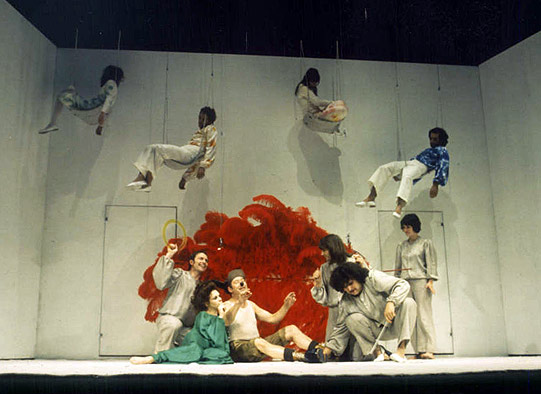
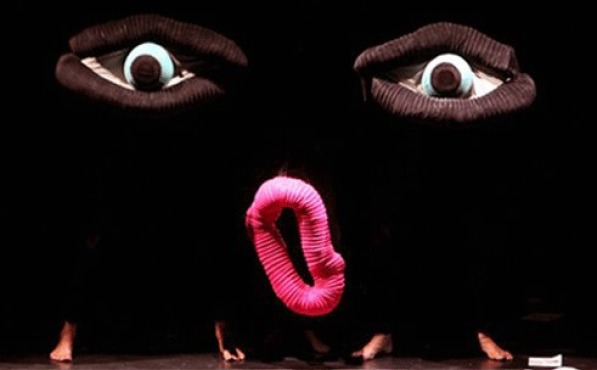
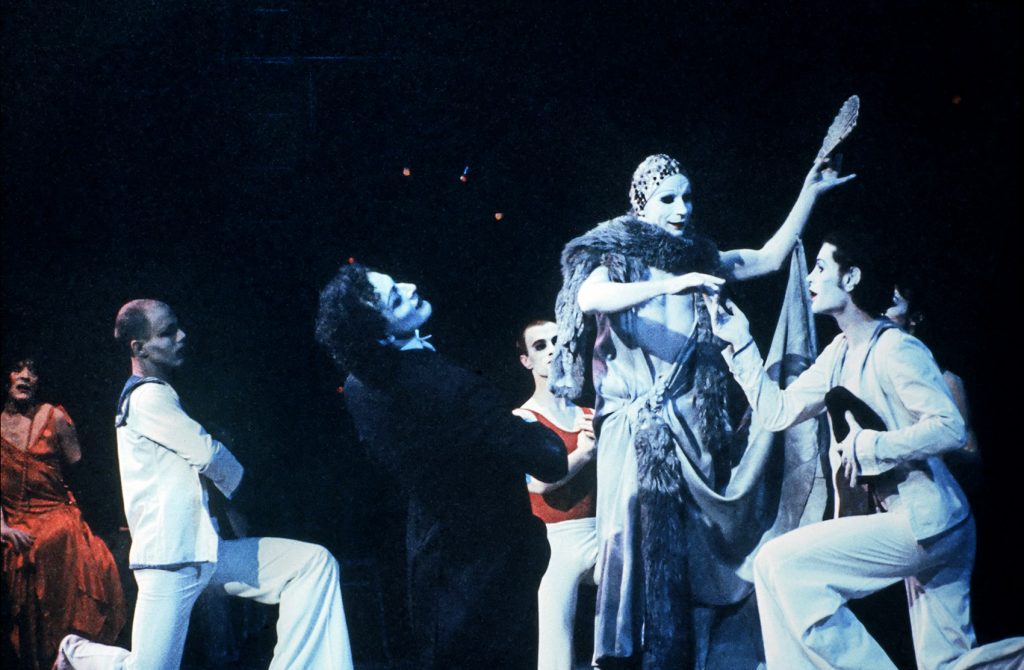
My earliest theatre-going experiences fuelled my desire to pursue a career in the performing arts. My first, on a teenage school-trip, was watching Peter Brook’s ‘A Midsummer Night’s Dream’, with its rock-circus staging and Bottom being given a clown nose rather than an ass’s head. A few years later, as a drama student, I was awestruck watching the fabulous giant puppetry of Swiss theatre troupe Mummenschanz. Soon after I was deeply moved and inspired by Lindsay’s Kemp’s extraordinary, ‘Butoh’ influenced, movement-theatre production of ‘Flowers’ at Sadler’s Wells. There are visual stage images from all three productions seared into my memory to this day.
Peter Brook’s ‘A Midsummer Night’s Dream’,Mummenschanz‘Flowers’ at Sadler’s Wells.
In each of these shows, the non-traditional theatre techniques and visual language used were incredibly powerful and profoundly enhanced the storytelling. Primarily though, I was conscious of the way my emotions, imagination and creativity were provoked by these vividly effective, stylised, and subversive theatrical approaches. I was hooked.
Why do you write?
I write to try and harness the vast numbers of ideas that just keep bursting out of my sub-conscious mind. I write to try to capture and express moments of extreme crisis, of powerful emotions, from rage and hate to love and grief. I write to make an actor’s blood run faster and to make audiences laugh and cry.
As both a playwright and screenwriter, I’ve researched in, and written about, many socially and politically challenging environments, including: the Bogside in Derry in 1982/3 just after the Hunger Strikes, across British coalfields during the 1984/5 Miners Strike, in Southern Sudan – a war and famine zone, during the Troubles in the Falls Road Belfast 1988/89, and so on. At the heart of all this work there are real people facing very real, and serious, crisis points in their personal and community lives.
Those are stories that need to be told.
Can you tell us about your writing process? Where do your ideas come from?
I watch the world – politics, journalism, human behaviour and frailty, social trends etc… and generate ideas on a daily, if not hourly, basis. I never block any of my own ideas – I note them down, then they either get used or not. Sometimes they might resurface years later in an entirely new context.
I use a diverse range of process techniques, like T Cards and colour coding for structure, but my approach to storytelling is always the same, whatever the form… find a compelling character, or group of characters, and put them into a story that pushes them up against and beyond their own boundaries. The challenges they face, both mirror and echo the challenges that audiences face every day.
Can you describe your writing day? Do you have a process or a minimum word count?
Getting into my ‘writing zone’ is crucial. Blanking out all the extraneous noise from life and the world around me. Once there I honestly can’t say how the magic happens – when the words flow it’s an alchemical process. Researching and note-gathering are replaced by something akin to ‘channelling’ as characters, action, dialogue and images form in a kaleidoscopic visualisation.
I never judge or edit as I go – that comes later. I’m completely committed to revising and re-writing and I’m not afraid to write twenty or thirty drafts or more. I’m a strong advocate of the strength and power in a good relationship between writers, directors, and dramaturgs. I work on the understanding that writing is a form of improvisation on the page. I never ask, ‘Do you like what I’ve written?’ Always just, ‘How can it be better?’
Do you have a specific place that you work from?
When I worked as Writer in Residence with No Fit State Circus – on three site specific shows -my ‘standing-desk’ was a wheelie bin, out in the open air, with my writing files and laptop perched on top of it. I wouldn’t swap that experience for the world, but when it comes to writing every day, often for very long hours, I prefer my desk in my office space at home.
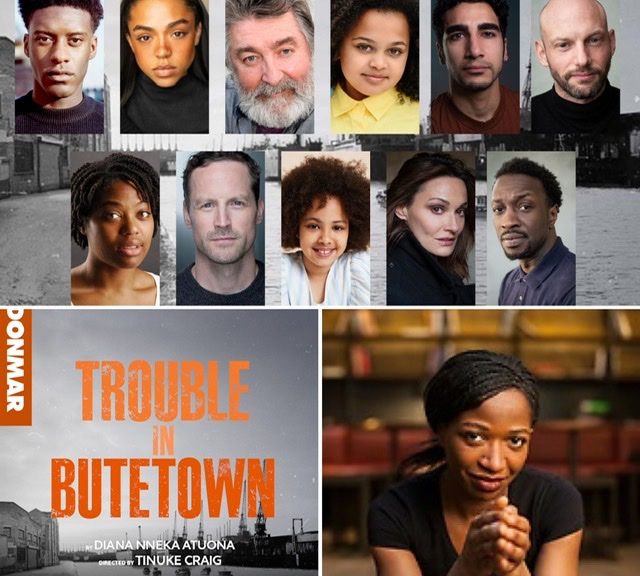
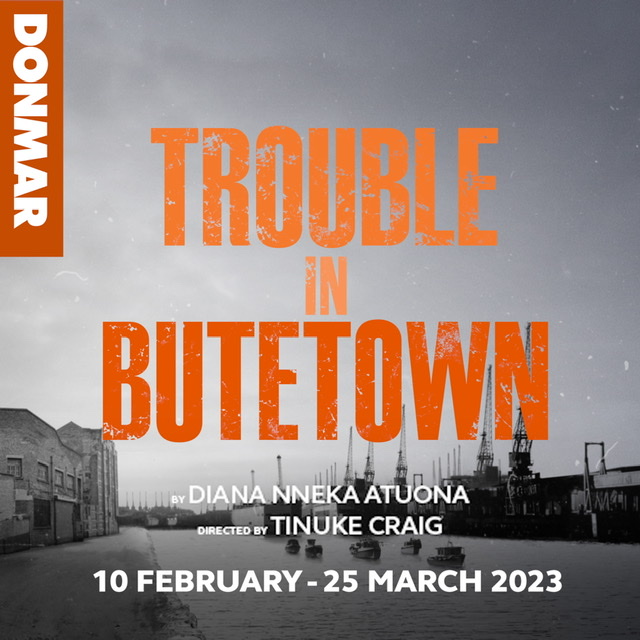
You began your writing career at the Royal Court Theatre and won the George Devine Award for most promising new playwright. We recently interviewed playwright Diana Nneka Atuona about her play Trouble in Butetown. Her script was recipient of the 2019 George Devine Award for her play then titled, ‘The Boy from Tiger Bay’. What role do awards and prizes play in a writer’s career and what difference, if any did it make to yours?
Huge congratulations to Diana. Winning the George Devine Award opened many professional doors for me, and I still place it high on my CV. Just as important though – was that it gave me a huge confidence boost and a validation of my writer’s voice.
I think it’s important that all ‘competitions’ should take the process very seriously. They need to be run with integrity and with good, sensitive communications. Giving thoughtful, considered, and professional feedback should be at the heart of the process – that way, everyone who enters is a winner.
I was fascinated with some Tweets you shared recently on a commission from The Royal National Theatre touring Welsh Miner’s Welfare Halls, where you also worked with 7:84 Theatre Company. How do you come to be involved in this project?
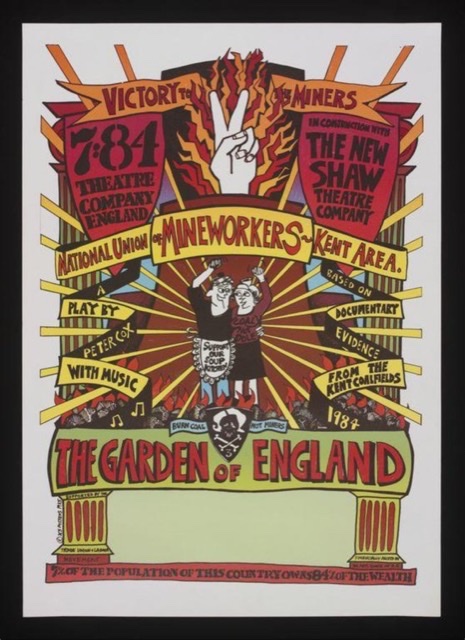
Just after winning the George Devine Award, I was commissioned by Peter Gill, Associate Director at the Royal National Theatre, to go into the Kent Coalfield to live with a militant striking miner – and then to create a verbatim play taken from interviews with miners for the duration of the strike. I travelled to every coalfield across the rest of the country, interviewing and researching on picket lines, mass demos, in soup kitchens etc.
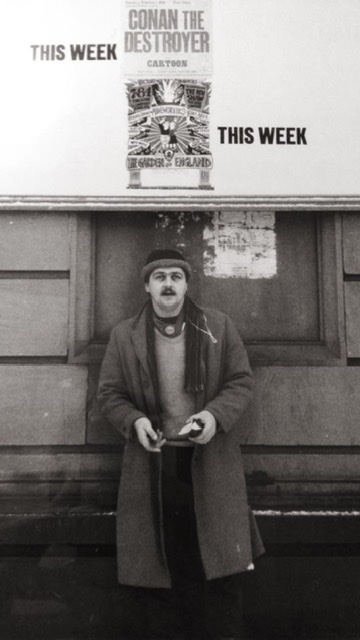
After the first version of the play was done at the National, (The Garden of England, directed by Peter Gill), I was asked to write a touring show with songs – inspired by that verbatim research – for 7:84 Theatre Company (England). We played some amazing huge venues to thousands of striking miners and their families – with the buses that brought the audiences being sponsored by other trade unions and using volunteer drivers. (Opening night in front of 2,500 in Sheffield City Hall, second night another massive audience in Newcastle City Hall, then Manchester Town Hall.) Our Wales venue was the Parc and Dare and it was an extraordinary night, as was the rest of the tour!
Peter outside of the Parc and Dare 1985.During the tour of Garden of England.
Then, in a strange turn of events, once the strike was over, Peter Gill commissioned me to go back to Kent to conduct another whole sequence of interviews in the defeated mining community. Once again I created a powerful piece of verbatim theatre, but one which was very different in tone to the first two. The two verbatim pieces played in the Cottesloe Theatre at the National Theatre.
My connection with 7:84 was a big influence on me. I was very lucky to get picked up as a young playwright by such a theatre visionary as the late John McGrath who founded the company. John was extremely encouraging to me and gave me various opportunities. He enabled me to go on the road with the company in both England and Scotland, as a form of apprenticeship. He commissioned me and I wrote several plays for 7:84. He put me on the 7:84 management committee. I owe him a lot. He had a fierce intellect and was extremely shrewd and analytical – always pushing societal boundaries and hierarchical cultural constructs. Working so closely with him inspired me to do the same – something I try to do with every new project I undertake.
What role do you think National Theatres and Playwrights have in telling the narratives of the citizens of their respective nations?
To be a good playwright you must care in equal measure about your characters’ and your audience’s lives. You need to be adaptable and flexible to create a wide range of characters and stories. You need serious commitment, stamina and staying power. You need to be ready to shed tears as you dig into the depths of your own life experience to bring those emotions to life in your characters. You need to love drama, and the power it has, to affect people’s lives. All these things apply to being a good National Theatre as well.
A large part of your career was spent writing episodes of the Channel 4 drama serial, Brookside, between 1986 and 2003. During that time, you were a member of the writers’ team that created multiple-strand stories for more than 2,400 episodes. You have said about your work on Brookside that “As you might guess I love story and the power of story metaphor in people’s lives.” We often see the term, “Writing Team” on long running serial dramas, can you share how this process works for the writers involved?
A Writers Room, or being on a Writing Team, is most commonly associated with American TV Drama Series & Serials. Breaking Bad for example, has a formidable reputation for the strength of its Writers Room – one of the reasons it has been so globally successful. Brookside story-lined with the Writers Room model – right from the day it started in 1982.
During my time on Brookside there would be twelve to fourteen writers on the team at any one time. We’d meet with the producers every six months to determine long-term story potential for all core characters. Then we’d meet for two days every month, in storyline sessions led by the Producer and / or the Exec Producer, where we’d intensively thrash out a block of twelve episode outlines at a time. We’d then go on to be commissioned individually to write single episode scripts – or possibly two or three for more experienced writers. While in the Writers Room we’d fight for stories, find twists and turns, generate the drama, seek out the humour and push the political and social boundaries as far as we could. We’d argue fiercely about politics, sex, religion etc… to the extent that, on one occasion, Security was called to attend as someone had reported a fight was taking place!
Writers Rooms don’t suit all writers, and they can be quite attritional places. Often there’s a high fall-out rate, and on shows like Friends they’ve been identified as being brutal and unforgiving. All of that said, when they work well, and when they suit you, it can be a fantastic system to work within. I had the great fortune to write for Brookside for eighteen years and my time in the Writer’s Room was like a monthly injection of the best drug going – intensely focused and collaborative creativity. I developed huge respect for my colleagues and for their commitment to driving our series to be the best that it could be. The fact that people still stop me, and talk about stories from over twenty years ago, is a great tribute to the effort we made at the time to tell the best stories we could that viewers would identify with.
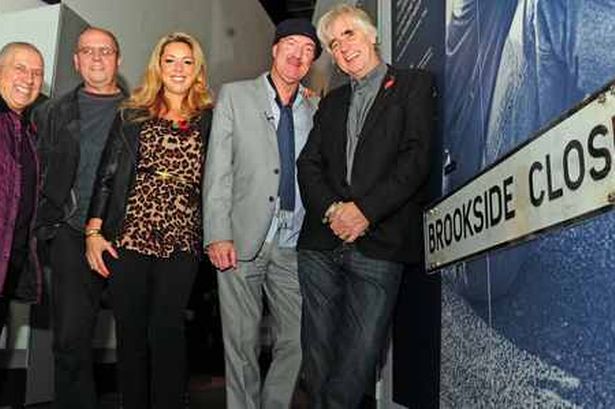
Peter with the cast and creatives from Brookside
In news just announced this week I’m very pleased to see that all episodes of Brookside have been digitally remastered and are due to be shown on STV – a free to air streaming service. I’ve no doubt that many of the stories that we told across the 80s and 90s will still resonate in the viewer’s lives.
Are there any particular storylines that you are most proud of during your time on Brookside?
Tough question. I was part of the Writers Room Team that generated storylines that ran through more than 2,400 episodes. I wrote 227 episodes which is a huge amount of broadcast television drama. To give you some idea of scale… just writing my episodes alone would be around three million words. By the time the team has story-lined and scripted over 2,400 episodes you are well into the tens of millions of words!
Brookside was conceived to bring real issues and real lives to the British television screen, through an ongoing drama serial. It was brave and ground-breaking. We prided ourselves on being ahead of social, political and legal issues and trends. Our audience looked to us to be challenging the boundaries of British politics through the eyes of ordinary people. We gave a voice to the genuine concerns, fears, and aspirations of our viewers – people with little or no power over their lives and their futures. Brookside was recognised from its first episode as ‘gritty social realism’, but we weren’t afraid to make people laugh along the way.
It was very important to us that we moved with the times. In the 1980s there had been a major national focus on Trade Union politics, and this was reflected in the programme. As we moved into the 1990s other social issues began to dominate, including LGBT+ issues, drug misuse, rise of feminist politics etc. Brookside further explored all these issues and many more.
So, having created hundreds of Brookside stories, it’s very hard to pick out a favourite – although the three-year-long ‘Body Under the Patio / Jordache’ story of domestic violence and child abuse is high on my list.
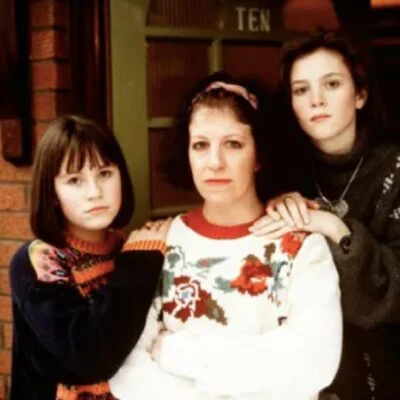
The Jordache Family
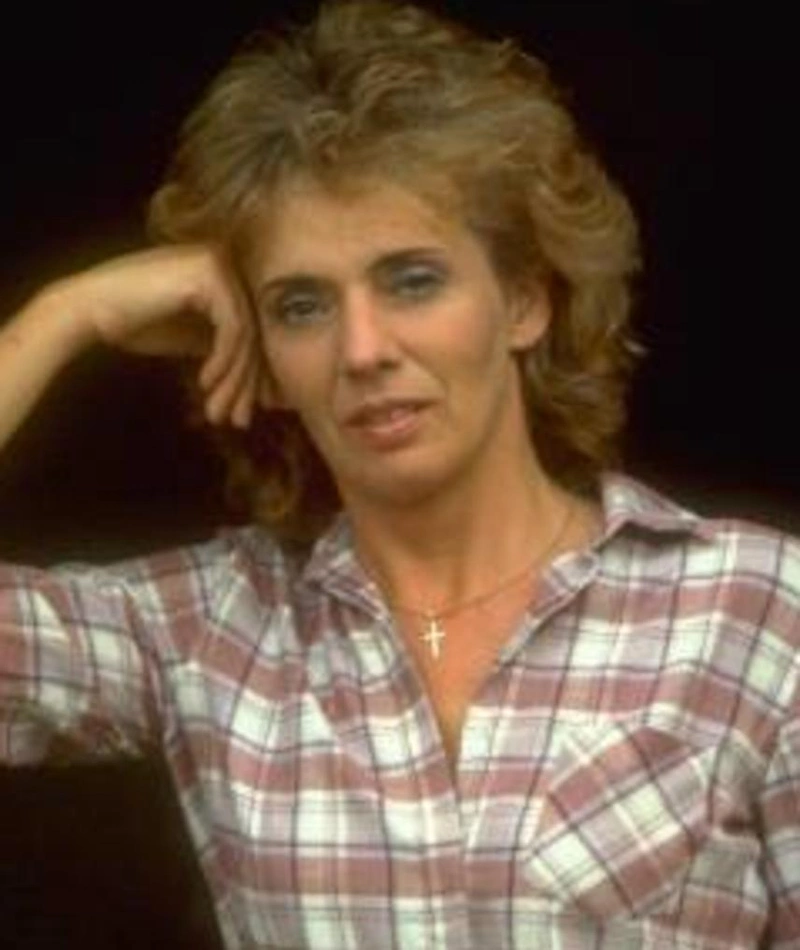
Maybe an easier way to frame it is to recognise that I have four favourite Brookside characters who were iconic soap characters played by outstanding actors who were great to write for: Sheila Grant, Jimmy Corkhill, Sinbad the Window Cleaner, and Mick Johnson. (Sue Johnstone, Dean Sullivan, Michael Starke, and Louis Emerick).
Sheila GrantJimmy Corkhill,Sinbad the Window Cleaner,Mick Johnson
Each of them was a working-class character who grew in strength and influence over many years from essentially the same starting point – as one of life’s underdogs – people with no power or agency in wider society. Each of them showed great resilience, courage, and human spirit to overcome all the adversities they faced, and a political system heavily weighted against them.
Throughout your career you have often worked with the general public and young people in particular devising work together, how does this process differ from being commissioned to write a script by yourself? Can you make any suggestions for good practice in terms of this method of creativity and writing?
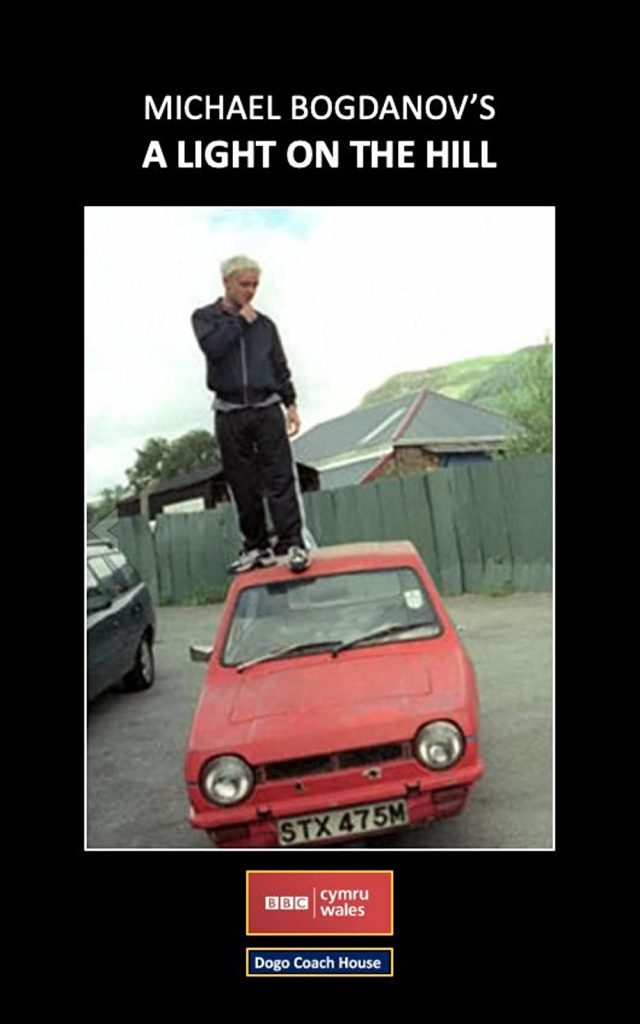
I’ve had extensive experience creating drama with communities including large-scale community plays in Wales and London, youth theatre in Belfast, youth and community film for the Rural Media Company and the BBC Wales Millennium Film, ‘A Light on The Hill’, commissioned and directed by Michael Bogdanov.
In all instances I aim to balance the process and the product equally. I always set the bar as high as possible, and ensure the whole project is delivered to the highest professional standards. This has an immense impact on the participant’s self-esteem and sense of achievement and can have a profound effect on people’s lives, including those in the audience. Best practice includes providing good access that removes barriers of all kinds, good listening and learning skills, honesty, respect, and integrity. With those basic principles in place everything else is about creating supportive systems and logistics that give people the best chance to grow in confidence and deliver at a level that they never thought they would be able to achieve.
Peter (centre) working in 1989 with with a group of young women from the Falls Road in West Belfast on his play Ma Hat Ma Coat and The Ghandi Girls
There are a range of organisations supporting Wales based writers. I wonder if you feel the current support network and career opportunities feel ‘healthy’ to you? Is it possible to sustain a career as a writer in Wales and if not, what would help?
It’s difficult to envisage a time when it will be genuinely ‘healthy’ as demand far outstrips supply. For example, the National Theatre Wales Community has four hundred and eighty-two members in its Writers Group. Let’s say half of them are active and wanting to write plays and get them performed. That’s over two hundred writers, while the number of commissions via companies like Theatr Clwyd, NTW, Sherman etc, will come nowhere near that in any one year.
This makes sustaining a career through theatre writing extremely difficult, except perhaps for a handful of playwrights. I’ve always thought of myself as a dramatist, not just a theatre playwright. This means in practice that I’ve gone out of my way across my career to find opportunities to deploy my core skills in a wide range of performance settings – radio, TV, film, circus etc. I would estimate that probably over 90% of my career earnings have come from working outside Wales.
If you were able to fund an area of the arts what would this be and why?
My ‘wish list’ would include: a Rural Region of Culture, youth theatre, touring theatre, new writing by writers of all ages, opportunities for women playwrights, mentoring… it could go on to be a very long list!
What currently inspires you about the arts in the Wales?
I’m hugely inspired by the number of young people coming through high-quality training and their determination to find all kinds of opportunities to tell diverse stories through drama. Their belief in what they do, and their love of it clearly transcends all else. But it’s very clear that, although financial remuneration doesn’t drive theatre makers on – poor financial rewards work against theatre makers from poorer backgrounds, so we risk those voices not being heard.
What was the last really great thing that you experienced that you would like to share with our readers?
Just before COVID, I worked with Sue Parrish, Artistic Director of Sphinx Theatre Company, a long-standing collaborator. The project we created was Words as Weapons – in partnership with Tom Kuhn of the Writing Brecht Project at Oxford University, Rowan Padmore from Arts at the Old Fire Station with CRISIS, the homeless charity, in Oxford and a group of participants with lived, often current, experience of homelessness.
As part of my preparation to run a sequence of writing workshops I read nearly one thousand Brecht poems, newly translated into English by David Constantine and Professor Tom Kuhn. It was a great privilege to be given access to this work, pre-publication, and what a journey of discovery it proved to be – page after page of surprising subjects and diverse styles. I’ve always believed Brecht had a voice that speaks to our lives today, but the more poems I read the stronger this conviction became.
Our writing group would meet every Monday afternoon and I’d use some of these Brecht poems as triggers for creating new work – in whatever form each group-member wished to try; poem, lyric / song, monologue, scene etc. When we read the Brecht poems aloud and discussed them, we found that their contemporary resonance and relevance was often quite extraordinary. He wrote some of these poems one hundred years ago, but he could easily have been writing directly about today.
Brecht’s words, his weapons, proved to be a fantastic catalyst for generating some exceptional new writing. Our workshop approach encouraged and nurtured each writer’s own voice. As each member of the group grew in confidence, they found themselves liberated and they pursued their own new writing with real energy and purpose. Each of their voices became clearer and stronger. I’ve no doubt Brecht would have genuinely celebrated this spate of creativity and commentary. As they created each new piece their hunger to express themselves matured, their words demanded to be shared and their voices demanded to be heard.
When we all stepped out onstage, in our live Words as Weapons performances, the packed houses listened intently and were moved and entertained as well as intellectually stimulated and politically provoked. But at the same time, these audiences were struggling to get their bearings.
This was two worlds colliding: 1920s Berlin v Oxford 2018.
They understood that they were listening to new writing – but they also knew we were sharing some Brecht poems – and at times they found it impossible to work out who had written what and when! That was a great project on so many levels.
Hi Diana, great to meet you, what first got you interested in the arts?
As child, I was always into creative writing and storytelling. I wanted to be a song writer (still kind of do) and I would also write short stories. I wrote my first play when I was around 11 or 12 for my church and just loved the idea of entertaining audiences.
Can you tell us about your writing process? Where do your ideas come from?
Ideas come in a variety of ways for me. Either I go looking (which rarely yields results) or I just get flashes of inspiration. It has to be said though, that it is pretty rare for me to find an idea that I fall in love long enough to want to work on but when I do, there is no greater feeling. I often start with finding the world first then, figuring out a premise before populating the world with characters. In terms of process, I now understand the importance of planning and structuring where I can so I try to complete that first before I start scripting.
Can you describe your writing day? Do you have a process or a minimum word count?
I definitely don’t have word count. On a good day, I’d have been doing some writing in my head the night before so I really try and put that down until there is nothing left in my head or until I have to get on with life duties. I do try and write from the beginning of the story until the end but if there is a scene I am struggling with, I’ll just skip it and focus on one that’s strongest in my mind.
Your latest play Trouble in Butetown plays at The Donmar Warehouse, London from the 10 February. The production takes place in an area of Cardiff Docks, called Butetown or Tiger Bay during World War Two. The production information describes the area as “home to souls from every corner of the globe” What drew you to this location and period for your play?
I fell in love with the history. It’s strange as, prior to writing about Tiger Bay, I knew very little about its history so I cannot explain what led me to go down that path but I’m glad I did. The more I researched, the more I fell in love with it. As a girl from Peckham in south London, I know a lot of people would be surprised to hear that I would choose to write this story but actually, there are elements of Tiger Bay’s history that I can relate to. I grew up in London, so I understand the world of racially diverse communities first hand. As a Peckham girl, I know what it’s like to grow up in a town that has a negative reputation that is not completely deserved, neither is it completely undeserved (we’re also both experiencing massive gentrification).
I also grew up around people like the characters in my play, salt of the earth types who would take the mick out of you but also have your back if you were ever in trouble. Tiger Bay’s cultural identity is also made up in part, of the West African culture. Being of West African descent myself, I felt I could easily relate. There were many periods I could have set this play in but I chose WW2 as the world of Jim Crow that the black American GIs who arrived in Cardiff suffered under, contrasted very nicely with the diversity and inclusion of Tiger Bay. I also felt that we have seen a ton of WW2 stories depicting the life of white Britain. I don’t believe I have seen anything that depicts the life of British people of colour.
Do you think the plays period and themes will resonate with contemporary audiences?
I think it will. This is a time where people are very open to forgotten histories. I also think that the themes of race and identity are very pertinent today. Essentially, this is a human story and I don’t think they ever really go out of style.
Most definitely. The George Devine is a very well regarded theatre award and it was a real privilege to win it. It got the play in front of many venues, the Donmar being one of them and the rest, as they say, is history. The TRHW award was really important as it provided the necessary funds for me to develop the play and also provided support for the production as a whole. I am very grateful to have received both.
There are a range of organisations supporting UK based writers. I wonder if you feel the current support network and career opportunities feel ‘healthy’ to you? Is it possible to sustain a career as a writer in the UK and if not what would help?
That’s a pretty tough one for me to answer as historically, I never wrote fast enough to make a consistent living as a writer. I have however found that there has often been support when I needed it most, I am thinking of amazing organisations like The Peggy Ramsey Fund or the Fleabag fund. I think there can always be more support for writers especially due to the precarious nature of our jobs.
If you were able to fund an area of the arts what would this be and why?
I would probably say that I would fund new writing from under represented voices. In order for this industry to remain fresh and vibrant, we need a diversity of voices.
What currently inspires you about the arts in the UK?
The landscape has changed so drastically since I started on this journey. There is a real appetite for new stories and there does seem to be a willingness from a lot of organisations to support new talent. It does feel like it’s all for the taking now.
What was the last really great thing that you experienced that you would like to share with our readers?
My daughter turning three years old. She is the love of my life and to be surrounded by all our friends and family meant the world to me.
You can find out more about Trouble in Butetown and book tickets here
Interviewed by Guy O’Donnell, Director Get the Chance
Hi Nyla great to meet you, what got you interested in the arts?
For as long as I remember I have always had a love for performing. My parents said that they would watch me with my teddies in the garden pretending I was in another world and talking to myself, I was always creating stories and living in my own imagination. I also attended a very creative church growing up and from the age of 6-12 I was involved in productions, always singing, dancing and acting.
You are the Creative Arts Development Officer for G Expressions based in Newport, the organisation “works to support young people aged 10-25 to dance develop and achieve their dreams. Through dance, theatre, and leadership activities , giving young people the confidence, tools and skills to achieve their goals.” How did you come to be involved in the organisation and why is its work important?
My family members run the organisation and since it began in 2010 I have always been involved in some shape or form. I was a young mum, therefore my children were my priority and my personal dreams of performing were put to the side but I assisted with G-Expressions on projects and would help out with dance at their previous studio ‘Bella Bella’. When they started doing theatre shows in 2014 I was keen to help out and began shadowing and assisting the writer and director of the shows, which happened to be Alexandria Riley.
Alexandria Riley
I then made my debut as a starring role in their production of ‘Sisters Acting up’ and felt such a buzz, even being at the age of 28 it was an amazing feeling and seeing how G-Expressions facilitate all their service users and staff, giving them a platform to achieve their dreams was such a great feeling. I then became an assistant director on their last show ‘Hard Knock Life’ and also got my job as Creative Arts Development Officer.
Being able to support young people in exploring their creative gifts is like a dream job for me. Giving them a safe place where they don’t feel judged and can be who they want to be, with the encouragement and guidance to do so gives them confidence and self-belief to reach their full potential.
You have written and are currently working on a new live production for G Expressions called Urban School of Arts. The production is described as “An original story filled with dance and drama about young people surviving their journey through performing arts school, all in hopes of pursuing their dreams of becoming artists” Can you tell us more about the creative process for the production and your intentions for it?
I began writing the story line during the Pandemic, after discussions with young people during a podcast I had set up through G-Expressions called ‘Say it How it is’. It was a great opportunity for young people to talk about different topics that they felt they were affected by and allowed them to talk openly and honestly, as most had said that they don’t feel listened to or even understood by authorities and adults. The stories came from real life topics and made me want to raise awareness about these topics that young people face, to help them talk more about it but to also give them a platform to express themselves in a creative way where they can be heard. I always wanted it to be an original as in the past we have used music that people know but have always had the issues of copyright, but I felt that we were in a place where we could offer more opportunities for artists to be recognised for their talents. I worked with some local young artists who love to write and produce and we managed to get funding from the High Sheriff to bring in a professional producer and work in the studio to record these songs. We now have a soundtrack alongside the show and I would love to see this tour and possibly see other drama schools put it on, who knows?
Urban School of Arts can be seen at The Riverfront Theatre, Newport from 03-04 Feb, tickets can be booked here
Much of your work takes place in Newport and is supported by The University of South Wales and The Riverfront Theatre, what more can be done to create opportunities for young creatives based in Newport?
We need more funding and buildings, it’s a simple answer really. G-Expressions are fortunate to have such a great partnership with USW and are now building on their relationship with The Riverfront Theatre and I am hoping that more opportunities come from this show. Access for young people interested in the arts is difficult, especially the young people we work with who don’t have the right backgrounds or finances. There needs to be more training and projects for them to be involved in.
The Urban School of Arts company.
If you were able to fund an area of the arts what would this be and why?
Training and development for artists who are new and need that bit of support. For myself, giving opportunities is so important.
What currently inspires you about the arts in the UK?
People who are doing things their way and making their mark. I feel that there is so much talent out there that people don’t know about, but they are creeping through the gaps and slowly getting noticed. I am inspired by those who don’t quit, those theatre groups and artists who are doing what they love despite the challenges they face is inspiring.
What was the last really great thing that you experienced that you would like to share with our readers?
‘The Making of a Monster’- Connor Allen’s raw talent and vulnerability to be brave and so in your face was a true example of an all-round creative. It was a brilliant show that I hope continues and is recognised for its genius way of writing and performance.
Creating opportunities for a diverse range of people to experience and respond to sport, arts, culture and live events. / Lleisiau amrywiol o Gymru yn ymateb i'r celfyddydau a digwyddiadau byw