
All posts by Guy O'Donnell

Hi I am Guy the project coordinator for Get The Chance. I am a trained secondary teacher of Art and Design and have taught at all Key Stages in England and Wales. I am also an experienced theatre designer and have designed for many of the theatre companies in Wales.

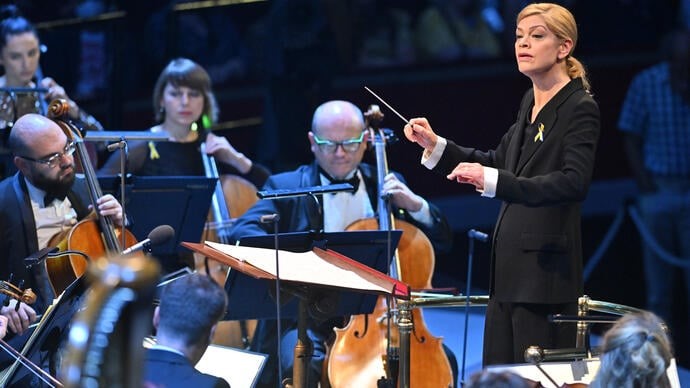
Review, Ukrainian Freedom Orchestra, Beethoven’s 9th Symphony, St Paul’s Cathedral by James Ellis

 out of 5 stars (5 / 5)

An orchestra must play as an act of defiance. Few would deny this upon seeing the Ukrainian Freedom Orchestra after their invasion from Russa back in 2022. The Songs for Ukraine Chorus are also made up one hundred and sixty singers, of those effected by the conflict. Prior to this all consuming concert at St Paul’s, a few speakers told of the importance of these musicians. Most telling, was General Valeriy Zaluzhny, UK Ambassador to Ukraine, who spoke of the utmost urgency of the events occurring in their home country. Having also followed other conflicts since, it really hit me hard just how impactful this has been to the world.

A fine opening with Bucha, Lacrimosa by Victoria Vita Polevá, which detailed the massacre Russia commit in spring of the year of invasion. With violinist Marko Komonko, this was deeply impactful…I was lost in the emotion the whole thing. Not dissimilar to Arvo Pärt and John Tavener, a feeling of the sacred minimalist took over the massive space. Terrifying metallic percussion stood out and possible electronics were a softer fiber in the overall orchestration. Komonko played stupendously. A gentle handling of the strings and their harmonics was another compelling element. Polevá took a bow at the end and proves she is a composer to watch out for.

Two hundred years have passed since the advent of Beethoven’s 9th Symphony, sometimes dubbed the ‘Choral’. Often used as a marker during times of conflict, this was particularly hefty with these players. Conductor Keri-Lynn Wilson graciously led all through the epic piece: its primordial opening, melodic pixelations, piercing melodic bite and earthy ruminations. The acoustics of the cathedral did frequently blur the focus, yet other times its vapours were highly rewarding. I’d say the last three movement had passages were the sound worked but other bars were like mush. We can leave that aside thanks to the context of the evening.

Also sung in Ukrainian, adding extra layers and personal touches. The four soloists Olga Bezsmertna, Natalia Kukhar, Valentyn Dytiuk and Andrii Kymach wowed with their respective sung momentum. Kymach in his baritone, may have been at the mercy of acoustics, though often delighted with a burr, you’d expect from the range. Olga Bezsmertna had a frequent smile on her face, lost in the music, soaring notes she fared very well in and constantly engaged with the audience. Natalia Kukhar as mezzo added to the pot, her time with Olga some sweet, touching remembrances. Tenor Valentyn Dytiuk, got a famous, cheery solo with an almost ommpa band styling, towards the end, a voice that you want to hear again. Of course, the recognisable Ode to Joy, left me highly moved and this crowd loved what they heard. The lady sat behind me also remarked about the acoustic, though stated the concert was “symbolic”.

An encore by Yuri Shevchenko: WE DO EXIST! was a paraphrase to the melody by M. Verbytskyi (National Anthem of Ukraine) for violin and strings. All stood for what we assumed was a more traditional take in the anthem, though this version was eerie and chilling. A concert for the history books.

“Music is at the heart of who I am” An interview with RWCMD, Student Musician Sophie Hallam

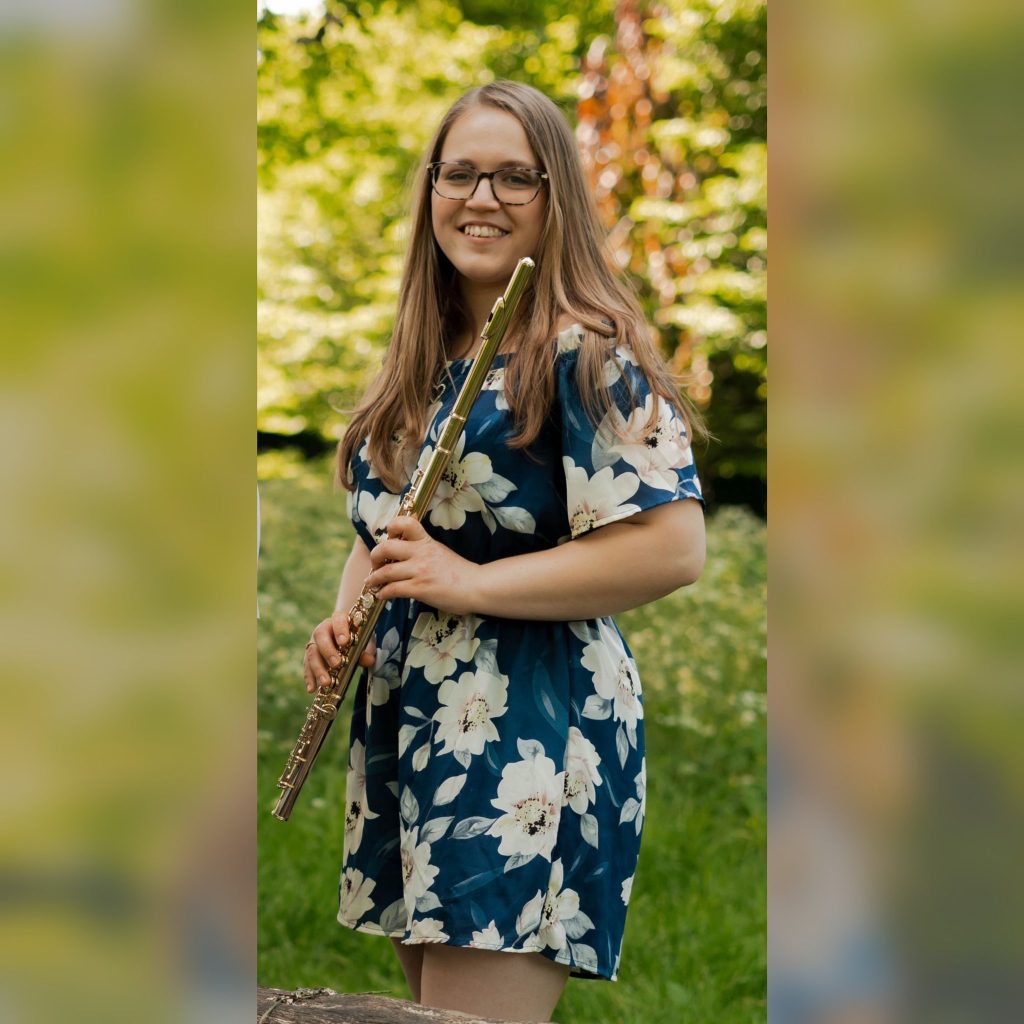
Hi Sophie, great to meet you. You are currently studying Music Performance (Flute) at RWCMD, Cardiff, can you give our readers some background information on your career to date?  

Hi Guy, it’s lovely to meet you too! I have been playing the flute for 13 years, previously studying with Berkshire Music Trust, (a registered charity who support everyone to have access to music education regardless of their background) …or Berkshire Maestros as it was known back then! Throughout my time with them I played in numerous ensembles, the most senior being Berkshire Youth Symphony Orchestra, Newbury Concert Band and Newbury Flute Choir.

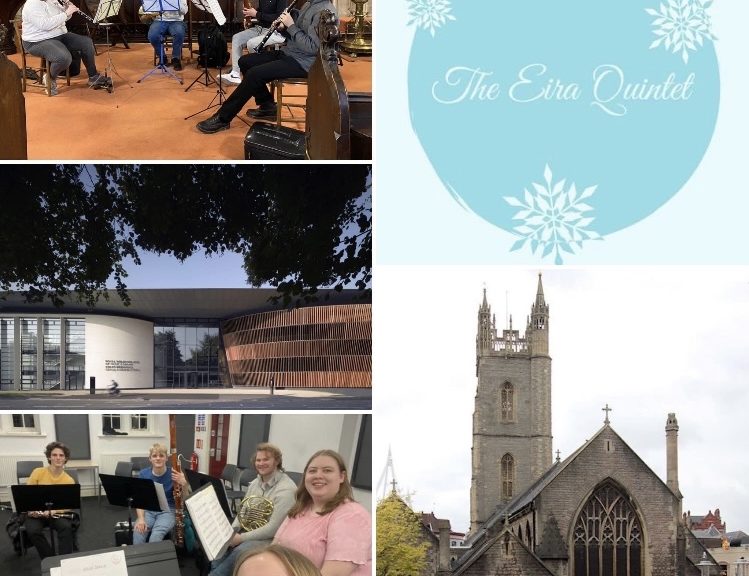
Since joining the RWCMD in 2020, I have been part of the RWCMD Symphony Orchestra and also formed the Eira Quintet and the Corriera Trio with other members of the college. 

So, what got you interested in the arts? 

I have always been interested in the arts as a whole, singing was one of my hobbies from the moment I could get words out of my mouth! It was actually my mum who got me interested in playing the flute, as she had her old one in the house and let me have a try when I was 8 years old. I fell in love with it straight away and have never looked back since. 

What importance does music have in your life and how have you combined the life of a student musician and opportunities to perform live in your professional career?  

Music is at the heart of who I am. There is not much I do without having music of some description either playing in the background, or playing it myself. It is something that I use to help regulate my mental health, as I believe music can be so empowering regardless of whether you are the listener or performer. The college provide us with many opportunities to sign up to perform, both inside the college and out in the community, so it is all about finding a balance and being disciplined and realistic with how much you can take on alongside the mandatory work that comes with the degree. Alongside this, I often go to schools or learning centres with my ensembles to do community workshops, which is something I hope to continue doing throughout my professional career. 

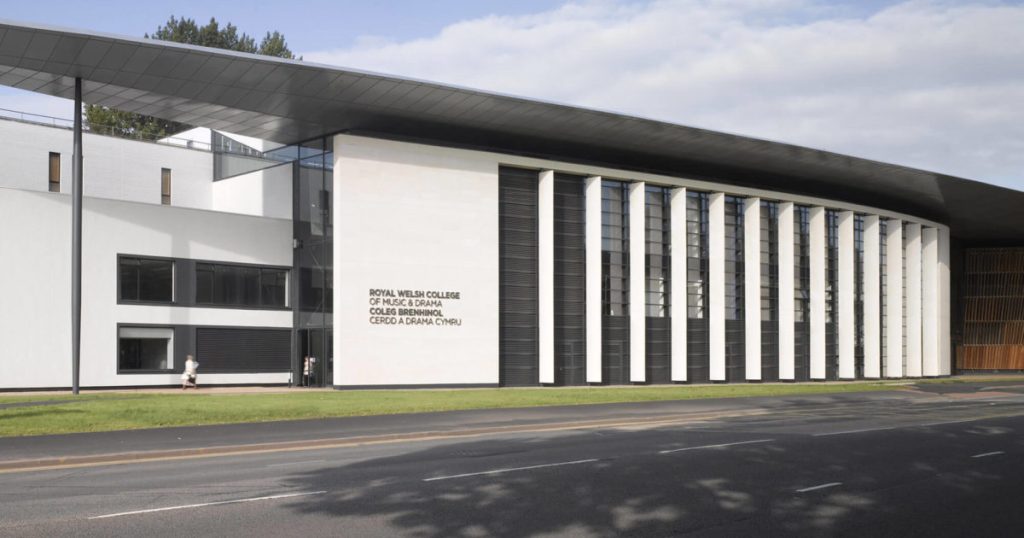
The Royal Welsh College of Music & Drama is a Conservatoire, some of our readers may be unfamiliar with this term, how does this differ to study at a University?

That is a great question! Studying at a conservatoire is a lot more performance based than studying Music at a university. We have two solo performance recitals per year (one short, one long), a technical exam specific to our instrument, an orchestral excerpts exam and an ensemble recital. There is still some written assignments each year, however these aren’t as heavily weighted. 

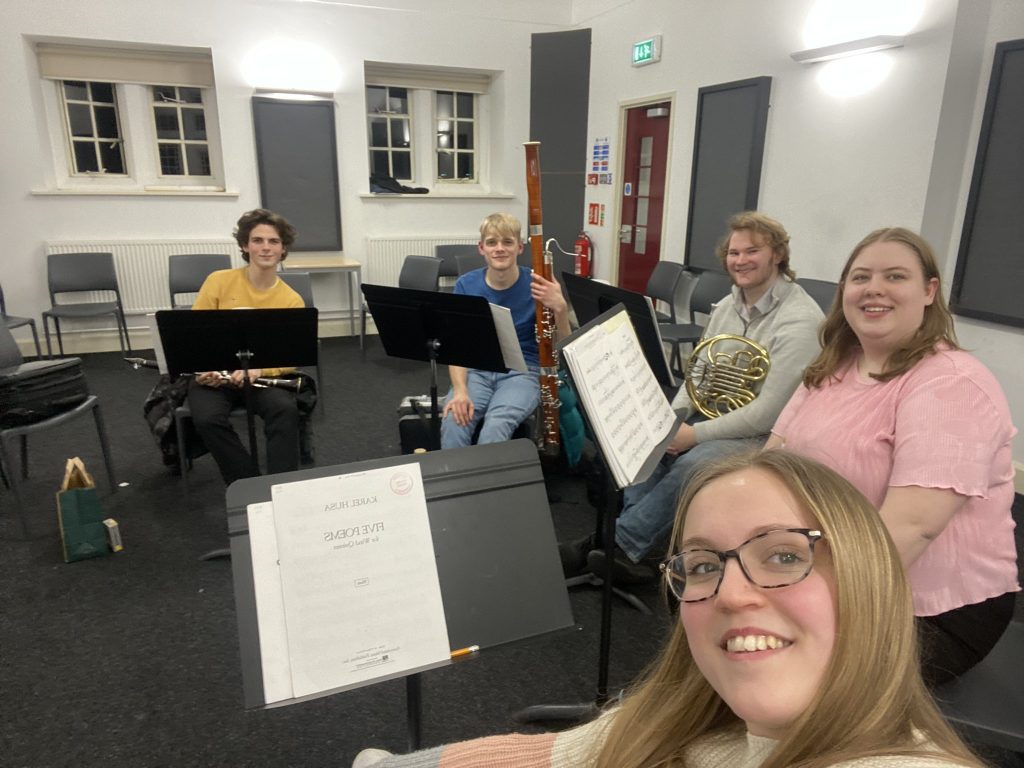
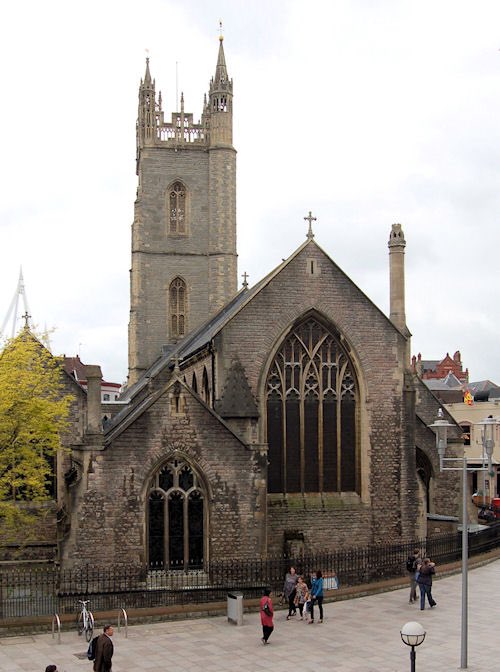
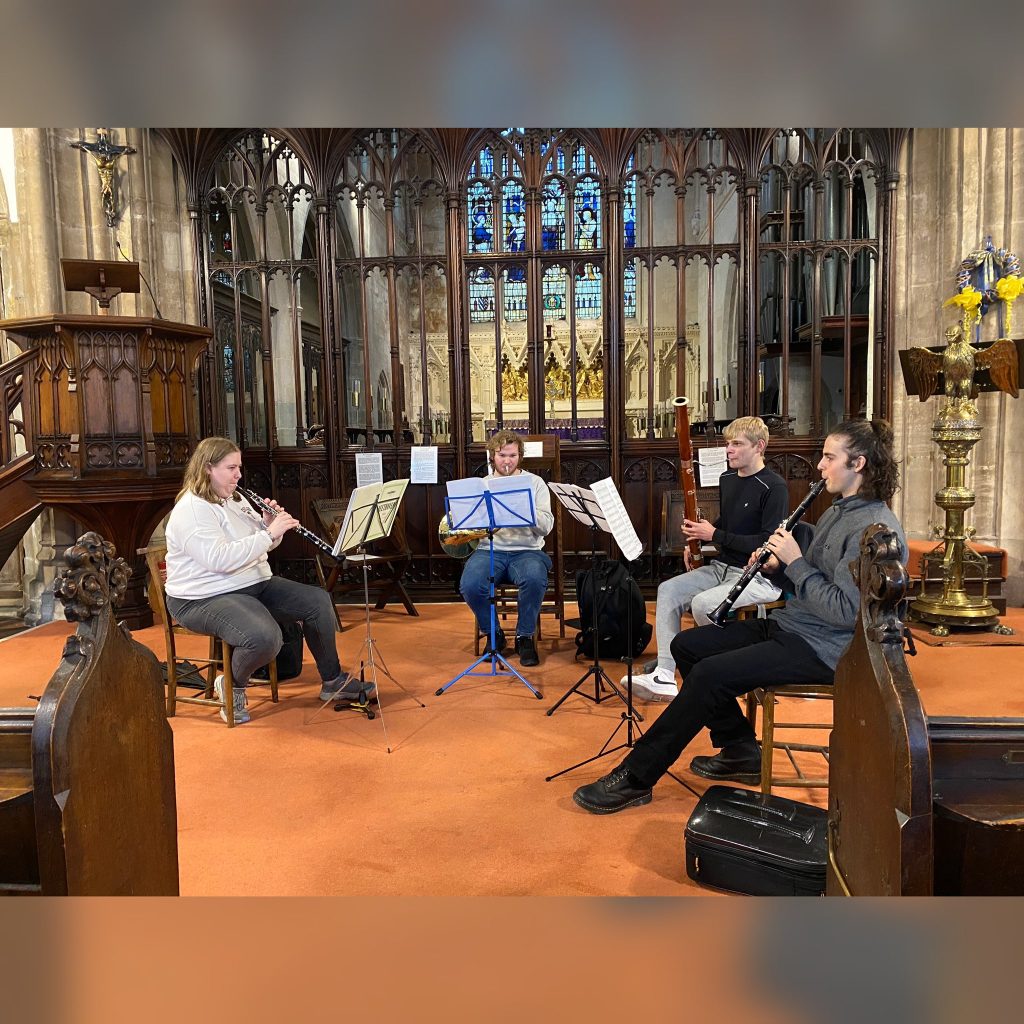
Along with the members of The Eira Quintet you are part of one of the RWCMD, Woolcott Residencies, these provide students with the tools, support and mentoring needed to set themselves up as creative businesses working in a collaborative, entrepreneurial manner. They are an innovative training programme designed to support RWCMD students working within the community, and to give local people a sense of ownership of the arts. Your Residency is based at St Johns Church adjacent to The Hayes, Cardiff. How did you come to be involved in this project and what are your ambitions for its delivery? 

 The opportunity to become the artists in residence at the church was advertised to the students at college, so we applied and were lucky enough to be offered the position! We have a few different plans for concerts to deliver at the church, including one hopefully collaborating with the choir, as well as workshop ideas for local schools and members of the community. We were also honoured to perform as part of the St David’s Day service and hope to be involved in more of the church’s events across the residency. 

As part of the Woolcott Residency, each ensemble will be encouraged to curate and nurture their own relationship with a venue, delivering regular educational workshops, concerts and participatory sessions for at least a year. You will be performing in the Church in the near future, how do you approach performing in a church and what has the response been so far? 

 Yes, we are really looking forward to this performing, we have some really fun music lined up! Performing in a church definitely brings some challenges due to the boomy acoustic, so we have to make sure we over do any detail in the music for it to come across. Also, as the venue is a sacred place, we always make sure to have conversations with the church clergy to make sure they are happy with the music we perform and the way we use the space. So far we have had a very positive response from both the clergy and the members of the community towards our performances, as well as from the Mayor of Cardiff and staff from the Cardiff and Vale Music Service. 

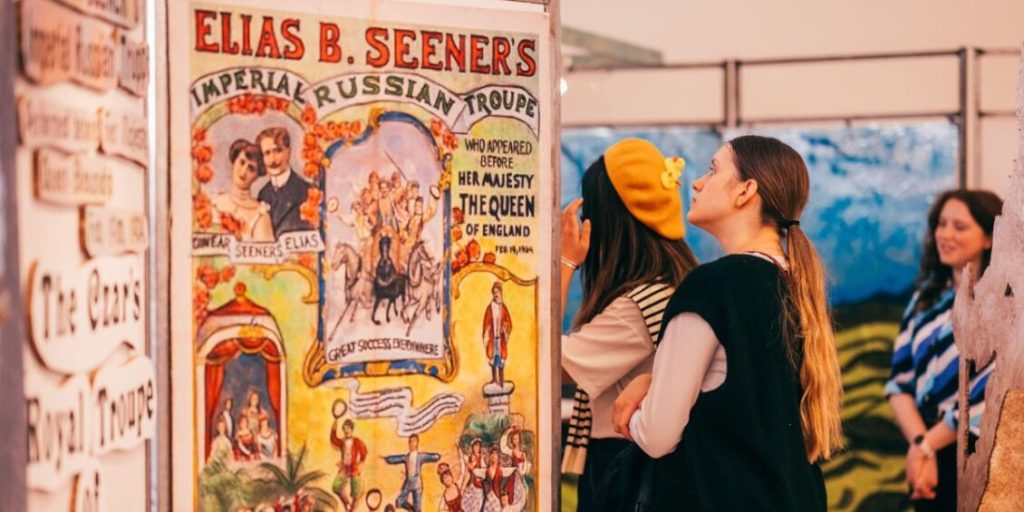
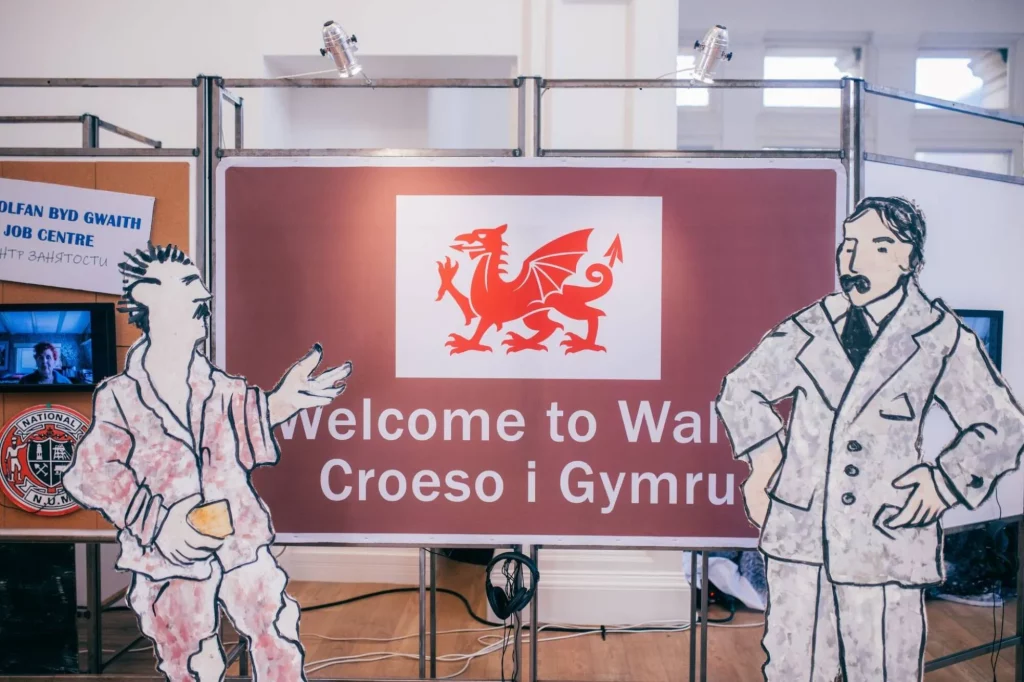
You also recently performed in The Old Library as part of Pamela Howards, Welcome to Wales Exhibition. The exhibition had a theme of retracing the stories of immigrants who’ve travelled through and to Cardiff. As young musicians how can you reflect contemporary society?  

I think our work at the exhibition reflects the positive direction that society is going in in recognising the struggles that have happened in our history and working on preventing them from happening again. We are very fortunate to have the luxury of studying at RWCMD, so I think it is fantastic that these stories are being given the setting to be shared both with us as students and the wider community. We always strive to include a diverse range of composers in our repertoire to reflect how society is moving in this direction. 

If you were able to fund an area of the arts what would this be and why? 

If you had asked me this question a couple of years ago then I would have said music education without a doubt, as I believe that it is so important both for a child’s development but also for the future of the arts as a whole. However, in light of recent events I would now choose to fund professional orchestras and venues as they are now the organisations that are struggling with a lack of funding. 

What currently inspires you about the arts in the Wales? 

I find the Welsh Government’s attitude to music education very inspiring! They see the importance of music in schools and have put a plan in place to allow children of all ages to participate in musical activities and/or learn an instrument without any limitations of cost. I think this is exactly what the future of the arts needs and it brings a lot of hope into the sector. 

What was the last really great arts event that you experienced that you would like to share with our readers? 

I may be biased, but I recently went to the “Opera Double Bill” at the Sherman Theatre. This was a performance of Puccini’s Gianni Schicchi and Resphigi’s La Bella Dormente Nel Bosco by RWCMD’s David Seligman Opera School. As far as I know, everything from the set design to the musicians on and off stage was done by college students, and it was all to such a high standard. I enjoyed it so much that I went every night! 

If you are interested in study at RWCMD you can find out more about future Open Days here

“It’s not the reports that are going to change the world; it’s taking a plate of food to your neighbour and listening to music together.”

In this short article Priscilla Addey-Blankson, Race Council Cymru, Windrush Cymru Elders, Project Officer gives an overview of the collaborative work of Race Council Cymru and Royal Welsh College of Music and Drama to connect communities through the arts.

Hi I am Priscilla, I work for Race Council Cymru and hold the role of Windrush Cymru Elders Project Officer. I am originally from Ghana and I have dedicated the past year and a half to working closely with the Windrush Elders community.

In my capacity, I act as the primary point of contact for the RCC, Windrush Elders and their associated projects. My responsibilities extend to planning and coordinating various events and activities for the Elders, actively collaborating with them to develop, promote, and implement enriching projects. I am deeply committed to supporting and enhancing the well-being of the Windrush Elders community through my role.

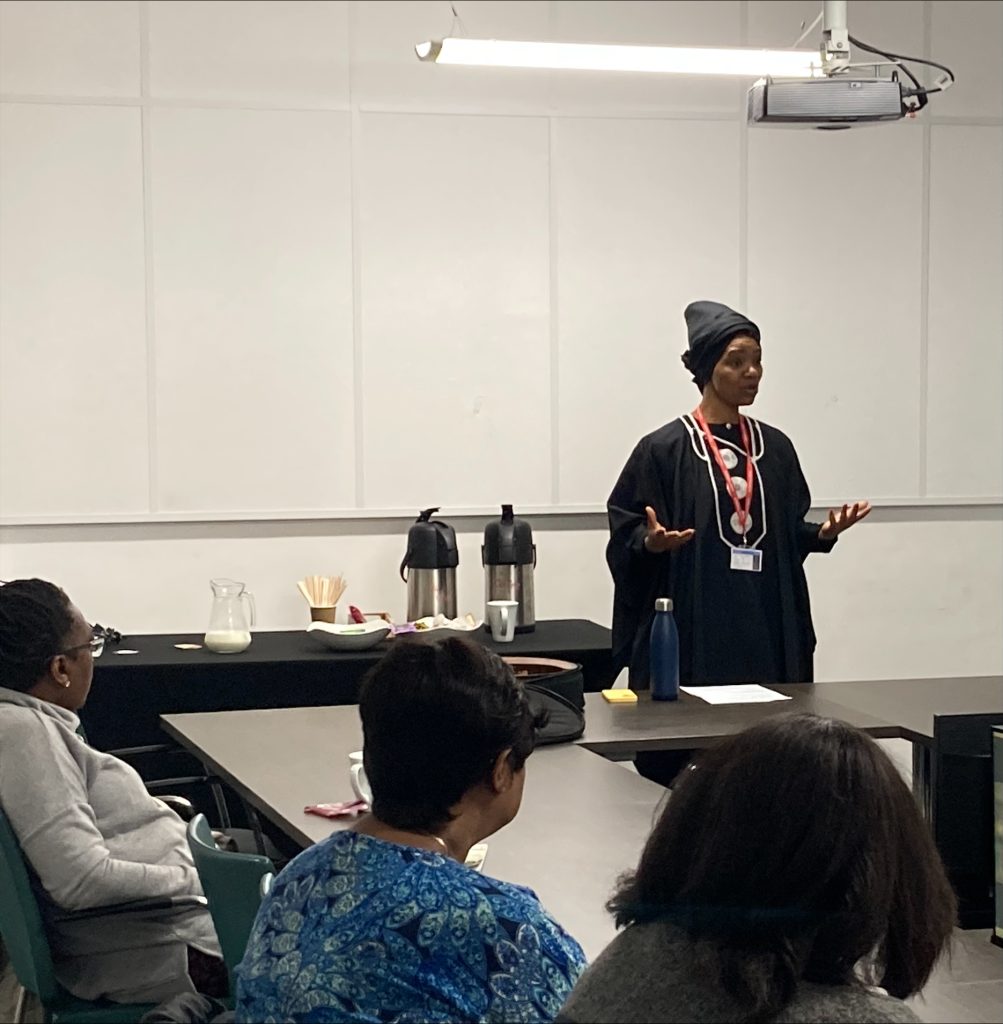
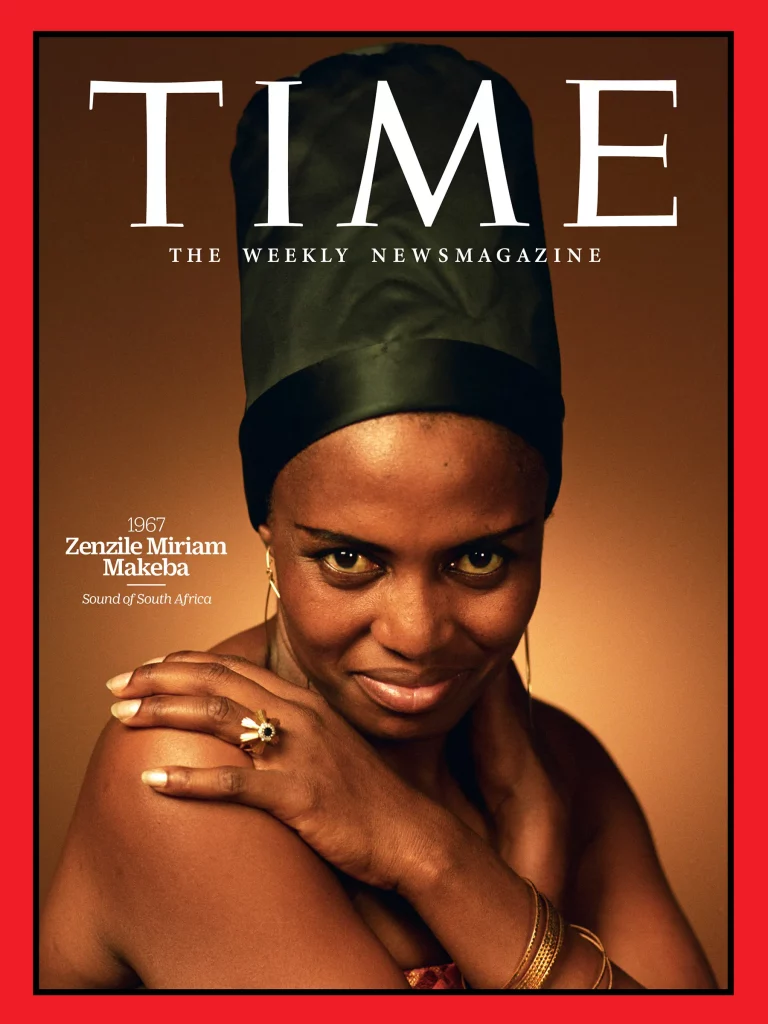
The Race Council Windrush, Cymru Elders meet every Thursday at RWCMD, the group often have speakers and share information about activity in their community. The group recently had a visit from Anna Mudeka who played the role of of legendary South African singer and activist Miriam Makeba in Mama Afrika which was performed in College recently.

Anna shared the compelling narrative of her life journey, delving into her musical pursuits and cultural heritage. She captivated everyone with the introduction of the Nyunga-nyunga, a traditional musical instrument, explaining its details and how it works, gladly fielding the Elders’ inquiries.

https://youtu.be/pE9HtMGr2Qg?si=7QmB9sP1vqIsXiAg

Ms. Mudeka shared her personal challenges, drawing inspiration from her icon, Miriam Makeba, and emphasizing the profound impact Makeba had on her own musical journey.

https://youtu.be/AyA4tytL9pg?si=BLw7h-7hCKXHEoOl

The session unfolded with Anna Mudeka’s enchanting Swahili music, actively involving the elders in the Hakuna Matata song. The interactive nature of the performance allowed The Elders to proudly shout out their countries of origin.

In a delightful moment, Anna Mudeka introduced The Elders to the distinctive click sounds used in her songs, offering a brief tutorial and incorporating it into her performance. The session further featured a recitation of poignant poems by Nelson Mandela and Miriam Makeba, concluding with the lively Dance Pata-Pata music that had The Elders joyfully swaying.

Anna said of the activity “I really enjoyed meeting The Elders and I knew straight away that this would be a learning experience for me too. I loved listening to them talk about their love for Wales. It was a joy to share some time with them all.”

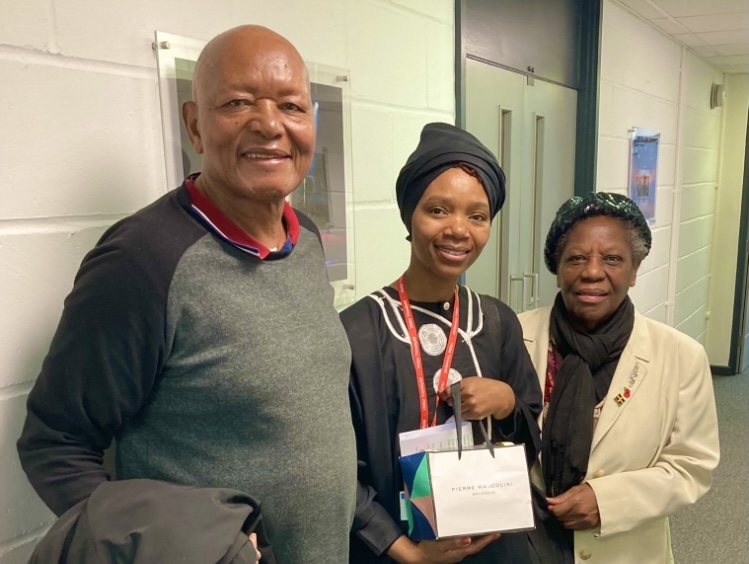
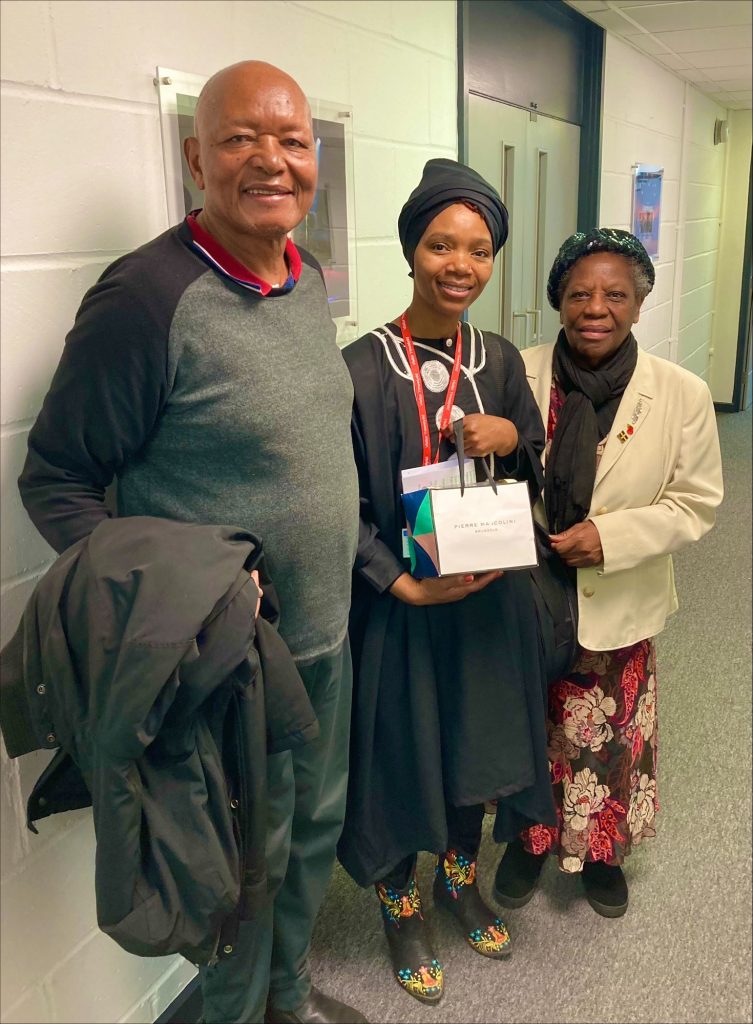
Anna Mudeka centre and the RCC, Windrush Cymru Elders

The entire experience evoked nostalgic reflections, with Elders sharing amusing childhood stories. A particularly resonant quote emerged from the session: “It’s not the reports that are going to change the world; it’s taking a plate of food to your neighbour and listening to music together.”

You can find out more about the Race Council Cymru, Windrush Cymru Elders here

You can find out more about the work of the Communities Engagement Partner at RWCMD here

Cyfweliad gyda’r actor Tom Blumberg

Cyn i ymarferion ddechrau ar gyfer Y Fenyw Mewn Du yn yr Hydref, gofynnon ni cwpl o gwestiynau i’r actor Tom Blumberg am straeon ysbryd, ei ofnau a’i fywyd newydd yn Toronto.

Pam ddylai cynulleidfaoedd ddod i weld Y Fenyw Mewn Du?

Os ydych chi’n hoffi arswyd ac yn mwynhau cael dipyn o fraw (fel fi),  mae’r stori yma’n wych, ac yn llawn eiliadau iasol pur. Ond y prif reswm yw bod prinder straeon arswyd ac ysbryd yn y Gymraeg – wedyn mae hyn yn teimlo fel rhywbeth gwahanol, ac yn gyfle eitha’ unigryw….yn enwedig dros gyfnod Calan Gaeaf!

Ai hon yw’r stori ysbryd gyntaf i chi actio/cyfarwyddo/addasu? Beth sy’n ei gwneud yn arbennig/wahanol?

Ie. ‘Dw i wrth fy modd gyda straeon ysbryd ac felly ‘dw i wedi gweld lot ohonyn nhw, ac mae’n hynod o gyffrous i fod ar yr ochr arall, yn perfformio un am unwaith. Be sy’n ei wneud yn arbennig dw i’n meddwl yw bod y stori’n cael ei pherfformio yn Gymraeg, mae rhywbeth barddonol am yr iaith Gymraeg sy’n gwneud y stori hyd yn oed yn fwy effeithiol yn fy marn i – mae’r delweddau yn fyw ac yn effeithiol iawn.

Rydych wedi symud i Ganada yn ddiweddar, beth ysgogodd y mudo yma, a beth wnaeth i chi gytuno i ddychwelyd i Gymru ar gyfer YFMD?

Do ! Ar ôl 2 flynedd o aros yn yr unfan dros y pandemig, o’dd hi’n teimlo fel amser am antur ! ‘Dw i wastad wedi bod eisiau byw dramor, ac mae Canada yn wlad mor brydferth roedd o’n teimlo fel y lle delfrydol – yn enwedig gyda rhai cyfleoedd actio ar gael yno hefyd, yn golygu gallwn i ddod o hyd i waith yno. Dw i wrth fy modd yno hyd yma. Roedd YFMD ar y gweill cyn i mi allu cadarnhau fy fisa,  ond mae wastad wedi bod yn freuddwyd i fi chwarae’r rhan ers i mi fynd i weld y ddrama yn Saesneg yn y West End pan o’n i’n ysgol ddrama. Mae’n fraint cael chwarae rhan yn ‘premiere y byd’ o’r stori yn y Gymraeg,  felly ‘doedd dim rhaid i fi feddwl ddwywaith am ddychwelyd o Ganada i fod yn rhan o’r cynhyrchiad gyda chwmni sydd wedi ‘nghefnogi i ers blynyddoedd lawer, cwmni sydd yn agos iawn at fy nghalon – a gyda thîm delfrydol o artistiad a chriw cynhyrchu.  Dw i wedi siomi braidd y byddai’n colli fy nhymor Calan Gaeaf cyntaf yng Ngogledd America, achos dwi’n gwybod ei fod yn gallu bod yn eitha’ gwyllt yno ac maen nhw’n mynd i gymaint o ymdrech – ond mi fyddai’n perfformio’n fyw mewn stori ysbryd ar lwyfan, wedyn mae’n fargen digon teg dw i’n meddwl.

Beth sy’n gwneud i chi grynu?

Yr eiliadau mwyaf brawychus i fi mewn unrhyw straeon arswyd yw’r awgrymiadau bach yna o arswyd – fel pan gewch chi gip ar rywbeth sy’n gwneud i chi gwestiynu a wnaethoch chi ei weld mewn gwirionedd, neu ai’ch meddwl oedd yn chwarae triciau arnoch chi, yn dychmygu pethau. Yr eiliadau bach hynny o ddirgelwch, cipolwg o ffigwr tu ôl i chi mewn drych, siapiau rhyfedd yn y cysgodion – pan mae’r dychymyg yn rasio yn wyllt … dyna’r eiliadau mwyaf cyffrous dw i’n meddwl.

Pam fod gwneud theatr yn Gymraeg yn bwysig i chi?

Mae theatr Gymraeg yn hollbwysig :  mae’n hybu’r defnydd o’n hiaith fendigedig o fewn profiad hwyliog a difyr. Mae’n cynnig cyfle hefyd i ddysgwyr gael ymdrwytho yn y Gymraeg y tu allan i’r ystafell ddosbarth, sydd yn allweddol dw i’n meddwl. Dw i hefyd yn meddwl bod y math yma o straeon ysbryd yn cael eu perfformio mor anaml yn y Gymraeg, mae’n grêt gallu rhoi’r cyfle i Gymry Cymraeg brofi stori ysbryd fyw yn ein hiaith hyfryd ein hunain – a dw i ddim yn siwr iawn pam, ond mae’n teimlo’n fwy real yn y Gymraeg !

Oes gennych chi unrhyw straeon ysbryd eich hun yr hoffech chi eu rhannu?

Ddwlen i allu neud hynny ! Dw i wrth fy modd gyda straeon ysbryd, a chlywed profiadau pobl eraill o’r oruwchnaturiol, ond dydw i byth wedi cael profiad ysbrydion fy hun ! Ond dwi’n un o’r bobl od yna fyddai’n falch iawn o gael y fath profiad – mae’n rhywbeth cyfareddol dw i’n meddwl, yn hytrach nag yn frawychus. Mae’r byd go iawn yn llawer mwy brawychus i mi – mae’n gysur i mi rhywsut meddwl bod yna eneidiau o’r gorffennol yn symud yn ein plith … cyn belled bod nhw ddim yn dod ag unrhyw felltithion erchyll fel mae’r fenyw mewn du.

Fyddwch chi’n mentro cwrdd â’r Fenyw Mewn Du?

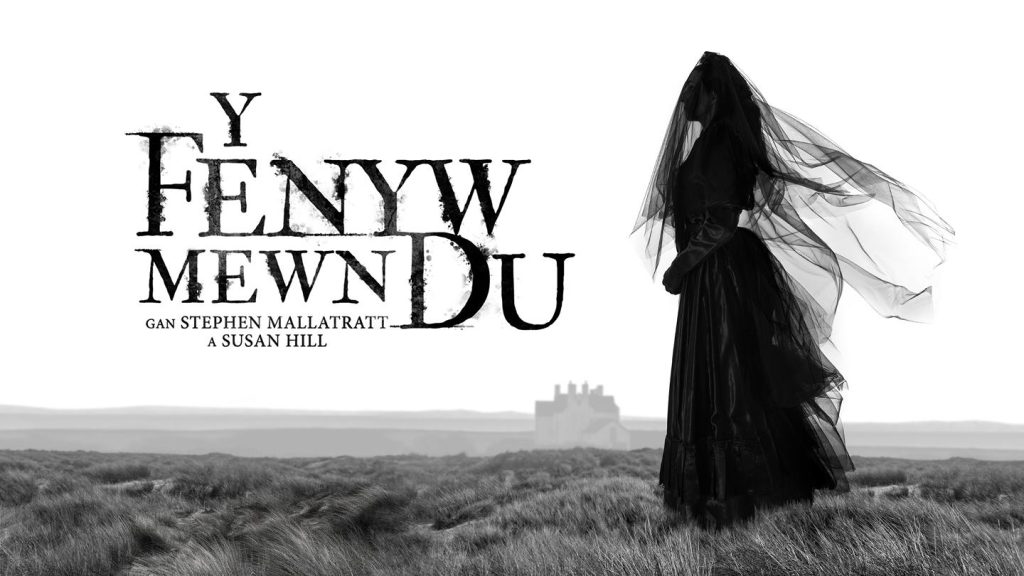
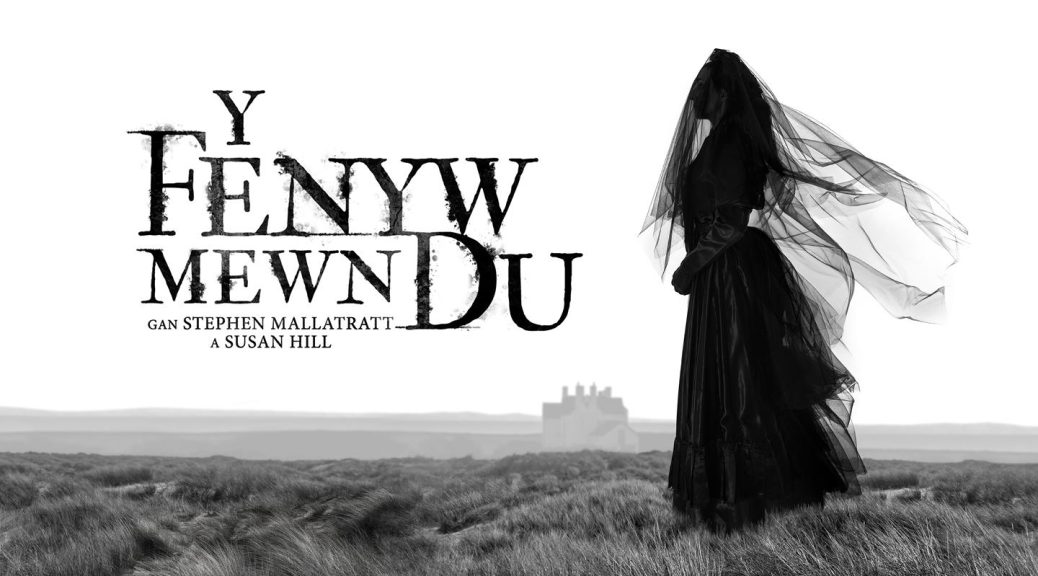
Mae’r tîm a oedd yn gyfrifol am Shirley Valentine y llynedd yn troi o chwerthin i iasau yn yr hydref gyda premiere y byd o Y Fenyw Mewn Du, cyfieithiad Cymraeg newydd o’r ddrama ysgubol o’r West End, The Woman In Black.

Mi fydd siaradwyr a dysgwyr Cymraeg wrth eu bodd i glywed y bydd cynhyrchiad arall at ddant pawb gan y Consortiwm Cymraeg yn cael ei lwyfannu ar draws de Cymru yn yr hydref eleni. Wedi cyfareddu cynulleidfaoedd yn 2022 gyda dogn reit dda o chwerthin, eleni mae’r tîm yn gobeithio clywed mwy o sgrechian na chwerthin gan gynulleidfaoedd wrth gyflwyno llwyfaniad newydd sbon danlli o gynhyrchiad sydd wedi bod yn arswydo cynulleidfaoedd yn Llundain ers 30 o flynyddoedd.

Dywed Geinor Styles :

Rwy’ wrth fy modd yn cael fy nychryn. Ers i mi fod yn ifanc iawn, rydw i wastad wedi caru straeon ysbrydion a bwganod. Pan ddarllenais i The Woman in Black gan Susan Hill fe ddychrynodd fi gymaint roedd yn rhaid i mi osod y llyfr gyda’r  clawr yn  wynebu am i lawr, fel ‘mod i byth yn ei gweld hi – Y Fenyw. Weles i addasiad llwyfan Stephen Mallatrat yn y nawdegau cynnar. Roedd yr addasiad o’r stori nid yn unig yn glyfar iawn, ond mi lwyddodd i f’arswydo, ynghyd â phawb arall o’m cwmpas yn y theatr.

Mae’r storio syml yn y sioe yn dyrchafu nerth theatr a’r gair llafar. Mae’r atgof wedi aros gyda fi, a dyma un o fy hoff ddramâu. Blynyddoedd wedyn, yn dilyn sesiwn adborth gyda chynulleidfaoedd cynhyrchiad y Consortiwm o Shirley Valentine, awgrymodd dysgwyr Cymraeg i ni fod gweld stori neu ddrama gyfarwydd wedi codi eu hyder i fynychu theatr yn y Gymraeg. Hefyd, dywedodd y canolfannau mai straeon arswyd sydd yn gwerthu orau.”

Mae Y Fenyw Mewn Du yn adrodd hanes Arthur Kipps, cyfreithiwr sydd wedi cyrraedd i roi trefn gyfreithiol ar faterion Mrs Alice Drablow. Tra’n gweithio ar ben ei hun ar ei hystâd anghysbell, mae’n tystio aflonyddiad hunllefus ac yn syrthio ar drugaredd melltith y fenyw mewn du.  Wrth geisio rhyddhau ei hun o’r dioddefaint yma a bwrw allan yr ysbryd am unwaith ac am byth, mae’n cyflogi actor i’w helpu i adrodd ei sori, ac wele, mae’r llwyfan wedi ei gosod ar gyfer un o straeon arswyd mwyaf bythwyrdd y theatr.   

Wedi ei haddasu gan Stephen Malatratt o nofel gothig 1983 Dame Susan Hill,  The Woman In Black yw un o’r dramâu mwyaf hirhoedlog ar y West End, ac mae wedi uno cynulleidfaoedd mewn ofn ers 30 o flynyddoedd. A nawr, dyma’r cyfle i gynulleidfaoedd Cymreig gwato y tu ôl i’w rhaglenni. Mae Y Fenyw Mewn Du wedi ei chyfieithu yn arbennig ar gyfer  Y Consortiwm Cymraeg gan yr ysgrifennwr ac actor Gwawr Loader. Eglurodd Gwawr bwysigrwydd y cynhyrchiad iddi hi:

Roeddwn wrth fy modd pan ofynnodd Geinor i mi ymuno â thîm Y Fenyw Mewn Du. Mae cael y cyfle i gyflwyno addasiad newydd o glasur y West End i siaradwyr a dysgwyr Cymraeg y cymoedd yn eu hiaith ei hunain, gyda naws Gymreig, yn gymaint o bleser. Gyda chostau yn codi drwyddi draw, mae’n hanfodol bod cynulleidfaoedd yn gallu mynychu theatr o’r safon uchaf yn eu trefi a’u pentrefi, ac mae Y Consortiwm Cymraeg yn rhagori ar gyflwyno gwaith i’r gymuned.”

Mae Y Consortiwm Cymraeg yn falch iawn i gyhoeddi mai Jonathan Nefydd (Pobol Y Cwm, The Way) a Tom Blumberg (Theatr na nÓg, Arad Goch) fydd yn chwarae yr Actor a Kipps.

Wedi ei gyfarwyddo gan Geinor Styles, cyfarwyddwr artistig Theatr na nÓg, mi fydd Y Fenyw Mewn Du yn cynnwys cerddoriaeth gan y cyfansoddwr Barnaby Southgate. Cynllunnir y cynhyrchiad gan Kitty Callister, y sain gan Ian Barnard, a goleuo a’r cynllun taflunio gan Andy Pike.  Y cyfarwyddwr cynorthwyol fydd Llinos Daniel ac mi fydd y storïwr Owen Staton yn cynnal gweithdai adrodd straeon arswyd ym mhob lleoliad i gyd fynd â’r daith.

Sefydlwyd Y Consortiwm Cymraeg gan y cwmni theatr arobryn Theatr na nÓg, Ymddiriedolaeth Ddiwylliannol Awen, Theatr Soar a Neuadd Les Ystradgynlais, i gyflwyno theatr hygyrch o’r safon uchaf yn yr iaith Gymraeg.  Mae’r Consortiwm hefyd yn bwriadu cyflwyno rhaglen o gyfranogiadau fydd yn galluogi cymunedau i wella eu sgiliau iaith a hefyd i ymwneud â chelfyddydau a diwylliant ar eu stepen drws. Daeth aelodau’r consortiwm at ei gilydd er mwyn ailgynnau egni a gwerth y canolfannau perfformio i gymunedau ar draws cymoedd De Cymru. Roedd cynlluniau’r Consortiwm eisoes ar y gweill cyn dyfodiad y pandemig Covid, ond wrth i’r canolfannau diwylliannol gau eu drysau, sylweddolodd aelodau’r Consortiwm bod yr angen am y fath ganolfannau hyd yn oed yn fwy difrifol – i sicrhau dyfodol yr iaith Gymraeg yn y cymoedd ac i i gynnal eu cymunedau bywiog tu hwnt i Bandemig Covid.  Llwyddodd y cynhyrchiad cyntaf, Shirley Valentine gan Willy Russell, cyfieithwyd gan Manon Eames a pherfformiwyd gan Shelley Rees-Owen, BBC Radio Cymru, i wirioni yn ogystal â chynulleidfaoedd y gwanwyn diwethaf.   

Mi fydd Y Fenyw Mewn Du yn agor ym Mhafiliwn Porthcawl nos Iau Hydref 26ain ac yn parhau yno tan nos Sadwrn 28ain cyn teithio i Theatr Soar, Merthyr Tydfil (2-4ydd Tachwedd, Theatr Borough Y Fenni (9-11eg Tachwedd) cyn dod i ben yn y Welfare, Ystradgynlais (16-18fed Tachwedd). Mi fydd tocynnau ar werth o ddydd Gwener Mai 26ain a cheir manylion llawn ar wefannau’r canolfannau, neu ar theatr-nanog.co.uk.

Will you dare to meet Y Fenyw Mewn Du?

The team behind last year’s Shirley Valentine switches from laughs to chills this autumn with the world premiere of Y Fenyw Mewn Du, a new Welsh language translation of West End hit The Woman In Black.

Welsh speakers and learners will be pleased to hear there’s another crowd-pleaser from Y Consortiwm Cymraeg on stages across South Wales this autumn. Having delighted post-pandemic theatregoers in 2022 with a much-needed dose of laughter, this year the team is hoping for more screams than smiles from audiences as it presents a fresh new staging of a production that has been terrifying audiences in London for a full 30 years.

Director Geinor Styles explains:

I love being scared. Since I was very young, I have always loved ghost stories. When I read Susan Hill’s The Woman in Black it scared me so much I had to have the book cover facing downwards so that I never saw her – The Woman.

I saw the Stephen Mallatrat adaptation for the stage in the early nineties. It was not only a very clever adaptation of the story but also terrified me and those who sat with me watching it in the theatre.

The simplicity of the storytelling in the show elevates the power of theatre and the spoken word. That memory has stayed with me and it remains one of my favourite plays. Years later, after a feedback session with audiences following the Consortiwm production of Shirley Valentine, Welsh learners suggested that a known story or play helped with their confidence in attending Welsh language theatre. Venues also said that their biggest sellers were thrillers.”

The Woman in Black tells the story of Arthur Kipps, a solicitor sent to settle the affairs of Mrs Alice Drablow. While working alone on her secluded estate he finds himself the subject of a terrifying haunting and at the mercy of the curse of the woman in black. In an attempt to rid himself of this misery and exorcise the ghost once and for all, he engages an actor to help him tell his tale, and thus the stage is set for one of theatre’s most enduring thrillers.

Adapted by Stephen Malatratt from the 1983 gothic novel by Dame Susan Hill, The Woman In Black is one of the longest-running West End plays ever, having united audiences in fear for 30 years. And now it’s the turn of Welsh audiences to hide behind their programmes. Y Fenyw Mewn Du has been especially translated for Y Consortiwm Cymraeg by writer and actor Gwawr Loader. She told us why she feels this production is important:

I was thrilled when Geinor asked me to be a part of the team of Y Fenyw Mewn Du. Having the opportunity to present a new adaptation of a West End classic to the Welsh-speakers and learners of the valleys, in their own language and with a Welsh spin is such a pleasure. With costs rising across the board it’s vital that audiences have access to theatre of the highest standard in their towns and villages and Y Consortiwm Cymraeg excels at taking work to communities.”

Y Consortiwm Cymraeg are delighted to announce that Jonathan Nefydd (Pobol Y Cwm, The Way) and Tom Blumberg (Theatr na nÓg, Arad Goch) will play the Actor and Kipps.

Directed by Geinor Styles, artistic director of Theatr na nÓg, Y Fenyw Mewn Du will feature music by composer Barnaby Southgate. The production is designed by Kitty Callister with sound design by Ian Barnard, and lighting and projection design from Andy Pike. Llinos Daniel will assistant direct and storyteller Owen Staton will be running ghost story-telling workshops in each location to accompany the tour.

Y Consortiwm Cymraeg was established by the award-winning Theatr na nÓg, Awen Cultural Trust, Theatr Soar and The Welfare Ystradgynlais to present high-quality accessible Welsh language theatre. Y Consortiwm Cymraeg also aims to produce a programme of participation for communities to improve their language skills and also engage in arts and culture on their doorstep. The four organisations joined forces to rekindle the vitality and value of live theatre venues to communities across the South Wales valleys. Y Consortiwm’s wheels were already in motion pre the COVID pandemic, but as cultural centres locked down, they realised that the need for these creative hubs was even greater – to help safeguard the future of the Welsh language in the valleys, and to support thriving communities beyond the Covid Pandemic. Their first production, Willy Russell’s Shirley Valentine, translated by Manon Eames and performed by BBC Radio Cymru’s Shelley Rees-Owen delighted critics and audiences alike last spring.

Richard Hughes, Chief Executive of Awen Cultural Trust said:

Awen is thrilled to host the 2023 Consortiwm Cymraeg production of Y Fenyw Mewn Du this autumn and to bring this chilling tale to Welsh-speaking audiences in Porthcawl and beyond. Last year’s Consortiwm production of Shirley Valentine was extremely well received and I have no doubt people will be eager to see this haunting translation of the West End classic at their local theatre

Y Fenyw Mewn Du premieres at Porthcawl Pavillion on Thursday 26th October, where it runs until Saturday 28th before touring to Theatr Soar, Merthyr Tydfil (2-4th November), The Borough Theatre Abergavenny (9-11th November), ending in Ystradgynlais at The Welfare (16-18th November). Tickets will be on sale from Friday 26th May and full details can be found on venue websites or at theatr-nanog.co.uk.

Reciprocal Gestures:A new season of dance and movement at Chapter

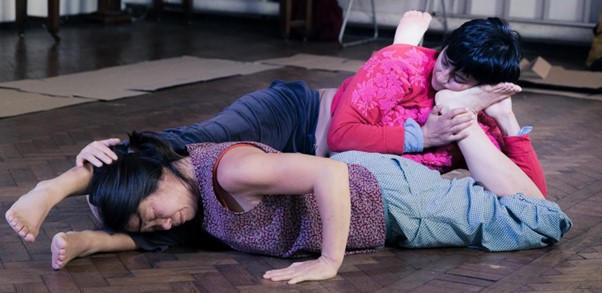
Image: Marathon of Intimacies: Jo Fong & Anuishye Yarnell, courtesy the artists.

Chapter is thrilled to announce Reciprocal Gestures: A Season of Movement and Dance, this September to December. The curated programme will celebrate shared moments and explorations of masculinity, queerness, ageing, the after-lives of colonialism, intimacy and community with performances and events from Gareth Chambers, Seke Chimutengwende, Emilyn Claid, Lewys Holt, Good News from the Future, Anushiye Yarnell and Groundwork Collective.

Across this season, performances from some of the most exciting contemporary dance artists come together alongside talks, open classes, scratch nights, screenings and special events, to put artistic sharing at the centre.

Chapter’s performance programme is a space for experimental and interdisciplinary live art practices, where artists are supported to take risks and audiences can find exciting, original, and accessible works. Chapter’s commitment to this work speaks to the rich history of supporting radical live art practices, and it’s unique position in Cardiff as a multi-artform venue with the capacity to support artists to develop their practice and share their work in dynamic ways.

Performance Curator Kit Edwards, shares some of her thoughts on this exciting new programme:

“The dance ecology in Wales is at a particularly exciting moment where artists across disciplines are coming together for creative exchange. A strong community of artists working with dance have made Chapter their home and we’re keen to celebrate what they’ve built and bring it into conversation with some incredible international dance artists who are performing in Wales for the first time.”

Find out more here

“I am a firm believer in collaboration – it’s the ultimate form of making art.” An Interview with Playwright Rebecca Jade Hammond.

We last interviewed Welsh Playwright and Artistic Director of Chippy Lane Productions Ltd, Rebecca Jade Hammond, in September 2022 just prior to her play Right Where We Left Us being performed at Chapter Arts Centre. We caught up with Rebecca again during rehearsals of Mad Margot which is one of four plays, forming RWCMD New 23 Season.

Hi Rebecca, great to catch up again, it’s been 8 months since we last spoke, with the cultural sector finding a way through the impact of Covid how has your professional career been impacted by this difficult period?

Lovely to speak with you again. To answer your question, I think most writers still feel a sense of ‘world on pause’. It seems that emerging writers making traction pre-pandemic are now picking up the pieces and having to go again at a slower pace. I have always written but it wasn’t until 2019 that I started to take it seriously and since then I have seen steady (if not fast enough) progress. I often feel frustrated that I didn’t take the plunge and start younger, but then I check in with myself and remember that you reap what you sow regardless of age. You have to keep going, apply for everything, have those coffees (with no agenda), meet people, network, write, write, write and get better. At some point something has to happen. I always say: “you have to keep going, you’re too far in to go back now” – I believe this 100%.

Mad Margot is described as a new play that “charts epic events in young bodies, caught between childhood and adulthood in Bute Park, Cardiff.” Can you tell us more about this work?

I originally had this idea in 2020 attending the National Theatre Writers Group. I banked it, knowing that a writer at my point would never be given the opportunity until I was profiled.I let it percolate, wrote bits of it – but kept it for future possibilities. It wasn’t until my play RIGHT WHERE WE LEFT US was on in September 2022 that I was approached by Sherman Theatre and RWCMD with the offer of a commission. The brief was for it to be with ten actors and thread in Welsh translations with the support of Branwen Davies. Of course I accepted and over the last year we have worked hard to bring it to fruition. 

MAD MARGOT is a piece about the disintigration of mental health in young women (specifically Margot’s) in the midst of teenage pregnancy. At a time when she should be protected, safe and supported she is alone and trying hard not to drown. Charting the murky world youngsters occupy between childhood and adulthood in Bute Park, MAD MARGOT explores mob-mentality, power-structured relationships and sexuality in relation to the system of patriarchy. Personally it is a nod to my youth growing up as a young Cardiffian in North Cardiff. Always out, not wanting to go home and building an urban family of friends. In fact, several of the characters are based on real people I grew up with including myself.

I have realised as a writer I am obsessed with the rhythm and timbre of dialogue and ensuring it’s as authentic as possible. This piece is incredibly wordy and hard to speak without speaking fast, breathing between punctuation and of course, in a Cardiff accent. It’s exhausting for the actors but rewarding. It’s also incredible to see how they’ve committed to the material. They’ve taken it and run. We are sharing the responsibility to serve this story.

The play is at once epic and historical in its approach yet hyperlocal in its gaze, taking place a stone’s throw from RWCMD in Bute Park. How have you combined these elements in your work?

I have left these ideas and concepts with Llew (Designer) and Jac (Director) both Cardiffians and Welsh speakers. Being deeply aware of the confines of NEW and the play being in Rep the only thing I asked for was it to feel like a vast space with leaf’s. I left everything else up to them to put their stamp and vision on the piece. I am a firm believer in collaboration – it’s the ultimate form of making art. No one can really do it alone and so I have left them to figure out the world in that way. Without giving too much away there are artistic nods to Cardiff, Bute Park and my youth. Also, this piece is a loose reimagining of MEDEA and so, it was important that the words, the performances and the story sing out loud without too much fuss and spectacle. Peter Brook once said “all you need is bodies in space to be engaging” and I like to think we will deliver this in the final production.

The production uses a range of pop culture references and contemporary slang, how did you approach these elements and have you had any feedback from young people? Were you worried about getting any of this wrong?

I mean, I don’t think I’m old yet. I am in my 30’s so I don’t think I had to dig that deep to connect to the material. However, I am a different gen to that of 16+ in 2023 and so I researched a lot about young people in Cardiff. I also worked with the students to ensure the characters sat authentically in their bodies and that the words felt realistic to them. It is amazing how much ‘being young’ is still exactly the same as when I was a teenager. The rules, politics, banter, bullying, dynamics and struggles are all as was. There’s something comforting but also deeply worrying that not much changed.

With regards to other elements, music is always a big part of my writing process and the worlds I build in plays. I have always wanted to integrate rap music into one of my stories and this seemed like the perfect opportunity working on a young persons piece. We actually collaborated with another student Israel J. Fredericks (El Guapo) on creating a rap section for one of the characters who wants to be the next ArrDee / Central Cee. Israel wrote a rap and together we found a beat based on a detailed brief I gave him on the character. This process was enlightening and supportive. Giving our piece another opportunity to utilise the talented skill sets of the students. We are also utilising the ballet experience of one of the actors, singing and Welsh speaking. Continuously having a dialogue and making them part of the conversation. It’s been an organic / openly creative journey for us all getting to this point. 

Mad Margot is one of four new plays which will premier at RWCMD at the end of May before transferring to The Yard Theatre, London in early June. The NEW season from RWCMD “showcases its commitment to empowering the next generation of actors, collaborating with the UK’s best writers and directors, and bringing new voices and diverse stories to the stage” Why is this work to support emerging actors and the UK’s best writers and directors important to you?

NEW is an important part of the college’s history and as a writer a gift to be able to explore work that has big casts, epic themes and enables you to experiment with form. It’s a tricky task, but I have seen so many NEW pieces over the years I knew exactly what should be done. Shout-out to Daf James’ FOR ALL I AM in 2016, which in my opinion is the benchmark for when the brief marries up perfectly. From the story, to the characters, to utilising the students and the execution of performance – it is a masterpiece. I am aiming for that… wish me luck.

MAD MARGOT is also significant because it’s the first time NEW has had a bilingual piece in English and Welsh and has several Welsh students in one piece. Platforming RWCMD commitment to Welsh talent and celebrating the Welsh language. For the student/actors, it is the last show they perform before going into the industry. It is an important marker for them leaving education and going into the professional world. I think it’s essential that these pieces are modern, edgy and use all the tools in their box. Make them proud of their work and a piece that they have had a hand in creating. I hope I have given them something they will always remember as a challenge and opportunity to excel but also put THE DIFF on the map.

The play is Directed by Jac Ifan Moore and has Welsh Language Adaptations and Dramaturgy by Branwen Davies. When we discussed this, you said you aimed to reflect contemporary Cardiff in its use of “Wenglish” by young people. How have rehearsals reflected this aim and do you think you have been successful?

What’s wonderful is that we have a mix of fluent-speakers, those learning and those with no Welsh experience at all. Everyone is supportive and encouraging to those who don’t speak the language and the rehearsal room is naturally moving from Welsh to English as it does in the play. Both our SM, DSM and Designer also speak Welsh too so that aids for the language being readily used. I am also learning, so it’s been wonderful to be part of a space where I can brush up on my Welsh.

From a writing perspective Branwen Davies and I have a lovely working relationship where she was very sensitive to my words still translating in Welsh in a Cardiff-style way. I think she’s captured it perfectly and I have been honoured to have her guidance and also my words turned into Cymraeg. Bi-lingual pieces are still rare even in Wales and I am a firm believer that there should be more and that in future work I will work more within that medium. It’s been a thoroughly enjoyable process.

And finally what culture have you been consuming recently that you would recommend our readers to catch up on?

I have favoured listening to music whilst walking and running this year. Also, as a form of mindfulness and to distract me from my forever racing head. It helps me write and figure out story plots, characters and possibilities.

I am listening to a lot of R&B and rap like; Central Cee, RKAYY (Cardiff Rapper), GoGo Morrow, SZA, Doja Cat, Jaish, Drake, El Guapo, Giggs, Jay Z, Little Sims, Mabel, Lauryn Hill, The Carters, Dr Dre, Eminem, Nicki Minaji, ArrDee, Aitch, 9lokknine and my Queen Beyoncé!

https://youtu.be/yrtWLyp5gLI

“Finding where the theatre is” An interview with Playwright  Vic Mills

In our latest Playwright interview, the Director of Get the Chance, Guy O’Donnell meets Playwright Vic Mills, they discuss his career to date, his latest play ‘Sanctuary: The Secrets of the Gunter Mansion’ and his thoughts on career support for Playwrights in Wales.

So, what got you interested in the arts?

I came from a non-conformist chapel background, where both of my parents were public speakers, writers, teachers, preachers – so performance of the spoken word was part of what we lived and breathed from infant hood. Music too was central to life.  Both my parents were avid readers and we grew up in a home without a television so I read a huge amount – many of the classics before I was eleven.

Why do you write?

That’s probably changed  great deal over the years – from poetry as a teenager and young adult to writing for theatre from the time I was about 20.  I write because I enjoy the process and each stage of sharing and developing a script is incredibly exciting – the isolation in the first part of the process and then the development of a script with a team is nerve-wracking and exhilarating.  Then, right through to the first performance the piece continues to develop and is still changing and hopefully improving until it’s last performance.  The chemistry with my director, Neil Maidman, and recently with the Contemporancient Team of poet Dr Kevin Mills, composer Stephen Preston and our actors is hugely exciting.

Can you tell us about your writing process? Where do your ideas come from?

Research around a specific subject – like The Chartists, mental asylums in Wales, Dr Richard Price, ‘The Gunter Mansion’ in Abergavenny  – is the starting point – finding where the theatre is in a story, what might be relevant, challenging, inspiring, for contemporary audiences.  Then, like most playwrights, I build scenes around conflict.  I also search for empathy with every character I develop – they all have to have something of me in them – good, bad and appalling.

I have written theatre with a social and political drive, often linked to an aspect of Welsh history in the last twenty years and that continues to be my focus.

Whilst I usually produce what might be called ‘naturalist dialogue’ as central to a piece, the work itself is not usually naturalistic overall.  My great inspiration is Brecht and so music, poetry, ‘chorus’, multiple playing, non-linear structure, are all key tools in creating something meant to evoke intellectual challenge rather than pure entertainment.

Can you describe your writing day? Do you have a process or a minimum word count?

I usually spend a year or so reading around a subject and then write a first draft of a play obsessively and very quickly – maybe within 10 days.  I don’t keep any record of how much time I spend at it during those days – but writing comes easily when it comes at all and it usual flies out when it’s ready to.  It gets huge amounts of patient re-working for months afterwards, but the arc is there.

Do you have a specific place that you work from?

I have a study and a MacBook Air.  I write notes in proper notebooks with a fountain pen.  I like fountain pens a lot.  I really like fountain pens.  Once I start writing the script – its straight on the MacBook though.

Your latest play ‘Sanctuary: The Secrets of the Gunter Mansion’ plays at The Borough Theatre, Abergavenny at 7.30pm on Wednesday 21st June.

“This new play with music tells how, for more than 400 years, Abergavenny has provided sanctuary for those in danger – here the horrors and joys of their secret stories are told in thrilling theatre and music.”

Can you tell us more about the background to this production and your hopes for its production?

This started with reading an historical text about two leaders of the Jesuits being caught in a priest hole in Worcestershire in 1605 and exploring the idea of people being hunted, tortured and killed for their faith but also willing to do the same things to other people, with only marginally different faith.  This seemed incredibly relevant to life for people in many parts of the world today so worth exploring.  We have worked with ‘The Plas Gunter Mansion’ in Abergavenny, where these priests probably hid in the months prior to be caught – we have linked that with the story of Syrian refugee woman in Abergavenny today – she is not an historical figure but is based on stories of real Syrian refugees in Wales.

We’ve worked with Syrian musicians and our composer to bring the cultures together in music and explore the idea of sanctuary in Abergavenny and in Wales across the ages.  It’s a play about the Welsh nation being made up of people from around the world and about the importance of tolerance.  But there’s a lot of difficult stuff in the play about people’s willingness to suffer for their beliefs and to make others suffer who do not share them.

Kevin, my brother, an academic and poet, has produced wonderful verse for the piece and has worked with Stephen Preston, our musician/composer to create stunning songs alongside our Syrian musicians.  We’ve worked with our close collaborator, film maker Chris Lloyd to deliver a multi-media piece, where film and visual imagery plays a huge part.  Our director and dramaturg, Neil Maidman, is someone I have worked with for more than 25 years so we shape a piece together, understanding each others strengths pretty intuitively by now.

We hope that through exploring our shared history, we will learn more about ourselves and those with whom we share our communal lives and spaces.

This will be performed during National Refugee Week and all performances will be free for refugees.

Sanctuary – Cast, Director, Writer, and Lyricist

What role do you think Theatres and Playwrights have in telling the narratives of the citizens of their respective nations?

You can tell from my previous answer that this is a central tenet of all I do as a writer and what this theatre company, Contemporancient Theatre, is all about.  Heb Hanes – Heb Hunaniaeth is our motto, and that is at the heart of what we do.

There are a range of organisations supporting Wales based writers. I wonder if you feel the current support network and career opportunities feel ‘healthy’ to you? Is it possible to sustain a career as a writer in Wales and if not, what would help?

I worked as a drama teacher, English teacher and Deputy Headteacher until I was able to retire at 55, and work full time in theatre.  I was able to write and get plays produced throughout that time and have had plays of mine produced and performed all around the world.  I have never made any money to speak of through that.  If a play of mine is performed I get about £50 per performance in royalties.

I spend a huge amount of time applying for funding – far more that I do actually writing or developing scripts.  If I had to rely on what I earned from theatre to live, I couldn’t.  I ensure that freelance actors, musicians, crew etc are paid union rates and I try to find some money in the budget for writing and script development.  I don’t know how anyone writing for theatre could make a living just by writing, unless they were hugely successful.

You are a member of the Get The Chance team yourself and have reviewed a range of productions. Why are you a member of our team of volunteer critics and what value does this opportunity have to you?

I watch as much live theatre as I can, and I usually have very strong opinions about what I experience.  Part of the joy of any art is the discussion it evokes – Get The Chance gives people an opportunity to formulate and articulate ideas about performance arts so it’s a vehicle for them and publicity for the event that have attended.  What’s not to like about that?

If you were able to fund an area of the arts what would this be and why?

One of my many causes is ‘working class people in arts’ and theatre specifically, of course. 

The tradition of great working class actors, playwrights etc that fuelled British theatre has been choked off.  I would love to see bursaries or grants for theatre practitioners of working class background to support their work, and organisations like ACW creating funding areas for projects delivered by practitioners from the working class. 

What currently inspires you about the arts in the Wales?

The extent to which good work continues to get put on despite the odds. 

What was the last really great thing that you experienced that you would like to share with our readers?

I saw Rosie Sheehy in Alls Well That Ends Well at the RSC Stratford last year.  Didn’t know her, or of her, at the time.  Stunning, stunning performance – by a kid from down the road.  Blistering and inspiring.  I love actors who can really speak verse – get verse.  Wonderful physical and vocal performance.  I love the fact that she was there and blew everyone else off the stage and that she’s a Welsh kid from an ordinary background.

“The ability of music to open doors into the transcendent is extraordinary” An Interview with Julia Plaut.

Hi Julia, great to meet you. You have a background in music and education, can you give our readers some background information on your career to date? 

Straight out of Music College (RCM) I worked principally in the world of orchestral bassoon playing, freelancing with the BBC Symphony, BBC Scottish and also specialising as a baroque and classical bassoonist. I performed, recorded and toured internationally with ensembles such as The Academy of Ancient Music and the Orchestra of the Age of Enlightenment. Alongside playing, I’ve been composing since I was a child. I write wide ranging music from orchestral to solo instrumental works, from opera to songs for children. I loved my own childhood music experiences and have been teaching music since I was a teenager. Creating Kodaly and Dalcroze inspired learning flows for groups of children is a particular passion. I enjoyed wonderful years as Head of Primary Music at Llandaff Cathedral School before moving to the RWCMD firstly for an M.Mus in Composition and then as a tutor for baroque bassoon and early years pedagogy.

https://youtu.be/zOqhMsb9ypo

So, what got you interested in the arts?

I had an inspirational class music teacher in my Primary School years. She introduced us to recorders, singing, tuned and untuned percussion. I remember enjoying the lessons and putting on fun concerts and productions. My parents were also very supportive in organising piano and ballet lessons and making sure we did our music practice. 

What importance does music have in your life and how have you combined the two areas of music and education in your professional career? 

Music gives me great joy as a performer, composer, worshipper, listener and educator. From the synergy of being in a high functioning orchestral wind section to the joy of engaging babies and toddlers in perfectly age-appropriate songs and games – the ability of music to open doors into the transcendent is extraordinary.

Music education has interweaved with performing and composing right across my career, often intermingling. It feels rather like cooking to me. You have a room of “ingredients” people/instruments/voices/music and you work deftly with what you’ve got to create a delicious meal that everyone enjoys. It’s about creating the optimum environment to bring out the best in each person’s unique flavour.

I resonate with strongly with Zoltan Kodaly’s maxim:

“Tell me, I forget. Show me, I remember. Involve me, I understand”.

You are delivering two different music activities as part of a RWCMD Music Residency at Penarth Pier Pavilion, as part of a new partnership with the Vale of Glamorgan Council.  A one-year pilot has been agreed that will see the college run parent and toddler music sessions, base a small ensemble at the pavilion and put on Dance Band evenings for the local community. The parent and toddler music sessions will be run by yourself, Julia Plaut, a composer who served for many years as Head of Primary Music at Llandaff Cathedral School, and take two forms – Morning Mini Music and Little Concerts. Running on a weekday morning in the pavilion gallery, Morning Mini Music sessions are focused on music and movement that help children with interaction and socialisation. Little Concerts will be weekend afternoon music events for families, specifically designed for the under-5s, that feature new works from RWCMD composers”

Credit Kirsten McTernan

How did you come to be involved in this project and what are your ambitions for its delivery?

Part of my work at the RWCMD is mentoring selected students in early years pedagogy. This project gives industry-facing experience to these students under the umbrella of an expert practitioner. My ambition is that we deliver high quality musical experiences for Penarth children and their families that create a real buzz locally while providing sector leading training for RWCMD students. You can find out more about the project and book tickets here

 You are the Artistic Director of Little Live Projects, this charity works to “inspire young people to flourish through sharing excellent musical experiences with professional musicians” How do you deliver this work? 

Little Live Projects has two strands. One is the Little Concerts series of joyful interactive chamber music events presented in partnership with the RWCMD. The other is the Cardiff Children’s Choir, an after-school community choir for children aged 5-11 years based at Urban Crofters near City Road in Cardiff. The choir welcomes all local children and particularly those from displaced families or who are facing barriers of any kind.

Credit Kirsten McTernan

You have close links with The Royal Welsh College of Music and Drama in Cardiff, how did this relationship develop?

Quite a few of the RWCMD staff team have been professional colleagues over the years. I’m a tutor for baroque bassoon and early years pedagogy there. I formally pitched the Little Live Projects vision as part of my M.Mus studies. The RWCMD and Little Live Projects share a strong synergy of vision for future focussed training with outstanding student experience delivered by world-class staff in providing transformative experiences for diverse communities.

The Little Live Projects Team.

Funding for musical provision is increasingly being cut for young people, can you see the impact on young peoples lives and possible career paths as professional musicians as a consequence? 

Good quality instrumental music tuition is a very expensive to fund, and importantly, to sustain over long enough to allow children to become accomplished enough to consider a career in music. El Sistema style initiatives like Making Music Changing Lives in Cardiff are doing brilliant work to address this deficit. I have questions about the usefulness of the large group instrumental teaching that takes place in schools which only gives a cursory taste, often on poor quality instruments and without the formation of basic good technique. I am however excited by the potential for choral singing to provide a quicker route into embodied musical understanding and real accomplishment. It works brilliantly in large groups and embeds aural and other transferable skills that children could then take into learning an instrument.

If you were able to fund an area of the arts what would this be and why?

I would fund an expert Kodaly practitioner to lead singing in every primary school in Wales one day a week. Each child has a singing voice that can be nurtured, giving them a worthwhile means of self-expression. Through singing together children develop the intimate knowledge of a social togetherness in which discipline and order prevail. Not only would these practitioners lead and embed singing but, in doing so, they would be providing continuing professional development for staff to carry on the singing confidently during the rest of the week.

What currently inspires you about the arts in the Wales?

I am inspired and encouraged by the way Ty Cerdd are championing Welsh composers and creators across a broad range of styles. I also gain a lot as a member of Anthem’s Atsain Network. Hearing nuts and bolts stories from other community music practitioners from around Wales gives me loads of inspirational ideas.

What was the last really great arts event that you experienced that you would like to share with our readers? 

Recently I attended a fabulous concert by Genesis Sixteen and Harry Christophers singing Handel’s Dixit Dominus at RWCMD. The musical excellence and vibrant energy that was released through seasoned professionals mentoring young singers, conductors, instrumentalists and soloists (aged 18-23) was breath-taking. It made my heart sing to see the cascading of good things into the next generation of musicians.

https://youtu.be/Xt7_5W2IrwM

Thanks for your time.