
All posts by admin

UPROAR: Scenes From A Street, RWCMD Review By Lauren Mallin


 out of 5 stars (4 / 5)

Escapism.


That is what we are all coveting right now, isn’t it? To be transported to a world devoid of distractions, anxiety, and exhaustion – even for just a couple of hours. I was lucky enough to find a welcome slice of escapism thanks to the talents of contemporary classical music ensemble UPROAR’s latest production, Scenes From A Street.


Now, full disclosure. I am not a classical music expert. Nor have I ever claimed to be. However, I do champion anyone who wants to break barriers and make the arts an ever expanding and inclusive space. UPROAR’s claim to seek ‘new ways to break down the fears and misconceptions about new music’ had me instantly intrigued. Fear and misconception are words that are easily equated to artistic practices like contemporary classical, due to many people (myself included) feeling as though they can’t engage because they lack knowledge. This promising welcome from UPROAR gave me the confidence to take that leap and give myself over to the classical world for the evening.


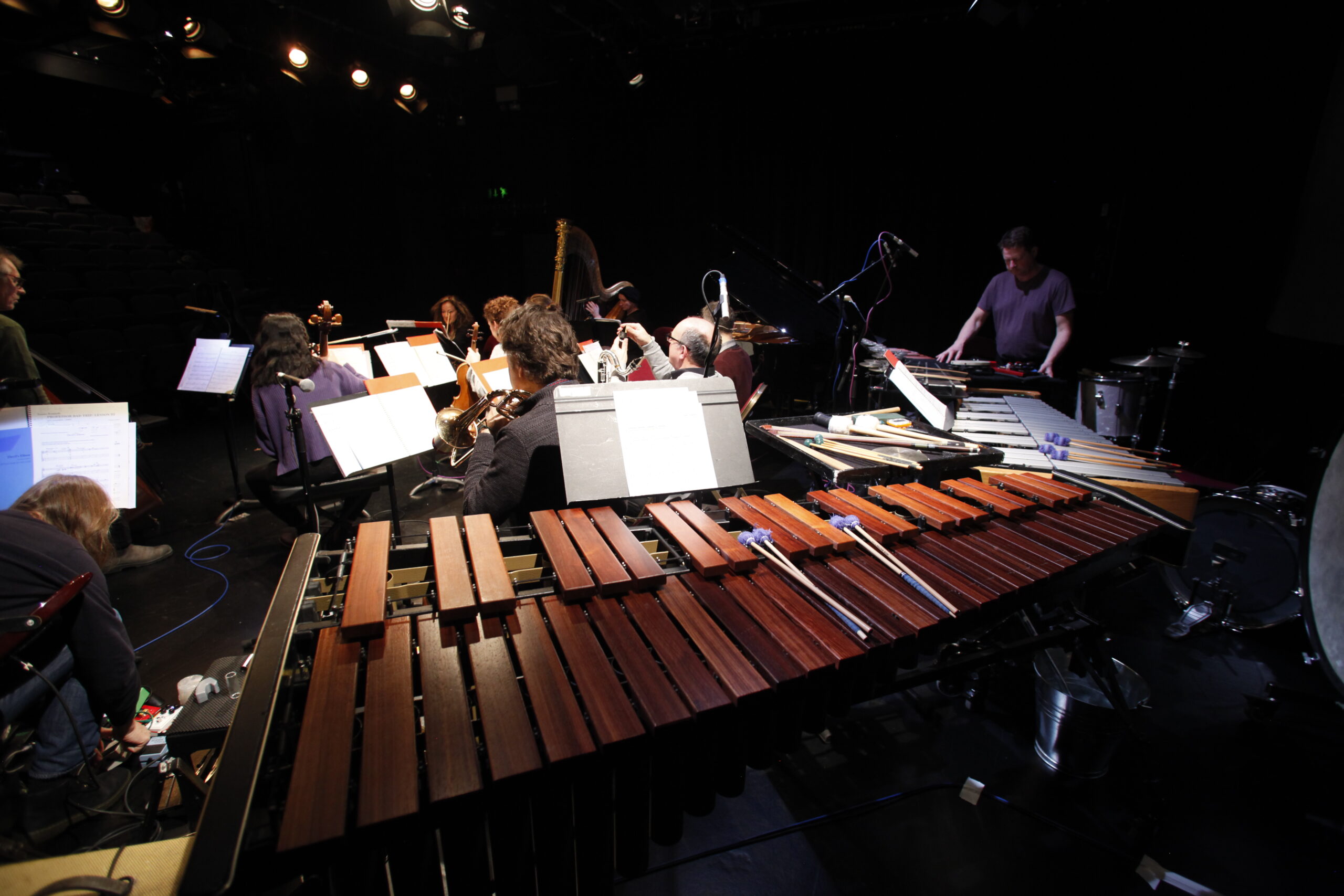
Scenes From A Street consists of works from five composers based in Wales, each presenting a piece which captures UPROAR’s ethos of bringing ‘contemporary classical music into the heart of everyday culture’ – a phrase we don’t hear often enough. Again, there is no prerequisite here to be an aficionado of classical. If anything, having little prior knowledge presents the experience in its truest form, allowing full immersion in the musical story.


Each piece provided a unique sound and style, instantly transporting the mind to various locations, scenes and scenarios. The entire experience is one that initiates all the senses and emotions, resulting it a truly unique experience and allowing the audience to really feel what is played out in front of them. From states of calm and innocence to unsettling doses frenzy and panic; if you are looking for a way to allow your brain to switch off from worldly distractions, Scenes From A Street provides this with ease. Immersion and escapism were particularly present in Guto Pryderi Puw’s ‘Popping Candy’ – a beautiful ode to the delightful fizzy fun found in the nostalgia of the popular childhood treat. It was especially lovely (and skilful) to present the audience with their own pack of popping candy at interval, taking the immersive musical experience to new levels and allowing us to create our own crackling composition while awaiting the next musical morsel.


Of course, the skill of the composers shines through that of the musicians tasked with breathing life into their work. There is nothing quite like witnessing an ensemble lost in the rapture of a skilfully crafted piece of music. It is almost bewitching to bear witness to the passion, enthusiasm and connection each musician has to the works they are performing. A truly joyous and moving experience and each member of UPROAR’s ensemble deserves the highest ovation. A special word of commendation is also directed to the wonderful staff at RWCMD – extremely welcoming, helpful and knowledgeable, which is never to be underestimated.


All in all, to the untrained ear of contemporary classical like myself, UPROAR’s Scenes From A Street will feel wildly new – but that is exactly what they set out to achieve. Although it can feel daunting at times I would highly recommend, regardless of your musical persuasions, to give yourself over to the music and allow any fears and misconceptions of contemporary classical to escape. You never forget your first, and I’ll never forget my first evening with UPROAR.

UPROAR Scenes From A Street is playing at Aberystwyth Arts Centre on 25th March and Borough Theatre @ The Priory Centre, Abergavenny on 8th April 2022.
REVIEW HARPS OF THE ROYAL WELSH COLLEGE, ST DAVID’S HALL BY JAMES ELLIS

 out of 5 stars (4 / 5)

This St David’s Day is filled with worries. We’re in the post-pandemic timeline, with the worry of war also everywhere. My own thoughts on nationhood are usually compromised today and sometimes not feeling Welsh enough does enter my mind.

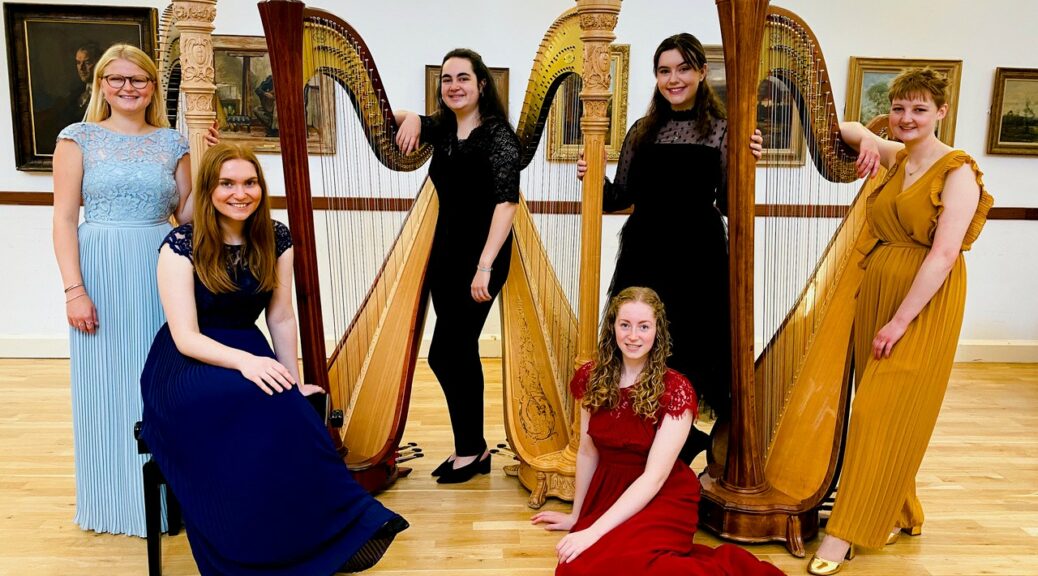
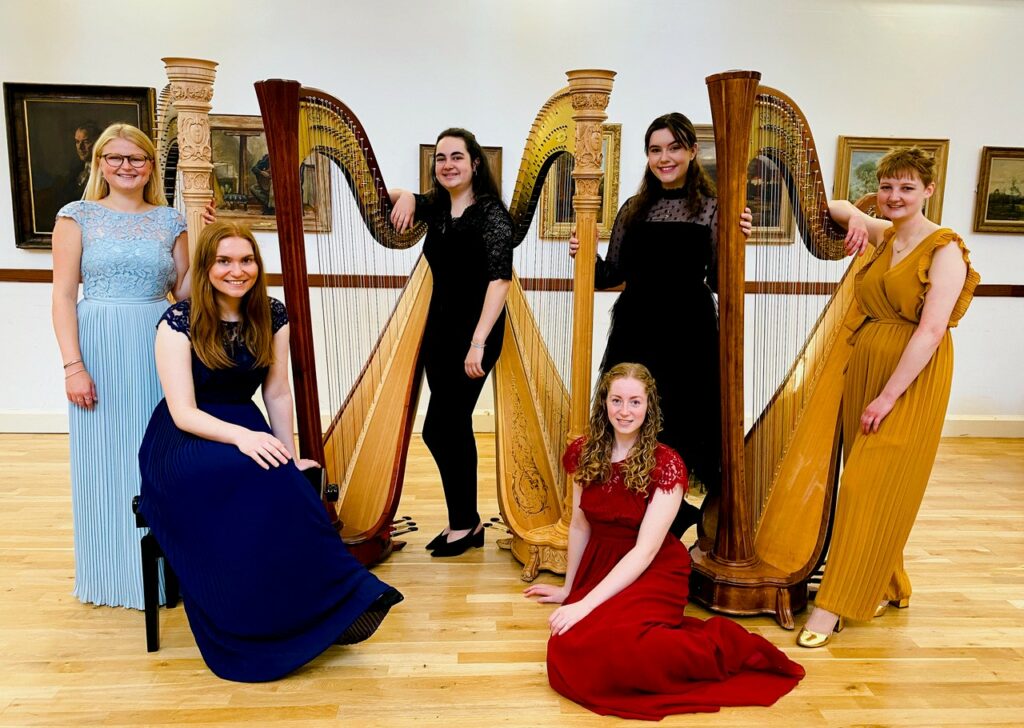
If only for an hour, the Harp Ensemble from the Royal Welsh College made everything okay, with a fine programme native to Wales and artists inspired by our country. Monika Stadler evokes the Preseli Skies in a light opener, the ladies of the ensemble warming up for this concert. It’s the interplay between each harp that was highly stimulating. You didn’t know where to look at times. Melodies abound in this fine little piece.

David Watkins’ Petite Suite was another sure fire delight, the Nocturne in the centre particularly noteworthy, the Fire Dance finale had some pleasant dynamics as well. In a more austere choice, one of Wales’ biggest 20th century composers: William Mathias and his Zodiac Trio made more of a chin stroking choice. Each movement is the Zodiac sign of the musicians who premiered the work (Pisces, Aries and Taurus) and Mathias isn’t afraid to try more experimental modes, even if it still feels quite conservative in nature. Flickers of Messiaen and serialism hit the ear, though the combination of harp, flute and viola might not sound as enjoyable as you would think. Through this, I still want to hear more of Mathias, who seemed to have a big impact on Welsh music.

Our host for the concert, tenor Rhydian Jenkins delivered three sublime Welsh songs. The delights of Mae Hiraeth yn y Môr and Llanrwst really made this special, Jenkins having a bright, easy voice with a little strain in the high bits (he mentioned how hard the latter song opens with some very high notes). Dafydd y Garreg Wen in an arrangement by Meinir Heulyn saw Jenkins sing with the return of all six harpists in another superb song which proves why we are known as the land of song. Wrapping things up with the Jig-a-Jig from Catrin Finch’s Celtic Concerto in an arenment by Jeff Howard. Having heard this before, Finch’s mastery over the harp is evoked in this pristine and sunny work, with it’s opening a tune worthy delight, never waining and always uplifting. Perhaps things wont be so bad after all?

Harps of the Royal Welsh College: Nia Evans, Cerys Rees, Jemima Small, Matilda Whates, Yasmin Richards & Bethany Coggon. Tenor, Rhydian Jenkins, flute Lila Bhattacherjee and viola, Michael Cilburn.

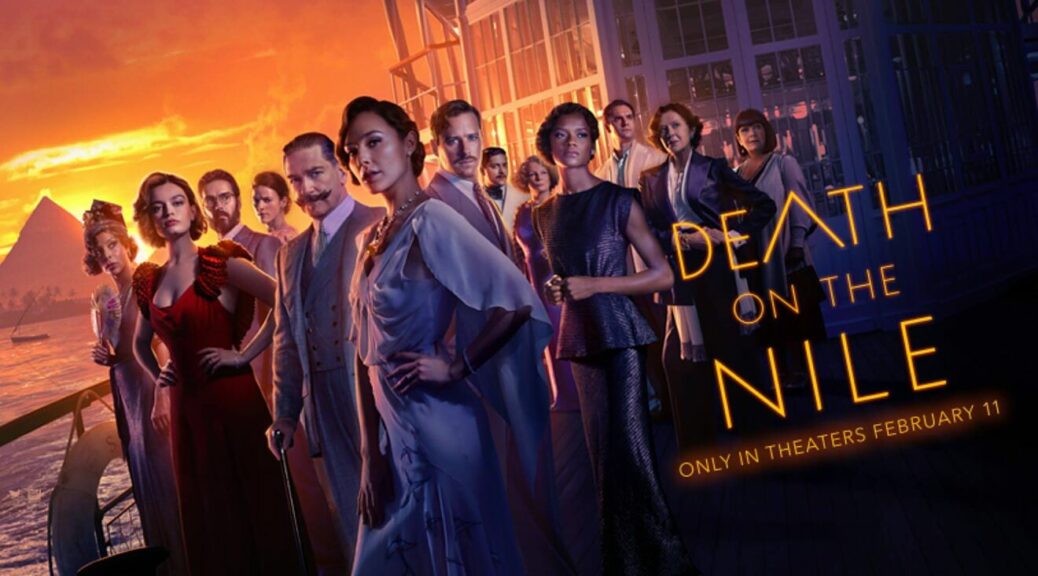
Review Death on the Nile by Valerie Speed

 out of 5 stars (4.5 / 5)

In the midst of storm Dudley, a group of strangers take refuge from the calamity outside. Remaining hidden in the darkness of the cinema auditorium seems like the most sensible thing to do. Settle back and escape into the world of others. To a place that couldn’t contrast more with the climate we currently found ourselves in. Egypt.

Of course, it wasn’t just seeking shelter that took me to the cinema. I had been eagerly anticipating this new remake of Death on the Nile. Although, if I’m honest, having seen repeatedly the 1978 production starring Peter Ustinov as Hercule Poirot, (which I loved) I did wonder if I might get bored, convinced as I was that I knew the story so well that there would be no surprises. One review described this remake as a ‘dumb, lumbering adaptation…’. Not very promising. Yet, how wrong could I be.

Death on the Nile is one in a series of crime novels written by Agatha Christie, featuring her Belgian detective Hercule Poirot. Naturally, then we will expect a murder mystery; a simple set up of victim, a line up on suspects and to be taken through the means, motive, and opportunity to the conclusion of whodunnit. The plot remains the same. A young, wealthy newlywed, Linnet Ridgeway, is murdered while honeymooning in Egypt. She is surrounded by friends and family along with her new husband, each, we discover with some reason to kill. Add to this the arrival of her husband’s scorned betrothed, and the set up for murder to ensue is complete.

Director and star, Kenneth Branagh, it seems to me, had two problems to overcome for this film to work. The first, how can suspense and intrigue be maintained when Death on the Nile is such a well-known story. The second, when even his own creator, Agatha Christie, eventually described Hercule Poirot as a ‘detestable, bombastic, tiresome, ego-centric little creep’ how do you make the main character who will drive the narrative, likeable enough, not to be irksome, fully rounded enough not to be a stilted caricature, and risk losing the audience midway.

This remake begins, not in Egypt but in the trenches of the First World War, the commanding officer reading out the orders that have been received. The fate of the soldiers is sealed. Death hangs over each man. A young Poirot, though, suggests a brilliant but risky strategy. Hope rises once more. His plan is executed. I could hear the muffled gasps in the audience, a moment of tension. The outcome made me flinch with horror. Our first mini rollercoaster. So, the dye was cast, just as much as this vignette gave an insight into how Poirot evolved it made sure the audience understood that we were not going to be on firm ground. We had to be ready to feel uncomfortable at times and be caught off guard.

Fast forward and Poirot looks as he was described by Agatha Christie, enjoying the hospitality of a jazz club, and observing intently the lives of others play out. This is our first introduction to the main characters in this detective story.  Already there are tensions so when the same people congregate in the luxury of Egypt, we know something sinister is going to happen, we’re just not quite sure when.

Life for these people is lavish, sumptuous. These are the rich, surrounded by beauty, able to have anything they desire, and here they display a carefree decadence and gaiety. But in a moment, this can all too quickly be dampened with a sense of foreboding and trouble walks in. It’s dangerous to be complacent.

Deftly handled by Branagh, his sleight of hand, does solve those two problems. What is delivered is the suspense and drama you hope for from a murder mystery.

What those early added scenes do is create a feeling of being destabilised which is the pattern threading through the entire film.  The audience is moved moment to moment from a sense of doom, to calm and to a sense of horror. I, for example, came very quickly undone. Convinced as I was that I knew the killer from the off, as the jazz club scene played out, I became less convinced of this certainty until I was just as intrigued to find out what was going to unfold as if I was coming to the story anew.

As the film progresses, it feels to me that the timeline changes slightly from the earlier makes of this film. The characteristics, life stories and actions of a couple of the characters from previous films are subsumed into different characters. The effect is that you never have one of those moments when you’re able to say, ‘oh here it comes, I know what’s going to happen now’ because nothing maps exactly onto what has gone before.

The film is also beautifully shot. The cinematography is sublime, with glimpses of beautiful vistas of the Nile and the banks of the Nile. And yet, with all its beauty, the effect of seeing the boat, as big as it is, on which the characters reside being dwarfed by the vastness of the landscape adds as a metaphor for no longer being grounded or anything being certain. So easily life can be capsized. The small world in which the action is unfolding looks suddenly isolated and vulnerable, much as we begin to see the remaining potential victims with a killer on the loose.

There are moments when I and the rest of the audience gasp aloud. As you will know if you are familiar with Death on the Nile, or expect if you are not, there is more than one murder. Committed most shockingly. There is a grotesque reality about the way the bodies are seen stored in the most undignified of ways amongst the cold meats. But that is a reality of death in these most horrendous of circumstances. It is cruel.

Much is made of the idea of love in this film. Finding love, losing love. Seizing every opportunity to hold onto it when, living in an era of societal expectations, everything can be lost in a moment, and any survivor left forever heartbroken, no longer the person they were. In this lies motivation. If the audience already know the who, the means and the opportunity, then motivation can remain a seam to explore. The ongoing theme of life and loss, of how everything can be transitory is another way the audience is kept engaged.

There have been some reviews which have suggested Branagh is over dramatic in his portrayal of Poirot. For me though, I loved his portrayal. Of course, Poirot will have moments of melodrama – he’s ‘ego-centric’. Far from hiding his flaws, they are pointed out by one of the characters in the film, and fully acknowledged. With some regret, Poirot acknowledges he is not the man he wanted to be – he wanted to be a farmer – but the man he was turned into and remained as.

We do see a softer, more human side to Poirot. With the sultry, sassy, Salome Otterbourne, played by Sophie Okenedo, Poirot just might fall in love. It would be wonderful to think Branagh would consider a third Poirot film and for that story to unfold. Bringing to life the work of Agatha Christie for a whole new generation.

Review Andrei Kymach & Llŷr Williams, St David’s Hall by James Ellis

Photo Credit: Alexander Andryushchenko

 out of 5 stars (4 / 5)

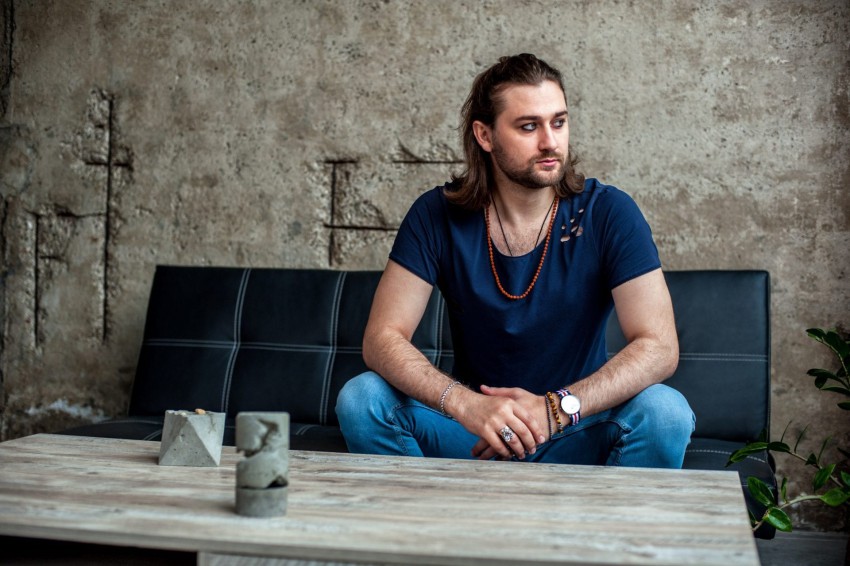
Those pesky storms would keep me from Don Giovanni with Welsh National Opera the past weekend. Though for now I missed the damnation, Andrei Kymach gave up time from the show for a recital at St David’s. Cardiff Singer regulars will know he won back in 2019, a long time ago in the grander scheme of things.

We are living in heightened times. Ukrainian born Andrei offered up a fine conveyor belt of native songs. We need to hear things like this at the moment, with war feeling imminent after two dower years, we’d rather forget in all honesty. These patriotic and joyful songs bleed out of Andrei, a well versed repertoire he will undoubtedly be singing more of in the near future. The songs of Schevchenko, Scheli and Liybomyr would be banned by the Tsars and early Soviet leaders, only ganging resurgence more recently. It is the conviction that Andrei brings to every word of each song that affirms his command as a baritone, filled with gusto and pride.

There is a rock star feel to Andrei’s look, his hair and beard trimmed and cut for his turn as the wicked Don down the bay. A headbanger of another sort, Mussorgsky’s Songs and Dances of Death ended this fine recital with a chilling air throughout. Here the singers details four scenes of lives ending, as Death emerges to claim his reward each time. Things start off particularly dark, with the death of a baby. Other songs sees the battlefield, a man lost in the snow and a knight (disguised as Death) lulling a sick maiden.

It’s Mussorgsky’s rollicking, compositional nature that makes these songs shine. Andrei is brilliant in execution, truly on top form, wallowing in the ironic, morbid mirror that permeates each bar. Llŷr Williams as accompanist has also excelled, glowing as he plays and never taken over the limelight to much from his partner. A lone piano stool next to Llŷr was intended for a page-turner, none such was needed as he swiped at the sheets, creasing them in each time within their plastic folder. Some three encores would indulge this loving Cardiff audience, who has seen this superb singer grow and grow.

We hope we can find peace at this time. Music will always be the answer.

Don Giovanni continues at the Wales Millennium Centre till 17 March 2022, then on tour.

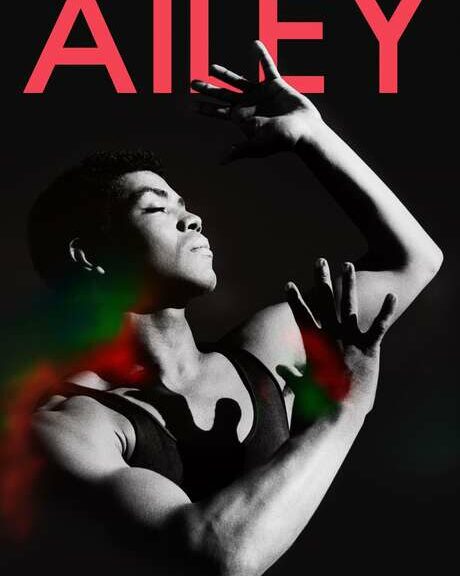
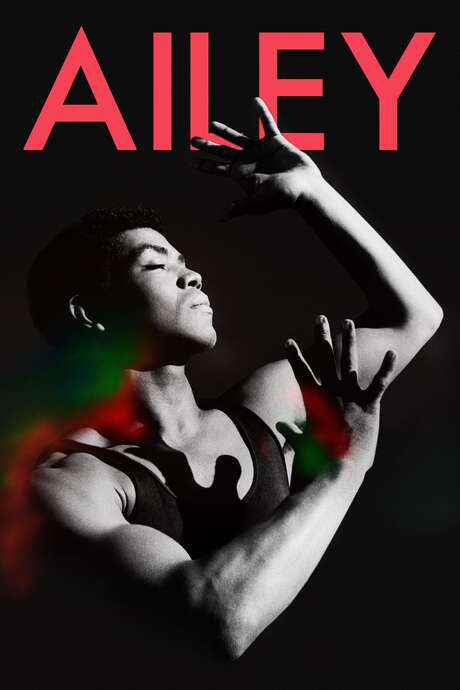
Review Ailey by Hanna Lyn Hughes

Ailey is about one of the most celebrated American choreographers of the 21st century, Alvin Ailey. Directed by Jamila Wignot, Ailey explores themes of memory and history by delving into significant chapters in Ailey’s life from his working class upbringing to his soaring choreographic success establishing New York based Alvin Ailey American Dance Theater. 

The film starts with rehearsals for a brand new piece choreographed by Rennie Harris to mark the 60th anniversary of Alvin Ailey American Dance Theater. We are then plunged into Ailey’s past via a mix of archive and present day footage. His story is narrated sensitively and lovingly through interviews by his colleagues and friends. The interviewees are wonderful storytellers and I was moved to tears by their love and compassion, particularly relating to the decline of Ailey’s mental and physical health. 

https://youtu.be/97jqfS3_8io

The structure of the film is a triumph. The way in which the film avoids a predictable chronological structure and seamlessly switches back and forth from past to present not only makes for an engaging cinematic experience but also reiterates the significance and importance of Ailey’s legacy. He refers to the ‘blood memory’ of his rural upbringing in Texas as inspiration for many pieces. I was particularly moved by the time worn recordings of African Americans attending the Baptist church, all in white, singing hymns in procession. This imagery overlaid by the sound of gospel singing is not only heart warming in itself, but it is beautifully contextualised by impressive performances of Wade in the Water from the infamous Revelations. This layering of performance and archive footage is key in exhibiting Ailey’s ingenuity in honouring and celebrating his African American heritage through art. The film superbly encapsulates Ailey’s uninhibited love for movement and creation as well as the sorrow and loneliness he must have felt at the height of his success. 

As a freelancer based in Wales, I did not expect the cinema to be the place where I’d feel the most excitement I’ve felt about watching dance in years! I thought I knew all I needed to know about Alvin Ailey but through the course of watching this documentary, I was educated, inspired and truly fell in love. I was taken by his story and his works and could relate so much to his impulse to create. He had something to say and people wanted to listen and I believe that is the basis of a great and successful choreographer. I left the cinema thinking to myself that whilst his time was cut tragically short, we are so lucky to be left in his enduring legacy. As Judith Jameson says in her last interview “Alvin breathed in and never breathed out and we are his breath out” I urge anybody who loves dance or has an interest in American history to watch this film, it is simply wonderful. 

Ailey is available to watch on several streaming platforms if not at your local cinema. 

You can find out more about Hanna and her work in this interview here

Review The Da Vinci Code, Theatr Clwyd By Donna Williams

 out of 5 stars (3 / 5)

Credit: Johan Persson

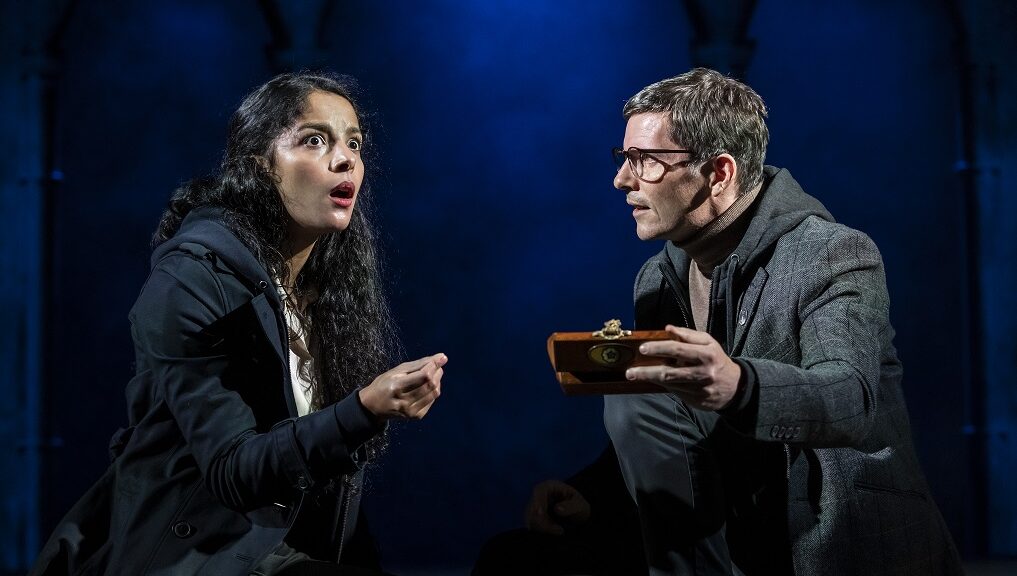
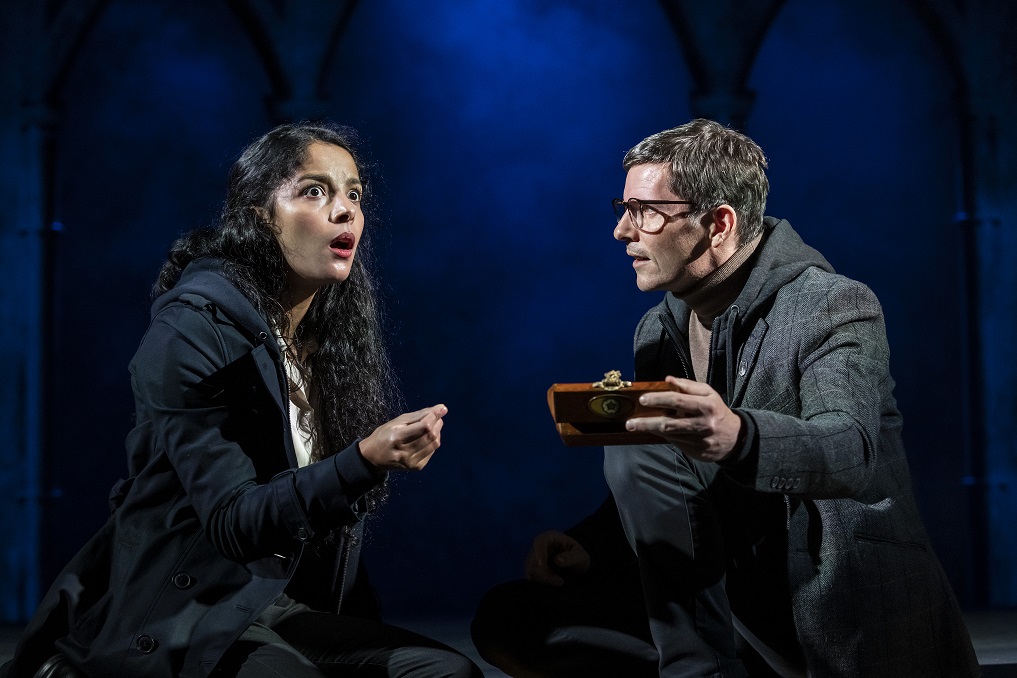
It’s a well-known fact (well, okay, not a fact exactly but often a popular opinion) that ‘the book is always better than the film.’ This is, of course, subjective, as some of us enjoy reading where others don’t, but in my experience, films tend to have to miss out a lot of detail from its written inspiration due to time, budget and varying other reasons. Unfortunately, this is how I felt about The Da Vinci Code. This is not to say I disliked the stage adaptation but that, for me, the book simply didn’t translate well to the stage. As a big fan of Dan Brown’s book, I felt a lot of the action and the detail was rushed, where the detail of the book’s plot, particularly the detail in the symbology, is what it should be all about.

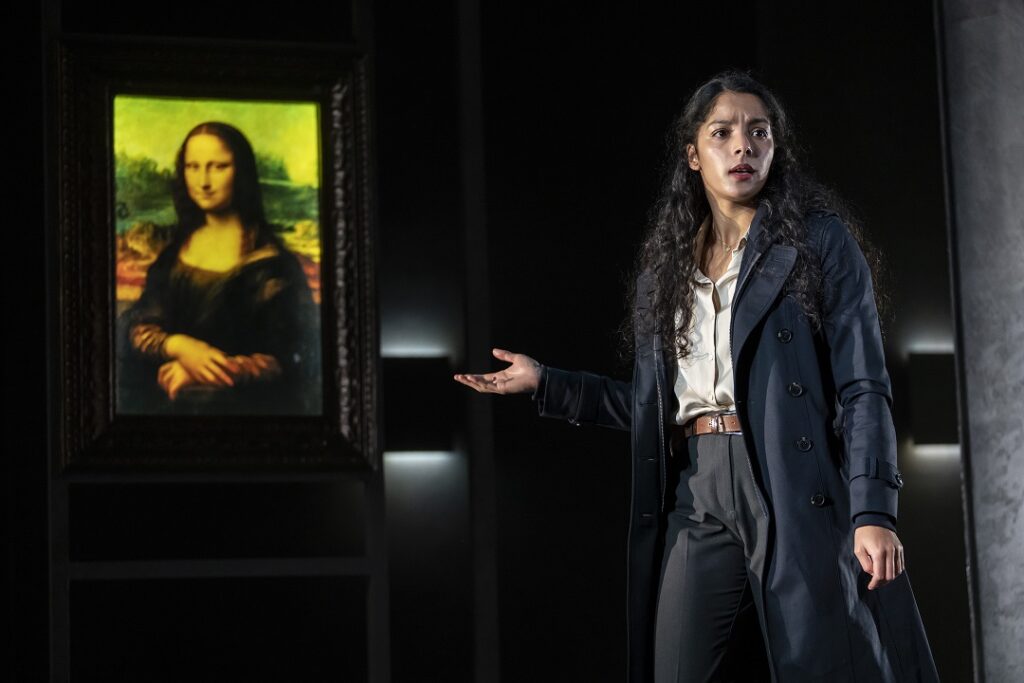
As we enter the auditorium we are greeted with a projection of the Vitruvian Man, the drawing by Leonardo Da Vinci which depicts a man in two superimposed positions with his arms and legs apart and inscribed in a circle and square, representing his concept of the ideal human body proportions. It is a well-recognised piece by Da Vinci therefore immediately transports us to his world and, to those who are already aware of the plot, to the Louvre Museum in Paris. For those unaware of location, we also hear announcements in French telling us that the museum will be closing in a few minutes time, counting us down to the beginning of the play. There is also appropriately suspenseful music playing which unfortunately becomes annoyingly repetitive after about five minutes!

Credit: Johan Persson

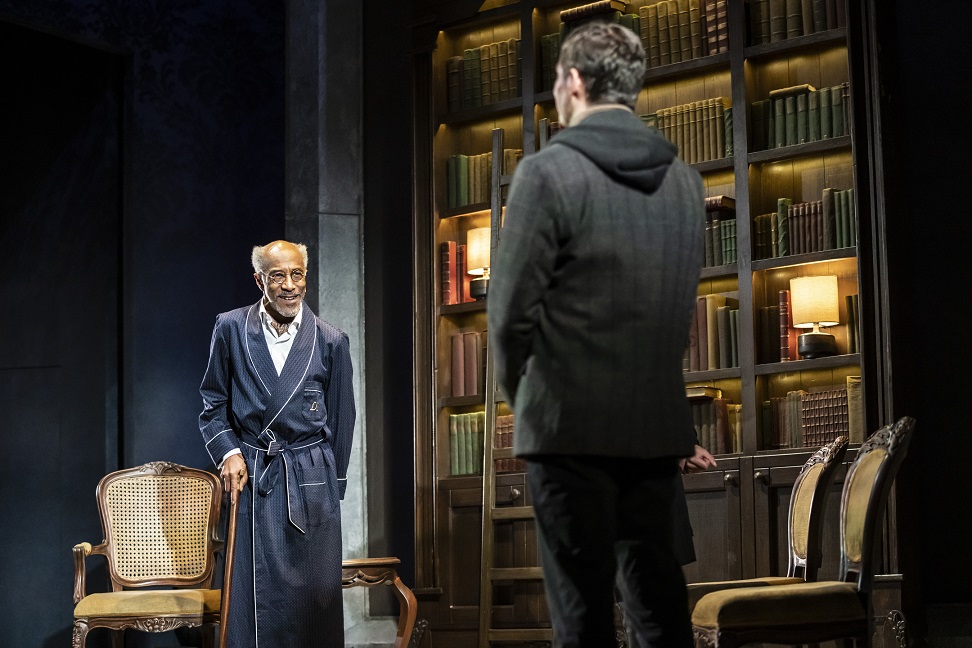
The play begins with Robert Langdon (portrayed brilliantly by Nigel Harman, probably most well recognised for his role in Eastenders) giving a symbology lecture, with a nod to Walt Disney and the Mickey Mouse watch he always wears! We are immediately introduced to most of the ‘cast’ who almost act a Greek chorus, representing bit parts and scene changes, providing summary information, and highlighting important dialogue. All wear hooded tops which they don when part of the ‘cast’, when they’re not portraying a main character. This works well and provides clarity to the story, particularly for those who may not be familiar with it. The piece was excellently cast, and special mention must go to Hannah Rose Caton, who portrays Sophie Neveu beautifully. I am at first taken aback that she isn’t using a French accent but as the action ensues, it’s clear this makes no impact on the role itself. Kudos also to Andrew Lewis, understudy Leigh Teabing who steps into Danny John-Jules’ shoes seemingly last minute (there is no announcement or information in the programme to suggest any cast changes). Having looked forward to seeing Danny John-Jules in this role I am a little disappointed but Andrew Lewis’ portrayal of Teabing is perfect and akin to Sir Ian McKellen’s on screen version. It also appears we are another cast member down, meaning the roles of Sauniere and Remy are played by the same actor, Adam Morris (much to my excitement, having been a huge fan of CBBC’s Maid Marian and her Merry Men as a child!) Morris really steps up to the plate and plays both roles superbly, causing no confusion as to who’s who.

Credit: Johan Persson

The story travels from the Louvre Museum in Paris, to churches, Teabing’s estate, London, Edinburgh etc. so I am intrigued to see how this is going to translate to stage, the use of modern technology and stagecraft allowing for the audience to be transported from location to location seamlessly. The use of projections, easy-traveling set, a few simple props, and creative lighting design mean we clearly move from scene to scene and know where we are without hesitation. Projections are also used to show symbols and paintings and there is effort to home in on the details of these, particularly at Teabing’s home where we see a large projection of Da Vinci’s painting The Last Supper on the wall which is then zoomed in to highlight its supposed hidden meanings. However, I feel a lot of these moments, often huge revelations in the book and in the film, are somewhat rushed here (none more so than the secret revealed to ‘Princess’ Sophie at the end of the play). Where these moments could be lingered on, the action is packed in to two hours, which just isn’t enough time to appreciate the detail.

There are a lot of clever elements in this production which, with a less intricate story, could have worked successfully. However, I think lack of time, and location (allowed for on the big screen) mean that the detail and the atmosphere of the plot get lost somewhat. Nonetheless, a fantastic cast and certainly an enjoyable production, perhaps better enjoyed without the book lover’s expectations!

The Da Vinci Code continues its UK Tour on February 22nd at the Belgrade Theatre in Coventry and finishes on November 12th at The Alhambra Theatre in Bradford. Head to the website to book your tickets:

https://davincicodeonstage.com/

Theatr Clwyd, Mold
February 14th-February 19th, 2022

Cast
Robert Langdon: Nigel Harman
Vernet & Cast: Basienka Blake
Remy & Cast: Adam Morris
Sophie Neveu: Hannah Rose Caton
Sir Leigh Teabing: Andrew Lewis
Fache & Cast: Alpha Kargbo
Silas & Cast: Alasdair Buchan
Sauniere & Cast: Adam Morris
Collet & Cast: Leigh Lothian
Sister Sandrine, Marie & Cast: Debra Michaels

Production Team
Company Stage Manager: Roger Troup
Deputy Stage Manager: Ellie Southwell
Assistant Stage Manager: Mim Evison
Sound 1: Elliott Roberts
Video 1/Sound: Llyr Parri
Wardrobe Manager: Ivy Bridgwater-Court
Relighter: Samuel Baker
Production Carpenter: Chris Ashenden

Creative Team
Author: Dan Brown
Adapters: Rachel Wagstaff & Duncan Abel
Director: Luke Sheppard
Set & Costume Designer: David Woodhead
Video Designer: Andrzej Goulding
Lighting Designer: Lizzie Powell
Composition & Sound Design: Ben & Max Ringham
Musical Director: Chris Poon
Movement Director: Tom Jackson Greaves
Casting Director: Stuart Burt CDG
Associate Director: Leigh Toney
Production Manager: Digby Robinson
Costume Supervisor: Ester Mangas
Props Supervisor: Lizzie Frankl
Associate Props Supervisor: Zoe Wilson
Fight Director: Alison De Burgh

Running Time: 2 hours (including 20-minute interval)

REVIEW JAMAL ALIYEV & MAKSIM ŠTŠURA, ST DAVID’S HALL BY JAMES ELLIS

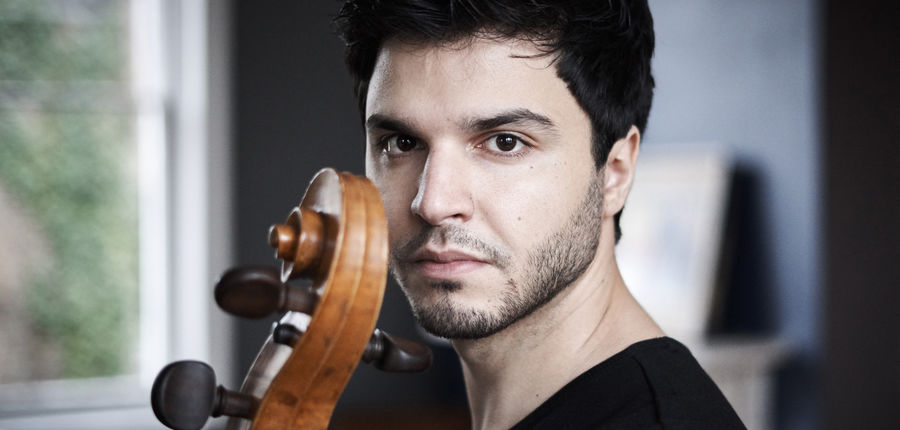
Jamal Aliyev Credit Kaupo Kikkas

 out of 5 stars (4 / 5)

In a return to live events, the all ways reliable afternoon concerts at St David’s Hall would be my first venture out in this new year.

This first outing for me saw Azerbaijan born cellist Jamal Aliyev and Estonian accompanist Maksim Štšura. It annoyed me that the entire programme was completely changed (Chopin, Schumann and Martinů were billed), though a new show of tricks saw pieces I’ve never heard. Turkish inspired music began filled with experimentation and jazz. Though giving of a feeling of let’s try this and that, I found moments particularly enjoyable: the Henry Cowell like manipulations of the piano and perfumed cello lines were highlights.

An arrangement of Paganini’s Variation’s on a theme of Moses in Egypt takes snippets of Rossini’s really heard opera and shows off the violin, or the cello in this instance. Jamal really gets to prove his talents in this piece, the composer usually pushing the fundamentals of performing along with dynamics. No one takes on Paganini lightly, you feel Jamal has taken great care to bring this together in a showcase of both vim and intrigue.

Some slow tango vibes followed in Oblivion from Piazzolla. Pushing the genre to new heights, Piazzolla has the fortune of being accessible and experimental. Whilst this is not his most audacious piece, I found some joy in this brief outing, evocative of the tango genre it calls back to. Wrapping with up with a work by cellist composer David Popper also gave Jamal more chances to shine. He doesn’t really need to play anything special to prove his talents. Maksim on piano also being a highly watchable, refined pianist, who joins Jamal in this almost hour of fine music making.

AM DDRAMA: GALWAD AGORED AM SGRIPTIAU GAN DDRAMODWYR YNG NGHYMRU.

Mae Am Ddrama yn gynllun ar y cyd rhwng Theatr Genedlaethol Cymru, Theatr Clwyd a National Theatre Wales i ddod o hyd i sgriptiau a dramâu newydd a chyffrous gan ddramodwyr sydd wedi eu lleoli yng Nghymru. 

Dros y flwyddyn nesaf, bydd Am Ddrama yn galluogi dramodwyr i anfon eu sgriptiau a’u dramâu  anghyhoeddedig yn ddienw at banel eiddgar o ddarllenwyr i gael adborth gwerthfawr. Mae’n bosibl y bydd cyfle i’r sgriptiau mwyaf addawol gael eu datblygu, gan baru’r sgript a’r dramodydd gydag un o’r tri sefydliad sy’n fwyaf addas i’w datblygu, ei chomisiynu a’i chynhyrchu.

Mae Arwel Gruffydd, Cyfarwyddwr Artistig Theatr Genedlaethol Cymru,yn esbonio sut mae’r bartneriaeth hon yn gyfle unigryw i ddramodwyr yng Nghymru:

“Dyma’r cynllun cyntaf o’i fath yng Nghymru. Rwy’n hynod falch ein bod yn cydweithio gyda National Theatre Wales a Theatr Clwyd ar arbrawf mor gyffrous. Gobeithiwn y bydd yn gyfle i ni rannu’r neges yn eang ac yn genedlaethol ynghylch y cyfleoedd sydd ar gael i’n dramodwyr gyflwyno eu gwaith yn y ddwy iaith i dri o’n prif gwmnïau cynhyrchu theatr, trwy ddull ‘siop-un-stop’. Mae Theatr Genedlaethol Cymru yn gobeithio y bydd y fenter hon yn caniatáu i ni glywed gan leisiau amrywiol a dramodwyr newydd o bob oed, waeth beth yw eu profiad blaenorol.”

Yn ystod y broses, bydd y dramodwyr yn cael mynediad at banel eiddgar o ddarllenwyr llawrydd a mewnol, a ddewiswyd gan y tri phartner yn dilyn galwad agored a wnaed ym mis Awst 2021. Mae’r darllenwyr wedi eu penodi am 6 mis, a bydd cyfle arall i ymgeisio am y rôl. Am y 6 mis cyntaf, bydd y darllenwyr yn cynnwys Charles O’Rourke, sydd â chefndir mewn gwaith â llaw, cyfieithu llenyddol ac ymgyrchu cwiar, ac sy’n ddarllenydd sgriptiau i Everyman Playhouse, Lerpwl a Channel 4. Lowri Izzard, a hyfforddwyd yn RADA ac sydd newydd orffen gweithio ar ffilm gomedi nodwedd newydd, sef Brian and Charles, ar gyfer Film4 a BFI. Mary Davies, dramatwrg lawrydd, sydd newydd gwblhau ei Doethuriaeth yn Athrofa Shakespeare a’r RSC. Melangell Dolma, dramodydd, actor a Chydlynydd Datblygu Creadigol gyda’r Theatr Genedlaethol, a Yasmin Begum,o dras Cymreig-Pacistanaidd, sy’n ymgyrchydd, awdur ac ymarferydd creadigol. Ar hyn o bryd mae hi’n gweithio yn Gwasg Honno, y wasg annibynnol hynaf i fenywod yn y Deyrnas Gyfunol. Mae Rahim El Habachi, sy’n Gydymaith Creadigol gyda NTW, ac yn ymgyrchydd dros ffoaduriaid a cheiswyr lloches LHDT+, wedi gweithio gydag Opera Cenedlaethol Cymru a Theatr y Sherman; mae’n berfformiwr ac yn wneuthurwr theatr.

‘Mae’n wych i fod yn cyhoeddi’r rhaglen hon, sy’n agor llwybr newydd a hygyrch at gyfoeth, amrywiaeth a thalent anhygoel ym maes ysgrifennu dramâu yng Nghymru. Mae NTW, ynghyd â’n partneriaid, yn ymrwymo i agor sgyrsiau creadigol gydag awduron o’r llu o gyd-destunau a diwylliannau sy’n creu Cymru gynhwysol a modern. Mae dramodwyr Cymru yn gaffaeliad anhygoel i elfen storïol a hunaniaeth esblygol ein cenedl. Mae’n holl bwysig i sicrhau bod lleisiau profiadol a newydd fel ei gilydd yn cael llwybrau tryloyw a hygyrch i’w galluogi i rannu eu syniadau a gweithio gyda’r prif gwmnïau cynhyrchu.

Lorne Campbell, National Theatre Wales.

Rhan gyffrous arall o’r cynnig yw’r cyfle i’r darllenwyr barhau i ddatblygu sgiliau dramatwrgaidd. Mae Raphael Martin, rheolwr llenyddol a dramatwrg o dras Prydeinig/Americanaidd, yn berchen ar The Lit Shop Ltd, cwmni rheoli llenyddol ar gyfer theatrau sy’n dymuno cael rôl fel hon ar drefniant ymgynghorol. Mae wedi gweithio fel dramatwrg a rheolwr llenyddol mewn nifer o sefydliadau o fri yn cynnwys yr RSC, Sonia Friedman Productions, ATG, The Bush, The Gate Notting Hill, The Royal Court Young Writers’ Programme, The National, Manhattan Theatre Club a Soho Rep. Ar hyn o bryd, mae ei gleientiad yn cynnwys sefydliadau sydd wedi eu lleoli yn y Deyrnas Gyfunol, yr Unol Daleithiau, Canada ac ac Awstralia.

Mae’r ddramatwrg Ffion Emlyn yn Gymraes sydd wedi gweithio i’r BBC am dros ugain mlynedd, yn bennaf fel Cynhyrchydd Drama Radio i BBC Radio Cymru. Mae Ffion hefyd wedi gweithio fel Golygydd Sgript a Chynhyrchydd Straeon ar rai o raglenni eraill y BBC, megis Casualty a Pobol y Cwm, ac wedi mwynhau datblygu talentau ysgrifennu newydd dros y blynyddoedd.  

Mae Theatr Clwyd wrth eu bodd o fod yn rhan o’r cynllun: “Rydyn ni, fel lleoliad, yn credu bod Am Ddrama yn gam pwysig tuag at sicrhau bod lleisiau newydd, amrywiol a thalentog yn cael eu clywed ar lwyfannau ledled Cymru. Rydym yn falch iawn o gael y cyfle i weithio gyda’r Theatr Genedlaethol a National Theatre Wales ar y prosiect cyffrous hwn.” Tamara Harvey, Theatr Clwyd.

Galwad agored yw hon am sgriptiau sydd eisoes mewn bodolaeth, nad ydynt wedi cael eu cynhyrchu ar unrhyw adeg yn y gorffennol, na chwaith wedi eu cyflwyno’n flaenorol i’r un o’r tri sefydliad partner.

Gall y sgriptiau fod ar gyfer unrhyw grŵp oedran ond rhaid iddynt fod ar gyfer perfformiadau byw, yn cynnwys sioeau cerdd. Gwahoddir unrhyw ddramodydd 18 oed a throsodd i gyflwyno’u gwaith yn Gymraeg neu yn Saesneg, a/neu yn ddwyieithog. Darllenir pob sgript yn ddienw, a nodir y dylai sgriptiau fod yn 20 tudalen neu fwy. Bydd y cyfnod ar gyfer cyflwyno sgriptiau yn cychwyn 16 Chwefror 2022 hyd at 31 Mawrth 2022. Cyhoeddir gwybodaeth bellach am sut i gyflwyno sgriptiau yn fuan.

Os oes gennych unrhyw gwestiynau, mae croeso i chi anfon ebost at post@amddrama-playon.cymru, neu cysylltwch trwy neges llais neu neges destun ar 07908 439417.

PLAY ON: AN OPEN CALL FOR SCRIPTS BY PLAYWRIGHTS IN WALES.

Play On is a new collaboration between Theatr Genedlaethol Cymru, Theatr Clwyd and National Theatre Wales to find new and exciting scripts and plays by playwrights based in Wales.
Over the next year, Play On will enable playwrights to send their unpublished scripts and plays anonymously to an eager panel of readers for valuable feedback. There may be an opportunity for the most promising scripts to be developed, matching the script and playwright with one of the three organisations best placed to develop, commission and produce it.

Arwel Gruffydd, Artistic Director of Theatr Genedlaethol Cymru, explains how this new partnership is a unique opportunity for playwrights in Wales:

”This is the first scheme of its kind in Wales. I am extremely pleased that we’re collaborating with National Theatre Wales and Theatr Clwyd on such an exciting experiment. We hope that it will present us with an opportunity to share the message widely and nationally about the opportunities that are available for our playwrights to present their work in both languages, to three of our largest theatre production companies by way of a one-stop-shop. Theatr Genedlaethol Cymru hopes that this venture will allow us to hear from diverse voices and new playwrights of all ages, regardless of their level of previous experience.”

During the process, playwrights will have access to an eager panel of freelance and in-house readers, selected by the three partners following an open callout in August 2021. Readers have been appointed for 6 months and there will be another opportunity to apply for the role. For the first 6 months these include Charles O’Rourke, who has a background in manual labour, literary translation and queer activism and is a script reader for Liverpool’s Everyman Playhouse and Channel 4. Lowri Izzard, who trained at RADA and has recently wrapped on a new comedy feature film, Brian and Charles, for Film4 and BFI. Freelance dramaturg Mary Davies, who has recently completed her PhD at the Shakespeare Institute and RSC. Melangell Dolma, playwright, actor and Creative Development Coordinator at Theatr Genedlaethol, and Yasmin Begum who is a Welsh-Pakistani campaigner, writer and creative practitioner. She currently works at Gwasg Honno Press, the oldest independent women’s press in the United Kingdom. Rahim El Habachi, who is a creative associate with National Theatre Wales, an LGBT+ refugee and asylum seekers campaigner, has worked with the Welsh National Opera and Sherman Theatre; he is a performer and theatre maker.

‘It’s wonderful to be announcing this programme which opens a new and accessible pathway for the incredible richness, diversity and talent of Welsh playwriting. Along with our partners, NTW is committed to opening creative conversations with writers from the many contexts and cultures that make up a modern and inclusive Wales. The playwrights of Wales are an incredible asset to the storytelling and evolving identity of our nation. It’s of huge importance that established and new voices alike should have transparent and accessible avenues to share their ideas and work with major producing organisations.’

Lorne Campbell, National Theatre Wales.

Another exciting part of the offer is the opportunity for the readers to continue to build dramaturgical skills. British/American literary manager and dramaturg Raphael Martin is the owner of The Lit Shop Ltd, a literary management company for theatres that want a role such as this on a consulting basis. He has worked as a dramaturg and literary manager at many prestigious organisations including the RSC, Sonia Friedman Productions, ATG, The Bush, The Gate Notting Hill, The Royal Court Young Writers’ Programme, The National, Manhattan Theatre Club and Soho Rep. His current clients include institutions based in the UK, the US, Canada and Australia.

Welsh dramaturg Ffion Emlyn has worked for the BBC for over twenty years, mainly as a Radio Drama Producer for BBC Radio Cymru. Ffion has also worked as Script Editor and Story Producer on other BBC programmes such as Casualty and Pobol y Cwm, and has enjoyed developing new writing talent over the years.

Theatr Clwyd is delighted to be involved: “As a venue we believe that Play On is a vital step for ensuring that new, diverse and talented voices are heard on stages around Wales. We are really pleased to have the opportunity to work with Theatr Genedlaethol Cymru and National Theatre Wales on this exciting project.” Tamara Harvey, Theatr Clwyd.

This is an open call for scripts already in existence, which have not been previously produced or presented to any one of the three partner organisations.

Scripts can be for any target age group but must be for live performances, including musicals. All playwrights aged 18 and over are invited to submit their work in either Welsh or English, and/or bilingually. Each script will be read anonymously, and scripts should be longer than 20 pages. The first submission window opens 16 February 2022 and closes on 31 March 2022. More information regarding how to submit scripts will be published soon.

If you have any questions, you are welcome to email us at post@amddrama-playon.cymru, or contact us via voicemail or text to 07908 439417.

Review The Crooners, Theatr Clwyd By Donna Williams

Being a regular visitor of Theatr Clwyd and knowing that most of their shows sell out, especially one nighters such as this, it was disappointing to see the auditorium not even half full for this performance. The surge over the winter months of the Omicron variant coupled with the fact that a production paying homage to the great crooners was always going to attract an older audience possibly being to blame. The cast even drew attention to this during their performance, joking that some audience members had come dressed as chairs! Still, a small audience didn’t mean a quiet audience and the cast soon had everyone singing, dancing and laughing along on what must’ve been a momentous and quite emotional occasion for them, it being their first outing in two years due to the pandemic; the poignancy of this highlighted in their finale number The Curtain Falls which includes the lyrics ‘people say I was made for this, nothin’ else would I trade for this, and just think I get paid for this’.

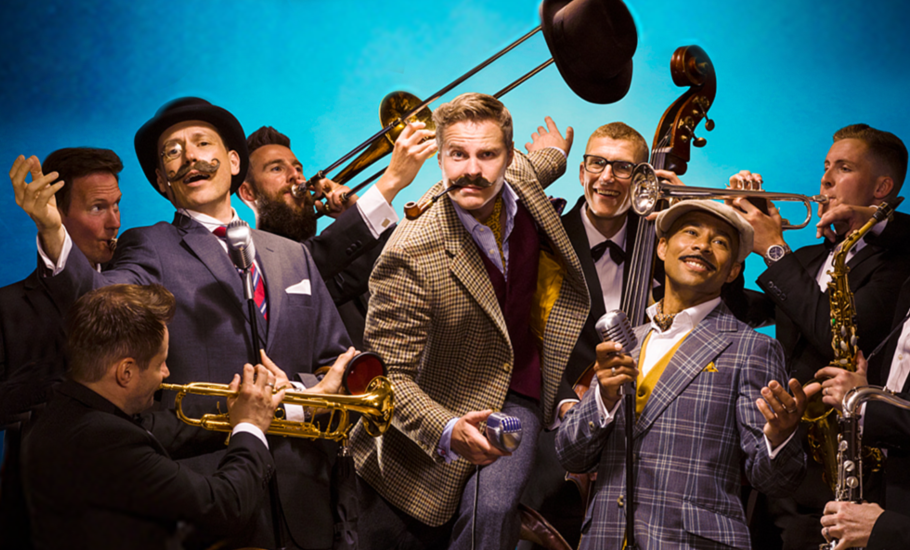
The Crooners is an eclectic mix of big band classics, hilarious physical comedy, tap dancing and lashings of quintessential Britishness with a story that runs throughout; that of the endangered crooner! The piece opens with the three main characters Rupert, Charlie and Winston sat on chairs holding up newspapers headlining the extinction of the crooner and it’s their mission to find a ‘mate’ this evening (cue plenty of audience interaction, especially if you happen to be sat in the first few rows!) The set is filled with ‘pipe smoke’, the décor is simple with two striking chandeliers donning the ceiling and we are immediately introduced to the incredible Mini Big Band, a 9-piece band including keys, double bass, drums, saxophone, trombones, trumpets and even the occasional jazz flute! And what a talented bunch of guys they are; switching between instruments, involving themselves in the production’s comedy skits and playing a huge repertoire of big band numbers including The Lady is a Tramp, When You’re Smiling, Beyond the Sea, Mack the Knife, and a whole lot more! The band never misses a beat and travel seamlessly from song to song. However, they are unfortunately, on occasion, louder than the cast, meaning we miss some of the fantastic vocals and lyrics.

The moustache seems to be The Crooners’ trademark; it is part of their logo along with a monocle and bowtie, it appears on their on-stage sign, lit up above the band and all three characters wear fake moustaches throughout the performance, with Rupert also wearing a bowler hat and monocle, looking more like the Monopoly man or Poirot than a crooner! It was obvious the cast were going for a typical old-British feel with posh accents, tea-drinking, and pipe smoking but, for me, this just didn’t reflect the era of the big band crooner, which we usually associate with Americans such as Bing Crosby, Frank Sinatra, Dean Martin etc. It was often difficult to see past the costume choices and moustaches and although the fake moustache falling off is funny once, it eventually becomes a distraction and takes away from the skilful performances of the piece.

https://vimeo.com/307945389

The comedy throughout the production goes down a storm with the audience and is more risqué than I perhaps expected with sexual innuendos, raunchy costume changes and racy one-liners, all brilliantly funny but kept child friendly. Extremely witty, hats off to script writer Roman Marek who has found a perfect balance between side-splitting comedy and the nostalgia of the era. His physical comedy on stage must also be applauded and his cast mates are the perfect foils. Often the leader of the piece can go over the top with their performance, but Marek knows exactly how and when to begin and end! Tim Harwood and Jim Whitley’s characters have a contrasting calming effect, and both have beautiful tones, whether speaking or singing, which set off the musical numbers perfectly.

Highlights of the show include the introduction of tap dance with the wonderful Choreography (‘chaps who did taps, aren’t tapping anymore, they’re doing choreography!’), Mr Bojangles (both performed wonderfully by Jim Whitley) and L.O.V.E in which we are required to participate by making the letter shapes with our arms (great fun!). But the performance lifts whenever the three sing together; the power of their voices combined is magnificent and the harmonies are stunning making it obvious why the classic crooners are their inspiration of choice.

This show is like nothing I’ve seen before; its unique mix of big band music, comedy and audience participation is superb, and I left the theatre feeling thoroughly entertained! My sides hurt from laughing and I was singing the tunes on the drive home and beyond! I would highly recommend The Crooners to theatregoers of any age. You don’t necessarily need a love or knowledge of the music or of the era; although I’m sure this adds to the experience, the songs, the comedy and the cast could be appreciated whether you’re a fan of Ol’ Blue Eyes or not!

The Crooners continues its UK Tour on February 11th at Cast in Doncaster and finishes on October 28th at Tyne Theatre and Opera House. Head to their website to book your tickets:

Theatr Clwyd, Mold
January 29th, 2022

Cast & Creatives:

Rupert: Tim Harwood
Charlie: Roman Marek
Winston: Jim Whitley
The Mini Big Band

Producers: Roman Marek & Jonathan Hibbard
Script: Roman Marek
Co-Writer: Simon Young
Director: Roman Marek
Musical Directors: Jonathan & Christopher Hibbard
Choreography: Roman Marek & Jim Whitley
Costume/Wardrobe: Rebecca Marek
Graphic Design: Rebecca Pitt
Photography: Stevieroy

Running Time: 2 hours (excluding interval)