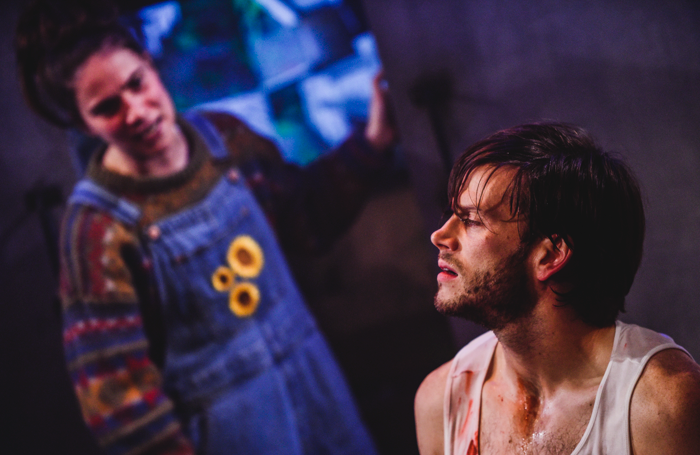
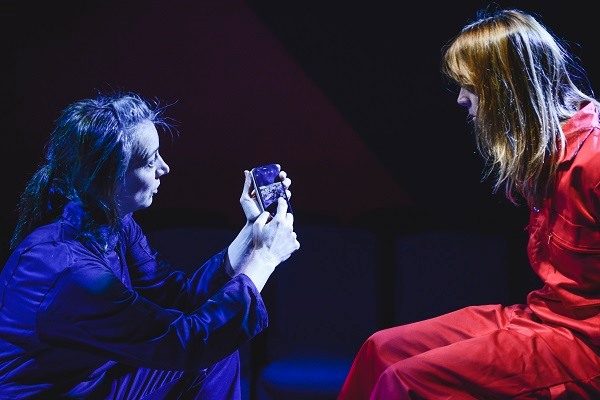
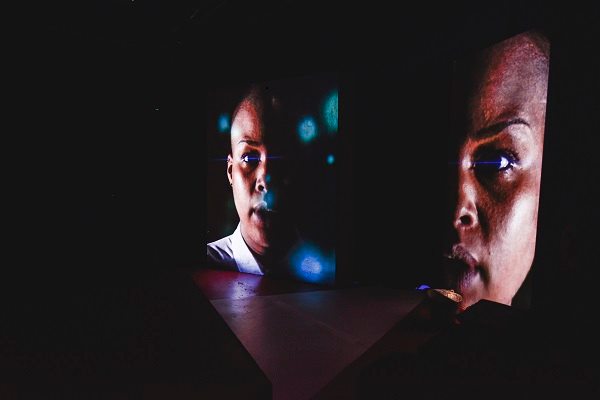
Hela (The Hunt) tells the story of a young woman (Erin’s) hunt for her missing little boy; her hunt for truth and justice and revenge and empowerment and the restitution or rescue of a Welsh culture which has been destroyed by a totalitarian, digital and male English culture. The setting of tiny abattoir on a remote farm is very well-realised by designer Delyth Evans and Set Builder Will Goad – it feels solid and real, including its digital screens and use of technology – the modern and the ancient are convincingly blended in the tiny space of ‘The Other Room’ and that is a genuine achievement.
The play attempts to meld an array of battles
into one: the Welsh culture represented by a young, rural woman with poetic
sensibilities and an overwhelming sense of loss is pitted against the English
culture represented by Hugh, a privileged abuser, who has himself been abused
and been robbed of his own Welsh-ness by abuse (the real representative of the
crushing English culture being The Circle – the dystopian algorithm which
dominates life and justice); there is a gender battle; a battle for language; a
battle between the small, human farmer and the megalithic, abusive system; a
battle over victimhood…and on it goes.
Mari Izzard’s dystopian, bilingual piece is a
challenge for performers and audiences alike.
The bi-lingualism is not part of the challenge – this is handled deftly
and purposefully utilised – it feels central to the storm of ideas that whip
through this short two-hander. Any fears
that this might be grant-driven lip-service to the language were quickly
dispelled.
The real challenge for the performers is in
realising the intensity which this bizarre and dreadful scenario demands, The direction is not at issue here. The space is well worked; the intensity is
built and relaxed appropriately and the relationship between the two figures
does build quite convincingly, given the material. The huge challenge centres around the
character and performance of he character of Erin. We are informed repeatedly in the early
moments of the play that she looks very young; she is referred to by Hugh as a
‘child’ and she intends him, initially, to believe that she is also a prisoner
of ‘The Circle’. Lowri Izzard has the
unenviable task of delivering this mannered, fake naivety sufficiently to take
us in, but at the same time, to give us doubts about who or what she really
is. Physically, she looks right for this
– there is a kind of teenage appearance in the early sections realised through
movement and expression but it is distracting, unconvincing at times and
irritating. We were meant to be
unconvinced by it but even that wasn’t quite convincing.
Later in the piece, when we begin to see who she
really is, Lowri Izzard delivers a strong and moving performance. When her character wants to torture Hugh, but
can’t do more than punch and tickle him, her humanity despite her dreadful
situation and what has been done to her, is moving and evident. It is only when he gets free and attacks her
that she is able to commit the emasculation which is the play’s natural
denouement.
Gwydion Rhys as Hugh, has much less of a
challenge. I wouldn’t have fancied the
role – it looked a very physically uncomfortable one, and the character, though
given something of a sympathetic back-story seems a bit thin. He is too sympathetic a figure for too long
and when his crimes are revealed they seem plot and issues driven and
unconvincing in terms of the character.
He delivers a strong realisation of the role though, undoubtedly,
particularly in his delivery of the movements between English and Welsh.
In retrospect, this is a thought-provoking play,
but one which tried to explore too many issues, albeit hugely important ones,
in a very short piece. The later stages
of the play are the strongest. Despite
looking very good, the early stages of the play, once the strong opening is
over, feel contrived and don’t always hold the interest. We sit outside the action rather than feeling
riveted and drawn in. As the play
builds, and Lowri Izzard’s performance is allowed greater rein by the writing,
this does draw us in to a powerful and well-played conclusion.
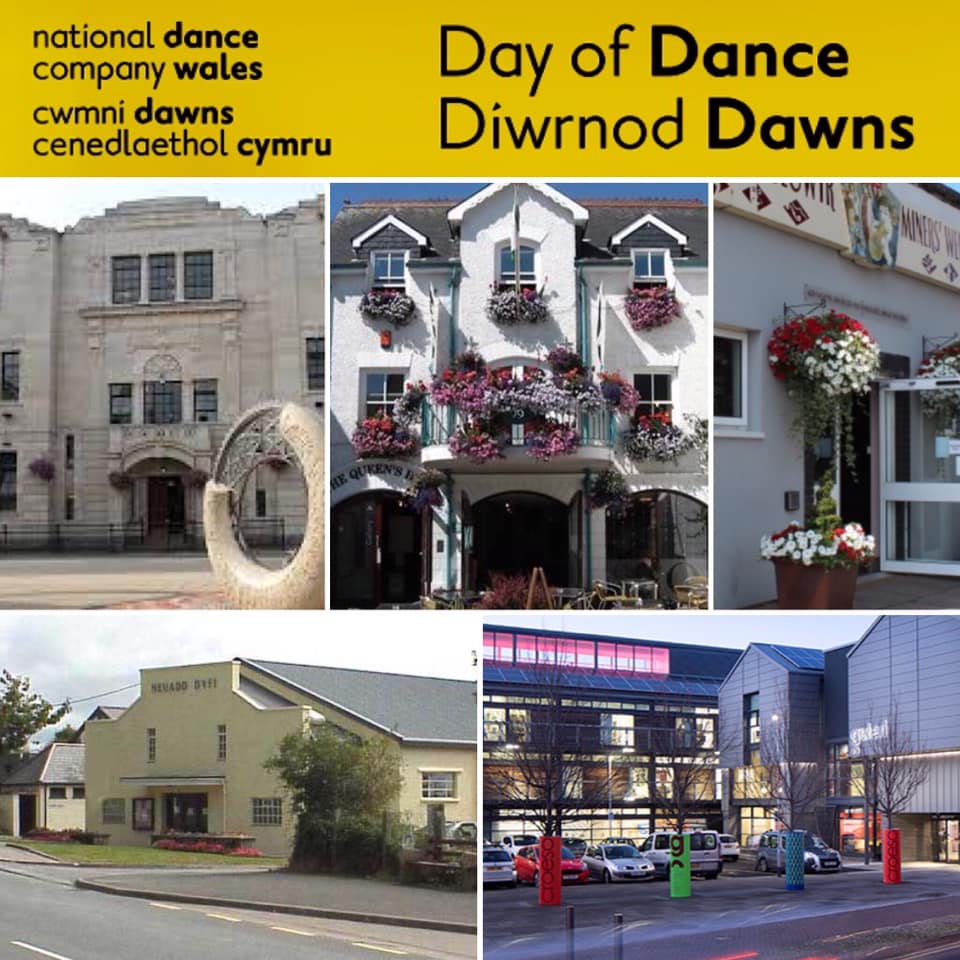
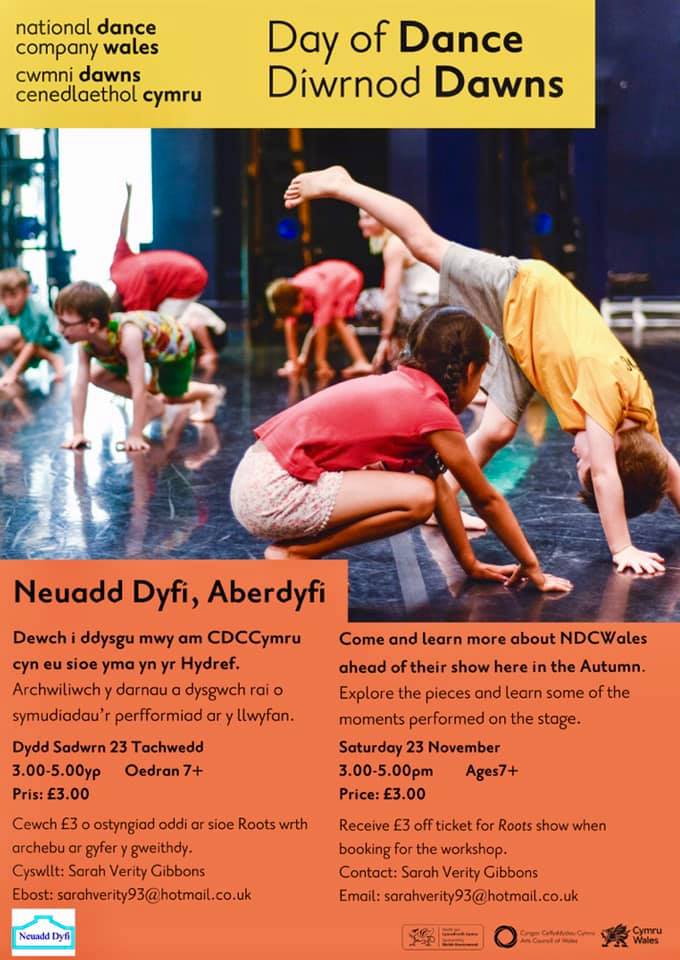
National Dance Company Wales are running Days of Dance at a range of venues in Wales this autumn. The day will consist of a range of workshops for a variety of ages. The workshops will be linked to the NDCWales Roots autumn tour which visit the same venues later this year.
Roots features four short pieces of dance from Wales, each different from the one before it.
Roots is a guided tour through contemporary dance. NDCWales take some of our favourite pieces and pair them with a discussion to help you get to the heart of the stories, and learn behind-the-scenes secrets.
Rygbi: Annwyl / Dear by our Artistic Director Fearghus Ó Conchúir celebrates rugby in Wales and highlights the hopes, glory and passion of rallying together on and off the pitch. Rygbi was created with input from rugby fans and players across Wales so that the dance really echoes the sport.
Écrit by Nikita Goile was inspired by a letter from iconic artist Frida Kahlo to her partner Diego. The clever duet is performed by a female dancer and a giant silhouette of her lover. It’s a beautiful power struggle that reflects the ups and downs of passionate relationships.
Why Are People Clapping!? by Ed Myhill is set to composer Steve Reich’s Clapping Music and uses rhythm as a driving force. The dancers use lively movement and clapping to create a soundtrack for the fun and dynamic dance.
Codi by Anthony Matsena who grew up in Swansea and is about Welsh people who come together to tackle isolation and depression during troubled times. It’s an energetic and uplifting dance about the strength of communities.
There is more information on the Day Of Dance workshops and how to book below.
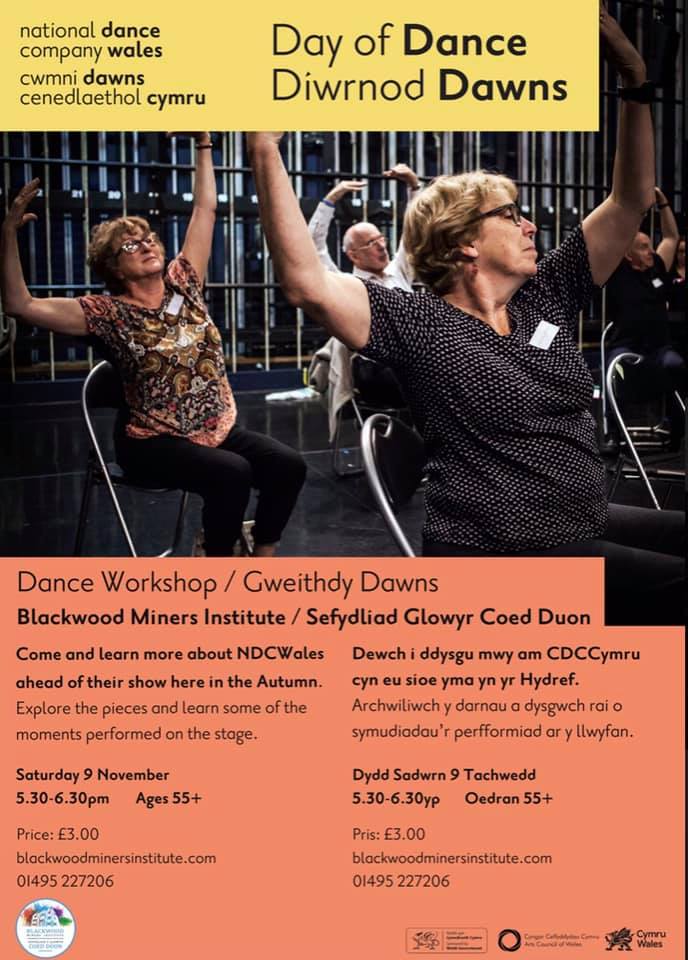
Blackwood Miners Institute
Get your chance to dance with National Dance Company Wales at Blackwood, Miners Institute this autumn!
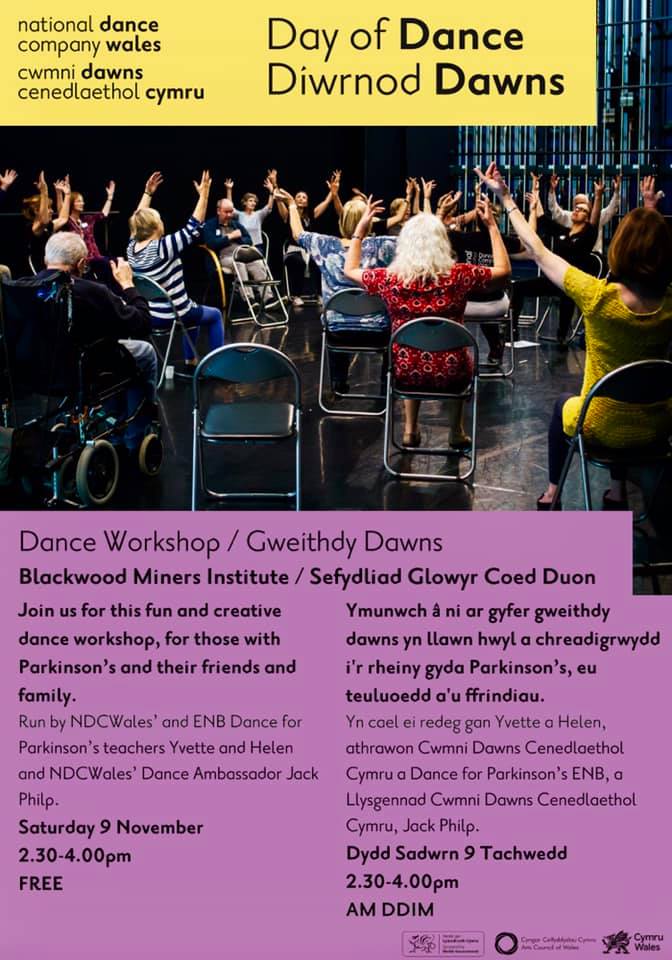
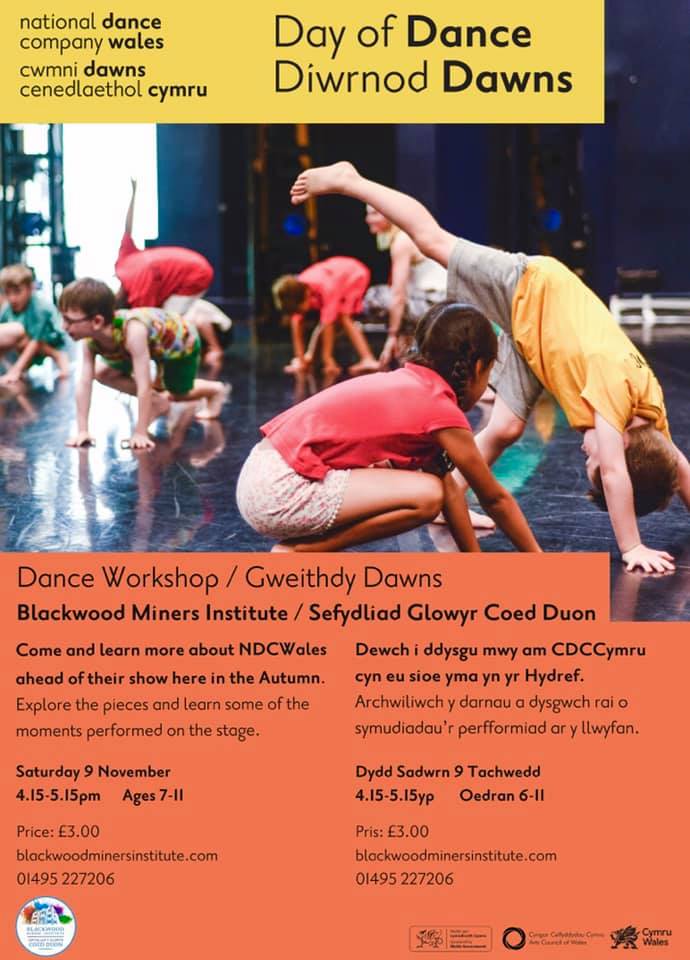
NDCWales is organising a FREE Afternoon of Dance at Blackwood, Miners Institute on Saturday the 9th November 2019. Take part in a FREE dance workshop. Participants will get the opportunity to learn dance elements of the forthcoming Roots tour, coming to Blackwood, Miners Institute on the 19th November. A range of other FREE activity will also be taking place throughout the day. Perfect for complete beginners as well as those with dance experience.
The below workshops are FREE if you book tickets for Roots at Blackwood, Miners Institute on Tuesday 19 November 2019 7:30pm To book a Roots ticket and FREE workshop place please book in person, or contact the Box Office on 01495 227206.
Please note workshop places are strictly limited.
Workshop Times
14.30 – 16.00 Dance for people with Parkinson’s, their friends and families
16.15 – 17.15 7-11 Years
17.30 – 18.30 Age 55+
The Queens Hall, Narberth.
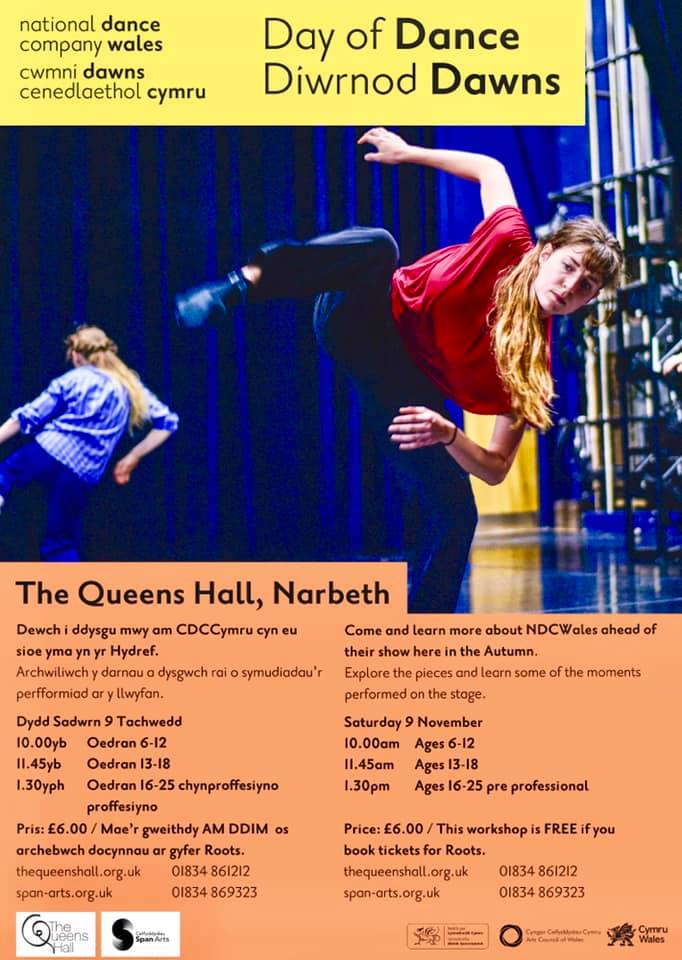
If you book a ticket for ROOTS, by NDCWales at The Queens Hall Narberth on the 22 November you are eligible to a FREE place on a Day of Dance Workshop being run by National Dance Company Wales on 9 Nov 7:30 pm at The Queens Hall, Narberth. Tickets need to be purchased via the Box Office – please call 01834 869323.
Workshop Times
10.-11.30 am 6-12 years
11.45-1.00 pm 13-18 years
1.30-3pm 16-25 years
The Welfare, Ystradgynlais
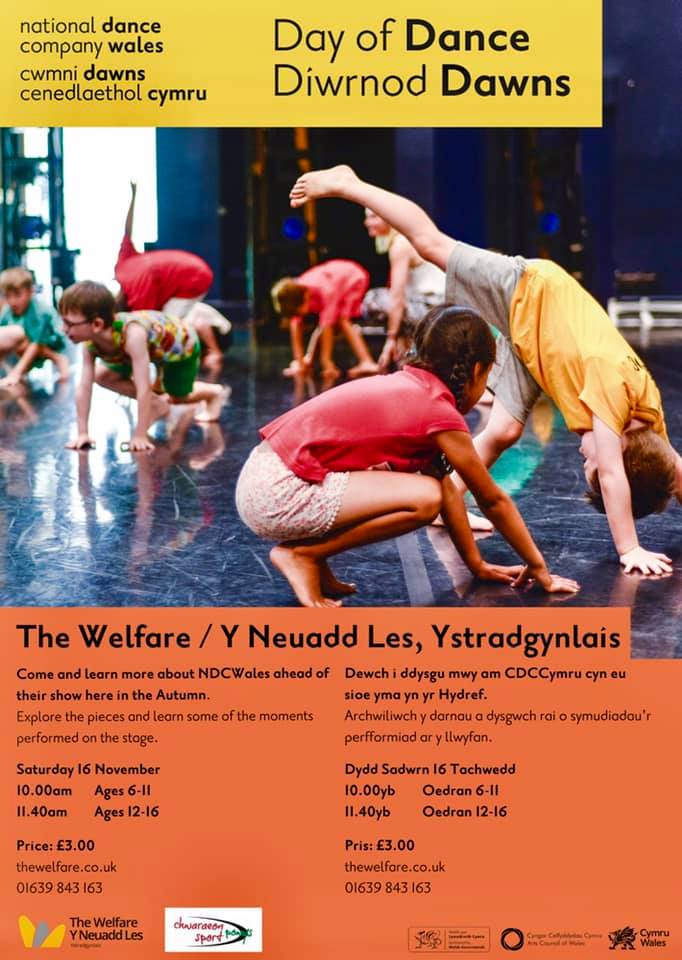
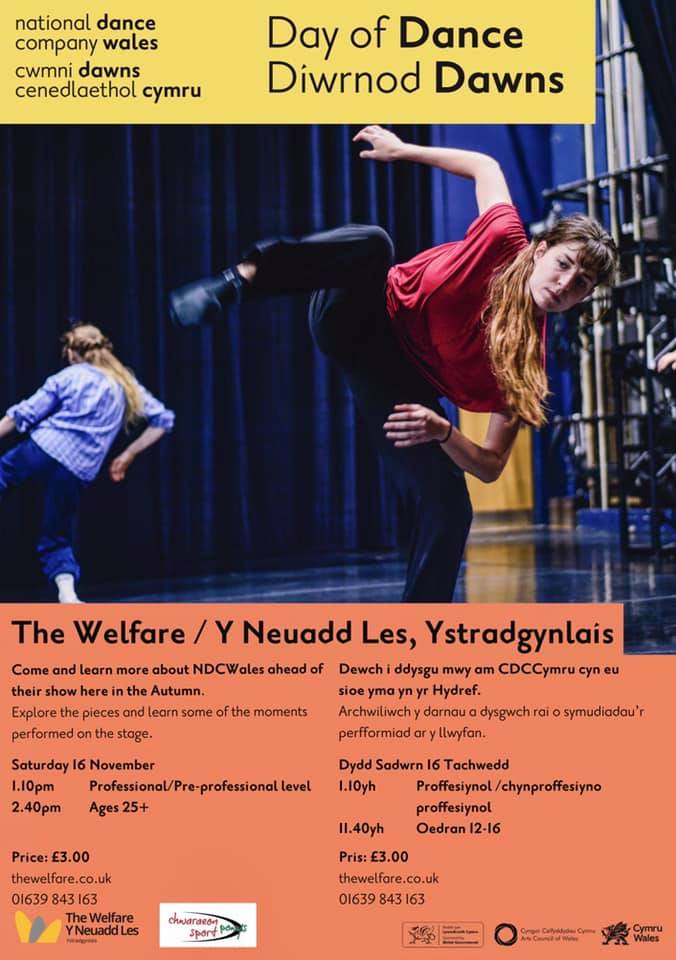
The Day of Dance takes place on Saturday the 16th November, this is your chance to explore the pieces and learn some of the moments explored on stage. Freedom Leisure will also be in attendance running some free sports activities throughout the day. Contact 01639 843 163 to book.
Workshop Times
10-11.30 6-11 Years
11.40-1.00 12-16 Years
1.10-2.30 Professional/Pre Professional
2.40-3pm 25+
Neuadd Dyfi, Aberdyfi
The Day of Dance at Neuadd Dyfi,Aberdyfi will take place on Saturday the 23rd November from 3-5pm. The Day will be supported by Sarah Verity School of Dance. Tickets are £3.00 and this gives you £3.00 off the price of a ticket to Roots by NDCWales at Neuadd Dyfi on Sunday 24th November at 7.30 pm. the To book a place email sarahverity93@hotmail.co.uk.
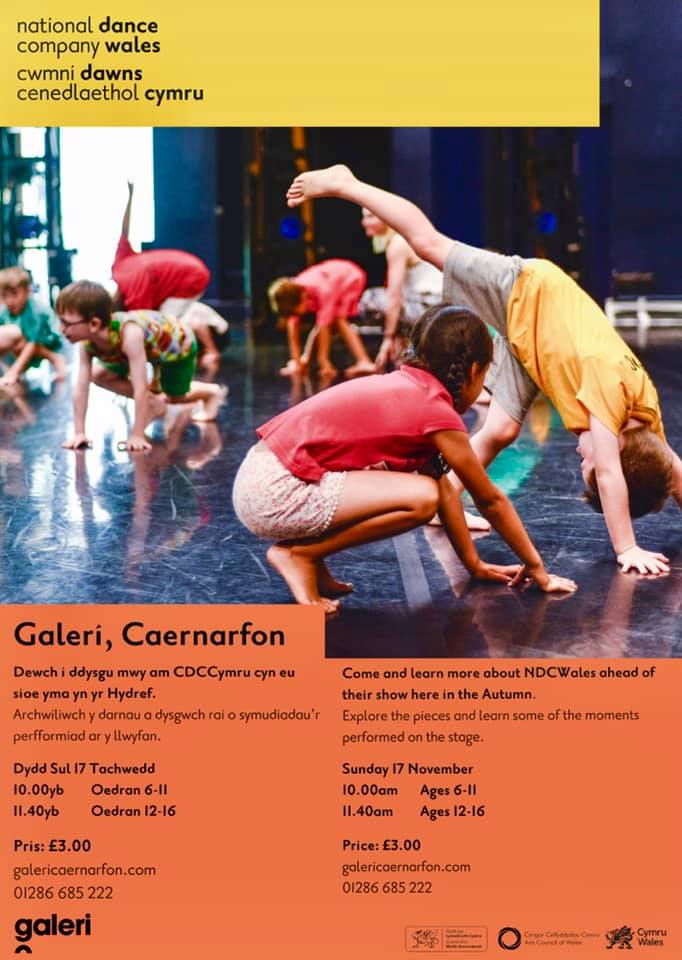
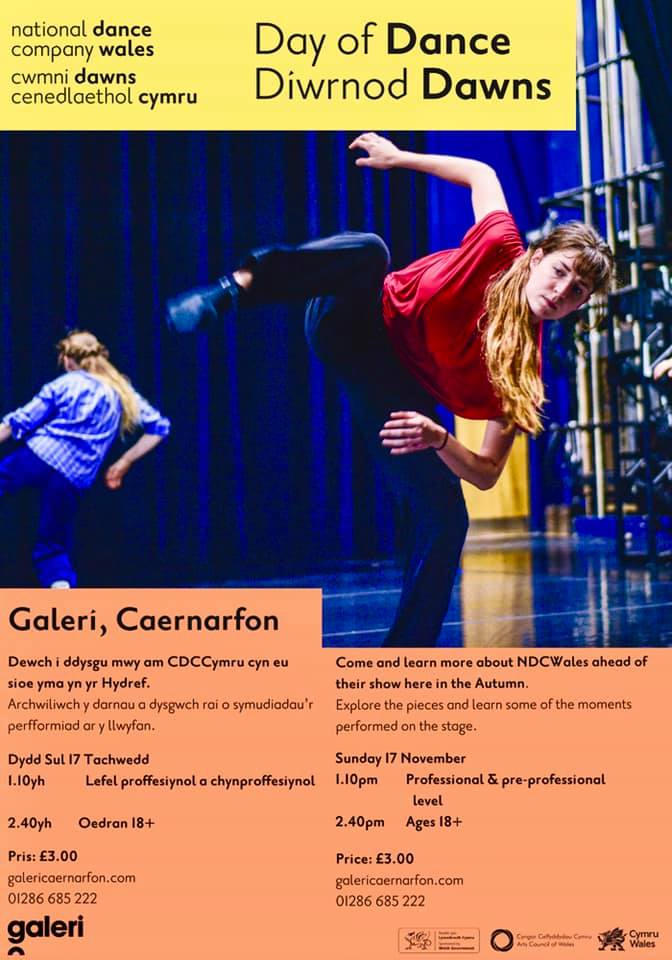
Galeri, Caernarfon
The NDCWales Day of Dance at Galeri Caernarfon takes place on Sun 17 Nov. Tickets are £3.00 and this gives you £3.00 off the price of a ticket to Roots by NDCWales at Galeri, Caernafon on Tuesday the 26th November at 7.30 pm. To book workshop tickets contact Galeri Box Office on 01286 685 222 Or at the links below.
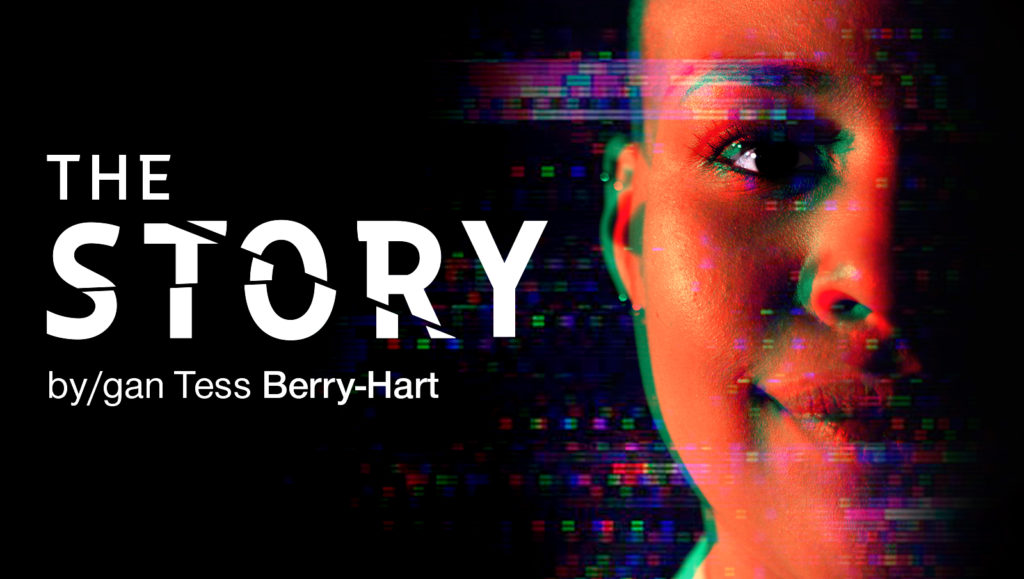
‘The Story’ by Tess Berry-Hart, directed by David Mercatali, presents as rather old-fashioned agit-prop theatre, here deployed as a perfectly legitimate form for holding our feet to the fire over the very unpleasant realities we so often choose to ignore around migration, detention centres, and the horrors of suspicion and injustice acted upon the dispossessed from wherever part of our poor and war-torn planet they make come.
As a theatre-going audience we are self-selectedly approaching the piece with a kind of generic left-wing sympathism, and this makes us a player in this drama. We need our eyes opened as one of the two character’s does. We need to see what Berry-Hart has come to see.
In a
formula with which I was initially dissatisfied, the two actors present
socio-political ideas through figures who are representative cyphers rather
characters in any real, three-dimensional sense. One represents ‘our’ values as caring,
middle-class, educated and informed liberals;
the other represents all aspects of the oppressive state.
This is
not promising. This seems like nineteen
seventies’ student theatre. But it is
not. It does become much more.
The piece
is well presented and nimbly directed.
Mercatali is determined that nothing here will lag. We are tumbled into darkness and action and,
once in, we are fully immersed until the final line, the final beat. He manages the time lapses very skilfully, as
he does the suggested violence and threat.
This is almost always sure-footed and lapses are rare.
There are one or two clunky moments that obtrude stylistically, but generally the pace and intensity is right and skilfully delivered.
It is in
the playing that we are most impressed though, particularly by the excellent
Siwan Morris Hughes: there is an intensity and commitment which, in this tiny
performance space, makes us feel voyeurs and brings awkwardness and discomfort – precisely what Berry-Hart most wants. Hannah McPake avoids all the major traps set
for an actor with multiple playing: she
ensures that changes from figure to figure are slight modulations of manner and
little vocal nuances. She is always convincing
– despite the writing at times, which provides her with half-drawn and
unconvincing figures, quite intentionally – none of these people is real and we
are never given the option of believing that they are. McPake’s playing then is technical, of
necessity, whilst Morris-Hughes’ is fully immersive, deeply committed and very,
very skilled.
The digital element to the piece is well-conceived and realised and enhances the work. The score is appropriate, though I felt that perhaps an opportunity was missed – I would have loved this to have been further developed and a more significant feature.
Although
I initially felt detachment and disappointment in the piece, as the patterns of
language developed, a poetry of oppression emerged, overlapping and building in
intensity and rhythm and drew me in. Ideas became more complex and more satisfying. Some of the writing at the heart and height
of the play is of a very high quality and Berry-Hart finds a poetry which does
some justice to the huge issues with which she attempts to deal.
The ‘turn’ and ‘reveal’ doesn’t surprise us, but is built towards effectively and is
dramatically pretty convincing – Morris-Hughes’ performance helps bring this
off with its intensity and unflinching commitment.
The piece
is leavened occasionally by moments of irony and humour, but it needed
more. The horror and misery needed
lifting at points and it is an extremely difficult thing to do – nonetheless,
it needed doing. For me the play would have benefitted with the greater layering of perspective
that this could have brought to what was too often a sledgehammer intensity in
the writing.
So, I’m glad I finally got to see this work. Its retro’ agit-prop form contains and perhaps belies a complex, poetic work that is troubling and nuanced.
A triumphant return to Welsh theatre for Rhys Ifans as Ed Thomas’ semi-autobiographical play On Bear Ridge opens at the Sherman Theatre, Cardiff.
(4 / 5)
All images credit Mark Douet
National Theatre Wales’ collaboration with
Royal Court Artistic Director Vicky Featherstone and renowned Welsh writer Ed
Thomas (Hinterland) summoned a
well-earned standing ovation last night at the Sherman Theatre. Prompted by its
flawless cast and beautifully poetic script, the audience rose to its feet to
applaud this intriguing new play.
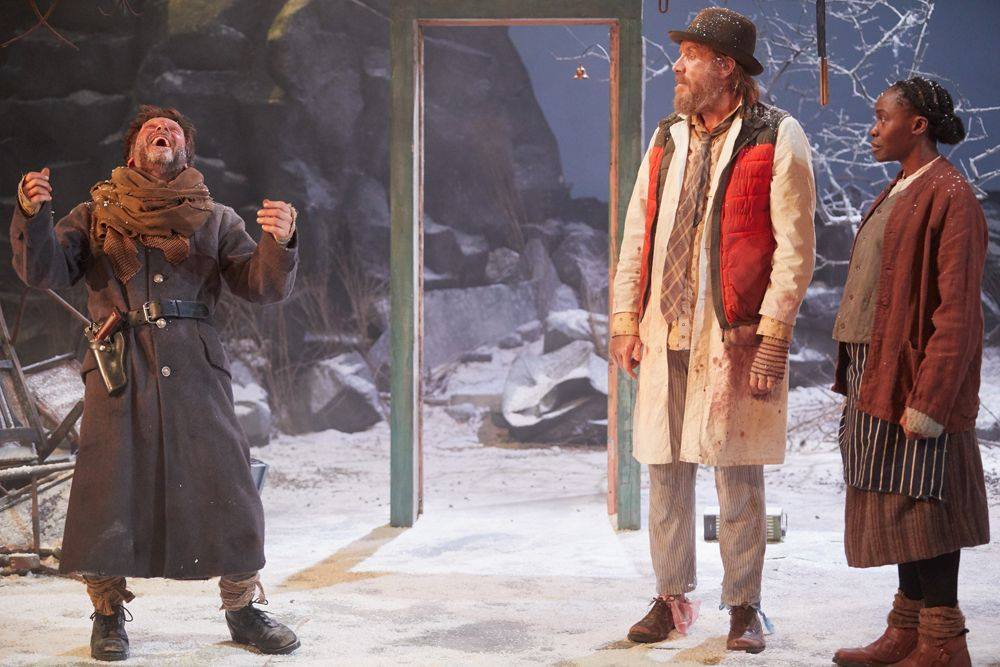
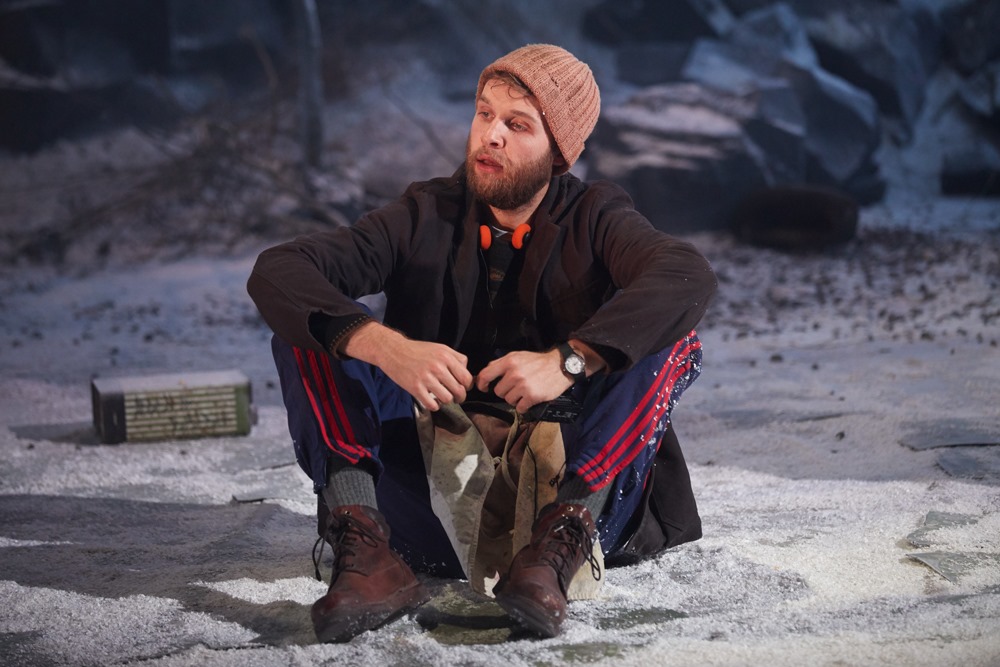
Set in the forgotten village of Bear Ridge, our characters John Daniel (Rhys Ifans) and Noni (Raki Ayola) own an unfrequented butcher shop where the food is scarce, the whiskey has run dry and a harsh snowdrift has barred them from the rest of civilisation. Joined only by their slaughter man (Sion Daniel Young), the pair dance to songs from long ago and tell stories unearthed from their fading memories. They are very much alone, until they are joined by a strange figure lost in the snow (Jason Hughes).
The play feels like a Beckettian meditation on the importance of our memories, how remembering our past and our heritage can offer up some comfort in a recklessly fast-paced world. As put by John Daniels, ‘If my memories go, how can I still be John Daniels?’ The same goes for the community of Bear Ridge that has been stripped from existence through some sort of catastrophic event, their memory of the once thriving community is the only comfort that keeps John Daniel and Noni alive.
Ed Thomas’ lyrical text reaches epic heights. He immerses
the audience in the play’s vivid imagery, all the while skilfully meandering
between gut-wrenching dialogue and quick-witted humour. Rhys Ifans as John
Daniel demonstrates impeccable comedic timing as he punctures through the heavier
parts of the play with wit and verve. Every word the characters speak are imbued
with a sense of importance and each line is delivered with care and tact by the
play’s brilliant cast.
Thomas and Featherstone join force in co-directing the play.
Their direction is slick and all aspects of the performance are visually
arresting. A mention must go to the impeccable lighting design by Elliot Griggs
(An Octoroon, Pomona, Fleabag) and set
design by Cai Dyfan (Violence and Son,
Hinterland). The isolation of the
characters is made clear through a coming together of the lighting and set
design as Bear Ridge is made to feel like a desolate floating otherworld, plonked
in the middle of the Sherman Theatre for its audience to observe. What results
is a sense of admiration for the tenaciousness of our characters to keep going,
even through the most solitary of hardships.
On Bear Ridge plays at the Sherman Theatre from now until 5th October and the Royal Court from 24th October until the 23rd November.
Hi Katherine, great to meet you,
can you give our readers some background information on yourself please?
I’m a writer that works mainly in theatre and I’ve done a bit of film and TV and radio.
I love words and people and questioning things so I think being a writer is probably where I always would have ended up. I’m not from a theatre/arts background at all, I left school before A levels like all my friends. I was more or less always working from leaving school. Me and my friend worked for her Dad on the markets and street trading for a while and I was a waitress for different places. I did a stint on the breakfast shift in the Angel Hotel, Cardiff and also a few years in the Masonic hall for the Masons. When I didn’t have work I signed on and I was put on a YTS scheme that was for kids that had left school like me without qualifications. I happened to be sent to the Sherman Theatre , Cardiff and it changed everything for me.
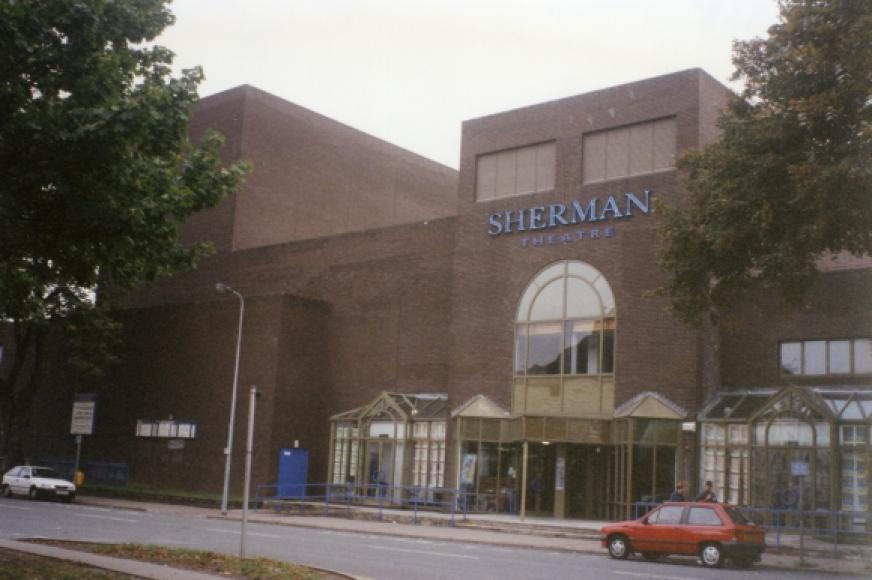
The exterior of the Sherman Theatre, Cardiff in the 1980’s
I was in the finance and admin dept but loved being around the shows. Phil Clark who was Artistic Director at that time (Phil is the Director of a play I wrote ‘Peggy’s Song’ by National Theatre Wales which is about to go on tour) encouraged us all to go and see whatever was on. It was the late eighties, the time of Willy Russell and John Godber, perfect plays for someone like me who never went to theatre. I just loved it!
I worked at the Sherman for six years, I was always hanging around the production office and started volunteering to do stuff on the shows. So I chaperoned a bit and shadowed stage management and helped out on the Sherman Youth Theatre that sort of thing. When I was twenty-four I applied to Welsh College to do the Stage Management course, I didn’t have any qualifications so I really was surprised when I got on. I stage managed for a bit and then when I had kids I started writing. I had a very tough few years personally in my twenties and early thirties and it really changed the way I looked at life. I decided not to waste any more time, I wanted to be a writer and so that’s what I did.
I’ve never done any kind of
writing course but I think just being around performance for all of those years
gave me a sense of how to write for theatre. I believe that anyone can write a
play, that’s what I love about script writing, I wish more people from
backgrounds like mine would give it a go, it’s been a real joy for me to be
able to do something that I love.
This chat is specifically
about music and the role it has played in your personal and
professional life. Firstly to start off what are you currently listening
to?
At the moment I’m listening to James Brown and Aretha Franklin. I have to choose some songs for Peggy’s Song All the music used in Peggy’s Song is by artists who have died. Ghosts that stay with us.
When I write I more often than not have music attached to the play, which the director may or may not choose to use. Before it Rains was The Super Furry Animals, Bird was Curtis Mayfield, Thick as Thieves was Nina Simone and Lose Yourself was The Commodores. Sometimes when the show has finished it takes a while before you can go back to those songs because you are transported back to the play.
Before It Rains, Bird, Thick as Thieves, Lose Yourself.
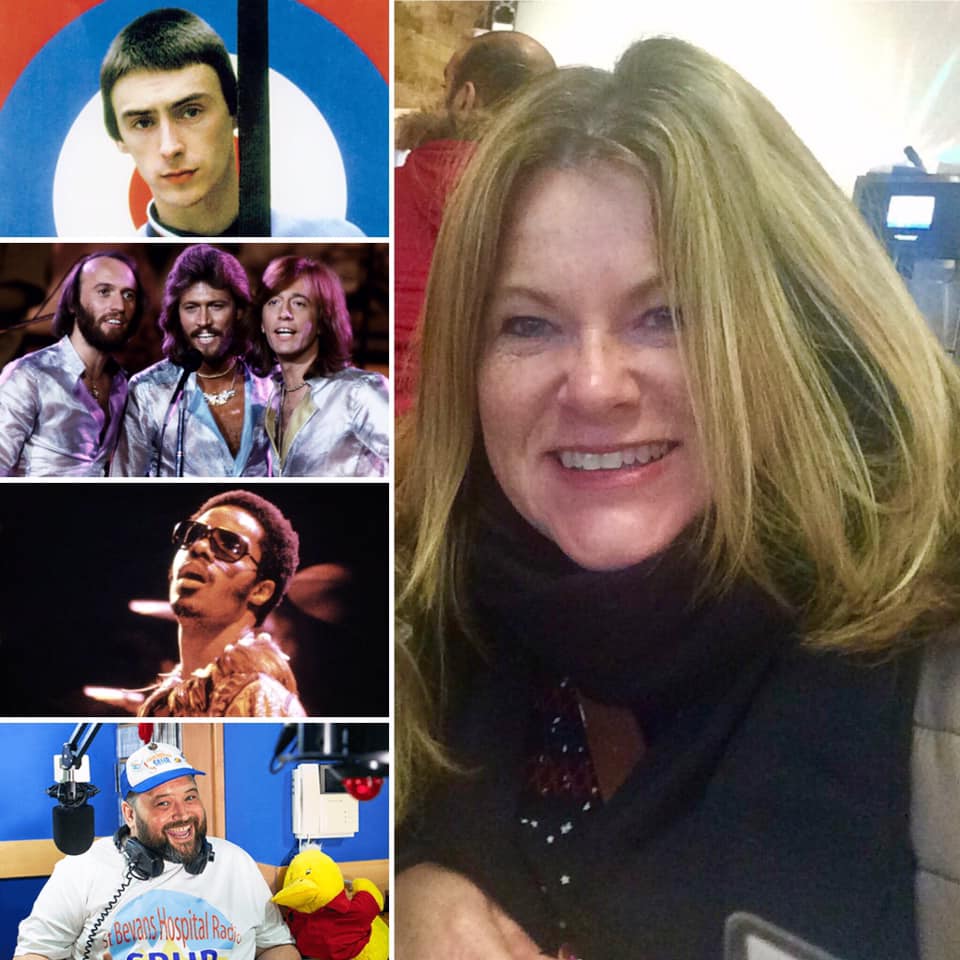
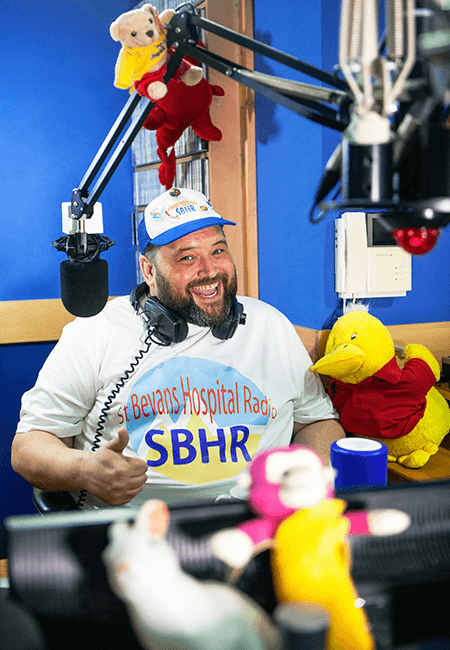
Peggy’s Song has lots of music in it because the main character Danny played by Christian Patterson is a hospital DJ.
Christian Patterson in the role of Danny, Peggy’s Song by National Theatre Wales
We are interviewing a
range of people about their own musical inspiration, can you list 5
records/albums which have a personal resonance to you and why?
Five is
so difficult but I think it’s going to come down to memories for me.
Songs in the Key of Life – Stevie Wonder
It’s a masterpiece. Everything about it, the production, the lyrics, the groove, the voice.
I could have chosen a few of his
albums because his work from the early seventies is genius, he’s up there with
the Beatles for me but this is the
album.
I don’t talk a lot about losing my sons but an interesting thing happened and this album leads me to that. In the period around and a few years after they died I really wasn’t able to listen to a lot of music. I think probably because you’re too raw and music gets into you. You put a hard shell around you, I think so you’re able to function and music was too manipulating. This was one of the only albums I listened to during that time. I remember playing it in the car a lot when my daughter was little, driving her around to different clubs and singing ‘Knocks Me off my Feet’ to her. It always makes me think of the kids being little and precious times with them and Guy. It’s a sunny day, windows open, album. Love and happiness.
https://youtu.be/RbSZeijqLTc
2. Saturday Night Fever – The Motion Picture Soundtrack
Just because it takes me back to my childhood. Family parties, Christmases’, Discos, A Benidorm holiday in 1979, my Dad, my Uncle, my sister, my cousins. We’re a family that likes to have a good time. You could rent us for a disco or a wedding to fill your dance floor to this album.
I love Disco. Donna Summer, Earth Wind and Fire, Chic, Chaka Khan, Odyssey. I have most of our disco albums from the seventies that I still play. I also love the Bee Gees but ‘If I Can’t Have You’, Yvonne Elliman is the song for me from this album, her voice is so full of full of heartbreak and drama.
3. Setting Sons – The Jam
The Jam and Paul Weller could have taken three of the five albums for me. I love Dig the New Breed, Sound Effects and Wild Wood but I keep coming back to Setting Sons.
I used ‘Thick as Thieves’ as a title for a play; it’s one of my favourite songs. Paul Weller is a master lyricist. We really felt he was speaking for us as teenagers. I think there’s a wave of working class kids who are now in their forties and fifties that hold Paul Weller in the highest regard, it’s like a club we all belong to. This album takes me back to my early teens, there was a mini mod revival. All the boys were wearing stay press trousers and Harringtons and Fred Perrys and Y cardies. Our youth club did a Thursday night disco and it was all The Jam or The Specials, The Selector or The Beat. Me and my friends Cath, Sheenagh and Lisa would go to the Northern Soul disco in the Transport Club in Grangetown on a Saturday. My love for Motown and Soul comes from that time and it’s the music I still listen to the most.
4. I Never Loved a Man the Way I Love You – Aretha Franklin
I mean. If I wanted to lose myself this is where I’d go. Perfection. ‘Do Right Woman, Do Right Man’ is the song for me from this one. Such a sassy song. She’s not asking him to do right by her, she’s telling him. I love it.
5. An Eighties Hits Compilation
I can’t decide the final one so I’m going for an eighties compilation record that has New Order, Depeche Mode, Human League, Yazoo, The Police, Wham, Michael Jackson, Prince, David Bowie, The Style Council, George Michael, Paul Young, Frankie Goes to Hollywood, Madonna, Bananarama, Scritti Polliti, The Cure, Aztec Camera, Tears for Fears, Spandau Ballet, REM, Luther Vandross, Curiosity Killed the Cat, Cyndi Lauper, Crowded House, Talking Heads, Tracey Chapman, Anita Baker and many, many more.
I wanted an eighties album. It was going to be Prince, Purple Rain or George Michael, Faith but then there’s Human League Dare and and and – so I’ve gone for a compilation. A big one with loads of songs on. Full of memories.
https://youtu.be/9LX9urfbp-A
Just to put you on the spot could
you choose one track from the five listed above and tell us why you have
chosen this?
It has to be ‘Knocks Me Off My Feet’ Stevie Wonder. My kids and Guy are Love and happiness for me and that’s also what this song is.
Many thanks for your time
Tickets for the tour of Peggy’s Song produced by National Theatre Wales are available to book below.
Riverfront Newport – 25 September, 7.45pm BOOK NOW
Pontardawe Arts Centre – 26 September, 7.30pm & 27 September, 1pm & 7.30pm BOOK NOW
Theatr Brycheiniog, Brecon – 1 October, 7.30pm BOOK NOW
Grand Pavilion, Porthcawl – 2 October, 7.30pm BOOK NOW
Theatr Hafren, Newtown – 3 October, 7.45pm BOOK NOW
Taliesin Arts Centre, Swansea – 4 October, 7.30pm BOOK NOW
Theatr Richard Burton, Royal Welsh College of Music & Drama, Cardiff – 5 October, 7.30pm BOOK NOW
Borough Theatre, Abergavenny – 7 October, 7.30pm BOOK NOW
Blackwood Miners Institute – 8 October, 7.30pm BOOK NOW
Torch Theatre, Milford Haven – 9 October, 7.30pm BOOK NOW
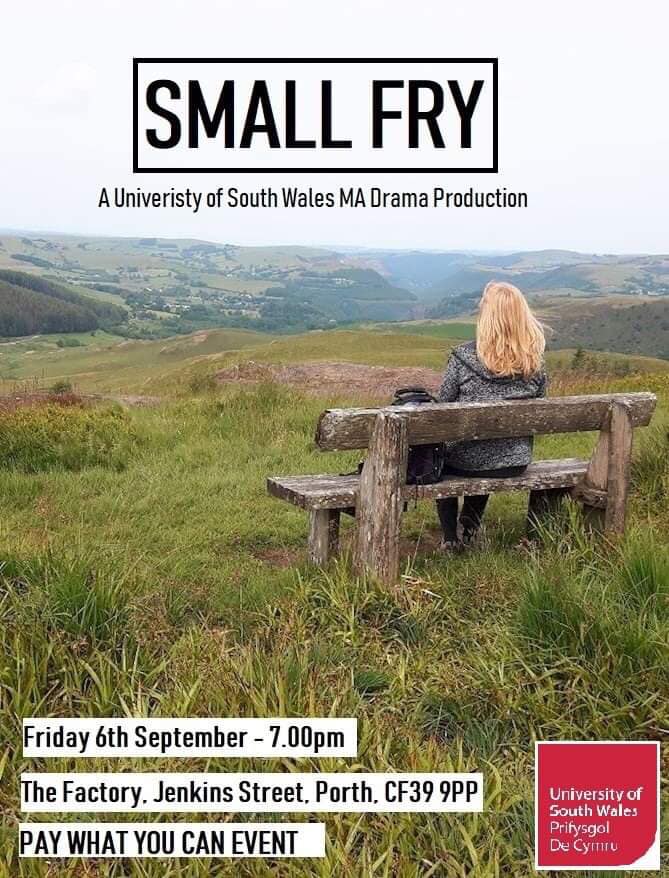
With a refreshing focus on the lost youth in a forgotten valley, Small Fry is a love-story to family, and the hope of a future.
(4 / 5)
For one night, the debut presentation of Small Fry in The Play Factory in Porth sparks a lot to be admired and celebrated. Originally conceived on the University of South Wales’ MA Drama course, and developed through scratch performances in the WMC and The Other Room, Small Fry is brought in full form, for the first time, to the people of Porth. This is a choice not to be underestimated as the power and compassion of its performance stays in the room long after the final bow. For the team of young theatre makers you can tell that this is just the beginning of many a successful future – an impression of optimism we unavoidably share for the play’s unexpected heroine Ellie Mathews.
In this one-woman play, Yasmin Williams commandeers the space as the brazen seventeen year-old. Williams takes the audience captive to her story transporting us with her from Cardiff’s Queen Street, to the savoury section in Greggs, to cramped antics in messy bathroom stalls, and back home to Porth. Jones and Neal’s choice of staging ensures that the space never fails to evolve with Williams yanking and draging us restlessly through the many locations of her story. At the front of the room is a square of wooden boards, perhaps still sticky from a youth disco or an OAP zumba class. Bordered by a bouncy carpet and passive leather sofas, on chairs set either side, our feet grounded on the boards below, they merge with the space. Our presence is necessary. We’re here to listen to voice often forgotten. In their lack of resources, the economy of the set drives the storytelling to joyfully creative means. With only a worn wooden bench, the challenge for it to establish as many scenes as possible offers up the most dynamic moments within the piece. Williams is captivating and sensitively honest in her portrayal of a lost young woman fighting to do her best for herself and her family. When she is at her most playful and mischievous she is at her best. Her entrance is an electrifying moment of her savouring that exact essence: prowling the stage, and daring her audience. In future performances, which I sincerely hope the play has, I predict Williams’ bold and brazen performance will become a fire-rocket of energy and daring assurance. Paired with the tempestuous pace of its script the production will provoke striking effect.
Lloyd’s script is as ingeniously funny as it is sensitively humble. Her script balances on a knife’s edge, yet never falling to romanced sentimentality or dismissive silliness. It wrangles between charmingly acerbic declarations of love for corned beef, and sobering admissions of an individual’s struggle. Corned beef, often considered an iconically working-class treat, is offered at the foyer before the play, set in Morrisons sharing tubs. Ellie’s morning pursuit for the tantalizing treat even consumes the first three to five minutes of the play. It’s a symbol of pleasure and celebration. Lloyd’s play is a celebration of a working-class heroine, never in spite of her background, but in homage to all that’s made her, and everything that she can be. The narrative never indulges despair or embitterment. It’s the story of a young life, raring and ready for all possibilities. Small Fry is not a focused polemic against the gate holders of an oppressive and often punitive existence. Lloyd doesn’t come for parliamentary budget cuts, or an under-funded NHS; she’s speaking to what it means to protect and serve family. An example of true compassion and care which is political in its very presentation. Small Fry is a declaration of duty and honour be it for country or for those we love. It’s a short and well-contained piece, yet the audience are left with loose ends to pull at. Lloyd covers a lot of bases in 50 minutes, some more thoroughly than others. However, I can’t help but feel that this is a deliberate, if not quite necessary, decision. Here is a young woman tearing at the framework for an existence she could have. The chaotic blur of Ellie’s former life leaves the lasting image all the more powerful.
Small Fry speaks to the optimism of youth. As the audience leave hoping that this can be realised for Ellie they inevitably will think of the play’s young theatre makers. They may go on to conquer beyond borders, but I am quite certain they will not forget their beloved hometowns any time soon.
To begin, Mark, unlike
other comedians, does not have a warm-up act; he takes on the role himself as
he likes to use this time to get the feel for his audience.
Mister Watson is not
your usual joke-a-minute comedian, instead he takes a more subtle approach; his
gags disguised along the way in what seem to be quite personal, relatable life
stories.
He speaks warmly of
his children and the difficulties navigating their childhood using audience participation
from people who have experienced some of the same occurrences, with some
hilarious outcomes. He also talks of his ex-wife and divorce in the same
manner, again with very funny outcomes from the audience inclusion.
During the interval
there are cards laid on for the public to ask Mark questions or make any
statements they would like him to acknowledge, the outcomes of these cards and
Mark’s reactions to them are ‘throw your head back and roar’ material.
To wrap up, Mark
Watson was warm, friendly and exceedingly funny. He loves his audience and his
time on the stage. I would recommend Mark’s show without hesitation.
Thanks, Mark, for a
great night! I did not stop laughing!
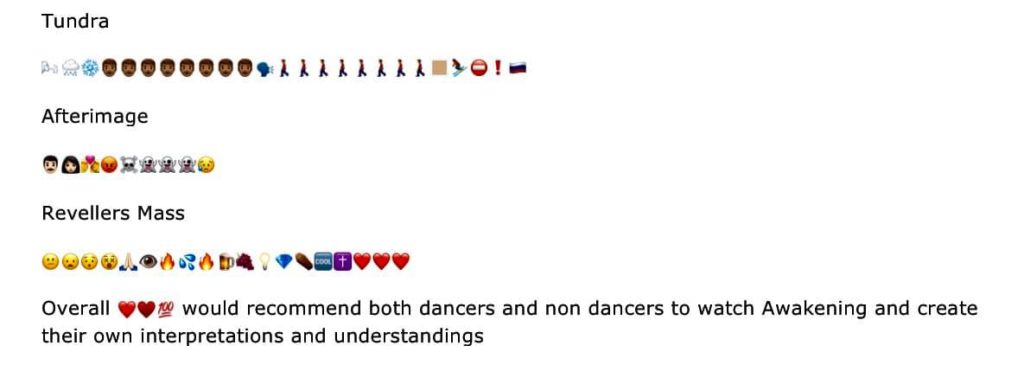
Awakening is a mixed bill reflecting on National Dance Company of Wales founding’s of different international choreographers. The showcase involved three works: ‘Tundra’ by Spanish choreographer Marcos Morau; ‘Afterimage’ by Brazilian choreographer Fernando Melo; and ‘Reveller’s Mass’ by Caroline Finn the Artistic Director and now Resident Choreographer of National Dance Company.
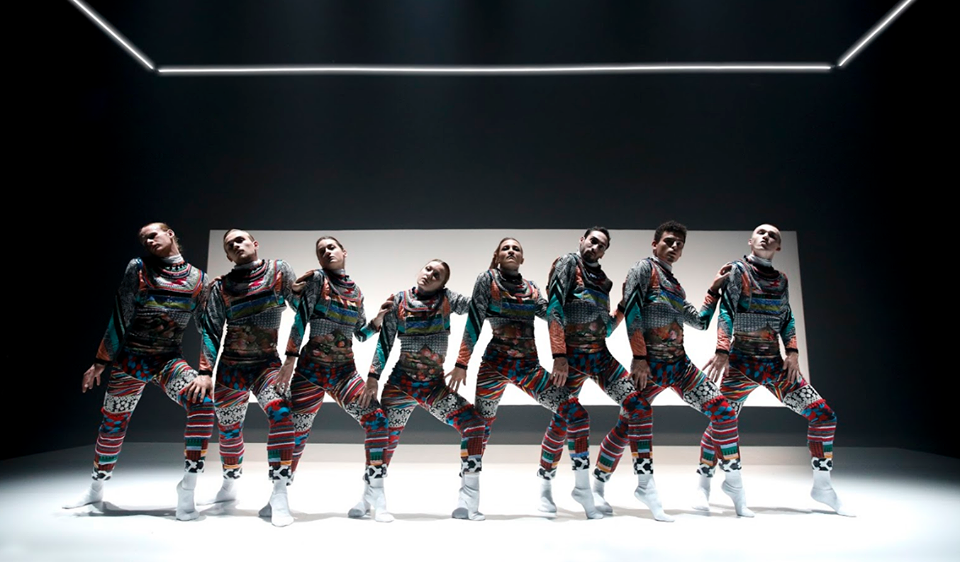
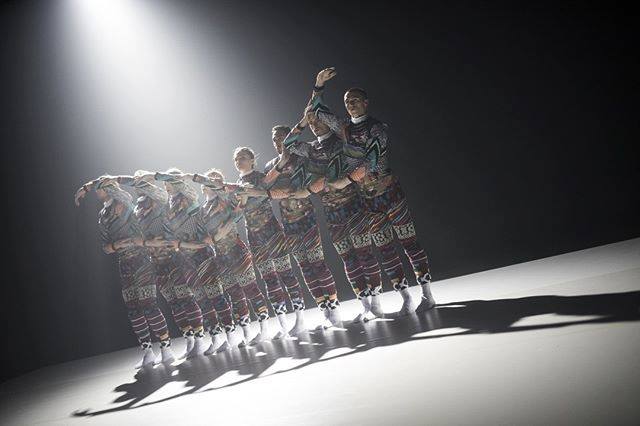
‘Tundra’
is a partnered piece that involves the dancers being in sync throughout the
whole piece. It has a history of Russian folk dance, mass parades and
revolution which is why the dancers stay connected. The costumes were also
inspired by Russian folk dance for example the skirts at the beginning gives a
mesmerising image of them floating across the stage.
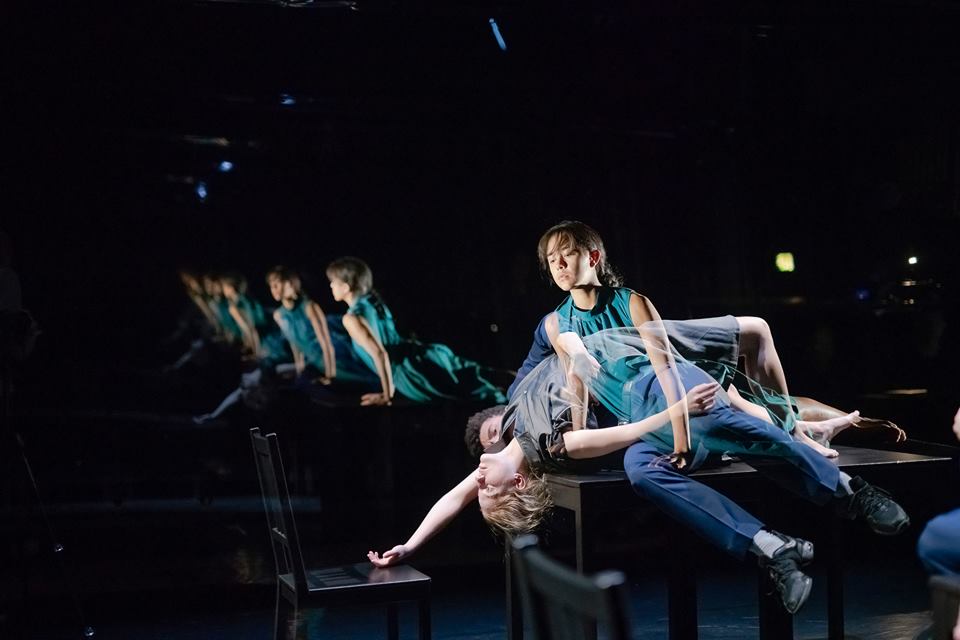
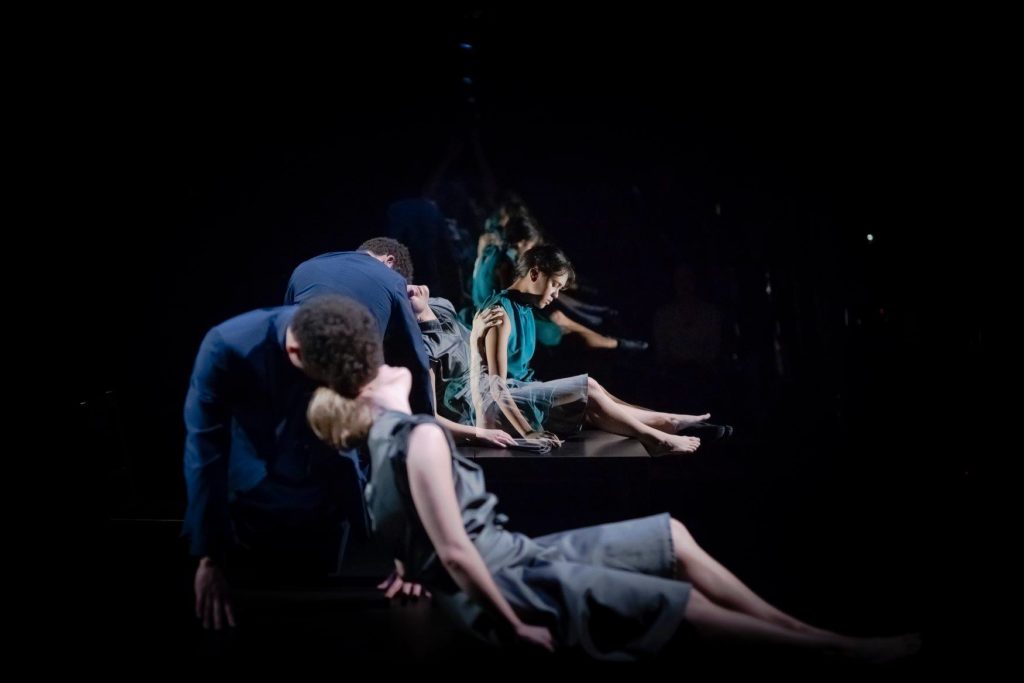
In the piece ‘Afterimage’ the dancers sit at a small table using other dancers behind a mirror interrupting each other’s reflections whilst moving, like showing two types of reality all in one. Although this is the shortest piece, it gives out so much emotion. Using an illusion technique called ‘Pepper’s Ghost’ shows exactly what it states…the dancers looking like sprits coming in and out of other bodies on stage which was very bewildering but breath-taking to watch.
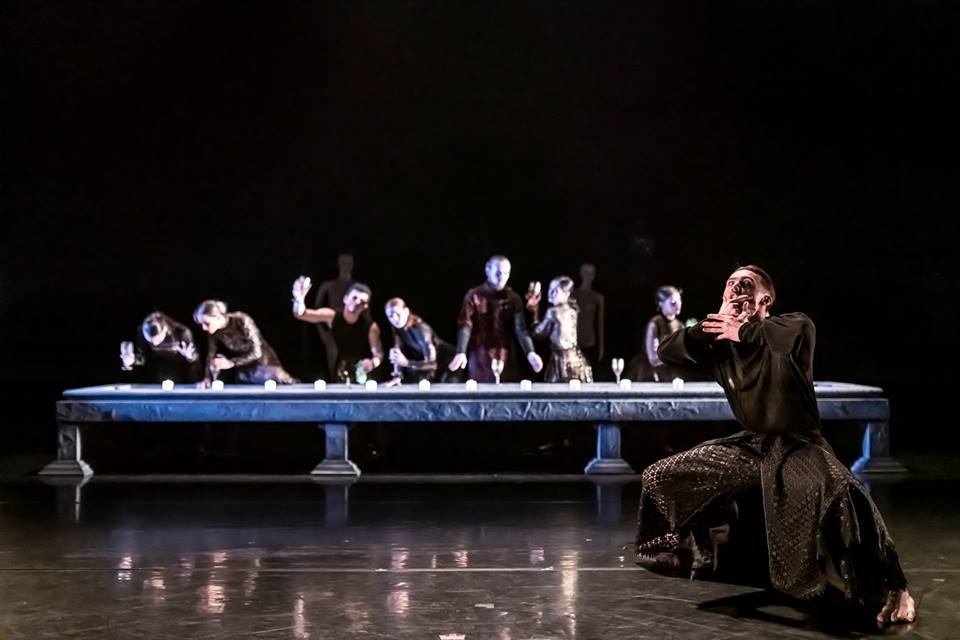
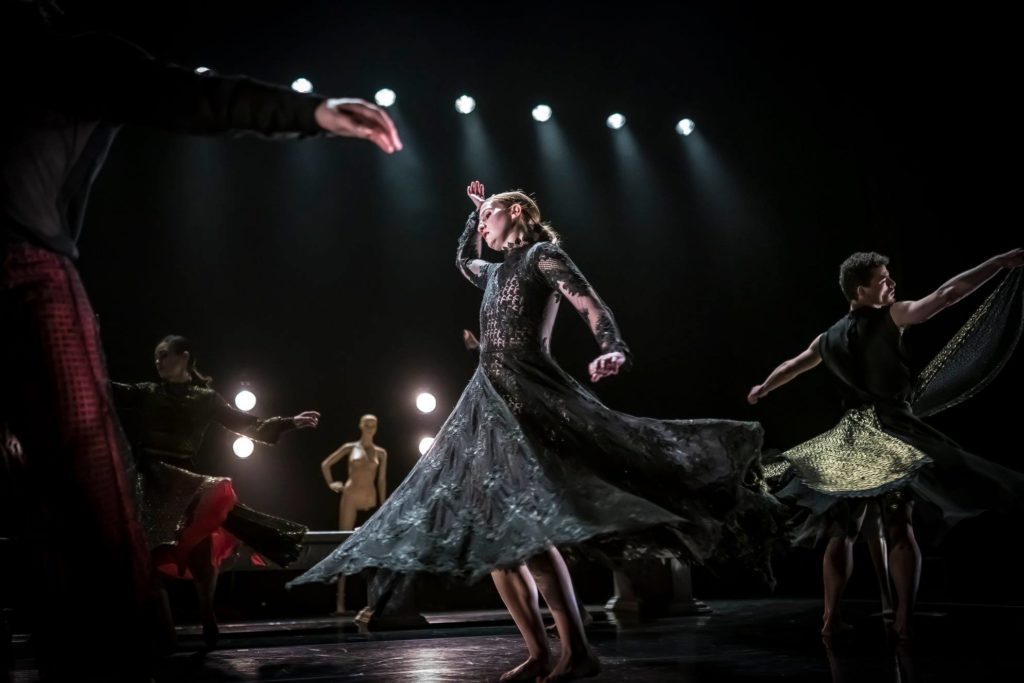
‘Reveller’s Mass’ is a religious fervour with explorations
of communion and ceremony involving a long water bath with candles in the
middle which explains Da Vinci’s ‘The Last Supper’ mentioned in the programme. Ed
Myhill gave a terrific performance as the cult leader and actually ended up
being quite funny at the end of the work. Each dancer has a curious character
in which they all come together using charismatic and compelling choreography.
Kristiina Kalinina
It
was an absolute pleasure to see “Awakening” at Sherman Theatre Cardiff by
National Dance Company Wales. The audience enjoyed 3 works (“Tundra”, “Afterimage” and “Revellers’ Mass”).
As a partly Russian person, I was impressed with “Tundra”. The choreographer perfectly modifies some classical Russian Folk Dance movements and fits them into the work. The idea of staying connected was probably taken from Folk Dances as well, but dancers were using their whole bodies to stay connected, not only arms, which I find really interesting and impressive.Not only movements were inspired by/ taken from Russian culture, but also costumes were created using some traditional Russian patterns. I am not sure if the music was Russian, but definitely had a Slavic motif. Apart from the connection with the Russian culture, I was in love with the lightning, a huge rectangle light and this play with the shadows gave me an unforgettable experience. I would recommend to anyone who is interested in bringing different cultures to contemporary dancing.
Danni Gordon
Tundra
is a contemporary dance work that uses elements
of Russian folk dance alongside an urban vocabulary. Marcos
Morau’s
bold style is robotically precise, trying to create something more human in
that we used to work together, in terms of connections and community. These
days we are all so disconnected.
This was the first time I had seen Tundra being performed live within the show Awakening, with no background information on it before watching the performance I was extremely mesmerised at the way it was both executed and how the design went so well alongside it. Being in first year on the dance course at USW I’m just starting to watch more varied dance performances and realise how much diversity there is within the dance sector, Tundra giving me an excellent insight into new ideas and concepts. Tundra was a delight to watch and really shows the connection and trust the dancers have between one another, allowing the audience to really relate to both the beautiful costumes that relate so well to the Russian Folk dance and harmonised precise movements.
I am glad I didn’t look at the background of Tundra before the showing of it as I feel it allowed me to have my own thoughts about the piece, before knowing the reasoning behind it. Having then looked at the programme notes it is clear what Marcos Morau wanted to explore and portray within Tundra. I think it is an extraordinary work that I would give a 5 star rating.
Don’t miss this incredible work Tundra choreographed by Marcos Morau, it’s a must see.
Becky Johnson
The
evening began with Tundra, a nod to Russian tradition with a whirlwind of
optical illusions. This is the third cast I have now seen perform the piece and
each have brought their own dynamic to it. This time it wasn’t the swift canons
nor the captivating opening sequence that brought my intention. Rather it was,
the unified presence of the performers on stage. They didn’t seem like one entwining
body which other casts had achieved but instead as individuals stood at a
united front. Each with their own way of moving but held together by their
defiant gaze and unified approach. This seemed more reflective of the Russian
Revolution in which the piece was created in memory of. However, I must admit
part of me longed to be dumbfounded at the pure skill in which the choreography
provides. But upon reflection, I must acknowledge how a piece adapts with age
and more so when you know a magicians tricks it’s a lot harder for something to
seem magical.
Despite that, Afterimage was a piece that really resonated with me. I had been to see the open rehearsals last summer so was aware of how the trick of Peppers Ghost worked. However, this wasn’t a necessary surprise needed to be impacted by the simplistic beauty of the movements and the story within the piece. The powerful relationships between the performers left you delving for more clues and causing each audience member to create their own story as to why. When in fact, there could be endless possibilities. Something possibly more beautiful than what was happening on stage, was the pure amazement of the children sat behind me. Their squeals and gasps as different characters emerged and disappeared from the set. As well as their insistent debate of how the Company managed to achieve the magic that was occurring on stage.
The final piece was that of Revellers Mass, a farewell from Caroline Finn as Artistic Director of the company. The stage was filled with a community of characters each with their own story to tell. Once again Ed Myhill played the roll of the mastermind, a role he plays extremely well, and seemed the master puppeteer for the rest of the cast. The piece was one of those that you could watch multiple times and depending on your seat within the theatre your eyes would be drawn to different narratives throughout. Although I struggled to find sense of the ending, it provided a light hearted finish to what was a brilliant evening showcasing the skills and character of the new cast. I can’t wait to see them all grow as a company and to see what else that have in store for us.
Lizzie Chatfield
Bethany Lydon
As someone with a Roman Catholic upbringing watching Revellers Mass by Caroline Finn as part of NDCWales’ Awakening 2019, I could clearly recognise moments relating to the Christian Faith and I felt I was able to make so many connections with that performance! It was enjoyable and clever to have comedic moments where the audience actually laughed out loud! It’s not always you can watch a dance piece focusing around religion and laugh!! Would love to see this again.
Lucie Ainsworth
On Wednesday 1st May 2019 I got the pleasure of watching National Dance Company Wales at the Sherman Theatre in the spring tour of Awakening. The evening consisted of three captivating pieces, opening with Tundra choreographed by Marcos Morau, Afterimage by Fernando Melo and Revellers’ Mass by Caroline Finn.
When I originally watched Tundra for the first time I was already intrigued first of all by the opening section where the floor length skirts gave the illusion of hovering across the stage with ease, and then the simplistic movements, but performed within half counts of each other to look as if moving across the stage as one being. However seeing this performance for the second time for myself made it even more interesting to watch. Having learnt sections of the repertoire from two of the company members earlier on in the year was what made it even more engaging to watch. About to enter the professional industry means that when you watch this work and have had the chance to learn it, makes it feel more accessible and less daunting to think about graduating.
Afterimage was an interesting watch with its visual effects happening live on stage making it seem like there are two dancers dancing in each others space. I do think for this piece it would vary what your reaction may be depending on where you sit. I would be keen to see it again from a different angle to experience what I may notice next time.
Revellers’ Mass felt
far more familiar to me as a piece based on what I have seen the company do so
far. Similar to Finn’s
other works in my opinion like Green House and Folk. The piece was lively and
energetic and reminded me of when I saw then company for the first time back in
September 2016. Although the company members have shifted and changed since i’ve been in
Cardiff, it’s
been lovely to see how each new member added in to the company brings something
new to the dynamic of the works.
Rhiannon Stalley
National
Dance Company Wales are a company that I really enjoy to watch in performance,
as they always seem to exceed my expectations, and pull off everything I
believe that they set out to do.
Awakening was made up of three works, Tundra by Marcus Morau, Afterimage by Fernando Melo, and Revellers’ Mass by Caroline Finn. Tundra is a piece that I have now seen twice, and is one of my favourite works from the company. The way the dancers come together to create such an incredible image has me captivated, and really takes me on the journey with them. Tundra is said to be “as mesmerisingly beautiful, as it is robotically precise.” For me I believe this is exactly how the piece portrays itself. Every time I have seen the work I have been put into a complete state of euphoria.
I
really recommend watching all of the works performed in awakening, especially
Tundra.
Zoe Mutter
I
am currently a student at the University of South wales studying dance, I
thoroughly enjoy watching National Dance Company Wales works at any showing or
sharing they offer. On the 1st of May we went to The Sherman Theatre to watch
Awakening. This showing included three amazing works created by Marcos Morau,
Fernando Melo and Caroline Finn. Each work was completely different yet still
flowed next to each other in the show.
The first work to been shown was Tundra, now this is the third time I have watched Tundra and it still gives me chills to this day. Watching the precision of 8 dancers moving in sync with each other on a bare stage is a remarkable thing, it’s something so aesthetically pleasing that I find myself being mesmerised. Watching Tundra as an open rehearsal to being performed and toured feels like I have seen it grow into bigger and better things performance by performance.
The
second work to be performed was Afterimage. This piece completely captivated me
in seconds. Going in fully blind to this piece I had no pre assumption or
wants. It was 20 minutes of pure amazement, the use of an old “trick” really
blew my mind, and to see it be used in such a well thought way with decorum and
elegance was beautiful to watch. From beginning to end I couldn’t take my
eyes of the stage, movement and dancers.
The final work was Revellers’ Mass the scenery, music, costume and movement took this piece from just a dance work to a truly fascinating performance. Just like all of the pieces I became enthralled by this piece. Its pace made it impossible to notice you’d been watching 7 dancers for 32 minutes. The movement felt like it took you on a story through the work, and the performativity displayed by all the dancers had me on the edge of my seat from beginning to end. Overall Awakening was a one of the most enjoyable and creative shows I have seen in a very long time, I would recommend for anyone to see these work. I will always be grateful to be able to watch this company and for letting me be inspired at ever show
Daniella Powell
Where
do you get lost in a whirlwind of movement that is in a world of visual awe?
Whilst
engaging in National Dance Company Wales’s Awakening tour which showed off
a variety of three different dance works, Tundra; Marcos Morau, Afterimage;
Fernando Melo and Revellers’ Mass; Caroline Finn it was evident that the dancers
alone were in direct correlation not only with themselves, each other and the
music but the use of lighting within those dance works seemed to contrast
throughout by adding significant mood swings in to and from one scene to the
next which made them all unite as one.
Tundra
set the mood itself with the dynamic, electronic and cybernetic world as Morau
described it as. How did Morau show this statement through movement and
visuals? The strobe lighting and effect which pierced the audience’s eyes as
these sharp energetic rigid small animistic gestures being performed contrasted
this somewhat settle plain light with a series of layering gestures performed
by the company making the work dynamic for the audience’s eye.
In
contrast to this Fernando Melo’s piece (Afterimage) is the focus point of my review
where I ask the question, what makes this performance? A male dancer dressed in
a navy blazer and round neck t shirt sets the scene amidst the dull lighting
and sits comfortably on a wooden chair with his arms laid out across the table
that is placed to the right side of him. A series of arm gestures are performed
with the introduction to the mirror that surrounds the scene which constantly
reveals, hides and manipulates the movement of the dancer as Melo even spoke
about this being a main priority to his work.
As
the piece goes on, we indulge in a series of uncertainty as to which side of
the stage the dancers are at, were they at the mirrored, or the fore front
space? As we get absorbed into the layering effect that spears right the way
back through the dull black back drops that captures a multi layering mirrors
of that one person performing.
These
idiosyncratic of the lighting and sound being used throughout the works that
the company brought to the stage of their Awakening tour presented a variety of
how dancers can captivate the audiences with not only their bodies connecting
but their connection towards the musicality and visual effects.
“Captivating
pieces, majestic and powerful dancers, who drew me in closely with the subtly
in their movements”
Samantha Underwood
‘Spring
Awakening’ performed
by National Dance Company is one not to miss. As a student studying dance and a
former Associate of the company it was inspiring to see the range of what
contemporary dance could be in a professional context. During this performance
the company performed three works ‘Tundra’, ‘Afterimage’ and ‘Revellers’ Mass.’
‘Tundra’ choreographed
by Marcos Morau explores the theme of the Russian Revolution. The dancers
predominately dance in unison and are frequently connected to one another. This
can be said to reflect how a variety of different classes came together to
revolt against Tsarist Russia. This work is full of intricate details and
precise timings to form an overall specific image, because of this it is very
clear to the audience when something goes wrong. However, during this show the
dancers executed it with a fairly high level of dynamic precision. Their
captivating performance alongside the set creates a tense environment for all
who watch. As an aspiring dancer this work seems like a daunting challenge. The
level of precision that is required to perform this work amazes me every time.
The
second piece ‘Afterimage’ was
choreographed by Fernando Melo. This work was a huge contrast to the previous
work, a much more softer and subtle performance. The piece involved mirrors on
stage to create the illusion technique Pepper’s Ghost. This effect allowed the
dancers behind the mirror to appear and disappear at various points in the
piece. The dancers in front of the mirror interact with the other dancers to
look at social interactions and how different people communicate with one
another. This piece was a reflective piece, there was no specific storyline so
you could interpret the piece however you wanted to. This form of contemporary
dance highlights the power of dance as a form of communication, the work could
say something completely different to everyone else. This enables the audience
to question what the piece means to them and why.
‘Revellers’ Mass’ was the
final piece, choreographed by Caroline Finn. The piece was inspired by ‘iconic
religious paintings,’
however while being based on these religious images the overall
performance was a fairly light hearted piece that focused on a variety of
different characters. The characters in this work portrayed a variety of
emotions while once again showing how contemporary dance can be numerous
things. The choreography alongside the engaging performance of the characters
created a fully immersive piece and was the perfect way to the end the show.
‘Spring Awakening’ is an ideal performance for anyone who is interested in contemporary dance or anyone who is curious as to what it is. In these works National Dance Company Wales highlight how it can be precise, dynamic, reflective and characteristic.
Lucy Lock
National Dance Company’s Wales ‘Awakening’ was an elating evening of dance works filled with culture, history and compelling narratives.
Tundra
uses visual illusions with body and costuming to create an overall bigger image
and visual art. Dehumanising the dancers to appear robotic and as if they are a
part of something bigger, working as one.
Afterimage
uses two-way mirrors to create multiple versions of the dancers, adding layers
for the audience to decide what the interactions between the dancers may be,
whether they be an after image or in the forefront.
Revellers’ Mass is an elaborate production with intriguing and intricate interactions between performers with imaginative and expressive choreography. The piece includes light and dark moments and humour. The whole work had me on the edge of my seat trying to get a closer look to become more immersed in the narrative.
A thoroughly enjoyable evening and a well thought out programme of productions. All costumed impeccably, with innovative visual effects, props and wonderful accompaniment
Stephanie Jones
Awakening by National Dance Company Wales was a show that consisted of three dance pieces, Tundra, Afterimage and Revellers Mass.
In
this review I will be focusing on the dance piece; Tundra. This piece is based
off of Traditional Russian Folk dances, mass parades and revolution, but in a
more modern context. This piece was created by Marcus Morau.
The
first thing I want to talk about is their costumes. The costumes were
colourful, patterned jumpsuits paired with plain white socks. I thought the costumes
were bold and after watching some videos about traditional Russian folk dances
I can see that they were trying to take some of the details out of traditional
Russian costumes to put into their piece.
I
really enjoyed this piece because it kept me engaged from the beginning. In the
beginning it looks like the dancers are floating around the stage but they’re
actually doing lots of really fast, little steps. After watching the videos of
traditional Russian Dances I also saw that they were using some of the moves
but in a different way. They stayed connected a lot in a line, just like they
do in Russian Folk dances so they have tried their best to explore these
movements and structures.
This
is definitely a piece I would watch again. It is full of energy and all the
dancers were coordinated. I especially liked how they used foam towards the end
of the dance to make it look like snow. I would give this performance a five
star rating.
Martha Dunbar
The
piece that stood out to me the most from the three brilliantly executed works
on this tour was Afterimage. Now I’m not sure whether that is because
I have previously watched Tundra on stage and the rehearsals for Reveller’s Mass,
but something in Afterimage resonated with me on a personal level.
The
appearing bodies that seemed to be ghostly behind the body on stage created
many enigmas for me throughout watching the piece which is what I really
enjoyed about the watch. The multiple scenarios and relationships created allow
the audience to connect and relate to their own past or even present
situations. From the first sighting of the clever, thought through optical I
connected very personally to every situation/relationship that I saw.
I
can’t
pin point what it is exactly about the creative imagery that was stuck with me
for so long after watching the work, but the delicate precision of the dancer’s
movements definitely made it an incredible watch. Having not known anything
about the piece before seeing it the first time definitely wouldn’t hinder
my decision to watch it again.
Emily Lloyd-Reed
The performance at the Sherman Theatre consists of three works which are broken up by two 20 minute intervals. The works are: Tundra by Marcos Morau which is 30 minutes, Afterimage by Fernando Melo which is 20 minutes, and Revellers’ Mass by Caroline Finn which is 32 minutes.
There
is a mixed audience for these works as they are all very different. The
programmes for Awakening provide a good amount of detailed information on the
works, and it even provides us with insight to the things the choreographers
have explored and thought of whilst creating them.
The
first work, Tundra, is intense and serious but also feels that there are some playful
aspects to it. The opening to this work is a single dancer in the space. This
opening feels misplaced because the lighting is a red square in the centre and
is dark at this point and the movement of the dancer isn’t clear
because of it. However, this opening does give some cultural context of the
work. The 8 dancers in the work appear as Russian dolls wearing patterned tops,
long skirts and float around the space creating different spatial patterns. The
dancers exit and re-enter the space without the skirt on, instead we can see
they are wearing an all-in-one costume which is colourful and patterned. They
do very precise and linked movements throughout, either in canon or unison.
Marcos Morau says Tundra is inspired by “Russian folk dance” which is why
“the
dancers are chained and connected”.
Afterimage is a very clever work where the images of the dancers appear, disappear, and multiply. The programme says that Afterimage gives the audience scenes to help them create a “personal response” but “without providing a single narrative”. This work feels quite ghost like, especially by people doing movement in unison either side of the mirror, as it looks like the person behind the mirror is their ghost figure to the person dancing in front of the mirrors.
The
set for Revellers’ Mass
is a long table towards the back of the space which is a representation of the
Last Super. We can see this table is filled with water as the dancers stand and
perform on it. There are candles on the table which are lit by one dancer
whilst church bells ring. This brings a religious aspect to the work. This is
also done using mannequins, as they can be seen as religious figures/statues.
The work begins to get wild towards the end where the dancers are dancing with
the mannequins or limbs of them and are also splashing the water on the table.
However, this calms down by a male dancer walking and standing centre stage
whilst the song ‘Non,
je ne regrette rien’ by
Edith Piaf is played.
Simultaneously,
the other dancers are cleaning up the mess on the stage which was created by
their wildness.
Fantastic to experience such a range of inspiring choreography and an articulate performance.
When I first heard they were making a Detective Pikachu film and that Ryan Reynolds was voicing Pikachu I was unsure if this was a movie I would enjoy. But instead of the traditional optimism and joyfulness of the classic Pokémon films, this film more focused on a darker more mysterious vibe to the film. The story revolves around a boy called Tim Goodman who is voiced by Justice Smith, whose father is involved in a mysterious car crash and Tim and his new detective partner Pikachu go on a quest to find the circumstance surrounding his father’s supposed death.
Instead of classic Pokémon films which are fun-filled and enforce positive feelings, this film was dark and discussed a possible murder/loss of a loved one. This is a nice touch because it reflects the audience. It is well documented that the toy story aged ‘Andy’ to be the same age as the people who watched the original film. For example, they timed the release of the films so that when Andy was going to university the people who were old enough to watch the original film were also going to university around the same time. When the original Pokémon films were released the target audience were children and so the positivity and joyfulness would have been appropriate and the main character in this film is twenty-one (similar age to myself who was a child when the original films were released) and also it dealt with the issue of losing loved ones which is a more mature issue that would be appropriate for the older audience which was a nice touch and a detail many people wouldn’t have noticed.
This film was a nice throwback to my childhood. Being a massive fan of the Pokémon games as a child, it was nice to see some of the original Pokémon in this show. However, bar Pikachu, Mewtwo, and ditto, most of the Pokémon were almost just cameos in the opening scene to life in ryme city. Most of the Pokémon were accurate animations but I was however disappointed in the animation of Snorlax. Snorlax is supposed to be a massive creature who is but this animation was not as big or scary as I thought he would be and as he is my personal favorite Pokémon I was a little disappointed with this. But apart from this one the rest of the Pokémon were cool to see. Especially Pikachu himself.
https://youtu.be/1roy4o4tqQM
The Pikachu animation was so cute and created many ‘awwwwh’ moments from the audience which was only added to be the selection of Ryan Renynolds to voice the character. The character suffered from amnesia and so couldn’t remember part of the Harry’s (Tim’s father) disappearance. We learn through the film that Pikachu was Harry’s Pokémon partner but he managed to get away from the incident. The flashbacks as Pikachu remembered new details added to the drama and helped create the tension of new details. This was great for the audience as it kept them on the edge of their seats. The climax of the story, towards the end, was the highlight of the entire film. The whole film contained unexpected twists and turns and the end was both incredibly emotional and unexpected. This caused a silence from the audience as they took in everything that had happened which means that the story was executed effectively.
This is a film that managed to provide a
throwback to childhood while also creating a new and new image for the Pokémon
franchise films. If you were a fan of any of the Pokémon ‘strands’ eg films,
game or tv show, etc. then I would recommend that you catch this film
before it leaves the cinema, I would rate this film as 3 and a half stars due
to the blend of shocking drama and family-friendly themes.
‘Rich people have abortions, poor people have to have kids’ – Welsh writer Rachel Trezise delivers a timely monologue that tells the cruel yet common tale of Aoife, a young working class Northern Irish girl who under the state’s archaic abortion laws is forced to travel to Wales to receive her treatment.
The play is a matter-of-fact, non-sugarcoated telling of how Northern Ireland’s failure to align with the rest of the UK most harshly affects working class women, who have until recently often been unable to afford the trip across the Irish Sea, which is now funded by the NHS under new law in England and Wales.
Originally performed in West Wales (poignantly the location from where Aoife takes a ferry back to Belfast as part of her grueling 14-hour journey following the termination), Cotton Fingers is one of five ‘love letters’ to the NHS that formed National Theatre Wales’ NHS70 Festival, celebrating the NHS at 70 years old. Recent revelations off the back of Trump’s state visit this week have made Cotton Fingers evermore relevant as the tycoon turned US president licks his lips at the thought of putting the NHS on the table as part of post-Brexit deals. The play is a compelling case for why the NHS must remain free at the point of need as it unaffectedly showcases a section of society who most benefit from its service.
Amy Molloy as Aoife delivers an understated performance, befriending the audience from the outset and offloading her character’s thoughts and innermost feelings following the painful yet all-too-common journey she has been forced to take. She skillfully takes us through the harsh realities of her character’s situation as a young, working class girl, eager to regain control over her future. Trezise’s writing is candid and clear-cut, stating ‘this is truth of the situation women are facing in Northern Ireland’ and consequently asking ‘now what are we going to do about it?’
Designer Carl Davies produces a simple yet effective set. A grey brick wall backdrop and a set of matching airport waiting room-style chairs evoke a sense of oppression and entrapment when paired with Aoife’s grey, uniform-like attire. Meanwhile, a mirror floor slowly reveals itself throughout the play as Aoife travels across the space, unintentionally moving the dust-like particles off its surface. The mirror serves to entrap our character further in its surface, a strong metaphor for the oppressive space she finds herself detained in – by the cruel laws that keep her there.
The play tells a frank, yet emotive story of how Northern Ireland’s abortion laws hurt those in its poorest communities. However, hope remains a prominent theme of the play, a hope that very soon Northern Ireland will follow the Republic’s lead. As Aoife puts it herself, ‘very soon, we’ll be next.’
Cotton Fingers runs until Saturday 8th June at the Sherman Theatre, Cardiff.
Creating opportunities for a diverse range of people to experience and respond to sport, arts, culture and live events. / Lleisiau amrywiol o Gymru yn ymateb i'r celfyddydau a digwyddiadau byw


 (4 / 5)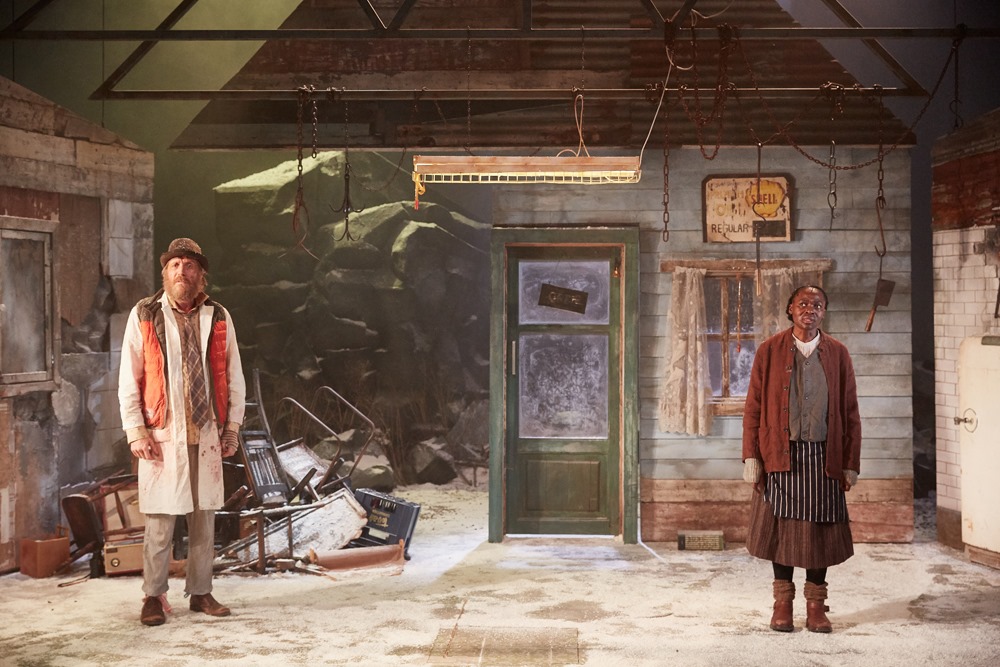

 (5 / 5)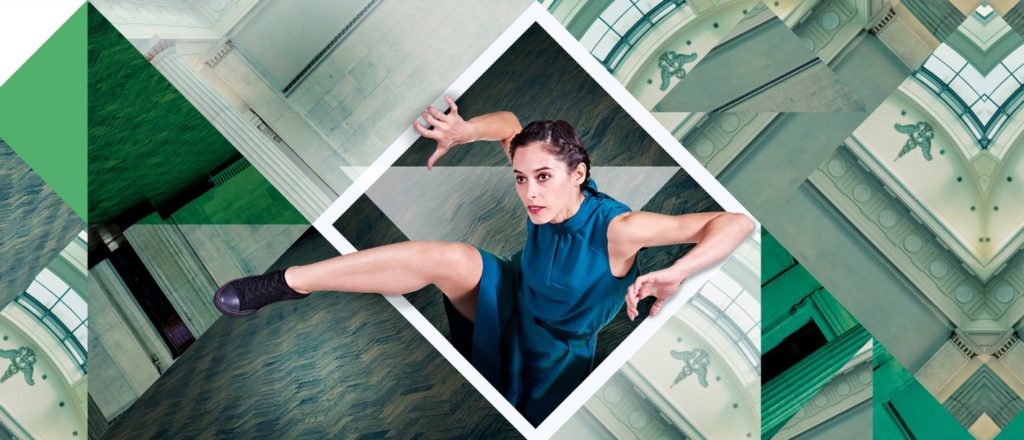

 (3.5 / 5)