“Yn Ei Blodau” yw cynhyrchiad cyntaf Criw
Brwd a drama gyntaf Elin Phillips. Cwmni newydd mentrus Elin a Gwawr
Loader yw’r cwmni ifanc yma ac maent yn awyddus i leisio barn merched sy’n
goroesi bywydau anodd yng nghymoedd y De. Mae’r ddrama’n olrhain hanes Fflur,
athrawes ifanc sy’n rhy barod i blesio ei mam a’i chariad Scott. Mae’n ceisio byw
y bywyd traddodiadol benywaidd – swydd barchus, perthynas, priodas a phlant – ond
yn dawel fach, mae’n dyheu i wrthryfela a thorri’n rhydd. Mae ei mam yn dyheu i
weld ei merch yn setlo a chael plant, ond yn dawel fach, mae Fflur yn dymuno
byw bywyd heb gyfyngiadau, cyfrifoldebau na disgwyliadau.
Mae’r
ddrama ar adegau yn llawn hiwmor deifiol a sefyllfaoedd doniol, ond ar y cyfan,
mae caethiwed a rhwystredigaeth Fflur yn ein sobri. Mae’r wên deg sydd ar
ei hwyneb yn fwgwd i’r tristwch oddi tano. Daw hyn yn amlwg wrth iddi
geisio ufuddhau i reolau ei phartner Scott yn ogystal â’r euogrwydd mae’n
wynebu wrth iddi wrthryfela.
Portreadodd
yr actores Kate Elis y cymhlethdodau hyn yn effeithiol drwy arwain y
gynulleidfa drwy amrywiol sefyllfaoedd ac argyfngau ym mywyd Fflur. Roedd
ei gwaith corfforol (dan ofal medrus Eddie Ladd) yn dda, ond hwyrach byddai
deunydd ehangach o’r llwyfan a’r gwagle wedi ategu at y perfformiad. Defnyddiodd
yr actores rhywfaint o’r offer llwyfan mewn modd symbolaidd, er enghraifft, y bêl,
ond nid oeddwn yn teimlo bod angen cymaint o’r offer hyn ar hyd y llwyfan.
Serch hynny, hoffais y deunydd o olau a sain a oedd yn ychwanegu tipyn at
awyrgylch y ddrama.
Er
bod cymeriad Fflur yn teimlo ar goll ac yn fregus, yr hyn sy’n rhoi gobaith
iddi yw y plentyn mae ar fin geni. Dyma fydd ei ffocws, ei dyfodol newydd gwell
mewn byd sydd weithiau’n greulon a ffug.
Llwyddodd
y dramodydd i ddefnyddio hanes Blodeuwedd – un o ferched mwyaf arwyddocaol ein
chwedloniaeth – fel is-destun i’r ddrama, ac roedd hyn yn gorwedd yn gyfforddus
o fewn sgript sy’n trafod yr un themâu, sef nwyd, caethiwed, disgwyliadau ac wrth gwrs rôl merch
mewn byd sydd wedi’i reoli gan ddynion. Roedd hon yn noson lwyddiannus
arall yn y gyfres “Get it while it’s Hot” ac edrychwn ymlaen at weld cynhyrchiad
nesa’r cwmni, ‘Pan Ddaw’r Haf’ ym
misoedd cyntaf 2020.
(When we enter a workshop or performance
we already carry so much with us, which shapes and resonates perpetually in how
we feel, sense, think witness… and determines what we take away.)
Workshop:
Choreographic
Improvisation
Possibly I enter each workshop dressed
in degrees of resistance and estimated angles of surrender,
and
I guess…
definitely un-definitive desires.
Desires secretly aflame stashed as best
I can for another occasion.
The geometry of these desires has been
formed by my habitats of dancing, which have since childhood most predominately
been solitary experiences, practices and investigations. Flickering into
dancing nights out and occasional classes or workshops.
(Working under or up to a choreographer
or even a teacher never quite seems to fit.) The implicit–explicit hierarchies and
structures involved in the process of ‘becoming a dancer’ contrast significantly
with those of other art forms.
My tendency seems to ‘dip in’ intermittently
to social sites of contemporary dance- seeking conversations, connections with
other dancing bodies- sources of reorientation rather than reproduction.
There is a lot I keep stashed under
wraps in workshop situation.
That I edit out of my dancing in order
to be there.
Perhaps everyone there does.
How thread bear can the fleshy garments
we wear between life and dance?
I continue to find it distracting being
in a room full of dancers ‘doing moves’ -moves which have been shaped by the
aesthetics and conduct of contemporary dance class. There is a strong
determinative current in the room- in some ways experienced as an opportunist ‘expansive’
and fertile energy- yet also
subliminally restrictive, prescriptive and within determining stylistic
spectrums.
Ever-present (even in absence) is the
omniscient all-knowing mirror in the room- in the held faces.
Sprayed on songs counted in 8.
An inheritance of aesthetics and ideologies.
As such dance classes and workshops are
also a site of renouncement.
Resonance and Dissonance have been as
much a part of my dance quests and navigations as my desires.
Expectations, prejudices,
disappointments, preconceptions. These ebb and flow, merge and submerge,
comforts and discomforts, hopes barriers, openings, shields. Somehow I wear
them all… as in the misspelling the 2nd hand blue sweater I am wearing as I
write this….
ARMOUR
A_MOUR.
Love and Conflict co-inhabit as Survival
in the way i wear and experience my body- in dance and life.
My anti Ideologies include paradox and
contradiction, which resonate harmonically with dissonance and self undoing.
Everyone has their rules and regulations…to
apprehend…however morphic, unrecognisable, displaced from the establishment
/status quo.
There is a welcome greeting from
Rosalind which extends somehow as a climate, an
atmosphere into the first actions of the day.
She is throw away with her words and
tasks…as if shooting a tin can with exactitude and disarming laughter. Sending
things flying in disarray… arriving with a perturbingly exacting landing. I
believe in the moment I shall remember everything she says… yet never seem to.
We are invited to wear in-depth, the
fleshy gestures we enact as we ‘Warm UP’.
Somehow there is a dressing and
undressing from our needs- practical, physical, emotional. Which elements do we
self-consciously edit out or adjust in this social situation?
A few years ago I stripped away Warming UP.
It had always been a synthetic add on.
Easy to let go of…and almost made necessary by life’s constraints.
Anyway my real desire was always to
begin by dancing without expectation. Perhaps what I identified as ‘warming up’…has been
historically identified by what I am not ready, or not yet good enough for.
If any thing I ‘warm down’ – a practical
apparatus to be able to carry my dance back into my life- patterns and
constructs of my body in day to day survival. A kind of savoury dessert. An
elixir of the ordinary.
It is a chorus somehow strangely echoes …down
the line from Deborah Hay….
“Getting What You Need”
Not here or now this morning… yet
somehow it echoes of its own accord.
When this incantation first resounded in
my radar I had to undress it from associations of affirmation. It seems to fit
easy when I recognise “what I need” as a cellular unidentifiable, morphic,
surprising and self unravelling experience. What I need as a question, rather
than an acquisition.
An invitation, direction or gesture of
departure as well as arrival.
Somehow Rosalind offered Warming UP as question…. an
invitation to reconfigure ‘needs’…moving within easy to reach field of
movement.
Perhaps if I rechristen Warming UP as acclimatising.
“Warming UP” could feel like an invitation to
include very practical and ordinary elements of my everyday body- needs, fears and desires.
Warming UP deciphers beginnings and
endings, invitations, expectations to tuning into tuning out of.
Rosalind describes a musical scale as a
metaphor for Warming Up.
A series of portals to experience
aspects of feeling and being which appear and disappear.
Warming Up those vital aspects of ourselves,
dormant, or attired in getting through life, which can dishabille dancing?
I am aware of how I am tethered by by my
own discreetlyoppositional anti establishment ideologies…which have their own
restrictions within civilised systems.
Rosalind speaks of “Shedding”through the day.
Somehow this Act of Shedding has been the only
way anything has ever formed, accumulated, been generated, or encompassed in my
the habitat of my dance.
There is a freedom and exactitude to “Shedding”.
She rechristens Warming UP as Noticing.
Like orphaning and rechristening a child
of the establishment as an illegitimate out of wedlock love child…tuning the harmonics and melodics of the
…the exchanging interface between life
body and dancing body.
*Orienting includes of Disorientating
and Reorienting.*
Rosalind lightly describes years of being in
the studio alone.
And her fidelity to
“Just One Thing”at a time
…as a Practice.
“Practice” is another word I have orphaned, adopted and rechristened as a Habitat.
After all I always try to untether
activities from Justifications.
In a world where justice can only be a
fleeting or temporal accommodation.
The End of the World?
…Should it be a question any longer?
…So many worlds are ending.
…Yet the world is not a Mono-theistic
Being.
(Even if that is translated into modern
silhouette of Atheism or sacrificial
altar of Scientific Progress and Salvation. )
…Beyond my fingertips yes but not the
nerve endings of my the reality of my imagination.
…Extinction still seems somehow out of
reach…like the aspirational vote…on the top shelf of the corner shop.
…No-one ever shops there anymore.
…Warming Up as a mammalian being
flickering through other forms of alien earthly life?
…Shedding humanity as a destination.
Destiny?
Salvation.?
Extinction?
Perceptually many worlds not one?
“Whoever says salvation exists is a slave, because he keeps weighing
each of his and deeds in every moment.’Will I be saved or damned he tremblingly
asks…Salvation means deliverance from all saviours…the perfect saviour …who
shall deliver mankind from Salvation”
John Gray STRAW DOGS
***
Possibly sometime ago I would have felt
a sense of inadequacy in attempting to commit to Rosalind’s “ Just one Thing.” .
Now I seem to realise I have a tendency
towards the inside out.
(My mother who is incredibly
superstitious insists its unlucky to change your clothes if you put them on
inside out…lately she seems to have extended this in recent years to back to
front scenarios.) She is suddenly older.
….I start with a myriad of unnamed
constellations and something strangely specific and singular seems to
crystallise amongst the sensations.
Rosalind seems to start with some
singular, visceral, displacing devotional action- distilling an undefinable,
multiplicity of sensation. Somehow her work reconfigures the relationship
between the dancers nervous and reflexive systems.
“For polytheists, religion is a matter
of practice not belief: and there are many kinds of practice….
Polytheism is too delicate a way of
thinking for modern minds.”
John Gray. STRAW DOGS.
In Rosalind’s practice duality and
multiplicity to experientially unfold through devotion and surrender through
attending a singular perceptual activity.
She speaks of the duality or
oppositional friendship between her dancing self and choreographing self.
Her
fidelity to being moved by singular responsive action invites a dynamic
multiplicity created by possibilities of empathetic polarities…movements
between oppositional perceptions, or ways of apprehending experience.
She speaks of resting into/ committing
to the specific initiation of one definitive
activity – tethering the mind/ brain- keeping it busy- so body can be
free to… perhaps not act as its subject.
Sunday Morning…
We begin with SURFACE(s)….interplays of
exchange, interfaces- membranes of
sensation…She specifies “SURFACE” not located, dislocated identified as skin, clothing, hair, aura, fat, nerves, space.
This definition is perceptually
inclusive rather than exclusive.
We begin differentiating the sense of
whole body and a body in parts.
We change channel to our VOLUME– Sensations of our how we are contained
within our forms.
“What if the depth is on the surface?” An echo from Deborah Hay.
Our Skin an outer brain.
Our Brain an inner skin.
The skin of a thought.
The mind of sensation/ feeling.
I wonder…What if we our whole being is
surface?… internally externally a site of exchange/ interface, a multiplicity.
Each organ, nerve, vessel, muscle, orifice an intricate accumulation- a series, a family of surfaces. Every cell
of our body…an intricate, responsive folding of surfaces, membranes, skins of
connective differentiation.
I inhabit my Volume. I feel my Surfaces.
I inhabit my surface. I feel my Volumes.
I feel myself one…I become many.
I feel myself as many…I become one.
“Opposition is true Friendship”
Marriage of Heaven and Hell. William
Blake
PERFORMANCE
a
partial lecture about a partial history
an unfinished dance by a saturated body
an ongoing practice exposed
Rosalind’s meticulous distillation of
perpetual actions….materialise in her performance. Framed at once by immediate
incremental intervals… and over the history of her dance reaching into other
dance worlds and practices.
Films are shown as a windows into
different fields of her work- thefluid electricsof her nervous system
seems interconnected as other instruments of attentiveness ….perceptual
apparatus.
My daughter sits on my lap and laughs as
Rosalind enacts a live commentary on her actions- a self reporting journalist.
Each moment and action swallowed up by the channelling of next event. The
struggle between words and forms shaping and shedding..dressing and undressing
of destinies… shedding of destinations.
She speaks about the dancer being
carried away by the dance- like a babe in arms. Perhaps she speaks of marriage-
of fidelity rather than faithfulness. I feel the meaning… yet I fail to
remember the vows….the vowels without consonants…constants. Perhaps she is
speaking about different types of love, liberty and dependancy…all
intrinsically, synchronistically intertwined.
There is an ending…She speaks of riding
through forest, as a girl on horseback…and the revisitation to the devastation
of the wilderness she once was carried by and loved. She shows film of herself
dancing, moving in the bodies of felled trees- laid waste.
It is stark and hopeless in its
endurance and truth.
Her humanity exposed and stranded
between animal and machine.
She is a helplessly human visitation in
a scene of natural devastation. Yet she is dancing. Dancing somehow feels like
an authentic activism- where there is no graspable solution.
I am writing this over hearing a
conversation between the waitress at the Old Boys Club and a customer:
It is about animal life and meat.
It is about the value of life in the
face of death.
He says to her, “At the end of the day…When the animals are
going to die anyway…Whats the point of them being happy and living a good life?”
It is also about ourselves.
My dear friend has given me… hand inked
in lovely italics…a sign…
ESPERANCE
Hope is more convincing in French…because
I don’t speak french.
Rosalind’s incantations and dances are
untampered by representative justifications. Somehow her work channels with a
truthful and disarming delicacy, with apparitions of specificity- a commitment to the beauty and mystery of the
world- of existence.
Fidelity to incrementals of uncounted
time.
She speaks of hands being at the end of
your feet.
Being carried by the contact we have
with the earth..
The natural world…Out of sight…Out of mind… Out of our hands
But still resounding through our
feet
turning us on the world’s surface/skin-
through our animal universals, rather than our human specialisations.
Perhaps we live in an age…where
salvation must be reconfigured an act of disarmament…
A shedding of Humanity’s Survival-
A shedding of Humanity’s aesthetics
governed by its fears an desires.
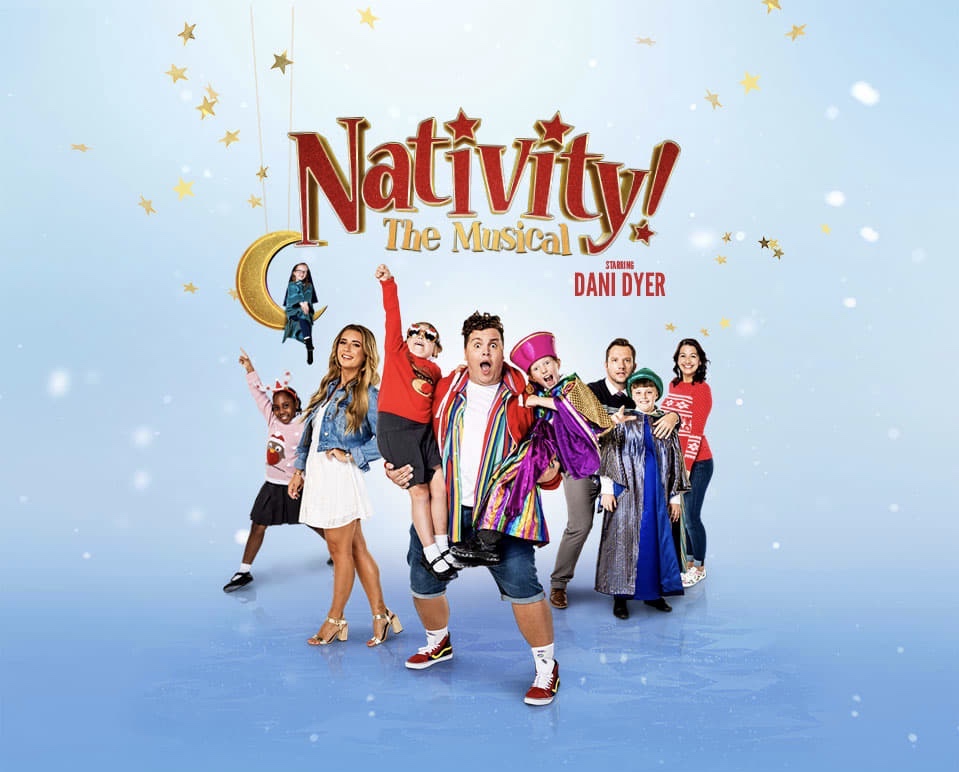
It’s mid November, the temperature is dropping, gifts and decorations are out in full force in the shops, Christmas lights are starting to be switched on, what a perfect time to go and see a show. The Nativity the musical, at the Wales Millennium Centre in Cardiff is here. What a start to get into the festive spirit!
We had a fantastic opportunity to go along to experience the smash hit stage musical, from film screen to stage, adapted by Debbie Isitt.
It’s the lead up to Christmas, the children of St Bernadette’s are preparing to appear in their school nativity. Mr Maddens the class teacher, and his new assistant Mr Poppy, a very excitable and energetic teacher, are given the task of organising the school nativity. When out looking for a school Christmas tree, they bump into Mr Shakespeare, a teacher from Oakmoor prep. Mr Madden tells him that Hollywood is coming to their school to film it. The rest of the school hear Hollywood are coming, they are so excited. Mr Madden confides in Mr Poppy telling him it isn’t true, and they embark on a journey to find a way to make it happen!
The cast are incredible, and the talent shining through from the children is commendable. It’s almost impossible not to smile with the humour from Scott Paige ‘Mr Poppy’. I enjoyed the charisma of Charles Brunton on how he portrayed Mr Shakespeare. Polly Parker is played by Dani Dyer (appeared on 2018 Love Island and actor Danny Dyer’s daughter).
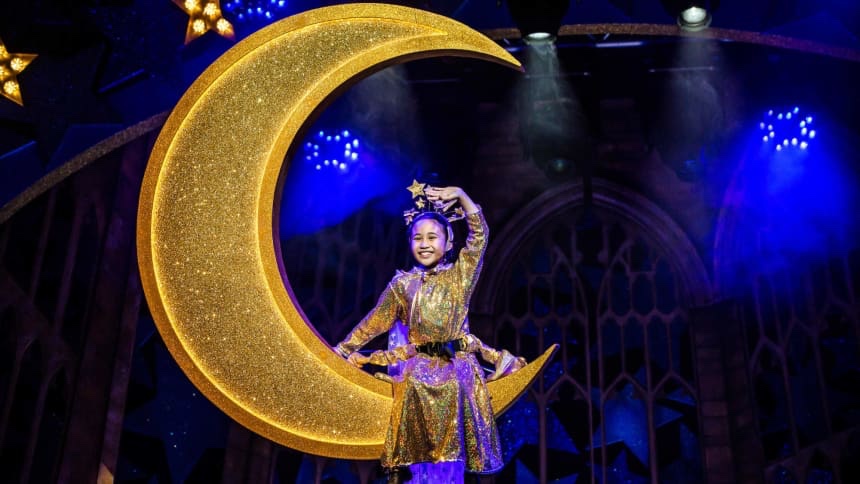
My 8 year old son, Cody, came along with me, he found it “enjoyable” and “so fun”. We both liked the projection of the star lights into the audience. It was magical.
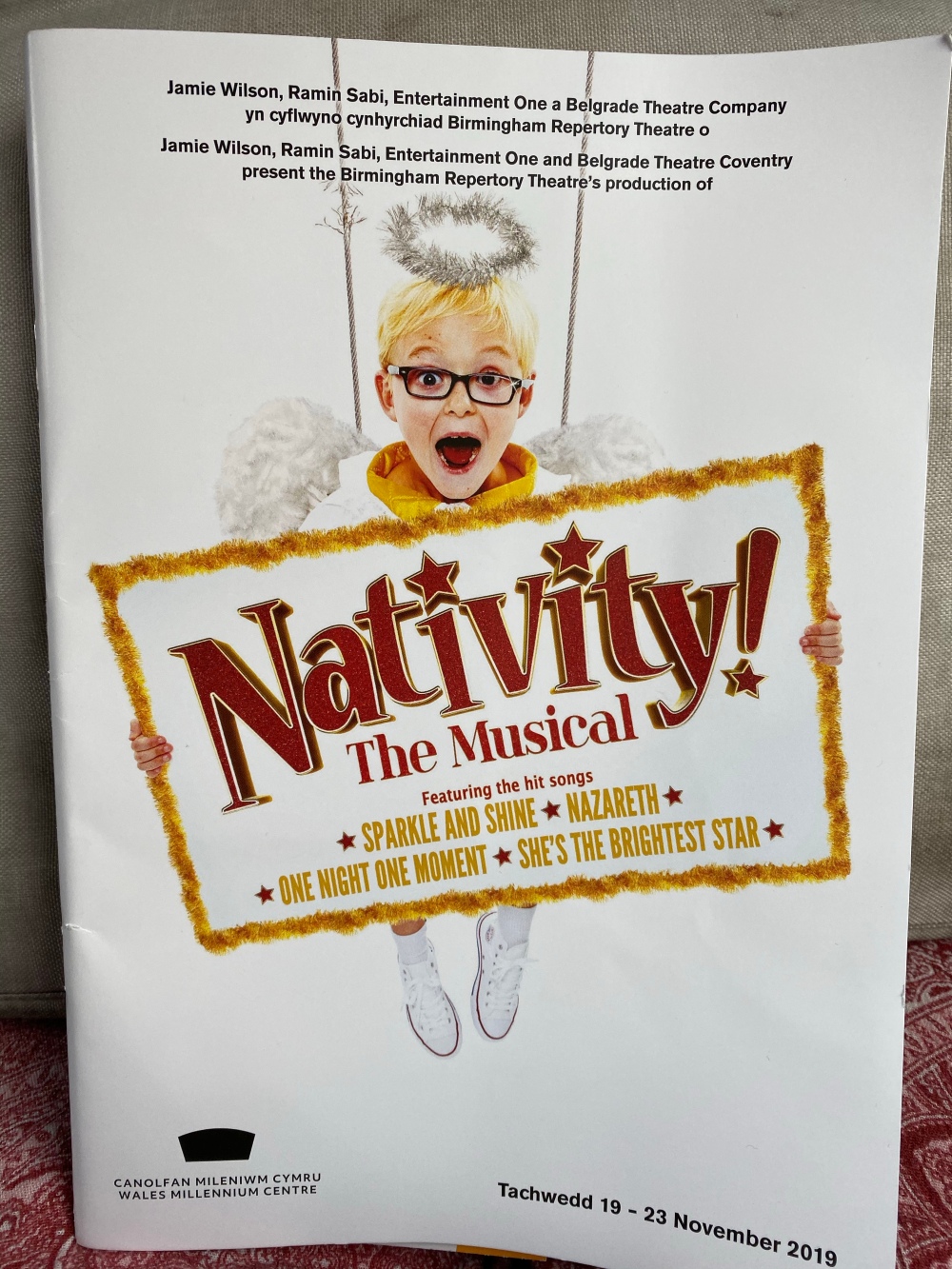
On the way down in the lift, Cody asked if we were coming back later in the week to watch it again and said he will take the nativity programme into school with him to show his teachers and friends.
An added bonus to the programme, it had children’s activities inside, colouring, word search, crossword and spot the difference.
Our favourite songs were ‘Hollywood Are Coming”, “Herod The Rock Opera”, “Nazareth” and “Sparkle And Shine”.
Feel good, festive fun for all!
Nativity the Musical is in Cardiff, at the Wales Millennium Centre from Tuesday 19th – Saturday 23rd November.
To Book your tickets and for more information, here is the WMC Wales Millennium Centre website.
They will be in Plymouth next, followed by Southhampton and London.
In this review I will be reviewing Écrit from the Roots dance show I went to go and see which was by National Dance Company Wales, it was performed at Theatre Clwyd.
There were four different dance pieces, some of them I preferred over others. The first dance piece was called Ecrit, I found this dance piece really interesting because when i was watching it I couldn’t fully understand the storyline to it and there were many different possibilities to the storyline as well which I really liked because it left a bit of mystery to the piece.
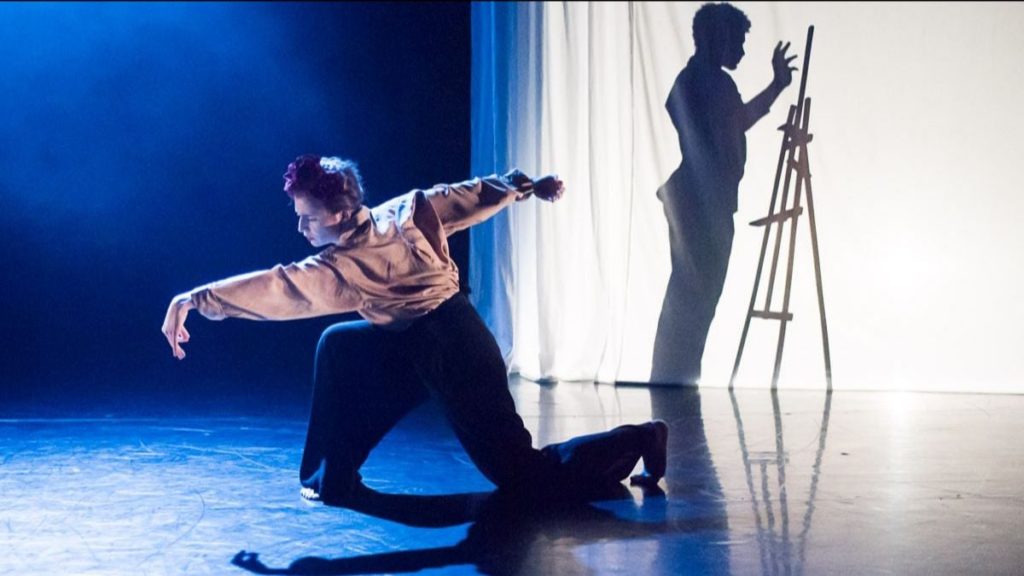
The dance piece was inspired by letters because the dance piece’s title means writing in French. I felt like in this piece the man behind the sheet was painting his feelings about his love he couldn’t get too because you felt the connection throughout the piece between the two dancers even though they weren’t fully dancing together and you couldn’t really see one of them either. I found that the background music made the piece more emotional and touching to watch and if there wasn’t any music there I feel like it would of looked as good because there wouldn’t be anything there for the dancer to flow to and create the moves to either.
Another storyline I came up with while watching this piece was that the man behind the sheet was losing his mind and I thought this because of the way he was moving and dancing behind the sheet. As I have briefly mentioned before I mainly thought that both dancers where two lovers that couldn’t get to each other because of distance and the only way they speak is through love letters which tie back into the inspiration of the piece.
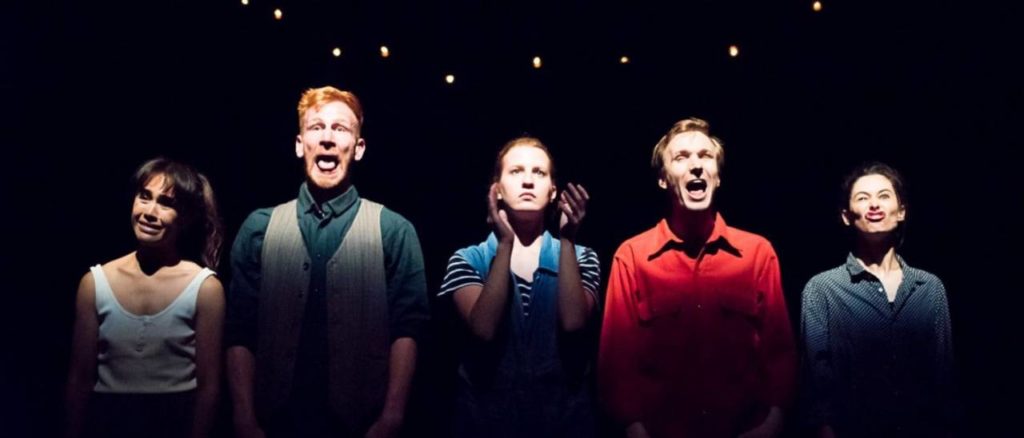
At some point in the performance I did find it a bit creepy especially when the dancer behind the sheet went bigger and smaller and started to control the female dancer in a way. Then once both dancers could be seen it was the most touching for me because the way they both were dancing together so effortlessly really brought the ending of the piece together and it felt the male dancer was caring for the female one. Also something I wasn’t expecting was the singing in the performance which was the singing in the performance which I wasn’t quite sure worked because I felt like the mystery of who these people are was taken away when we started singing in my opinion.
The first piece Ecrit presented by National Dance Company Wales as part of the Roots tour was based on a Mexican relationship. What I took from this was that even though the man was the one who was restricted in prison it seemed to me as though he was getting his freedom through the woman that he loved and he was living his life through her.
The second piece was called Why Are People Clapping and the interpretation I got out of this was that there was always one person who was in control and whenever that person clapped the rest would follow and whenever someone almost didn’t listen then they would then become the one in control. Overall I feel this was an OK performance and I feel that it could have been more clear as to what it was that was going on.
Codi was the name of the third piece and it was about the welsh miners. The interpretation I took from this was that it was about the struggles the miners would face. I also took the deep groans of the backing music as the horses pulling the carts of coal from deep within the mountains and I also thought it was about the explosion.
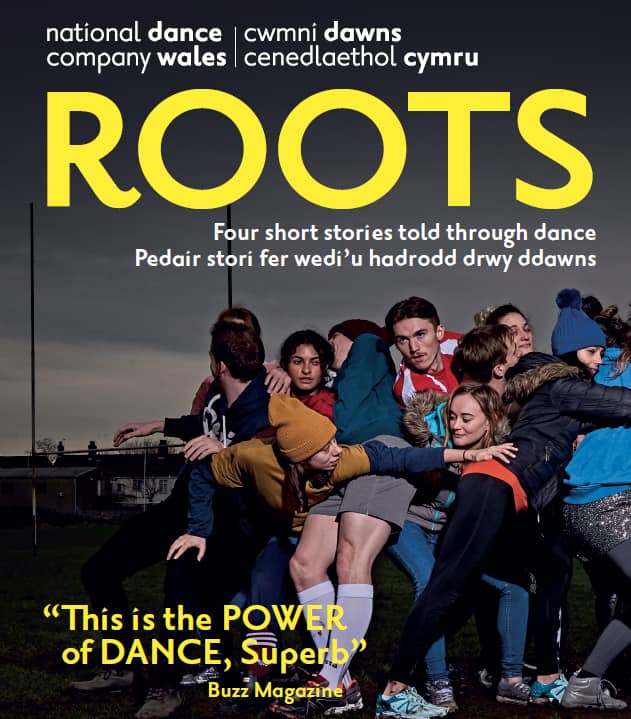
The last piece was called Rygbi and the interpretation I got from this was that it was about the love that the Welsh have for Rugby. Personally I liked how they used actual rugby movements and routines to show emotions.
Roots, presented at Theatre Clwyd, was an excellent dance performance. With four pieces: Ecrit, Why Are People Clapping?!, Codi, and Rygbi: Annwyl/Dear (in celebration of the Rugby World Cup in Japan). The production kept you on your feet, never once knowing what was to be expected. Even the opening of the show was well presented by choreographer Fearghus Ó Conchúir who gave off a wonderful vibe that made you squeal in excitement, waiting for the show to begin. Even in the breaks of the scenes, the audience were given time to chat with each other of what they think the show was about, what they liked and any other questions to put towards the cast, crew, and company.
Where there were 4 performances I will say the
1st: Ecrit, and the 3rd:Codi, were my favourite; the 1st act seemed to be based
off Frieda and her lover Diego, with strong movements and flexible arm
movements, the two dancers had put together such a good job that I would put
that as number one. Everything about it, the chemistry between the actors, the
music, the lighting, and especially their clever way of having one large sheet
center left of the stage, and then there would be a light casting through and
the esteem dancer: Moronfoluwa Odimaya, would dance behind and create this
magnificent silhouette. What I loved the most about this piece was not that it
was swift, intricate, and elegant, but how the dancers were so in sync and even
when there was a sheet between them, it would look as if they were standing
right next to each other.
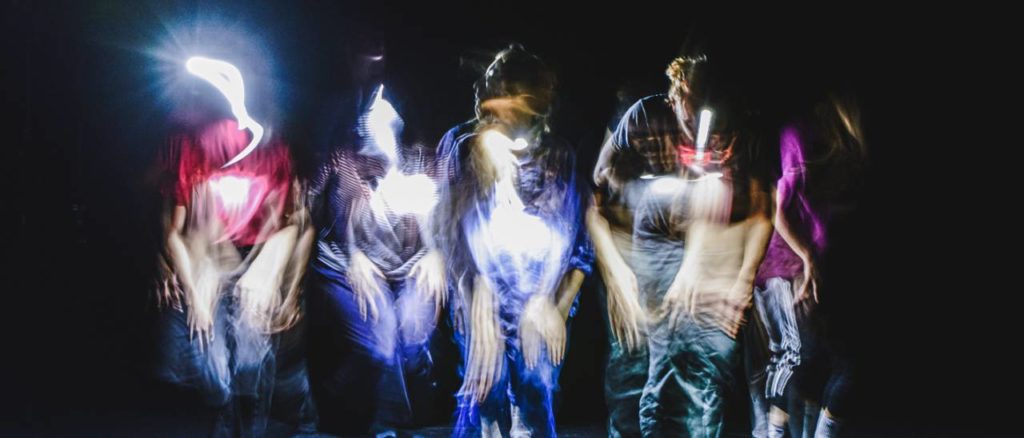
Although Ecrit was my favourite, everyone gave it their all. However there were a few routines such as Codi, where the fog machine did give off an eerie looming effect on the stage and with the lights attached to the dancers; sometimes all you could see were the lights and not so much of the dance that I would rather be focusing on. Rygbi, was very well presented, it was wonderful to see a large group work so well in carrying out the performance, I felt at times it become a little repetitive, Where the other dances were shorter, they got their point across, and I feel that is mostly because given a certain amount time for presenting, you have all lots of ideas that you would want to put across which makes it even more interesting and making you wish you see more.
Overall, I have such high respect for this amazing company and its dancers. Being a student from Coleg Cambria, we create few devised pieces, either because we don’t have enough experience with dance in general, or that you have “writer’s block”, and watching this performance really gave a better approach as to high I can interpret some of the moves I had seen that evening into one of my own pieces.
What an inspiring, fun and lively night, I would recommend Roots 100%. I would love to give this production a 4 star rating, and would definitely bring my family and friends to watch this again and again.
Choreographers/Directors: Fearghus O Conchuir, Anothony Matsena, Ed Myhill, Nikita Goalia
Dancers: Ed Myhill, Nikita Goalia, Aisha Naamani, Moronfoluwa Odimaya, Elena Sgarbi, Tim Volleman, Marla King, and Ellie Marsh.
I recently had the privilege of going to see ‘Roots’ by National Dance Company Wales, at Theatr Clwyd. This performance included four different dance pieces which consisted of ‘Ecrit’ ‘Why Are People Clapping ?’ ‘Codi’ and ‘Rugby: Annwyl/Dear’. These dances were performed by a small but strong ensemble cast that made the dances look really interesting. In between the dances, the audience got the opportunity to share their opinions/views on what they watched, which I think made the audience look deeper into the story behind each dance.
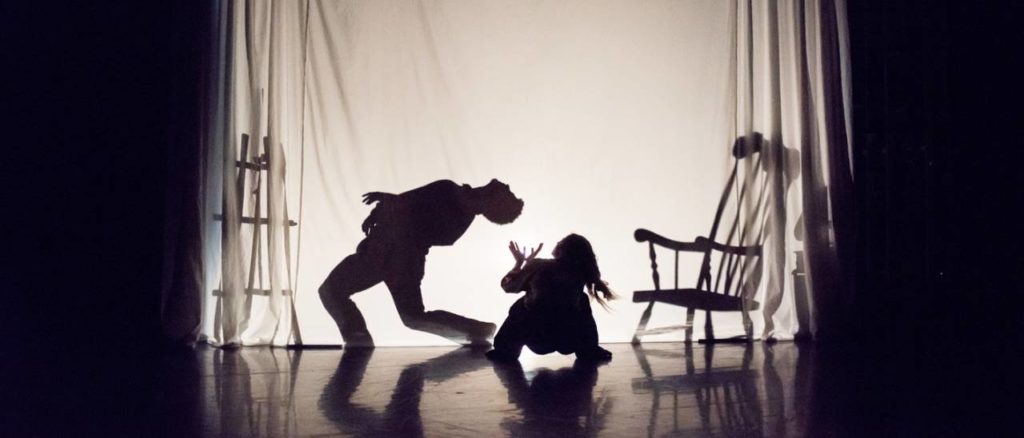
The first dance presented to the audience was
‘Ecrit’. This was a duet that was performed with one person behind a screen so
this created a shadow-like figure. This was visually interesting for the
audience and I made me think about the different things that it could
represent. This helped to show the status of the two characters at different
points in the dance. There were also sections in the dance that were performed
without music. This made me realise that dance is just as effective without
music as it is with music.
Another dance we saw was ‘Why Are People
Clapping ?’. This one stood out to me the most because I found it fascinating
how the dancers were creating the rhythm themselves and they all managed to
stay in time. Although the rhythm didn’t change, the speed of the dance did and
I found it clever how everything still managed to fit together perfectly.
The third dance ‘Codi’ had more of a
theatrical vibe to it. As the dance progressed, the acting element became very
clear. This made the audience connect with the characters emotions and got them
hooked on the journey that they go through.
The last dance piece that was performed was ‘Rugby: Annwyl/Dear’. This included very strong ensemble work. I loved how energetic this piece was and how well the sport of Rugby was shown through a form of dance eg. lifts, running around, supporting each other. Although the dance was performed really well, I think that at times some of the movement was repetitive which sometimes made the story hard to follow.
Overall, I enjoyed hearing people’s views on each dance as they were sometimes different to what I thought so it made me think about the dance from a different perspective. Also, in the dance ‘Ecrit’, there was a section in the dance where one of the dancers sang a few lines of a song. I think this worked effectively as it made the audience realise that dancers also have other talents and this could be incorporated into a dance to put a twist on it. Finally I enjoyed how the acting through the dance pieces was over exaggerated as this helped the audience to understand what was going on throughout the dances. I think the show could have been better if some of the dancers shared their own views on the dances as it would have been interesting to hear if any of the storylines of the dances changed throughout the rehearsal process.
In conclusion, I would rate this five stars as I think that the audience interaction was incredibly unique and each individual dance was performed with a lot of emotions and with strong movements.
The performance Roots is made up of four
short dances (Rygbi, Ecrit, Why Are People Clapping?, Codi). All four of these
pieces are from Wales. I personally got different ideas about each of the
dances as they progressed. I found that I often changed my mind of what I
thought the pieces were about.
The first piece we watched was Ecrit. Throughout this dance my ideas developed. I got the impression that it represented some kind of forbidden relationship because of the battle between the man’s shadow and the girl on stage. However, I also got the impression that it represented communication between a soldier and his girlfriend/ wife. As the piece progressed I found myself leaning towards the latter option. I feel that it was beautifully executed and I think having the male as a shadow to show they weren’t together was really effective. I found it really interesting how everyone had different opinions on the piece when we talked after the piece, however I feel that they all seemed to relate to one another.
The next piece was Why Are People Clapping? This piece was my favourite! In this piece I found it really interesting how they incorporated so many different elements into it. They used many familiar things such as clapping, tennis and head shoulders, knees and toes. It was also weird because clapping can be used in polar opposite situations, it can be used as support or in anger as a sort of come on kind of thing, or in a patronising way. I loved how the claps really controlled the whole of the dance and also switched the mood of the piece. I really like how it started and ended with the tennis match, which led me to believe that all these different parts in the middle were what was going on in peoples head as they watched the tennis, although I may have misinterpreted this.
The third dance was Codi. Throughout this
dance I got the strong impression that it was based on miners. The use of
headlights (which were worn on their necks) really helped to portray this scene
for me. This piece was full of emotion and it was something that really
represented what miners would go through. I think it was executed amazingly and
I love the use of the sticks. Now whilst I did love the use of lights on their
necks I found that at some points it also held them back in a way because it
meant there were many movements we lost because it was too dark. Although I did
love this piece.
Lastly Rygbi, which is pretty much explained in the title of it is based on rugby. I thought this piece was beautifully choreographed, it was amazing to watch popular rugby moves slowed down and turned into a beautiful dance that represents teamwork and helping each other out when they’re down. It had a really soft look to it even though it was mimicking a really hard and rough sport which I thought was really effective. I loved how the dancers all seemed to rely on each other throughout the piece which really added to the togetherness and community feel of rugby. I also read up on it and found out that it was actually made with some input from rugby players and fans, which I think really adds to the authenticity of the piece. The only criticism I have for this piece is I think it went on slightly too long. This piece lasted around twenty five minutes, and I felt that some of the movement were repeated throughout which meant we lost the rawness of the piece. I personally feel that this piece would have been a lot more effective and made more of an impact if it was slightly shorter.
Overall I really enjoyed the show! I loved how it was laid out and how interactive it was. I loved the discussion in between each piece, I feel that this really brought the audience together and it was lovely to hear other people’s interpretations of each piece. Overall I would give the show four stars!
Choreographers – Nikita Goile, Ed Myhill, Anthony Matsena, Feargus O Conchuir
Dancers – Nikita Goile, Ed myhill, Aisha Naamani, Moronfoluwa Odimayo, Elena Sgarbi, Tim Volleman, Marla King, Ellie Marsh
This touring programme of new pieces of contemporary dance creates something of a buzz – a buzz provoked by the NDCW’s Artistic Director, Fergus Ó Conchúir coming forward to encourage audience members to talk to someone near them who they don’t know about their reactions to the work.
The approach will
work for those who, like me, are a bit mystified by dance and perhaps also for
those who have come on their own. It
might not appeal so much to purists because it generates a bit of atmospheric
untidiness: conversations start up and
have to be quietened down. Still, given
that the whole programme is not very long, there is time for all of this.
As for the main
event itself – the performances and the choreography – I should repeat that I am relatively ignorant
as far as dance goes. I am not dance
phobic but if I go to see a show it is usually a play or a concert, possibly an
opera, very occasionally a ballet – almost never contemporary dance. Unfortunately for development officers, we
are all creatures of habit. This is a
shame because, ‘knowing what we like’, we don’t venture far from our comfort
zones to take in new experiences. I had a complimentary ticket from Theatr Clwyd
and a free evening and I’m glad I was able to see Roots.
The programme contains four pieces. Ecrit is choreographed by Nikita Goile and features two dancers. Both Why Are People Clapping? by Ed Myhill and Codi by Anthony Matsena featured four or five, and Rygbi by Fergus O’Conchuir himself featured seven – or was it eight? The imprecision in my counting is not just middle-aged muddle: it’s a reflection of the impact of all the dynamic and fluid body movements out in front. You lose track of numbers because of the intensity of what is going on.
Ecrit is about a man and a woman and the
balance of power in heterosexual relationships. Rygbi is about rugby, prompting thoughts of what it would be like
if economics and logistics permitted a full team of at least thirteen dancers.
However, I’m not
sure that what the pieces are said to be about, or what the choreographers and
the dancers themselves intend to do, matters much. The performances take you some distance
beyond the start point. The titles and
notes really only serve as spring boards, or launching points for your
reactions. (You don’t think about rugby,
for example, in the same way as you might watching a performance of Hull
Truck’s Up and Under). The show’s overall title, Roots, is not hugely satisfactory
because it reminds you of the eminently forgettable best-seller/blockbuster
movie/TV series phenomenon. But it’s
there to let you know that what you going to see is largely about Wales, having
been made in Wales by people who work there, or who are Welsh themselves.
Knowing that the
start point for Ecrit was a letter to
Diego Riviera by Frida Kahlo made me search for references to them and their
painting, to murals and to Mexico – but only briefly. Dance tends to liberate you from your
thinking through the movements – in this case by the movement of the woman’s
hands, which dance together, forming shapes expressive of both passion and
suffering. The piece depends on a
dramatic use of a screen and shadow play to convey the essential distance and
separation in a relationship. The male
dancer is concealed from view – as he is from his lover – and appears at first
only in silhouette, the back lighting permitting him to grow massively in
stature, like a nightmare monster and then shrink.
Why Are People Clapping? asks a question for which of course there is no real, single answer, other than ‘just for fun’ – although the loud, sustained and rhythmically very accurate clapping throughout must be hard work for the performers. It provides a percussive sound wall which the dancers move against, either together or in solo movements. It’s very reminiscent of flamenco, except that here there is no singing and no shouting and, as with much of the programme, the musical accompaniment is not very noticeable.
Codi is apparently about ‘the strength
of the Welsh communities who come together to tackle isolation and depression
during troubled times’ but if you hadn’t read the programme notes you could be
excused from thinking it was about coal mining.
This is because the main impact of the piece is achieved through the
ingenious use of single bright lights worn around the neck by the dancers,
instead of on helmets. They shine out
through a smoky atmosphere at you and their beams strike out in all
directions. The dancers are also dressed
in overalls which don’t restrict them but which do suggest they are miners.
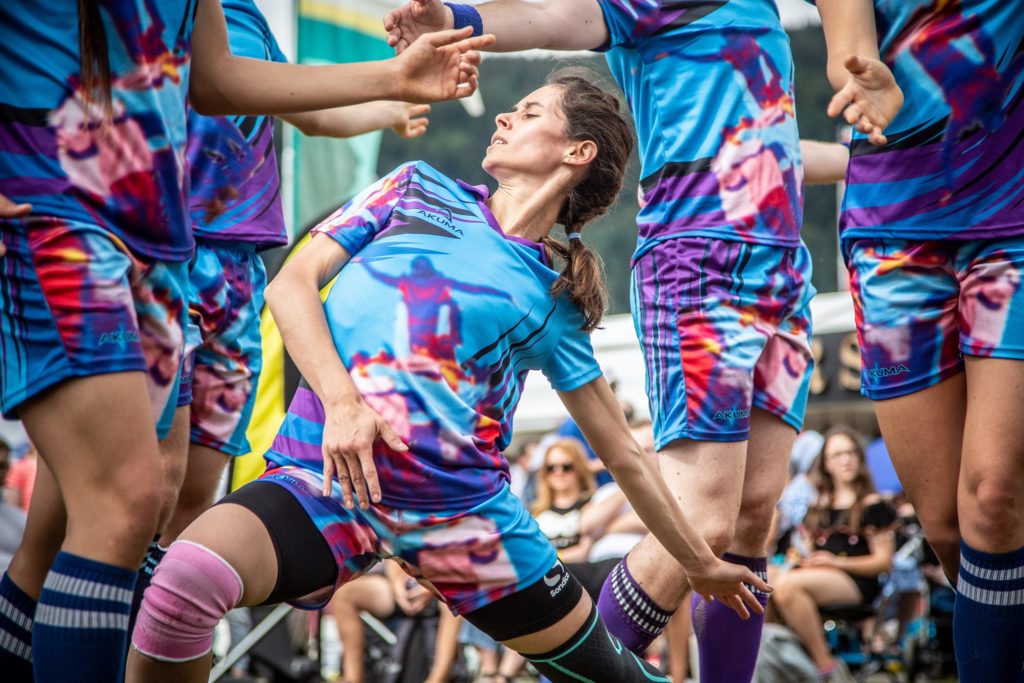
Rygbi was very
well done – NDCW performed it for the World Cup in Japan – but I found it the
least interesting of the four pieces. This could be because it came on last and by
that time, despite the conversations and the detailed introduction, I had had
enough contemporary dance for one evening.
I wanted there to be more humour in it – rugby being fairly ridiculous – and even some ugliness – rugby is also often
quite unpleasant. (It’s not a beautiful game!) I was unsure about what the dancers were
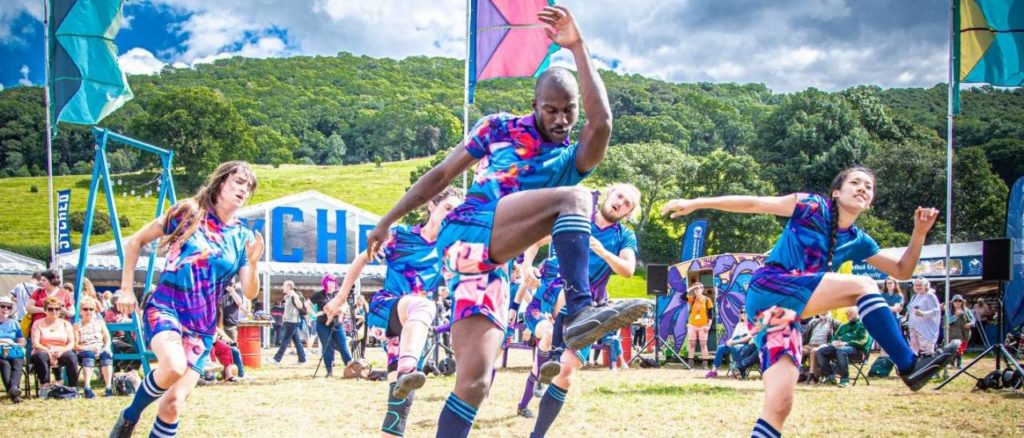
wearing – brightly coloured ensembles, tops and shorts and long socks which
were definitely not team strips. What
happened drew a lot on typical rugby moves but I was unsure, I suppose, of what
the piece was saying and it wasn’t a comfortable uncertainty.
That said, this
was a good evening’s entertainment, giving me plenty to think about and lots to
remember. It may also encourage me to
see contemporary dance more often. I
think, in the end, it’s a pity that, for a number of reasons, dance occupies a
separate niche in theatre and that it has to be enjoyed in isolation. Dance was originally central to drama and
even today it can be effectively introduced in plays. A weakness of much modern drama is its lack
of physicality, with actors relying on their delivery of text and not
understanding the importance of suggestive body language and sinuous physical
expression. What shows like Roots demonstrate is how evocative and
expressive pure movement can be on its own, when it is performed by talented
and disciplined dancers in companies like NDCW.
Long may they continue to tour.
Creating opportunities for a diverse range of people to experience and respond to sport, arts, culture and live events. / Lleisiau amrywiol o Gymru yn ymateb i'r celfyddydau a digwyddiadau byw



 (4 / 5)
 (5 / 5)