Tag Archives: featured

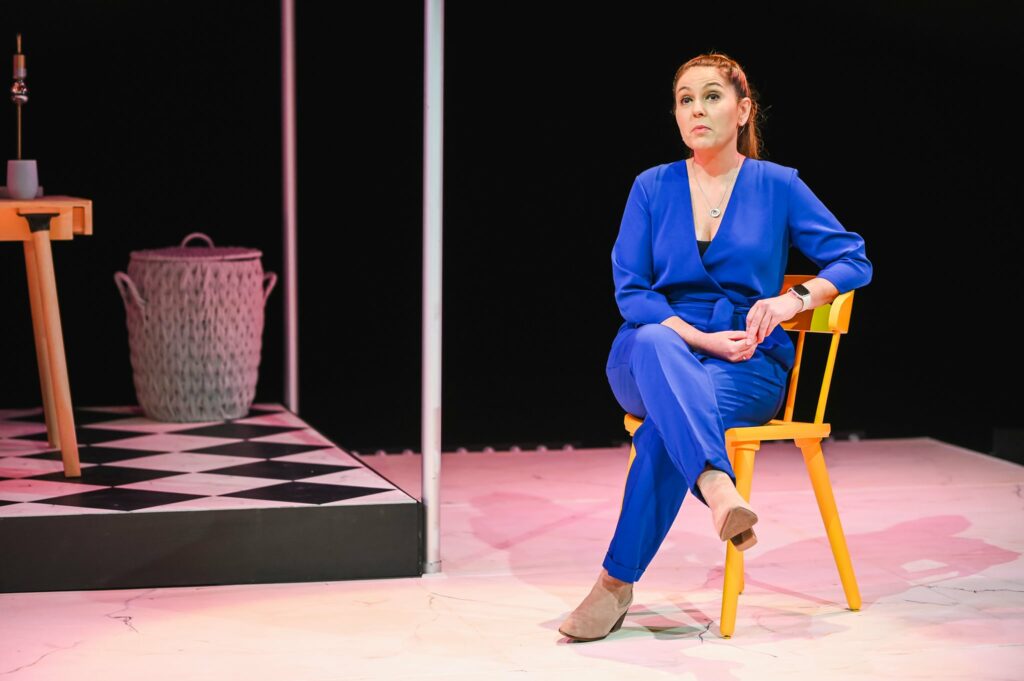
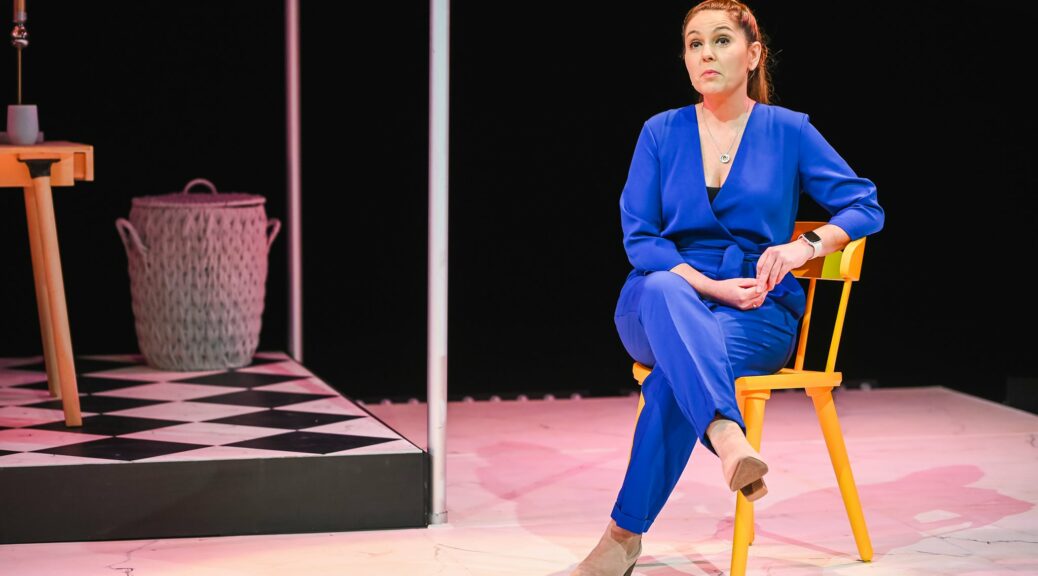
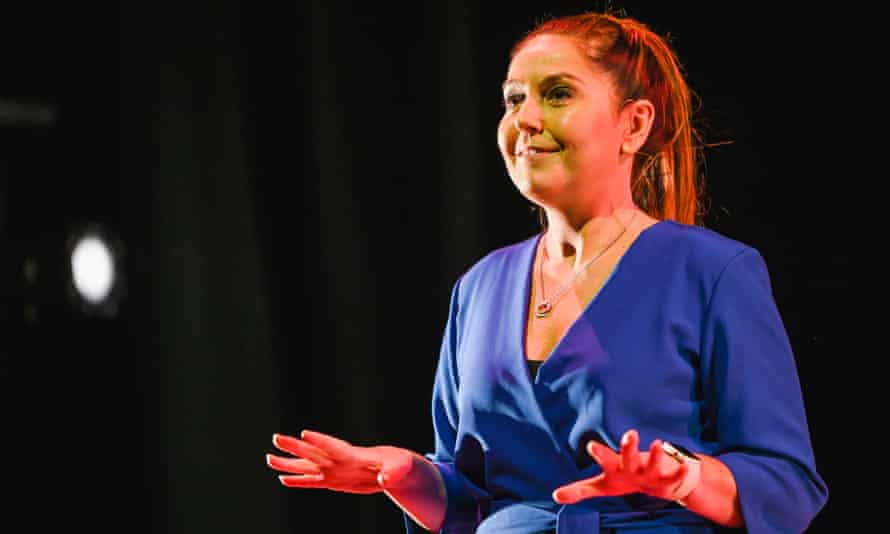
Review, Godot Is A Woman, Silent Faces, Pleasance Theatre By Hannah Goslin

 out of 5 stars (5 / 5)

Who would have ever thought that Samuel Beckett and Madonna would ever be thrown together in a play?

No one, till now.

Godot is a Woman, by Silent Faces, is nothing short of a masterpiece. If, like me (and Silent Faces), you are a huge fan of Samuel Beckett, particularly his play “Waiting For Godot”, and a liberal feminist, then the title alone is enough to tickle your fancy.

I try not to read too much about a production or a company before I see a show. I like to be thrown in the deep end and figure it out for myself. No presumptions or expectations. And am I glad I did for this one.

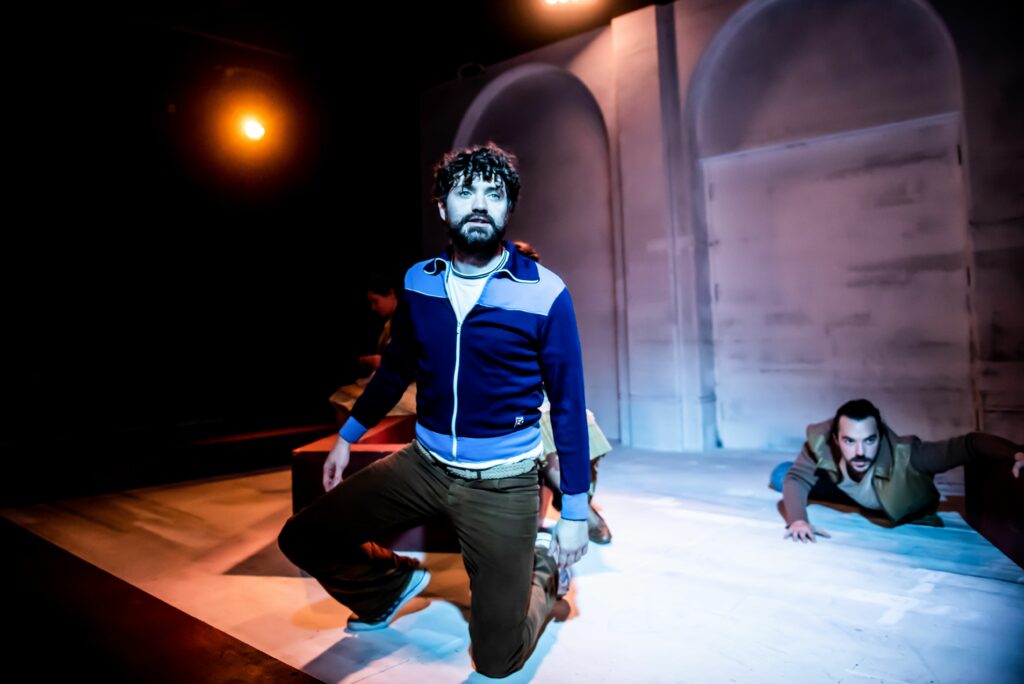
We meet 3 performers who want to put on Waiting For Godot. They reflect the original play by waiting for the Beckett Foundation to answer their call for the rights. As time goes by, the 3 battle with the reasonings on why they would be refused, a lot stemming from past beliefs in society, and hugely and predominantly focused on gender politics.

There’s an element of people who have a love/hate relationship with someone. Beckett, while a brilliant writer, specified that Waiting For Godot could not be played by females or anyone other than male, to loosely include non-binary people; I say loosely as this was never specified, in the terms of “Only a male can play these roles” way. This is thrown out in the open and discussed through performance – and it makes you feel something not necessarily easy about your own love for the play and playwright but in a good way, because it is important to address.

Silent Faces evoke the pauses, the silence, the staccato word play of Beckett when working through these thoughts. They bring in hilarious and highly hammed up characters in a pretend court room to highlight different facts and fables from both sides of the argument which in itself highlights the ridiculous nature of even having to argue gender for a play about self discovery.

They bring in elements that bring the whole play into the 21st century – instead of waiting for a person, they wait by a telephone that has a recorded message while they wait alerting them to the website. They bring in almost Brechtian elements, surprising us with dancing and music, such as Madonna, that would never have been seen in the style of Beckett. They give us a brief history of feminism and gender equality through music, dance and summaries of important elements from selected years e.g. Harvey Weinstein and the Me Too movement, androgynous celebrities and so on. And most importantly, highlights are brought onto Non-Binary persons. A exploration of the Beckett foundation’s elimination of anyone not male playing these faithful parts, including those who do not identify as either male or female and whether this is a sign of the times or something more. Again, we are thrown into history, learning something new about gender politics and how non-binary has been in lots of different cultures for thousands of years and that changing in times is not an excuse.

Godot is a Woman is hilarious, insightful, polished, educational and a brilliant production. While you feel a little uneasy as a Beckett fan, the fact it makes you question society and whether his approach would have changed makes it all the more interesting, making you further question the world we are in and the arts sector.

National Dance Company Wales (NDCWales) is pleased to announce Matthew Robinson as the Company’s new Artistic Director.

Credit Genevieve Rogers

Matthew will join the company in the Autumn direct from his role as Artistic Director of VERVE, the postgraduate company of Northern School of Contemporary Dance (NSCD) where Matthew has led the company for five years. Matthew is a practising artist having worked as a dancer, choreographer, facilitator, Rehearsal Director and Artistic Director.

Matthew was appointed Artistic Director of VERVE in 2016, under his direction VERVE became known for its bold commissioning, collaborating with world renowned and fresh choreographic voices like Botis Seva, Maxine Doyle and Sita Ostheimer to create distinct, engaging programmes of dance work, reaching thousands of people each year, onstage, online and in outreach work.
Matthew is excited about sharing his vision for what dance can do with audiences and participants in Wales and beyond.

Matthew said: “I grew up in a small Devon town, a young gay person. I did not know how to identify myself. I did not see myself in the media or in my community. Dance offered me an inclusive space where my identity could flourish, I lead with this in mind every day, seeking to develop dance as a safe and ambitious space for all.


Watching or participating in dance can have a profound effect on somebody’s life, it can change how we see ourselves, others, and the world around us. I believe this because I have lived it. Seeing yourself represented on stage, feeling your life experience translated in front of you, or being swept away by an immersive world created before your very eyes. Dance, at its best, is transformative, inspiring, entertaining and provocative. We can challenge and be accessible, be physically thrilling and politically powerful. I believe in engaging, ambitious programming reflective of 21st century society in all its diversity and beautiful complexity. I bring my ambition to reach beyond core dance audiences, to be a catalyst for the change we seek in our world.


I look forward to gaining insight into the unique ecology in Wales. I am eager to learn about and work with the Welsh dance scene. We all have our stories to share, and our perspectives to reveal, and I look forward to having these conversations and collaborations. I look forward to sharing my vision for what dance can do for audiences and participants in Wales and beyond.”

Jane McCloskey, Chair of the Board of Trustees said:

I’m delighted our search for a new Artistic Director attracted such a talented national and international field. Matthew stood out as an exceptional and exciting candidate for the role and will help us reach new audiences, new participants and new heights.”

Paul Kaynes, Chief Executive of National Dance Company Wales said:

“We had an exciting and international field of applicants, but Matthew captured the opportunities to work in new ways to create change in our world, putting the communities of Wales at the heart of his artistic plans, and telling the stories of Wales around the world. His deep commitment to inclusion and diversity in his work and the artists he works with, will enable the Company to continue to present world-class dance made by artists from many backgrounds. We’re incredibly excited to be welcoming him to Wales.”

Matthew is a graduate of London Contemporary Dance School and danced for many years for Scottish Dance Theatre, performing work by a diverse range of international choreographers, including Sharon Eyal, Damien Jalet, Hofesh Shechter, and Victor Quijada. In 2013 he took on the responsibilities of Rehearsal Director, supporting the dancers and guest artists in their creative process, and the company on multiple international tours.

Review Starlings (Sky 1, 2012-2013) by Barbara Hughes-Moore

Living in lockdown after lockdown has facilitated more binge-watching than ever before, and a lot of us have taken the chance to catch up on shows we missed the first time round. I’ve finally caught up on Fringe, Red Dwarf, and Life on Mars/Ashes to Ashes. I’ve rewatched more of the Stargate franchise than is healthy and puzzled my way through Neon Genesis Evangelion. But two of my personal lockdown favourites, Spirited and Starlings, happen to have something (or, rather, someone) in common: and that’s Matt King.

King is known to many as Peep Show’s lovable crack addict Super Hans, but I first knew him as charming grifter Cookie in Guy Ritchie’s RocknRolla, in which he effortlessly stole scenes from the likes of Gerard Butler, Idris Elba, and Tom Hardy. While he’s perhaps best known for playing wide boys and weirdos onscreen (to great effect!), he’s also a dab hand behind the camera, having co-written and produced series like sketch comedy Dogface, acerbic sitcom Whites, and the subject of this review, Sky 1’s family dramedy Starlings.

Starlings Cast Shot © Adrian Rogers for Sky 1 HD

Written by King and Steve Edge (who also star) and produced by Steve Coogan, the series follows four generations of the lovable and slightly chaotic Starlings, an everyday working-class family who all live under one roof. At its heart is happily married couple Terry (Brendan Coyle) and Jan (Lesley Sharp), and their three children: eldest daughter Bell (Rebecca Night), separated from her boyfriend Reuben (Ukweli Roach) on the eve of giving birth to their son; Gravy (John Dagleish), the layabout son with a penchant for reptiles; and Charlie (Finn Atkins), teenage football hopeful and seemingly the only person in the family who’s got it together. Add in Jan’s jack-of-all-trades nephew Fergie (Edge), eccentric Granddad Billy (Alan Williams), and Billy’s long-lost son, Loz (King), and the Starlings’ detached red-brick house is getting rather cramped by the end of the pilot.

Set in Matlock, Derbyshire under perpetually blue skies, the world of Starlings is beautiful to look at and to live in. King and Edge set out to make a comedy drama without the caricatures you’d find in your common garden soap opera, and they succeeded: while its contemporaries wring laughs from families falling over, falling out, or downright falling apart, Starlings is about people who both love and genuinely like each other – even when they get on each other’s nerves. There’s not a weak link in the cast, and their rapport feels natural and lived-in. Honest, gentle, and understated, Starlings delights in the everyday. It doesn’t just give you a window into family life – it makes you feel part of that family.

The Starlings – Series 2
Gallery images
Alan WIlliams as Grandad, John Daglish as Gravy, Finn Atkins as Charlie, Brendan Coyle as Terry, Lesley Sharp as Jan, Matt King as Fergie, Steve Edge as Loz, Rebecca Night as Bell and Ukweli Roach as Reuben.
©Des Willie for Sky 1 HD
2013

In doing so, it manages a deceptively tricky balance: it’s warm and genuine without being twee, funny without being farcical, snarky without being mean-spirited. It has an eye for detail and the small, quietly meaningful moments of life that other series tend to trample on or overlook entirely. It thoughtfully subverts toxic masculinity and crafts characters you relish spending time with. It’s also very refreshing to have a series where people are not just happy, but profoundly relieved, to be able to go home to their loved ones at the end of the day. In the Starlings’ world, family is sanctuary.

On an aesthetic level, Starlings is ideal summertime viewing. In many ways a modern pastoral, the series immerses you in a bucolic fever dream of British rural/town life that is still rarely seen on screen. Watch it in the winter, and you can feel the balmy breeze rustling through the trees of the Starling homestead; see it in the summer, and you can sense its warmth spilling over the edges of the screen. It was clearly a joy to make, and that affection is apparent in every frame – no wonder it attracted the likes of Dolly Wells, Cherie Lunghi, Vincent Regan, and Una Stubbs to guest star.

Starlings Cast Shot

© Adrian Rogers for Sky 1 HD

As I wrote about the dearly departed Spirited, discovering a gem of a show years after it’s ended is something of a double-edged sword. On the one hand, there’s the injustice of it being taken before its time, the realisation that there is a finite amount of the thing you love; a story unresolved. On the other, it’s like happening upon buried treasure; a rare jewel you never even knew existed and now couldn’t bear to be without. The appeal of unthreatening mediocrity means that countless copy-paste procedurals run ad infinitum and gems like Starlings get struck down in their prime. I wish it could have gone for longer. I wish it would come back. But whatever its fate, I’m grateful it exists in the world. It takes a little time to worm its way into your heart, but once it does, the Starlings come home to roost – for good.

Starlings is streaming on iTunes, Apple TV, Google Play and Amazon Prime Video.

Review by Barbara Hughes-Moore

Get the Chance supports volunteer critics like Barbara to access a world of cultural provision. We receive no ongoing, external funding. If you can support our work please donate here thanks.

Review, For the Grace of You Go I, Theatr Clwyd by Gareth Williams

 out of 5 stars (4 / 5)

There is a sadness and deep sense of injustice behind the humour and surrealism of For the Grace of You Go I. Due to begin just before the pandemic hit, Alan Harris’ play may be long overdue but its delay has proved timely. Beneath the strange veneer of a storyline in which a man puts out a hit on himself lies a sobering analysis of the inequalities that coronavirus has exposed in society over the past 18 months. It makes for a darkly comic play that is both hugely entertaining yet deeply unsettling.

Its colourful set, of luminescent pink, green and yellow walls, belies the broken and struggling lives of its characters. They do reflect the dreaminess of their existence though. Jim (Rhodri Meilir), employed to put pepperoni on pizza as part of a government scheme, imagines himself as Employee of the Month – complete with giant rosette and accomplished chef’s hat – in one of several cartoonish scenes projected onto the walls. In reality, he is a thorn in his line manager Irina’s side. Played by Remy Beasley, she is under constant pressure to meet targets, and Jim’s daydreaming does nothing to help matters. Though work gives him a sense of purpose, she is forced to let him go. His only solace is found in a monthly film club where he meets new guy Mark (Darren Jeffries), whose obsession with American action movies makes him the perfect partner in Jim’s movie-styled life. After watching the 1990 Finnish film I Hired a Contract Killer, Jim decides that he wants to take the place of its protagonist and asks Mark to do the honours in killing him. It may sound rather far-fetched but there is a serious underbelly to its hyperbole and other-worldliness.

Jeffries gives an assured performance as Mark, whose Mancunian swagger hides a far more vulnerable masculine existence. He is terrific opposite Rhodri Meilir, who brings a beautiful innocence to the troubled Jim, their exchanges pacy and lively throughout to give a slightly unnerving edge to the funny and ironic dialogue. Beasley is wonderfully on-edge as the hassled Irina, maintaining a brilliant balance between sanity and breakdown such that her character fizzes both in dialogue and action like a loosely-corked bottle of pop. The pressures on all three are palpable in their different ways; and they give rise to the much bigger issues at play. Harris comments on mental health, consumerism, capitalism and the political system without ever being preachy. He achieves this through the disabling use of humour and by intimately tying the issues to the narrative. As a result, they ooze naturally out to offer a searing indictment on the oppressive systems and privileged attitudes in existence within society, tempered frequently by the comic form.

I had expected to be overwhelmed as I walked through the doors of Theatr Clwyd for the first time in 18 months. But though it felt special to enter the building to a familiarly warm welcome, made more so by the beaming sun as it flooded in through the windows; to give a knowing smile to the recognisable pictures on the stairs up to the Emlyn Williams theatre; and to be greeted by the same ever-delightful staff who were courteous and helpful as I got into a bit of confusion over my ticket number, it was the reminder of the importance of theatre, as a medium that can speak truth to power, that really made its mark. That importance has not gone away over the course of the pandemic. If anything, it has grown stronger and become more vital than ever. But having become acutely aware of this once-unspoken assumption outside of the context of its physical space and place, For the Grace of You Go I was the first opportunity for what had become apparent through the screen to be embodied within the bricks and mortar to which theatre most truly belongs. As such, Alan Harris’ already-powerful message struck an even deeper chord than it might have in pre-Covid times. If it had something to say then, it most definitely needs to be heard now.

Click here to find out more and purchase tickets.

Get the Chance supports volunteer critics like Gareth to access a world of cultural provision. We receive no ongoing, external funding. If you can support our work please donate here thanks.

Reviewed by
Gareth Williams

HATCH

Impelo is a charitable organisation that seeks to share the transformational power of dance as far and wide as possible, connecting people of all ages and walks of life in joyful expression. Everybody dancing – for themselves, each other and a better life.

At Impelo we create projects, programmes and productions which explore how dance can respond to health and social inequalities, creative learning and sustainability.  Based in Powys, rural mid Wales we have a great reputation as an innovator of participatory dance practice https://www.impelo.org.uk

Through funding from Foyle Foundation we are delighted to be able to offer 4 collaborative incubation residencies, pairing up Impelo dance associates with recent graduates, or people considering returning to dance, over a 2 week period this Summer. We think this will be a great way of supporting our existing dance associates and bring new dancers to Powys to evolve their practice through a collaborative process.

We want to bring fresh creative energy into Powys by getting to know new dancers at the beginning of their careers and explore how we might work together in the future.

The programme aims:

  • To nurture recent graduates (2019, 2020 and 2021) and those returning to dance or moving from professional performance to community dance practice through a bespoke programme of workshops, classes and advice surgeries;
  • To raise awareness of the community dance landscape in Powys and to develop the ecology through building new relationships with new dancers in or around Powys.

We will select dancers who are interested in developing their community dance practice and connect with the region.  We hope HATCH will contribute to a sense of community with the talented dancers here. 

What we are offering:

  • A ten day incubation residency (online or at our Dance Centre in Llandrindod Wells, subject to Covid restrictions) and collaboration partner from the Impelo team;    ;
  • Shadowing opportunities;
  • Practical workshops on delivering inclusive community dance sessions and making dance performance for specific audiences and communities;
  • Career development support and one to one advice surgeries;
  • Company class;
  • An opportunity to share current work in development or developed during the residency;
  • £700 fee

Who we are seeking:

  • Recent or about to graduate dancers who are curious about developing their careers in Powys as community dance practitioners and dance makers – either currently or planning on living in Powys, Wales or the Borders, or having grown up in Powys;
  • Dancers seeking to return to dance, or curious about community dance practice;
  • We particularly welcome applications from currently underrepresented dance practitioners deaf, disabled, neurodivergent, Welsh speakers and POC (and we understand and appreciate that these dancers may not have come through traditional dance training routes);
  • Dancers who can demonstrate how the incubation will benefit them in developing their careers;
  • Dancers who are ambitious to challenge themselves, their collaborators and us;
  • We especially encourage applications from people who come from a background that is under-represented in dance.

When:

The incubation residency will run from Monday 26th July and end on Friday 6th August 2021.

To apply:

Send us a recorded (audio or video) or written statement telling us about yourself, and how you think the incubation residency will help to develop your practice by 9am Monday 28th June 2021.

Via email: amanda@impelo.org.uk

Interview date

30th June – Zoom Interviews

2nd July – Notified

Deor

Sefydliad elusennol yw Impelo â’r nod o rannu grym gweddnewidiol dawns mor bell a mor eang â phosibl, gan greu cysylltiadau rhwng pobl o bob oedran, o bob lliw a llun, mewn hunanfynegiant llawen. Pawb yn dawnsio – er eu lles eu hunain, er lles ei gilydd, a thros fywyd gwell.

Yn Impelo rydym yn creu prosiectau, rhaglenni a chynyrchiadau sy’n archwilio sut gall dawnsio ymateb i anghydraddoldebau cymdeithasol a mewn iechyd, dysgu creadigol a chynaladwyedd. Ledled Powys yng nghefn gwlad canolbarth Cymru, lle rydym yn gweithredu, mae gennym enw da fel arloeswyr ym maes ymarfer dawnsio cyfranogol https://www.impelo.org.uk

Diolch i gymorth ariannol y Foyle Foundation rydym yn falch iawn o allu cynnig pedair preswylfa fagu gydweithredol, lle byddwn yn paru dawnswyr cyswllt o Impelo am ddwy wythnos â graddedigion diweddar neu bobl sy’n ystyried dychwelyd i fyd dawnsio. Credwn y bydd hyn yn ffordd wych o gefnogi ein dawnswyr cyswllt presennol a dod â dawnswyr newydd i Bowys fel y gallant ddatblygu eu hymarfer trwy broses gydweithredol.

Rydym yn awyddus i ddod ag egni creadigol i Bowys trwy ddod i adnabod dawnswyr newydd ar ddechrau eu gyrfa ac archwilio sut gallen ni weithio gyda’n gilydd yn y dyfodol.

Nod y rhaglen yw:

  • Meithrin graddedigion diweddar (2019, 2020 a 2021) a rhai sy’n dychwelyd at ddawnsio neu’n symud o berfformio’n broffesiynol at ymarfer dawnsio cymunedol trwy gyfrwng rhaglen bwrpasol yn cynnwys gweithdai, dosbarthiadau a chyngorfeydd;
  • Codi ymwybyddiaeth o dirwedd ddawnsio cymunedol ym Mhowys a datblygu ei hecoleg drwy fagu cysylltiadau newydd â dawnswyr newydd ym Mhowys a’r cyffiniau.

Fe ddetholwn ni ddawnswyr sy’n awyddus i ddatblygu eu hymarfer dawnsio cymunedol a chysylltu â’r rhanbarth yma. Ein gobaith yw y bydd HATCH yn cyfrannu at greu ymdeimlad o gymuned gyda’r dawnswyr talentog sydd yma. 

Yr hyn rydym yn ei gynnig:

  • Preswylfa fagu dros 10 niwrnod (ar-lein neu yn ein Canolfan Ddawnsio yn Llandrindod, yn amodol ar argyfyngiadau Cofid) a phartner cydweithredol sy’n aelod o dîm Impelo;    ;
  • Cyfleoedd cysgodi;
  • Sesiynau gweithdy ymarferol ar gyflwyno sesiynau dawnsio cymunedol cynhwysol a chreu perfformiadau dawnsio ar gyfer cynulleidfaoedd a chymunedau penodol;
  • Cymorth datblygu gyrfa a chyngorfeydd un ag un;
  • Dosbarth gyda’r cwmni;
  • Cyfle i rannu gwaith cyfredol sy’n cael ei ddatblygu neu a ddatblygwyd yn ystod y breswylfa;
  • Ffi o £700

Pwy rydym yn chwilio amdanynt:

  • Dawnswyr a raddiodd yn ddiweddar neu sydd ar fin graddio, sydd â diddordeb mewn datblygu eu gyrfa ym Mhowys fel ymarferwyr dawnsio a chrewyr dawns cymunedol – a sydd yn byw ar hyn o bryd, neu’n bwriadu dod i fyw ym Mhowys, Cymru neu’r Gororau, neu wedi tyfu lan ym Mhowys;
  • Dawnswyr sy’n awyddus i ddychwelyd at ddawnsio, neu’n chwilfrydig ynghylch ymarfer dawnsio cymunedol;
  • Rydym yn croesawu’n arbennig geisiadau oddi wrth ymarferwyr dawnsio sydd ar hyn o bryd heb gynrychiolaeth ddigonol – rhai B/byddar, anabl, niwroamrywiol, siaradwyr Cymraeg a Phobl Groenlliw (ac rydym yn sylweddoli ac yn deall nad yw’r dawnswyr hyn efallai wedi dod trwy lwybrau dawnsio traddodiadol);
  • Dawnswyr sy’n gallu arddangos sut bydd y breswylfa fagu’n fuddiol iddynt wrth iddynt ddatblygu eu gyrfa;
  • Dawnswyr sy’n awyddus i’w herio eu hunain, eu cydweithredwyr, a ni;
  • Rydym yn croesawu’n arbennig geisiadau gan bobl sy’n hanu o gefndiroedd sydd heb gynrychiolaeth ddigonol ym myd dawnsio.

Pryd:

Cynhelir y breswylfa fagu o ddydd Llun 26ain Gorffennaf tan ddydd Gwener 6ed Awst 2021.

Sut i ymgeisio:

Anfonwch inni ddatganiad wedi’i recordio (sain neu fideo) neu ysgrifenedig i ddweud wrthym amdanoch chi, a sut yn eich tyb chi y bydd y breswylfa fagu hon yn helpu i ddatblygu eich ymarfer erbyn 9 yb Llun 28ain Mehefin 2021.

Trwy ebost: amanda@impelo.org.uk

Dyddiad cyfweliadau

30ain Mehefin – Cyfweliadau ar Zoom

2il Gorffennaf – Cewch eich hysbysu am y canlyniad

Review I May Destroy You by Simon Kensdale

Please note this review contains analysis of the programmes plotlines.

I May Destroy You didn’t deal with murder: it dealt with Rape.  I don’t know why crime series don’t tackle more common crimes more often.  It’s as if only murder is considered sufficiently serious as dramatic material to engage our attention.  The victims of assault, fraud and dangerous driving would disagree with this assessment: crime often has life-changing consequences.  I also don’t know why ‘serious’ drama has to involve crime, anyway.  Does contemporary society lack internal tensions?

I May Destroy You scored points for me by tackling a subject important for a number of reasons, not the least of which is the fact that it is extremely rare for rapists to be convicted.  The series drew attention to the failure of the dedicated/honest, heroic/glamorous, photogenic/fascinating police force’s inability to deal with what is almost a routine occurrence.  I thought it would be more interesting than the standard foul murder- clever investigation – heroic arrest format normally served up.

I May Destroy You also drew my attention because it concentrated on young people and their lives, meaning it could deploy novel vocabulary and expressive idioms. The police were hardly relevant so there weren’t any of those terse office conversations building up the plot.  It came in half hour episodes, too, which meant it moved forwards quickly.  (Nearly all TV programmes fill a sixty-minute slot to suit the scheduling.  Nearly all could do with editing.)

Nonetheless, I found it disappointing and I lost interest half-way through.  The acting and camera work were good but I found the conversations limited, as if there was no point in our spending more time with the characters or in getting closer to their predicaments.

I think the problem was the subject matter proved too difficult for television in the end.  The combination of PTSD and writer’s block resulting from a date rape was never going to be easy to present.  Writers are not exciting dramatis personae and writers who can’t write are not interesting people to watch.  And, fatally, we were distracted from considering the initial issue by two further rapes – both variations on the situation of the removal or non-use of a condom.  I say ‘fatally’ because, as with the standard crime series where further killings are added to maintain momentum, more proves to be less.  By the time three people have been killed, the viewer has begun to lose interest in the first victim and a key element in the story – the motive of the killer and the circumstances that have driven him or her to kill – has been sacrificed to the simpler mysteries of who the killer might be and how they’ll be caught.

Thus, in I May Destroy You, the main character’s trauma was pushed aside when she is raped a second time – by a man removing a condom during sex.  We witness this rape as well as the homosexual rape of one of her friends and the graphic images displace the vague memories of what happened to her when she was drugged that she is trying to access.

There is a lot of sexual activity but none of it is ordinary.  The one sex scene in which rape does not take place involves the main character’s best friend in a one-night stand threesome.  Nobody appears to be in a settled relationship, turning sex itself into an issue, rather than showing it as a routine feature of everyday life, i.e. making consent a norm.

There is a reason for this, of course.  The series aims at exploring the ramifications of rape – its impact on victims, augmented by the inability of the police to deal with a serious crime.  It has been plotted so as not present the traditional, stereotypical view of rape, i.e. the violent assault, and it deserves recognition for this.  Unfortunately, as each of the three rapes is distinct – involving the absence of consent but also representing different aspects of the problem – they don’t complement one another.  It would have been better to have concentrated on a single incident, which is what I thought would happen, in order to allow the audience to consider the meaning of consent and the psychological consequences of intimate violence.

You could say that by illustrating rape so graphically and insistently, the series drew attention to a wide-spread problem, but I think we are mainly moved by the sight of one interesting and unforgettable individual’s experience or suffering and we start to step back once we suspect there is nothing unique about it.

In making these remarks, I’m conscious that I’m resorting to literary theory and I do enjoy novels more than the television.  It’s not wholly correct to compare a TV series with a novel and to expect the same kind of imaginative experience from both.  Equally, I May Destroy You is not a play, in which a dramatic situation can be explored and worked out in a single intense performance.  But some of the criteria applies across the board.  A long time ago, the BBC televised The Forsyte Saga.  Galsworthy’s Forsyte novels are not widely read any more – who has time for a saga, even one written by a Nobel prize winner? – but Galsworthy was ahead of his time in tackling marital rape.  By describing a single incident at the time of publication to his readers and then through the BBC series, I think his story highlighted the issue more memorably than if he had shown a multiplicity of cases and marital rape would have been as common when he was writing as it is today.  As a consequence of his concentration on the one event, Soames, the perpetrator of the rape, is criminalised and revealed for what he is and what he represents; Irene, his wife and his victim, monopolises our sympathy.  Both characters are memorable and, dare I say it, this suggests a more oblique, less elaborate treatment of rape may be more effective in terms of engaging an audience.

I’m disagreeing here with The Guardian’s write up on I May Destroy You which was an ‘unadulterated paean of praise’, the series apparently being ‘an extraordinary, breathtaking achievement without a false note in it’ and ‘the drama of the year so far’.

I enjoyed reading that review but it wasn’t critical.  It expressed the reviewer’s obvious personal enjoyment but one of the principles of criticism is – still – offering constructive feedback.  I think Michaela Coel, the writer and star of I May Destroy You is someone with both potential and ambition.  She wants to tackle big subjects in unusual ways but she’s more likely to make progress in the future if she remembers the traditional basics of story telling.  For my taste, I May Destroy You went too far in some directions and not far enough in others.

An Interview with Country Singer-songwriter Rae Sam, conducted by Gareth Williams

In this latest interview, Get the Chance member Gareth Williams chats to Welsh Country singer-songwriter Rae Sam. Their chat takes place in the form of a podcast, the first in a trial series in conversation with Welsh creatives. Rae talks about her debut album, The Great Escape, as well as songwriting, mental health, Welsh identity, and faith.

To find out more about Rae, visit her website here, or follow her on social media @raesammusic.

https://www.youtube.com/watch?v=hpag4UJNAu8

Get the Chance supports volunteer critics like Gareth to access a world of cultural provision. We receive no ongoing, external funding. If you can support our work please donate here. Thanks.

Series Review, The Pact, BBC1, by Gareth Williams

 out of 5 stars (4 / 5)

There is a moment during the final episode of BBC1 drama The Pact when its writer, Pete McTighe, attempts to deconstruct the truth. Julie Hesmondhalgh’s character Nancy, one of the four women caught up at the centre of a murder investigation, begins a Shakespearean dialogue with her priest (Mark Lewis-Jones), telling him that we all wear masks and play parts. No one is ever truly themselves, she admits. “I’ve come to realise that it’s the absence of truth that holds us together”. When Father Martin responds to her “cynical worldview”, I’m inclined to agree with him. But I do wonder if McTighe has still necessarily muddied the waters to offer a critique of truth as a negative construct: sometimes dangerous, potentially destructive, and capable of being subverted by something greater than itself.

Pete McTighe

This critique plays out in the central narrative of the drama. After brewery boss Jack Evans (Aneurin Barnard) is found dead in the woods, having been innocently left there by four friends in a humorous act of revenge for his snide comments the night before, the group endeavour to create a cover story so as not to be implicated in the subsequent investigation. They attempt to absolve themselves of the situation, thinking about the possible ramifications should their involvement be uncovered. They are driven by fear of where the truth might lead, and attempt to abscond it by living a lie. What takes shape over the course of six episodes is a fascinating interplay between truth and lie. It is at its most dynamic in episode five when Anna (Laura Fraser) reveals to her husband, police officer Max (Jason Hughes), what really happened. In doing so, she makes him complicit; forced to choose between his personal and professional commitments. It becomes a choice between telling the truth or living the lie; and in choosing the latter, the lie becomes the truth that drives the lie. In other words, he acknowledges the destructive consequences that the truth poses to his family, and so seeks to avert this risk entirely by becoming entangled, like the rest, in a web of deceit.

Anna (Laura Fraser) and Max (Jason Hughes)

Ordinarily, one might assume that McTighe is telling a simple story of corruption. However, I believe he presents a rather deft commentary on the nature of friendship. I think it goes to the heart of what Nancy means when she describes “the absence of truth that holds us together”. For the lie which Anna, Nancy, Louie (Eiry Thomas) and Cat (Heledd Gwynn) concoct, which some of their nearest and dearest are eventually drawn into, becomes the basis for which trust between them is built.  The Pact is not so much an exercise in secrecy then as trust. It may be that the lie wins but only as an expression of self-sacrifice. Nancy gives of herself in an act of grace that saves the guilty Tamsin (Gabrielle Creevy), complicating the typical formula of the crime drama where the mystery murderer is finally unveiled and given their comeuppance. There is no good and evil as solidly defined categories here. Instead, everyone falls short in their own way, having to pay penance for their actions on the night of Jack’s death, to paraphrase Nancy. Her response is, perhaps not surprisingly, steeped in a theology of sin and atonement which, though far from straightforward, still leaves plenty of food for thought on the place of justice and truth.

https://www.youtube.com/watch?v=keZlsq6KQcw

When I came to The Pact, I was expecting to comment on its place within the landscape of Welsh TV drama. It is certainly an interesting addition to the canon, with its strong Welsh cast supplemented by a scattering of British stars representing a Wales with fluid borders; a community with a recognisably local identity but peppered with the accents of Scots and English settlers. It is not quite the bilingualism of a Bang or Hinterland but neither is it a homogenously accented whole. It has given Eiry Thomas an opportunity to take on a role that sees her come into her own, her star turn opposite heavyweights like Eddie Marsan (Arwel) and Hesmondhalgh announcing her as an accomplished lead. Rakie Ayola is superb as deadpan detective DS Hammond, her commanding presence softened beautifully by her dry wit and no-nonsense comment. Meanwhile, Abbie Hern makes her debut acting role as Tish a memorable one, her performance opposite Heledd Gwynn making her one to watch for the future. However, for all its stunning shots of the landscape, its subtly effective music and excellent cast, it is the narrative themes that have really drawn me into this drama and kept my interest throughout. The Pact has been a thought-provoking crime thriller which has left me with something to think about.

Click here to watch the series.

Written by
Gareth Williams

“I won’t lie, it is the best job in the world” An interview with Theatre Designer Cory Shipp.

Hi Cory great to meet you, can you give our readers some background information on yourself please?

I’m Cory, I’m 29 and I am a theatre designer.  I was born in Wales and trained on the MA Design for Performance course at the RWCMD.  I’m an avid houseplant collector, a lover of cats and a huge drinker of coffee!

RWCMD

What got you interested in the arts?

I was always really lucky, Mum had a huge interest in theatre and took me regularly to see shows of all different scales.  I grew up listening the Les Miserables soundtrack and with both parents supporting me to go into it as a career.

I also had an incredible drama teacher who was my driving force.  I can remember going to see the Shakespeare histories on cycle at the RSC on a trip and just being absolutely captivated about how the words literally came to life – I still believe Shakespeare should never be solely read.  We created huge school shows on an assembly stage and a shoestring budget, with him spending all of his own hours building and scenery painting. His dedication to the arts and the creativity he showed me is absolutely the reason I do what I do today.

Prior to studying for an MA in Theatre Design at RWCMD you studied for a Degree in English and Drama at Cardiff Metropolitan University. Does your knowledge of text impact your approach to the design process?

Oh absolutely! Analysing text is a huge part of what we do, although perhaps not quite to the level of degree an English student does.  I think reading is generally a very important skill for being a designer – we get through a lot of scripts a year and the ability to absorb them easily and quickly is an advantage.  However I do occasionally get a little too analytical and technical, which can hinder the creative process slightly.  Being incredibly practical is part of the job, but teaching myself to get out of the “organised and analytic” brain and into the “free imagination” one was a huge learning curve.

The freelance sector has been hugely affected with the Covid-19 Pandemic and subsequent loss of work. How did this affect you and can you see things improving as the vaccine roll out continues?

It won’t come as a surprise to anyone that everyone in the arts was hit massively – myself included.  I lost about 6 jobs over night to a point where I just turned my phone off and shoved it in a drawer to protect myself from the onslaught of sad news.  It only got harder when I realised myself, and many others like me, didn’t qualify for financial help regardless of being self-employed for years. 

It’s been a very hard year, but I have managed to try and find some positives.  I spent a few months improving some skills, making masks, meetings friends I had put off for years due to being too busy and generally just took more time for myself.

I would like to think the vaccine rollout will move things forward to a place where we can do things that resemble normal again, but it will take time.  For many of us, adapting to social occasions again will take time, and it’s important we remember that not everyone is ready for the welcoming hug in a rehearsal space.

There has been a great deal of discussion on new ways of working within the cultural sector as things improve. What ways of working would you like to see established, particularly for freelancers?

I’d like to think the industry will come back stronger – and there are signs of it.  For the first time in years we are seeing freelancers and artists being put at the forefront of buildings (which is long overdue – its how most of us ended up adrift and poor during the pandemic) with schemes like the WMC Creative Associates

New Diorama creating free rehearsals spaces and development for freelancers and hopefully this is just the beginning.  I want to see more open hiring (for anyone who hasn’t, sign up to Open Hire…) so that we get out of the bubble of the same creatives in the same buildings all of the time.  I want to see more diverse teams, where everyone is treated with respect and with value.

Selfishly, I want to see better designers’ rights.  We are hugely underpaid, have very little in terms of opportunities unless you know people, and ultimately for parents it’s even harder – how do you do tech working hours if you want a family and are seen as the primary caregiver? This isn’t just about women.  It’s a long overdue conversation, but we need more resident designer opportunities, more open job adverts and more flexibility for working parents everywhere.

If someone wanted to stay and train in Wales and then pursue a career in Theatre Design, what would you advise them to do?  Is a career in Theatre Design possible?

Networking is pretty much everything at the moment – who you know is half of the job.  It isn’t the way it should be, but it is.  Make an effort to introduce yourself to people who work in theatre, know who is making the work you like and see it so that you can talk about it. Absolutely train, you can do it without formal training, but a formal training centre will give you the boost not the industry that is so helpful – the RWCMD exhibition was a great step-up for us all. Yes it is possible – I’m managing it, and I never thought I would be able to.  It’s hard, I won’t lie but it is the best job in the world.  I am my own boss, I control my deadlines, I meet the best people and I get to create things that inspire audiences and thats amazing! Yes, the hours are really hard and the pay sometimes is awful – especially when you’re starting out, but its still worth it, just be ready to work incredibly hard and fight for your place.  There are so many things we need to change in the industry but we need people to help us change it.

Which theatre designers inspire your creative practice?

Colin Richmond, first and foremost.  I think there’s something beautiful about everything he does – even his costume sketches are a work of art. 

Secondly – Anna Fleischle for her arduous work on women in theatre and being very honest about her experiences. Her work is also incredible in a very different way.  For anyone unfamiliar, check out Hangmen at The Royal Court.

I’ve also got a huge amount of respect for Grace Smart, a designer who writes frequently in The Stage telling of her opinions on the rights of designers, the state of the theatre world and really opening the book up on how everyday is a challenge and as wonderful as the job is, it can be a challenge and a joy at the same time.

Grace Smart, photographic Credit David Monteith-Hodge, Stage Awards 2019

Can you share your approach to the design process? What would your normal working day consist of?

A normal working day? I don’t know if it exists! I spend a lot of time reading texts, and researching through various source books I’ve gathered over the year.   Sometimes a design concept appears suddenly out of somewhere you would never expect to find it.

A little further down the line an average day consists of model making, slaving over my desk with tiny furniture and endless coffee. Either that, or online shopping and charity shop trawling for costumes, or sketching them in all sorts of different styles.  Its why I love the job so much – a normal day just isn’t a thing, every day brings its own different set of tasks and challenges!

Cory’s workspace

Get the Chance works to support a diverse range of members of the public to access cultural provision. Are you aware of any barriers that creatives in Wales face? If you are, what might be done to remove these barriers?

 The biggest barrier I found working in Wales was how hard it was to get employed.  Theres a systemic failing in British Theatre that to be seen as successful you have to have made work in London – its the only reason I moved, and sadly the move proved my point.   Wales (and other regional theatres) need to make hiring more accessible, allow people to apply for posts allowing a wider range of candidates – give priority to Welsh and Wales based artists.  I would love to see theatres give a show a year to a graduate or someone who graduated in the last 18 months in Wales and give them a shot to prove they can work professionally out of drama school.

With the roll out of the Covid-19 vacancies, the arts sector is hopeful audiences will return to venues and theatres. If theatres want to attract audiences what do you think they should do?

Ticket prices are a huge problem in terms of encouraging people in.  It will be a hard few months in terms of audience confidence anyway, but a lot of people who normally go to the theatre will be significantly worse off than they were before.  Opening previews with a Pay What You Can would be a great step to encourage people back, but I think we should also be open about what we are doing to make sure people are safe.  Advertise the covid measures for cast, crew and audiences to encourage audience support.  Audiences will return, live theatre is too unique of an experience to not be tempted!

 If you were able to fund an area of the arts in Wales what would this be and why?

I’d love to see the development of new musicals coming from the land of song! Wales is known for its arts and culture, our male voice choirs, our language. We should use these skills and become known as the producer of new musical work – the industry needs it desperately, as well as a producing house to put it in.  After all, we have some great producing houses – lets sponsor growing new talents.

What excites you about the arts in Wales?

Dual-language.  I think it’s incredible that works can be seen in two languages and how we blend those together to create something is really special.  I’m not a Welsh speaker, but I think the pride we have in our nation and our sense of patriotism is something truly special and to be able to present that in our own language through art is a truly amazing thing that I would like to see more of!

What was the last really great thing that you experienced that you would like to share with our readers?

I recently managed to see Cruise the Play here in London which was truly incredible. One man show, an hour and a half long, played by Jack Holden who also had various other roles in the production.  He told the story of the AIDS crisis in the 1980’s through the eyes of two men who were diagnosed but the ending truly hit me.  In a brilliant moment of stepping out of the dramatised narrative Jack tells of how he feared turning 30 through a pandemic (as if I’m honest, so have I) and that after walking through Soho in the current times during a health crisis of a different kind, he realised that he was lucky to be turning 30, when so many don’t get that chance.  It really put perspective on the last year and what so many have lost.