Tag Archives: featured

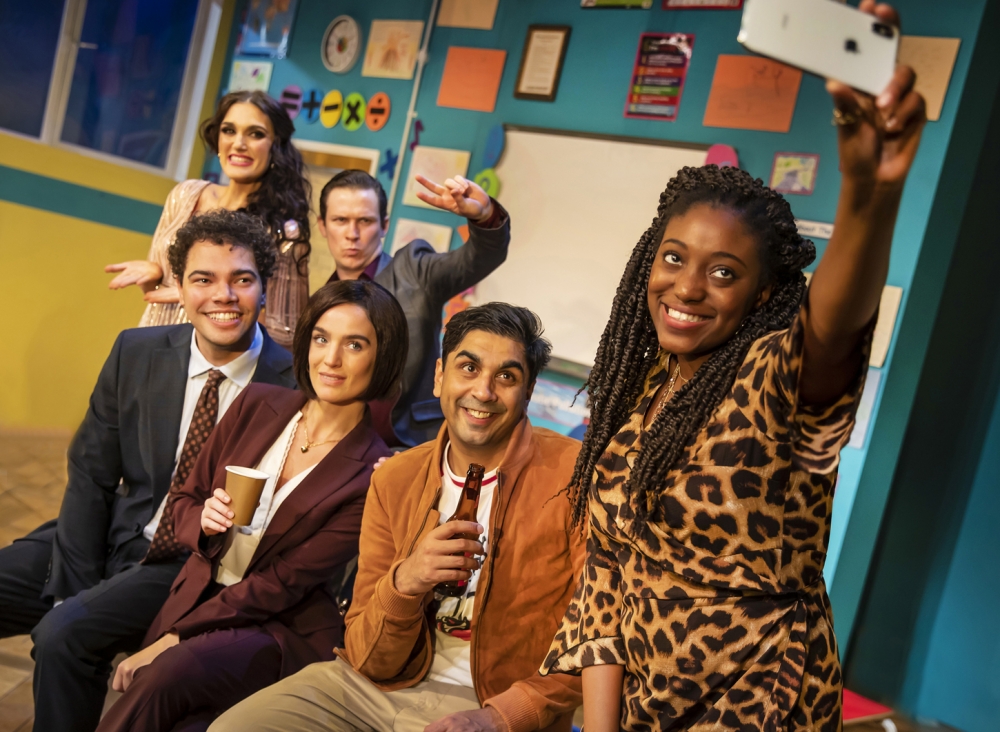
Review, Seven Methods of Killing Kylie Jenner, Royal Court, By Hannah Goslin

 out of 5 stars (4 / 5)

Social media seems to run our lives. It can be for the positive but it often is about trolls, about racism, about discrimination; there are no secrets, everyone is able to say anything about anyone or any thing. Celebrities lives are even more under the microscope and as time has gone by, so are the lives of ordinary people.

Seven Methods of Killing Kylie Jenner is a laid bare look at the dangers of having a voice, of fighting for those things that should be fought for. On cultural appropriation, of the black community and racism, prejudice, blacking up and whitening selves to fit beauty standards, of queerness and what that means, and how having a voice doesn’t always mean you are in the right.

We are first confronted with the Royal Court stage split into two – either side of the stage the audience sits, as if the play has been dissected for our viewing and those fourth walls are even more broken down, adding to the lack of privacy the narrative examines. A giant tree made of lights and string is in front of us, later breaking down – a feature point of the stage while beautiful, later feels rather sinister.

In true Royal Court style, a “normal” natural play is hyper-realised and the addition of staging, of props, of theatrical tricks, sound, lights, propelling us into a different reality versus the ordinary conversation between the two characters. These conversations are full of colloquialisms of modern black communities, of comedy of the current times, of references of the current times and therefore is a very “millennial” play. Hearing a older audience member after, some references to twitter went over their heads but this isn’t necessarily a bad thing. This play really does force itself onto the current society and ask the questions that aren’t fully realised, as this generation is the one that can change the wrongs.

While extremely clever, the narrative is punctured by almost god-like, robotic-like, dark voices that echo the comments, the retweets, the decent and darkness of social media and the character, Cleo’s, decent into dangerous territories, however these vocal effects and overlapping sometimes hinders the impact and ability to hear these. I fear that many of the “trolling” points are missed when covered by these soundscape effects.

Seven Methods of Killing Kylie Jenner sounds extreme, and it is. It is a very raw and laid bare look at hypocritical people in our society, their anger at freedom of speech yet their own freedom expressing dark and dangerous viewpoints. It analyses how racism and homophobia is still rife despite being a “woke society”. It’s just a shame that the theatrical elements hinder the clarity of these somewhat.

Review, Humane, True Name Productions, The Pleasance/Omnibus Theatre/Arcola Theatre/Theatre Deli Sheffield/Compassion In World Farming, By Hannah Goslin

 out of 5 stars (3 / 5)

In the last year we have seen a development in Theatre. Many, due to the pandemic, took to digital platforms and this has continued as the world opens up. This is a super interesting way of performance, not necessarily new in concept (The Archers for instance has been going for what seems a lifetime) but has its own challenges and positives.

Humane is a story about animal cruelty, about personal development, about feminism, race, friendship and secrets. We see the story of two very unlikely women, join together in protesting the export of live animals from their little Essex town. Their community grows but with this, while there is support and a joint agreement, there are also secrets and arguments, beginning to question nature over nurture and the society we live in.

Split into 6 parts and therefore hosted by different partners, these 30minute bursts are really great and easy to access when on the go, at a quiet moment, and great for a tube journey. They are also easy to listen to, which I found when I traveled to and from an in person show and enjoyed on my travels.

I think, without visuals, it can be quite hard to picture the story. The story itself starts at the end and we are then brought back in time to explain how we got there. This is slightly confusing when just in audio and took a few episodes in for me to piece together the narrative. The same can be said with the characters – with similar sounding voices and some doubling up on characters, it again took me some time to get my head around who was who and whose story I was listening to. Once I grasped this, it made sense and soon the different stories began to naturally interweave and compliment and contrast.

The final crescendo comes at a little surprise – without spoiling the story, part of the ending relating to race and friendships feels slightly out of place and thrown in as an after thought. I understand that perhaps the shortness of each episode and trying to get all the information into each one perhaps knocks some of these narrative plots out but it felt as if this should have been more interwoven into the story.

Humane nonetheless is a very interesting story, and perhaps goes down a route that you never expect while reading the synopsis. It just felt as if more direction was needed when deciding if this should be about animal cruelty, friendships, race and if it needed to be all of these, how they could be more interwoven together.

Review, Express G&S, Charles Court Opera, The Pleasance, By Hannah Goslin

 out of 5 stars (4 / 5)

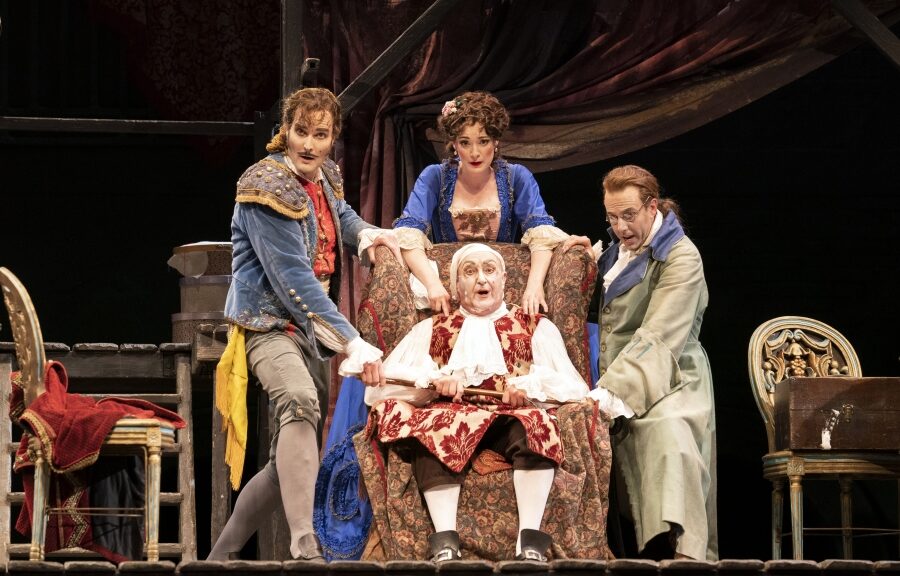
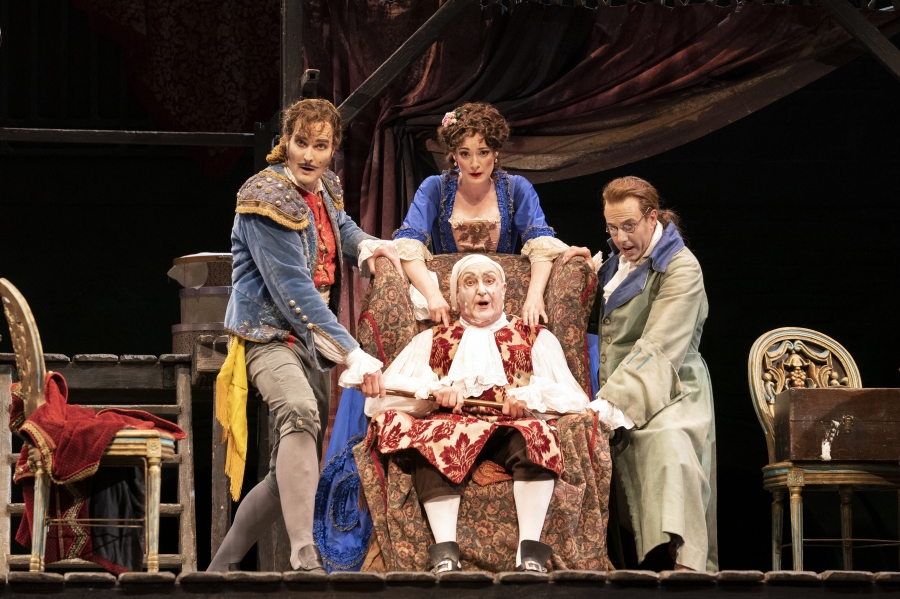
Take Agatha Christie, Opera and a whole heap of comedy, slapstick and ridiculous antics and what do you have? A wild night on the Express G&S.

With minimal and moveable staging that sets us up on an entire train from cabins, to the lunch cart and so on, we undertake a short story that introduces characters, develops a plot and comes to conclusion, in quick and concise succession, something that Christie’s mysteries take so long to do. The scenes are able to change, giving one stage the ability to become all parts of a moving vehicle. And these are not just normal staging and set changes, but they are enhanced by the performers to create comedy and to ignore any pause that may come from such changes.

With a cast of 4, we are introduced to our “Poirot” and our accompanying pianist, but leaving the other two to chop and change between the “murder suspects”. With the slight change and addition of costuming, changes in persona and physicality, both performers are able to change effectively, creating more and more hammed up characters which make us laugh at the absurdity of it all.

Then we come to the Opera – almost like an operatic Disney movie, there is little space for spoken text but instead this is continuously sung. There is no underestimating the talent of these performers, with such extraordinary voices. However, I think it was unfortunate for them that the acoustics of the stage were not in their favour, sometimes dulling their sound or drowning them below the piano. This is of no fault of the cast or the venue, however looking at their tour, something like an outdoor venue which they are booked to perform at may help elevate the sounds.

One of the best parts of this production is its references to well known Operatic and Musical songs, ones that even if you are not familiar with either genre, you may have heard along the way, and their ability to change this to fit the play. The narratives are changed into hilarious, parody version, so while you’re tapping your toes, you are also splitting your sides not only at the lyrics but how effortlessly they have changed well known songs.

Express G&S is for all ages and a great deal of fun – enjoying it myself, I felt that for sure this would have been something my parents would have enjoyed, as murder mystery fans and its subtle mickey taking of Poirot.

Mae Cwmni Dawns Cenedlaethol Cymru (CDCCymru) yn eich gwahodd i ymuno â nhw am berfformiad awyr agored 45 munud o hyd ac i ailddarganfod llawenydd dawns yr haf hwn.

Kirsten McTernan

Coreograffwyr yng Nghymru yn creu darnau dawns byrion
i’w perfformio yn yr awyr agored yr haf hwn.

Mae Cwmni Dawns Cenedlaethol Cymru (CDCCymru) yn eich gwahodd i ymuno â nhw am berfformiad awyr agored 45 munud o hyd ac i ailddarganfod llawenydd dawns yr haf hwn.

Bydd CDCCymru: Perfformiad Awyr Agored yn cynnwys dau lais dawns cyffrous. Mae dau o ddawnswyr cwmni CDCCymru, Ed Myhill a Faye Tan, wedi bod yn datblygu eu lleisiau coreograffig dros y blynyddoedd diwethaf ac wedi bod yn archwilio’r syniad o greu darnau ar gyfer yr awyr agored mewn gwahanol leoliadau yng Nghymru. 

Mae Faye Tan wedi bod yn gweithio gyda dawnswyr CDCCymru i greu darn dawns newydd, llawn egni – Moving is everywhere, forever. Dyma gerdd foddhaus i’r weithred o ddawnsio; gwahoddiad i ildio i’r awydd cryf i symud i gerddoriaeth y trac sain gan y ddau artist cerddoriaeth electronig o Gymru, Larch.

Dywedodd Faye, “Dechreuodd ‘Moving is everywhere, forever’ fel gwaith ymchwil i’r syniad o ddawns o foddhad a chatharsis fel ffordd o wahodd cynulleidfaoedd i symud gyda’r dawnswyr, ac ildio i’w greddf naturiol i symud i’r curiad. Roedd hefyd yn archwilio’r syniad fod dawns yn gallu bodoli ar unrhyw adeg, yn unrhyw le.

Wrth feddwl am osod y darn yn yr awyr agored, roedd hynny’n rhoi rheswm cryf i’r darn fod yn fentrus o ran y ffordd mae’r perfformwyr yn cysylltu â’r cynulleidfaoedd a’r ffordd maent yn croesawu elfennau newidiol amgylchedd awyr agored yn hyderus ac yn naturiol; cadarnhad nad oes rhaid i ddawns fod wedi’i gyfyngu i amgylcheddau rheoledig, dan do, nac i amser penodol o’r dydd.

Mae wedi bod yn brofiad anhygoel o dwf a llawenydd i bawb sydd wedi bod yn rhan ohono, ac rydym wedi cyffroi o gael cyfle i gyfnewid egni â chynulleidfa yng ngolau dydd yn ystod ein perfformiadau.”

Yn ogystal â chreu perfformiad dawns newydd, mae CDCCymru wedi bod yn ailwampio eu darn poblogaidd, Why Are People Clapping!?ar gyfer yr awyr agored.  Mae ‘Why Are People Clapping!?’ gan Ed Myhill yn ddarn dawns calonogol, digrif a chlyfar tu hwnt sydd wedi’i osod i ‘Clapping Music’ gan Steve Reich, ac mae’n defnyddio rhythm fel grym ysgogi. Mae’r dawnswyr yn clapio, stampio a neidio i greu’r trac sain byw.  Mae’r cyfan yn 13 munud hwyliog, llawn tynnu ‘stumiau a thapio traed.

Dywedodd Ed Myhill, un o ddawnswyr CDCCymru a’r un a greodd Why Are People Clapping!?, “Mae addasu Why Are People Clapping!? ar gyfer yr awyr agored wedi bod yn broses heriol ond cyffrous. Rydyn ni wedi gorfod ail-fowldio ein hunain i weddu i amgylcheddau mwy agored ac ansefydlog. Heb ein gallu arferol i ddefnyddio golau a sain, yn ogystal ag agor dwy ochr ychwanegol ar gyfer y gynulleidfa, mae’r gwaith creadigol wedi bod yn heriol o ran ystyried sut i ailddychmygu’r darn hwn. Er bod cyfyngiadau wedi codi mewn mannau, rwyf wedi cael fy ngorfodi i fynd ar drywydd gwahanol sydd wedi datgelu posibiliadau eraill gwych, ac mae’n deimlad cyffrous gallu cydweithio â’r dawnswyr i ddatgelu’r syniadau hyn. Rwyf wrth fy modd gyda’r llwyfaniad newydd hwn ar gyfer yr awyr agored, sydd hyd yn oed yn fwy egnïol a hwyliog.”

Ar ôl y ddau berfformiad, bydd cyfle i’r gynulleidfa ymuno a dysgu ychydig o symudiadau o’r ddau berfformiad.

Bydd Cwmni Dawns Cenedlaethol Cymru: Perfformiadau Awyr Agored yn Chapter (Caerdydd) – 6 a 7 Awst; Canolfan y Celfyddydau, Aberystwyth – 10 ac 11 Awst; Theatr Clwyd (yr Wyddgrug) – 13 Awst; a Pontio (Bangor) – 14 Awst.

Mae CDCCymru yn cydweithio â lleoliadau a phartneriaid ac yn dilyn Canllawiau Llywodraeth y DU a Llywodraeth Cymru ar weithgareddau Perfformio a Chyfranogi, ynghyd â chyngor gan Iechyd Cyhoeddus Cymru ynghylch lledaeniad COVID-19.

National Dance Company Wales (NDCWales) invites you to join them for a 45 minute open-air performance and to rediscover the joy of dancing this summer.

All image credits Kirsten McTernan Photography

Wales based choreographers create short dance performances
for outdoor performance this summer.

National Dance Company Wales (NDCWales) invites you to join them for a 45 minute open-air performance and to rediscover the joy of dancing this summer.

NDCWales: Open Air Performance will feature two exciting dance voices. NDCWales company dancers Ed Myhill and Faye Tan have been developing their choreographic voices over the last few years and exploring creating pieces for the outdoor in various locations across Wales. 

Faye Tan has worked with the NDCWales dancers to create a brand new energetic dance piece – Moving is everywhere, forever. It’s a satisfying ode to the act of dancing; an invitation to yield to the irresistible impulse of grooving, to the soundtrack by Welsh electronic duo Larch.

Faye said, “Moving is everywhere, forever’ first began as a research into a dance of satisfaction and catharsis as a means to invite audiences to groove along with the dancers, yielding into their own natural instincts to move to the beat. It was also an inquiry into the proposition that dance can exist at anytime, anywhere.

Thinking about situating the piece outdoors immediately gave the piece a strong reason to be bold with how the performers connect with the audiences and how they embrace the ever-changing elements of an outdoor environment with confidence and spontaneity; A reaffirmation that dance does not have to be confined to the indoors, in controlled atmospheres, or a particular time of day.

It has been an incredible experience of growth and joy for everyone involved, and we are so excited to have a mutual  exchange of energy with an audience in broad daylight during our performances.”

As well creating a new dance performance, NDCWales have also been reworking their acclaimed piece, Why Are People Clapping!? for the outdoors.  ‘Why Are People Clapping!?’ by Ed Myhill is an uplifting, funny and ridiculously clever dance piece that is set to composer Steve Reich’s ‘Clapping Music’ and uses rhythm as a driving force. The dancers clap, stamp and jump to create the live soundtrack.  It’s a face-pulling, toe-tapping 13 minutes of joy.

NDCWales dancer and creator of Why Are People Clapping!?, Ed Myhill said, “Adapting Why Are People Clapping!? for outdoors has been a challenging but exciting process. We have had to remould ourselves to fit into what will be more exposed and temperamental environments. Without our usual lighting and sound capabilities, as well as opening up two more sides for audiences to observe from, our creativity has been tested in how we want to reimagine this piece. Despite finding restriction in some areas, it has forced me to go in a different a direction that has revealed some great alternative possibilities and it’s exciting to work together with the dancers to unveil these ideas. I am thrilled with this new staging for the outdoors which has become even more vibrant and joyous.”

After the two performances there will be an opportunity for the audience to join in and learn some moments from the two performances.

National Dance Company Wales: Open Air Performances will be going to Chapter (Cardiff) – 6 & 7 August; Aberystwyth Arts Centre – 10 & 11 August; Theatr Clwyd (Mold) 13 August and Pontio (Bangor) 14 August.

NDCWales are working with venues and partners and taking guidance from the UK and Welsh Government Guidance on Performing and Participation activities and advice from Public Health Wales regarding the spread of COVID-19.

“Dance in Wales needs to have an equal place in how we see our cultural heritage. ” An interview with dance artist Gwyn Emberton.

Hi Gwyn, great to meet you, can you give our readers some background information on yourself please?

Hello there, lovely to meet you too. I am a choreographer, performer, teacher and, I guess, producer now too. I have mainly worked in contemporary dance and dance theatre. 

What got you interested in the arts?

I was born and raised a borders boy in Montgomery in a tied-house to my dad’s job as a farm labourer. The arts didn’t feature at home, we didn’t have any books but watched a lot of telly. It was probably singing and performing in school plays and dancing folk dances in primary school, where the performing seed was sown. 

I kind of fell into contemporary dance though after doing a drama GCSE at school. My friend who went on to Newtown college to do performing arts convinced me to try it for the acting but I took my first contemporary class and that was that. As is quite typical of coming from a farming background, I wasn’t particularly confident in speaking so doing and moving was a way for me to express myself and in a way I’d never been able to before. Whilst I was at college Diversions Dance Company (now National Dance Company Wales) came to give a workshop and performance where I met Jem Traeys (who was dancing with the company at the time). Jem encouraged me to think about taking dance seriously, it was then that I decided I would go to university to train as a dancer.  

Jem Traeys

Although I knew I wanted to dance I had no idea how to make a career out of it. No one in my family had ever done anything like that before; they were all farmers or worked in the local factory. I needed a lot of support and help from my lecturers and because of them I eventually went to university in London. It was there that I first realised I might actually be any good. I loved how my body was developing, the feeling of being part of a family with my fellow students when we made work together and the sense of purpose and identity it was giving me. 

After university, I went on to dance with some amazing companies both in the UK and Israel, was rehearsal director for some wonderful choreographers and I’ve also taught all over. 

You are the Artistic Director of Jones the Dance (formerly Gwyn Emberton Dance) the organisation’s mission is  “Extraordinary dance theatre that is globally inspired, made from the heart of Wales.” How did the organisation develop and what are you working on at the moment?

Originally Jones the Dance / y Ddawns was called Gwyn Emberton Dance. It was the company I set up in 2013 to create and tour my own group works. As the company grew over time, we started to do more and more things beyond my own work, such as our summer schools in Newtown and supporting other Wales based artists to lead or take part in the international projects we were involved in.  

Particularly in our youth projects, including Quiet Beats our workshops for Deaf young people, I realised we were trying to create a place where dance was available to those who had little opportunity or felt dance just wasn’t for them, whether this was due to geographical barriers or being part of a community where you just didn’t dance.

https://youtu.be/kEGeqirgLqg

There is still little infrastructure for dance in Wales with less and less dance happening in schools and it is only down to a few really dedicated people that any dance exists for young people outside of the traditional local dance schools – something which was the case when I was young over 30 years ago. If we don’t change this it will be the same again in another 30 years and our young people won’t get to experience the joy, creativity and, in my case, the life changing opportunities that dance can offer. 

We wanted to shift the company even more in this direction and with that we felt Gwyn Emberton Dance wasn’t the right name any more. So we changed it to Jones the Dance in April this year – ‘Jones’ because it’s a really common name that many of us in Wales identify with (half my family are Joneses) and ‘the Dance’ because it is a fun and lovely way of talking about someone and their job in Wales. 

We are working on a few things at the moment, coming up later this year and into next. We are developing our youth projects Quiet Beats and Jones Bach to run more regularly throughout the year, looking at a dancers’ creative development project with some really cool partners across Wales, finishing my next work which will be a new dance film production that has been on hold since before the pandemic, and we are just starting to work on the next edition of iCoDaCo, the international collaborative project we are involved in, to start in 2022. 

You can read review of (iCoDaCo), It Will Come Later, by Eva Maloes here

The dance sector and your work as a dance artist is inherently international, Brexit and Covid -19 must present some challenges, how have you worked to overcome them? Do you have any future plans for UK and international touring?

You are right, international work has always been a huge part of what we do. International collaboration is incredibly important to us and feels even more so since Brexit. With our colleagues at ilDance who initiated iCoDaCo, we have been talking about the implications of traveling and touring internationally before the pandemic. A significant part of the next project will be focused on how we can still collaborate but environmentally sustainably so. We are looking at what digital technologies we can use, how to share knowledge and experience across cultural, political and language borders. 

With Brexit we are still trying to understand the implications it has for us as a small dance company. We are not sure what our options are yet for iCoDaCo and whether we can raise enough funding for it. The last edition of iCoDaCo we were eligible to be partners in European funding which meant we were able to access the huge potential for us as a small company to offer lots of people work in Wales, as well as bringing a huge project to audiences and the public here. It will be a devastating loss on so many levels if we can’t be involved, both to the artists who would work on the project and to audiences. We are happy that our colleagues in Europe still want us to be involved even though it will present them challenges so fingers crossed. We are determined to make it happen so watch this space. 

With Covid, I have reimagined my new work for film instead of a touring theatre show. It will be shown in really exciting ways which has actually unlocked the possibility to share the work with different audiences in different spaces and communities all over Wales. 

Between May 2018 and October 2020 Gwyn you were the Programme Director of Dance at University of Wales, Trinity Saint David.What was your approach to the course delivery and what aspirations did you have for your students?

I really wanted to make the course a place for those who had somewhere to go in Wales to train and study dance. We took a rigorous approach to training which was supported by theoretical and practical knowledge acquisition. I was very keen to make sure the students had lots of opportunities to work with a range of different artists from different backgrounds and in different styles, from Wales and internationally such as Moya Michael from Belgium, Kiani Del Valle from Berlin, Matteo Marfoglia, Zosia Dowmunt and Jonny Vieco from Wales and the UK for instance.

I was hoping that each student had the autonomy in how their degree developed by the time they left whether that was creatively/choreographically, academically, or through a dance health route. It is such a shame that this course will close, as will the one at University of South Wales. As a whole arts community we need to address this. It seems completely unfair that there will be no conservatoire or place to study and train in dance in Wales, when many courses in Welsh and English exist for theatre and music such as at Royal Welsh Collage. 

https://youtu.be/wmwhJ_t8Tqc

 We recently interviewed Kokoro Arts and shared their response to this question

If a dancer wanted to stay and train in Wales and then pursue a career, what support system would you suggest they require in order to be able to do this?

What would be your response?

There are no options at the moment as there is no training which I mentioned above. However, we need to think much more cleverly than just that. The whole infrastructure needs to be looked at for dance in Wales. It needs to have an equal place in how we see our cultural heritage in the same way that theatre and music is. Look at folk dance, probably everyone has done it in school at some point but then it just drops off. It should be the foundation for dance in Wales but there is nowhere to take dance further especially if you can’t afford to go to a local dance school. There are all these amazing youth groups around Wales but there is nowhere to take it beyond that. There is zero dance in secondary schools, no GCSEs or academic qualifications which are the most usual routes for kids to pursue dance later on. 

Every dancer or person working in dance that I know in Wales is trying to link up, find creative ways to counter all the structural challenges we face but it just isn’t enough. It has to come from the government and the willingness to see dance as a cornerstone of a vibrant, varied Welsh cultural life and see its importance in and relevance in all of our lives. We need some kind of manifesto for dance that we can all get behind. 

We have so many of the components already; community, professional, theatre, digital, street dance, contemporary, folk dance, twmpath, classes and performances. We just need to connect and build on them through education, the right support and a commitment to implementing the required infrastructure. 

You also responded to the additional statement from Kokoro below on Twitter

For organisations and project funded companies to regularly advertise for new dancers rather than turning to those they already know.”

You said the below, is there anything more you would like to add? 

Absolutely!!! As Gwyn Emberton Dance & now @JonestheD  we’ve done and will do this. We always advertise for new dancers but we also work with people we’ve worked with previously. We’re not in the luxury position of a regularly company that employs their dancers for the whole year and year after year. The artistic understanding you have with someone over years is just as important as the new relationships you build and also the opportunities you can create. It is a question of how to strike the balance between making sure we are creating opportunities for new dancers to work with us and develop as artists and the need to maintain and build a shared artistic practice over years. This has to be a consideration. We’re working with our board at the moment on developing our open call policy & this discussion is part of that. 

As a project funded company we are limited in how often we can offer/create opportunities due to the sporadic and precarious nature of funding and how we work. We’ve lots of amazing plans coming up in the next few years but without support none of them will happen. My final thought on this at the moment as a choreographer it can be an isolated place so having relationships with long-term collaborators is hugely valuable just as it is so important to meet and support new dancers/artists who they bring their own richness to a creation.

I will add that there needs to be more opportunities across Wales for dancers and choreographers to develop their own work too. We have nothing like Wales Dance Platform any more, where I first presented my work in Wales, or Dance Shorts that Dance Blast used to run.

You can read a review of Wales Dance Platform 2014 by Hannah Goslin here

They were both brilliant opportunities to get your work and name out there and filled the diary with dance work for both choreographers and other dancers. There is nothing like this any more and we are all poorer for it. 

Through the dancers’ creative development programme we hope to give a few dancers opportunities to develop their work, skills, networks which will also give other dance work too. However, this is only a small part of what needs to be available. 

Thanks Gwynn, you are passionate about creating dance experiences for those who don’t usually access the art form.  In October 2020 you set up the pilot project Quiet Beats, the dance workshops for young Deaf people and building on its success, the second week of workshops were held in February 2021. Do you have any learning you would like to share from this work and ambitions for its future development?

We knew we wanted to do this project for a while. We had been questioning why we had never met any young Deaf people in our summer schools. After some research and talking with Deaf colleagues in theatre we realised that there is this misconception that Deaf people can’t or shouldn’t dance which stopped young Deaf people taking classes or workshops, thinking it wasn’t for them or that they wouldn’t be very good. We were very conscious that we were coming into the Deaf community as hearing people and that people may feel wary of us so it has been about building relationships with group leaders, charities, parents and guardians and most importantly they young people who have taken part. There is still so much to do and so much for us to learn if we want this project to really take off with young Deaf people from all over Wales dancing any style in an environment where they are happy to let go and enjoy themselves. 

https://youtu.be/efls97KU8wQ

Get the Chance works to support a diverse range of members of the public to access cultural provision. Are you aware of any barriers that creatives in Wales face? If you are, what might be done to remove these barriers?

We need to rethink what professional dance is and who makes it. Contemporary dance has become professionalised and has received a lot of support comparatively to other dance styles although not to other art forms. There are other dance styles which are reflective of other people’s experiences and backgrounds which need to have the same recognition. Linked to that I think the fact we don’t have dance as part of core education and there isn’t a conservatoire for dance in Wales really impacts the perception that dance can be a career. This is a barrier for everyone but particularly if you come from a community where dance isn’t seen as a profession or your style isn’t contemporary or ballet based. 

Also, I dont know of, or am not aware of, any Welsh dancers who are Deaf or have hearing loss but maybe one day one or loads of our Quiet Beaters will become dance artists for Jones the Dance making their own projects. There needs to be more visibility of artists or people working in the arts who come from different backgrounds so that the younger generations of dancers coming through see it as a possibility. They need to have people to look up to and to speak with about their own careers. 

Working in dance in a rural setting can be really challenging as there just isn’t the resources, space needed or other people to work with. 

With the roll out of the Covid-19 vaccancies, the arts sector is hopeful audiences will return to venues and theatres. If theatres want to attract audiences what do you think they should do?

Take it slowly but start already!!!! Be imaginative, creative and curious with what you are offering. Trust and let us artists lead the way, as we have been thinking for the last 18 months how to make our work safe and secure for audiences. If sports can have fans then why can’t theatres open their doors. 

If you were able to fund an area of the arts in Wales what would this be and why?

Obviously, dance. I would want to create more opportunities for people to be making more work, supporting them in making it more public and for it to be recognised. Perhaps a dance festival, digital and face to face, with lots of exciting opportunities for audiences to experience different types of dance and performances. 

What excites you about the arts in Wales?

Wales has so many incredible artists, stories and experiences to share in their work, there are so many voices who we don’t hear from but also we have such a legacy of incredible experienced artists that show what a vibrant, creative and dynamic place Wales is. 

What was the last really great thing that you experienced that you would like to share with our readers?

I have talked about it so much already but it has to be Quiet Beats. We invited Chris Fonseca to lead the week of workshops, he is a Deaf urban dancer and teacher.

He taught this super cool phase to the young people which they performed at the end of the week. I was so impressed with their focus and commitment, how they dealt with being on Zoom the whole time, and the development of their skills in just one week was phenomenal. One of the participants mum’s emailed me afterwards to say he hadn’t stopped dancing for the next week – there’s a dancer right there! 

Thanks for your time Gwynn.

Get the Chance supports volunteer critics to access a world of cultural provision. We receive no ongoing, external funding. If you can support our work please donate here. Thanks.

An Interview with Screenwriter Fflur Dafydd, conducted by Gareth Williams

In this latest interview, Get the Chance member Gareth Williams chats to screenwriter Fflur Dafydd. Their chat takes place in the form of a podcast, the second in a trial series in conversation with Welsh creatives. Fflur talks about her latest series, Yr Amgueddfa, as well as the writing process, her creative journey, Welsh identity, memory, and Welsh TV drama.

To find out more about Fflur, visit her website here, or follow her on social media @fflurdafydd.

You can watch the whole series of Yr Amgueddfa on BBC iPlayer here.

Get the Chance supports volunteer critics like Gareth to access a world of cultural provision. We receive no ongoing, external funding. If you can support our work please donate here. Thanks.

Review A Cold Supper Behind Harrods, David Morley by Barbara Michaels

 out of 5 stars (4 / 5)

A Cold Supper Behind Harrods  Now Streaming

Script: David Morley

Director; Philip Franks

Reviewer: Barbara Michaels

A hybrid, yes – but with an all-star cast.  With a live performance staged at the Oxford Playhouse by the Original Theatre Company in association with Perfectly Normal Productions and screened for one night only, A Cold Supper Behind Harrods, written originally as a radio play and broadcast as such by BBC Radio 4 back in September 2012, is now being streamed with the original cast and available on line for a modest fee.

Dubious as one’s early approach to virtual theatre might have been, the value of such screenings is now a given, and deservedly so. And this one is top of the class. Despite the starry cast, amazingly so when you learn that they are performing a live reading from the script after just one quick run-through beforehand.

The result –iconic! Admittedly, all three of the main protagonists are names you will recognise, and are theatrical veterans who have been around a long time. To whit – Stephanie Cole (ladies first), David Jason and Anton Lesser, all highly skilled thespians.  Nevertheless, as is admitted in the Q and A afterwards, for all of them something completely new.

Not surprisingly, all of them rose to the challenge admirably, despite being faced with David Morley’s complex storyline, centred around the SOE (Special Operations Executive) during World War II.  Three SOE agents meet up again fifty years after the war, the purpose being to be interviewed for a television documentary investigating the murder by the Gestapo of their late female and much-loved colleague.

Initial pleasantries between the three-give way to more disturbing issues as a web of lies and deceptions emerges, leading at last to the real truth.  Inspired by real life characters and events, it makes for gripping entertainment, made even better by an outstanding cast and Adrian Linford’s deceptively simple set.

https://youtu.be/vsqNDO3emUc

David Jason, stage veteran of such iconic television series as the unforgettable Only Fools and Horses, as agent John Harrison proves once again that age is no barrier when it comes to sheer brilliance.  As Harrison crumbles beneath the weight of knowledge revealed, Jason is utterly believable.

As the female agent Vera, Stephanie Cole is at her best playing irascible females and she doesn’t disappoint, with that roguish smile shining through at odd moments, while Anton Lesser projects a cool calm that later erupts into menace.

Adhering to Morley’s original script, which was inspired by the playwright’s meeting with two WWII veterans, the story is fictional, with love, revenge and feelings of guilt at its core.  

Don’t miss it.  This is a play that will pull you in from the start to the finish.

Watch at originaltheatreonline.com                                                   

Review, The Death of a Black Man, Hampstead Theatre, By Hannah Goslin

 out of 5 stars (3 / 5)

The title of this play, in itself should give you an inclining to its concept and writing. Blunt, dark, surely to take you by the lapels and shake you.

The Death of a Black Man, written by Alfred Fagon in the 70’s is a raw and laid bare story about black culture in the UK and the development of generations from the Windrush movement and London itself. There is no beating around the bush with this play and it takes a lot to sit and watch with its darkness seeping in slowly.

The Death of a Black Man tells the story of Shackie, his career development as a wheeler dealer in London, his battle with his own heritage and how far he will go to make it as a black man in a still very difficult and competitive society with race. Soon, his equally minded best friend comes along, selling his ideas and the two concoct ideas of exploitation of the white man, to make money but also to support black power. Starkly contrasted, Shackie’s older ex girlfriend appears, a black woman but from a middle class background, lacking an interest in her heritage and support of the movement. It is soon evident that these two will stop at nothing to make it in this world, even if it means betraying those in their own community.

Fagon limits nothing in this play. The language is of its time, with words and phrases perhaps not said today, making it shocking and at times awkward – but as this play grows darker and darker, this feeling is clever and well executed and only adds to the tension and the final crescendo. What is brilliant is there is nothing held back about Caribbean and London Black community culture, highlighting the development of these 2nd Windrush generations with their joint use of London and Caribbean phrasing and accents as they intertwine. As someone from neither community, this takes a little time to feel yourself in the swing of the writing and how it is produced but feeling the energy of those in the audience from these communities, it feels as if it is on point and reflective of those communities. It also gives a great insight into the culture of the time and how those communities were feeling, contrasting views between Shackie, who is happy to just create a career and utilise his heritage to get there; Stumpy who is a developing activist for Black Power with a underlying hatred for white people and the country he is in and Jackie, whose middle class background has washed away any interest in her heritage but who is as dark and cynical as the other two about life.

With only three performers, it felt as if we had cut away into this living room and was easily watching a normal conversation. Their acting was effortless and easy, with the added 70’s aesthetic making this feel like a piece of history. It felt very reflective of what you usually see at The Royal Court which is always very well done – something simple and naturalistic, with elements of theatricality bursting through. In this case, the conversation acts out naturally and a change of scene brings in the contrasting theatricality with music, lighting; the stage and scene changes before our eyes as the characters almost fasten up time, moving props and staging which would have happened naturally throughout several hours as they drink champagne into the night. The final part felt particularly theatrical, with naturalism taken away and symbolism and theatricality added to enhance the darkness of the writing.

My only critique is that it felt as if these natural, spoken scenes took too long and didn’t add or emphasise much by doing so. Fagon, sadly, writes about Shackie’s fathers death which unfortunately mirrored the writers own, little did he know. And while a brilliantly written play, it felt as if much of this production was trying to keep to its legacy, with a fear of maybe changing too much, cutting too much out or bringing it to the modern stage. Perhaps the fear of changing it and therefore it no longer being a homage to Fagon held it back in what it could have become. Points and elements, which as previously said were very much of the time, felt a little like it went over my head but I can definitely appreciate that this may be because I wasn’t alive in the 70’s to understand the references or culture, as well as the Carribbean/London Black Community not being my community. I would be really interested to hear from a reviewer of this community to know how reflective this really is and how it relates to the modern community.

The Death of a Black Man is interesting, it is dark, it is cleverly executed but something felt lacking and as if it really held back what is really possible with this production.

Review, Look Who’s All Grown Up, Abigail Chandler, The Space, By Hannah Goslin

 out of 5 stars (4 / 5)

In our industry, there is often questions, perhaps never elaborated on fully when it comes to what actors go through. This is even more troublesome and often taboo when it comes to young performers.

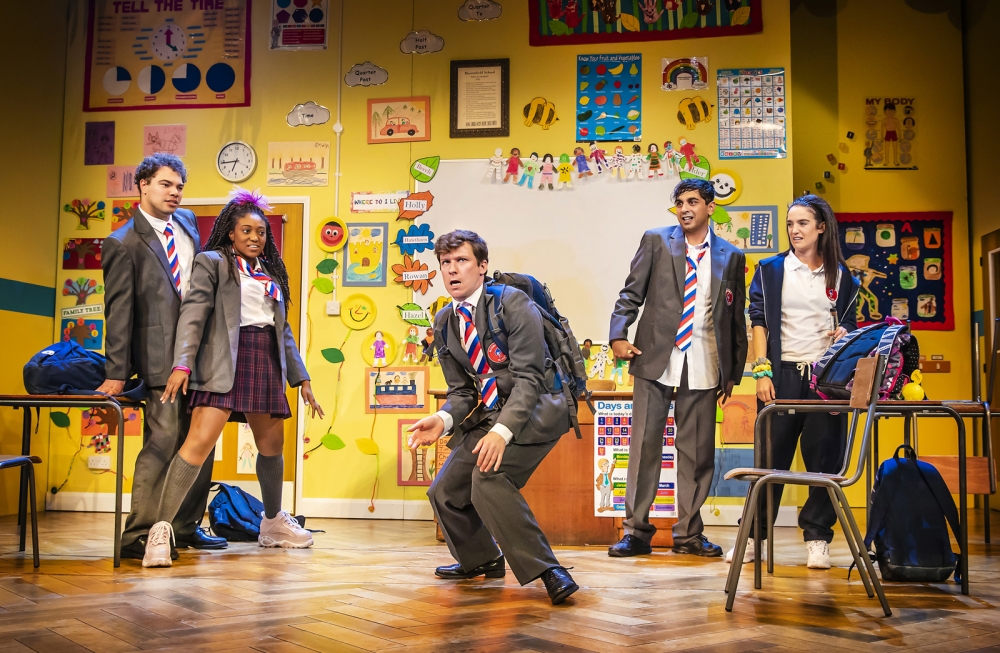
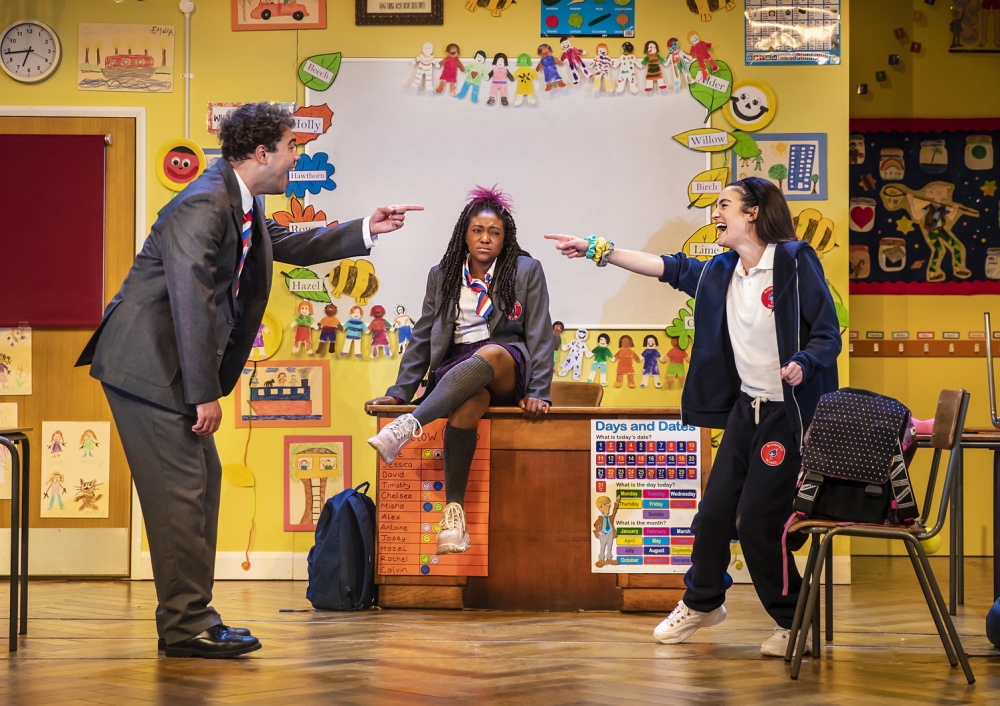
Look Who’s All Grown Up by Abigail Chandler lays the taboo and secrets bare, without letting you ignore or look away. A coming out story of sorts, we meet two young performers who have reached the point of changing in their personal lives from children to adults but also in their performance careers. Highlighting issues with puberty in both the personal and professional but also what this means for their development in both areas and how quickly things can change.

We see three viewpoints – from a male, from a female and from an LGBTQA+ person. All similar yet staggeringly different, the three character’s stories are compared and contrasted, in experience, in opportunities and also in the unspoken – the Me Too movement and its application to child stars of any gender, but what this also means when you yourself transition from being the child to the adult in awkward situations.

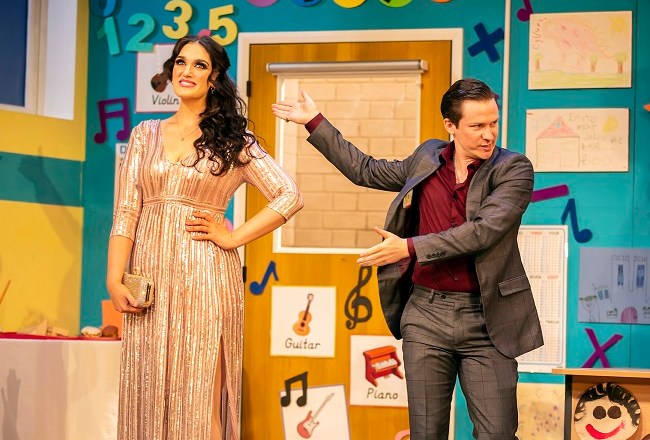
Look Who’s All Grown up is carefully constructed to ease you into this headspace, and so when things become heated or awkward, you feel it in your gut, yet cannot look away. The character of Felix particularly lays everything bare, with a sense of humour and it isn’t until later that you can really understand the trauma it has caused. You fall in love with him yourself, not only with Chandler’s writing but Daniel Bravo’s effortless acting, adding a level of whether this is okay in relation to the topic, seriously highlighting the issues between the transition of child actors to adult actors.

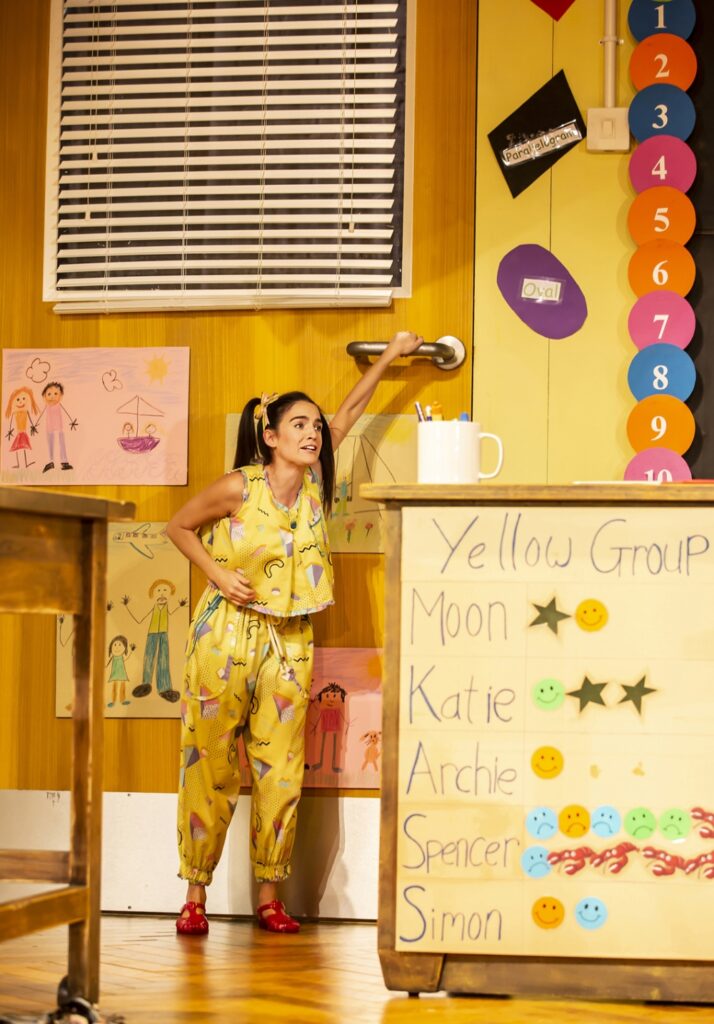
Caitlin, played by Kalifa Taylor also shows a very good contrasting character and her personal growth, from an anxious girl with mental health issues to someone confident, knowing her worth but perhaps escaping the stories we hear of sexual misconduct with women and young ones at that. It was refreshing to have a strong woman character, helping the male character when these stories are often over looked.

Look Who’s All Grown Up is quirky, it is humorous but also highlights important points that are rarely laid bare and hits you in the gut with these facts.