Walking into the theatre, I was greeted by the curtain up on a bare stage, with Miss Marple (Susie Blake) asleep in an armchair. My first hint that this was not the usual Agatha Christie production, with dark deeds in a charming English village.
The quiet stillness of St Mary Mead is disturbed by the arrival of retired American film star Marina Gregg (Suzanna Hamilton) and her producer husband Jason Rudd (Joe Dixon), who have bought Grossington Hall from Miss Marple’s friend, Dolly Bantry (Julia Hills) to live in, and are also making a historical film there, which will be Marina’s comeback. At a reception to meet the villagers, local resident Heather Leigh (Katherine Manners) is murdered, poisoned after drinking Marina’s daquiri, who is now considered to be the intended target by Chief Inspector Craddock (Simon Shepherd) of Scotland Yard.
Using the idea of a film that is viewed, rewound and then viewed from other ‘cameras’ (witnesses), the writer Rachel Wagstaff and director Melly Still, have created an intriguing production where the cast act out witness statements, first one way, then the other, twirling from A to B then back to A again, an incredibly difficult thing to do live. Lighting, sound and set design all help with this, and at first I found it a little distracting, but as it went on I changed my opinion, drawn in by the artistry on show. I was completely won over when the murdered victims helped trace each other’s outlines – a staple of crime fiction – using pink sand.
This is a rare thing, an old story given a new interpretation that really works. Wagstaff opens it up and develops the characters, such as Dolly Bantry lamenting her lonely widowhood, from the stereotypical to the human, exploring the racism, sexism and ageism of the time. At one point Craddock, infuriated by what he sees as her interference, yells at Marple “you’re not a detective, you’re a spinster!” which provoked a completely involved audience, privy to the sad secret of her fiancé being executed in WW1, to hiss and almost boo him. An incredible reaction outside of panto.
Susie Blake is brilliant as Marple, smart, determined and quietly lonely, while also demonstrating the comedy skill she’s famous for. Simon Shepherd is a prickly detective, still dealing with losing his mother as a child, while Joe Dixon brings a caring gruffness to the husband. For me the stand outs were Suzanne Hamilton’s fading film star, vascillating from fragile, fading movie star to demanding diva, and Julia Hills, whose snobbish former lady of the manor reveals her true feelings of uselessness and isolation, now that she’s no longer a wife or mother. The rest of the cast do well with what they have, but contribute mightily to what is an original and stunning ensemble piece.
Written by Amanda Whittington, Directed by Kirstie Davis
Showing Tuesday 26 – Saturday to 30 March 2019
(4 / 5) A treat for any Strictly Come Dancing On Ice fans!!
Between September and December you can’t stay in on a Saturday night and not be intrigued by the glamour and drama of the feathers and sequins of Strictly Ballroom Whether you are a fan of the show or not everyone knows the hype that surrounds the all important accolade of making it to the world famous Empress Ballroom in Blackpool’s Winter Gardens. This is the setting for Theatre Clwyd’s latest hit offering “Kiss Me Quickstep”, a bittersweet comic insight into the lives of three amateur dance partners and their bid to be the best.
The stories of the three partners are loosely intertwined, with a sense of rivalry, mystery and jealousy rippling underneath the surface loud enough for us to know all is not as it seems – the story develops at a steady pace with no real surprises. The audience is left with a smile on their face, toe tapping and hand jiving with the sense that all is well with the world.
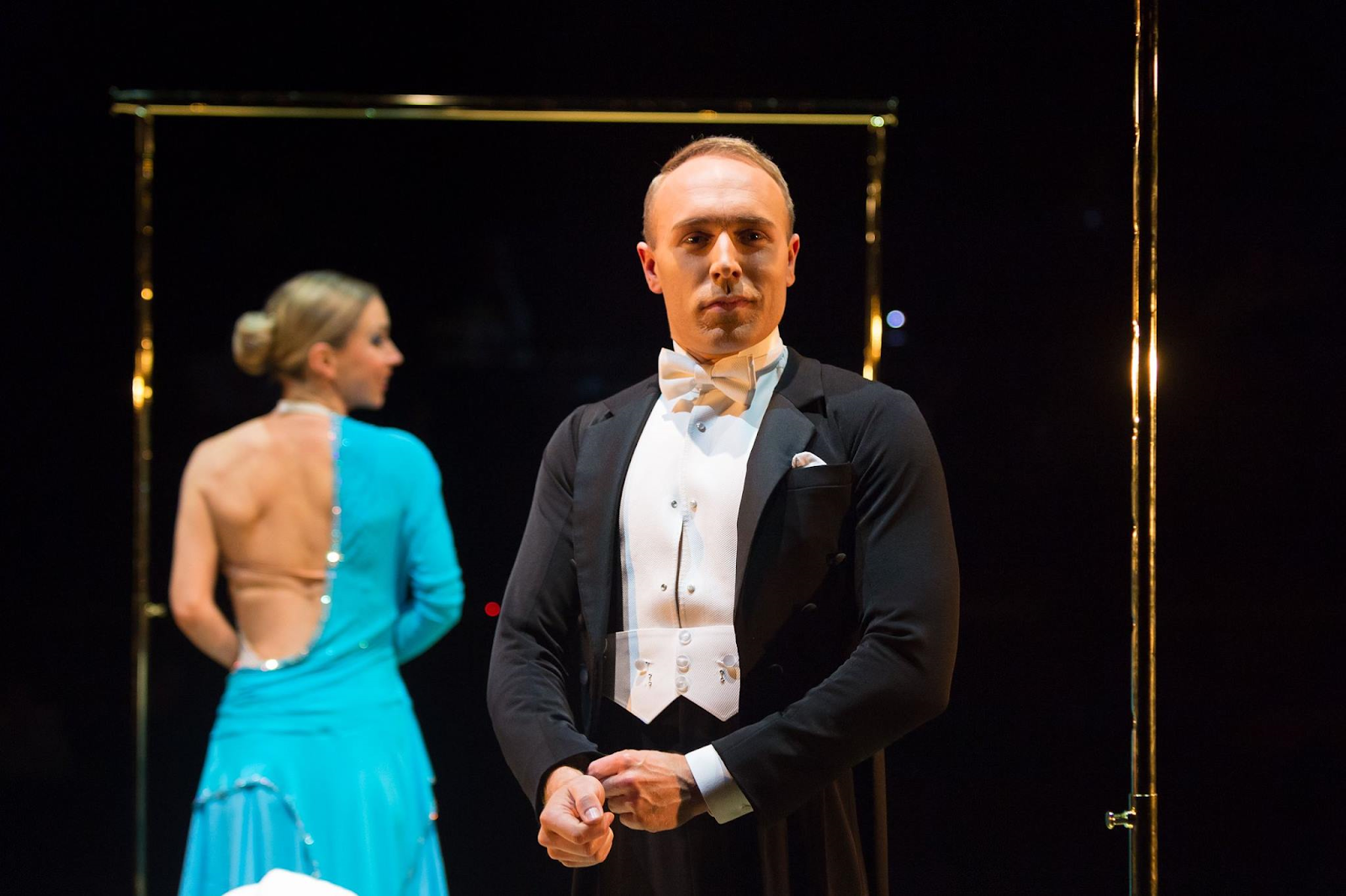
It would have been easy to have over developed characters and plot turning it more farcical than funny and creating caricatures rather than believable characters. Thankfully this talented ensemble do neither, characterisation is beautifully raw and timed to perfection – which is hardly surprising as everything about the play is about timing… even the stagehands dance with props in synchronisation. The trust and timing element is excellently displayed in a couple of costume changes on set which are risky but funny.
The set is depicted by a couple of chairs, rails and two arch lighting rigs. The cast use a combination of movement and dance with this simple set and it becomes backstage, dressing rooms and the audience filled dance floor with ease.
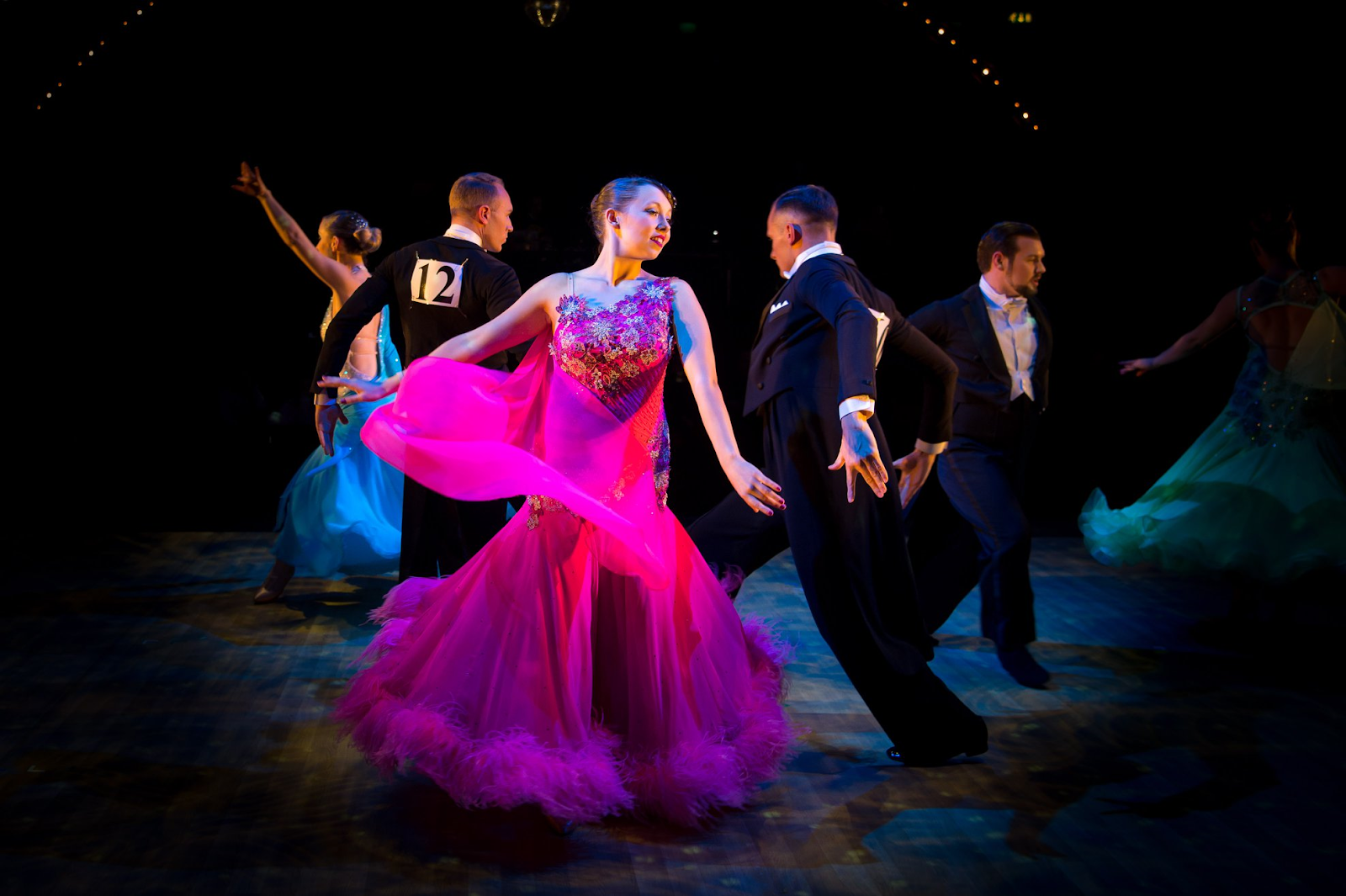
It would be rude not to mention the dancing – I am a Strictly fan and for me there was just the right amount of dance any more and I think it would have been distracting from the play, any less and the sense of why they were there would be lost. As it was, it worked just fine, I did like it better when just one couple was dancing at a time as I felt the stage was a little on the small side for a three partners to be dancing, however this did not spoil the play in any way. As a bonus Theatre Clwyd Community Dancers were involved as additional dancers, this gave an extra dimension for the cast and audience to work with.
As far as rating go I am not sure I would place it as a quickstep – it lacked the bounce and speed, for me, it was more an American Smooth – it glided along elegantly, had a few high lifts and dips in the middle and ended with a peck on the cheek.
Myths and fables are the cornerstones of great narratives. For, if no other reason, they are the oldest stories to survive the test of time. They are journeys and battles of good and evil and are basic but deep so you can throw almost any coat of paint on them you want and they still ring the same emotional core. Not all though have to be set in ancient times. An essence of a story can be picked up and put in almost any aesthetic or time period. Take Star Wars, for example, dark lords, a princess in peril, it takes place a long time ago in a place far, far away, its a fairytale with a science-fiction setting. The Kid Who Would Be King knows this and takes one of the oldest (as well as British) myths and puts it into our modern era with a few new twists and turns.
The
tale begins by telling the tale. Literally, the movie opens with a
storybook opening and seeing illustrations and narration telling the
tale of King Arthur, how it was a time of chaos and dark forces were on
the rise and the people needed leadership, so came a young boy named
Arthur that pulled the sword from the stone and became king of the land.
But his stepsister Morgana was warped by greed and jealousy and sought
to take the throne for herself, so Arthur, along with his wizard Merlin
battled her and then banished her deep within the earth, but she vowed
to return when the land is sick and the people are divided. Then we pull
out of the book and are now in modern times.
We see a
young boy named Alex Elliot (Louis Ashbourne Serkis) who is late for
school (as it seems all leading children must be when they are the
protagonist in movies). When he gets there his friend Bedders (Dean
Chaumoo) is being bullied by Lance (Tom Taylor) and Kaye (Rhianna
Doris), he refuses to let his friend be the victim and bushes back,
resulting in all of them getting detention.
You will
notice that each character is given their own color and has a unique
silhouette. Such detail is important to notice and give credit to
because it helps make the character instantly visually recognizable.
Which, in a movie where the characters are simple and there’s a lot of
running about, is very important.
While running away
from the bullies after detention Alex runs through a construction site.
While there he sees a sword sticking out of the pillar of a building, he
pulls it out and takes it home. While there he and his friend translate
(through the aid of Google) the engravings on it. It read that it will
be pulled out by the king of the land, they say that this must be the
sword in the stone, which they laugh at the thought of. But when a
strange boy suddenly enrolls in their school and one night a flaming
skeleton soldier enters Alex’s room, almost killing him, he starts to
think that there is merit to some of this.
This strange
boy is in-fact Merlin (Angus Imrie), the great wizard himself. In the
actual lore, Merlin would age backward so this decision has some logic
and credibility by staying true to the original mythology. Though at
times he does revert into his adult form and is then played by Sir
Patrick Stewart, who both seems to naturally take to playing a mighty,
booming wizard and is clearly having quite a bit of fun with the role.
While he is in this state he brings great gravity and seriousness to the
moments, as well as comedy, though what would you expect from Stewart. So
begins the quest to train, assemble knights of the round table (that is
foldable in one of their dining rooms) and defend the land against
evil. It’s a classic tale that has been told again and again and holds
up. What matters is if it brings something new to the table and how well
it executes its concepts. As has already been made clear taking the
myth and setting it in modern day is something but there are other
examples of this, adding all the modern pop culture references is
something though I feel these are more of a deterrent to the movie. They
are just there for kids to hear and think “Hey they said that thing I
like, yay!” It is something that adds no real substance to the material
and will most likely date it terribly, though this is a movie for
children and it never forgets that so maybe I’m being too hard on it.
Writer-Director Joe Cornish seems to have found his niche in modernizing fables. His first movie Attack the Block,
which I greatly enjoyed, was essentially a fable, just told in modern
London with Aliens thrown into the mix. He writes fast-talking,
personality-infused characters, with plenty of humor sprinkled about and
always stays true to the emotional core of the whole project. If you
enjoy the work of Edgar Wright (who Cornish has been writing partner to
for many projects), particularly his Cornetto Trilogy, then this is the
type of humor, style, and a journey that will appeal to you.
If
there’s a definite weak element to the movie it is the acting. These
are not great child actors, they are the overreacting type you often get
from child actors. When they are shocked or surprised their mouths hang
open and eyebrows raise, when they are upset the eyebrows go down and
they pout their lips. Though I must give credit to Serkis, who is able
to convey pain just through an expression
and without dialog. The best actor within the movie is Sir Patrick
Stewart but that seems unfair to compare these children to this
well-experienced master of his craft.
I
appreciate the incorporation of real problems with these characters.
Some are insecure, or have to face truths about the world is harder than
they’d like it to be. This grounds it and adds weight to the story, it
makes the characters real in a way that goes beyond simply having them
say what their favorite drink or color is.
This is one of the oldest stories ever told. About a land in need of a hero and a sword chooses the said hero, about dark forces and a group that unites to slay it. it stays true to that core and wraps it in modern day with the lingo and names so that the youth will find it easy to connect with. It does it’s job well and distinguishes itself while doing it.
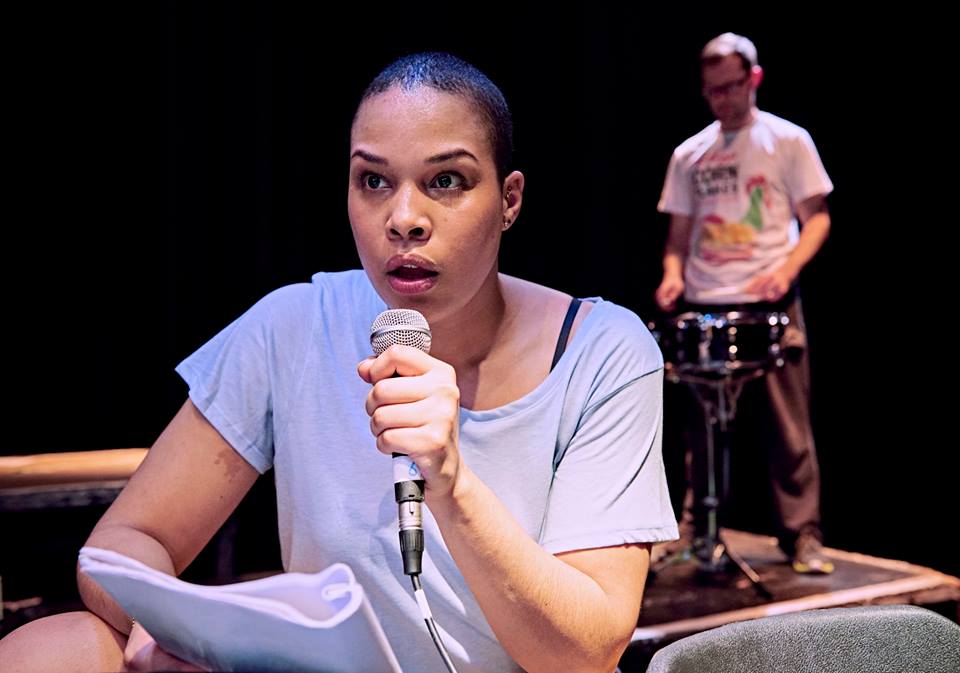
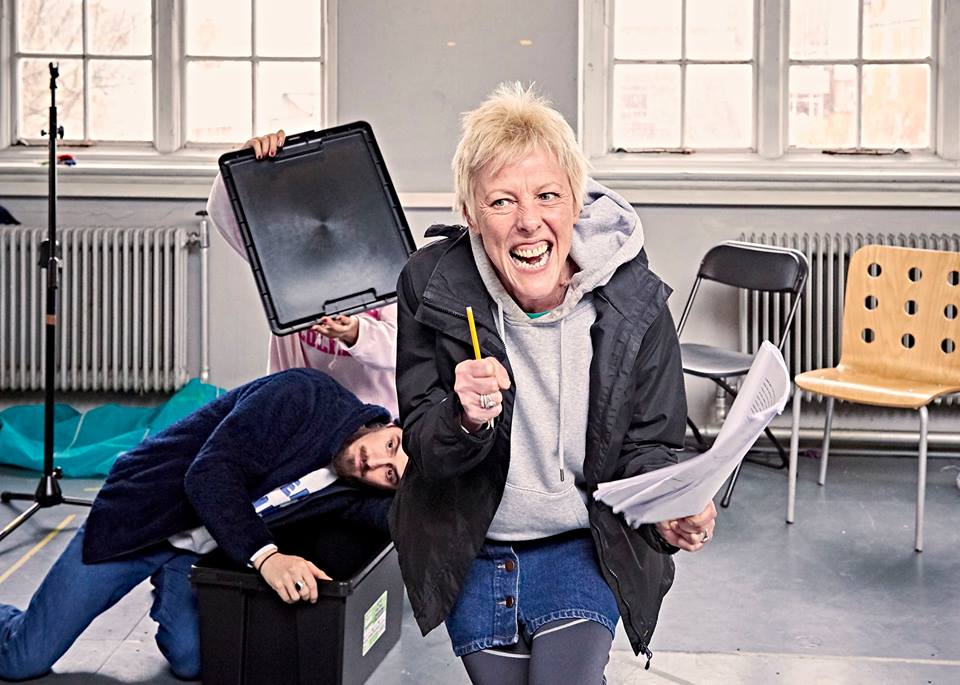
Please note this is a review of an open rehearsal which took place at Chapter Arts Centre, Cardiff.
All images credit Jorge Lizalde
This fun and moving adaptation of Victor Hugo’s Les Misérables by Cardiff-based theatre company August012 juxtaposes the battle of Waterloo and the Brexit Referendum. The intention behind the historical and literary parallel is to insert our daily lives into a wider perspective, to juggle the big and the small, the significant and insignificant, the past and the present. Les Mis, not the musical (thank God not the musical!), is a whirlpool of sound, words, and movement, from which emerge a sense of loss and futility, an awareness of something different beginning in a Britain still hangovered from the Referendum, and compassion.
The scene begins with an account of the battle of Waterloo, cut by the recollections of Brits on holiday in Greece before the Referendum, and by the disbelief and shock at the result on the night. Away from formulaic narrative structure, Les Mis embraces a multilayered performance where music, words, and movement intersect and converge all around us. The music is spell-binding and plays a prominent role in guiding the audience into this tragi-comedy. It is a seductive and immersive experience that stirs the senses and brings awareness of wider significance.
The smell of grass, the thumping on the ground of the soldiers’ feet, broken by holiday-makers’ easy-going chatter and banter to the tune of Brazilian music in the sun-kissed beaches of Greece make the play at once seductive and moving. The charged atmosphere evoked by the battle is countered by the fun and ordinariness of the Referendum night. The parallel is sustained by local references to Cardiff’s roads and neighbourhoods. Napoleon is in Grangetown. Brussels is Ponty. Yet, the playfulness of Les Mis accentuates the brutality of Waterloo conveying a sense of awe, of something bigger than ourselves.
This heartfelt, engaging, ironic and exciting production articulates the current confusion, exhaustion, and ridiculousness of the aftermath of the Referendum. We don’t know what is going on. There is no neat comforting thesis, no tidy narrative, no solution, but a deliberate intention to throw off course. Les Mis plays with our confusion and our Brexit fatigue.
At a time when over a million people have marched for a referendum on the deal, over five million have signed a petition to revoke Article 50, and when Parliament keeps voting down May’s deal, Les Mis captures the never-ending saga, the incomprehensible going around in circles, and the complexity of the present situation. Brexit has severe repercussions for peace in Northern Ireland, for EU citizens in Britain and British citizens in the EU, for Europe, and for Britain; yet its significance is drowned out in the daily drama deprived of substance. In all this, Les Mis wants its audience to wake up to the historical significance of our daily lives.
The play includes Nicola Sturgeon’s address to
European nationals living in Scotland. In the endless noise produced by
politicians on Brexit, European nationals in Britain are often forgotten and,
at times, dismissed as ‘bargaining chips.’ Director Mathilde Lopez is a
French-Spanish North African, who has lived and worked in Britain for 20 years
and has a family with British composer John Norton. Matteo Marfoglia, who
choreographs the dancers, is an Italian national who has worked in the
Netherlands and has been living in Wales for the past six years. For both
Mathilde and Matteo the result of the Referendum brought the pain of exclusion.
All of a sudden, their identity,
status, and very presence in Britain were questioned.
Les Mis gives a voice to that sense of
disorienting loss Europeans felt. There is no anger, no preaching, no pedantic
history lecture. The political and philosophical rhetoric at the end is perhaps
not as punchy and inspirational as it could have been, but it is genuine and
moving. There is an acceptance of defeat without despair, a search for strength
in love, not distance. Les Mis appeals to faith, hope, and
love. In opposition to the outside political message of exercising control and
erecting borders, Les Mis, fruit of artists with diverse
cultural backgrounds and political stances, celebrates friendship across
divides. It calls on all of us to show compassion to one
another.
What would Hugo make of this take on his work and, perhaps more crucially, what would he make of his own dream of a United States of Europe? He might be confused and excited to see that a Union of European countries has taken shape. He might feel inspired and hopeful that it is not just a philosophical, political, or religious idea, but a reality, clumsy and complex, but one that is increasingly in people’s hearts. This production of Les Mis, with its exuberant rhythms, poignant words, and passionate movements, lets us hear the heart of Europe beating.
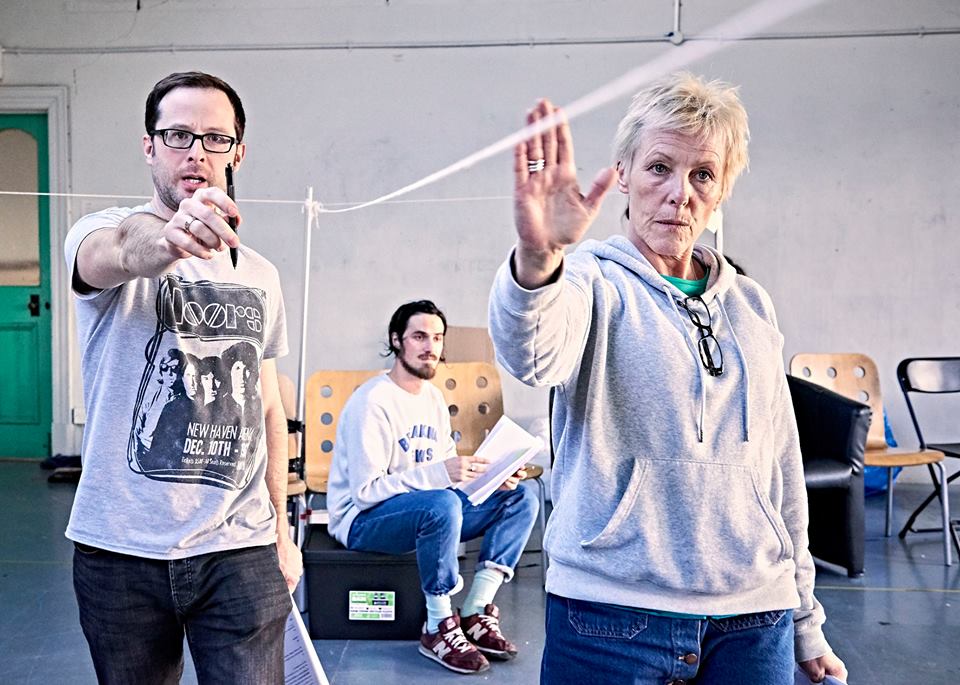
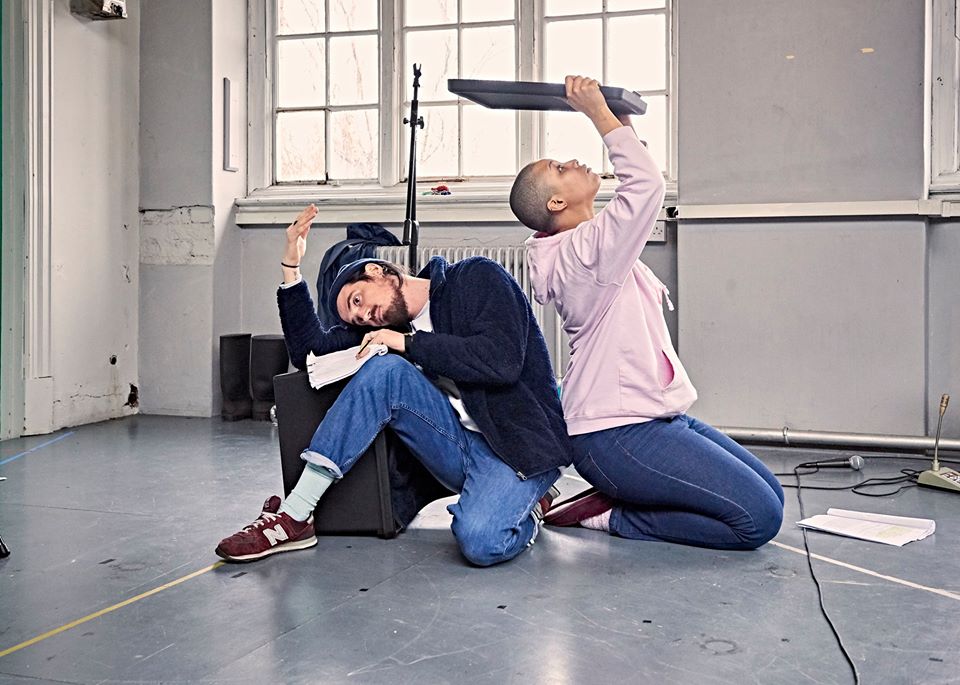
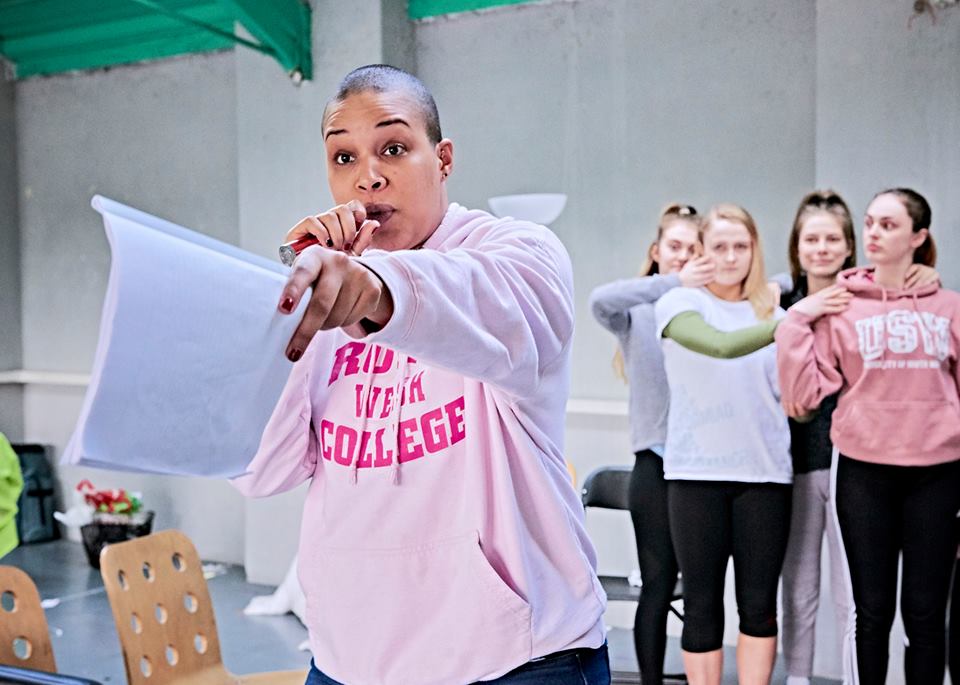
Up the ramps of steep metal stairs, in a room in the Loft, outside of the main building of Chaptert Arts Centre, the theatrical company August012 are rehearsing for their unique take on Les Misérables by Victor Hugo. The music begins. It’s a military tune. It’s 1815, the battle of Waterloo. The fighting, the casualties, the hollow victory. Then, at a stroke, it’s 2016, in Cardiff, the night of the EU Referendum. The battle of Waterloo and the battle of Brexit come together through a meeting and clashing of sounds, words, music, and dance making for an immersive sensory experience.
Rehearsal images credit Jorge Lizalde
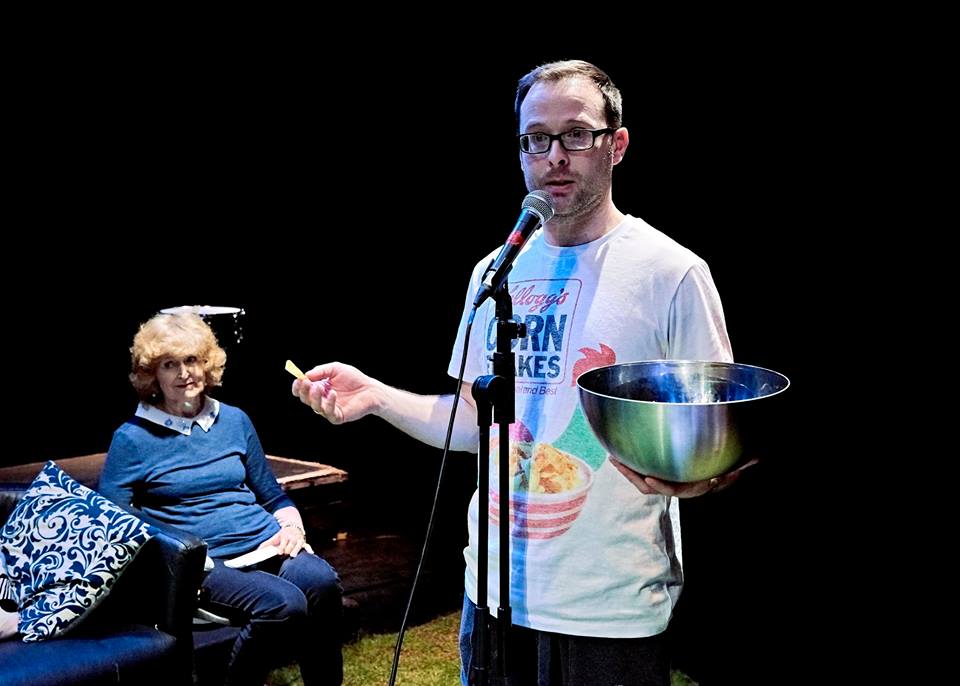
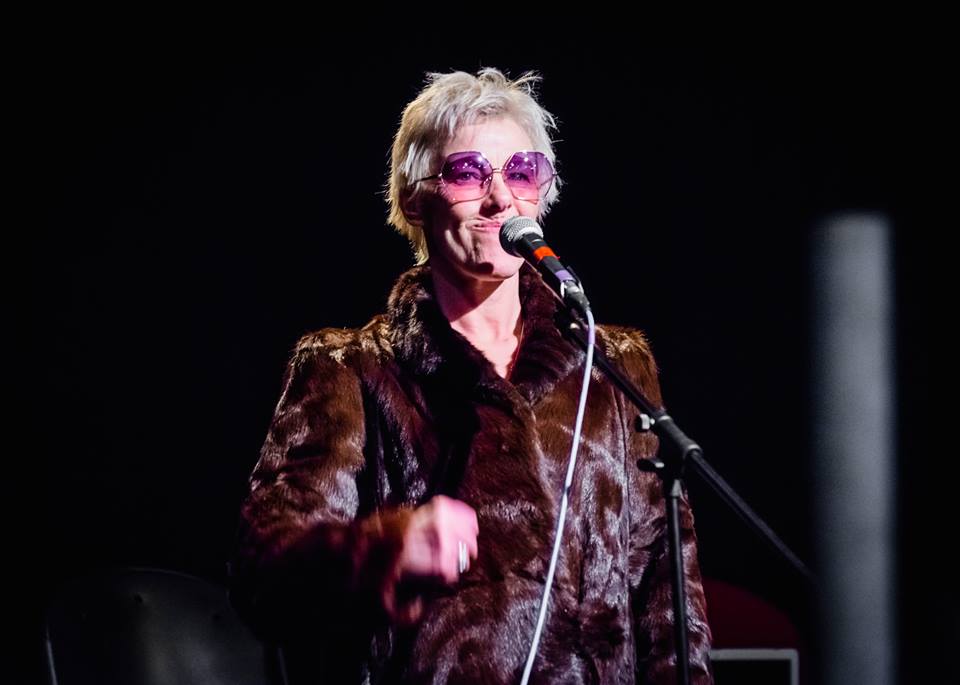
The tragedy and horror of Waterloo is juxtaposed with the carefree and indulgent pleasure of holiday-makers in 2016 ahead of the Referendum and the comic coming to terms with the result. It is a kind of estrangement that seeks to bring awareness of the historical implications of Brexit through rhythm and fun. All the pieces, the description of the battle, the drums, the music, a man chocking on a Dorito, Farage, and soldier-dancers, come together with perfect timing. The creativity fuelling Les Mis comes from the collaboration of Director Mathilde Lopez, Choreographer Matteo Marfoglia, and Composers John Norton and Branwen Munn, the latter working from West Wales.
Mathilde Lopez
Matteo Marfoglia
John Norton
Branwen Munn
The coming together of French-Spanish, Italian, and Welsh talent with diverse national and cultural backgrounds makes gives an extra dimension to the careful multi-layered assembling of sound, words, and movement. It is the collaborative and supportive nature of these relationships that stands out as I watch the rehearsals. There is no hierarchy, no instructions, no neat division of labour, but a coming together to harness the talents and creativity of one another. Mathilde says, ‘We can do that,’ not ‘Can you do that?’ She is not imparting instructions, she listens to others and makes suggestions. The work emerges from this shared effort and fun. They’re working hard but they’re also having fun.
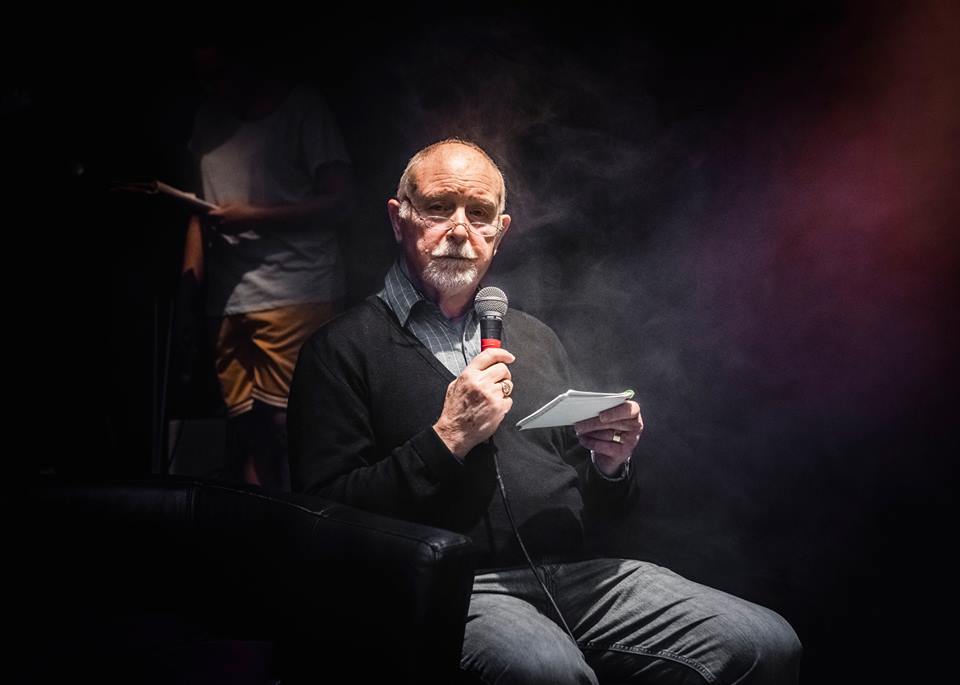
The atmosphere is so relaxed and friendly that I wonder how a comment from me might be received. I comment and I’m struck by Carwyn, one of the actors, turning to me and nodding. It is a listening environment, where each member of the company can make suggestions and is listened to. John Norton, the composer/DJ, is surprised I’m surprised. ‘This is theatre,’ he tells me, ‘If you want control, don’t do it.’ Unpredictable, brittle, never finished, theatre is always in the making. Precision is impossible, flexibility is key.
Mathilde likes the challenge that music and movement present to her as a theatrical director. She needs to limit herself to give space to John and Matteo. Her listening and collaborative frame of mind includes listening to actors and non-actors who participate in the production. When auditioning for the play, Mathilde asked them what they were doing on the night of the Referendum. The piecing together of different perspectives and experiences reinforces the nature of this production of Les Mis where different worlds coexist.
Choreographer Matteo Marfoglia tells me that the idea is to have two
worlds side by side in the same space: the world of the actors and the world of
the dancers. The two worlds do not interact. The dancers and the actors are on
different journeys. The dancers, as soldiers, evoke with their movements and
sounds the tragic sense of the historical dimension of both Waterloo and
Brexit. Actors and dancers come in and out of the space interweaving the
present with the past, connecting and disconnecting history with our daily
lives.
Les Mis speaks to our own
reality. It is this sense of the real and dance as a way to communicate real
life that brought Matteo to Wales. Classically
trained, Matteo first moved to Amsterdam and Rotterdam to become a contemporary
dancer and, six years ago, he came to Wales to be part of the National Company
Wales. He left classical ballet because it did not meet his thirst for
something more authentic to human experience. He believes that contemporary dance
allows the individual expression of emotions to come to the fore.
Matteo is training to become a ‘Gaga’ dance teacher.
Gaga dance has been developed by Israeli dancer and choreographer Ohad Naharin.
At its core, Gaga dance is about embodying the inward emotions of the dancer
and how they connect with other dancers. The individuality of the dancer is
expressed outward flowing into the shared consciousness of the group. ‘We feel the same
emotions but we do so differently,’ Matteo explains, ‘We’re all connected
through an emotion but this emotion is expressed in one’s unique and individual
way.’
The emotional dimension of Les Mis is a pervasive sense of loss and futility contrasted with seductive pleasure and a hangovered awakening to the aftermath of the Referendum. As European nationals, Matteo and Mathilde experienced a deep sense of loss after the Referendum. They felt ‘under attack,’ as Matteo puts it. All of a sudden, they became foreigners, their presence questioned. Mathilde, who has been living in Britain for 20 years, is married to John and has British children who speak Welsh, felt the pain of exclusion, of being told to ‘go back home.’ She never needed to be formally British, she was part of British society, then Brexit struck.
Brexit has shown that being foreign is an identity that stays with you
no matter how long you live in your ‘adoptive’ country, no matter of many
changes you make, no matter how much you absorb of the local culture. The
‘in-betweeness’ that has characterised Mathilde’s life became problematic with
Brexit. Europe allowed overlapping identities that don’t stop at national
borders. Europe, for Mathilde, is the wider project of togetherness. It is
complicated and Europe often does not live up to the dream. The way the EU
functions right now doesn’t work for many countries, she tells me, but they
don’t question being part of it. ‘It’s like moaning at your parents,’ Mathilde
says, ‘you moan, you don’t kill them.’
The vote brought sadness to Mathilde and also anger. She found that
anger was more ‘socially acceptable’ than sadness because it makes one look
strong, but she found it tiring. She needed compassion. She plunged into
reading classics, such as Steinbeck, Camus, and Hugo. Classics were her way to
get her head around what had just happened and avoid a reductive perspective.
‘When you’re angry at the Americans, you read Steinbeck, when you’re angry at
Italians, you read Dante,’ Mathilde explains. Literary classics allow her to go
beyond the narrow contingencies of today’s events, put things in perspective,
and nourish compassion.
For Mathilde, Les Mis is a personal journey from sadness and
anger to compassion. Compassion is in the ability to listen to one another,
work together, and produce a work that is accessible to all.‘Will my grandmother get it?’
Mathilde asks herself when writing. She wants something accessible, not limited
to regular theatre-goers. She wants to be open to others, wherever they come
from culturally, socially, and, of course, politically. Some members of the
production voted Leave.
‘It is our duty to be compassionate,’ says Mathilde, ‘to find strength in accepting defeat, not despair.’ It is compassion that allows to overcome division, to appreciate human complexity, and find strength in togetherness. Mathilde finds compassion in being supported by Chapter Arts Centre, in working together with actors, non-actors, and dance students, getting inspiration from all.
Mathilde, Matteo, and John tell me working together requires humility, respect, and trust. As John tells me, ‘you need to sense the time when to follow someone else’s lead, when to defend one’s position, and when to let go of it.’ You need to abandon the need to take control. This deeply collaborative and inclusive production of Les Mis is fruit of mutual trust and compassion. It is what the UK needs now.
We are ten years into these MARVEL movies, in them, we have been to so many nations, outer space and loads of variations of magical/science fiction cities. In order to stave off repetition and boredom, they need to diversify and add something new and have each main character have their own dynamic so each is distinct and remains interesting. With Captain Marvel, it gives us something that really shouldn’t have taken over ten years to reach, a movie with a woman as the lead and a unique aesthetic in setting it in the nineties.
https://youtu.be/Z1BCujX3pw8
Being that this is the first movie to be released post-Stan Lee’s passing they open this movie paying homage to the prolific creator, with his image and quotes sprawled across the opening sequence. Usually, this opening segment is filled with images of the characters from the comics or the movies along with bits of the script, now it tips its hat to the man that made most of it possible. As is traditional he also makes his brief cameo within the movie itself.
We open the movie on a distant world where an alien space soldier named Vers wakes from her dream. This is an alien planet but the inhabitants look human, at least most of them, her commander Yon-Rogg (Jude Law) looks very human except for his eyes. They assemble their team and go off to combat the latest Skrull threat. Skrull’s are green-skinned aliens, in their original form, they are shapechangers, which leads to much tension and generally being careful who your really talking to. They land on a planet to combat them and while the shooting of blasters is going on the Skrull have purple blasts while the Kree are green so you can tell which blast is coming from which team and their direction. While these segments are playing out it feels and looks like a none too impressive episode or even one of the dull movies of Star Trek.
During this skirmish, Vers is captured and
the Skrulls are probing her mind for essential information. She breaks
free with the help of her enhanced strength and plasmablasts she can
shoot out of her fists. She then crashes lands on, where else, the
planet Earth. But not in the present but in the nineties. Following
close behind her are some Skrull’s which will cause a bother and so the
real adventure begins.
For her powers, she comes with the regular assortment of heightened superhuman abilities, very strong, tougher skin, heightened reflexes. But primarily she is able to shoot plasma beams from her hands when making a fist. The energy themselves look like flames that have been converted into water that flow in anti-gravity. It’s a distinctive, ethereal and recognizable look for the power.
MARVEL has enjoyed much success with a
very wide range of characters, but this is the first one to be helmed
by a woman. This is a big deal and the marketing departments have been
trumpeting it well but within the movie they do the best thing they can,
they don’t make a big deal out of it. Yeah, there’s no obvious
patriarchy that keeps this girl down, none of the other women are making
direct statements about “Girl Power” these are just heroes, villains
and even just people doing what they do. Yes, she does encounter some
sexism within the movie but it’s nothing that wouldn’t really feel out
of place in a movie set today. People like a character for being a
character first and their gender second.
Being that it is set nearly twenty years in the past and something strange is happening a familiar face turns up. Nick Fury played as he always has been, by screen legend Samuel L. Jackson, but looking more like he did when Pulp Fiction came out that he does currently. MARVEL and Disney seem to have been practicing and slowly perfecting the technology to digitally make their actors look younger, it seems like this was the pinnacle that they were building towards the whole time. An entire movie where they take a man in his seventies and turn the clock back to him being around forty-five. He still sounds almost exactly as he did back then and still moves very spry for a man of his age so there is nothing to subtract from the performance. I know that this isn’t what Samuel L. Jackson looks like now and if I didn’t know that I would have been fooled. Apparently, you can regain your youth, through the help of hundreds of hours of digital manipulation and a few hundred million dollars.
Brie Larson has proven herself as a great talent in movies like Room and Kong: Skull Island
where she actually doesn’t need to speak much because she is able to
communicate so beautifully clearly through her face. Her she does her
best work by not speaking and the playful banter between her and
Jackson, but there are moments where she has to dramatically shout
science fiction gobbly-gook and it falls flat. This is a shaky
performance, as a whole, it is solid enough but this is clearly either
an actor being taken out of their comfort zone or unclear directing.
One
of the main elements of this movie is memories. Captain Marvel’s past
is unclear to her and she must delve into her memories and piece it
together. There is a segment where they have fun with putting a
character in the middle of one of her old memories while outer forces
play it back and forth.
So now we know who was teased at the end of Avengers: Infinity War and are now ready to go into Endgame. We have a movie that it true the established formula that MARVEL has tried and tested for ten years and give us a unique visual style and character. It is not an outstanding achievement but as an action movie with superhero antics going on this one is plenty of fun.
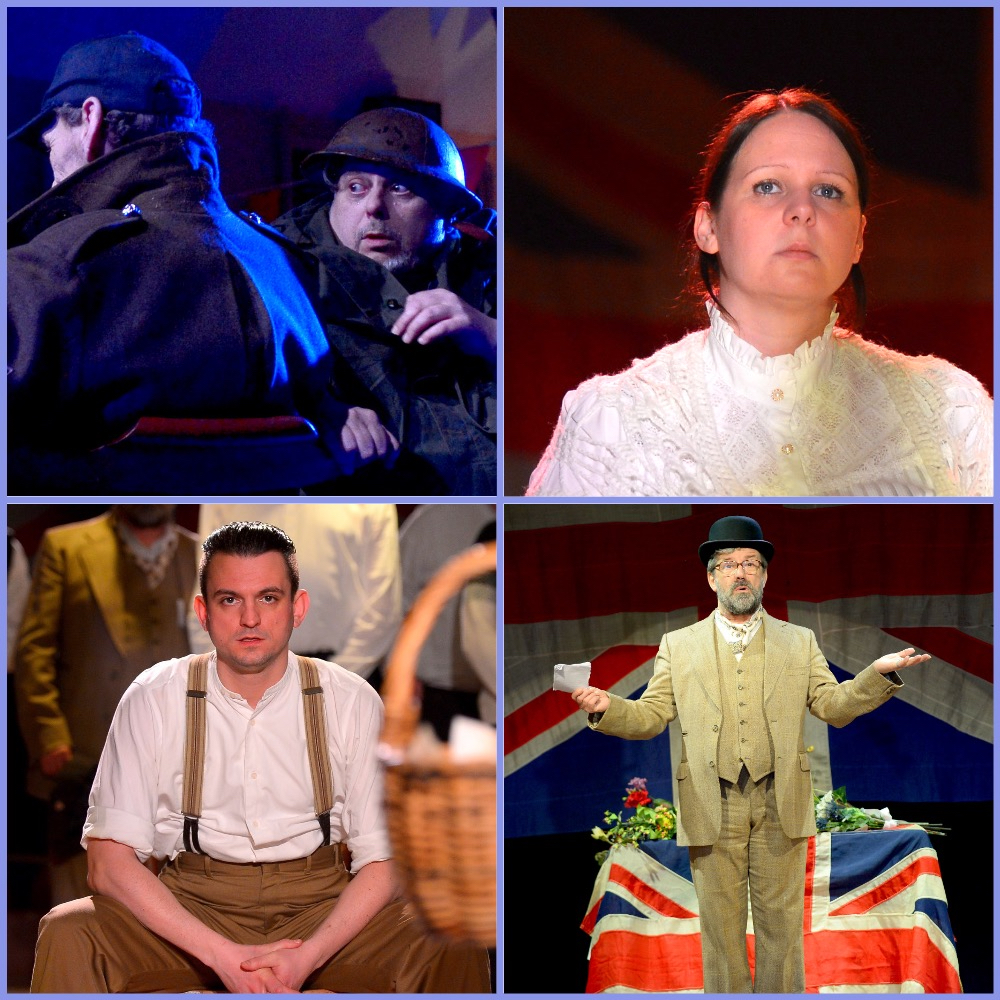
Re- Live’s new theatre show ‘The Return/Y Dychweliad’ is a moving, courageous composition of sadness, truth, celebration and sacrifice.
It begins at St Fagan’s Museum entrance where we are taken on a welcoming walk to Oakdale Workmen’s Institute, listening to various accounts of the thoughts and memories of the people connected to Oakdale. They tell us of the beauty of ‘devouring books’ from the library which was a rarity then, the joy of choc-ice treats and how Oakdale invited a ‘thirst for knowledge’ in the Institute.
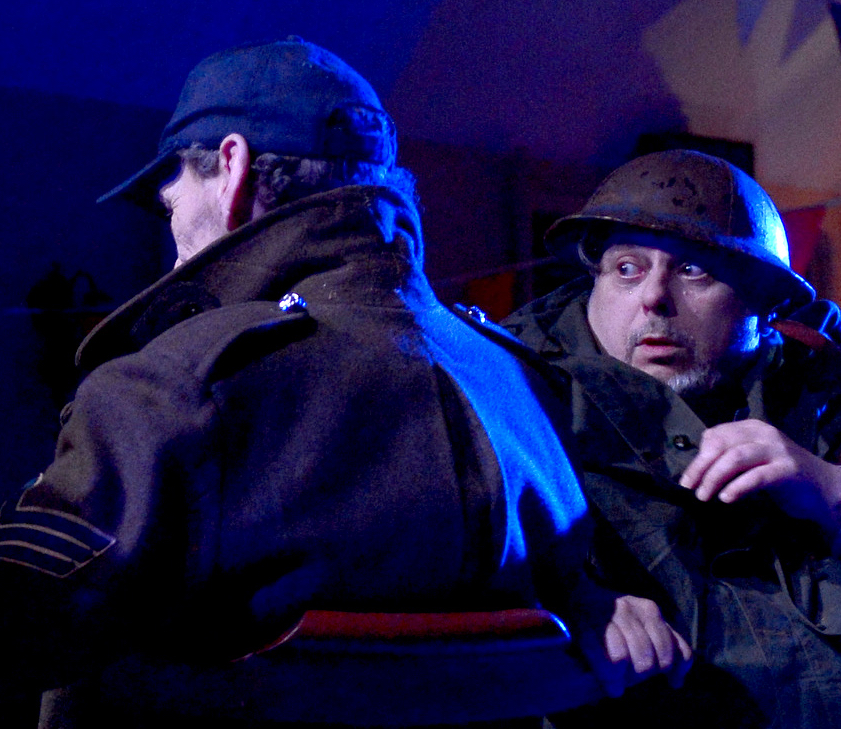
We then reach the Oakdale’s Workmen’s Institute where (after a lovely cuppa tea) we are thrown into a World War I Victory Ball in 1919. The bunting is up, the tea is flowing, the Bara Brith is out and we are entertained with song, story and striking truths of what it was to be a soldier, a friend, a woman and a mother during The First World War. We are shown the thrill of the beginning of war, and the heartache it created during a time when so much was unknown medically about the after affects of battle and sacrifice.
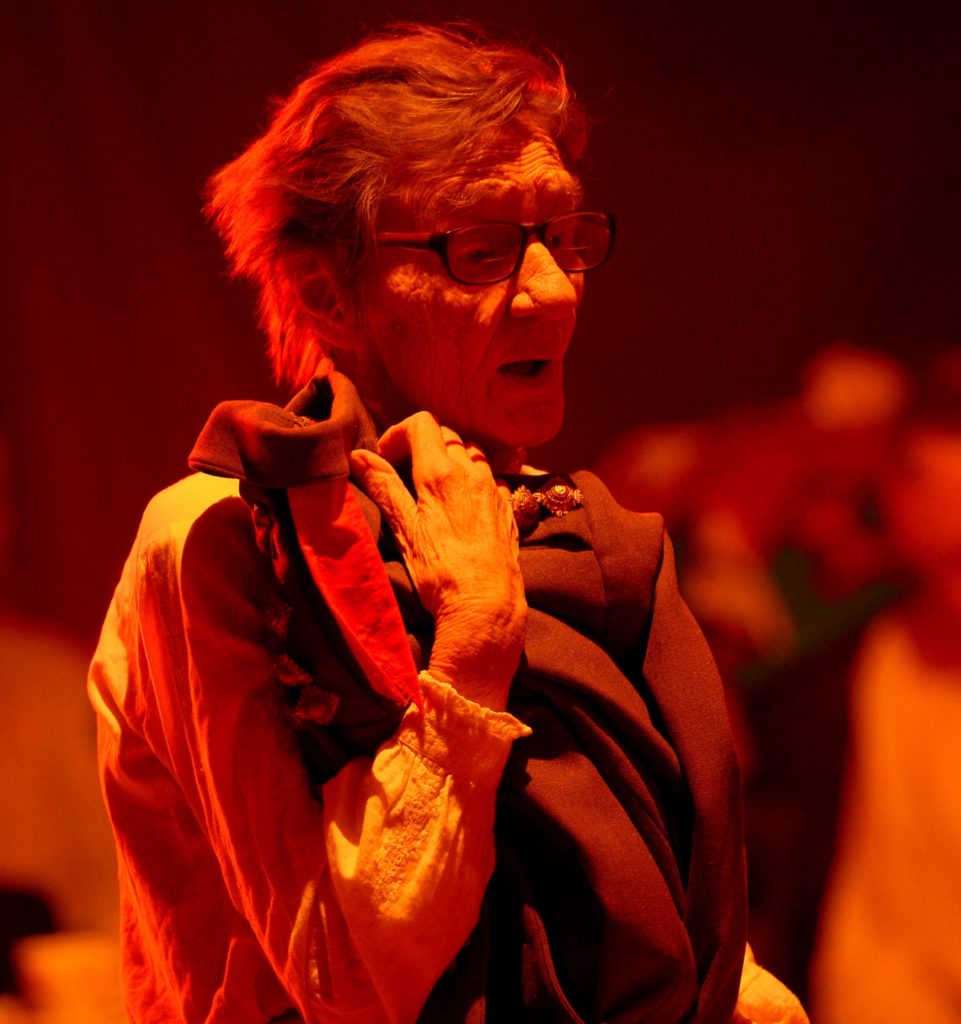
The piece moves through dialogue, solo performance, touching physical imagery and choral singing with a nod for the audience to join in on a few wartime tunes. And there’s the beauty of Re-Live right there. Yes, it’s a show, a performance, but it’s a cwtch too. A really important, poignant, ‘so glad to be home’ kind of cwtch. The cast open their arms to you, smile at you, pour their hearts out to you and allow you to feel something about how they feel and have felt. Re- Live’s mission is to work with communities and to tell stories and truths from their lives and ‘Y Dychweliad’ is a beautiful shower of these things. These stories, this history, the effect war has on people around us and still has to this day are subjects that we must talk about. If we don’t talk about these things, if we don’t remember the history of our times, and the affects it has on us still- will they be lost? Will we learn? Will future generations know these wonderful, war time songs, even?
Karin Diamond and the team have created a gorgeous concoction of story, song, music and poetry and a beautiful memory for all that see the show. The production ends as fuelled as it begins, with a personal poem ‘Mother Wales’ written by one of the cast- which makes your heart beam. The thankful, heartfelt, emotional response at the post show discussion is unforgettable. Talks from the cast about their own experiences, and how much support we must continue to provide for our Veterans is integral.
One of the cast said ‘ Once you leave for war, and go over there, coming back is.. alien. You’re petrified. You come home. But you’re never the same.’ Reading through the Oakdale information book, one Veteran writes (of working with Re-Live) ‘The project has saved me because it’s given me something to look forward to, it’s given me a purpose again. It helps me control my anxiety too. This is the one place I can come where I know I won’t be judged.’
And that’s Re-Live. Sharing words and feelings from people, to people and for people. With the utmost care, gratitude and heart. ‘Keep the Homes Fires Burning’, indeed.
‘The Return/Y Dychweliad’ runs from 14-16 March/Mawrth,
Oakdale Workmen’s Institute, St Fagan’s National Museum of History/ Sefydliad Y Gweithwyr Oakdale, Sain Ffagan Amgueddfa Werin Cymru
Yna, penderfynais symud adref i Abertawe, lle cefais swydd gyda chwmni teledu Tinopolis fel cynhyrchydd dan hyfforddiant, a chael cyfle i barhau i adrodd straeon dramatig drwy gyfrwng rhaglenni dogfen am dros ddeng mlynedd. Rydw i bellach wedi bod gyda Theatr Genedlaethol Cymru am ychydig dros 3 blynedd, ac yn dal i ymhyfrydu yn y cyfle i ddweud straeon da, perthnasol, mewn nifer o wahanol ffyrdd.
Er taw Cynhyrchydd Gweithredol yw eich swydd yn
y cwmni, rydych hefyd yn gyfrifol am yr holl gynyrchiadau, yn ogystal ag am y
gwaith cyfranogi, sy’n cynnwys gweithio gyda’r gynulleidfa ehangach. Mae
hynny’n waith ac iddo gwmpas eang iawn. Sut ydych chi’n llwyddo i gyfrannu at
bob un o’r meysydd hyn?
Amrywiaeth sy’n rhoi blas ar fywyd! Mae’n gylch gwaith eang, ond rydw i wrth fy modd yn wynebu’r her. Yn fy marn i, mae’r gynulleidfa’n allweddol i bopeth ry’n ni’n ei wneud, ac mae ein gweithgareddau cyfranogi gyda chynulleidfaoedd yr un mor bwysig â’n cynyrchiadau. Rydym yn ymestyn y gweithgareddau hynny, gan wrando ar farn pobl a gweithredu arno.
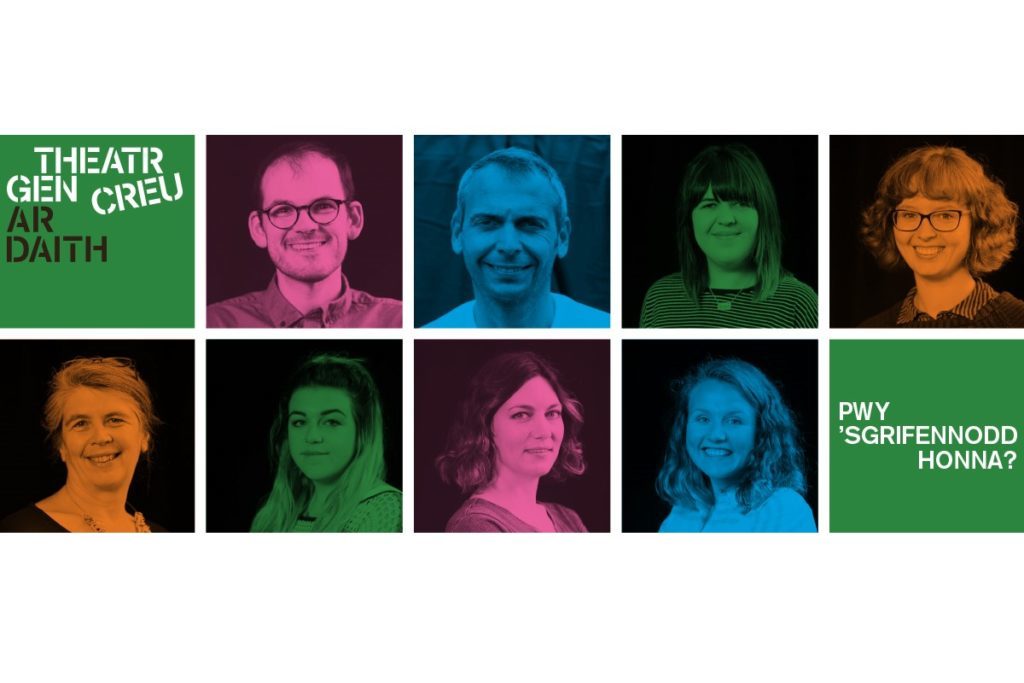
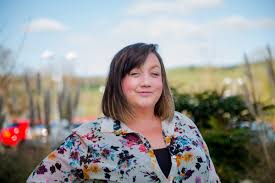
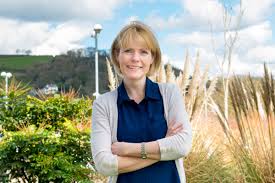
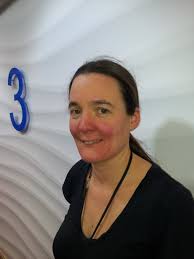
LLinos Jones
Fflur Thomas
Nia Skyrne
Mae gan Theatr Gen dîm gwych yn Llinos Jones, ein Swyddog Cyfranogi, a Fflur Thomas a Nia Skyrme, ein Cynhyrchwyr Cynorthwyol. Yn ogystal â chynllunio a hwyluso trefniadau holl gynyrchiadau’r Theatr Gen rydyn ni hefyd, gyda’n gilydd, yn cydlynu ein Clybiau Drama gyda Menter Iaith Gorllewin Sir Gâr, Theatr Mwldan a Theatr Felinfach; ein gweithgareddau lles gyda’r rhwydwaith Cyfuno Sir Gâr; yn ymgysylltu â chynulleidfaoedd yn y gwahanol leoliadau ar gyfer ein perfformiadau BSL; gyda Dysgwyr y Gymraeg ledled Cymru trwy gyfrwng ein sgyrsiau cyn-sioe a gwersi Cymraeg i Ddysgwyr a gyflwynir ar y cyd gyda’r Ganolfan Dysgu Cymraeg Genedlaethol; gydag arbenigwyr ym myd addysg er mwyn cefnogi’r cwricwlwm newydd a darparu adnoddau yn y Gymraeg; gyda gwahanol leoliadau wrth gyflwyno’r cynllun cenedlaethol ‘talwch faint a fynnwch’ ar gyfer cyflwyniadau o ddarlleniadau o waith gan ein Grŵp Dramodwyr Newydd, ac ati ac ati. Rydym yn gwneud ein gorau, ond yn bell o fod yn berffaith, ac yn croesawu unrhyw sylwadau ac awgrymiadau.
Rydym eisiau ymestyn yn bellach ac yn fwy eang, ac, fel y cwmni Theatr Genedlaethol Cymraeg ei iaith, teimlaf fod gennym gyfrifoldeb aruthrol a bod angen i ni weithredu i ddileu’r rhwystrau i gael mynediad at ein gwaith. Dydyn ni ddim yn honni ein bod yn gwneud popeth yn dda nac yn berffaith, ond rydym yn gwneud ein gorau glas. Rydym yn craffu a bopeth ry’n ni’n ei wneud, gan newid ac addasu o fewn Cymru sydd hefyd yn newid, gan ddysgu o’n camgymeriadau.
Ar hyn o bryd, mae Theatr Genedlaethol Cymru yn
ymarfer Merched Caerdydd gan Catrin Dafydd a Nos Sadwrn o Hyd gan Roger
Williams. Bydd y ddwy ddrama’n cael eu perfformio fel rhaglen ddwbl i deithio
Cymru y gwanwyn hwn. Mae’r ddwy yn adlewyrchu gwahanol agweddau ar y Gymru
gyfoes. Ydych chi’n credu bod theatr fyw yn dal i deimlo’n berthnasol i
gynulleidfaoedd iau, o ystyried y gystadleuaeth sydd am gynulleidfaoedd i
ddramâu gan safleoedd ffrydio yn ôl y galw, megis Netflix?
Does dim byd gwell na’r teimlad hwnnw o weld stori ddramatig yn fyw, a rhannu’r profiad o ymateb yn y foment i berfformiad a sgript. Yn wyneb cymaint o gystadleuaeth, mae’n fwy anodd gwneud y theatr yn fwy perthnasol – yn enwedig i gynulleidfaoedd iau – ond dyna lle mae’r her, ac rydw i wrth fy modd gyda her.
Rwyf hefyd yn aelod o fwrdd Mess Up the Mess, sefydliad sy’n cynnig cyfleoedd deinamig i bobl ifanc ym maes creu theatr, oherwydd fy mod yn credu’n gryf mewn ymgysylltu â chynulleidfaoedd iau. Roeddech yn crybwyll Netflix. Yn 2017, bu Theatr Genedlaethol Cymru yn peilota ein dangosiad theatrig cyntaf yn y sinema drwy ddarlledu ein perfformiad o Macbeth, yn fyw ac fel-byw, o Gastell Caerffili i 11 o sinemâu ledled Cymru. Yr enw a roddwyd ar hyn oedd Theatr Gen Byw.
Wrth symud ymlaen, mae angen i ni gofleidio’r agenda ddigidol. Rwyf wedi cael gweledigaeth y bydd pobl ifanc – ac, yn wir, pawb arall – yn gallu cael mynediad at ein cynyrchiadau, a dylanwadu arnynt yng nghyd-destun y cynnwys, pryd bynnag maen nhw’n dewis, pan mae’n eu siwtio nhw, ar ben eu hunain, mewn grŵp, ble bynnag y maen nhw. Mae’n rhaid i ni fod yn gynhwysol, nid yn gaeedig, ac mae hyn yn golygu darparu cynifer o gyfleoedd ag y bo modd i sicrhau bod pawb yn gallu mwynhau amrywiaeth o weithiau theatr yn y Gymraeg, yn fyw ac fel-byw.
Yn ddiweddar, mae’r ddau ddramodydd – Catrin
Dafydd a Roger Williams – wedi cael llwyddiant ym maes Dramâu Teledu a
gynhyrchwyd yn Gymraeg yn gyntaf, ac yna yn Saesneg. Ydy Cymru’n unigryw yn y
ffaith bod ganddi awduron o’r fath safon uchel yn sgrifennu ar gyfer y Teledu
a’r Theatr ar yr un pryd?
On’d yw hi’n wych bod awduron sy’n sgrifennu yn Gymraeg i’r teledu – rhai fel Roger a Catrin, Siôn Eirian, a sawl un arall – hefyd yn gallu bod yn ddramodwyr sy’n sgrifennu yn y Gymraeg; bod Cynhyrchwyr Teledu Cymraeg, fel fi (a Roger) hefyd yn gallu bod yn Gynhyrchwyr Theatr Gymraeg, a bod Cyfarwyddwyr Teledu fel Ffion Dafis (sydd hefyd yn actores) yn gallu cyfarwyddo pennod o Pobol y Cwm yn ogystal â chyfarwyddo cynhyrchiad theatr? Roedd Mared Swain, sydd ar hyn o bryd yn cyfarwyddo’r sioe gyntaf yn ein rhaglen ddwbl, Merched Caerdydd a Nos Sadwrn o Hyd, sy’n agor yr wythnos hon yn Theatr Clwyd, hefyd yn Gynhyrchydd Stori ar gyfres S4C, Gwaith Cartref. Rwy’n siŵr fy mod yn diflasu fy nghydweithwyr wrth sôn mor aml am sgiliau trosglwyddadwy, ond os nad ydych chi wedi gweithio mewn rhyw sector penodol, does dim rheswm pam na all eich profiadau fod o fudd i sector arall, a hoffwn weld mwy o gydweithio ar draws y sectorau ym meysydd y diwydiannau creadigol a diwylliannol. Rwy’n credu’n gryf y byddai sector y theatr a sector byd teledu yn cael mantais o hyn.
Bydd y cynhyrchiad yn cynnig dau berfformiad BSL – un yn Theatr Clwyd, Yr Wyddgrug, ar 15 Mawrth am 19:45, a’r llall yn Stiwdio Weston, Canolfan Mileniwm Cymru, Caerdydd, ar 11 Ebrill am 19:00. Allwch chi ddweud wrthon ni pam, yn eich barn chi, mae perfformiadau a gefnogir gan BSL yn rhan bwysig o’r hyn rydych yn ei gynnig i gynulleidfaoedd?
Cathryn McShane
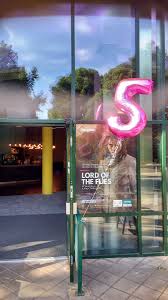
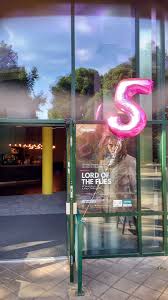
Sherman 5
Jonny Cotsen
Dechreuodd y cyfan gydag awydd i fod yn fwy cynhwysol, ac edmygedd o’r arferion da a sefydlwyd gan Sherman 5 yn Theatr y Sherman, a bellach mae’n rhan greiddiol o’n gwaith. Roedd dod i adnabod Cathryn McShane, Cymraes sy’n ddehonglydd BSL, a Nia Skyrme, cynhyrchydd Cymraeg ei hiaith a chanddi brofiad o hwyluso perfformiadau BSL, yn gam allweddol yn y gwaith o wireddu’r weledigaeth hon. Cawsom gymorth gan Jonny Cotsen yn ein peilot cychwynnol, ac yn ddiweddar fe’n hanogodd ni i beilota perfformiad BSL integredig o Estron gan Hefin Robinson.
Rwy’n credu ei bod yn bwysig i holl aelodau’r gynulleidfa weld y dehonglydd ar y llwyfan. Merched CaerdyddaNos Sadwrn o Hyd yw’r trydydd cynhyrchiad teithiol cenedlaethol lle rydym wedi darparu’r gwasanaeth hwn, ac rydw i wrth fy modd fod Cwmni’r Frân Wen hefyd ar hyn o bryd yn darparu’r gwasanaeth hwn (gan Cathryn) ar eu taith ledled Cymru o’r cynhyrchiad Anweledig. Fel cwmni theatr cenedlaethol Cymraeg ei iaith, teimlaf fod gennym gyfrifoldeb mawr i barhau i symud ymlaen, yn y gobaith y gallwn helpu i symud y sector yn ei flaen yn y cyd-destun hwn. Mae’n rhaid i ni ddechrau meddwl nawr – beth nesaf?
Mae ‘Get the Chance’ yn gweithio i gefnogi ystod
amrywiol o aelodau o’r cyhoedd i’w galluogi i gael mynediad at ddarpariaeth
ddiwylliannol. Yn eich profiad personol chi, ydych chi’n ymwybodol o unrhyw
rwystrau i ddarpariaeth ddiwylliannol?
Yn fy marn i, mae yna sawl
rhwystr. Ar nodyn personol, mae gen i ffrindiau ac aelodau o’r teulu sy’n cael
trafferth i ymrwymo’u hunain i fynd i weld cynhyrchiad theatr yn y Gymraeg, er
eu bod i gyd yn byw eu bywydau’n hapus drwy gyfrwng yr iaith. Mae pobl yn aml
yn meddwl nad yw eu Cymraeg yn ddigon da, neu bod natur yr iaith a ddefnyddir
mewn drama yn rhy anodd iddynt ei deall yn llawn. Rydym yn ceisio cyfathrebu’r
neges bod ein perfformiadau theatr yn y Gymraeg yn gwbl gynhwysol, a’n bod yn
cynnig ystod eang o gynyrchiadau – rhai’n defnyddio iaith lafar, eraill yn
defnyddio iaith farddonol, rhai yn nhafodiaith y gogledd, eraill yn nhafodiaith
y de; rhai mewn Cymraeg dinesig ac eraill mewn Cymraeg cefn gwlad. Y realiti yw
taw dim ond un elfen yw iaith yn yr holl sbectrwm o rwystrau i gynyrchiadau
theatr. Mae gennym ddyletswydd tuag at
yr holl bobl sy’n wynebu rhwystrau i’n cynyrchiadau, a dyna pam rydym yn gwneud
pob ymdrech i chwilio am bartneriaid o bob cefndir i’n helpu ni gyda’r daith
hon i’w gwneud yn haws i’n cynulleidfa gael mynediad at ein gwaith.
Yn ogystal â chynhyrchu pecyn cynhwysfawr o weithgareddau i gefnogi rhai sy’n dysgu Cymraeg, deallaf mai hwn fydd y tro cyntaf i Sibrwd, eich Ap unigryw, gynnig cyfieithiad llawn o’r Gymraeg i’r Saesneg. Mae hyn yn cynnig cyfleoedd cyffrous i gynulleidfaoedd newydd gael mynediad at eich gwaith. Sut mae Sibrwd wedi datblygu fel cyfrwng mynediad i gynulleidfaoedd?
Ydyn, rydyn ni’n peilota rhywbeth cwbl newydd y tro hwn; bydd Sibrwd, ein ap ar gyfer ffonau clyfar, yn cynnwys cyfieithiad llawn o’r ddwy ddrama yn y rhaglen ddwbl hon. Rydym wedi cael adborth gan ein cynulleidfaoedd, yn cynnwys pobl fyddar neu rai a chanddynt nam ar eu clyw; mae’n amlwg eu bod nhw’n awyddus i gael y gwasanaeth hwn, ac rydyn ninnau’n awyddus i roi cynnig arni. Rydw i wedi gweld y cynllun newydd, ac mae’n edrych ac yn teimlo’n grêt. Rydym yn edrych ymlaen at gael adborth gan gynulleidfaoedd ar y daith hon, wrth i ni barhau i ddatblygu’r adnodd.
Pe byddech chi mewn sefyllfa i ariannu un maes o’r celfyddydau, pa faes fyddai
hwnnw a pham?
Prosiect cyfranogi
cenedlaethol ar y cyd â lleoliadau ledled Cymru a fydd yn datblygu teimlad o
gyffro o gwmpas y theatr, ac yn cyrraedd uchafbwynt mewn perfformiad
cenedlaethol mewn gwahanol leoliadau ar yr un pryd. Rydym yn awyddus i
gefnogi’r lleoliadau wrth iddynt weithio tuag at gynyddu ac amrywio eu
cynulleidfaoedd.
Beth sy’n eich cyffroi chi ynghylch y celfyddydau?
Y ffaith bod popeth ac unrhyw beth yn bosibl, gyda’r bobl iawn.
Beth oedd y peth gwych diwethaf i chi ei brofi y byddech yn hoffi ei rannu gyda’n darllenwyr?
Yn ddiweddar, y stori
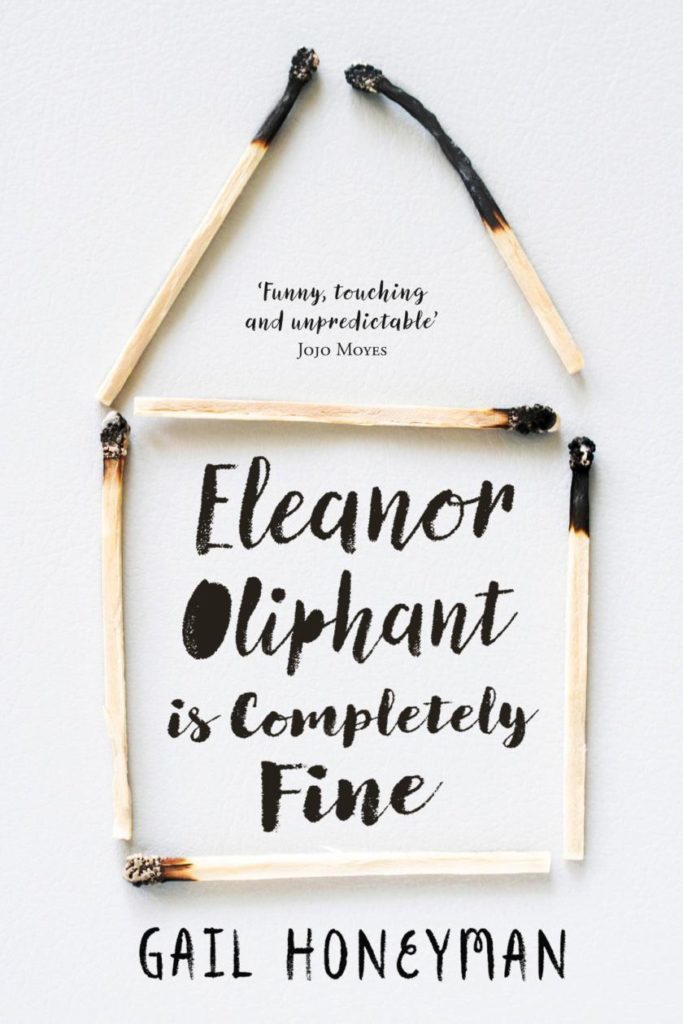
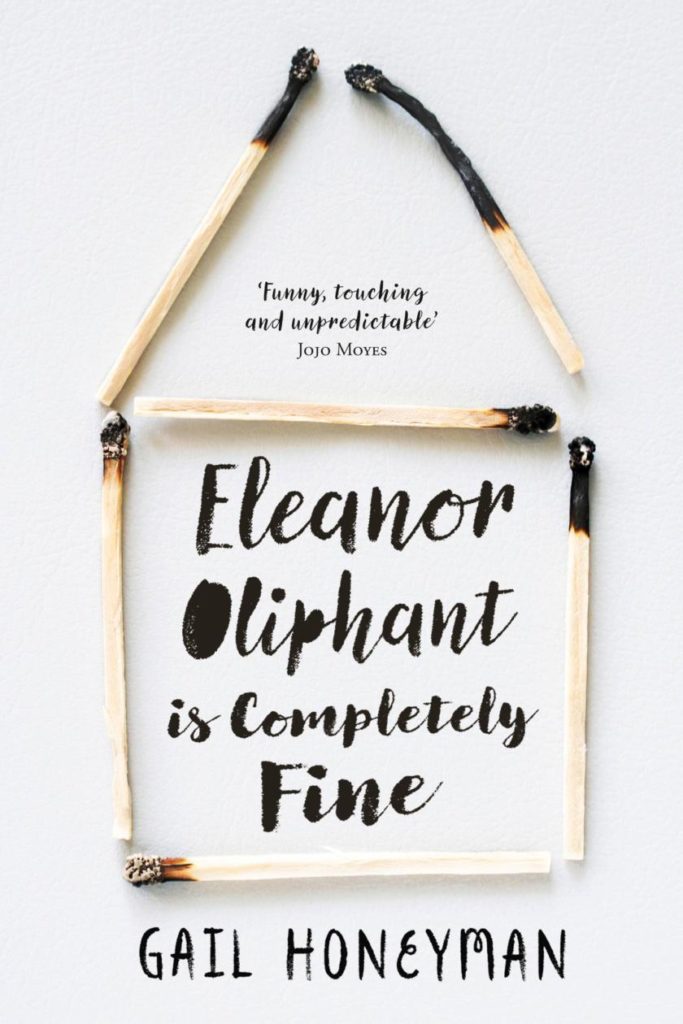
sydd wedi fy nghyffwrdd fwyaf yw llyfr o’r enw Eleanor Oliphant is Completely Fine. Stori yw hon am arwres
anghyffredin, lle mae ei phersonoliaeth unigryw a’i hiwmor yn creu stori hynod
ddarllenadwy wrth iddi sylweddoli mai agor ei chalon yw’r unig ffordd i oroesi –
ac mae hynny’n neges bwysig i ni i gyd.
Hi Rhian great to meet you, what got you interested in the Arts?
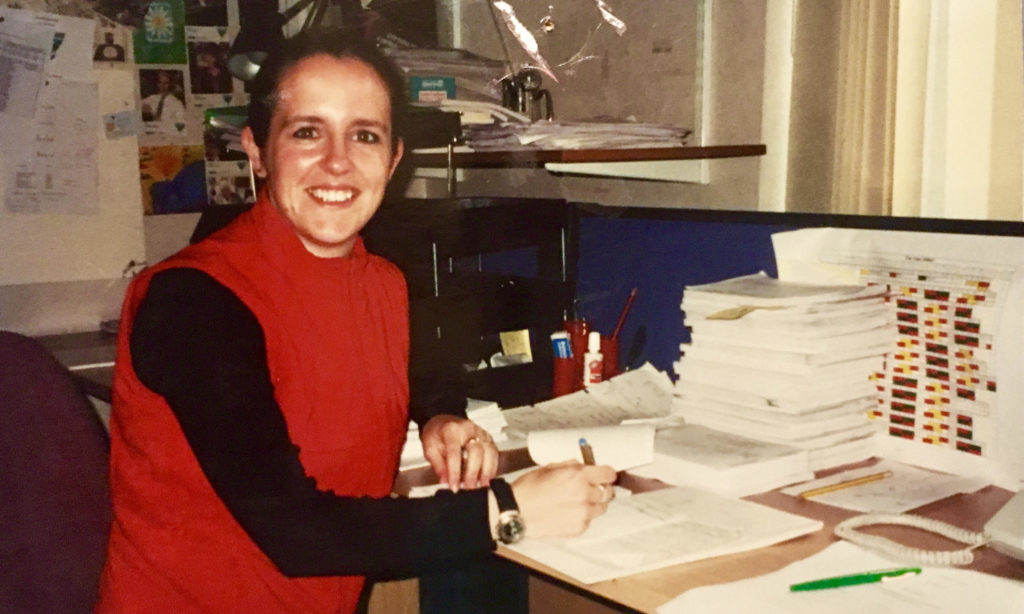
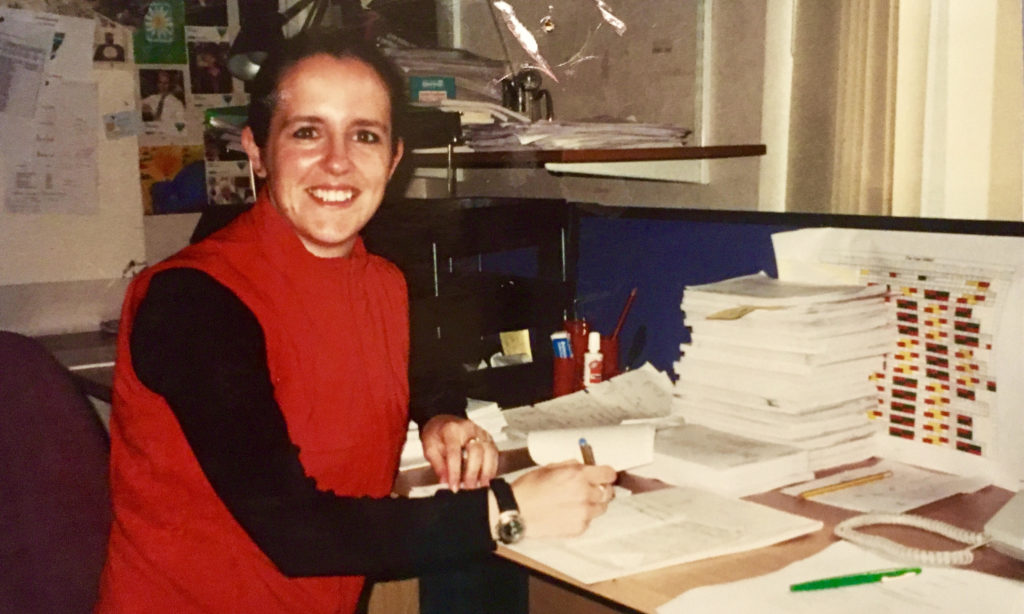
I’ve always loved watching soap operas, drama, films and reading good stories. In my teens I wrote a few short stories that were published in magazines and books and then decided to follow my dream and see if I could get a job doing something creative. I had no idea what I could do, but kept knocking at different doors and got a place on a Cyfle course as a trainee scriptwriter based in Caernarfon. I was paid as an apprentice and had amazing experiences working on scripts for dramas on S4C and got a chance to meet loads of good people. I then got a job at Pobol y Cwm as an Assistant Script Editor and remember that immense feeling of pride when walking through the BBC Wales double doors. I became a Script Editor and later a Storyliner and got the chance to write a script or two, and had a ball helping create stories for some of Wales’ most colourful characters.
Rhian working as a Script Editor.
I then decided to move back home to Swansea where Tinopolis TV took me on as a fledgling TV Producer and gave me a chance to keep telling dramatic stories through documentaries for over a decade. I’ve been with Theatr Genedlaethol Cymru for just over 3 years now and am still relishing the chance to tell good, relevant stories in different ways.
Your role in the company is that of the
Executive Producer, you are also responsible for all the productions and also
the participation work, which includes working with the wider audience. That’s
a role with a great deal of breadth. How do you manage to cover all of these
areas?
Variety is the spice of life! It’s a broad remit but I relish the challenge. To me, the audience is key to everything we do, and our participatory activities with audiences are as important as our productions. We’re increasing these activities, listening to what people want and acting upon it.
Llinos Jones
Fflur Thomas
Nia Skyrme
Theatr Gen has a cracking little team in Llinos Jones, our Participation Officer, and Fflur Thomas and Nia Skyrme, our Assistant Producers. Together, as well planning and assuring the smooth running of Theatr Gen productions, we co-ordinate our Drama Clubs with Menter Iaith Gorllewin Sir Gâr, Theatr Mwldan and Theatr Felinfach; our wellbeing activities with the Carmartheshire Fusion network; engagement with audiences in theatre venues for our BSL performances; with Welsh learners across Wales via pre show talks and Welsh learner lessons taught nationally in conjunction with the work of the National Centre for Learning Welsh; with educational specialists so that we support the new curriculum and provide resources in the Welsh language; with venues in introducing a national ‘pay what you decide’ scheme for presentations of our New Playwrights’ Group readings, and on and on. We’re trying our best, but are far from perfect, and welcome all comments and suggestions.
We want to reach further and wider and I feel that, as the Welsh-language, National Theatre company, we have a huge responsibility and need to act to remove barriers to accessing our work. We don’t claim to do everything well or perfectly, but we’re trying our best: we’re scrutinising the value of everything we do, changing within a Wales that’s changing and hopefully learning from our mistakes.
Theatr Genedlaethol Cymru are currently
rehearsing Merched Caerdydd (Cardiff Girls) by Catrin Dafydd and Nos Sadwrn o
Hyd (Saturday Night Forever) by Roger Williams. The two plays will be performed
as a double bill touring Wales this spring. Both plays reflect different
aspects of contemporary Wales. Do you think live theatre still feels relevant
to younger audiences with competition for drama audiences from on demand
streaming sites such as Netflix?
Nothing beats that feeling of seeing a dramatic story live and that shared experience of reacting there and then to the performance and the script. With so much competition, it’s harder to make theatre relevant, especially to younger audiences, but therein lies the challenge, and I love a challenge.
I’m also a board member with Mess Up The Mess, an organisation that offers dynamic theatre making experiences to young people, because I sincerely believe in the importance of engaging younger audiences. You talk about Netflix. In 2017, Theatr Genedlaethol Cymru piloted our first cinematic theatrical screening through broadcasting our performance of Macbeth, both live and as-live, from Caerphilly Castle to 11 cinemas across Wales. We branded it Theatr Gen Byw.
https://youtu.be/dCtUs86FO7w
Moving forward, we need to embrace the digital agenda. I’ve had a vision that youngsters, and indeed everyone, will be able to access our productions, and also influence them in terms of content, whenever they want, when it suits them, on their own, in a group, wherever they are. We need to be inclusive, not exclusive and this means providing as many opportunities as possible for everyone to enjoy a variety of Welsh theatrical works, live and as-live.
Both playwrights Catrin Dafydd and Roger Williams
have had success recently in TV Drama first produced in the Welsh and then
English Language. Is Wales unique in writers of this calibre writing for both
TV and Theatre at the same time?
Isn’t it great that Welsh-language television writers like Roger and Catrin, Siôn Eirian too, and many more, can also be Welsh-language playwrights, that Welsh-language TV Producers, like me (and Roger), can also be Welsh-language theatre Producers and that TV Directors like Ffion Dafis (who’s also an actress) can direct an episode of Pobol y Cwm as well as direct a theatre production? Mared Swain, who’s currently directing the first show in our double bill, Merched Caerdydd andNos Sadwrn o Hyd, which opens this week in Theatr Clwyd, was also a Story Producer on the S4C series Gwaith Cartref. I think I bore my colleagues about the significance of transferable skills, but just because you haven’t worked in a sector doesn’t mean your experiences can’t benefit another sector, and I wish to see more cross sector working within the creative industries and culture sector I truly believe that both the theatre and TV sectors would benefit.
The production will have two BSL performances, at Theatr Clwyd in Mold on the 15 March, 19:45 and then the Weston Studio, Wales Millennium Centre, Cardiff on 11 April, 19:00 Can you please tell us why you feel BSL supported performances are an important part of your offer for audiences?
Cathryn McShane
Sherman 5
Jonny Cotsen
It started with a desire to be more inclusive and an admiration of the good practices established by Sherman 5 at Sherman Theatre and now it’s an integral part of our work. Finding Cathryn McShane, a Welsh-speaking BSL interpreter, and Nia Skyrme, a Welsh-speaking producer with experience of facilitating BSL performances, was key to moving this vision forward. Jonny Cotsen supported us in our initial pilot, and recently encouraged us to pilot an integrated BSL performance of Estron by Hefin Robinson.
I think it’s important for all audience members to see an interpreter on stage. Merched Caerdydd and Nos Sadwrn o Hyd is the third national touring production where we have provided this service, and I’m delighted that Cwmni’r Frân Wen is now also providing this service (by Cathryn) on their current national tour of Anweledig. As a national Welsh-language theatre company I feel that we have a huge responsibility to keep moving forward and hopefully help move the sector forward in this regard. We need to start thinking now, what’s next?
Get the Chance works to support a diverse range
of members of the public to access cultural provision. In your personal
experience, are you aware of any barriers to cultural provision?
There are many. On a personal note, I have friends and family that struggle to commit to making it to a Welsh-language theatre production even though they all live their life happily through the medium of Welsh. People often think their Welsh is not good enough or that the nature of the Welsh language used in a play will be too difficult to understand fully. We try to communicate that our Welsh-language theatre productions are inclusive and that we offer a wide range of productions, some that use colloquial language, others more poetic language, some using North Walian dialect, others South Walian dialect and some in urban Welsh and others in rural Welsh.
The reality is that language is only one element in a whole gamut of barriers to theatre productions. We have a duty towards all people facing barriers to our productions, and that is why we actively seek partners from all walks of life to help us make this journey for our audience to access our work an easier one.
As well as a comprehensive package of activity to support Welsh Learners, I believe this is the first time your unique App Sibrwd will have full translation from Welsh to English. This offers exciting opportunities for new audience to access your work. How has Sibrwd developed as an access tool for audiences?
You’re right, we’re piloting something new with Sibrwd this time and Sibrwd, our smart phone app, will include a full translation of both plays in this double bill. We’ve had feedback from our audiences, including people who are deaf or have hearing loss, and this is what they want, so we want to give it a go. I’ve seen it, and it looks and feels great. We look forward to receiving audience feedback on this tour, as we continue to develop this resource.
If you were able to fund an area of the arts in
what would this be and why?
A national
participation project in conjunction with venues across Wales that will build
some excitement around theatre and culminate in a national performance in
venues at the same time. We want to support the venues as they try to grow and
diversify their audiences.
What excites you about the arts?
The fact that everything
and anything is possible, with the right people.
What was the last really great thing that you
experienced that you would like to share with our readers?
The story that’s touched me the most, recently, is a book called Elanor Eliphantis Completely Fine. It’s the story of an out-of-the-ordinary heroine whose weirdness and wit make for an irresistible story as she realizes the only way to survive is to open your heart – an important message for us all.
Many thanks for your time, Rhian.
You can find out more about the work of the company and its work here
Alita: Battle Angel is in the same company as Speed Racer, Jupiter Ascending, Valerian, Ready Player One and A Wrinkle in Time. Where it boldly seeks to dazzle you with its effects, ideas and camera movements, though while it cannot be said that the filmmakers are not passionate about the material and the people on the production side were slouches, the story and ideas never come together.
Alright, let’s plow through the plot because there are a lot of details. It is the far distant future and a man is looking through a trash heap to salvage parts. While doing so he finds the head and some of the guts of a robot (the head itself looks like that of a young girl). He takes her home and attaches a body, she comes to life and knows so very little. So Dr. Dyson Ido (Christopher Waltz) explains the ins-and-outs of the city to her, there are people and robots and people can have robotic appendages attached to them to enhance themselves. This is exposition and it feels like it, which is the worst exposition.
https://youtu.be/w7pYhpJaJW8
Alita
(Rosa Salazar) herself is one of the great selling points of the movie,
her skin is so near perfectly rendered, it is one of the great feats of
C.G.I. animation, but her eyes size are increased to make them look
like typical Anime eyes (animation produced in Japan). So there is an
obvious disconnect from the reality. They clearly had a lot riding on
this effect and are obviously proud of the end result having her framed
in the traditional way, and letting the camera gets really close to her
so you can see all the teeny tiny hairs on her skin and the individual
pores as well as seeing her in slow motion so you can really soak her up
from every angle and see every strand of hair gracefully move.
A problem with her as a character is that she has rather
little personality and is a perfect warrior, so we have nothing to
connect with on an emotional level and nothing to root for during the
action scenes because she can win. I suppose some of the things she does
is cool but it’s ultimately a shallow experience.
Jennifer
Connelly and Mahershala Ali play Dr. Chiren and Vector, two people in
service to Nova the ruler of the upside and who is able to transfer his
consciousness into other people. Chiren
was married to dr— and now builds other robots for the games and
Vector funds it and has dark ambitions and pulls the strings, though he
is only a bit player compared to Nova. We barely learn anything real
about them, they aren’t even the biggest threat, who we also barely get
to know or care about and they two seem bored whenever they are onscreen
and I can’t blame them because they are given nothing to work with.
What a waste of two very good actors.
You get the
sense of something deeper and more profound happening or at least the
potential. Robots, technology, extravagant designs, and a big looming
evil threat can, of course, lend itself to wonderful material, the manga
is probably filled with these kinds of things and was probably why the
filmmakers were so passionate about bringing it to life in a movie. But
concept and execution are two vastly different entities. Saying that
your going to create a unique, futuristic world and have an adventure
playout within it is one thing, making that something engaging is
another. Ultimately we have a movie with the goal to create something
profound and unique like Ghost in the Shell but just ends up like the 2017 version of Ghost in the Shell.
When
the characters make any decision and go about it you don’t really know
them or even have a strong understanding of their motivations so when
something is happening that you understand is suppose to be dramatic it
is less like people forming their own destiny and rather like seeing
someone else crash toys together.
I remember days when we
were able to see movies, nay, blockbusters and not feel like we had to
commit for three for five more movies a decade later. When you watch
Star Wars the threat is beaten, the good guys win and it ends, a
satisfying movie as a whole, there are others, but they work by
themselves. Those days seem to be dead for the foreseeable future as
franchises are the name of the game these days. This one is one of the
biggest sinners of all because this story isn’t even done by the time
the credits roll, hardly anything has been accomplished, we barely have a
grasp on characters and plain just dont care.
Amongst the previously mentioned list of ambitious effects, driven movies Speed Racer is probably the best with the most outlandish, unapologetic images as well as being wise enough to have a tone where it’s tongue is firmly in its cheek. This is the new bottom of the barrel, with not even telling complete story and leaving us shortchanged an experience when we paid full price for the ticket.
Creating opportunities for a diverse range of people to experience and respond to sport, arts, culture and live events. / Lleisiau amrywiol o Gymru yn ymateb i'r celfyddydau a digwyddiadau byw


 (4 / 5) A treat for any Strictly Come Dancing On Ice fans!!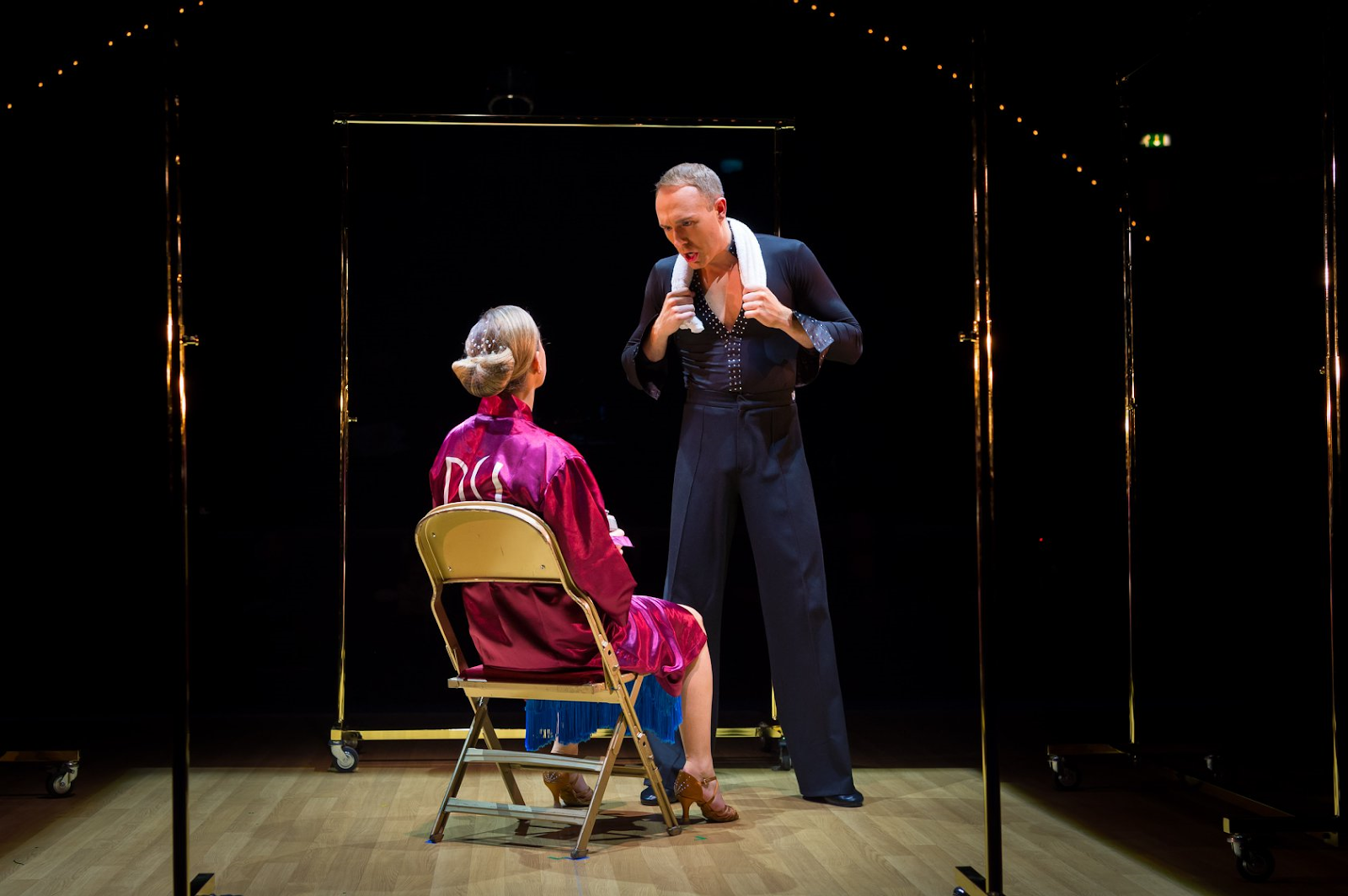

 (3 / 5)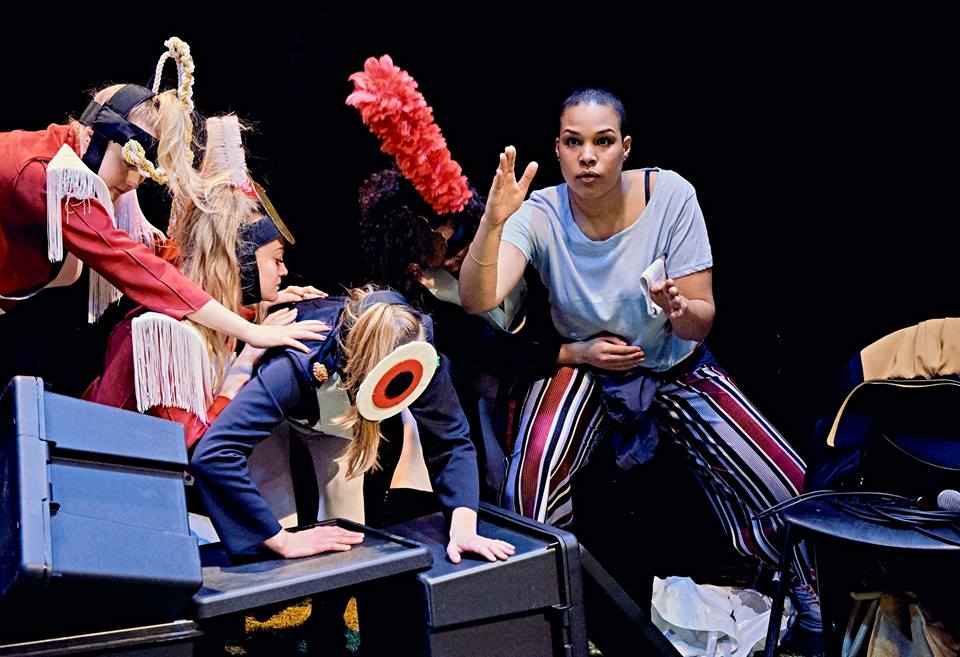





 (5 / 5)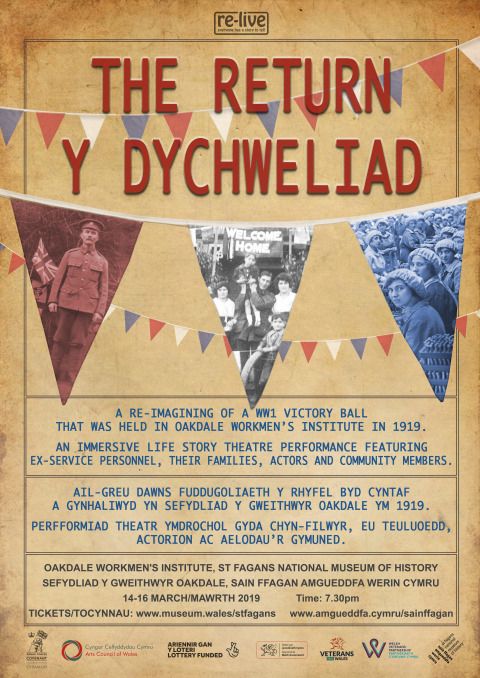







 (2 / 5)