In this tiny shipping container, we are welcome by an almost “ying and yang” symbol from two bodies in a box, amongst torn paper. What unfolds is emotional, fun and shocking altogether.
Sandcastles is about a unique friendship between two girls. Meeting as children, they grow up together and grow apart, as one stays to the town she has always known and the other moves across the world. Sandcastles takes on the trial and tribulations of female friendships, of long term friendships, of belonging and feeling displaced.
Focussed around this box, it took a long time into the production for me to realise that this was a representation of the sand box that these two characters meet in, building sandcastles as children. Two very opposing types of people, their comradery comes from the lack of inhibitions as children. As they grow up, they get drunk and hold eachother’s hair, they kiss boys and bundle around their local town and soon there is a realisation on their differences; the fear and the anxiety from one of leaving a place she knows and the other of someone who feels as if she doesn’t belong any where physical.
The friendship between these two seems natural, it seems uninhibited and naturalistic to an extent. Both performers did their characters justice, bringing a reality to this environment somewhat void of reality. You feel included somehow, even if this is between only two people and it makes you re-evaluate your own friendships.
The box of paper became extremely significant; the performance featuring around, in, on, by, using this box of paper, it doubles up as many things and signifies much of their friendship, centralising it. The choice to not use sand by white paper added an angelic and ethereal element to this story.
My only criticism was that there felt like a lot of content bundled in and a slow pace. Some elements could perhaps be condensed or not used at all, feeling more like buffer content. It also needed a little change of pace, something to break this and give it a little momentum.
Sandcastles is a really beautiful play and certainly can be relatable to female friendships, general friendships and growing up. It just needed a different dynamic occasionally to keep the pace interesting.
This surreal and funny production was the first show I saw of this fringe. Late at night, the room was nicely packed for something billed at this time and rightfully so.
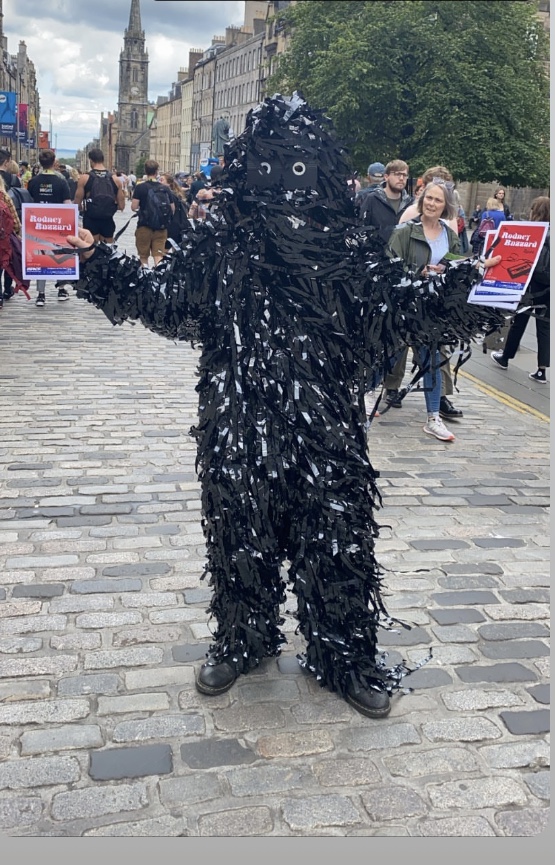
The Rodney Buzzard tapes: Evidence of an Honourable Man touches upon the recent phenomena of True Crime. Utilising quintessential themes of these documentaries, a group of amateurist drama nerds and a criminology nut embark of telling this fictional story; full of satire and tongue and cheek of these shows, this production is hammed up and as absurd as it can get, which makes it all the funnier while they endeavour to find the truth about this serial killer.
It begins with, what I can only describe as something from The Mighty Boosh – very much looking as if they were inspired by the Betamax character from this shows third season, a tape enhanced monster, almost slimy in appearance appears, creating movement and shapes that are comedic but also slightly intimidating. It very much didn’t give anything away to what the rest of the hour would entail; whether this would be frightening or fun.
The story continues to be as absurdist and bizarre as this initial introduction. The premise being that a criminology enthusiast has coaxed his drama friends into re-enacting a series of experiences, from not only him but also the serial killer. There is very much a sense of making fun of themselves, of the situation they are in but also of drama students in general and so this is a particular element of comedy that fits with a good chunk of the fringe audience.
Unfortunately, while fringe is very much a place to explore productions, it did at times feel as if there was too much content and so lost some of the comical factors in this. This is something all theatre makers continue to face when creating something new and so isn’t the biggest of issues and i’m sure will be challenged in each rehearsal and performance as all productions do.
The Rodney Buzzard Tapes was a lovely surprise for a first production viewing of 2022 fringe. With a little more challenge of their content, this piece could hit every element of comedy and bizarrest intent, with ease.
Dreamachine is a free immersive experience showing in London, Cardiff, Edinburgh and Dublin as part of the Unboxed Festival. The idea for Dreamachine was conceived on a bus journey in 1959 when artist and inventor Brion Gysin described himself as experiencing intense hallucinations whilst falling asleep travelling down a tree lined road. It was the bright sunlight flickering in between the trees which induced this trance-like state and inspired Gysin to create the dreamachine in its original form; a light bulb within a cylinder with holes in it attached to a record player designed to be enjoyed at home with eyes closed. Producer and Director, Jennifer Crook and Assemble, an interdisciplinary collective working across architecture, art and design have collaborated alongside a host of award winning contributors to bring this phenomenon to the masses, creating a unique and transformative experience like no other.
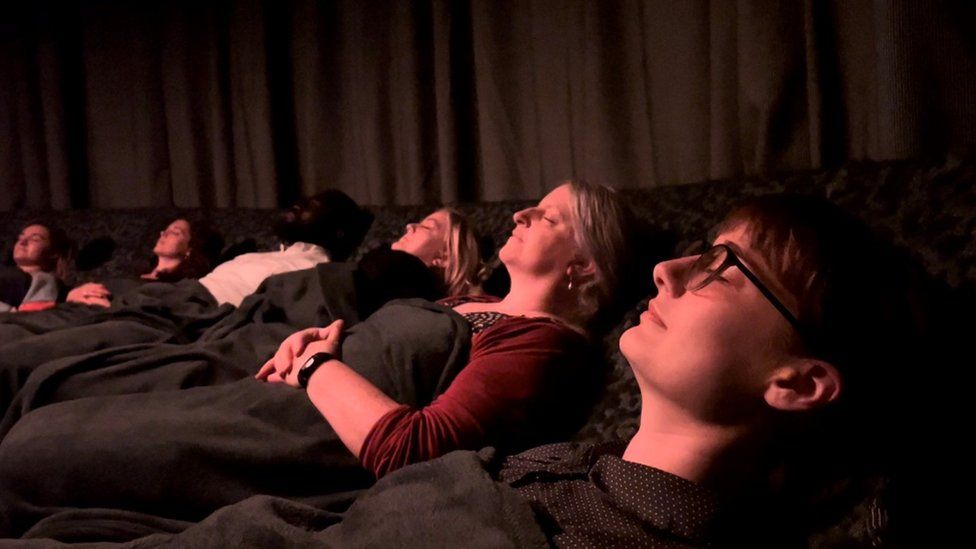
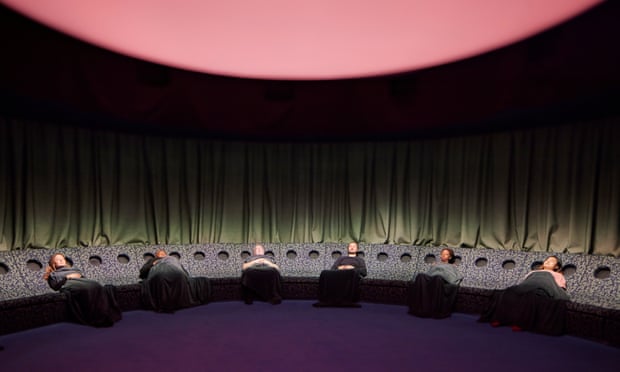
There is a form to fill beforehand and possessions are to be stowed away in lockers. I’d recommend wearing comfortable warm clothing and consider matching socks as you’ll be asked to take your shoes off! We found our seats in the dark round space after a quick safety chat outside and were sensitively guided through a breathing exercise by a member of the dreamachine. The room grew darker as we synchronised our breath and became increasingly heavy eyed. Then, a light glowed overhead and gradually started to flicker as the room filled with atmospheric music, composed by Jon Hopkins. Despite the brightness of the light inducing a little anxiety at first, my curiosity confined me to my chair as I became increasingly transfixed by the kaleidoscopic patterns emerging in front of my eyelids.
As a dancer I often imagine choreography when listening to music, except in the Dreamachine it was overlaid beautifully by the captivating intricate patterns seen through my eyelids.
At this point, the music had built up to an encompassing quake which vibrated the room and made for the most intense part of the multisensory experience. The vivid bursts of colour seen through the flickering bright light overhead shifted and warped as I drifted in and out of a transcendental state, almost as if what at first I felt I was observing was being moulded by my own imagination. I’ve never experienced anything like it; it was hypnotic, meditative and gripping all at once. As the music lulled and unwound, the light dimmed and we were in the dark again, ready to be led by the Dreamachine team through to a reflection space to discuss. The reflection room was just as enlightening as the experience as we discovered that although each participant had their own distinct experience, we shared no doubt that what we all saw was extraordinarily beautiful and thought provoking. There was a sensorial tool, a drawing table and a live generative visualisation, offering more private, creative and collective ways to reflect on a wholly unique experience based on individual preferences.
I gravitated towards the drawing table and enjoyed discussing the experience with the enthusiastic Dreamachine team whilst attempting to recreate the ornate patterns I saw with chalk on paper.
I left feeling contemplative and curious about the miracle I’d just witnessed, or produced? Who knows! The Dreamachine is truly a miraculous and unforgettable spectacle that is not to be missed.
Something trippy this way comes. Curiously, the Dreamachine from Assemble, is from the jarringly renamed Festival of Brexit in an attempt to blast away British sensibilities and open minds.
Arriving to the Temple of Peace, the staff were warm and welcoming. We popped our shoes off and entered the Greek like temple, now with the enclosure for the experience looking like a building from Mesopotamia. Our host, reassured us and wanted us to know what would occur, if anyone was in discomfort they could leave. I was looked after well, yet found myself nervous for the near ritual.
Artist Brion Gysin created a device which could stimulate the optic nerve, manipulating the brain’s electrical oscillations. This is the Dreamachine. Laying back and getting comfy there was a space age feel to it all. What could only be described as violently hallucinogenic, patterns and constructions formed with my closed eyes. With the lighting at break neck speed to help the trip along, it was an almost unbearable vision. I saw scribbles and prisms within always flowing and hyper coloured yantras. I wondered if this was what it was like to have synesthesia. The score by Jon Hopkins works well, though I think I craved something with a bit more bite from a composer dubbed the next Brian Eno.
Though a shared visitation, what you see is very much wired into your own body and mind. It’s easy to marvel at how the eye takes in light and how the brain processes this information. Some might dub this a religious encounter, others a journey into the psyche. The chance to draw what we saw after with pastels brought me back to childhood and gave us the complete rest bite from an intense journey. A round table was filled with people’s visual testimonies.
What must also be considered is the element of health and what people bring to Dreamachine. Those with mental and some physical health conditions may need to enquire if the show is right for them. I caught a strong headache after the fact, a bout of anxiety did wash over me for the start of the experience as well. It felt as if I was stuck halfway between 2001: A Space Odyssey and a Gaspar Noe film.
The main event it the High Sensory experience (what I saw) along with the more laid back and inclusive Deep Listening encounter. This wont be for everyone, but by golly will it arrest you.
Now on in Cardiff and London, in Belfast and Edinburgh this summer.
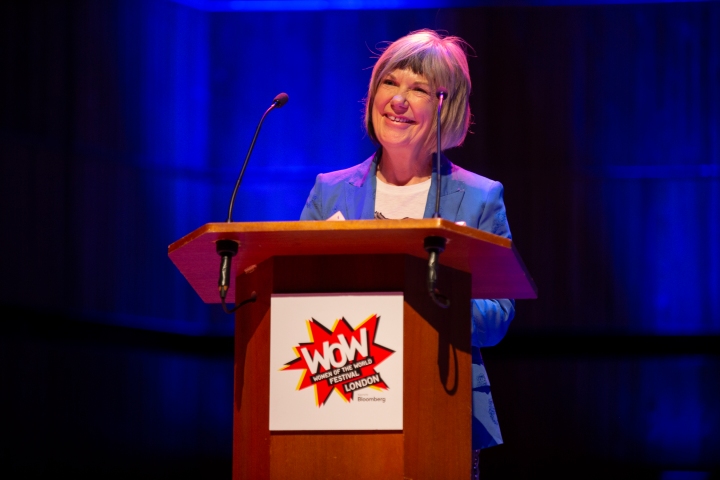
The ‘WOW’ Festival ‘2022’ kicked off with a BANG!!! from the 11th to the 13th of March there was an abundance of talks, shows & presentations to explore! With it being my FIRST ‘WOW’ experience – I was eager to attend every event kicking off. ‘WOW’ had a profound effect on me and from what I saw; I know I speak on behalf of the thousands of attendees present. And here’s why!
Several amazing female entrepreneurs promoted their jewellery, self-care to skin care & home-made jams, spreads & beauty products from their stands. It was sensational to witness a sea of courageous woman in the open market area promoting their individual businesses, charities, campaigns & organisations. Passionately inspiring, encouraging & truly owning their craft which impacted women of all ages to feel empowered & gain self-confidence which additionally gave ‘WOW’ a distinctive atmosphere and contagious energy.
The ‘WOW’ (women of the world festival) is an annual arts and science festival based in London. There are 42 WOW festivals in 23 countries that celebrates the achievements of women and girls. ‘WOW’ is a feminist global movement that was founded by a motivational women named Jude Kelly in 2010, whom I was fortunate to meet.
Jude Kelly alongside the national and international speakers expanded on the phenomena of enabling all females to thrive against the limitations of the patriarchy, discrimination, inequality, sexism, racism, etc. As well as the objectives & significance of dismantling the narrative of white supremacy & building on the continuation of strong nation building to give rise to women from all over the globe majestically sharing values & beliefs in sisterhood, unity, empathy, support in political, mental & emotional battles affecting black women, trans-women, Islamic women & non binary.
There were performances from huge talents like artists Baby Sol & Laura Mvula, alongside unique musicians. I was fortunate to have watched a play called ‘Maryland’ which is only 20 minutes long, but was extremely intense, potent and well executed. The message touched on the policing system, corruption & the vulnerability of all female victims globally let down by state. During the Q & A after the play ‘Maryland’ it was nice to know the script is being used in schools, especially in drama classes to help raise awareness and allow space for influential and educational purposes for young individuals to learn mindfully.
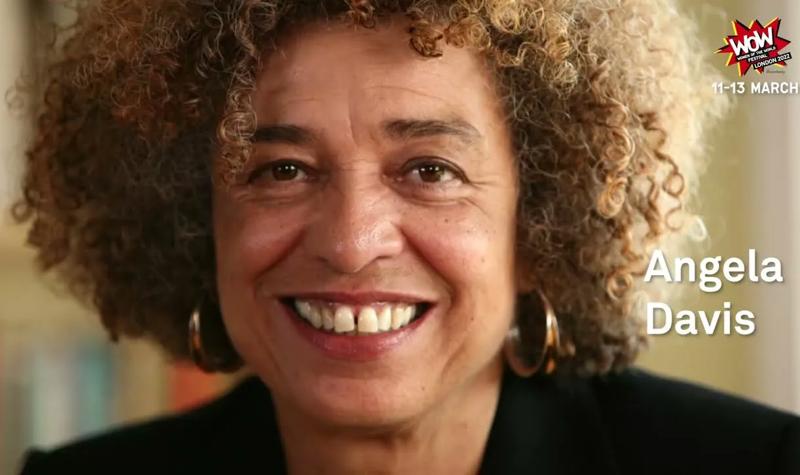
The thousands of people who attended ‘WOW’ had travelled across the globe to be present for the ‘WOW’ festival. I was grateful to speak with individuals who’d travelled from Bangladesh, Norwich, Birmingham, Essex, Greece & many more cities and foreign countries. The line-up of each feature artist such as the influential activists, poets and award winning authors that are extremely rare to see in person, were happy to meet, talk, bond and beautifully connect with other like-minded individuals such as Candice Brathwaite, Bridget Christie, Patrisse Cullors, Elizabeth Day, Bernardine Evaristo, Deborah Frances-White, Natalie Haynes, Jude Kelly, Marian Keyes, Suhaiymah Manzoor-Khan, Warsan Shire, Pandora Sykes, Lisa Taddeo, Grace Victory and lastly Angela Davis – who’d joined virtually as she couldn’t be with us in person.
‘WOW’ encourages everyone regardless of their gender to join their change markers program – how could I not join!? The organisers team efforts were efficient, ensuring that they delivered to satisfy all attendees. Wow is an experience to remember whether it’s your first WOW experience or Tenth! The festival is Impactful, educational & inspirational worldwide! I look forward to seeing what WOW 2023 has in store!
Having checked the weekend line up my chosen day was the Sunday, Day 4 of what was the culmination of a fantastic weekend of music spanning all genres and beyond. The three acts I was most interested in were Sprints, Ghostpoet and Arab Strap, who appearing in that order were the last three acts of the festival.
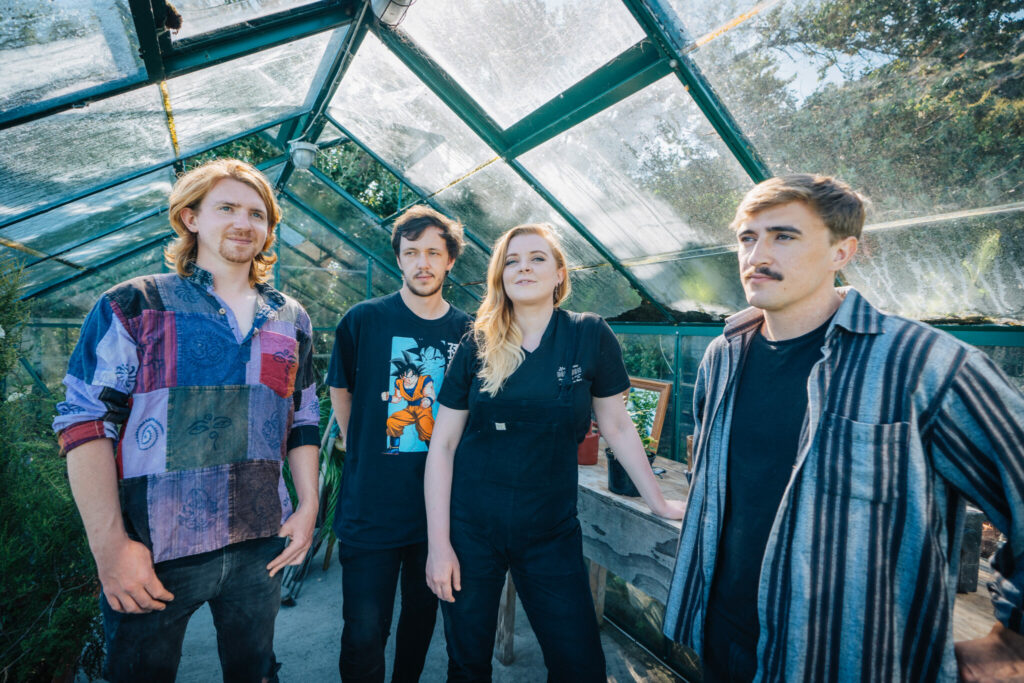
First up Sprints, no not ‘The’ Sprints as I previously believed, just Sprints. But there was no ‘just’ about them! This young female fronted four-piece hailing from Dublin were a real treat. Combining a strong lead vocal, a thrashing guitar, consistent driving drum beat and a bass player that very obviously enjoyed using alternative bass playing techniques and was a joy to watch. They drew on elements from several music genres including indie, grunge. garage rock & punk which when combined came across as something familiar but at the same time something new. Their lyrics were edgy and relevant and the band made their political stance known via dialogue between songs. Being a person of a certain age and having listened to music all of my life I noticed elements of their style that I was able to pick out and attribute to other bands, intentional or not they were there. The most obvious for me being a guitar sound on two tracks that I had only previously associated with one band and firm favourite of an old punk like me, The Ruts. This guitar sound immediately transported me back to another time and place but then I was quickly returned to the present by their own unique sound. Loud, fast, hectic, meaningful, organised chaos!
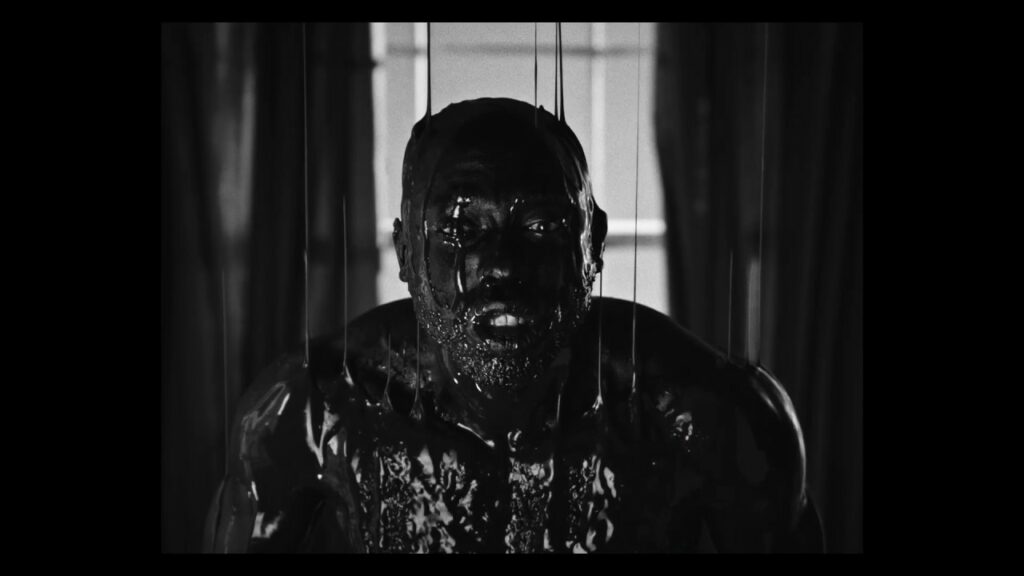
After a short break, next up was the one-of-a-kind and truly incredible Ghostpoet. As he took to the stage the smoky, dim blue light, gave him a ghostly appearance now all we needed was the poetry! But this was no conventional poet, what walked onto the stage was an imposing leather clad figure of a rock god! Lyrical brilliance backed by a bass so heavy it pinned you to the floor, drumming so wild yet never out of time, some technical bluesy, rocky, thrashy guitar playing, rhythmic keyboards and howling synthesizer added to the melee of multi-layered sound. But what was the sound? I think it is easier to describe it in terms of art than music, it was a combination of surrealism, impressionism and modernism with a fair sprinkling of abstract and topped off with a helping avant-garde all culminating in a crazy, manic, crescendo of musical colour! Pure brilliance or poetic madness? You decide!
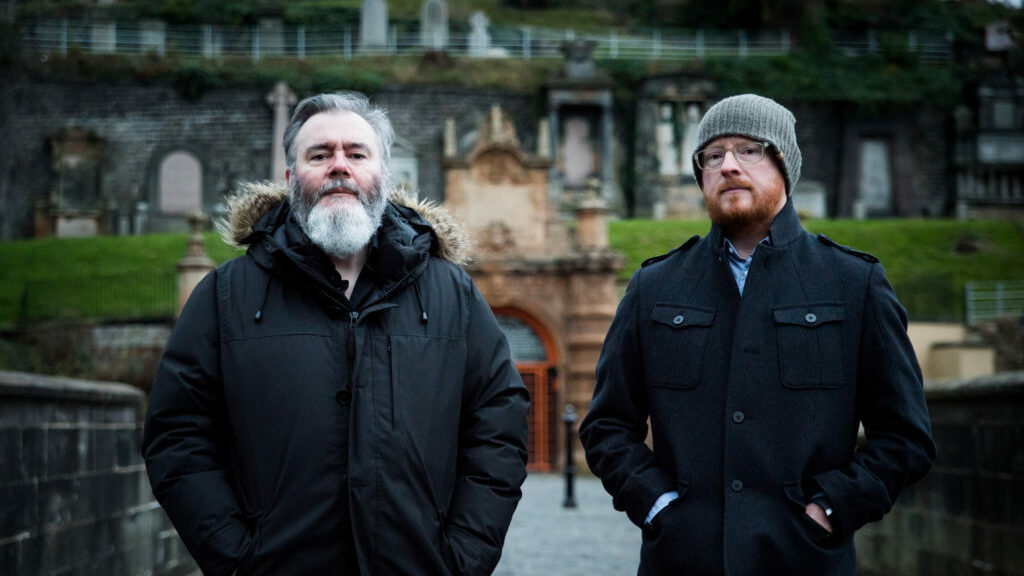
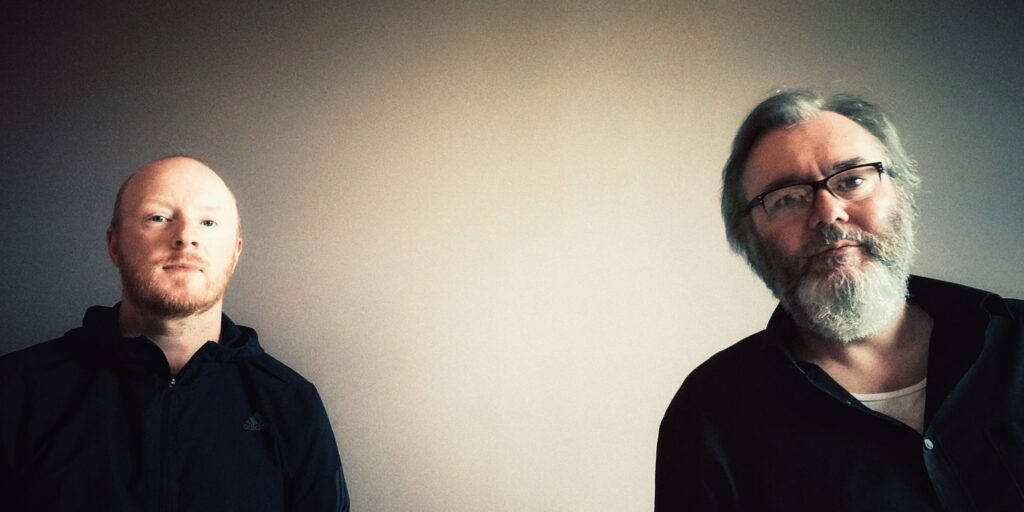
To round off the evening the last band took their place on the stage. or was it the road crew doing a final check? No it was definitely the band! A most unassuming foursome took their positions. Arab Strap, an indie rock band, hailing from Falkirk, Scotland, formed in 1995 and split in 2006. They had a brief reformation in 2011, then went their separate ways, only to reform again in 2016, then in March 2021 released their new album, As Days Get Dark, their first in over 16 years. Led by frontman and story teller Aidan Moffat with his sandpaper like voice and dry humour, we were treated to songs about life, love, sex, truth & lies, all delivered with an openness and sincerity that made every word totally believable. Backing Aidan was a band that visually came across as loose and relaxed but musically they were far from it, they were as tight as you like, never missing that indie beat.
Okay, the first album in over 16 years, should you go out and buy it? Well I’m sure we’ve all experienced the dark times in music, times when voids appear with nothing of any substance to fill them, frustration sets in and there is a desperate yearning to batter our ear drums with something new. Well next time you find yourself scratching around blindly in some musically dark abyss with little hope of survival and that something new you crave is real, meaningful, honest, good old indie with a bit of a dance beat, Arab Strap could well be your saviour!
The Festival of Voice was established in 2016 and is held at the magnificent Wales Millennium Centre. Each festival uses cultural interests or current trends, bringing artists and audiences together over four days of thought-provoking performance, incredible live music and inspirational talks. I went to the festival on day 4 (the Sunday evening). There were a number of free public performances throughout the centre, including audio installations, panel discussions, pop-up dance routines, immersive 360 films and youth theatre productions, which sadly I didn’t get to experience.
However, I did get to see three incredible performances from Sprints, Ghostpoet and Arab Strap. I was surprised at the small crowd that were in attendance, given the buzzing, raucous, riotous, acts that were performing. This may have been due to covid anxieties or maybe the cost of £50.00 for a day ticket, instead of paying for individual shows, nonetheless, the turnout was very disappointing.
I’d never heard of Dublin based, Sprints, before tonight, I felt ashamed of myself, they are a riotous, post-punk, loud band, I felt excited, they were gutsy and off the cuff. They’re a band with a purpose, their music reflects the issues that affect us all on a day-to-day basis, coming from Ireland they certainly made a point of informing the crowd about the recent legalisation of abortion and same sex marriages, recent changes that have an enormous impact. Chugging, anthemic guitars and driven drums are matched by Karla’s snarling vocals. This is punk at its best, hectic, spontaneous and rambunctious. Festival of Voice was their first gig in Cardiff but definitely not their last, I’ll be seeing them again.
Up next was Ghostpoet, what can I say? He’s a cool guy, energetic, charismatic, a performer, he wore a glistening silver earring, sunglasses and a leather jacket, he looked like a swaggering rock star. With his husky whispers of lyrical content along with an energetic performance which saw him dance and get enthused, immersed into his music it was near impossible to steal your eyes away from the stage whilst watching him perform. Beguiling, mesmerising, the epitome of cool, Ghostpoet was near stunning, with a band to offset the lyrical content sometimes with layers of dub, drum n bass and psychedelia, the music had bass so deep it entered through my feet and into my body. Ghostpoet cuts a striking figure but it’s the power of his vocals that stay with you.
After a short break, Arab Strap were on, a Scottish, indie-folk, rock band, 15 years after calling it a day they’re back in Cardiff, for the first time since reforming. Why have I never seen these before? I’d heard of them but clearly wasn’t paying attention the first time around. I instantly fell in love with the deep, scottish growling tone of Aidan Moffat’s vocals, awfulising about his chaotic lifestyle, shagging, insecurities, booze, heartbreak and humour. He has the kind of looks and confidence of a guy you should be sat chatting to in the pub. They were loud, raucous and noisy, Malcolm Middleton guided melodies with some complex finger picking, he made guitar work look very easy. Their music is deeply immersive from beginning-to-end; like a good book, it’s almost impossible to put down once you’ve started. The poetic mix of darkness, melancholy, romance, and unflinching honesty.
This is one of the best gigs I’ve been to in a very long time, they’re a real force to be reckoned with, in a league of their own. I may not have been paying attention the first time around but I am now. Arab Strap I’m so glad you’ve reformed, please, please, please, come back to Cardiff.
Hi Kate and Jo, great to meet you, can you give our readers some background information on yourself please?
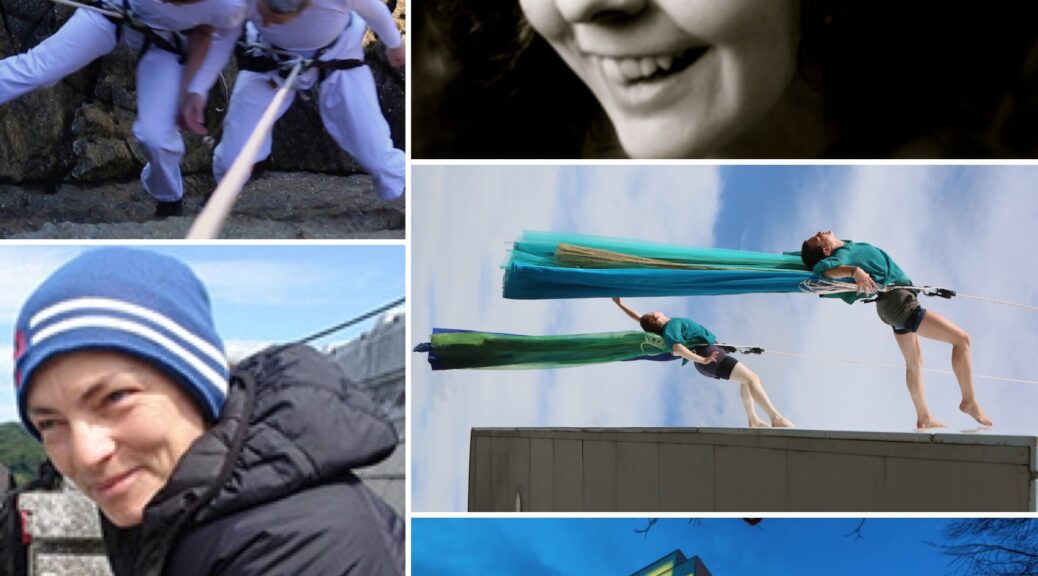
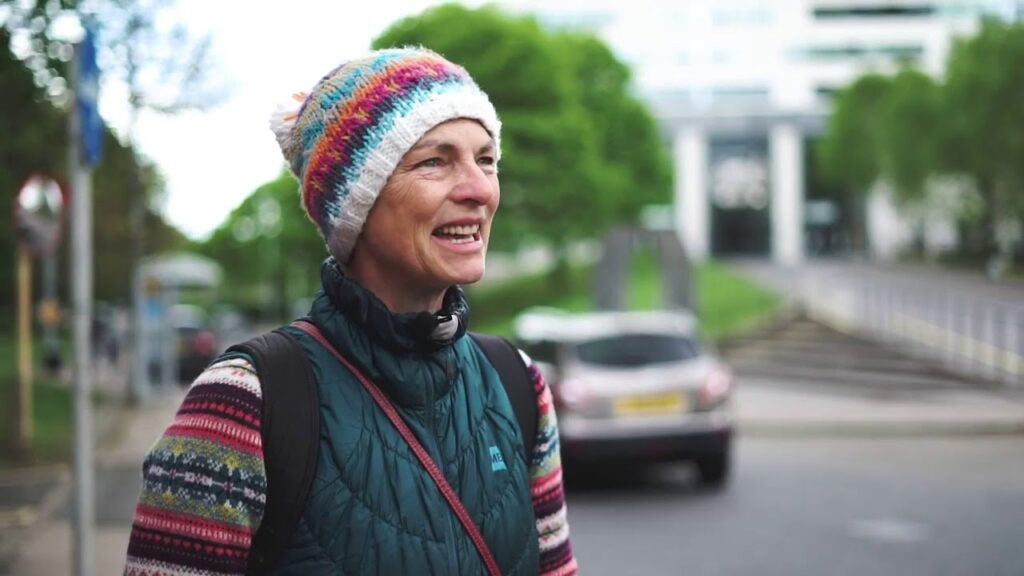
Kate: I was born in London and spent my early years in Tanzania and Mexico before returning to the UK aged 11 to go to a quaker boarding school in North Yorkshire. After school I trained as a dancer at Thamesdown Contemporary Dance Studios in Swindon and then did a BA in Dance Theatre at Laban, in London. Then I started a feminist dance company called Nomads which ran from 1989 – 1995, doing performance and education work. When the company ended I spent a few years doing all sorts of things, car maintenance courses, creative writing courses, stunt training, delivery driving, caretaking. Then I got a job as a dance lecturer at University of Surrey where I spent 10 years. In 2010 I moved to North Wales to be in the mountains and feed my passion for rock climbing. I got a part-time job at Bangor University as a lecturer in performance. During the 10 years I have spent here, I began my own vertical dance company, Vertical Dance Kate Lawrence (VDKL).
Joanna: I’m an artist from North Wales, I grew up on the coast near Conwy. I left Wales when I was a teenager to study art. I ended up living in the USA, working in a really eclectic range of jobs that included furniture maker, running a market stall, selling pizzas, working in a shoe repair shop, photographer for the US government and then working in the art department of film and theatre productions. In 2001, shortly after September 11th, I got a job as a videographer on a sailing boat doing a global circumnavigation, as part of an pioneering interactive, online education project. That was a turning point that eventually bought me back to Wales and took me into working in documentary, in many different forms.
What got you interested in the arts?
Kate: I come from a family of professional musicians on my father’s side (although my father was an amateur) and my mother is a visual artist and potter so I grew up in an arty environment. I did a lot of dancing alone in my bedroom as a child – the pandemic has reminded me of this as I have returned to my bedroom as a dance studio. I think what I love about the arts is that it is really a way of thinking, a way of being in the world that is centred on experience, expression and communication.
Joanna: I grew up with a parent who had a severe mental illness. In the 80’s in North Wales mental health services were poor to non-existent, both for those with mental illness, and their families. In the arts I found a way to express ideas and connect with others that I hadn’t been able to previously. I specifically credit the generosity of the wonderful artist and teacher Dave Pearson who I met as a young art student, he saw some of the weight I was carrying at that time and encouraged me to tell stories with my work and experiences, and also to find playful ways to get it out into the world.
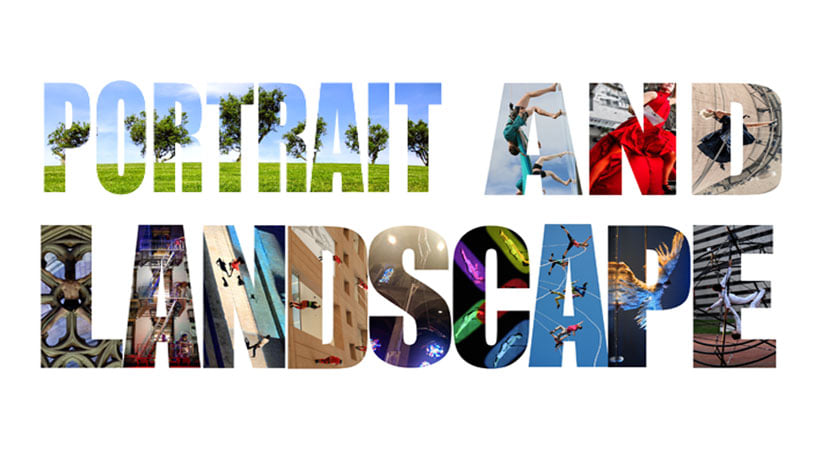
Kate I believe you are working on a new project called ‘Portrait and Landscape’ its described as “a series of online bi-monthly events for the international vertical dance community and beyond. It was conceived by Wanda Moretti incollaboration with Kate Lawrence and Lindsey Butcher. The series runs bi-monthly until the end of October 2021 “.
For those who may be new to the term what is ‘Vertical Dance’ and how did you come to be involved ?
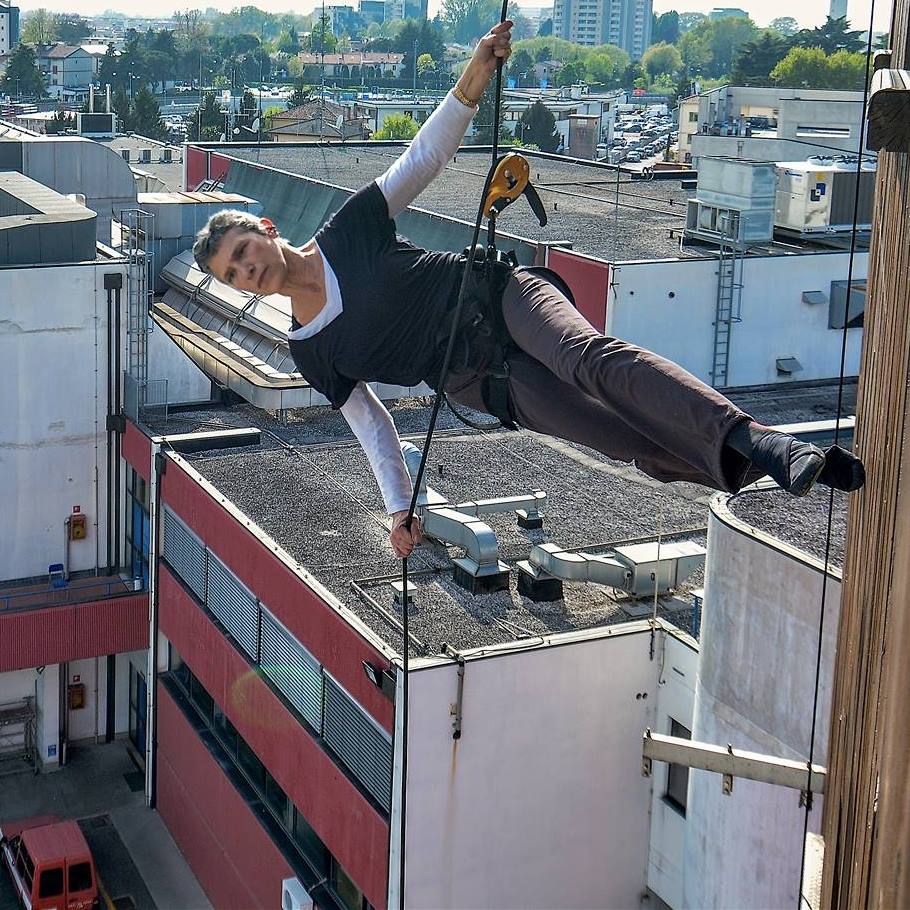
Kate: Vertical dance is a newish term that refers to dancing in suspension – the dancer is suspended using climbing or access equipment, such as harnesses, ropes and abseil devices. Often this is against a vertical wall (hence the term vertical) which becomes the ‘dance floor’. So it often takes place in public space, on the sides of buildings.
https://youtu.be/PjrvLU1WNnM
I got involved with vertical dance when I started climbing in the late 1990s – as part of training to be a stunt woman (that never happened!). I found the movement of climbing very similar to dance and when I began teaching at the University of Surrey I asked if I could run a module called vertical dance. That began in 2001 and was the beginning of my development of the practice. I began teaching dancers to climb in the climbing wall and getting them to develop choreography from that and then gradually I introduced suspended dancing. In 2005 I embarked on PhD study into vertical dance and that led me to meet other vertical dance artists from around the world. The first two I met were Wanda Moretti from Venice and UK- based Lindsey Butcher, and we are still working together. I finally finished my PhD in 2017 – it took me a long time because I was working and creating at the same time!
https://youtu.be/NDbcq-2mh00
Kate, what is your ambition for Portrait and Landscape?
During the pandemic it has been impossible to do vertical dance practice for me and I spent 2020 doing other things – gardening mostly and some writing – this has been quite a healthy break from a very busy time. This series of events was the brainchild of my colleague Wanda Moretti and she invited Lindsey and I to collaborate with her on running it.
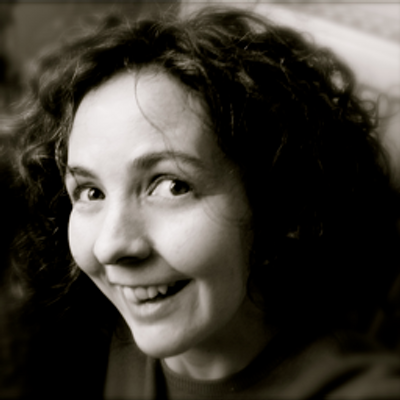
Wanda Moretti
The ambition is to bring international vertical dance artists – and anyone else who might be interested – together at a time when we are all isolated and distanced. The current time is an opportunity to connect across borders and learn about how different artists practice the form and also to keep our artistic minds working! My company, VDKL, has received some funding from Wales Arts International to support this project which means we have offered 3 bursaries to Welsh artists. It also enables us to explore making the series more accessible.
You are both working on a project researching into Dance for people who are blind, this sounds fascinating please tell me more!
Kate: Yes, Jo and I are working on a project called Yn y Golau/In-visible Light, which began in 2016 as a collaboration between myself and photonics scientist Ray Davies – a Synthesis project funded by Pontio.
Pontio
Photonics is the science of light – I didn’t know that until I met Ray. The project developed and in 2019 we did a research and development project funded by ACW with a couple of test performances. Our purpose was to make a show that tried to build accessibility for blind and partially sighted people into the creation process, rather than audio describing a finished product. It was a huge challenge and we were assisted by a visually impaired actor and aerialist, Amelia Cavallo.
Amelia Cavallo
We constantly asked ourselves: what would this experience be like if we couldn’t see? And this led to some new ways of working for me as a choreographer. Sometimes I would close my eyes and listen to the dance… It also reminded me that dance is a kinetic art form not a visual one. Sometimes I think we focus more on shapes we see than movements we feel. We invited blind audiences to the test performances and then interviewed them afterwards to get feedback on how successful our approach was. We then received further funding from ACW to develop a touring show, but the pandemic has made us change our plans. We are now working on a film and we also have some seed funding from Clwstwr to do further research into access for blind and visually impaired people to performance.
Joanna: Kate first asked me to work on Yn Y Golau as a documentary filmmaker. In my work in documentary I’m especially interested in how new technologies can be used in storytelling. In Yn Y Golau I felt there was potential to explore how to share the work in an interactive, non linear way, which might better enable us to think about how to move beyond the screen, and think more deeply about how the embodied experience, that was central to Kate’s live work, can be expressed or shared digitally. There are also a lot of documentary elements in the project, and we are exploring how the project audience can choose which aspects they want to engage with.
Prior to this project did you have any knowledge of areas such as audio description for theatre/dance?
Kate: Yes, I first started thinking about audio description back around 2008 when I was asked to do a workshop at an audio description seminar at University of Surrey. The topic then lay dormant for me for several years, and then in 2016 I was asked by Mari Emlyn to make a piece of work for the foyer of Galeri. It was the year of the centenary of Roald Dahl’s birth and so we made a new story built from the drawings of primary school children of their favourite Roald Dahl characters. The piece was called Omnibus and was performed in the foyer of Galeri with the dancers flying in the space overhead.
https://vimeo.com/198381592
We created a bilingual (Welsh and English) recorded audio description alongside the soundscore so that everyone in the audience could hear it. From our current research I know that this is sometimes referred to as ‘open audio description’. The traditional method is that an audio describer is in a booth describing events as they unfold, straight into the ears of the visually impaired person, who wears headphones. Headphones can however be distancing, muffling and isolating so I felt it was important to search for ways in which to make the work with accessibility built in.
Joanna: Absolutely none, and that is really motivating me. When I started looking and learning about it, I am not proud to say, I realised how I had never really considered this aspect in any meaningful way. I know I was also, unfortunately, in a majority.
If a dancer wanted to stay and train in Wales and then pursue a career, what support system would you suggest they require in order to be able to do this?
Kate: I can only speak for North Wales, where it is virtually impossible at present for a dancer to train in the conventional, vocational sense – I think there is more capacity in South Wales, but even there options are limited. To make a career entirely in Wales I think it is necessary to take every opportunity available and to be very self-motivated and resourceful. VDKL employs mainly North Wales based dancers, who I have trained in vertical dance techniques. This is because I want to build a community here, however small it is! The dancers I work with have trained in dance outside Wales and returned. I also want to provide employment opportunities for local artists and persuade them to stick around! My company used to run affordable twice weekly training sessions of 3 hours each but we lost our space in 2017, and now with the pandemic training has become impossible. But we are hopeful for the future – the beauty of vertical dance is that we can go outside! In an ideal world a dancer building a career in Wales needs regular affordable access to dance training sessions and also affordable access to space to dance. A vocational/degree programme would also be very helpful.
Are there any examples of training systems or support networks that exist in other nations that Wales could look to utilise?
Kate: France has a great system of support for artists that pays them whilst they are ‘resting’ between jobs. This gives them time and financial support to continue their training and professional development. Many European countries have arts centres that offer space and residencies for artists. Access to affordable space to practice is essential and it would be great if each region of Wales had dedicated spaces or ‘homes’ for dance. I have been doing daily practice sessions during lockdown with Wainsgate Dances in Hebden Bridge, England and this is an excellent example of an artist-led initiative that has built a community of dancers who are now contributing to the provision of residencies for other artists at the centre.
Joanna: I’ve been very inspired by people who have built their own networks where none exist. I’m part of the Arts Territory Exchange project, it facilitates collaborations in remote locations that are cut off from the networks which usually sustain a creative practice. I think as an artist it’s very important to be part of a community of support, to develop and challenge your work and ideas, and to share skills with others. There are some great DIY examples out there, the Artist Residency in Motherhood set up by Lenka Clayton is another inspirational network
What does Wales do well in dance or cultural training and delivery?
Kate: In my experience support for the arts in Wales is a friendlier affair than my previous experience in London and the South of England. I have found local venue managers and programmers to be great collaborators and the Arts Council of Wales officers are approachable. I think cultural training and delivery in Wales is ‘on a shoestring’; the positive side of this is that it is extremely adaptable and mobile – it has to be due to the geographically dispersed activities. But it needs centres too, and not just in Cardiff. The bizarre thing is that it is quicker to get to London than Cardiff for North Wales dance artists looking for training.
Joanna: In my experience Wales supports it’s creatives well and gets a lot out of small budgets. However there are real impacts currently in relation to access to arts education, and the financial barriers for those who want to study. I feel strongly that this will further negatively impact diversity in the cultural sector. About the centres that Kate mentions, I’d say something about the impact of Covid this last year, there has been more cross Wales collaborative working, in my experience, which is great, but the Cardiff region still has a hegemony in terms of cultural projects, and I’d like to see that be distributed more widely across Wales.
Get the Chance works to support a diverse range of members of the public to access cultural provision. Are you aware of any barriers that creatives in Wales face? If you are what might be done to remove these barriers?
Kate: Well we are working on access for blind and partially sighted audiences. Our research so far is showing that provision for these audiences, particularly for dance, is very limited. A perceived barrier is that it costs of a lot of money to provide access and independent artists/small companies with very limited resources can’t afford to spend extra money; this is also true for the larger companies. I would like to challenge artists to see how they might begin to build accessibility into their work so that it can be appreciated by all. A big barrier for many in rural areas is getting to and from performances, so any schemes that provide transport can be really helpful.
Joanna: To build on my comments above, barriers to access can be many, including financial, but there’s also a lot of potential positive learning from the online way of working that’s been adopted because of Covid. Personally, as a carer and parent of a school age child I’ve been able to take part a lot more, due to events being online. It would be a shame for this to be abandoned when things open up physically, because in my opinion it’s cracked open cultural provision MUCH more widely. I’d like to see ways of live-online access being continued for people who can more easily engage in this way, and supporting people where access to stable internet is an issue.
With the roll out of the Covid-19 vacancies, the arts sector is hopeful audiences will return to venues and theatres. If theatres want to attract audiences what do you think they should do?
Kate: I think first and foremost, theatres need to ensure that they are safe spaces and then market that fact very clearly. Perhaps look at small, socially distanced audiences, and commissioning work for this kind of audience. Working outdoors is a great option for providing safer access to arts and this can then be a draw for people to return to the theatre.
If you were able to fund an area of the arts in Wales what would this be and why?
Kate: Dance of course! I think dance is always the Cinderella of the arts and tends to receive less subsidy. We all have bodies – we all move – and our physical and mental well being can be enhanced through dancing. I would love to see the creation of small dance centres around the country so that local artists and the community in general have somewhere to meet and dance. They don’t have to be for dance exclusively, but should provide the space necessary for dance – and rigging points for vertical dance of course.
Joanna: Really good interdisciplinary arts education. The studio based art college system that supported so much groundbreaking creative work across the UK has been decimated. Artists are great problem solvers, and skills in the arts are widely transferable.
What excites you about the arts in Wales?
Kate: I love the maverick nature of the arts in Wales. People are making work in the most surprising places and this gives rise to exciting new techniques and approaches.
Joanna: It’s collaborative & supportive, there’s some great, innovative work happening in cross disciplinary settings. The arts in Wales is embedded into our culture in quite a unique way, the Urdd does amazing work with children and young people. There were 12000 creative works across music, dance, spoken word and visual arts made by children who entered the online Eisteddfod T this year for example- That’s amazing!
What was the last really great thing that you experienced that you would like to share with our readers?
Kate: In our last Portrait and Landscape event San Francisco based choreographer Jo Kreiter shared with us her project called ‘The Decarceration Trilogy’ a long term project looking at the US prison system and its effects on citizens. It was a really moving and inspiring offering to our community and a great example of the power of dance and the arts in general as a tool for examining issues of social justice. Here is a clip of Jo talking about her work in general
https://youtu.be/CThQGdWJo0Q
and here is a link to a film of The Wait Room that she showed during our event:
https://vimeo.com/user5502839/thewaitroom
Joanna: I am currently a research fellow at the Open Documentary Lab, MIT where I recently saw a presentation of Hatsumi VR It is an amazing project in development that uses virtual reality to allow participants to visually express experiences of pain, emotion and sensory experience in audio visual body maps.
In the article below members of the Get the Chance team share why the work of Get the Chance is important to them and their lives.
You can make a donation to support the work of Get the Chance here
Guy O’Donnell, Volunteer Director
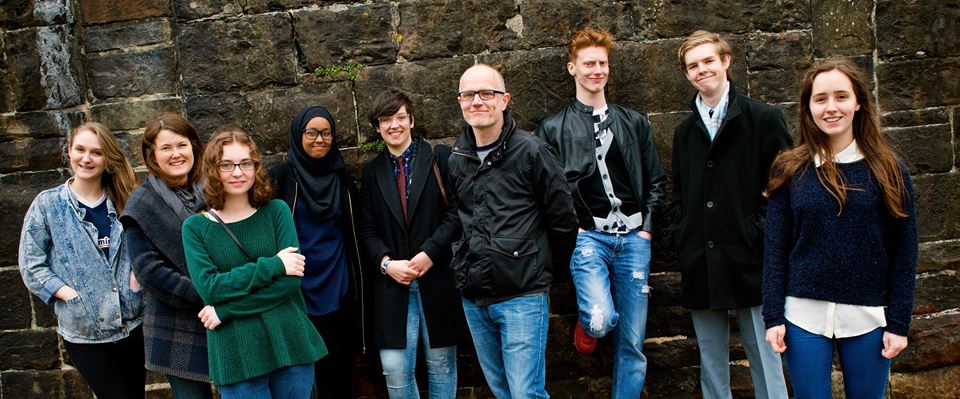
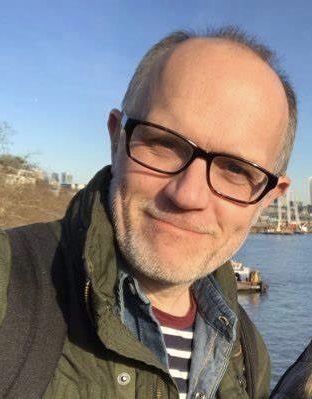
Hi my name is Guy O’Donnell and I am the director of Get the Chance. In this short article our team share with you how vital Get the Chance is to them and their lives. If you can support our work, please donate at the link above.
Get the Chance is a social enterprise based in South Wales. We are Wales based with an international outlook. We work to create opportunities for a diverse range of people, to experience and respond to sport, art, culture and live events. We use our online magazine website as a platform to showcase our members activities. We provide a fantastic opportunity to develop cultural critical voices and ensure that people from certain groups of society, people that are often forgotten or unheard, are given a platform to share, review and discuss their lives and critique work in a public platform.
Not only have we supported conversations about the arts and culture in Wales, but we’ve also broken-down barriers and asked questions about who actually gets to critique art. It is this democratisation of criticism that is crucial to a healthy and thriving artistic community that listens to everyone. Thank you.
Gemma Treharne-Foose, Volunteer Director and Critic.
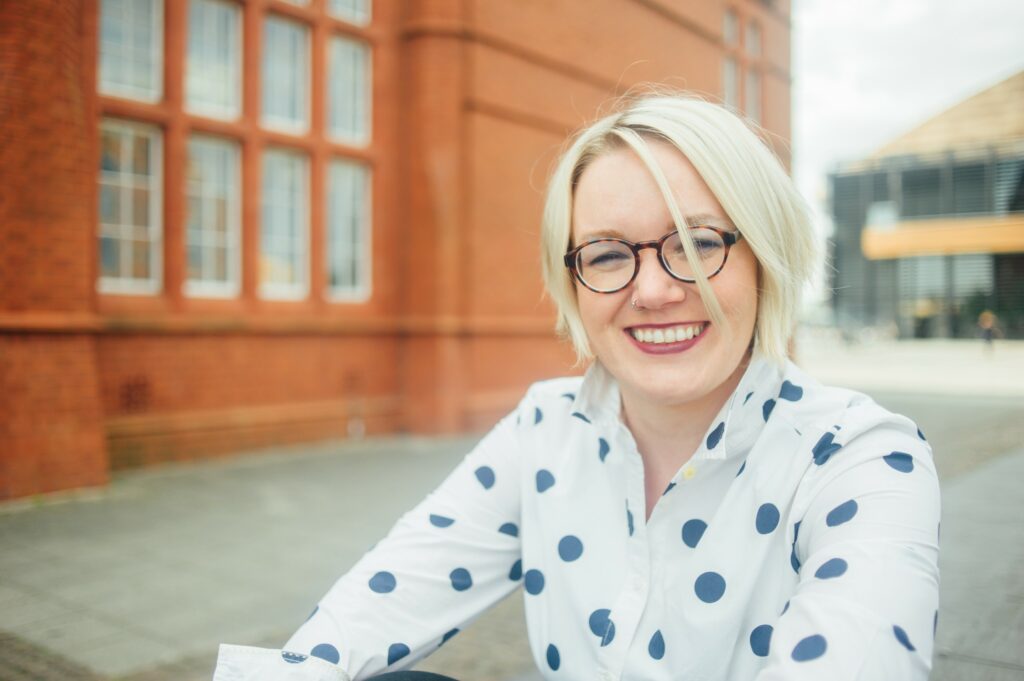
Hi, my name is Gemma Treharne-Foose. I’m a board member and volunteer with Get the Chance. We’re a community of volunteers, activists and enthusiasts dedicated to expanding the reach of arts, culture and sports in Wales. At Get the Chance, we exist to create a space and a platform for people to participate, engage in and respond to theatre, arts and culture. In particular, we help people who are perhaps traditionally hard to reach and support them to access and experience these spaces.
Part of the work we do with our community is to encourage and support them to build up their skills, responding to, vlogging about, and writing about their experiences accessing arts, theatre and culture, and also helping them access particular schemes and initiatives with partner organisations.
At the moment the arts and live event industries in Wales are hurting and they’re struggling right now as they try to access support and gain audiences in these uncertain times. I believe this is an arts emergency and I want part of my work with Get the Chance to support the industry to get back on its feet again and to get audiences enjoying live events and theatre again.
If you also want to support and highlight Welsh theatre, arts and culture then I’d encourage you to get involved. Let’s shine a light on the amazing work happening right now in Wales. The show must go on!
Barbara Michaels, Volunteer Critic.
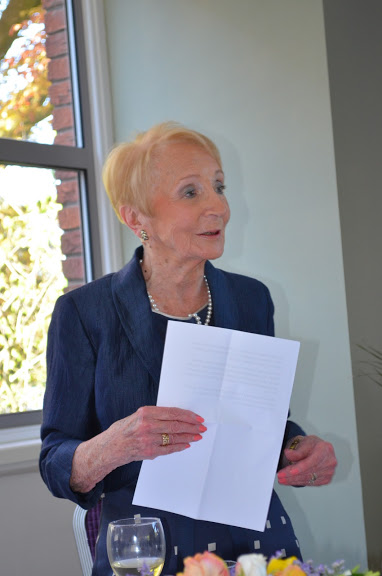
As one of the most senior reviewers who has known Guy O’Donnell for many years, I can’t stress enough how important it is that Get the Chance continues to support the youngsters who want to become involved in the arts, many of them with the aim of a career in the media.
During the time over the years I’ve been reviewing, I’ve been really impressed by the young people who are coming up into the ranks, who have become very knowledgeable and very enthusiastic about their involvement with theatre. Unless we get some financial support, it’s going to be so difficult to continue with an organisation like Get the Chance which does so much good, giving opportunities to young people who wouldn’t have them.
With the cost of seeing the performances of opera and ballet and theatre rising, and inevitably it is going to rise more, it is absolutely vital that we have some support both financially and in all aspects of an organisation like Get the Chance. Thank you.
Kevin B Johnson, Volunteer Critic
Hi my name is Kevin, I work in an office, I like long walks on sunny beaches and I’m Sagittarius. Apart from that, I’m a member of Get the Chance because I like seeing new shows, new films and sharing them with other people, bringing my discoveries to others and getting a chance to view them. I like to highlight what I love about the shows that I’ve seen.
Becky Johnson, Volunteer Critic
Hi my name is Becky Johnson and I’m a member of Get the Chance. I’m actually a freelance dance artist based in Cardiff and I’m a member of Get the Chance alongside that. So with my practice I tend to create work, I tend to perform and I tend to teach, and a big part of me being an artist is making sure that I can see as much work as possible and then also understand the wider perspectives, on not only dance but also the arts in general and the things that are going on in our current climate and our local area.
So with having Get the Chance alongside of it, it allows me to access these different things and to get opportunities to see these, which I wouldn’t necessarily financially be able to do otherwise. Also, it allows me to have that time dedicated to just look at these things analytically and also just to really try and understand what is going on in what I’m watching and what I’m seeing, rather than just watching it and acknowledging what’s happening. Writing with Get the Chance gives me an opportunity to use my voice to promote the things that I really care about and things I’m passionate about, the things I think need to be highlighted, whether that’s something that’s problematic that I see in a show or something that I think’s wonderful that needs to be shown more of and we need to see more of.
Another opportunity that I’ve had recently which has been amazing is the opportunity to interview people that I’m very proud to have had the opportunity to speak to and to be able to give them a voice to speak about their platform and what they’re doing. This is really important to me as a lot of these issues are very important and very close to home and I think it’s something that without this platform I wouldn’t be able to do.
I’ve always loved writing, it’s something that I did always want to pursue but by being a member of Get the Chance I’ve been able to continue my writing in a way that’s still linked with my practice. It means that I can find the balance of both of these feeding each other. I’m really grateful for having this opportunity.
Leslie R Herman, Volunteer Critic
Get the Chance has been one of the ways I’ve been able to maintain a connection to the arts and culture in Wales. I’m writing this message from New York City. It is mid-August 2020. I’ve been unable to get back to Wales due to the Covid pandemic and the global lockdown. Not only am I really missing Wales, I’m missing connection, to people, to places and to the arts and culture that I’ve grown to love and live for – arts and culture that have helped me thrive throughout my life.
At the moment it really feels like we’re all of us spinning in our own orbits and cyberspace is our most vital tool but if that’s all we’ve got, I’m afraid it’s way too nebulous for me. I need to feel more grounded.
Get the Chance really has given me the opportunity to get grounded and to connect to people, to the arts, to culture. It’s given me the opportunity to mentor young people and it’s given me the opportunity to extend and rebuild my own career. What’s marvellous about get the chance is its open and flexible approach to giving people a chance to connect to culture. Why don’t you give Get the Chance a chance?
Beth Armstrong, Volunteer Critic
Hi! My name’s Beth. I’m 24, and I’m from Wrexham, North Wales, and I’m currently training to be a primary school teacher. I’m a member of Get the Chance because it allows me to watch a great range of theatre performances which I wouldn’t normally get to see due to financial reasons, and also allows me to see a really diverse range of different kinds of theatre which I think is great for expanding my knowledge and experience of theatre in general.
Having my work published online is a great opportunity for me because it allows me to have a wide audience for my writing, and it also allows me to engage with other reviewers and read their work as well, so it’s a really fantastic opportunity.
Samuel Longville, Volunteer Critic
When I left university, Get the Chance was a really amazing, creative outlet for me. I was able to see so much theatre for free which would have been really difficult at the time, having left university as a not very well-off student. I was working a quite tedious nine-to-five job at the time so Get the Chance really served as that kind of creative outlet for me, allowing me to see as much theatre as possible, and not only to see it but to think about it critically and write reviews about it. So it really let me utilise the things I’d learned on my drama course at university.
I’m soon to start an MA in Arts Management at Royal Welsh College of Music and Drama and I think, without Get the Chance, my enthusiasm possibly could have wavered over the past year, and I still may be stuck doing the same nine-to-five job that I was previously doing. So I really can’t thank Guy and Get the Chance enough for all the opportunities they gave me over the past year.
Helen Joy, Volunteer Critic
Hi! My name is Helen Joy, and I’m here to talk a little bit about my experiences with Guy O’Donnell and his extraordinary Get the Chance. I joined Get the Chance as a 3rd Act Critic when it started, which is a couple of years ago now, and I was a little less grey(!), and it has given me the most extraordinary opportunities that I would not have had the opportunity to take otherwise. For example, I was able to go to the Opera regularly, something I never thought I’d be able to do or that I would enjoy. I’ve been a keen follower of modern dance – ditto, never thought I’d do that – and it’s also given me the chance to really think about how I evaluate things.
So, for example, much more recently, I was given the chance to interview Marvin Thompson. I think this gave me one of the biggest challenges I’ve had for a long time. He, and the experience of planning and conducting an interview, and recording it visually and hourly on Zoom, made me really think about, not just how I wanted to react to him and to his work, but how I felt about it.
Often, I fall into a particular category: of the classic middle-aged, white, educated woman, where the opportunities are already ours, and we’re very lucky with that, but we’re also quite a silent group. People don’t really want to hear what we’ve got to say, which is why we tend to shout it from the rooftops I think; or why, equally, we disappear into the aisles of supermarket. This has given me and my colleagues tremendous opportunities to re-find our voices and to share them, to listen to what other generations have to say. It’s been a really important experience for me. Long may it continue. Thank you!
Barbara Hughes-Moore, Volunteer Critic.
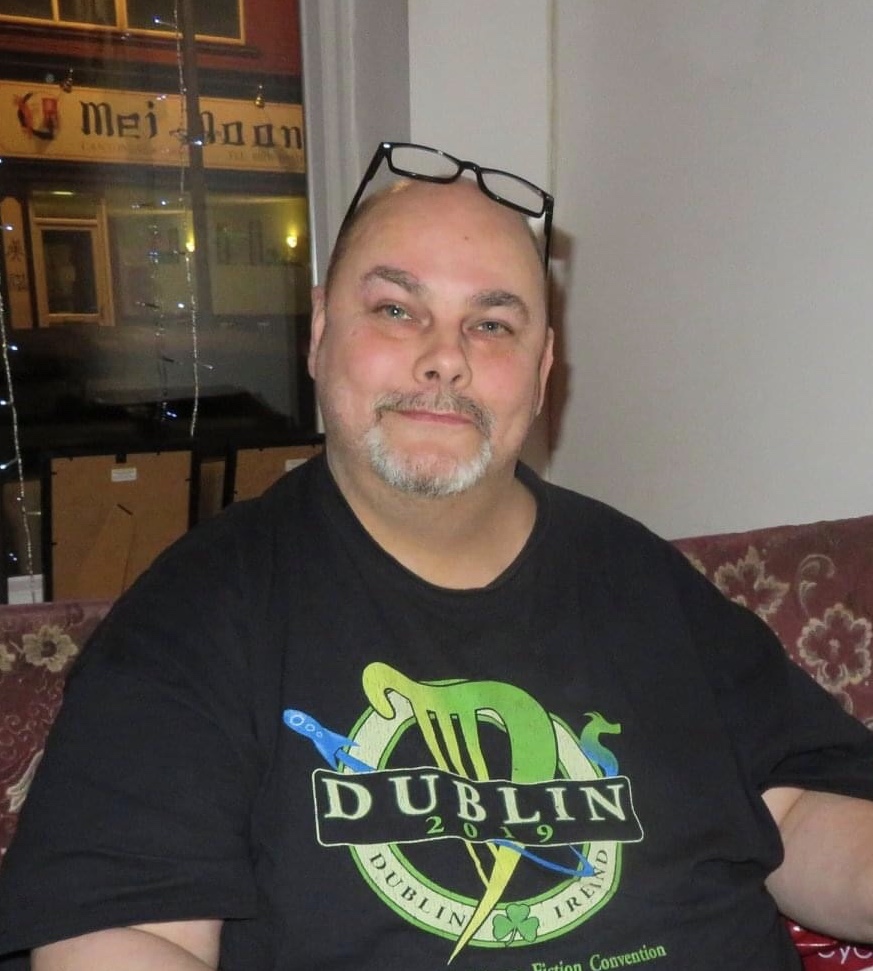
My name is Barbara Hughes-Moore, and I recently completed my Doctorate in Law and Literature at Cardiff School of Law and Politics on Gothic Fiction and Criminal Law. So by day, I’m a scholar, a reviews editor, and a research assistant; and by night, I write longer retrospective pieces on film and television through a gothic and criminal lens on my personal blog.
I’m a member of Get the Chance because its mission is all about increasing the visibility of, and accessibility to, the arts for everyone. Since becoming a member, I have attended and reviewed numerous theatre productions at the Sherman Theatre, the New Theatre, and Chapter Arts Centre. I’ve been a featured speaker on the Sherman Theatre’s post-show panels. And, more recently, I’ve had the pleasure of interviewing director Alison Hargreaves on her short film Camelot for the Uncertain Kingdom Anthology. Most importantly of all, Get the Chance has not only given me a voice – it has given me the space, the opportunity, and the confidence to use it.
Gareth Williams, Volunteer Critic
Hi! My name is Gareth. I am 29 years old and I live in North East Wales, and I’ve been asked to say why I’m a member of Get the Chance, and I want to answer by slightly rephrasing the question in order to say what Get the Chance means to me. And first of all, it means having the opportunity to respond to the arts in Wales; to contribute to the discussion around arts and culture in Wales; and to engage with various art forms.
To that end, it is an opportunity to support and promote artists and organisations, particularly those that I’m passionate about. So for me, that looks like theatre, particularly the work of Theatr Clwyd in Mold; music – I’m a fan of country music, and it’s great to be able to showcase Welsh country music talent on the Get the Chance website – and TV drama. Welsh TV drama is going through a bit of a golden age at the moment, and it’s great to be able to be a part of that as somebody who critically reviews these shows as a writer.
I’ve always been much better at writing than speaking. I’ve never been very good at expressing an opinion though because of low self-esteem and confidence. But being a member of Get the Chance has given me an opportunity to express an opinion. It’s increased my self-esteem and my confidence to speak about how I feel about the things that I see and watch and listen to and engage with. And I think, for me, that is the most important thing about being a member of Get the Chance: that opportunity to express an opinion which, a couple of years ago, I would not have had the confidence to do.
Sian Thomas, Volunteer Critic
Hi! My name is Sian. The main reason I joined Get the Chance is because I love reading and I’ve always loved reading, and I really like having a definitive place where I can put down my thoughts on any piece of media and see people respond in so many different ways, and even the authors of the books that I’ve reviewed responding in so many different ways as well. It’s really lovely to have that kind of freedom of expression and I really value being a member.
Amina Elmi, Volunteer Critic
I am a member of Get the Chance because it gives me a platform where I can speak my mind . It allows me to give my opinion and being able to do so enables me to explore the media, the news and whatever preferred genre or medium of entertainment I want.
When it was introduced to me I was into writing and that has helped shape what dreams and ideals I have while also keeping my writing skills at a solid, good level. I am fortunate to be a part of Get The Chance because it has given me opportunities that I would not have had otherwise.
Hannah Goslin, Volunteer Critic
I am a member of Get the Chance because theatre and the arts is what I eat, live and breath. To be able to connect with fellow performers, practitioners, critics and journalists is a wonderful chance to learn, be inspired and to network.
Creating opportunities for a diverse range of people to experience and respond to sport, arts, culture and live events. / Lleisiau amrywiol o Gymru yn ymateb i'r celfyddydau a digwyddiadau byw


 (3 / 5)

 (4 / 5)


 (5 / 5)