The Arts in Wales are going through a period of reflection and change; the sector is considering the impact of the forthcoming Senedd election due to be held by 7 May, 25. It will be the first election following current reforms to the voting system, which would increase the size of the Senedd from 60 members to 96, adopting a party-list voting system, reducing the number of constituencies to sixteen, and shortening its term from five years to four. The Labour Party may no longer be the majority party in power and Reform UK have recently gained its first seat on Cardiff council, comfortably winning a by-election in the Trowbridge ward, with Labour pushed into third place by the Liberal Democrats. In October 2025, Plaid Cymru defeated Reform UK in the Welsh Parliament by-election for Caerphilly, with Labour coming third and suffering its first parliamentary defeat there for 100 years. Plaid’s candidate won with 47% of the vote, ahead of Reform UK with 37% and Labour on 11%.
The Arts Council of Wales is appointing a range of new senior roles and has recently published reports into,
English Language Theatre
Dance
Welsh Traditional Music
This article features a range of responses from Welsh/Wales based creatives responding to this period in the Welsh Cultural sector
We asked those interviewed to respond to the questions below.
Arts Council Wales are currently recruiting for a “Head of” a range of art forms, including, Young People and Skills, Dance, Arts, Health and Wellbeing, Engagement and Communities (including Night Out) Music and Theatre, Performing Arts and Touring.
Many of these roles have shared strategic aims such as,
“Strengthening participation in the relevant artform, supporting inclusive engagement, developing community partnerships and driving innovation and advancing the sector.”
Where do you feel your sector currently stands and how might these new Head of Art form roles support and develop them?
The roles in Drama, Dance and Music will be tasked with implementing the recommendations of the recent reviews in the relevant art forms, what are your hopes for the outcomes of the review recommendations?
What is the priority for the Arts in Wales over the next few years?
The Wales Arts and Health Network have recently published an Arts, Health, and Wellbeing Manifesto
The Document states
“The arts are a powerful force for individual and social wellbeing, fostering resilience, social connection, and improved mental and physical health and wellbeing. A significant and growing body of evidence highlights the economic and social value of long-term investment in the arts to support mental and physical health. Additionally, evidence shows increasing engagement with the arts can help to mitigate against negative impacts of living in less affluent areas. “
The manifesto calls for the following five key commitments to ensure that arts and culture play a central role in shaping a healthier, more vibrant Wales
Do any of them resonate with you and how might you hope to see them realised?
1. Appoint a Cabinet secretary for arts and culture
As recommended by the Wellbeing of Future Generations Commissioner, Wales must elevate arts and culture within government by appointing a dedicated Cabinet Secretary to champion the sector and ensure its integration into national policy.
2. Commission a creative health review
A comprehensive review of creative health initiatives will assess their impact, identify best practices, and inform future policy decisions. It will build a robust cohort of creative health champions and advocates across all public bodies. The review will ensure that arts-based interventions are evidence-driven and effectively integrated into health and social care strategies, contributing to prevention, recovery and reducing inequalities in health outcomes.
3. Invest in a national arts on referral scheme
A nationwide arts-on-referral programme will enable healthcare professionals to refer patients to evidence-based arts interventions, supporting mental health, social inclusion, and overall wellbeing as highlighted in the National Framework for Social Prescribing. This initiative will build on existing successful models (e.g. National Exercise Referral Scheme) and ensure equitable access across Wales.
4. Invest in a sector-wide workforce development programme for arts and health professionals
The programme will build capacity within the arts and health sector, providing training, professional development, and sustainable career pathways for practitioners working at the intersection of arts and health, and enable Wales to respond effectively to the growing demand for creative preventative approaches to tackling mental and physical health.
5. Protect the arts and help them to unlock their full potential to transform lives, prevent illness and tackle inequality
In line with the ambitions of the Wellbeing of Future Generations Act arts and culture must be protected and should be formally acknowledged for their role in preventative healthcare, supporting mental health, reducing social isolation, and promoting overall health and wellbeing. Investment in arts-based prevention strategies will reduce long-term healthcare costs and improve quality of life across Wales, particularly for those who experience health inequalities
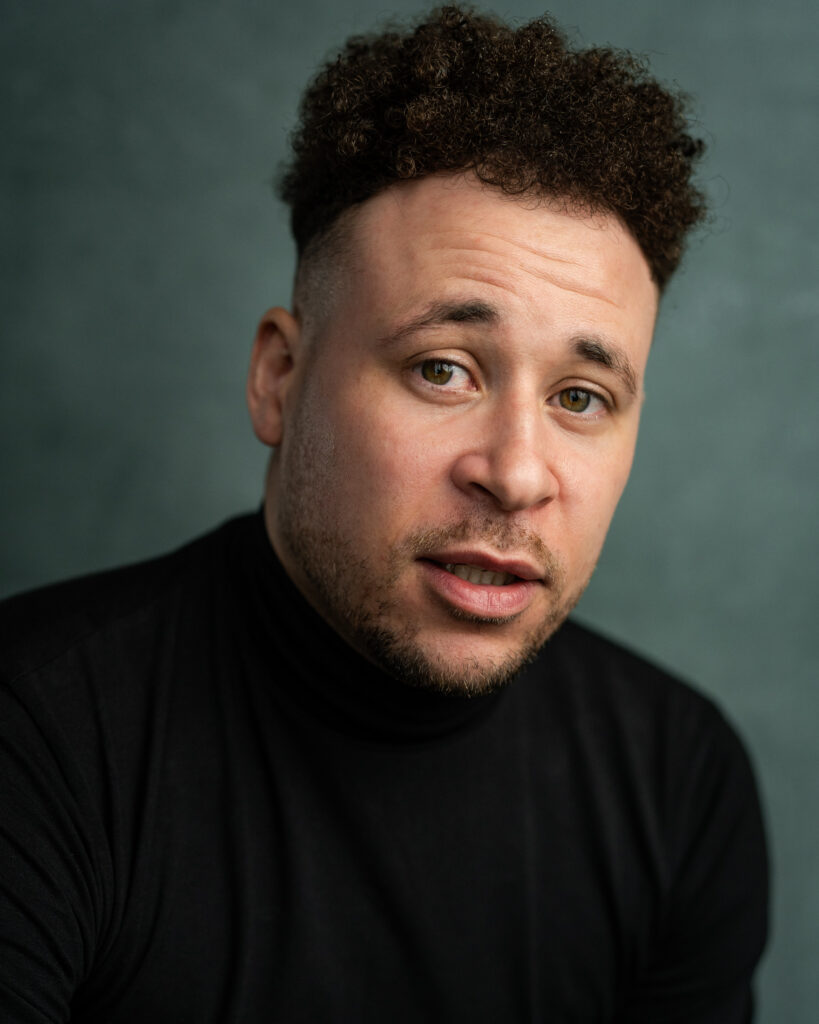
Connor Allen
Where do you feel your sector currently stands and how might these new Head of Art form roles support and develop them?
I think the new heads of art forms are a good thing and a refreshing step in the right direction. Theatre and art has the ability to enrich lives and inspire change, so with a head of that art form who hopefully is passionate and dedicated to making a difference then I only see it as a good thing. It bridges more of the gap between the artists and arts council which I believe will only help build a more robust industry and sector in Wales where art is showcased in its many forms to the communities that need and appreciate it.
With John Gowers report highlighting the rich tapestry that Wales has to offer with artistic talent and creativity, I believe a new head of art form has a real opportunity to take the recommendations of that report and of the sector and do some real change with it.
The sector is in a real dark place right now but so is the world. Funding cuts are hitting the arts and its hard for a lot of people. But in these moments there are opportunities for change and these new heads of art forms can bring hope, light, and fresh perspectives.
We need fresh voices coming through the development streams in Wales for sure. So if these new heads can start championing and supporting new talent then in my eyes they are doing a good job, we need that surge of new talent and voices to start getting opportunities to shine
The roles in Drama, Dance and Music will be tasked with implementing the recommendations of the recent reviews in the relevant art forms what are your hopes for the outcomes of the review recommendations?
Going off my previous thoughts. The recommendations are there, clear in black and white so now its time for action. Every great journey starts with a first step and they are in prime position to take that first step.
I think an English Language theatre strategy is urgently needed to tackle all avenues from touring to how to even get a show in a venue in Wales and building those crucial relationships. I wouldn’t be here today if it wasn’t for people taking a chance on me and giving me an opportunity to grow. Wales has a deep nourishment of talent waiting for opportunities to showcase their work and voices. They need the chances and this is a pivotal moment to do so. We need the next generation of artists, the next Hannah Lads, Tom Bevans, Alex Rileys to be coming through and be championed and supported whilst doing so. A strategy can really look at how to support localised talent in areas that are not exposed to, get the visibility they deserve.
One of my personal hopes is that marginalised and underrepresented voices get supported and platformed. Its been five years since George Floyds murder sparked protest and conversation yet we still have bias and inequality in the arts. I hate the term “taking a risk” as there’s no risk, it’s an investment in humanity and creativity by giving people opportunities to develop their craft and showcase their talents but we need these heads of art forms and heads of building to be willing to “take risks” because we never know who is watching in the audiences and how seeing themselves represented on stage might transform their sense of belonging. Empowerment in the arts is cyclical — from artist to audience and back again — but that cycle only continues when support and opportunity flow freely. Having actual heads of art forms that can lead the change and connect with the sector and its artists is crucial so I hope they are visible and approachable. I have been so blessed to have had support from heads of buildings and Artistic Directors over the years who have far more important things than to give their time to me as a kid from a Newport council estate but that’s how you show people that they matter. You show up and give your time so I hope the outcome of the reviews mean the heads and the arts council in general will show up and give artists time and support to really nurture the next AND current generation
What is the priority for the Arts in Wales over the next few years?
I mean, with Wales having the second-lowest spend per head on culture out of all European nations that has to be a huge focus over the next few years, to increase that investment.
Culture and art dont just enrich lives – they save them, by showing people they are not alone. Watching a performance, looking at a painting, walking around a museum, reading a poem you start to connect and resonate with others. There is no greater feeling than understanding and realising you are not alone in this world so a focus HAS to be on increasing the cultural spend and allowing more people to absorb and experience art
We are a small nation, but my God are we a mighty nation, with multicultural stories and history, showcasing every part of Wales will have the ripple effect of building cultural and allowing every person in all corners of the country to be proud and empowered by their own story and the stories of others
Another priority HAS to be the upskilling and development of talent here in Wales so they are not forced to leave to gain the necessary skills for career progression and growth. We can develop and nurture homegrown talent through mentorship and bespoke training in a way that is sustainable and achievable for the ambition of the artists so they can flourish without leaving.
Do any of them resonant with you and how might you hope to see them realised?
1. Appoint a Cabinet secretary for arts and culture
As recommended by the Wellbeing of Future Generations Commissioner, Wales must elevate arts and culture within government by appointing a dedicated Cabinet Secretary to champion the sector and ensure its integration into national policy.
This commitment resonates with me because you will have an actual champion of the sector whose job it will be to elevate and encourage policy and cultural change which is only a good thing. With the culture spend so low in Wales we need every fighting opportunity to boost that as a nation but also to enhance the lives of the public through art and through culture.
4. Invest in a sector-wide workforce development programme for arts and health professionals
The programme will build capacity within the arts and health sector, providing training, professional development, and sustainable career pathways for practitioners working at the intersection of arts and health, and enable Wales to respond effectively to the growing demand for creative preventative approaches to tackling mental and physical health.
This commitment is crucial as it coincides with what I have previously said and it will stop high quality homegrown talent from leaving Wales to gain what development they need to become the talent they already are. I hope this is a key priority going forward so quality talent chose to stay in Wales and have a sustainable career, boost the creative sector and give amazing work to the general public
5. Protect the arts and help them to unlock their full potential to transform lives, prevent illness and tackle inequality
In line with the ambitions of the Wellbeing of Future Generations Act arts and culture must be protected and should be formally acknowledged for their role in preventative healthcare, supporting mental health, reducing social isolation, and promoting overall health and wellbeing. Investment in arts-based prevention strategies will reduce long-term healthcare costs and improve quality of life across Wales, particularly for those who experience health inequalities
I preach it constantly that art can and does save lives. Any investment and development that is going to increase that and encourage more collaborations and exposure – I am all for and I will champion that ambition. A key to this commitment would be collaborations. There are already amazing companies, like Tin Shed Theatres HATCH, Like People Speak Up, Like The Wallich who are already saving lives through the arts and showing a clear blueprint on how to do so. Improving the quality of life and providing the most rewarding experiences. So investment and collaborations is key to this commitment being unlocked and accomplished.
Connor Allen is an award winning multi-disciplinary artist, the former Children’s Laureate of Wales (2021-2023) and associate artist of The Riverfront in Newport.
He is a former member of the BBC Wales Welsh Voices, Welsh Royal Court writing groups as well as Hay Festivals Writers At Work Scheme. He has written for Wales Millennium Centre, BBC Radio 4, BBC Wales, Sherman Theatre, National Theatre Wales and more. Connors work is heavily inspired by elements of his own life such as grief, love, masculinity, identity, and ethnicity.
He was a Jerwood Live Work Fund recipient, Won the Rising Star Wales Award 2021 and was the 2023 winner of the Imison Award for his Radio 4 audio drama ‘The Making Of A Monster’
His debut poetry collections Dominoes – For general audiences and Miracles – For children were published by Lucent Dreaming in 2023.
He also holds an Honorary Doctorate in Literature from The University Of South Wales
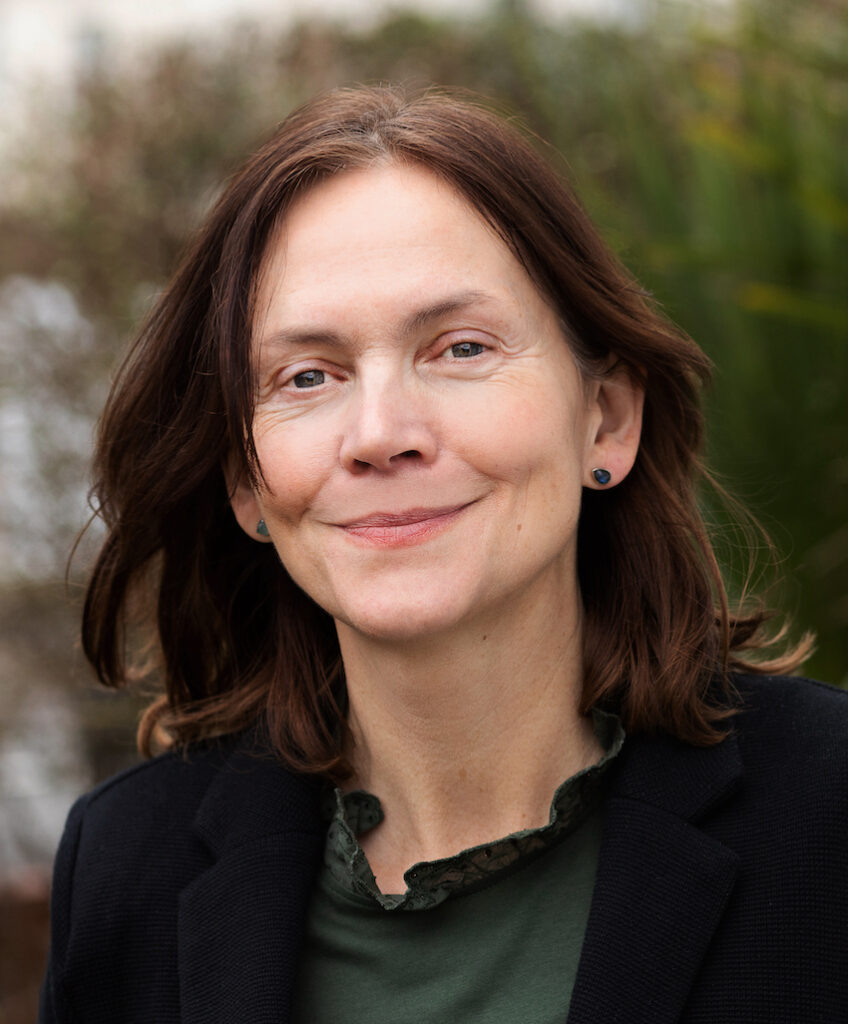
Bridget Keehan, founder & Co Artistic Director of Papertrail
At Papertrail we’ve had a dynamic year, touring our latest production, A Visit, and launching our training programme, Creative Stages, in partnership with Royal Welsh College of Music & Drama. We’ve also been able to take on three new Associate Artists whose projects we are currently developing. All of this has been made possible by a relative degree of financial security. For the first time in our 11-year history we’ve received 12 months of core funding via ACW’s Creative Steps. It’s made a huge difference in what we’ve been able to do but there’s no continuation of core funding making future plans precarious. I don’t have to search far for similar examples of independent companies and freelancers progressing to a state of flourishment only to be stymied by short term stop-and-start funding. At Papertrail we’re determined to continue, somehow, powered by optimism, which stems from the knowledge that audiences and communities value and benefit from our work.
More broadly, I’m hopeful that the increase in funding for culture in the 2025/26 budget is the start of a reversal of over a decade of cuts and that culture is proven to be a priority when it comes to allocation of government funds. We have a chance next May to scrutinise manifestos and consider who will best deliver on prioritising culture.
Research recently commissioned by Arts Council of Wales points to the contribution of the creative industries to the economy. It’s an argument which has been made repeatedly in countless studies, but, if that is what’s required for politicians to justify an increase in funding, so be it. There’s also evidence that investment in arts and culture help drive regeneration, social cohesion and improve health. As important, although harder to measure, is the life enhancing and sometimes life changing impact that experiencing the arts can inspire in individuals. I have direct experience of this. But it’s vital that the creative sector is welcoming to all and there’s still a massive amount of work to do in diversifying cultural leadership positions. This can have impact in so many ways. Not only on the kinds of stories that are told, and who tells them, but also in attracting and retaining a more diverse workforce. If barely anyone in your world of work can relate to your cultural background, it’s hard to feel you belong.
The recent review of English language theatre discusses various initiatives that are enabling fundamental change within the sector, such as Craidd and Creative Steps. There are companies such as Hijinx, Taking Flight, Fio and Common/Wealth who have been paving the way in creating a sector that is more representative of wider society. I’d like to see resources directed at people who come from working class, underprivileged, low-income backgrounds to enable them to find a way into the arts and then afford to stay in the arts. Resources need to be made available to develop the next generation of artists and cultural leaders and address the lack of working-class people from low-income backgrounds in the sector. This would be beneficial to all.
Bridget Keehan is founder & Co Artistic Director of Papertrail, a theatre company which develops and stages unheard voices. Their most recent production A Visit, by Siân Owen, is currently touring Wales.
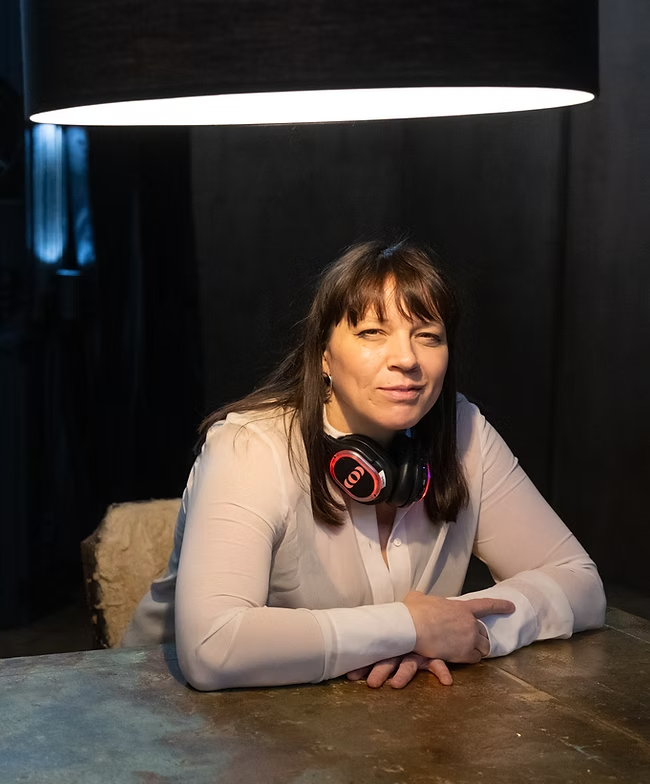
Bridie Doyle Roberts, Craidd, Agent for Change, multi-disciplinary Artist
Where do you feel your sector currently stands and how might these new Head of Artform roles support and develop them?
At the moment there appears to be momentum in developing disabled led work, diversity in theatre making and accessibility for audiences. There are some companies and individuals championing this, and there appears to be more awareness and interest in investing in this area in general. There is no further funding available for this, and people in receipt of ACW funding are expected to deliver accessible practice within their production budgets. There will need to be continued investment in this in order to affect meaningful change as it is still challenging for companies to deliver quality here and access is still seen as a add on, nice to have, but not integrated and essential. With more support on how to make integrated access work the theatre sector can make this the norm, not the exception.
I feel that head of art form roles can support, by advocating for this practise and champion this within the sector, supporting the will and momentum of great work already being developed.
The roles in Drama, Dance and Music will be tasked with implementing the recommendations of the recent reviews in the relevant art forms what are your hopes for the outcomes of the review recommendations?
For me the hopes are that the value of arts and culture are recognised for the huge impact it has on people’s lives, improved wellbeing, sense of purpose, connection, empathy and understanding as well as value to the economy. I hope that access is addressed in terms of barriers to theatre, financial, physical and mental, and that accessible practice is mainstreamed and that theatre makers are supported to create new and exciting work that gets to fulfil it’s potential and doesn’t suffer from lack of investment in audience development and touring opportunities.
What is the priority for the Arts in Wales over the next few years?
Continued investment in stories of people with variety of lived experience.
Originally from Ceredigion, Bridie is a multi- disciplinary Artist based in Pontypridd, Wales. After training in Dance from Bath Spa University, she Co-Founded Citrus Arts, an outdoor artsand circus charity making work for and with theircommunity for the past 15 years.
In recent years she has been developing her individual arts practise with a focus on visual arts and bilingual poetry, often working with furniture as a canvas for visual storytelling.
Bridie is partially sighted and passionate about Creative access. She has a part-time position as Agent for Change on the Craidd project, based at Royal Welsh College of Music and Drama to advocate for a more inclusive and accessible theatre sector to Deaf, disabled and neurodivergent people.
Billie Ingram-Sofokleous
I think the arts in Wales have so much potential, but we’ve been playing catch-up for a while. We’ve got incredible people, brilliant ideas, and vibrant communities — but too many barriers. If I could wave a magic wand, I’d start by funding more secondary MA’s so artists can actually afford to deepen their practice here rather than leave Wales. We need to grow our own talent, not lose it.
There is a world of change and hopefully this is the first step.
It is not just higher education — we’ve got to get more practical learning into schools. Kids should be doing storytelling, drama, movement, making soundscapes, creating sets, using and learning how technology can harness our learning, engaging with each other— not just reading about it. Sitting behind a desk, being told to sit still. It’s about more than skills. It’s about validating imagination, giving confidence, and saying to young people: your curiosity, your weirdness, your passion, your ideas — they all matter.
I think of that little girl who sat on a hard school hall floor and listened to storyteller spin tales about the Afanc, Selkies and Mermaids— that moment when her world cracked open and she realised stories could be bigger than books. That teacher who believed in her, and when she saw that little girl again as a grown-up, she said of course you’re being that person that I believed in. I think of the kid who believes in ghosts and wants to make theatre about it, the one who wants to build puppets or code, a soundscape using found wires and has created their own world or find the maths hidden inside music. The kid who LOVES football and created a rap in the middle of the playground listening to the birdsong and got a classroom of his peers to learn the chant in real time. Or the kid that makes an Optimus Prime suit, correctly and accurately from paper and tape, kids aren’t daydreamers — they’re future artists, engineers, problem-solvers. The arts should be a place where they see themselves reflected and where their curiosity is fuel, not a flaw.
For people who aren’t on the academic route, vocational courses and apprenticeships are essential. Pair that with creative mentoring — artists guiding artists, sharing skills and networks — and suddenly you’ve got a pipeline of talent that feels supported and excited, not isolated. You’ve got a Wales where a neurodivergent kid in a small town can find a mentor, learn the craft, and make work that changes the world.
Learning BSL is also essential and being able to understand why these changes are being made. They deserve a voice in the world they grow up in.
And of course, accessibility must be at the centre. My work as an audio describer has shown me how transformative it is when disabled and neurodivergent people can take part fully — on stage, behind the scenes, or in the audience. That shouldn’t be a bolt-on. Not one performance is relaxed, not just the lamp (new phrase I learnt from Terps), not just one with AD. It should be the heartbeat of how we work. We need to build spaces, training, and opportunities where disabled and neurodivergent artists aren’t just welcomed but celebrated as leaders, storytellers, and innovators.
For me, the future of the arts in Wales should feel bold, joyful, and a bit unruly — not a sterile box-ticking exercise. More play. More risk. More voices. More places for kids to dream and for adults to rediscover that sense of wonder. More doors open, No gatekeepers, more bridges built between maths and movement, folklore and coding, ghosts, the landscape, and science. A sector that looks like, sounds like, and moves like the communities it serves.
Because at the heart of it, the arts aren’t just about the buildings being renovated, shows, tickets, or galleries. They’re about people feeling seen. Being able to share their voice without feeling denigrated. They’re about a kid in a hall somewhere thinking, if she can do that, maybe I can too. Being amazed by an aerial dancer and wondering how they learnt that and being brave enough to ask that question. That’s the Wales, I want us to build together.
Billie Ingram-Sofokleous is an audio describer and story teller.
Danny Muir
Where do you feel your sector currently stands and how might these new Head of Art form roles support and develop them?
The inclusion of figureheads that are responsible for driving certain key priorities is a very welcome one for me, I had initial reservations around the roles being compulsorily bilingual, not in any way to diminish the importance of Welsh Language in the Welsh arts scene, I think the inclusion of that cannot be overstated – but I wondered if that requirement somewhat drained the pool of an already quite small offer of people with current on-the-ground experience – and whether the inclusion of having a fully bilingual management team was worth this trade off. This is by-the-by anyway, I fully appreciate that as a non-Welsh language speaker this might be a bit of a bad take.
I don’t think I have a particularly nuanced take here – but it sure would be lovely to have a bit more money and see more grants to grassroots organisations being handed out, across all the sectors I work in. The running theme seems to be that the really interesting, experimental, and genuinely exciting work is not being prioritised, presumably due to the lack of funding available, twisting the commissioning bodies hands into more often than not funding safe work from companies and producers with a track record – stagnating an experimental and truly grassroots scene in Wales out of necessity.
Having a trusted figurehead at the helm that really knows the minutiae of touring and small/mid scale theatre within Wales, could really do wonders and drive the actual change needed, having someone who does not have this experience might put us in even more of a puddle.
The roles in Drama, Dance and Music will be tasked with implementing the recommendations of the recent reviews in the relevant art forms. What are your hopes for the outcomes of the review recommendations?
The funds going into Wales’ Millennium Centre’s Digital / Immersive space is very exciting. I’d love to see creative technology being more widely adopted and funded, and exploring how that begins to influence the Welsh theatre landscape. It would be such a shame if we find ourselves in a situation in six years time where we have great cutting edge infrastructure in immersive technologies, and no one Wales based who is able to engage with it – I think the training and development in those fields, how to integrate it into the theatre landscape, identify what venues can receive what work, what audiences need, etc – I think this work needs to be happening right now to make sure we are ready to adopt it and run with it when it’s on our doorstep – and there needs to be more funding and pipelines for it readily available.
What is the priority for the Arts in Wales over the next few years?
I think we need to start looking at how we prioritise paying for labour over being incredibly ambitious with the work we create. I have seen many times fantastically ambitious work created in Wales off of the back of often poorly paid and overworked artists and production team members due to a mindset that prioritises the creation of work that ‘steps up’ the arts culture in Wales, but it’s using the backs of the labour to stand on to do it. Don’t get me wrong, obviously we need to be ambitious, but taking a holistic look at the sector and seeing a crazy packed tech schedule purely to realise an ambitious design choice or having crazy tight touring schedules due to the touring scene being very hard to navigate so you’re taking what you can get, is chipping away at the wellbeing and general health of the theatre production sector. I think we need a priority focus on actually supporting production, supporting the stage managers, production managers, technicians, etc – and them really having a voice and a place within this reform. None of what happens in the arts can happen without a production department, I was a little surprised not to see that being figureheaded in the same manner as everything else.
Do any of them resonant with you and how might you hope to see them realised?
Any action that platforms the work we do in Wales and helps to get more people involved from a wellbeing perspective, creating jobs and enriching lives, is a really exciting and incredibly needed step in the right direction.
“Danny is a producer and creative technologist who has been working in Cardiff since 2016, he has worked with a number of prominent Cardiff theatre companies and establishments such as Sherman Theatre, Stammermouth, and Team Collective Cymru. Danny has a love for immersive and participatory theatre and how technology can be used to enhance worlds creatively and practically. Alongside this, Danny also works as a technical stage and production manager for shows in Cardiff and touring around Wales.”
Respondent requested to remain anonymous
Where do you feel your sector currently stands and how might these new Head of Artform roles support and develop them?
I do not think that my sector has greatly changed as a result of research-based intervention by Arts Council Wales. Following the growth of the Black Lives Matter movement in 2020, Arts Council Wales implemented an Agent for Change role. The Agent for Change role was about supporting ACW with how it engages with and develops opportunities for Black, Asian, and Minority Ethnic people, Deaf people, and disabled people to “enjoy, take part, and work in the arts”. The role is now defunct, and ACW did not re-advertise for this post. It isn’t clear how the Head of Engagement and Communities is different to the Agent for Change role, and this is emblematic of a lack of transparency by Arts Council Wales. It is disappointing that ACW has taken so long to implement these roles, despite their public sector equality duty.
While we welcome a Head of Performing Arts and Touring, this has come years too late for English language theatre in Wales. The theatre sector has already shrunk, and the good progress made on inclusion has been turned back owing to ACW’s lack of cohesive strategy. As a Welsh language speaking woman of colour, I’m receiving more opportunities from England than I am in Wales- and this includes literature and theatre.
I think ACW is scared. ACW is scared of the aggressive far-right campaigns run against its head and the ways in which artists and communities with protected characteristics have been repeatedly targeted. I believe if ACW had taken a better and more systemic view towards working with communities and different sectors, ACW would unlikely to be in the position of continually re-thinking its engagement and administration strategy. I don’t think ACW really knows what it’s doing, but it knows it needs to be holistic. I imagine the Head of Communities role, like the Agent for Change role, will change in a few years when ACW realises its engagement strategy- again- is not working. This has become a speaking point amongst minority ethnic practitioners, much in the same way the Agent for Change role was widely discussed- and perceived to, long term, be unlikely to succeed.
The roles in Drama, Dance and Music will be tasked with implementing the recommendations of the recent reviews in the relevant art forms what are your hopes for the outcomes of the review recommendations?
I do not have any hopes for the outcomes of the review recommendations. Traditionally, as we have seen with different organisations, ACW commissions reviews, and it’s unclear what % of any review recommendations are implemented by ACW.
Nonetheless, it becomes a way in which the institution can demonstrate public-facing engagement. I don’t work in music or dance, but I have worked in theatre in community engagement, and I have also worked in theatre as a writer. It is phenomenal that ACW thinks the implementation of any recommendations and the recruitment of a Head of Performance can turn back over a decade of sector issues, a lack of funding, and repeated racism scandals. For example, Jon Gower’s report did not properly take into account race and ethnicity- and this is emblematic of how 2020’s focus on racial equality is not being borne out within creative strategies. It doesn’t even mention the Anti Racism, Wales Action Plan.
Out of nearly 60 pages, there’s less than 1 page on “diversity and inclusion” when the Black, Asian, and Minority Ethnic population has grown 50% from 2011-2021. Most of that page is about Azuka Okafor’s “Women of Llanrumney” . Jon Gower dedicated exactly two paragraphs to this topic. There are no recommendations about equality and diversity- yet this is something we in the sector are meant to champion despite erasing our communities.
What is the priority for the Arts in Wales over the next few years?
The priority for the Arts over the next few years is for the leadership of the arts sector to represent the workforce, and ACW’s failure on theatre and community engagement will continually post road-blocks. Another priority is to ensure that it is not subject to any more funding cuts. It is astounding ACW is trying to champion community engagement with a markedly smaller budget than 2010- and this has created a tense situation within the sector.
Do any of the areas in the Wales arts and Health Manifesto resonate with you and how might you hope to see them realised?
None of these resonate with me. I feel like there’s a strand of neoliberal discourse within the Welsh Arts that’s characterised by continually linking the arts and creativity to its benefit within society- but we know they’re useful. I don’t know what use another Senedd member will be around the arts and creativity.
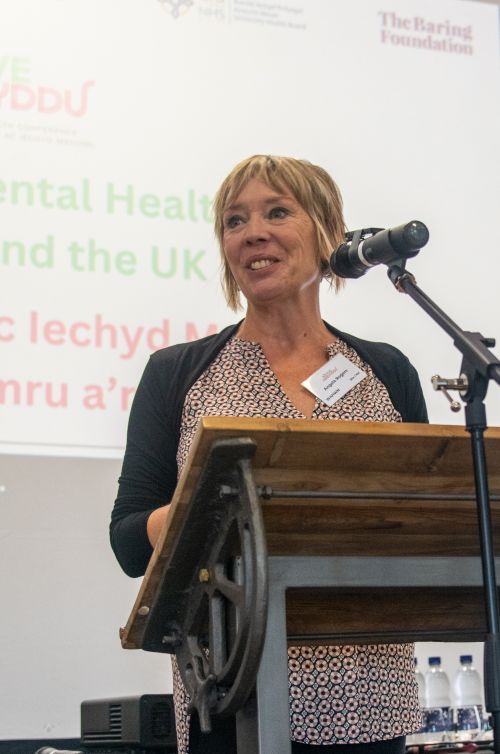
Angela Rogers, Executive Director, WAWHWN (Wales Arts Health & Wellbeing Network
Where do you feel your sector currently stands and how might these new Head of Artform roles support and develop them?
WAHWN was encouraged to welcome the entire Arts and Health team to our recent national conference ‘Weave’ and hear a passionate keynote address from Dafydd Rhys on ACW’s commitment to our sector. The appointment of Head of Programme for Arts Health & Wellbeing signifies a significant commitment and offers a tangible opportunity to build on and strategically grow our sector’s work in Wales alongside key partners and stakeholders.
Wales is leading the way in integrating arts into healthcare, with its strategic partnership between the Arts Council of Wales and the Welsh NHS Confederation being recognised by The Lancet as one of the most concrete commitments globally to intersectoral collaboration and investment in creative health. It’s important we ensure this strategic and cross cutting work continues and WAHWN is confident that a Head of Programme for Arts Health & Wellbeing will be a key driver in Wales.
What is the priority for the Arts in Wales over the next few years?
Drama, dance and music all have significant roles to play in cross cutting themes across all areas of policy. A growing number of interventions including Dance to Health have shown their potential in cost savings for the NHS and Social Care through their evidence-led, pioneering falls prevention dance programme for older people nationwide.
Singing Walks – a partnership between Oasis One World Choir, Cardiff & Vale Mental Health and the Ramblers Association are supporting the physical health, mental wellbeing and social connection of people seeking sanctuary; ‘Ar y Dibyn’ developed by Theatr Cymru continues to grow in scale, supporting adults living with substance mis-use and addiction through Welsh language creative interventions.
Organisations such as The Wales Arts and Health Network have recently published an Arts, Health, and Wellbeing Manifesto
News | Wales Arts Health & Well-being Network
The Document states
“The arts are a powerful force for individual and social wellbeing, fostering resilience, social connection, and improved mental and physical health and wellbeing. A significant and growing body of evidence highlights the economic and social value of long-term investment in the arts to support mental and physical health. Additionally, evidence shows increasing engagement with the arts can help to mitigate against negative impacts of living in less affluent areas. “
The manifesto calls for the following five key commitments to ensure that arts and culture play a central role in shaping a healthier, more vibrant Wales
Do any of them resonant with you and how might you hope to see them realised?
Our WAHWN Manifesto was developed in collaboration with our 1000+ network of members, partners and key stakeholders ahead of the Senedd elections. We are calling on Welsh government to implement all five of our calls to action, all of which have been endorsed by Heledd Fychan, MS, Chair of the Cross Party Group on Arts and Health.
We are in a rare and key moment in the political cycle right now as hundreds of candidates gear up to launch their campaigns for the 2026 Senedd elections. This offers a rare opportunity to offer big issues they can campaign on.
At our Weave conference breakout on arts and health policy, Rosie Dow, Chair of the session, focused on what we, as a sector, can do to influence policy.
“.. we reflected on this, by considering three BIG questions: What do we want politicians to know? What do we want them to do? And why should they care about arts, health and wellbeing work?”
Rosie reminded us that “the strong links between arts engagement and better health are now irrefutable: the evidence base is significant, robust and growing all the time. Not only does our work improve people’s lives it also helps us meet some of our biggest challenges as a nation around poor mental and physical health and health inequalities. It makes a major contribution to any government’s top priorities around health, wellbeing and economy. The question now is not whether to invest in this work, but how? “
What we need now is proper long term investment, not just through Arts Council of Wales but also through local authority, health and education budgets. Arts and culture also need a seat at the table in forums where health is being discussed and strategies developed. All public bodies should be mandated to support creativity and cultural engagement in our population.
In the short term WAHWN will ensure its members have their voices heard in the development of the Wellbeing of Future Generations Culture Bill Green Paper, connecting with Well-being Assessments, advice for public bodies on implementing their Culture and Welsh language goals.
Angela is Executive Director, WAWHWN (Wales Arts Health & Wellbeing Network) whose 40-year career in the arts spans community arts development and engagement through roles at Engage Cymru, Centre for Visual Arts, St Donats Arts Centre and Chapter Arts Centre. She is passionate about bringing people together to build cross sector partnerships and improve health and wellbeing through creativity.
She set up WAHWN in 2013 as a network of 6 people sitting around a kitchen table in Swansea which has now evolved into the national sector support body for arts, health and wellbeing in Wales with a membership of 1000+ arts, health, social care, academic and third sector members. WAHWN’s mission is to champion the role of the arts to improve the health and wellbeing of the people of Wales. We do this through advocacy, regular networking events, contributing to research and flagship programmes such as ‘Stepping In | Wales Arts Health & Well-being Network- a creative workforce training and mentoring programme and ‘How Ya Doing? | Wales Arts Health & Well-being Network Artist wellbeing programme.

 (4 / 5)
 (5 / 5)
 (2 / 5)