
All posts by admin

Review London Symphony Orchestra, Zimmerman’s Oboe Concerto, Barbican Centre by James Ellis   


 out of 5 stars (4 / 5)

In what should be my last trip to London for a while, started off with a wonderful concert at the Barbican. The London Symphony Orchestra on a chilly Sunday night, offered up Schubert in his work for stage and also the church, alongside a curious concerto.

Schubert’s music for the play Rosamunde, Fürstin von Zypern by Helmina von Chézy flopped massively upon first outing in 1823. Though the play itself is lost, the fabulous score by Schubert remains, having been found again in the mid 19th century. Even with the recycled Overture and the Entr’acte to both Act 1 and 3, the music never feels choppy, their is a wonderful symphonic quality, a breezy melodic charm as well. These pieces proves Schubert talent in writing for the stage, his reputation more known naturally in the concert hall. Even the final few bars with the string quartet had a touching, discordant quality to it. The whole encounter was a true delight and one of the more interesting Schubert that I wasn’t aware of. It simply remains a delight.   

2018 saw the centenary birthday of German composer Bernd Alois Zimmerman. Though the big celebration that year was that of Leonard Bernstein, Zimmerman is proving to be a composer of worth, one well worth searching out. His Oboe Concerto is a strange, brief affair. Soloist Olivier Stankiewicz stood out as a highlight of the evening, the instrument transforming all sorts of phases and extremities. He even had to disconnect the main part of the oboe before the last movement, the demand of the piece proven in moments like this. There was a mirror shattering orchestration, the oboe cries and shrieks and the feature of piano, harp, celesta and wood percussion also nice touches. It never ceased in it’s formidable inventing nature, it’s unwavering goal for expression and new pastures. More Zimmerman is inevitable.   

Back to Schubert, his 5th Mass got together the formidable forces of the Symphony Chorus as well as the four soloists: Lucy Crowe, Adèle Charvet, Cyrille Dubois. This three quarter hour mass is a fair piece, it has some stellar moments for the Horus and soloists, who both equally shine in equal measure. Conductor Francois-Xavier Roth skipped and bounced all evening, his love of the music never faltered, his masterful calibrations for the players and singers helped make this a beautiful concert. Whilst I found the Mass of less interest than the rest of the programme, it did prove a fine feature and a sacred work which should have more public ears upon it. 

To think I almost didn’t come and see this glorious concert. 


Review The Lamb Lies Down on Broadway, The Musical Box, St David’s Hall by James Ellis

 out of 5 stars (3 / 5)

Ever the one to try something new, The Music Box looked like a fascinating attempt to honour the work of the band Genesis. This is a new one for me, I was sat amidst die hard fans and veterans of the era. It proved to be an exciting prospect that I was down for.

The evening started with a slump. I doubt anyone sat in this audience wanted to watch a 20 minute documentary about the stage effects of Genesis’ live shows, though it did give a glimpse of some of the Polaroid snaps not used in the live show. It did feel quite cheeky to pop this little doc on and then have an interval, only for the main two hour show to end at an eye watering late 11pm. Ditch the video stuff, get drinks in before the show and stick to a prompt 8pm start and you’re laughing.  

Overlooking this discrepancy, the main event was a bizarre, thumping thing to behold. The story of Rael, a young lad living in New York City and the strange adventures he finds himself lost in remains pretty abstract. I wouldn’t say there was a clear through line in the story, more so a chance to embrace sexual liberation, consumerism, nature amongst other big topics. A lot of the chosen imagery proves it as a period piece, with some questionably misogynistic material. Though a lot of the chosen video works sees broad strokes of Dalí, Hollywood film posters, lithographs, collages and saves of other sights.

Musically, it’s quite appealing though I personally wouldn’t say any song stood out enough to be a classic. The title track was funky and so much of the album blazes with mind-bending stylings its hard not to like. The Musical Box seem to transgress the idea of the tribute band and deliver something so genuinely authentic you’d think they were the real deal, Peter Gabriel and Phil Collins from the band have expressed their love. Denis Gagné as the vocalist, gets to keep up a lot of energy and the vast variety of the vocals. He excels taking on what was Gabriel’s part in the original album and show. The band as well deliver some feats of pure thumping rock and a choice section of other genres. They never waver. 

Many surreal moments abound. Denis as the Slipperman see’s him birthed through a suggestive tube, his costume to showcase deformity and disgust. A strange song to say the least, though the multi costume changes offers the original clothes from the classic show. He also gets moments out of Trash Humpets and hammer horror in masks and dress, these moments giving off glam rock vibes. 

Even with the late end and often lack of a conventional story, the show was a success. Though I think I should leave it to the fans of the album to really savour it. More chances to see The Musical Box are a must though!     

Review BBC National Chorus & Orchestra, Fauré’s Requiem, St David’s Hall by James Ellis 

 out of 5 stars (3 / 5)

A return to Cardiff saw little time for respite. I’ve also made the discovery that more cafes are starting to become more hostile to those with laptops, limiting the time you can have on yours and asking you to move if you are taking up a table for 4 people (fair enough for the latter). As a journalist in need of such spaces, this could easily be a whole article, though it was a bit of a ropey start back to the Welsh capital. 

With this in mind, I ventured back to what will hopefully remain the main venue in Cardiff for classical music. BBC NOW making a Sunday afternoon slot with German and French programme of concerto and choral works. Canadian James Ehnes faced Brahms’ Violin Concerto with a strident force and grace. It’s not one of my favourites, though the pain and concentration upon his face when not playing was of note. I find the final movement gives the piece a lot more of worth, the German command the music has is not always exciting nor stimulating. It does little for me, though Ehnes brought out a lot of the majestic qualities the concerto has, again the last part being a final flourish of string playing with panache. 

The Chorus got a brief little solo with Olivier Messiaen’s ‘O sacrum convivium’. They shone here, this hushed five minutes one of the composer’s smaller works though still with a big impact. Messiaen’s mind blowing music stands decades and here is a calm, gentle little number in F sharp major. As a full blown Catholic, Messiaen was asked to write this setting from the words of allegedly St Thomas Aquinas and this fine little work premiered in 1938. Playing with chromatic harmonies, the glowing nature of each bar is some of Messiaen’s most accessible work, the rest being long, dense and explosive. Fine stuff, conductor Ludovic Morlot excelling in both orchestra and choral features throughout, generous to both parties. 

Now for the crowd pleaser. Fauré’s Requiem remains Classic FM fodder, your nan’s favourite choral work (I did pick some for my own nan’s funeral to be fair) and featuring in the odd film and advert. It’s a type of the French style of music we know and love, but it remains the mawkish nature of most of it. The perfume  and prettiness which goes against it did give the chorus some fine moments, Rhian Lois in the sublime Pie Jesu felt more like a mezzo at times, bass-baritone Neal Davies always decent in his mournful declarations here. Organist Gregory Drott getting some marvellous ethereal moments of harmony with the chorus, yet not featured enough. You can love it and you can hate it. It depends on this critics mood, I’d say.    

Review Rebecca Black & Jessica Winter, Thekla, Bristol by James Ellis 

 out of 5 stars (4 / 5)


My time was up in Bristol, only for now. A varied programme of music would end with a firecracker night at Thekla. The story behind Rebecca Black has a chequered history and is turning out to be a hit.

Whipping things forward was warm up act Jessica Winter who wowed with her strident pop bonfire. I remained amazed with her talents, the audience loving her funky tracks. There was a whiff of Kate Bush and even Chrystabell. I knew not who would be the warm up and was delighted with the outcome. I would be sure to check her out as a leading act as well. Without hesitation. 

As for Rebecca’s set, I was highly impressed. The absurd mega meme of her private music video Friday, left her with a torrent of abuse. It’s clear she can in fact sing and has some great moves to boot. The discovery of her latest songs remain a delight: Crumbs, Destroy Me and Doe Eyed as highlights. What remained was an electrical storm of sounds, very rock like more than I expected. The drummer who did not get enough billing was also spectacular. Rebecca who has opened up about being a member of the LGBTQI community and the impact of what Friday delivered to her and those around her.

Any aspect of novelty is stripped away, though an encore of her hyper pop take on Friday remained a joy. The song is on her terms, the company who wrote the song appear to be be involved with the track one way or another. 

The audience space was packed, her respectfully gay following was heightened by her stint at Heaven in London the night prior. It was the unashamedly thumping pop sound that permeated through. I found most of these songs to be highly catchy and a lot of fun. 

Rebecca’s career is only on the rise and I am here for the journey. 

Review The Tallis Scholars, Taverner to Tavener, St George’s, Bristol by James Ellis 

 out of 5 stars (3 / 5)

It’s nearly ten years since Sir John Tavener passed away, his impact on British choral music truly a colossal influence. The Tallis Scholars are fast approaching their 50th birthday and there are no signs  of slowing down.

In this rather safe concert, both John Taverner and Tavener featured. The former a Renaissance composer, the latter the aforementioned, acclaimed composer (there was talk of a family connection, though this is disputed). Old Taverner’s music from centuries ago can be fairly dull, little seems to happen in it and his polyphony is fairly sober and unexciting. Paired with the more recent Tavener we get the usual list of hits. The Lamb from William Blake, is a sweet few minutes, As One Who Has Slept remains a fine example of the total harmony for the singers, who make it sound so easy. The Funeral Ikos is a wonderful lament, heart touchingly warm when all the singers come together to recite each of the ‘Allelujahs’, a piece already being popped down for my own memorial service. 

The pairing of the the two composers is fitting, though I myself am much more keen on Sir John. It’s the fascination with Greek and Russian Orthodoxy that he opened up to a lot of people, his popularity has never wavered. Even after his death there is buzz about his last piece Krishna will be premiered at Grange Park Opera. Even being friends with King Charles, he always seems to have been a part of the establishment and some of his music has been pretty mawkish. Having said that, I’ve been moved to tears on more than one occasion hearing his stuff live and I would say I remained a big fan. 

The dense latin names of the earlier John make his work stand out as being by him as the latter John has more poetry and is usually an English name. The Song for Athene, famously immortalised at Princess Diana’s funeral remains a fine feature, the singers defining the work as a classic, a rare treat for more recent choral music making. The bass singer maintains a drone throughout most of it, Tavener saying this was a feeling of god in the music, these drones featuring in numerous works of his. His take on The Lord’s Prayer has a gently pulsating nature, the words well known to anyone who learnt it in school or remains a Christian. 

Sat in the back row, I wouldn’t always say I was lost in the intimacy of the event, there are only ten singers on stage, after all. St George’s remained a fitting venue, the Greek mosaics lingering above the stage felt fitting. The Tallis Scholars have a deep, rich sound which is very gentle in a lot of accepts. Peter Phillips as director painted the glory of the music with a vibrant brush, he knows the singers well and wants the best for them. They all delivered great singing in a somewhat familiar and conventional programme that will please most.  

The BBC Singers perform extracts from Tavener’s The Veil of the Temple, alongside music by James Macmillan, Kristina Arakelyan, Judith Weir, John Pickard & Cheryl Frances-Hoad at St George’s on 23 February 2023. 

Review A New Old Play by James Ellis

A New Old Play: Qiu Jiongjiong’s creative saga commands more eyes on it

 out of 5 stars (5 / 5)

Now here is a complete delight. Something out of the blue and now a shining testament to international, indie cinema. Qiu Jiongjiong has created this three hour epic, a feat that is highly impressive. I was both moved and amused in equal measure. 

Yi Sicheng is Qiu Fu, a renowned Szechuan opera singer, who is being sent to the other world, after a life filled with joy, pain, love and creation. Sicheng is very matter of fact in the role, his clown like features include a red nose and his little dock man’s cap. This remains a highly impressive performance, the length of the film adding to the vast amount of time he’s on screen. It’s very subtlety done from him and it’s hard not to be taken with him.   

This is a film which spans most of China’s turbulent 20th century. I was deeply impressed by the director’s efforts to have a lot of the practical side of things built with love. The models, walls and others set pieces are clearly handmade and adds an extra charm to the film. There are touches of Samuel Beckett, Buddhism, surrealism and German Expressionism abound. It’s a mighty feat, as many characters and historical moments glide along in this not always demanding film, its the length which may deter most for unjust reasons. 

The love of theatre seeps through as well, the stage like production has many fascinating features. There is a cheeky humour to the whole film as well, even with the misery of the Japanese invasion, Mao, The Great Leap Forward, the famine and other depressing moments. Qiu Fu finds a way to get through it all, his craft being loved and loathed in certain moments of history. Things reached the saddest plateau when a baby is left at his doorstep during the horrendous famine, the mother later coming back and thanking them for looking after her child and expecting them to continue the support.

In many respects, little happens in the film, a Zen like presence seems to wash over the lead character as these pivotal events happen around him. Lovers of Chinese opera may find solace here, with many auditions, rehearsals and performances are seen throughout. There’s much humour in the afterlife scenes which even they feature red tape and insufferable waiting times.

As a whole the experience was splendid. It needs many more people to engage with it…the film remains in an early, humble starting ground and we hope more festivals, cinemas and reviewing platforms truly engage with it. It is worthy. 

Dir: Qiu Jiongjiong (18, 179 mins)

A New Old Play is now playing at select cinemas and festivals. 

Review Peter Grimes, Kensington Symphony Orchestra, Queen Elizabeth Hall, London by James Ellis 

 out of 5 stars (4 / 5)

A final flourish in London would see a concert version of Benjamin Britten’s finest stage work, Peter Grimes. His first opera proper, this piece was deviating on first impact back in 1945. Set in Suffolk in the early 1800s, this remains a devastating examination of the individual vs the community. The libretto by Montagu Slater is also a thing of beauty, sharp and stirring, taking George Crabbe’s short stories and turning them into something vivid for the 20th century.

I have to say, for what is essentially an amateur orchestra and singers, I was extremely impressed. This is not an easy piece by any standard and it felt like a lot of rehearsal had gone into the whole thing. Sat in the front row, I was battered by this North Sea storm, the cast and conductor inches away from me. I will be honest and say most moments with some soloists in the chorus and some members of the orchestra had brief wobbles, but these are small quips in another wise stellar offering. 

John Hudson adds a depth of Ricky Tomlinson as the titular character. A proud tenor, I find him to mostly work in this commanding role, some phrasing here and there needed some work. He had some touching moments his monologue towards the end was touching, some lines between sung and spoken. Wales’ own Mari Wyn Williams made a marvellous Ellen Orford, also getting a superb aria in the third act. The large ensemble of singers could be seen in productions some of them really looking the part. Nicholas Folwell was great as Captain Balstrode, more sympathetic to Grimes’ abuse and antics. As Ned Keene, Nicolas Morris made a great sight, the pill peddler and all round smuggler, with some fine acting to boot. 

As Auntie, Mae Heydorn excelled as the exhausted bar keep of The Boar pub, where a lot of the funny and stormy moments occur in the opera. She really could be the part and her voice  had that syrupy style the role commands. Mrs Sedley is always fun, the busy-body of the bough here tackled by another fine singer: Susanna Tudor-Thomas. It’s a role which is easily hammed up, some might call her a Karen by today’s standards, though Susanna had fun and we did too. John-Colyn Gyeantey had brief,  biblical bouts as the Rev Horace Adams, a diverse choice of singer in this concert. 

Colin Judson got to act drunk as the off the wagon Methodist and has been seen with big opera companies. His voice pierced through in the mind boggling end of act one scolding Grimes for his sweet and surreal aria, as they wait for this next doomed young apprentice. Paul Sheehan, fashioning an amazing moustache and beard, he looked the part as well as Swallow another character lost in the gossip and hearsay that penetrates the story. The bass-baritone opens the show with declamatory pipes, with Grimes in court to understand what happened with his first boy who died on Grimes’ boat at sea. Ronald Nairne as Hobson, another bass who though in it quite little, showed off some nice deep tones. As both Nieces, Ally Dunavant and Micaela Abreu delighted in their harmonies, though a bit more attention to keeping together in the opening of the last act.   

Conductor Russell Keable kept the storm in motion, this powerful score hardly lost at sea, though there where moments which might have suggested this. I did note a moment when he turn to one singers to cue them in, when I was another singers who was about to sing. The orchestra in the more tender, turbulent moments dazzled in what is regarded as the finest English language opera of the 20th century. The chorus in their hunt for Grimes blazed with glory for one of my favourite moments for an opera chorus. All that was missing was pitch forks.

Being at the Royal Opera a few nights prior, I dare say I found there to be some better singing here than overall here. Britten would have loved this community effort.

Review Chopin’s 2nd Piano Concerto Philharmonia, Royal Festival Hall, London by James Ellis 

 out of 5 stars (4 / 5)

It was soon time to wrap up another hectic trip to London, I’ve been all over for this one, havinge seen some marvellous shows and also learned some things along the way. No two trips are ever the same and this one will certainly remain memorable. 

The Philharmonia gave a lush afternoon concert with Ukrainian conductor Oksana Lyniv. Being a massive advocate for music around the world, no doubt the past year has been a lot for her.  When the marvellous conducting is this balletic and rousing you can only be lost in the music. Opening with a composer from her homeland: Borys Lyatoshynsky and his Grazhyna is anew venture for me. It painted a wonderful folk-like picture, the story of the Lithuanian princess who dies in battle had many fine moments for brass, the woodwind in other moments felt quite special. No doubt this was hand picked by Oksana, more from Lyatoshynsky is highly encouraged. A telling concert opener.   

Benjamin Grosvenor joined the players for an impeccable performance of Chopin’s Second Piano Concerto. For such a young age, he brings out so much of the piece. The uncluttered, simple harmony of the music, the piano. To always leading the orchestra but rather a symmetry and state of flux. Benjamin showed of busy fingers as expected with Chopin, the lovely Larghetto remained a fine feat, the softness and sincerity shines through. This went down well, more explorations into Chopin’s world would be encouraged, as most would only recognise his slight solo piano selections. 

Tchaikovsky’s Sixth Symphony, known as the ‘Pathétique’ would leave us as the final curtain, Oksana holding command and respect over all these players who gave an impressive performance. The Russian composer’s angst is poured all over this piece, some of the most stirring string writing with that unforgettable cascading scale is a huge feature. There are moments of joy, though they don’t last forever. I’d say this was his finest symphonic creation, dying a few days after conducting its premier. Some in the audience embarrassed themselves by mistaking the penultimate moment as a violent finale, though things went straight into the soul searching Adagio lamentoso. This piercing showing really did make a mark and this conductor is proving to be a rightful success story, with an always shining orchestra.

Review Bag of Bones, Manchester Collective, Purcell Room, Southbank Centre by James Ellis 

 out of 5 stars (4 / 5)

The Manchester Collective are doing the rounds in the UK and their work looks really enticing and intriguing. I’m open to the accessible method of getting people into to hearing classical and experimental music, alongside everything in-between.

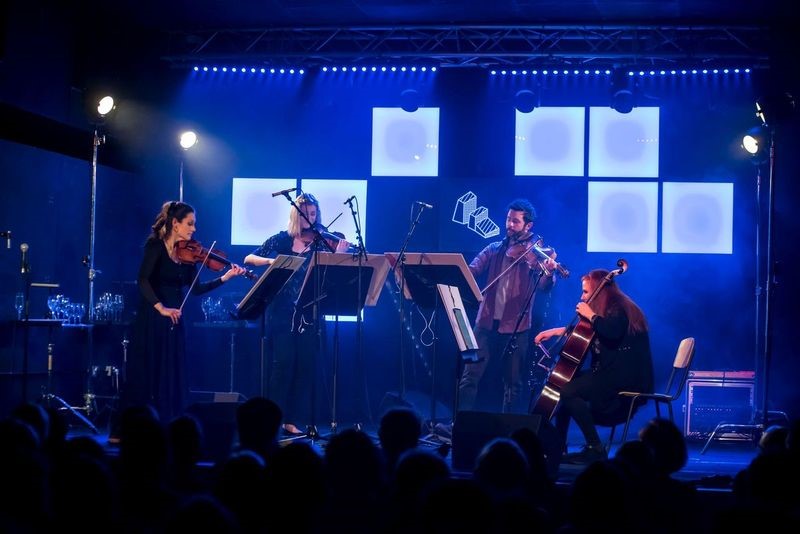
Alice Zawadzki’s Bag of Bones is a heavily inspired, Polish incantation of life, loss, love and joy. Had a feel of Górecki’s Symphony of Sorrowful Songs, women seen through the ages, recant their stories, their rites and lamentations. As a whole, the piece worked well, other musical selections were spliced in-between her work. This was somewhere between opera, folk, performance art and musical and it had charm and touching bits too. Alice has an airy voice, touching and robust. 

Speaking of Górecki, these players did a very find job with his Allegro from his String Quartet No. 2. It had a crisp, resplendent vitality to you, like with most of the late composer’s canon. The folk elements of southern Poland are there and the feel of the forest and woods breathes here. It was just all so lovely. David Lang’s Mystery Sonata No. 1 entitled Joy, commenced the evening, though he usually has more emotional weight this remained ethereal if sparse, as if it was not even there. 

Simón Días’s Tonada de luna llena and Andrea Tarrodi with Mirrors remained as highlights, the quartet really proving both side of the coin of traditional and experimental here. They really do excel with all the picks here. Hats off also to the pianinst Bruni Heinen and accordion/synthesiser Charles Kieny. The instrumentalists even got to have a little sing with the South American traditional Que Florezca La Luz, embracing the lord and the state of being in love.     

These choices to go with Bag of Bones were a nice touch and this could work with future work. Even grander style opera-like pieces could go down well, the wall of accessibility being broken thanks to marketing and interesting venue choices around these chores. 

I’m down to see future work in Cardiff and Bristol.  

Theatres Trust announces Theatres at Risk Register 2023

Three theatres removed from Theatres at Risk Register but tough times still ahead, warns Theatres Trust

Theatres Trust, the charity that campaigns to protect the UK’s theatres, has published its annual Theatres at Risk Register, which highlights theatres across the UK under threat of closure, redevelopment or severe decay, but which all have the potential to be revived for their local communities.  Theatres Trust has removed three theatres from the list, which are no longer considered at risk due to advocacy, planning and viability advice from Theatres Trust, along with the vital support of their respective local authorities, theatre operators and community groups.

Century Theatre, a unique travelling theatre that toured the country in the post-war years, is now looking more secure in its permanent home in Coalville Leicestershire.  It had been threatened by the redevelopment of its site and had been added to the Theatres at Risk Register in 2014, but it is now better integrated into the local area and able to serve the local community with improved facilities.  

Walthamstow Granada, a Grade II* listed ciné-variety theatre, had been empty and deteriorating until it was bought by Waltham Forest Council in 2019, with Soho Theatre Company on board as the operator.  Having undergone a major refurbishment programme, it will reopen later this year as Soho Theatre Walthamstow, an exciting new London venue offering a mix of comedy, theatre, music and community activities.

The third building to be removed, Swansea Palace Theatre, is a distinctive Victorian music hall that has been on the Theatres at Risk list since it started in 2006.  The building will not be reopening as a theatre but as office space, with the ability to accommodate small-scale performances and events.  It was evident that there was not the demand in the city to make another theatre viable, so this sensitive scheme by Swansea Council (funded by the European Regional Development Fund and the Welsh Government, via its Transforming Towns programme), protects the building’s historic features and could easily be reversed in the future, making it the best outcome in this situation.

Theatres Trust is advocated for by high profile supporters including Gary Kemp and David Morrissey.  Musician, actor and Theatres Trust board member Gary Kemp says, It is fantastic to see three significant theatres being removed from the Theatres at Risk list, as a result of campaigning and advice from Theatres Trust as well as the dedication of councils and local communities.  The Theatres at Risk list is about finding the best use for buildings within their communities, so they can be enjoyed for many years to come, and these three theatres are shining examples of that.

Now in its 17th year, the Theatres at Risk Register calls the public’s attention to these important buildings, their challenges, and the significant cultural opportunities they can bring to local communities.  Since the list began in 2006, more than 80 theatres have been restored, revived or had a suitable replacement built.  This year’s list comprises 38 buildings, which all have strong architectural merit, cultural heritage or value to the local community as a performance venue.

Although they remain on the list, there has been good news for Spilsby’s Sessions House, which is a key project in a successful Levelling Up bid, and for Morecambe Winter Gardens, which will benefit from the same fund in the go-ahead to the neighbouring Eden Project North.  Steady progress is also being made at other theatres remaining on the list, including Burnley Empire, Leith Theatre and Theatre Royal Margate, but these theatres face the same challenges as the wider sector, particularly escalating construction work costs and scarcity of funding amidst the fallout of the pandemic, cost-of-living crisis and the energy crisis.

Elsewhere on the list, the situation is looking bleak for Dudley Hippodrome and the Intimate Theatre in Enfield, where redevelopment plans that will lead to their demolition look certain to go ahead despite strong opposition by Theatres Trust and their local communities.  Dudley Hippodrome, the only remaining lyric theatre in the town, is on a site approved for a new university centre.  The Intimate Theatre, where a number of stars including Richard Attenborough and David Bowie performed early in their careers, will be redeveloped to build a new parish hall and residential accommodation.

No additional theatres were added to the Theatres at Risk Register this year, despite the challenging environment faced by theatres due to the ongoing effects of the pandemic, the cost-of-living crisis and funding cuts and shortfalls.  Theatres Trust continues to provide free advice and support with the aim of preventing more theatres from reaching the critical stage of being added to the At Risk list, particularly taking into account the difficult challenges facing theatres this year and the resulting pressures being put on theatre buildings.

Theatres Trust Director Jon Morgan says, As the true impact of rising construction and energy costs, cost-of-living crisis and squeezed council budgets becomes known, the challenge to secure the futures of Theatres at Risk will be more difficult than ever and there is a real fear that more operational theatres may become ‘at risk’.  However, despite the difficulties, local support and collaborative working still pays off and the opportunities these buildings offer their communities are immense.

Theatres Trust has recently launched Resilient Theatres: Resilient Communities, a new support and training programme aimed at helping Theatres at Risk and theatres in danger of becoming at risk.  This is a three-year project made possible by a grant from The National Lottery Heritage Fund, and funding from the Pilgrim Trust and Swire Charitable Trust.  The programme aims to reduce the threat to At Risk theatres and strengthen the sector’s resilience, by supporting communities operating theatre buildings, and communities considering taking over a theatre building.

The theatres appearing on the 2023 register are as follows:

Brighton Hippodrome

Theatre Royal Margate

Victoria Pavilion / Winter Gardens, Morecambe

Dudley Hippodrome

Hulme Hippodrome

Plymouth Palace

Victoria Theatre, Salford

Groundlings Theatre, Portsea

Spilsby Theatre

Streatham Hill Theatre, London

Theatr Ardudwy, Harlech

Winter Gardens Pavilion, Blackpool

Burnley Empire

Garston Empire, Liverpool

Intimate Theatre, London

Mechanics’ Institute, Swindon

Tottenham Palace Theatre, London

Leith Theatre, Edinburgh

Joe Longthorne Theatre, Blackpool

Roundhouse Theatre, Dover

Co-op Music Hall, Ramsbottom

Doncaster Grand

Garrick Theatre, Southport

King’s Theatre, Dundee

Amulet Theatre, Shepton Mallet

Conwy Civic Hall (Cube)

Derby Hippodrome

Borough Hall, Greenwich

Kings Theatre, Kirkcaldy

Thameside Theatre, Grays

Tameside Hippodrome, Ashton-under-Lyne

Globe Theatre, Plymouth

Imperial Theatre, Walsall

Regent Theatre, Great Yarmouth

Clair Hall, Haywards Heath

Netherton Arts Centre, Dudley

Theatre Royal, Hyde

Theatre Royal, Manchester

Assessment criteria for each theatre is available via www.theatrestrust.org.uk/how-we-help/theatres-at-risk/theatres-at-risk-assessment-criteria and full case studies on each can be seen on the Theatres Trust website.