
All posts by admin

Review Anna Kondrashina & Pavel Timofeyevsky, St John Smith Square, London

 out of 5 stars (4 / 5)

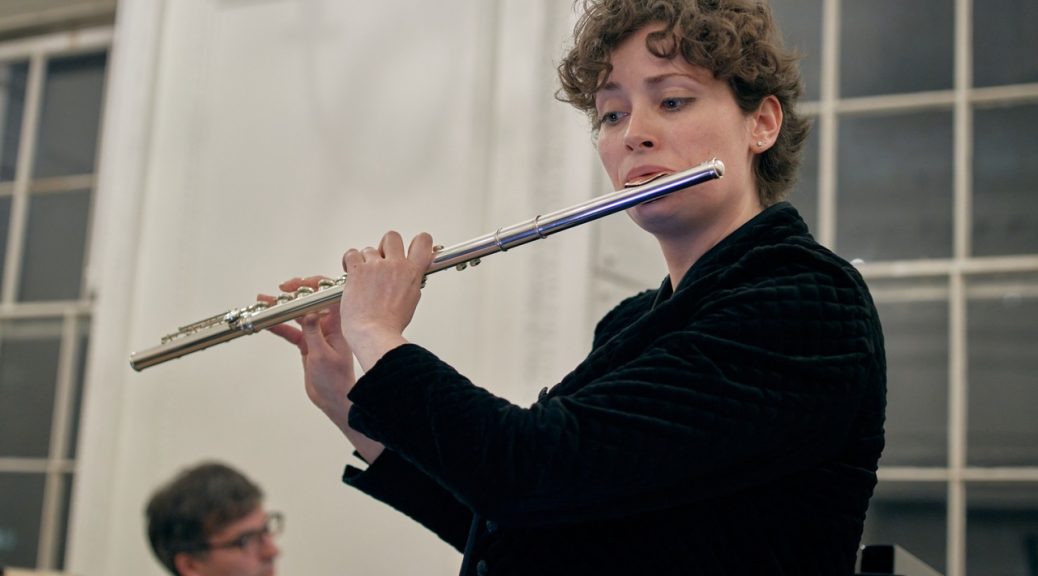
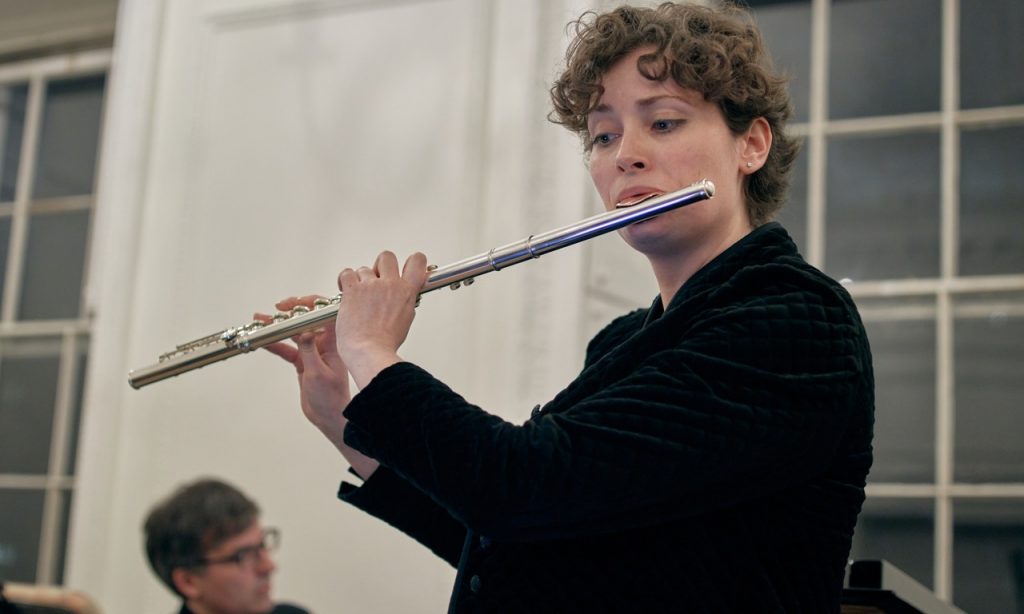
My first venture to St John Smith Square remained a dazzling afternoon concert from flutist Anna Kondrashina, with Pavel Timofeyevsky as the finest accompanist.

The spirit of the flute lived in this fine hour of music. Be it their new arrangements of old classics or some of the finest pieces in the flute and piano repertoire, everything worked so well. Clara Schumann got a lot of love with her Three Romances originally for violin and piano. She simply has to be better seen as one of the early Romantics, her husband Robert established well in that regard. The piece was very touching, Anna making it her own with its resplendence and insight. More Clara!

The Concert Fantasy on Rimsky-Korsakov’s ‘Golden Cockeral’ from Efrem Zimbalist held up as a sparkling delight from the Russian composer’s last opera. Very Russian sounding in nature, fine melodies and sonorities lingered around the space, Pavel on piano also getting a lot out of the score with dramatic flair, proving the composer’s clever orchestration even in just the piano reduction.

Erwin Schulhoff, a German Jew who’s life ended in a concentration camp, has one of the more interesting works in this canon: his Sonata for flute and piano. There was a lot of Stravinsky going on in this, denser moments haunted. This was a new discovery for me and I found it highly alluring and profound, the context of Schulhoff’s fate not leaving my head. Anna again, proved her mastery of the flute, you feel like these are sacred moments, the sweetness of her musicianship are always bright.

A well needed bit of cheering up was from Gershwin and his Three Preludes. Thanks to these arrangements, you fell as if they were written for flute originally. These spritely, considerate jazz delights never faltered in their tones, Anna even mimicking a drum kit in the second movements. An encore of Bach was a stunning offering we didn’t deserve, since we had been treated to an already stellar concert.


Review The Musical Offering, Academy of Ancient Music, Milton Court Concert Hall, London by James Ellis 


 out of 5 stars (3 / 5)

Bach is the greatest composer once declared Richard Wagner. Whilst few would dispute this in music circles, we wonder just how clever old Johan really was. Well known for his tricks and games in his own work, it’s taken centuries to truly penetrate just how dense his ideas really are.  

Through all this comes a concert form Academy of Ancient Music, who have made attempts to do a post-mortem on The Musical Offering, a piece he wrote during his time with Frederich the Great of Prussia, a well established musician in his own right. The King wrote a theme now known as the Royal Theme, which was then expect by Bach to transform into a world of music. 

Director and harpsichord player Laurence Cummings command the evening, address the audience as well as all things musical. The concert was framed by two sonatas, one for viola da gamba, the other for flute. These are wonderful additions to the offering, the soloists excelled here, as the lights were dimmed in the hall and a few, mock candles graced the stage. Though the concert featured a lot of The Musical Offering, it at times felt like The Musical Education. I love Bach, though can only really look at these as mere trifles. The clever use of the king’s theme is evident for most of the movements, yet is mutated in other instances.

I, as an amateur musician tried to learn the Crab Canon, one of the many parts. I found it two hard as one melody on one hand is then inverted for the other, a quite pleasing trick when played together. The canons which do feature are always rousing, even for how old they are. There is always something stimulating about them and you could never deny his brilliance. The musicians seemed to enjoy the music, even if a lot of this was fragmented and slight. The pre show talk did also go into a lot of context for Bach’s schemes, thought even that could have been longer. 

Academy of Ancient Music’s next concert is Locke’s Suite from The Tempest & Purcell’s Ode to Saint Cecilia in Cambridge and London, 8 & 9 March 2023.   

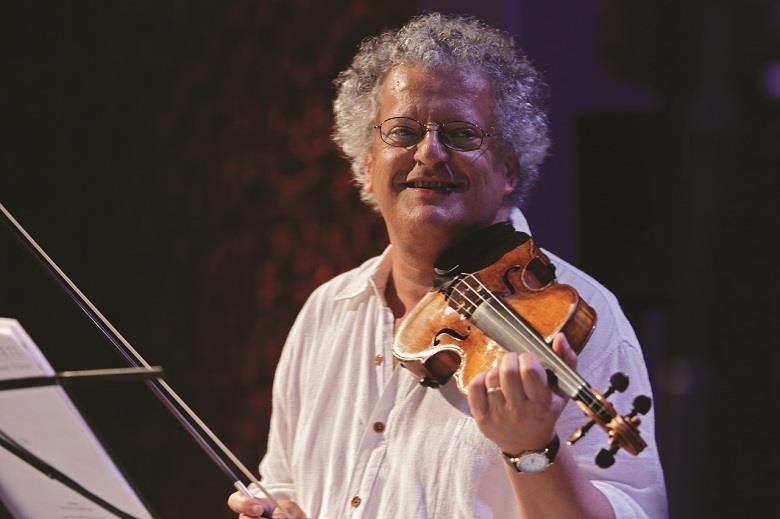
Review Irvine Arditti 70th Birthday Concert, Wigmore Hall, London by James Ellis 

 out of 5 stars (3 / 5)

My last encounter with the Arditti Quartet was less than memorable, though I’d never let that hold them down. In a birthday celebration for its founder, Irvine Ariditti, Wigmore Hall had done all but put out the bunting. 

Their world premiers were an exciting prospect for this concert, first with Roger Reynolds and his imAge for solo violin. I like the smart format of the name of the piece though I held it in contempt a bit, its harshness seemingly defining the work. It did find some footing in its liberal look at the violin, Irvine proving he’s the man for the job, an esteemed musician who can do anything really.

Unsuk Chin from South Korea gave us the next new work: Gran Cadenza, Irvine being joined by Ashot Sarkissjan for this weird ping pong feat. Chin is a fascinating composer, though this was a bit dull, her intense nature not really present either.The real treat was Xenakis’ Ikhoor, for the full quartet who gave a stupendous outing of this chilling piece. If you cant get Xenakis you’d be wise to avoid a piece like this, its unwavering brittleness is a joy for some. 

Sven-Ingo Koch and his new piece: String Quartet No. 3 offered insight and a more subtle encounter, the third movement being noteworthy for its nuanced tenderness. This final premiere proved how versatile Irving and the quartet can be, yet the type of music is unrelentingly contemporary and heavy. Irvine’s wife Hilda Paredes took the Mexican poetry of Pedro Serrano and transformed it into a blazing triumph. Their step-son Jake Arditti joined forces as a sweet, soulful countertenor, some bizarre moments for him including whispering and a finger over the mouth to imply insanity (if that makes sense?). The fine, pastoral verse was well met, with the soft quartet writing as well.

Here’s to many more, Irving! 

Review Elizabeth Watts & Simon Lepper, Wigmore Hall, London by James Ellis 

 out of 5 stars (4 / 5)

An English singer who’s star has only risen is that of Elizabeth Watts. Seen at budding competitions prior, she now excels Mozart on stage and French repertoire, amongst other things. Starting with Debussy at her Wigmore Hall concert, here French sounds great in his Ariettes oubliées. Who else but Debussy could have written these? They are saturated in his watery gleam, the French way of course. Also of not is Watts acting, proving she can command both spears with ease, facial expressions change at break neck speed.   

In Wagner’s Wesendonck Lieder, we see this charity she has, the German mode much more direct and formal, nature and romance as ever its trappings. We an brought exquisite voice to these songs, Im Treibhaus and Träume (both later recycled in his Tristan and Isolde). More intense emotions are wrought here and also bleed in the next set of Richard Strauss, who took a lot from this problematic composer. Highlights here were Cäcilie and of course, Morgen both equally sublime songs.. Simon Lepper on piano does not let down, a real roaring accompaniment never with a shadow of a doubt the wrong person to collaborate with Watts. 

It would be the Czech language that would wrap things up. As if her talents were not enough Watts then showed off in Czech hopefully taught well to master the tricky language. Bohuslav Martinů who had an affair with younger composer Vítězslava Kaprálová, who showed much promised, dying at a very young age. Her songs start off with the love of the Czech nation for folk music and wit, Martinů contuses this with his own deeply rooted love of everything folk about his country and it’s borders. Love, longing and just plain old fun permeate these songs, I love how frank and witty the translations were in the programme as well.

A puffy English song led us away, with little doubt over the power of this fine singer and always wonderful accomplice.

Review Bill’s 44th, London International Mime Festival, Barbican Centre by James Ellis 

Photo Credit: Richard Termine


 out of 5 stars (4 / 5)

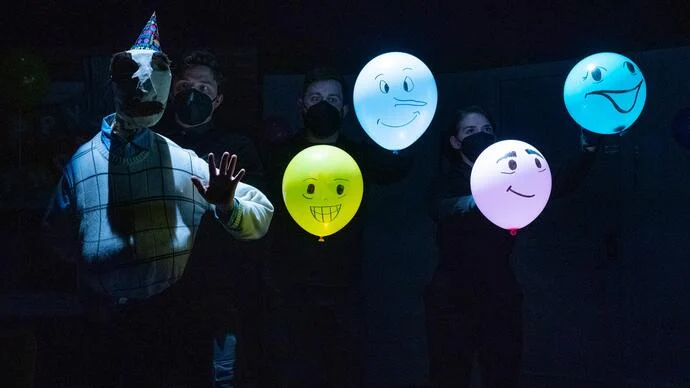
In what might prove to be a testing trip to London, amid strikes and cold streaks, any fears or doubts floated away on opening night, an hour in the company of Bill for this 44th birthday.

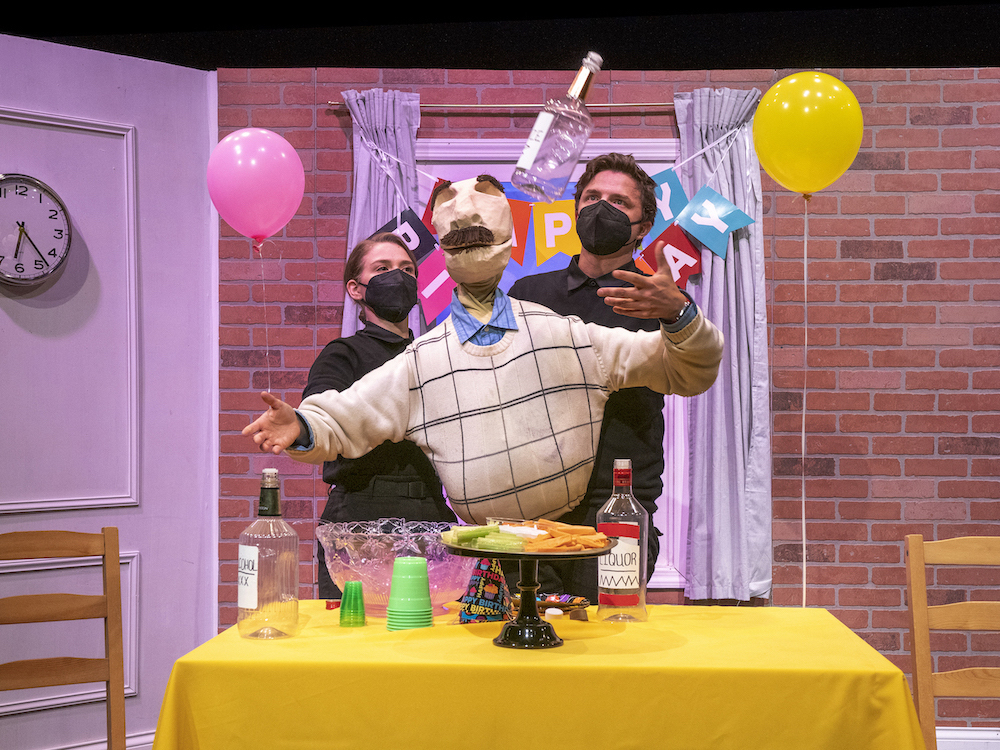
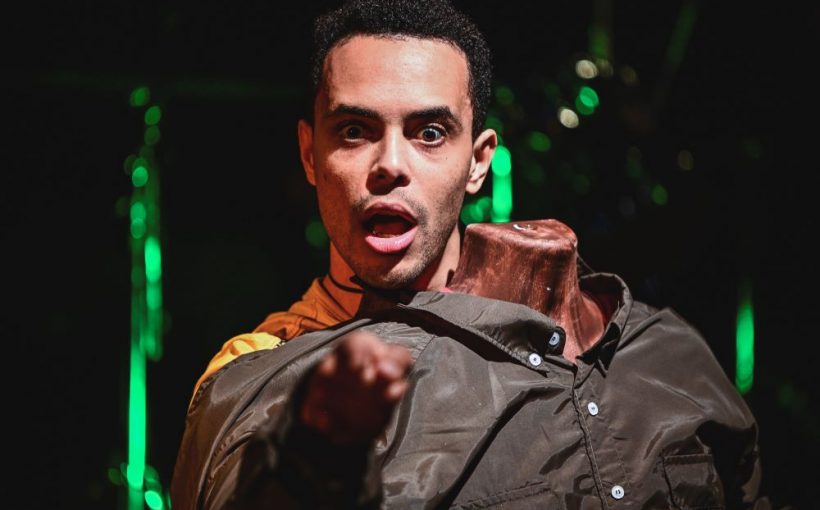
This work of Dorothy James and Andy Manjuck is what could only be described as the the creation of an apparition, or more specially Bill. He is brought to life with such conviction, a mere pot-bellied torso, arms and eyeless head. The fun and bravado of Bill prepping for his big night, is gradually met with disappointment and the awful feeling of loneliness, something we can easily relate to, the past few years considered. 

Thanks to the easy appeal of the show and witty, British like humour this will go down very easy. Dorothy and Andy have a kinetic energy, each sharing one of Bill’s arms, the former also accommodating his torso, the latter his head. There is Mr Bean and Wallace and Gromit in some of the flamboyant mannerisms and weird dance moves, Andy’s legs are also Bill’s legs. It held up as rather touching as well, Bill later watches a VHS seeing his life go by from cradle to current day, a smaller wooden puppet used to astounding effect. Surreal, drunken episodes feature party crashing balloons and a giant version of Cary the carrot, a crudités that no one ate.    

Photo Credit: Richard Termine

This is a piece which has seen some delays in getting out there, this being Bill’s first London adventure and we simply cannot believe his luck. Also, shoutout to Jon Riddleberger who dealt with a lot of the prop side of things and was an extra injection of humour, amid the sad revelations. Music by Eamon Fogarty was also noteworthy for each vibe and tone change. We are all essentially Bill, finding our way in this post-pandemic world, seeking friends to define and make us, to aid in the blandest of life and also reflect upon the pang of memories filled with regrets and of course, happiness.

In short, London loves Bill!     

Bill’s 44th continues at The Pit, Barbican Centre till 4 Feb 2023.   

Photo Credit: Richard Termine

Review Smetana’s Má Vlast, WNO Orchestra, St David’s Hall by James Ellis

 out of 5 stars (4 / 5)

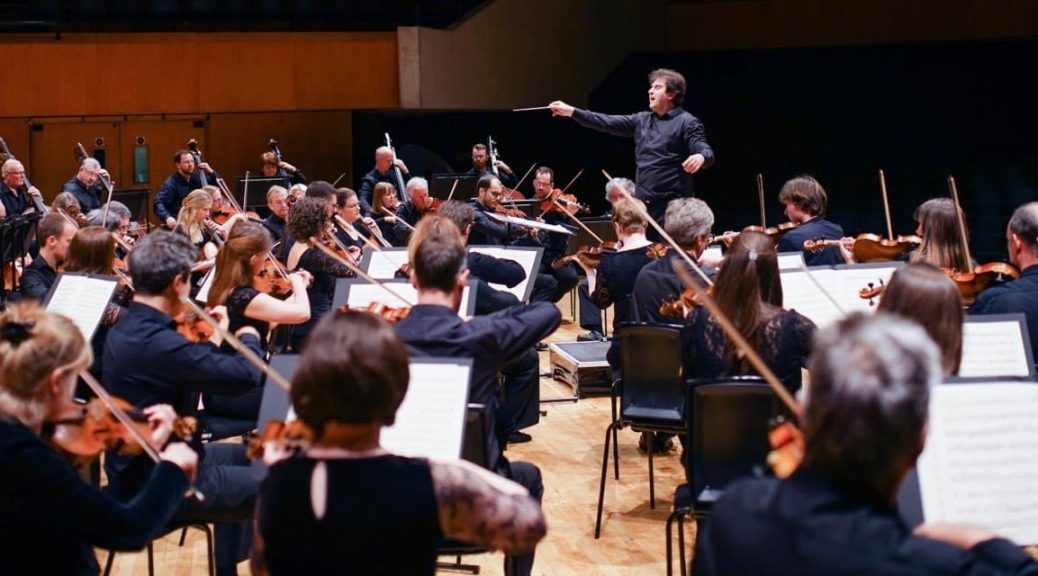
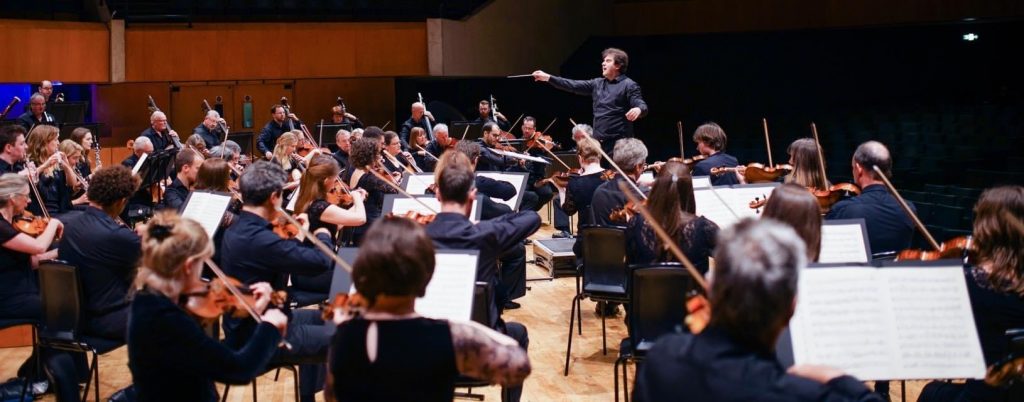
Tomáš Hanus at the helm of Welsh National Opera has brought unforgettable performances. Be it the extensive operas of Janáček or the deeply moving youth work of Brundibár, the love of his homeland has never been questioned. The homeland in question is the Czech Republic and in a special concert of a Sunday afternoon, Cardiff was treated to the entirety of Má Vlast by native Bedřich Smetana. Truly a love letter to all things Czech, landscapes are meshed with myth and history. This fine orchestral jewel holds up as one of the Romance period’s best musical moments, the composer went deaf during its writing.

It is the duo of plush harps that set us off on this pristine journey through time and place. Filled with innovation, the work proves the composer’s talent in usage of folk melodies and orchestration. The second movement by far the most beloved: Vltava or The Moldau is the voyage of the river from its source to traverse across it’s fair nation. This is always a highlight and has featured in the film The Tree of Life and the animation of Don Hertzfeldt. The melody is borrowed from a catalogue of sources, though the whole movement is essentially perfect.

The next four movements add depth, joy and fascination. If I could read sheet music proper I would love to stick my nose in it. The towering feeling of the following music, goes into the history and myths of the country, Šárka and Blaník remain proof of the dense points of reference. You can most certainly hear Janáček in Z českých luhů a hájů or From Bohemia’s Woods and Fields

The final, sixth moment Blaník, remained a sonic experience, Army of knights led by St. Wenceslas sleep in the cave of the movement’s name was a riot, the brass and timpani coming into their own though through the entire work. Everyone excelled here..

Hanus lives and breaths the work, at moment he didn’t conduct and simply bowed his head. Unafraid to tell the brass to be just slightly quieter through a raised, considerate hand, a plea of pianissimo. Wild gesticulation and feverish physicality are his trademarks. He makes this Welsh orchestra just that little bit more Czech. I have never heard this piece throughout its entirety live and I think its time we did more so.

What also must be said at this time: Let’s keep the classics on at St David’s. They remain its home.

Review Cirque du Soleil, Kurios – Cabinet of Curiosities, Royal Albert Hall by James Ellis 

Photo Credit: Andy Paradise 

**** (4 / 5 stars)

Perhaps the name to be most associated with the art of circus, Cirque du Soleil needs little introduction. With their meteoric rise in world-wide tours they have become an industry of their own making. Truly something to aspire to.

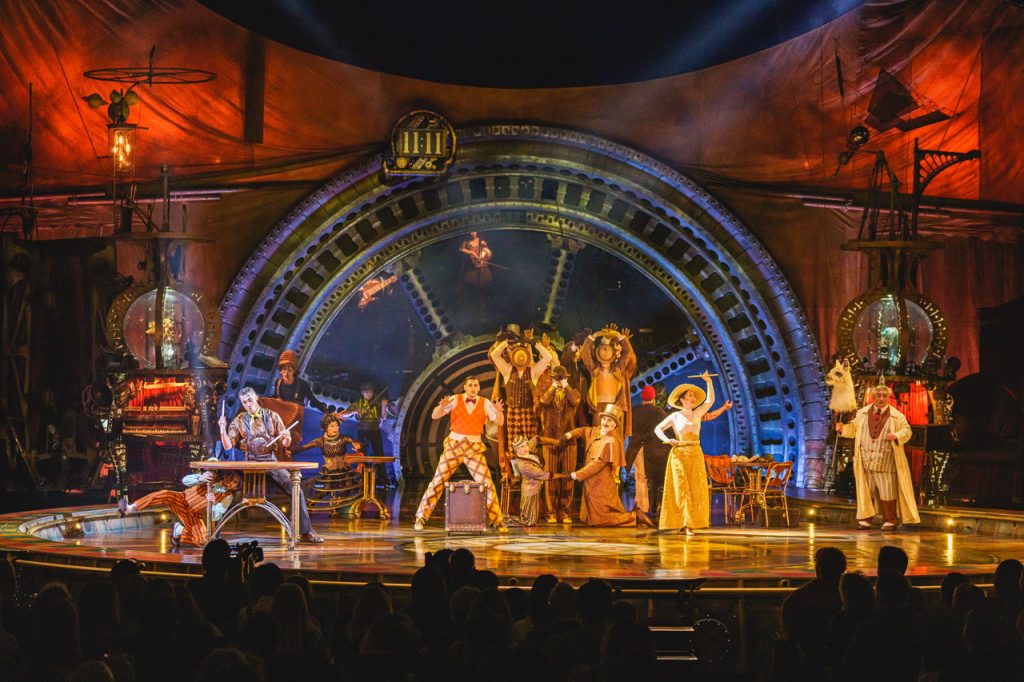
First seen back in 2014, Kurious – Cabinet of Curiosities is a steam-punk, fever dream showing of many eye-bulging acts. There are way too many names to mention (from 22 different countries) but I was staggered by the energy, the athleticism and the bravado that all offered. I honestly wouldn’t have minded a bit more of a narrative approach, something to be hooked by between screens changes and the like. Through this approachable universality of the whole thing is a crowd pleasing decision often through broad humour, metallic spectacle and outrageous feats. This is also the most props they have ever used for any of their shows: 426 in total. 

Photo Credit: Andy Paradise 

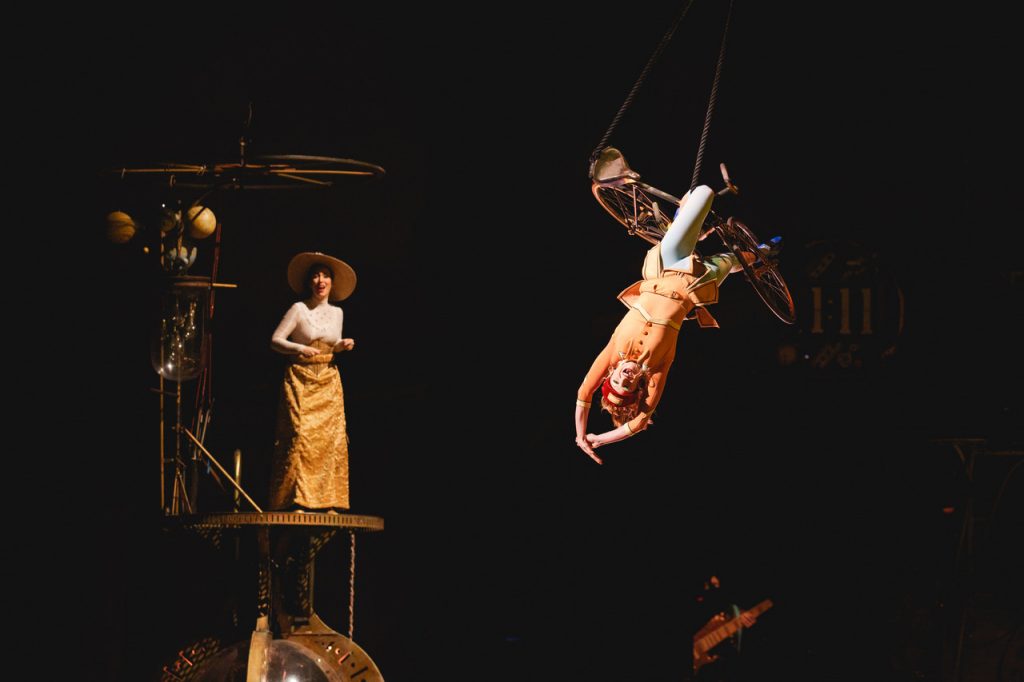
Michel Laprise as writer and director has tapped into a goldmine of ideas here, the unrelenting flux of circus testament to the evening. Some personal favourite acts were Chih-Min Tuan, his intimate and dazzling Yo-Yo skills, something I never expected to see on a show of this scale. The hand puppet work of Theatre of Hands was just wonderful and clever, one of many delights. From Ukraine, Andrii Bondarenko left people flabbergasted with his Upside Down World something which just needs to be seen to be believed. Contortionists astride a giant mechanical hand, shock with their nimbleness and fluidity. Aerial and net play also were delightful with nods to The Creature from the Black Lagoon and other winks. Off note was the singer Sophie Guay, with a gramophone horn in her hair who added an extra depth to the acts and kept up a fine rollicking swing. The band were also a sensation, the celli being visible from the clockwork backstage.


The amazing set and costumes are of the finest quality as well, evoking the surreal, French Canadian vibe of the whole show. Mr Microcosmos played by Mathieu Hubener took on 20 pounds of metal costumes, a protruding belly where Mademoiselle Lili lived. Tackled by Rima Hadchiti, an evocation of circus of the past is here as her inclusion as a dwarf is a well handled and welcoming force and she often left us smiling. The Tomanobv Brothers appeared at first to be conjoined twins but this was a lie, something which leaves a bit of a bad taste today. Though their aerial straps act had us reeling. 

Framing the whole event was Cherecher played by Antonio Moreno, a mad scientist of sorts, lost between dreams and the real world, often floating around in the air. Facundo Giminez had his Invisible Circus (an idea which could have gone either way were it not for the squibs and strings) and a odd scene when he dragged a poor lady on stage and began to throw up a mock hairball as a cat he took the persona of. 

I’d recommend for the spectacle, though those seeking more meaty stories might need to look else where.  

Kurios – Cabinet of Curiosities runs at the Royal Albert hall till 5 March 2023.

Review Hamlet, Lazarus Theatre Company, Southwark Playhouse, Elephant by James Ellis

Photo credit: Charles Flint

 out of 5 stars (2 / 5)

It has been with great delight that I’ve seen most of the recent canon of Lazarus Theatre in London. I’ve revelled in their bold take on the classics, a particular solid Doctor Faustus last year proving this.

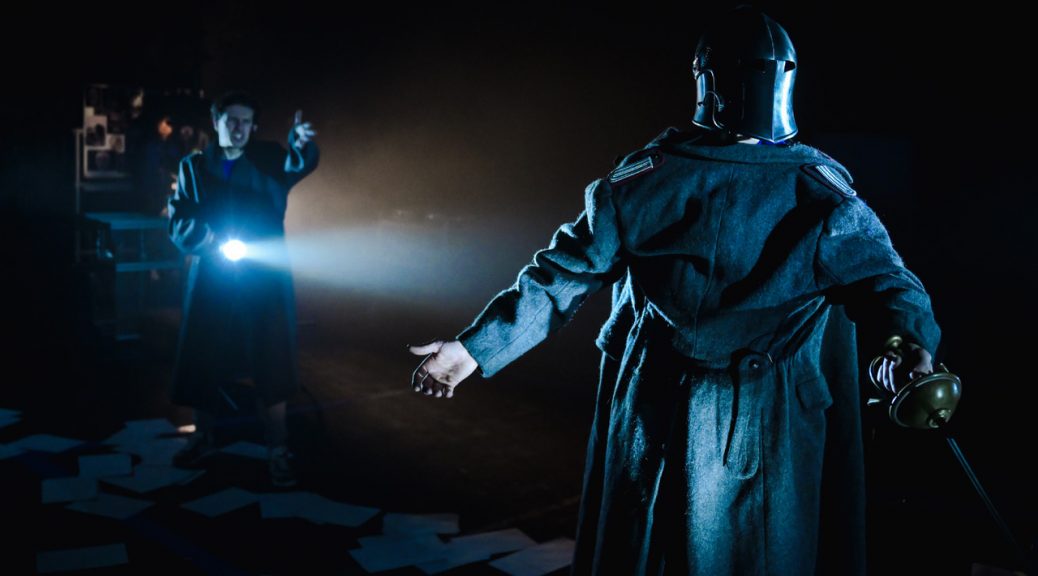
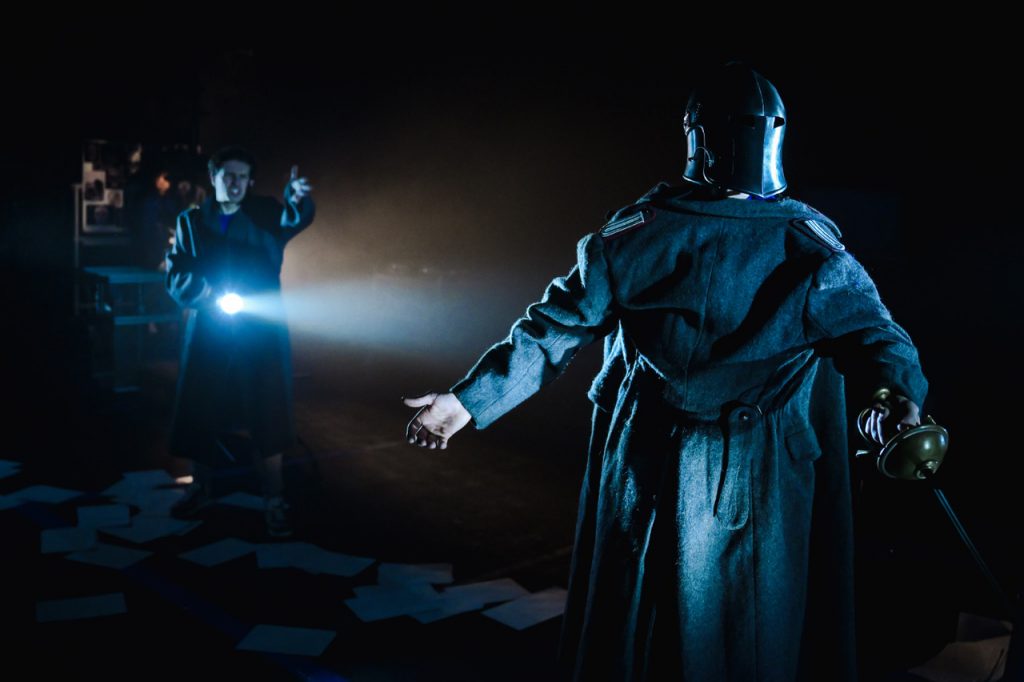
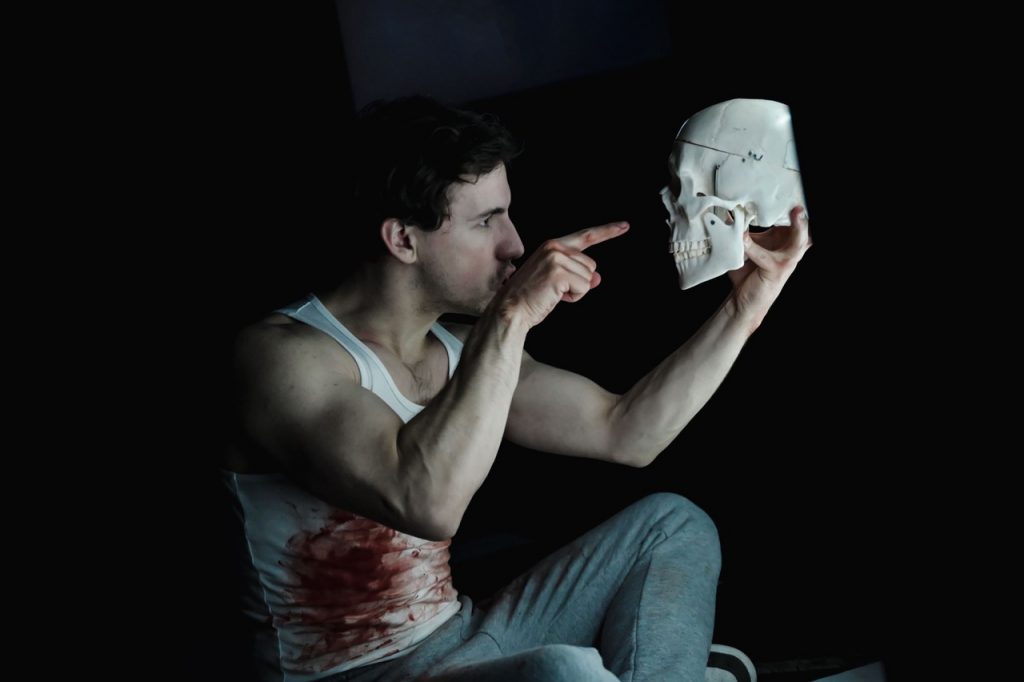
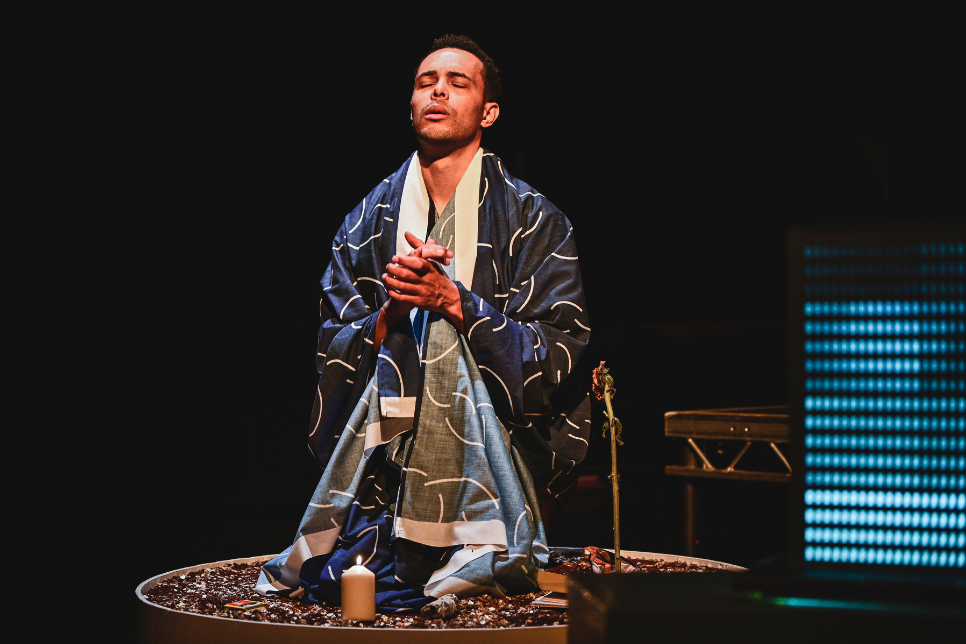
Sadly, with the new year came a Hamlet which didn’t work on a lot of levels. Starting off with what looked like an AA meeting, declared as a safe space for the characters to speak their minds. It would have been a quirky idea to have had the Bard stripped back to just this scope, though the chairs are pushed away and a lot of tricks ensue. Michael Hawkey as the lead finds his first professional turn here and though it might not be the most remarkable take, there is youth, charm and some menace. There appears on surface level to be no Gertrude nor Claudius present which might be one of the major reasons why this cock-sure showing may not work as well as it should.

Photo credit: Charles Flint

The play maintains a flow as it went on. My major concern was the watery take on the verse and therefore the story. For it appears you may cut Hamlet down to a mere 90 minutes, but you’ve got to own this time and not always worry about fireworks. Director Ricky Dukes should be commended for his Russian Roulette risk taking here, though I did find myself bothered by multiple scenes. Hamlet still gets his Jeffrey Dahmer with Yorick, who’s head is plucked out of a fridge. Video work would show Ophelia’s real-time unending and a Mortal Combat style duel at the final were highlights. Hamlet’s death remained one of the show most disappointing aspects with alas, no ‘flights of angels singing thee to thy rest’.

The hustle of the cast would see some fine performances. Lexine Lee as Ophelia twas more retrospection then mania with with the role. Alex Zur is given little time to shine as Horatio, the rest of the players covering multiple roles and menacing proclamations as the father ghost.

Put simply I would have preferred to watch Mystery Science Theatre do their ribbing on an awful dubbed take on Hamlet on German TV back in the 60s. I’m still faithful for the rebirth of Lazarus once more.

Hamlet continues at the Southwark Playhouse Elephant till 4 Feb 2023.

Review Bhekizizwe, Opera’r Ddraig, Chapter Arts Centre by James Ellis

 out of 5 stars (3 / 5)

From it’s humble start, Opera’r Ddraig have risen upward to stage familiar classics in spaces around Cardiff and on tour. Though with Bhekizizwe comes a much more diverse and contemporary scope for the company.

Dr Robert Fokkens from South Africa, now based at Cardiff Uni has composed the score and the libretto is penned by Mkhululi Mabija. We follow a young South African man Bhekizizwe Shange on his way to further education in both Pretoria and then London. With family, life and love interests adding to the story, he must find his way in the white mans world, proving himself as good as any of them. A partner of his in London would deliver a baby, much to the distain of the family of the girl, realising the child would be mixed race. 

The near eccentric nature of the music, is usual Fokkens territory, his recent piano premier at the Vale of Glamorgan Festival also proof of this. There was dischord, there was harmony, though most alive in the piercing moments of drama in the second half of the evening, dance club music and a pounding drum solo from Michael Hearty. I’ve yet to see a bow scrapped across a cymbal more times then here as well. I questioned how approachable the music would be, some in the audience declared this was their first opera. I dare say, it worked well and the interval was an added rest for all players involved. Fokkens also conducted every soberly, keeping the ensemble in a fine symmetry.

The story itself is quite bare, our lead boy seems to just knock about the places he is meant to go, perhaps the fact this is a monodrama with no other voices proves the static. With the upmost pride, the evening mostly belongs to baritone Themba Mvula. In the many dress-up moments for his teachers, family and maybe in-laws, he embodies them with swagger and humour. Mvula’s  voice is perfect in any register and he often excelled in soaring moments, even if the rowdy band might have drowned him out at times. There are some very touching moments and the bits of wit are well needed, the lists of things not to do in England was a highlight, dressing up with the buttoned up, dicky bow torso mannequin of his professor. He made the story more interesting then on face value and I was really quite taken with him. One to watch!  

At it’s heart the piece was about home, race and love. The quest for all these things in a world of hate and judgment.        

Review Girl from the North County, Wales Millennium Centre by Tracey Robinson

Last night I had the pleasure of watching the ‘Girl from the North Country’ held at the magnificent Wales Millenium Centre. The story was written and produced by Conor McPherson using the songs of Bob Dylan. It’s a double Olivier and Tony Award-winning West End Broadway ‘smash’.

For those thinking the story is about Bob Dylan, it’s not! Dylan’s songs have been reimagined, revamped, and weaved into the lives of a group of troubled souls from Duluth, Minnesota (Dylan’s hometown) a city on the shores of Lake Superior. A tale of love, family, hardship, and survival.

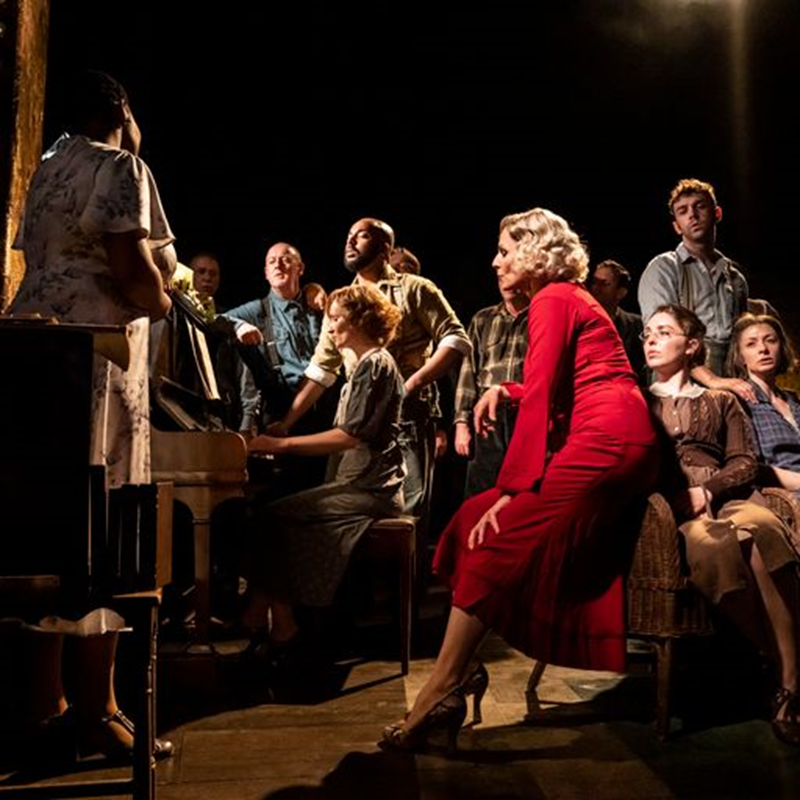
Set in a guesthouse in the winter of 1934 in the middle of the great depression – seven years before the great songwriter was born. It was bleak and grim and that radiated out of the performances. Hard times are a test of strength and character and also how resilient we are when all else fails and the chips are down.

Proprietor Nick Laine is down on his luck and financially struggling to keep their guesthouse from being taken over by the bank, while his wife Elizabeth has dementia and floats in and out of moments of clarity. Nick and Elizabeth’s children also have their own struggles going on – Marianne is unmarried and 5 months pregnant and Gene is going nowhere in life, jobless, his struggles are with the demon drink.

I loved the way the ‘super talented’ musicians played using 1930s instruments and were often joined by cast members throughout the production, bringing the music to life. Every song was brilliantly performed but for me, the standouts were ‘Tight Connection’, ‘Rolling Stone’, ‘I Want You,’ ‘What Can I Do for You’, ‘Jokerman’, ‘Forever Young’ and ‘Pressing On’. Dylan was awarded the Nobel Prize for his lyrics and these performances are a superb showcase, all performed with confidence and passion, they had a strong, emotional impact that made my skin tingle with delight.

Dylan’s magic comes from his lyrics, the unique delivery of those lyrics and the exciting driving force of the music was a lot stronger than Dylan’s own voice. The way Dylan’s songs have been reimagined and revamped is impressive.

This was one of the best pieces of musical theatre I’ve seen in a long time, I was so excited I felt like a dog with two tails!